THE SLANG DICTIONARY.
Reading edition
A 1, first-rate, the very best; “she’s a prime girl, she is; she is A 1.”—Sam Slick. The highest classification of ships at Lloyd’s; common term in the United States; also at Liverpool and other English seaports. Another, even more intensitive form is “first-class, letter A, No. 1.” Some people choose to say A I, for no reason, however, beyond that of being different from others.
Abigail, a lady’s-maid; perhaps obtained from old comedies. Used in an uncomplimentary sense. Some think the term is derived from Abigail Hill (Mrs. Masham), lady-in-waiting to Queen Anne, and a typical ABIGAIL in the way of intrigue.
About Right, “to do the thing ABOUT RIGHT,” i.e., to do it properly, soundly, correctly; “he guv it ’im ABOUT RIGHT,” i.e., he beat him severely.
Abraham-man, a vagabond, such as were driven to beg about the country after the dissolution of the monasteries.—See BESS O’ BEDLAM, infra. They are well described under the title of Bedlam Beggars.—Shakspeare’s K. Lear, ii. 3.
“And these, what name or title e’er they bear, Jarkman, or Patrico, Cranke, or Clapper-dudgeon, Frater, or ABRAM-MAN; I speak to all That stand in fair election for the title Of king of beggars.”—Beaumont and Fletcher’s Begg. Bush. II. 1.
It appears to have been the practice in former days to allow certain inmates of Bethlehem Hospital to have fixed days “to go begging:” hence impostors were said to “SHAM ABRAHAM” (the Abraham Ward in Bedlam having for its inmates these mendicant lunatics) when they pretended they were licensed beggars in behalf of the hospital.
Abraham-sham, or SHAM ABRAHAM, to feign sickness or distress. From ABRAHAM-MAN, the ancient Cant term for a begging impostor, or one who pretended to have been mad.—Burton’s Anatomy of Melancholy, vol. i. p. 360. When Abraham Newland was Cashier to the Bank of England, and signed their notes, it was sung:—
“I have heard people say That SHAM ABRAHAM you may, But you mustn’t SHAM ABRAHAM Newland.”
Absquatulate, to run away, or abscond; a hybrid American expression, from the Latin ab, and “squat” to settle.
Acres, a coward. From Bob Acres, in Sheridan’s Rivals.
Adam’s Ale, water.—English. The Scotch term is ADAM’S WINE.
Added to the List, a euphuism current among sporting writers implying that a horse has been gelded. As, “Sabinus has been ADDED TO THE LIST.” Another form of expression in reference to this matter is that “the knife has been brought into requisition.” “ADDED TO THE LIST” is simply a contraction for “added to the list of geldings in training.”
Addlepate, a foolish fellow, a dullard.
Admiral of the Red, a person whose very red face evinces a fondness for strong potations.
Affygraphy. “It fits to an AFFYGRAPHY,” i.e., to a nicety—to a T.
Afternoon Farmer, one who wastes his best opportunity, and drives off the large end of his work to the little end of his time.
Against the Grain, in opposition to the wish. “It went AGAINST THE GRAIN to do it, but I knew I must,” is a common expression.
Aggerawators (corruption of Aggravators), the greasy locks of hair in vogue among costermongers and other street folk, worn twisted from the temple back towards the ear. They are also, from a supposed resemblance in form, termed NEWGATE KNOCKERS, and sometimes NUMBER SIXES. This style of adorning the head is, however, fast dying out, and the everyday costermonger or street thief has his hair cut like any one else. The yearly militia drill may have had a good deal to do with this alteration.
Akeybo, a slang phrase used in the following manner:—“He beats AKEYBO, and AKEYBO beat the devil.”
Albertopolis, a facetious appellation given by the Londoners to the Kensington Gore district. Now obsolete.
Alderman, a half-crown—possibly from its rotundity. Also a long pipe.
Alderman, a turkey; “ALDERMAN IN CHAINS,” a turkey hung with sausages.
All of a Hugh! all on one side; falling with a thump; the word HUGH being pronounced with a grunt.—Suffolk.
All my Eye, a remark of incredulity made in reference to an improbable story; condensation of “ALL MY EYE AND BETTY MARTIN,” a vulgar phrase constructed from the commencement of a Roman Catholic prayer to St. Martin, “Oh, mihi, beate Martine,” which in common with many another fell into discredit and ridicule after the Reformation.
All out, by far;—“he was ALL OUT the best of the lot.” Old—frequently used by Burton in his Anatomy of Melancholy.
All-overish, neither sick nor well; the premonitory symptoms of illness. Also the feeling which comes over a man at a critical moment, say just when he is about to “pop the question.” Sometimes this is called, “feeling all over alike, and touching nowhere.”
All-rounder, a shirt collar going all round the neck and meeting in front. Once fashionable, but little worn now.
All Serene, an ejaculation of acquiescence. Some years back a popular street cry. With or without application to actual fact, the words ALL SERENE were bawled from morning to night without any reference to the serenity of the unfortunate hearers.—See SERENE.
Alls, tap-droppings, refuse spirits sold at a cheap rate in gin-palaces.
All There, in strict fashion, first-rate, “up to the mark;” a vulgar person would speak of a handsome, well-dressed woman as being ALL THERE. An artisan would use the same phrase to express the capabilities of a skillful fellow-workman. Sometimes ALL THE WAY THERE. Always used as a term of encomium.
All to Pieces, utterly, excessively; “he beat him ALL TO PIECES,” i.e., excelled or surpassed him exceedingly. Also a term much in use among sporting men and expressing want of form, or decadence. A boat’s crew are said to “go ALL TO PIECES” when they through distress lose their regularity. A woman is vulgarly said to “fall to pieces,” or “tumble to pieces,” when she is confined.
All to Smash, or “GONE ALL TO PIECES,” bankrupt, ruined.
Almighty Dollar, an American expression representing the manner in which money is worshipped. Modernly introduced by Washington Irving in 1837. The idea of this phrase is, however, far older than the time of Irving. Ben Jonson’s Epistle to Elizabeth, Countess of Rutland, commences thus—
“Whilst that for which all virtue now is sold, And almost every vice, almightie gold.”
It seems almost obvious that the term must have been applied, not to dollars certainly, but to money, long before the time of Irving.
American Tweezers, an instrument used by an hotel-sneak which nips the wards end of a key, and enables him to open a door from the opposite side to that on which it has been locked.
Andrew Millar, a ship of war.—Sea.
Ain’t, the vulgar abbreviation of “am not,” “are not,” or “is not.”
Anointed, i.e., eminent; used to express great rascality in any one; “an ANOINTED scoundrel,” king among scoundrels.—Irish.
Anointing, a good beating. A case for the application of salve.
Anonyma, a lady of the demi-monde, or worse; a “pretty horsebreaker.” Incognita was the term at first. Product of the squeamishness of the age which tries to thrust away fact by the use of fine words.
Antiscriptural, oaths, foul language. Anything unfit for ordinary society conversation.
Apartments to Let, a term used in reference to one who has a somewhat empty head. As, “He’s got APARTMENTS TO LET.”
Apostle’s Grove, the London district known as St. John’s Wood. Also called GROVE OF THE EVANGELIST.
Apostles, The Twelve, the last twelve names on the Poll, or “Ordinary Degree” List at the Cambridge Examinations, when it was arranged in order of merit, and not alphabetically, and in classes, as at present; so called from their being post alios, after the others.—See POLL. The last of all was called St. Paul (or Saint Poll), as being the least of the apostles, and “not meet to be called an apostle” (see 1 Cor. xv. 9). As in the “Honour” list (see Gulf), students who had failed only slightly in one or more subjects were occasionally allowed their degrees, and these were termed ELEGANT EXTRACTS.—Camb. Univ. Slang.
Apple-pie Bed, a trick played at schools on new comers, or on any boy disliked by the rest. One of the sheets is removed, and the other is doubled in the middle, so that both edges are brought to the top, and look as if both sheets were there; but the unhappy occupant is prevented getting more than half-way down, and he has to remake his bed as best he can. This trick is sometimes played by children of a larger growth.
Apple-Cart, the human structure, so far as the phrases with which it is connected are concerned. As “I’ll upset your APPLE-CART,” “down with his APPLE-CART.”
Apple-pie Order, in exact or very nice order.
Appro, contraction of approbation, a word much in use among jewellers. Most of the extensive show of chains, watches, and trinkets in a shop window is obtained “ON APPRO,” i.e., “on sale or return.”
Area Sneak, a thief who commits depredations upon kitchens and cellars.
Argol-bargol, to bandy words.—Scotch.
Article, derisive term for a weak or insignificant specimen of humanity.
Atomy, a diminutive or deformed person. From ANATOMY, or ATOM.
Attack, to carve, or commence operations; “ATTACK that beef, and oblige!”
Attic, the head; “queer in the ATTIC,” intoxicated or weak-minded. Sometimes ATTIC is varied by “upper story.”
Attic Salt, wit, humour, pleasantry. Partly a reference to a suggestive portion of Grecian literature, and partly a sly hit at the well-known poverty of many writers.
Auctioneer, to “tip him the AUCTIONEER,” is to knock a man down. Tom Sayers’s right hand was known to pugilistic fame as the AUCTIONEER.
Audit Ale, extra strong ale supposed to be drunk when the accounts are audited.—Camb. Univ.
Auld-Reekie, an affectionate term for the old town of Edinburgh. Derived from its dingy appearance.
Aunt Sally, a favourite figure on racecourses and at fairs, consisting of a wooden head mounted on a stick, firmly fixed in the ground; in the nose of which, or rather where the nose should be, a tobacco-pipe is inserted. The fun consists in standing at a distance and demolishing AUNT SALLY’S pipe-clay projection with short bludgeons, very similar to the halves of broom-handles. The Duke of Beaufort is a “crack hand” at smashing pipe noses; and his performances some years ago on Brighton racecourse, which brought the game into notoriety, are yet fresh in remembrance. Aunt Sally has, however, had her day, and once again the inevitable “three shies a penny!” is chief among our outdoor amusements.
Avast, a sailor’s phrase for stop, shut up, go away,—apparently connected with the old Cant, BYNGE A WASTE; or from the Italian, BASTA, hold! enough.
Awake, or FLY, knowing, thoroughly understanding. “I’m awake,” i.e., I know all. The phrase WIDE-AWAKE carries a similar meaning in ordinary conversation, but has a more general reference.
Awful, a senseless expletive, used to intensify a description of anything good or bad; “what an AWFUL fine woman!” “awfully jolly,” “awfully sorry,” &c. The phrase is not confined to any section of society.
Ax, to ask. Sometimes pronounced arks.
Babes, the lowest order of KNOCK-OUTS (which see), who are prevailed upon not to give opposing biddings at auctions, in consideration of their receiving a small sum (from one shilling to half-a-crown), and a certain quantity of beer. They can, however, even after this agreement, be secured on the other side for a little longer price. There is no honour among thieves—at all events not among auction thieves—nowadays.
Back, to support by means of money, on the turf or otherwise.—See LAY.
Back, “to get one’s BACK UP,” to annoy or enrage. Probably from the action of a cat when preparing to give battle to an enemy.
Back-end, that portion of the year which commences with October. This phrase is peculiar to the turf, and has its origin in the fact that October was actually, and is now nearly, the finishing portion of the racing season. Towards BACK-END the punters and “little men” generally begin to look forward with anxiety to their winter prospects, and “going for the gloves” is not only a frequent phrase, but a frequently recurring practice.
Back Out, to retreat from a difficulty; reverse of GO AHEAD. Metaphor borrowed from the stables.
Back Slang It, to go out the back way. Equivalent to “Sling your hook out of the back-door,” i.e., get away quickly.
Backslums, the byeways and disreputable portions of a town.
Back-Hander, a blow on the face with the back of the hand, a back-handed tip. Also a drink out of turn, as when a greedy person delays the decanter to get a second glass. Anything done slyly or secretly is said to be done in a back-handed manner.
Backer, one who places his money on a particular man or animal; a supporter of one side in a contest. The great body of betting men is divided into BOOKMAKERS and BACKERS.
Back Jump, a back window.—Prison term.
Bacon, the body, “to save one’s BACON,” to escape.
Bad, “to go to the bad,” to deteriorate in character, to be ruined. Virgil has an almost similar phrase, in pejus ruere, which means, by the way, to go to the worse.
Bad, hard, difficult. Word in use among sporting men who say, “He will be BAD to beat,” when they mean that the man or horse to whom they refer will about win.
Bad Egg, a scoundrel or rascal.
Badger, to tease, to annoy by “chaffing.” Suggestive of drawing a badger.
Bad Lot, a term derived from auctioneering slang, and now generally used to describe a man or woman of indifferent morals.
Badminton, blood,—properly a peculiar kind of claret-cup invented at the Duke of Beaufort’s seat of that name. Badminton proper is made of claret, sugar, spice, cucumber peel, and ice, and was sometimes used by the patrons of the Prize Ring as a synonym for blood.
Bad Words, words not always bad of themselves but unpleasant to “ears polite,” from their vulgar associations.
Baffaty, calico. Term used in the drapery trade.
Bag, to seize or steal, equivalent to “collar.”
Bagman, a commercial traveller. This word is used more in reference to the old style of commercial travellers than to the present.
Bags, trousers. Trousers of an extensive pattern, or exaggerated fashion, have sometimes been termed HOWLING-BAGS, but only when the style has been very “loud.” The word is probably an abbreviation of bumbags. “To have the BAGS off,” to be of age and one’s own master, to have plenty of money. Bags of mystery is another phrase in frequent use, and refers to sausages and saveloys. Bag of tricks, refers to the whole of a means towards a result. “That’s the whole bag of tricks.”
Baked, seasoned, “he’s only HALF-BAKED,” i.e., soft, inexperienced.
Baker’s Dozen, thirteen. Originally the London bakers supplied the retailers, i.e., chandlers’ shopkeepers and itinerants, with thirteen loaves to the dozen, so as to make up what is known as the overweight, the surplus number, called the inbread, being thrown in for fear of incurring a penalty for short weight. To “give a man a BAKER’S DOZEN,” in a slang sense, sometimes means to give him an extra good beating or pummelling.
Balaam, printers’ slang for matter kept in type about monstrous productions of nature, &c., to fill up spaces in newspapers that would otherwise be vacant. The term BALAAM-BOX has often been used as the name of a depository for rejected articles. Evidently from Scripture, and referring to the “speech of an ass.”
Bald-Faced Stag, a term of derision applied to a person with a bald head. Also, still more coarsely, “BLADDER-OF-LARD.”
Bale up, an Australian term equivalent to our “Shell out.” A demand for instantaneous payment.
Ballambangjang. The Straits of BALLAMBANGJANG, though unnoticed by geographers, are frequently mentioned in sailors’ yarns as being so narrow, and the rocks on each side so crowded with trees inhabited by monkeys, that the ship’s yards cannot be squared, on account of the monkey’s tails getting jammed into, and choking up, the brace blocks.—Sea.
Ballast, money. A rich man is said to be well-ballasted. If not proud and over-bearing he is said to carry his ballast well.
Balmy, weak-minded or idiotic (not insane).
Balmy, sleep; “have a dose of the BALMY.”
Bamboozle, to deceive, make fun of, or cheat a person; abbreviated to BAM, which is sometimes used also as a substantive—a deception, a sham, a “sell.” Swift says BAMBOOZLE was invented by a nobleman in the reign of Charles II.; but this is very likely an error. The probability is that a nobleman then first used it in polite society. The term is derived from the Gipsies.
Bandannah, originally a peculiar kind of silk pocket-handkerchief, now slang used to denote all sorts of “stooks,” “wipes,” and “fogles,” and in fact the generic term for a kerchief, whether neck or pocket.
Banded, hungry. From the habit hungry folks have of tying themselves tight round the middle.
Bandy, or CRIPPLE, a sixpence, so called from this coin being generally bent or crooked; old term for flimsy or bad cloth, temp. Q. Elizabeth.
Bang, to excel or surpass; BANGING, great or thumping.
Bang-up, first-rate, in the best possible style.
Bank, to put in a place of safety. “Bank the rag,” i.e., secure the note. Also “to bank” is to go shares.
Bank, the total amount possessed by any one, “How’s the BANK?” “Not very strong; about one and a buck.”
Bantling, a child; stated in Bacchus and Venus, 1737, and by Grose, to be a cant term. This is hardly slang now-a-days, and modern etymologists give its origin as that of bands or swaddling clothes.
Banyan-Day, a day on which no meat is served out for rations; probably derived from the BANIANS, a Hindoo caste, who abstain from animal food. Quite as probably from the sanitary arrangements which have in hot climates counselled the eating of BANYANS and other fruits in preference to meat on certain days.—Sea.
Bar, or BARRING, excepting; in common use in the betting-ring; “Two to one bar one,” i.e., two to one against any horse with the exception of one. The Irish use of BARRIN’ is very similar, and the words BAR and BARRING may now be regarded as general.
Barber’s Cat, a half-starved sickly-looking person. Term used in connexion with an expression too coarse to print.
Barber’s Clerk, an overdressed shopboy who apes the manners of, and tries to pass himself off as, a gentleman; a term of reproach applied not to an artisan but to one of those who, being below, assume airs of superiority over, handicraftsmen.
Barge, a term used among printers (compositors) to denote a case in which there is an undue proportion of some letters and a corresponding shortness of those which are most valuable.
Bark, an Irish person of either sex. From this term, much in use among the London lower orders, but for which no etymology can be found, Ireland is now and then playfully called Barkshire.
Barker, a man employed to cry at the doors of “gaffs,” shows, and puffing shops, to entice people inside. Among touting photographers he is called a doorsman.
Barking-Iron, or BARKER, a pistol. Term used by footpads and thieves generally.
Barnacles, spectacles; possibly a corruption of binoculi; but derived by some from the barnacle (Lepas Anatifera), a kind of conical shell adhering to ships’ bottoms. Hence a marine term for goggles, which they resemble in shape, and for which they are used by sailors in case of ophthalmic derangement.
Barney, an unfair race of any kind: a sell or cross. Also a lark, jollification, or outing. The word BARNEY is sometimes applied to a swindle unconnected with the sporting world.
Barn Stormers, theatrical performers who travel the country and act in barns, selecting short and tragic pieces to suit the rustic taste.
Barrikin, jargon, speech, or discourse; “We can’t tumble to that BARRIKIN,” i.e., we don’t understand what he says. “Cheese your BARRIKIN,” shut up. Miege calls it “a sort of stuff;” Old French, BARACAN.
Bash, to beat, thrash; “BASHING a dona,” beating a woman; originally a provincial word, applied to the practice of beating walnut trees, when in bud, with long poles, to increase their productiveness. Hence the West country proverb—
“A woman, a whelp, and a walnut tree, The more you BASH ’em, the better they be.”
The word BASH, among thieves, signifies to flog with the cat or birch. The worst that can happen to a brutal ruffian is to receive “a BASHING in, and a BASHING out,”—a flogging at the commencement and another at the close of his term of enforced virtue.
Baste, to beat, properly to pour gravy on roasting meat to keep it from burning, and add to its flavour. Also a sewing term.
Bastile, the workhouse. General name for “the Union” amongst the lower orders of the North. Formerly used to denote a prison, or “lock-up;” but its abbreviated form, STEEL, is now the favourite expression with the dangerous classes, some of whom have never heard of BASTILE, familiar as they are with “steel.”
Bat, “on his own BAT,” on his own account. Evident modification of the cricket term, “off his own bat,” though not connected therewith.—See HOOK.
Bat, to take an innings at cricket. To “carry out one’s BAT” is to be last in, i.e., to be “not out.” A man’s individual score is said to be made “off his own BAT.”
Bat, pace at walking or running. As, “He went off at a good BAT.”
Bats, a pair of bad boots.
Battells, the weekly bills at Oxford. Probably originally wooden tallies, and so a diminutive of bâton.—University.
Batter, wear and tear; “can’t stand the BATTER,” i.e., not equal to the task; “on the BATTER,” “on the streets,” “on the town,” or given up to roystering and debauchery.
Batty, wages, perquisites. Derived from BATTA, an extra pay given to soldiers while serving in India.
Batty-Fang, to beat; BATTY-FANGING, a beating; also BATTER-FANG. Used metaphorically as early as 1630.
“So batter-fanged and belabour’d with tongue mettle, that he was weary of his life.”—Taylor’s Works.
Beach-Comber, a fellow who prowls about the sea-shore to plunder wrecks, and pick up waifs and strays of any kind.—Sea.
Beak, originally a magistrate, judge, or policeman; now a magistrate only; “to baffle the BEAK,” to get remanded. Ancient Cant, BECK. Saxon, BEAG, a necklace or gold collar—emblem of authority. Sir John Fielding was called the BLIND-BEAK in the last century. Maybe connected with the Italian BECCO, which means a (bird’s) beak, and also a blockhead.—See WALKER.
Beaker-Hunter, or BEAK-HUNTER, a stealer of poultry.
Beans, money; “a haddock of BEANS,” a purse of money; formerly, BEAN meant a guinea; French, BIENS, property.
Bear, one who contracts to deliver or sell a certain quantity of stock in the public funds on a forthcoming day at a stated place, but who does not possess it, trusting to a decline in public securities to enable him to fulfil the agreement and realize a profit.—See BULL. Both words are slang terms on the Stock Exchange, and are frequently used in the business columns of newspapers.
“He who sells that of which he is not possessed is proverbially said to sell the skin before he has caught the BEAR. It was the practice of stock-jobbers, in the year 1720, to enter into a contract for transferring South Sea stock at a future time for a certain price; but he who contracted to sell had frequently no stock to transfer, nor did he who bought intend to receive any in consequence of his bargain; the seller was, therefore, called a BEAR, in allusion to the proverb, and the buyer a BULL, perhaps only as a similar distinction. The contract was merely a wager, to be determined by the rise or fall of stock; if it rose, the seller paid the difference to the buyer, proportioned to the sum determined by the same computation to the seller.”—Dr. Warton on Pope.
These arrangements are nowadays called “time bargains,” and are as fairly (or unfairly) gambling as any transactions at the Victoria Club or Tattersall’s, or any of the doings which call for the intervention of the police and the protestations of pompous City magistrates, who, during their terms of office, try to be virtuous and make their names immortal. Certainly BULLING and BEARING are as productive of bankruptcy and misery as are BACKING and LAYING.
Be-argered, drunk. (The word is divided here simply to convey the pronunciation.)
Bear-Leader, a tutor in a private family. In the old days of the “grand tour” the term was much more in use and of course more significant than it is now.
Bear-up and Bearer-up.—See BONNET.
Beat, the allotted range traversed by a policeman on duty.
Beat, or BEAT-HOLLOW, to surpass or excel; also “BEAT into fits,” and “BEAT badly.”
Beat, “DEAD-BEAT,” wholly worn out, done up.
Beater-Cases, boots. Nearly obsolete. Trotter cases is the term nowadays.
Beaver, old street term for a hat; GOSS is the modern word, BEAVER, except in the country, having fallen into disuse.
Bebee, a lady.—Anglo-Indian.
Be-Blowed, a derisive instruction never carried into effect, as, “You BE-BLOWED.” Used similarly to the old “Go to.” See BLOW ME.
Bed-Fagot, a contemptuous term for a woman; generally applied to a prostitute.—See FAGOT.
Bed-Post, “in the twinkling of a BED-POST,” in a moment, or very quickly. Originally BED-STAFF, a stick placed vertically in the frame of a bed to keep the bedding in its place, and used sometimes as a defensive weapon.
Bee, “to have a BEE in one’s bonnet,” i.e., to be not exactly sane; to have a craze in one particular direction. Several otherwise sensible and excellent M.P.’s are distinguished by the “BEE in his bonnet” each carries.
Beef-Headed, stupid, fat-headed, dull.
Beefy, unduly thick or fat, commonly said of women’s ankles; also rich, juicy, plenteous. To take the whole pool at loo, or to have any particular run of luck at cards generally is said by players to be “very BEEFY.”
Beeline, the straightest possible line of route to a given point. When a bee is well laden, it makes a straight flight for home. Originally an Americanism, but now general.
Beery, intoxicated, or fuddled with beer.
Beeswax, poor, soft cheese. Sometimes called “sweaty-toe cheese.”
Beeswing, the film which forms on the sides of bottles which contain good old port wine. This breaks up into small pieces in the process of decanting, and looks like BEES’ WINGS. Hence the term.
Beetle-Crusher, or SQUASHER, a large flat foot. The expression was made popular by being once used by Leech.
Beetle-Sticker, an entomologist.
Beggars’ Velvet, downy particles which accumulate under furniture from the negligence of housemaids. Otherwise called SLUTS’-WOOL.
Belcher, a blue bird’s-eye handkerchief.—See BILLY.
Bell, a song. Tramps’ term. Simply diminutive of BELLOW.
Bellows, the lungs. Bellowser, a blow in the “wind,” or pit of the stomach, taking one’s breath away.
Bellowsed, or LAGGED, transported.
Bellows to Mend, a person out of breath; especially a pugilist is said to be “BELLOWS TO MEND” when winded. With the P.R., the word has fallen into desuetude.
Belly-Timber, food, or “grub.”
Belly-Vengeance, small sour beer, apt to cause gastralgia.
Bemuse, to fuddle one’s self with drink, “BEMUSING himself with beer,” &c.
Ben, a benefit.—Theatrical.
Ben Cull, a friend, or “pal.” Expression used by thieves.
Bend, “that’s above my bend,” i.e., beyond my power, too expensive or too difficult for me to perform.
Bender, a sixpence. Probably from its liability to bend. In the days when the term was most in use sixpences were not kept in the excellent state of preservation peculiar to the currency of the present day.
Bender, the arm; “over the BENDER,” synonymous with “over the left.”—See OVER.
Bendigo, a rough fur cap worn in the midland counties, called after a noted pugilist of that name. “Hard Punchers” are caps worn by London roughs and formerly by men in training. They are a modification of the common Scotch cap, and have peaks.
Bene, good.—Ancient Cant; BENAR was the comparative.—See BONE. Latin.
Benedick, a married man. Shakspeare.
Benjamin, coat. Formerly termed a JOSEPH, in allusion, perhaps, to Joseph’s coat of many colours.—See UPPER-BENJAMIN.
Ben Joltram, brown bread and skimmed milk; a Norfolk term for a ploughboy’s breakfast.
Benjy, a waistcoat, diminutive of BENJAMIN.
Beong, a shilling.—See SALTEE.—Lingua Franca.
Bess-o’-Bedlam, a lunatic vagrant.—Norfolk.
Best, to get the better or BEST of a man in any way—not necessarily to cheat—to have the best of a bargain. BESTED, taken in, or defrauded, in reality worsted. Bester, a low betting cheat, a fraudulent bookmaker.
Better, more; “how far is it to town?” “Oh, BETTER ’n a mile.”—Saxon and Old English, now a vulgarism.
Betting Round, laying fairly and equally against nearly all the horses in a race so that no great risk can be run. Commonly called getting round. See BOOK, and BOOKMAKING.
Betty, a skeleton key, or picklock.—Old Prison Cant.
B Flats, bugs.—Compare F SHARPS.
Bible-Carrier, a person who sells songs without singing them.—Seven Dials.
Biddy, a general name applied to Irish stallwomen and milkmaids, in the same manner that Mike is given to the labouring men. A big red-faced Irish servant girl is known as a Bridget.
Big, “to look BIG,” to assume an inflated air or manner; “to talk BIG,” i.e., boastingly.
Big-Bird, TO GET THE, i.e., to be hissed, as actors occasionally are by the “gods.” Big-bird is simply a metaphor for goose.—Theat. Slang.
Big House, or LARGE HOUSE, the workhouse,—a phrase used by the very poor.
Big-wig, a person in authority or office. Exchangeable with “GREAT GUN.”
Bilbo, a sword; abbrev. of “BILBAO blade.” Spanish swords were anciently very celebrated, especially those of Toledo, Bilbao, &c.
Bilk, a cheat, or a swindler. Formerly in general use, now confined to the streets, where it is common, and mostly used in reference to prostitutes. Gothic, BILAICAN.
Bilk, to defraud, or obtain goods, &c., without paying for them; “to BILK the schoolmaster,” to get information or experience without paying for it.
Billingsgate (when applied to speech), foul and coarse language. Many years since people used to visit Thames Street to hear the Billingsgate fishwomen abuse each other. The anecdote of Dr. Johnson and the Billingsgate virago is well known.
Billingsgate Pheasant, a red herring or bloater. This is also called a “two-eyed steak.”
Billy, a silk pocket-handkerchief.—Scotch.—See WIPE.
⁂ A list of slang terms descriptive of the various patterns of handkerchiefs, pocket and neck, is here subjoined:—
Belcher, darkish blue ground, large round white spots, with a spot in the centre of darker blue than the ground. This was adopted by Jem Belcher, the pugilist, as his “colours,” and soon became popular amongst “the fancy.”
Bird’s-eye wipe, a handkerchief of any colour, containing white spots. The blue bird’s-eye is similar to the Belcher except in the centre. Sometimes a BIRD’S-EYE WIPE has a white ground and blue spots.
Blood-red fancy, red.
Blue Billy, blue ground, generally with white figures.
Cream fancy, any pattern on a white ground.
King’s man, yellow pattern on a green ground.
Randal’s man, green, with white spots; named after the favourite colours of Jack Randal, pugilist.
Water’s man, sky coloured.
Yellow fancy, yellow, with white spots.
Yellow man, all yellow.
Billy, a policeman’s staff. Also stolen metal of any kind. Billy-hunting is buying old metal. A Billy-fencer is a marine-store dealer.
Billy-Barlow, a street clown; sometimes termed a JIM CROW, or SALTIMBANCO,—so called from the hero of a slang song. Billy was a real person, semi-idiotic, and though in dirt and rags, fancied himself a swell of the first water. Occasionally he came out with real witticisms. He was a well-known street character about the East-end of London, and died in Whitechapel Workhouse.
Billy-Cock, a soft felt hat of the Jim Crow or “wide-awake” description.
Bingo, brandy.—Old Cant.
Bingy, a term largely used in the butter trade to denote bad, ropy butter; nearly equivalent to VINNIED.
Bird-Cage, a four-wheeled cab.
Birthday Suit, the suit in which Adam and Eve first saw each other, and “were not ashamed.”
Bishop, a warm drink composed of materials similar to those used in the manufacture of “flip” and “purl.”
Bit, fourpence; in America a 12½ cent piece is called a BIT, and a defaced 20 cent piece is termed a LONG BIT. A BIT is the smallest coin in Jamaica, equal to 6d. Bit usually means the smallest silver coin in circulation; also a piece of money of any kind. Charles Bannister, the witty singer and actor, one day meeting a Bow Street runner with a man in custody, asked what the prisoner had done; and being told that he had stolen a bridle, and had been detected in the act of selling it, said, “Ah, then, he wanted to touch the BIT.”
Bitch, tea; “a BITCH party,” a tea-drinking. Probably because undergraduates consider tea only fit for old women.—Oxford.
Bite, a cheat; “a Yorkshire BITE,” a cheating fellow from that county. The term BITE is also applied to a hard bargainer.—North; also old slang—used by Pope. Swift says it originated with a nobleman in his day.
Bite, to cheat; “to be BITTEN,” to be taken in or imposed upon. Originally a Gipsy term. Cross-biter, for a cheat, continually occurs in writers of the sixteenth century. Bailey has CROSS-BITE, a disappointment, probably the primary sense; and BITE is very probably a contraction of this.
Bit-Faker, or TURNER OUT, a coiner of bad money.
Bit-of-Stuff, overdressed man; a man with full confidence in his appearance and abilities; a young woman, who is also called a BIT OF MUSLIN.
Bitter, diminutive of bitter beer; “to do a BITTER,” to drink beer.—Originally Oxford, but now general.
Bittock, a distance of very undecided length. If a North countryman be asked the distance to a place, he will most probably reply, “a mile and a BITTOCK.” The latter may be considered any distance from one hundred yards to ten miles.
Bivvy, or GATTER, beer; “shant of BIVVY,” a pot or quart of beer. In Suffolk the afternoon refreshment of reapers is called BEVER. It is also an old English term.
“He is none of those same ordinary eaters, that will devour three breakfasts, and as many dinners, without any prejudice to their BEVERS, drinkings, or suppers.”—Beaumont and Fletcher’s Woman Hater, i. 3.
Both words are probably from the Italian, BEVERE, BERE. Latin, BIBERE. English, BEVERAGE.
Biz, contraction of the word business; a phrase much used in America in writing as well as in conversation.
B. K. S. Military officers in mufti, when out on a spree, and not wishing their profession to be known, speak of their barracks as the B. K. S.
Black and White, handwriting or print. “Let’s have it in BLACK AND WHITE,” is often said with regard to an agreement when it is to the advantage of one or both that it should be written.
Black-a-vised, having a very dark complexion.
Blackberry-Swagger, a person who hawks tapes, boot-laces, &c.
Blackbirding, slave-catching. Term most applied nowadays to the Polynesian coolie traffic.
Black Diamonds, coals; talented persons of dingy or unpolished exterior; rough jewels.
Blackguard, a low or dirty fellow; a rough or a hulking fellow, capable of any meanness or cowardice.
“A cant word amongst the vulgar, by which is implied a dirty fellow of the meanest kind, Dr. Johnson says, and he cites only the modern authority of Swift. But the introduction of this word into our language belongs not to the vulgar, and is more than a century prior to the time of Swift. Mr. Malone agrees with me in exhibiting the two first of the following examples:—The black-guard is evidently designed to imply a fit attendant on the devil. Mr. Gifford, however, in his late edition of Ben Jonson’s works, assigns an origin of the name different from what the old examples which I have cited seem to countenance. It has been formed, he says, from those ‘mean and dirty dependants, in great houses, who were selected to carry coals to the kitchen, halls, &c. To this smutty regiment, who attended the progresses, and rode in the carts with the pots and kettles, which, with every other article of furniture, were then moved from palace to palace, the people, in derision, gave the name of black guards; a term since become sufficiently familiar, and never properly explained.’”—Todd’s Johnson’s Dictionary.
Blackguard as an adjective is very powerful.
Blackleg, a rascal, swindler, or card cheat. The derivation of this term was solemnly argued before the full Court of Queen’s Bench upon a motion for a new trial for libel, but was not decided by the learned tribunal. Probably it is from the custom of sporting and turf men wearing black top-boots. Hence BLACKLEG came to be the phrase for a professional sporting man, and thence for a professional sporting cheat. The word is now in its worst sense diminished to “leg.”
Black Maria, the sombre van in which prisoners are conveyed from the police court to prison.
Black Monday, the Monday on which boys return to school after the holidays. Also a low term for the Monday on which an execution took place.
Black Sheep, a “bad lot,” “mauvais sujet;” sometimes “scabby sheep;” also a workman who refuses to join in a strike.
Black Strap, port wine; especially that which is thick and sweet.
Blackwork, undertaking. The waiters met at public dinners are often employed during the day as mutes, etc. Omnibus and cab drivers regard BLACKWORK as a dernier ressort.
Bladder-of-Lard, a coarse, satirical nickname for a bald-headed person. From similarity of appearance.
Blade, a man—in ancient times the term for a soldier; “knowing BLADE,” a wide-awake, sharp, or cunning man.
Blarney, flattery, powers of persuasion. A castle in the county of Cork. It is said that whoever kisses a certain stone in this castle will be able to persuade others of whatever he or she pleases. The name of the castle is derived from BLADH, a blossom, i.e., the flowery or fertile demesne. Bladh is also flattery; hence the connexion. A more than ordinarily persuasive Irishman is said to have “kissed the BLARNEY stone.”
Blast, to curse. Originally a Military expression.
Blaze, to leave trace purposely of one’s way in a forest or unknown path by marking trees or other objects.
Blazes, a low synonym for the infernal regions, and now almost for anything. “Like BLAZES” is a phrase of intensification applied without any reference to the original meaning. Also applied to the brilliant habiliments of flunkeys, since the episode of Sam Weller and the “swarry.”
Bleed, to victimize, or extract money from a person, to sponge on, to make suffer vindictively.
Blest, a vow; “BLEST if I’ll do it,” i.e., I am determined not to do it; euphemism for CURST.
Blether, to bother, to annoy, to pester. “A BLETHERING old nuisance” is a common expression for a garrulous old person.
Blew, or BLOW, to inform, or peach, to lose or spend money.
Blewed, a man who has lost or spent all his money is said to have BLEWED it. Also used in cases of robbery from the person, as, “He’s BLEWED his red ’un,” i.e., he’s been eased of his watch.
Blewed, got rid of, disposed of, spent.
Blind, a pretence, or make-believe.
Blind-Half-Hundred, the Fiftieth Regiment of Foot; so called through their great sufferings from ophthalmia when serving in Egypt.
Blind-Hookey, a game at cards which has no recommendation beyond the rapidity with which money can be won and lost at it; called also WILFUL MURDER.
Blind-Man’s-Holiday, night, darkness. Sometimes applied to the period “between the lights.”
Blind Monkeys, an imaginary collection at the Zoological Gardens, which are supposed to receive care and attention from persons fitted by nature for such office and for little else. An idle and useless person is often told that he is only fit to lead the BLIND MONKEYS to evacuate. Another form this elegant conversation takes, is for one man to tell another that he knows of a suitable situation for him. “How much a week? and what to do?” are natural questions, and then comes the scathing and sarcastic reply, “Five bob a week at the doctor’s—you’re to stand behind the door and make the patients sick. They wont want no physic when they sees your mug.”
Blinker, a blackened eye.—Norwich. Also a hard blow in the eye. BLINKERS, spectacles.
Blink-Fencer, a person who sells spectacles.
Bloated Aristocrat, a street term for any decently dressed person. From the persistent abuse lavished on a “bloated and parasitical aristocracy” by Hyde Park demagogues and a certain unpleasant portion of the weekly press.
Bloater.—See MILD.
Blob (from BLAB), to talk. Beggars are of two kinds—those who SCREEVE (introducing themselves with a FAKEMENT, or false document) and those who BLOB, or state their case in their own truly “unvarnished” language.
Block, the head. “To BLOCK a hat,” is to knock a man’s hat down over his eyes.—See BONNET. Also a street obstruction.
Block Ornaments, the small dark-coloured and sometimes stinking pieces of meat which used to be exposed on the cheap butchers’ blocks or counters; matters of interest to all the sharp-visaged women in poor neighbourhoods. Since the great rise in the price of meat there has been little necessity for butchers to make block ornaments of their odds and ends. They are bespoke beforehand.
Bloke, a man; “the BLOKE with the jasey,” the man with the wig, i.e., the Judge. Gipsy and Hindoo, LOKE. North, BLOACHER, any large animal.
Blood, a fast or high-mettled man. Nearly obsolete, but much used in George the Fourth’s time.
Blood-money, the money that used to be paid to any one who by information or evidence led to a conviction for a capital offence. Nowadays applied to all sums received by informers.
Blood-Red Fancy, a particular kind of handkerchief sometimes worn by pugilists and frequenters of prize fights.—See BILLY and COLOUR.
Bloody, an expletive used, without reference to meaning, as an adjective and an adverb, simply for intensification.
Bloody Jemmy, an uncooked sheep’s head.—See SANGUINARY JAMES. Also MOUNTAIN PECKER.
Blow, to expose, or inform; “BLOW the gaff,” to inform against a person.
“‘As for that,’ says Will, ‘I could tell it well enough, if I had it, but I must not be seen anywhere among my old acquaintances, for I am BLOWN, and they will all betray me.’”—History of Colonel Jack, 1723.
The expression would seem to have arisen from the belief that a flower might be blighted if “BLOWN upon” by a foul wind or a corrupted breath. See the condition of the flowers on a dinner-table by the time the company rise. In America, “to BLOW” is slang for to lie in a boasting manner, to brag or “gas” unduly.
Blow a Cloud, to smoke a cigar or pipe—a phrase used two centuries ago. Most likely in use as long as tobacco here—an almost evident conclusion.
Blow Me, or BLOW ME TIGHT, a vow, a ridiculous and unmeaning ejaculation, inferring an appeal to the ejaculator; “I’m BLOWED if you will” is a common expression among the lower orders; “BLOW ME UP” was the term a century ago.—See Parker’s Adventures, 1781.—The expression BE-BLOWED is now more general. Thomas Hood used to tell a story:—
“I was once asked to contribute to a new journal, not exactly gratuitously, but at a very small advance upon nothing—and avowedly because the work had been planned according to that estimate. However, I accepted the terms conditionally—that is to say, provided the principle could be properly carried out. Accordingly, I wrote to my butcher, baker, and other tradesmen, informing them that it was necessary, for the sake of cheap literature and the interest of the reading public, that they should furnish me with their several commodities at a very trifling per-centage above cost price. It will be sufficient to quote the answer of the butcher:—‘Sir,—Respectin’ your note, Cheap literater BE BLOWED! Butchers must live as well as other pepel—and if so be you or the readin’ publick wants to have meat at prime cost, you must buy your own beastesses, and kill yourselves.—I remane, etc.
“‘John Stokes.’”
Blow Out, or TUCK IN, a feast. Sometimes the expression is, “BLOW OUT your bags.” A BLOW OUT is often called a tightener.
Blow Up, to make a noise, or scold; formerly a cant expression used among thieves, now a recognised and respectable phrase. Blowing up, a jobation, a scolding.
Blowen, originally a showy or flaunting female, now a prostitute only. In Wilts, a BLOWEN is a blossom. Germ. BLÜHEN, to bloom. In German, also, BUHLEN is to court, and BUHLE, a sweetheart.
“O du blühende Mädchen, viel schöne Willkomm!”—German Song.
Possibly, however, the street term BLOWEN may mean one whose reputation has been BLOWN UPON or damaged.
Blower, a girl; a contemptuous name in opposition to JOMER.—Gipsy.
Blowsey, a word applied to a rough wench, or coarse woman.
Bludger, a low thief, who does not hesitate to use violence, literally one who will use a bludgeon.
Blue, said of talk that is smutty or indecent. Probably from the French, “Bibliothèque Bleu.” When the conversation has assumed an entirely opposite character, it is then said to be BROWN or Quakerish.
Blue, a policeman; otherwise BLUE BOTTLE. From the colour of his uniform.
Blue, or BLEW, to pawn or pledge. Actually to get rid of.
Blue, confounded or surprised; “to look BLUE,” to look astonished, annoyed, or disappointed.
Blue Bellies, a term applied by the Confederate soldiers during the civil war in America to the Federals, the name being suggested by the skyblue gaberdines worn by the Northern soldiers. On the other hand, the “filthy BLUE BELLIES,” as the full title ran, dubbed the Confederates “Greybacks,” the epithet cutting both ways, as the Southern soldiers not only wore grey uniforms, but “greyback” is American as well as English for a louse.
Blue Billy, the handkerchief (blue ground with white spots) sometimes worn and used as a colour at prize-fights. Also, the refuse ammoniacal lime from gas factories.
Blue Blanket, a rough overcoat made of coarse pilot cloth.
Blue Bottle, a policeman. This well-known slang term for a London constable is used by Shakspeare. In Part ii. of King Henry IV., act v. scene 4, Doll Tearsheet calls the beadle, who is dragging her in, a “thin man in a censer, a BLUE-BOTTLE rogue.” This may at first seem singular, but the reason is obvious. The beadles of Bridewell whose duty it was to whip the women prisoners were clad in blue.
Blue Butter, mercurial ointment used for the destruction of parasites.
Blued, or BLEWED, tipsy, or drunk. Now given way to SLEWED.
Blue Devils, the apparitions supposed to be seen by habitual drunkards. Form of del. trem.
Blue Moon, an unlimited period. “Once in a blue moon.”
Blue Murders. Probably from desperate or alarming cries. A term used more to describe cries of terror or alarm than for any other purpose. As, “I heard her calling BLUE MURDERS.”—MORBLEU.
Blue-Pigeon-Flyer, sometimes a journeyman plumber, glazier, or other workman, who, when repairing houses, strips off the lead, and makes away with it. This performance is, though, by no means confined to workmen. An empty house is often entered and the whole of the roof in its vicinity stripped, the only notice given to the folks below being received by them on the occasion of a heavy downfall of rain. The term FLYER has, indeed, of late years been more peculiarly applied to the man who steals the lead in pursuance of his vocation as a thief, than to him who takes it because it comes in the way of his work.
Blue Ruin, gin.
Blues, a fit of despondency.—See BLUE DEVILS.
Blues, the police. Sometimes called the Royal Regiment of Foot-guards BLUE.
Bluey, lead.—German, BLEI. Most likely, though, from the colour, as the term is of the very lowest slang.
Bluff, an excuse; also the game at cards known as euchre in America.
Bluff, to turn aside, stop, or excuse.
Blunt, money. It has been said that this term is from the French BLOND, sandy or golden colour, and that a parallel may be found in BROWN or BROWNS, the slang for half-pence. Far-fetched as this etymology seems, it may be correct, as it is borne out by the analogy of similar expressions. Cf. BLANQUILLO, a word used in Morocco and Southern Spain for a small Moorish coin. The “asper” (ἄσπρον) of Constantinople is called by the Turks AKCHEH, i.e., “little white.”
Blurt Out, to speak from impulse, and without reflection, to let out suddenly.—Shakspeare.
B.N.C., for Brasenose, initials of Brazen Nose College. In spite of the nose over the gate the probability is the real name was Brasinium. It is still famous for its beer.—University.
Board-of-Green-Cloth, a facetious synonym for a card or billiard table.
Boat, originally to transport; the term is now applied to penal servitude. To “get the BOAT,” or to “be BOATED,” is to be sentenced to a long term of imprisonment equivalent to transportation under the old system.
Bob, a shilling. Formerly BOBSTICK, which may have been the original. Bob-a-nob, a shilling a-head.
Bob, “s’help me BOB,” a street oath, equivalent to “so help me God.” Other words are used in street language for a similarly evasive purpose, i.e., CAT, GREENS, TATUR, &c., all equally ridiculous. Ignorant people have a singular habit of saying “so help my,” instead of “me,” whatever the following words may be. This shows how little they think of the meanings of the phrases most in use among them. The words “so help” are almost invariably pronounced “swelp.”
Bobbery, a squabble, tumult.—Anglo-Indian.
Bobbish, very well, clever, spruce. “How are you doing?” “Oh! pretty BOBBISH.”—Old.
Bobby, a policeman: both BOBBY and PEELER were nicknames given to the new police, in allusion to the Christian name and surname of the late Sir Robert Peel, who was the prime mover in effecting their introduction and improvement. The term BOBBY is, however, older than the introduction of the new police. The official square-keeper, who is always armed with a cane to drive away idle and disorderly urchins, has, time out of mind, been called by the said urchins, “BOBBY the beadle.”
Bodkin, any one sitting between two others in a carriage, is said “to ride BODKIN.” Amongst sporting men, applied to a person who takes his turn between the sheets on alternate nights, when the hotel has twice as many visitors as it can comfortably lodge; as, for instance, during a race-week.
Body-Snatcher, a bailiff or runner: SNATCH, the trick by which the bailiff captures the delinquent. These terms are now almost obsolete, so far as the pursuits mentioned are concerned.
Bog, or BOG-HOUSE, a privy, as distinguished from a water-closet. Originally printers’ slang, but now very common, and not applied to any particular form of cabinet d’aisance. “To BOG” is to ease oneself by evacuation.
Bog-Oranges, potatoes. A phrase perhaps derived from the term “Irish fruit,” which, by some strange peculiarity has been applied to potatoes; for even the most ignorant Cockney could hardly believe that potatoes grow in a bog. As, however, the majority of the lower classes of London do believe that potatoes were indigenous to, and were first brought from the soil of Ireland, which is also in some parts supposed to be capable of growing nothing else, they may even believe that potatoes are actually BOG-ORANGES.
Bog-Trotter, satirical name for an Irishman.—Miege. Camden, however, speaking of the “debateable land” on the borders of England and Scotland, says, “both these dales breed notable BOG-TROTTERS.”
Bogus, an American term for anything pretending to be that which it is not—such as BOGUS degrees, BOGUS titles, &c.
Boilers, or BROMPTON BOILERS, a name originally given to the New Kensington Museum and School of Art, in allusion to the peculiar form of the buildings, and the fact of their being mainly composed of, and covered with, sheet iron. This has been changed since the extensive alterations in the building, or rather pile of buildings, and the words are now the property of the Bethnal Green Museum.—See PEPPER-BOXES.
Boko, the nose. Originally pugilistic slang, but now general.
Bolt, to run away, decamp, or abscond. Also to swallow without chewing. To eat greedily.
Bolus, an apothecary. Origin evident.
Bombay Ducks; in the East India Company’s army the Bombay regiments were so designated. The name is now given to a dried fish (bummelow), much eaten by natives and Europeans in Western India.—Anglo-Indian.
Bone, to steal or appropriate what does not belong to you. Boned, seized, apprehended.—Old.
Bone, good, excellent. , the vagabonds’ hieroglyphic for BONE, or good, chalked by them on houses and street corners as a hint to succeeding beggars.—French, BON.

Bone-Grubber, a person who hunts dust-holes, gutters, and all likely spots for refuse bones, which he sells at the rag-shops, or to the bone-grinders. The term was also applied to a resurrectionist. Cobbett was therefore called “a BONE GRUBBER,” because he brought the remains of Tom Paine from America.
Bone-Picker, a footman.
Bones, to rattle the BONES, to play at dice: also called St. Hugh’s BONES.
Bones, “he made no BONES of it,” he did not hesitate, i.e., undertook and finished the work without difficulty, “found no BONES in the jelly.”—Ancient, vide Cotgrave.
Boniface, landlord of a tavern or inn.
Bonnet, or BONNETER, a gambling cheat. Sometimes called a “bearer-up.” The BONNET plays as though he were a member of the general public, and by his good luck, or by the force of his example, induces others to venture their stakes. Bonneting is often done in much better society than that to be found in the ordinary gaming rooms. A man who persuades another to buy an article on which he receives commission or per-centage is said to BONNET or bear-up for the seller. Also, a pretence, or make-believe, a sham bidder at auctions, one who metaphorically blinds or BONNETS others.
Bonnet, to strike a man’s cap or hat over his eyes. Also to “bear-up” for another.
Booby-Trap, a favourite amusement of boys at school. It consists in placing a pitcher of water on the top of a door set ajar for the purpose; the person whom they wish to drench is then made to pass through the door, and receives the pitcher and its contents on his unlucky head. Books are sometimes used.
Book, an arrangement of bets against certain horses marked in a pocket-book made for that purpose. “Making a BOOK upon it,” is a common phrase to denote that a man is prepared to lay the odds against the horses in a race. “That does not suit my BOOK,” i.e., does not accord with my other arrangements. The principle of making a BOOK, or betting round, as it is sometimes termed, is to lay a previously-determined sum against every horse in the race, or as many horses as possible; and should the bookmaker “get round,” i.e., succeed in laying against as many horses as will more than balance the odds laid, he is certain to be a winner. The BOOKMAKER is distinguished from the backer by its being his particular business to bet against horses, or to lay, while the backer, who is also often a professional gambler, stands by the chance of a horse, or the chances of a set of horses about which he supposes himself to be possessed of special information. A bookmaker rarely backs horses for his own particular fancy—he may indeed put a sovereign or a fiver on an animal about which he has been told something, but as a rule if he specially fancies a horse, the bookmaker lets him “run for the BOOK,” i.e., does not lay against him. When a bookmaker backs a horse in the course of his regular business, it is because he has laid too much against him, and finds it convenient to share the danger with other bookmakers.
Booked, caught, fixed, disposed of.—Term in Book-keeping.
Bookmaker’s Pocket, a breast-pocket made inside the waistcoat, for notes of large amount.
Books, a pack of cards. Term used by professional card-players.—See DEVIL’S BOOKS.
Boom, “to top one’s BOOM off,” to be off or start in a certain direction.—Sea.
Boom-Passenger, a sailor’s slang term for a convict on board ship. Derived from the circumstance that prisoners on board convict ships were chained to, or were made to crawl along or stand on the booms for exercise or punishment.
Boon-Companion, a comrade in a drinking bout. Boon evidently corruption of BON.
Booze, drink. Ancient Cant, BOWSE. Booze, or SUCK-CASA, a public-house.
Booze, to drink, or more properly, to use another slang term, to “lush,” viz., to drink continually, until drunk, or nearly so. The term is an old one. Harman, in Queen Elizabeth’s days, speaks of “BOUSING (or boozing) and belly-cheere.” Massinger also speaks of BOUSE. The term was good English in the fourteenth century, and came from the Dutch, BUYZEN, to tipple.
Boozing-Ken, a beer-shop, a low public-house.—Ancient.
Boozy, intoxicated or fuddled.
Bore, a troublesome friend or acquaintance, perhaps so called from his unvaried and pertinacious pushing; a nuisance; anything which wearies or annoys. The Gradus ad Cantabrigiam suggests the derivation of BORE from the Greek Βάρος, a burden. Shakspeare uses it, King Henry VIII., i. 1—
“——at this instant He BORES me with some trick.”
Grose speaks of this word as being much in fashion about the year 1780-81, and states that it vanished of a sudden without leaving a trace behind. That this was not so, the constant use of the word nowadays will prove. The late Prince Consort spoke as follows on the subject of BORES in his address to the British Association, at Aberdeen, September 14, 1859—
“I will not weary you by further examples, with which most of you are better acquainted than I am myself, but merely express my satisfaction that there should exist bodies of men who will bring the well-considered and understood wants of science before the public and the Government, who will even hand round the begging-box, and expose themselves to refusals and rebuffs, to which all beggars are liable, with the certainty besides of being considered great BORES. Please to recollect that this species of BORE is a most useful animal, well adapted for the ends for which nature intended him. He alone, by constantly returning to the charge, and repeating the same truths and the same requests, succeeds in awakening attention to the cause which he advocates, and obtains that hearing which is granted him at last for self-protection, as the minor evil compared to his importunity, but which is requisite to make his cause understood.”
Bore (Pugilistic), to press a man to the ropes of the ring by superior weight. In the world of athletics to BORE is to push an opponent out of his course. This is a most heinous crime among rowers, as it very often prevents a man having the full use of the tide, or compels him to foul, in which case the decision of the race is left to individual judgment, at times, of necessity, erroneous.
Bosh, nonsense, stupidity.—Gipsy and Persian. Also pure Turkish, BOSH LAKERDI, empty talk. The term was used in this country as early as 1760, and may be found in the Student, vol. ii. p. 217. It has been suggested, with what reason the reader must judge for himself, that this colloquial expression is from the German BOSH, or BOSSCH, answering to our word “swipes.”
Bosh, a fiddle. This is a Gipsy term, and so the exclamations “Bosh!” and “Fiddle-de-dee!” may have some remote connexion.
Bosh-Faker, a violin player. Term principally used by itinerants.
Bos-Ken, a farmhouse. Ancient.—See KEN.
Bosky, inebriated. Not much in use now.
Bosman, a farmer: “faking a BOSMAN on the main toby,” robbing a farmer on the highway. Boss, a master.—American. Both terms from the Dutch, BOSCH-MAN, one who lives in the woods; otherwise Boschjeman, or Bushman.
Boss-Eyed, said of a person with one eye, or rather with one eye injured, a person with an obliquity of vision. In this sense sometimes varied by the term “swivel-eyed.”
Bostruchyzer, a small kind of comb for curling the whiskers.—Oxford University.
Botany Bay, Worcester Coll. Oxon., so called from its remote situation.
Bother, trouble or annoyance. Any one oppressed with business cares is said to be BOTHERED. “Don’t BOTHER,” is a common expression. Blother, an old word, signifying to chatter idly.
Botheration! trouble, annoyance; “BOTHERATION to it!” “confound it!” or “deuce take it!”—an exclamation when irritated.
Bottle-Holder, originally a term in prize ring parlance for the second who took charge of the water-bottle, which was an essential feature in all pugilistic arrangements. This second used to hold the combatant on his knee between the rounds, while the other or principal second sponged, instructed, and advised; an abettor; also the bridegroom’s man at a wedding. Slang term for Lord Palmerston, derived from a speech he made some years ago when foreign secretary, in which he described himself as acting the part of a judicious BOTTLE-HOLDER among the foreign powers.
Bottom, stamina in a horse or man. Power to stand fatigue; endurance to receive a good beating and still fight on. “A fellow of pluck, sound wind, and good BOTTOM is fit to fight anything.” This was an old axiom among prize fighters. Pierce Egan was very fond of the word.
Bottom, spirit placed in a glass before aërated water is poured in. As, “a soda and a BOTTOM of brandy,” “soda and dark BOTTOM,” is American for soda and brown brandy.
“Bottomed well with brandy.”—Bon Gaultier Ballads.
Botts, the colic or bellyache.—Stable Slang. Burns uses it. See Death and Dr. Hornbook.
Botty, conceited, swaggering.—Stable. An infant’s posteriors.—Nursery.
Bounce, impudence, cheek. A showy swindler, a bully.
Bounce, to boast, cheat, or bully.—Old Cant. Also to lie.
Bounceable, prone to bouncing or boasting.
Bouncer, a person who steals whilst bargaining with a tradesman, a swindler, or a lie of more than ordinary dimensions.
Bounder, a four-wheeled cab. Because of its jumping motion over the stones. Also a University term for a TRAP, which generally has a very rough time of it on the country roads.
Bow-Catcher, or KISS-CURL, a small curl which a few years back used to be, and probably will be again some day, twisted on the cheeks or temples of young—and often old—girls, adhering to the face as if gummed or pasted. Evidently a corruption of BEAU-CATCHER. In old times this was called a lovelock, when it was the mark at which all the Puritan and ranting preachers levelled their pulpit pop-guns, loaded with sharp and virulent abuse. Hall and Prynne looked upon all women as strumpets who dared to let the hair depart from a straight line upon their cheeks. The French prettily termed these adornments accroche-cœurs, whilst in the United States they were plainly and unpleasantly called “spit-curls.” Bartlett says: “Spit-curl, a detached lock of hair curled upon the temple; probably from having been at first plastered into shape by the saliva.” It is now understood that the mucilage of quince seed is used by the ladies for this purpose. When men twist the hair on each side of their faces into ropes they are sometimes called “bell-ropes,” as being wherewith to draw the belles. Whether BELL-ROPES or BOW-CATCHERS, it is singular they should form part of a prisoner’s adornment, and that a jaunty little kiss-curl should, of all things in the world, ornament a jail dock; yet such was formerly the case. Hunt, “the accomplice after the fact and King’s evidence against” the murderer of Weare, on his trial appeared at the bar with a highly pomatumed love-lock sticking tight to his forehead. In the days of the Civil Wars, the very last thing a Cavalier would part with was his love-lock.
Bowdlerization, a term used in literary circles to signify undue strictness of treatment caused by over-modesty in editing a classic. To BOWDLERIZE is to emasculate through squeamishness. From the name (Bowdler) of one of Shakspeare’s “purifiers.”
Bowlas, round tarts made of sugar, apple, and bread, sold in the streets, especially at the East-end of London.
Bowles, shoes.
Bowl Out, to put out of the game, to remove out of one’s way, to detect.—Originally a Cricketing term, but now general.
Box-Harry, a term with bagmen or commercial travellers, implying dinner and tea at one meal; also dining with “Duke Humphrey,” i.e., going without—which see.
Box the Compass, to repeat the thirty-two points of the compass either in succession or irregularly. The method used at sea to teach boys the points of the mariner’s compass.—Sea.
Boy, a hump on a man’s back. In low circles it is usual to speak of a humpbacked man as two persons—“him and his BOY,” and from this much coarse fun and personality are at times evolved.
Bracelets, handcuffs.
Brace up, to pawn stolen goods.
Brads, money. Properly a small kind of nails used by cobblers.—Compare HORSE NAILS.
Brain-Pan, the skull, and BRAIN-CANISTER, the head. Both pugilistic and exchangeable terms.
Bramble-Gelder, a derisive appellation for an agriculturist.—Suffolk.
Brandy Pawnee, brandy and water.—Anglo-Indian.
Brandy Smash, one of the 365 American drinks, made of brandy and crushed ice.
Bran-New, quite new. Properly Brent, BRAND or Fire new, i.e., fresh from the anvil, or fresh with the manufacturer’s brand upon it.
Brass, money. “Tin” is also used, and so are most forms of metal.
Brass, impudence. In 1803 some artillerymen stationed at Norwich were directed to prove some brass ordnance belonging to the city. To the report delivered to the corporation was appended this note:—“N.B.—It is customary for the corporal to have the old metal when any of the pieces burst.” Answer.—“The corporation is of opinion that the corporal does not want BRASS.”
Brass-Knocker, broken victuals. Used by tramps and cadgers.
Brat, a child of either sex. Generally used in an offensive sense.
Brazen-Faced, impudent, shameless. From BRASS. Such a person is sometimes said “to have rubbed his face with a brass candlestick.”
Brazil, a hard red wood; “hard as Brazil,” a common expression. Quarles in his Emblems says—
“Thou know’st my brittle temper’s prone to break. Are my bones BRAZIL or my flesh of oak?”
Bread-Bags, a nickname given in the army and navy to any one connected with the victualling department, as a purser or purveyor in the Commissariat.
Bread Basket, DUMPLING-DEPOT, VICTUALLING-OFFICE, &c., were terms which in the old pugilistic days were given by the “Fancy” to the digestive organs. Blows in this region were called “porridge disturbers,” and other fancy names, which were supposed to rob them of their hardness—to those who did not receive them.
Break-Down, a noisy dance, almost violent enough to break the floor down; a jovial, social gathering, a “flare up;” in Ireland, a wedding—American so far as the dance is concerned.
Break One’s Back, a figurative expression, implying bankruptcy, or the crippling of a person’s means.
“A story is current of a fashionable author answering a late and rather violent knock at his door one evening. A coal-heaver wanted to know if the gentleman would like a cheap ton of coals; he was sorry for troubling him so late, but ‘the party as had a-ordered the two ton and a-half couldn’t be found,’ although he had driven his ‘waggon for six blessed hours up and down the neighbourhood. Five-and-twenty is the price, but yer shall have them for 20s.’ Our author was not to be tempted, he had heard of the trick before; so bidding the man go away from his house, he shut the door. The man, however, lingered there, expatiating on the quality of his coals—‘Acterly givin’ ’em away, and the gent wont have ’em,’ said he, addressing the neighbourhood in a loud voice: and the last that was heard of him was his anything but sweet voice whistling through the keyhole, ‘Will eighteen bob BREAK YER BACK?’”
Break Shins, to borrow money. Probably from an older slang phrase, “kick,” to ask for drink-money.
Break the Ice, to make a commencement, to plunge in medias res.
Break Up, the conclusion of a performance of any kind—originally a school term.
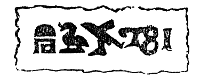
Breaky-Leg, strong drink; “he’s been to Bungay fair, and broke both his legs,” i.e., got drunk. In the ancient Egyptian language the determinative character in the hieroglyphic verb “to be drank,” has the significant form of the leg of a man being amputated. “Tangle Leg” is the name given to New England rum.
Breeched, or TO HAVE THE BAGS OFF, to have plenty of money; “to be well BREECHED,” to be in good circumstances. Also among schoolboys to be well flogged.
Breeches, “to wear the BREECHES,” said of a wife who usurps the husband’s prerogative. Equivalent to the remark that “the grey mare is the better horse.”
Breeching, a flogging. Term in use among boys at several private schools.
Breef, probably identical with BRIEF, a shortened card used for cheating purposes; thus described in an old book of games of about 1720—
“Take a pack of cards and open them, then take out all the honours ... and cut a little from the edges of the rest all alike, so as to make the honours broader than the rest, so that when your adversary cuts to you, you are certain of an honour. When you cut to your adversary cut at the ends, and then it is a chance if you cut him an honour, because the cards at the ends are all of a length. Thus you may make breefs end-ways as well as sideways.”
Modern card-players of a certain kind have considerably improved on this.
Breeks, breeches.—Scotch, now common.
Brick, a “jolly good fellow;” “a regular BRICK,” a staunch fellow. About the highest compliment that in one word can be paid one man. Said to be derived from an expression of Aristotle’s—τετραγωνος ἀνηρ.
Bridge, a cheating trick at cards, by which any particular card is cut by previously curving it by the pressure of the hand. Used in France as well as in England, and termed in the Parisian Argot FAIRE LE PONT.
Brief, a pawnbroker’s duplicate; a raffle card, or a ticket of any kind.
Briefs, cards constructed on a cheating principle. See BRIDGE, CONCAVES and CONVEXES, LONGS, and SHORTS, REFLECTORS, &c. From the German, BRIEFE, which Baron Heinecken says was the name given to the cards manufactured at Ulm. Brief is also the synonym for a card in the German Rothwälsch dialect, and BRIEFEN to play at cards. “Item—beware of the Joners, (gamblers,) who practice Beseflery with the BRIEF, (cheating at cards,) who deal falsely and cut one for the other, cheat with Boglein and spies, pick one BRIEF from the ground, and another from a cupboard,” &c.—Liber Vagatorum, ed. by Martin Luther, in 1529. English translation, by J. C. Hotten, 1860, p. 47. See BREEF.
Brim, a violent irascible woman, as inflammable and unpleasant as brimstone, from which the word is contracted.
Briney, the sea. A “dip in the BRINEY” once a year is a great attraction to Cockney excursionists. A story is told of one excursionist saying to another, as they stripped in a double machine, “Why, ’Arry, what dirty feet you’ve got!” “’Ave I; well yer see I wasn’t down last year.”
Bring-up, or BRING-TO, to stop suddenly, as a team of horses or a vessel. To BRING-UP also means to feed, clothe, and educate a child. To BRING-UP by hand is to bring up a newly-born child or animal without assistance from the natural fount.
Brisket-Beater, a Roman Catholic.
Broad and Shallow, an epithet applied to the so-called “Broad Church,” in contradistinction to the “High” and “Low” Churches. See HIGH and DRY.
Broad-Brim, originally applied to a Quaker only, but now used in reference to all quiet, sedate, respectable old men.
Broad-Cooper, a person employed by brewers to negotiate with publicans.
Broad-Faking, playing at cards. Generally used to denote “work” of the three-card and kindred descriptions.
Broad-Fencer, a “k’rect card” seller at races.
Broads, cards. Broadsman, a card-sharper. See Broad-faking.
Broadway Swell, a New York term for a great dandy, Broadway being the principal promenade in the “Empire City.”
Broady, cloth. Evidently a corruption of broadcloth. Broady workers are men who go round selling vile shoddy stuff under the pretence that it is excellent material, which has been “got on the cross,” i.e. stolen.
Brolly, an umbrella. Term used at both Oxford and Cambridge Universities.
Brosier, a bankrupt.—Cheshire. Brosier-my-dame, school term, implying a clearing of the housekeeper’s larder of provisions, in revenge for stinginess.—Eton.
Brother-Chip, originally fellow carpenter. Almost general now as brother tradesman of any kind. Also, BROTHER-WHIP, a fellow coachman; and BROTHER-BLADE, of the same occupation or calling—originally a fellow-soldier.
Brother-Smut, a term of familiarity. “Ditto, BROTHER SMUT,” tu quoque.
Broth of a Boy, an Irish term for a jolly good fellow.
Brown, a halfpenny.—See BLUNT.
Brown, “to do BROWN,” to do well or completely, “doing it BROWN,” prolonging the frolic, or exceeding sober bounds; “done BROWN,” taken in, deceived, or surprised.
Brown Bess, the old Government regulation musket; a musket with a browned barrel; also BLACK BESS. A suggestion has been made that BESS may be from the German BUSCHE, or BOSCHE, a barrel. It is much more likely, however, that the phrase is derived from the fact that “the soldier is wedded to his weapon.”
Brown-papermen, low gamblers.
Brown Study, a reverie. Very common even in educated society, but hardly admissible in writing, and therefore considered a vulgarism. It is derived, by a writer in Notes and Queries, from BROW STUDY, and he cites the old German BRAUN, or AUG-BRAUN, an eye-brow.—Ben Jonson.
Brown Talk, conversation of an exceedingly proper character, Quakerish. Compare BLUE.
Brown to, to understand, to comprehend.
Bruiser, a fighting man, a pugilist. Shakspeare uses the word BRUISING in a similar sense.
Brum, a counterfeit coin. Nearly obsolete. Corruption of Brummagem, for meaning of which see Introductory Chapter.
Brush, a fox’s tail, a house-painter. Also a scrimmage.
Brush, or BRUSH-OFF, to run away, or move on quickly.—Old Cant.
Bub, drink of any kind.—See GRUB. Middleton, the dramatist, mentions BUBBER, a great drinker.
Bub, a teat, woman’s breast, plural BUBBIES; no doubt from BIBE. See ante.
Bubble, to over-reach, deceive, to tempt by means of false promises.—Old. (Acta Regia, ii. 248, 1726.)
Bubble-and-Squeak, a dish composed of pieces of cold roast or boiled meat and greens, afterwards fried, which have thus first BUBBLED in the pot, and then SQUEAKED or hissed in the pan.
Bubble-Company, a swindling association.
Buckled, to be married. Also to be taken in custody. Both uses of the word common and exchangeable among the London lower classes.
Bubbley-Jock, a turkey, or silly boasting fellow; a prig.—Scottish. In the north of England the bird is called a BOBBLE-COCK. Both names, no doubt, from its cry, which is supposed by imaginative persons to consist of the two words exactly.
Buck, a gay or smart man; an unlicensed cabman; also a large marble used by schoolboys.
Buck, sixpence. The word is rarely used by itself, but generally denotes the sixpence attached to shillings in reference to cost, as, “three and a BUCK,” three shillings and sixpence. Probably a corruption of Fyebuck.
Buckhorse, a smart blow or box on the ear; derived from the name of a celebrated “bruiser” of that name. Buckhorse was a man who either possessed or professed insensibility to pain, and who would for a small sum allow anyone to strike him with the utmost force on the side of the face.
Buckle, to bend; “I can’t BUCKLE to that.” I don’t understand it; to yield or give in to a person. Shakspeare uses the word in the latter sense, Henry IV., i. 1; and Halliwell says that “the commentators do not supply another example.”
Buckle-Beggar, a COUPLE-BEGGAR, which see.
Buckle-to, to bend to one’s work, to begin at once, and with great energy—from buckling-to one’s armour before a combat, or fastening on a bundle.
Buckley, “Who struck Buckley?” a common phrase used to irritate Irishmen. The story is that an Englishman having struck an Irishman named Buckley, the latter made a great outcry, and one of his friends rushed forth screaming, “Who struck Buckley?” “I did,” said the Englishman, preparing for the apparently inevitable combat. “Then,” said the ferocious Hibernian, after a careful investigation of the other’s thews and sinews, “then, sarve him right.”
Buckra, a white man. The original of this term is a “flogging man,” from the Hebrew, and the application of it to the whites by the West Indian negroes is, therefore, rather interesting. They probably first learned it from a missionary.
Buckshish, BUCKSHEESH or BACKSHEESH, a present of money. Over all India, and the East generally, the natives lose no opportunity of asking for BUCKSHISH. The usage is such a complete nuisance that the word is sometimes answered by a blow; this is termed BAMBOO BUCKSHISH. Buckshish has taken up a very firm residence in Europe—may, in fact, on a much larger scale than that of Asia, be said to have always had an existence here. Buckshish is a very important item in the revenues of officials who hold positions of considerable importance, as well as in those of their humbler brethren. During the recent visit of the Shah of Persia, that potentate discovered that BUCKSHISH was by no means peculiar to the East.
Budge, to move, to “make tracks.”
Budge, strong drink; BUDGY, drunk; BUDGING-KEN, a public-house; “cove of the BUDGING-KEN,” the landlord. Probably a corruption of BOOZE. Probably also, on the lucus a non lucendo principle, because its use made one incapable of budging.
Buff, the bare skin; “stripped to the BUFF.”
Buff, to swear to, or accuse; generally used in reference to a wrongful accusation, as, “Oh, BUFF it on to him.” Old word for boasting, 1582.
Buffer, a navy term for a boatswain’s mate, one of whose duties it is—or was—to administer the “cat.”
Buffer, a familiar expression for a jolly acquaintance, probably from the French BOUFFARD, a fool or clown; a “jolly old BUFFER,” said of a good-humoured or liberal old man. In 1737, a BUFFER was a “rogue that killed good sound horses for the sake of their skins, by running a long wire into them.”—Bacchus and Venus. The term was once applied to those who took false oaths for a consideration; but though the word has fallen into disuse there is no particular reason for imagining that the practice has.
Buffer, a woman employed in a Sheffield warehouse to give the final polish to goods previously to their being plated.
Buffer, a dog. Dogs’ skins were formerly in great request—hence the term BUFF, meaning in old English to skin. It is still used in the ring, BUFFED meaning stripped naked, though the term BUFF, as applied to the skin, is most likely due to its resemblance to the leather so called. “Stripped to the BUFF,” cannot have any reference to dog skinning, though it may have originally referred to the BUFF jerkins worn under defensive armour. In Irish cant, BUFFER is a boxer. The BUFFER of a railway-carriage doubtless received its very appropriate name from the old pugilistic application of this term.
Buffle-Head, a stupid or obtuse person.—Miege. German, BUFFELHAUPT, buffalo-headed. Occurs in Plautus’ Comedies made English, 1694.
Buffs, the Third Regiment of Foot in the British army. From their facings.
Buffy, intoxicated.
Buggy, a gig, or light chaise. Common term in America and in India, as well as in England.
Bug-Hunter, a low wretch who plunders drunken men.
Bug-Walk, a coarse term for a bed.
Build, applied in fashionable slang to the make or style of dress, &c. “It’s a tidy BUILD, who made it?” A tailor is sometimes called a “trousers’ BUILDER.”
Bulger, large; synonymous with BUSTER.
Bulky, a constable.—North.
Bull, one who agrees to purchase stock at a future day, at a stated price, but who simply speculates for a rise in public securities to render the transaction a profitable one. Should stocks fall, the BULL is then called upon to pay the difference. See BEAR, who is the opposite of a BULL, the former selling, the latter purchasing—the one operating for a fall, the other for a rise.
Bull, a crown-piece, formerly BULL’S EYE. See WORK.
Bull, term amongst prisoners for the meat served to them in jail. Also very frequently used instead of the word beef. The costermonger often speaks of his dinner, when he has beef, as a “bit o’ BULL,” without any reference to its being either tough or tender, but he never speaks of mutton as “sheep.”
Bull-Beef, a term of contempt; “as ugly as BULL-BEEF,” “go to the billy-fencer, and sell yourself for BULL-BEEF.” Sometimes used to indicate full size of anything. “There was he, as big as BULL-BEEF.”
Bulldogs, the runners who accompany the proctor in his perambulations, and give chase to runaways.—University.
Bullet, to discharge from a situation. To shake the BULLET at anyone, is to threaten him with “the sack,” but not to give him actual notice to leave. To get the BULLET is to get notice, while to get the instant BULLET is to be discharged upon the spot. The use of the term is most probably derived from a fancied connexion between it and the word discharge.
Bullfinch, a hunting term for a large, thick, quickset hedge, difficult alike to “top” or burst through. Probably a corruption of BULL-FENCE, a fence made to prevent cattle straying either in or out.
Bull the Cask, to pour hot water into an empty rum puncheon, and let it stand until it extracts the spirit from the wood. The mixture is drunk by sailors in default of something stronger.—Sea.
Bully, a braggart; in the language of the streets, a man of the most degraded morals, who protects fallen females, and lives off their miserable earnings.—Shakspeare, in A Midsummer Night’s Dream, uses the word in its old form, as a term of endearment. This epithet is often applied in a commendable sense among the vulgar; thus—a good fellow or a good horse will be termed “a BULLY fellow,” “a BULLY horse;” and “a BULLY woman” signifies a right, good motherly old soul. Among Americans, “BULLY for you,” is a commendatory phrase, and “that’s BULLY” is a highly eulogistic term.
Bullyrag, to abuse or scold vehemently; to swindle one out of money by intimidation and sheer abuse.
Bum, the part on which we sit.—Shakspeare. BUMBAGS, trousers; Gael. BUN, a base or bottom; Welsh, BON, the lowest or worst part of anything.
Bum-Bailiff, a sheriff’s-officer—a term, some say, derived from the proximity which this gentleman generally maintains to his victims. Blackstone says it is a corruption of “bound bailiff.” A BUM-BAILIFF was generally called “bummy.”
Bumble, to muffle. Bumble-footed, club-footed, or awkward in the gait.
Bumble, a beadle. Adopted from Dickens’s character in Oliver Twist. This and “BUMBLEDOM” are now common.
Bumble-Puppy, a game played in public-houses on a large stone, placed in a slanting direction, on the lower end of which holes are excavated, and numbered like the holes in a bagatelle-table. The player rolls a stone ball, or marble, from the higher end, and according to the number of the hole it falls into the game is counted. It is undoubtedly the very ancient game of Troule-in-madame.
Bumbles, coverings for the eyes of horses that shy in harness.
Bumbrusher, an usher at a school.
Bumclink, in the Midland counties the inferior beer brewed for haymakers and harvest labourers. Derivation obvious.
Bum-Curtain, an old name for academical gowns when they were worn scant and short, especially those of the students of St. John’s College.—Camb. Univ. Any ragged or short academical gown.
Bummarees, a term given to a class of speculating salesmen at Billingsgate market, not recognised as such by the trade, but who get a living by buying large quantities of fish from the salesmen and re-selling them to smaller buyers. The word has been used in the statutes and bye-laws of the market for upwards of 200 years. It has been variously derived. Some persons think it may be from the French BONNE MARÉE, good fresh fish! “Marée signifie toute sorte de poisson de mer qui n’est pas sale; bonne marée—marée fraîche, vendeur de marée.”—Dict. de l’Acad. Franc. The BUMMAREES are accused of many trade tricks. One of them is to blow up codfish with a pipe until they look double their actual size. Of course when the fish come to table they are flabby, sunken, and half dwindled away. In Norwich, to BUMMAREE one is to run up a score at a public-house just open, and is equivalent to “running into debt with one.” One of the advertisements issued by Hy. Robinson’s “Office,” over against Threadneedle Street, was this:—
“Touching Advice from the OFFICE, you are desired to give and take notice as followeth:—
“Of Monies to be taken up, or delivered on Botto-maria, commonly called Bomarie.
“Of money to be put out or taken upon interest,” &c.
—The Publick Intelligencer, numb. 17, 25th June, 1660.
Bummer, literally one who sits or idles about; a loafer; one who sponges upon his acquaintances. In California, men who profess to be journalists, and so obtain free dinners and drinks, are called “literary BUMMERS.” Although the term is not much in use in this country, the profession of bumming, both literary and otherwise, is freely practised.
Bumper, according to Johnson from “bump,” but probably from French BON PÈRE, the fixed toast in monastic life of old, now used for “full measure.” A match at quoits, bowls, &c., may end in a “BUMPER game,” if the play and score be all on one side. Bumper is used in sporting and theatrical circles to denote a benefit which is one in reality as well as in name.
Bumptious, arrogant, self-sufficient. One on very good terms with himself is said to be BUMPTIOUS.
Bunce, costermongers’ perquisites; the money obtained by giving light weight, &c.; costermongers’ goods sold by boys on commission. In fact anything which is clear profit or gain is said to be “all BUNCE.” Probably a corruption of bonus; BONE, or BONER, being the slang for good. Bunce, Grose gives as the cant word for money.
Bunch-of-Fives, the hand, or fist.
Bundle, “to BUNDLE a person off,” i.e., to pack him off, send him flying.
Bundling, men and women sleeping together, where the divisions of the house will not permit of better or more decent accommodation, with all their clothes on. Bundling was originally courting done in bed, the lovers being tied or bundled up to prevent undue familiarities. The practice still obtains in some parts of Wales.
Bung, the landlord of a public-house. Much in use among sporting men.
Bung, to give, pass, hand over, drink, or to perform almost any action. BUNG up, to close up, as the eyes.—Pugilistic. “BUNG over the rag,” hand over the money.—Old, used by Beaumont and Fletcher, and Shakspeare. Also, to deceive one by a lie, to CRAM, which see.
Bunk, to decamp. “Bunk it!” i.e., be off.
Bunker, beer.
Bunkum, an American importation, denoting false sentiments in speaking, pretended enthusiasm, &c. The expression arose from a speech made by a North Carolina senator named Buncombe.
Bunter, a prostitute, a street-walking female thief.
Burdon’s Hotel, Whitecross Street Prison, of which the Governor was a Mr. Burdon. Almost every prison has a nickname of this kind, either from the name of the Governor, or from some local circumstance. The Queen’s Bench has also an immense number of names—SPIKE PARK, &c.; and every Chief-Justice stands godfather to it.
Burerk, a lady, a showily-dressed woman.
Burke, to kill, to murder, secretly and without noise, by means of strangulation. From Burke, the notorious Edinburgh murderer, who, with an accomplice named Hare, used to decoy people into the den he inhabited, kill them, and sell their bodies for dissection. The wretches having been apprehended and tried, Burke was executed, while Hare, having turned king’s evidence, was released. Bishop and Williams were their London imitators. The term BURKE is now usually applied to any project that is quietly stopped or stifled—as “the question has been BURKED.” A book suppressed before publication is said to be BURKED.
Burra, great; as BURRA SAIB, a great man; BURRA KHANAII, a great dinner.—Anglo-Indian.
Bury a Moll, to run away from a mistress.
Bus, or BUSS, an abbreviation of “omnibus,” a public carriage. Also, a kiss, abbreviation of Fr. BAISER. A Mr. Shillibeer started the first BUS in London. A shillibeer is now a hearse and mourning coach all in one, used by the very poorest mourners and shabbiest undertakers.
Why is Temple Bar like a lady’s veil? Because it wants to be removed to make way for the BUSSES.
Bus, business (of which it is a contraction) or action on the stage, so written, but pronounced BIZ.—Theatrical. See BIZ.
Business, the action which accompanies dialogue. “His BUSINESS was good.” Generally applied to byplay.—Theatrical.
Busk, to sell obscene songs and books at the bars and in the tap-rooms of public-houses. Sometimes it implies selling other articles. Also to “work” public-houses and certain spots as an itinerant musician or vocalist.
Busker, a man who sings or performs in a public-house; an itinerant.
Bust, or BURST, to tell tales, to SPLIT, to inform. Busting, informing against accomplices when in custody.
Buster (BURSTER), a small new loaf; “twopenny BUSTER,” a twopenny loaf. “A penn’orth o’ BEES-WAX (cheese) and a penny BUSTER,” a common snack at beershops. A halfpenny loaf is called a “starver.”
Buster, an extra size; “what a BUSTER,” i.e., what a large one; “in for a BUSTER,” determined on an extensive frolic or spree. Scotch, BUSTUOUS; Icelandic, BOSTRA.
Bustle, money; “to draw the BUSTLE.”
Busy-Sack, a carpet-bag.
Butcha, a Hindoo word in use among Englishmen for the young of any animal. In England we ask after the children; in India the health of the BUTCHAS is tenderly inquired for.
Butcher, the king in playing-cards. When card-playing in public houses was common, the kings were called butchers, the queens bitches, and the knaves jacks. The latter term is now in general use.
Butcher’s Mourning, a white hat with a black mourning hatband. Probably because, under any circumstances, a butcher would rather not wear a black hat. White hats and black bands have, however, become genteel ever since the late Prince Consort patronized them, though they retain a deal of the old sporting leaven.
Butter, or BATTER, praise or flattery. To BUTTER, to flatter, cajole. Same as “soft soap” and “soft sawder.” Soft words generally. Maybe from the old proverb, “Fine words butter no parsneps.”
Butter-Fingered, apt to let things fall; greasy or slippery-fingered.
Button, a decoy, sham purchaser, &c. At any mock or sham auction seedy specimens may be seen. Probably from the connexion of buttons with Brummagem, which is often used as a synonym for a sham.—See BONNET.
Buttoner, a man who entices another to play.
Buttons, a page,—from the rows of gilt buttons which adorn his jacket.
Buttons, “not to have all one’s BUTTONS;” to be deficient in intellect. To “make BUTTONS” means for some occult reason to look sorry and sad. “He was making BUTTONS,” i.e., he was looking sorrowful. Perhaps because button-making is a sorry occupation.
Butty, a word used in the mining districts to denote a kind of overseer. Also used by the Royal Marines in the sense of comrade; a policeman’s assistant, one of the staff in a mêlée.
Buz, to share equally the last of a bottle of wine, when there is not enough for a full glass to each of the party.
Buz, a well-known public-house game, played as follows:—“The chairman commences saying “one,” the next on the left hand “two,” the next “three,” and so on to seven, when “BUZ” must be said. Every seven and multiple of 7, as 14, 17, 21, 27, 28, &c., must not be mentioned, but “BUZ” instead. Whoever breaks the rule pays a fine, which is thrown on the table, and the accumulation expended in drink for the company. See “SNOOKS and WALKER” for more complicated varieties of a similar game. These “parlour pastimes” are often not only funny, but positively ingenious. But the Licensing Act and a zealous police are fast clearing them all out.
Buz, to pick pockets; BUZZING or BUZ-FAKING, robbing.
Buz-Bloke, a pickpocket who principally confines his attention to purses and loose cash. Grose gives BUZ-GLOAK, an ancient cant word. Gloak was old cant for a man. Buz-napper, a young pickpocket.
Buz-man, an informer; from BUZ, to whisper, but more generally a thief.
Buz-napper’s Academy, a school in which young thieves were trained. Figures were dressed up, and experienced tutors stood in various difficult attitudes for the boys to practise upon. When clever enough they were sent on the streets. Dickens gives full particulars of this old style of business in Oliver Twist.
Buzzer, a pickpocket. Grose gives BUZ-COVE and, as above mentioned, BUZ-GLOAK.
Byblow, an illegitimate child.
By George, an exclamation similar to BY JOVE. The term is older than is frequently imagined—vide Bacchus and Venus (p. 117), 1737. “’Fore (or by) GEORGE, I’d knock him down.” Originally in reference to Saint George, the patron saint of England, or possibly to the House of Hanover.
By Golly, an ejaculation, or oath; a compromise for “by God.” By gum is another oblique oath. In the United States, small boys are permitted by their guardians to say GOL DARN anything, but they are on no account allowed to commit the profanity of G—d d——n anything. A manner of “sailing close to the wind” which is objectionable to the honest mind. A specimen ejaculation and moral waste-pipe for interior passion or wrath is seen in the exclamation—BY THE EVER-LIVING JUMPING-MOSES—a harmless and ridiculous phrase, that from its length is supposed to expend a considerable quantity of fiery anger.
By Jingo, an oath or exclamation having no particular meaning, and no positive etymology, though it is believed by some that JINGO is derived from the Basque jenco, the devil.
Cab, in statutory language, “a hackney carriage drawn by one horse.” Abbreviated from the French CABRIOLET; originally meaning “a light low chaise.” The wags of Paris playing upon the word (quasi cabri au lait) used to call a superior turn-out of the kind a cabri au crême. Our abbreviation, which certainly smacks of slang, has been stamped with the authority of the Legislature, and has been honoured by universal custom.
Cab, to stick together, to muck, or tumble up—Devonshire.
Cabbage, pieces of cloth said to be purloined by tailors. Any small profits in the way of material.
Cabbage, to pilfer or purloin. Termed by Johnson a “cant word,” but adopted by later lexicographers as a respectable term. Said to have been first used in the above sense by Arbuthnot.
Cabbage-Head, a soft-headed person.
Cabby, popular name for the driver of a cab. This title has almost supplanted the more ancient one of jarvey.
Caboose, the galley or cook-house of a ship; a term used by tramps to indicate a kitchen.
Cackle-Tub, a pulpit.
Cackling-Cove, an actor. Also called a MUMMERY-COVE.—Theatrical.
Cad, or CADGER (from which it is shortened), a mean or vulgar fellow; a beggar; one who would rather live on other people than work for himself; a man who tries to worm something out of another, either money or information. Johnson uses the word, and gives huckster as the meaning, in which sense it was originally used. Apparently from CAGER, or GAGER, the old Cant term for a man. The exclusives at the English Universities apply the term CAD to all non-members. It has also been suggested that the word may be a contraction of the French CADET.
Cad, an omnibus conductor. Of late years the term has been generically applied to the objectionable class immortalized by Thackeray under the title of snob. A great deal of caddism is, however, perpetrated by those who profess to have the greatest horror of it—the upper classes—a fact which goes far to prove that it is impossible to fairly ascribe a distinctive feature to any grade of society.