THE SLANG DICTIONARY. (continued 2)
Reading edition
Cadge, to beg in an artful, wheedling manner.—North. In Scotland to CADGE is to wander, to go astray. See under CODGER.
Cadging, begging, generally with an eye to pilfering when an opportunity occurs. To be “on the cadge” is almost synonymous with “on the make.”
Cag, to irritate, affront, anger. Schoolboy slang.
Cage, a minor kind of prison. A country lock-up which contained no offices.
Cagmag, bad food, scraps, odds and ends; or that which no one could relish. Grose give CAGG MAGGS, old and tough Lincolnshire geese, sent to London to feast the poor cockneys. Gael., French, and Welsh, CAC, and MAGN. A correspondent at Trinity College, Dublin, considers this as originally a University slang term for a bad cook, κακὸς μάγειρος. There is also a Latin word used by Pliny, MAGMA, denoting dregs or dross.
Cake, a “flat;” a soft or doughy person, a fool.
Cakey-Pannum-Fencer, or PANNUM-FENCER, a man who sells street pastry.
Calaboose, a prison.—Sea slang, from the Spanish.
Calculate, a word much in use among the inhabitants of the Western States U.S., as “I CALCULATE you are a stranger here.” New Englanders use the word “guess” instead of CALCULATE, while the Virginians prefer to say “reckon.”
Caleb Quotem, a parish clerk; a jack of all trades. From a character in The Wags of Windsor.
California, or Californians, money. Term generally applied to gold only. Derivation very obvious.
Call, a notice of rehearsal, or any other occasion requiring the company’s presence, posted up in a theatre. “We’re CALLED for eleven to-morrow morning.”
Call-a-Go, in street “patter,” is to leave off trying to sell anything and to remove to another spot, to desist. Also to give in, yield, at any game or business. Probably from the “GO” call in cribbage.
Cameronians, The, the Twenty-sixth Regiment of Foot in the British Army.
Camesa, shirt or chemise.—Span. See its abbreviated form, MISH, from the ancient Cant, COMMISSION. Probably re-introduced by the remains of De Lacy Evans’s Spanish Legion on their return. See Somerville’s account of the Span. Leg., for the curious facility with which the lower classes in England adopt foreign words as slang and cant terms. Italian, CAMICIA. This latter is the more likely etymology, as anyone who visits the various quarters where Irish, Italians, and a mongrel mixture of half-a-dozen races congregate and pig together, will admit.
Camister, a preacher, clergyman, or master.
Canary, a sovereign. From the colour. Very old slang indeed.
Canister, the head.—Pugilistic.
Canister-Cap, a hat.
Cannibals, the training boats for the Cambridge freshmen, i.e., “Cannot-pulls.” The term is applied both to boats and rowers.—See SLOGGERS. Torpids is the usual term for the races in which these men and machines figure.
Cannikin, a small can, similar to PANNIKIN. “And let the Cannikin clink.”
Cant, a blow or toss; “a CANT over the kisser,” a blow on the mouth; “a CANT over the buttock,” a throw or toss in wrestling.
Cantab, a student at Cambridge.
Cantankerous, litigious, bad-tempered. An American corruption probably of contentious. A reviewer of an early edition of this book derives it from the Anglo-Norman CONTEK, litigation or strife. Others have suggested “cankerous” as the origin. Bailey has CONTEKE, contention as a Spenserian word, and there is the O.E. CONTEKORS, quarrelsome persons.
Cant of Togs, a gift of clothes.
Canvasseens, sailors’ canvas trousers.
Cap, a false cover to a tossing coin. The term and the instrument are both nearly obsolete. See COVER-DOWN.
Cap, “to set her CAP.” A woman is said to set her CAP at a man when she makes overt love to him.
Cap, to outdo or add to, as in capping jokes.
Cape Cod Turkey, salt fish.
Caper-Merchant, a dancing-master. Sometimes a hop-merchant.
Capers, dancing, frolicking; “to cut CAPER-SAUCE,” i.e., to dance upon nothing—be hanged. Old thieves’ talk.
Capper-Clawing, female encounter, where caps are torn and nails freely used. Sometimes it is pronounced CLAPPER-CLAW. The word occurs in Shakspeare, Troilus and Cressida, act v. sc. 4.
Caravan, a railway train, especially a train expressly chartered to convey people to a prize fight.
Caravansera, a railway station. In pugilistic phraseology a tip for the starting point might have been given thus. “The SCRATCH must be TOED at sharp five, so the CARAVAN will start at four from the CARAVANSERA.”
Carboy, a general term in most parts of the world for a very large glass or earthenware bottle.
Card, a character. “A queer CARD,” i.e., an odd fish.
Cardinal, a lady’s red cloak. A cloak with this name was in fashion in the year 1760. It received its title from its similarity in shape to one of the vestments of a cardinal. Also mulled red wine.
Cardwell’s Men, officers promoted in pursuance of the new system of non-purchase.
Carney, soft hypocritical language. Also, to flatter, wheedle, or insinuate oneself.—Prov.
Carnish, meat, from the Ital. CARNE, flesh; a Lingua Franca importation; CARNISH-KEN, a thieves’ eating-house; “cove of the CARNISH-KEN,” the keeper thereof.—North Country Cant.
Caroon, five shillings. French, COURONNE; Gipsy, COURNA; Spanish, CORONA.
Carpet, “upon the CARPET,” any subject or matter that is uppermost for discussion or conversation. Frequently quoted as sur le tapis, or more generally “on the tapis,” but it does not seem to be at all known in France. Also servants’ slang. When a domestic is summoned by the master or mistress to receive a warning or reprimand, he or she is said to be CARPETED. The corresponding term in commercial establishments is a WIGGING.
Carpet-Knight, an habitué of drawing-rooms, a “ladies’ man.”
Carrier-Pigeon, a swindler, one who formerly used to cheat lottery-office keepers. Now used among betting men to describe one who runs from place to place with “commissions.”
Carriwitchet, a hoaxing, puzzling question, not admitting of a satisfactory answer, as—“How far is it from the first of July to London Bridge?” “If a bushel of apples cost ten shillings, how long will it take for an oyster to eat its way through a barrel of soap?”
Carrot. “Take a CARROT!” a vulgar insulting phrase.
Carrots, the coarse and satirical term for red hair. An epigram gives an illustration of the use of this term:—
“Why scorn red hair? The Greeks, we know, (I note it here in charity) Had taste in beauty, and with them The graces were all Χάριται!”
Of late years CARROTY hair in all its shades has been voted beautiful, i.e., fashionable.
Carry Corn, to bear success well and equally. It is said of a man who breaks down under a sudden access of wealth—as successful horse-racing men and unexpected legatees often do—or who becomes affected and intolerant, that “he doesn’t CARRY CORN well.”
Carry me Out! an exclamation of pretended astonishment on hearing news too good to be true, or a story too marvellous to be believed. Sometimes varied by “Let me die,” i.e., I can’t survive that. Profanely derived from the Nunc dimittis (Luke xi. 29). The Irish say, “CARRY ME OUT, and bury me decently.”
Carry-on, to joke a person to excess, to CARRY ON a “spree” too far; “how we CARRIED ON, to be sure!” i.e., what fun we had. Nautical term—from carrying on sail.
Carts, a pair of shoes. In Norfolk the carapace of a crab is called a crab cart; hence CARTS would be synonymous with CRAB SHELLS, which see.
Cart-wheel, a five-shilling piece. Generally condensed to “WHEEL.”
Ca-sa, a writ of capias ad satisfaciendam.—Legal slang.
Casa, or CASE, a house, respectable or otherwise. Probably from the Italian CASA.—Old Cant. The Dutch use the word KAST in a vulgar sense for a house, i.e., MOTTEKAST, a brothel. Case sometimes means a water-closet, but is in general applied to a “house of accommodation.” Casa is generally pronounced carzey.
Cascade, to vomit.
Case. Some years ago the term CASE was applied generally to persons or things; “what a CASE he is,” i.e., what a curious person; “a rum CASE that,” or “you are a CASE,” both synonymous with the phrase “odd fish,” common half a century ago. This would seem to have been originally a “case” for the police-court; drunkenness, &c. Among young ladies at boarding-schools a CASE means a love-affair. Case now means any unfortunate matter. “I’m afraid it’s a CASE with him.”
Case, a bad crown-piece. Half-a-case, a counterfeit half-crown. There are two sources, either of which may have contributed this slang term. Caser is the Hebrew word for a crown; and silver coin is frequently counterfeited by coating or CASING pewter or iron imitations with silver. Possibly from its being “a CASE” with the unfortunate owner.
Cask, fashionable slang for a brougham, or other private carriage. Not very general. “Pillbox” is the more usual term.
Cassam, cheese—not CAFFAN, which Egan, in his edition of Grose, has ridiculously inserted.—Ancient Cant. Latin, CASEUS. Gael. and Irish, CAISE.
Cast, to assist by lightening labour. Men in small boats who want to be towed behind steamers or sailing vessels, say “Give us a CAST.” Also used by waggoners and others, who sometimes vary the performance by asking, when stuck on a hill, for a pound, possibly a pound of flesh, horse or human.
Cast up Accounts, to vomit.—Old.
Castor, a hat. Mostly used in pugilistic circles. Indeed many hangers-on of the P.R. have considered that the term arose from the custom of casting the hat into the ring, before entering oneself. Castor was the Latin name for the animal now known as the BEAVER; and, strange to add, BEAVER was the slang for CASTOR, or hat, many years ago, before gossamer came into fashion.
Cat, a lady’s muff; “to free a CAT,” i.e., steal a muff.
Cat, to vomit like a cat. Perhaps from CATARACT; but see SHOOT THE CAT.
Cat—CAT O’ NINE TAILS, a whip with that number of lashes used to punish refractory sailors.—Sea. The “cat” is now a recognised term for the punishmental whip.
Catamaran, a disagreeable old woman.—Thackeray.
Cat and Kitten Sneaking, stealing pint and quart pots and small pewter spirit measures from public-houses.
Cataract, once a black satin scarf arranged for the display of jewellery, much in vogue among “commercial gents.” Now quite out of date.
Catchbet, a bet made for the purpose of entrapping the unwary by means of a paltry subterfuge. See CHERRY COLOUR.
Catch-’em-Alive, a humane trap; also a small-tooth comb. A piece of paper smeared with a sweet sticky substance which is spread about where flies most abound, and in this sense not particularly humane. The CATCH-’EM-ALIVE trap for rats and other such animals is humane compared with the gin trap.
Catch-penny, any temporary contrivance to obtain money from the public; penny shows, or cheap exhibitions. Also descriptions of murders which have never taken place.
Catchy (similar formation to touchy), inclined to take an undue advantage.
Caterwauling, applied derisively to inharmonious singing; also love-making, from the noise of cats similarly engaged.
Catever, a queer, or singular affair; anything poor, or very bad. From the Lingua Franca, and Italian, CATTIVO, bad. Variously spelled by the lower orders.—See KERTEVER.
Cat-faced, a vulgar and very common expression of contempt in the North of England.
Catgut-Scraper, a fiddler.
Cat-in-the-Pan, a traitor, a turncoat—derived by some from the Greek, καταπαν, altogether; or—and more likely—from cake in pan, a pan-cake, which is frequently turned from side to side.
Cat-lap, a contemptuous expression for weak drink. Anything a cat will drink is very innocuous.
Cats and Dogs. It is said to rain cats and dogs when a shower is exceptionally heavy. Probably in ridicule of the remarkable showers which used to find their way into the papers during the “silly season.”
Cat’s-meat, a coarse term for the lungs—the “lights” or lungs of animals being usually sold to feed cats.
Cat’s-paw, a dupe or tool. From the old story of the monkey who used the cat’s-paw to remove his roast chestnuts from the fire. A sea term, meaning light and occasional breezes occurring in calm weather.
Cat’s-water, “old Tom,” or gin.
Cattle, a term of contempt applied to the mob, or to a lot of lazy, helpless servants.
Caucus, a private meeting held for the purpose of concerting measures, agreeing upon candidates for office before an election, &c. This is an American term, and a corruption of CAULKER’S MEETING, being derived from an association of the shipping interest at Boston, previous to the War of Independence, who were very active in getting up opposition to England.—See Pickering’s Vocabulary.
Caulk, to take a surreptitious nap; sleep generally, from the ordinary meaning of the term; stopping leaks, repairing damages, so as to come out as good as new.—Sea term.
Caulker, a dram. The term “caulker” is usually applied to a stiff glass of grog—preferably brandy—finishing the potations of the evening. See WHITEWASH.
Caulker, a too marvellous story, a lie. Choker has the same sense.
Caution, anything out of the common way. “He’s a CAUTION,” is said of an obdurate or argumentative man. The phrase is also used in many ways in reference to places and things.
Cavaulting, a vulgar phrase equivalent to “horsing.” The Italian CAVALLINO, signifies a rake or debauchee.—Lingua Franca, CAVOLTA. From this comes the Americanism “cavorting,” running or riding round in a heedless or purposeless manner.
Cave, or CAVE IN, to submit, shut up.—American. Metaphor taken from the sinking of an abandoned mining shaft.
Chaff, to gammon, joke, quiz, or praise ironically. Originally “to queer” represented our modern word “CHAFF.” Chaff-bone, the jaw-bone.—Yorkshire. Chaff, jesting. In Anglo-Saxon, CEAF is chaff; and CEAFL, bill, beak, or jaw. In the Ancren Riwle, A.D. 1221, CEAFLE is used in the sense of idle discourse.
Chaffer, the mouth; “moisten your CHAFFER,” i.e., take something to drink.
Chal, old Romany term for a man; CHIE was the name for a woman.
Chalk out, or CHALK DOWN, to mark out a line of conduct or action; to make a rule or order. Phrase derived from the Workshop.
Chalk up, to credit, make entry in account books of indebtedness; “I can’t pay you now, but you can CHALK IT UP,” i.e., charge me with the article in your day-book. From the old practice of chalking one’s score for drink behind the bar-doors of public-houses.
Chalks, “to walk one’s CHALKS,” to move off, or run away. An ordeal for drunkenness used on board ship, to see whether the suspected person can walk on a chalked line without overstepping it on either side.
Chalks, degrees, marks; so called from being made by a piece of chalk; “to beat by long CHALKS,” i.e., to be superior by many degrees. “Making CHALKS” is a term connected with the punishment of boys on board ship, and in the Naval School at Greenwich. Two chalk lines are drawn wide apart on the deck or floor, and the boy to be punished places a foot on each of these lines, and stoops, thereby presenting a convenient portion of his person to the boatswain or master.
Chance the Ducks, an expression signifying come what may. “I’ll do it, and CHANCE THE DUCKS.”
Chancery, a pugilistic phrase for difficulties; “to get a man’s head into CHANCERY,” i.e., to get an opponent’s head firmly under one’s arm, where it can be pommelled with immense power, and without any possibility of immediate extrication. From the helplessness of a suitor in Chancery. This opportunity was of very rare occurrence when the combatants were at all evenly matched.
Change, small money. The overplus returned after paying for a thing in a round sum. Hence a slang expression used when a person receives a “settler” in the shape of either a repartee or a blow—“Take your CHANGE out of that!”
Chap, a fellow, a boy; “a low CHAP,” a low fellow—abbreviation of CHAPMAN, a huckster. Used by Byron in his Critical Remarks.
Chapel, a printers’ assembly, held for the purpose of discussing differences between employer and workmen, trade regulations, or other matters. The term is scarcely slang, but some “comps” ask its insertion in this work.
Chapel. An undergrad is expected to attend seven out of the fourteen services in chapel each week, and to let four or five be morning chapels. Occasionally a Don—the Dean as a rule—will “CHAPEL” him, that is, order him to attend to worship his Creator twice daily. The Bible clerk “pricks the list,” i.e., marks down the names of all present.—Univ.
Chapel-of-ease. French, CABINET D’AISANCE, a house of office.
Chariot-buzzing, picking pockets in an omnibus.
Charley, a watchman, a beadle. Almost obsolete now.
Charley-pitcher, a low, cheating gambler.
Charlies, a woman’s breasts. Also called dairies and bubbies.
Chats, lice, or body vermin. Prov., any small things of the same kind.
Chatter-basket, common term for a prattling child amongst nurses.
Chatter-box, an incessant talker or chatterer.
Chatty, a filthy person, one whose clothes are not free from vermin; CHATTY DOSS, a lousy bed. A CHATTY DOSSER or a CRUMMY DOSSER is a filthy tramp or houseless wanderer.
Chaunt, to sing the contents of any paper in the streets. Cant, as applied to vulgar language, may have been derived from CHAUNT.
Chaunt, “to CHAUNT the play,” to explain the tricks and manœuvres of thieves.
Chaunter-culls, a singular body of men who used to haunt certain well-known public-houses, and write satirical or libellous ballads on any person, or body of persons, for a consideration. 7s. 6d. was the usual fee, and in three hours the ballad might be heard in St. Paul’s Churchyard, or other public spot. Strange as it may appear, there are actually two men in London at the present day who gain their living in this way. Very recently they were singing before the establishment of a fashionable tailor in Regent Street; and not long since they were bawling their doggrel rhymes outside the mansion of a Norfolk M.P., in Belgravia.[57]
Chaunters, those street sellers of ballads, last copies of verses, and other broadsheets, who sang or bawled the contents of their papers. They often termed themselves PAPER WORKERS. Cheap evening papers and private executions have together combined to improve these folks’ occupations off the face of the earth. See HORSE-CHAUNTERS.
Chaw, to chew; CHAW UP, to get the better of one, finish him up; CHAWED UP, utterly done for.
Chaw-bacon, a rustic. Derived from the popular idea that a countryman lives entirely on bread and fat bacon. A country clown, a joskin, a yokel, a clodcrusher. These terms are all exchangeable.
Chaw over, to repeat one’s words with a view to ridicule.
Cheap, “doing it on the CHEAP,” living economically, or keeping up a showy appearance with very little means.
Cheap Jacks, or JOHNS, oratorical hucksters and patterers of hardware, who put an article up at a high price, and then cheapen it by degrees, indulging all the time in volleys of coarse wit, until it becomes to all appearance a bargain, and as such it is bought by one of the crowd. The popular idea is that the inverse method of auctioneering saves them paying for the auction licence.—See DUTCH AUCTION.
Checks, counters used in games at cards. In the Pacific States of America a man who is dead is said to have handed (or passed) in his checks. The gamblers there are responsible for many of the colloquialisms current.
Chee-Chee, this word is used in a rather offensive manner to denote Eurasians,[58] or children by an English father and native mother. It takes its origin in a very common expression of half-caste females, “Chee-chee,” equivalent to our Oh, fie!—Nonsense!—For shame!—Anglo-Indian.
Cheek, share or portion; “where’s my CHEEK?” where is my allowance? “All to his own CHEEK,” all to himself.
Cheek, impudence, assurance; CHEEKY, saucy or forward.
Cheek, to irritate by impudence, to accuse.
Cheek by Jowl, side by side—said often of persons in such close confabulation that their faces almost touch.
Cheese, anything good, first-rate in quality, genuine, pleasant, or advantageous, is termed the CHEESE. The London Guide, 1818, says it was from some young fellows translating “c’est une autre CHOSE” into “that is another CHEESE.” But the expression CHEESE may be found in the Gipsy vocabulary, and in the Hindostanee and Persian languages. In the last CHIZ means a thing—that is the thing, i.e., the CHEESE.
Cheese, or CHEESE IT (evidently a corruption of cease), leave off, or have done; “CHEESE your barrikin,” hold your noise. Term very common.
Cheesecutter, a prominent and aquiline nose. Also a large square peak to a cap. Caps fitted with square peaks are called cheesecutter caps.
Cheesemongers, once a popular name for the First Lifeguards. Until the Peninsular War the First Lifeguards, from their almost exclusive service at home, were nicknamed CHEESEMONGERS. This term then fell into desuetude; but at Waterloo the commanding officer of the regiment had not forgotten it, and when leading his men to the charge, called out, “Come on, you damned CHEESEMONGERS!” an invitation complied with so readily, that the title was restored, with the difference that it was no longer a word of reproach.
Cheesy, fine or showy. The opposite of “dusty.”
Cherry-bums, or CHERUBIMS, a nickname given to the 11th Hussars, from their crimson trousers.
Cherry-colour, either red or black, as you wish; a term used in a cheating trick at cards. When the cards are being dealt, a knowing one offers to bet that he will tell the colour of the turn-up card. “Done!” says Mr. Green. The sum being named, Mr. Sharp affirms that it will be CHERRY-COLOUR; and as cherries are either black or red, he wins, leaving his victim a wiser man, it is to be hoped, and not a better for the future. It may be as well for the habitually unfortunate to know that wagers of this kind are not recoverable even according to the sporting code, which disacknowledges all kinds of catch-bets.
Cherry-merry, a present of money. Cherry-merry-bamboo, a beating.—Anglo-Indian.
Cherubs, or still more vulgarly, CHERUBIMS, the chorister boys who chaunt in the services at the abbeys and cathedrals. Possibly because in some places their heads alone are visible.
Cheshire Cat, to grin like a CHESHIRE CAT, to display the teeth and gums when laughing. Formerly the phrase was “to grin like a CHESHIRE CAT eating cheese.” A hardly satisfactory explanation has been given of this phrase—that Cheshire is a county palatine, and the cats, when they think of it, are so tickled with the notion that they can’t help grinning.[59]
Chicken, a term applied to anything young, small, or insignificant; CHICKEN STAKES, small paltry stakes; “she’s no CHICKEN,” said of an old maid.
Chicken-hearted, cowardly, fearful. With about the amount of pluck a chicken in a fright might be supposed to possess.
Chi-ike, to hail in a rough though friendly manner; to support by means of vociferation.
Chi-ike, a hail; a good loud word of hearty praise; term used by the costermongers, who assist the sale of each other’s goods by a little friendly, although noisy, commendation.
Children’s Shoes (to make), to be made nought of.—See SHOES.
Chill, to warm, as beer. This at first seems like reversing the order of things, but it is only a contraction of “take the CHILL off.”
Chimney-Sweep, the aperient mixture commonly called a black draught.
Chin-chin, a salutation, a compliment.—Anglo-Chinese.
Chink, or CHINKERS, money.—Ancient. Derivation obvious.
Chin-wag, officious impertinence.
Chip of the Old Block, a child which physically or morally resembles its father. Brother chip, one of the same trade or profession. Originally brother carpenter, now general.
Chips, money; also a nickname for a carpenter.—Sea.
Chirp, to give information, to “peach.”
Chisel, to cheat, to take a slice off anything. Hence the old conundrum: “Why is a carpenter like a swindler?—Because he chisels a deal.”
Chit, a letter; corruption of a Hindoo word.—Anglo-Indian.
Chitterlings, the shirt frills once fashionable and worn still by ancient beaux; properly the entrails of a pig, to which they are supposed to bear some resemblance. Belgian SCHYTERLINGH.
Chivalry, coition. Probably a corruption from the Lingua Franca. Perhaps from CHEVAULCHER.
Chive, or CHIVEY, a shout, a halloo, or cheer; loud tongued. Probably from CHEVY-CHASE, a boy’s game, in which the word CHEVY is bawled aloud. Dickens uses the word CHIVEY in Bleak House rather freely, but there it is from the other phase of CHEVY-CHASE which follows.
Chive, a knife; also used as a verb, to knife. In all these cases the word is pronounced as though written CHIV or CHIVVY.
Chive-Fencer, a street hawker of cutlery.
Chivey, to chase round, or hunt about. Apparently from CHEVY-CHASE.—See above.
Choakee, or CHOKEY, the black hole.—Military Anglo-Indian. Chokey is also very vulgar slang for prison.
Chock-Full, full till the scale comes down with a shock. Originally CHOKE-FULL, and used in reference to theatres and places of amusement.
Choke Off, to get rid of. Bulldogs can only be made to loose their hold by choking them.[60] Suggestively to get rid of a man by saying something to him which “sticks in his gizzard.”
Choker, a cravat, a neckerchief. White-choker, the white neckerchief worn by mutes at a funeral, waiters at a tavern, and gentlemen in evening costume. Clergymen and Exeter Hallites are frequently termed WHITE-CHOKERS.
Choker, or WIND-STOPPER, a garotter.
Chonkeys, a kind of mincemeat, baked in a crust, and sold in the streets.
Choops, a corruption of CHOOPRAHO, keep silence.—Anglo-Indian.
Chootah, small, insignificant.—Anglo-Indian.
Chop, in the Canton jargon of Anglo-Chinese, this word has several significations. It means an official seal, a permit, a boat load of teas. First chop signifies first quality; and CHOP-CHOP, to make haste.
Chop, to exchange, to “swop.” To CHOP and change, to be as variable as the wind.
Chops, properly CHAPS, the mouth, or cheeks; “down in the CHOPS,” or “down in the mouth,” i.e., sad or melancholy.
Chouse, to cheat out of one’s share or portion. Hackluyt, CHAUS; Massinger, CHIAUS. From the Turkish, in which language it signifies an interpreter. Gifford gives a curious story as to its origin:—
“In the year 1609 there was attached to the Turkish embassy in England an Interpreter, or CHIAOUS, who, by cunning, aided by his official position, managed to cheat the Turkish and Persian merchants, then in London, out of the large sum of £4000, then deemed an enormous amount. From the notoriety which attended the fraud, and the magnitude of the swindle, any one who cheated or defrauded was said to chiaous, or chause, or CHOUSE; to do, that is, as this Chiaous had done.”—See Trench, Eng. Past and Present.
Chiaus, according to Sandys (Travels, p. 48), is “one who goes on embassies, executes commandments,” &c. The particular Chiaus in question is alluded to in Ben Jonson’s Alchymist, 1610.
“D. What do you think of me? That I am a CHIAUS? Face.That I am a CHIAUS? What’s that? D. The Turk [who] was here. As one would say, do you think I am a Turk?”
Chout, an entertainment.—East-end of London.
Chovey, a shop.—Costermonger.
Chow-Chow, a mixture, food of any kind. Also chit-chat and gossip.—Anglo-Chinese.
Chowdar, a fool.—Anglo-Chinese.
Christening, erasing the name of the maker, the number, or any other mark, from a stolen watch, and inserting a fictitious one in its place.
Chubby, round-faced, plump. Probably from the same derivative as CHUB, which means literally a fish with a big head.
Chuck, bread or meat; in fact, anything to eat. Also a particular kind of beefsteak.
Chuck, a schoolboy’s treat.—Westminster School. Provision for an entertainment. Hard CHUCK is sea biscuit.
Chuck, to throw or pitch.
Chuck a Jolly, to bear up or bonnet, as when a costermonger praises the inferior article his mate or partner is trying to sell. See Chi-ike.
Chuck a Stall, to attract a person’s attention while a confederate picks his pockets, or otherwise robs him.
Chuck in, to challenge—from the pugilistic custom of throwing a hat into the ring; a modern version of “throwing down the gauntlet.” This term seems to have gone out of fashion with the custom which gave rise to it.
Chuckle-head, much the same as “buffle head,” “cabbage head,” “chowder head,” “cod’s head,”—all signifying that large abnormal form of skull generally supposed to accompany stupidity and weakness of intellect; as the Scotch proverb, “muckle head and little wit.”—Originally Devonshire, but now general.
Chucks! Schoolboy’s signal on the master’s approach.
Chuck up, to surrender, give in—from the custom of throwing up the sponge at a prize-fight in token of yielding. This is very often corrupted into “jack up.”
Chuff it, i.e., be off, or take it away, in answer to a street seller who is importuning you to purchase. Halliwell mentions CHUFF as a “term of reproach,” surly, &c.
Chull, make haste. An abbreviation of the Hindostanee CHULLO, signifying “go along.” Chull is very commonly used to accelerate the motions of a servant, driver, or palanquin-bearer.
Chum, an intimate acquaintance. A recognised term, but in such frequent use with slangists that it almost demands a place here. Stated to be from the Anglo-Saxon, CUMA, a guest.
Chum, to occupy a joint lodging with another person. Latin, CUM.
Chumming-up, an old custom amongst prisoners before the present regulations were in vogue, and before imprisonment for debt was abolished; when a fresh man was admitted to their number, rough music was made with pokers, tongs, sticks, and saucepans. For this ovation the initiated prisoner had to pay, or “fork over,” half-a-crown—or submit to a loss of coat and waistcoat.
Chummy, a chimney-sweep—probably connected with chimney; also a low-crowned felt hat. Sometimes, but rarely, a sweep is called a clergyman—from his colour.
Chump, the head or face. Also one end of a loin of mutton. A half-idiotic or daft person is said to be off his chump.
Chunk, a thick or dumpy piece of any substance, as a CHUNK of bread or meat.—Kentish.
Church a yack (or watch), to take the works of a watch from its original case, and put them into another one, to avoid detection.—See CHRISTEN.
Churchwarden, a long pipe, “a yard of clay;” probably so called from the dignity which seems to hedge the smoker of a churchwarden, and the responsibility attached to its use. Sometimes called an Alderman.
Cinder, any liquor used in connexion with soda-water, as to “take a soda with a CINDER in it.” The cinder may be sherry, brandy, or any other liquor.
Circumbendibus, a roundabout way, a long-winded story.
Clack-box, a garrulous person, so called from the rattle formerly used by vagrants to make a rattling noise and attract attention.—Norfolk.
⁂ A common proverb in this county is, “your tongue goes like A BAKER’S CLAP-DISH,” which is evidently a modern corruption of the beggars’ CLAP or CLACK-DISH mentioned in Measure for Measure. It was a wooden dish with a movable cover.
Claggum, boiled treacle in a hardened state, hardbake.—See CLIGGY.
Clam, or clem, to starve.—North.
Clap, to place; “do you think you can CLAP your hand on him?” i.e., find him out. Clap is also a well-known form of a contagious disease.
Clapper, the tongue. Said of an over-talkative person, to be hung in the middle and to sound with both ends.
Clap-trap, high-sounding nonsense. An ancient theatrical term for a “TRAP to catch a CLAP by way of applause from the spectators at a play.”—Bailey’s Dictionary.
Claret, blood.—Pugilistic. Otherwise Badminton—which see.
Clashy, a low fellow, a labourer.—Anglo-Indian.
Class, the highest quality or combination of highest qualities among athletes. “He’s not CLASS enough,” i.e., not good enough. “There’s a deal of CLASS about him,” i.e., a deal of quality. The term as used this way obtains to a certain extent among turfites.
Clawhammer coat, an American term for a tail-coat used in evening costume. Also known as a steel-pen coat.
Clean, quite, or entirely; “CLEAN gone,” entirely out of sight, or away.—Old, see Cotgrave and Shakspeare. Clean contrary, quite different, opposite.
Clean out, to ruin, or make bankrupt any one; to take all he has got, by purchase, chicane, or force. De Quincey, in his article on Richard Bentley, speaking of the lawsuit between that great scholar and Dr. Colbatch, remarks that the latter “must have been pretty well CLEANED OUT.” The term is very general.
Click, a knock or blow. Click-handed, left-handed.—Cornish. A term in Cumberland and Westmoreland wrestling for a peculiar kind of throw, as “an inside CLICK,” or “an outside CLICK.”
Click, to snatch, to pull away something that belongs to another.
Clicker, a female touter at a bonnet shop. In Northamptonshire, the cutter out in a shoemaking establishment. In the Dictionary of the Terms, Ancient and Modern, of the Canting Crew, Lond. n. d. (but prior to 1700), the CLICKER is described as “the shoemaker’s journeyman or servant, that cutts out all the work, and stands at or walks before the door, and saies—‘What d’ye lack, sir? what d’ye buy, madam?’” In a printing-office, a man who makes up the pages, and who takes work and receives money for himself and companions.
Clift, to steal.
Cliggy, or CLIDGY, sticky.—Anglo-Saxon, CLÆG, clay.—See CLAGGUM.
Clinch (to get the), to be locked up in jail.
Clincher, that which rivets or confirms an argument, an incontrovertible position. Also a lie which cannot be surpassed, a stopper-up, said to be derived as follows:—Two notorious liars were backed to outlie each other. “I drove a nail through the moon once,” said the first. “Right,” said the other; “I recollect the circumstance well, for I went round to the back part of the moon and clinched it”—hence CLINCHER.
Cling-rig, stealing tankards from public-houses, &c.
Clipper, a fine fast-sailing vessel. Applied also as a term of encomium to a handsome woman.
Clipping, excellent, very good. Clipper, anything showy or first-rate.
Clock, a watch. Watches are also distinguished by the terms “red clock,” a gold watch, and “white clock,” a silver watch. Generally modified into “red’un” and “white’un.”
Clock, “to know what’s O’CLOCK,” to be “up, down, fly and awake,” to know everything about everything—a definition of knowingness in general.—See TIME O’ DAY.
Clod-hopper, a country clown.
Cloud, TO BE UNDER A, to be in difficulties, disgrace or disrepute; in fact, to be in shady circumstances.
Clout, or RAG, a cotton pocket-handkerchief.—Old Cant. Now “clouts” means a woman’s under-clothes, from the waist downwards, i.e., petticoats when they are on the person; but the term is extended to mean the whole unworn wardrobe. Probably St. Giles’s satire, having reference to the fact that few women there possess a second gown.
Clout, an intentional heavy blow.
Clover, happiness, luck, a delightful position—from the supposed extra enjoyment which attends cattle when they suddenly find their quarters changed from a barren field to a meadow of clover. Among betting men he who has arranged his wagerings so satisfactorily before an event that he cannot possibly lose, and may win a good deal, is said to be in clover, a phrase which is sometimes varied by the remark that “he stands on velvet.” Any one who is provided for, so that he can look forward to a term of ease and enjoyment for the rest of his life, is also said to be in clover.
Club, in manœuvring troops, so to blunder in giving the word of command that the soldiers get into a position from which they cannot extricate themselves by ordinary tactical means. Young officers frequently “CLUB” their men, and get consequently “wigged” by the inspecting general.
Clump, to strike, to beat.—Prov.
Cly, a pocket.—Old Cant for to steal. A correspondent derives this word from the Old English, CLEYES, claws; Anglo-Saxon, CLEA. This pronunciation is still retained in Norfolk; thus, to CLY would mean to pounce upon, to snatch.—See FRISK. Gael., CLIAH (pronounced CLEE), a basket.
Cly-faker, a pickpocket.
Coach, a private tutor. Originally University, but now general. Any man who now trains or teaches another, or others, is called a coach. To coach is to instruct as regards either physical or mental acquirements. A private tutor is sometimes termed a RURAL COACH when he is not connected with a college. At Rugby a flogging is termed a “coaching.”
Coach-wheel, or TUSHEROON, a crown-piece, or five shillings.
Coal, money; “post the COAL,” put down the money. The phrase was used by Mr. Buckstone at the Theatrical Fund Dinner of 1863. From this is derived the theatrical term COALING, profitable, very good, which an actor will use if his part is full of good and telling speeches—thus, “my part is full of COALING lines.” This term was used in the sporting world long anterior to Mr. Buckstone’s speech. See COAL.
Coals, “to haul (or pull) over the COALS,” to take to task, to scold. Supposed by Jamieson to refer to the ordeal by fire. To “take one’s coals in,” is a term used by sailors to express their having caught the venereal disease. It means that they have gotten that which will keep them hot for a good many months.
Cobbing, a punishment inflicted by sailors and soldiers among themselves. See Grose and Captain Marryat’s novels. A hand-saw is the general instrument of punishment.
Cock, a familiar term of address; “jolly old COCK,” a jovial fellow, “how are you, old COCK?” Frequently rendered nowadays, COCK-E-E, a vulgar street salutation—probably a corruption of COCK-EYE. The latter is frequently heard as a shout or street cry after a man or boy.
Cock, a smoking term; “COCKING a Broseley,” i.e., smoking a pipe. Broseley in Shropshire is famous for “churchwardens.” A “COCK” is an apocryphal story, generally, of a murder or elopement bawled about the streets by the Seven Dials’ “patterers.”
Cock, a pugilistic term for a man who is knocked out of time. “Knocked him a reg’lar COCK.” Sometimes used to signify knocked out of shape, as, “Knocked him A-COCK,” probably connected with “cocked-hat shape.” A horse who has been backed by the public, but who does not run, or, running, does not persevere.
Cock, “to COCK your eye,” to shut or wink one eye, to make “sheep’s-eyes.”
Cock-a-hoop, in high spirits. Possibly the idea is from the fact that, if a cock wins a fight, he will mount on anything near, and crow lustily and jubilantly. It is noticeable that under these circumstances a cock always gets off the ground-level if he can.
Cockalorum, or COCKYLORUM, amplification of cock or cocky.
Cock and bull story, a long, rambling anecdote.—See Peroration to Tristram Shandy.
Cock-and-hen-club, a free and easy gathering, or “sing-song,” where females are admitted as well as males.
Cock-and-pinch, the old-fashioned beaver hat, affected by “swells” and “sporting gents” forty years ago—COCKED back and front, and PINCHED up at the sides.
Cock-a-wax, an amplification of the simple term COCK, sometimes “Lad of WAX,” originally applied to a cobbler, but now general.
Cocked-hat-club, the principal clique amongst the members of the Society of Antiquaries, who virtually decide whether any person proposed shall be admitted or not. The term comes from the “cocked-hat” placed before the president at the sittings. There was another cocked-hat club in London not many years back, which had nothing peculiar about it beyond the fact that every member wore during club sittings, a “fore-and-aft” cocked-hat. Otherwise the proceedings were of the most ordinary kind.
Cocked-hat-shaped, shapeless: Anything which has been altered beyond recognition, or any man who has been put completely hors de combat, is said to have been knocked into a COCKED-HAT.
Cocker, “It is all right, according to Cocker,” meaning that everything has been done in accordance with the present system of figures. The phrase refers to the celebrated writing-master of Charles II.’s time, whose Arithmetic, Dictionary, &c., were long the standard authorities. The Arithmetic was first published in 1677-8, and, though it reached more than sixty editions, is considered a very scarce book. Professor de Morgan says that the main goodness of Cocker’s Tutor consists in his adopting the abbreviated system of division; and suggests that it became a proverbial representative of arithmetic from Murphy’s farce of The Apprentice, 1756, in which the strong point of the old merchant, Wingate, is his extreme reverence for Cocker and his arithmetic. A curious fact may here be mentioned in connexion with this saying. It has been stated, and very well proved, that many words popular in Shakspeare’s time, and now obsolete in this country, are still in every-day use in the older English settlements of North America. The original compiler of this work was surprised, when travelling through Western Canada, to find that, instead of the renowned Cocker, the people appealed to another and more learned authority. “According to Gunter,” is a phrase in continual Transatlantic use. This scientific worthy invented the sector in 1606; and in 1623, about the time of the great Puritan exodus to North America, he brought out his famous Rule of Proportion. This was popularly known as Gunter’s Proportion, or Gunter’s Line, and the term soon became a vulgar standard of appeal in cases of doubt or dispute.
Cock-eye, a term of opprobrium often applied to one that squints.
Cockles, “to rejoice the COCKLES of one’s heart,” a vulgar phrase implying great pleasure. Also, to “warm one’s COCKLES,” said of any hot, well-spiced drink, taken in cold weather. Cockles altogether seem to be an imaginary portion—of great importance—in the internal economy of the human frame.
Cockney, a native of London. Originally, a spoilt or effeminate boy, derived from COCKERING, or foolishly petting a person, rendering him of soft and luxurious manners. Halliwell states, in his admirable essay upon the word, that “some writers trace the word with much probability to the imaginary land of COCKAYGNE, the lubber land of the olden times.” Grose gives Minsheu’s absurd but comical derivation:—A citizen of London being in the country, and hearing a horse neigh, exclaimed, “Lord! how that horse laughs!” A bystander informed him that the noise was called neighing. The next morning when the cock crowed, the citizen, to show that he had not forgotten what was told him, cried out, “Do you hear how the COCK NEIGHS?”—See MARE’S NEST.
Cock of the walk, a master spirit, head of a party. Places where poultry are fed are called WALKS, and the barn door cocks invariably fight for the supremacy till one has obtained it. At schools where this phrase was originally much used, it has been diminished to “COCK” only.
Cock one’s toes, to die. Otherwise “turn-up one’s toes.”
Cock-robin shop, a small printing-office, where cheap and nasty work is done and low wages are paid.
Cocks, fictitious narratives, in verse or prose, of murders, fires, and terrible accidents, sold in the streets as true accounts. The man who hawks them, a patterer, often changes the scene of the awful event to suit the taste of the neighbourhood he is trying to delude. Possibly a corruption of cook, a cooked statement, or maybe “the story of a cock and a bull” may have had something to do with the term. Improvements in newspapers, especially in those published in the evening, and increased scepticism on the part of the public, have destroyed this branch of a once-flourishing business.
Cockshy, a game at fairs and races, where trinkets are set upon sticks, and for one penny three throws at them are accorded, the thrower keeping whatever he knocks off. From the ancient game of throwing or “shying” at live cocks. Any prominent person abused in the newspapers is said to be a common COCKSHY.
Cocksure, certain.
Cocky, pert, saucy.
Cocoa-nut, the head. A pugilistic term. Also, when anything is explained to a man for the first time, it is not unusual for him to say, “Ah, that accounts for the milk in the cocoa-nut”—a remark which has its origin in a clever but not very moral story.
Cocum, shrewdness, ability, luck; “Jack’s got COCUM, he’s safe to get on, he is,”—viz., he starts under favourable circumstances; “to fight COCUM” is to be wily and cautious. Allied perhaps to the Scottish KEEK, German, GUCKEN, to peep or pry into.
Cod, to hoax, to take a “rise” out of one. Used as a noun, a fool.
Coddam, a public-house game, much affected by medical students and cabmen, generally three on each side. The game is “simplicity itself,” but requires a great amount of low cunning and peculiar mental ingenuity. It consists in guessing in which of the six hands displayed on the table, a small piece of marked money lies hid. If the guesser “brings it home,” his side takes the “piece,” and the centre man “works” it. If the guess is wrong, a chalk is taken to the holders, who again secrete the coin. Great fun is to be obtained from this game when it is properly played.
Codds, the “poor brethren” of the Charter House. In The Newcomes, Thackeray writes, “The Cistercian lads call these old gentlemen CODDS; I know not wherefore.” A probable abbreviation of CODGER.
Codger, or COGER, an old man; “a rum old CODGER,” a curious old fellow. Codger is sometimes used as synonymous with CADGER, and then signifies a person who gets his living in a questionable manner. “Cogers,” the name of a debating society, formerly held in Shoe Lane, Fleet Street, and still in existence. The term is probably a corruption of COGITATORS.
Coffee-Shop, a watercloset, or house of office.
Cog, to cheat at dice.—Shakspeare. Also, to agree with, as one cog-wheel does with another, to crib from another’s book, as schoolboys often do. This is called “cogging over.”
Cogged, loaded like false dice. Any one who has been hocussed or cheated is sometimes said to have been COGGED.
Coin, “to post the COIN”—sometimes “post the coal”—a sporting phrase meaning to make a deposit of money for a match of any kind.
Cold blood, a house licensed for the sale of beer “NOT to be drunk on the premises.”
Cold coffee, misfortune; sometimes varied to COLD GRUEL. An unpleasant return for a proffered kindness is sometimes called COLD COFFEE.—Sea.
Cold coffee, an Oxford synonym for a “sell,” which see.
Cold cook, an undertaker. Cold cook’s shop, an undertaker’s.
Cold meat, a corpse. Cold-meat box, a coffin.
Cold meat train, the last train at night by which officers can reach Aldershot per South Western Railway. So called because by this train corpses are often conveyed on account of the Necropolis Company to Woking.
Cold shoulder, “to show or give any one the COLD SHOULDER” is to “cut” in a modified form, to assume a distant manner towards anybody, to evince a desire to cease acquaintanceship. Sometimes termed “COLD SHOULDER of mutton.”
Colfabias, a Latinized Irish phrase signifying the closet of decency, applied as a slang term to a place of resort in Trinity College, Dublin.
Collar, “out of COLLAR,” i.e., out of place, no work. Probably a variation of the metaphorical expressions, “in, or out of harness,” i.e., in or out of work—the horse being in collar when harnessed for his work. Collar work is any very hard work, from the expression among drivers. Any uphill journey is said to be all “COLLAR work” for the horses.
Collar, to seize, to lay hold of. Thieves’ slang, i.e., to steal.
Collar and elbow, a term for a peculiar style of wrestling—the Cornwall and Devon style.
Collections, the College examinations at the end of each term, when undergraduates wear white ties and bands, and are trotted through the subjects of the term’s lecture. These are the occasions when the dons administer reproof or advice on the conduct of each individual undergrad.—Oxford University.
Collogue, to conspire, talk mysteriously together in low tones, plot mischief. Connected with “colloquy” or “colleague.” Maybe mixture of both.
Colly-wobbles, the stomach-ache, a person’s bowels,—supposed by many to be the seat of feeling and nutrition.—Devonshire.
Colour, complexion, tint; “I’ve not seen the COLOUR of his money,” i.e., he has never paid me any. In fortune-telling by cards, a diamond colour is the fairest; heart-colour, fair, but not so fair as the last; club colour, rather dark; spade colour, an extremely swarthy complexion.
Colour, a handkerchief worn by each of the supporters of a professional athlete on the day of a match, so as to distinguish them from the partizans of the other side. The professional chooses his colours, and his backers, and as many of the general public as can be persuaded to do so, take one each to wear on the eventful day, the understanding being that the man is to be paid, say, a guinea if he wins, and nothing if he loses. Some of these handkerchiefs used to be, in the palmy days of pugilism and professional rowing on the Thames, very fine specimens of work; but as their purveyors expected to be paid whether they won or lost, and as the price was generally about four times the intrinsic value, colours are rather shyly dealt with now. The custom is, however, a very ancient one, and such men as Tom Sayers, Tom King, Harry Kelley, and Bob Chambers have, even in these degenerate days, received very large sums for their winning colours.
Colt, a murderous weapon, formed by slinging a small shot to the end of a rather stiff piece of rope. It is the original of the misnamed “life-preserver.”
Colt, a person who sits as juryman for the first time. In Cork an operative baker who does not belong to the union.
Colt, a professional cricketer during his first season. From the best colts in the annual match are selected new county players.
Colt, to fine a new juryman a sum to be spent in drink, by way of “wetting” his office; to make a person free of a new place, which is done by his standing treat, and submitting to be struck on the sole of the foot with a piece of board.
Colt’s tooth, elderly persons of juvenile tastes are said to have a COLT’S TOOTH, i.e., a desire to shed their teeth once more, to see life over again.
Comb-cut, mortified, disgraced, “down on one’s luck.”—See CUT.
Come, a slang verb used in many phrases; “Aint he COMING IT?” i.e., is he not proceeding at a great rate? “Don’t COME TRICKS here,” “don’t COME THE OLD SOLDIER over me,” i.e., we are aware of your practices, and “twig” your manœuvre. Coming it strong, exaggerating, going ahead, the opposite of “drawing it mild.” Coming it also means informing or disclosing. Also, in pugilistic phraseology, to COME IT means to show fear; and in this respect, as well as in that of giving information, the expression “COME IT” is best known to the lower and most dangerous classes.
Come down, to pay down.
Commemoration, the end of Lent term at Oxford, when honorary degrees are conferred and certain prizes given, and when men have friends “up.”
Commission, a shirt.—Ancient Cant. Italian, CAMICIA.
“As from our beds, we doe oft cast our eyes, Cleane linnen yeelds a shirt before we rise, Which is a garment shifting in condition; And in the canting tongue is a COMMISSION. In weale or woe, in joy or dangerous drifts, A shirt will put a man unto his shifts.” —Taylor’s Works, 1630.
For further particulars, see CAMESA.
Commister, a chaplain or clergyman.—Originally Old Cant.
Common sewer, a DRAIN,—vulgar equivalent for a drink.
Commons, the allowance of anything sent out of the buttery or kitchen. “A commons of bread,” or “of cheese,” for instance.—University. Short commons (derived from the University slang term), a scanty meal, a scarcity.
Competition wallah, one who entered the Indian Civil Service by passing a competitive examination.—Anglo-Indian.
Compo, a sailor’s term for his monthly advance of wages.
Comprador, a purveyor, an agent.—Originally Spanish, now Anglo-Chinese.
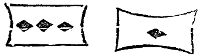
Concaves and convexes, a pack of cards contrived for cheating, by cutting all the cards from the two to the seven concave, and all from the eight to the king convex. Then by cutting the pack breadthwise a convex card is cut, and by cutting it lengthwise a concave is secured.—See LONGS AND SHORTS.
Conjee, a kind of gruel made of rice.—Anglo-Indian.
Conk, a nose. Possibly from the Latin, CONCHA, a shell. Greek, κόγχη—hence anything hollow. Somewhat of a parallel may be found in the Latin, TESTA, an earthenware pot, a shell, and in later Latin, a skull; from whence the French TESTE, or TÊTE, head. Conky, having a projecting or remarkable nose. The first Duke of Wellington was frequently termed “Old Conky” in satirical papers and caricatures.
Connaught Rangers, the Eighty-eighth Regiment of Foot in the British Army.
Conshun’s price, fair terms, without extortion. Probably conscience price.—Anglo-Chinese.
Constable, “to overrun the CONSTABLE,” to exceed one’s income, or get deep in debt. The origin of this phrase is unknown, but its use is very general.
Constitutional, a walk, or other exercise taken for the benefit of the health.
Consumah, a butler.—Anglo-Indian.
Contango, among stockbrokers and jobbers, is a certain sum paid for accommodating a buyer or seller, by carrying the engagement to pay money or deliver shares over to the next account day.
Continuations, coverings for the legs, whether trousers or breeches. A word belonging to the same squeamish, affected family as unmentionables, inexpressibles, &c.
Convey, to steal; “CONVEY, the wise it call.”
Conveyancer, a pickpocket. Shakspeare uses the cant expression CONVEYER, a thief. The same term is also French slang.
Cooey, the Australian bush-call, now not unfrequently heard in the streets of London.
Cook, a term well known in the Bankruptcy Courts, in reference to accounts that have been meddled with, or COOKED, by the bankrupt; also to form a balance-sheet from general trade inferences; stated by a correspondent to have been first used in reference to the celebrated alteration of the accounts of the Eastern Counties Railway, by George Hudson, the Railway King. Any unfair statements of accounts or reports are now said to be COOKED.
Cook, in artistic circles, to dodge up a picture. Artists say that a picture will not COOK when it is excellent and unconventional, and beyond specious imitation.
Cook one’s goose, to kill or ruin a person.—North.
Cooler, a glass of porter as a wind up, after drinking spirits and water. This form of drinking is sometimes called “putting the beggar on the gentleman.”
Coolie, a soldier, in allusion to the Hindoo COOLIES, or day labourers.
Coon, abbreviation of racoon.—American. A GONE COON—ditto, one in an awful fix, past praying for. This expression is said to have originated in the first American war with a spy, who dressed himself in a racoon skin, and ensconced himself in a tree. An English rifleman taking him for a veritable coon, levelled his piece at him, upon which he exclaimed, “Don’t shoot, I’ll come down of myself, I know I’m a GONE COON.” The Yankees say the Britisher was so “flummuxed,” that he flung down his rifle and “made tracks” for home. The phrase is pretty general in England. [There is one difficulty about this story—How big was the man who dressed himself in a racoon skin?]
Cooper, “stout half-and-half,” i.e., half stout and half porter. Derived from the coopers at breweries being allowed so much stout and so much porter a day, which they take mixed.
Cooper, to destroy, spoil, settle, or finish. Coopered, spoilt, “done up,” synonymous with the Americanism caved in, fallen in, ruined. The vagabonds’ hieroglyph , chalked by them on gate posts and houses, signifies that the place has been spoilt by too many tramps calling there.

Cooper, to forge, or imitate in writing; “COOPER a monniker,” to forge a signature.
Cooter, “a sovereign.”—See Couter. Gipsy, CUTA.
Cop, to seize or lay hold of anything unpleasant; used in a similar sense to catch in the phrase “to COP (or catch) a beating.” “To get COPT,” is to be taken by the police. Probable contraction of Lat. capere.
Cop, beware, take care. A contraction of Coprador.—Anglo-Indian.
Coper, properly HORSE-COUPER, a Scotch horse-dealer,—used to denote a dishonest one. Coping, like jockeying, is suggestive of all kinds of trickery.
Copper, a policeman, i.e., one who COPS, which see.
Copper, a halfpenny. Coppers, mixed pence.
Coppernose, a nose which is supposed to show a partiality on its owner’s part for strong drink. Synonymous with “jolly nose.” Grog-blossoms are the jewels often set in a jolly nose.
Copus, a Cambridge drink, consisting of ale combined with spices, and varied by spirits, wines, &c. Corruption of HIPPOCRAS.
Corduroy roads, an American term for the rough roads made by simply laying logs along a clearing.
Corinthianism, a term derived from the classics, much in vogue some years ago, implying pugilism, high life, “sprees,” roystering, &c.—Shakspeare, 1 Hen. IV. ii. 4. The immorality of Corinth was proverbial in Greece. Κορινθιάζεσθαι, to Corinthianize, indulge in the company of courtezans, was a Greek slang expression. Hence the proverb—
Οὐ παντὸς ἀνδρὸς εἰς Κόρινθον ἔσθ᾿ ὁ πλοῦς;
and Horace, Epist. lib. 1, xvii. 36—
“Non cuivis hommi contingit adire Corinthum,”
in allusion to the spoliation practised by the “hetæræ” on those who visited them. Pierce Egan, in his Life in London, is responsible for a deal of the modern use of this word; and after him Bell’s Life, as the oracle of Corinthian sport, was not idle.
Cork, a broken man, a bankrupt. Probably intended to refer to his lightness, as being without “ballast.”
Cork, “to draw a CORK,” to give a bloody nose.—Pugilistic.
Corkage, money charged when persons at an hotel provide their own wine—sixpence being charged for each “cork” drawn.
Corked, said of wine which tastes of cork, from being badly decanted, or which has lost flavour from various other obvious causes.
Corker, “that’s a CORKER,” i.e., that settles the question, or closes the discussion.
Corks, a butler. Derivation very obvious.
Corks, money; “how are you off for CORKS?” a sailors’ term of a very expressive kind, denoting the means of “keeping afloat.”
Corned, drunk or intoxicated. Possibly from soaking or pickling oneself like CORNED beef.
Corner, “the CORNER,” Tattersall’s famous horse repository and betting rooms, so called from the fact of its situation, which was at Hyde Park Corner. Though Tattersall’s has been removed some distance, to Albert Gate, it is still known to the older habitués of the Subscription Room as “the CORNER.”
Cornered, hemmed in a corner, placed in a position from which there is no escape.
Corner-man, the end singer of a corps of Ethiopian or nigger minstrels. There are two corner men, one generally plays the bones and the other the tambourine. Corner-men are the grotesques of a minstrel company.
Corn in Egypt, a popular expression which means a plentiful supply of materials for a dinner, &c., or a good supply of money. Its origin is of course Biblical.
Corporation, the protuberant front of an obese person. Probably from the old announcements which used to be made, and are made now in some towns where improvements are made by the municipal authorities, “Widened at the expense of the CORPORATION.”
Corpse, to stick fast in the dialogue; to confuse, or put out the actors by making a mistake.—Theatrical.
Cosh, a neddy, a life-preserver; any short, loaded bludgeon.
Cossack, a policeman.
Costard, the head. A very old word, generally used in connexion with “cracked.”
Coster, the short and slang rendering of “costermonger,” or “costardmonger,” who was originally an apple-seller. Costering, i.e., costermongering, acting as a costermonger would.
Costermonger, a street seller of fish, fruit, vegetables, poultry, &c. The London costermongers number more than 30,000. They form a distinct class, occupying whole neighbourhoods, and were at one time cut off from the rest of metropolitan society by their low habits, general improvidence, pugnacity, love of gambling, total want of education, disregard for lawful marriage ceremonies, and their use of a peculiar slang language. They have changed a good deal of this, though, now. Costermonger aliter COSTARDMONGER, i.e., an apple-seller. In Nares’s Glossary (Ed. H. & W.) they are said to have been frequently Irish. So, Ben Jonson—
“Her father was an Irish COSTAR-MONGER.”
Alchym., iv. x.
“In England, sir, troth I ever laugh when I think on ’t, ----Why, sir, there all the COSTER-MONGERS are Irish.”
2 P. Hen. IV., O. Pl., iii. 375.
Their noisy manners are alluded to in Beaumont and Fletcher’s Scornful Lady, iv. I.
“And then he’ll rail like a rude COSTER-MONGER That school-boys had couzened of his apples, As loud and senseless.”
Cotton, to like, adhere to, or agree with any person; “to COTTON on to a man,” to attach yourself to him, or fancy him, literally, to stick to him as cotton would. Vide Bartlett, who claims it as an Americanism, and Halliwell, who terms it an archaism; also Bacchus and Venus, 1737.
“Her heart’s as hard as taxes, and as bad; She does not even COTTON to her dad.” Halliday and Lawrance, Kenilworth Burlesque.
Cotton Lord, a Manchester manufacturer.
Cottonopolis, Manchester. A term much in use among the reporters of the sporting press engaged in that locality.
Council-of-ten, the toes of a man who turns his feet inward.
Counter, to hit back, to exchange blows. A cross COUNTER is a blow with the right hand given in exchange for one with the left, the counterer preferring to strike rather than to “stop” the blow.—Pugilistic.
Counter-jumper, a shopman, a draper’s assistant.
Country-captain, a spatch-cocked fowl, sprinkled with curry-powder. A favourite breakfast dish with the captains of country-ships.—Indian.
Country-ship, a ship belonging to the East Indies, and trading from port to port in that country.
County-crop (i.e., COUNTY-PRISON CROP), haircut close and round, as if guided by a basin—an indication of having been in prison. Since short hair has become fashionable the expression has fallen somewhat into disuse. In the times when long hair was worn, a man with his hair cut as described was said to have had it done with a knife and fork.
Couple-beggar, a degraded person, who officiated as a clergyman in performing marriages in the Fleet Prison.
Couter, a sovereign. Half-a-couter, half-a-sovereign. From the Danubian-gipsy word CUTA, a gold coin.
Cove, or COVEY, a boy or man of any age or station. A term generally preceded by an expressive adjective, thus a “flash COVE,” a “rum COVE,” a “downy COVE,” &c. The feminine, COVESS, was once popular, but it has fallen into disuse. Originally ancient cant (temp. Henry VII.), COFE, or CUFFIN, altered in Decker’s time to COVE. See Witts’ Recreations, 1654: “there’s a gentry-COVE here,” i.e., a gentleman. Probably connected with CUIF, which, in the North of England, signifies a lout or awkward fellow. Amongst Negroes, CUFFEE.
Coventry, “to send a man to COVENTRY,” not to speak to or notice him. Coventry was one of those towns in which the privilege of practising most trades was anciently confined to certain privileged persons, as the freemen, &c. Hence a stranger stood little chance of custom, or countenance, and “to send a man to COVENTRY” came to be equivalent to putting him out of the pale of society.
Cover-down, a tossing coin with a false cover, enabling either head or tail to be shown, according as the cover is left on or taken off. The cover is more generally called a CAP. This style of cheating is now obsolete. A man who cannot manage to cheat at tossing without machinery is a sorry rogue.
Cowan, a sneak, an inquisitive or prying person. Greek, κύων, a dog. Term given by Freemasons to all uninitiated persons. Used in Anderson’s Constitutions, edit. 1769, p. 97. If derived from κύων, its use was probably suggested by such passages in the N. T. as Matt. vii. 6, and Phil. iii. 2. The Moslems apply dog in a similar manner. It is probably Oriental. Other authorities say it is from COWAN, or KIRWAN, a Scottish word signifying a man who builds rough stone walls without mortar—a man who, though he builds, is not a practical mason.
Cow-cow, to be very angry, to scold or reprimand violently.—Anglo-Chinese.
Cow-hocked, clumsy about the ankles; with large or awkward feet.
Cow-lick, the term given to the lock of hair which costermongers and tramps usually twist forward from the ear; a large greasy curl upon the cheek, seemingly licked into shape. These locks are also called NUMBER SIXES, from their usual shape. The opposite of NEWGATE-KNOCKER, which see.
Cow’s grease, butter.
Coxy-loxy, good-tempered, drunk.—Norfolk.
Crab, a disagreeable old person. Name of a wild and sour fruit.
Crab, “to catch a CRAB,” to fall backwards by missing a stroke in rowing. From the crab-like or sprawling appearance of the man when in the bottom of the boat.
Crab, to offend, or insult; to expose or defeat a robbery, to inform against. Crab, in the sense of “to offend,” is Old English.
“If I think one thing and speak another, I will both CRAB Christ and our Ladie His mother.” Packman’s Paternoster.
Crabs, in dicing, a pair of aces.
Crabshells, or TROTTER-CASES, shoes.—See CARTS.
Crack, the favourite horse in a race. Steeplechase and hunting CRACKS have been made the subjects of well-known pictures, and “the gallops of the CRACKS” is a prominent line in the sporting papers.
Crack, first-rate, excellent; “a CRACK HAND,” an adept; a “CRACK article,” a good one. “A CRACK regiment,” a fashionable one.—Old.
Crack, dry firewood.—Modern Gipsy.
Crack, “in a CRACK (of the finger and thumb),” in a moment.
Crack, to break into a house; “CRACK A CRIB,” to commit burglary.
Crack a bottle, to drink. Shakspeare uses CRUSH in the same slang sense.
Cracked up, penniless or ruined.
Cracking a crust, rubbing along in the world. Cracking a tidy crust, means doing very well. This is a very common expression among the lower orders.
Crackle, or CRACKLING, the scored rind on a roast leg or loin of pork; hence applied to the velvet bars on the gowns of the students at St. John’s College, Cambridge, long called “Hogs,” and the covered bridge which connects one of the courts with the grounds, Isthmus of Suez (SUES, Lat. SUS, a swine).
Cracksman, a burglar, i.e., the man who CRACKS.
Crack up, to boast or praise.—Ancient English.
Cram, to lie or deceive, implying to fill up or CRAM a person with false stories; to impart or acquire learning quickly, to “grind” or prepare for an examination.
Crammer, one skilled in rapidly preparing others for an examination. One in the habit of telling lies.
Crammer, a lie.
Cranky, foolish, idiotic, rickety, capricious (not confined to persons). Ancient cant, CRANKE, simulated sickness. German, KRANK, sickly. A CRANK or CRANKY vessel is one which pitches very much.
Crap, to ease oneself by evacuation.
Crapping case, or KEN, the water-closet. Generally called CRAPPING-CASTLE.
Crawler, a mean, contemptible, sycophantic fellow. Also a cab which is driven slowly along while its driver looks out for a fare. Crawling is by recent statute a punishable offence.
Crawly mawly, in an ailing, weakly, or sickly state.
Craw thumper, a Roman Catholic. Compare BRISKET-BEATER.
Cream of the valley, gin; as opposed to or distinguished from “mountain dew,” whisky.
Crib, house, public or otherwise; lodgings, apartments; a situation. Very general in the latter sense.
Crib, to steal or purloin; to appropriate small things.
Crib, a literal translation of a classic author.—University.
Crib biter, an inveterate grumbler; properly said of a horse which has this habit, a sign of its bad digestion.
Cribbage-faced, marked with the small-pox, full of holes like a cribbage-board. Otherwise crumpet-face.
Crikey, profane exclamation of astonishment; “Oh, CRIKEY, you don’t say so!” corruption of “O Christ!” Sometimes varied by “O crimes!”
Cripple, a bent sixpence.
Cripple, an awkward or clumsy person. Also one of dull wits.
Croak, to die—from the gurgling sound a person makes when the breath of life is departing.
Croaker, one who takes a desponding view of everything, a misanthrope; an alarmist. From the croaking of a raven.—Ben Jonson.
Croaker, a beggar.
Croaker, a dying person beyond hope; a corpse. The latter is generally called a “stiff’un.”
Croaks, last dying speeches, and murderers’ confessions.
Crocodiles’ tears, the tears of a hypocrite. An ancient phrase, introduced into this country by Mandeville, or other early English traveller, who believed that the crocodile made a weeping noise to attract travellers, and then devoured them. See Shakspeare’s use of the term in Othello.
Crocus, or CROAKUS, a quack or travelling doctor; CROCUS-CHOVEY, a chemist’s shop.
Crone, a termagant or malicious old woman. Crony, an intimate friend.
Crooked, a term used among dog-stealers and the “fancy” generally, to denote anything stolen. “Got on the CROOK” is exchangeable with “Got on the cross,” CROOK and cross generally being synonymous.
Crooky, to hang on to, to lead, to walk arm-in-arm; to court or pay addresses to a girl.
Cropped, hanged. Sometimes topped. “May I be topped.”
Cropper, a heavy fall, a decided failure. Term originally used in the hunting-field, but now general, and not at all confined to physical matters.
Cropper, “to go a CROPPER,” or “to come a CROPPER,” i.e., to fail badly.
Croppie, a person who has had his hair cut, or CROPPED, in prison. Formerly those who had been CROPPED (i.e., had their ears cut off and their noses slit) by the public executioner were called CROPPIES, then the Puritans received the reversion of the title.
Crop up, to turn up in the course of conversation. “It CROPPED UP while we were speaking.”
Cross, a deception—two persons pretending hostility or indifference to each other, being all the while in concert for the purpose of deceiving a third. In the sporting world a CROSS is an arrangement made between two men that one shall win without reference to relative merits. This is sometimes done with the backer’s consent for the public benefit, at other times a backer is himself the sufferer, the men having “put some one in to lay,” according to instructions.—See DOUBLE CROSS.
Cross, a general term amongst thieves expressive of their plundering profession, the opposite of square. “To get anything on the CROSS” is to obtain it surreptitiously. “Cross-fanning in a crowd,” robbing persons of their scarf-pins, so called from the peculiar position of the arms. This style of thieving is not confined to the conveying of scarf-pins. Crossman, a thief, or one who lives by dishonest practices.
Cross.—For not paying his term bills to the bursar (treasurer), or for cutting chapels, or lectures, or other offences, the undergrad can be “CROSSED” at the buttery, or kitchen, or both, i.e., a CROSS is put against his name by the Don, who wishes to see him, or to punish him. Of course it is easy to get one’s buttery commons out in some one else’s name, and to order dinner in from the confectioner’s. The porter is supposed to allow no dinners to be sent in, but, between his winking and a little disguise, it is possible. As another instance, a barrel of beer will not be admitted; but if it is in a hamper it will pass!—Oxford University.
Cross-buttock, an unexpected fling down or repulse; from a peculiar throw practised by wrestlers.
Cross cove and molisher, a man and woman who live by thieving.
Cross-crib, a house frequented by thieves.
Crossed, prohibited from taking food from the buttery.—University.
Crow, or COCK-CROW, to exult over another’s abasement, as a fighting-cock does over his vanquished adversary.
Crow, “a regular CROW,” a success, a stroke of luck,—equivalent to a FLUKE.
Crow, one who watches whilst another commits a theft, a confederate in a robbery. The CROW looks to see that the way is clear, whilst the SNEAK, his partner, commits the depredation.
Crow, “I have a CROW to pick with you,” i.e., an explanation to demand, a disagreeable matter to settle. Sometimes the article picked is supposed to be a bone.
Crowsfeet, wrinkles which gather in the corners of the eyes of old or dissipated people.
Crug, food. Christ’s Hospital boys apply it only to bread.
Crumbs, “to pick up one’s CRUMBS,” to begin to have an appetite after an illness; to improve in health, circumstances, &c., after a loss thereof.
Crummy, fat, plump.—North. In London street slang, lousy.
Crummy-doss, a lousy or filthy bed.
Crumpet-face, a face pitted with small-pox marks.
Crunch, to crush. Perhaps from the sound of teeth grinding against each other.
Crush, to run or decamp rapidly. Crush down sides, run to a place of safety, or the appointed rendezvous.—North Country Cant.
Crusher, a policeman.
Crushing, excellent, first-rate.
Crusty, ill-tempered, petulant, morose.—Old, said to be a corruption of the Anglo-Norman CORUSEUX.
Cub, a mannerless uncouth lout.—See UNLICKED.
Cubitopolis, an appellation, originally given by Londoners to the Warwick and Eccleston Square districts. From the name of the builders.
Cue, properly the last word spoken by one actor, it being the CUE for the other to reply. “Very often an actor knows nothing of a piece beyond his own lines and the CUES.”
Cull, a man or boy.—Old Cant. Rum cull, the manager of a theatre.
Cullet, broken glass. French, CUEILLETTE, a gathering or collection.
Culling, or CULING, stealing from the carriages at racecourses.
Cully gorger, a companion, a brother actor.—Theatrical. See GORGER.
Culver-headed, weak and stupid.
Cummer, a gossip or acquaintance.
Cumshaw, a present or bribe.—Anglo-Chinese.
Cupboard-headed, an expressive designation of one whose head is both wooden and hollow.—Norfolk.
Cupboard-love, affection arising from interested motives.
“A CUPBOARD LOVE is seldom true; A love sincere is found in few.”—Poor Robin.
Cupboard is the fount-spring of the love supposed to exist among policemen for the cooks upon their beats.
Cup-tosser, a person who professes to tell fortunes by examining the grounds in tea or coffee cups. A cup or goblet, however, is the old mystic symbol of a juggler. French, Joueur de gobelet.
Cure, an odd person; a contemptuous term, abridged from CURIOSITY, which was formerly the favourite expression. The word cure, as originally applied, was London street slang, and was, as just stated, an abbreviation of curiosity, or, more correctly, of curious or queer fellow. Of late years it has, however, been used to denote a funny, humorous person, who can give and receive chaff.
Curios, a corruption of “curiosities;” any articles of vertu brought from abroad. Used by naval and military travellers and others.
Currency, persons born in Australia are there termed CURRENCY, while natives of England are termed STERLING. The allusion is to the difference between colonial and imperial moneys, which it may be as well to remark have no difference so far as actual value is concerned.
Curse, anything worthless. Corruption of the Old English word KERSE, a small sour wild cherry; French, CERISE; German, KIRSCH. Vision of Piers Ploughman:—
“Wisdom and witt nowe is not worth a KERSE, But if it be carded with cootis as clothers Kembe their woole.”
The expression “not worth a CURSE,” used frequently nowadays, is therefore not properly profane, though it is frequently intensified by a profane expletive. Horne Tooke says from KERSE, or CRESS. The expression “not worth a tinker’s CURSE,” may or may not have arisen from misapplication of the word’s origin, though as now used it certainly means curse in its usual sense. Tinkers do curse, unfortunately, and it will take a good deal of school-board work to educate them out of it, as well as a fair amount of time. The phrase “not worth a tinker’s damn,” is evidently a variation of this, unless indeed it should be spelt “dam,” and used as a reference to the general worthlessness of the wives and mothers of tinkers. This latter is merely offered to those who are speculative in such matters, and is not advanced as an opinion.
Curse of Scotland, the Nine of Diamonds. Various hypotheses have been set up as to this appellation—that it was the card on which the “Butcher Duke” wrote a cruel order with respect to the rebels after the battle of Culloden; that the diamonds are the nine lozenges in the arms of Dalrymple, Earl of Stair, detested for his share in the Massacre of Glencoe; that it is a corruption of Cross of Scotland, the nine diamonds being arranged somewhat after the fashion of a St. Andrew’s Cross. The first supposition is evidently erroneous, for in Dr. Houston’s Memoirs of his own Lifetime, 1747, p. 92, the Jacobite ladies are stated to have nicknamed the Nine of Diamonds “the Justice Clerk,” after the rebellion of 1715, in allusion to the Lord Justice-Clerk Ormistone, who, for his severity in suppressing it, was called the Curse of Scotland. Gules a cross of lozenges were also the arms of Colonel Packer, who attended Charles I. on the scaffold, and commanded in Scotland afterwards with great severity.—See Chatto on the Origin and History of Playing Cards, p. 267. The most probable explanation is, that in the game of Pope Joan the nine of diamonds is the POPE, of whom the Scotch have an especial horror.
Curtail, to cut off. Originally a Cant word—vide Hudibras, and Bacchus and Venus, 1737. Evidently derived from the French court tailler.
Cushion, to hide or conceal.
Cushion-smiter, polite rendering of tub-thumper, a clergyman, a preacher.
Cushmawaunee, never mind. Sailors and soldiers who have been in India frequently say—
“Cushmawaunee, If we cannot get arrack, We must drink pawnee.” Anglo-Indian.
Customer, synonymous with CHAP, a fellow; “a rum CUSTOMER,” i.e., a man likely to turn the tables on any one who attacked him, and therefore better be let alone, or very warily proceeded with; an “odd fish,” or curious person.—Shakspeare.
Customhouse-officer, an aperient pill.
Cut, to run away, move off quickly; to cease doing anything; CUT AND RUN, to quit work, or occupation, and start off at once—Sea phrase, “CUT the cable and RUN before the wind;” to CUT DIDOES, synonymous with to CUT CAPERS; CUT A DASH, make a show; CUT A CAPER, to dance or show off in a strange manner; CUT A FIGURE, to make either a good or bad appearance; CUT IT, desist, be quiet, go away, leave what you are doing and run; CUT IT SHORT, cease being prolix, “make short work” of what you have in hand; CUT OUT, to excel, thus in affairs of gallantry one Adonis is said to CUT the other out in the affections of the wished-for lady—Sea phrase, from CUTTING out a ship from the enemy’s port. Cut that! be quiet, or stop; CUT OUT OF, done out of; CUT OF ONE’S JIB, the expression or cast of his countenance [see JIB]; TO CUT ONE’S COMB, to take down a conceited person, from the practice of cutting the combs of capons [see COMB CUT]; CUT AND COME AGAIN, plenty, if one cut does not suffice, plenty remains to come at again; CUT UP, to mortify, to criticise severely, or expose; CUT UP SHINES, to play tricks; CUT ONE’S STICK, to be off quickly, i.e., to be in readiness for a journey, further elaborated into AMPUTATE YOUR MAHOGANY [see STICK]; CUT IT FAT, to exaggerate or show off in an extensive manner; to CUT UP FAT, or CUT UP WELL, to die, leaving a large property; CUT UNDER, to undersell; CUT YOUR LUCKY, to run off; CUT ONE’S CART, to expose unfair tricks; CUT AN ACQUAINTANCE, to cease friendly intercourse with him; “CUT UP ROUGH,” to become obstreperous and dangerous; to have “CUT ONE’S EYE-TEETH,” i.e., to be wide awake, knowing; to DRAW CUTS, to cast lots with papers of unequal lengths.
Cut, to take cards from a pack, with a view to decide by comparison which persons shall be partners, or which players shall deal. Not less than four cards must be picked up by the cutter, and the bottom one is the CUT. When cutting for a “turn-up,” the residuum is called the CUT.
Cut, in theatrical language, means to strike out portions of a dramatic piece, so as to render it shorter for representation. A late treasurer of one of the so-called Patent Theatres when asked his opinion of a new play, always gave utterance to the brief but safe piece of criticism, “Wants cutting.”
Cut, tipsy.—Old.
Cut, to compete in business; “a CUTTING trade,” one conducted on competitive principles, where the profits are very closely shaved.
Cut-throat, a butcher, a cattle-slaughterer; a ruffian.
Cute, sharp, cunning. Abbreviation of ACUTE.
Cutter, a ruffian, a cut-purse. Of Robin Hood it was said—
“So being outlaw’d (as ’tis told), He with a crew went forth Of lusty CUTTERS, bold and strong, And robbed in the north.”
Cutter, a swashbuckler—balaffreux taillebras, fendeur de naseaux.—Cotgrave.
“He’s out of cash, and thou know’st by CUTTER’S LAW, We are bound to relieve one another.” Match at Midn., O. Pl., vii. 553.
This ancient cant word now survives in the phrase, “to swear like a CUTTER.”
Cutting-shop, a place where cheap rough goods are sold.
Cutty-pipe, a short clay pipe. Scotch, CUTTY, short.
Cutty-sark, a short chemise.—Scotch. A scantily-draped lady is so called by Burns.
“‘Weel done, CUTTY-SARK!’ And in an instant all was dark.”
Dab, or DABSTER, an expert person. Most probably derived from the Latin adeptus.
Dab, street term for small flat fish of any kind.—Old.
Dacha-saltee, tenpence. Probably from the Lingua Franca. Modern Greek, δέκα; Italian, DIECI SOLDI, tenpence; Gipsy, DIK, ten. So also DACHA-ONE (oney), i.e., dieci uno, elevenpence.—See SALTEE.
Daddle, the hand; “tip us your DADDLE,” i.e., shake hands.
Daddy, a stage manager.—Theatrical. Also the person who gives away the bride at a wedding.
Daddy; at mock raffles, lotteries, &c., the DADDY is an accomplice, most commonly the getter-up of the swindle, and in all cases the person that has been previously selected to win the prize.
Daddy, the old man in charge—generally an aged pauper—at casual wards. Most people will remember “kind old DADDY.”
Daffy, gin. A term with monthly nurses, who are always extolling the virtues of Daffy’s Elixir, and who occasionally comfort themselves with a stronger medicine under Daffy’s name. Of late years the term has been altered to “soothing syrup.”
Dags, feat or performance; “I’ll do your DAGS,” i.e., I will do something that you cannot do. Corruption of DARINGS.
Dairies, a woman’s breasts, which are also called CHARLIES.
Daisy-cutter, a horse that trots or gallops without lifting its feet much from the ground.
Daisy-kicker, the name ostlers at large inns used to give each other, now nearly obsolete. Daisy-kicker, or GROGHAM, was likewise the cant term for a horse. The DAISY-KICKERS were sad rogues in the old posting days; frequently the landlords rented the stables to them, as the only plan to make them return a profit.
Damage, in the sense of recompense; “what’s the DAMAGE?” i.e., what is to pay? or actually, what is the DAMAGE to my pocket?
Damper, a shop till; to DRAW A DAMPER, i.e., rob a till. A till is more modernly called a “lob,” and stealing from tills is known as “lob-sneaking.”
Dancer, or dancing-master, a thief who prowls about the roofs of houses, and effects an entrance by attic windows, &c. Called also a “garreter.”
Dance upon nothing, to be hanged.
Dander, passion or temper; “to get one’s DANDER up,” to rouse his passion.—Old, but now much used in America.
Dando, a great eater, who cheats at hotels, eating shops, oyster-cellars, &c., from a person of that name who lived many years ago, and who was an enormous oyster-eater. According to the stories related of him, Dando would visit an oyster-room, devour an almost fabulous quantity of bivalves, with porter and bread and butter to match, and then calmly state that he had no money.
Dandy, a fop, or fashionable nondescript. This word, in the sense of a fop, is of modern origin. Egan says it was first used in 1820, and Bee in 1816. Johnson does not mention it, although it is to be found in all late dictionaries. Dandies wore stays, studied a feminine style, and tried to undo their manhood by all manner of affectations which were not actually immoral. Lord Petersham headed them. At the present day dandies of this stamp have almost entirely disappeared, but the new school of muscular Christians is not altogether faultless. The feminine of DANDY was DANDIZETTE, but the term only lived for a short season.
Dandy, a small glass of whisky.—Irish. “Dimidium cyathi vero apud Metropolitanos Hibernicos dicitur DANDY.”—Father Tom and the Pope, in Blackwood’s Magazine for May 1838.
Dandy, a boatman.—Anglo-Indian.
Dandypratt, a funny little fellow, a mannikin; originally a half-farthing of the time of Henry VII.
Danna, human ordure; DANNA DRAG, a nightman’s or dustman’s cart; hence DUNNA-KEN, which see.
Darbies, handcuffs.—Old Cant.—See JOHNNY DARBIES. Sir Walter Scott mentions these, in the sense of fetters, in his Peveril of the Peak—
“‘Hark ye! Jem Clink will fetch you the DARBIES.’ ‘Derby!’ interrupted Julian, ‘has the Earl or Countess’”——
Had Sir Walter known of any connexion between them and this family he would undoubtedly have mentioned it. The mistake of Julian is corrected in the next paragraph. It is said that handcuffs were, when used to keep two prisoners together, called Darbies and Joans—a term which would soon be shortened as a natural consequence.
Darble, the devil. French, DIABLE.
Dark, “keep it DARK,” i.e., secret. A DARK horse is, in racing phraseology, a horse of whom nothing positive is known, but who is generally supposed to have claims to the consideration of all interested, whether bookmakers or backers.
Darky, twilight; also a negro. Darkmans, the night.
Darn, vulgar corruption of DAMN.—American.
Dash, to jot down suddenly. “Things I have DASHED off at a moment’s notice.”
Dash, fire, vigour, manliness. Literary and artistic work is often said to be full of DASH.
Dash, an ejaculation, as “DASH my wig!” “DASH my buttons!” A relic of the attempts made, when cursing was fashionable, to be in the mode without using “bad words.”
Dashing, showy, fast.
Daub, in low language, an artist. Also a badly painted picture.
David’s sow, “as drunk as DAVID’S sow,” i.e., beastly drunk. See origin of the phrase in Grose’s Dictionary.
Davy, “on my DAVY,” on my affidavit, of which it is a vulgar corruption. Latterly DAVY has become synonymous in street language with the name of the Deity; “so help me DAVY,” generally rendered, “swelp my DAVY.” Slang version of the conclusion of the oath usually exacted of witnesses.
Davy’s locker, or Davy Jones’s locker, the sea, the common receptacle for all things thrown overboard;—a nautical phrase for death, is “gone to Davy Jones’s locker,” which there means the other world.—See DUFFY.
Dawdle, to loiter, or fritter away time.
Dawk, the post.—Anglo-Indian.
Daylights, eyes; “to darken his DAYLIGHTS,” to give a person black eyes. Also the spaces left in glasses between the liquor and the brim,—not allowed when bumpers are drunk. The toast-master in such cases cries “no DAYLIGHTS or heeltaps!”
Daze, to confound or bewilder; an ancient form of dazzle used by Spenser, Drayton, &c. This is more obsolete English than slang, though its use nowadays might fairly bring it within the latter category.
Dead-against, decidedly opposed to.
Dead-alive, stupid, dull.
Dead-amiss, said of a horse that from illness is utterly unable to run for a prize.
Dead-beat, utterly exhausted, utterly “done up.”
Dead-heat, when two horses run home so exactly equal that the judge cannot place one before the other; consequently, a DEAD-HEAT is a heat which counts for nothing, so far as the even runners are concerned, as it has to be run over again. When a race between dead-heaters has been unusually severe, or when the stake is sufficiently good to bear division, it is usual to let one of the animals walk over the course so as to make a deciding heat, and to divide the money. In such case all bets are divided. Sometimes, however, when no arrangement can be made, an owner will withdraw his horse, in which case the animal that walks over wins the whole of the stake, and his backers the whole of their money. Where the course is short and the money of small amount, the DEAD-HEAT is run off, the second essay being called the decider, though on certain occasions even the decider has resulted in a DEAD-HEAT.—See NECK AND NECK.
Dead-horse, “to draw the DEAD-HORSE;” DEAD-HORSE work—working for wages already paid; also any thankless or unassisted service.
Dead-letter, an action of no value or weight; an article, owing to some mistake in its production, rendered utterly valueless,—often applied to any instrument in writing, which by some apparently trivial omission, becomes useless. At the general and large district post-offices, there is a department for letters which have been erroneously addressed, or for which, from many and various causes, there are no receivers. These are called DEAD-LETTERS, and the office in connexion with them is known as the DEAD-LETTER office.
Dead-lock, a permanent standstill, an inextricable entanglement.
Dead-lurk, entering a dwelling-house during divine service.
Dead-man, a baker. Properly speaking, it is an extra loaf smuggled into the basket by the man who carries it out, to the loss of the master. Sometimes the DEAD-MAN is charged to a customer, though never delivered. Among London thieves and low people generally a “dead’un” is a half-quartern loaf.
Dead-men, the term for wine bottles after they are emptied of their contents.—Old.—See MARINES.
Dead-men’s shoes, property which cannot be claimed until after decease of present holder. “To wait for a pair of DEAD-MEN’S SHOES,” is considered a wearisome affair. It is used by Fletcher:—
“And ’tis a general shrift, that most men use, But yet ’tis tedious waiting DEAD MEN’S SHOES.” Fletcher’s Poems, p. 256.
Dead-set, a pointed and persistent attack on a person.
Dead’un, a horse which will not run or will not try in a race, and against which money may be betted with safety.—See SAFE UN.
Deaner, a shilling. From DENIER.
Death, “to dress to DEATH,” i.e., to the very extreme of fashion, perhaps so as to be killing.
Death-hunter, a running patterer, who vends last dying speeches and confessions. More modernly the term is supposed to mean an undertaker, or any one engaged in or concerned with burials.
Deck, a pack of cards. Used by Shakspeare, 3 K. Hen. VI., v. 1. Probably because of DECKING or arranging the table for a game at cards. General in the United States.
Dee, a pocket-book; term used by tramps.—Gipsy. Dee (properly D), a detective policeman. “The DEES are about, so look out.”
Delicate, a false subscription-book carried by a LURKER.
Demirep (or DEMIRIP), a courtezan. Contraction of DEMI-REPUTATION, which is, in turn, a contraction for demi-monde reputation.
Derby-dog, a masterless animal, who is sure to appear as soon as the Epsom course is cleared for the great race of the season. No year passes without a dog running between the two dense lines of spectators and searching in vain for an outlet, and he is almost as eagerly looked for as are the “preliminary canters.” It is said that when no DERBY-DOG appears on the course between Tattenham Corner and the judge’s box, just before the start, a dead-heat will take place between all the placed horses.
Derrick, an apparatus for raising sunken ships, &c. The term is curiously derived from a hangman of that name frequently mentioned in Old Plays, as in the Bellman of London, 1616.
“He rides circuit with the devil, and DERRICK must be his host, and Tyborne the inn at which he will light.”
The term is now almost general for all cranes used in loading ships, or doing similar work of a heavy nature.
Despatchers, false dice with two sets of numbers, and, of course, no low pips. So called because they bring the matter to a speedy issue. Great skill in palming is necessary for their successful use.
Deuce, the devil.—Old. Stated by Junius and others to be from Deus or Zeus.
Deuce, twopence; DEUCE at cards or dice, one with two pips or spots.
Devil, among barristers, to get up the facts of a case for a leader; to arrange everything in the most comprehensive form, so that the Q.C. or Serjeant can absorb the question without much trouble. Devilling is juniors’ work, but much depends on it, and on the ability with which it is done.
Devil, a printer’s youngest apprentice, an errand-boy in a printing-office.
Devil dodger, a clergyman; also a person who goes sometimes to church and sometimes to meeting.
Devil-may-care, reckless, rash.
Devil’s bed-posts, the four of clubs. Otherwise Old Gentleman’s BED-POSTS.
Devil’s books, a pack of playing-cards; a phrase of Presbyterian origin.—See FOUR KINGS.
Devil’s delight, a noise or row of any description. Generally used thus:—“They kicked up the DEVIL’S DELIGHT.”
Devil’s dung, the fetid drug assafœtida.
Devil’s dust, a term used in the manufacturing districts of Yorkshire to denote shreds of old cloth torn up to re-manufacture; also called SHODDY. Mr. Ferrand, in his speech in the House, March 4, 1842, produced a piece of cloth made chiefly from DEVIL’S DUST, and tore it into shreds to prove its worthlessness.—See Hansard’s Parliamentary Debates, third series, vol. lxi. p. 140.
Devil-scolder, a clergyman.
Devil’s livery, black and yellow. From the mourning and quarantine uses of the colours.
Devil’s teeth, or DEVIL’S BONES, dice.
Devotional habits, horses weak in the knees, and apt to stumble and fall, are said to have these.—Stable.
Dew-beaters, feet; “hold out your DEW-BEATERS till I take off the darbies.”—Peveril of the Peak. Forby says the word is used in Norfolk for heavy shoes to resist wet.
Dew-drink, a morning draught, such as is served out to labourers in harvest time before commencing work.
Dewskitch, a good thrashing, perhaps from catching one’s due.
Dibbs, money; so called from the huckle bones of sheep, which have been used from the earliest times for gambling purposes when money was not obtainable—in one particular game being thrown up five at a time and caught on the back of the hand like halfpence.
Dick, a riding whip; gold-headed DICK, one so ornamented.
Dick, abbreviation of “Dictionary,” but often euphemistically rendered “Richard,”—fine language, long words. A man who uses fine words without much judgment is said to have “swallowed the DICK.”
Dickens, synonymous with devil; “what the DICKENS are you after?” what the devil are you doing? Used by Shakspeare in the Merry Wives of Windsor. In many old stories his Satanic Majesty is called the DICKENS, and by no other name, while in some others the word is spelt “diconce.”
Dickey, bad, sorry, or foolish; food or lodging is pronounced DICKEY when of a poor description; “very DICKEY”, very inferior; “it’s all DICKEY with him,” i.e., all over with him.
Dickey, formerly the cant for a worn-out shirt, but nowadays used for a front or half-shirt. Dickey was originally “tommy” (from the Greek, τομή, a section), a name which was formerly used in Trinity College, Dublin. The students are said to have invented the term, and love of change and circumlocution soon changed it to DICKEY, in which dress it is supposed to have been imported into England.
Dickey, a donkey.—Norfolk.
Dickey Sam, a native of Liverpool.
Dicking; “look! the bulky is DICKING,” i.e., the constable has his eye on you.—North Country Cant.
Diddle, old cant word for geneva, or gin.
Diddle, to cheat, or defraud.—Old. In German, DUDELN is to play on the bagpipe; and the ideas of piping and cheating seem to have been much connected. “Do you think I am easier played on than a pipe?” occurs in Hamlet.
Diddler, or JEREMY DIDDLER, an artful swindler. A diddler is generally one who borrows money without any intention of ever repaying it; the sort of man who, having asked for half-a-crown and received only a shilling, would consider that eighteenpence was owing to him.—From Raising the Wind.
Diddling, cheating or swindling. Borrowing money without any intention of repaying it. Edgar Allan Poe wrote a very amusing article once on DIDDLING, which he seemed to regard as a rather high art.
Didoes, pranks or capers; “to cut up DIDOES,” to make pranks.
Dig, a hard blow. Generally in pugilistic circles applied to a straight “left-hander,” delivered under the guard on the “mark.”
Diggers, spurs; also the spades on cards.
Diggings, lodgings, apartments, residence; an expression probably imported from California, or Australia, with reference to the gold diggings. It is very common nowadays for a man moving in very decent society to call his abode or his office, or anyplace to which he frequently resorts, his “DIGGINGS.”
Dilly, originally a coach, from diligence. Now a night-cart.
Dilly-dally, to trifle.
Dimber, neat or pretty.—Worcestershire, but old cant.