MYSTACOCETI (WHALEBONE WHALES.)
Reading edition
BALÆNIDÆ.
THE GREENLAND RIGHT-WHALE.
The first species, both in order and importance, of the Family Balænidæ is the well-known Balæna mysticetus, the Greenland, or Right-Whale as it is called by the whalers. So extremely doubtful, however, are the claims of this animal to a place in the British Fauna, that it is retained in the present treatise solely on account of the great interest attaching to it as a species, and not from any idea of maintaining for it a position, which, although hitherto assigned to it, has now become untenable. The use of the term well-known is perhaps unadvised; for, although this species has engaged the energies and industry of the merchant seamen of Northern Europe for centuries, so little was known of it scientifically, that not a single skeleton had ever found its way into any European museum, until Eschricht obtained one from Holsteinborg, in Greenland, in 1846. The recorded instances of the supposed occurrence of this species in the British Seas are unsatisfactory in the extreme. The most positive record is that in Messrs. Paget’s ‘Natural History of Great Yarmouth.’ They say: “Balæna mysticetus—common Whale—a small one taken near Yarmouth, July 8, 1784.” Sir James Paget, however, in a letter to the Author, is unable to add to the brief statement, as will be seen from the following extract from his communication:—“I am sorry I can give you no information respecting the Whale taken off Yarmouth in 1784; I have no notes as to the source from which I derived the statement, but probably it was from some MS. of Mr. Dawson Turner’s. It is not likely that any bones of the Whale were kept in Yarmouth, for there was no naturalist there at the time, and the whaling-trade, which was then actively carried on from the port, must have made Whales’ bones very common.” This is all that is ever likely to be learned of the Yarmouth Right-whale; but the season at which it occurred would render the heated seas on our coast utterly unbearable to an ice-loving inhabitant of the Arctic seas. This, with its small size, would seem to point to a closely-allied species to be mentioned soon. Sibbald records the occurrence of what he considers was probably a Right-whale, at Peterhead, in 1682; and a Whale recorded at Tynemouth by Willughby may have been of this species. In the first edition of Bell’s ‘Quadrupeds’ is a communication from the Rev. Mr. Barclay to the effect that on the coast of Zetland dead or very lean Whales of this species have several times been found or have run aground; but in the second edition of the same work the authors state that “there is no proof these references do not apply to some other species.” The same may be said with reference to Low’s remarks in the ‘Fauna Orcadensis,’ p. 158. This is all we know of the supposed occurrence of Right-Whales in British waters in recent times, and there is little doubt that these, if Right-Whales at all, should be referred to the next species.
The extreme northern habitat assigned to this species by those who have devoted much time and labour to the investigation of the subject, clearly proves that it must either have changed its habitat, which its present habits seem to render improbable, or that some other species formerly inhabited the temperate seas outside the Arctic circle extending southward to the Atlantic as far as latitude 40°, for it is beyond doubt that a brisk whale-fishery was carried on in former times by the Basque population in the Bay of Biscay and adjacent seas as far back as the 8th or 10th century. That such a southern species, distinct from the northern Right-whale did exist, is proved by Professors Eschricht and Reinhardt in their splendid memoir of the ‘Greenland Whale,’ a translation of which, edited by Professor Flower, was published by the ‘Ray Society’ in 1866, and of that species we shall give some account further on.
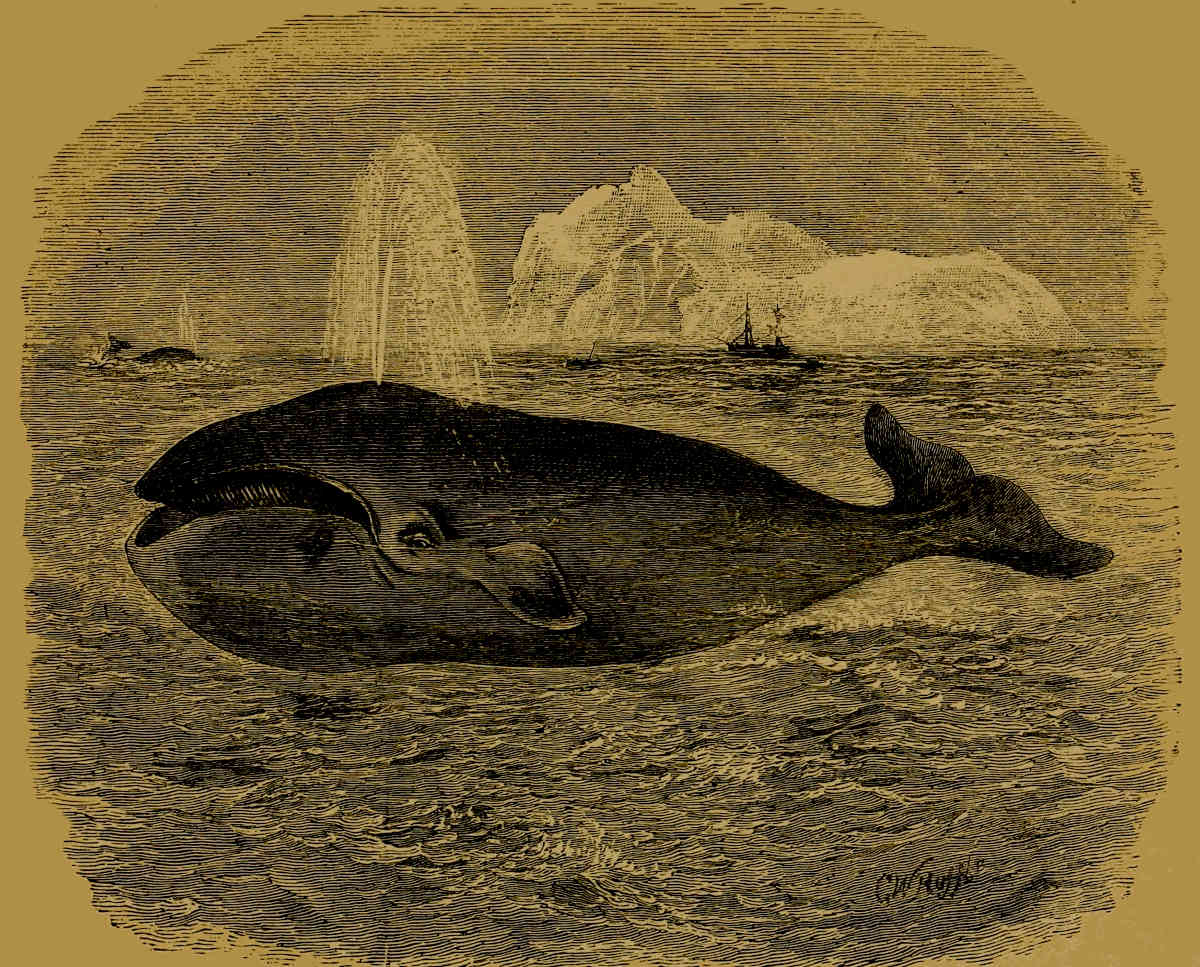
Fig. 12. Greenland Right-Whale (Balæna mysticetus, Linn.)
It has been asserted that the Greenland Whales supposed formerly to have visited our coasts, have been driven north by the increased traffic in the more frequented seas of temperate Europe; but from the habits of this species as observed on the west coast of Greenland, at the fishing stations established by the Danish Government, and recorded in the memoir just referred to, no confirmation of this theory is afforded. The fishery at these stations was prosecuted from the shore when the Whales appeared upon the coast in the winter months; as the spring advanced they followed the receding ice-line, and were seen in summer as far north in Baffin’s Bay as ships had at that time succeeded in penetrating, whilst their southward range in winter was always limited by a rather northerly degree of latitude. This, it is shown, went on with the greatest regularity for at least 80 years, during which the Whales constantly made their appearance at the same places, at the same season, without the slightest alteration taking place. The fact of the Whales always moving northward as the ice breaks up, will account for their being found in the spring in different latitudes; thus, on the Greenland coast, they are found, at this season, in latitude 65° 25′; but in Davis’ Strait, in 61° to 62°, always, however, inseparable from the ice. Messrs. Eschricht and Reinhardt thus conclude: “It seems, therefore, that the Whales have not retreated further north, as they are still found within precisely the same limits in which they were found at the beginning of the persecution, but in numbers so diminished that the fishery will hardly repay the trouble and expense attending it.”
Capt. Feilden, the naturalist to Sir Geo. Nares’s Arctic expedition, speaking of the Northern range of this species, says he is quite satisfied that “no Whale could inhabit at the present day the frozen sea to the north of Robeson Channel. To penetrate from the North-water of Baffin Bay to Robeson Channel, would be a hazardous task for this great animal, and in this opinion the experienced whaling quartermasters, who accompanied our Expedition, coincided. We may dismiss from our minds the idea or hope that nearer to the Pole, and beyond the limits of present discovery, there may be haunts in the Polar Sea suitable for the Right-whale. I do not look for the speedy extinction of the Greenland Whale; but it is probable that in a few years the fishing will no longer prove profitable to the fine fleet of whalers that now sail from our northern ports, and I see no hope of Arctic discovery increasing our knowledge of the range of this animal.”[19]
The southern limit of the Right-whale in the Northern ocean may be shown by a line drawn from the coast of Lapland at 70°, just touching the southern point of Iceland, and ending on the coast of Labrador at about 55° north latitude.
The whaling-trade, which once employed so many hardy seamen, is now reduced to very narrow limits, and appears to have passed almost entirely into the hands of the English, or rather Scotch. The Biscayans were not content with exterminating the Whales found in their own seas, but in 1721 they had twenty vessels in the Greenland fishery; the Dutch also took a large part in the trade; and in the year 1680, when they appear to have been the most actively engaged in the fishery, they are said to have had about 260 ships and 14,000 men employed. In 1725 the South Sea Company embarked in the trade, but meeting with considerable losses, speedily gave it up. The Government, in order to encourage this languishing branch of industry, in 1732 granted a bounty of 20s. per ton on the oil; this, being found insufficient, was increased in 1749 to 40s. per ton, which caused a considerable increase in the number of vessels; but upon Parliament, in 1777, reducing the bounty to 30s. per ton, the number of vessels rapidly fell off from 105 to 39; the bounty was then, in 1781, raised to its old level, with a corresponding increase in the number of vessels employed. Then followed a gradual process of reduction, until in the year 1824 the bounty altogether ceased, and the ships fell off from 112 in 1824, to 88 in 1827.[20] During the nine years ending 1818 there was an average of 91 English (sailing from eight ports), and forty-one Scotch ships (sailing from nine ports) employed in the trade; in 1830 they were reduced to 41 English vessels (sailing from five ports), to which Hull contributed 33, and 50 Scotch vessels (sailing from seven ports), to which Peterhead contributed 13, and Dundee 9.
The years 1819 and 1830 were both very disastrous to the whale-trade; in the former year fourteen British vessels were lost, and in the latter, nineteen British ships were totally wrecked, and twelve seriously injured. The number of ships employed has since gradually decreased, and at present Dundee and Peterhead are the only two ports in Great Britain engaged in the whale-fishery. Dundee sends out fifteen powerful steam-vessels, which leave about the beginning of May, and if fortunate in filling up, return, according to circumstances, from August to the beginning of November. Peterhead sends five steamers and one sailing vessel; they are ship-rigged, and from two to five hundred tons register, and 40 to 100 horse power. The expense now incurred renders it necessary that a large number of Whales should be taken to make the voyage pay: the Arctic, in her voyage of 1873, captured twenty-eight Whales, which were estimated to produce in oil and bone £18,925, or about £678 per Whale, the best Whale, a female with sucker, was estimated at £1,500, and the smallest at only £110. An average Whale produces 9½ tons of oil, a ton measuring 252 gallons, and 7 ft. 6 in. of whalebone; the longest bone cut of the twenty-eight fish was 11 ft. 9 in. and the shortest 2 ft. 6 in. This was considered a very successful year. The whale-fishery was commenced at Peterhead in 1788; since that time, up to the year 1879, Captain David Gray informs me that 995 voyages have been made to the Greenland and Davis’ Straits whale and seal-fisheries, and there have been brought home 4195 Whales, furnishing 30,975 tons of oil, and 1549 tons of whalebone, besides 1,673,052 Seals, yielding 20,913 tons of oil, leaving a nett profit of £583,020, or £586 per ship per voyage. The Dundee whale-fishery commenced in 1790, and the seal-fishery in 1860; since that time up to the season of 1879, 538 voyages have been made to the Greenland and Davis’ Straits whale and seal-fisheries, including Labrador, which have produced 4220 Whales, yielding 32,774 tons of oil and 1640 tons of whalebone, besides 917,278 Seals, yielding 10,464 tons of oil, valued together at £2,160,400, leaving a nett profit of £652,320, or £1212 10s. per ship per voyage. Capt. Gray adds: “I have often been asked where all the Whales are gone to; let the above figures be the reply.”
The present price of whale-oil is from £28 to £30 per ton, the whalebone ranging as high as £1100 per ton, according to the length of the bone; but although there are exceptions, of late years the fishery, as a whole, is said, on good authority, not to have paid the heavy expenses of the fleet engaged in it, nor does there seem much prospect of improvement, mineral oil being now used for many purposes for which formerly whale and seal oil was required. One of the chief uses to which whale and seal oil are now applied is in the preparation of the jute fibre, the manufacture of which is so extensively carried on at the port of Dundee, also the chief centre of the whaling-trade.
An interesting account of a whaling voyage in the ship Arctic, and full particulars of the mode pursued in taking, and subsequent treatment of the fish, is given by Captain A. H. Markham, in his ‘Whaling Cruise to Baffin’s Bay.’[21]
The usual length of a full-grown Right-whale is about 50 feet; but Dr. Brown, in his paper on the Cetaceans of the Greenland Seas (P. Z. S., 1868, p. 539), gives the dimensions of one which measured 65 feet. The general colour is black. The mouth occupies about one-third of the entire length, and the baleen is from 10 to 12 feet long; it has been known to reach the great length of 13 ft. 2 in., and 9 in. in width. This baleen, which is found depending from the upper jaw, consists of a number of horny plates, similar in structure to the horn of the rhinoceros, consisting of a fibrous mass glutinated together in the solid portion, and placed transversely along either side of the palate; they are arranged closely together, with the external edge smooth, and gradually thinning off towards the inner margin, which ends in a fringe of long hair-like fibres: the number of laminæ is about 300 on each side.[22] Captain David Gray, of the Eclipse, an experienced whaler, in a communication to ‘Land and Water,’ on December 1, 1877, pointed out and first satisfactorily explained the means by which these extraordinary appendages are disposed of when the mouth of the Whale is closed. He shows that when the mouth is shut, the slender ends of the whalebone curve backwards towards the throat, the longer ones from the middle of the jaw falling into the hollow formed by the shortness of those behind them; when the animal opens its mouth to feed, the whalebone springs forward and downwards, thus always by its elasticity, filling up the space between the upper and lower jaws, whether the mouth be fully or only partially open, and interposing a strainer between the cavity of the mouth and the external water, effectually preventing the food which enters the mouth from passing out with the flow of water which passes through the mouth as the great beast pursues and captures its minute food.
The Whale whilst feeding swims along with its mouth open, until it has collected a quantity of the small marine animals which form its food; then, closing its capacious under jaw, it forces out the water between the plates of baleen, leaving the captive prey stranded on its huge tongue, when it swallows them at leisure. The food of the Greenland Whale consists entirely of small marine animals, particularly a kind of shrimp, found in great abundance in the Arctic seas. This species seldom remains under water longer than from ten to fifteen minutes, returning to the surface to breathe, which, if undisturbed, occupies from two to three minutes. Capt. Gray, however, has known it when harpooned to stay under water fifty minutes. Professor Owen describes the wonderful provision for storing of blood in a vast plexus of blood-vessels found in the Cetacea, at the back of the lungs and between them and the ribs, thus enabling them, although lung-breathing animals, to stay under water for so protracted a period, and states that the peculiar non-valvular structure of the veins of the Cetacea, and the pressure on these reservoirs of blood at the depths to which they retreat when harpooned, explain the profuse and lethal hæmorrhage which follows a wound, that in other mammalia would not be fatal.[23]
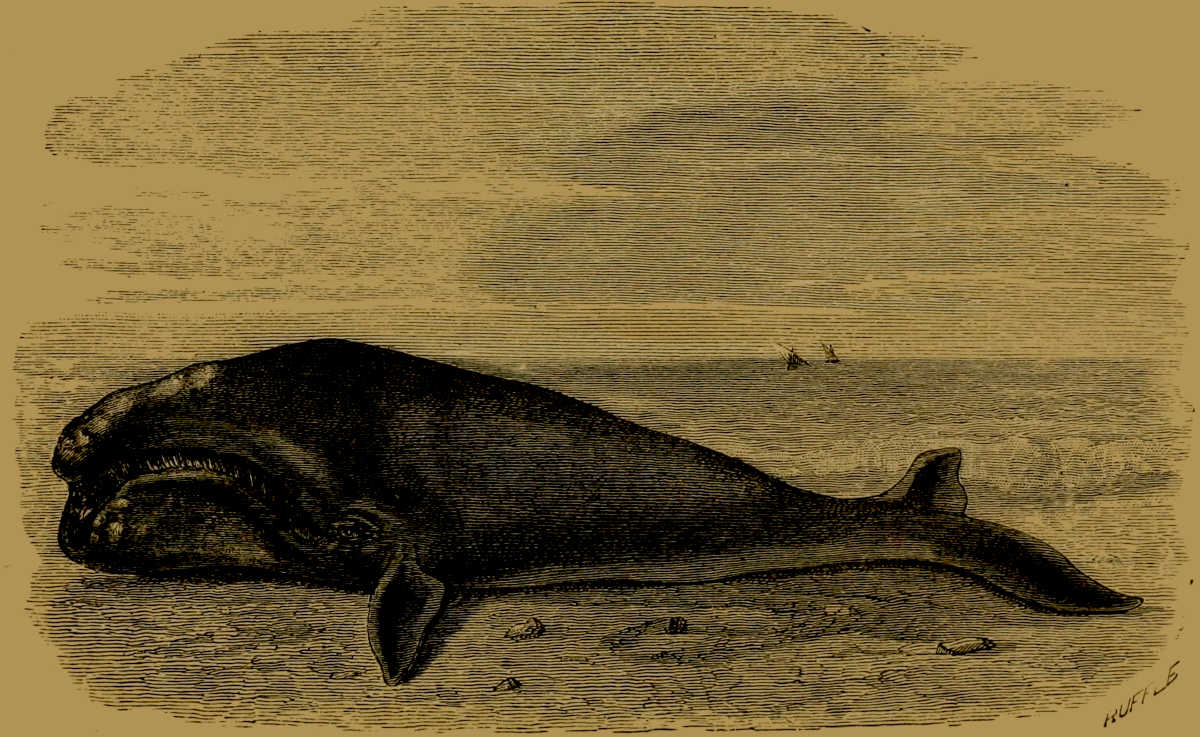
Fig. 13. Atlantic Right-Whale (Balæna biscayensis, Eschricht), after Capellini.
The Right-Whale is believed by Eschricht and Reinhardt to bring forth its single young one (rarely two) about the end of March or beginning of May, and the time of gestation to be thirteen or fourteen months, so that it will bring forth only every other year; Scoresby considers that they go eight or nine months, and bring forth in February or March.[24] The young one is supposed to be suckled for twelve months, during which time the baleen is gradually developed. In disposition, the Greenland Whale is timid and retiring; the chief danger in its capture arises from its rapid descent when harpooned; the line is then carried out with such speed that, should it foul or all run out and not be immediately cut, the boat will be upset or carried under water. Capt. David Gray estimates the speed of a struck or scared Whale at about eight miles an hour, and the ordinary speed at about four miles, whether sounding or along the surface. It has never been known to attack a boat, but accidents sometimes happen if approached too closely in its death “flurry,” which is said to be very terrible to witness. Its fondness for its young is such that if the “sucker” be killed the old one readily falls a victim, and the whalers do not fail to avail themselves, for their own advantage, of this amiable trait in its character.
THE ATLANTIC RIGHT-WHALE.
Until recently it was believed that a Whale formerly common in the temperate waters of the North Atlantic was identical with the Right-Whale of the Arctic seas, of which we have just given an account, but Professors Eschricht and Reinhardt have successfully shown, as stated in the previous article, that such is not the case, the habits of the two animals, as well as the localities frequented by each, being totally distinct. They have, therefore, described the more southern form as a distinct species, under the name of Balæna biscayensis, or the Atlantic Right-Whale, the “Sarde” of the French, “Nordkaper” of the Dutch, and “Sletbag” of the Iceland whalers of former days.
As early as the twelfth century, long before the whale-fishery was prosecuted in the Arctic seas, a brisk trade was carried on by the Basque fishermen from the Biscayan ports. That this fishery must have been of considerable importance, in a mercantile point of view, there can be no doubt, from the numerous references to be met with in early records; for instance, in 1261, a tithe was laid upon the tongues of all Whales imported into Bayonne, where they formed a much-esteemed article of food, and in 1338 a duty of £6 a Whale on those brought into the port of Biarritz was relinquished by Edward III. to Peter de Puyanne for services rendered; these and other like records extant show that for a long period this branch of industry was briskly prosecuted. Gradually, however, the Whales became more and more scarce, and the hardy Basque seamen, after following their prey to Newfoundland and Iceland, shortly after the discovery of Spitsbergen in 1596 found their all-but-lost occupation suddenly revive; the “Sletbag” was left behind, but the home of the true Greenland Whale, a much more valuable animal, was for the first time invaded, and that species, which then abounded in the seas surrounding Spitzbergen, speedily became the object of the whalers’ attack; many vessels were fitted out for its pursuit which carried Biscayan harpooners, the crews, also, generally consisting, in part, of these hardy seamen.
So recently as the close of the last century, the Atlantic Right-whale was not infrequent in the North Atlantic; it was regularly caught on the coast of Nantucket, and occasionally by the American Whalers on the coast of Iceland; it has, however, now become very rare. Professors Eschricht and Reinhardt thus summarise the distinctive characters of the “Sletbag,” “Sarde,” or “Nordkaper,” so far as they have been able to glean from all the sources accessible to them, and consider the species identical with their B. biscayensis:—
1. “That it was much more active than the Greenland Whale, much quicker, and more violent in its movements, and, accordingly, both more difficult and more dangerous to catch.”
2. “That it was smaller (it being, however, impossible to give an exact statement of its length), and had much less blubber.”
3. “That its head was shorter, and that its whalebone was, comparatively speaking, much thicker, but scarcely more than half as long as that of the Greenland Whale, being, however, still much longer than that of even the very largest Fin-Whale, although the ‘Sletbag’ itself probably scarcely attained to half the length of the last-named.”
4. “That it was regularly infested with a Cirriped belonging to the genus Coronula, and that it belonged to the temperate Northern Atlantic as exclusively as the Greenland Whale belonged to the icy Polar Sea, so that it must be considered as equally exceptional when either of these species strayed into the range of the other, and, moreover, that in its native sea it was to be found farthest towards south in the winter (namely, in the Bay of Biscay, and near the coast of North America, down to Cape Cod), while in the summer it roved about in the sea round Iceland and between this Island and the most northerly part of Norway.”[25]
In addition to the British Right-Whales mentioned at the commencement of the previous article, which may almost with certainty be referred to this species, I am enabled, through the kindness of my friend, Captain David Gray, of Peterhead, to record two other instances of the occurrence of the Atlantic Right-Whale in British waters. With regard to the first case, Captain Gray was good enough to obtain for me the independent testimony of two old men, James Webster and John Allan, both of whom are still living at Peterhead, and were witnesses of the events which they relate. The two statements coincide so remarkably, making allowance for the lapse of so many years, that it is only necessary to give one. James Webster, 85 years of age, remembers Greenland Whales coming into South Bay of Peterhead: at that time he would have been about 10 years of age [Jno. Allan says “it was in 1806 or 1807, same year as the new parish church was opened;” this was in 1806, and agrees with Webster’s statement that he was 10 years old at the time]. Remembers them being an old Whale and a sucker. Saw five boats go out after them; as far as he recollects, thinks it was the month of October [“in the summer-time,” Allan]. They struck the old Whale, and put three harpoons into her, then they struck the sucker and killed it; brought the sucker ashore and flenched it at the South Quay. [Allan says “they killed the young Whale, and flenched her at the South Quay: she, having sunk, it was two or three days after, before they got her in.”] After they had three harpoons in the old Whale, she went twice up into the head of the Bay, going so far that she turned the sand up, and then she stove two of the boats, and broke Mackie’s, one of the harpooners, legs. [Allan does not remember the name of the injured man, and thinks only one boat was stove.] After this, the Whale took a run, and went out of the Bay, blowing blood. They followed her as fast as they could, they cut two of the boats from her, and left her towing one boat with their Jack blowing, after taking the crew out of her, and in this condition the Whale went out of sight, and they never saw or heard of her again. Allan says that when she went round the South Head, a heavy sea being on at the time, and darkness coming on, the boats cut and let her go, leaving the boat which was stove, fast to the Whale, the flag still blowing, and that she went out to sea and was never seen again. Capt. Gray adds that “Capt. Wm. Volum, of the ‘Enterprise,’ and Capt. Alex. Geary, of the ‘Hope,’ both took part in the chase, and in that year the ‘Hope’ returned from Greenland on 30th June, and the ‘Enterprise’ on 30th July; consequently, it must have been some time after the latter date that the Whales came into the Bay; probably Webster is right when he names October.”
The second instance referred to by Captain Gray came under his own observation. Whilst taking a walk round the “Heads,” one Sunday morning before church, to the best of his recollection early in October, 1872, “I saw,” says Captain Gray, “a Greenland Whale within half a mile of the rocks off the South Head; its appearance and movements were exactly the same as those I have seen in Spitsbergen waters.” Accustomed, as Captain Gray has been for many years, to watch the appearance and actions of the northern species of Right-Whale, in the Polar seas, it seems impossible for a man of his great experience to have mistaken any other species of Whale for one of the Balæninæ.
Of course, there still remains the question as to whether these Whales were the Greenland or Atlantic species, but I think the consideration of the circumstances under which they occurred, leaves no doubt what the reply must be. Captain Gray writes—“Until you began to question the identity of these Whales harpooned here in 1806, no one had ever had the smallest doubt of their being Greenland Whales,” and that had there been any marked difference in their appearance, it would have been at once noticed by such experienced men as those who captured the Whale at Peterhead; but he adds that “so far as the habits of the Greenland Whale are known, it is contrary to our experience that they should visit our shores at the season of the year at which these Whales were seen here, when we know that the Arctic Whale regularly disappears into the depths of the Polar ice towards the end of summer, where no ships or steamers can follow them.” It would naturally be expected that, towards the end of summer the Atlantic Whale would also be approaching the northern limit of its range, and this is precisely the season when all the Whales of this description, of which the date is given, appear to have occurred, except two in a much more southerly locality, (their proper winter habitat) shortly to be mentioned. That the Peterhead men did not speak of any marked difference in the Whale which visited their Bay and those they had just returned from pursuing in the Polar ice may perhaps be accounted for partly by the similarity of the two species, and partly by their not having killed the adult individual; whilst the restless activity of the latter may possibly be due, not only to the presence of its young one, but, in part, to the superior activity of the Atlantic species, which is said to render it so much more dangerous and difficult to catch.
But it may be said that if there be such a species, having a range, which in summer extends from the entrance of Davis’ Strait to Iceland and the North Cape, why are they not occasionally met with by the whalers in crossing the Atlantic to and from their more northern fishing grounds? Although such an encounter with a creature confessedly of rare occurrence would be in the highest degree improbable, still here again, through the kindness of Capt. Gray I am able to say that such encounters have taken place, and could we know the experience of all the whalers who have crossed the Atlantic, perhaps other instances might be put on record. Captain David Gray’s father told him that while mate to his father (Capt. David Gray’s grandfather), when crossing the Atlantic on the homeward voyage from Davis’ Strait, the vessel ran into a Greenland Whale (as he supposed it) and that he was anxious to lower some boats and go after it, but that his father would not allow him to do so, there being too much sea running at that time. This again would be in the summer season. It seems probable that not being aware of the existence of a Southern species of Right-Whale, or in consequence of the high sea which was running at the time, the Grays did not observe, or, at least, failed to mention, the peculiarities which distinguish the Atlantic species. But I am indebted to Capt. Gray for other instances of the occurrence of this species not far from Cape Farewell, and in at least one case the species was identified, the observer being aware of the existence of the Atlantic Whale, and the circumstances apparently favourable for close observation. On the 1st May, 1868, Capt. Alexander Murray, now commanding the S.S. “Windward,” at that time trading to South Greenland, in the “Sir Colin Campbell,” saw near Cape Farewell, several Right-Whales, close enough to distinguish their different features and general appearance. Capt. Murray remarks that, “they are a shorter Whale than the Greenland and much flatter in the crown;” he also noticed “Barnacles and grass near the blow-holes,” and states that from conversations he has had with American shipmasters employed in hunting these Whales, that these parasites are always present in this species, whereas the Greenland Whales are as invariably free from them. Capt. Murray adds that in 1867 three American whalers came into Cumberland Gulf, one having six, one three, and the other two Atlantic Whales on board, all of which were taken in the summer, a little to the eastward of Cape Farewell; and, finally, Capt. Gray’s brother, who commands the Hudson Bay Company’s Steamer, “Labrador,” told him that in June, 1879, he saw two of these Whales in lat. 57 N. and long. 33 W.; they were close alongside, and the weather at the time calm: they went away in a south-westerly direction. It would seem, indeed, that this species is not at all an infrequent summer visitor to the open sea, lying to the east of Cape Farewell.
Two recent instances of the occurrence of this species on the eastern side of the Atlantic are on record, both of which were met with in winter, and in the warmer latitudes of the Bay of Biscay and the Mediterranean Sea. On the 17th of January, 1854, a young one with its mother appeared in the harbour of St. Sebastian; the mother escaped, but the little one was caught, and a drawing of it made by Dr. Monedero (reproduced in Bell’s ‘Brit. Quad.,’ 2nd Edit. p. 387); the skeleton was preserved for the museum of Pampeluna, thence it was removed by Prof. Eschricht in 1858 to the Copenhagen Museum, for which he purchased it. Also, on the 9th February, 1877, a Whale was captured in the Gulf of Taranto, which has been referred to this species, and these, I believe, are the only specimens which have been taken in European waters of late years; it seems very probable, however, that the “Black-Whale” of the temperate shores of N. America (the B. cisarctica of Cope) is identical with B. biscayensis, and that, although extinct on the eastern side of the Atlantic, individuals from the American waters occasionally find their way into the European seas, where the race formerly existed as a native. The skeleton of the Taranto specimen is now in the Museum of Comparative Anatomy of the University of Naples, and M. F. Gasco states positively that “both the Taranto Whale and that of Philadelphia (B. cisarctica, Cope) belong to the species B. biscayensis, of Eschricht, which, for several centuries was pursued with avidity—I was going to say exterminated—throughout the temperate regions of the North Atlantic, first by the Basques, and then successively by the Saintongeois, the Normans, the Dutch (who called it Nordkaper), the Danes, Norwegians, English, and Americans.”[26] The cervical vertebræ in the British Museum, which form the type of Gray’s Halibalæna britannica are also believed to belong to this species.
Dr. Gray did not recognize Balæna biscayensis as a good species, and accounted for the absence of the Right-Whales, formerly found in British waters, from the disturbed state of the seas, owing to the great increase in traffic of ships, and especially steam-vessels, which, he said, “appears to restrict their visits, and especially their breeding, more to the Arctic portion; thus some Whales, which were formerly said to be common on the coast of Britain, as the Right-Whales, no longer visit this country.” Eschricht, however, as before stated, has clearly shown that the habits of the northern Right-Whale and localities frequented by them have remained unchanged for many years, as proved by the record kept at the whaling-stations established by the Danish government on the west coast of Greenland.
It is worthy of remark, that in the Southern ocean there are said to be two species of Right-Whale, one Caperea antipodorum (Gray), not found further north than 40° south latitude; the other, Eubalæna australis (Gray), found as near the equator as 20° south latitude.
The illustration at p. 60 is a reduced copy of the coloured plate in Capellini’s account of the Taranto Whale (‘Della Balena di Taranto,’ G. Capellini, Bologna, 1877), the original of which was a carefully-executed water-colour drawing, made from the animal itself.
BALÆNOPTERIDÆ.
THE HUMP-BACKED WHALE.
The next family, Balænopteridæ, is represented by two genera, Megaptera and Balænoptera. Like the Right-whales, they all have two blow-holes, but may readily be distinguished by having the throat and belly curiously marked with longitudinal furrows, like the ribs in a worsted stocking: they also possess a well-defined dorsal fin.
The Hump-backed Whale, Megaptera longimana (Rudolphi), the only member of the first genus known to occur in the British seas, has been recorded at least three times; first at Newcastle in September, 1839, again in the estuary of the Dee, in 1863, and in Wick Bay, Caithnesshire, in March, 1871. Capt. Gray tells me they are not uncommon off the east coast of Scotland in summer, and that he has known several captured off Peterhead, three having been brought in in one season. It is possible other examples may have been mistaken for Rorquals, from which this species may at once be distinguished externally by the great length of its flippers, which are white and very conspicuous.
Herr Collett says that this species is met with every spring, on the northern coast of Norway, particularly in the Varanger Fjord; although generally occurring in small numbers, it is occasionally found in great quantities. On one occasion a steam vessel was surrounded by them as far as the eye could see, and great care had to be used to avoid running against them. South of the polar circle, he says it only occurs in small numbers.[27] In August, 1880, Capt. Gray saw vast numbers of these Whales about one hundred miles N.E. of Iceland; the sea, he states, seemed to be quite full of them as far as he could see from the mast-head. They were accompanied by a small species of “Finner,” with a white band across the fin (B. rostrata).
The total length of the animal is about 45 to 50 feet, its baleen is black, and the flippers, which are white and notched at the edge, from 10 to 14 feet in length.
THE COMMON RORQUAL.
To the genus Balænoptera belong the Rorquals or Fin-whales, the first species of which is the Common Rorqual, Balænoptera musculus (Linn.), the Balænoptera boops of Bell’s first edition, and Physalus antiquorum of Gray. This is a much more active animal than the Right-whale; it is difficult of approach, and, upon being harpooned, such is the velocity with which it shoots through the water that the danger is very great; Scoresby mentions one which took out 480 fathoms of line in about one minute. In addition to this, the whalebone is short and of little value, and the yield of oil small; it is therefore avoided by the whalers, as more dangerous than profitable, and if struck at all, it is most likely a case of mistaken identity. From the port of Vadsö, however, the capture of this, and the species immediately preceding and following, is now successfully effected by means of an explosive shell or harpoon, which kills them at once. This fishery was established about the year 1865, by Herr Svend Foyn, from Tonsberg, and is still very successfully prosecuted, as many as 50 Whales being obtained each summer; they are towed into Vadsö, where the blubber is refined and the carcase made into manure.
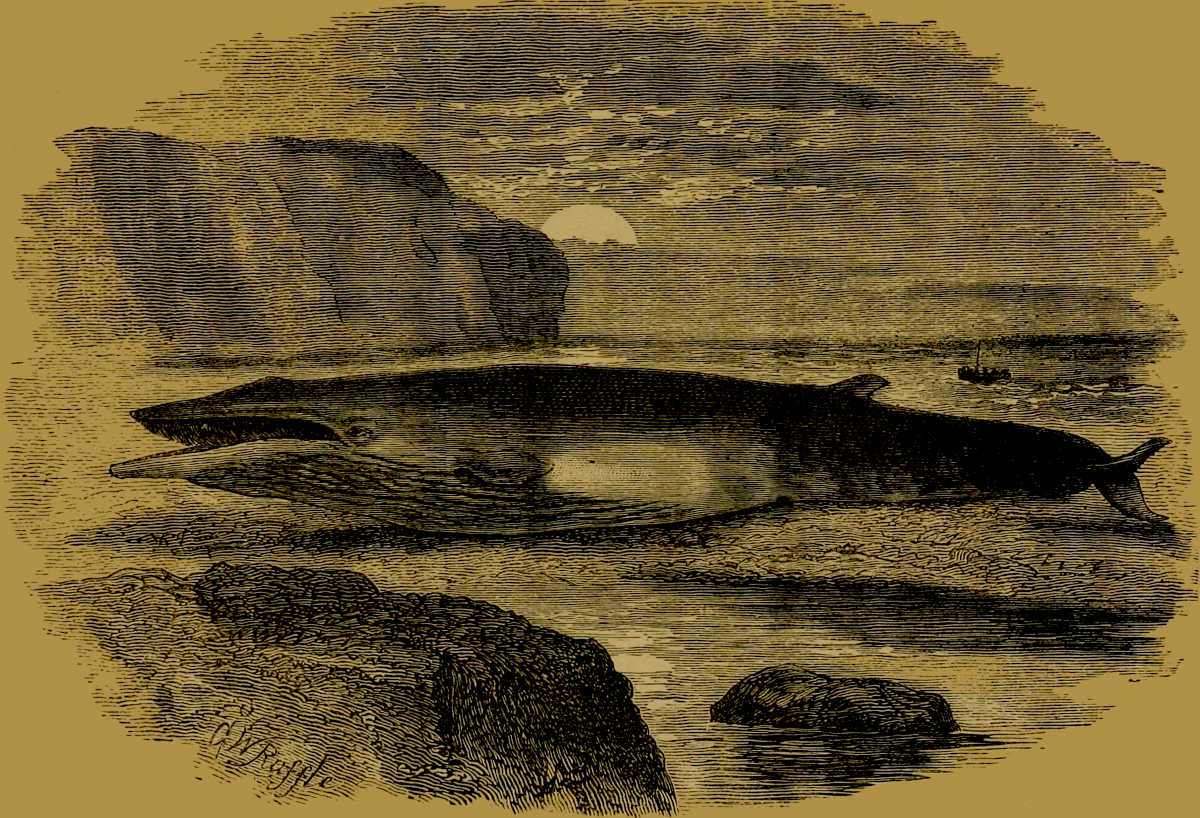
Fig. 14. Common Rorqual (Balænoptera musculus, Linn.)
The habitat of the Common Rorqual is the temperate Northern seas, from the Mediterranean, which it sometimes enters, to the 70° north latitude, and sometimes even farther north still. Nordenskiöld, in the ‘Œolus,’ last saw Finners on the 18th May, 1861, in lat. 75° 45′, the temperature of the water being between 2·50° and 3·8° C., and they were not again seen until the return of the expedition in September, in 78° north latitude, the temperature of the water being then about 3·8° C. He remarks, “It is probable that ‘Finners’ never live in colder water than this, and that the northern limit of their distribution coincides with sea of this temperature. It has to be kept in view, however, that this boundary line lies several degrees further to the north in summer than in winter.”[28]
The range of this group is very great, and, according to Andrew Murray, it would appear that one or more of the Balænopteridæ is found over the whole world, although it is by no means certain that any particular species has a very wide geographical range. Megaptera longimana, which occurs in the North Sea, was also supposed to have been met with at the Cape, but Dr. Gray has pointed out differences in the cervical vertebræ of an individual from that locality, which he considers constitute distinct specific characters; on the other hand, a Fin-whale from Java so closely resembles our Balænoptera laticeps that Professor Flower, after the most careful examination and comparison almost bone by bone, hesitates to pronounce it distinct, and only separates it provisionally. In our own seas this species is of frequent occurrence, more especially on the Scotch coast, where it appears in the early autumn, attracted by the shoals of herring which abound there at that season. In feeding, the Rorquals are not so restricted to minute marine animals as the Right-Whale, but devour large quantities of fish of various sizes, from herrings up to cod. In the stomach of the Newcastle Humpbacked Whale (the species mentioned immediately before the present one) were found six cormorants, but a seventh, found in its throat, was supposed to have caused its death by choking it. The blowing is accompanied by a loud noise, which, on a still night, may be heard at a considerable distance. It was formerly supposed that in “blowing” the Whale ejected from its nostrils a very considerable quantity of water, which might be seen to spout up into the air like a fountain; and in the performance of this remarkable feat they were generally depicted. Beale, however, in his ‘Natural History of the Sperm Whale,’ as early as 1838, showed that this is not the case, and the truth of his observations is now generally acknowledged. The power so to eject water taken into its capacious mouth is, of course, impossible, the blow-hole being in direct communication with the lungs, and not with the cavity of the mouth, nor would it be of any service to the Whalebone-Whales, as the very purpose of the baleen is to form a screening apparatus through which the water is ejected, leaving its minute prey behind; and in the toothed Whales it would not be required. What appears like a jet of water is, in reality, dense vapour—in fact, the breath issuing from the lungs of the animal, highly charged with moisture, which becomes condensed upon exposure to the atmosphere. It often happens, too, that the Whale lets off the imprisoned air just before the blow-hole reaches the surface of the water, or that a wave passes over it at the moment of respiration, the water is thus dashed aside by the blast, and, probably, some of it really carried up into the air, thus heightening the deceptive effect.
This species, when adult, reaches the length of about 70 feet, the upper part is black, the throat and belly white and plaited, the flippers black. The baleen is short and slate colour, veined with streaks of darker shade, but growing lighter towards the inner edge.
Dead Whales, when stranded on the shore, after floating long at sea, are generally greatly distended with gas, which generates rapidly in the tissues after decomposition has set in; in such an inflated condition only a very imperfect conception can be formed of the true proportions of the vast beast. There is frequently, also, a great protrusion of membrane from the mouth, arising from the same cause, and other appearances in the male animal, due to the pressure of gas in the abdominal cavity are generally faithfully portrayed in old books of Natural History.
A Whale of this species, taken off the North coast of Scotland, in April, 1880, was purchased by an enterprising individual in Birmingham, to which town it was conveyed by rail, and there exhibited: probably, this was the greatest distance from the sea at which an entire Cetacean, 63 feet in length, had ever been seen.
The figure of this species is copied, by kind permission of Professor Flower, from the illustration to his paper in the ‘Proceedings of the Zoological Society of London’ for 1869, p. 604, et. seq.
SIBBALD’S RORQUAL.
Sibbald’s Rorqual (Balænoptera sibbaldii, J. E. Gray; also Sibbaldius borealis, Gray, and Physalus latirostris, Flower), has several times been met with in British waters, particularly on the east coast of Scotland. It is the largest of this gigantic family, measuring from 80 to perhaps 100 feet in length. One seen by Herr Foyn he estimated at the enormous length of 133 English feet! The famous “Ostend Whale,” which was found floating dead in the North Sea, in 1827, and taken into Ostend, belonged to this species; its skeleton was long exhibited in this country, and afterwards in America. Dr. Gray says it is now in St. Petersburg, and gives the total length as 102 feet; as, however, several of the vertebræ are missing, the exact length is uncertain. Professor Turner gives the length of a specimen stranded in the Firth of Forth as 78 feet 9 inches, and the girth behind the flippers about 45 feet: this animal was gravid, but notwithstanding this fact, the bulk must have been enormous.
Herr Rt. Collett, in his ‘Norges Pattedyrfauna,’ gives a very full account of this species, as observed by him on the Norwegian coast. In June, 1874, he had the opportunity of visiting Herr Svend Foyn’s establishment for whale-catching, at Vadsö, and in addition to being enabled to examine three individuals of this species in a fresh state, received much information as to their habits from Herr Foyn and the men engaged in the fishery. This Whale, from its colour, is known by the fishers as the “Blue Whale,” and appears to have its home in winter in the open seas, between the North Cape and Spitsbergen. By the end of April or beginning of May it approaches the coast, entering the larger Fjords towards the end of the latter month, to feast upon the enormous quantities of Thysanopoda inermis, then found there; it is also seen in summer along the coast from Loffoden to the North Cape, and further to the eastward. When the wind is on the land or in any stormy weather, it seeks the open sea. Varanger Fjord is the favourite hunting-ground for this species, and in the last few years the average number taken there has been thirty; in 1874, as many as 42 were taken: it leaves the Fjord, however, should stormy weather set in. No specimen examined by Herr Collett, or Professor Sars, had taken any other food than Thysanopoda inermis, and Herr Foyn and his catchers are all of opinion that they do not eat fish. To obtain the little Crustacean on which they feed and which is found congregated in separate masses, the Whale passes backwards and forwards with its mouth open, till the cavity is well filled, it then closes its capacious jaws upon the contents. Herr Collett found two or three barrels of these small crustaceans in the stomach of a Blue Whale which he examined, and was told that a large one would consume as much as ten barrels.
The female appears, as a rule, to be longer than the male; the young are born about the autumn, one appears to be the usual number, but two young ones have more than once been seen with the same old female.
This species may be known by its low dorsal fin, black baleen, and long flippers, which are black above and whitish below: this should be borne in mind, as it is not at all improbable that some, at least, of the enormous cetaceans which are occasionally reported from the North of Scotland, belong to this species; so very unsatisfactory, however, are the reports which appear in print, that it is rarely a single feature is mentioned by which the species may be determined.
RUDOLPHI’S RORQUAL.
Rudolphi’s Rorqual (Balænoptera laticeps, J. E. Gray) is a small species which may readily be mistaken for the Lesser Rorqual. A Whale stranded at Charmouth in February, 1840, and described by Mr. Yarrell, under the name of Balænoptera boops, in the proceedings of the Zoological Society for that year, is believed to have been of this species, but the skeleton, although prepared at the time, is supposed to have been sold and converted into manure. The same individual is recorded under the name of B. tenuirostris, in the Mag. of Nat. History, iv., 1840, p. 342, by Mr. R. H. Sweeting. Very little is known about the history or distribution of this species; the flippers are entirely black above, wanting the white band found in the next species, and the baleen is believed to be black.
LESSER RORQUAL.
The next and last of the Whalebone-Whales which we know to have occurred in the British Seas is the Lesser Rorqual (Balænoptera rostrata, Fab.; Rorqualus minor, Knox), (Fig. 15). Many individuals of this species have been obtained on various parts of the coast, from Cornwall to the North of Scotland. On the coast of Norway it is frequently met with, and is there called the “Bay-Whale,” from its habit of entering bays and estuaries; this habit the natives take advantage of for its destruction. Stretching a strong net across the inlet, they cut off its escape, and put a cruel and often protracted end to its existence with harpoons and arrows, the poor Whale sometimes lingering from eight to fourteen days. This species is also known as the “Summer-Whale,” and does not appear to be so strictly a northern species as the Balænopteridæ generally are: it is believed, like the Common Rorqual, to have been taken in the Mediterranean. A Whale of this species, taken at Mevagissey, in Cornwall, at the end of April, 1880, was conveyed to London, and there exhibited in the Old Kent Road.
The Lesser Rorqual, from its small size (not exceeding 30 feet), is not liable to be mistaken for any other species except the preceding (Rudolphi’s Rorqual), and from that it may be distinguished by the broad white band across its black flipper; the baleen also is nearly white, which is another good distinction. The figure of this species is copied from the illustration to an article by Messrs. Carte and Macalister, on the Anatomy of Balænoptera rostrata, in the ‘Philosophical Transactions’ of the Royal Society for 1868, vol. clviii.
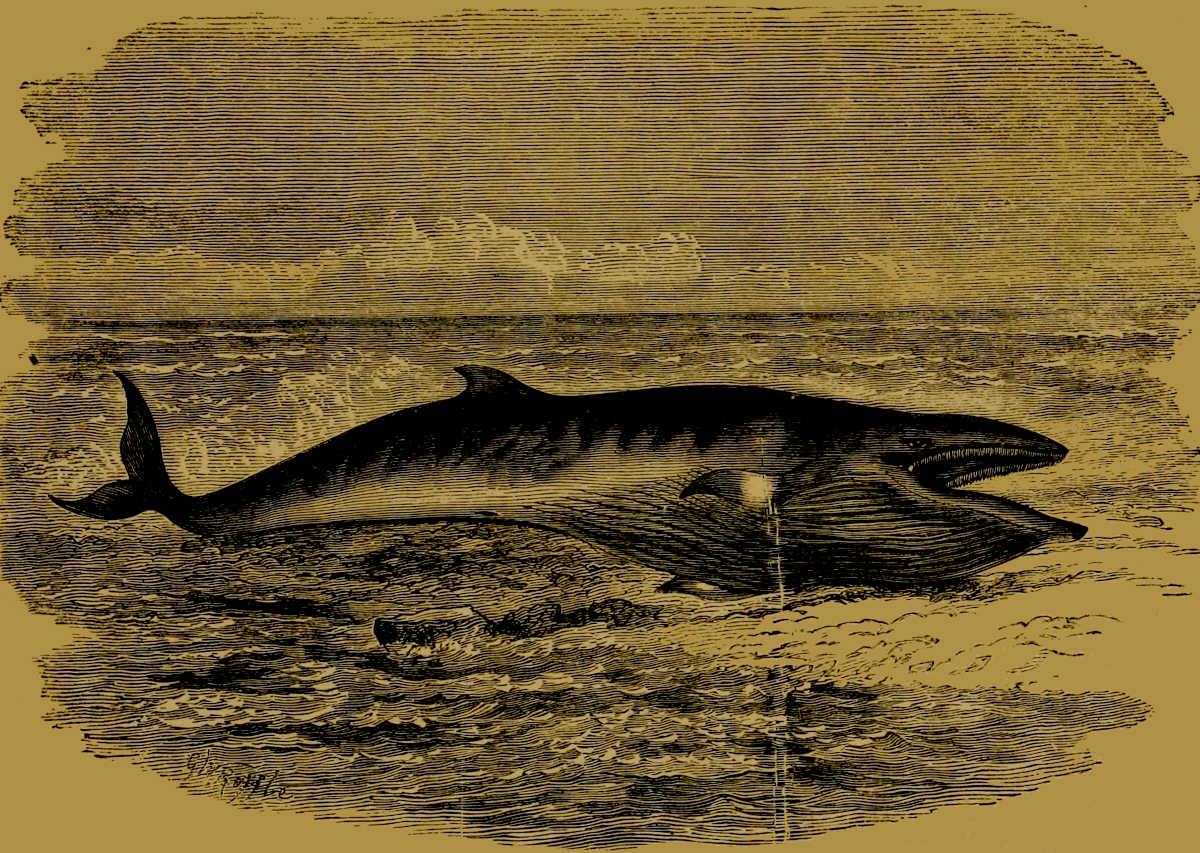
Fig. 15. Lesser Rorqual (Balænoptera rostrata, Fab.)
In the table on the next page I have endeavoured to give the most striking external peculiarities of our British Mystacoceti. They are easily remembered, and will be useful in identifying specimens, should no authority be at hand. The table also indicates the external points to be observed by a person not acquainted with this class of animals, and is most serviceable to enable others to identify doubtful specimens.
TABLE OF DIFFERENCES OF BRITISH MYSTACOCETI (WHALEBONE WHALES).
Colour. Baleen.
Species. Upper Part. Under Part. Belly and Throat. Flippers. Dorsal Fin. Length. Colour. Total Length.
Balæna mysticetus, Greenland Right-Whale Dark grey Throat white Smooth Black None Long and narrow; 10 or 12 feet Blackish grey 50 or 60 feet
Balæna biscayensis, Atlantic Right-Whale Uniform black Uniform black Smooth Black None Shorter than the above ... 40 feet (?)
Megaptera longimana, Humpbacked Whale Black and white Black (plicæ) Plaited Wholly white, about 12 ft. long and notched at the edge Very low Short Black About 50 feet
Balænoptera musculus, Common Rorqual Black White Plaited Black Distinct Short Slate colour—shaded lighter to inner edge About 70 feet
Balænoptera sibbaldii, Sibbald’s Rorqual Black Slate grey Plaited Dark above, White beneath, 12 feet or more long Very low Short Rich black 80 to 100 feet
Balænoptera laticeps, Rudolphi’s Rorqual Black White Plaited Upper part black ? Short Black (?) 30 or 40 feet
Balænoptera rostrata, Lesser Rorqual Black White Plaited Black, with broad band of white across High Short Yellowish white 25 to 30 feet
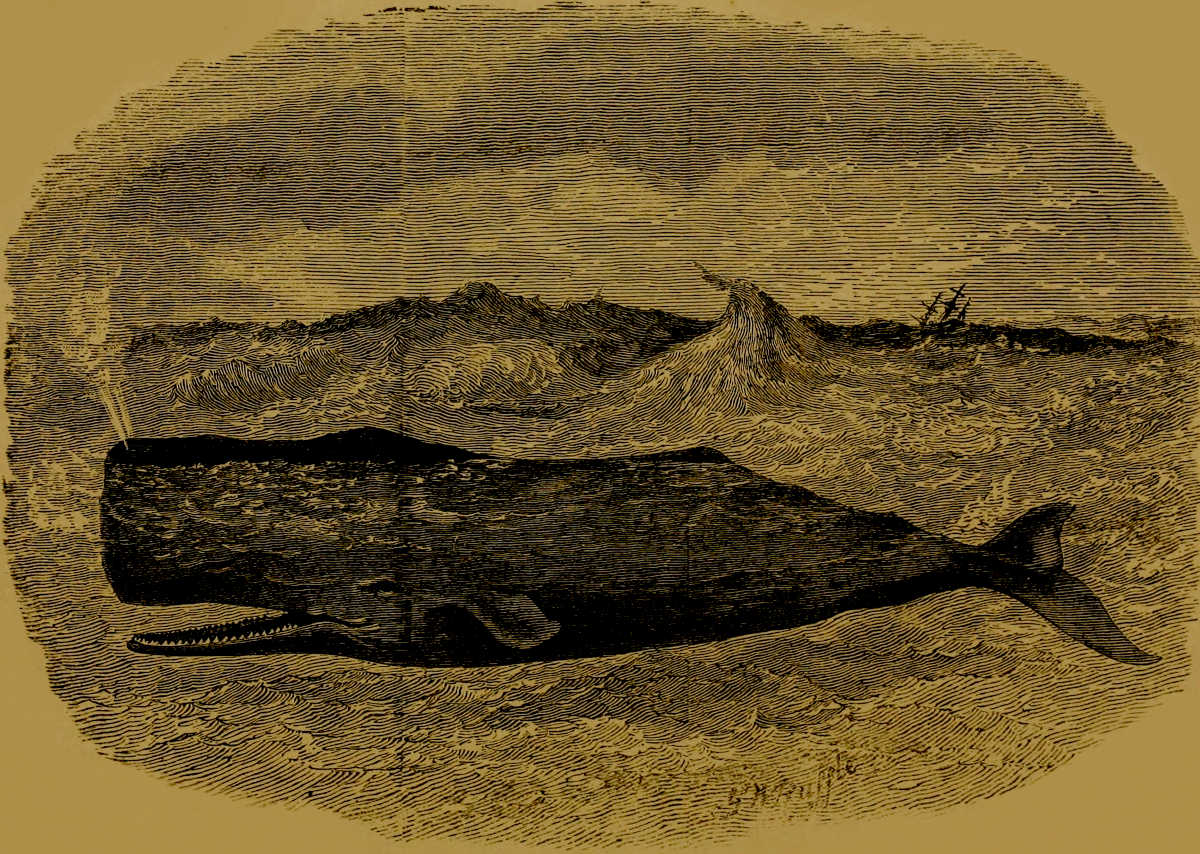
Fig. 16. Sperm Whale (Physeter macrocephalus, Linn.)