Volume 1 / Part 1 — CHAPTER XV. (continued 2)
Reading edition
It is unnecessary to enter into details concerning this mismanaged and unfortunate expedition, the result of which is well known to every reader of English history. Sir Marmaduke Langdale was defeated by Cromwell at Preston on the 17th of August, and on entering the town after the defeat, was mortified to find that his Scotch allies had abandoned it. Langdale having now no alternative but flight, disbanded his infantry, and along with his cavalry and Hamilton, who, refusing to follow the example of his army, had remained in the town, swam across the Ribble.
The Scotch army retired during the night towards Wigan, where it was joined by the duke next morning, but so reduced in spirits and weakened by desertion as to be quite unable to make any resistance to the victorious troops of Cromwell, who pressed hard upon them. The foot, under the command of Baillie, continued to retreat during the day, but were overtaken at Warrington, and, being unable either to proceed or to resist, surrendered. The number which capitulated amounted to about 3,000. Upwards of 6,000 had previously been captured by the country people, and the few who had the good fortune to escape joined Munro and returned to Scotland. These prisoners were sold as slaves, and sent to the plantations.
The duke, abandoning Baillie to his fate, carried off the whole cavalry; but he had not proceeded far when his rear was attacked by the parliamentary army. Middleton made a gallant defence, and was taken prisoner; but the duke escaped, and fled to Uttoxeter, followed by his horse, where he surrendered himself to General Lambert and Lord Grey of Groby, who sent him prisoner to Windsor. The Earl of Callander, having effected his escape, went over to Holland, disgusted at the conduct of the duke.
As soon as the news of the defeat of Hamilton reached Scotland, the Covenanters of the west began to bestir themselves, and a party of them, under the command of Robert Montgomery, son of the Earl of Eglinton, attacked a troop of Lanark’s horse, quartered in Ayrshire, killed some and routed the rest. The Committee of Estates, apprehensive that the spirit of insurrection would speedily spread, immediately ordered out all the fencible men in the kingdom to put down the rising in the west. A difference, however, arose in the committee in the choice of a commander. The Earl of Lanark and the Earl Marischal were proposed by their respective friends. Lanark’s chief opponent was the Earl of Roxburgh, who, (says Wishart,) “in a grave and modest speech, earnestly entreated him, for the sake of their dear sovereign and their distressed country, not to insist in demanding that dignity, which was extremely unseasonable and ill-judged at that time.”[378] Roxburgh’s remonstrance had no effect upon Lanark, who, on a vote being taken, was found to have the majority, and so anxious was he to obtain the command of the army that he actually voted for himself.[379] He had even the indiscretion to declare, that he would not permit any other person to command in his brother’s absence. This rash and imprudent behaviour on the part of Lanark so exasperated Roxburgh and his friends, who justly dreaded the utter ruin of the king’s affairs, that they henceforth withdrew altogether from public affairs.
As soon as Lanark had been appointed to the command of the new levy, he set about raising it with great expedition. For this purpose he sent circulars, plausibly written, to every part of Scotland, calling upon all classes to join him without delay. These circulars had the desired effect. The people beyond the Forth, and even the men of Fife, showed a disposition to obey the call. The Earl of Seaforth raised 4,000 men in the Western Islands and in Ross-shire, whom he brought south, and the Earl of Morton also brought into Lothian 1,200 men from the Orkneys. In short, with the exception of Argyle, there were few places in Scotland from which considerable bodies of men might not have been expected.
Before the defeat of Hamilton’s army, Lanark had raised three regiments of horse, which were now under his command. These, with the accessions of force which were daily arriving from different parts of the kingdom, were quite sufficient to have put down the insurrection in the west; but instead of marching thither, Lanark, to the surprise of every person, proceeded through East Lothian towards the eastern borders to meet Sir George Munro, who was retiring upon Berwick before the army of Cromwell. The people of the west being thus relieved from the apprehensions of a visit, assembled in great numbers, and taking advantage of Lanark’s absence, a body of them, to the number of no less than 6,000 men, headed by the chancellor, the Earl of Eglinton, and some ministers, advanced upon the capital, which they entered without opposition, the magistrates and ministers of the city welcoming their approach by going out to meet them. Bishop Wishart describes this body as “a confused rabble, composed of farmers, cow-herds, shepherds, coblers, and such like mob, without arms, and without courage,” and says, that when they arrived in Edinburgh, “they were provided with arms, which, as they were unaccustomed to, were rather a burden and incumbrance than of any use,”—that “they were mounted upon horses, or jades rather, which had been long used to the drudgery of labour, equipped with pack saddles and halters, in place of saddles and bridles.”[380] This tumultuary body, however, was soon put into proper order by the Earl of Leven, who was invested with the chief command, and by David Leslie, as his lieutenant-general, and presented a rather formidable appearance, for on Lanark’s return from the south, he did not venture to engage it, though his force amounted to 4,000 or 5,000 horse and as many foot, many of whom were veterans who had served in Ireland under Munro.
In thus declining to attack Leslie, Lanark acted contrary to the advice of Munro and his other officers. According to Dr. Wishart, Lanark’s advanced guard, on arriving at Musselburgh, fell in with some of Leslie’s outposts, who defended the bridge over the Esk, and Lanark’s advanced guard, though inferior in number, immediately put them in great disorder, and killed some of them without sustaining any loss. This success was reported to Lanark, and it was represented to him, that by following it up immediately, while the enemy continued in the state of alarm into which this affair of outposts had thrown them, he might, perhaps, obtain a bloodless victory, and secure possession of the city of Edinburgh and the town of Leith, with all the warlike stores, before sunset.
Leading his army along the base of the Pentland hills, Lanark proceeded to Linlithgow, which he entered on the evening of the 11th of September, where he almost surprised the Earl of Cassilis, who, at the head of 800 horse from Carrick and Galloway, had taken up his quarters there for the night; but a notice having been sent to him of the Earl of Lanark’s approach by some friend, he fled precipitately to Queensferry, leaving the supper which was cooking for him and his men on the fire, which repast was greedily devoured by Lanark’s troops.
Ever since Lanark’s march to the borders to meet Munro, the Marquis of Argyle had been busily employed in raising men in his own territory to assist the insurgents, but it had been so much depopulated by the ravages of Montrose and Macdonald, that he could scarcely muster 300 men. With these and 400 more which he had collected in the Lennox and in the western part of Stirlingshire, he advanced to Stirling, entering it upon the 12th of September at eleven o’clock forenoon. After assigning to the troops their different posts in the town, and making arrangements with the magistrates for their support, Argyle went to dine with the Earl of Mar at his residence in the town. But while the dinner was serving up, Argyle, to his infinite alarm, heard that a part of Lanark’s forces had entered Stirling. This was the advanced guard, commanded by Sir George Munro, who, on hearing that Argyle was in possession of the town when only within two miles of it, had, unknown to Lanark, who was behind with the main body of the army, pushed forward and entered the town before Argyle’s men were aware of his approach. Argyle, as formerly, having a great regard for his personal safety, immediately mounted his horse, galloped across Stirling bridge, and never looked behind till he reached North Queensferry, where he instantly crossed the Frith in a small boat and proceeded to Edinburgh. Nearly 200 of Argyle’s men were either killed or drowned, and the remainder were taken prisoners.
A negotiation for peace immediately ensued between the two parties, and on the 15th of September a treaty was entered into by which the Hamilton party agreed to refer all civil matters in dispute to a Parliament, to be held before the 10th of January, and all ecclesiastical affairs to an assembly of the kirk. It was also stipulated that both armies should be disbanded before the 29th of September, or at farthest on the 5th of October, that the adherents of the king should not be disturbed, and that all the prisoners taken in Scotland should be released. Munro perceiving that the king’s affairs would be irretrievably ruined by this compromise, objected to the treaty, and would have stood out had he been backed by the other officers; but very few seconding his views, he addressed the troops, who had accompanied him from Ireland, in St Ninian’s church, and offered to lead back to Ireland such as were inclined to serve under their old commander, Major-General Robert Munro; but having received intelligence at Glasgow that that general had been taken prisoner and sent to London, he disbanded the troops who had followed him thither, and retired to Holland.
According to the treaty the two armies were disbanded on the appointed day, and the “Whigamores,” as the insurgents from the west were called, immediately returned home to cut down their corn, which was ready for the sickle. Argyle’s men, who had been taken prisoners at Stirling, were set at liberty, and conducted home to their own country by one of Argyle’s officers.
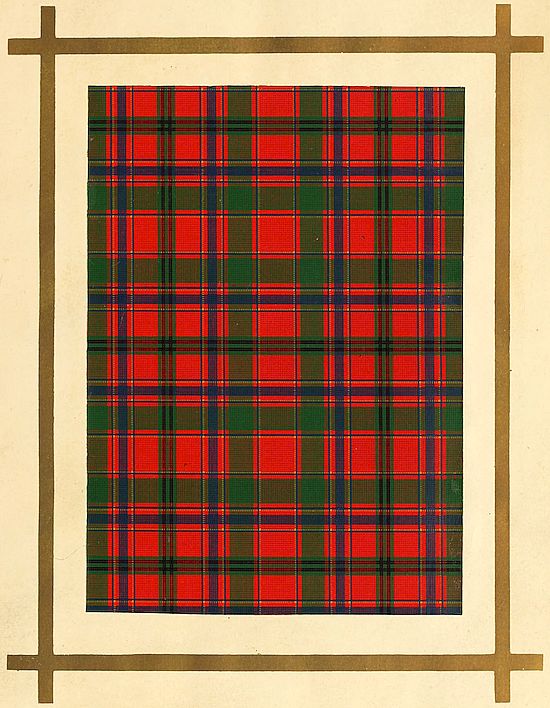
MUNRO.
The Marquis of Argyle, Loudon the chancellor, the Earls of Cassilis and Eglinton, and others, now met at Edinburgh, and formed themselves into a body under the title of the Committee of Estates, and having arranged matters for the better securing their own influence, they summoned a parliament to meet on the 4th of January. In the meantime, Oliver Cromwell, who, after the pursuit of Munro, had laid siege to Berwick, was waited upon by Argyle, Lord Elcho, and Sir Charles Erskine, to compliment him upon his success at Preston, and after making Ludovick Leslie deliver up Berwick to him, they invited him and Lambert to Edinburgh. Cromwell took up his residence in the House of Lady Home in the Canongate, where he received frequent visits from Argyle, Loudon, the Earl of Lothian, Lords Arbuthnot, Elcho, and Burleigh, and the most noted of the ministers. It is said, that during these conferences, Cromwell communicated to his visitors his intentions with respect to the king, and obtained their consent.[381]
In the meantime the Independents were doing their utmost to induce the English parliament to bring the king to trial for high treason. They, having in the meantime been disappointed in their views by the presbyterians, prevailed upon Fairfax to order Hammond, the governor of the Isle of Wight, to attend him at Windsor, and to send Colonel Eure with orders to seize the king at Newport, where he was conferring with the commissioners, and imprison him again in Carisbrook castle; but Hammond having declined to allow Eure to interfere without an order from the parliament, Eure left the island without attempting to fulfil his instructions. Hammond, however, afterwards left the island with the commissioners, and committed Charles to the custody of one Major Rolfe, a person who, only six months before, had been charged with a design on the life of the king, and who had escaped trial because only one witness had attested the fact before the grand jury.
The king seemed to be fully aware of the danger of his present situation, and on the morning of the 28th of November, when the commissioners left the island, he gave vent to his feelings in a strain of the most pathetic emotions, which drew tears from his attendants; “My lords,” said he to the commissioners, “I believe we shall scarce ever see each other again, but God’s will be done! I have made my peace with him, and shall undergo without fear whatever he may suffer men to do to me. My lords, you cannot but know, that in my fall and ruin you see your own, and that also near you. I pray God send you better friends than I have found. I am fully informed of the carriage of those who plot against me and mine; but nothing affects me so much as the feeling I have of the sufferings of my subjects, and the mischief that hangs over my three kingdoms, drawn upon them by those who, upon pretences of good, violently pursue their own interests and ends.”[382] As soon as the commissioners and Hammond had quitted the island, Fairfax sent a troop of horse and a company of foot, under the command of Lieutenant-Colonel Cobbett, to seize the king, who received notice of the approach of this body and of its object next morning from a person in disguise; but although advised by the Duke of Richmond, the Earl of Lindsay, and Colonel Coke to make his escape, which he could easily have accomplished, he declined to do so, because he considered himself bound in honour to remain twenty days after the treaty. The consequence was, that Charles was taken prisoner by Cobbett, and carried to Hurst castle.
The rest of this painful tragedy is well known. After the purified house of commons had passed a vote declaring that it was high treason in the king of England, for the time being, to levy war against the parliament and kingdom of England, his majesty was brought to trial before a tribunal erected pro re nata by the house called the high court of justice, which adjudged him “as a tyrant, traitor, murderer, and public enemy to the good people of the nation, to be put to death by the severing of his head from his body,” a sentence which was carried into execution, in front of Whitehall, on the 30th of January 1649. The unfortunate monarch conducted himself throughout the whole of these melancholy proceedings with becoming dignity, and braved the terrors of death with fortitude and resignation.
The Duke of Hamilton, who, by his incapacity, had ruined the king’s affairs when on the point of being retrieved, was not destined long to survive his royal master. In violation of the articles of his capitulation, he was brought to trial, and although he pleaded that he acted under the orders of the Scottish parliament, and was not amenable to an English tribunal, he was, under the pretence that he was Earl of Cambridge in England, sentenced to be beheaded. He suffered on the 9th of March.
The Marquis of Huntly had languished in prison since December 1647, and during the life of the king the Scottish parliament had not ventured to bring him to the block; but both the king and Hamilton, his favourite, being now put out of the way, they felt themselves no longer under restraint, and accordingly the parliament, on the 16th of March, ordained the marquis to be beheaded, at the market-cross of Edinburgh, on the 22d of that month. As he lay under sentence of ecclesiastical excommunication, one of the “bloody ministers,” says the author of the History of the family of Gordon, “asked him, when brought upon the scaffold, if he desired to be absolved from the sentence;” to which the marquis replied, “that as he was not accustomed to give ear to false prophets, he did not wish to be troubled by him.” And thereupon turning “towards the people, he told them that he was going to die for having employed some years of his life in the service of the king his master; that he was sorry he was not the first of his majesty’s subjects who had suffered for his cause, so glorious in itself that it sweetened to him all the bitterness of death.” He then declared that he had charity to forgive those who had voted for his death, although he could not admit that he had done any thing contrary to the laws. After throwing off his doublet, he offered up a prayer, and then embracing some friends around him, he submitted his neck, without any symptoms of emotion, to the fatal instrument.