Volume 34 — PRIMO VIAGGIO INTORNO AL MONDO
Reading edition
(concluded)
By Antonio Pigafetta. MS. composed ca. 1525, of events of 1519–1522
Source: Our transcript is made from the original document which exists in the Biblioteca Ambrosiana, Milan, Italy.
Translation: This is made by James Alexander Robertson.
[PRIMO VIAGGIO INTORNO AL MONDO] (Continued from Vol. XXXIII, page 266.) [FIRST VOYAGE AROUND THE WORLD] (Continued from Vol. XXXIII, page 267.)
Sul tardi deL medeſimo giorno vene in vno prao pietro alfonſo portugheſe et non eſſendo anchora deſmontato iL re lo mando a chiamare et ridendo diſegli se lui ben era de tarennate ne diceſſe la verita de tuto quello q̃ li domandaſſem Coſtui dice Como Ja ſedize anny ſtaua nela Jndia ma x in maluco et tante erano q̃ maluco ſtaua deſcoperto ascoſamente et era vno anno mancho quindici giornj che venne vna naue grande de malaca quiui et ſe partite caricata de garofali ma ꝓ li mali tempi reſto in bandan alquanti meſi delaqalle era capo triſtan de meneses portughese et Como lui li demando que noue erano adeſſo in chriſtianitatte li diſſe como era partita vna armata de cinque nauj de ſiuiglia ꝓ deſcoprire maluco in nome deL re deſpagnia eſsendo capitano fernando de magallianes portugheſe et como lo re de portugallo ꝓ diſpecto q̃ vno portugueſe lifoſſe conta hauea mandatte alquante naue aL capo de bonna ſperanſa et altre tante aL capo de ſancta maria doue ſtanno li Canibali ꝓ vietargli lo paſſo et Como nõ lo trouo poy il re de portagalo haueua Jnteſo Como lo dicto capitanio haueua paſſato ꝓ vno alto mare et andaua amalucho Subito ſcriſſe aL ſuo capo magiore de la india chiamato diego lopes de ſichera mãdaſſe ſey naue amaluco me ꝓ cauſa del grã turco che veniua amalacha nõ le mande ꝓ che li fu forſa mandare Contra lui ſexanta velle aL ſtreto deLa mehca nella tera de Juda liqalli non trouorono alto ſolum alcãte gallere in ſeco nela riua de qella forte et bella cita de adem leqalle tucte bruſorono[_]dopo Queſto mandaua contro anuy amalucho vno grã galeõe con due mani de bombarde ma ꝓ certi baſſi et corenti de hacqua che ſonno circa malaca et venti Contrarj non puoto paſſare et torno in drieto Lo capo de queſto galiõe era franco faria portugheſe et Como erano poqi giornj q̃ vna Carauella cõ dui Jonci erano ſtati quiui ꝓ Jntendere de nui li Junci andarono abachian ꝓ caricare garofali cõ ſette portugheſi Queſti portugheſi ꝓ nõ hauer̃ reſpecto ale donne deL re et de li ſuoi lo re li diſce piu volte nõ faceſſero taL coſa ma loro nõ volendo reſtare furono amazati Quando qelli de la Carauella intezero queſto ſubito tornorono a malaca et laſciarono li Junci cõ catrocento bahar de garofali et tanta mercantia ꝓ comperar̃ cento alti bahar et Como ogni anno molti Junci veneno de malaca abandan ꝓ pigliare matia et noſce moſcade et da bandan amalucho ꝓ garofali et como queſti populi vanno cõ queſti ſui Junci da maluco a bandan in tre giornj et de bandan amalaca in quĩdici et como lo re de portagalo Ja x anny godeua malucho aſcoſamente acio lo re deſpagnia noL ſapeſſe coſtui ſtete cõ nuy alti inſino a tre hore de nocte et diſcene molte altre coſe operaſſemo tanto q̃ coſtui ꝓmetendolj bõ ſoldo ne ꝓmiſſe de venire cõ nuy in ſpagnia. In the afternoon of that same day, Pietro Alfonso, the Portuguese, came in a prau. He had not disembarked before the king sent to summon him and told him banteringly to answer us truly in whatever we should ask him, even if he did come from Tarennate. He told us that he had been sixteen years in India, but x in Maluco, for Maluco had been discovered secretly for that time.488 It was a year all but one fortnight, since a large ship had arrived at that place from Malaca, and had left laden with cloves, but had been obliged to remain in Bandan for some months because of bad weather. Its captain was Tristan de Meneses,489 a Portuguese. When he asked the latter what was the news back in Christendom, he was told that a fleet of five ships had left Siviglia to discover Maluco in the name of the king of Spagnia under command of Fernando de Magallianes, a Portuguese; that the king of Portugallo, angered that a Portuguese should be opposed to him, had sent some ships to the cape of Bonna Speransa [i.e., Good Hope], and a like number to the cape of Sancta Maria, where the cannibals live, in order to prevent their passage, but that he was not found. Then the king of Portagalo had heard that the said captain had passed into another sea, and was on his way to Malucho. He immediately wrote directing his chief captain of India, one Diego Lopes de Sichera,490 to send six ships to Maluco. But the latter did not send them because the Grand Turk was coming to Malacha, for he was obliged to send sixty sail to oppose him at the strait of Mecha in the land of Juda. They found only a few galleys that had been beached on the shore of the strong and beautiful city of Adem, all of which they burned.491 After that the chief captain sent a large galleon with two tiers of guns to Malucho to oppose us, but it was unable to proceed because of certain shoals and currents of water near Malaca, and contrary winds. The captain of that galleon was Francesco Faria,492 a Portuguese. It was but a few days since a caravel with two junks had been in that place to get news of us. The junks went to Bachian for a cargo of cloves with seven Portuguese. As those Portuguese did not respect the women of the king and of his subjects, although the king told them often not to act so, and since they refused to discontinue, they were put to death. When the men in the caravel heard that, they immediately returned to Malaca abandoning the junks with four hundred bahars of cloves, and sufficient merchandise to purchase one hundred bahars more. Every year a number of junks sail from Malaca to Bandan493 for mace and nutmeg, and from Bandan to Malucho for cloves. Those people sail in three days in those junks of theirs from Maluco to Bandan, and in a fortnight from Bandan to Malaca. The king of Portagalo had enjoyed Malucho already for x years secretly, so that the king of Spagnia might not learn of it. That Portuguese remained with us until three in the morning, and told us many other things. We plied him so well, promising him good pay that he promised to return to Spagnia with us.
Vennere a Quindici de nouembre il re ne diſce como andaua abachian ꝓ pigliar̃ de qelli garofali laſsati da li portugueſi ne dimando duy pñti ꝓ darli ali dui gubernatorj de mutir in nome deL re deſpagnia et paſſando per mezo de le naui volſe vedere Como tirauão li ſchiopeti li baleſtre et li verſi q̃ ſono magiori duno arcubuſo tiro lui tre volti de baleſtra ꝓ chi li piaceua piu q̃ li ſchiopeti Sabato lo re moro de giailolo vene ale naui con molti prao alqualle donaſcemo vno ſayo de domaſcho ꝟde dui bracia de panne roſſo ſpechi forfice cortelli petini et dui bichery dorati ne diſce poi q̃ eramo amici deL re de tadore eramo anchora ſoi ꝓ che amaualo Como ꝓpio ſuo figliolo et ſe may alguno deli noſti andaſſeno in ſua terra li farebe grandiſſimo honnore Queſto re emolto vechio et temuto ꝓ tutte queſte yſole ꝓ eſſere molto potente et chia maſſe raia Jussu Queſta yſola de Jayalolo e tanto grando que tardano catro meſi a circundarla cõ vno prao. Domenicha matina queſto medeſimo re venne ale naui et volſe vedere in que modo combateuão et como ſcaricauamo le nr̃e bombarde dilque piglio grandiſſimo piacer̃ et ſubito ſe parti Coſtui Como ne fu detto era ſtato nela ſua Jouenta grã Combatitor̃. On Friday, November fifteen, the king told us that he was going to Bachian to get the cloves abandoned there by the Portuguese. He asked us for two presents so that he might give them to the two governors of Mutir in the name of the king of Spagnia. Passing in between the ships he desired to see how we fired our musketry, crossbows, and the culverins, which are larger than an arquebus. He shot three times with a crossbow, for it pleased him more than the muskets.494 On Saturday, the Moro king of Giailolo came to the ships with a considerable number of praus. To some of the men we gave some green damask silk, two brazas of red cloth, mirrors, scissors, knives, combs, and two gilt drinking cups. That king told us that since we were friends of the king of Tadore, we were also his friends, for he loved that king as one of his own sons; and whenever any of our men would go to his land, he would show him the greatest honor. That king is very aged and is feared among all those islands, for he is very powerful. His name is Raia Jessu. That island of Jayalolo is so large that it takes four months to circumnavigate it in a prau. On Sunday morning that same king came to the ships and desired to see how we fought and how we discharged our guns. He took the greatest pleasure in it. After they had been discharged he immediately departed. He had been a great fighter in his youth as we were told.
NeL medeſimo giorno anday in terra ꝓ vedere Como naſcheuano li garofali Lo arburo ſuo he alto et groſſo Como vno homo altrauerſo et piu et meno li ſui ramj ſpandeno alquante largo neL mezo ma neL fine fanno in mo do de vna cima la ſuo foglia e como qella deL lauro la ſcorſa e oliuaſta ly garofoli veneno Jn cima de li ramiti diece ho vinti inſiemi Queſti arbory fanno ſempre caſi piu duna banda q̃ de lalta Segondo li tempi Quando naſcono li garofali ſonno bianqi maturj roſſi et ſecqi negri ſe cogleno due volte alanno vna dela natiuita deL nr̃o redemptore [Quando lanno e piu: crossed out in original MS.] lalta in qella de sto Johã bapta ꝓ che in queſti dui tempi e piu temperato larie ma piu in qella deL nr̃o redemptore Quando lanno e piu caldo et cõ mancho piogie et coglienno trecento et quatrocento bahar in ogni vna de queſte yſolle naſcono ſolamẽte neli monti et ſe alguni de queſti arborj ſonno piantati aL pianno apreſſo li monti nõ viueno la ſuo foglia la ſcorza et il legnio ꝟde et coſi forte como li garofoli ſe non ſi coglieno quãdo ſonno maturi diuentano grandi et tanti duri q̃ non e bono alto de loro ſinon la ſua ſcorſa nõ naſcono aL mondo alti garofali ſinon in cinque mõti de queſte cinque yſolle ſe ne trouano ben alguni in giailolo et in vna yſola picola fra tadore et mutir detta mare ma non ſonno buoni Vede uamo nuy caſi ogni giorno vna nebula diſcendere et circundare mo luno mo lalto de queſti monti ꝓ ilque li garofoli diuentano ꝓfecti Ciaſcuno de queſti populi anno de queſti arbori et ogni vno cuſtodiſcono li ſui ma non li coltiuano Jn queſta yſola ſe trouano alguni arbori de noce moſcada larbore e como le noſtre noguere et con le medeſime foglie la noce quando ſe coglie he grande como vno Codognio picolo cõ qeL pelo et deL medeſimo colore la ſua pima ſcorza et groſſa como la verde dele nr̃e noce Soto de q̃ſta he vna tella ſotille Soto laqalle ſta la matia roſſisimo riuolta intorno la Scorſa della noce et de dento da queſta e La noce moſcade le caſe de queſti populi Sonno facte como le altre ma non cuſſi alte da terra et ſonno circunda te de canne in modo de uno ſieue queſte femine ſonno bructe et vano nude Como le altre con qelli panny de ſcorca de arbore fanno queſti panni intaL modo piglianno vno pezo de ſcorſa et lo laſcianno nelacqua fin que diuenta molle et poy lo bateno cõ legni et lo fanno longo et Largo Como voleno diuenta como vno vello de ſeda cruda cõ certi filecti de dento q̃ pareſta teſuto mangiano panne de legnio de arbore como la palma facto in queſto modo piglianno vno pezo de queſto legnio mole et li Cauano fuora certi ſpini negri longui poi Lo peſtanno et coſi fanno Lo panne luzano quaſi ſolo ꝓ portare in mare et lo chia mano ſaghu Queſti homini vano nudi Como li alti ma ſonno tãto geloſi dele ſue moglie che nõ voleuano andaſſemo nuj in terra cõ Le braguet diſcoperte ꝓ che diceuano le ſue donne penſare nuy ſemp̃ eſſere in ordine. That same day, I went ashore to see how the clove grows. The clove tree is tall and as thick as a man’s body or thereabout. Its branches spread out somewhat widely in the middle, but at the top they have the shape of a summit. Its leaves resemble those of the laurel, and the bark is of a dark color.495 The cloves grow at the end of the twigs, ten or twenty in a cluster. Those trees have generally more cloves on one side than on the other, according to the season. When the cloves sprout they are white, when ripe, red, and when dried, black. They are gathered twice per year, once at the nativity of our Savior, [when the year is more: crossed out in original MS.] and the other at the nativity of St. John the Baptist; for the climate is more moderate at those two seasons, but more so at the time of the nativity of our Savior. When the year is very hot and there is little rain, those people gather three or four hundred bahars [of cloves] in each of those islands. Those trees grow only in the mountains, and if any of them are planted in the lowlands near the mountains, they do not live. The leaves, the bark, and the green wood are as strong as the cloves. If the latter are not gathered when they are ripe, they become large and so hard that only their husk is good. No cloves are grown in the world except in the five mountains of those five islands, except that some are found in Giailolo and in a small island between Tadore and Mutir, by name Mare,496 but they are not good. Almost every day we saw a mist descend and encircle now one and now another of those mountains, on account of which those cloves become perfect. Each of those people possesses clove trees, and each one watches over his own trees although he does not cultivate them. Some nutmeg trees are found in that island. The tree resembles our walnut tree, and has leaves like it. When the nut is gathered it is as large as a small quince, with the same sort of down, and it is of the same color. Its first rind is as thick as the green rind of our walnut. Under that there is a thin layer, under which is found the mace. The latter is a brilliant red and is wrapped about the rind of the nut, and within that is the nutmeg.497 The houses of those people are built like those of the others, but are not raised so high from the ground, and are surrounded with bamboos like a hedge. The women there are ugly and go naked as do the others, [covered only] with those cloths made from the bark of trees. Those cloths are made in the following manner. They take a piece of bark and leave it in the water until it becomes soft. Then they beat it with bits of wood and [thus] make it as long and as wide as they wish. It becomes like a veil of raw silk, and has certain threads within it, which appear as if woven.498 They eat wooden bread made from a tree resembling the palm, which is made as follows. They take a piece of that soft wood from which they take certain long black thorns. Then they pound499 the wood, and so make the bread. They use that bread, which they call saghu [i.e., sago], almost as their sole food at sea. The men there go naked as do the others [of those regions], but they are so jealous of their wives that they do not wish us to go ashore with our drawers exposed;500 for they assert that their women imagine that we are always in readiness.
Ogni giorno veniuão de tarenate molte barche caricate de garofali ma ꝓ che aſpectauamo il re nõ contractauamo alto ſinon victuuaglia Queli de tarenate ſe lementauano molte ꝓ che nõ voleuamo Contractare cõ loro Domenicha de nocte a vinticato de nouembr̃ venendo aL luni Lo re vene ſuonando con qelle ſue borchie et paſſando ꝓ mezo li naui diſca ricaſſemo molte bombarde ne diſſe in fine aquato giornj venirianno molty garofali luni lo re ne mando ſetecento et noranta vno cathili de garofali ſenza leuar La tara la tara e pigliare le ſpeciarie ꝓ mancho de qeL que pezanno ꝓ che ogni giorno ſe ſechano piu ꝓ eſſere li pimy garofali haueuamo meſſi neli nauj diſcaricaſſemo molte bombarde Quiui chiamano li garofali ghomode in ſaranghani doue pigliaſſemo li dui piloti bonghalauan et in malaca chianche. A number of boats came from Tarenate daily laden with cloves, but, as we were awaiting the king, we did not barter for anything except food. The men who came from Tarenate were very sorry because we refused to trade with them. On Sunday night, November twenty-four, and toward Monday, the king came with gongs a-playing, and passed between the ships, [whereat] we discharged many pieces. He told us that cloves would be brought in quantity within four days. Monday the king sent us seven hundred and ninety-one501 cathils of cloves, without reckoning the tare. The tare is to take the spices for less than they weigh, for they become dryer daily. As those were the first cloves which we had laden in our ships, we fired many pieces. Cloves are called ghomode there; in Saranghani where we captured the two pilots, bongalauan;502 and in Malaca, chianche.
Marti a vintiſei de nouembr̃ il re ne diſce como non era coſtume de alguno re de partirſi de ſua yſola ma lui ſe era partito ꝓ amore deL re de caſtiglia et per che andaſſemo piu preſto in ſpagnia et retornaſſemo cõ tante naui q̃ poteſſemo vendicare la morte de ſua padre q̃ fo amazato in vna Jſola chiamata buru et poi botato neL mare et diſſenne Como era vzãſa quando li pimi garofali eranno poſti nele naui o vero neli Junci lo re fare vno conuito aqellj dele naui et pregare Lo ſuo dio li conduceſſi ſalui neLo ſuo porto et anche lo volia far ꝓ cagiõe deL re de bachian et vno ſuo fratello che veniuano ꝓ vizitarne faceua netareli vie alguni de nui penſando qalque tradimẽto ꝓ che quiui doue pigliauamo lacha foreno amazati da certi de queſti aſcoſi neli boſchi tre portugheſi de franco ſeranno et ꝓ che vedeuamo queſti Jndi ſuſurare con li noſti preſoni, diceſſemo contra alquanti volentoroſi de queſto conuito nõ ſi douere andare in terra ꝓ conuiti ricordandogli deqeL alto tanto infelice faceſſemo tanto ſe concluſe de mandare dire aL re veniſſe preſto ne le nauj ꝓ che voleuamo ſi partire et conſegniarli li catro homini ꝓmiſſi con altre mercantie Jl re ſubito venne et Jntrando nele naui diſſe adalungunj ſui cõ tanta fidutia entraua in queſte como nele ſue caze. Ne diſſe eſere grandamẽte ſpauentato ꝓ volerne partire coſi preſto eſendo il termine de Carigare le naui trenta giornj et non eſerſi partito ꝓ farne algun maL ma ꝓ fornire piu preſto li naui de garofoli et como nõ ſi doueuamo par tire alora ꝓ non eſſere anchora lo tempo de nauigare ꝓ queſte yſolle et ꝓ li molti baſſi ſe trouano zirca bandan et ꝓ che facilmente hauereſemo potuto incontrarſi in qalque naui de portugheſi et ſe pur era la nr̃a opigniõe de partirſi alhora pigliaſsemo tute le nr̃e merchadantie ꝓ che tucti li re circunuicini direbenno iL re de tadore hauer̃ receuuti tanty pñti da vno ſi grã re et lui nõ hauerli dato coſa alguna et penſarebẽo nuy eſſerſi partitj ſinon ꝓ paura de qalque inganno et ſempre chiama rebenno lui ꝓ vno traditor̃ poi fece portare lo ſuo alchoranno et pima baſan dolo et metendoſelo catro o cinque volte ſoura lo capo et dicendo fra ſe certe parolle, Quando fanno cuſſi Chiamano Zambahean, diſſe in pñtia de tucti q̃ Juraua ꝓ ala et ꝓ lo alcoranno haueua in mano ſemp̃ volere eſſere fidelle amicho aL re deſpagnia diſſe tuto queſto caſi piangendo per le ſue bone parolle le ꝓmeteſſemo de aſpectare anchora quindici giornj Alhora li deſſemo la firma deL re et la bandera realle niente di meno Jntendeſſemo poy ꝓ buona via alguni principali de queſte yſole hauerli dicto ne doueſſe amazare ꝓ che farebe grandiſſimo piacere ali portugueſi et como loro ꝓ donnarianno aqelli de bachian et iL re hauerli riſpo ſto non lo faria ꝓ coſa alguna cognioſſendo Lo re deſpagnia et hauẽdone data la ſua pace. On Tuesday, November twenty-six, the king told us that it was not the custom of any king to leave his island, but that he had left [his] for the love that he bore the king of Castiglia, and so that we might go to Spagnia sooner and return with so many ships that we could avenge the murder of his father who was killed in an island called Buru,503 and then thrown into the sea. He told us that it was the custom, when the first cloves were laden in the ships or in the junks, for the king to make a feast for the crews of the ships, and to pray504 their God that He would lead those ships safe to their port. He also wished to do it because of the king of Bachian and one of his brothers who were coming to visit him. He had the streets cleaned. Some of us imagining that some treachery was afoot, because three Portuguese in the company of Francesco Seranno had been killed in the place where we took in water, by certain of those people who had hidden in the thickets, and because we saw those Indians whispering with our prisoners, declared in opposition to some who wished to go to the feast that we ought not go ashore for feasts, for we remembered that other so unfortunate one. We were so urgent that it was concluded to send a message to the king asking him to come soon to the ships, for we were about to depart, and would give him the four men whom we had promised him, besides some other merchandise. The king came immediately and entered the ships. He told some of his men that he entered them with as great assurance as into his own houses. He told us that he was greatly astonished at our intention of departing so soon, since the limit of time for lading the ships was thirty days; and that he had not left the island to do us any harm, but to supply the ships with cloves sooner. He said that we should not depart then for that was not the season for sailing among those islands, both because of the many shoals found about Bandan and because we might easily meet some Portuguese ships [in those seas]. However, if it were our determination to depart then, we should take all our merchandise, for all the kings roundabout would say that the king of Tadore had received so many presents from so great a king, and had given nothing in return; and that they would think that we had departed only for fear of some treachery, and would always call him a traitor. Then he had his koran505 brought, and first kissing it and placing it four or five times above his head, and saying certain words to himself as he did so (which they call zambahean506), he declared in the presence of all, that he swore by Allah and by the koran507 which he had in his hand, that he would always be a faithful friend to the king of Spagnia. He spoke all those words nearly in tears. In return for his good words, we promised to wait another fortnight. Thereupon, we gave him the signature of the king and the royal banner. None the less we heard afterward on good authority that some of the chiefs of those islands508 had proposed to him to kill us, saying it would be doing the greatest kind of pleasure to the Portuguese, and that the latter would forgive those of Bachian.509 But the king had replied that he would not do it under any consideration, since he had recognized the king of Spagnia and had made peace with him.
Mercore a vinteſette de nouembr̃ dopo diſnare lo re fece fare vn bando a tutj qelli haueuano garofali li poteſſeno portare nele nauj tuto queſto gior no et lalto contrataſſemo garofoli cõ grã furia venner ſul tardi vene lo gouuernator̃ de machian con molti prao nõ volſe deſmontare in tera ꝓche ſtauão iui ſuo padre et vno ſuo fratello banditi da machian JL giorno ſequente lo nr̃o re cõ lo gouuernator̃ Suo nepote entraronno nele naui nuy ꝓ nõ hauer̃ piu panno ne mando alore tre bracia deL ſuo et neL dete loqalle con altre coſſe donnaſſemo aL gouuernator̃ partendoſi ſe diſcarico molte bombarde dapoy lo re ne mando ſey bracia de panno roſſo acio lo donnaſemo aL gouuernator̃ ſubito Lo li preſentaſſemo ꝓ ilque ne ringratio molto et diſſe ne mandarebe aſsay garofoli Queſto gouuernatore ſe chiama humar et era forſi vinticinque anny. After dinner on Wednesday, November twenty-seven, the king had an edict proclaimed that all those who had cloves could bring them to the ships. All that and the next day we bartered for cloves with might and main. On Friday afternoon, the governor of Machian came with a considerable number of praus. He refused to disembark, for his father and one of his brothers who had been banished from Machian were living in Tadore. Next day, our king and his nephew, the governor, entered the ships. As we had no more cloth, the king sent to have three brazas of his brought and gave it to us,510 and we gave it with other things to the governor. At his departure we discharged many pieces. Afterward the king sent us six brazas of red cloth, so that we might give it to the governor. We immediately presented it to the latter, and he thanked us heartily for it, telling us that he would send us a goodly quantity of cloves. That governor’s name is Humar, and he was about twenty-five years old.
Domenica pimo de decembre Queſto gouuernator̃ Se parti ne fu deto iL re de tadore hauergli dato panny de ſeta et algune de qelle borchie acio Cuſtuy piu preſto li mandaſſe li garofoli luni iL re ando fuora de la yſola ꝓ garofoli mercore matina ꝓ eſſere giorno de Sta. barbara et ꝓ la venuta deL re ſe deſcarico tuta lartigliaria la nocte Lo re venne ne la riua et volſe vedere Como tirauamo li rochetti et bombi de fuoco dilque lo re piglio grã piacere Joue et vennere ſe Compero molti garofoli cuſſi nella cita como nelle naui ꝓ catro bracia de frizetto ne danão vno bahar de garofoli ꝓ due Cadenelle de Latonne q̃ valeuão vno marcello ne detero cento libre de garofoli in fine ꝓ nõ hauer piu merchadantie ogni vno li daua qi le cape eqi li ſagli et qi le Camiſe cõ altre veſtimentj ꝓ hauer̃ La ſua quintalada Sabato tre figlioli diL re de tarenate con tre ſue moglie figliole deL nr̃o re et pietro alfonſo portugheſi venironno ale nauj donaſſemo ogni vno deli tre fratelli vn bichier de vetro dorato ale tre donne forfice et altre coſe Quando ſe partironno forenno ſcaricate molte bombarde poy mandaſſemo in tera a la figliola deL nr̃o re Ja moglie diL re de tarennatte molte coſe perche nõ volſe vegnire cõ le alte a le nauj tutta Queſta gente cuſſi homini Comme donne vanno ſempre deſcalſi. On Sunday, the first of December, that governor departed. We were told that the king of Tadore had given him some silk cloth and some of those gongs511 so that he might send the cloves quicker. On Monday the king went out of the island to get cloves. On Wednesday morning, as it was the day of St. Barbara,512 and because the king came, all the artillery was discharged. At night the king came to the shore, and asked to see how we fired our rockets and fire bombs,513 at which he was highly delighted. On Thursday and Friday we bought many cloves, both in the city and in the ships. For four brazas of ribbon, they gave us one bahar of cloves; for two brass chains, worth one marcello,514 they gave us one hundred libras of cloves. Finally, when we had no more merchandise, one man gave his cloak, another his doublet, and another his shirt, besides other articles of clothing, in order that they might have their share in the cargo. On Saturday, three of the sons of the king of Tarenate and their three wives, the daughters of our king, and Pietro Alfonso, the Portuguese, came to the ships. We gave each of the three brothers a gilt glass drinking-cup,515 and scissors and other things to the women. Many pieces were discharged at their departure. Then we sent ashore many things to the daughter of our king, now the wife of the king of Tarennatte, as she refused to come to the ships with the others. All those people, both men and women, always go barefoot.
Domenica a octo di decembre ꝓ eſſere giorno dela Conſeptiõe ſe ſcarico molte bonbarde Rocheti et bombe di fuoco luni ſul tardi lo re venne ale naui cõ tre femine li portauão il betre alti non pone menare ſeco donne ſe nõ iL re dopo venne lo re de Jaialolo et volſe vedere nuy vnalta fiata cõbatere inſieme dopo alquanti giornj il nr̃o re ne diſſe lui aſſimigliare vna fanciulo che lattaſſe et cognioceſſe la ſua dulce madre et qella parten doſi lo laſſiare ſolo magiormente lui reſtare deſcoſolato ꝓ che gia ne haueua Cognioſſuto et guſtato alchune coſe di ſpagnia et ꝓ che doueuão tardare molto aL retornare Cariſſamamente ne prego li laſciaſſemo ꝓ ſua defentiõe alquanti de li [ſui: crossed out in original MS.] ꝟſi nr̃i et ne auiſo Quanto foſſemo partiti nauigaſſemo ſe non de giorno ꝓ li molti baſſi sonno in queſte yſolle li reſpondeſſemo ſe voleuão andar in ſpagnia nera forſa nauigar̃ de giorno et de nocte alhora diſſe farebe ꝓ nui ogni giorno oratiõe aL ſuo ydio açio ne conduceſſe a ſaluamẽto et diſſene Como deueua venire le re de bachian ꝓ maritare vno ſuo fratello cõ vno dele ſue figliole ne prego voleſſemo far alchuna feſta in ſegnio dallegreza ma nõ ſcaricaſſemo le bombarde groſſe ꝓ che farebenno grã danno ale nauj ꝓ eſſere carigate in queſti giorni venne pietro alfonſo portugueſe Con la ſua donna et tute le altre ſue coſe aſtare ne le naui deli a duy giornj venne ale naui chechili de roix figliolo deL re de tarennate in vn prao ben fornito et diſſe aL portugueſe decendeſſe vn poco aL ſuo prao li riſpoſe nõ li voleua diſcendere ꝓ che veniua noſco in ſpagnia Alhora lui volſe intrare nele naui ma nuy nõ lo volſemo laſciar Jntrar̃ Coſtui ꝓ eſſere grãde amicho deL capo de malaca portugheſe era venuto ꝓ pigliarlo et grido molto aqelli ſtantiauão apreſſo iL portugueſe ꝓ cio Lo haueuão Laſciato partire ſenſa ſua liſentia. On Sunday, December eight, as it was the day of the conception, we fired many pieces, rockets, and fire bombs.516 On Monday afternoon the king came to the ships with three women, who carried his betel for him. No one except the king can take women with him. Afterward the king of Jailolo came and wished to see us fight together again. Several days later our king told us that he was like a child at the breast who knew his dear mother, who departing would leave him alone. Especially would he be disconsolate, because now he had become acquainted with us, and enjoyed some of the products of Spagnia. Inasmuch as our return would be far in the future, he earnestly entreated us to leave him some of [his: crossed out in original MS.] our culverins517 for his defense. He advised us to sail only by day when we left, because of the numerous shoals amid those islands. We replied to him that if we wished to reach Spagnia we would have to sail day and night. Thereupon, he told us that he would pray daily to his God for us, asking Him to conduct us in safety. He told us that the king of Bachian was about to come to marry one of his brothers to one of his [the king of Tidore’s] daughters, and asked us to invent some entertainment in token of joy; but that we should not fire the large pieces, because they would do great damage to the ships as they were laden. During that time, Pietro Alfonso, the Portuguese, came with his wife and all his other possessions to remain in the ships. Two days later, Chechili de Roix, son of the king of Tarennate, came in a well-manned prau, and asked the Portuguese to go down into it for a few moments. The Portuguese answered that he would not go down, for he was going to Spagnia with us, whereupon the king’s son tried to enter the ship, but we refused to allow him to come aboard, as he was a close friend to the Portuguese captain of Malaca, and had come to seize the Portuguese. He severely scolded those who lived near the Portuguese because they had allowed the latter to go without his permission.
Domenica a quindici de decembre ſul tardi iL re de bachian et iL ſuo fratello veni rono in vno prao cõ tre many de vogatorj ꝓ ogni banda eranno tucti cento et vinti con molte bandiere de piuma de papagalo bianque Jalle et roſſe et con molti ſoni de qelle borquie ꝓ que aqueſto ſonny li vogatori voganno atempo et cõ dui alti prao de donzelle ꝓ pñtarle a la ſpoſa Quando paſſarono apreſſo li naui li ſalutaſſemo con bonbarde et loro ꝓ ſalutarne circundorono ly naui et iL porto Jl re noſto ꝓ eſſere coſtume nungune re de deſcendere ne le terre de altrui venne ꝓ congratularſe ſecho. Quando iL re de bachian lo viſte venire ſe leuo daL tapeto oue ſedeua et poſeſſi de vna banda iL nr̃o re non volſe ſedere ſoura lo tapeto ma da lalta parte et coſi niuno ſtaua ſopa Lo tapeto iL re de bachian dete aL nr̃o re cinquecento patolle ꝓ che deſſe ſua figliola ꝓ moglie aL ſuo fratello Queſte patolle ſonno panny de oro et de ſeta facti nela chijna et molti preciati fra coſtoro. Quando vno de queſti more li alti ſoi ꝓ farli piu honnore Se veſtonno de queſti panny danno ꝓ vno de queſti tre bahar de garofali et piu et meno ſecondo q̃ ſonno. On Sunday afternoon, December fifteen, the king of Bachian and his brother came in a prau with three tiers of rowers at each side. In all there were one hundred and twenty rowers, and they carried many banners made of white, yellow, and red parrot feathers. There was much sounding of those gongs, for the rowers kept time in their rowing to those sounds. He brought two other praus filled with girls to present them to his betrothed. When they passed near the ships, we saluted them by firing pieces, and they in order to salute us went round the ships and the port. Our king came to congratulate him as it is not the custom for any king to disembark on the land of another king. When the king of Bachian saw our king coming, he rose from the carpet on which he was seated, and took his position at one side of it. Our king refused to sit down upon the carpet, but on its other side, and so no one occupied the carpet. The king of Bachian gave our king five hundred patols, because the latter was giving his daughter to wife to the former’s brother. The said patols are cloths of gold and silk manufactured in Chiina, and are highly esteemed among them. Whenever one of those people dies the other members of his family518 clothe themselves in those cloths in order to show him more honor. They give three bahars of cloves for one of those robes or thereabouts, according to the [value of the] robe.
Luni iL nr̃e re mando vno conuito aL re de bachian ꝓ cinquanta donne tucte veſtite de panny de ſeta dela cinta fina aL genochio. Andauano a due a due cõ vno homo in mezo de loro ogniuna portaua vno piato grande pienno de altri piatelli de diuerſe viuande li homini portauão ſolamẽte Lo vino in vazi grandi dieze donne dele piu vechie eranno le maçiere andaro no in queſto modo fina aL prao et apreſentarono ogni coſa aL re q̃ ſede ua ſoura lo tapeto ſoto vno baldachino roſſo et giallo tornando coſtoro indie tro pigliarono alguni deli nr̃j et ſe loro volſero eſſere liberi li biſognio darli qalche ſua coſeta Dopo queſto il re nr̃o ne mando capre cochi vino et altre coſe hogi meteſſemo le velle noue ale naui neleqalle era vna croce de sto Jacobo de galitia cõ litere q̃ diceuão Queſta he la figura de la nr̃a bonna ventura. On Monday our king sent a banquet to the king of Bachian by fifty women all clad in silk garments from the waist to the knees. They went two by two with a man between each couple. Each one bore a large tray filled with other small dishes which contained various kinds of food. The men carried nothing but the wine in large jars. Ten of the oldest women acted as macebearers.519 Thus did they go quite to the prau where they presented everything to the king who was sitting upon the carpet under a red and yellow canopy. As they were returning, those women captured some of our men520 and it was necessary to give them some little trifle in order to regain their freedom. After that our king sent us goats, cocoanuts, wine, and other things. That day we bent the new sails in the ships. On them was a cross of St. James of Galitia,521 with an inscription which read: “This is the sign [figura] of our good fortune.”
Marti donaſſemo al nr̃o re certi pezi de artigliaria Como archibuſi q̃ haueuão pigliati in queſta india et alguni verſi deli nr̃j cõ cato barilli de poluer̃ pigliaſſemo quiui octanta botte de hacqua ꝓ ciaſcuna naue gia cinque giorni lo re haueua mandato cento homini afare legnia ꝓ noy ala yſola de mare ꝓ che conueniuamo paſſare ꝓ iui ogi lo re de bachian cõ molti alti deli ſuoi dicendete in terra ꝓ fare pace cõ nui dinanzi de luy an dauano quato homini cõ ſtochi driti in mano diſſe in pñtia deL nr̃o re et de tucti li alti Como ſempre ſtarebe in ſeruitio deL re deſpagnia et ſaluaria in ſuo nome li garofoli laſciati dali porthugueſi finque veni ſe vnalta nr̃a armata et may li darebe a loro ſenza lo nr̃o conſentimẽto mando adonare aL re deſpagnia vno ſchiauo duy bahar de garofoli gli ne mandaua x male naui ꝓ eſſere tropo Cargate nõ li poterono portar̃ et dui vcceli morti beliſſimi Queſti vcceli ſonno groſſi Como tordi anno Lo capo picolo cõ Lo becquo longo le ſue gambe ſonno longue vn palmo et ſotilli Como vn Calamo non anno ale ma in loco de qelle penne longue de diuerſi colori como gr̃a penachi la ſua coda he como qella deL tordo tute le altre ſue penne eccepto le alle ſonno deL colore de taneto et may nõ volano ſenon Quando he vento Coſtoro ne dicero queſti vcceli venire daL paradiſo tereſtre et le chiamano bolon diuata çioe vceli de dio ognj vno deli re de maluco ſcriſſero aL re deſpagnia q̃ ſemꝓ volenão eſerly Suy veri ſubditi JL re de bachian era forſi de ſetanta anny et haueua queſta vzanſa Quando voleua andare a Combatere ho vero a fare qalche alta coſa importante pima ſil faceua fare due ho tre volte da vno ſuo ſeruitor̃ che nol teniua adalto efecto ſinon ꝓ queſte. On Tuesday, we gave our king certain pieces of artillery resembling arquebuses, which we had captured among those India [islands], and some of our culverins,522 together with four barrels of powder. We took aboard at that place eighty butts of water in each ship. Five days previously the king had sent one hundred men to cut wood for us at the island of Mare, by which we were to pass. On that day the king of Bachian and many of his men came ashore to make peace with us. Before the king walked four men with drawn daggers in their hands. In the presence of our king and of all the others he said that he would always remain in the service of the king of Spagnia, and that he would save in his name the cloves left by the Portuguese until the arrival of another of our fleets, and he would never give them to the Portuguese without our consent. He sent as a present to the king of Spagnia a slave, two bahars of cloves (he sent x, but the ships could not carry them as they were so heavily laden), and two extremely beautiful dead birds. Those birds are as large as thrushes, and have a small head and a long beak. Their legs are a palmo in length and as thin as a reed,523 and they have no wings, but in their stead long feathers of various colors, like large plumes. Their tail resembles that of the thrush. All the rest of the feathers except the wings are of a tawny color. They never fly except when there is wind. The people told us that those birds came from the terrestrial paradise, and they call them bolon diuata,524 that is to say, “birds of God.” On that day each one of the kings of Maluco wrote to the king of Spagnia [to say] that they desired to be always his true subjects. The king of Bachian was about seventy525 years old. He observed the following custom, namely, whenever he was about to go to war or to undertake any other important thing, he first had it done two or three times on one of his servants whom he kept for no other purpose.
Vn giorno il nr̃o re mando a dire aqelli nr̃i q̃ ſtauão nela caſa de la merchã tia non andaſſero de nocte fora de caſa ꝓ certi deli ſui homini que ſe ongeno et vano de nocte et parenno ſiano ſenza capo Quando vno de queſti truoua vna deli alti li toca la mano et li la ongie vn pocho dento ſubito colui ſe infirma et fra tre o quato giornj more et quando queſti trouano tre o cato inſieme nõ li fanno alto male ſinon q̃ linbalordiſ cono et che lui ne haueua facto impicare molti Quando queſti po puli fanno vna caſa de nuouo pima li vadanno ad habitare dento li fanno fuoco intorno et molti conuiti poy atachano alteto de la caſa vn poco dogni coſa Se troua nela yſola acio nõ poſſino may manchare taL coſe ali habitanti in tucte queſte yſole ſe troua gin gero noy lo mangiauamo ꝟde como panne lo gingero non e arbore ma vna pianta picola che pulula fuora de la terra certi coresini lon gui vn palmo como qelle deli canne et cõ le medeſime foglie ma piu ſtrecte queſti coreſini nõ valeno niente ma la ſua radice he iL gengero et non e cuſſi forte verde como ſecho Queſti populi lo ſechano in calſina ꝓ che altramente non durarebe. One day our king sent to tell our men who were living in the house with the merchandise not to go out of the house by night, because of certain of his men who anoint themselves526 and roam abroad by night. They appear to be headless, and when any of them meets any other man, he touches the latter’s hand, and rubs a little of the ointment on him. The man falls sick very soon, and dies within three or four days. When such persons meet three or four together they do nothing else than527 to deprive them of their senses. [The king said] that he had had many of them hanged. When those people build a new house, before they go to dwell there they make a fire round about it and hold many feasts. Then they fasten to the roof of the house a trifle of everything found in the island so that such things may never be wanting to the inhabitants. Ginger is found throughout those islands. We ate it green like bread. Ginger is not a tree, but a small plant which puts forth from the ground certain shoots a palmo in length, which resemble reeds, and whose leaves resemble those of the reed, except that they are narrower.528 Those shoots are worthless, but the roots form the ginger. It is not so strong green as dry. Those people dry it in lime,529 for otherwise it would not keep.
Mercore matina ꝓ voler ſe partire de malucho iL re de tadore QueL de Jaialolo qeL de bachian et vno figliolo deL re de tarennate tucti erão venuti ꝓ aCompagniarne infino aliſola de mare la naue victoria fece vela et diſcoſtoſi alquanto aſpectando la naue trinitade ma qella non potendo leuare lanchora ſubito fece hacqua neL fondo a lhora la victoria torno aL ſuo luocho et ſubito Cominciamo a ſcaricare La trinitade ꝓ vedere ſe poteuamo remediarli ſi ſentiua venire dento lacqua Como ꝓ vn canone et non trouauamo doue La entraua tuto ogi et el di ſeguente non faceſſemo alto ſinon dare aLa bomba ma niente li Jouauamo JL nr̃e re Jntendendo queſto ſubito venne nela naue et ſe afatigo ꝓ vedere doue veniua lacqua mãdo ne lacqua cinque de li ſuoy ꝓ vedere ſe haueſſeno potuto trouare la ſfiſſura ſteteno piu de meza hora soto lacqua et may la trouarono vedendo iL re coſtoro non potere Jouare et ogni ora creſcere piu la hacqua diſſe caſi piangendo mandarebe aL capo de la yſola ꝓ tre homini ſtauão molto ſoto hacqua Vennere matina a bona hora venne lo nr̃o re cõ li tre hominj et preſto mandoli ne lacqua con li capilli ſparſi açio cõ qelli trouaſſero lo ſfiſſura Coſtoro ſtetero vna bonna hora ſoto hacqua et may la trouarono iL re quando viſte nõ poterli trouare remedio diſſe piangendo q̃ andaremo in ſpaga daL mio s. et darli noua dime li reſpondeſſemo li andarebe la victoria ꝓ non perdere li leuanti liqalli Cominciauão a la alta fin ſe conciaſſe eſpetarebe li ponenti et poy andaria aL darien che e neL alta parte deL mare nela tera de diucatan iL re ne diſſe haueua duzento vinticinque marangonj q̃ farebeno il tuto et li noſti q̃ reſtauão yui li tenirebe como ſui figlioli et non se afaticarebeno ſe non dui in Comandare ali marangonj como doueſcero fare dice ua queſte parolle cõ tanta paſionne q̃ ne fece tucti piangere nuy de la naue victoria dubitando ſe apariſſe la naue ꝓ eſſere tropo cari cata la ligeriſſemo de ſexanta quintali de garofoli et queſti face ſemo portare nela caſa doue eranno li alti alguni de la nr̃a naue volſero reſtare quiui ꝓ paura q̃ la naue non poteſſe durare fin in ſpagnia ma molto piu ꝓ paura de morire de fame. On Wednesday morning as we desired to depart from Malucho, the king of Tadore, the king of Jaialolo, the king of Bachian, and a son of the king of Tarennate, all came to accompany us to the island of Mare. The ship “Victoria” set sail, and stood out a little awaiting the ship “Trinitade.” But the latter not being able to weigh anchor, suddenly began to leak in the bottom.530 Thereupon, the “Victoria” returned to its anchorage, and we immediately began to lighten the “Trinitade” in order to see whether we could repair it. We found that the water was rushing in as through a pipe, but we were unable to find where it was coming in. All that and the next day we did nothing but work the pump,531 but we availed nothing. When our king heard of it, he came immediately to the ships, and went to considerable trouble in his endeavors to locate the leak. He sent five of his men into the water to see whether they could discover the hole. They remained more than one-half hour under water, but were quite unable to find the leak. The king seeing that he could not help us and that the water was increasing hourly, said almost in tears that he would send to the head of the island for three men, who could remain under water a long time. Our king came with the three men early on Friday morning. He immediately sent them into the water with their hair hanging loose so that they could locate the leak by that means. They stayed a full hour under water but were quite unable to locate it. When the king saw that he could be of no assistance, he asked us weeping who of us would go “to Spagnia to my sovereign, and give him news of me.”532 We replied to him that the “Victoria” would go there in order not to lose the east winds which were beginning to blow, while the other ship until being refitted would await the west winds and would go then to Darien which is located in the other part of the sea in the country of Diucatan [i.e., Yucutan]. The king told us that he had two hundred and twenty-five carpenters who would do all the work, and that he would treat533 all who remained here as his sons. They would not suffer any fatigue beyond two of them534 to boss the carpenters in their work. He spoke those words so earnestly535 that he made us all weep. We of the ship “Victoria,” mistrusting that the ship might open, as it was too heavily laden, lightened it of sixty quintals of cloves, which we had carried into the house where the other cloves were. Some of the men of our ship desired to remain there, as they feared that the ship would not last out the voyage to Spagnia, but much more for fear lest they perish of hunger.
Sabato a vinti vno de decembre giorno de S thomaſo il re nr̃o venne ale naui et ne conſignio li dui piloti haueuamo pagati ꝓ che ne Conduceſſero fora de qʒſte yſolle et diſſeno Como alhora era bõ tempo da partirſe ma ꝓ lo ſcriuere de li nr̃j in ſpagnia nõ ſi partiſſemo ſinon amezo di Venuta lora le naui pigliarono liſentia luna de lalta con ſcaricare le bombarde et pareua loro lamentarſi ꝓ la ſua vltima partita li nr̃j ne aCompagniarono vn pocho cõ loro batello et poi cõ molte lagrime et abraciamentj ſi diſpartiſſemo lo gouuernator̃ deL re venne cõ nuy infino a La yſola deL mare non fuſſemo coſſi preſto Jonti com parſeno quato prao caricati de legnia et in mancho duna hora caricaſſemo la naue et ſubito pigliaſſemo la via deL garbin Quiui reſto Johan caruaio cõ cinquanta tre ꝓſonne deli nr̃j nuy eramo quaranta ſette et tredicj Jndj Queſta yſola de tadore tenne epiſchopo et alhora ne era vno Que haueua quarante moglie et aſsaiſſimi figlioli. On the day of St. Thomas, Saturday, December twenty-one, our king came to the ships, and assigned us the two pilots whom we had paid to conduct us out of those islands. They said that it was the proper time to leave then, but as our men [who stayed behind] were writing to Spagnia, we did not leave until noon.536 When that hour came, the ships bid one another farewell amid the discharge of the cannon, and it seemed as though they were bewailing their last departure. Our men [who were to remain] accompanied us in their boats a short distance, and then with many tears and embraces we departed. The king’s governor accompanied us as far as the island of Mare. We had no sooner arrived at that island than we bought four praus laden with wood, and in less than one hour we stowed it aboard the ship and then immediately laid our course toward the southwest. Johan Carvaio stayed there with fifty-three537 of our men, while we comprised forty-seven men and thirteen Indians. The said island of Tadore has a bishop,538 and he who then exercised that office539 had forty wives and a multitude of children.
Jn tucte queſte yſolle de malucho ſe trouano garofoli genegero Sagu qeL ſue panne di legnio riſo capre oche galine cochi figui mandolle piu groſſe de le nr̃e pomi granati dolci et garbi naranci limonj batate mele de ape picolle Como formicque leqalli fanno la melle neli arbori Canne dolci olio de cocho et de giongioli Meloni Cocomari zucque vno fructo refreſcatiuo grande como le angurie deto comulicai et vno alto fructo caſi Como lo perſicho deto guaue et altre coſe da mangiare et ſeli trouano papagali de diuerſi ſorte ma fra le altre alguni bianchi chiamati Cathara et alguni tucti roſſi decti nori et vno de queſti roſſi vale vn bahar de garofoli et parlano piu chiaramente que li altri Sonno forſi cinquanta anny Que Queſti mori habitano in malucho pima li habitauano gentilli et non apreciauano li garofali gli ne ſono anchora alguni ma habitano ne li monti doue naſcono li garofoli. Throughout those islands of Malucho are found cloves, ginger, sago (which is their wood bread), rice, goats, geese, chickens, cocoanuts, figs [i.e., bananas], almonds larger than ours, sweet and tasty pomegranates, oranges, lemons, camotes [batate], honey produced by bees as small as ants, which make their honey in the trees, sugarcane, cocoanut oil, beneseed oil, watermelons, wild cucumbers, gourds, a refreshing fruit as large as cucumbers [augurie] called comulicai, another fruit, like the peach called guava, and other kinds of food.540 One also finds there parrots of various colors, and among the other varieties, some white ones called cathara, and some entirely red called nori.541 One of those red ones is worth one bahar of cloves, and that class speak with greater distinctness than the others. Those Moros have lived in Malucho for about fifty years. Heathens lived there before, but they did not care for the cloves. There are still some of the latter, but they live in the mountains where the cloves grow.
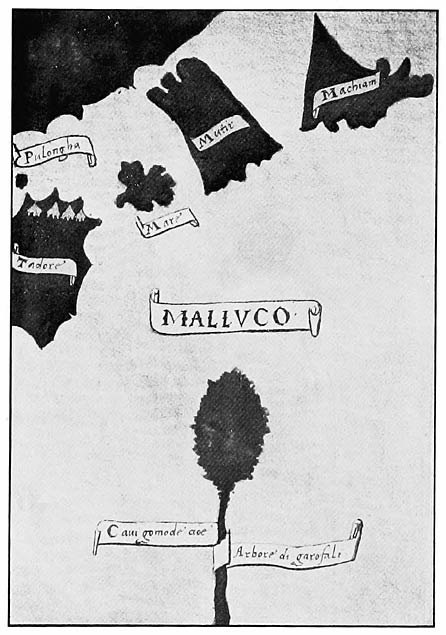
La yſola de tadore ſta de latitudine al polo articho in vintiſete menutj et de longitudine de la linea de la repartitiõe in cento et ſeſanta vna grado et longi de la pima yſola de Larcipelago detta zanial [i.e., Zamal] noue gradi et mezo aLa carta deL meſo Jorno et tramõtana ꝟſo grego et garbin tarenate ſta de latitudine alartico in dui terſi Mutir ſta pontualmente ſocto La linea equinoctialle Machian ſta aL polo antarticho in vn quarto et bachiã ancora lui aL antarticho in vn grado Tarenate tadore mutir et machiã ſonno quato monti alti et pontini oue naſcono li garofoli eſsendo in queſte quato yſolle non ſe vede bachian ma lui emagiore de ciaſcuno de queſte quato yſolle et il ſuo monte de li garofoli non e cuſſi pontino como li altri ma piu grande. The island of Tadore lies in a latitude of twenty-seven minutes toward the Arctic Pole, and in a longitude of one hundred and sixty-one degrees from the line of demarcation. It is nine and one-half degrees south of the first island of the archipelago called Zamal, and extends north by east and south by west. Tarenate lies in a latitude of two-thirds of a degree toward the Arctic Pole. Mutir lies exactly under the equinoctial line. Machian lies in one-quarter degree toward the Antarctic Pole, and Bachian also toward the Antarctic Pole in one degree. Tarenate, Tadore, Mutir, and Machian are four lofty and peaked mountains where the cloves grow. When one is in those four islands, he cannot see Bachian, but it is larger than any of those four islands.542 Its clove mountain is not so sharp as the others, but it is larger.543
Vocabuli de queſti populi morj AL ſuo ydio alla. AL xp̃iano naceran AL turco rumno AL moro muſulman Jsilam AL gentille caphre. AL ſue meſchite Miſchit Ali ſui preti maulana catip mudin Ali hominj sapientj horan pandita Ali homini ſui deuotj Moſsai. A le ſue ceremonie zambahehan de ala meſchit AL padre bapa Ala madre mama ambui Al figliolo anach. AL fratello ſaudala. AL fratello de queſto capatin muiadi AL germano ſaudala ſopopu AL auo niny AL ſocero minthua AL genero mi nanthu AL homo horan A la femina poran poan A li capili lambut AL capo capala AL fronte dai AL ochio matta Ale ciglie quilai Ale palpebre Cenin AL nazo Jdon Ala boca mulut Ali labri bebere. Ali denti gigi Ale gengiue Jssi. ALa lingua lada. AL palato langhi. AL mento aghai. Ala barba Janghut. Ali moſtaqi miſsai Ala macella pipi. ALa orechie talingha. ALa golla laher. AL colo tun dun. Ale ſpale balachan. AL peto dada. AL core Atti. ALa mamela ſussu. AL ſtomacho parut. AL corpo Tun dunbutu. AL membro botto. A la natura dele donne bucchij. AL vzare cõ loro amput. Ale nalghe buri. Ale coſcie taha. Ala gamba mina. AL ſchinquo de la gamba tula. Ala ſua polpa tilor chaci. ALa cauechia deL pie buculali. AL calcagnia tumi. AL piede batis. Ale ſolle deL piede empachaqi. Ala ongia Cuchu. AL bracio Langhan. AL gomedo ſichu. ALa mano tanghan. AL dito groſſo de la mano Jdun tanghan. AL ſecondo tungu AL terſo geri. AL carto mani AL Quinto Calinchin AL rizo bugax. AL cocho in malucho et in burne Biazzao in Lozon nior in Jaua magiore CalambiL AL figuo pizan. Ale canne dolce tubu. Ale batate gumbili Ale radice como raui ꝟbi Ale ciachare mandicai Sicui AL melone antimon. Ale angurie labu. ALa vacqua Lambu AL porco babi AL bophalo Carban. Ala pecora birj ALa capra Cambin. AL gaLo ſambunghan. Ala galina aiambatina AL caponne gubili AL ouo talor. AL occato Jtich Al ocqua anſa. Al vccelo bolon. Al elephante gagia. AL caualo cuda. AL leonne huriman AL ceruo roza. AL canne Cuiu Alle hape haermadu. Al melle gulla. Ala cera lelin. Ala candela dian. AL ſuo ſtopino Sumbudian AL fuoco appi AL fumo aſap. Ala cenere abu. AL cucinato azap. AL molto cucinato Lambech. AL hacqua tubi. AL oro amax AL argento pirac ALa pietra precioſa premata ALa perla mutiara. AL argento viuo raza AL metalo tumbaga AL fero baci. AL piombo tima Ale ſue borchie agun. Alo cenaprio galuga ſadalinghan AL argento ſoliman danas AL panno de ſeta cain Sutra AL panno roſſo cain mira AL panno negro cain ytam. AL panno biancho cain pute AL panno verde cain igao AL panno giallo cain cunin AL bonnet cophia. AL cortello pixao ALa forfice guntin. AL ſpequio chiela min AL petine ſiſsir AL criſtalino manich. AL ſonaglio giringirin AL annello ſinsin. Ali garopholi ghianche. ALa cannela caiumanis AL peuere lada AL peuere longo Sabi. Ala noce moſcada buapala gosoga AL filo de ramo Canot AL piato pinghan. Ala pigniata prin Ala ſcutela manchu. AL piato de legnio dulan ALa conqua Caiunpan. Ale ſue meſure Socat Ala terra buchit Ala tera ferma buchit tana Ala montagnia gonun. ALa pietra batu. AL yſola polan A vn capo de tera taniun buchit AL fiume ſonghai. Como ſe chiama queſto apenamaito AL oleo de cocho Mignach. AL oleo de giongioli lana lingha AL ſale garan Sira. AL muſchio et al ſuo animale caſtori AL legnio q̃ mangiã li caſtori Comaru ALa ſanſuga linta AL gibeto Jabat AL gato q̃ fa lo gibeto Mozan Al reobarbaro Calama AL demonio Saytan. Al mondo bumi AL fromẽto gandun AL dormire tidor. Ale ſtore ticaL Al cuſſino bantaL AL dolore ſachet A la ſanitate bay Alla ſedola cupia AL ſparauentolo chipas A li ſui panni chebun. Ale camiſe bain Ale ſue caſe pati alam. AL anno tanu. AL meſe bullan. AL di alli Ala nocte mallan. AL tarde malamarj AL mezo di tam hahari. Ala matina patan patan. AL ſolle mata hari Ala luna bulan. Ala meza luna tanam patbulã Ale ſtelle bintan AL ciello Languin AL trono gunthur Al merchadante Sandgar Ale citade naghiri AL caſtello cuta ALa casa rinna AL ſedere duodo ſedeti gentilhomo duodo orancaia ſedeti homo da benne duodo. horandai et anan Signor tuan AL puto Cana cana A vno ſuo alieuo Laſcar. AL ſchiauo a lipin. AL Si ca. AL no tida. AL intendere thao. AL non intendere tida taho. non megardare tida liat guardame liat A eſſere vna medeſina coſa casjcasi. siama siama. AL mazare mati AL mangiare macan. AL cuchiaro Sandoch Ala magalda SondaL grande bassaL Longo pangian picolo chechiL Corto pandach AL hauere Ada AL nõ hauere tida ha da Signior aſcolta tuan diam doue viene il Jonco dimana ajun ALa guquia da cuſire Jalun. AL cuſire banan. AL filo da cuſire pintaL banan Ala ſcufia deL capo daſtar capala. AL re raia ALa reyna putli AL legnio caiu AL Stentar Caraiar. AL Solaſſare buandala. A la venna deL bracio doue se ſalaſſa vrat paratanghan. AL ſangue que vien fora deL bracio dara CarnaL AL ſangue buona dara. Quando ſtratuitano diceno ebarasai AL pece ycam. AL polpo Calabutan. ALa carne dagin AL corniolo Cepot poco ſerich. Meso Satanha SapanghaL AL fredo dinghin AL caldo panas Longi Jan. Ala verita benar. Ala bugia duſta AL robare manchiuri Ala rognia Codis piglia na Dame ambiL graſſo gannich. magro golos. AL capelo tundun capala. Quanti barapa. Vna fiata ſatu chali Vno bracio dapa AL parlare catha. A quiui Siui Ala Sana datan. Bõ Jorno ſalamalichum. AL riſpondere alichum ſalam. Signori bon pro vi facia Mali horancaia macan. gia ho mangiato Suda macan homo leuati deli pandan chita horan. AL diſdisidare banunchan. Buona ſera Sabalchaer. AL riſponder chaer Sandat AL dare minta A dare ad alguno bri pocoL. Ali cepi de fero balanghu o Como puza bosso chini AL homo Jouene horan muda. AL vechio tua AL ſcriuano xiritoles Ala Carta Cartas AL ſcriuere mangurat Ala penna Calam. AL inchioſto dauat AL calamaro padantan. Ala letera ſurat Non lo ho guala. Vien qi Camarj Che volettj Appa man. Che mandati appa ito AL porto de mare Labuan. Ala galia gurap ALa naue CapaL ALa proa aſſon. ALa popa biritan AL nauigare belaiar. AL ſuo arbore tian. ALantena laiar. Alle ſartie tamira ALa vella leier. Ala gabia ſinbulaia. Ala corda de lancora danda ALa anchora San. AL batello ſanpan. AL remo daiun Ala bombarda badiL AL vento anghin AL mare laut huomo vienqi horan itu datan A li ſui pugniali Calix golog. AL ſuo manicho daga nan. ALa ſpada padan gole. Ala zorobotana Sumpitan Ale ſue freze damach A lerba venenata ypu AL carchaſſo bolo. AL archo bolsor. A le ſue freze anat paan. A li gati cochin puchia AL ſorge ticus AL legoro buaia Ali vermi que mangiano le naui Capan lotos AL hamo da peſcare matacanir Ala ſua eſcha Vnpan. ALa corda deL hamo tunda AL lauare mandi Non hauer paura Tangan tacut Straca lala. Vno baſo dolce Sadap manis AL amicho ſandara AL nemicho Sanbat Certo he zonhu AL merchadantare biniaga Non ho anis. A eſſere amicho pugna. due coſe Malupho. Si oue. AL rufo zoroan pagnoro. Adarce piacere Mamain A eſſere agrizato Amala. AL mato gila. AL interprete. giorobaza. Quanti lingagi Sai barapa bahasa tan. Molti bagna AL parlare de malaca chiaramalain doue ſta cului dimana horan ALa bandiera tonghoL Adeſſo Sacaran da matina hezoch. lalto giorno luza hieri Calamarj AL martelo palmo colbasi. AL chiodo pacu AL mortaro Lozon. AL pilone da piſtare Atan. AL balare manarj AL pagare baiar. AL chiamare panghiL A noneſſere maritato Vgan. Aeſſere maritato ſuda babini Tuto vno Sannia ALa piogia Vgian. AL ebriaco Moboch. Ala pelle culit Ala biſſa Vllat AL Conbater guzar. Dolce Manis Amaro azon. Como ſtai Appa giadi Benne bay Malle ſachet Portame qello biriacan. Queſto huomo he vn poltrone. giadi hiat horan itu. Baſta ſuda Words of those Moro people544 For their God Alla for Christian naceran545 for Turk rumno for Moro musulman; isilam for Heathen caphre for their Mosque mischit for their Priests maulana catip mudin for their Wise Men horan pandita for their Devout Men mossai for their Ceremonies zambahehan de ala meschit for Father bapa for Mother mama ambui for Son anach for Brother saudala for the Brother of so and so capatin muiadi for Cousin saudala sopopu for Grandfather niny for Father-in-law minthua for Son-in-law mi nanthu for Man horan for Woman poran poan for Hair lambut for Head capala for Forehead dai for Eye matta for Eyebrows quilai for Eyelids cenin for Nose idon for Mouth mulut for Lips bebere for Teeth gigi for Cheeks issi for Tongue lada for Palate langhi for Chin aghai for Beard janghut for Mustaches missai for Jaw pipi for Ear talingha for Throat laher for Neck tun dun for Shoulders balachan for Breast dada for Heart atti for Teat sussu for Stomach parut for Body tun dunbutu for Penis botto for Vagina546 bucchii for to have communication with women amput for Buttocks buri for Thighs taha for Leg mina for the Shinbone of the leg tula for its Calf tilor chaci for Ankle buculati for Heel tumi for Foot batis for the Sole of the Foot empachaqui for Fingernail cuchu for Arm langhan for Elbow sichu for Hand tanghan for the large Finger of the hand [i.e., the Thumb] idun tanghan for the Second Finger tungu for the Third geri for the Fourth mani for the Fifth calinchin for Rice bugax for Cocoanut in Malucho and Burne biazzao [for Cocoanut] in Lozon nior [for Cocoanut] in Java Major calambil for Fig [i.e., banana] pizan for Sugarcane tubu for Camotes [batate] gumbili for the Roots like turnips ubi for Nangca mandicai sicui for Melon antimon for Cucumbers labu for Cow lambu for Hog babi for Buffalo carban for Sheep biri for She-goat cambin for Cock sambunghan for Hen aiambatina for Capon gubili for Egg talor for Gander itich for Goose ansa for Bird bolon for Elephant gagia for Horse cuda for Lion huriman for Deer roza for Reeds cuiu for Bees haermadu for Honey gulla for Wax lelin for Candle dian for its Wick sumbudian for Fire appi for Smoke asap for Cinders abu for Cooked azap for well cooked lambech for Water tubi for Gold amax for Silver pirac for the Precious Gem premata for Pearl mutiara for Quicksilver raza for Copper [metalo] tumbaga for Iron baci for Lead tima for their Gongs agun for Cinnabar galuga sadalinghan for Silver [color or cloth?] soliman danas for Silk Cloth cain sutra for red Cloth cain mira for Black Cloth cain ytam for White Cloth cain pute for Green Cloth cain igao for Yellow Cloth cain cunin for Cap cophia for Knife pixao for Scissors guntin for Mirror chiela min for Comb sissir for Glass Bead manich for Bell giringirin for Ring sinsin for Cloves ghianche for Cinnamon caiumanis for Pepper lada for Long Pepper sabi for Nutmeg buapala gosoga for Copper wire canot for Dish pinghan for Earthen pot prin for Porringer manchu for Wooden Dish dulan for Shell calunpan for their Measures socat for Land [terra] buchit for Mainland buchit tana for Mountain gonun for Rock batu for Island polan for a Point of Land [i.e., a Cape] taniun buchit for River songhai What is so-and-so’s name? apenamaito? for Cocoanut oil mignach for Beneseed oil lana lingha for Salt garan sira for Musk and its Animal castori for the wood eaten by the castors comaru for Leech linta for Civet jabat for the Cat which makes the Civet mozan for Rhubarb calama for Demon saytan for World bumi for Wheat gandun for to Sleep tidor for Mats tical for Cushion bantal for Pain sachet for Health bay for Brush cupia for Fan chipas for their Cloths chebun for Shirts bain for their Houses pati alam for Year tanu for Month bullan for Day alli for Night mallan for Afternoon malamari for Noon tam hahari for Morning patan patan for Sun mata hari for Moon bulan for Half moon tanam patbulan for Stars bintan for Sky languin for Thunder gunthur for Merchant sandgar for City naghiri for Castle cuta for House rinna for to Sit duodo Sit down, sir duodo orancaia Sit down, honest fellow duodo horandai et anan Lord tuan for Boy cana cana for one of their Foster-children lascar for Slave alipin for Yes ca for No tida for to Understand thao for not to Understand tida taho Do not look at me tida liat Look at me liat To be one and the same thing casi casi; siama siama for to Kill mati for to Eat macan for Spoon sandoch for Harlot sondal Large bassal Long pangian Small chechil Short pandach for to Have ada for not to Have tida hada Listen, sir tuan diam Where is the junk going? dimana ajun? for Sewing-needle jalun for to Sew banan for Sewing-thread pintal banan for Woman’s headdress dastar capala for King raia for Queen putli for Wood caiu for to Work caraiar for to take recreation buandala for Vein of the arm where one bleeds himself urat paratanghan for the Blood that comes from the arm dara carnal for good blood dara When they sneeze, they say ebarasai for Fish ycam for Polypus calabutan for Meat dagin for Sea-snail cepot Little serich Half satanha sapanghal for Cold dinghin for Hot panas For jan for Truth benar for Lie dusta for to Steal manchiuri for Scab codis Take na Give me ambil Fat gannich Thin golos for Hair tundun capala How many? barapa? Once satu chali One braza dapa for to Speak catha for Here siui for There sana datan Good day salamalichum for the Answer [to good day] alichum salam Sir, may good fortune attend you mali horancaia mancan I have eaten already suda macan Fellow, betake yourself off pandan chita horan for to Desire banunchan Good evening sabalchaer for the Answer [to good evening] vchaer sandat for To give minta To give to some one bri pocol for Iron fetters balanghu O what a smell! bosso chini for Young man horan muda for Old man tua for Scribe xiritoles for Writing-paper cartas for to Write mangurat for Pen calam for Ink dauat for Writing-desk padantan for Letter surat I do not have it guala Come here camari What do you want? appa man? Who sent you? appa ito? for Seaport labuan for Galley gurap for Ship capal for Bow [of a boat] asson for Stern [of a boat] biritan for To sail belaiar for the Ship’s mast tian for Yard [of a ship] laiar for the Rigging tamira for Sail leier for Maintop sinbulaia for the Anchor rope danda for Anchor san for Boat sanpan for Oar daiun for Mortar [i.e., cannon] badil for Wind anghin for Sea laut Fellow, come here horan itu datan for their Daggers calix golog for their Dagger hilt daga nan for Sword padan gole for Blowpipe sumpitan for their Arrows damach for the poisonous Herb ypu for Quiver bolo for Bow [i.e., a weapon] bolsor for its Arrows anat paan for Cats cochin puchia for Rat ticus for Lizard buaia for Shipworms capan lotos for Fishhook matacanir for Fishbait unpan for Fishline tunda for to Wash mandi Not to be afraid tangan tacut Fatigue lala A pleasant cup sadap manis for Friend sandara for Enemy sanbat I am certain zonhu for to Barter biniaga I have not anis To be a friend pugna Two things malupho If oue for Crowd (?) zoroan pagnoro To give pleasure to one mamain To be stiff with cold amala for Madman gila for Interpreter giorobaza How many languages do you know? barapa bahasa tan? Many bagna for to speak of Malaca chiaramalain Where is so-and-so? dimana horan? for Flag tonghol Now sacaran Tomorrow hezoch The next day luza Yesterday calamari for Palm-mallet colbasi for Nail pacu for Mortar lozon547 for Rammer for crushing [rice?] atan for to Dance manari for to Pay baiar for to Call panghil Unmarried ugan Married suda babini All one sannia for Rain ugian for Drunken moboch for Skin culit for Anger ullat for to Fight guzar Sweet manis Bitter azon How are you? appa giadi? Well bay Poorly sachet Bring me that biriacan This man is a coward giadi hiat horan itu Enough suda
li Venti Ala tramõtana Jraga. Al mezo di Salatan. AL leuante timor AL ponente baratapat AL griego Vtara. AL garbin berdaia. AL maeſtrale bardaut AL ſiroco tunghara. The winds for the North iraga for the South salatan for the East timor for the West baratapat for the Northeast utara for the Southwest berdaia for the Northwest bardaut for the Southeast tunghara
Numero Vno ſatus dui dua tre tiga catro ampat cinque lima. Sey anam. Sette tugu. octo duolappan. Noue ſambilan diece Sapolo. Vinti duapolo. trenta tigapolo Quaranta ampatpolo. Cinquanta limapolo. ſexanta Anampolo. ſettanta Tuguppolo. octanta dualapanpolo. Nouanta Sambilampolo. Cento Saratus. duzendo duaratus trecento tigaratus Quatro cento Anamparatus Cinque cento Limaratus Sey cento anambratus ſetecento Tugurattus octocento dualapanratus Nouecento Sambilanratus Mille Salibu. due millia dualibu tre millia tigalibu Quatro mille ampatlibu Cinque millia limalibu Sey millia Anamlibu Sette millia tugulibu octo millia dualapanlibu Noue millia Sambilanlibu. diece millia Salacza. Vinti millia dualacza. trenta millia Tigalacza. Quarãta millia Ampatlacza Cinquãta millia limalacza Sesanta millia Anamlacza Settanta millia tugulacza octanta millia dualapanlacza Nouanta millia Sambilanlacza Cento mille Sacati. Ducento millia duacati trecento millia Tigacati Quatro cento millia Ampatcati Cinque cento millia limacati ſey cento millia Anamcati Setecento millia Tugucati Octo cento millia dualapancati Nouecento millia Sambilancati Diece fiate cento millia Sainta. Numbers One satus Two dua Three tiga Four ampat Five lima Six anam Seven tugu Eight duolappan Nine sambilan Ten sapolo Twenty duapolo Thirty tigapolo Forty ampatpolo Fifty limapolo Sixty anampolo Seventy tuguppolo Eighty dualapanpolo Ninety sambilampolo One hundred saratus Two hundred duaratus Three hundred tigaratus Four hundred anamparatus Five hundred limaratus Six hundred anambratus Seven hundred tugurattus Eight hundred dualapanratus Nine hundred sambilanratus One thousand salibu Two thousand dualibu Three thousand tigalibu Four thousand ampatlibu Five thousand limalibu Six thousand anamlibu Seven thousand tugulibu Eight thousand dualapanlibu Nine thousand sambilanlibu Ten thousand salacza Twenty thousand dualacza Thirty thousand tigalacza Forty thousand ampatlacza Fifty thousand limalacza Sixty thousand anamlacza Seventy thousand tugulacza Eighty thousand dualapanlacza Ninety thousand sambilanlacza One hundred thousand sacati Two hundred thousand duacati Three hundred thousand tigacati Four hundred thousand ampatcati Five hundred thousand limacati Six hundred thousand anamcati Seven hundred thousand tugacati Eight hundred thousand dualapancati Nine hundred thousand sambilancati One million [literally: ten times one hundred thousand] sainta
Tucti li cento li mille li diece mille li cento mille et diece fiate cento mille se congiungenno cõ il numero de Satus et dua et &c. All the hundreds, the thousands, the tens of thousands, the hundreds of thousands, and the millions are joined with the numbers, satus, dua, etc.548
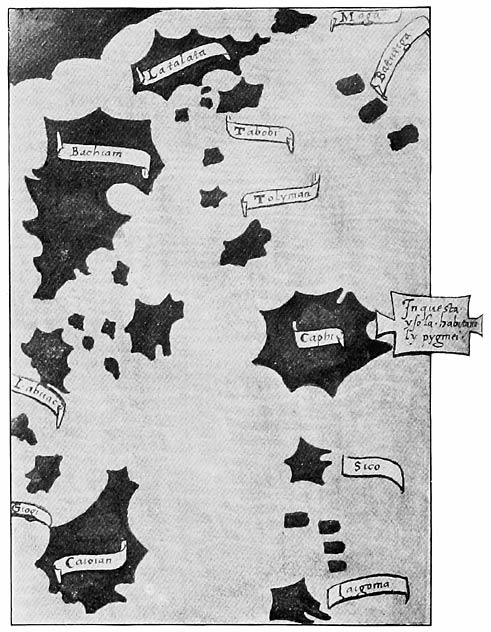
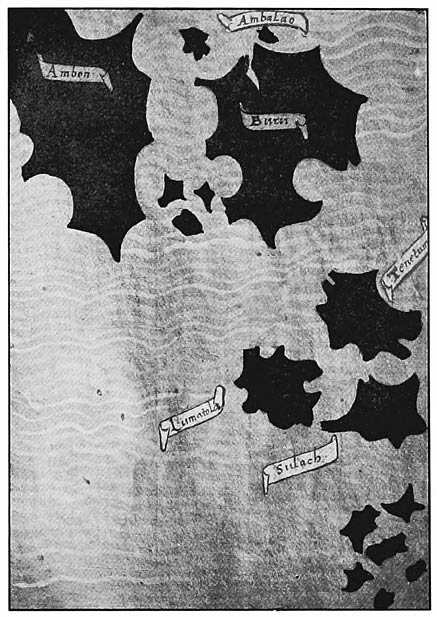
Andando aL nr̃o camino paſaſſemo fra queſte yſolle Caioan laigoma Sico giogi Caphi in queſta yſola de caphi naſcono homini picoli Como li nanj piaceuoli liqalli Sonno li pigmei et ſtanno ſubiecti ꝓforſa aL nr̃o re de tadore Laboan toliman Titameti bachian Ja deto Lalalata Tabobi Maga et batutiga paſſando fuora aL ponente de batutiga Caminaſſemo fra ponente et garbin et diſcoperſemo eL mezo giorno alquante yſolete ꝓ ilque li piloti de malucho ne dicero ſe ariuaſſe ꝓ cio ne caciauamo fra molte yſolle et bassi ariuaſſemo aL Siroco et deſcemo in vna yſolla q̃ ſta de latitudine aL polo antartico in dui gradi et cinquãta cinque legue Longi de maluco et chiamaſſe ſulach li homini de queſta ſonno gentili et non hanno re mangião carne humana vano nadi coſi homini Como femine ma ſolamẽte portano vn pezo de ſcorſa larga dui diti intorno la ſua ꝟgonia Molte yſolle ſonno ꝓ Quiui que mangiano carne humana li nomy de algune ſonno queſti Silan noselao biga atulabaou leitimor tene tun gondia pailarurun manadan et benaia poi coſtegiaſemo due yſole dete lamatola et tenetun da ſulach circa x. legue a La medeſima via trouaſſemo vna yſola aſſay grande nelaqalle ſe troua riſo porci capre galine cochi canne dolci Sagu vno ſuo mangiare de fighi elqalle chiamano Chanali Chiachare aqueſte chiamão nangha le chiachare ſonno fructi Como le angurie de fora nodoſe de dentro año certi fructi roſſi pocoli come armelini non hanno oſſo ma ꝓ qello hanno vna medola como vn fazolo ma piu grande et al mangiar tenere Como caſtagnie et vn fructo facto como la pignia de fuora Jallo et biancho de dentro et al tagliare Como vn pero ma piu tenero et molto megliore deto Connilicai la gente de queſta yſola vanno nudi Como qelli de ſolach ſonno gentili et non hanno re Queſta yſola ſta de latitudine al polo antartico in tre gradi et mezo et longi da malucho Setantacinque [gradi: crossed out in original MS.] leghe et chiamaſſe buru la leuante de queſta yſola diece legue ne ſta vna grande q̃ confina cõ Jiaalolo laqalle he habitata de mori et da gentili li morj ſtanno apreſſo iL mare et li gentili de dentro nella terra et queſto mãgião carne humana naſce in queſta le coſe Ja dete et ſe chiama ambon fra buru et ambon Se trouano tre yſole circondate da baſſi chiamate Vu dia Cailaruri et benaia circa de buru cato leghe aL mezo di ſta vna yſola picola et chiamaſſe ambalao. Proceeding on our way we passed amid those islands [those of] Caioan, Laigoma, Sico, Giogi, and Caphi.549 In the said island of Caphi is found a race as small as dwarfs, who are amusing people, and are pigmies.550 They have been subjected by force to our king of Tadore. [We also passed the islands of] Laboan, Toliman, Titameti, Bachian, of which we have already spoken, Lalalata, Tabobi, Maga, and Batutiga.551 Passing outside the latter on its western side, we laid our course west southwest, and discovered some islets toward the south. And inasmuch as the Malucho pilots told us to go thither, for we were pursuing our course among many islands and shoals, we turned toward the southeast, and encountered an island which lies in a latitude of two degrees toward the Antarctic Pole, and fifty-five leguas from Maluco. It is called Sulach,552 and its inhabitants are heathens. They have no king, and eat human flesh. They go naked, both men and women, only wearing a bit of bark two fingers wide before their privies. There are many islands thereabout where the inhabitants eat human flesh. The names of some of them are as follows: Silan, Noselao, Biga, Atulabaou, Leitimor, Tenetun, Gondia, Pailarurun, Manadan, and Benaia.553 Then we coasted along two islands called Lamatola554 and Tenetun, lying about x leguas from Sulach. In that same course we encountered a very large island where one finds rice, swine, goats, fowls, cocoanuts, sugarcane, sago, a food made from one of their varieties of figs [i.e., bananas] called chanali,554 and chiacare, which are called nangha. Nangcas are a fruit resembling the cucumber [augurie]. They are knotty on the outside, and inside they have a certain small red fruit like the apricot. It contains no stone, but has instead a marrowy substance resembling a bean but larger. That marrowy substance has a delicate taste like chestnuts. [There is] a fruit like the pineapple. It is yellow outside, and white inside, and when cut it is like a pear, but more tender and much better. Its name is connilicai. The inhabitants of that island go naked as do those of Solach. They are heathens and have no king. That island lies in a latitude of three and one-half degrees toward the Antarctic Pole, and is seventy-five555 [degrees: crossed out in original MS.] leguas from Malucho. Its name is Buru. Ten leguas east of the above island is a large island which is bounded by Jiaalolo. It is inhabited by Moros and heathens. The Moros live near the sea, and the heathens in the interior. The latter eat human flesh. The products mentioned above are produced in that island. It is called Ambon.556 Between Buru and Ambon are found three islands surrounded by reefs, called Vudia,557 Cailaruri, and Benaia; and near Buru, and about four leguas to the south, is a small island, called Ambalao.558
Longi da Queſta yſola de buru circa trentacinque leghe a la carta deL mezo Jorno verſo garbin Se truoua bandan bandan et dudici yſole in ſey de queſte naſce la matia et noſce moſcada et li nomi loro ſono queſti Zoroboa magiori de tucte le altre CheliceL Samiãapi pulac pulurun et roſoghin le altre ſey ſonno queſte Vnuueru pulan baracõ lailaca manucan Man et meut in queſte nõ li trouano noſce moſcade se nõ Sagu rizo cochi figui et alti fructi et ſonno vicine luna de lalta Ly populi de queſto ſonno morj et non hanno re Bandan ſta de latitudine aL polo antarticho in Sei gradi et di longitudine dela linea repartitionalle in cento et ſexantre gradi et mezo et ꝓ eſſere vn pocho fuora deL nr̃o Camino nõ fuſſemo iui. About thirty-five leguas to the south by west of the above island of Buru, are found Bandan. Bandan consists of twelve islands. Mace and nutmeg grow in six of them. Their names are as follows: Zoroboa, the largest of them all, and the others, Chelicel, Samianapi, Pulac, Pulurun, and Rosoghin. The other six are as follows: Unuueru, Pulanbaracon, Lailaca, Manucan, Man, and Meut.559 Nutmeg is not found in them, but only sago, rice, cocoanuts, figs [i.e., bananas], and other fruits. Those islands are located near together, and their inhabitants are Moros, who have no king. Bandan lies in a latitude of six degrees toward the Antarctic Pole, and in a longitude of one hundred and sixty-three and one-half degrees from the line of demarcation. As it was a trifle outside of our course we did not go there.560
Partendone de quella yſola de baru a la carta deL garbin verſo ponente circa otto gradi de longitudine ariuaſſemo a tre yſolle vna apreſſo lalta dette zolot nocema mor et galiau et nauigando ꝓ mezo di queſte ne aſſalto vna grã fortuna ꝓ ilque faceſſemo vno pelegrino a la nr̃a donna de la guida et pigliando apopa lo temporale deſſeme in vna yſola alta et inanci ajungeſſemo iui Se afaticaſſemo molto ꝓ le refegue decendeuão de li ſui mõti et ꝓ li grandi Corenti de hacqua li homini de queſta yſola ſonno ſaluatici et beſtialli mã gianno carne humana et non hanno re vanno nudi cõ qella ſcorſa como li alti ſenon Quando vanno a Combatere portanno certi pezi de pelle de bu phalo dinanzi et de drieto et neli fianchi adornati cõ corniolli et denti de porci et con code de pelle caprine atacate denanzi et de drietto portano ly capili in alto cõ certi petini de cana longui q̃ li paſſano da parte aparte et li tieneno alti anno le ſue barbe riuolte in foglie et poſti in canuttj de canna coſa ridicula aL vedere et ſonno li piu bruti ſianno in queſta india li ſui archi et le ſue freze Sonno de canna et anno Certi ſachi facti de foglie de arbore ne liqalli portanno lo ſuo mangiare et bere Le ſue femine Quando ne viſtenno ne venirono in contra cõ archi ma dandoli alguni ꝓ ſenti Subito diuentaſſemo ſui amici Qiui tardaſſemo quindici giornj per Conciare La naue ne li Coſtadi Jn queſta yſola ſe troua galine Capre cochi cera ꝓ vna libra de fero vechio ne donorono quindici de cera et peuere lõgo et rotondo JL peuere longo he como qelle gatelle q̃ fanno li nizolle quãdo he linuerno il suo arbure e Como elera et atacaſſe ali arbori Como quella ma le ſue foglie ſonno como qelle diL moraro et lo chiamano luli JL peuere rotondo naſce Como queſto ma in ſpigue como lo fromẽtone della india et se deſgrana et lo chiamano lada in queſte parte ſonno piennj li campi de queſto peuere facti in modo de pergoladi pigliaſſemo quiui vno homo açio ne cõduceſſe ad alguna yſola haueſſe victuuaria Queſta yſola ſta de latitudine aL polo antarticho in octo gradi et mezo et cento et sesantanoue et dui terzi de longitudine de la linea repartitionalle et chiamaſſe malua. Leaving the above mentioned island of Baru, and taking the course toward the southwest by west, we reached, [after sailing through] about eight degrees of longitude, three islands, quite near together, called Zolot, Nocemamor, and Galiau.561 While sailing amid them, we were struck by a fierce storm, which caused us to make a pilgrimage to our Lady of Guidance. Running before the storm we landed at a lofty island, but before reaching it we were greatly worn out by the violent gusts of wind that came from the mountains of that island, and the great currents of water. The inhabitants of that island are savage and bestial, and eat human flesh. They have no king, and go naked, wearing only that bark as do the others, except that when they go to fight they wear certain pieces of buffalo hide before, behind, and at the sides, which are ornamented with small shells,562 boars’ tusks, and tails of goat skins fastened before and behind. They wear their hair done up high and held by certain long reed pins which they pass from one side to the other, which keep the hair high. They wear their beards wrapped in leaves and thrust into small bamboo tubes—a ridiculous sight. They are the ugliest people who live in those Indias. Their bows and arrows are of bamboo. They have a kind of a sack made from the leaves of a tree in which their women carry their food and drink. When those people caught sight of us, they came to meet us with bows, but after we had given them some presents, we immediately became their friends.563 We remained there a fortnight in order to calk the sides564 of the ship. In that island are found fowls, goats, cocoanuts, wax (of which they gave us fifteen libras for one libra of old iron), and pepper, both long and round.565 The long pepper resembles the first blossoms of the hazelnut in winter.566 Its plant resembles ivy, and it clings to trees as does that plant; but its leaves resemble those of the mulberry. It is called luli.567 The round pepper grows like the former, but in ears like Indian corn, and is shelled off; and it is called lada. The fields in those regions are full of this [last variety of] pepper, planted to resemble arbors.568 We captured a man in that place so that he might take us to some island where we could lay in provisions. That island lies in a latitude of eight and one-half degrees toward the Antarctic Pole, and a longitude of one hundred and sixty-nine and two-thirds degrees from the line of demarcation; and is called Malua.569
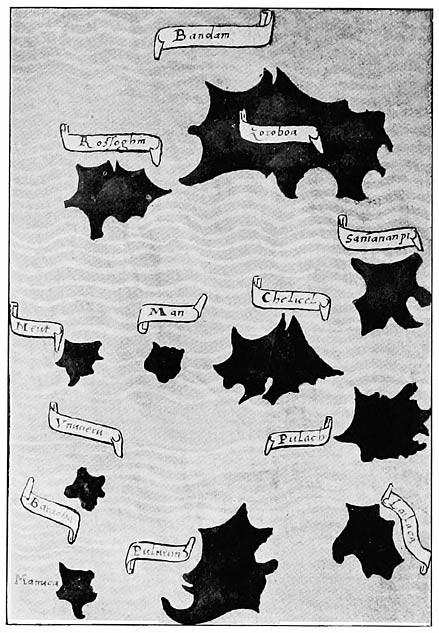
Ne disse iL nr̃o piloto Vechio de maluco como apreſſo quiui era vna yſola chiamata arucheto li homini et femine delaqalle non ſonno magiorj dun cubito et anno le orecquie grande como loro de vna fanno lo ſuo lecto et de lalta ſe copreno vanno tosi et tuti nudi corenno molto anno la voce ſotille habitano in caue ſoto terra et mangiano peſce et vna coſa q̃ naſce fra larbore et la ſcorſa che chiancha et rotonda como coriandoli de cõfeto deta ambulõ ma ꝓ li grã corenti de hacqua et molti baſſi nõ li andaſemo. Our old pilot from Maluco told us that there was an island nearby called Arucheto,570 the men and women of which are not taller than one cubit, but who have ears as long as themselves. With one of them they make their bed and with the other they cover themselves. They go shaven close and quite naked, run swiftly, and have shrill voices. They live in caves underground, and subsist on fish and a substance which grows between the wood and the bark [of a tree], which is white and round like preserved coriander, which is called ambulon. However, we did not go there because of the strong currents in the water, and the numerous shoals.
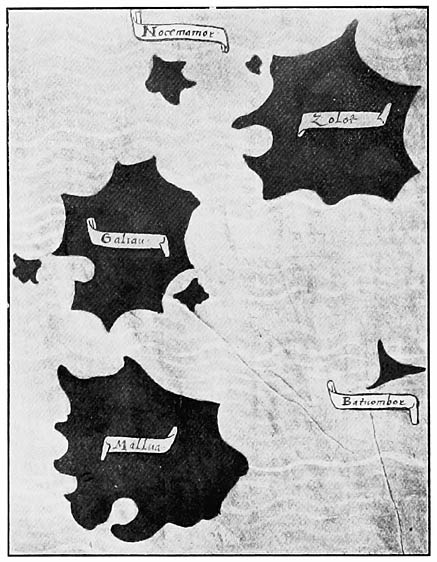
Sabato a vinticinque de Jennaro m vcxxij Se partiſſemo de la yſola de ma lua et la dominica a vinti ſey ariuaſſemo a vna grande yſola longi de qella cinque legue fra mezo di et garbin Jo ſolo andai in terra a parlare aL magiore duna vila deta amaban açio ne deſſe victuuaria me riſpoſe ne darebe buphali porci et capre ma nõſi poteſſemo aCordare per che voleua molte coſe ꝓ vno bufalo noi auendone pocque et conſtrigẽdone la fama reteneſſemo ne la naue vno principalle cõ vno ſuo figliolo de vnalta vila deta balibo et ꝓ paura nõ lo amazaſſemo Subito ne dette ſei buphali cinque capre et dui porci et ꝓ compire lo numero de diese porci et diece capre ne dete vno bufalo perche cuſſi Laueuamo dato taglia poi li mandaſſemo in tera Contentiſſimi cõ tella panny Jndiani de ſeta et de bombaſo accete cortelizi indiani forfice Spechi et cortelli qeL Signiore a cui anday a parlare teniua ſolum femine Lo ſeruiuano tutte vano nude Como le altre et portano atacate ale orechie Schione picole de horo cõ fiocqi de ſeta pendenti et ne li braci anno molte maniglie de oro et de latonne fin aL cubito li homini vanno Como le femine Se non anno atacate aL colo certe coſe de horo tonde Como vn tagliere et petini de canna adornatj con schione de oro poſti neli capili et algu ni de queſti portanno coli de zuche Seche poſti ne le orechie ꝓ schione de oro. On Saturday, January 25, MCCCCCXXII,571 we left the island of Malua. On Sunday, the twenty-sixth,572 we reached a large island which lies five leguas to the south southwest of Malua. I went ashore alone to speak to the chief of a city called Amaban to ask him to furnish us with food. He told me that he would give me buffaloes,573 swine, and goats, but we could not come to terms because he asked many things for one buffalo. Inasmuch as we had but few things, and hunger was constraining us, we retained in the ship a chief and his son from another village called Balibo.574 He for fear lest we kill him, immediately gave us six buffaloes, five goats, and two swine; and to complete the number of ten swine and ten goats [which we had demanded] they gave us one [additional] buffalo. For thus had we placed the condition [of their ransom]. Then we sent them ashore very well pleased with linen, Indian cloth of silk and cotton, hatchets, Indian knives, scissors, mirrors, and knives.575 That chief to whom I went to talk had only women to serve him. All the women go naked as do the other women [of the other islands]. In their ears they wear small earrings of gold, with silk tassels pendant from them. On their arms they wear many gold and brass armlets as far as the elbow. The men go as the women, except that they fasten certain gold articles, round like a trencher, about their necks, and wear bamboo combs adorned with gold rings576 in their hair. Some of them wear the necks of dried gourds in their ears in place of gold rings.
Jn Queſta yſola ſe truoua lo ſandalo biancho et nõ altroue gengero bufali por ci capre galine rizo fighi canne dolci naranci limonj cera mandolle fa zoli et altre coſe et papagali de diuerſi colorj de lalta parte de liſola ſtano catro fratelli q̃ ſonno li re de queſta yſola doue ſtauamo nuy erano ville et alguni principalle de qelle. Ly nomi de li catro habitatiõe deli re ſonno queſti oibich lichsana suai et Cabanaza oibich e la magiore. Jn cabanaza ſi Como ne fu deto ſe truoua aſay oro in vno monte et Comperano tute le Sue coſe cõ pezetti de oro tuto lo ſandalo et la cera q̃ contractano queli de Jaua et di malaca Contractano da queſta banda aqui trouamo vno Jonco de lozon venuto ꝓ merchadantare Sandalo Queſti populi ſonno gentilli et quando vanno a taglaire lo ſandalo Como loro ne diſcero ſeli moſta lo de monio en varie forme et li dice ſe anno biſognio de qalque coſa li la demãdino ꝓ Laqalle aparitione ſtanno infermi alquanti giornj lo ſandalo ſi taglia a vno certo tempo de la luna ꝓ che altramente nõ ſarebe bonno la mercã tia q̃ vale Quiui ꝓ lo ſandalo e panno roſſo tella accete fero et chiodi Queſta yſola he tuta habitata et molto longa da leuante a ponente et poco larga de mezo di a la tramõtana ſta de latitudine aL polo antartico in dieci gra di et cento et Settanta catro gradi et mezo de longitudine dala linea de la repartiõe et se chiama timor. Jn tutte le yſolle hauemo trouate in queſto arcipelago regnia lo maL de S. Jop et piu Quiui q̃ in alto luocho et Lo chiamano foi franchi çioe maL portugheſe. White sandal wood is found in that island and nowhere else.577 [There is also] ginger, buffaloes, swine, goats, fowls, rice, figs [i.e., bananas], sugarcane, oranges, lemons, wax, almonds, kidney-beans,578 and other things, as well as parrots of various colors. On the other side of the island are four brothers, who are the kings of that island. Where we were, there were cities and some of their chiefs. The names of the four settlements of the kings are as follows: Oibich, Lichsana, Suai, and Cabanaza. Oibich is the largest. There is a quantity of gold found in a mountain in Cabanaza, according to the report given us, and its inhabitants make all their purchases with little bits of gold. All the sandal wood and wax that is traded by the inhabitants of Java and Malaca is traded for in that region. We found a junk from Lozon there, which had come thither to trade in sandal wood. Those people are heathens. When they go to cut the sandal wood, the devil (according to what we were told), appears to them in various forms, and tells them that if they need anything they should ask him for it. They become ill for some days as a result of that apparition. The sandal wood is cut at a certain time of the moon, for otherwise it would not be good. The merchandise valued in exchange for sandal wood there is red cloth, linen, hatchets,579 iron, and nails. That island is inhabited in all parts, and extends for a long distance east and west, but is not very broad north and south. It lies in a latitude of ten degrees toward the Antarctic Pole, and in a longitude of one hundred and seventy-four and one-half580 degrees from the line of demarcation, and is called Timor.581 The disease of St. Jop was to be found in all of the islands which we encountered in that archipelago, but more in that place than in others. It is called foi franchi582 that is to say “Portuguese disease.”583