THE WEEK.
Reading edition
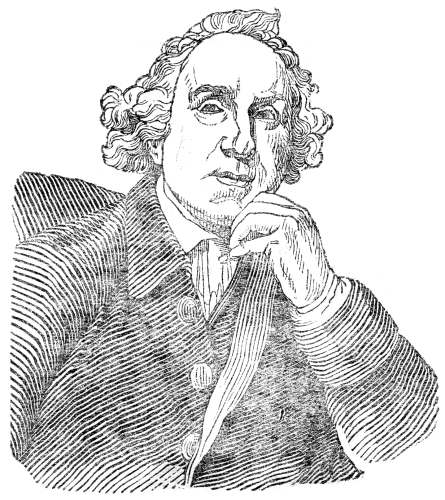
[John Hunter.]
July 14.—On this day, in the year 1728, was born at Kilbride, in the county of Lanark, Scotland, the celebrated John Hunter, one of the greatest anatomists of modern times. The early life of this remarkable man formed a strange introduction to the scientific eminence to which he eventually attained. His father having died when he was about ten years old, he seems scarcely, after this, to have received any further school education; but was allowed to spend his time as he liked, till at last he was bound apprentice to a cabinet-maker in Glasgow, whom one of his sisters had married. After some time, however, this person failed—an event which was probably regarded at the moment as a severe family misfortune; but it turned out a blessing in disguise. Hunter’s brother, William, who was ten years older than himself, had, after overcoming the difficulties arising from the expenses of a medical education at the University of Edinburgh, shortly before this settled in London, and was already fast bringing himself into notice. To him John applied when he found himself 142thrown out of any means of obtaining a living. He requested his brother, who was then delivering a course of lectures on anatomy, to take him as an assistant in his dissecting-room—and intimated that if this proposal should not be accepted he would enlist as a soldier. His brother, in reply, invited him to come to London. This was in September, 1748, when he was in his twenty-first year. Never, perhaps, did any learner make a more rapid progress than John Hunter now made in his new study. Even his first attempt in the art of dissection indicated a genius for the pursuit; and such was the success which rewarded his ardent and persevering efforts to improve himself, that after about a year he was considered by his brother fully competent to take the management of a class of his own. His subsequent rise entirely corresponded to this promising commencement. It was not long before he took his place in the front rank of his profession, and had at his command its highest honours and emoluments. The science of anatomy, however, continued to be his favourite study; and in this he acquired his greatest glory. Not only the chief portion of his time, but nearly the whole of his professional gains, were devoted to the cultivation of this branch of knowledge. One of the principal methods to which he had recourse in order to throw light upon the structure of the human frame, was to compare it with those of the various inferior animals. Of these he had formed a large collection at his villa at Earl’s Court, Brompton; “and it was to him,” says Sir Everard Home, “a favourite amusement in his walks to attend to their actions and their habits, and to make them familiar with him. The fiercer animals were those to which he was most partial, and he had several of the bull kind from different parts of the world. Among these was a beautiful small bull he had received from the Queen, with which he used to wrestle in play, and entertain himself with its exertions in its own defence. In one of these conflicts the bull overpowered him, and got him down; and had not one of the servants accidentally come by, and frightened the animal away, this frolic would probably have cost him his life.” The same writer relates that on another occasion “two leopards that were kept chained in an outhouse, had broken from their confinement, and got into the yard among some dogs, which they immediately attacked. The howling this produced alarmed the whole neighbourhood. Mr. Hunter ran into the yard to see what was the matter, and found one of them getting up the wall to make his escape, the other surrounded by the dogs. He immediately laid hold of them both, and carried them back to their den; but as soon as they were secured, and he had time to reflect upon the risk of his own situation, he was so much affected that he was in danger of fainting.” Mr. Hunter’s valuable museum of anatomical preparations was purchased by Parliament after his death for £15,000; and it is now deposited in the hall belonging to the Royal College of Surgeons, in Lincoln’s-Inn-Fields, where the public are admitted to view it on the order of any member of the society. This distinguished person died suddenly on the 16th of October, 1793, in the sixty-sixth year of his age.