SECOND PART FROM THE DEATH OF HIM I HAD BELIEVED MY FATHER UNTIL THE PRESENT TIME
M. Harriet M. (Magdalen Harriet Mary) Capes translation
I
The Funeral—Sea-baths—Rupture with my Brother—My Establishment at Siena—Chiappini’s Letter—My Reflections—First Steps—Various Pieces of Information—Verification of Handwriting—Visit of my Elder Son—Stay in Rome—The Marchioness of B.—Departure of my Children.
My brother appeared to be so much affected by his recent loss that, in spite of the coolness existing between us for some time past, I kept him to sleep at my country house.
All the evening he seemed to be sunk in deep thought and overwhelming grief, which greatly surprised me in a young man who up to then had shown so many signs of a want of filial affection. He left very early the next morning without taking leave of me.
I at once sent him the sum necessary for having the funeral solemnized in a fashion in accordance not with the lowly condition of the deceased, but with all the dignity due to my own rank.
The marble beneath which lie his mortal remains bears witness to my liberality, very unlike that of my sister, who, being present at her mother’s death, allowed her body to be cast into the common pit, when a dozen crowns would have procured her a more honoured grave.
My constantly recurring eruptions had induced my doctors to prescribe sea-bathing; my father’s illness having deferred the carrying out of their orders, I prepared to do so a fortnight after his death, which took place towards the end of January 1821, and went to spend three weeks at Leghorn, where I should have been horribly bored if it had not been for the company of my Edward, who never left me.
On my return to Florence I found out the various tricks my brother had played on me, first in concealing from me the real condition of my father, who, I learnt, had recovered his power of speech before breathing his last, and whose death had not taken place until thirty-six hours after the time reported to me; secondly, in persuading me to pay the purchase money of a fine house, supposed to be for me, but the deed of purchase of which he had had made out in his own name, on the pretext that a married woman could not do so validly.
Justly incensed at his conduct, I not only upbraided him bitterly, but ignominiously cast him out and gave him up absolutely and finally.
Surrounded as I was by nothing but gloomy memories, in a place where everything recalled troubles and misfortunes, I resolved to go to Siena, and began at once to make my preparations.
There were several reasons that induced me to fix on that town, among others its pure air and the famous School of Design which is its chief ornament.
I was well acquainted with the head master of this school, and he had kindly promised me to take the greatest pains with my young son, who already showed decided taste and talent for this admirable art.
I had been living in this town about a week when I received by post the letter I give here, with its translation.
Miledi.
Giunsi finalmente al termine di miei giorni senza vere svelato ad alcuno un segreto che riguarda me e la vostra persona direttamente.
Il segreto è l’appresso:
Il giorno dell a vostra nascita da persona che non posso nominare, e che già è passata all’ altra vita, a me pure nacque un figlio maschio. Fui richesto à fare uno scambio, e mediante l emie finanze, di quei tempi, accedi alle molteplici richieste con vantaggio; ed allora fù che vi adottai per mia figlia, in quella guisa che mio figlio fu adottato dall’ altra parte.
Vedo che il cielo ha supplito alle mie mancanze, con porvi in uno stato di miglior condizione del vostro padre, sebbene esso pure fosse per rango quasi simile, ed è ció che mi fa chiudere con qualche quiete il termine di mia vita.
Serva a voi questa operazionne per non farmi colpevole, totalmente; domandovi perdono di questa mia mancanza, vi prego, se vi piace, di tenere in voi questa cosa, per non far parlare il mondo di un affare che non vi ha più rimedio.
Non vi sara consegnata questa mia che dopo la mia morte.
Lorenzo Chiappini.
Milady
I have come to the end of my days without having ever revealed to any one a secret which directly concerns you and me.
This is the secret. The day you were born of a person I must not name, and who has already passed into the next world, a boy was also born to me. I was requested to make an exchange, and, in view of my circumstances at that time, I consented after reiterated and advantageous proposals; and it was then that I adopted you as my daughter, as in the same way my son was adopted by the other party.
I see that Heaven has made up for my fault, since you have been placed in a better position than your father’s, although he was of almost similar rank; and it is this that enables me to end my life in something of peace.
Keep this in your possession, so that I may not be held totally guilty. Yes, while begging your forgiveness for my sin, I ask you, if you please, to keep it hidden, so that the world may not be set talking over a matter that cannot be remedied.
Even this letter will not be sent to you till after my death.
Lorenzo Chiappini.
The amazement such a missive caused me may well be imagined. In an instant a crowd of ideas rushed upon me; the veil was rent, the cloud dispersed. At once I realized the reason for the immense differences between myself and my supposed relatives.
I saw the reason for the ill-treatment I had endured at the hands of a woman perhaps forced into calling herself my mother; I understood the meaning of those many muttered enigmatical half-sentences of my first husband, and still more those of the writer of the astounding letter I held in my hand.
There was but one mystery left to clear up, and that was precisely the one I was implored to let alone.
But the man who had so implored me was now in my eyes nothing but a criminal for me to forgive, his paternity destroyed, his rights broken, and my duty to him annihilated, or rather born anew—enjoined on me by honour and the love I bore my children—namely, to try every possible means to discover my real father.
In my anxiety I hastened to the postmaster, as if he were the person to give me useful information; but all he could tell me was that the letter in question had come in the bag from Florence and under the postmark of that town; but he directed me to an old man, a native of Faenza, to whom I went at once. He could tell me nothing at the time; but he wrote, and received an answer that there were two maid-servants of the Countess Camilla still living, and that there was a new Count Biancoli-Borghi, a relation and heir of the Count Pompeo, whose widow he had even married.
For my part I had written to the Fathers Ringrezzi and Fabroni, the first-named confessor to the former jailer, the other the nephew of the confessor of the late old Countess.
Having accepted the invitation I sent them to come and see me, Father Ringrezzi told me at once that his calling bound him to inviolable secrecy, but added that his private opinion had always been that I was the child of the Grand Duke Leopold.
At this, Father Fabroni eagerly exclaimed—
“You are wrong, Monsieur l’Abbé. Milady is the daughter of a French nobleman, called the Comte Joinville, who had great possessions in Champagne; and I have no doubt that if Madame la Baronne went to that province she would find documents that I have been told were handed over to a worthy ecclesiastic.”
On this combined advice, I decided to return at once to Florence to get further information. I had the satisfaction of finding no incredulity; my many friends all told me that they had never believed I belonged to the family of the Chiappinis.
I was told that the constable, having at one time been in danger on account of his political opinions, had entrusted the lady Massina Calamini with some papers which he told her were of the highest importance, and which he carefully reclaimed the very moment he was set free.
It is equally certain that he had a great number in a strong box, the key of which he never gave up to any one whatsoever.
But it was impossible to get anything from his son, except a few letters of no consequence, which he had already shown me with a laugh as being the only asset of his inheritance.
As to her whom up to now I had called my aunt, she came to see me several times, and I continued to look after her welfare.
It seemed to her that her brother had been quite capable of the thing he had so tardily confessed to me; she even maintained that she remembered his wife, in her fits of rage often throwing these cutting words at him—
“You monster! Have you forgotten that you’ve committed a crime worthy of the gallows?”
Count Borghi and the two old maid-servants living at Faenza having been applied to for information, the latter replied that first of all they wished to see me and to speak to me alone; the Count indignantly asserted that I had made an unpardonable mistake about him, and swore that he would make me pay dearly for it.
Not knowing what more to do, I went and asked a clever lawyer what steps I ought to take. He told me I must submit Chiappini’s letter to the authorities and have it legally verified.
As this verification entailed great formalities and much delay, I went back to Leghorn to continue my sea-bathing. I soon heard the news that my two elder sons were coming to visit me; my heart overflowed with joy; I hastened to meet them, and received them at Florence.
They rapturously embraced me and gave me a thousand proofs of their love for me. We spent five delightful weeks together, and about the middle of November they started for Rome. I could not accompany them; my presence had become indispensable to accelerate my business, which still lasted more than another month.
At last the experts, having carefully compared the writing submitted to them with several authentic signatures, decided that it was entirely in the hand of Lorenzo Chiappini.[3]
As soon as this was finished, I hastened to join my children, and managed to arrive on the first day of the year 1823, so as to give them my presents and renew the heartfelt proofs of my love for them, which they received with touching gratitude and profound respect.
The first thing they told me of was their fortunate meeting with my old and most faithful friend, the Marchioness of B., who was looking forward with the liveliest impatience for the moment of my arrival. My delight was at its height; seeing her once more seemed to give me back a part of myself.
They went very fast—those happy days I spent with her and my three children.
Obliged to return to England, she gave me two letters of introduction to use after the journey to France which I intended to make; one was for the Duke of Orleans, the other for the British Ambassador.
She earnestly begged them to give me their powerful assistance, and, moreover, entreated the first to be so kind as to present me to his sister, who, she said, would soon become my friend, since my features and manners were exactly like hers.
My son was close upon one-and-twenty, and was bound to be in London on the 3rd of April, the day he would attain his majority, in order to take his seat in Parliament.
Consequently, he and his brother left Rome about the end of February. I went with them to Florence, to Pisa, and to Leghorn, and there I said my last farewell to them.
Never was anything sadder or more harrowing than this cruel separation; a secret presentiment warned me, alas! that it would be but too long a one.
II
Return to Rome—Departure from Florence—Testimony of the Sisters Bandini—My Arrival in Champagne and in Paris—An Innocent Ruse—Colonel Joinville—The Abbé de Saint-Fare—Visit to the Palais-Royal—My Reflections—Lady Stuart—Advice.
After leaving my two eldest sons, I took the road to Rome, where I had already made the acquaintance of Cardinal Consalvi, who showed me the greatest kindness. By his order, all the archives were thrown open to me; everything was examined into, not only in the capital, but in the country round about the Apennines; but everywhere the answer was the same: “Nothing whatever has been discovered; everything must have been destroyed during the Revolution.”
Seeing that there was nothing to be done there, I set out for Faenza, where I was informed that the Count Borghi was absent, and that, moreover, it would be useless for me to see him, as he had declared that he would never tell me anything at all. I heard even that he had threatened the old servant-women with the withholding of their modest pensions if they had the ill-luck of speaking to me. But they could not restrain their longing to see me or the cry of their consciences. Their first words when they met me were a simultaneous exclamation of “O Dio! how like you are to the Comtesse de Joinville!”
I joyfully welcomed them and treated them gently; and having implored them to acquaint me with the details concerning my birth, they at last consented to speak perfectly openly.
“Our father, Nicholas Bandini,” they told me, “at the age of seventeen entered the Borghi mansion as chief steward, and never left it till his death. We, also, were taken on there in our youth as maids to the Countess Camilla. That lady, with her son, the Comte Pompeo, was in the habit of spending a good part of the year at their castle of Modigliana, and in the beginning of the spring of 1773 we accompanied them there.
“On our arrival we found, already established in the Pretorial Palace, a French couple, called the Comte Louis and the Comtesse Joinville. The Comte had a fine figure, a rather brown complexion, and a red and pimpled nose. As to the Comtesse, you can see almost her perfect image in your own person, milady.
“Being such near neighbours, the greatest intimacy soon existed between them and our masters. Every day the two families met, sometimes at one house, sometimes at the other.
“The foreign stranger was extremely familiar with people of the lowest rank, especially with Chiappini, the jailer, who lived under the same roof. As it happened, both their wives were then enceinte, and the two confinements appeared to be imminent.
“But the Comte was seriously anxious; his wife had not yet given him a male child; and he was intensely uneasy lest he should never have one, when of this very fear was born an idea, both barbarous and advantageous. First he broached the subject to the Count Pompeo and his mother, from a very charming point of view; then he endeavoured to worm himself more and more into the warder’s confidence, and ended by telling him that, seeing himself about to lose a great inheritance absolutely dependent on the birth of a son, he was quite willing, in case he should have a daughter, to exchange her for a boy, whose father he would largely recompense.
“The man who listened to his words, delighted to find unlooked-for luck at so appropriate a moment, did not hesitate for an instant; he accepted the offer, and the matter was settled on the spot.
“We know it,” the sisters Bandini went on, “because we heard it with our own ears; and we know, too, that the event justified the precautions taken; the Comtesse gave birth to a daughter, and the other woman to a son. The news was brought to our masters, and one of us going into the Pretorial Palace to see the newly-born children, was assured by some women of the house that the exchange had really taken place. Chiappini, who was present, confirmed it in his own words. Later on, the Countess Camilla often repeated it to us; she used to say that the Comtesse Joinville had been told all about it, and had seemed quite content.
“Soon after this abominable crime we ourselves saw the Comte and the jailer on the best of terms; the first because he had secured immense profit; the other because he had received much money. Although silence had been promised, there were indiscreet people, and public rumour soon accused the authors of this horrible transaction. The Comte Louis, dreading the general indignation of his accusers, fled and hid himself at Brisighella, in the convent of St. Bernard. We knew that he had been arrested and then set at liberty, but we never saw him again.
“The lady left with her servants and her reputed son, while her own daughter, baptized by the name of Maria Stella Petronilla, and described as belonging to Lorenzo Chiappini and Vincenzia Viligenti, always remained with these last. Our mistress was constantly distressed about this misfortune. To repair it as much as possible she kept the unfortunate child near her, caressing her and giving her all kinds of presents, treating her not with ordinary friendliness, but with every mark of ardent love. So she behaved to this child for the first four years, that is to say, till Chiappini took her with him to Florence, where he had her educated, and where he bought property with the price of his frightful bargain.”
Thus spoke my venerable septuagenarians.
Fully satisfied with their story, there seemed no need of more, and that now it would be enough to appear before my iniquitous parents and obtain from them just reparation.
With this plan I set out for France with my third son, his drawing-master, my maid, and my courier, a faithful and intelligent servant.
By the Sieur Fabroni’s advice, we went straight to Champagne, and the mere name of the place led us to Joinville. I asked the magistrates for information, and was told by them all that no nobleman of the neighbourhood bore the name of their city, and that it belonged solely to the Orleans family.
After several inquiries, which all had the same result, I went to Paris, arriving on July 5, 1823. As a cleverly used ruse may bring about an act of justice, and as the bait of riches is nowadays the most powerful of motives, I had the following advertisement inserted in several newspapers—
“The widow of the late Count Pompeo Borghi has asked Lady N. S. to find for her in France a certain Louis, Comte Joinville, who, with the Comtesse, his wife, was at Modigliana, a little town in the Apennines, where the Comtesse gave birth to a son on the 16th of April, 1773. If these two persons are still living, or the child born at Modigliana, Lady N. S. has the honour to announce to them that she has been empowered to make them a communication of the highest interest. Supposing that these persons can prove their identity, they have only to apply to the Baronne de Sternberg, Hôtel de Belle-Vue, Rue de Rivoli.”
Two days later appeared a colonel bearing the much-desired name; I received him with the warmest welcome. He spoke, recounting his various titles. Alas! the one that had at first interested me so immensely was quite recent, and came to him from Louis XVIII.
At that moment I was told that M. l’Abbé de Saint-Fare solicited the honour of an interview; the colonel looked much astonished, and withdrew. In his place entered an enormous man, wearing spectacles and supported by two footmen. As soon as he was seated, the following conversation took place—
“The Duke of Orleans, having seen your advertisement, has this morning begged me to come and make inquiries about this inheritance; for we presume that that is the matter in question, and at the date you mention there was no one in existence outside the family to whom the title of Comte Joinville could belong.”
“Was Monseigneur the Duke of Orleans born at Modigliana on the 16th of April, 1773?”
“He was born that year, but in Paris, on the 6th of October.”
“Then I am very sorry that you should have taken the trouble to come; for in that case he has no connection with the person I am looking for.”
“No doubt you have heard it said that the late Duke was very gay with the fair sex, and the child in question might well be that of one of his favourites.”
“No, no; its legitimacy is incontestable.”
“Could anything be more surprising! It is true the late Duke lived in the midst of mysteries.”
“Could you not describe him to me, Monsieur?”
“Willingly, madame. He was a fine man, with a good leg; his complexion was of a rather dark red, and, if it had not been for the numerous pimples on his face, he would have been very good-looking.”
“And his character?”
“What people principally admired in him was his extreme affability to every one.”
“Your description agrees exactly with that that was given me of the Comte de Joinville.”
“Then it must be supposed that it was the Duke himself.”
“That can’t be if it is true that his son was born in Paris.”
“May I ask you if there is a large sum to be had, and when?”
“I am truly sorry not to be able to inform you; I am not at liberty to say more.”
During the whole of this conversation, the big abbé had never left off looking at me in an almost offensive way; and, trying to find out what was my native tongue, he had spoken now in English, now in Italian, without being able to make up his mind, in consequence of my speaking both languages equally well.
After an hour’s talk he took leave, asking my permission to come again. I replied that I should be delighted to see him again, and, in my turn, begged him to be so good as to make inquiries amongst his many acquaintances.
He kindly promised to do so, and added that he knew a very aged lady from Champagne very well, and that she might be able to give him much information, which he would transmit to me at once.
As nothing came of it, I sent M. Coiron, a teacher of French, who was giving lessons to my son, to him.
M. de Saint-Fare treated him politely, pleaded indisposition, and made all manner of excuses.
On Coiron presenting himself a second time, he was received very coldly, and simply told that nothing had yet been done.
Moved by his own zeal and without my authority, he made a third attempt. Then the abbé told him plainly that he might discontinue his visits; that the lady knew nothing at all, and that he himself did not want to have anything to do with this fuss.
Still, the first impression his visit made on me could not be effaced. I procured a ticket, and went with my friends to the Palais Royal. What was my surprise on seeing in some of the portraits their extreme resemblance either to me or to my children. My astonishment increased when my young Edward, catching sight of a picture I had not yet noticed, exclaimed, “Dieu! Maman, how much that face is like old Chiappini’s and his son’s!”
We discovered that it was actually the portrait of the present Duke.…
Thinking seriously over this, I realized that I owed to him in fact the important service of being the first to tear the impenetrable veil by deputing that Abbé de Saint-Fare, who, I was told, was not only his great friend, but his natural uncle, to see me.
It will be believed that from that moment all my researches went in the direction so obviously pointed out, and, above all, that I took good care to keep possession of the letter the Marchioness of B. had given me for his Highness.
As for that she had been good enough to write about me to the British Ambassador, I myself left it with my card at the door of his house. A week later, his wife, Lady Stuart, simply sent her name by a footman as sole answer; which greatly astonished me from a lady of title, a relation of my friend’s and daughter of the Earl and Countess of Hardwicke, with whom I had been formerly very intimate.
I was advised that, finding no support in that quarter, and having henceforth to fight against wealth and power, I had better go back to Italy to take every necessary measure and to collect all quite authentic documents.
III
My Return to Faenza—First Visit of the Count Borghi—His Story—Public Rumours—Evidence of Messieurs Valla, Guerzani, Tondini, Ludovichetti, della Valle, Perelli and Maresta—My Letter to the Count—His Second Visit—Legal Formalities—Judgment in my Favour—Decree of Rectification.
Before leaving France, I made several discoveries which more and more strongly confirmed my suspicions as to the personality of the Comte Joinville. But my first object being to find proof of the exchange itself, I went again to the place where it had been effected.
As I passed through Turin, Alessandria, Reggio, etc., I employed several people to make inquiries for me. At Modena I made the acquaintance of the lawyer, Massa, who had a great reputation, and who clearly marked out for me the course I ought to take. At Bologna I engaged an advocate whom this gentleman had recommended to me; but I was soon obliged to give him up on account of his dilatoriness, and replaced him by the Signore Bucci, of Faenza.
When I arrived at that town, I went to stay with the Marchesa di Spada, to whom I had an introduction.
As she was very intimate with Count Borghi, I had conceived the hope of obtaining through her useful information, and especially the return of certain papers that gentleman, it was said, boasted of having in his possession.
She wrote to him, but there was no answer. I then called upon the Bishop of the diocese, claiming from him a perfectly impartial investigation of my case, assuring him that I asked for nothing but justice, and entreating him to persuade the Count to accept my invitation.
The prelate strongly backed my request, and Count Borghi, not daring to refuse him, at last came to see me, bringing with him an enormous packet of letters which he declared he had received from me. They bore the fictitious name of my so-called man-of-business, and were evidently written with the intention of incensing against me a man who might prove so helpful to me.[4]
My astonishment was beyond words, and I made such eager protestations of my innocence in the matter that he was quite convinced of the truth, and spoke to me as follows—
“I have often had occasion to look over old papers belonging to the Borghi family, of whom I became the representative; and one day when I was doing so at Modigliana I saw a letter addressed to the late Count Pompeo, dated from Turin and signed Louis, Comte de Joinville, the contents of which, so far as I can remember, were as follows—
“‘Since we left that place, my wife, always prolific of girls, has at last presented me with a boy. As to the one of whom you know, there is left only the grief of having lost him, and I feel no further scruples on his account. My compliments to your ladies, and believe me, etc.’
“This letter greatly struck me, and I examined it more than once; but then I considered it of no importance, and I ended by tearing it up, without attempting to remember the date.”
“In the account-books of an old steward, which I looked over likewise, the name of the jailer, Lorenzo Chiappini, was often written; and I noticed that before 1773 this person bought his necessary provisions of the Borghis, by relinquishing a part of his future salary; while, after that time, he always paid in ready money for corn and wine of the best quality. These account-books could not now be discovered, because when I had looked through them I gave them back to the aforesaid steward, who is no longer living.”
Who could believe that, with no motive, this gentleman could have parted with papers relating to an inheritance just fallen to him, and which he had looked into minutely? Still less, who could believe that he could have destroyed a paper that had so greatly interested him, that he had read several times, and whose tenor was so deeply graven on his mind?
Nevertheless, in order to prove to me that he now bore me no ill-will, he bestirred himself to make others speak.
Very soon the voice of the public was quite on my side; every one knew of Chiappini’s sudden accession of wealth; every one remembered hearing something about the Signore Joinville and his excessive familiarity.
It was generally assumed that the jailer’s wife, going to her Easter confession a few days after the exchange, had been ordered by her director to denounce its principal perpetrator to the Holy Office. It was said that this Tribunal, having ordered his arrest, the Count had been warned, and fearing the probably unpleasant results of this order, had asked and obtained permission to take refuge in a convent at Brisighella until the storm had blown over.
It was affirmed also that, having ventured to go out for a walk, he was seized and taken to the Town Hall, where one of his footmen went to spend three or four days with him, and where he spent money profusely and recklessly. In conclusion it was added that the Legate of Ravenna, having sent for him, as he got into his carriage, he was holding in his hand a paper that he pointed to with a laugh, as if to say—
“I’ve only got to make myself known!”
But I was not satisfied by these vague, general reports; I wanted witnesses who had seen with their own eyes and heard with their own ears; and I succeeded in discovering them.
Not to speak of the sisters Bandini, who related what happened in the bosom of the families into which they were admitted as confidential servants, or of Count Borghi, who quoted in support of his theory his careful perusal of certain papers immensely in my favour, this is how the Signore Giovanni-Maria Valla, of Brisighella, spoke on the subject—
“It is more than fifty years since I was enrolled in the Country Militia. Shortly afterwards, when I had already risen to the rank of Corporal, I was put in charge of a stranger called by the title of Comte, whom the constables had taken up in the neighbourhood of the Convent of St. Bernard. I did not know the man, who was well-made and rather stout, with a reddish-brown complexion.
“It was said that the order for his arrest came from Ravenna; but I know nothing about the reason for it nor anything else about him, except that a few days later we gave him up again to the Cardinal’s Swiss guards, who took him away in his carriage. As for Lorenzo Chiappini, I knew him very well, having seen him several times at Brisighella, where he used to come to play football, and I remember having heard it said that he had given up his post because he had got a great lot of money for exchanging his boy for the girl of a rich nobleman.”
And again, this is what the Signore Giuseppe Guezzani, of the same town, said—
“My business has always been that of a barber, and I always served the Fathers of St. Bernard until they were suppressed. It is about fifty years since I used occasionally to shave a stranger living with them, who passed for a great French nobleman. I was left in ignorance as to who he was or why he was there. Afterwards I heard that he had been arrested, but I was never told the reason. He was rather stout, of good height, and had a brownish complexion with a red and pimply nose. I remember, too, that he had very fine legs.”
And this is the account of the Signore Giuseppe Tondini, another inhabitant of the town—
“About fifty years ago a foreign nobleman was living for some days in the convent of St. Bernard then existing in this town of Brisighella. I don’t know to what nation he belonged, and I don’t remember him well enough to describe him; but I think he was about the average height and rather stout. It was reported afterwards that he had been arrested.”
Then there is the story of the Signore Ludovichetti, a lawyer living at Ravenna—
“Some length of time before the changes in this province—I can’t tell the exact date, but it was certainly during the time I was practising in the Criminal Court of that Legation, which was from 1768 to 1793—being about one o’clock one day in the said Court, I heard that a foreign nobleman of exalted rank had been arrested, and was being brought to our prison under an escort of soldiers. His Eminence, being told of his arrival, had him at once brought before him. Moved by curiosity, I left my office and went into the Cardinal-Legate’s room, and there I saw that when this nobleman appeared, his Eminence went forward to meet him, embraced him, and led him into his own apartments. A good half-hour later, having gone back to my work, I heard the carriage; and looking out of the window, I saw the said nobleman get into it, and it crossed the square in the direction of the Adrian Gate by which it had entered. I don’t know who he was or where he came from, nor do I know where or why he was arrested. But he was said to be a great French personage.”
Having heard these eye-witnesses, let us listen to others whose reputations make them worthy of full belief.
Let us listen to the Signore Domenico della Valle, Secretary to the parish of Brisighella—
“Though very intimate with one of the Fathers of St. Bernard, I never heard him say a word about the exchange in question. But I can vouch for the fact that before 1790 I had heard the fact much talked about by several persons, and especially by the late Maestro don Giovanni-Batista Tondini, who seemed to know all about it. He told me that the thing had taken place about fifty years ago in the little town of Modigliana between a great French nobleman living in the Pretorial Palace, who had exchanged his daughter for the son of a certain Chiappini, then a constable, and whom I knew very well later on when he used to come to Brisighella to play football as an amateur. About twenty-five years ago I again saw, in the piazza of the Grand Duke, the said Chiappini, who talked for a long time with the late Cesare Bandini of Veriolo, who was with me. When that gentleman came back to me, I said to him: ‘You have been talking to a man I know to have exchanged his boy for the daughter of a great French nobleman.’ And Bandini replied, ‘Yes, that’s the man, and we were talking privately about that business.’
“I can say for certain that Chiappini was well dressed then, and I was told he was in easy circumstances, and had no need to follow his original occupation.
“After the suppression of the monastery of St. Bernard, I was employed in helping to make an inventory of papers and effects belonging to it. As I could speak French, they made me read two letters written in that language. They were addressed to the Father Abbot, signed L. C. Joinville, and bore the date of 1773; but I can’t remember what day or what month.
“In the first, written from Modigliana, there were thanks to that Father for having allowed him to take refuge in his convent; and in the second, written from Ravenna, he informed him that he had been set at liberty after having been arrested and taken to that town, and thanked him for all the attention he had shown him. These letters were written in a running and uneven hand; if I could see another written by the same person I should probably recognize it.
“The brothers of St. Bernard had themselves told me that the Count was taken up one morning when he had gone out for a walk with a book; and they added that their Abbot, looking upon this arrest as a violation of a sacred sanctuary, had been to Ravenna to lodge a complaint, and had obtained satisfaction.
“There was nothing entered in the inventory but the title-deeds of the capital and interest of the convent; the letters and other papers were left as being of no use; no one looked after them, and I don’t know if they are still in existence.”
Now let us hear Don Gaspare Perelli, Canon at Ravenna—
“I can perfectly well remember, about forty-three years ago, hearing some one say to my father, who was Governor of Brisighella, that some years earlier a prince in disguise, who was stopping in that part of the country, had exchanged his daughter for the son of a constable, and that this had taken place in the neighbourhood of Brisighella, though I can’t remember the name of the place itself. My father often told this story at table, and in the presence of my mother, Angela Forchini; and then they would inveigh against the cruelty of so changing a girl of high rank for a boy of low condition.”
Finally, let us hear the Signore Marco Maresta, chief custom-house officer in that same town of Ravenna—
“It is a long time ago, and I couldn’t swear to the exact date, that several people told me that at Faenza, or, as they said later, at Modigliana, there had taken place an exchange of the daughter of a great nobleman for a boy of low condition whose father had received a large sum, and that this exchange had been arranged beforehand when the two wives were about to be confined. I can’t remember the name of the nobleman nor that of the base man who accepted his offer, nor even that of the people who told me about it; but I did hear that the first was a Frenchman.”
With so many proofs at my command, I thought the time had come to push on my case. To procure greater expedition, I thought of another innocent stratagem.
From Ravenna, whither I had gone so that I could not be suspected of complicity with my judges, I wrote a letter to the Count Borghi, in which I pretended to have been informed that, my friends having discovered my true family in France, not one of my relations was left but a nun living at Bordeaux, who would welcome me with the greatest delight if I could succeed in proving to her the truth of the exchange, etc.
Quite beside himself, that gentleman hastened to announce this piece of good news to the Bishop of Faenza, came to Ravenna to congratulate me, and added to what he had already told me that the Count and Countess Borghi, his informants, though held in the highest esteem, were both of a very giddy and thoughtless disposition; that the last-named used to remit to the former doorkeeper an annual pension sent by the Comte Joinville for my education, and that the Grand Duke Leopold had shown me great favour.
“Do you suppose,” he said, “that except for that, that Prince would have been so deeply interested in you? Do you suppose he would have taken so much trouble or done so much for such a miserable wretch as Chiappini, etc.?”
Having promised me that he would mention all this in his deposition, he started for home, where he set everything going. His great eagerness made me alter my opinion of him; I could not believe that he still wished to conceal from me any helpful letters he might possess, and thenceforth my belief was that he had originally handed them all over to my supposed brother, with whom I knew he had had some communication.
Not to be behindhand with his fervour, I made haste to engage as my lawyer the Signore Jérôme Bellenghi, in order to obtain from the Episcopal Tribunal sitting at Faenza the proper rectification of my baptismal certificate; and this tribunal, on its side, nominated the Count Carlo Bandini to fill the office of proxy as representative of the Comte and Comtesse de Joinville, not present.
My so-called brother, Tomaso Chiappini, was assigned me as my representative, but, though twice summoned, refused to appear.
After the aforesaid witnesses had made their attestations, they were cross-examined, and their answers were in strict accordance with their original accounts.
My counsel having argued his case, his opponent argued his and raised every difficulty possible.
The Tribunal, having, after mature consideration, come to the conclusion that the attestation of the deceased jailer, far from being improbable, had been confirmed and verified by a large number of other evidence, presumptions and conjectures, gave, on the 29th of May, 1824, a verdict entirely in my favour; and when the proper time for appealing against it was over, no objection having been raised, the Registrar, under this warrant, proceeded to carry out the definitive rectification of my birth certificate, and declared me to be the daughter of the husband and wife, M. le Comte Louis, and Madame la Comtesse N. de Joinville. (French.)[5]
IV
Fresh Investigations—Count Borghi’s Letters—The Baths of Lucca—Intimacy of the Duke of Orleans and the Marchioness of B.—Loan—The Chevalier Montara—Letter to the Duc de Bourbon—Various Publications—The Lawyer Courtilly—Archives of Genoa—Conduct of the Governor—Tomaso Chiappini’s Libel—Refusal of the Printers—Vain Attempts—The Bishop of Faenza—Letter from the Cape of Good Hope.
One important fact had been argued and settled, namely, that of my substitution; and thenceforth it would be incontestable that my parents were the Comte and Comtesse de Joinville, and French. But who were this couple, and where were they? The uncertainty about this was insupportable to me now, and I was inspired with fresh courage to renew the struggle.
Greatly wishing, if possible, to discover the nurse who had suckled the jailer’s son, I had notices put up in several towns that a large reward would be given to any one who could give me news of her.
I wrote about this matter to Count Borghi, and at the same time reproached him somewhat for having omitted, on examination, to add to his first declaration what he had come to Ravenna to tell me.
This was his answer—
“Honoured Lady,
“It is enough for me that you are pleased with what I have done, and if you keep your goodwill for me, my delight will be complete.
“You must never doubt of our everlasting remembrance of you, whom we love and esteem for your rare and excellent qualities. I have heard how much vexed you were by the ignorance of the copyists; I could not have believed they could be so stupid and illiterate; but the Bishop will have all that remedied.
“All these unlooked-for difficulties must have worried you and delay our progress still more; I am truly sorry for it, and if I could have foreseen it, I would have offered to make the copies myself.
“During my examination I answered every question put to me, and I wanted to add what I told you at Ravenna; but I was told that, as that could not strengthen my deposition, it was useless to include it in the case. I did not fail to ask the sisters Bandini if they had not still got some remains of the correspondence between the Countess Camilla and the Comte de Joinville, but they always answered that they had absolutely nothing left of it.
“And that must be true; for if they possessed any of your parents’ letters they would have thought of making something out of them to relieve their poverty.
“Your nurse at Modigliana was the mother of a woman who is still alive; as to that of the exchanged boy, no one has been able to give me news of her; and prudence would have prevented the author of so atrocious a crime from choosing her about here, and also from leaving any trace of the direction in which the Comtesse de Joinville, with her attendants, went.
“I will go to Modigliana shortly, where I will make it my duty to make every possible inquiry, as you desire; but I greatly fear they will be fruitless, like those of so many others whom you employed before me, amongst whom was the Signore Ragazzini, who took immense trouble.
“I think I have now answered all the questions in your letter, which I received from your courier, from whom we heard, to our great delight, that you and your beloved Edward, to whom we send our best love, are in perfect health. Your friend[6] swears an eternal affection for you; she joins with me in wishing you the greatest success and a full recovery of your sacred rights.
“Believe, honoured lady, that my protestations of respect and attachment could not be more sincere; and I can flatter myself that, from the moment I made your personal acquaintance, I was, and shall always be, proud to be your humble and devoted servant, as well as your very affectionate friend.
“Nicholas Borghi-Biancoli.”
After so much anxiety, worry and fatigue, I felt the greatest need of rest, and my dear Marchioness of B. having most luckily told me that she was at the baths of Lucca, I hastened to throw myself into her loving arms there.
She told me that, about six weeks after my going to Paris, she had written the Duke of Orleans a second letter of introduction for me, and said that she had been much surprised that that Prince had not acknowledged its receipt, and had not even taken the trouble to thank her for the news she had given him of her daughter’s marriage to Lord S.
For it is as well to know that, during the time of their exile, the Duke and his two brothers[7] had received from Mr. C., the Marchioness’s father, an annual pension of £200 and permi to dine with him as often as they pleased.
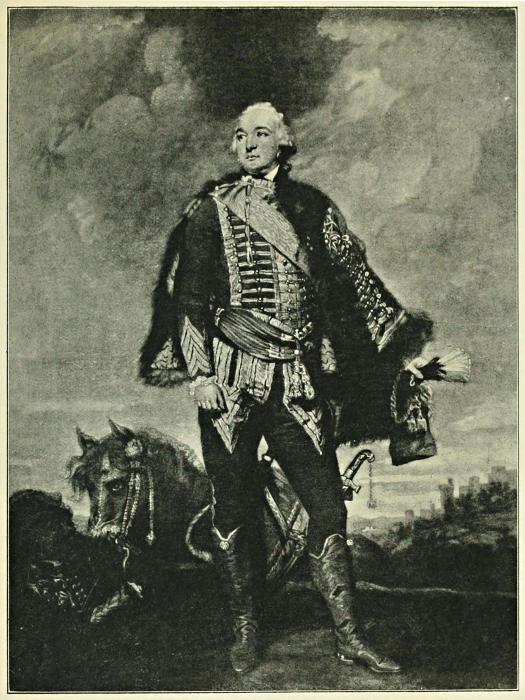
THE DUKE OF ORLEANS
The Marquess of B. had given them a similar invitation, and had offered them the use of a country house a short distance from London.
The Duc de Montpensier, filled with gratitude, was so greatly attached to him that he had himself carried to him just before his death, saying that he must go to give an eternal farewell to his best friend.
This Prince having died of consumption at the age of thirty-two, the unfortunate Comte de Beaujolais, already attacked by the same disease, was taken by his elder brother to a milder climate, and died at Malta during his twenty-eighth year.
On his return to England, the present Duke applied once more to Mr. C. and the Marquess of B. and obtained fresh favours and assistance, to supply, as he said, the needs of his mother and sister.
A short time after the Restoration, the Marchioness being in Paris, he went to see her, thanked her for all her good offices, vowed eternal gratitude to her and pressed her to go to spend a few days at Neuilly. Her health prevented her from yielding to his gracious entreaties or those of the Duchess, who also showed her great kindness; but from that time there began a very friendly and almost fraternal correspondence between the Duke and my friend, which was interrupted only by the sending of the letter concerning me.
I could easily explain to my friend the cause of this silence, by telling her of all that had happened since I had had the happiness of seeing her.
The enormous expenses I had incurred had exhausted my funds, and I asked her to be so good as to advance me something.
At first she refused, pleading that her intimacy with the Duke would not allow her to provide weapons against him; but my arguments, and still more her own love for me, little by little convinced her, and she ended by lending me the sum I needed.
With scrupulous delicacy she informed my adversary of this, assuring him that it was solely to give me the power of paying off my old debts and not with the intention of helping me to make war on him.
Instead of a direct answer to so expansive a confidence, a thousand tortuous ways were taken to convince my friend that my claims were nothing but a tissue of lies, and everything possible was done to deprive me of her affection.
But her never-failing answer was: “Let her ideas be true or false, my heart will always be with one whom I love like another self.”
As soon as I had somewhat recovered, I went to Genoa, so as to be more within reach of news from France, whither I had made up my mind to send a certain Chevalier Montara whom a lady in Lucca had described as being a very clever man. I gave him my instructions and £300 sterling, for the journey as well as for the investigations he would have to make, and ordered him to submit the whole thing to his Majesty Louis XVIII.
His first letters were very encouraging, and they came pretty frequently; soon they became rarer and rarer; he tried to arouse fears in me; he pleaded serious illness, squandered my money, and, in fact, did nothing for me.
About this time, I was reminded that the Duc de Bourbon-Condé, during his misfortunes, had received much civility from Lord Newborough’s relations. Delighted at this reminiscence, I thought I might take the liberty of writing a very respectful and touching letter to His Highness, begging him to give me his advice.
My letter was delivered, opened, and having been looked at, was ignominiously returned to the person who had undertaken to take it.
The secretary who gave it back to him censured my action, accused me of audacity, and treated my business as a chimerical delusion.
After this disappointment I was advised to have recourse to Madame la Dauphine.
A literary man of high reputation undertook to draw up my petition after the most proper fashion; but when he came to read it to me, I must confess that it seemed to me far from likely to convince any one of the truth, especially at a time so fertile in impostors.
Despite the doubts which I thought might be caused by my ignorance of a language that was still almost unknown to me, I decided to have it presented by a gentleman residing in Paris, who, at the end of three weeks wrote that he must not again be given such commissions; that he had been asked several questions he could not answer, and that he had found himself, without any manner of doubt, under the special observance of the police.
This fresh worry was all the more trying since my stay in Genoa was disturbed by a multitude of other anxieties.
Not content with distributing copies of the judgment given at Faenza, I had an article inserted in a newspaper[8] containing a summary of my case, in which I asked for fresh information concerning my father and mother, whom I designated only by the initial J.
No one could believe that they were simply nobles; everybody was whispering august names; but as the Orleans family was allied with all the reigning families of Italy, fear seized upon all hearts and closed all lips.
Only one man made his appearance: a former magistrate who had known old Chiappini well.
As a matter of fact, his evidence would have been much more useful to me before the verdict given in my favour, but at least it will serve to confirm it. Let us listen to it.
“I, the undersigned, certify and declare what follows, on my soul and conscience—
“In the year 1808, having sent in my resignation of the post of substitute of the Attorney-General in the Criminal Court of the department called that of the Apennines, I retired to Florence, where I lived until the month of April 1813, the date of my departure for Rome. At the beginning of my residence in the first of these two towns, I made the acquaintance of Lorenzo Chiappini, with whom I sometimes dined at the house of the doctor, Pietro Salvi. In 1810, I met him, with other Florentines, in the immense house of the old Chartreuse, where, like me, he had hired rooms to spend the summer in. The more we saw of each other the more intimate and familiar became our intercourse, especially on his side.
“Very soon he told me the most minute details of a journey he had made to London to see one of his daughters, married, he said, to a rich English lord who had fallen in love with her on hearing her sing in a theatre.
“He could not say enough about the splendour of his son-in-law’s house, nor of the welcome he had received there; told me some coarse stories about Great Britain; described the manners of the inhabitants; constantly repeated that all his happiness lay in that darling daughter, and assured me that he would give the world to procure the pleasure of seeing her again.
“The next year he was attacked by some slight malady, and one day, as I went to see him pretty frequently, he confessed to me that he had a great burden on his conscience. I tried in vain to make him listen to some words of comfort; nothing could cure his melancholy.
“Another time, the talk having turned on the same subject, I said that if he had not been guilty of theft—a sin God does not pardon without restitution—all else could be expiated by repentance. At that he made a clean breast of everything, and confided to me that, having been in his youth keeper of the prisons at Modigliana, he exchanged his firstborn son for the daughter of a foreign nobleman, and that it was that daughter who was married in London, and that he should feel never-ending regret for so having helped to deprive her of her birthright.
“Having strongly advised him to reveal such a secret to his generous benefactress, who must most certainly rejoice over it because of the honour and profit it would bring her, he said that he had already thought of doing so, and only wanted to avoid any sort of fuss during his life; but he should manage so that everything should be discovered after his death. He added that this seemed sufficient reparation due to the lady, considering her present condition of grandeur and opulence.
“He talked after the same fashion to me on several other occasions, and I always found him fixed in that resolve.
“This is what I heard from Chiappini’s own lips, and I am prepared to confirm it, if necessary, legally and by oath.
“In testimony whereof,
“Louis Courtilly,
“Lawyer.”
This very clear and precise deposition was far from compensating me for all the disagreeables brought upon me by my harmless advertisements.
Researches made in the Public Archives of the town I was living in brought to light almost nothing about the year 1773; the Keeper of the Records declared that the books relating to that period had been put together in a place I must not enter without special permission, and where, he told me, memorandums of great importance were kept.
But it was impossible to get anything out of the Governor, who was my sworn enemy.
The day after the appearance of my article he had severely reprimanded the journalist I had employed.
He often gave balls, concerts and entertainments of all kinds, to which all the English ladies, from those of high rank down to the wives of the smallest tradespeople, were invited; I alone was deprived of this immense honour.
One day he went so far as to express to my banker the greatest desire for my speedy departure. “I am ordered,” he said, “to keep the strictest watch over her.”
My banker replying that he could not understand the reason of it, since all I was doing was in order to discover a Comte and Comtesse Joinville—
“Yes,” said this officious governor; “but it isn’t very easy to prove that this Count and Countess are no other than the former Duke and Duchess of Chartres?”
But that was not all.
Fifteen days after the appearance of my article in the Gazetta di Genova, my ex-brother, the advocate Chiappini, sent me by post a so-called answer he had had put into the public papers, boasting of having obtained the permission of the Government. Adorned with all the flowers of speech an infamous pen could indite, such a libel was well worthy of its author.
Although my reputation stood immeasurably high above his insults, at first I wanted to answer them.
The first printer I spoke to refused his services, under the pretext that he had received orders in the matter; I had successive recourse to several others, who all likewise put me off. Not only at Genoa, but at Florence, Bologna and Alessandria—everywhere they had been threatened with severe penalties in case of disobedience.
Tomaso Chiappini had not confined himself to spreading atrocious calumnies against me; I heard that he was accusing my witnesses of imposture, and that several of them, alarmed by the sinister rumours he circulated, and believing themselves irretrievably ruined, were cursing me and declaring that I had involved them in the greatest trouble.
Amongst these was the Count Borghi, who henceforth became once more my enemy.
The whole country was topsy-turvy; but all these intrigues, all these diabolical plots fell to the ground.
I wrote to the Bishop of Faenza, who could not get over his astonishment, but exhorted me to suspend judgment on the persons whose perfidious inconstancy I was denouncing, and assured me that the truth was too well established for anything henceforth to shake it.
His letter, which I carefully treasure, is dated July 20, 1826.
If that of this venerable prelate, illustrious by his learning and formerly Patriarch of Venice, was flattering and an honour, another, which I received from the Cape of Good Hope, was as vile and filthy.
It can easily be guessed it was the work of that other Chiappini to whom Lord Newborough had shown so much kindness.
The most malignant rage was manifest through the whole of it, beneath the hideous hues of expressions as indescribably ignoble as they were ridiculous.
To do full justice to it, it would doubtless be enough to let it be seen as it is; but I should fear to disgust my readers.
V
I go to Nice—Rudeness of the Governor—Letter from Alquier-Caze—My Precautions—Demands, and Remittances—Second Journey to Paris—Conversation—A Gouty Colonel—Expenses—Return to Nice—Letters from my Husband—His Arrival—That of the Marchioness of B.—A Transient Happiness.
Being so ill-treated at Genoa, and also wishing to be still nearer to France, in the month of September 1825, with my son, his tutor and my servants, I left and went to live in a country house I had rented near the gates of Nice, where I was unlucky enough to come across a governor still stiffer and ruder than that of the town I had just left.
But what could so many unjust proceedings do but confirm me still more in the justice of my high claims! For it was easy enough for me to see that they were dictated by a powerful hand, and I could not believe that that kind of enemy would fight mere phantoms.
A little before this I had received a letter from Paris, written by a certain Alquier-Caze, who introduced himself and offered me his services.
“I have been well posted up in the case,” he wrote; “I know its delicacy, I see its difficulties; but I don’t feel any qualms about undertaking it; and I even count on a speedy success if you will deign to honour me with your complete confidence.”
Afraid of falling again into the hands of a rogue, I sent him a very guarded and cautious letter; but he was not at all put out by it, and replied in these terms—
“Madame la Baronne, the position you are in is such as to cause you great anxiety. The importance of the matter that fills your mind; the uncertainty of its issue; the base machinations that perfidy has employed against you; the kind of fatality that seems to pursue you, all combine to give birth to endless doubts and apprehensions. But, believe me, Madame, I feel the strongest conviction that, by my hands, Heaven will give you the final victory over your enemies. Yes, that victory will be my work. Up to now you have been deceived; up to now I have met with nothing but ingratitude for my services; Fate keeps in reserve for each of us an equally pleasant event; for you, that of seeing your confidence justified by my vigorous efforts; for me, that of meeting at last with a noble expression of gratitude. No, the soul of a Catalan is not an ordinary soul, as the future will prove to you better than anything I could say,” etc.
The confident warmth of this shook me. I had some inquiries made about him, and as I was told he was a young lawyer of good repute, bold and clever, I decided to confide my documents to him.
He wrote soon, declaring that he had already made some valuable discoveries, intimating at the same time that the lure of gain was absolutely necessary for obtaining good evidence.
I at once set about sending off a considerable sum to him, which was but the prelude to the many other such disbursements the necessity of which he was continually urging.
This had gone on for several months, when, some weeks after my arrival at Nice, I received a fresh letter from Caze, telling me that he was beginning the attack at the reopening of the Courts; that he greatly wished to confer with me beforehand, and urging me so strongly to come to Paris before the 1st of November, that I set out at once, taking with me my dear son and his tutor.
In spite of all the haste we made, we could not manage to arrive before the 2nd of November. I took a suite of rooms in a large hotel in the Place Vendôme, and not till two days later did I receive the first visit of my assiduous lawyer.
Compliments exchanged, this represents the substance of what passed between us—
“Have you got your husband’s authority, madame?” “No, monsieur.” “But that is a document without which we can do nothing.” “You ought to have warned me of that six months ago.” “I most sincerely beg your pardon for not having thought of it.” “It is very annoying to have taken so long and expensive a journey uselessly.” “Far from being useless, it was indispensable.” “I don’t see why.” “Wasn’t it necessary for us to arrange together what it would be best to attempt so as to ensure complete success?”
“That could have been done by writing, or after I had been furnished with the power-of-attorney.”
“Yes; but I was longing to tell you in person what I could not confide to paper.”
“What are these very important communications, then?” “I have succeeded in discovering that the very year of the exchange the Duc de Chartres, your father, was staying at Berne, under the name of the Comte de Joinville, in an inn the then landlady of which is still alive; and where he scandalized everybody by his profligate conduct. I believe I can get a certification of this from the local authorities. Another of my agents has informed me that the Marquise de Boucherolles, an old friend of your mother’s, testifies that that Princess was on bad terms with her supposed son, and often made mysterious remarks that are in perfect agreement with the facts of the case.
“The same agent spoke to me of a certain M. d’Echouards, who knows of the testimony of the late Madame Cambise to the effect that, on her death-bed, the Dowager suffered greatly from a troubled conscience. He told me, too, that the late mother-in-law of the Comte de Saillan was one of the travelling-party in 1773. Moreover, on this point I have three witnesses de visu, and am just about to procure three more still living.” “Will you be so very kind as to introduce them to me?” “Most willingly; but I shall still need a little more money to give them enough courage. That’s by far the best card to play, especially in Paris.”
Bewitched by his talk and his protestations, I opened my purse, and my poor pennies disappeared into that of my artful juggler, who, the next day, appeared once more, bringing with him a gouty old Colonel, who, almost before he got into the room, addressed me in the following words—
“As I am well acquainted with the family of the Baron de Sternberg, I want to help you as much as I possibly can. The judgments of men being always doubtful, you may perhaps fail in obtaining the justice you seem to expect from legal tribunals; but it would be quite easy for you, through my intervention, to arrive at a satisfactory settlement.”
Astonished at such a speech, I promptly exclaimed: “No, no; I would never consent to submit to such a disgrace.”
The Colonel replied—
“Still, madame, the plan I want to propose to you would undoubtedly be the wisest and the most advantageous for you. Will you live long enough to see the end of such a case? And how do you know that your children would have any desire to go on with it?”
To this my answer was still more concise, being couched in three words: “All or nothing!”
I left the room as soon as they were uttered, and declined to see my gouty old friend again, believing him to be a spy sent from my adversary.
Vainly I waited for the appearance of M. Alquier’s promised witnesses; there were always fresh excuses on his part, and renewed requests for money, which I was simple enough to grant. In less than a fortnight I had spent more than three thousand crowns.
Weary of such expenses and delays, I longed to return to Nice, where I arrived towards the end of the autumn. I had written to my husband, who, during the winter, sent me his very disappointing opinion. Instead of authorizing me to go to law, he advised attempting to come to some arrangement.
I seized my pen at once to tell him shortly that, desiring to die as I had lived, I could not compromise my honour.
Some months after, I received a second letter, in which he told me that, on the advice of our friend, Admiral Krusenstern,[9] he was coming to me, so as to endeavour to end the business in the best way possible.
He arrived towards the end of October, having stopped some time in Paris to make fresh investigations. While allowing that I had excellent grounds and very favourable chances, his constant refrain was: “We must try for an arrangement”; while mine was a vexed and endless repetition of: “All or nothing.”
His arrival was shortly followed by that of the Marchioness of B., who came from Lausanne.
She told me that the Duke of Orleans, while visiting that town, had not condescended even to ask news of her; adding that she quite understood that I was the innocent cause of this base ingratitude.
The house she took at Nice being next door to mine, we saw each other constantly; in fact, we were always together, and I can assert that that winter was the happiest time in my wretched existence; though even then I could not fully enjoy its consolations, because of my firm conviction that they would speedily change to bitter sufferings.
My presentiments were but too well verified; my friend, for her part, was obliged to go back to London, while the Baron, on his, announced his positive intention to send Edward to a public school!
VI
My Stay at Geneva—Correspondence of Alquier-Caze—M. Sparifico—Payment of the Lawyers—An Unlucky Meeting—Weakening of my Health—My Husband’s Exhortations—His Arrival with Driver-Cooper—Fatal Agreement—My Son’s Tutor.
In the middle of the year 1827, soon after the departure of my friend, we transported our household goods to Geneva, where was the school my husband had chosen for our young son; and his first care on our arrival was the carrying out of his barbarous plan.
Unable to make up my mind quite to lose sight of the dear child who, since his birth, had never left me, I hired a house close to his. I was able to go to see him every day, to lavish love upon him, and he himself came to see me twice a week and spent the whole of Sunday with me.
I used to invite several of his school-fellows for the evening, providing all sorts of refreshments for them, and letting them amuse themselves just as they pleased; and their childish games were a real relaxation to me.
Moreover, my dear Marchioness of B. had kindly given me several agreeable introductions, so that in my new home I found something of the pleasure I had enjoyed at Nice.
But this new tranquillity could not last.
For some time past I had noticed that d’Alquier-Caze’s communications were neither so frequent nor so hopeful as they had been. Having mentioned this to him, he answered me by a lengthy enumeration of his supposed services. Another time he wrote that he was going to Nancy to question an old person he had been told of from whose evidence he expected the happiest results.
On another occasion he gave me an account of a conversation he professed to have had with a Minister of his most Christian Majesty.
“The first attempt was to frighten me,” he said; “but my determined aspect speedily destroyed all hope of succeeding in that. Then discouragement was tried; I made a suitable reply. Every possible way of trying to make me speak was used; but I steadily kept myself within the limits of a wise discretion. ‘What do you want?’ I was asked. My answer was yours: ‘All or nothing.’ ‘You’ll ruin yourself.’ ‘I shall do my duty.’ ‘You had better give up such a chimerical business.’ ‘I possess the confidence of milady, and I cannot betray it.’ ‘You will never succeed.’ ‘We shall.’ ‘Every one regards your claims with supreme contempt.’ ‘That’s impossible!’ ‘They can’t conceive on what you found them.’ ‘Do you allow that the exchange took place?’ ‘Yes.’ ‘Then all that I have to do now is to prove the identity of its perpetrator with the too notorious Orleans.’ ‘Prove even its likelihood, if you can.’ ‘I shall prove its reality.’ ‘How?’ ‘We shall have writings and witnesses.’ ‘Well, we shall always be pleased to see you.’ ‘I shall come again.’ etc.”
Far from satisfied with all this talk, I constantly complained that, since the verdict given at Faenza, I had spent a great deal of money and was still about where I was then. To combat my reproaches he conceived the idea of writing me the extraordinary letter here given—
“You are angry with me, dear milady, are you not? You are both right and wrong. You are right, because in your situation nothing could be more natural than impatience; and wrong, because I am to be excused on account of all the trouble I am taking.
“There is a question I am about to submit to you, and to which you must give a definite answer.
“Certain proposals, in the form of advice, have been made to me in your interest. Would you be disposed—yes or no—to come to an arrangement if its terms were considerable pecuniary advantages to yourself? Please let me know at once. I won’t say more to-day, but that everything is going on well. Believe me, etc.”
What more was wanted to open my eyes and let me clearly see the crafty duplicity of my ill-advised rascal, who up to now had so piqued himself on the nobility of his sentiments?
Knowing in Paris a certain M. Sparifico, I begged him to tell me of some lawyer famous for his ability and still more for his integrity.
First he mentioned several, who, he said, dared not undertake my defence; and then he named others whom I knew to be devoted to my mortal enemy.
I was so disgusted with all these obstacles that I almost made up my mind to give up everything.
The Baron being obliged to go to the capital of France on his own affairs, I requested him to recover all the papers in Alquier-Caze’s possession, which he endeavoured to do; but could not manage till he had paid 200 francs to Maître Hennequin for a memorandum I had never seen; 550 francs to Maître Plé for work of which I had never heard, and 1000 francs to Caze himself for having cheated me out of many times as much.
About this time a certain Henry Driver-Cooper, who, after ruining his creditors in England, had taken refuge on the Continent so as to increase his iniquitous fortune, had just exchanged his modest designation of hop-merchant for the pompous title of jurisconsult, which he thought he had the right to share with Maître Dupin, considering that he had entrusted to him the celebrated Stacpoole case;[10] wherefore he considered that he also ought to share in the glory of its success; since, without him, Maître Dupin would not have intervened. He had his Doctor’s Diploma printed on his visiting-cards, and went from house to house boasting of his triumph.
But he took good care not to add that Maître Dupin himself, thinking but little of his services, had reduced the fee he claimed by a thirty-second!
After this blow the disconsolate hop-merchant, or, if you like, the saddened jurisconsult, was on the look-out for a favourable opportunity. He owned in the neighbourhood of Paris a so-called château, which he had bought in better days, and he was trying to find an obliging tenant who would pay him a big rent for it while still leaving him in possession and even keeping him during the whole duration of the lease.
I was to be this compassionate person; he had foreseen it from the moment that he had first chanced to meet my husband, whom by dexterous suggestions he drew into his net, and negotiations were entered into.
Meanwhile, the damp climate of Geneva having given me a very bad cold, which, as usual, had at once settled on my chest, my friends advised me to take a house in the country where I could breathe more healthy air. I had chosen one, called Coligny, looking over the lake and magnificently situated, when the Baron, writing to me about his lucky discovery, asked my opinion of it.
In spite of his youth, my dear son begged me not to forget how many times I had allowed myself to be caught in the snares of impostors. In consequence I answered evasively, and principally to tell my husband of my resolve to change my house.
I soon received a second letter in which he implored me not to carry out my intention, explained still more fully the conditions laid down by my deliverer, and told me that one of them was that I must live in his house during the whole course of the trial.
This time my answer was decided.
“I will consent,” I said, “to combine with your agent in pecuniary matters if he will pay half the costs and undertake to push on the business briskly. As to the plan for my living in his house, you may give that up at once; for I intend to take the one I have in view here from to-morrow, and nothing will induce me to leave my dear Edward.”
In fact, I signed the agreement and moved to Coligny.
I was hardly settled there when I had a third letter from the Baron, expressing very great displeasure and even reproving me in a way. He spoke enthusiastically of Cooper, extolling his courtesy, enlarging on his ability, and endeavouring above all to convince me that if I did not take advantage of his generous offer I might give up all my hopes; that I should not find any French avocat willing to fight against the powerful Colossus, reputed the first Prince of the Royal Blood, and that the great benefit to my son claimed the sacrifice, however painful to my heart, of a separation destined to procure for him the most brilliant of futures.
That last argument moved and shook me; it was so cleverly put that I consented to see our charlatan. But the clever swindler, not wishing to make it seem that he had come on his own initiative to see me in Switzerland, got a model of the flattering invitation I was to give him sent to me.
My exact copy having reached him, he and my husband arrived.
He left no stone unturned to dazzle our eyes with his cunning promises, and, as soon as he believed us both well prepared, he persuaded us to go to the house of Voltaire at Ferney.
“It shall be on the very table at which the great man wrote his immortal works that our agreement shall be signed; his shade shall preside there, and his presence be the pledge of the most glorious success.”
It was pure farce, I own, but what is easier than to inflame minds already under the spell? Could we haggle when the grandeurs and riches we had a right to claim were, so to speak, at our discretion?
Cooper was able to take advantage of our weakness in the most infamous fashion.
Sitting unmoved in this castle-in-the-air of his own building, caring for nothing but other people’s money, he made us affix our signatures to two deeds, the outcome of his crafty cupidity.
By the first he appointed himself my steward; as such he was, during the whole course of the trial, to lodge and keep me; to furnish me with horses, carriages, and servants, in return for an annual payment of 25,000 francs, payable in advance.
Having made his calculations correctly, by the second, which he had taken care to bring ready drawn-up and in French so uncouth that it was difficult to understand it, he created himself the absolute dispenser of larger sums.
He was to proceed with the business which was my principal object if he thought fit, and in the way he thought best. The costs were to be divided, and, in the case of success, the profits also.
“Perhaps you have not by you the sum you ought to pay me. Well, give me bills.”
And so I did to the amount of £1,150 sterling.
After this delightful expedition, he was ready to return to Paris, begging me to follow quickly.
Although at school my son had all the necessary masters, I had up to now kept on his tutor, called Ragazzini, a native of Tredozzio, who had been recommended to me at Florence as a clever man, and had taken some trouble in the Faenza business.
I wished to discharge him at this time in consequence of many defects he could no longer keep hidden; but Cooper and the Baron were against it, saying that the man, knowing Italy perfectly, might be of the greatest use to us; so, though very reluctantly, I gave way to their urgent representations; and it was arranged that he was to accompany me and my husband.
VII
Painful Separation—Arrival at Bellevue—Powers given to Cooper—His Swindling—The Ills he made me suffer—Fresh Attempts of Alquier-Caze—Distraint on my Effects—My Move to the Hôtel Britannique—Letters from my Husband and my Son—My Grief and my Resolves.
Immediately after Cooper’s departure I began to prepare. The owner of Coligny was inexorable; I had to pay him the whole year’s rent.
But this loss was very small compared with another much greater one. It would be vain to try to describe how my maternal heart was torn, when I thought I was forsaking my dear son. How difficult it was, what restraint I had to use, what efforts to make, not to break down when the dear boy asked me with sorrowful and almost prophetic voice: “Maman, Maman, what are you going to do?”
And all I could say in answer was: “My darling, I am going to work for the good of you and your dear brothers.”
Before the fatal day he spent two with me, and his loving caresses were sweet but incurable wounds to my soul.
No—I will not attempt to describe that cruel parting; I will not speak of it. I will only say that, absorbed in my own thoughts, despite the numerous requests to do so, I could not bear once to look at the sublime and delightful beauties of nature, which had always had so great a charm for me.
After a journey of four days we passed through Paris, and arrived at Bellevue near Meudon.
One of the chief reasons that had induced me to go to the scene of action was the inclination my husband and his confidant had shown to try the plan of compromise with my adversary; and I was quite resolved to make an eternal protest against that kind of baseness. But once on the spot, I thought there was nothing to fear. Deeds, papers, documents, got together with difficulty by my constant care—all were handed over without misgiving, and the full powers demanded by Cooper at once given him.
But that was not enough; he must seize my whole fortune. My income was now reduced to £1,700 sterling a year; he had already taken £1000 for the rent of the house; but he could not be satisfied till he got hold of the £700 I still had to dispose of.
To this end, he got together some infamous assistants, with whom he worked upon the Baron’s mind with shameless cunning, and they came all together to propose my giving the rogue fresh powers to raise my funds in England, under pretext of the enormous expenses my case would entail.
No more powerful motive could have been offered me; after a few short explanations, I signed a paper, which I had not even been asked to read.
So now Cooper was absolute master of my property; there was nothing more for him to ask for: he had got it all.
And now the important trial for which I had already made such great sacrifices would surely make mighty strides towards the desired event?
By no means; Cooper isn’t even giving it a thought; anyhow there is nothing to prove that he is. But he is always talking to me in a hopeful strain, so important is it to him to keep his post as director of a sham piece of work which, without care or trouble, ought to bring him in 45,000 francs a year!
But the agreement as to rent and stewardship was very ill carried out; for several weeks carriage, horses, servants could not be found; our rooms lacked the most necessary pieces of furniture, and my table displayed such parsimony that I should infallibly have died of hunger if I had not taken care to get in from outside something to live upon.
I might have borne with this economical diet patiently if I could have got any satisfaction about the great business; but nothing was got ready, nothing begun. At last I saw that I was the victim of the basest imposture; and when I reflected on all the deeds my weakness had allowed to be extorted from me, I realized all the horror of my position.
Forthwith I burst into bitter complaints. Cooper, in a rage, threw away his mask, and might have said—
“C’est à vous de sortir, vous qui parlez en maître; La maison m’appartient.…”
And truly, my own agreement in his hand, he ruled like a despot over the house he had let to me for 25,000 francs; and to make me feel the full weight of his authority, he redoubled his economies, kept under lock and key even the garden seeds which I was no longer allowed to gather for my birds; spoke haughtily to me; poured out abuse on me, and, in a sort of way, kept me under close surveillance.
He had then his mother and sister with him, two veritable furies who joined in all his excesses; and as on every occasion they gave way to their fiery passions, several conflicts took place.
No—I can never understand how my husband could restrain himself under such circumstances!
While I was being thus tormented by my new swindler, Alquier-Caze did not lose sight of me, and still speculating brilliantly on my easy credulity, he endeavoured to approach me once more through this very specious preamble.
“Milady, no doubt you will be astonished at receiving a letter from me; this is what has induced me to write to you.
“This morning a person I do not know, and who would not tell me his name, came to see me. He told me where you are living, and talked a great deal about your case. I cannot and will not trust to paper the communications he made me. They are of importance to you and your position.
“Although I cannot feel much flattered that, being in this country, you have not come to see one who took so much trouble for you, I can never cease to participate in your troubles, and I believe it will be in your interest to tell you what I have learnt.
“I am free only on Sunday. If you think it well for me to come and see you, answer at once, and the day after to-morrow I will be with you.
“Please be prudent and tell no one of my letter, etc.”
Curiosity to see him rather than any hope of hearing anything useful decided me to allow him to come. He came, and his constrained manner and ambiguous language soon betraying to me his deceitful plot, I treated him with icy coldness, and made him clearly see that for the future I would have nothing more to do with him. I heard afterwards that his numerous misdeeds had forced him to leave France.
In the meantime I had written to England with orders that the last power of attorney I had so rashly given to the cheat Cooper should not be honoured.
On the first hint of this being learned by my odious agent, he flew into a frightful rage; loaded me with insults, threatened me with his wrath, and put in a distraint on all my effects, to which I responded by a revocation of all the powers I had given him.
We could no longer live with such a scoundrel; so we left Meudon on September 1, 1828, and established ourselves in the Hôtel Britannique.
I need hardly say that on the day we left we had to submit to the grossest of insults in the shape of a ridiculous and minute examination to make sure, as they said, that we had committed no theft.
As I pretty often reproached the Baron for having caused me so many discomforts, I thought I saw that my words had a great effect on him, and his mind seemed much upset. On the fourth day after our change of residence, I saw him go out with a paper in his hand, and asking him when he would be back, he said: “In an hour’s time.”
While waiting, I went for a walk with my son’s former tutor, and on getting back, my first question to the portress was whether my husband had come in.
As she answered in the negative, I ordered dinner to be put off; but the Baron did not return. I began to feel great anxiety, fearing that something had happened to him; but at eight o’clock in the evening I received a packet containing a power of attorney for Ragazzini and a letter for me in these words—
“My dear Wife,
“I am distressed at having to leave you just now; but business I can’t put off longer calls me to Russia. I beg your pardon for not having told you sooner; but I acted in this way so as to avoid the harrowing scenes that would have followed. My agitation is so great that I can say nothing to you but that my conscience does not accuse me of all the wrongs you impute to me. I have told M. Ragazzini to act for you against Driver-Cooper. Some day, I hope, we shall meet again under a more lucky star than the present one. I participate in all your troubles, but I cannot help you. Adieu; tout à vous.
“B. de Sternberg.”
It will well be believed that I cannot describe the grief I felt at finding myself forsaken by him who had so disastrously involved me in so grievous a strife. But his pitiless hand was to strike me a still harder blow.
About the end of the week I received the following letter—
“My dearest Maman,
“My father has just arrived in Geneva, and intends to start for Russia to-morrow with me. I already hear your reproaches; but what can I do?
“Forgive your loving son, and don’t think him ungrateful; for I am ready to put my head in the fire if that would be any good to you.
“But what would become of me if I did not obey my father’s orders? Don’t be afraid; you will always have the whole of my filial love.
“How cruel it is to tear me in this fashion from my darling mother! But what can be done? If you had stayed at Coligny, and if you had listened to my advice, this would not have happened.
“I am hurried. Be comforted; you shall soon have news of me, and believe me always the most loving of your sons.
“Edward Sternberg.”
What I felt on reading this was not grief; it was despair. For several days I gave myself up completely to the most acute anguish; at times I wanted to start for Russia; at others I resolved to let myself die.
But at last real maternal love triumphed over affliction, and I realized that it was necessary for the good of my children both to go on living and to remain in France.
Taking fresh courage, I formed the unshakable resolution to suffer and face everything, that I might gain a victory to the advantage and honour of those who were so dear to me in this world.
VIII
Cooper’s Rage—Recourse to the Law—First Result of Arbitration—M. Huré—My Letters to Mme. de Genlis—Visit of Saint-Aubin—His Journey—Emissary from Mme. de Genlis—Letters from Saint-Aubin—His Return—Realized Fears—Mr. Mills’s Tricks—My Correspondence with the English Ambassador.
While I was lamenting over the unexpected departure of my husband and son, Driver-Cooper, for his part, was loudly complaining, and wanting to force me to go back to his house, which he still kept on calling his château at Bellevue, his beautiful château of Colonnes.
Maintaining that, as I had been, and was still, his boarder, he said, the usual meals were being served every day for me and my people.
He was eating them by himself—without much trouble, probably!—but still protested, none the less, that I ought to pay him 25,000 francs a year for dinners I refused to eat; and talked a lot of other nonsense.
I wanted to put an end to these impudent molestations, and, as a clause in each of our two famous Ferney agreements submitted any difficulty that might arise to arbitrators, amicably chosen by us, or, in default of that, by the Tribunals of the Seine, I had recourse to the last means.
The arbitrators were appointed, and I explained to them the clever way in which the perfidious Cooper had blinded me, as well as his iniquitous fashion of fulfilling his obligations; I especially brought to their notice that, by the terms of the contract, his lease was to last only for the time taken up by my great affair; and that this had legally come to an end since my revocation of the powers I had given him.
The first decision of the arbitrators, given on September 30, 1828, was in my favour, and annulled the agreement as to the letting of the manoir of Bellevue at the rent of 25,000 francs; but, to my great surprise, I found myself sentenced to pay 16,000 of it as a compensation for the time I had spent in that wretched hole and for other expenses I knew nothing about for the most part; an indispensable condition for obtaining the restitution of my effects.
When I had done this, I fixed a day for them to be fetched, and the holder undertook to give them up.
Fresh matter for astonishment.
My servant presents himself and is informed that the removal is opposed at the request of M. Huré, furniture-dealer, in whose favour the honest Cooper had backed my bills.
Luckily for me, the President suspected some intrigue and ordered a severe examination of the books and registers of the opposer, who, less disreputable than his corrupter and not daring to play his part to the end, frankly owned to his odious rôle of catspaw.
The Court, having condemned him in costs, sent back my claim for the return of my bills for the judgment of the same arbitrators who were to pronounce as to the validity of the agreement in virtue of which I had consented to them. But I had to endure such delays that my poor belongings were not returned to me till after six months of waiting,[11] and my old villain raised so many quibbles and difficulties that the discussions relating to the second arbitration lasted a year.