II
Gregory Yarros translation
I
THE few days which I passed away from home and my first glimpse of the city gave rise to very definite ideas in my mind: that there was a better life than ours, and that this better life could be found only in a large city, in those tall buildings and well-lighted streets. These thoughts pursued me wherever I went and whatever I did. My mother beat me; she burned the books which I read by stealth—she was illiterate and considered reading a waste of time—but I bravely bore the persecution of my mother and elder sister, and nothing could kill my desire to learn about that life. I could hardly read on week-days, because the work tired me out to such an extent that I used to fall fast asleep early in the evening, but on Saturdays I spent the whole day reading. I called my girl-friends together and we locked ourselves in the barn. I read to them the “Four Brothers,” the only book I knew well, and which I 35could almost recite from memory. I also shared with them any ideas which I picked up in my association with Hannah.
My brother Wolf and I resorted to all sorts of tricks in order to gain more time for reading. He liked books of travel and romance. After reading a book of this kind, he imagined himself the hero and acted accordingly.
On Friday evening, for economy’s sake, mother poured little kerosene into the lamp. It was considered a great sin to put out the light on that evening, and the lamp had to burn itself out. Wolf and I waited until all fell asleep. Then we poured in more kerosene, seated ourselves so that the light should not be seen, and read till late at night. No one in the house knew of our scheme. But once my father got up quite unexpectedly and saw us seated on the table with books in our hands. Without saying anything about the dreadful sin we had committed, he remarked:
“You will ruin your eyes reading by such a light. You had better go to sleep.”
We complied, having left off at the most interesting passage.
36
II
One night we were all awakened by the neighing and tramping of horses near our house. We ran to the windows and saw about a dozen mounted gendarmes and police riding into our yard.
“What can this mean?” asked my father, with a tremble in his voice.
I immediately ran to the back of the stove and snatched a bundle of pamphlets from under it. These were forbidden works given to me by Hannah for safe keeping. I pressed them to my bosom. I was sure that the gendarmes had come to take the pamphlets away from me, and was ready to defend them with all my strength.
“What have you there in that bundle?” my father asked me.
“Books.”
“Give them to me. I will hide them.”
Father put the pamphlets in his coat-pocket and looked again out of the window.
“They have gone,” he said, “but their horses are tied in our yard.”
In about an hour the gendarmes returned, mounted their horses and galloped away without 37going into our house. When they had gone, father took my bundle of pamphlets out in the field, back of our kitchen-garden, and buried them deep in the ground.
On the following morning we learned that the gendarmes had arrested the son of the synagogue president, who shortly before had come from Vilna, for his connection with a secret organization. This event kept our village in a state of turmoil and excitement for several months. My mother, who repeatedly told my father that I would become a “nihilist,” that I was keeping company with “nihilists,” now felt perfectly convinced that she was right. She began to watch all my movements. The persecution to which I was subjected for my reading and my frequent excursions to town became still more severe.
One day when father and I remained alone he said to me:
“Maria, you must be a good girl. I know that you will not do anything wrong. But you had better give those books back to the people from whom you got them. They must not be kept in the house.”
“Papa, dear Papa,” I began excitedly, “let me go to a large city. I want to study and become—” 38Here I stopped, as I did not know myself what I wanted to become. Father looked at me with his kind, bright eyes, and stroked my head. “I cannot bear to see our poverty any longer,” I continued. “I will go and learn how we might live better. You will see what a learned girl I shall return. Then we shall not be poor any more.”
Father paced up and down the room, listening to me in thoughtful silence.
“You have an uncle at Odessa. He is a good and learned man. I shall write to him about you and, if he agrees, then I will send you to Odessa. He is my favorite brother,” father added, “and to him I will trust my child. But you must be a good girl and obey him.”
The news that Mordecai’s daughter Maria was going to Odessa spread like wild-fire; our house was constantly filled with women. My mother showed them the long brown dress—my first long dress—which was being made for the occasion, and also three pillows. Three pillows and a feather-bed were the traditional part of a girl’s dowry.
“Although she is yet very young,” mother remarked to every new-comer, “who can tell? Maybe she will not want to return home so soon, 41and will grow up there, and find her happiness there: the city is a large one.”
The train was leaving at four o’clock in the afternoon, but I was ready early in the morning. I put on my new brown dress, and tied a red ribbon in my hair. The three pillows, a few coarse towels—the work of my mother—and a piece of homespun linen were packed in a large valise, and my preparations for the journey ended.
With a heavy heart I walked about the field and forest, bidding good-by to every nook, to every little shrub along the paths. “Will I ever see you again?” I thought, looking at the green meadows.
All went to the railroad station at Smorgon to see me off: My parents, my brothers and sisters, our neighbors, and even strangers. Hannah, too, came and brought me a letter to one of her friends at Odessa.
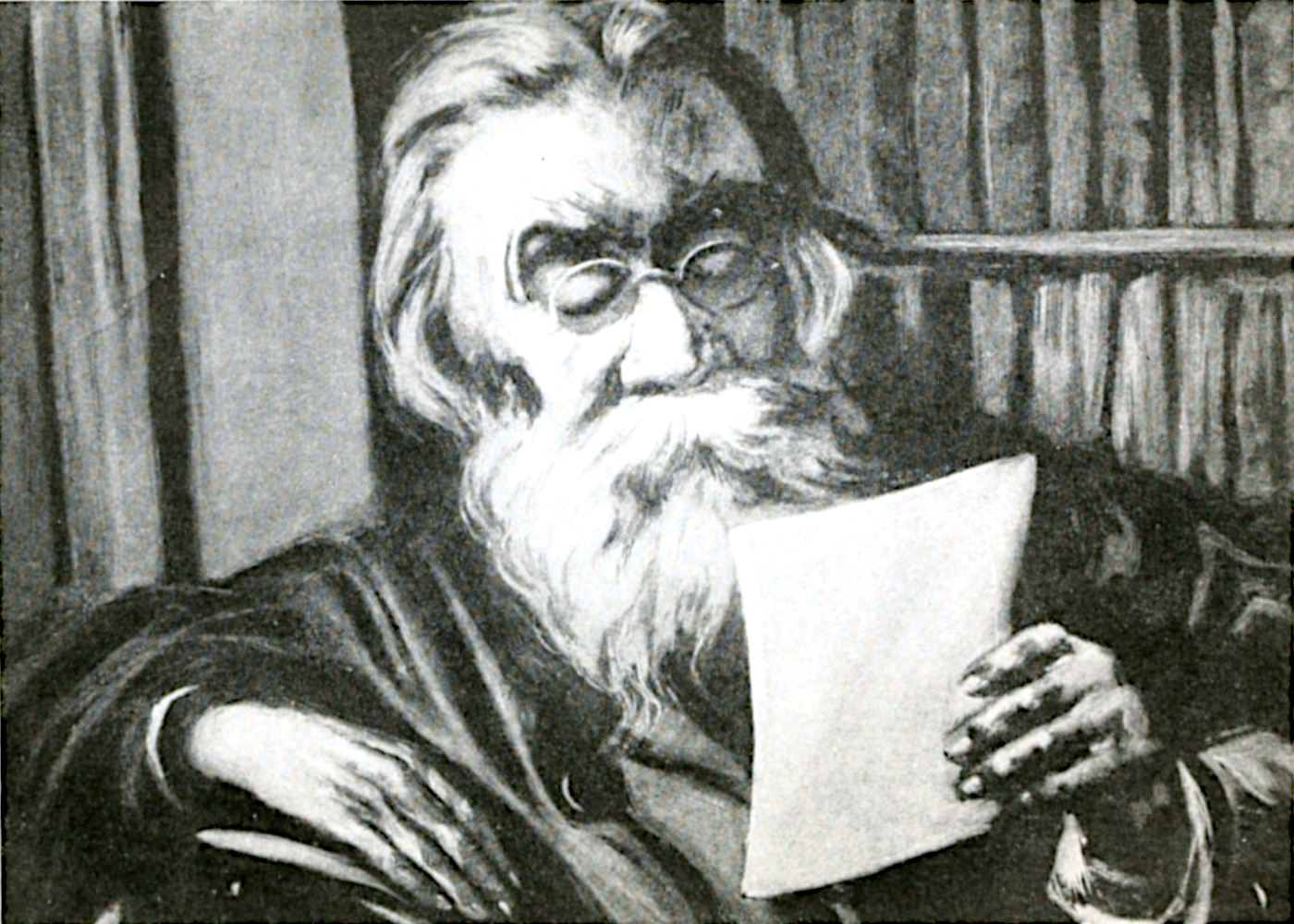
PETER LAVROVICH LAVROFF Scientist and philosopher. Born 1823, sentenced in 1867 to exile in Siberia, escaped, lived in Europe, died 1900
When father was bidding me good-by, he said:
“I believe, Maria, that you will be happy.”
My mother wept, and kissed me a long time. My elder brother Noah, who was home on leave of absence,—he was serving in the army—gave me his last fifty kopecks.
At last the third bell rang, and the train 42slowly pulled out. Soon everything disappeared in a cloud of smoke. Seeing nothing but strange faces around me, I sat down in a corner and cried bitterly.
On the third day I arrived in Odessa. When I went out of the station and saw the long line of izvoshchiks[4] with their shining top hats, my heart filled with gladness. “Everybody dresses so nicely here,” I thought.
I approached one of them and said:
“Please take me to my uncle, Mr. Sukloff.”
“Sure, Miss,” he replied, with a twinkle in his eye. “Got his address?”
I was rather surprised that he did not know where my uncle lived. I took out of my dress pocket a slip of paper and handed it to him.
“All right, Miss,” he said, and with a motion of the hand invited me to climb into his carriage. When we started, he asked me where I came from. I told him why I had come to Odessa and he, turning sideways in his seat and listening to me, nodded his head approvingly.
After a long ride we stopped in front of an old four-story brick building.
“This is where your uncle lives,” the izvoshchik said.
43Disappointed, I stared at the dirty, weather-beaten structure. As I learned later, my uncle lived in the poorest section of the city, called Moldavanka.
I climbed three dark and filthy flights of stairs, followed by the izvoshchik carrying my valise. On the fourth floor I saw a card on one of the doors. It read: “Samuel Sukloff, Tutor.” I rang the bell. A man of above middle height, thin, with a long beard and sparkling eyes, opened the door. For a moment I thought it was my father, so greatly did this man resemble him. It was my uncle. He greeted me very warmly and, having paid the izvoshchik forty-five kopecks, led me into his apartment. My aunt and cousins surrounded me and regarded me with evident curiosity. Noticing that I was bareheaded, my aunt remarked:
“We must buy a hat for you.”
My uncle was a teacher of Russian at a Hebrew school. He earned sixty rubles a month. But notwithstanding this small salary, he managed to give his children—six sons and a daughter—a good education. One of his sons was a civil engineer, the others were attending the gymnasium. Of course, the children paid their own way through school, otherwise it 44would have been absolutely impossible. But their earnings were not regular, and often the whole family lived on those sixty rubles.
III
The secret society at Odessa, at the time I came there, in 1909, had gained a firm footing among the working population of the city. It was headed by Social Democrats. The work of a secret society at that time consisted chiefly in forming educational circles among the working people and in printing and distributing prohibited literature, chiefly proclamations. Their distribution was accomplished in many ways. Late at night, when all were fast asleep, dozens of young men and women posted them on lamp-posts, telegraph-poles, houses and fences. They scattered them in the streets where workmen passed on their way to their labor, and threw them into the yards surrounding the mills and factories. At the theaters, when the performance was at its height, showers of leaflets would fall from the gallery, from several parts simultaneously. It was a reign of paper terror, and the police were powerless against it. Before they could gather up and destroy the proclamations, the public read these uncensored 45words with avidity, despite the governor’s order forbidding it under penalty of six months’ imprisonment. It was hardly necessary to say that the proclamations bitterly assailed the autocratic régime, explaining to the working-men that no changes in their economic condition were possible under a political system which forbids strikes, which denies the right of free speech and free assembly.
The letter which Hannah gave me when I was leaving home was to one of the leaders of the secret society, a Social Democrat. When I came to him and told him that I wanted to study, he immediately gave me a number of proclamations and promised to send somebody to teach me.
When I returned to my uncle’s I gave him and my cousins several proclamations. I was sure that my uncle, as well as my cousins, shared the views expressed in them, and how great was my astonishment when these people, whom I regarded as very learned, turned in horror from my secret leaflets.
“These things lead to Siberia,” they cried in chorus.
My uncle tore the proclamations across, and thus addressed himself to me:
46“This is not the village. Don’t look for the truth here, because it will get you into prison.”
I was at a loss how to understand my uncle’s words.
“What do you mean?” I said. “I left my father and my mother, I left my native village, and came here to learn the truth and you forbid me. How can I agree to such a thing?”
“You are a child yet and understand little in these matters,” he said. “I have grown sons, and you must not bring such things into my house. Besides, you came to me and I am responsible for your well-being. There is no one else here to look after you. We all like you and wish for your happiness. Although I am a poor man, I am willing to help you. But you must be very careful.”
A couple of days after this conversation a girl sent by the socialist leader came to call me to a secret meeting, which was held at night. Without saying anything to my uncle I went with her.
The circle to which I was thus admitted consisted of nine workers and one intelliguént who read political economy to them. I felt proud and happy at having been received into their gathering. This circle, in later days, played an 47important part in the revolutionary movement at Odessa.
It was very late when I came home from the meeting. My uncle was not yet asleep and evidently waiting for me.
“Where have you been?” he asked me. I told him everything.
“You must not have anything to do with those people,” he said. “And if you go on like this, I shall be forced to send you back home.”
I found myself in a very difficult position. I could not renounce my books and the people who taught me, but, on the other hand, I did not want to go back home, not having learned anything. For several days I went about undecided what course to take. Finally I found a way out of the difficulty: I decided to leave my uncle’s house. I told this plan to one of the girl members of our circle, and she suggested that I come and stay with her, promising to find work for me at the factory where she was employed. That very day I secretly removed some of my things from my uncle’s house and went to live with the girl.
48
IV
The candy factory of “Krakhmalnikoff Brothers,” where my friend was employed, had several departments, and work was found for me in the “wrapping department.” Several hundred girls were engaged there in putting candy into ready-cut pieces of paper. The work was very simple, and after a couple of hours I learned to do it.
Toward the end of the day the tips of my fingers became so sensitive that the contact of the stiff paper caused me terrible pain. Drops of blood oozed through the thin skin. I looked helplessly at my hands, not knowing how to continue the work. The girls tried to comfort me:
“Don’t be afraid, it is always like this the first days. It will pass.”
The working-hours at the factory were from seven in the morning to seven in the evening, allowing one hour for luncheon. The girls were paid by the pood[5]—fifteen kopecks. There were girls who could wrap up two and one-half poods, and thus earned thirty-seven kopecks. This was considered a big wage, and very few could work so fast and earn so much.
49Before seven o’clock all carried their work upstairs to be weighed. To my great surprise I had wrapped up only half a pood. When leaving the factory we were searched. I found it a very embarrassing experience. This search was conducted every evening. If any girl was found to have some candy, she was immediately discharged.
For over six months I worked in this factory. The tips of my fingers became as hard as leather. The searches no longer embarrassed me. There were days when I wrapped up two and one-half poods and earned thirty-seven kopecks, to the great delight of our circle.
There were six of us living in a sort of commune,—Zhenia, a factory girl of twenty-two, who was a most ardent agitator and strike organizer; David, a clerk; Grigory, a bookbinder, who had already been in prison for distributing prohibited literature; Nicholai, a painter, who became a socialist and joined our circle after his release from prison, where he was put for preaching Tolstoyism; Ivan, the only intelliguént in our circle; and myself. It seldom happened that we all had work; sometimes the whole circle lived on the earnings of one or two. There were days when none of us had anything to do, 50and we waited for the evening when Ivan would come and lay his last coppers on the table. Then we ate our “breakfast.”
But such trifles did not trouble the people of our circle. They were all engaged in revolutionary activities, and entirely taken up by their work. They established secret printing-offices, and printed and distributed proclamations by the thousands. They organized new educational circles, and were doing propaganda work among the mill and factory workers. Of course, each one of them knew that prison, solitary confinement, and exile were their inevitable lot, but this did not deter them in the least. Although they awaited arrest at any hour of the day or night, they spent their spare time as merrily as if nothing special were going to happen to them.
I did not long remain “green” among these people. They soon opened my eyes to the realities of life. I still dreamed of a better life, but I saw that its realization was a possibility of the distant future.
With youthful ardor I began to agitate among the factory girls to strike for higher pay. The foreman soon found it out, and discharged me. I found work in an envelope factory, but as I 51continued my agitation there also, I soon had to look for another place.
Thus, in constant changing from one factory to another, two years passed. Our little circle had grown considerably, and became known in the revolutionary movement as the “Southern Group.” Of the old members, besides myself, only David remained. Zhenia and Ivan were in prison, Grigory was exiled to Siberia, and Nicholai was sent to serve in the army.
In the meantime a new revolutionary organization came into existence in Russia, the “Socialist-Revolutionists’ Party.” Its aims and ideals were similar to those of the Social-Democratic Party, but it differed from the latter by its program and the methods it adopted in its struggle against the tyranny of the Government.
One of the most fundamental planks in the new party’s platform was, “Land for the Peasants.” Although my life and interests were no longer those of the village; although I was entirely absorbed in the struggles of a city worker, deep down in my heart I still remained a peasant, and my sympathies were with them. I remembered the misery in which my own kinsfolk and millions of other peasants lived and I joined the new party. Nearly the whole “Southern 52Group” followed me into the fold of the new organization.
My first act of allegiance to the party almost led to my arrest. We received a trunkful of proclamations from the Kief headquarters of the organization, and about twenty people undertook to distribute them. I and several others went to the theater. We sat in the gallery, in different corners, and waited for the end of the performance. As soon as the curtain was lowered, each of us threw down two bundles of proclamations. The whole parterre floor was covered with them. The policemen who were stationed in the building immediately ran to the gallery. One of the theater ushers, who was standing at the door, saw me throw the proclamations. He grabbed me by the shoulders and called for the police. But the gallery was thronged with working-men and students who all sympathized with us. A dozen hands seized me and tore me away from his grasp. A fight started. Some one threw a large kerchief on my head. When the police reached our floor, they locked the door and began to look for the culprits. The fight became general. The usher, accompanied by a policeman, vainly looked for me. I was already seated at the other end of 55the gallery, looking quite unconcerned. The gray kerchief saved me from his detecting eye.
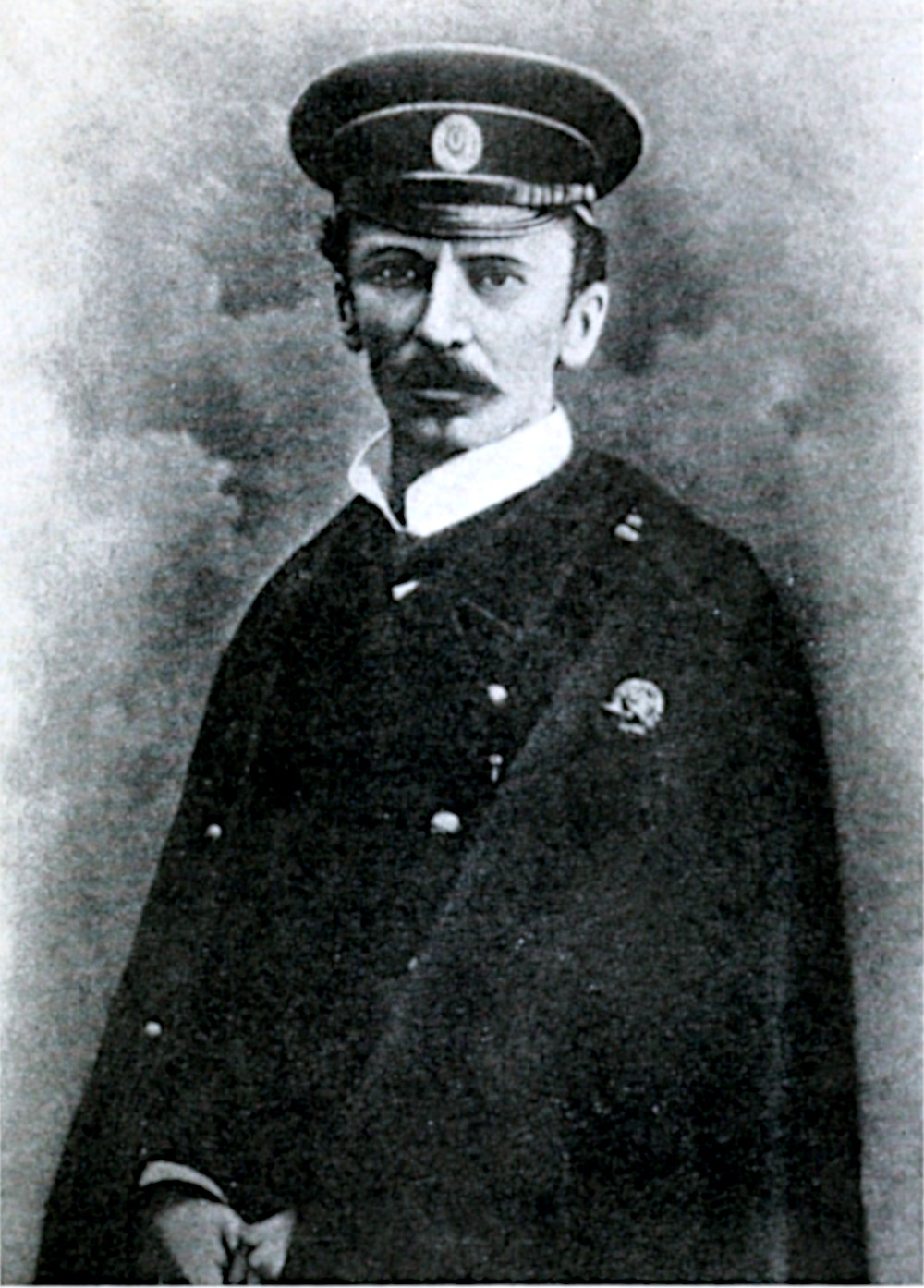
LIEUTENANT PETER PETROVICH SHMIDT Implicated in the Uprising of the Sevastopol fleet, executed in 1906
One of the most pressing needs of our group was the establishment of a secret printing-office. The shipments of literature from Kief were, of necessity, very irregular and attended with great risks. It was found impossible to establish one at Odessa, as the gendarmes were on our track. Several members of our group had already been arrested. It was, therefore, decided to do our printing at Kishinev, which city is several hours’ ride from Odessa. I do not know what inspired them with such confidence in me, but I was chosen by the executive committee for this responsible undertaking. Naturally, I was very proud of their high opinion of my abilities as a conspirator.
With a suit-case filled with type and various typographical paraphernalia, I came to Kishinev and settled in a quiet little lane. A new sign with a boot painted on it, bearing the inscription “Repairing neatly done,” was placed over the front door. Inside a cobbler’s bench with a complete set of instruments bore testimony to our honorable occupation. A local comrade spent there a couple of hours every day mending my old shoes. Under this cloak I kept 56my suit-case containing the typographic outfit.
I found work as a seamstress. Not wishing to remain alone at night, I slept at the house of an old couple whose daughter was one of my Odessa friends. She had written them about me, and they were glad to accommodate me. They lived with their granddaughter, a little girl of eight.
Thus I established myself, and waited for the promised compositor and “copy” to arrive. But days and weeks passed, and they did not come. I wrote letter after letter, without getting any reply. Finally I decided to go to Odessa myself to investigate. But a very unfortunate circumstance prevented me from carrying out my decision.
57