Front matter (continued 3)
Reading edition
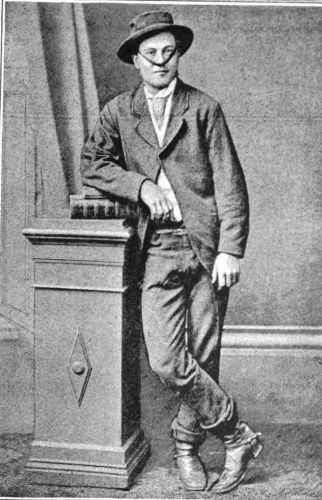
Aaron Sherritt.
The first active step I took, after I had been round the district and had obtained all the information I could, was to go to Beechworth to meet a well-known friend and bush telegraph of the gang, named Aaron Sherritt. He was a splendid man, tall, strong, hardy, but a most outrageous scoundrel. It was well known that he and Joe Byrne and Ned Kelly had been connected with each other in no end of horse-stealing cases, and that after the murders he had befriended the gang before they went to the Murray, as before stated. He had supplied them with food, and guarded them against surprise. I had never seen Sherritt until that evening, and somehow or other I made a most wonderful impression upon him. I had some drink with him, and saw that my influence over him was very great. After being in his company a couple of hours, and undertaking to give him the £4000 reward that had been offered for the apprehension of the outlaws, I got him to promise he would show me where they were to be found. He told me Joe Byrne and Dan Kelly had called at his house two days before, and wanted him to accompany them to New South Wales, where they intended to rob another bank; but he was not certain which place it would be, he thought they were going to Goulburn, at least they told him so. He said he declined going with them, and they pressed him very hard, but he refused; they told him they wanted him to do the scouting for them. We doubted the truth of this statement, but at once made inquiries, and found that Joe Byrne and Dan Kelly had been seen by others going in the direction of the Murray a couple of days before, and they had called for supplies at a shanty where Byrne was well known. This information was furnished to the police on the New South Wales side of the Murray, and they were told that Goulburn was the probable place they would make for, as the Kellys had a number of relations there. About a week after this, news was telegraphed that the outlaws had stuck up the township of Jerilderie, and robbed the bank, on the 11th February 1879.
Jerilderie is a town about sixty miles from the Murray river on the New South Wales side of the border. It had a population at that time of about 300 inhabitants; there were three or four hotels, one bank, a police station with two mounted constables named Devine and Richards, and a telegraph station. The police station is situated some little distance outside the township.
About midnight on Saturday the 9th of February, Ned Kelly, Joe Byrne, Steve Hart, and Dan Kelly surrounded the police station, which was all in darkness, the constables having retired to their beds, when they were awoke by some one calling out—"Constable Devine, there is a drunken man at Davidson's hotel in the township who has committed a murder. Get up at once all of you." Constable Richards, who was up first, came outside, followed immediately afterwards by Devine, both being undressed and unarmed. Ned Kelly began to tell these men there was a great row in the township, and after conversing with them for some time, to make sure there were no other constables inside, he suddenly presented two revolvers at Devine's head, Joe Byrne doing the same to Constable Richards. The outlaws immediately procured the keys of the lock-up, took the two policemen and lodged them in their own watch-house, and locked the door. Having secured the constables, they attended to their horses, which had been left outside the station; they put them in the police stables, fed them well, and left them secure for the night. Whilst this was going on Ned Kelly went into the police station, secured all the arms belonging to the police, made the constable's wife and family go into one room, and placed Steve Hart as sentry over them, telling them if they gave the slightest alarm, that the two constables who were in the lock-up would be the first persons to be shot, and they themselves would also suffer the same death. The outlaws then made themselves as comfortable as they could, leaving one of their number on sentry until daylight on Sunday morning.
During all that day Mrs. Devine was allowed to go about the station as usual, so as not to raise any suspicion that anything unusual was going on. Ned Kelly ascertained from her, that it was her custom to clean out the church and prepare the place for service, and Joe Byrne was sent to this place of worship with Mrs. Devine, whilst she carried out her usual duties there. This took about half an hour, and they both returned to the station. No one called at the station during the day; had they done so, they would have been pounced upon and secured in the lock-up so as to prevent an alarm being given. The people attended service as usual, but no one came near the station.
Dan Kelly and Steve Hart had dressed themselves up in the police uniform, and walked about the station in a most conspicuous manner, and without attracting any attention. In the afternoon Joe Byrne dressed himself in police uniform, and with Steve Hart also in that dress, took Constable Richards out of the lock-up to accompany them round the town, in order that they might be made aware of the positions of hotels, bank, &c. They ordered the constable, in case any one came up and spoke to him, to introduce them as new constables about to be stationed there. Their walk lasted about an hour, and they again returned to the police barracks. Nothing of any note took place during the evening and Sunday night. Monday morning Joe Byrne, in uniform, took two of their horses to be shod by the police farrier in the township; he waited until they were shod, and then took them back to the police station.
About eleven o'clock, after locking up the policeman's wife and children with Constable Devine, they took out Constable Richards. Ned Kelly and Dan Kelly dressed in uniform, and walked to the township, followed by Hart and Byrne on horse-back. They first went to the Royal Hotel, owned by a Mr. Cox, when Constable Richards introduced Ned Kelly to Mr. Cox as Ned Kelly, who told the landlord he wanted to secure some rooms in the hotel, and that he also intended robbing the bank, but he did not want to injure any one. Ned Kelly placed the other three in certain positions, and gave each of them their instructions. Hart was placed inside the large dining-room, which was used as a room of detention, and every person who came near the hotel throughout the day was placed in this room, and all prisoners captured were taken over and kept in safety in this apartment. Byrne went to the back part of the establishment and collected all the servants, and made prisoners of them.
After this was done, they devoted their attentions to the Bank of New South Wales, in which there were three officers—Mr. Jarleton, manager, Mr. Living, accountant, and Mr. Mackin, sub-accountant. Mr. Living was the only one in the bank. He heard some footsteps approaching from the back-yard, and turned round thinking it was Mr. Jarleton, when he saw a man close to him. He immediately asked this man, who had already levelled his revolver at him, who he was. His reply was "the Kelly gang," and he at once called on him to "bail up." This man afterwards turned out to be Joe Byrne. Byrne then ordered him to deliver up what fire-arms he had. Mackin, who was standing outside the bank in the street, hearing voices, went inside, and Byrne immediately ordered him to jump over the counter, at the same time pointing two revolvers at him; this order he obeyed at once. Byrne then told the two bank officials they must accompany him to Cox's hotel, remarking at the same time they had all the police stuck up. The three then went to the hotel, where they met Ned Kelly, who asked for Mr. Jarleton, and was told he was in his dressing-room. Ned Kelly and Byrne went back to the bank, but could not find him. Ned Kelly returned to Cox's and brought back Mr. Living, telling him he had better find him. Living found him in his bath, and said, "Mr. Jarleton, we are stuck up, the Kellys are here, and the police are also stuck up." Byrne then brought over Dan Kelly, and left him in the bath-room in charge of the manager. Ned then took charge of Living, led him into the bank, and asked him what money they had in their keeping. Living replied, "There is between six and seven hundred pounds." Kelly replied, "You must have at least £10,000 here." Living then handed him the teller's cash, amounting to £691.
At this time a Mr. Elliot, the local school-master, entered the bank, quite unconscious of what was going on within, when Ned Kelly covered him with two revolvers and ordered him to get over the counter. Mr. Elliot replied he was unable to get over, but Kelly pretty soon made him do so. Kelly then tried to put the money into a bag, but it not being large enough to hold it, he got a bag of his own at the hotel and put the money in that. Kelly asked Living if they had any more money, and was told they had not. Kelly then went to the safe and asked what was in it, and Living said nothing of any value. Kelly insisted upon it being opened, and Living gave him one of the keys. Byrne wished to smash the safe, but Ned Kelly brought in the manager, who had been taken over to the hotel, and compelled him to give up the second key. The safe was then opened, when the sum of £1450 was taken out and placed in the bag.
Kelly then took down a large tin box from the shelf; he was told it was full of documents which were of no use. He replied, "Then I will burn them;" but Mr. Jarleton begged of him not to do so. Kelly took out one bundle of papers and put them in his pocket. He then told Mr. Jarleton he intended burning all the books in the office; however, he left the documents in the tin box, saying, "I will return directly and examine them all." They all then went to the hotel. Dan Kelly was in the bar, and Ned took him and another of the party to the back of the premises, made a fire, and burned four of the bank-books. I might mention here that Ned Kelly always posed as a friend of the working-man, and all they wanted was bank money, and not that of private individuals; and in all their exploits, if any of the gang had taken a watch, or stolen anything from a private individual, when complained of Ned had made them return it to the person from whom it was stolen. In this manner he was looked upon as a great hero, and gained a number of sympathizers, so in burning the books of the bank he thought he was protecting the poor man, as against the bank.
About this time a Mr. Rankin and a Mr. Gill, seeing the bank door open, went in, and they were immediately followed by Ned Kelly, who ordered them to "bail up." They at once grasped the situation, Rankin running into the hotel followed by Kelly, while Gill made off in another direction. The latter was the local newspaper proprietor, the former a well-to-do merchant, and a Justice of the Peace. When Kelly got up to Rankin he asked him why he had run away when he had ordered him to stand; he caught Rankin very roughly by the collar of his coat, and ordered him into the passage away from the other prisoners, telling him to straighten himself up, as he intended to shoot him, and levelled his revolver at him. Several of the prisoners called out to Ned Kelly not to fire, and he did not do so. He then called Hart by the name of "Revenge," and ordered him to shoot the first man who showed any signs of resistance, then addressing Rankin said, "If you attempt to move, you will be the first man to be shot." Mr. Rankin was a splendid able-bodied man, but without fire-arms in his possession he was powerless, and had to submit to be thus treated. Kelly then went and directed his attention to Mr. Gill, and in company with Mr. Richards and Mr. Living went to look for him. The policeman had his revolver with him, but Kelly had previously drawn the cartridges. They sent to Gill's house, and saw his wife; Kelly said to her, "Where is your husband?" She replied, "He has run away." Kelly then said, "I have a statement here which contains a little part of my life, and I want it published by Mr. Gill, will you take it?" She declined to do so.
Mr. Living then took the paper from Kelly, promising to have it published. The bushrangers then turned their attention to the telegraph office; they removed all the clerks from the office, and took them over to the hotel and put them amongst the other prisoners. Byrne remained in the office and overhauled all the messages that had been despatched that day. Kelly then returned and found Byrne in charge; he had cut all the wires, and Ned Kelly broke the insulators with his revolver. Ned Kelly told the telegraph master, Mr. Jefferson, that if he attempted to mend the wires before next day, or offer any resistance to himself or companions, he would shoot him; he also told him that he intended to take him a few miles into the bush when he left, and then liberate him but this he did not do. Kelly informed the company who were in the hotel, that he intended sticking up the Urana coach that night, and he would shoot any one who would warn the driver, but Mr. Jarleton succeeded in dispatching a messenger to Urana directly the outlaws left, to warn the banks against surprise. But this was only a ruse on their part, they never stuck up the coach, nor went near Urana. When Mr. Jarleton was found in his bath he had just returned from a long ride of forty miles. He stated, when Living told him they were stuck up, he thought it was a hoax they were playing on him, but when he saw Kelly and Byrne with revolvers in each hand, he saw the mistake he had made. Mr. Jarleton made some inquiries of Hart as to the movements of the gang, but after answering one or two, he pointed his revolver at him, and in an angry tone replied, "You had better stop asking such questions."
Hart and Dan Kelly stood sentry a greater part of the day with a revolver in each hand, and the former evinced a great desire to shoot somebody in the room. Throughout the day every one who came near the hotel for any purpose was captured and detained. Occasionally one of the gang would take a walk up the street. Ned Kelly went into another hotel kept by a Mr. McDougall, entered into conversation with several people there, and said, "Any one can shoot me, but they would have to abide the consequences, as every inhabitant in the town would be shot."
Hart, who always was a thief and sneak, took a new saddle from a saddler's shop, and he also relieved several men of their watches, but when the owners complained to Ned Kelly and Byrne he was ordered to return them. Ned Kelly and his lieutenant Joe Byrne showed great judgment in the manner they carried out the whole affair. Ned Kelly took from McDougall's stable a blood mare, and promised to return it in three weeks, which of course he never did. He also took a saddle and bridle and pair of spurs belonging to Mr. Jarleton from the bank, also a pair of riding-trousers, gold watch and chain. This saddle was put on the blood mare, and Dan Kelly mounted it and rode away to try it, and returned shortly afterwards.
About six o'clock in the evening the gang began to make preparations for a start, but before doing so, Ned Kelly made a speech to those who had been confined in the hotel, with the evident intention of exciting pity. He said that on the occasion when Constable Fitzpatrick was wounded, he was not within 400 miles of his mother's place; he said he had stolen 400 horses from a squatter's run, named Mr. Whilty, at various times, and had sold them, but beyond this, up to the time he shot the police at the Wombat, he had not been guilty of any other crime. Kelly showed those present his revolvers, and pointed out one which he said was the property of Constable Lonergan, and further stated, that the musket with which he shot Lonergan was an old, worn-out, crooked thing. Kelly then took Constable Richards from amongst the prisoners and walked to the police station.
At about seven o'clock Byrne mounted his horse and started off alone in the direction of the Murray river, leading a pack-horse with the treasure strapped across the saddle. This was one of the policeman's horses, which they took with them. Shortly afterwards Ned Kelly mounted, leading another police horse, returned to Cox's hotel, and told all the prisoners they might go home, and he now released them. He left Constables Devine and Richards in the lock-up, with orders they were not to be released for some hours. Dan Kelly and Hart, before they left, rode up and down the chief street of the town flourishing their revolvers over their heads, and singing at the top of their voices, and then started in the same direction as the other bushrangers had done. They must have all met at some appointed place, for they called at a station some twenty miles distant from Jerilderie, and threatened to shoot the owner for something he had done against them.
When Mr. Gill bolted from the bank, he went to the creek close by, and remained hidden there all day, and until the gang left the town. Both Kellys left the township wearing the police clothing. With regard to the documents Ned Kelly left with Mr. Living for Mr. Gill to publish, it was sent to the Government of Victoria, and I read it. It was a tissue of lies from beginning to end, a wandering narrative full of insinuations and complaints against the police, and of the type familiar to all who have had experience of tales which men of the criminal stamp are in the habit of telling; it is as impossible to prevent these men from lying as it is from stealing.
According to Ned Kelly, his criminal career commenced when he was fourteen years old, and received a sentence of three months' imprisonment for using a neighbour's horse without his consent, as he put it. After this, convictions were frequent, and, says Kelly, "The police became a nuisance to the family." At one period of his life Kelly described himself as a "wandering gamester." He states in this document, "When the affray with Fitzpatrick took place, the constable came to apprehend my innocent brother Dan. My mother asked him if he had a warrant, he replied he had a telegram. My mother said to Fitzpatrick, 'If my son Ned was here he would chuck you out of the house.' Dan looked out of the window and said, 'Here he comes.' The constable turned suddenly round to look out of the window, when Dan jumped up and seized the constable, and in the scuffle Fitzpatrick was shot through his wrist."
I quote this fully because certain newspapers in the colony published statements to the effect that Fitzpatrick had acted improperly towards Kate Kelly, and that had caused Dan Kelly to shoot Fitzpatrick, and that Ned Kelly took up his sister's cause. By this means they obtained no end of sympathy from the general public, whereas there was not one word of truth in the accusation. And Ned Kelly, not only in the statement that he gave to Mr. Living, in which he said this was a pure invention, but also after his capture, stated distinctly there was not one word of truth in the accusation made against Fitzpatrick; "for," said Ned Kelly, "if there had been, I would not have been a man had I not shot him on the spot." But from Ned Kelly's own narrative it is apparent that these charges were pure inventions, made solely for the purpose of raising sympathy for these murderers. It was admitted that Fitzpatrick was resisted and assaulted while in the execution of his duty. An account is given in this statement of Ned Kelly's of the terrible tragedy at Mansfield, but it is obviously a string of falsehoods, and it would be quite improper to have it published, but he admitted that the police were not in any way the aggressors at the Wombat, but were surprised and shot down in cold blood.
The outlaws, after the Jerilderie bank robbery, evidently returned back to their mountain retreats in Victoria. No end of Bank of New South Wales notes were in circulation shortly afterwards, but the numbers of the stolen notes were not known, beyond the fact, that the head office at Sydney had sent these identical notes to Jerilderie for circulation, but no account was kept of the notes that were paid out of the bank. Hence no prosecution could be instituted, as the bank officials could not swear the notes found in the possession of the friends of the outlaws had not been paid over the counter. Notwithstanding that all the wires of the telegraph lines were cut at Jerilderie, and the outlaws departed from there at seven o'clock, at nine o'clock that night I received a wire at Benalla from Jerilderie informing me of all the facts of the matter. I at once took steps to give instructions to all crossing-places on the Murray river to keep a sharp look out, and sent men during the night to every known crossing-place, to endeavour to effect their capture, but all to no effect. The distance between Jerilderie and Benalla, where I was stationed, was over 100 miles, and the first tidings we heard of their return was that Dan Kelly was seen two or three days after the bank robbery making back to the mountains in this colony, some fifteen miles from Beechworth.
I have written fully on the subject of this bank robbery, because the plans were well laid, and everything carried out in such an able manner. I am indebted to the newspapers of the day for refreshing my recollection of the facts that took place after the bank robbery, as I did not like to trust to my memory as to the numerous incidents that occurred during that exciting time.
The Government of New South Wales, together with the banks of that colony, offered an additional reward of £1000 for the apprehension of each of the outlaws, making the sum offered by the two colonies £8000. Sherritt told me, at my first interview with him, that he was the principal agent of the outlaws in that part of the district, and everything that was known about them by their friends would be communicated to him. Besides which he was at this time engaged to be married to Joe Byrne's sister, and she lived with her mother at Woolshed. He also told me that if they did rob a bank, they were sure to call at Mrs. Byrne's on their way back, and leave her some of the money. He said, "Now if you want really to take them, I will lay you on them." I told him I would place myself unreservedly in his hands and do whatever he suggested, and I arranged to meet him again. When he left, I told the detective who introduced him to me what he had said. The detective ridiculed the affair and said, "He is only deceiving you, sir, please don't trust him; he would not sell his friend Joe Byrne for all the money in the world." I felt convinced my opinion of the man was correct, and he meant to work for us honestly. Sherritt said "You have a most difficult and dangerous job before you, but I will do all I can to assist you." Sherritt had a most exalted opinion of Ned Kelly, and said he did not believe there was another man like him in the colony. He said, "He is about the only man I ever was afraid of in my life, and I certainly give him best in everything." When I found out that the information he had given me about the two outlaws having called at his house was correct, I felt very confident that before long we should fall across them.
CHAPTER VIII.
Aaron Sherritt—A Disappointment—At Mrs. Byrne's—A Twenty-five-day Watch—Manufacturing Brands—Sherritt's Revenge—A Letter from Joe Byrne—Whorouly Races—On Watch at Mrs. Sherritt's—Mrs. Byrne's Discovery—Break-up of the Camp—Arrest of Kelly Sympathizers—A Dynamite Scare—Aaron jilted.
Directly the bank was stuck up at Jerilderie I started off to Beechworth, and sent for Aaron Sherritt. His first words to me were, "Did I not tell you they would stick up a bank in New South Wales?" I replied, "Yes, but you told me they were going to Goulbourn." I said, "Well, what is to be done now?" He replied, "They will be back probably to-night, to Woolshed." He told me to meet him that night at a place indicated by him in the ranges (known to the detective); he would then show me where they tied up their horses, whilst they went into Mrs. Byrne's house for supper. I agreed to his suggestion, and told the detective what I had done. His reply was, "I have known Sherritt for years, and if he likes he can put you in the position to capture the Kellys, but I doubt his doing so." I told him Aaron felt sure they would return from Jerilderie that night, and I had arranged to go with him, and meet him at eight o'clock that night at a certain spot in the ranges, which I described, a party of police accompanying us. Having no men at Beechworth, I drove the detective to Eldorado, which was beyond Woolshed, where I had a party of police stationed. As the detective was well known in the locality, and I was not, I put him in the boot of the buggy under the seat, and he remained in that position nearly all the way. I merely state this to show how cautious we had to be in all our movements. Had he been recognized driving in a buggy, the friends of the outlaws would soon have heard of it. I had to take him because he had to direct the party where to meet us that night, and I had not been in the district for very many years, and knew little of it.
At eight o'clock that night the detective and I met Aaron at the appointed spot in the ranges. We waited anxiously for the men from Eldorado to turn up. After waiting for an hour, Aaron said to me, "You will be late, Mr. Hare. We should have been nearly three miles from this by this time." I was very much annoyed at the men not keeping their appointment; and I turned to the detective and said to him: "Will you stick to me, as it will never do to lose this chance of getting the outlaws?" His reply was: "Yes, Mr. Hare, I will stick to you and do whatever you tell me to do." I turned to Aaron and said: "All right; we are ready to go with you now." He turned towards me to see if I meant it. I said, "Come on."
We mounted our horses. I followed Aaron, the detective following me. The night was terribly dark, and Aaron took us at a good pace. The country was rugged and broken, but he rode ahead just as if he was in his own garden. He appeared to trust to his horse, and I trusted to him. We rode along without a word being spoken by any of us. He might have taken me over a precipice, as I could see nothing before me. Suddenly Aaron stopped, and in a whisper said to me, "This is the bushrangers' country; no one ever comes in here but them." We were then about ten miles from Beechworth on the ranges at the back of Woolshed, and so we rode along, winding round a drain one minute, and over logs and rocks the next, trusting entirely to our horses. Suddenly Aaron pulled up, and I went up beside him, the detective doing likewise. Aaron said, "They are back from Jerilderie. Do you see that fire in the distance?" I replied, "Yes." He said, "The bushrangers are there; I have never before seen a fire in this place, and for some reason they have lighted one, and there they are." We all three dismounted from our horses and sat down on the ground to decide what was to be done. Aaron said, "What do you wish me to do? I will do whatever you like." I thought "nothing venture nothing have," so I questioned him as to the fire being made by the outlaws, but he was perfectly convinced of it. I then told him the first thing I wanted to be sure of was whether the bushrangers were sitting or sleeping near the fire, and he had better take off his boots, leave his horse with me, and crawl along the ground as close to the fire as he could get, and see if he could recognize the voices if he could hear any, if not, to get as close up as he could and find out whether the outlaws were there. He never hesitated for a moment, and did exactly what I told him to do, and the detective and myself were left alone. We both were fully convinced we should have to "do or die" that night, and we were quite prepared to take the risk. We stayed in the same spot for about ten minutes, deciding how we were to make the attack, when we heard footsteps coming towards us at a quick pace. The detective said, "He has sold us; who is this coming towards us?" I said, "Keep quiet." We both, with revolvers in our hands, remained perfectly still until the footsteps came within a yard of us, and a voice we recognized as Aaron's said, "Mr. Hare, we have been deceived, that fire is on the opposite range and some miles away." My first thought was that Aaron had gone up to the fire and started the bushrangers off, or else had given them notice he would bring us up to them. I questioned him and he appeared perfectly honest, and said, "If you will come with me I will convince you that what I am saying is the truth."
We mounted our horses and found that what he had stated was perfectly correct. Aaron then said, "We are awfully late, we must hurry on to Mrs. Byrne's house," and we again followed him in the same order as before. He commenced to go down a fearfully steep range. I said not a word but followed him, until he pulled up and said, "I am afraid to go down here to-night, it is so very dark." I said, "Is there no other way you can get down?" He replied, "Only by going a mile round." He said, "Be careful not to move from your saddle, for this is a terribly steep range, and if you attempt to get off you will roll down some hundreds of feet." He told me to get off the horse on the off side, he doing the same himself, and the detective also. We then led our horses round and got down another gap in the mountains. After riding about a mile Aaron told us that we had better dismount and tie our horses to a tree, and walk down to the spot he would take us to.
We did so, and we followed him down the ranges until we came to a house, which turned out to be Mrs. Byrne's, the mother of the outlaw Joe Byrne. Here also, as in Power's case, we met some watch-dogs in the shape of a flock of geese, and they did give the alarm, and no mistake. However, after a short time, Aaron crawled up to the house, so as to ascertain if there was any one talking inside. Everything was quiet, there was a candle burning. He returned and said, "They expect them to-night. You see, they have left the candle burning, and some supper ready on the table." He then said, "Let us go up to a clump of trees at the back of the house, where they generally tie up their horses." I had previously been told by another agent of this clump of trees, where marks of horses having been tied up were to be seen. Aaron said to me, "Go into that clump. They often tie up their horses there, and lay down beside them and have a sleep, after having their supper at Mrs. Byrne's." I walked into the clump, but found no horses there, and returned to Aaron. Aaron then said, "We must now wait in this stock-yard, which leads up to the clump. If they come they will come through here." It was then about two o'clock in the morning. We sat down and waited until daylight, and then, nothing happening, we started back to our horses, reaching Beechworth at eight o'clock.
Aaron suggested to me that I should bring a party of men and come and live in the mountains at the back of Mrs. Byrne's house. He told me he could put me in a spot which was unknown to any one except the bushrangers, and the only danger of my being discovered was by them. He said I could stay in the mountains by day, and take up my position in the stock-yard behind Mrs. Byrne's at night, and that if I had patience I was certain to get them. I complied with his suggestion, and that evening I brought a party to the spot indicated by him. We brought our blankets and some provisions, intending to stay there until we caught the Kellys, watching by night, and laying in our camp all day. In camp I arranged that no two men should be together throughout the day, whether sleeping or at meals, so that if we were attacked by the outlaws, and some of us were shot, the others could fight.
The life was extremely monotonous, for me especially; but the excitement kept us up, and we always expected that sooner or later we should come across the outlaws.
Our daily life was as follows:—At dusk in the evening, one at a time, we used to leave our camp and make down to the stock-yard, I always leading the way, and the other men following. We had to be most careful where we trod, for fear of our tracks being seen on the following day. We each took up positions behind trees outside the stock-yard, I taking the opening into the yard myself. I had given orders to the men not to move from their positions until I called to them, no matter what happened. We were all lying about ten or fifteen yards apart. The nights were bitterly cold.
Aaron used to spend his evenings at Mrs. Byrne's with his young woman, and he obtained all the information they were possessed of, and when he left their house between twelve and one o'clock he used to lie down and watch with us. He always took up his position beside me, and used to relate all kinds of encouraging reports that he had obtained during the day as to the prospect of the Kellys turning up. Hardly a night that we took up our positions but we thought we should have some luck. As day broke in the morning we used to make back to our camp in the mountains in a very disappointed mood, walking singly, and avoiding the paths or soft places, so as not to leave any tracks behind us.
The great danger I felt was a surprise when getting into the camp of a morning and taking up our positions in the evening. I felt sure that some morning or evening when we took up our post the Kellys would find out our camps and take possession of them, so therefore I always went into camp first in the morning and left it first in the evening, and felt a relief when we all got into our places without being fired on. We dared not make a fire for fear of the smoke being noticed, so we had to live on water, preserved beef, and bread. I stayed in this camp for twenty-five days, and during that time, although we used to see some members of the Byrne family passing to and fro, they never discovered our whereabouts. I always kept a sentry by day over the camp, and the sentry's position was behind a rock near the spot I had made my resting-place, which was the highest, above all the men.
Night after night Aaron used to go and see his young woman, and bring back hopes of success. This used to keep up the spirits of the men, and we all felt sure if we could keep watching without our whereabouts being discovered we would eventually be successful.
I should have stated before this, that when I went with my party into the mountains, I also placed four men in a spot pointed out to me by Sherritt, which was one of the camps used by the Kellys. It was here they stayed for two days after the murders, while Aaron supplied them with food. It was a wonderfully romantic spot, on the edge of a precipice, and only approachable on one side. Two men could keep off a dozen. This camp was placed under Senior Constable Mayes, a bold, trustworthy, well-tried man, in whom I had the utmost confidence. He had a difficulty in getting water for his men, and had to send two miles for it. Sometimes the men were sent by day, but generally by night, and through an indiscretion on the part of one of these men, our whereabouts was discovered. Old Mrs. Byrne was a most active old party. She was constantly looking about for the tracks of police, horses, and men. She was walking along the bank of a creek where the men at the upper camp were in the habit of getting their water, when she discovered a spot where a man had been sitting and amusing himself with a stick—as it is called, "whittling" it. She immediately came to the conclusion that some police were camped close by, and that night she confided her fears to Aaron, and told him he must have a good look in the ranges next day. He promised to make every effort to find out if her surmise was correct, and he came straight to the stock-yard where I was watching, and informed me of the discovery the old woman had made. Aaron next day got his horse and pretended to make a search, returning next night and telling Mrs. Byrne he could find no trace of anybody. The old lady was convinced there must have been some police about, because she said the foot-marks were evidently those of a policeman. These people appear to know the difference between the foot-prints of police and other persons. However, the old woman could not be convinced she was wrong, and up to that time had perfect faith in Aaron, and so also had his young woman, her daughter.
Generally when we left the stock-yard in the morning, Sherritt would leave us and go to his own hut on the ranges, or else to his father's place, which was between our camp and Beechworth; but sometimes he would come into our camp and get his breakfast, and perhaps stop a part of the day. Very often he had to carry provisions for us from Beechworth during the night. He was always ready to do anything for me, and yet many of the men distrusted him. I never did from the first moment I took up with him, and his end showed I was right in my opinion of him. Of a night, whilst I was watching with him, he would sit beside me and tell me the adventures of his life, and give me information of many things that were formerly unexplained. He told me how he, Joe Byrne, and Ned Kelly used to steal horses wholesale, and how they used to dispose of them, and the way they changed the brands of the horses so that the most experienced hand would not discover the trick. It was as follows:—Supposing a horse was branded H on the near shoulder, they would turn the H into H B (conjoined) by getting a pair of tweezers, pulling out the hairs to make a B, and then prick the skin with a needle dipped in iodine. This burns up the skin, and for about a month afterwards it looks like an old brand; new brands were also put on in this fashion, and they never could be detected. After branding the horses they had collected, they would make for some squatter's station where they were unknown, ask permission to put their horses into his stock-yard, on the pretence that they had met a stranger who wanted to purchase the mob of horses, this stranger being one of their own party. Generally speaking, the squatter or some one belonging to the station would walk down to look at the horses, and he would hear them making bargains about the price of each animal, so as to lead the people of the station to believe that it was a genuine sale. At last they would agree to a price, and then would ask the squatter to allow them to go into his office to draw up a receipt, in which all the brands would be entered, both old and manufactured ones. After the receipt had been drawn up the squatter would be asked to witness it, and the supposed buyers would start off towards Melbourne, and the seller appear to return back to New South Wales. If by chance any of the horses were claimed by their owners, the receipt would be produced, and they would so avoid being arrested.
Aaron used to tell me they made raids on horses from about Wagga to Albury, took them a back track to Melbourne, and on their return would pick up a number of horses in Victoria and take them over to Wagga or Albury for sale. One of the party used to act as the master, and the others as his servants; the master always going ahead and making arrangements where the horses were to be paddocked for the night.
For hours did Aaron relate anecdotes to me of the same description as the above, and he enlightened me greatly into the ways and the life of horse-stealers. I cannot refrain from telling another of his stories. I was sitting beside him one night, when he had brought us some very hopeful information, and we were all very elated at our prospect of success. I said, "Well, Aaron, I feel sure you will get the reward offered for the Kellys." (I had promised him he should have the whole sum of £8000 if it was upon his information that the Kellys were captured.) At this time his young woman was getting rather suspicious that he was working for the police, although she used to meet him of an evening very near our camp and walk with him. I asked him how he would like the reward disposed of, supposing he got it? He said, "I should like to have a few mares and an entire horse, and get a nice farm." I told him he should get a respectable girl, marry her, leave all his old associates, and begin life again amongst new people. He agreed with all I said, and turned round and said to me, "Mr. Hare, do you think, if you got me the best mares you could buy, and got me the best entire horse you could purchase, that I could withstand the temptation of taking my neighbour's horses and selling them? No, I could not, no more than fly."
On another occasion we were expecting the outlaws to bring some money they had stolen from the bank to Mrs. Byrne's. Amongst my men I had one who was a thorough larrakin, and Aaron took a great fancy to him. I sent him to Beechworth for some supplies, and Aaron met him on the way, and they both rode into Beechworth together. My man was taken for one of the Kelly spies, especially as he was in Aaron's company. The people of Beechworth at once became alarmed, seeing Aaron and his companion riding about the streets—no one knowing the companion was a policeman. Numbers of people went at once to the police station and reported that Aaron and another suspicious person, riding good horses, were seen in the outskirts of the town. The constable was delighted to have a chance of being seen with Aaron, and made the most of his opportunity.
On the way back to my camp Aaron took the constable into his confidence; he told him that he felt certain that the bushrangers would return from Jerilderie after they had stuck up the bank there, and the first place they would come to was Mrs. Byrne's. Aaron said to him, "I want you to join me in a scheme, and if it comes off we shall have the best of the arrangement." The constable said, "What is it?" He replied, "I feel sure the Kelly gang will return from Jerilderie either to-night or during the course of this week. Joe Byrne will be leading a pack-horse, with the gold and notes fastened up in a brown cloth coat. Directly Mr. Hare opens fire on the men, the pack-horse will, in all probability, break away with the treasure. You and I can go after the horse, catch him, and take his pack off in the bush, hide it, and let the horse go; and next day, in the excitement, we can slip away and divide the cash. It can do no harm to any one, because some one will get it, and we might just as well have it as anybody else." The constable appeared to agree to Aaron's suggestion, and told me what had passed between them. I told him not to tell any one else in camp about the arrangement, and to lead Aaron to believe that he would assist him in the matter. Unfortunately the Kellys did not put in an appearance, and so the matter fell through.
I must give one more narrative about Aaron, just to show the peculiar kind of man he was, even on the chance of being thought tedious. He came to me one morning and said, "Mr. Hare, I want to go away for a couple of days to look after some cattle of mine. I will be back within two days." I questioned him closely, what cattle he was going after, and asked him if he wanted any money. I had not engaged him at any fixed salary, but whilst he was watching with me he used to ask me for a pound or two, and I gave it to him. He often refused to take money from me, as he thought I was paying him out of my own pocket, whereas the Government refunded me all I paid him, and he only took sufficient to pay his expenses. Before he started off after his cattle, I said to him, "Are you sure you have got enough money to pay your way?" He replied, "I have a pound of the money you gave me last time;" and away he started, and returned according to his promise.
Some few days after this, Mrs. Byrne went to the police station, and reported that a valuable horse of hers had been stolen from Woolshed, and, after inquiry by the police, it was found in the possession of Mrs. Skillian, Ned Kelly's sister. She produced a receipt for it, as having purchased it from Aaron, and signed by him, for the small sum of £3 or £4. Mrs. Byrne obtained a warrant for Aaron's arrest, for they all suspected he was then a spy of mine. I spoke to Aaron on the subject, and he admitted that he had taken the horse and sold it to Mrs. Skillian. He said, "I could not help doing this. I did not want the horse, but I felt I must do something to old Mrs. Byrne. She has not behaved well to me lately, and her conduct towards me is so cool that I could not resist the temptation of stealing her horse."
All the time Aaron was with me, only the police who were actually in my party were aware he was working for me, and most of the others were delighted to hear there was a warrant out for his arrest. They made every effort to capture him, but could not find him. I was greatly annoyed with him, because it crippled his usefulness immensely. However, he kept out of the way of the police, and when I was relieved from the district I left it to my successor to get him out of his difficulty. I don't quite know how this was managed, but I was told he was directed to be at a certain spot one day, and a constable was ordered to go there and apprehend him. The constable afterwards took great credit for his capture, not knowing that his arrest was an arranged matter. He was brought before the police-court, but the evidence was not sufficient for the magistrates to commit him for trial, as the horse was not forthcoming, and Aaron was acquitted. I am not quite sure I am right in all the details of what occurred with reference to his arrest, but I was told that this was how the matter was managed.
A number of letters fell into our hands written by the outlaws, most of them by Joe Byrne. He was, for a bushman, rather clever with his pen, but I do not intend to disclose how we became possessed of them. However, I got one addressed to Aaron Sherritt, Sheepwash Creek, near Beechworth. This was the address of his father. I opened it and could not understand a word of it, as it was written in bush slang. I at once went for my boy Tommy, as I christened him, for Aaron was too uncommon a name to be constantly using. In sending telegrams concerning him to the members of the force who knew him, I always called him Tommy, for had I used his name, every one would have guessed who Aaron was. As I said, I sent for Tommy, and met him on a large granite rock at the back of Beechworth. I showed the letter to him. He looked at me and said, "How did you get this into your possession?" I said, "Never mind, read it to me; and who is it from?" He said, "Why, from Joe Byrne, of course." He sat down and read the letter without the least difficulty. I could not make head nor tail of it. I had the original, but I don't know what became of it. The purport of the letter was to the following effect. The writer told Aaron to be at the Whorouly races, which were to take place within a week, and where to meet him, at the back of the course, ordering him not to say a word about their going to the course. He also said that he had the black mare which Aaron had ridden in a steeplechase previously, and that the mare was in good order and sure to win. I asked Aaron what he thought best to be done? He said, "You must give me a good horse to ride to the races, and I will assist in every way possible."
I consulted with my brother officer as to what was best to be done, and we decided to send the usual mounted constables in uniform, and we then selected three good riders amongst the men, who were unknown in the district, and sent them separately to the races. They were all splendid riders and magnificently mounted. The men and horses could have been backed against the Kelly gang, man for man, at anything. We also arranged that I should ride out myself and appear to take great interest in the races. I did go out, and saw the three constables in plain clothes. One had a table and was playing the three-card trick; another had erected an Aunt Sally, and was bawling out at the top of his voice, and the third kept on his horse riding about. I was more afraid of the third man than any of the others, because he was a most excitable fellow and bold, and as good a rider as ever sat on a horse, but with no discretion. He would have faced the four outlaws if he had had the chance, and shot them one after another if it were possible. I may as well give the names of these men. They were the most dashing of all my party. The first was Tommy Lawless; the second, Faulkner; the third, Johnstone; three pluckier fellows never trod the earth. My fear was that the mounted police on duty would arrest some of my men for gambling, as they were not known to each other; but they were not interfered with.
After Lawless had been playing his three-card trick for some time, he thought he would enter his horse for the steeplechase that Aaron was supposed to ride in, thinking he would thus have a better opportunity of seeing everything all round the course. At the time appointed for this race to come off, we were all looking very anxiously for Aaron to turn up on the black mare, but alas, we were disappointed. I saw him anxiously looking out in the direction he thought the mare would appear from, but there were no signs of it. Joe Byrne's brother (Paddy) was a good deal with Aaron all that day, but the subject of Joe was not mentioned by either of them to each other. Lawless rode in the steeplechase and won it, and that was the only bit of excitement during the day.
An incident occurred during the steeplechase that I must state, although it is against the discipline of my men. Just before the steeplechase started, Johnstone saw three men riding outside the course; he took it for granted they were the outlaws. Without a moment's consideration, he galloped off alone towards them. I saw him do this, as I was wondering who the men were, and at a glance saw they could not be the Kellys. Faulkner was at the time on his horse close beside me, in the middle of a crush. He looked at me. I shook my head, and he remained where he was. I walked quietly out of the crowd, and Faulkner followed me, and we saw Johnstone returning terribly ashamed of himself. He could give me no explanation of his conduct beyond saying he could not help himself. He thought the three men were the outlaws, and he made straight for them.
Aaron Sherritt was noticed by every one riding a magnificent horse which I had purchased a few days before. He was pointed out to me by several people as Kelly and Byrne's greatest friend. I was asked why I did not have him arrested for stealing the horse he was riding, as he never could afford to come honestly by such an animal. I pleaded ignorance about either man or horse.
At night a ball was to take place at a public-house near the racecourse. We thought probably some of the gang might put in an appearance there; but there was no sign of them again, and we had to return disappointed.
In writing this narrative I have not kept exactly to the order in which the things occurred. As I have no paper to refer to, I am simply trusting to memory. After a time all the men, both in my camp and the upper, came to believe most thoroughly in Aaron's honesty of purpose, as I had done from the beginning. He often told me that I had a kind of influence over him that no other man had ever had before, and he could not tell me a lie. We kept watching as from the first. Old Mrs. Byrne began to be very doubtful of Aaron, and treated him very coolly; still the daughter believed in him, and he continued his visits to the house. The old woman was constantly abusing him, and telling him that she thought he had thrown his old friend overboard and was working for the police. Yet, notwithstanding this, the whole of Kelly's friends used to confide in him, and tell him all the movements of the police in the district, which he would repeat to me.
One night he returned, as was his custom, to where I was watching. He appeared rather anxious, and said, "Is there any news of the Kellys?" I said, "No; why do you ask?" He replied, "What is the meaning of all the activity that has taken place among the police to-day in different parts of the district?" I said, "What do you mean?" He replied, "This morning at four o'clock two men left Beechworth, and went in the direction of Woolshed. Three other men started early in the morning from Eldorado, going in the direction of Woolshed, and some three or four men started in the direction of Wangaratta." I was perfectly amazed at the organization of the sympathizers thus to have ascertained the movements of the police. I said, "Tommy, tell me how you get all this information." He replied, "I could not do that, but you would be perfectly astounded if you knew how much we know of the movements of the police."
To test whether his information was correct, I inquired, and found every word he said was true; but I never was able to find out how he obtained his information. I asked him if all the agents in the district knew as much as he did. His reply was, "Oh, yes, but I am the head over all of them."
I was in the habit, whilst with my cave party, of getting all information of everything that was going on throughout the district concerning the Kellys. One evening Detective Ward came to my camp and told me that Dan Kelly had been seen near Myrtleford, riding in the direction of Beechworth. Half an hour afterwards Aaron, on his way to Mrs. Byrne's, called in at my camp. I told him that Dan Kelly had been seen that day.
He started up at once, and said, "Then he will call at my mother's place to-night, or else at my hut, which is about two miles from my mother's;" and added, "I wish, Mr. Hare, you would bring a couple of men with you, and come with me to my mother's place; some of the gang are sure to call there if they are passing by. Let the remainder of the party go to the usual place at the stock-yard and watch Mrs. Byrne's. You come with a couple of men to my mother's place, and get two men from the upper camp and put them in my house."
I consented to this suggestion, and he accompanied me. I left two men at his house, one of whom knew the outlaws, and I went with two men to his mother's. I had a conversation with his mother, and she asked me to be careful and not to shoot any of her sons. She had two besides Aaron, Jack and Willie. I went inside their barn—a large open building, within a few yards of their dwelling-house. It was filled with straw, and the two nights I spent in that building with my two men beggars description. The pigs slept in the straw, and the fleas beat anything I ever felt in all my life; the mice, also, were running over me, and I really believe that a snake went over me also; but there was a chance of the Kellys coming there, and that was enough for us. I had arranged with Mrs. Sherritt that if she heard footsteps, or any one coming to the place during the night, she would call out, as a signal, "Is that you, Jack, or Willie?" and I could hear their reply. Aaron stayed all night in his mother's house, in case the outlaws called to see him.
Once or twice during the night I heard footsteps approaching the house, and, of course, my heart was in my mouth, expecting it might be the welcome visitors; but, alas! Mrs. Sherritt came to the door when the dogs barked, and called out, "Is that you, Jack?" and the answer was, "Yes." I stayed there a second night, but at daylight next morning I got up and left with my two men. The horrors of that place frequently come before me, and I shudder when I think of the hours I spent in that barn.
On my way to my camp I called at Aaron's hut, picked up the two men I had left there two nights previously, and took up my position under the rock, feeling as if I had got home again; the bare rock was paradise compared with the abominable place I had just left.
I must now come to the closing act of my stay at the camp in the mountains. We had been about twenty-three nights watching there. Our breakfast consisted of bread and sardines, and a drink of water; dinner and supper the same, varied with tinned beef. In the midst of our camp was a large stone, which was used as a table. We never could have a fire. The food, whatever there was, was placed on the stone. Each man would get up from his position, take what he wanted, and go back to where his rifle lay, and eat the food there; no two men went to the so-called table at the same time.
On the last morning of my stay there, Aaron, who had been watching with us all the night, came into the camp with us. It was a Sunday morning. After we had our meal, each of us lay down in the spots we had selected and fell asleep. I was the highest up the hill, and could look down upon all the others; near me sat the sentry, and Aaron had lain down the furthest down the hill, in a hollow below a large rock. At about eight o'clock in the morning the sentry, without moving from his post, called me, and said the old woman, meaning Mrs. Byrne, was in the camp. I sat up in my cave and looked out, and saw her stealing up. She stood for a moment, saw articles lying about the camp, then came a few steps further on, looked down in the direction of where one of the men was lying, then halted for a moment, and retreated. The camp was so situated that unless a person got within a yard or two of it, he could not be seen. I watched her, and did not even let her know that we had seen her. Directly she left I jumped up and went to see who it was she had seen, and to my horror I found it to be poor Aaron. I called him up. He was lying partly on his side, and I was not certain she could have recognized who it was. I told Aaron what had happened, and he turned deadly pale, and huge drops of perspiration broke out on his face. He could scarcely speak, and gasped, "Now I am a dead man." I told him the best thing he could do now was to be off as hard as he could, and go and show himself to some of his friends, so that if Mrs. Byrne had recognized him he could prove an alibi, and convince her she was mistaken.
Aaron always wore a peculiar dress, and would have been known by any one at any distance. His dress consisted of a white shirt, a pair of trousers and long boots, with his trousers tucked inside. The first thing I did before I let him leave the camp was to send a sentry over the hill to see if anything could be seen of the old woman. He returned in a few minutes and pointed her out on a hill opposite to us.
I should here describe the formation of the country we were hidden in, to make myself understood. We were on the one side of a deep gully, with high hills, quite impassable to horsemen, in front and behind us. A road or track ran at the foot of the gully, and on one side of the track, about 100 yards from the bottom of this gully, was our watching-place, about half a mile from Mrs. Byrne's house. We remained quite quiet, and watched her go up the opposite hill to something white that was on a rock. This was her shawl, which she had left behind. It afterwards turned out that she was searching for the police in the mountains, and when she got to the spot where we saw her pick up her shawl, she had noticed a sardine-tin on the rock in our camp shining in the sun. This had been inadvertently left there after breakfast. When she saw this shining thing, she left her shawl and went to see what it was, and after being in our camp she returned and picked up her shawl (this she afterwards told Aaron). I put a watch over her, and saw her come down the hill again.
When she was out of sight I put my hat and great-coat on Aaron, and started him off over the back of our camp, so that if the old woman had seen him walking away she could not have recognized him. When he was gone, we set ourselves to watch the old woman closely, as she was bent on finding out how many men we had there. She was evidently under the impression that she had not been seen by any one in the camp. She descended the hill and commenced ascending the one behind us. We could see her crawling down the hill upon her hands and knees, evidently with the object of looking into our camp to see what she could. I told Senior-constable Mills to go up the hill and give her a good fright and drive her off. He ascended the hill in the direction he saw her coming down, unobserved by her, and lay behind a rock with his rifle in his hand. The old woman came down to the very rock he had taken shelter behind, and just as she was going to take a good observation of our camp, the senior-constable sprang upon her and roared out. She almost died of fright. She had not the slightest idea any one was near her. For a moment she shook from head to foot, but soon recovered herself and began to slang the senior-constable, and tell him she would get her son with the Kellys to shoot the lot of us, as they did Kennedy's party. After some conversation she left and went back to her home.
Nothing transpired that day until dusk, when Aaron reappeared as usual. I asked him what he had done with himself after leaving me that morning. He said he had gone to an intimate friend of his and shown himself, and some time afterwards had drawn attention to the early hour at which he had called. I asked him what he intended doing, if he meant to go that evening to see his young woman. He said, "Oh, yes, I must go and see if the old woman recognized me this morning." I said, "Don't you funk it?" He replied artfully, "But I must find out if she knows it was me." He went on, "I have brought a penny whistle, and I will commence playing it within a hundred yards of the house, and perhaps my girl may come out to meet me, and I can find out from her whether the old woman has said anything about me."
He left us just as we were going to the watching-place, and about twelve o'clock came as usual and sat down beside me. He told me he went with his whistle straight to the door of the house, but his young woman did not come out to meet him. He walked inside and continued playing. When he got inside, there was a strange man (a neighbour) in the room. The old woman said nothing to him, but he said, "I watched her countenance, and I felt sure she had not recognized me." After a little while, the old woman went outside, and he followed her. She said, "A nice trick you have been playing on me." He said, "What do you mean?" She said, "Who could have put the police into that camp in the mountains but you?" He replied, "I don't know what you mean." She told him how she had discovered our camp, and said there were thirty men in it. He pleaded ignorance, but she said she felt certain he knew all about it. She asked him how it was that she could find us out and he could not. He replied he could not tell. She said, "Well, you go there to-morrow and see for yourself."
From that time I thought it was useless my remaining there any longer, but all my men begged me to stay, and so did Aaron. I stayed for two nights longer, but two old women discovered our watching-place. My men and Aaron pleaded that Mrs. Byrne had no means of communicating with the outlaws, as she did not know where they were to be found, and they were sure to seek Aaron out before going to her place. However, I could not see the use of staying any longer, so I left, though the men remained for two or three weeks longer. I was not sorry to leave the spot. It was a most uncomfortable place to sleep in. The days were terribly hot and the nights bitterly cold.
One circumstance occurred whilst watching which I think worthy of relating. About ten o'clock at night we were all in our positions, I at the opening of the stock-yard, lying under a post-and-rail fence with an old log fence at the bottom, as close to it as I could get, the men lying behind trees. There were six of us in all. I heard the footsteps of a man coming down the track from the hills. The footsteps came closer and closer, until I saw the figure of a man step on to the rails just above me. At the moment I thought it was most likely to be Joe Byrne coming down to see his mother, and I was just in the act of springing up as he jumped down, when I remembered that Aaron was down at the house, and if it was one of the outlaws he would be able to give us notice. So I decided to let him pass me. He walked right through the midst of my men. Not one of them moved, because I had not moved. He went straight to the house. About two hours afterwards Aaron came to us. I waited to see if he would say if there was any one there or not. He did not. I asked him if there were any strangers at Mrs. Byrne's. He said, "Yes, a man named Scotty, who lives up on the hills, came there." Somehow or other I fancy the man was Joe Byrne. I have no real reason for thinking so, but I do, and we let him slip past us. Aaron vowed it was not, but at the time Aaron was very partial towards his old school-fellow, Joe Byrne, and frequently he used to ask me to give Joe a chance of his life if they came into the stock-yard, but he used to say, "Of course if he fights and shoots at you, you must do the same to him."
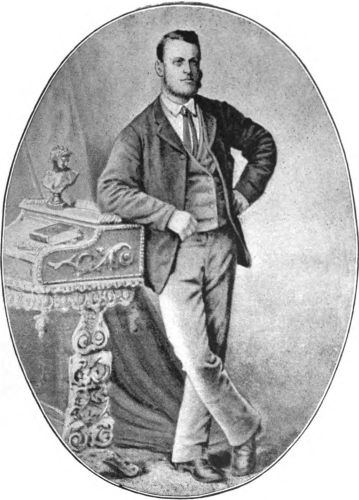
Joe Byrne.
About this time it was deemed desirable to arrest a number of the sympathizers who were setting the police at open defiance. They were galloping round the search parties, watching the movements of the police and insulting the men. With the sanction of the Government, we decided to get together all the members of the force in charge of stations and allow them to submit the names of persons whom they knew to be Kelly sympathizers, aiding the gang by giving them information of our movements, and in other ways. The arrest was ordered of about twenty relatives and friends, and the arrests were made all over the district on the same day. They were charged with aiding and abetting the Kelly gang, and were brought before the court and remanded for a week. No evidence was given beyond the fact that they were known to be Kelly sympathizers, but upon this statement the magistrates remanded them from time to time for seven days. They were in confinement for some two or three months, but still the Kellys were able to find ways and means of supporting themselves and keeping out of the clutches of the police. At last the police magistrate, Mr. Foster, refused to remand them any longer, and discharged the whole of them. It was my painful duty, week after week, to go up to Beechworth every Friday and apply for a further remand for seven days, without being able to adduce a tittle of evidence against them. This move was a very unfortunate one. It did no good, and evoked sympathy for the men in custody. The police, I found out, had no evidence against these persons beyond the fact that they were known to be associates, relatives, and friends of the outlaws. Had the women been arrested, such as Kelly's sisters, the act might have done some good, but it was thought advisable not to interfere with the women. During the time I and several of the police were going up every Friday night to Beechworth to apply for the remand of the prisoners next morning, I had to take the constables who knew these sympathizers every week to Beechworth with me, for I never knew when the magistrates might call for some evidence, in default of which they might discharge the prisoners. As these men had been arrested we were determined to keep them as long as we could, in the hopes that the outlaws might get infuriated at all their friends being locked up on their account, but they took not the slightest notice of it.
A few weeks before those arrested were discharged, some of our spies, or, as we used to call them, "agents," gave me information that the Kellys had procured some dynamite and intended blowing up the train out of revenge for our locking up these persons. I took no notice of the report. On one Monday night the telegraph operator at Benalla informed me that for some reason the wires would not act between Beechworth and Benalla. The break was somewhere between Wangaratta and Beechworth, and the stoppage occurred about nine o'clock. The following morning the lines were found to be working all right again. The same thing occurred on Tuesday, and on Wednesday night telegraph repairers from Melbourne were sent along the line, but could find nothing wrong. Still, each evening, exactly at nine o'clock, no messages could be sent, and sometimes the line stopped working in the middle of a message. Thursday night the same thing occurred, and yet the line was not broken. One of the operators told me he believed the break was due to some one putting a piece of wire over the telegraph line and so making a ground connection. However, the cause was not discovered.
Friday night came, and we were just starting for Beechworth by the passenger train at about eight o'clock, when the operator at Benalla sent a message to me at the platform, telling me that the wire had stopped at about seven-thirty o'clock that night. I remembered then the information I had received about the line being blown up with dynamite. The officer in charge of the district and myself held a short consultation as to whether we should stop the train and inform the passengers of the danger impending. We, however, decided to get into the train and say nothing until we got to Wangaratta, when we could decide on the best course to adopt. We got into a carriage with two Roman Catholic priests who were chaffing us all the way up about not catching the Kellys. Still we said nothing about the information we received. At Wangaratta we decided to go on to Tarrawingee, as it was between that station and Beechworth the break in the line was known to be. When I got to Tarrawingee I went to the station-master and told him to stop the train until I gave him permission to start. He said he had no authority to stop the train. I then took a constable to the engine-driver and told the driver he was on no account to start without my permission, telling him at the same time of my suspicions. The officer in charge of the district and myself then called the telegraph operator whom we had in the carriage, and asked him if he could tell in any way whether the line was open between that station and Beechworth, as there was no telegraph office at Tarrawingee. The operator said if he could get up the pole and take the wire between his teeth he could tell. The difficulty was to get him up the pole, but we got a long spar and shoved him up, and he discovered connection was open again to Beechworth. The officer in charge of the district and myself then decided that we would let the train go on and say nothing at all to the passengers, who, during the detention at Tarrawingee, were calling out and grumbling at our keeping the train all that time. We got into the train and arrived safely at Beechworth, without the passengers knowing anything about the danger they had been in.
The feeling of alarm over the Kelly gang was so strong at this time, that had we raised an alarm the passenger traffic on the line would have been entirely stopped. I have often thought what a terrible thing it would have been if that train had been blown up, especially going over some of the steep embankments on the line to Beechworth. For months afterwards the Government placed men on watch to prevent the line being interfered with by the Kellys. I remember distinctly saying to my brother officers, "Well, whatever happens, we shall be in the thick of it, so they cannot blame us." I also remember the feeling of relief we both experienced when the train arrived safely at Beechworth. It was a terrible responsibility on our shoulders, and we had very little time to decide the best course to adopt, but fortunately the course we adopted turned out all right. A few days after this occurrence I was told by one of our "agents" that arrangements had been made that night to blow up the train with dynamite, but the outlaws did not know how to use the cartridges that they had been supplied with, and they were afraid to make the attempt and fail, and so resolved to defer the dynamite business to some future occasion.
After leaving the cave party, as it was called, I went to Benalla and organized several search parties, took charge of one of them myself, and had no end of adventures. My principal place of searching was the Warby Ranges, and many a hard day have I spent in them. We were trying to keep a constant watch over the relatives of the outlaws, more especially over Kelly's sister, whose place was near Greta, within four or five miles of Glenrowan. The Warby Ranges run just to the back of Glenrowan. The constables used to watch the house to see if any one arrived or left during the night. Mrs. Skillian and Katie were aware they were being watched, and nearly every night before they went to bed they would take their dogs and hunt round the bush within several hundred yards of their house. Very often the dogs discovered the police lying on the ground, and then commenced barking at them until the women came up. It appeared as if the dogs knew the police were their natural enemies. At first I used to make one of my men in the search party carry a lot of poisoned baits, and every now and then drop a bait in a likely place, but afterwards all the dogs went about day and night with muzzles on, which were only taken off when they were being fed.
This puts me in mind of another incident in our search. Information came that the Kellys were expected on the following day, Sunday, to visit a cousin of theirs, Tom Lloyd, a man who was a notorious sympathizer, and who made no secret of it. Katie Kelly had been seen riding from her place to her cousin's with a large bundle in front of her saddle, which was supposed to be clean clothes, &c. for her brothers. I was not at Benalla when the news came in, but Aaron Sherritt happened to be there waiting for me, and Captain Standish sent out three men with Aaron to watch the place. They left Benalla in a wagon, and were driven out to within three miles of the spot where they intended watching. Lloyd lived in a house at the foot of a very high hill, in fact the mountains surrounded the house on three sides. Aaron and the three men kept off the road, and did not go within 300 yards of Lloyd's house. They took up their position in a thick clump of trees, and got there before daylight in the morning. They had a good view of Lloyd's house and the surrounding country. Shortly after daylight they saw a boy come out of the house and unfasten the dogs. They at first thought he was going to fetch the cows in to milk, but in a very short time they discovered that the boy had been sent out with the dogs to see if any one had been about the place during the night. To their horror they saw the dogs coming on their trail straight towards them, and they actually followed their footsteps into the clump of trees. One of the men jumped up, as they did not wish Aaron to be seen, and immediately the dogs began to bark. The boy ran back to the hut, and shortly afterwards the inmates came out and looked in the direction where the men had been hiding. Several shots were fired from the house, presumably as a signal, and Lloyd got an axe and struck a log of wood, which was so placed that when it was hit the sound was heard all round the hills. This also was supposed to be a signal of alarm in case the outlaws were anywhere in the neighbourhood. The men had to remain where they were all day, as it would never have done to have allowed Aaron to be seen with the police.
Shortly after the cave party was broken up. Miss Byrne broke off her engagement with Aaron, and he was free to look out for some other girl. He suggested to me that he might try Katie Kelly, and see if she would engage herself to him. He went there, but Mrs. Skillian objected to his being about the place. Katie and he got on very well, but she never mentioned her brother's name to him, nor he to her. They became very great friends. One night, when Mrs. Skillian went to see a friend, she left Katie and Aaron in the house together. Aaron induced Katie to come out for a walk with him, and when Mrs. Skillian returned she found them both away. She was most indignant, and went to the nearest police station, Oxley, and laid some charge against Aaron. The police constable went to the Kellys' house, and when Aaron saw him coming up to the door he bolted out the back way. The constable followed him, and fired a couple of shots, but could not overtake him. I received a report next day from the constable, who stated that to stop Aaron he had fired a shot at him. Aaron made his way to a school-master's house that night, a place where the Kelly gang used to frequent. He borrowed a horse and rode into Beechworth, where he went straight to Detective Ward and reported the circumstance to him, asking the detective to wire to me to come up to see him at Beechworth, as he was afraid of being arrested by the police. This occurrence, strange to relate, never got into the press, and the constable at Oxley was very much surprised at the leniency shown towards Aaron. On one occasion Aaron came down to Benalla to see me. He was unobserved, arriving by train. I met him in the bush, on the banks of the Broken river. At dusk he went to the railway platform to await the train to Beechworth. When he was seen there, there was great excitement, as he was known to be Aaron Sherritt, the principal agent of the Kelly gang. A messenger was immediately sent to me in breathless haste to come quickly to the railway station. I pretended to be very much surprised, but, of course, Aaron did not recognize me nor I him, and I saw him leave by the train.
CHAPTER IX.
Mrs. Skillian's Hoax—A False Alarm—Searching the Warby Ranges—Among the Kelly Sympathizers—Ill and dispirited—The Tenant of the Haystack—Relieved after Eight Months' Camping Duty.
It was perfectly wonderful how all the trains were watched by Kelly sympathizers. You could tell them in a moment, they were to be seen on every railway station. It is not to be understood that all these men could communicate with the outlaws; my opinion is they trusted no one but their own blood relations, but the information concerning the police was sent to persons like Aaron Sherritt, there being perhaps three or four men in the whole district who could communicate to the outlaws' sisters any information that was obtained concerning the movements of the police. Hart had a brother and sister, and they were always on the move. Byrne had a brother and two or three sisters; the former was always riding about. Reports came in that Mrs. Skillian used to be seen at all hours of the night riding about the bush, sometimes with large packs on her saddle.
A curious incident occurred one morning about daylight. Some policemen had got to Mrs. Skillian's house about two o'clock in the morning, and were within a short distance of her place, and in some way she must have become aware of their presence there. She went into the paddock about three or four o'clock, caught her horse, saddled it and tied a large bundle on the saddle, mounted the horse, and started off towards the mountains, the three policemen following her, but without the slightest idea that she was aware of their presence. She made for a very steep gap in the mountains, the men following on foot, thinking they had a good thing on hand. The sun was nearly up when they reached the top of the gap, and the first thing they saw was Mrs. Skillian sitting on a log facing them, and her two hands extended from her nose, and taking what is called a "lunar" at them, with a grin of satisfaction on her face. They went up to examine the pack on the saddle, and found it to be an old table-cloth wrapped up evidently to take a rise out of the police, who had been watching her.
After I left the cave party, I was constantly on the move. My object was to harass the outlaws as much as possible. I had parties of men out in every direction, going all day, and watching for fires at night. I remember on one occasion I had been out in the bush for about ten days with a party, and having consumed our provisions, we came back to Benalla. The evening I returned Captain Standish got a letter evidently from a well-to-do farmer, who stated that he had on the previous evening seen four men walking in the direction of a certain man's house, giving a description of the place, and how to find it out. He gave his reasons for thinking they were the Kellys, and altogether it appeared a very good opportunity of falling across them. Captain Standish was in great glee about the information, and I remember sitting up half the night with him talking about it.
At twelve o'clock I went round to my men, awoke them, and told them to be ready to start with me at four o'clock next morning. We were up again about three, got our horses and provisions ready, and away we started at daylight, and went through the town of Benalla before any one was up. As it was Sunday morning, and it was an unusual thing for us to start away on that day, instead of going in the direction indicated in the letter, I went directly in the opposite one. When I got into the bush, about five miles from Benalla, I dismounted the men and read the letter to them. I was afraid to do so before, in case the information we were going on might leak out. They were all in great spirits at the probabilities of success, and thought our chances very good. We camped and let our horses feed in the middle of the day, and so we travelled along until after sunset, when we doubled back, and made in the direction of the farm described in the letter.
About four o'clock in the afternoon we passed a hut. Of course every one, knowing we were in search of the Kellys, came out to see us. One of my men drew my attention to a man standing watching us, and told me he was one of the principal spies of the Kellys. I replied, "Well, he can never guess where we are going, for we have the Warby Ranges between us and the spot we are making for." We passed on, and thought nothing more of him. We got into camp about eight o'clock, tied our horses up, and after having some water, bread, and beef, laid down until one o'clock in the morning. As the men got out of their hammocks, Lawless cried out, "I say, Mr. Hare, I think some of these hammocks will be for sale to-night." He meant by that that some of us would be shot, as all felt convinced we were going to meet the outlaws that morning.
The men were all in great spirits. We had to cross the railway gates at Glenrowan. We often found great difficulty in crossing the railway, for many of the gate-keepers were in league with the friends of the Kelly gang. The keeper required a lot of calling before he got up. We then struck across the bush until we were compelled to get on to the roads; when amongst the farm-houses we had to travel very quietly to avoid alarming the occupants, for we looked upon every one as a sympathizer of the outlaws. After travelling about four hours, the constable who undertook to take us to the farm referred to, said he thought we were near the place, so we all dismounted and left our horses on the road in charge of one of the party. The remainder approached the house carefully, and we got in front of it just half an hour before daybreak. I told my sergeant, with three of the men, to take up his position at the back of the house, and that I would, when it was clear daylight, put my hat on my rifle as a sign for him to approach. I remained on the spot with three men for about half an hour. They were strung up to such a pitch that I thought I should hardly be able to restrain them from rushing ahead of me.
At the appointed time I gave the signal, and we started for the house. We had to pass a window before getting to the door, and in doing so one of the men stepped in front of me. He told me afterwards that he thought a shot would have been fired out of the window, and he wanted to get between me and it. We went to the door and listened, but all was silent within. I knocked, and a man inside called out, "Who's there?" I replied, "Police; open the door." After a few seconds he did so. I said, "Have you any strangers in your house?" He said, "I have." I suppose our appearance there frightened the life out of him, for he turned deadly pale; but the moment he said there were strangers inside we all rushed into the house and into every room in the building. I said to the farmer, "Let me see the strangers," and out came the individual whom we had passed the previous evening, the greatest sympathizer Kelly had. I asked him what brought him there. He said he came over to see his friend and spend the night with him.