Book 5 — Recent Deaths.
Reading edition
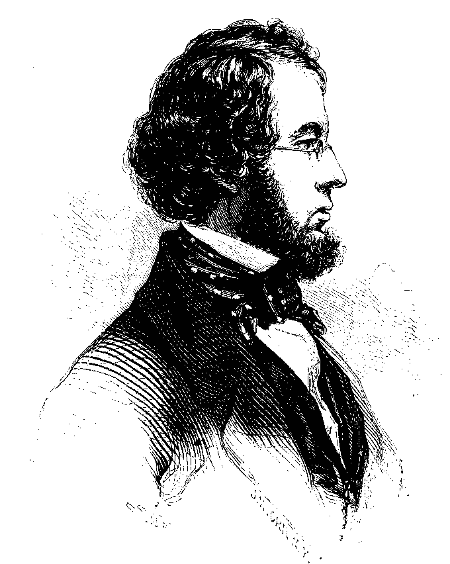
Captain J. D. Cunningham, of the Bengal Engineers, author of the History of the Sikhs, died in India on the twenty-eight of February, in consequence, it is said, of his removal from the political agency of Bhopaul, where his services and abilities had been highly valued. The act of the "Company" fell with peculiar hardship upon an officer who had passed twenty years of honorable and uninterrupted service in every climate of India, and whose error (if any were committed by the publication in question) was certainly not of a character demanding censure so grave. It will be recollected that the book threw some new light on the conduct of Lord Hardinge at Sobraon, and that the writer was dismissed on the charge of having, "without authority," published documents officially intrusted to his charge. The friends of Captain Cunningham aver that he had formerly asked permission, and he construed the reply to be an expression of indifference on the part of the directors. It was never pretended that an unworthy motive had influenced him, or that he had acted on any other than a desire (however mistaken) to promote the welfare of the government to which he was attached. It is understood that Captain Cunningham's health broke soon after this painful misunderstanding, and that its effects pursued him to his death. He was a son of Allan Cunningham, had distinguished himself greatly in all his Indian employments, and had not completed his fortieth year.
The Glasgow Citizen calls attention to the death of Mr. John Henning, the well-known Paisley artist, whose studies from the Elgin marbles and cartoons after Raphad obtained so much distinction for himself, and contributed so largely to the diffusion of a general taste for the fine arts amongst his countrymen. Mr. Henning was a self-taught sculptor, and devoted twelve years of his life, under great difficulties, to the restoration of the Greek marbles brought over by Lord Elgin. His copies of these on a reduced scale are so well known and esteemed as to render eulogium on their merits here unnecessary. Many busts of his contemporaries remain to testify further to the excellence of his hand. He was one of the men whom his native town "delighted to honor."
Padre Rozaven, one of the most famous of modern Jesuits, and distinguished by divers polemical treatises, as well as by a long residence and religious warfare in Russia, has just died in Rome in his eighty-second year.
Prince Wittgenstein, Minister of the Royal House of Prussia, died on the 11th April, at Berlin, at the age of eighty-one. He had been in the service of the state fifty-six years, and had filled the post in which he died since 1819.
Henry Bickersteth, Lord Langdale, late Master of the Rolls, died on Good Friday, at Tunbridge Wells, to which place he had lately repaired for the benefit of his health—impaired by long-continued mental labor, resulting in a paralytic stroke, which took place shortly before his death. He was born on the eighteenth of June, 1783, in the county of Westmoreland, where his father was possessed of a small property. Originally destined for the medical profession (of which his father was a member), in which he had completed his studies, he visited the Continent with the family of the late Earl of Oxford, by whose advice he was induced to embark on the career of the bar. He entered Caius College, Cambridge, where he took his degrees as senior wrangler in 1808. Three years afterwards he was called to the bar, and engaged at once in the duties of his profession. He rapidly rose to great eminence in the Equity Courts, to which he confined his practice. On the nineteenth of January, 1836, he was appointed to succeed Lord Cottenham as Master of the Rolls, and was at the same time called to the House of Peers. But a few months had elapsed after his accession to the mastership of the rolls when Lord Langdale delivered in the House of Lords his remarkable speech on the administration of justice in the Court of Chancery, and on the appellate jurisdiction of their lordships' house, and to the opinions expressed in that speech, and in favor of the division of the duties of the Great Seal, he constantly adhered. On the resignation of Lord Cottenham last year, the Great Seal was more than once tendered to Lord Langdale by the head of the present administration; but though he consented to act as first commissioner, and sat for a short time in the Lord Chancellor's court, and in the House of Lords, in that capacity, the intense application to which the state of the Court of Chancery had condemned him forbade a further stretch of his powers.
General E. J. Roberts, for many years conspicuous as an editor and a politician in the state of New York, died at the age of fifty-five, a few weeks ago, at Detroit. He formerly edited The Craftsman, at Rochester, and in 1830 was editor of a journal of that title in Albany. He removed to Michigan in 1834, and filled very important offices in that state. He was a member of the state senate at the time of his death.
From Stockholm is announced the death, at the age of seventy-one, of the distinguished botanist and geologist, M. Gorean-Wahlenberg, Professor at the University of Upsal, and director of the botanical garden in the same institution. M. Wahlenberg is stated to have spent thirty out of his seventy-one years in scientific journies through the different countries of Europe; and the results of these travels he has recorded in a variety of learned works. He left his rich collection and numerous library to the University of Upsal; in which he was a student,—and to which he was attached in various capacities during upwards of forty-three years.
We lack room for notices of the lives of Archbishop Ecleston, of Baltimore; General Brady, of the United States Army; and Mr. Philip Hone, three eminent persons who have died since our last publication.