HENRY ROWE SCHOOLCRAFT.
Reading edition
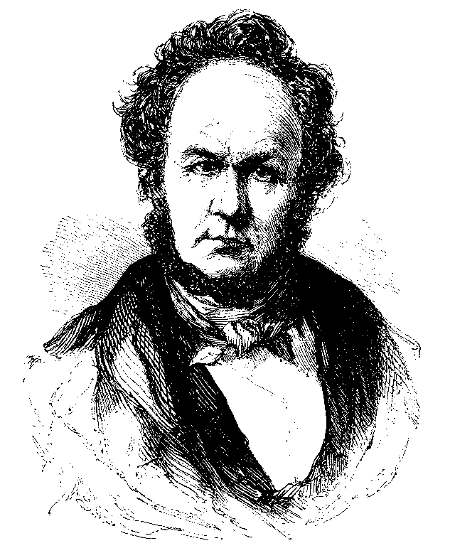
Mr. Schoolcraft is of English descent by the paternal side, his great-grandfather having come from England during the wars of Queen Anne, and settled in what is now Schoharie county in New-York, where in old age he taught the first English school in that part of the country, from which circumstance his name was not unnaturally changed by the usage of the people from Calcraft to Schoolcraft. Our author recently attempted in his own person to revive the old family name, but soon abandoned it, and concluded to retain that which was begotten upon his native soil, and by which he has long been so honorably distinguished. He is a son of Colonel Lawrence Schoolcraft, who joined the revolutionary army at seventeen years of age, and participated in the movements under Montgomery and Schuyler, and the memorable defence of Fort Stanwix under Gansevoort. He was born in Guilderland, near Albany, on the twenty-eighth of March, 1793. In a secluded part of the country, where there were few advantages for education, and scarce any persons who thought of literature, he had an ardent love of knowledge, and sat at home with his books and pencils while his equals in age were at cock-fights and horse-races, for which Guilderland was then famous. He is still remembered by some of the octogenarians of the village as the "learned boy." At thirteen he drew subjects in natural history, and landscapes, which attracted the attention of the late Lieutenant-Governor Van Rensselaer, then a frequent visitor of his father, through whose agency he came near being apprenticed to one Ames, the only portrait-painter at that time in Albany; but as it was demanded that he should commence with house-painting the plan was finally abandoned. At fourteen he began to contribute pieces in prose and verse to the newspapers, and for several years after he pursued without aid the study of natural history, English literature, Hebrew, German, and French, and the philosophy of language.
Mr. Schoolcraft's first work was an elaborate treatise, but partially known to the public, entitled Vitreology, which was published in 1817. The design of it was to exhibit the application of chemistry to the arts in the fusion of siliceous and alkaline substances in the production of enamels, glass, etc. He had had opportunities of experimenting largely and freely by his position as conductor for a series of years of the extensive works of the Ontario Company at Geneva in New-York, the Vermont Company at Middlebury and Salisbury in Vermont, and the foundry of crystal glass at Keene in New Hampshire. In 1818, and the following year, he made a geological survey of Missouri and Arkansas to the spurs of the Rocky Mountains, and in the fall of 1819 published in New-York his View of the Lead Mines of Missouri, which is said by Professor Silliman to have been "the only elaborate and detailed account of a mining district in the United States" which had then appeared. It attracted much attention, and procured for the author the friendship of many eminent men. In the same year he printed Transallegania, a poetical jeu d'esprit of which mineralogy is the subject, and which preceded some clever English attempts in the same vein. It was republished in London by Sir Richard Phillips in the next year.
Early in 1820 he published a Journal of a Tour in the Interior of Missouri and Arkansas, extending from Potosi toward the Rocky Mountains. His writings having attracted the notice of the government, he was commissioned by Mr. Calhoun, then Secretary of War, to visit the copper region of Lake Superior, and to accompany General Cass in his expedition to the head waters of the Mississippi. His Narrative Journal of this tour was published in 1821, and was eminently successful, an edition of twelve hundred copies being sold in a few weeks. In the same year he was appointed secretary to the commission for treating with the Indian tribes at Chicago, and on the conclusion of his labors published his sixth work, entitled Travels in the Central Portions of the Mississippi Valley, in which he described the country between the regions of which he had given an account in his previous works. His reputation was now widely and firmly established as an explorer, and as a man of science and letters. From this time his attention was devoted principally to the Red Race, though he still cultivated natural history, and wrote occasionally for the reviews and magazines.
In 1822 he was appointed by President Monroe agent for Indian Affairs, to reside at St. Mary's, at the foot of Lake Superior. In the years 1825, 1826, and 1827, he attended the important convocations of the north-west tribes at Prairie du Chien, Pont du Lac, and Buttes des Morts. In 1831 he was sent on a special embassy, accompanied by troops, to conciliate the Sioux and Ojibwas, and bring the existing war between them to a close. In 1832 he proceeded in the same capacity to the tribes near the head waters of the Mississippi, and availed himself of the opportunity to trace that river, in small canoes, from the point where Pike stopped in 1807 and Cass in 1820 to its true source in Itasca Lake, upon which he entered on the thirteenth of July, the one hundred and forty-ninth anniversary of the discovery of the mouth of the river by La Salle. His account of this tour was published in New-York in 1834, under the title of An Expedition to Itasca Lake, and attracted much attention in all parts of the country.
From 1827 to 1831 Mr. Schoolcraft was a member of the legislative council of Michigan. In 1828 he organized the Michigan Historical Society, in which he was elected president, on the removal of General Cass to Washington, in 1831. In the fall of the same year he set on foot the Algic Society at Detroit, before which he delivered a course of lectures on the grammatical construction of the Indian languages,[1] and at its first anniversary a poem on The Indian Character. Guided by patriotism and good taste, he took a successful stand in the west against the absurd nomenclature which has elsewhere made such confusion in geography by repeating over and over the names of European places and characters, giving us Romes, Berlins, and Londons in the wilderness, and Hannibals, Scipios, Homers, and Hectors, wherever there was sufficient learning to make its possessors ridiculous. He submitted to the legislature of the territory a system of county and township names based upon the Indian vocabularies with which he was familiar, and happily secured its general adoption.
At Sault Ste. Marie Mr. Schoolcraft became acquainted with Mr. John Johnston, a gentleman from the north of Ireland, who had long resided there, and in the person of his eldest daughter married a descendant of the hereditary chief of Lake Superior, or Lake Algoma, as it is known to the Indians. She had been educated in Europe, and was an accomplished and highly interesting woman. After a residence there of eleven years he removed to Michilimackinac, and assumed the joint agency of the two districts. In 1836 he was appointed by President Jackson a commissioner to treat with the north-west tribes for their lands in the region of the upper lakes, and succeeded in effecting a cession to the United States of some sixteen millions of acres. In the same year he was appointed acting Superintendent of Indian Affairs for the Northern Department, and in 1839 principal disbursing agent for the same district.
In the last mentioned year he published two volumes of Algic Researches, comprising Indian Tales and Legends, and soon after, having passed more than twenty years as a traveller or resident on the frontiers, he removed to the city of New-York, intending to prepare for the press the great mass of his original papers which he had accumulated in this long period. In 1841 he issued proposals for an Indian Cyclopedia, geographical, historical, philological, etc., of which only one number was printed, no publisher appearing willing to undertake so costly and extensive a work of such a description. In 1842 he visited England, France, Germany, Prussia, and Holland. During his absence his wife died, at Dundee, in Canada West, where she was visiting her sister. Soon after his return he made another journey to the west, to examine some of the great mounds, respecting which he has since communicated a paper to the Royal Geographical Society of Denmark, of which he was many years ago elected an honorary member, and soon after published a collection of his poetical writings, under the title of Alhalla, or the Lord of Talladega, a Tale of the Creek War, with some miscellanies, chiefly of early date. In 1844 he commenced in numbers the publication of Oneota, or the Red Race in America, their History, Traditions, Customs, Poetry, Picture Writing, etc., in extracts from Notes, Journals, and other unpublished writings, of which one octavo volume has been completed. In 1845 he delivered an address before a society known as the "Was-ah Ho-de-no-sonne, or New Confederacy of the Iroquois," and published Observations on the Grave Creek Mound in Western Virginia, in the Transactions of the American Ethnological Society; and early in the following year presented in the form of a Report to the legislature of his native state, his Notes on the Iroquois, or Contributions to the Statistics, Aboriginal History, and General Ethnology of Western New-York.
The last and most important of Mr. Schoolcraft's works, the crowning labor of his life, for the composition of which all his previous efforts were but notes of preparation, is the Historical and Statistical Information respecting the History, Condition, and Prospects of the Indian Tribes of the United States: Collected and prepared under the Direction of the Bureau of Indian Affairs, per act of March 3, 1847. The initial volume of this important national publication, profusely illustrated with engravings from drawings by Captain Eastman, of the Army, has lately been issued in a very large and splendid quarto, by Lippincott. Grambo & Co., of Philadelphia, under authority of Congress. It embraces the general, national, and tribal history of the Indian race, with their traditions, manners, customs, languages, mythology, &c., and when completed will probably extend to six or seven volumes. Until more of it is published, it will not be possible to form any exact judgment of it, except such as is warranted by a knowledge of the author's previous works: but such a judgment must be in the highest degree favorable.
Mr. Schoolcraft's ethnological writings are among the most important contributions that have been made to the literature of this country. His long and intimate connection with the Indian tribes, and the knowledge possessed by his wife and her family of the people from whom they were descended by the maternal side, with his power of examining their character from the European point of view, have enabled him to give us more authentic and valuable information respecting their manners, customs, and physical traits, and more insight into their moral and intellectual constitution, than can be derived, perhaps, from all other authors. His works abound in materials for the future artist and man of letters, and will on this account continue to be read when the greater portion of the popular literature of the day is forgotten. With the forests which they inhabited, the red race have disappeared with astonishing rapidity. Until recently they have rarely been the subjects of intelligent study; and it began to be regretted, as they were seen fading from our sight, that there was so little written respecting them that had any pretensions to fidelity. I would not be understood to undervalue the productions of Eliot, Loskiel, Heckewelder, Brainerd, and other early missionaries, but they were restricted in design, and it is not to be denied that confidence in their representations has been much impaired, less perhaps from doubts of their integrity than of their ability and of the advantages of the points of view from which they made their observations. The works on Indian philology by Roger Williams and the younger Edwards are more valuable than any others of the seventeenth and eighteenth centuries, but it now appears that these authors knew very little of the philosophy of the American language. Du Ponceau's knowledge was still more superficial, and excepting Mr. Gallatin and the late Mr. Pickering, who made use of the imperfect data furnished by others, I believe no one besides Mr. Schoolcraft has recently produced any thing on the subject worthy of consideration. Something has been done by General Cass, and Mr. McKenny and Mr. Catlin have undoubtedly accomplished much in this department of ethnography; but allowing all that can reasonably be claimed for these artist-travellers, Mr. Schoolcraft must still be regarded as the standard and chief authority respecting the Algic tribes.
The influence which the original and peculiar myths and historical traditions of the Indians is to have on our imaginative literature, has been recently more than ever exhibited in the works of our authors. The tendency of the public taste to avail itself of the American mythology as a basis for the exhibition of "new lines of fictitious creations" has been remarked by Mr. Schoolcraft himself in Oneota, and he refers to the tales of Mrs. Oakes Smith, and to the Wild Scenes in the Forest and the Prairie, and the Vigil of Faith, by Mr. Charles F. Hoffman, as works in which this tendency is most distinctly perceptible. In the writings of W. H. C. Hosmer, the legends of Mr. Whittier, and some of the poems of Mr. Longfellow and Mr. Lowell, we see manifestations of the same disposition.
No one who has not had the most ample opportunities of personal observation should attempt to mould Indian life and mythology to the purposes of fiction without carefully studying whatever Mr. Schoolcraft has published respecting them. The chief distinction of the Algic style with which he has made us acquainted is its wonderful simplicity and conciseness, with which the common verbosity, redundant description, false sentiment, and erroneous manners of what are called Indian tales, are as little in keeping as "English figures in moccasins, and holding bows and arrows."
The excellent portrait at the beginning of this article is from a daguerreotype by Simons, of Philadelphia.