Chapter XIX
Reading edition
ENGLAND DURING THE LATTER YEARS OF EDWARD III.
Glories of the years succeeding the treaty of Calais. 419
1361-69. John Froissart in England. 419
His picture of the life of court and people. 420
The national spirit in English literature. 420
Gower and Minot. 420
Geoffrey Chaucer. 421
The standard English language. 421
Lowland Scottish. 422
The national spirit in art. 422
"Flowing decorated" and "perpendicular" architecture. 422
Contrast between England and Scotland. 423
The national spirit in popular English literature. 423
William Langland. 423
His picture of the condition of the poor. 424
The national spirit and the universities. 424
Early career of John Wycliffe. 425
Spread of cultivation among the laity. 426
The national spirit in English law. 426
The national spirit in commerce. 426
Edward III.'s family settlement. 427
Marriage of the Black Prince and Joan of Kent. 428
Marriages of Lionel of Antwerp with Elizabeth de Burgh and Violante Visconti. 429
Lionel in Ireland. 429
Statute of Kilkenny. 429
1361-69. Philippa of Clarence's marriage with the Earl of March. 430
John of Gaunt and the Duchy of Lancaster. 430
Continuation of ancient rivalries between houses now represented by branches of the royal family. 431
The great prelates of the end of Edward III.'s reign. 431
Feb., 1371. Parliament: clerical ministers superseded by laymen. 432
Clerical and anti-clerical, constitutional and court parties. 433
Edward III.'s dotage. 434
Alice Perrers. 434
Struggle of parties at court. 434
Increasing bitterness of the opposition to the courtiers. 434
April-July, 1376. The "Good Parliament". 435
Fall of the courtiers. 436
8 June. Death of the Black Prince. 437
John of Gaunt restored to power. 438
Jan., 1377. Packed parliament, and the reaction against the Good Parliament. 438
Persistence of the clerical opposition. 439
The attack on John Wycliffe. 439
10 Feb. Wycliffe before Bishop Courtenay. 439
John of Gaunt's substantial triumph. 440
21 June. Death of Edward III. 441
Characteristics of his age. 441
APPENDIX.
ON AUTHORITIES.
(1216-1377.)
Comparative value of records and chronicles. 443
Record sources for the period. 443
Chancery Records:— 400
Patent Rolls. 444
Close Rolls. 444
Rolls of Parliament. 444
Charter Rolls. 445
Inquests Post-Mortem. 445
Fine Rolls. 445
Gascon Rolls. 445
Hundred Rolls. 446
Exchequer Records. 446
Plea Rolls and records of the common law courts. 447
Records of local courts. 448
Scotch and Irish records. 449
Ecclesiastical records. 448
Bishops' registers. 449
Monastic Cartularies. 450
Papal records. 450
Chroniclers of the period. 451
St. Alban's Abbey as a school of history. 451
Matthew Paris. 451
Later St. Alban's chroniclers. 452
Other chroniclers of Henry III. 454
Other monastic annals. 455
Chroniclers of Edward I. 455
Civic chronicles. 457
Chroniclers of Edward II. 457
Chroniclers of Edward III. 458
Scottish and Welsh chronicles. 459
French chronicles illustrating English history. 459
The three redactions of Froissart. 460
Other French chroniclers of the Hundred Years' War. 460
Legal literature. 461
Literary aids to history. 461
Modern works on the period. 462
Maps. 464
Bibliographies. 464
Note on authorities for battle of Poitiers. 464
INDEX. 465
MAPS.
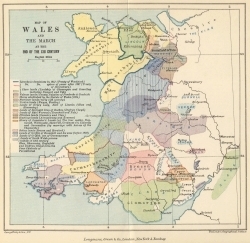
1. Map of Wales and the March at the end of the XIIIth century.
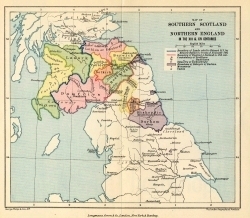
2. Map of Southern Scotland and Northern England in the XIIIth and XIVth centuries.
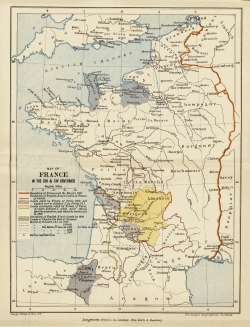
3. Map of France in the XIIIth and XIVth centuries.