PAUL CARUS (continued 3)
Reading edition
The Blessed One received Ajātasattu kindly and taught him the way of salvation; but Devadatta still tried to become the founder of a religious school of his own. 10
Devadatta did not succeed in his plans and having been abandoned by many of his disciples, he fell sick, and then repented. He entreated those who had remained with him to carry his litter to the Buddha, saying: "Take me, children, take me to him; though I have done evil to him, I am his brother-in-law. For the sake of our relationship the Buddha will save me." And they obeyed, although reluctantly. 11
And Devadatta in his impatience to see the Blessed One rose from his litter while his carriers were washing their hands. But his feet burned under him; he sank to the ground; and, having chanted a hymn on the Buddha, died. 12
XL.
NAME AND FORM.
On one occasion the Blessed One entered the assembly hall and the brethren hushed their conversation. 1
When they had greeted him with clasped hands, they sat down and became composed. Then the Blessed One said: "Your minds are inflamed with intense interest; what was the topic of your discussion?" 2
And Sāriputta rose and spake: "World-honored master, we were discussing the nature of man's own existence. We were trying to grasp the mixture of our own being which is called Name and Form. Every human being consists of conformations, and there are three groups which are not corporeal. They are sensation, perception, and the dispositions, all three constitute consciousness and mind, being comprised under the term Name. And there are four elements, the earthy element, the watery element, the fiery element, and the gaseous element, and these four elements constitute man's bodily form, being held together so that this machine moves like a puppet. How does this name and form endure and how can it live?" 3
Said the Blessed One: "Life is instantaneous and living is dying. Just as a chariot-wheel in rolling rolls only at one point of the tire, and in resting rests only at one point; in exactly the same way, the life of a living being lasts only for the period of one thought. As soon as that thought has ceased the being is said to have ceased. 4
"As it has been said:—'The being of a past moment of thought has lived, but does not live, nor will it live. The being of a future moment of thought will live, but has not lived, nor does it live. The being of the present moment of thought does live, but has not lived, nor will it live.'" 5
"As to Name and Form we must understand how they interact. Name has no power of its own, nor can it go on of its own impulse, either to eat, or to drink, or to utter sounds, or to make a movement. Form also is without power and cannot go on of its own impulse. It has no desire to eat, or to drink, or to utter sounds, or to make a movement. But Form goes on when supported by Name, and Name when supported by Form. When Name has a desire to eat, or to drink, or to utter sounds, or to make a movement, then Form eats, drinks, utters sounds, makes a movement. 6
"It is as if two men, the one blind from birth and the other a cripple, were desirous of going traveling, and the man blind from birth were to say to the cripple as follows: 'See here! I am able to use my legs, but I have no eyes with which to see the rough and the smooth places in the road.' 7
"And the cripple were to say to the man blind from birth as follows: 'See here! I am able to use my eyes, but I have no legs with which to go forward and back.' 8
"And the man blind from birth, pleased and delighted, were to mount the cripple on his shoulders. And the cripple sitting on the shoulders of the man blind from birth were to direct him, saying, 'Leave the left and go to the right; leave the right and go to the left.' 9
"Here the man blind from birth is without power of his own, and weak, and cannot go of his own impulse or might. The cripple also is without power of his own, and weak, and cannot go of his own impulse or might. Yet when they mutually support one another it is not impossible for them to go. 10
"In exactly the same way Name is without power of its own, and cannot spring up of its own might, nor perform this or that action. Form also is without power of its own, and cannot spring up of its own might, nor perform this or that action. Yet when they mutually support one another it is not impossible for them to spring up and go on. 11
"There is no material that exists for the production of Name and Form; and when Name and Form cease, they do not go anywhither in space. After Name and Form have ceased, they do not exist anywhere in the shape of heaped-up music material. Thus when a lute is played upon, there is no previous store of sound; and when the music ceases it does not go anywhither in space. When it has ceased, it exists nowhere in a stored-up state. Having previously been non-existent, it came into existence on account of the structure and stem of the lute and the exertions of the performer; and as it came into existence so it passes away. In exactly the same way, all the elements of being, both corporeal and non-corporeal come into existence after having previously been non-existent; and having come into existence pass away. 12
"There is not a self residing in Name and Form, but the cooperation of the conformations produces what people call a man. 13
"Just as the word 'chariot' is but a mode of expression for axle, wheels, the chariot-body and other constituents in their proper combination, so a living being is the appearance of the groups with the four elements as they are joined in a unit. There is no self in the carriage and there is no self in man. 14
"O bhikkhus, this doctrine is sure and an eternal truth, that there is no self outside of its parts. This self of ours which constitutes Name and Form is a combination of the groups with the four elements, but there is no ego entity, no self in itself. 15
"Paradoxical though it may sound: There is a path to walk on, there is walking being done, but there is no traveler. There are deeds being done, but there is no doer. There is a blowing of the air, but there is no wind that does the blowing. The thought of self is an error and all existences are as hollow as the plantain tree and as empty as twirling water bubbles. 16
"Therefore, O bhikkhus, as there is no self, there is no transmigration of a self; but there are deeds and the continued effect of deeds. There is a rebirth of karma; there is reincarnation. This rebirth, this reincarnation, this reappearance of the conformations is continuous and depends on the law of cause and effect. Just as a seal is impressed upon the wax reproducing the configurations of its device, so the thoughts of men, their characters, their aspirations are impressed upon others in continuous transference and continue their karma, and good deeds will continue in blessings while bad deeds will continue in curses. 17
"There is no entity here that migrates, no self is transferred from one place to another; but there is a voice uttered here and the echo of it comes back. The teacher pronounces a stanza and the disciple who attentively listens to his teacher's instruction, repeats the stanza. Thus the stanza is reborn in the mind of the disciple. 18
"The body is a compound of perishable organs. It is subject to decay; and we should take care of it as of a wound or a sore; we should attend to its needs without being attached to it, or loving it. 19
"The body is like a machine, and there is no self in it that makes it walk or act, but the thoughts of it, as the windy elements, cause the machine to work. 20
"The body moves about like a cart. Therefore 'tis said: 21
"As ships are by the wind impelled, As arrows from their bowstrings speed, So likewise when the body moves The windy element must lead.22 "Machines are geared to work by ropes; So too this body is, in fact, Directed by a mental pull Whene'er it stand or sit or act.23 "No independent self is here That could intrinsic forces prove To make man act without a cause, To make him stand or walk or move.24
"He only who utterly abandons all thought of the ego escapes the snares of the Evil One; he is out of the reach of Māra. 25
"Thus says the pleasure-promising tempter: 26
"So long as to the things Called 'mine' and 'I' and 'me' Thine anxious heart still clings, My snares thou canst not flee."27
"The faithful disciple replies: 28
"Naught's mine and naught of me, The self I do not mind! Thus Māra, I tell thee, My path thou canst not find."29
"Dismiss the error of the self and do not cling to possessions which are transient but perform deeds that are good, for deeds are enduring and in deeds your karma continues. 30
"Since then, O bhikkhus, there is no self, there can not be any after life of a self. Therefore abandon all thought of self. But since there are deeds and since deeds continue, be careful with your deeds. 31
"All beings have karma as their portion: they are heirs of their karma; they are sprung from their karma; their karma is their kinsman; their karma is their refuge; karma allots beings to meanness or to greatness. 32
"Assailed by death in life's last throes On quitting all thy joys and woes What is thine own, thy recompense? What stays with thee when passing hence? What like a shadow follows thee And will Beyond thine heirloom be? 33
"T'is deeds, thy deeds, both good and bad; Naught else can after death be had. Thy deeds are thine, thy recompense; They are thine own when going hence; They like a shadow follow thee And will Beyond thine heirloom be. 34
"Let all then here perform good deeds, For future weal a treasure store; There to reap crops from noble seeds, A bliss increasing evermore." 35
XLI.
THE GOAL.
And the Blessed One thus addressed the bhikkhus: 1
"It is through not understanding the four noble truths, O bhikkhus, that we had to wander so long in the weary-path of samsāra, both you and I. 2
"Through contact thought is born from sensation, and is reborn by a reproduction of its form. Starting from the simplest forms, the mind rises and falls according to deeds, but the aspirations of a Bodhisatta pursue the straight path of wisdom and righteousness, until they reach perfect enlightenment in the Buddha. 3
"All creatures are what they are through the karma of their deeds done in former and in present existences. 4
"The rational nature of man is a spark of the true light; it is the first step on the upward road. But new births are required to insure an ascent to the summit of existence, the enlightenment of mind and heart, where the immeasurable light of moral comprehension is gained which is the source of all righteousness. 5
"Having attained this higher birth, I have found the truth and have taught you the noble path that leads to the city of peace. 6
"I have shown you the way to the lake of Ambrosia, which washes away all evil desire. 7
"I have given you the refreshing drink called the perception of truth, and he who drinks of it becomes free from excitement, passion, and wrong-doing. 8
"The very gods envy the bliss of him who has escaped from the floods of passion and has climbed the shores of Nirvāna. His heart is cleansed from all defilement and free from all illusion. 9
"He is like unto the lotus which grows in the water, yet not a drop of water adheres to its petals. 10
"The man who walks in the noble path lives in the world, and yet his heart is not defiled by worldly desires. 11
"He who does not see the four noble truths, he who does not understand the three characteristics and has not grounded himself in the uncreate, has still a long path to traverse by repeated births through the desert of ignorance with its mirages of illusion and through the morass of wrong. 12
"But now that you have gained comprehension, the cause of further migrations and aberrations is removed. The goal is reached. The craving of selfishness is destroyed, and the truth is attained. 13
"This is true deliverance; this is salvation; this is heaven and the bliss of a life immortal." 14
XLII.
MIRACLES FORBIDDEN.
Jotikkha, the son of Subhadda, was a householder living in Rājagaha. Having received a precious bowl of sandalwood decorated with jewels, he erected a long pole before his house and put the bowl on its top with this legend: "Should a samana take this bowl down without using a ladder or a stick with a hook, or without climbing the pole, but by magic power, he shall receive as reward whatever he desires." 1
And the people came to the Blessed One, full of wonder and their mouths overflowing with praise, saying: "Great is the Tathāgata. His disciples perform miracles. Kassapa, the disciple of the Buddha, saw the bowl on Jotikkha's pole, and, stretching out his hand, he took it down, carrying it away in triumph to the vihāra." 2
When the Blessed One heard what had happened, he went to Kassapa, and, breaking the bowl to pieces, forbade his disciples to perform miracles of any kind. 3
Soon after this it happened that in one of the rainy seasons many bhikkhus were staying in the Vajjī territory during a famine. And one of the bhikkhus proposed to his brethren that they should praise one another to the householders of the village, saying: "This bhikkhu is a saint, he has seen celestial visions; and that bhikkhu possesses supernatural gifts; he can work miracles." And the villagers said: "It is lucky, very lucky for us, that such saints are spending the rainy season with us." And they gave willingly and abundantly, and the bhikkhus prospered and did not suffer from the famine. 4
When the Blessed One heard it, he told Ānanda to call the bhikkhus together, and he asked them: "Tell me, O bhikkhus, when does a bhikkhu cease to be a bhikkhu?" 5
And Sāriputta replied: 6
"An ordained disciple must not commit any unchaste act. The disciple who commits an unchaste act is no longer a disciple of the Sakyamuni. 7
"Again, an ordained disciple must not take except what has been given him. The disciple who takes, be it so little as a penny's worth, is no longer a disciple of the Sakyamuni. 8
"And lastly, an ordained disciple must not knowingly and malignantly deprive any harmless creature of life, not even an earth-worm or an ant. The disciple who knowingly and malignantly deprives any harmless creature of its life is no longer a disciple of the Sakyamuni. 9
"These are the three great prohibitions." 10
And the Blessed One addressed the bhikkhus and said: 11
"There is another great prohibition which I declare to you: 12
"An ordained disciple must not boast of any superhuman perfection. The disciple who with evil intent and from covetousness boasts of a superhuman perfection, be it celestial visions or miracles, is no longer a disciple of the Sakyamuni. 13
"I forbid you, O bhikkhus, to employ any spells or supplications, for they are useless, since the law of karma governs all things. He who attempts to perform miracles has not understood the doctrine of the Tathāgata." 14
XLIII.
THE VANITY OF WORLDLINESS.
There was a poet who had acquired the spotless eye of truth, and he believed in the Buddha, whose doctrine gave him peace of mind and comfort in the hour of affliction. 1
And it happened that an epidemic swept over the country in which he lived, so that many died, and the people were terrified. Some of them trembled with fright, and in anticipation of their fate were smitten with all the horrors of death before they died, while others began to be merry, shouting loudly, "Let us enjoy ourselves to-day, for we know not whether to-morrow we shall live"; yet was their laughter no genuine gladness, but a mere pretence and affectation. 2
Among all these worldly men and women trembling with anxiety, the Buddhist poet lived in the time of the pestilence, as usual, calm and undisturbed, helping wherever he could and ministering unto the sick, soothing their pains by medicine and religious consolation. 3
And a man came to him and said: "My heart is nervous and excited, for I see people die. I am not anxious about others, but I tremble because of myself. Help me; cure me of my fear." 4
The poet replied: "There is help for him who has compassion on others, but there is no help for thee so long as thou clingest to thine own self alone. Hard times try the souls of men and teach them righteousness and charity. Canst thou witness these sad sights around thee and still be filled with selfishness? Canst thou see thy brothers, sisters, and friends suffer, yet not forget the petty cravings and lust of thine own heart?" 5
Noticing the desolation in the mind of the pleasure-seeking man, the Buddhist poet composed this song and taught it to the brethren in the vihāra: 6
"Unless refuge you take in the Buddha and find in Nirvāna rest Your life is but vanity—empty and desolate vanity. To see the world is idle, and to enjoy life is empty. The world, including man, is but like a phantom, and the hope of heaven is as a mirage.7 "The worldling seeks pleasures fattening himself like a caged fowl. But the Buddhist saint flies up to the sun like the wild crane. The fowl in the coop has food but will soon be boiled in the pot. No provisions are given to the wild crane, but the heavens and the earth are his."8 The poet said: "The times are hard and teach the people a lesson; yet do they not heed it." And he composed another poem on the vanity of worldliness:9 "It is good to reform, and it is good to exhort people to reform. The things of the world will all be swept away. Let others be busy and buried with care. My mind all unvexed shall be pure.10 "After pleasures they hanker and find no satisfaction; Riches they covet and can never have enough. They are like unto puppets held up by a string. When the string breaks they come down with a shock.11 "In the domain of death there are neither great nor small; Neither gold nor silver is used, nor precious jewels. No distinction is made between the high and the low. And daily the dead are buried beneath the fragrant sod.12 "Look at the sun setting behind the western hills. You lie down to rest, but soon the cock will announce morn. Reform to-day and do not wait until it be too late. Do not say it is early, for the time quickly passes by.13 "It is good to reform and it is good to exhort people to reform. It is good to lead a righteous life and take refuge in the Buddha's name. Your talents may reach to the skies, your wealth may be untold— But all is in vain unless you attain the peace of Nirvāna."14
XLIV.
SECRECY AND PUBLICITY.
The Buddha said: "Three things, O disciples, are characterized by secrecy: love affairs, priestly wisdom, and all aberrations from the path of truth. 1
"Women who are in love, O disciples, seek secrecy and shun publicity; priests who claim to be in possession of special revelations, O disciples, seek secrecy and shun publicity; all those who stray from the path of truth, O disciples, seek secrecy and shun publicity. 2
"Three things, O disciples, shine before the world and cannot be hidden. What are the three? 3
"The moon, O disciples, illumines the world and cannot be hidden; the sun, O disciples, illumines the world and cannot be hidden; and the truth proclaimed by the Tathāgata illumines the world and cannot be hidden. These three things, O disciples, illumine the world and cannot be hidden. There is no secrecy about them." 4
XLV.
THE ANNIHILATION OF SUFFERING.
And the Buddha said: "What, my friends, is evil? 1
"Killing is evil; stealing is evil; yielding to sexual passion is evil; lying is evil; slandering is evil; abuse is evil; gossip is evil; envy is evil; hatred is evil; to cling to false doctrine is evil; all these things, my friends, are evil. 2
"And what, my friends, is the root of evil? 3
"Desire is the root of evil; hatred is the root of evil; illusion is the root of evil; these things are the root of evil. 4
"What, however, is good? 5
"Abstaining from killing is good; abstaining from theft is good; abstaining from sensuality is good; abstaining from falsehood is good; abstaining from slander is good; suppression of unkindness is good; abandoning gossip is good; letting go all envy is good; dismissing hatred is good; obedience to the truth is good; all these things are good. 6
"And what, my friends, is the root of the good? 7
"Freedom from desire is the root of the good; freedom from hatred and freedom from illusion; these things, my friends, are the root of the good. 8
"What, however, O brethren, is suffering? What is the origin of suffering? What is the annihilation of suffering? 9
"Birth is suffering; old age is suffering; disease is suffering; death is suffering; sorrow and misery are suffering; affliction and despair are suffering; to be united with loathsome things is suffering; the loss of that which we love and the failure in attaining that which is longed for are suffering; all these things, O brethren, are suffering. 10
"And what, O brethren, is the origin of suffering? 11
"It is lust, passion, and the thirst for existence that yearns for pleasure everywhere, leading to a continual rebirth! It is sensuality, desire, selfishness; all these things, O brethren, are the origin of suffering. 12
"And what is the annihilation of suffering? 13
"The radical and total annihilation of this thirst and the abandonment, the liberation, the deliverance from passion, that, O brethren, is the annihilation of suffering. 14
"And what, O brethren, is the path that leads to the annihilation of suffering? 15
"It is the holy eightfold path that leads to the annihilation of suffering, which consists of, right views, right decision, right speech, right action, right living, right struggling, right thoughts, and right meditation. 16
"In so far, O friends, as a noble youth thus recognizes suffering and the origin of suffering, as he recognizes the annihilation of suffering, and walks on the path that leads to the annihilation of suffering, radically forsaking passion, subduing wrath, annihilating the vain conceit of the "I-am," leaving ignorance, and attaining to enlightenment, he will make an end of all suffering even in this life." 17

XLVI.
AVOIDING THE TEN EVILS.
The Buddha said: "All acts of living creatures become bad by ten things, and by avoiding the ten things they become good. There are three evils of the body, four evils of the tongue, and three evils of the mind. 1
"The evils of the body are, murder, theft, and adultery, of the tongue, lying, slander, abuse, and idle talk; of the mind, covetousness, hatred, and error. 2
"I exhort you to avoid the ten evils: 3
"I. Kill not, but have regard for life. 4
"II. Steal not, neither do ye rob; but help everybody to be master of the fruits of his labor. 5
"III. Abstain from impurity, and lead a life of chastity. 6
"IV. Lie not, but be truthful. Speak the truth with discretion, fearlessly and in a loving heart. 7
"V. Invent not evil reports, neither do ye repeat them. Carp not, but look for the good sides of your fellow-beings, so that ye may with sincerity defend them against their enemies. 8
"VI. Swear not, but speak decently and with dignity. 9
"VII. Waste not the time with gossip, but speak to the purpose or keep silence. 10
"VIII. Covet not, nor envy, but rejoice at the fortunes of other people. 11
"IX. Cleanse your heart of malice and cherish no hatred, not even against your enemies; but embrace all living beings with kindness. 12
"X. Free your mind of ignorance and be anxious to learn the truth, especially in the one thing that is needful, lest you fall a prey either to scepticism or to errors. Scepticism will make you indifferent and errors will lead you astray, so that you shall not find the noble path that leads to life eternal." 13
XLVII.
THE PREACHER'S MISSION.
And the Blessed One said to his disciples: 1
"When I have passed away and can no longer address you and edify your minds with religious discourse, select from among you men of good family and education to preach the truth in my stead. And let those men be invested with the robes of the Tathāgata, let them enter into the abode of the Tathāgata, and occupy the pulpit of the Tathāgata. 2
"The robe of the Tathāgata is sublime forbearance and patience. The abode of the Tathāgata is charity and love of all beings. The pulpit of the Tathāgata is the comprehension of the good law in its abstract meaning as well as in its particular application. 3
"The preacher must propound the truth with unshrinking mind. He must have the power of persuasion rooted in virtue and in strict fidelity to his vows. 4
"The preacher must keep in his proper sphere and be steady in his course. He must not flatter his vanity by seeking the company of the great, nor must he keep company with persons who are frivolous and immoral. When in temptation, he should constantly think of the Buddha and he will conquer. 5
"All who come to hear the doctrine, the preacher must receive with benevolence, and his sermon must be without invidiousness. 6
"The preacher must not be prone to carp at others, or to blame other preachers; nor speak scandal, nor propagate bitter words. He must not mention by name other disciples to vituperate them and reproach their demeanor. 7
"Clad in a clean robe, dyed with good color, with appropriate undergarments, he must ascend the pulpit with a mind free from blame and at peace with the whole world. 8
"He must not take delight in quarrelous disputations or engage in controversies so as to show the superiority of his talents, but be calm and composed. 9
"No hostile feelings shall reside in his heart, and he must never abandon the disposition of charity toward all beings. His sole aim must be that all beings become Buddhas. 10
"Let the preacher apply himself with zeal to his work, and the Tathāgata will show to him the body of the holy law in its transcendent glory. He shall be honored as one whom the Tathāgata has blessed. The Tathāgata blesses the preacher and also those who reverently listen to him and joyfully accept the doctrine. 11
"All those who receive the truth will find perfect enlightenment. And, verily, such is the power of the doctrine that even by the reading of a single stanza, or by reciting, copying, and keeping in mind a single sentence of the good law, persons may be converted to the truth and enter the path of righteousness which leads to deliverance from evil. 12
"Creatures that are swayed by impure passions, when they listen to the voice, will be purified. The ignorant who are infatuated with the follies of the world will, when pondering on the profundity of the doctrine, acquire wisdom. Those who act under the impulse of hatred will, when taking refuge in the Buddha, be filled with good-will and love. 13
"A preacher must be full of energy and cheerful hope, never tiring and never despairing of final success. 14
"A preacher must be like a man in quest of water who digs a well in an arid tract of land. So long as he sees that the sand is dry and white, he knows that the water is still far off. But let him not be troubled or give up the task as hopeless. The work of removing the dry sand must be done so that he can dig down deeper into the ground. And often the deeper he has to dig, the cooler and purer and more refreshing will the water be. 15
"When after some time of digging he sees that the sand becomes moist, he accepts it as a token that the water is near. 16
"So long as the people do not listen to the words of truth, the preacher knows that he has to dig deeper into their hearts; but when they begin to heed his words he apprehends that they will soon attain enlightenment. 17
"Into your hands, O ye men of good family and education who take the vow of preaching the words of the Tathāgata, the Blessed One transfers, intrusts, and commends the good law of truth. 18
"Receive the good law of truth, keep it, read and reread it, fathom it, promulgate it, and preach it to all beings in all the quarters of the universe. 19
"The Tathāgata is not avaricious, nor narrow-minded, and he is willing to impart the perfect Buddha-knowledge unto all who are ready and willing to receive it. Be ye like unto him. Imitate him and follow his example in bounteously giving, showing, and bestowing the truth. 20
"Gather round you hearers who love to listen to the benign and comforting words of the law; rouse the unbelievers to accept the truth and fill them with delight and joy. Quicken them, edify them, and lift them higher and higher until they see the truth face to face in all its splendor and infinite glory." 21
When the Blessed One had thus spoken, the disciples said: 22
"O thou who rejoicest in kindness having its source in compassion, thou great cloud of good qualities and of benevolent mind, thou quenchest the fire that vexeth living beings, thou pourest out nectar, the rain of the law! 23
"We shall do, O Lord, what the Tathāgata commands. We shall fulfil his behest; the Lord shall find us obedient to his words." 24
And this vow of the disciples resounded through the universe, and like an echo it came back from all the Bodhisattas who are to be and will come to preach the good law of Truth to future generations. 25
And the Blessed One said: "The Tathāgata is like unto a powerful king who rules his kingdom with righteousness, but being attacked by envious enemies goes out to wage war against his foes. When the king sees his soldiers fight he is delighted with their gallantry and will bestow upon them donations of all kinds. Ye are the soldiers of the Tathāgata, while Māra, the Evil One, is the enemy who must be conquered. And the Tathāgata will give to his soldiers the city of Nirvāna, the great capital of the good law. And when the enemy is overcome, the Dharma-rāja, the great king of truth, will bestow upon all his disciples the most precious crown which jewel brings perfect enlightenment, supreme wisdom, and undisturbed peace." 26


THE TEACHER.
XLVIII.
THE DHAMMAPADA.
This is the Dhammapada, the path of religion pursued by those who are followers of the Buddha: 1
Creatures from mind their character derive; mind-marshalled are they, mind-made. Mind is the source either of bliss or of corruption. 2
By oneself evil is done; by oneself one suffers; by oneself evil is left undone; by oneself one is purified. Purity and impurity belong to oneself, no one can purify another. 3 You yourself must make an effort. The Tathāgatas are only preachers. The thoughtful who enter the way are freed from the bondage of Māra. 4
He who does not rouse himself when it is time to rise; who, though young and strong, is full of sloth; whose will and thoughts are weak; that lazy and idle man will never find the way to enlightenment. 5
If a man hold himself dear, let him watch himself carefully; the truth guards him who guards himself. 6
If a man makes himself as he teaches others to be, then, being himself subdued, he may subdue others; one's own self is indeed difficult to subdue. 7
If some men conquer in battle a thousand times a thousand men, and if another conquer himself, he is the greatest of conquerors. 8
It is the habit of fools, be they laymen or members of the clergy, to think, "this is done by me. May others be subject to me. In this or that transaction a prominent part should be played by me." Fools do not care for the duty to be performed or the aim to be reached, but think of their self alone. Everything is but a pedestal of their vanity. 9
Bad deeds, and deeds hurtful to ourselves, are easy to do; what is beneficial and good, that is very difficult. 10
If anything is to be done, let a man do it, let him attack it vigorously! 11
Before long, alas! this body will lie on the earth, despised, without understanding, like a useless log; yet our thoughts will endure. They will be thought again, and will produce action. Good thoughts will produce good actions, and bad thoughts will produce bad actions. 12
Earnestness is the path of immortality, thoughtlessness the path of death. Those who are in earnest do not die; those who are thoughtless are as if dead already. 13
Those who imagine they find truth in untruth, and see untruth in truth, will never arrive at truth, but follow vain desires. They who know truth in truth, and untruth in untruth, arrive at truth, and follow true desires. 14
As rain breaks through an ill-thatched house, passion will break through an unreflecting mind. As rain does not break through a well-thatched house, passion will not break through a well-reflecting mind. 15
Well-makers lead the water wherever they like; fletchets bend the arrow; carpenters bend a log of wood; wise people fashion themselves; wise people falter not amidst blame and praise. Having listened to the law, they become serene, like a deep, smooth, and still lake. 16
If a man speaks or acts with an evil thought, pain follows him as the wheel follows the foot of the ox that draws the carriage. 17
An evil deed is better left undone, for a man will repent of it afterwards; a good deed is better done, for having done it one will not repent. 18
If a man commits a wrong let him not do it again; let him not delight in wrongdoing; pain is the outcome of evil. If a man does what is good, let him do it again; let him delight in it; happiness is the outcome of good. 19
Let no man think lightly of evil, saying in his heart, "It will not come nigh unto me." As by the falling of water-drops a water-pot is filled, so the fool becomes full of evil, though he gather it little by little. 20
Let no man think lightly of good, saying in his heart, "It will not come nigh unto me." As by the falling of water-drops a water-pot is filled, so the wise man becomes full of good, though he gather it little by little. 21
He who lives for pleasure only, his senses uncontrolled, immoderate in his food, idle, and weak, him Māra, the tempter, will certainly overthrow, as the wind throws down a weak tree. He who lives without looking for pleasures, his senses well-controlled, moderate in his food, faithful and strong, him Māra will certainly not overthrow, any more than the wind throws down a rocky mountain. 22
The fool who knows his foolishness, is wise at least so far. But a fool who thinks himself wise, he is a fool indeed. 23
To the evil-doer wrong appears sweet as honey; he looks upon it as pleasant so long as it bears no fruit; but when its fruit ripens, then he looks upon it as wrong. And so the good man looks upon the goodness of the Dharma as a burden and an evil so long as it bears no fruit; but when its fruit ripens, then he sees its goodness. 24
A hater may do great harm to a hater, or an enemy to an enemy; but a wrongly-directed mind will do greater mischief unto itself. A mother, a father, or any other relative will do much good; but a well-directed mind will do greater service unto itself. 25
He whose wickedness is very great brings himself down to that state where his enemy wishes him to be. He himself is his greatest enemy. Thus a creeper destroys the life of a tree on which it finds support. 26
Do not direct thy thought to what gives pleasure, that thou mayest not cry out when burning, "This is pain." The wicked man burns by his own deeds, as if burnt by fire. 27
Pleasures destroy the foolish; the foolish man by his thirst for pleasures destroys himself as if he were his own enemy. The fields are damaged by hurricanes and weeds; mankind is damaged by passion, by hatred, by vanity, and by lust. 28
Let no man ever take into consideration whether a thing is pleasant or unpleasant. The love of pleasure begets grief and the dread of pain causes fear; he who is free from the love of pleasure and the dread of pain knows neither grief nor fear. 29
He who gives himself to vanity, and does not give himself to meditation, forgetting the real aim of life and grasping at pleasure, will in time envy him who has exerted himself in meditation. 30
The fault of others is easily noticed, but that of oneself is difficult to perceive. A man winnows his neighbor's faults like chaff, but his own fault he hides, as a cheat hides the false die from the gambler. 31
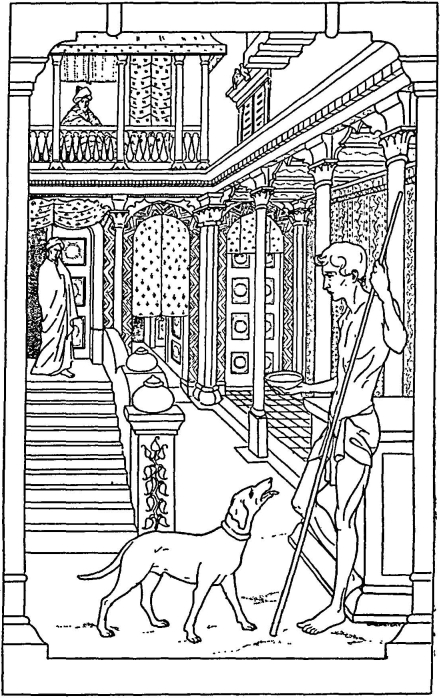
If a man looks after the faults of others, and is always inclined to take offence, his own passions will grow, and he is far from the destruction of passions. 32
Not about the perversities of others, not about their sins of commission or omission, but about his own misdeeds and negligences alone should a sage be worried. 33
Good people shine from afar, like the snowy mountains; bad people are concealed, like arrows shot by night. 34
If a man by causing pain to others, wishes to obtain pleasure for himself, he, entangled in the bonds of selfishness, will never be free from hatred. 35
Let a man overcome anger by love, let him overcome evil by good; let him overcome the greedy by liberality, the liar by truth! 36
For hatred does not cease by hatred at any time; hatred ceases by not-hatred, this is an old rule. 37
Speak the truth, do not yield to anger; give, if thou art asked; by these three steps thou wilt become divine. 38
Let a wise man blow off the impurities of his self, as a smith blows off the impurities of silver, one by one, little by little, and from time to time. 39
Lead others, not by violence, but by righteousness and equity. 40
He who possesses virtue and intelligence, who is just, speaks the truth, and does what is his own business, him the world will hold dear. 41
As the bee collects nectar and departs without injuring the flower, or its color or scent, so let a sage dwell in the community. 42
If a traveller does not meet with one who is his better, or his equal, let him firmly keep to his solitary journey; there is no companionship with fools. 43
Long is the night to him who is awake; long is a mile to him who is tired; long is life to the foolish who do not know the true religion. 44
Better than living a hundred years, not seeing the highest truth, is one day in the life of a man who sees the highest truth. 45
Some form their Dharma arbitrarily and fabricate it artificially; they advance complex speculations and imagine that good results are attainable only by the acceptance of their theories; yet the truth is but one; there are not different truths in the world. Having reflected on the various theories, we have gone into the yoke with him who has shaken off all sin. But shall we be able to proceed together with him? 46
The best of ways is the eightfold path. This is the path. There is no other that leads to the purifying of intelligence. Go on this path! Everything else is the deceit of Māra, the tempter. If you go on this path, you will make an end of pain! Says the Tathāgata, The path was preached by me, when I had understood the removal of the thorn in the flesh. 47
Not only by discipline and vows, not only by much learning, do I earn the happiness of release which no worldling can know. Bhikkhu, be not confident as long as thou hast not attained the extinction of thirst. The extinction of evil desire is the highest religion. 48
The gift of religion exceeds all gifts; the sweetness of religion exceeds all sweetness; the delight in religion exceeds all delights; the extinction of thirst overcomes all pain. 49
Few are there among men who cross the river and reach the goal. The great multitudes are running up and down the shore; but there is no suffering for him who has finished his journey. 50
As the lily will grow full of sweet perfume and delight upon a heap of rubbish, thus the disciple of the truly enlightened Buddha shines forth by his wisdom among those who are like rubbish, among the people that walk in darkness. 51
Let us live happily then, not hating those who hate us! Among men who hate us let us dwell free from hatred! 52
Let us live happily then, free from all ailments among the ailing! Among men who are ailing let us dwell free from ailments! 53
Let us live happily, then, free from greed among the greedy! Among men who are greedy let us dwell free from greed! 54
The sun is bright by day, the moon shines by night, the warrior is bright in his armor, thinkers are bright in their meditation; but among all the brightest with splendor day and night is the Buddha, the Awakened, the Holy, Blessed. 55
XLIX.
THE TWO BRAHMANS.
At one time when the Blessed One was journeying through Kosala he came to the Brahman village which is called Manasākata. There he stayed in a mango grove. 1
And two young Brahmans came to him who were of different schools. One was named Vāsettha and the other Bhāradvāja. And Vāsettha said to the Blessed One: 2
"We have a dispute as to the true path. I say the straight path which leads unto a union with Brahmā is that which has been announced by the Brahman Pokkharasāti, while my friend says the straight path which leads unto a union with Brahmā is that which has been announced by the Brahman Tārukkha. 3
"Now, regarding thy high reputation, O samana, and knowing that thou art called the Enlightened One, the teacher of men and gods, the Blessed Buddha, we have come to ask thee, are all these paths paths of salvation? There are many roads all around our village, and all lead to Manasākata. Is it just so with the paths of the sages? Are all paths paths to salvation, and do they all lead to a union with Brahmā? 4
And the Blessed One proposed these questions to the two Brahmans: "Do you think that all paths are right?" 5
Both answered and said: "Yes, Gotama, we think so." 6
"But tell me," continued the Buddha, "has any one of the Brahmans, versed in the Vedas, seen Brahmā face to face?" 7
"No, sir!" was the reply. 8
"But, then," said the Blessed One, "has any teacher of the Brahmans, versed in the Vedas, seen Brahmā face to face?" 9
The two Brahmans said: "No, sir." 10
"But, then," said the Blessed One, "has any one of the authors of the Vedas seen Brahmā face to face?" 11
Again the two Brahmans answered in the negative and exclaimed: "How can any one see Brahmā or understand him, for the mortal cannot understand the immortal." And the Blessed One proposed an illustration, saying: 12
"It is as if a man should make a staircase in the place where four roads cross, to mount up into a mansion. And people should ask him, 'Where, good friend, is this mansion, to mount up into which you are making this staircase? Knowest thou whether it is in the east, or in the south, or in the west, or in the north? Whether it is high, or low, or of medium size?' And when so asked he should answer, 'I know it not.' And people should say to him, 'But, then, good friend, thou art making a staircase to mount up into something—taking it for a mansion—which all the while thou knowest not, neither hast thou seen it.' And when so asked he should answer, 'That is exactly what I do; yea I know that I cannot know it.' What would you think of him? Would you not say that the talk of that man was foolish talk?" 13
"In sooth, Gotama," said the two Brahmans, "it would be foolish talk!" 14
The Blessed One continued: "Then the Brahmans should say, 'We show you the way unto a union of what we know not and what we have not seen.' This being the substance of Brahman lore, does it not follow that their task is vain?" 15
"It does follow," replied Bhāradvāja. 16
Said the Blessed One: "Thus it is impossible that Brahmans versed in the three Vedas should be able to show the way to a state of union with that which they neither know nor have seen. Just as when a string of blind men are clinging one to the other. Neither can the foremost see, nor can those in the middle see, nor can the hindmost see. Even so, methinks, the talk of the Brahmans versed in the three Vedas is but blind talk; it is ridiculous, consists of mere words, and is a vain and empty thing."17
"Now suppose," added the Blessed One, "that a man should come hither to the bank of the river, and, having some business on the other side, should want to cross. Do you suppose that if he were to invoke the other bank of the river to come over to him on this side, the bank would come on account of his praying?" 18
"Certainly not, Gotama."19
"Yet this is the way of the Brahmans. They omit the practice of those qualities which really make a man a Brahman, and say, 'Indra, we call upon thee; Soma, we call upon thee; Varuna, we call upon thee; Brahmā, we call upon thee.' Verily, it is not possible that these Brahmahns, on account of their invocations, prayers, and praises, should after death be united with Brahmā." 20
"Now tell me," continued the Buddha, "what do the Brahmans say of Brahmā? Is his mind full of lust?" 21
And when the Brahmans denied this, the Buddha asked:
"Is Brahmā's mind full of malice, sloth, or pride?" 22
"No, sir!" was the reply. "He is the opposite of all this." 23
And the Buddha went on: "But are the Brahmans free from these vices?" 24
"No, sir!" said Vāsettha. 25
The Holy One said: "The Brahmans cling to the five things leading to worldliness and yield to the temptations of the senses; they are entangled in the five hindrances, lust, malice, sloth, pride, and doubt. How can they be united to that which is most unlike their nature? Therefore the threefold wisdom of the Brahmans is a waterless desert, a pathless jungle, and a hopeless desolation." 26
When the Buddha had thus spoken, one of the Brahmans said: "We are told, Gotama, that the Sakyamuni knows the path to a union with Brahmā." 27
And the Blessed One said: "What do you think, O Brahmans, of a man born and brought up in Manasākata? Would he be in doubt about the most direct way from this spot to Manasākata?" 28
"Certainly not, Gotama." 29
"Thus," replied the Buddha, "the Tathāgata knows the straight path that leads to a union with Brahmā. He knows it as one who has entered the world of Brahmā and has been born in it. There can be no doubt in the Tathāgata." 30
And the two young Brahmans said: "If thou knowest the way show it to us." 31
And the Buddha said: 32
"The Tathāgata sees the universe face to face and understands its nature. He proclaims the truth both in its letter and in its spirit, and his doctrine is glorious in its origin, glorious in its progress, glorious in its consummation. The Tathāgata reveals the higher life in its purity and perfection. He can show you the way to that which is contrary to the five great hindrances. 33
"The Tathāgata lets his mind pervade the four quarters of the world with thoughts of love. And thus the whole wide world, above, below, around, and everywhere will continue to be filled with love, far-reaching, grown great, and beyond measure. 34
"Just as a mighty trumpeter makes himself heard—and that without difficulty—in all the four quarters of the earth; even so is the coming of the Tathāgata: there is not one living creature that the Tathāgata passes by or leaves aside, but regards them all with mind set free, and deep-felt love. 35
"And this is the sign that a man follows the right path: Uprightness is his delight, and he sees danger in the least of those things which he should avoid. He trains himself in the commands of morality, he encompasseth himself with holiness in word and deed; he sustains his life by means that are quite pure; good is his conduct, guarded is the door of his senses; mindful and self-possessed, he is altogether happy. 36
"He who walks in the eightfold noble path with unswerving determination is sure to reach Nirvāna. The Tathāgata anxiously watches over his children and with loving care helps them to see the light. 37
"When a hen has eight or ten or twelve eggs, over which she has properly brooded, the wish arises in her heart, 'O would that my little chickens would break open the egg-shell with their claws, or with their beaks, and come forth into the light in safety!' yet all the while those little chickens are sure to break the egg-shell and will come forth into the light in safety. Even so, a brother who with firm determination walks in the noble path is sure to come forth into the light, sure to reach up to the higher wisdom, sure to attain to the highest bliss of enlightenment." 38
L.
GUARD THE SIX QUARTERS.
While the Blessed One was staying at the bamboo grove near Rājagaha, he once met on his way Sigāla, a householder, who, clasping his hands, turned to the four quarters of the world, to the zenith above, and to the nadir below. And the Blessed One, knowing that this was done according to the traditional religious superstition to avert evil, asked Sigāla: "Why performest thou these strange ceremonies?" 1
And Sigāla in reply said: "Dost thou think it strange that I protect my home against the influences of demons? 1 know thou wouldst fain tell me, O Gotama Sakyamuni, whom people call the Tathāgata and the Blessed Buddha, that incantations are of no avail and possess no saving power. But listen to me and know, that in performing this rite I honor, reverence, and keep sacred the words of my father." 2
Then the Tathāgata said: 3
Thou dost well, O Sigāla, to honor, reverence, and keep sacred the words of thy father; and it is thy duty to protect thy home, thy wife, thy children, and thy children's children against the hurtful influences of evil spirits. I find no fault with the performance of thy father's rite. But I find that thou dost not understand the ceremony. Let the Tathāgata, who now speaks to thee as a spiritual father and loves thee no less than did thy parents, explain to thee the meaning of the six directions. 4
"To guard thy home by mysterious ceremonies is not sufficient; thou must guard it by good deeds. Turn to thy parents in the East, to thy teachers in the South, to thy wife and children in the West, to thy friends in the North, and regulate the zenith of thy religious relations above thee, and the nadir of thy servants below thee. 5
"Such is the religion thy father wants thee to have, and the performance of the ceremony shall remind thee of thy duties." 6
And Sigāla looked up to the Blessed One with reverence as to his father and said: "Truly, Gotama, thou art the Buddha, the Blessed One, the holy teacher. I never knew what I was doing, but now I know. Thou hast revealed to me the truth that was hidden as one who bringeth a lamp into the darkness. I take my refuge in the Enlightened Teacher, in the truth that enlightens, and in the community of brethren who have been taught the truth." 7
LI.
SIMHA'S QUESTION CONCERNING ANNIHILATION.
At that time many distinguished citizens were sitting together assembled in the town-hall and spoke in many ways in praise of the Buddha, of the Dharma, and of the Sangha. Simha, the general-in-chief, a disciple of the Niggantha sect, was sitting among them. And Simha thought: "Truly, the Blessed One must be the Buddha, the Holy One. I will go and visit him."1
Then Simha, the general, went to the place where the Niggantha chief, Nātaputta, was; and having approached him, he said: "I wish, Lord, to visit the samana Gotama."2
Nātaputta said: "Why should you, Simha, who believe in the result of actions according to their moral merit, go to visit the samana Gotama, who denies the result of actions? The samana Gotama, O Simha, denies the result of actions; he teaches the doctrine of non-action; and in this doctrine he trains his disciples."3
Then the desire to go and visit the Blessed One, which had arisen in Simha, the general, abated.4
Hearing again the praise of the Buddha, of the Dharma, and of the Sangha, Simha asked the Niggantha chief a second time; and again Nātaputta persuaded him not to go.5
When a third time the general heard some men of distinction extol the merits of the Buddha, the Dharma, and the Sangha, the general thought: "Truly the samana Gotama must be the Holy Buddha. What are the Nigganthas to me, whether they give their consent or not? I shall go without asking their permission to visit him, the Blessed One, the Holy Buddha."6
And Simha, the general, said to the Blessed One: "I have heard, Lord, that the samana Gotama denies the result of actions; he teaches the doctrine of non-action, saying that the actions of sentient beings do not receive their reward, for he teaches annihilation and the contemptibleness of all things; and in this doctrine he trains his disciples. Teachest thou the doing away of the soul and the burning away of man's being? Pray tell me, Lord, do those who speak thus say the truth, or do they bear false witness against the Blessed One, passing off a spurious Dharma as thy Dharma?"7
The Blessed One said:8
"There is a way, Simha, in which one who says so, is speaking truly of me; on the other hand, Simha, there is a way in which one who says the opposite is speaking truly of me, too. Listen, and I will tell thee:9
"I teach, Simha, the not-doing of such actions as are unrighteous, either by deed, or by word, or by thought; I teach the not-bringing about of all those conditions of heart which are evil and not good. However, I teach, Simha, the doing of such actions as are righteous, by deed, by word, and by thought; I teach the bringing about of all those conditions of heart which are good and not evil.10
"I teach, Simha, that all the conditions of heart which are evil and not good, unrighteous actions by deed, by word, and by thought, must be burnt away. He who has freed himself, Simha, from all those conditions of heart which are evil and not good, he who has destroyed them as a palm-tree which is rooted out, so that they cannot grow up again, such a man has accomplished the eradication of self.11
"I proclaim, Simha, the annihilation of egotism, of lust, of ill-will, of delusion. However, I do not proclaim the annihilation of forbearance, of love, of charity, and of truth.12
"I deem, Simha, unrighteous actions contemptible, whether they be performed by deed, or by word, or by thought; but I deem virtue and righteousness praiseworthy."13
And Simha said: "One doubt still lurks in my mind concerning the doctrine of the Blessed One. Will the Blessed One consent to clear the cloud away so that I may understand the Dharma as the Blessed One teaches it?"14
The Tathāgata having given his consent, Simha continued: "I am a soldier, O Blessed One, and am appointed by the king to enforce his laws and to wage his wars. Does the Tathāgata who teaches kindness without end and compassion with all sufferers, permit the punishment of the criminal? and further, does the Tathāgata declare that it is wrong to go to war for the protection of our homes, our wives, our children, and our property? Does the Tathāgata teach the doctrine of a complete self-surrender, so that I should suffer the evil-doer to do what he pleases and yield submissively to him who threatens to take by violence what is my own? Does the Tathāgata maintain that all strife, including such warfare as is waged for a righteous cause, should be forbidden?"15
The Buddha replied: "He who deserves punishment must be punished, and he who is worthy of favor must be favored. Yet at the same time he teaches to do no injury to any living being but to be full of love and kindness. These injunctions are not contradictory, for whosoever must be punished for the crimes which he has committed, suffers his injury not through the ill-will of the judge but on account of his evil-doing. His own acts have brought upon him the injury that the executer of the law inflicts. When a magistrate punishes, let him not harbor hatred in his breast, yet a murderer, when put do death, should consider that this is the fruit of his own act. As soon as he will understand that the punishment will purify his soul, he will no longer lament his fate but rejoice at it."16
And the Blessed One continued: "The Tathāgata teaches that all warfare in which man tries to slay his brother is lamentable, but he does not teach that those who go to war in a righteous cause after having exhausted all means to preserve the peace are blameworthy. He must be blamed who is the cause of war.17
"The Tathāgata teaches a complete surrender of self, but he does not teach a surrender of anything to those powers that are evil, be they men or gods or the elements of nature. Struggle must be, for all life is a struggle of some kind. But he that struggles should look to it lest he struggle in the interest of self against truth and righteousness.18
"He who struggles in the interest of self, so that he himself may be great or powerful or rich or famous, will have no reward, but he who struggles for righteousness and truth, will have great reward, for even his defeat will be a victory.19
"Self is not a fit vessel to receive any great success; self is small and brittle and its contents will soon be spilt for the benefit, and perhaps also for the curse, of others.20
"Truth, however, is large enough to receive the yearnings and aspirations of all selves and when the selves break like soap-bubbles, their contents will be preserved and in the truth they will lead a life everlasting.21
"He who goeth to battle, O Simha, even though it be in a righteous cause, must be prepared to be slain by his enemies, for that is the destiny of warriors; and should his fate overtake him he has no reason for complaint.22
"But he who is victorious should remember the instability of earthly things. His success may be great, but be it ever so great the wheel of fortune may turn again and bring him down into the dust. 23
"However, if he moderates himself and, extinguishing all hatred in his heart lifts his down-trodden adversary up and says to him, 'Come now and make peace and let us be brothers,' he will gain a victory that is not a transient success, for its fruits will remain forever.24
"Great is a successful general, O Simha, but he who has conquered self is the greater victor.25
"The doctrine of the conquest of self, O Simha, is not taught to destroy the souls of men, but to preserve them. He who has conquered self is more fit to live, to be successful, and to gain victories than he who is the slave of self.26
"He whose mind is free from the illusion of self, will stand and not fall in the battle of life.27
"He whose intentions are righteousness and justice, will meet with no failure, but be successful in his enterprises and his success will endure.28
"He who harbors in his heart love of truth will live and not die, for he has drunk the water of immortality.29
"Struggle then, O general, courageously; and fight thy battles vigorously, but be a soldier of truth and the Tathāgata will bless thee."30
When the Blessed One had spoken thus, Simha, the general, said: "Glorious Lord, glorious Lord! Thou hast revealed the truth. Great is the doctrine of the Blessed One. Thou, indeed, art the Buddha, the Tathāgata, the Holy One. Thou art the teacher of mankind. Thou showest us the road of salvation, for this indeed is true deliverance. He who follows thee will not miss the light to enlighten his path. He will find blessedness and peace. I take my refuge, Lord, in the Blessed One, and in his doctrine, and in his brotherhood. May the Blessed One receive me from this day forth while my life lasts as a disciple who has taken refuge in him."31
And the Blessed One said: "Consider first, Simha, what thou doest. It is becoming that persons of rank like thyself should do nothing without due consideration."32
Simha's faith in the Blessed One increased. He replied: "Had other teachers, Lord, succeeded in making me their disciple, they would carry around their banners through the whole city of Vesālī, shouting: 'Simha, the general has become our disciple! For the second time, Lord, I take my refuge in the Blessed One, and in the Dharma, and in the Sangha, may the Blessed One receive me from this day forth while my life lasts as a disciple who has taken his refuge in him."33
Said the Blessed One: "For a long time, Simha, offerings have been given to the Nigganthas in thy house. Thou shouldst therefore deem it right also in the future to give them food when they come to thee on their alms-pilgrimage."34
And Simha's heart was filled with joy. He said: "I have been told, Lord: 'The samana Gotama says: To me alone and to nobody else should gifts be given. My pupils alone and the pupils of no one else should receive offerings.' But the Blessed One exhorts me to give also to the Nigganthas. Well, Lord, we shall see what is seasonable. For the third time, Lord, I take my refuge in the Blessed One, and in his Dharma, and in his fraternity."35
LII.
ALL EXISTENCE IS SPIRITUAL.
And there was an officer among the retinue of Simha who had heard of the discourses of the Blessed One, and there was some doubt left in his heart.1
This man came to the Blessed One and said: "It is said, O Lord, that the samana Gotama denies the existence of the soul. Do they who say so speak the truth, or do they bear false witness against the Blessed One?"2
And the Blessed One said: "There is a way in which those who say so are speaking truly of me; on the other hand, there is a way in which those who say so do not speak truly of me.3
"The Tathāgata teaches that there is no self. He who says that the soul is his self and that the self is the thinker of our thoughts and the actor of our deeds, teaches a wrong doctrine which leads to confusion and darkness.4
"On the other hand, the Tathāgata teaches that there is mind. He who understands by soul mind, and says that mind exists, teaches the truth which leads to clearness and enlightenment."5
The officer said: "Does, then, the Tathāgata maintain that two things exist? that which we perceive with our senses and that which is mental?"6
Said the Blessed One: "Verily, I say unto thee, thy mind is spiritual, but neither is the sense-perceived void of spirituality. The bodhi is eternal and it dominates all existence as the good law guiding all beings in their search for truth. It changes brute nature into mind, and there is no being that cannot be transformed into a vessel of truth."7
LIII.
IDENTITY AND NON-IDENTITY.
Kūtadanta, the head of the Brahmans in the village of Dānamatī having approached the Blessed One respectfully, greeted him and said: "I am told, O samana, that thou art the Buddha, the Holy One, the Allknowing, the Lord of the world. But if thou wert the Buddha, wouldst thou not come like a king in all thy glory and power?" 1
Said the Blessed One: "Thine eyes are holden. If the eye of thy mind were undimmed thou couldst see the glory and the power of truth." 2
Said Kūtadanta: "Show me the truth and I shall see it. But thy doctrine is without consistency. If it were consistent, it would stand; but as it is not, it will pass away."3
The Blessed One replied: "The truth will never pass away."4
Kūtadanta said: "I am told that thou teachest the law, yet thou tearest down religion. Thy disciples despise rites and abandon immolation, but reverence for the gods can be shown only by sacrifices. The very nature of religion consists in worship and sacrifice."5
Said the Buddha: "Greater than the immolation of bullocks is the sacrifice of self. He who offers to the gods his evil desires will see the uselessness of slaughtering animals at the altar. Blood has no cleansing power, but the eradication of lust will make the heart pure. Better than worshiping gods is obedience to the laws of righteousness."6
Kūtadanta, being of a religious disposition and anxious about his fate after death, had sacrificed countless victims. Now he saw the folly of atonement by blood. Not yet satisfied, however, with the teachings of the Tathāgata, Kūtadanta continued: "Thou believest, O Master, that beings are reborn; that they migrate in the evolution of life; and that subject to the law of karma we must reap what we sow. Yet thou teachest the non-existence of the soul! Thy disciples praise utter self-extinction as the highest bliss of Nirvāna. If I am merely a combination of the sankhāras, my existence will cease when I die. If I am merely a compound of sensations and ideas and desires, wither can I go at the dissolution of the body?"7
Said the Blessed One: "O Brahman, thou art religious and earnest. Thou art seriously concerned about thy soul. Yet is thy work in vain because thou art lacking in the one thing that is needful.8
"There is rebirth of character, but no transmigration of a self. Thy thought-forms reappear, but there is no ego-entity transferred. The stanza uttered by a teacher is reborn in the scholar who repeats the words.9
"Only through ignorance and delusion do men indulge in the dream that their souls are separate and self-existent entities.10
"Thy heart, O Brahman, is cleaving still to self; thou art anxious about heaven but thou seekest the pleasures of self in heaven, and thus thou canst not see the bliss of truth and the immortality of truth.11
"Verily I say unto thee: The Blessed One has not come to teach death, but to teach life, and thou discernest not the nature of living and dying.12
"This body will be dissolved and no amount of sacrifice will save it. Therefore, seek thou the life that is of the mind. Where self is, truth cannot be; yet when truth comes, self will disappear. Therefore, let thy mind rest in the truth; propagate the truth, put thy whole will in it, and let it spread. In the truth thou shalt live forever.13
"Self is death and truth is life. The cleaving to self is a perpetual dying, while moving in the truth is partaking of Nirvāna which is life everlasting."14
Kūtadanta said: "Where, O venerable Master, is Nirvāna?"15
"Nirvāna is wherever the precepts are obeyed," replied the Blessed One.16
"Do I understand thee aright," rejoined the Brahman, "that Nirvāna is not a place, and being nowhere it is without reality?"17
"Thou dost not understand me aright," said the Blessed One, "Now listen and answer these questions: Where does the wind dwell?"18
"Nowhere," was the reply.19
Buddha retorted: "Then, sir, there is no such thing as wind."20
Kūtadanta made no reply; and the Blessed One asked again: "Answer me, O Brahman, where does wisdom dwell? Is wisdom a locality?"21
"Wisdom has no allotted dwelling-place," replied Kūtadanta.22
Said the Blessed One: "Meanest thou that there is no wisdom, no enlightenment, no righteousness, and no salvation, because Nirvāna is not a locality? As a great and mighty wind which passeth over the world in the heat of the day, so the Tathāgata comes to blow over the minds of mankind with the breath of his love, so cool, so sweet, so calm, so delicate; and those tormented by fever assuage their suffering and rejoice at the refreshing breeze."23
Said Kūtadanta: "I feel, O Lord, that thou proclaimest a great doctrine, but I cannot grasp it. Forbear with me that I ask again: Tell me, O Lord, if there be no ātman, how can there be immortality? The activity of the mind passeth, and our thoughts are gone when we have done thinking."24
Buddha replied: "Our thinking is gone, but our thoughts continue. Reasoning ceases, but knowledge remains." 25
Said Kūtadanta: "How is that? Is not reasoning and knowledge the same?"25
The Blessed One explained the distinction by an illustration: "It is as when a man wants, during the night, to send a letter, and, after having Ids clerk called, has a lamp lit, and gets the letter written. Then, when that has been done, he extinguishes the lamp. But though the writing has been finished and the light has been put out the letter is still there. Thus does reasoning cease and knowledge remain; and in the same way mental activity ceases, but experience, wisdom, and all the fruits of our acts endure."27
Kūtadanta continued: "Tell me, O Lord, pray tell me, where, if the sankhāras are dissolved, is the identity of my self. If my thoughts are propagated, and if my soul migrates, my thoughts cease to be my thoughts and my soul ceases to be my soul. Give me an illustration, but pray, O Lord, tell me, where is the identity of my self?"28
Said the Blessed One: "Suppose a man were to light a lamp; would it burn the night through?"29
"Yes, it might do so," was the reply.30
"Now, is it the same flame that burns in the first watch of the night as in the second?"31
Kūtadanta hesitated. He thought "Yes, it is the same flame," but fearing the complications of a hidden meaning, and trying to be exact, he said: "No, it is not."32
"Then," continued the Blessed One, "there are flames, one in the first watch and the other in the second watch."33
"No, sir," said Kūtadanta. "In one sense it is not the same flame, but in another sense it is the same flame. It burns the same kind of oil, it emits the same land of light, and it serves the same purpose."34
"Very well," said the Buddha, "and would you call those flames the same that have burned yesterday and are burning now in the same lamp, filled with the same kind of oil, illuminating the same room?"35
"They may have been extinguished during the day," suggested Kūtadanta.36
Said the Blessed One: "Suppose the flame of the first watch had been extinguished during the second watch, would you call it the same if it burns again in the third watch?"37
Replied Kūtadanta: "In one sense it is a different flame, in another it is not."38
The Tathāgata asked again: "Has the time that elapsed during the extinction of the flame anything to do with its identity or non-identity?"39
"No, sir," said the Brahman, "it has not. There is a difference and an identity, whether many years elapsed or only one second, and also whether the lamp has been extinguished in the meantime or not."40
"Well, then, we agree that the flame of to-day is in a certain sense the same as the flame of yesterday, and in another sense it is different at every moment. Moreover, the flames of the same kind, illuminating with equal power the same land of rooms, are in a certain sense the same."41
"Yes, sir," replied Kūtadanta.42
The Blessed One continued: "Now, suppose there is a man who feels like thyself, thinks like thyself, and acts like thyself, is he not the same man as thou?"43
"No, sir," interrupted Kūtadanta.44
Said the Buddha: "Dost thou deny that the same logic holds good for thyself that holds good for the things of the world?"45
Kūtadanta bethought himself and rejoined slowly: "No, I do not. The same logic holds good universally; but there is a peculiarity about my self which renders it altogether different from everything else and also from other selves. There may be another man who feels exactly like me, thinks like me, and acts like me; suppose even he had the same name and the same kind of possessions, he would not be myself."46
"True, Kūtadanta," answered Buddha, "he would not be thyself. Now, tell me, is the person who goes to school one, and that same person when he has finished his schooling another? Is it one who commits a crime, another who is punished by having his hands and feet cut off?"47
"They are the same," was the reply.48
"Then sameness is constituted by continuity only?" asked the Tathāgata.49
"Not only by continuity," said Kūtadanta, "but also and mainly by identity of character."50
"Very well," concluded the Buddha, "then thou agreest that persons can be the same, in the same sense as two flames of the same kind are called the same; and thou must recognize that in this sense another man of the same character and product of the same karma is the same as thou."51
"Well, I do," said the Brahman.52
The Buddha continued: "And in this same sense alone art thou the same to-day as yesterday. Thy nature is not constituted by the matter of which thy body consists, but by thy sankhāras, the forms of the body, of sensations, of thoughts. Thy person is the combination of the sankhāras. Wherever they are, thou art. Whithersoever they go, thou goest. Thus thou wilt recognize in a certain sense an identity of thy self, and in another sense a difference. But he who does not recognize the identity should deny all identity, and should say that the questioner is no longer the same person as he who a minute after receives the answer. Now consider the continuation of thy personality, which is preserved in thy karma. Dost thou call it death and annihilation, or fife and continued life?"53
"I call it life and continued life," rejoined Kūtadanta, "for it is the continuation of my existence, but I do not care for that kind of continuation. All I care for is the continuation of self in the other sense, which makes of every man, whether identical with me or not, an altogether different person."54
"Very well," said Buddha. "This is what thou desirest and this is the cleaving to self. This is thy error. All compound things are transitory: they grow and they decay. All compound things are subject to pain: they will be separated from what they love and be joined to what they abhor. All compound things lack a self, an ātman, an ego."55
"How is that?" asked Kūtadanta.56
"Where is thy self?" asked the Buddha. And when Kūtadanta made no reply, he continued: "Thy self to which thou cleavest is a constant change. Years ago thou wast a small babe; then, thou wast a boy; then a youth, and now, thou art a man. Is there any identity of the babe and the man? There is an identity in a certain sense only. Indeed there is more identity between the flames of the first and the third watch, even though the lamp might have been extinguished during the second watch. Now which is thy true self, that of yesterday, that of to-day, or that of to-morrow, for the preservation of which thou clamorest?"57
Kūtadanta was bewildered. "Lord of the world," he said, "I see my error, but I am still confused."58
The Tathāgata continued: "It is by a process of evolution that sankhāras come to be. There is no sankhāra which has sprung into being without a gradual becoming. Thy sankhāras are the product of thy deeds in former existences. The combination of thy sankhāras is thy self. Wheresoever they are impressed thither thy self migrates. In thy sankhāras thou wilt continue to live and thou wilt reap in future existences the harvest sown now and in the past."59
"Verily, O Lord," rejoined Kūtadanta, "this is not a fair retribution. I cannot recognize the justice that others after me will reap what I am sowing now."60
The Blessed One waited a moment and then replied: "Is all teaching in vain? Dost thou not understand that those others are thou thyself? Thou thyself wilt reap what thou sowest, not others.61
"Think of a man who is ill-bred and destitute, suffering from the wretchedness of his condition. As a boy he was slothful and indolent, and when he grew up he had not learned a craft to earn a living. Wouldst thou say his misery is not the product of his own action, because the adult is no longer the same person as was the boy?62
"Verily, I say unto thee: Not in the heavens, not in the midst of the sea, not if thou hidest thyself away in the clefts of the mountains, wilt thou find a place where thou canst escape the fruit of thine evil actions.63
"At the same time thou art sure to receive the blessings of thy good actions.64
"The man who has long been traveling and who returns home in safety, the welcome of kinsfolk, friends, and acquaintances awaits. So, the fruits of his good works bid him welcome who has walked in the path of righteousness, when he passes over from the present life into the hereafter."65
Kūtadanta said: "I have faith in the glory and excellency of thy doctrines. My eye cannot as yet endure the light; but I now understand that there is no self, and the truth dawns upon me. Sacrifices cannot save, and invocations are idle talk. But how shall I find the path to life everlasting? I know all the Vedas by heart and have not found the truth."66
Said the Buddha: "Learning is a good thing; but it availeth not. True wisdom can be acquired by practice only. Practise the truth that thy brother is the same as thou. Walk in the noble path of righteousness and thou wilt understand that while there is death in self, there is immortality in truth."67
Said Kūtadanta: "Let me take my refuge in the Blessed One, in the Dharma, and in the brotherhood. Accept me as thy disciple and let me partake of the bliss of immortality."68
LIV.
THE BUDDHA OMNIPRESENT.
And the Blessed One thus addressed the brethren:1
"Those only who do not believe, call me Gotama, but you call me the Buddha, the Blessed One, the Teacher. And this is right, for I have in this life entered Nirvāna, while the life of Gotama has been extinguished.2
"Self has disappeared and the truth has taken its abode in me. This body of mine is Gotama's body and it will be dissolved in due time, and after its dissolution no one, neither God nor man, will see Gotama again. But the truth remains. The Buddha will not die; the Buddha will continue to live in the holy body of the law.3
"The extinction of the Blessed One will be by that passing away in which nothing remains that could tend to the formation of another self. Nor will it be possible to point out the Blessed One as being here or there. But it will be like a flame in a great body of blazing fire. That flame has ceased; it has vanished and it cannot be said that it is here or there. In the body of the Dharma, however, the Blessed One can be pointed out; for the Dharma has been preached by the Blessed One.4
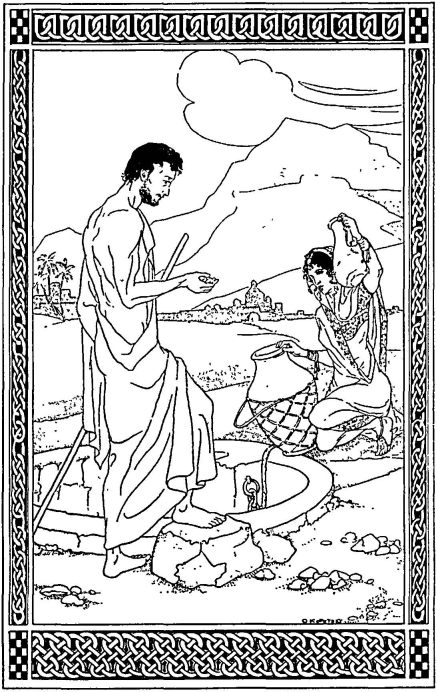
"Ye are my children, I am your father; through me have ye been released from your sufferings.5
"I myself having reached the other shore, help others to cross the stream; I myself having attained salvation, am a saviour of others; being comforted, I comfort others and lead them to the place of refuge.6
"I shall fill with joy all the beings whose limbs languish; I shall give happiness to those who are dying from distress; I shall extend to them succor and deliverance.7
"I was born into the world as the king of truth for the salvation of the world.8
"The subject on which I meditate is truth. The practice to which I devote myself is truth. The topic of my conversation is truth. My thoughts are always in the truth. For lo! my self has become the truth.9
"Whosoever comprehendeth the truth will see the Blessed One, for the truth has been preached by the Blessed One."10
LV.
ONE ESSENCE, ONE LAW, ONE AIM.
And the Tathāgata addressed the venerable Kassapa, to dispel the uncertainty and doubt of his mind, and he said:1
"All things are made of one essence, yet things are different according to the forms which they assume under different impressions. As they form themselves so they act, and as they act so they are.2
"It is, Kassapa, as if a potter made different vessels out of the same clay. Some of these pots are to contain sugar, others rice, others curds and milk; others still are vessels of impurity. There is no diversity in the clay used; the diversity of the pots is only due to the moulding hands of the potter who shapes them for the various uses that circumstances may require.3
"And as all things originate from one essence, so they are developing according to one law and they are destined to one aim which is Nirvāna.4
"Nirvāna comes to thee, Kassapa, when thou understandest thoroughly, and when thou livest according to thy understanding, that all things are of one essence and that there is but one law. Hence, there is but one Nirvāna as there is but one truth, not two or three.5
"And the Tathāgata is the same unto all beings, differing in his attitude only in so far as all beings are different.6
"The Tathāgata recreates the whole world like a cloud shedding its waters without distinction. He has the same sentiments for the high as for the low, for the wise as for the ignorant, for the noble-minded as for the immoral.7
"The great cloud full of rain comes up in this wide universe covering all countries and oceans to pour down its rain everywhere, over all grasses, shrubs, herbs, trees of various species, families of plants of different names growing on the earth, on the hills, on the mountains, or in the valleys.8
"Then, Kassapa, the grasses, shrubs, herbs, and wild trees suck the water emitted from that great cloud which is all of one essence and has been abundantly poured down; and they will, according to their nature, acquire a proportionate development, shooting up and producing blossoms and their fruits in season.9
"Rooted in one and the same soil, all those families of plants and germs are quickened by water of the same essence.10
"The Tathāgata, however, O Kassapa, knows the law whose essence is salvation, and whose end is the peace of Nirvāna. He is the same to all, and yet knowing the requirements of every single being, he does not reveal himself to all alike. He does not impart to them at once the fulness of omniscience, but pays attention to the disposition of various beings."11
LVI.
THE LESSON GIVEN TO RĀHULA.
Before Rāhula, the son of Gotama Siddhattha and Yasodharā, attained to the enlightenment of true wisdom, his conduct was not always marked by a love of truth, and the Blessed One sent him to a distant vihāra to govern his mind and to guard his tongue.1
After some time the Blessed One repaired to the place, and Rāhula was filled with joy.2
And the Blessed One ordered the boy to bring him; basin of water and to wash his feet, and Rāhula obeyed.3
When Rāhula had washed the Tathāgata's feet, the Blessed One asked: "Is the water now fit for drinking?"4
"No, my Lord," replied the boy, "the water is denied."5
Then the Blessed One said: "Now consider thine own case. Although thou art my son, and the grandchild of a king, although thou art a samana who has voluntarily given up everything, thou art unable to guard thy tongue from untruth, and thus defilest thou thy mind."6
And when the water had been poured away, the Blessed One asked again: "Is this vessel now fit for holding water to drink?"7
"No, my Lord," replied Rāhula, "the vessel, too, has become unclean."8
And the Blessed One said: "Now consider thine own case. Although thou wearest the yellow robe, art thou fit for any high purpose when thou hast become unclean like this vessel?"9
Then the Blessed One, lifting up the empty basin and whirling it round, asked: "Art thou not afraid lest it should fall and break?"10
"No, my Lord," replied Rāhula, "the vessel is but cheap, and its loss will not amount to much."11
"Now consider thine own case," said the Blessed One. "Thou art whirled about in endless eddies of transmigration, and as thy body is made of the same substance as other material things that will crumble to dust, there is no loss if it be broken. He who is given to speaking untruths is an object of contempt to the wise."12
Rāhula was filled with shame, and the Blessed One addressed him once more: "Listen, and I will tell thee a parable:13
"There was a king who had a very powerful elephant, able to cope with five hundred ordinary elephants. When going to war, the elephant was armed with sharp swords on his tusks, with scythes on his shoulders, spears on his feet, and an iron ball at his tail. The elephant-master rejoiced to see the noble creature so well equipped, and, knowing that a slight wound by an arrow in the trunk would be fatal, he had taught the elephant to keep his trunk well coiled up. But during the battle the elephant stretched forth his trunk to seize a sword. His master was frightened and consulted with the king, and they decided that the elephant was no longer fit to be used in battle.14
"O Rāhula! if men would only guard their tongues all would be well! Be like the fighting elephant who guards his trunk against the arrow that strikes in the center.15
"By love of truth the sincere escape iniquity. Like the elephant well subdued and quiet, who permits the king to mount on his trunk, thus the man that reveres righteousness will endure faithfully throughout his life."16
Rāhula hearing these words was filled with deep sorrow; he never again gave any occasion for complaint, and forthwith he sanctified his life by earnest exertions.17
LVII.
THE SERMON ON ABUSE.
And the Blessed One observed the ways of society and noticed how much misery came from malignity and foolish offences done only to gratify vanity and self-seeking pride.1
And the Buddha said: "If a man foolishly does me wrong, I will return to him the protection of my ungrudging love; the more evil comes from him, the more good shall go from me; the fragrance of goodness always comes to me, and the harmful air of evil goes to him."2
A foolish man learning that the Buddha observed the principle of great love which commends the return of good for evil, came and abused him. The Buddha was silent, pitying his folly.3
When the man had finished his abuse, the Buddha asked him, saying: "Son, if a man declined to accept a present made to him, to whom would it belong?" And he answered: "In that case it would belong to the man who offered it."4
"My son," said the Buddha, "thou hast railed at me, but I decline to accept thy abuse, and request thee to keep it thyself. Will it not be a source of misery to thee? As the echo belongs to the sound, and the shadow to the substance, so misery will overtake the evil-doer without fail."5
The abuser made no reply, and Buddha continued:6
"A wicked man who reproaches a virtuous one is like one who looks up and spits at heaven; the spittle soils not the heaven, but comes back and defiles his own person.7
"The slanderer is like one who flings dust at another when the wind is contrary; the dust does but return on him who threw it. The virtuous man cannot be hurt and the misery that the other would inflict comes back on himself."8
The abuser went away ashamed, but he came again and took refuge in the Buddha, the Dharma, and the Sangha.9
LVIII.
THE BUDDHA REPLIES TO THE DEVA.
On a certain day when the Blessed One dwelt at Jetavana, the garden of Anāthapindika, a celestial deva came to him in the shape of a Brahman whose countenance was bright and whose garments were white like snow. The deva asked questions which the Blessed One answered.1
The deva said: "What is the sharpest sword? What is is the deadliest poison? What is the fiercest fire? What is the darkest night?"2
The Blessed One replied: "A word spoken in wrath is the sharpest sword; covetousness is the deadliest poison; passion is the fiercest fire; ignorance is the darkest night."3
The deva said: "Who gains the greatest benefit? Who loses most? Which armor is invulnerable? What is the best weapon?"4
The Blessed One replied: "He is the greatest gainer who gives to others, and he loses most who greedily receives without gratitude. Patience is an invulnerable armor; wisdom is the best weapon." 5
The deva said: "Who is the most dangerous thief? What is the most precious treasure? Who is most successful in taking away by violence not only on earth, but also in heaven? What is the securest treasure-trove?"6
The Blessed One replied: "Evil thought is the most dangerous thief; virtue is the most precious treasure. The mind takes possession of everything not only on earth, but also in heaven, and immortality is its securest treasure-trove."7
The deva said: "What is attractive? What is disgusting? What is the most horrible pain? What is the greatest enjoyment?"8
The Blessed One replied: "Good is attractive; evil is disgusting. A bad conscience is the most tormenting pain; deliverance is the height of bliss."9
The deva asked: "What causes ruin in the world? What breaks off friendships? What is the most violent fever? Who is the best physician?"10
The Blessed One replied: "Ignorance causes the ruin of the world. Envy and selfishness break off friendships. Hatred is the most violent fever, and the Buddha is the best physician."11
The deva then asked and said: "Now I have only one doubt to be solved; pray, clear it away: What is it fire can neither burn, nor moisture corrode, nor wind crush down, but is able to reform the whole world?"12
The Blessed One replied: "Blessing! Neither fire, nor moisture, nor wind can destroy the blessing of a good deed, and blessings reform the whole world."13
The deva, having heard the words of the Blessed One, was full of exceeding joy. Clasping his hands, he bowed down before him in reverence, and disappeared suddenly from the presence of the Buddha.14
LIX.
WORDS OF INSTRUCTION.
The bhikkhus came to the Blessed One, and having saluted him with clasped hands they said:1
"O Master, thou all-seeing one, we all wish to learn; our ears are ready to hear, thou art our teacher, thou art incomparable. Cut off our doubt, inform us of the blessed Dharma, O thou of great understanding; speak in the midst of us, O thou who art all-seeing, as is the thousand-eyed Lord of the gods.2
"We will ask the muni of great understanding, who has crossed the stream, gone to the other shore, is blessed and of a firm mind: How does a bhikkhu wander rightly in the world, after having gone out from his house and driven away desire?"3