VIII THE SEVEN YEARS OF FAMINE
Reading edition
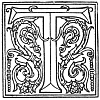
WO years passed by, and Joseph was still in the prison. Then, one night, Pharaoh dreamed. And in his dream he stood by the river, and seven fat cows were feeding on the bank, and seven lean cows came and ate them up. And he dreamed again, and seven full ears of corn grew upon one stalk, and seven thin ears ate them up. The next morning, when Pharaoh told his dreams, nobody could explain them. Then, at last, the chief butler remembered Joseph. And he said to Pharaoh, “There is a slave in the prison who can tell the meaning of dreams. One time, when the chief baker and I were there, he told us what our dreams meant and it came true.” So Pharaoh sent for Joseph. And Joseph shaved himself and put on his best clothes, and went out of the prison into the palace.
And Pharaoh told his dreams. And Joseph said, “Behold, there come seven years of great plenty throughout all the land of Egypt, and they shall be followed by seven years of famine.” And Joseph said, “The thing to do is this: Let food be laid up in storehouses during the good years to feed the people during the bad years.”
Pharaoh said, “You are the man to do it. You shall be in charge of this business.” And he took off his signet ring and put it on Joseph’s hand, and dressed him in royal robes, and put a gold chain about his neck, and set him over the land of Egypt. And Joseph rode through the streets in the king’s chariot, and everybody bowed down before him.
Then came the seven years of plenty, and everything grew by handfuls. Joseph made great storehouses, and put into them so much grain that it could no more be measured than the sand of the sea. Then followed the seven years of famine, and nothing grew at all, and the people were very hungry, and they came to Joseph, and he opened the storehouses and sold them food to eat.
Even in Joseph’s old home, the famine was upon the land, and Joseph’s brothers came down to Egypt to buy grain. But Benjamin, the youngest brother, they left with their father. So they appeared before Joseph, and he knew them, but they did not know him. He sat upon a throne, ruling the land of Egypt, and the poor farmers never thought of their brother Joseph. And Joseph punished them for their wickedness.
“You men,” he said, “are spies.” And he had them put in prison.
They said, “We are no spies. We are twelve sons of our father Jacob; one is with our father, and one is dead; and we have come to buy grain.”
And Joseph said, “Now I will prove you. Let me see your other brother. I will keep one of you in prison. The rest of you go and carry back your corn, and bring me down your other brother.”
So they left Simeon behind, and returned home very sad. And when they opened their sacks of grain, there was a bag of money in the mouth of each sack, just what they had paid. And they knew not what to think. But when they told their father what had happened and how the governor of the land wanted to see Benjamin, Jacob would not let him go. “I have lost Joseph,” he said, “and now Simeon is gone. I will keep Benjamin.”
But by and by the grain was almost all eaten, and they began to be very hungry, and there was nothing to do but to go again to Egypt, and they dared not go without Benjamin. So one day his father kissed the boy, with tears in his eyes, and let him go, and with him he sent a present in a basket for the governor, balm and honey, spice and myrrh, pistachio nuts and almonds.
So they came again to Joseph’s palace, and Joseph’s steward brought Simeon out of prison, and told them that they were all to come to dinner that day at noon. So at noon they came, and Joseph met them, dressed in his splendid garments, and he said, “Is your father well, the old man of whom you spoke?”
And they said, “He is well.”
“And is this your youngest brother?” and he said, “God be gracious unto thee, my son.”
And suddenly he turned about and went into another room to hide his tears. Then he washed his face and came out, and they had dinner. But he gave Benjamin five times as much to eat as any of the others. So they had a very pleasant time.
Now Joseph had told his steward that when he filled the sacks, he should put into Benjamin’s sack a silver cup. And nobody knew it but the steward. So early the next morning, with Simeon and Benjamin, off they started very happily for home, singing as they went. And by and by, they heard a sound of voices following, and there was Joseph’s steward and some other men.
And the steward said, “Stop, you thieves, and give me my master’s silver cup which you have stolen.”
And the brothers stopped, and said, “We are no thieves. We have taken neither gold nor silver from your master’s palace. Search us, and the man with whom you find the cup shall die.”
“Very well,” he said, “the man with whom the cup is found shall be my slave.” So he searched the sacks, beginning with the oldest brother and ending with the youngest, and in Benjamin’s sack, there was the cup!
And they all cried out in great grief, and tore their clothes, for that was the custom, and back they went to Joseph’s palace. And Judah, one of the brothers, spoke to Joseph. “My lord,” he said, “you asked to see our little brother, and we brought him down. And our father said as we came away, ‘If mischief befall him, you shall bring down my gray hairs with sorrow to the grave,’ and now if we go back without our brother, our father will die. Let me take his place. I will be your slave; and let him go.”
And Joseph sent everybody out of the room, except his brothers. And he said, “I am Joseph. Come near to me, I pray you. I am Joseph your brother, whom you sold into Egypt. And God has made me ruler of all Egypt.” And as they were amazed, he said, “Do you not see that I am indeed your brother? Go back now and bring my father, and all your flocks and herds, and your wives and children, and come and live with me.” And he kissed his brothers. And the next day he gave them wagons for his father and their wives and children, and sent them away.
So Jacob saw his son Joseph, for whom he had mourned as dead. And all the family moved down to Egypt, and Pharaoh gave them pastures for their sheep.