Plate 154.
Reading edition
COTYLEDON Wickensii. Transvaal.
Crassulaceae. Cotyledon, Linn.; Benth. et Hook. f. Gen. Plant. vol. i. p. 658.
Cotyledon Wickensii, Schonl. in Records Albany Museum, vol. iii. p. 141.
The Pillansii group of Cotyledon as defined by Dr. Schönland includes species with a suffructicose, mostly robust habit, with the lobes of the corolla usually longer than the tube, glandular flowers, and with a tuft of hairs at the base of the filaments where they join the corolla. The species figured here was collected by Mr. J. Wickens and Dr. I. B. Pole Evans, C.M.G., on stony kopjes at Smit’s Drift, in the Pietersburg District of the northern Transvaal.
It is well adapted for rockeries, and flowers profusely during the mid-winter months of June and July. The species has been established in the rockeries of the Union Building gardens at Pretoria, and is doing remarkably well.
Our plate was prepared from specimens growing at the Division of Botany, Pretoria.
Description:—A tall herbaceous shrub up to 2 m. high. Stems somewhat fleshy, glabrous. Leaves 8·5 to 11 cm. long, 2·5 cm. broad, lanceolate, acute, or sometimes rounded, distinctly narrowed to the base into a terete portion, flat above, slightly convex beneath, glabrous and covered with a glaucous bloom. Inflorescence cymose, 12-to 15-flowered at the end of a naked peduncle. Peduncle up to 30 cm. long, terete, 6 mm. in diameter. Pedicels 1·5 to 3 cm. long, terete, densely covered with glandular hairs, expanded and disc-like above. Sepals 8 mm. long, 4 mm. broad, ovate, obtuse, glandular-pubescent. Petals persistent. Corolla-tube 2 mm. long, gibbous at the base between the petals, glandular hispid; lobes 2 cm. long, 2 mm. broad, oblong-linear, with a small blunt apiculus, glandular-hispid, especially on the margins. Stamens equal; filaments 2·2 cm. long, terete, with reflexed hairs at the base; anthers ovate or almost orbicular. Carpels a little shorter than the stamens. Glands at base of each carpel, 3 mm. long, 1·5 mm. broad, oblong, truncate, projecting into the cavity at base of the petals.
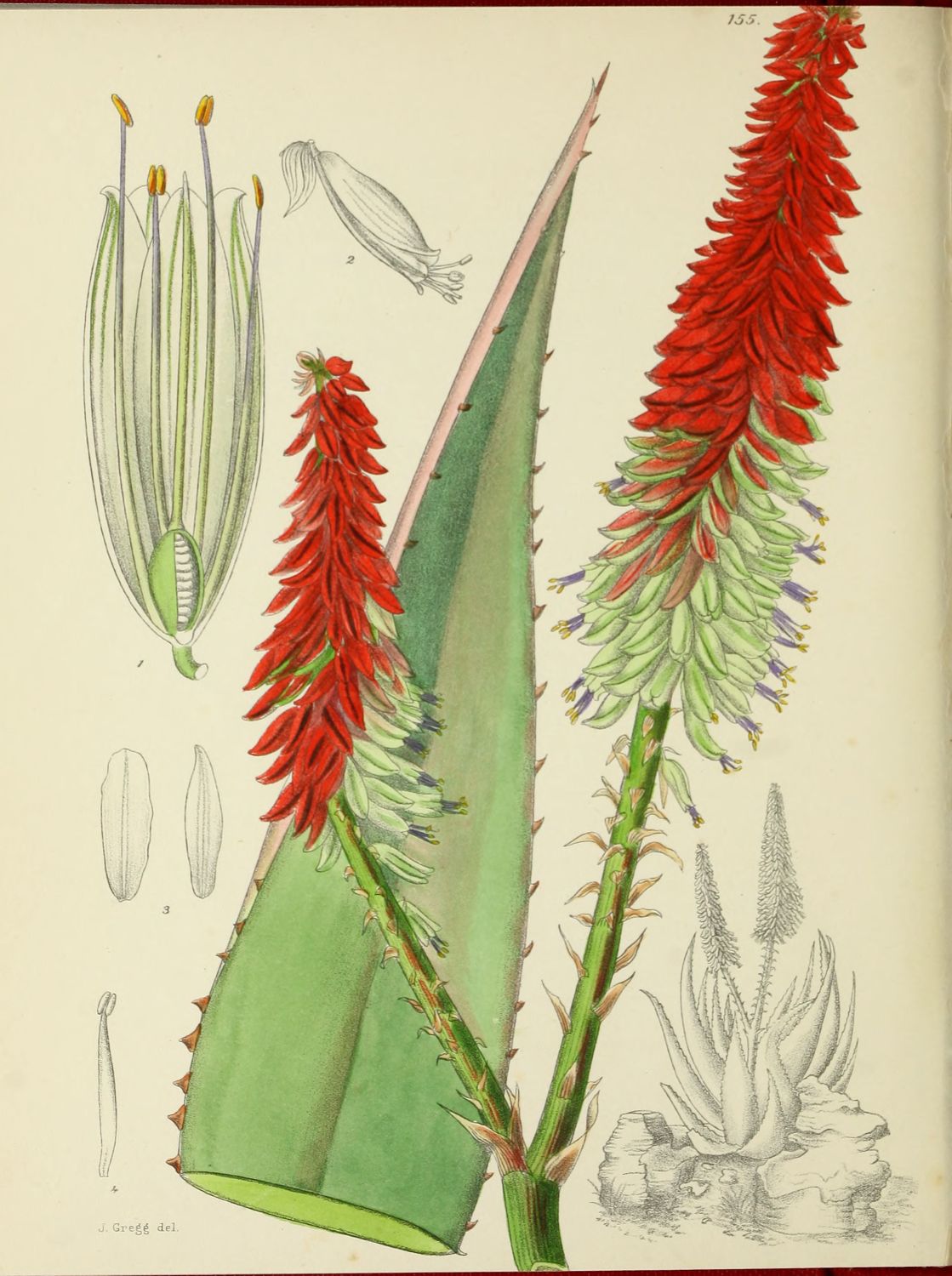
Plate 154.—Fig. 1, median longitudinal section of flower; Fig. 2, longitudinal section of flower with pistil removed; Fig. 3, carpels showing glands at the base; Fig. 4, stamen; Fig. 5, cross-section of leaf.
F.P.S.A., 1924.