Plate 134.
Reading edition
NERINE LUCIDA. Cape Province, Orange Free State, Transvaal.
Amaryllidaceae. Tribe Amarylleae. Nerine, Herb.; Benth. et Hook. f. Gen. Plant. vol. iii. p. 728.
Nerine lucida, Herb. Amaryllid. 283, t. 36, fig. 3; Fl. Cap. vol. vi. p. 214.
This species is, so far as we know, confined to the dry western portions of the Cape Province, S.W. Protectorate, Transvaal, and Orange Free State. Burchell found the plant both in Griqualand West and in Bechuanaland, and Burke on his journey up to the Transvaal found it near the Sand River in the Orange Free State. In habit the species very much resembles a dwarf Brunsvigia, but is distinguished from this genus by the obtusely angled ovary. The short stout peduncle is also found in two other species of Nerine.
A coloured plant of N. lucida was published in 1820 (Botanical Register, Plate 497), drawn from a plant which flowered in the garden of Prince Leopold of Saxe-Cobourg.
The specimens from which the accompanying Plate was prepared were collected at Vryburg by Mr. A. O. D. Mogg, and flowered at the Division of Botany, Pretoria, in 1924.
Description:—Bulb globose, 4 cm. in diameter, produced into a neck about 4 cm. long. Leaves 6, contemporary with the flowers, about 18 cm. long, about 12 mm. broad, strap-shaped, obtuse, bright green. Peduncle lateral, about 12 cm. long, compressed. Inflorescence an umbel of 20 flowers. Pedicels up to 7 cm. long, shortly hairy. Spathe-valves ovate-lanceolate, membranous, shorter than the pedicels. Perianth-segments 15 mm. long, 5 mm. broad, lanceolate-linear, obtuse. Stamens declinate, almost as long as the perianth segments. Ovary obtusely trigonous; style declinate, as long as the stamens. (National Herb., Pretoria, No. 2835.)
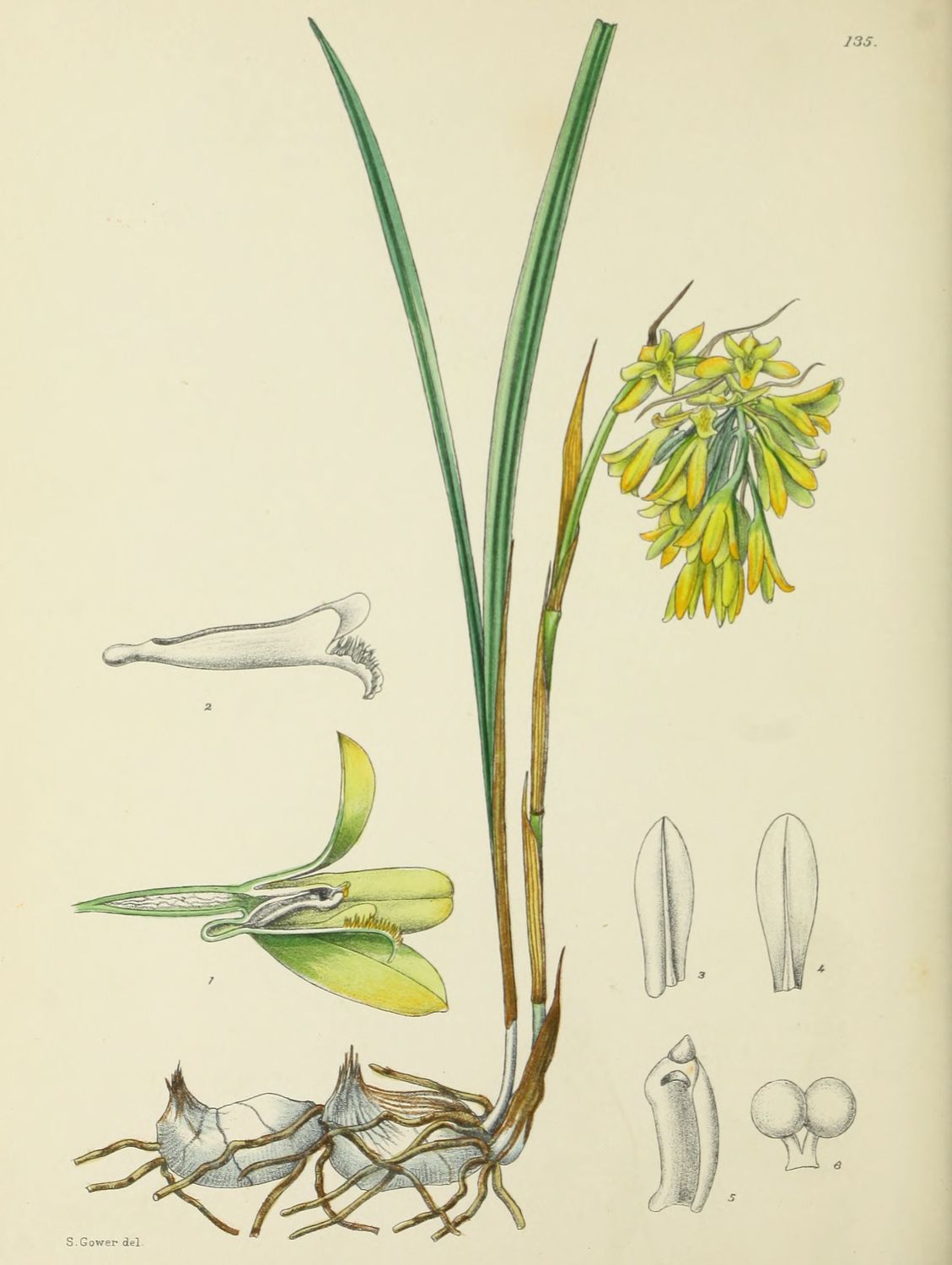
Plate 134.—Fig. 1, median longitudinal section of a flower; Fig. 2, upper portion of perianth lobe, showing apex; Fig. 3, cross-section through the peduncle.
F.P.S.A., 1924.