LA FONTAINE. (continued 3)
Walter Thornbury translation
FABLE XLIX.
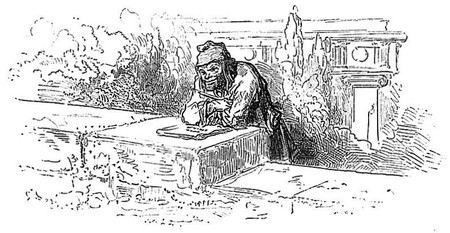
A WILL INTERPRETED BY ÆSOP.
If what they say of Æsop's truth, He was the oracle of Greece indeed; And all the Areopagus, in sooth, Was not so wise. And here, if you would plead For proof, I'll give one, in a pleasant tale, My friends and readers to regale. A certain man had daughters three, Each of a different turn of mind: The one a toper, loving company; The second, fond of all coquetry; The third a miser, and to save inclined. The man left them, by will and deed, As laws municipal decreed, Half his estate, divided equally; And to their mother just the same: But only in her power to claim When all the daughters had their own And nothing more but that alone. The father dead, the daughters ran To read the will—they were not slow To con it; yet, do what they can, They could not understand it—no. What did he wish?—yes, that's the question That took a good deal of digestion. 'Each one that had her part, no more, Should to her mother pay it o'er.' It was not quite the usual way, With no gold left, to go and pay: What meant their worthy father, then? They run and ask the black-gowned men, Who turn the case for many days— Turn it a hundred thousand ways; Yet after all, in sheer vexation, Throw down their wigs in perturbation. At last the judge advised the heirs At once to settle the affairs. As to the widow's part, the counsels say A third each sister's bound to pay, Upon demand, unless she choose to take A life annuity, for quietness' sake, Beginning from the day her husband died, And so they all decide. Then in three lots they part the whole estate: In number one the plate; The mighty cellars; summer-houses built Beneath the vine; The stores of rich Malvoisin wine; The spits, the bowls of silver gilt, And all the tribes of slaves who wait;— In short, the perfect apparatus, That gives an epicure his social status. The second lot comprises All that a flirting girl surprises: Embroiderer's, and many a lady's maid, Jewels, and costly robes;—be sure The town house, and the furniture, And stately eunuchs, rich arrayed. Lot three comprises farming-stock, Pastures and houses, fold and flock; Labourers and horses, stores and herds. This done, they fix, with many words, That since the lottery won't select What each one would the most affect, The eldest have what she likes best, Leaving the same choice to the rest. In Athens it fell out, This pleased the motley rout, Both great and small. The judge was praised by all; Æsop alone derided The way they had decided. After much time and pains, they'd gone, he thought, And set the wishes of the man at nought. "If the dead came to life," he said, "Athens aloud he would upbraid. What! men who cherish subtlety, To blunder o'er a will so stupidly!" Then quickly he divides, And thus the sage decides:— To each he gave the part Least grateful to her heart: Pressing on them what they most hate. To the coquette the cups and bowls Cherished and loved by thirsty souls; The toper had the farm; still worse than that, The miser had the slaves and dresses. This is the way, Æsop confesses, To make the sisters alienate Their shares of the bequeathed estate; Nor would they longer single tarry, But run post haste, and quickly marry; So very soon the father's gold, set free, Would to the mother come, with certainty, Which was the meaning of the testament. The people wondered, as they homeward went, That he alone should have more brains Than all the lawyers and their trains.
FABLE L.
THE LION IN LOVE.
TO MADEMOISELLE SEVIGNE.
Lady, whose charms were meant to be A model for the Graces three; Lend graciously your gentle ear, And but one simple fable hear; You'll see, without profound alarm, A Lion quelled by Cupid's arm. Love rules with such a tyranny, Happy those shunning slavery; Who the harsh monarch only know By song and poem, not by blow.
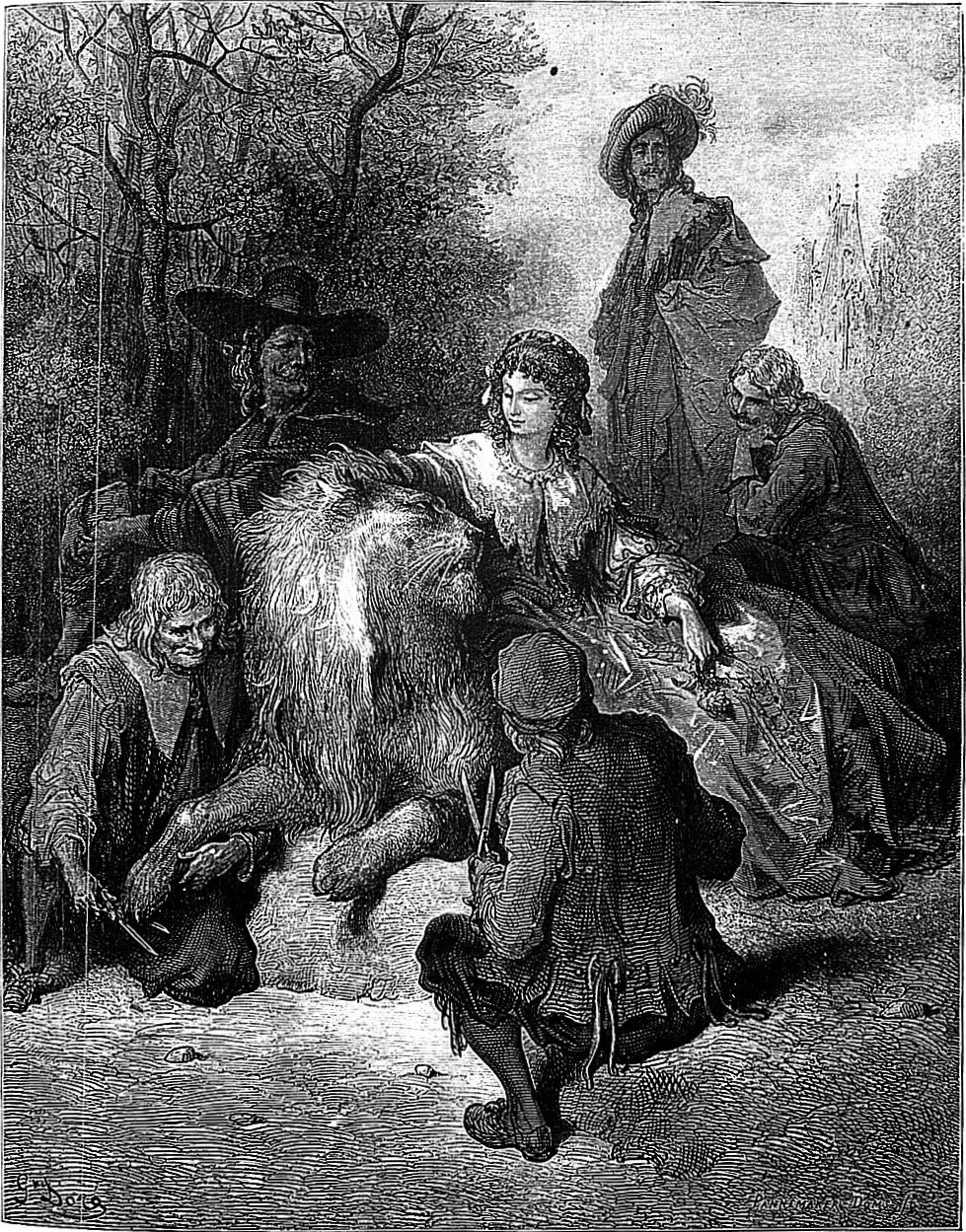
THE LION IN LOVE.
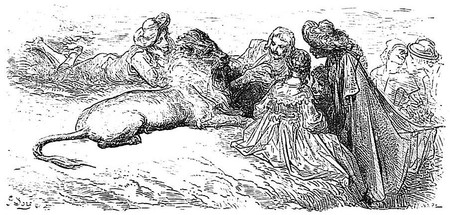
When I dare speak of love to you, Pardon the fable, no whit true, That gives me courage to bring it, Perhaps with more of zeal than wit, A simple offering, rough and rude, Of my devoted gratitude. In times when animals could speak, The Lion came intent to seek Mankind's alliance—wherefore not? Since beasts had then by nature got Courage, intelligence, and skill; A bearing, too, by no means ill. Now hear what happened, if you will: A Lion of a noble race Saw in a vale a pretty face, A shepherdess's, understand, And instantly he claimed her hand. The father, prudent and pacific, Preferred a suitor less terrific: To give his daughter seemed too bad, Yet how refuse so wild a lad? If he refused, perhaps there'd be A marriage still clandestinely. The maiden liked her dashing wooer, Her boisterous, reckless, blustering suer, And playing with the creature's main, Combed it, and smoothed it o'er again; The prudent father, half afraid To spurn the lover of the maid, Said, "But my daughter's delicate, Your claws may hurt your little mate; And when you fondle and caress, Lion, you'll tear her and her dress; Permit me, sir, to clip each paw, It shall be done without a flaw, And, by-the-by, in the meanwhile, Your teeth 'twould be as well to file; Your kisses then would be less rough, And her's far sweeter—that's enough." The Lion, blinded by affection, Obeyed the artful man's direction; Toothless and clawless, he grew prouder (A fortress without guns or powder). They loosed the mastiff on him soon, And he was butchered before noon. O Love! O Love! when bound by you, Prudence, to thee we say, Adieu!
FABLE LI.
THE FOX AND THE GOAT.
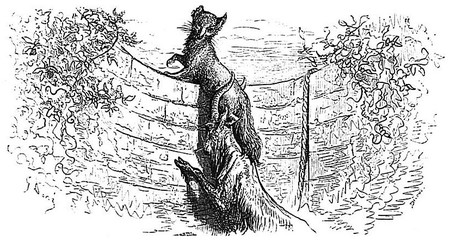
A Fox once travelled, and for company His friend, a large-horned Goat, had he, Who scarce could see an inch beyond his nose, While Reynard every trick and quibble knows. Thirst drove these folks, it so befell, To seek the bottom of a well. After they'd had their bout of drinking, Says Reynard, "Comrade, I am thinking How we can best get out from here; Put up your feet and horns—no fear— Rear up against the wall, my friend, And I'll climb up—our troubles end. One spring upon your horns will do; And I once out can rescue you." "Now, by my beard! I like the plan," The other said, "you're one that can; Such folks as you see clear through things, Some never learn the secret springs; I never should have found it out, Though I had groped a year about." The Fox once free, the Goat compelled To learn a sermon—the text's "patience." "If Heaven," he said, "had only held It right to give thee and thy dull relations Half as much sense as beard— (But then it hasn't, I'm afeard); Still use your efforts, my dear sir—no perturbations. Certain affairs of state Will hardly let me longer wait; In everything 'tis well to mind the end, In future think of that, my friend."
THE SHEPHERD AND THE SEA.
FABLE LII.
THE SHEPHERD AND THE SEA.
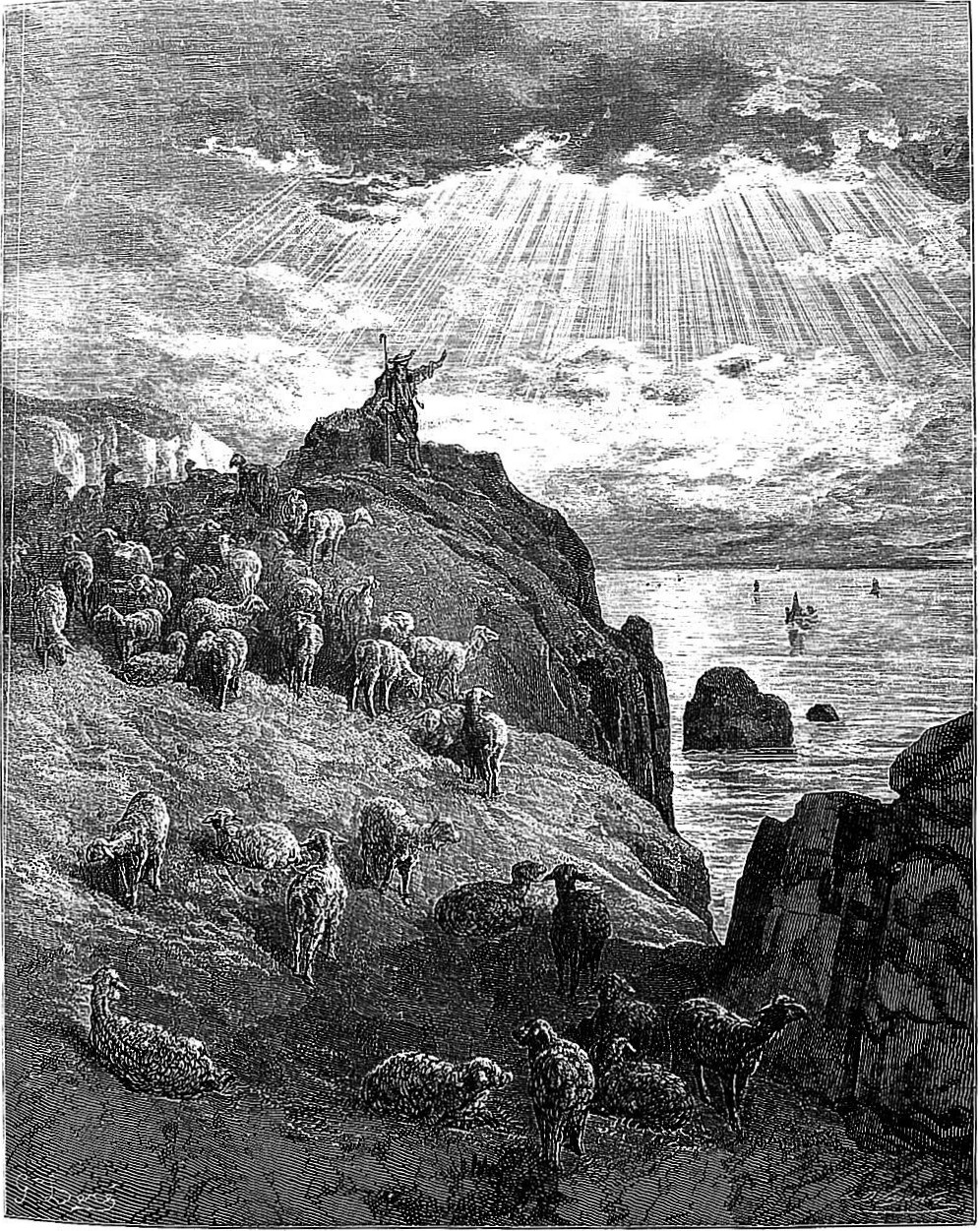
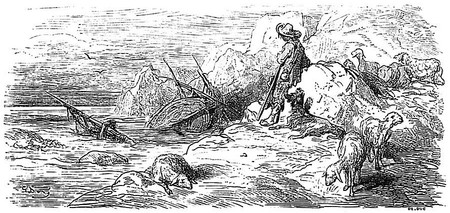
Beside his fold, and free from every care, A Shepherd, Amphitrite's neighbour, lived for years; Small was his fortune, yet while skies were fair, He was contented, vexed by cares nor fears. At last the treasures cast upon the shore Tempted the man; he bartered flock and fold, And sent forth ships to bring him back the more; But tempests sank the vessels and the gold. Once more he went to watch the silly sheep, No longer master as he had been long, When his own flocks he used to ward and keep, And poets called him Tircis in their song; Now he was Pierrot, and that was all. After some time he, once more well to do, Had flocks again to answer to his call; One day when winds were low, and vessels drew Safely towards the shore and home, the Shepherd stood Upon the sunny cliff: "Fair nymphs," he cried, "Seek some one else, I pray you be so good; Ma foi, you don't catch me with any tide." This story is not merely meant to please; It's sober truth, I say, and serves to show That pence are better if all safe, you know, Than pounds of promises; when once at ease, Remain content, and closely shut your ears To Circe's wiles, resist her wanton smiles. Ambition and the Sea, avoid them both, They're full of miseries and racking fears; For one who wins there's twenty thousand don't. Rely on that; the winds and thieves are loth To lose their prey (and trust to them)—they won't.
FABLE LIII.
THE DRUNKARD AND HIS WIFE.
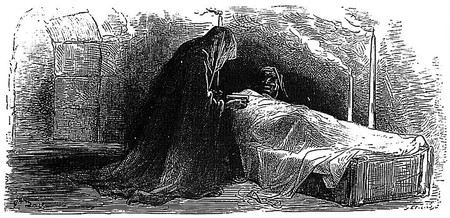
Each one's his faults, to which he still holds fast, And neither shame nor fear can cure the man; 'Tis apropos of this (my usual plan), I give a story, for example, from the past. A follower of Bacchus hurt his purse, His health, his mind, and still grew each day worse; Such people, ere they've run one-half their course, Drain all their fortune for their mad expenses. One day this fellow, by the wine o'erthrown, Had in a bottle left his senses; His shrewd wife shut him all alone In a dark tomb, till the dull fume Might from his brains evaporate. He woke and found the place all gloom, A shroud upon him cold and damp, Upon the pall a funeral lamp. "What's this?" said he; "my wife's a widow, then!" On that the wife, dressed like a Fury, came, Mask'd, and with voice disguised, into the den, And brought the wretched sot, in hopes to tame, Some boiling gruel fit for Lucifer. The sot no longer doubted he was dead— A citizen of Pluto's—could he err? "And who are you?" unto the ghost he said. "I'm Satan's steward," said the wife, "and serve the food For those within this black and dismal place." The sot replied, with comical grimace, Not taking any time to think, "And don't you also bring the drink?"
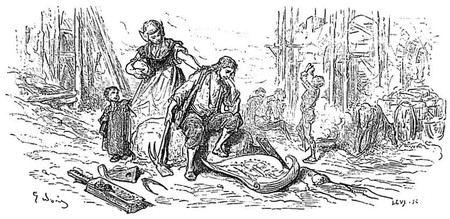
FABLE LIV.
KING GASTER AND THE MEMBERS.
Had I but shown a proper loyalty, I had begun my book with royalty. The Belly is a king, it's true, And in a certain point of view His wants the other members share. Well, once to work for him they weary were; Each one discussed a better plan,— To live an idle gentleman, Like Monsieur Gaster, Their lord and master. "Without us he must feed on air; We sweat and toil, and groan with care, For whom? for him alone; we get no good, And all our thought's to find him food: We'll strike, and try his idle trade." 'Twas done as soon as said. The hands refused to grasp, the legs to walk, The eyes to open, and the tongue to talk; Gaster might do whate'er he could.— 'Twas a mistake they soon repent With one consent. The heart made no more blood, and so The other members ceased to glow; All wanted strength, And thus the working men at length Saw that their idle monarch, in his way, Toiled for the common weal as well as they. And this applies to royalty, It takes and gives with fair equality; All draw from it their nourishment: It feeds the artisan, and pays the magistrate, Gives labourers food, and soldiers subsidies, Distributes in a thousand places Its sovereign graces; In fact, supports the State. Menenius told the story well, When discord in the senate fell, And discontented Commons taunted it For having power and treasure, honour, dignity, While all the care and pain was theirs, Taxes and imposts, all the toils of war, The blood, the sorrow, brand and scar. Without the walls already do they band, Resolved to seek another land. Menenius was able, By this most precious fable, To bring them safely back To the old, honest track.
FABLE LV.
THE MONKEY AND THE DOLPHIN.
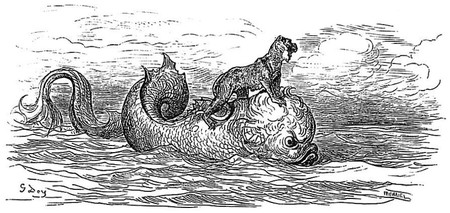
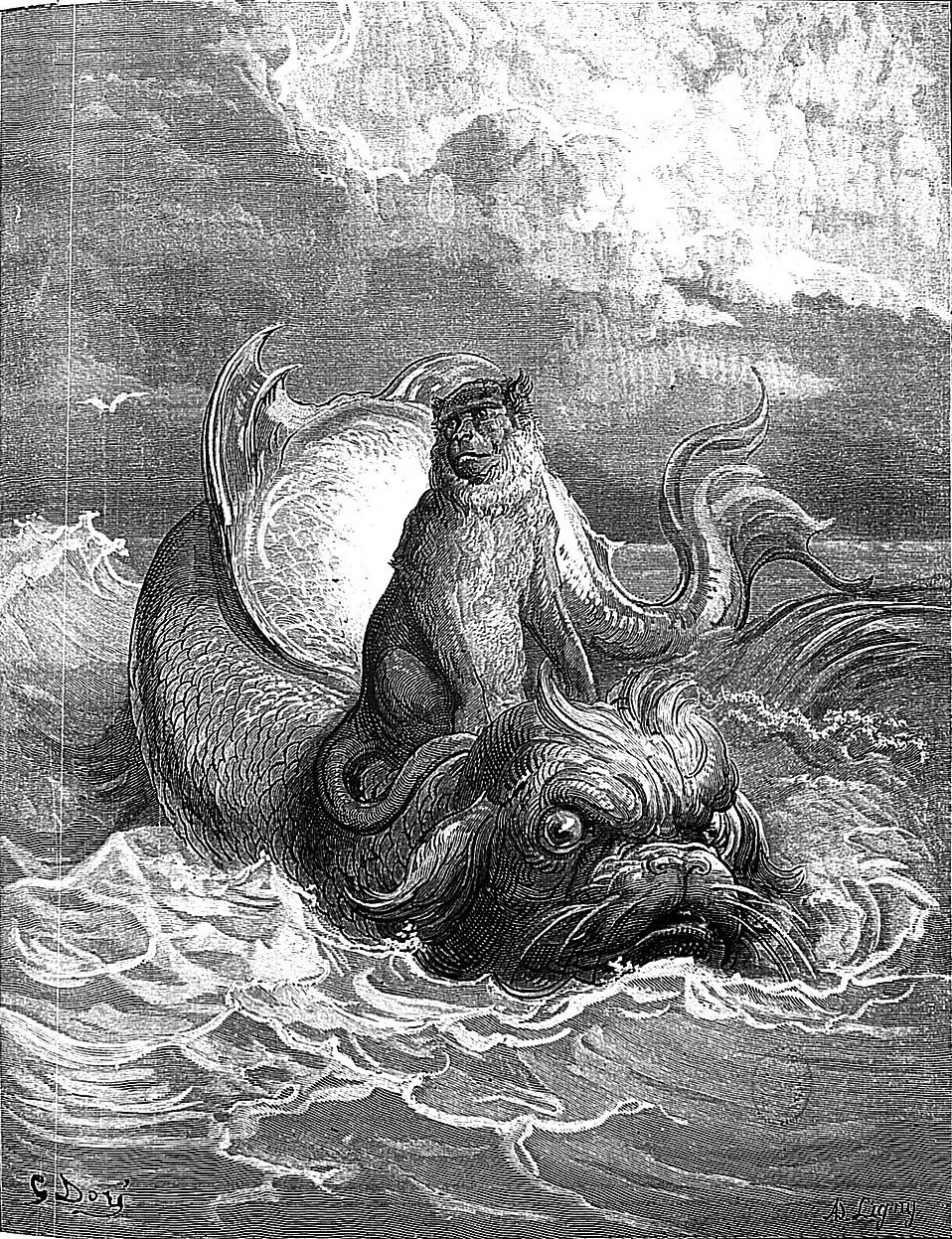
It was a custom with the Greeks For travellers by sea to take Monkeys and fancy dogs, whose tricks Would pastime in fair weather make. A vessel with such things on deck, Not far from Athens, went to wreck; But for the Dolphins all had drowned. This animal is friend to man: The fact in Pliny may be found; So must be true, say what you can.
THE MONKEY AND THE DOLPHIN.
A Dolphin half the people saves, Even a Monkey, by-the-by, He thought a sailor, from the waves He kindly helped: the creature sly, Seated upon the Dolphin's back, Looked very grave and wise; good lack! One would have really almost sworn T'was old Arion, all forlorn. The two had nearly reached the land, When just by chance, and such a pity! Fish asks, "Are you from Athens grand?" "Yes; oh, they know me in that city; If you have any business there, Employ me; for it is truly where My kinsfolk hold the highest place. My second cousin is Lord Mayor." The Dolphin thanked him with good grace: "And the Piræus knows your face? You see it often, I dare say?" "See him! I see him every day; An old acquaintance; that is so." The foolish chatterer did not know Piræus was a harbour, not a man. Such people, go where'er you can, You meet within a mile of home, Mistaking Vaugirard for Rome, People who chattering dogmatise Of what has never met their eyes. The Dolphin laughed, and turning round The Monkey saw, and straightway found He'd saved mere shadow of humanity; Then plunged again beneath the sea, And search amid the billows made For one more worthy of his aid.
FABLE LVI.
THE EAGLE, THE WILD SOW, AND THE CAT.
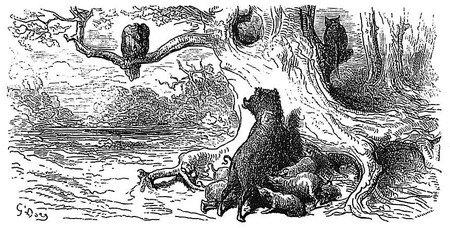
An Eagle lodged its young within a hollow tree; A Sow lived at the foot; a Cat between the two. Friendly they were, good neighbours, the whole three,— Between the mothers there was no to-do. At last the Cat malignant mischief made; She climbed up to the Eagle: "Ma'am, our peace Is ended, death," she says, "is threatening; I'm dismayed. We perish if our children die; she'll never cease, That Sow accursed. See! how she grubs and digs, And mines and burrows, to uproot our oak; She hopes to ruin us and ours, to feed her pigs When the tree falls—Madam, it is no joke! Were there but hopes of saving one, I'd go and quietly mourn alone." Thus sowing fear broadcast, she went With a perfidious intent, To where the Sow sat dozily. "Good friend and neighbour," whispered she, "I warn you, if you venture forth, The Eagle pounces on your family; Don't go and spread the thing about, Or I shall fall a victim to her wrath." Having here also sown wild fears, And set her neighbours by the ears, The Cat into her hole withdrew; The Eagle after would not fly To bring home food; the poor Sow, too, Was still more fearful and more shy. Fools! not to see that one's first care Is for one's self to find good fare; Both stayed at home, still obstinate, To save their young from cruel fate. The royal bird, she feared the mine; The Sow, a pounce upon her swine; Hunger slew all the porcine brood, And then the eaglets of the wood; Not one was left—just think of that! What a relief to Madame Cat! A treacherous tongue sows misery By its pernicious subtlety; Of all the ills that from Pandora's box arose, Not one brought half so many woes As foul Deceit; daughter of Treachery.
FABLE LVII.
THE MISER WHO LOST HIS TREASURE.
It's use that constitutes possession wholely; I ask those people who've a passion For heaping gold on gold, and saving solely, How they excel the poorest man in any fashion? Diogenes is quite as rich as they. True Misers live like beggars, people say; The man with hidden treasure Æsop drew Is an example of the thing I mean. In the next life he might be happy, true; But very little joy in this he knew;
THE MISER WHO LOST HIS TREASURE.
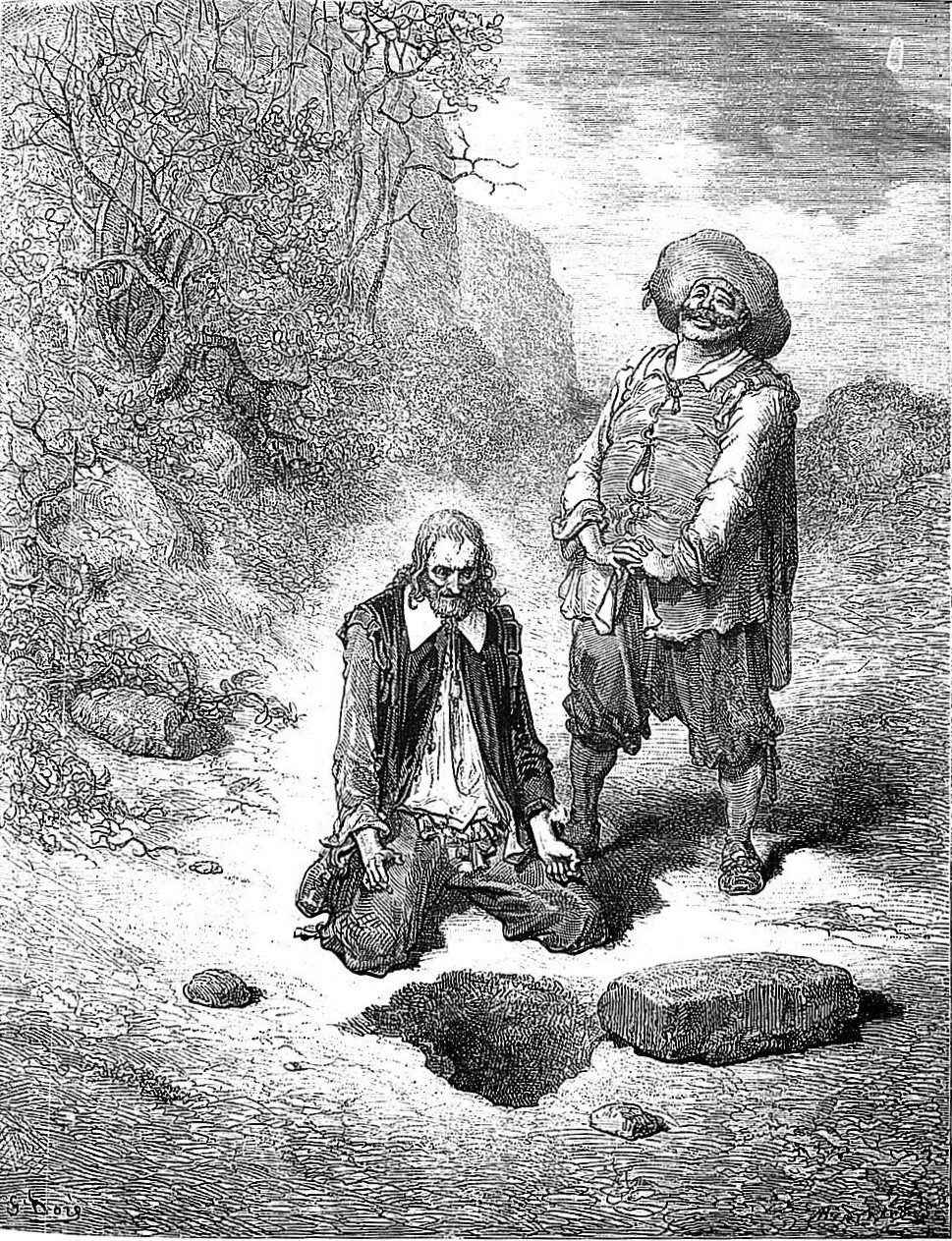
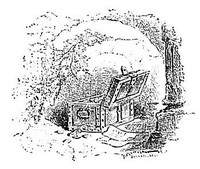
By gold the Miser was so little blessed. Not its possessor, but by it possessed; He buried it a fathom underground; His heart was with it; his delight To ruminate upon it day and night; A victim to the altar ever bound. He seemed so poor, yet not one hour forgot The golden grave, the consecrated spot: Whether he goes or comes, or eats or drinks, Of gold, and gold alone, the Miser thinks. At last a ditcher marks his frequent walks, And muttering talks, Scents out the place, and clears the whole, Unseen by any spies. On one fine day the Miser came, his soul Glowing with joy; he found the empty nest; Bursts into tears, and sobs, and cries, He frets, and tears his thin grey hair; He's lost what he had loved the best. A startled peasant passing there Inquires the reason of his sighs. "My gold! my gold! they've stolen all." "Your treasure! what was it, and where?" "Why, buried underneath this stone." (A moan!) "Why, man, is this a time of war? Why should you bring your gold so far? Had you not better much have let The wealth lie in a cabinet, Where you could find it any hour In your own power?" "What! every hour? a wise man knows Gold comes but slowly, quickly goes; I never touched it." "Gracious me!" Replied the other, "why, then, be So wretched? for if you say true, You never touched it, plain the case; Put back that stone upon the place, 'Twill be the very same to you."
FABLE LVIII.
THE GOUT AND THE SPIDER.
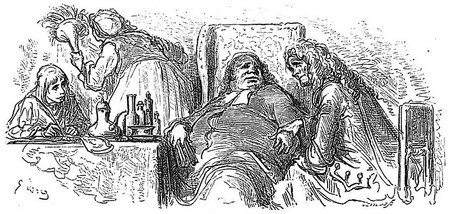
When Mischief made the Spider and the Gout, "My daughters," said she, "you may clearly vaunt That nowhere in a human haunt Are there two plagues more staunch and stout; Come, choose your dwellings where you would abide: Here are the hovels—narrow, dark, and poor, And there the palaces all gilt with pride, You have your choice—now, what can I say more? Here is the lottery prescribed by law, Come, daughters, draw." "The hovel's not my place," the Spider says; Her sister hates the palace, for the Gout Sees men called doctors creeping in and out, They would not leave her half an hour at ease: She crawls and rests upon a poor man's toe, Just so, And says, "I shall now do whate'er I please. No struggles longer with Hippocrates! No call to pack and march, no one can displace me." The Spider camps upon a ceiling high, As if she had a life-long lease, you see, And spins her web continually, Ready for any fly. A servant soon, to clean the room, Sweeps down the product of her loom. With each tissue the girl's at issue: Spiders, busy maids will swish you! The wretched creature every day Was driven from her home away; At last, quite wearied, she gave out, And went to seek her sister Gout, Who in the country mourned her wretched fate: A thousand times more hopeless her estate; Even more miseries betide her Than the misfortunes of the Spider. Her host has made her dig and hoe, And rake and chop, and plough and mow, Until he's all but well. "I can't resist him. Ah! ma belle: Let us change places." Gladly heard. The Spider took her at her word. In the dark hovel she can spin: No broom comes there with bustling din. The Gout, on her part, pleased to trudge, Goes straightway—wise as any judge— Unto a bishop, and with whims So fetters his tormented limbs, That he from bed can never budge. Spasms! Cataplasms! Heaven knows, the doctors make the curse Steal steadily from bad to worse. Both sisters gloried in the change, And never after wished to range.
FABLE LIX.
THE EYE OF THE MASTER.
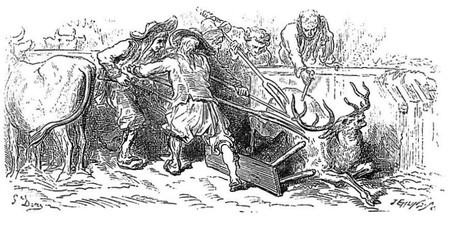
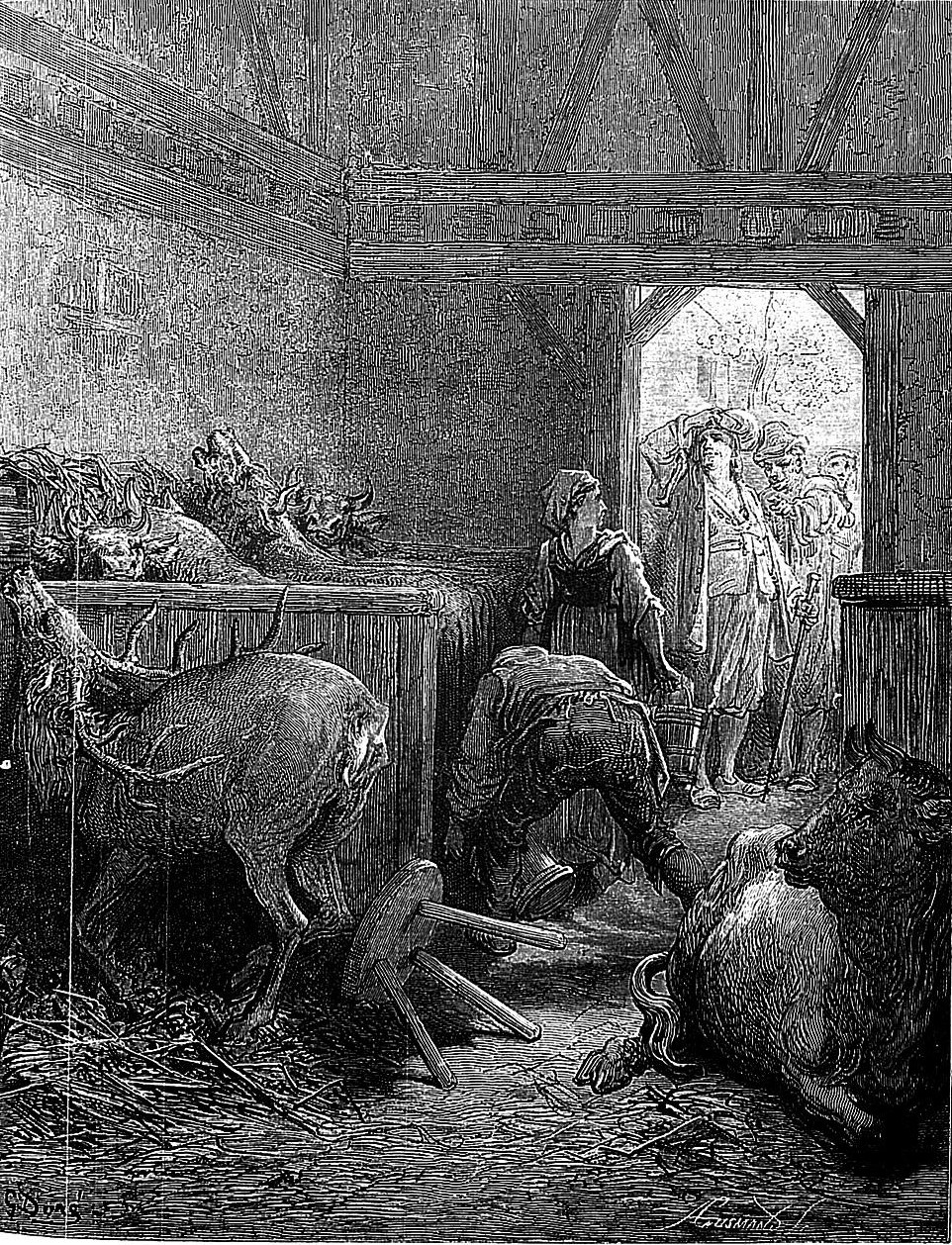
A Stag sought refuge from the chase Among the oxen of a stable, Who counselled him—if he was able— To find a better hiding-place. "My brothers," said the fugitive, "Betray me not; and I will show The richest pastures that I know; Your kindness you will ne'er regret, With interest I'll pay the debt." The oxen promised well to keep The secret: couched for quiet sleep, Safe in a tranquil privacy, The Stag lay down, and breathed more free.
THE EYE OF THE MASTER.
At even-time they brought fresh hay, As was their custom day by day; Men went and came, ah! very near, And last of all the overseer, Yet carelessly, for horns nor hair Showed that the hiding stag was there. The forest dweller's gratitude Was great, and in a joyous mood He waited till the labour ceased, And oxen were from toil released, Leaving the exit once more free, To end his days of slavery. A ruminating bullock cried, "All now goes well; but woe betide When that man with the hundred eyes Shall come, and you, poor soul! surprise? I fear the watchful look he'll take, And dread his visit for your sake; Boast not until the end, for sure Your boasting may be premature." She had not time to utter more, The master opened quick the door. "How's this, you rascal men?" said he; "These empty racks will never do! Go to the loft; this litter, too, Is not the thing. I want to see More care from those that work for me; Whose turn these cobwebs to brush out? These collars, traces?—look about!" Then gazing round, he spies a head, Where a fat ox should be instead; The frightened stag they recognise. In vain the tears roll from his eyes; They fall on him with furious blows, Each one a thrust, until, to close, They kill and salt the wretched beast, And cook him up for many a feast. Phædrus hath put it pithily, The master's is the eye for me, The lover's, too, is quick to see.
FABLE LX.
THE WOLF AND THE STORK.
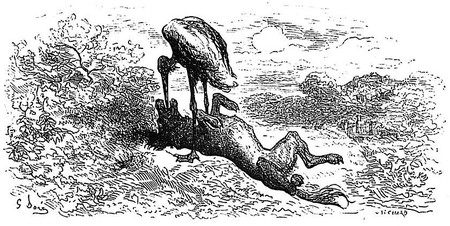
Wolves are too prone to play the glutton. One, at a certain feast, 'tis said, Fell with such fury on his mutton, He gave himself quite up for dead, For in his throat a bone stuck fast. A Stork, by special stroke of luck, As he stood speechless, came at last. He beckoned, and she ran to aid, No whit afraid. A surgeon, and a very friend in need, She drew the bone out. For the cure she'd made She simply asked her fee. "Fie!" said the Wolf, "you jeer at me, My worthy gossip. Only see: What! is it not enough that, sound and safe, You drew your neck back from my gullet, My pretty pullet? You are ungrateful. Now, then, go; Beware, another time, my blow."
FABLE LXI.
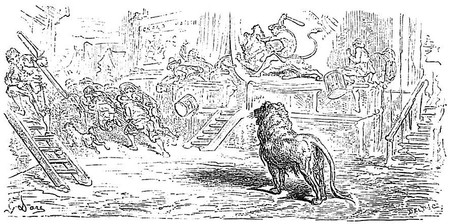
THE LION DEFEATED BY MAN.
A picture was exhibited, one day, In which an artisan had sought To paint a lion which had fought, And had been beaten in the fray. The passers-by were full of self-applause. A Lion who looked on reproached the crowd: "Yes, here I see," he said, "the victory is man's: The artisan had his own plans; But if my brothers painted, they'd be proud To show you man prostrate beneath our claws."
FABLE LXII.
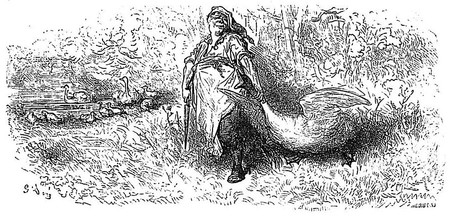
THE SWAN AND THE COOK.
In a menagerie a Swan and Goose Lived like sworn friends, in peace and amity. This one was meant to please the master's eye, The other fitted for his palate's use: This for the garden, that one for the board. The château's fosse was their long corridor, Where they could swim, in sight of their liege lord, Splash, drink, and paddle, or fly o'er and o'er, Unwearied of their pastime, down the moat. One day the Cook, taking a cup too much, Mistook the birds, and, seizing by the throat, Was just about to kill—his blindness such— The helpless Swan, and thrust him in the pot. The bird began to sing his dying song: The Cook, in great surprise, Opened his sleepy eyes. "What do I do?" he said; "I had forgot: No, no, Jove willing! may my neck be strung, Before I kill a bird that sings so well." Thus, in the dangers that around us throng, Soft words are often useful, as it here befell.
FABLE LXIII.
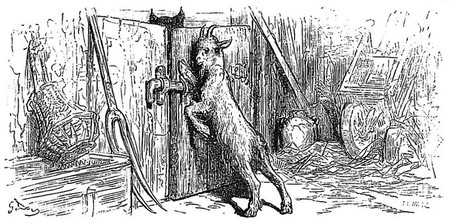
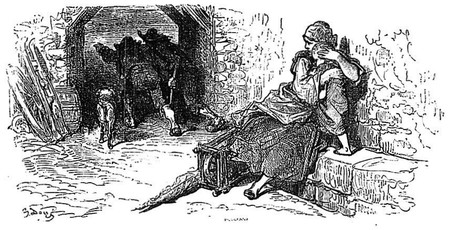
THE WOLF, THE GOAT, AND THE KID.
The She-Goat going out to feed Upon the young grass in the mead, Closed not the latch until she bid Her youngest born, her darling kid, Take care to open door to none, Or if she did, only to one Who gave the watchword of the place— "Curse to the Wolf and all his race!" The Wolf was just then passing by, And having no bad memory, Laid the spell by, a perfect treasure Ready to be used at leisure. The Kid, so tender and so small, Had never seen a wolf at all. The mother gone, the hypocrite Assumes a voice demure and fit— "The Wolf be cursed! come, pull the latch." The Kid says, peeping through a chink, "Show me a white foot" (silly patch), "Or I'll not open yet the door, I think." White paws are rare with wolves—not yet in fashion. The Wolf surprised, and dumb with secret passion, Went as he came, and sneaked back to his lair: The Kid had lost her life without that care, Had she but listened to the word The watchful Wolf had overheard. Two sureties are twice as good as one, Without them she had been undone. And so I boldly say, That too much caution's never thrown away.
FABLE LXIV.
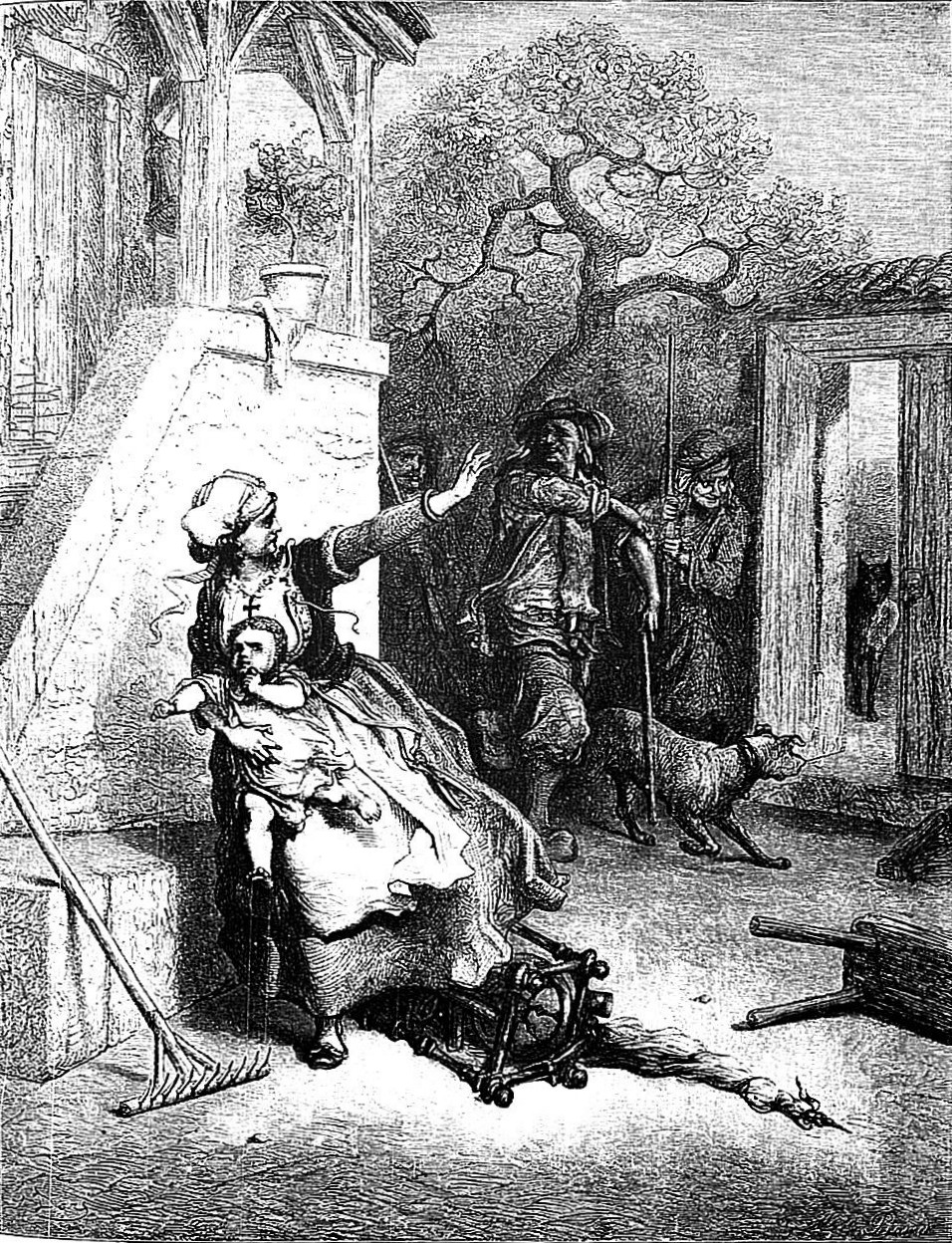
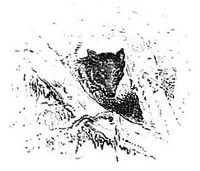
THE WOLF, THE MOTHER, AND THE CHILD.
This Wolf recalls another to my mind— A friend who found Fate more unkind— Caught in a neater way, you'll see; He perished—here's the history: A peasant dwelt in a lone farm; The Wolf, his watch intent to keep, Saw in and out, not tearing harm, Slim calves and lambs, and old fat sheep, And regiment of turkeys strutting out; In fact, good fare was spread about.
THE WOLF, THE MOTHER, AND THE CHILD.
The thief grew weary of vain wishes For dainty dishes; But just then heard an Infant cry, The mother chiding angrily— "Be quiet! No riot; Or to the Wolf I'll give you, brat!" The Wolf cried, "Now, I quite like that;" And thanked the gods for being good. The Mother, as a mother should, Soon calmed the Child. "Don't cry, my pet! If the Wolf comes, we'll kill him, there!" "What's this?" the thief was in a fret; "First this, then that, there's no truth anywhere; I'm not a fool, you know, And yet they treat me so. Some day, when nutting, it may hap I may surprise the little chap." As these reflections strike the beast, A mastiff stops the way, at one fierce bound, To any future feast, And rough men gird him round. "What brought you here?" cries many a one; He told the tale as I have done. "Good Heavens!" loud the Mother cried; "You eat my boy! what! darling here To stop your hunger? Hush! my dear." They killed the brute and stripped his hide; His right foot and his head in state Adorn the Picard noble's gate; And this was written underneath The shrivelled eyes and grinning teeth— "Good Master Wolves, believe not all That mothers say when children squall."
FABLE LXV.
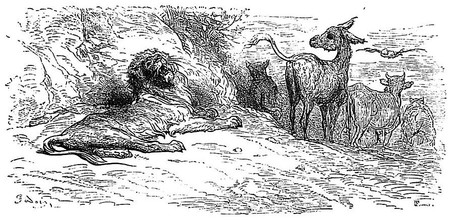
THE LION GROWN OLD.
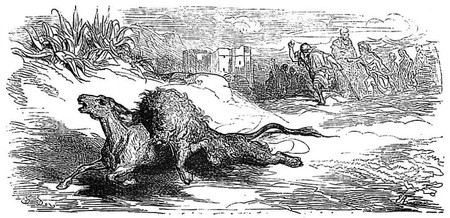
A Lion, once the terror of the plain (Borne clown with age, and weakened by decay) Against rebellious vassals fought in vain, And found his foes the victors of the fray. The Horse advanced, and gave his king a kick— The Wolf a bite—the Ox a brutal butt: Meanwhile the Lion, worn, and sad, and sick, Could scarce resent this, the "unkindest cut." But when an Ass came running to the place, The monarch murmured, with his latest breath, "Enough! I wished to die, but this disgrace Imparts a twofold bitterness to death."
FABLE LXVI.
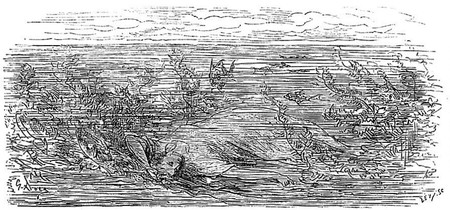
THE DROWNED WOMAN.
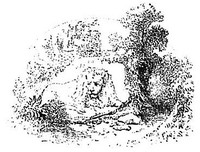
I am not one of those who coolly say, "It's nought but just a woman who is drowned!" I say it's much, yes, much in every way. The sex I reverence. Taking them all round, They are the joy of life, then let their praise resound. And these remarks are really apropos: My fable treating of a woman lost In a deep river. Ill luck willed it so. Her husband sought her, at each ford she'd crossed, To place her body in a fitting tomb. And as he wandered by the fatal shore Of the swift stream that bore his wife away, The people passing he asked o'er and o'er, If they had seen her on that luckless day. They'd not e'en heard of his sad loss before. "No," said the first; "but seek her lower down: Follow the stream, and you will find her yet." Another answer'd: "Follow her! no, no; that's wrong. Go further up, and she'll be there, I bet, Whether the current's weak, or the tide strong." It's my conviction, Such is a woman's love of contradiction, She'll float the other way, your soul to fret. The raillery was out of season; And yet the heedless boor had reason, For such is woman's humour still, To follow out her own good will; Yes, from her very birthday morn Till to the churchyard she is borne, She'd contradict to her last breath, And wish she could e'en after death.
FABLE LXVII.
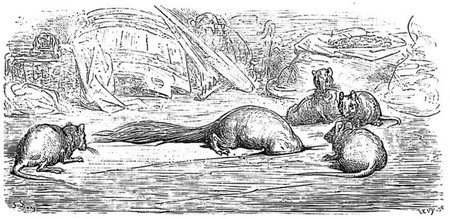
THE WEASEL IN THE GRANARY.
Once Madame Weasel, slender-waisted, thin, Into a granary, by a narrow chink, Crept, sick and hungry; quick she glided in, To eat her fill, and she was wise, I think. There at her ease, No fear of fees, She gnawed, and nibbled:—gracious, what a life! The bacon melted in the strife. Plump and rotund she grew, As fat as two. A week was over, Spent in clover. But one day, when she'd done—and that not badly— A noise alarmed her sadly. She tried the hole she'd entered, wishing to retreat; 'Twas no such easy feat. Was she mistaken?—no, the selfsame door: She tried it, o'er and o'er. "Yes, yes," she said, "it is the place, I know; I passed here but a week ago." A Rat who saw her puzzled, slily spoke— "Your pouch was emptier then, before your fast you broke. Empty you came, and empty you must quit: I tell you what I've told a dozen more. But don't perplex the matter, I implore; They differed from you in some ways, I do admit."
FABLE LXVIII.
THE LARK AND HER LITTLE ONES WITH THE OWNER OF A FIELD.
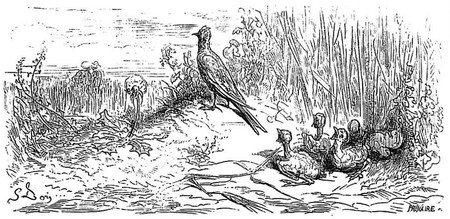
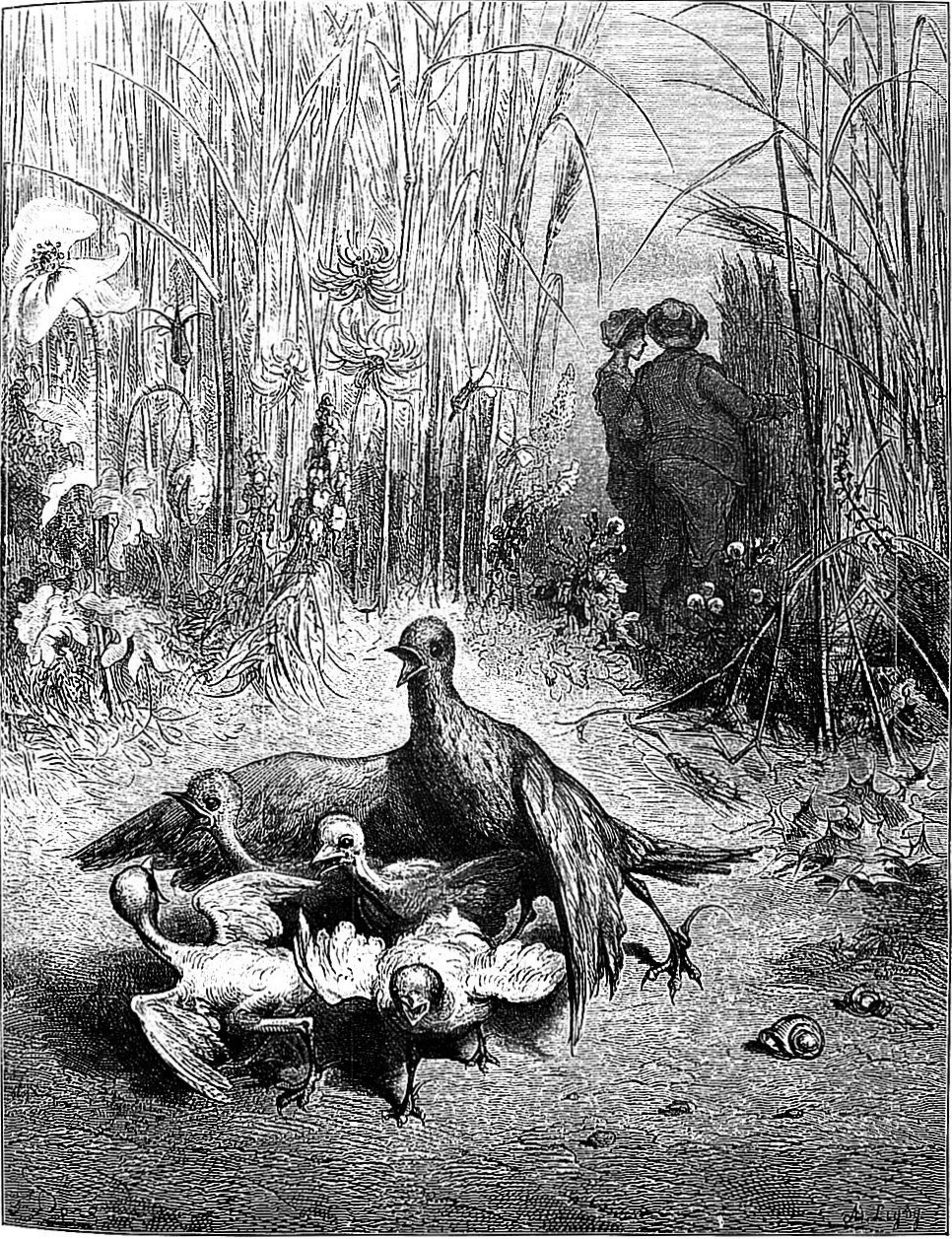
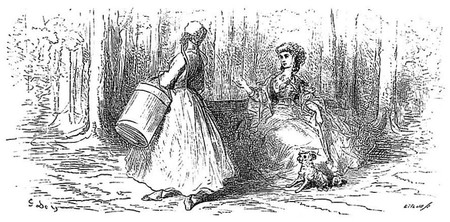
"Depend upon yourself alone," Is a sound proverb worthy credit. In Æsop's time it was well known, And there (to tell the truth) I read it. The larks to build their nests began, When wheat was in the green blade still— That is to say, when Nature's plan Had ordered Love, with conquering will, To rule the earth, the sea, and air, Tigers in woods, sea monsters in the deep; Nor yet refuse a share To larks that in the cornfields keep. One bird, however, of these last, Found that one half the spring was past, Yet brought no mate, such as the season sent To others. Then with firm intent Plighting her troth, and fairly matched, She built her nest and gravely hatched. All went on well, the corn waved red Above each little fledgling's head, Before they'd strength enough to fly, And mount into the April sky. A hundred cares the mother Lark compel To seek with patient care the daily food; But first she warns her restless brood To watch, and peep, and listen well, And keep a constant sentinel; "And if the owner comes his corn to see, His son, too, as 'twill likely be, Take heed, for when we're sure of it, And reapers come, why, we must flit." No sooner was the Lark away, Than came the owner with his son. "The wheat is ripe," he said, "so run, And bring our friends at peep of day, Each with his sickle sharp and ready." The Lark returns: alarm already
THE LARK AND HER LITTLE ONES.
Had seized the covey. One commences— "He said himself, at early morn, His friends he'd call to reap the corn." The old Lark said—"If that is all, My worthy children, keep your senses; No hurry till the first rows fall. We'll not go yet, dismiss all fear, To-morrow keep an open ear; Here's dinner ready, now be gay." They ate and slept the time away. The morn arrives to wake the sleepers, Aurora comes, but not the reapers. The Lark soars up: and on his round The farmer comes to view his ground. "This wheat," he said, "ought not to stand; Our friends are wrong no helping hand To give, and we are wrong to trust Such lazy fools for half a crust, Much less for labour. Sons," he cried, "Go, call our kinsmen on each side, We'll go to work." The little Lark Grew more afraid. "Now, mother, mark, The work within an hour's begun." The mother answered—"Sleep, my son; We will not leave our house to-night." Well, no one came; the bird was right. The third time came the master by: "Our error's great," he said, repentantly: "No friend is better than oneself; Remember that, my boy, it's worth some pelf. Now what to do? Why, I and you Must whet our sickles and begin; That is the shortest way, I see; I know at last the surest plan: We'll make our harvest as we can." No sooner had the Lark o'erheard— "'Tis time to flit, my children; come," Cried out the very prudent bird. Little and big went fluttering, rising, Soaring in a way surprising, And left without a beat of drum.
FABLE LXIX.
THE FLY AND THE ANT.
The Fly and Ant once quarrelled seriously: "O Jupiter!" the first exclaimed, "how vanity Blinds the weak mind! This mean and crawling thing Actually ventures to compare With me, the daughter of the air. The palace I frequent, and on the board I taste the ox before our sovereign lord; While this poor paltry creature lives for days On the small straw she drags through devious ways. Come, Mignon, tell me plainly now, Do you camp ever on a monarch's brow, Or on a beauty's cheek? Well, I do so,— And on her bosom, too, I'd have you know. I sport among her curls; I place Myself upon her blooming face. The ladies bound for conquest go To us for patches; their necks' snow With spots of blackness well contrast, Of all her toilette cares the last. Come, now, good fellow, rack your brain, And let us hear of sense some grain." "Well, have you done?" replied the Ant. "You haunt king's palaces, I grant; But then, by every one you're cursed. It's very likely you taste first The gods' own special sacred feast: Nor is it better, sir, for that. The fane you enter, with the train— So do the godless and profane. On heads of kings or dogs, 'tis plain, You settle freely when not wanted, And you are punished often—granted. You talk of patches on a belle, I, too, should patch them just as well. The name your vanity delights, Frenchmen bestow on parasites; Cease, then, to be so grossly vain, Your aspirations, Miss, restrain; Your namesakes are exiled or hung, And you with famine will be clung. With cold and freezing misery, Will come your time of penury, When our King Phœbus goes to cheer And rule the other hemisphere: But I shall live upon my store, My labours for the summer o'er, Nor over mountains and seas go, Through storm and rain, and drifting snow; No sorrow near me will alloy The fulness of the present joy; Past trouble bars out future care, True not false glory is our share; And this I wish to show to you— Time flies, and I must work. Adieu! This idle chattering will not fill My little granary and till."
FABLE LXX.
THE GARDENER AND HIS MASTER.
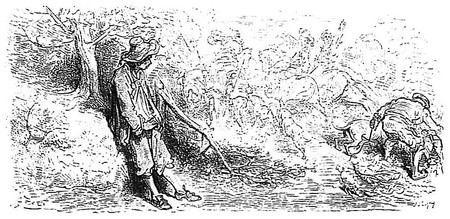
An amateur of flowers—bourgeois and yet clown— Had made a garden far from any town; Neat, trim, and snug, it was the village pride; Green quickset hedges girt its every side; There the rank sorrel and the lettuce grew, And Spanish jasmine for his Margot, too, Jonquils for holidays, and crisp dry thyme; But all this happiness, one fatal time, Was marred by a hare; his grief and woe Compel the peasant to his lord to go. "This cursed animal," he says, "by night And day comes almost hourly for his bite; He spurns my cunning, and defies my snares, For stones and sticks he just as little cares; He is a wizard, that is very sure, And for a wizard is there, sir, a cure?" "Wizard, be hanged!" the lord said; "you shall see, His tricks and his wiles will not avail with me; I'll scare the rascal, on my faith, good man." "And when?" "To-morrow; I have got a plan." The thing agreed, he comes with all his troop. "Good! let us lunch—fowls tender in the coop? That girl your daughter? come to me, my dear! When you betroth her, there's a brave lad here. I know, good man, the matrimonial curse Digs plaguey deep into a father's purse." The lord, so saying, nearer draws his chair, Plays with the clusters of the daughter's hair, Touches her hand, her arm, with gay respect, Follies that make a father half suspect Her coyness is assumed; meantime they dine, Squander the meat, play havoc with the wine. "I like these hams, their flavour and their look." "Sir, they are yours." "Thanks: take them to my cook." He dined, and amply; his retainers, too; Dogs, horses, valets, all well toothed, nor few; My lord commands, such liberties he takes, And fond professions to the daughter makes. The dinner over, and the wine passed round, The hunters rise, and horns and bugles sound; They rouse the game with such a wild halloo, The good man is astonished at the crew; The worst was that, amid this noise and clack, The little kitchen garden went to wrack. Adieu the beds! adieu the borders neat! Peas, chicory, all trodden under feet. Adieu the future soup! The frightened hare Beneath a monster cabbage made his lair. They seek him—find him; "After him, my boys!" He seeks the well-known hole with little noise; Yet not a hole, rather a wound they made In the poor hedge with hoof and hunting-blade. "By the lord's orders it would never do To leave the garden but on horseback, no." The good man says; "Royal your sports may be, Call them whate'er you like, but pity me; Those dogs and people did more harm to-day Than all the hares for fifty years, I say."
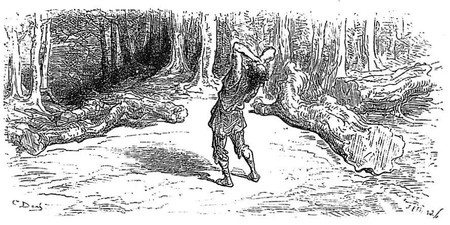
FABLE LXXI.
THE WOODMAN AND MERCURY.
TO M. THE COUNT DE B——.
Your taste has always been to me a guide; I've sought in many ways to win your vote: Fastidious cares you often would deride, Forbad me on vain ornament to dote. I think with you an author wastes his days, Who tries with over-care his tale to tell; Yet, it's not wise to banish certain traits Of subtle grace, that you and I love well. With Æsop's aim, I simply do my best; And fail—well, just as little as I can. Try to instruct by reasoning or jest; No fault of mine if no one likes my plan. Rude strength is not by any means my forte; I seek to pelt, with playful ridicule, Folly and vice; and tease the motley fool With stinging missiles—any way, in short; Not having brawny arms, like Hercules. That is my only talent, that I know. I have no strength to stem the angry seas, Or set all honest people in a glow. Sometimes I try to paint in fabled guise, A foolish vanity, with envy blended; Two of life's pivots, mocked at by the wise, In satires long ago, and not yet ended. Such, was the miserable creature, Mean and poor in shape, in feature, That tried to puff herself into an ox. Sometimes I try, by playful paradox, To pair a vice with virtue, folly with good sense, Lambs with gaunt wolves, the ant to match the fly; Everywhere laughing at the fool's expense, I mould my work into a comedy,
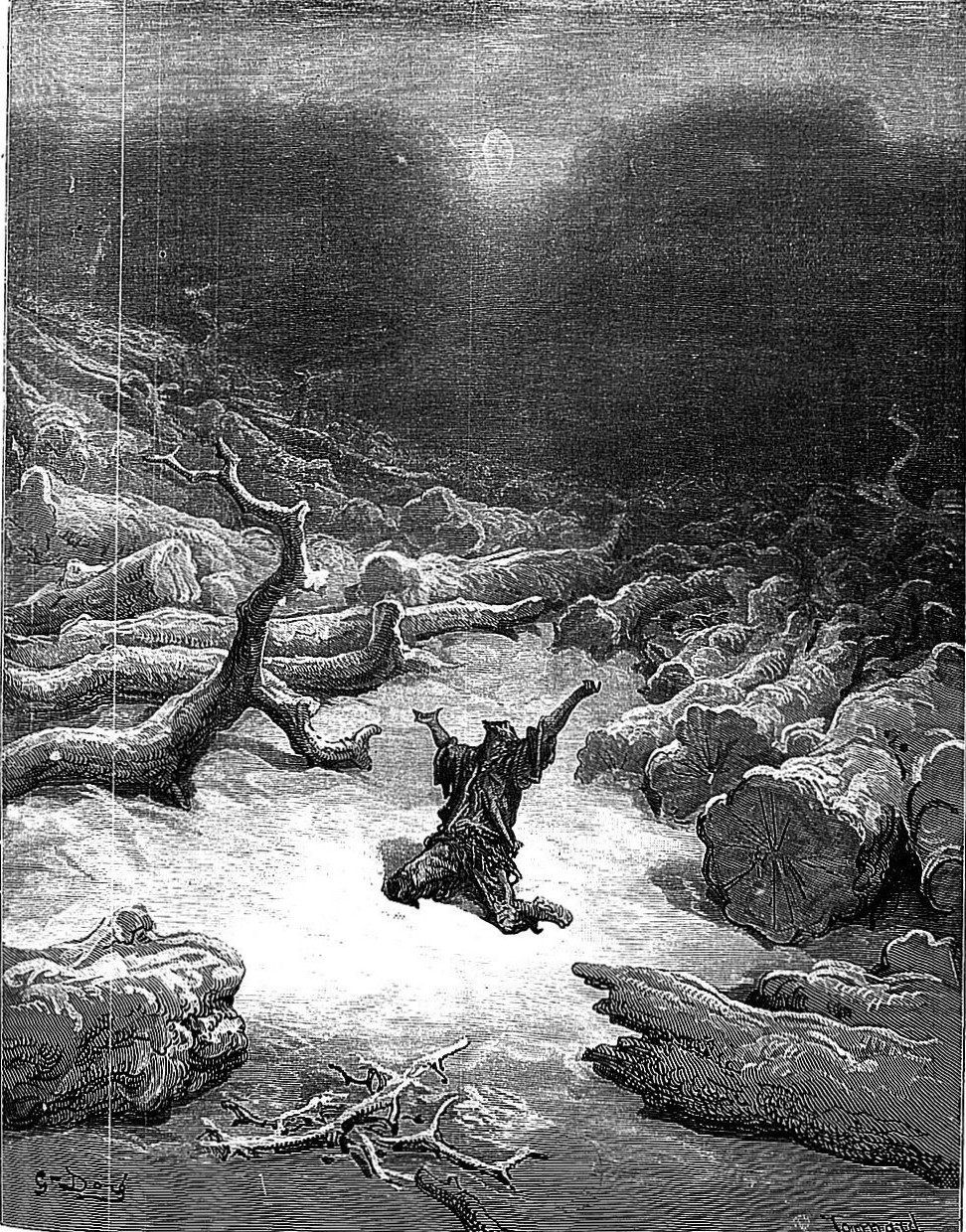
THE WOODMAN AND MERCURY.
With countless acts, the universe its scene, Boundless as the blue serene. Men, gods, and brutes each play their part, With more or less of truth and art. Jove like the rest—come, Mercury; Ah! look, why there he comes, I see; The messenger who's wont to bear Jove's frequent errands to the fair— But more of that another day. A Woodman's axe had gone astray, The winner of his bread was gone; And he sat moaning all alone. He had no wealth to buy such things: The axe his clothes and dinner brings. Hopeless, and in a murky place, He sat, the tears ran down his face. "My own, my poor old axe! Ah! me, Great Jupiter, I pray to thee; But give it back from down below, And I will strike for thee a blow." His prayer was in Olympus heard; Mercury entered at the word. "Your hatchet is not lost," said he; "But will you know it, when you see? I found an axe, just now, hard by." A golden axe he presently Showed to the honest man; but "Nay" Was all the fellow cared to say. Next one of silver he refused; Silver or gold he never used. Then one of simple steel and wood; "That's mine!" he cried. "Ah! thankee—good; I'm quite content with this, you see." "Come," said the god, "then take the three— That's my reward for honesty." "In that case, then, I am content," The rustic said, and off he went. The rumour buzzed the country through, Soon others lost their axes, too; And shouting prayers unto the sky, Jove Mercury sent, to make reply. To each he showed an axe of gold— Who but a fool could it behold, And not say, when he saw it shine— "Hurrah! that's it—yes, that is mine?" But Mercury gave each rogue instead A heavy thump upon the head. He who with simple truth's content, Will never of his choice repent: To tell a lie for interest, Was never yet of ways the best. What does it profit thus to stoop? Jove is not made an easy dupe.
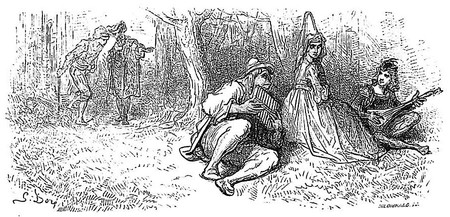
FABLE LXXII.
THE ASS AND THE LITTLE DOG.
To ape a talent not your own Is foolish; no one can affect a grace. A blundering blockhead better leave alone The gallant's bows, and tricks, and smiling face. To very few is granted Heaven's dower— Few have infused into their life the power To please, so better far to leave the charm To them. And may I ask you, where's the harm? One would not bear resemblance to the Ass, Who wishing to be dearer to his master, Amiably went to kiss him; so it came to pass There followed instantly no small disaster. "What!" said he, "shall this paltry thing Assume by dint of toadying, Win Madam's friendly fellowship, And twist and gambol, fawn and skip, While I have only blows? no, no! What does he do?—why, all fools know— He gives his paw; the thing is done, And then they kiss him every one. If that is all, upon my word, To call it difficult 's absurd." Full of this glorious thought, one luckless day, Seeing his master smiling pass that way, The clumsy creature comes, and clumsily Chucks with his well-worn hoof quite gallantly His master's chin; to please him still the more, With voice, so sweet, sonorous brays his best. "Oh, what caresses, and what melody!" The master cries; "Ho! Martin, come, be quick! And, Martin, bring the heaviest stick!" Then Martin comes; the donkey changed his tune. So ended the brief comedy In bitter blows and misery. Donkeys' ambitions pass so soon.
FABLE LXXIII.
MAN AND THE WOODEN IDOL.
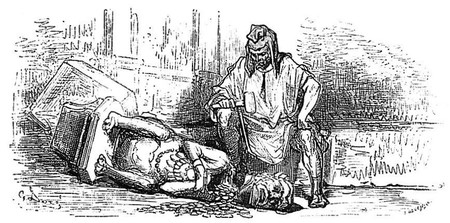
A certain Pagan had a god of wood— Deaf was the idol, yet had ears enough; The Pagan promised to himself much good. It cost as much as three men; for his fears Induced repeated vows and offerings; Fat oxen crowned with garlands and such things. Never an idol—think of that— Boasted of victims half as fat. Yet all this worship brought no grace, Treasure or legacy, or luck at play; What's more, if any single storm came near the place, This man was sure to have to pay; Yet all the time the god dined well. Now, was this fair? At last, impatient at the costly care, He takes a crowbar, and the Idol smashes (Crashes). Forth comes a stream of gold. "I feasted you with offerings manifold, And you were never worth an obolus to me; Now leave," he said, "my hospitality, Seek out another altar. I hold thee One of those gross and stupid creatures With wicked and untoward natures Whose gratitude can never grow; But after many a heavy blow, The more I gave the less I got; I own It's very well I changed my tone."
FABLE LXXIV.
THE JAY DRESSED IN PEACOCK'S PLUMES.
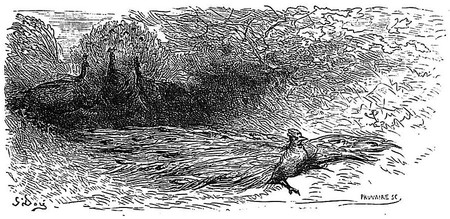
A Peacock having moulted, the sly Jay Put on the thrown-off plumage with delight; Amongst some other Peacocks found his way, And thought himself a fascinating sight. At last the would-be beau got recognised, A charlatan, in borrowed plumes equipt— And laughed at, scouted, hustled, and despised, Of all his second-hand attire got stript; Returning to his friends, abashed and poor, They most politely showed him to the door. Two-footed Jays are anything but rare, Who live on facts and fancies not their own; But these are, luckily, not my affair, So let me leave the plagiarists alone.
THE LITTLE FISH AND THE FISHERMAN.
FABLE LXXV.
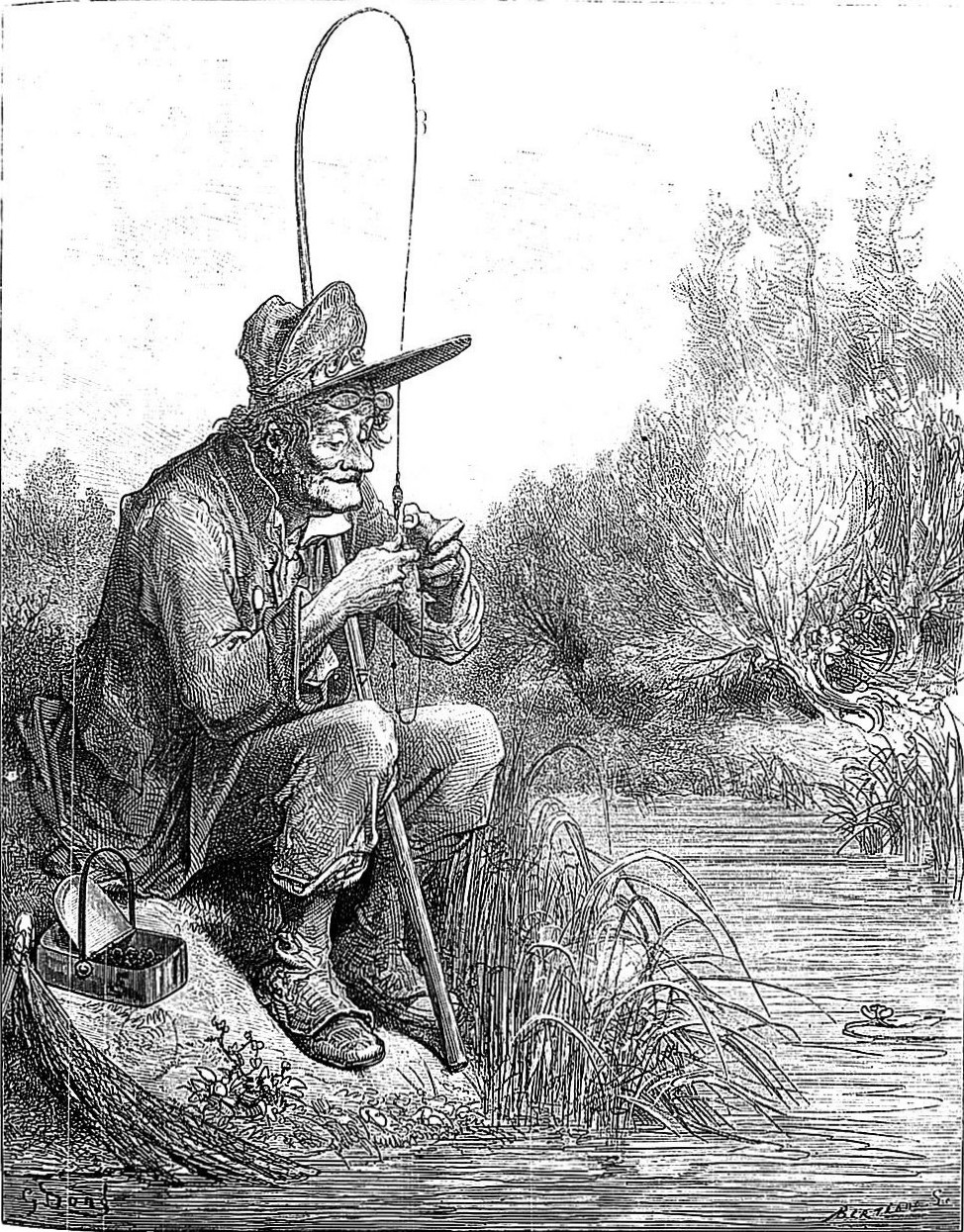
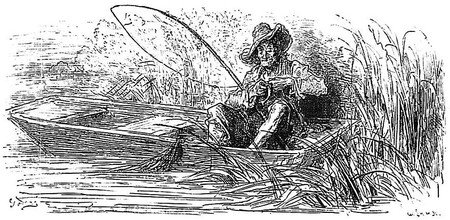
THE LITTLE FISH AND THE FISHERMAN.
A little Fish will larger grow, in time, If God will only grant him life; and yet To let him free out of the tangling net Is folly; and I mean it, though I rhyme: The catching him again is not so sure, c'est tout. A little Carp, who half a summer knew, Was taken by an angler's crafty hook. "All count," the man said; "this begins my feast: I'll put it in my basket." "Here, just look!" Exclaimed, in his own way, the tiny beast. "Now what on earth can you, sir, want with me? I'm not quite half a mouthful, as you see. Let me grow up, and catch me when I'm tall, Then some rich epicure will buy me dear; But now you'll want a hundred, that is plain, Aye, and as much again, To make a dish; and what dish, after all? Why, good for nothing." "Good for nothing, eh?" Replied the Angler. "Come, my little friend, Into the pan you go; so end. Your sermon pleases me, exceedingly. To-night we'll try How you will fry." The present, not the future, tense Is that preferred by men of sense. The one is sure that you have got: The other, verily, is not.
FABLE LXXVI.
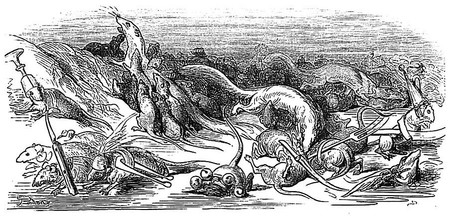
BATTLE BETWEEN THE RATS AND WEASELS.
The Weasel nation, like the Cats, Are always fighting with the Rats; And did the Rats not squeeze their way Through doors so narrow, I must say, The long-backed creatures would slip in, And swallow all their kith and kin. One certain year it did betide, When Rats were greatly multiplied, Their king, illustrious Ratapon, His army to the field led on. The Weasels, too, were soon arrayed, And the old flag again displayed. If Fame reported just and true, Victory paused between the two; Till fallows were enriched and red With blood the rival armies shed; But soon in every place Misfortune met the Rattish race. The rout was so complete, the foe More dreadful grew at every blow; And what avails brave Artapax, Meridarpax, Psicarpax? Who, covered both with dust and gore, Drove back the Weasels thrice and more, Till driven slowly from the plain, E'en their great courage proved in vain! 'Twas Fate that ruled that dreadful hour: Then each one ran who had the power; Soldier and captain, jostling fled, But all the princes were struck dead; The private, nimble in his feet, Unto his hole made snug retreat. The noble, with his lofty plume, Found that he had by no means room. To strike with terror—yes, or whether A mark of honour—rose the feather, That led to much calamity, As very soon the nobles see; Neither in cranny, hole, or crack, Was space found for the plumed pack. In the meantime, the populace Found access to each lurking-place, So that the largest heap of slain From the Rat noblemen is ta'en. A nodding feather in the cap Is oftentimes a great mishap; A big and over-gilded coach Will sometimes stop up an approach; The smaller people, in most cases, Escape by unregarded places: Men soon are on great people's traces.
FABLE LXXVII.
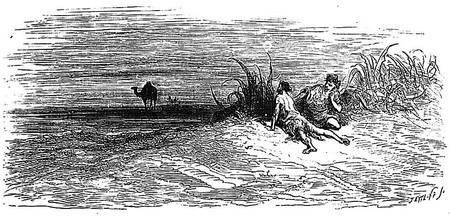
THE CAMEL AND THE DRIFT-WOOD.
The first who saw a real live Camel Ran for his life; the second ventured near; The third, with ready rope, without a fear, Made a strong halter the wild thing to trammel. Habit has power to quickly change Things that at first seem odd and strange; Stale they grow, and quickly tame, And hardly seem to be the same. And since the question's open, once there stood A look-out watching all the distant flood; And seeing something far off on the ocean, Could not conceal his notion It was a man-of-war; a moment past It turned a fire ship, all ataunt and brave, Then a big boat, and next a bale, and last Some mere drift timber jostling on the wave. How many things watched by the world agree In this—that far away you see That there is something, yet when sought, And seen still nearer, it proves nought.
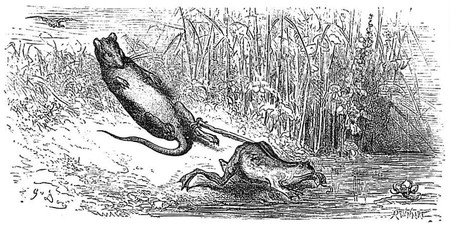
FABLE LXXVIII.
THE FROG AND THE RAT.
Merlin said well, that those who often cheat Will sometimes cheat themselves—the phrase is old. I'm sorry that it is, I must repeat It's full of energy, and sound as gold. But to my story: once a well-fed Rat, Rotund and wealthy, plump and fat, Not knowing either Fast or Lent, Lounging beside a marsh pool went. A Frog addressed him in the Frog's own tongue, And asked him home to dinner civilly. No need to make the invitation long. He spoke, however, of the things he'd see: The pleasant bath, worth curiosity; The novelties along the marsh's shore, The score and score Of spots of beauty, manners of the races, The government of various places, Some day he would recount with glee Unto his youthful progeny; One thing alone the gallant vexed, And his adventurous soul perplexed; He swam but little, and he needed aid. The friendly Frog was undismayed; His paw to hers she strongly tied, And then they started side by side. The hostess towed her frightened guest Quick to the bottom of the lake— Perfidious breach of law of nations— All promises she faithless breaks, And sinks her friend to make fresh rations. Already did her appetite Dwell on the morsel with delight, Lunch, Scrunch! He prays the gods; she mocks his woe; He struggles up; she pulls below. And while this combat is fought out, A Kite that's seeking all about Sees the poor Rat that's like to drown; And pounces swift as lightning down. The Frog tied to him, by the way, Also became the glad Kite's prey; They gave him all that he could wish, A supper both of meat and fish. So oftentimes a base deceit Falls back upon the father cheat; So oftentimes doth perfidy Return with triple usury.
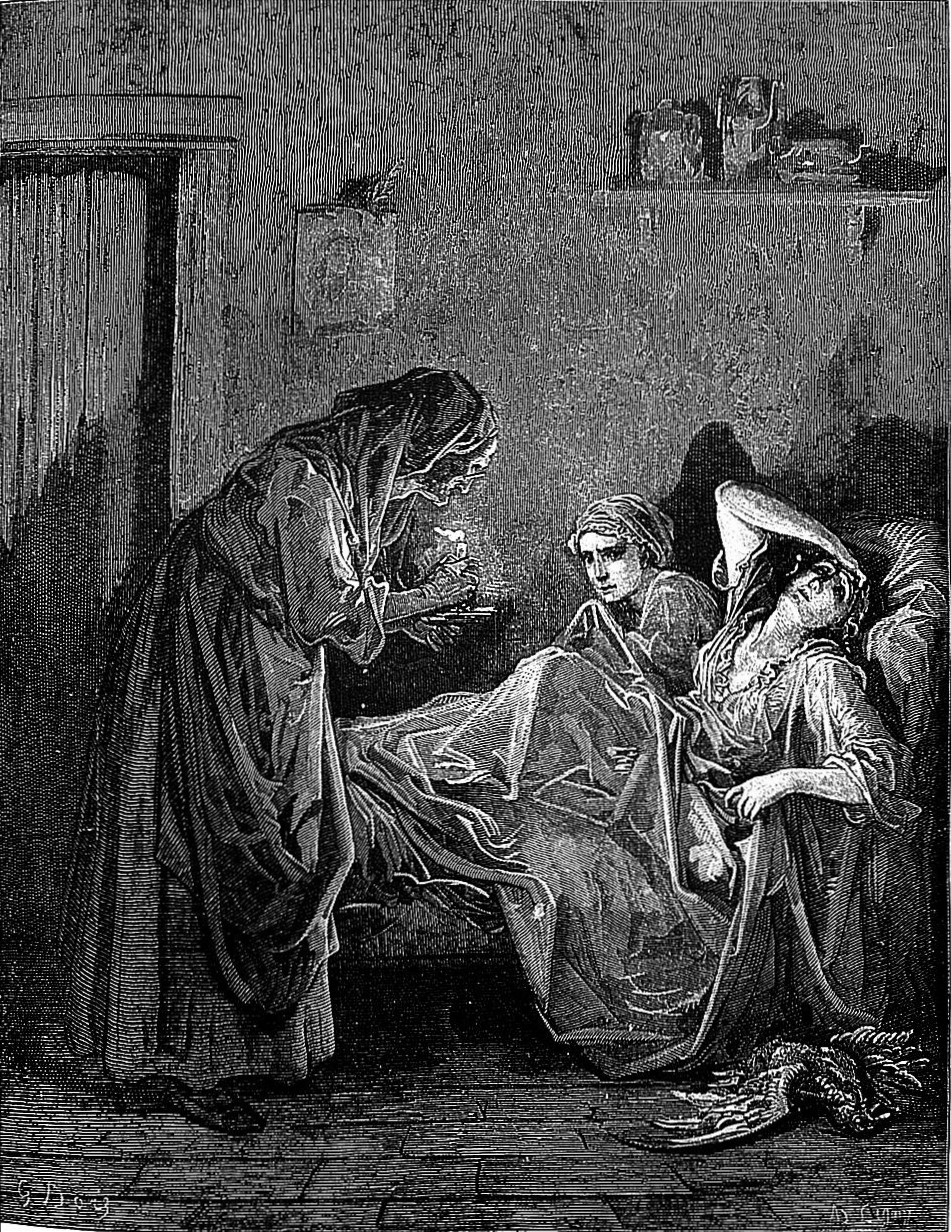
THE OLD WOMAN AND HER SERVANTS.
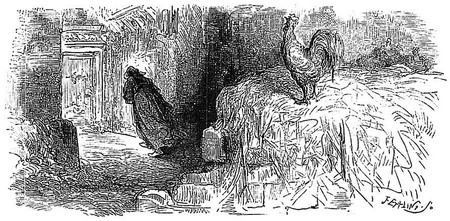
FABLE LXXIX.
THE OLD WOMAN AND HER SERVANTS.
A Beldam kept two maids, whose spinning Outdid the Fates. No care had she But setting tasks that, still beginning, Went on to all infinity. Phœbus had scarcely shaken out His golden locks, ere wheels were winding, And spindles whirled and danced about, The spools of thread these captives binding: Whiz—whiz; no resting; work and work! Soon as Aurora showed her face, A crowing Cock aroused the Turk, Who, scrambling on her gown apace, Lit up the lamp, and sought the bed Where, with good will and appetite, Each wretched servant's weary head Had rested for the blessed night. One opened half an eye; the other stretched A weary arm; both, under breath, Vowed (poor worn-out and weary wretches!) To squeeze that Chanticleer to death. The deed was done: they trapped the bird. And yet it wrought them little good; For now, ere well asleep, they heard The old crone, fearing lest they should O'ersleep themselves, their watchful warner gone; She never left them less alone. And so it is, that often men Who think they're getting to the shore, Are sucked back by the sea once more. This couple are a proof again How near Charybdis Scylla's whirlpools roar.
FABLE LXXX.
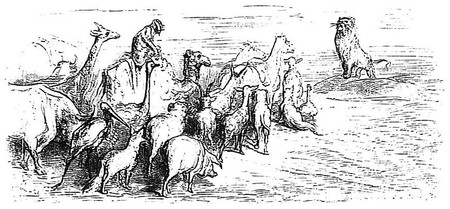
THE ANIMALS SENDING A TRIBUTE TO ALEXANDER.
A Fable current in the ancient times Had surely meaning; but none clear to me. Its moral's somewhere, reader, in these rhymes, So here's the thing itself for you to see. Fame had loud rumoured in a thousand places Of Jove's great son, a certain Alexander, Who had resolved, however sour men's faces, To leave none free; moreover, this commander Had summoned every living thing beneath the skies To come and worship at his sovereign feet: Quadrupeds, bipeds, elephants, and flies; The bird republic, also, were to meet. The goddess of the hundred mouths, I say, Having thus spread a wide dismay, By publishing the conqueror's decree, The animals, and all that do obey Their appetites alone, began to think that now They should be kept in slavery, And to fresh laws and other customs bow. They met in the wild desert and decide, After long sittings and conflicting chatter, To pay a tribute, pocketing their pride. The Monkey was to manage style and matter (Chief of all diplomats in every way); They write down what he has to say. The tribute only vexed the creatures: No money! how their cash to pay? Well from a prince, who chanced to own Some mines of gold, they got a loan. To bear the tribute volunteered The Mule and Ass, and they were cheered; The Horse and Camel lent their aid. Then gaily started all the four, Led by the new ambassador. The caravan went on till, in a narrow place, They saw his majesty the Lion's face; They did not like his look at all, Still less when he began to call. "Well met; and just in time," quoth he; "Your fellow-traveller I will be; Your toil I wish to freely share, My tribute's light, yet hard to bear; I'm not accustomed to a load; so, please, Take each a quarter at your ease, To you 'tis nothing, that I feel; If robbers come to pick and steal, I shall not be the last to fight: A Lion is not backward in a fray." They welcome him, and he's in pleasant plight; So, spite of Jove-sprung hero, every day Upon the public purse he battens, And on good deer he quickly fattens. They reach at last a meadow land, With flowers besprinkled, fed by brooks; The sheep feed there on either hand, Unguarded by the shepherd's crooks: It is the summer zephyr's home. No sooner has the Lion come, Than he of fever much complains; "Continue, sirs, your embassy," Said he; "but burning, darting pains Torment me now exceedingly. I seek some herb for speedy cure; You must not long delay, I'm sure; Give me my money; quick! I'm hurried." Then quickly out the gold was scurried. The Lion, quite delighted, cried, In tones that showed his joy and pride, "Ye gods! my gold has hatched its brood; And, look! the young ones are all grown Big as the old ones; that is good: The increase comes to me alone." He took the whole, although he was not bid; Or if he didn't, some one like him did. The Monkey and his retinue Half frightened and half angry grew, But did not dare reply; so left him there. 'Tis said that they complained at court; but where Was then the use? in vain their loud abuse. What could he do? Jove's royal scion! 'Twould have been Lion against Lion. 'Tis said when Corsairs fight Corsairs, They are not minding their affairs.
FABLE LXXXI.
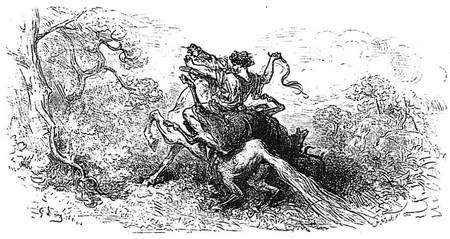
THE HORSE WISHING TO BE REVENGED ON THE STAG.
Horses were once as free as air, When man on acorns lived content. Ass, horse, and mule unfettered went Through field and forest, anywhere, Without a thought of toil and care. Nor saw one then, as in this age, Saddles and pillions every stage, Harness for march, and work, and battle, Or chaises drawn by hungry cattle. Nor were there then so many marriages, Nor feasts that need a host of carriages. 'Twas at this time there was a keen dispute Between a Stag who quarrelled with a Horse, Unable to run down the nimble brute: To kindly Man he came, for aid, of course; Man bridled him and leaped upon his back, Nor rested till the Stag was caught and slain. The Horse thanked heartily the Man, good lack: "Adieu, yours truly, I'll trot off again, Home to the wild wood and the breezy plain." "Not quite so fast," the smiling Man replied, "I know too well your use, you must remain; I'll treat you well, yes, very well," he cried: "Up to your ears the provender shall be, And you shall feed in ease and luxury." Alas! what's food without one's liberty? The Horse his folly soon perceived; But far too late the creature grieved. His stable was all ready near the spot, And there, with halter round his neck, he died, Wiser had he his injuries forgot. Revenge is sweet to injured pride; But it is bought too dear, if bought With that without which all things else are nought.
FABLE LXXXII.
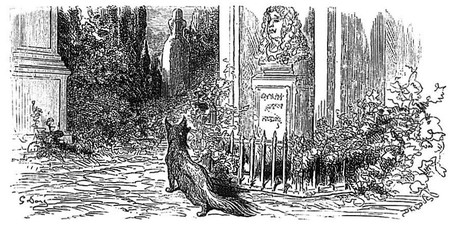
THE FOX AND THE BUST.
The great too often wear the actor's mask; The vulgar worshippers the show beguiles; The ass looks on the surface; 'tis the task Of the wise Fox to go far deeper; full of wiles, He pries on every side, and turns, and peeps, And watches—Reynard never sleeps. And when he finds in many a place The great man nothing but a pompous face, Repeats, what once he subtly said Unto a hero's plaster head—- A hollow bust, and of enormous size— Praising it with contemptuous eyes, "Fine head," said he, "but without brains." The saving's worth the listener's pains; To many a noble lord the mot applies.
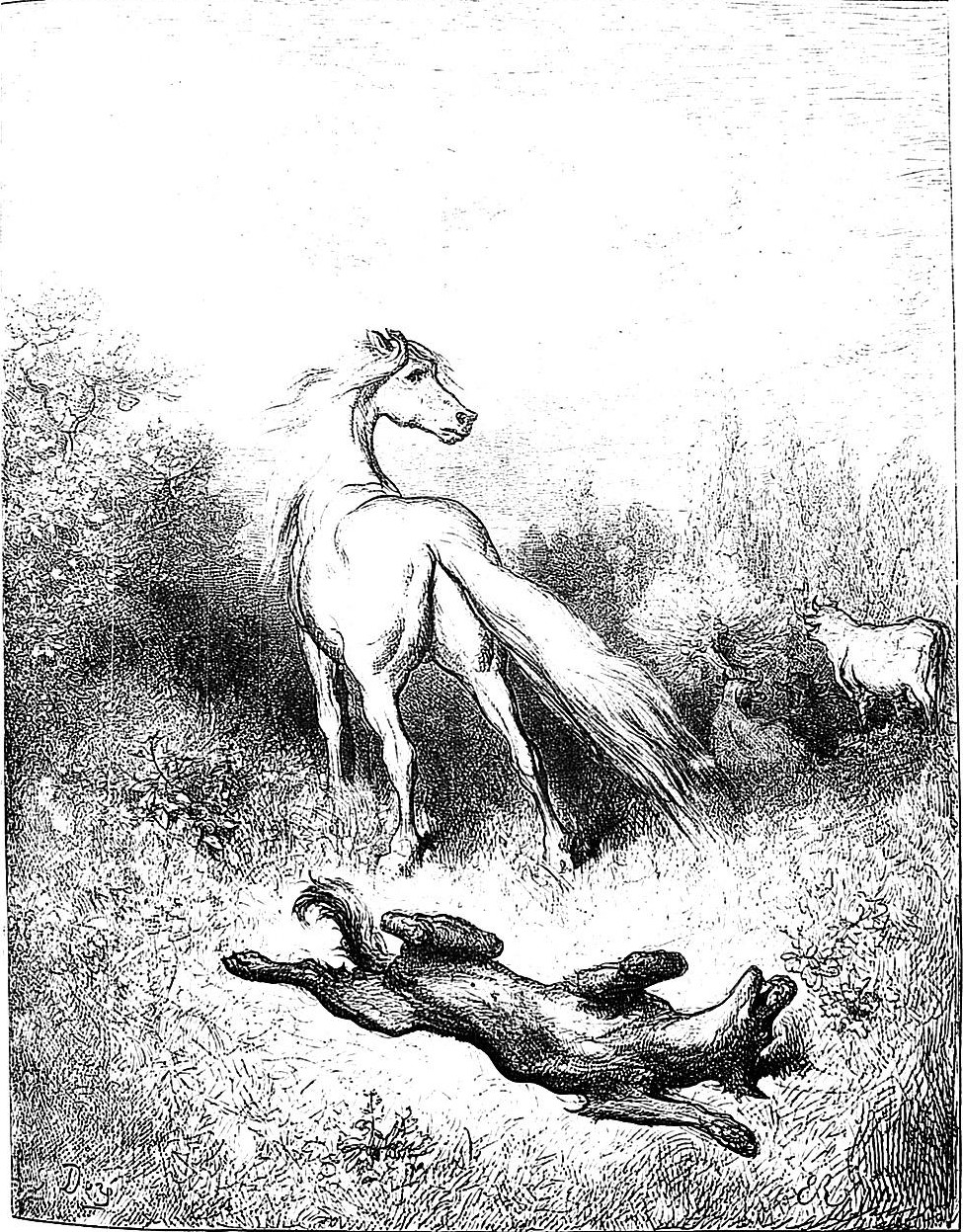
THE HORSE AND THE WOLF.
FABLE LXXXIII.
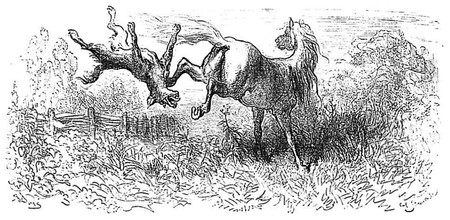
THE HORSE AND THE WOLF.
A certain Wolf, in that soft, pleasant season, When gentle zephyrs freshen every flower, And animals leave home, for this good reason— They want to make their hay before the shower: A Wolf, I say, after rough winters rigour, Perceived a Horse newly turned out to grass. You may imagine what his joy was. Vigour Came to him, when he saw the creature pass. "Good game!" he said; "I wonder for whose spit? No sheep this time—I only wish you were. But this wants cunning, and some little wit: Then let's be cunning." So—with learned air, As practised scholar of Hippocrates, Who knew the virtues and demerits, too, Of all the simples of the fields and leas, And knew the way to cure (the praise is due) All sorts of sad diseases—if Sir Horse Would tell his malady, he'd cure the ill, Quite gratis; for to see him course, Wandering untethered, at his own free will, Showed something wrong, if science did not err. "I have an aposthume," the Horse replied, "Under my foot." "My son," the doctor cried, "There is no part so sensitive to blows. I have the honour to attend your race, And am a surgeon, too, the whole world knows." The rascal only waited opportunity To leap upon the invalid's sunk flanks. The Horse, who had mistrust, impatiently Gave him a kick, expressive of his thanks, That made a marmalade of teeth and jaws. "Well done!" the Wolf growled, to himself reflecting: "Each one should stick to his own trade. My claws Were made for butchery, not herb-collecting."
FABLE LXXXIV.
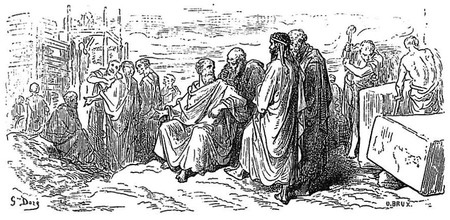
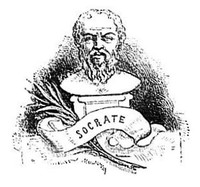
THE SAYING OF SOCRATES.
A house was built by Socrates, That failed the public taste to please. One thought the inside, not to tell a lie, Unworthy of the wise man's dignity. Another blamed the front; and one and all Agreed the rooms were very much too small. "What! such a house for our great sage, The pride and wonder of the age!" "Would Heaven," said he, quite weary of the Babel, "Was only able. Small as it is, to fill it with true friends." And here the story ends. Just reason had good Socrates To find his house too large for these. Each man you meet as friend, your hand will claim; Fool, if you trust the proffers that such bring. There's nothing commoner than Friendship's name; There's nothing rarer than the thing.
FABLE LXXXV.
THE OLD MAN AND HIS CHILDREN.
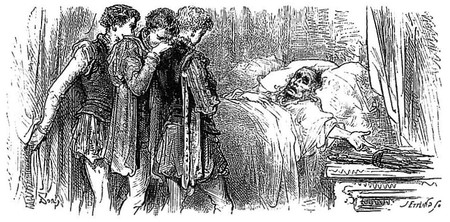
All power is feeble, if it's disunited: Upon this head now hear the Phrygian slave. If I add verse to his, which has delighted, It's not from envy; but in hopes to grave And paint our modern manners—feeble-sighted— Had I ambition for mere foolish aims. Phædrus, in eager search for glory, Enriched full many an ancient story; Ill-fitting me were such pretentious claims. But let us to our fable—rather history, Of him who tried to make his sons agree. An Old Man, when Death called, prepared to go—- "My children dear," he said, "try now to break This knotted sheaf of arrows. I will show The way they're tied—what progress can you make?" The eldest, having done his very best, Exclaimed, "I yield them to a stronger one." The second strove across his knee and chest, Then passed them quickly to the younger son: They lost their time, the bundle was too strong, The shafts together none could snap or bend. "Weak creatures!" said their sire, "pass them along; My single arm the riddle soon will end." They laughed, and thought him joking; but not so, Singly the arrows quickly fell in twain; "Thus may you concord's power, my children, know; Agree in love and never part again." He spoke no more, he felt his life was done; And then, perceiving death was very near, "Dear sons," said he, "I go where all have gone; Promise to live like brothers; let me hear Your joint vow—now, grant your father this:" Then, weeping, each one gives the parting kiss. He joins their hands and dies; a large estate He left, but tangled up with heavy debts. This creditor seized land still in debate; That neighbour brought an action for assets: The brothers' love was short, you well may guess; Blood joined and interest severed the brief tie; Ambition, envy, led to base finesse— The subdivision bred chicanery. The judge by turns condemns them all, Neighbours and creditors assail; To loggerheads the plighted brothers fall. The union's sundered—one agrees To compromise; the other ventures on, And soon the money is all gone In wrangling about lawyers' fees. They lose their wealth, and then, downhearted, Regretful talk of how, in joke, Their father broke Those arrows, when they once were parted.
FABLE LXXXVI.
THE ORACLE AND THE IMPIOUS MAN.
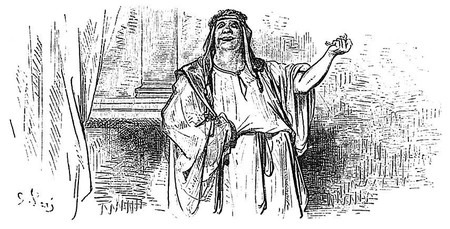
None wish to cozen heaven but the fool; The mystic labyrinths of the human heart Lie open to the gods in every part: All that man does is under their wise rule, Even things done in darkness are revealed To those from whom no single act's concealed. A Pagan—a vile rogue in grain, Whose faith in gods, it's very plain, Was but to use them as a dictionary, For consultation wary— Went once to try Apollo to deceive, With or without his leave. "Is what I hold," he said, "alive or no?" He held a sparrow, you must know, Prepared to kill it or to let it fly; To give the god at once the lie. Apollo saw the plan within his head, And answered— "Dead or alive," he said, "produce your sparrow. Try no more tricks, for I can always foil; Such stratagems, you see, do but recoil. I see afar, and far I cast my arrow."
FABLE LXXXVII.
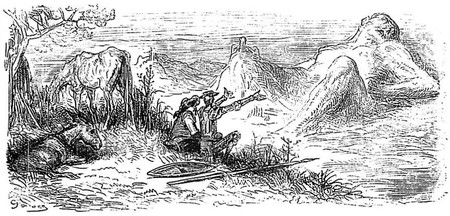
THE MOUNTAIN IN LABOUR.
Mountain in labour announced the new birth With clamour so loud that the people all thought 'Twould at least bear a city, the largest on earth. It was merely a Mouse that the incident brought. When I think of this fable, so false in its fact, And so true in its moral, it brings to my mind Those common-place authors who try to attract Attention by means of the subjects they find. "I will sing about Jove and the Titans," cries one; But how often the song comes to nothing, when done!
FORTUNE AND THE LITTLE CHILD.
FABLE LXXXVIII.
FORTUNE AND THE LITTLE CHILD.
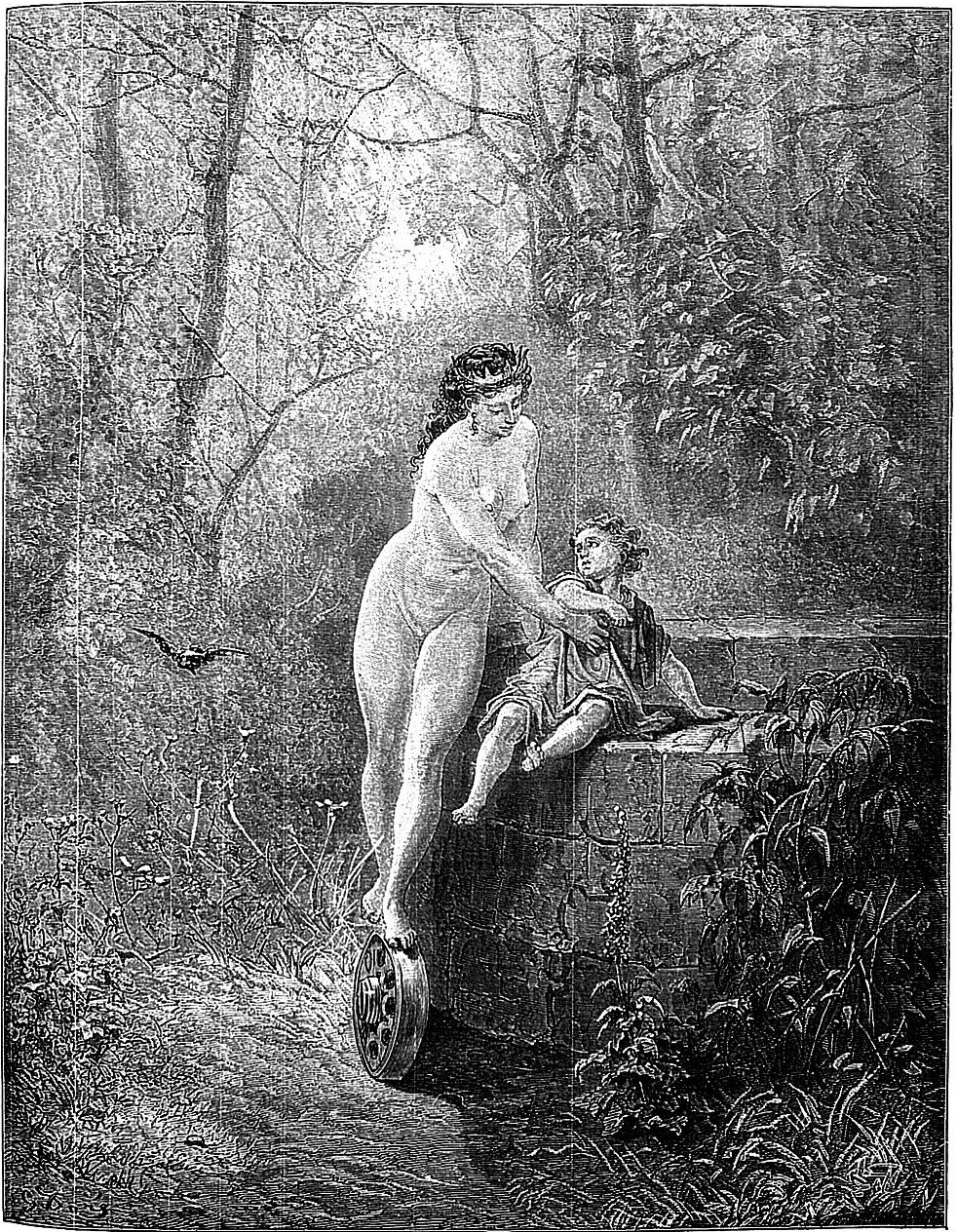
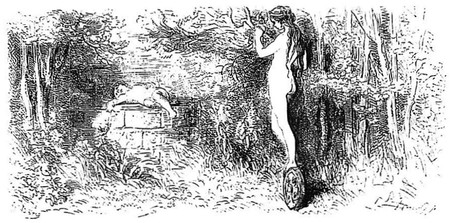
Beside a well profoundly deep A Schoolboy laid him down to sleep. Ere care has racked with aches the head, The hardest bank 's a feather bed; A grown-up man, in such a case, Had leaped a furlong from the place. Happy for him, just then came by Fortune, and saw him heedless lie. She woke him softly, speaking mild: "I've saved your life, you see, my child. Another time you close your eyes, Be just a little bit more wise. If you had fallen down below, 'Twould have been laid to me, I know, Though your own fault; and now, I pray, Before I take myself away, In honest truth you'll own the same, For I was hardly here to blame. It was not my caprice or joke." The goddess vanished as she spoke. And she was right; for never yet Have any a misfortune met, But Fortune's blamed: she has to pay For our misdoings every day. For all mad, foolish, ill-planned schemes We try to justify our dreams By rating her with curses strong. In one word, Fortune's always wrong.
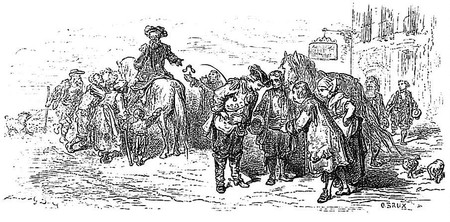
FABLE LXXXIX.
THE EARTHEN POT AND THE IRON POT.
"Neighbour," said the Iron Pot, "Let us go abroad a little." "Thank you, I would rather not," Was the answer that he got. Earthenware, you know, is brittle; And the weaker Pot was wiser Than to trust his bad adviser. "Mighty well for you" said he; "Skin like yours can hardly suffer Very much by land or sea, That is clear; but, as for me, Stop till I'm a little tougher. You may roam the wide world over; I shall stay at home in clover." "Friend!" the Iron Pot replied, "Don't let such a fear affect you; I shall travel at your side: So, whatever may betide, Cling to me, and I'll protect you." Having won his friend's compliance, Off they started in alliance. Jigging, jogging, on they went, Knocking one against the other; Till the Earthen Pot was sent (Past the powers of cement) Into atoms by his brother. 'Twas his own imprudence, clearly, That was paid for very dearly. With our equals let us mate, Or dread the weaker vessel's fate.
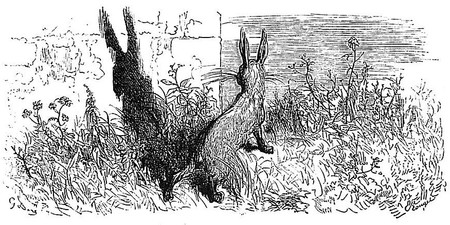
FABLE XC.
THE HARE'S EARS.
The Lion, wounded by some subject's horn, Was naturally wroth, and made decree That all by whom such ornaments were worn From his domains forthwith should banished be. Bulls, Rams, and Goats at once obeyed the law: The Deer took flight, without an hour's delay. A timid Hare felt smitten, when he saw The shadow of his ears, with deep dismay. He feared that somebody, with eyes too keen, Might call them horns, they looked so very long. "Adieu, friend Cricket," whispered he; "I mean To quit the place directly, right or wrong. These ears are perilous; and, though I wore A couple short as any Ostrich wears, I still should run." The Cricket asked, "What for? Such ears are only natural in Hares." "They'll pass for horns," his frightened friend replied; "For Unicorn's appendages, I'm sure. And folks, if I deny it, will decide On sending me to Bedlam, as a cure."
FABLE XCI.
THE FOX WITH HIS TAIL CUT OFF.
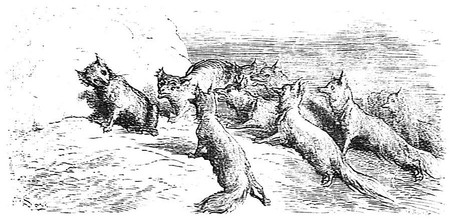
A sly old Fox, a foe of Geese and Rabbits, Was taken captive in a trap one day (Just recompense of predatory habits), And lost his tail before he got away. He felt ashamed at such a mutilation; But, cunning as before, proposed a way To gain companions in his degradation; And spoke as follows, on a council-day:— "Dear brother Foxes, what can be the beauty Or use of things so cumbrous and absurd? They only sweep the mud up. It's your duty To cut them off—it is, upon my word!" "Not bad advice: there may be wisdom in it," Remarked a sage, "but will you, by-the-by, Oblige us all by turning round a minute, Before we give a positive reply?" You never heard such hurricanes of laughter As hailed the cropped appearance of the rogue. Of course, among the Foxes, ever after, Long tails continued very much in vogue.
FABLE XCII.
THE SATYR AND THE PASSER-BY.
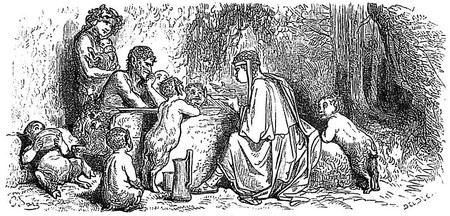
A savage Satyr and his brood Once took their lodgings and their food Within a cavern deep and drear, Which only very few came near. The Satyr, with his sons and wife, Led quite an unpretending life: Good appetite supplies the place Of luxuries in such a case. A Traveller, who passed that way, Entered the cave one rainy day; The Satyr proved a friend in need. By asking him to stop and feed. The other, as 'twas pouring still, Of course, accepted with a will: And warmed his fingers with his breath, For he was frozen half to death: Upon the soup then breathed a bit (The surest way of cooling it); Meanwhile, his host in wonder sat, And asked, "Pray, what's the good of that?" "Breath cools my soup," his guest replied, "And makes my fingers warm beside." The Satyr answered, with a sneer, "Then, we can do without you here. "Beneath my roof you shall not sleep; I scorn such company to keep. All people in contempt I hold, Who first blow hot, and then blow cold!"
THE DOCTORS.
FABLE XCIII.
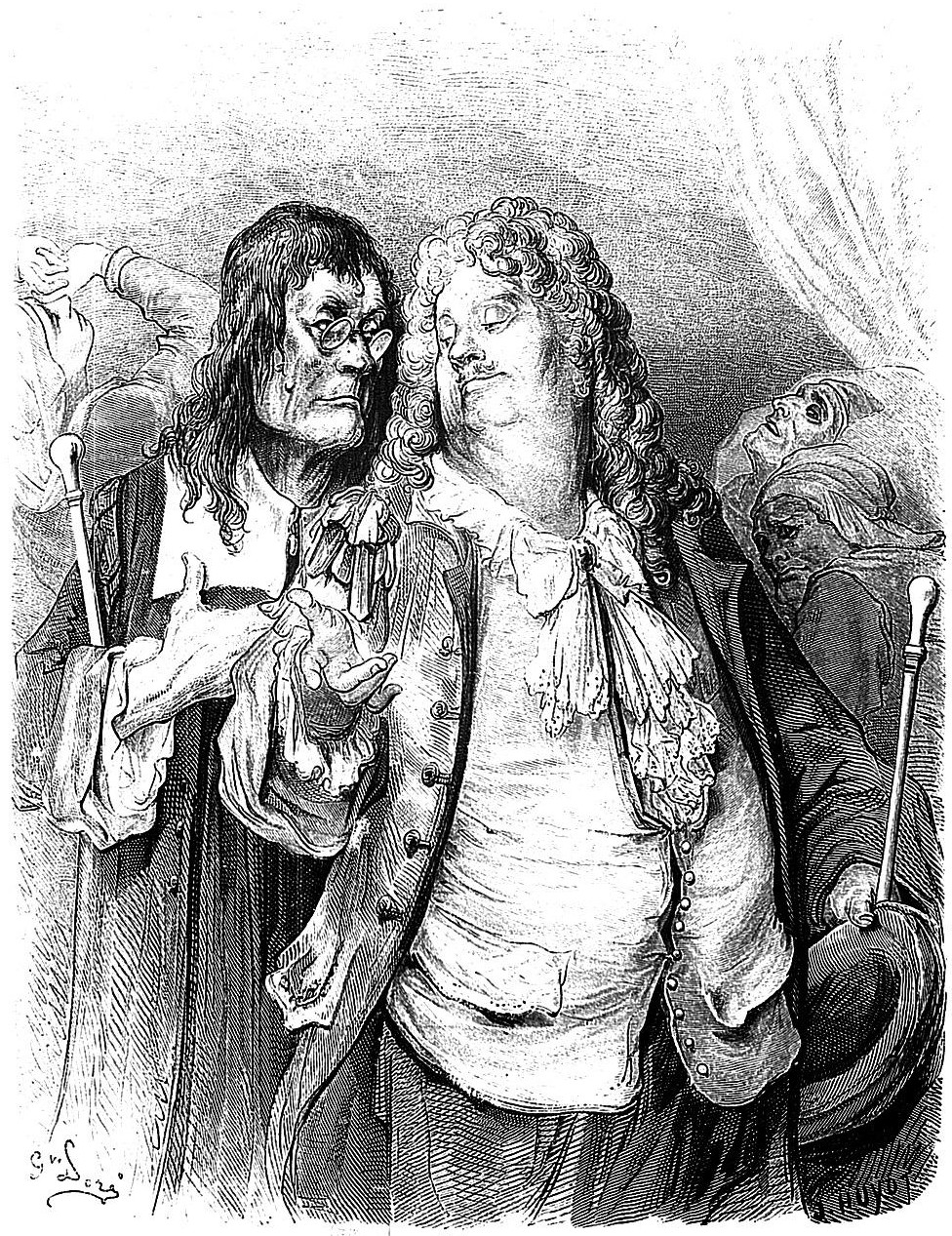
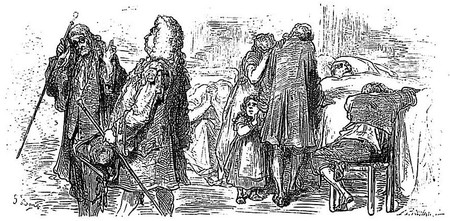
THE DOCTORS.
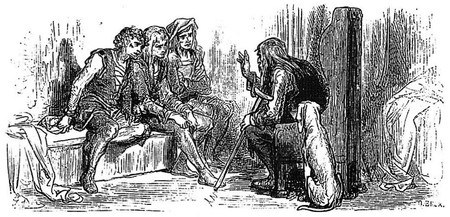
One morning Doctor Much-the-Worse went out To see a patient, who was also tended By Doctor Much-the-Better. "Past a doubt," The former said, "this case is nearly ended. There's not a chance."—The latter trusted still In physic's aid: but while the twin concocters Disputed hard on plaister, draught, and pill, The patient died from this attack of doctors. "Look there," said one, "I told you how 'twould be!" The other said, "No doubt you're vastly clever; But if our friend had only followed me, I know he would have been as well as ever."
FABLE XCIV.
THE LABOURING MAN AND HIS CHILDREN.
Work, work, with all your might and main, For labour brings the truest gain. A wealthy Labourer lay near to death; And, summoning his children round the bed, He thus addressed them, with his latest breath: "Part not with my estate when I am dead. My parents left me what I leave to you. About the place a treasure lies concealed, No matter where,—search every corner through, Nor leave a spot unturned in any field. Go, seek it from the morning till the night." Their father dead, the loving sons fulfilled The dying wish, that made their labour light: From end to end the fields were duly tilled. The harvest was enormous, though they found No golden treasures, howsoever small. And yet the father's last advice was sound, For Labour is a treasure, after all.
FABLE XCV.
THE HEN WITH THE GOLDEN EGGS.
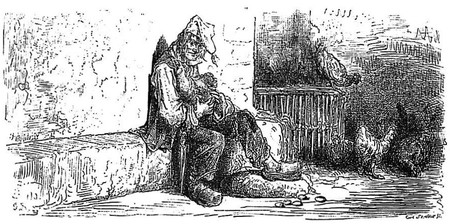
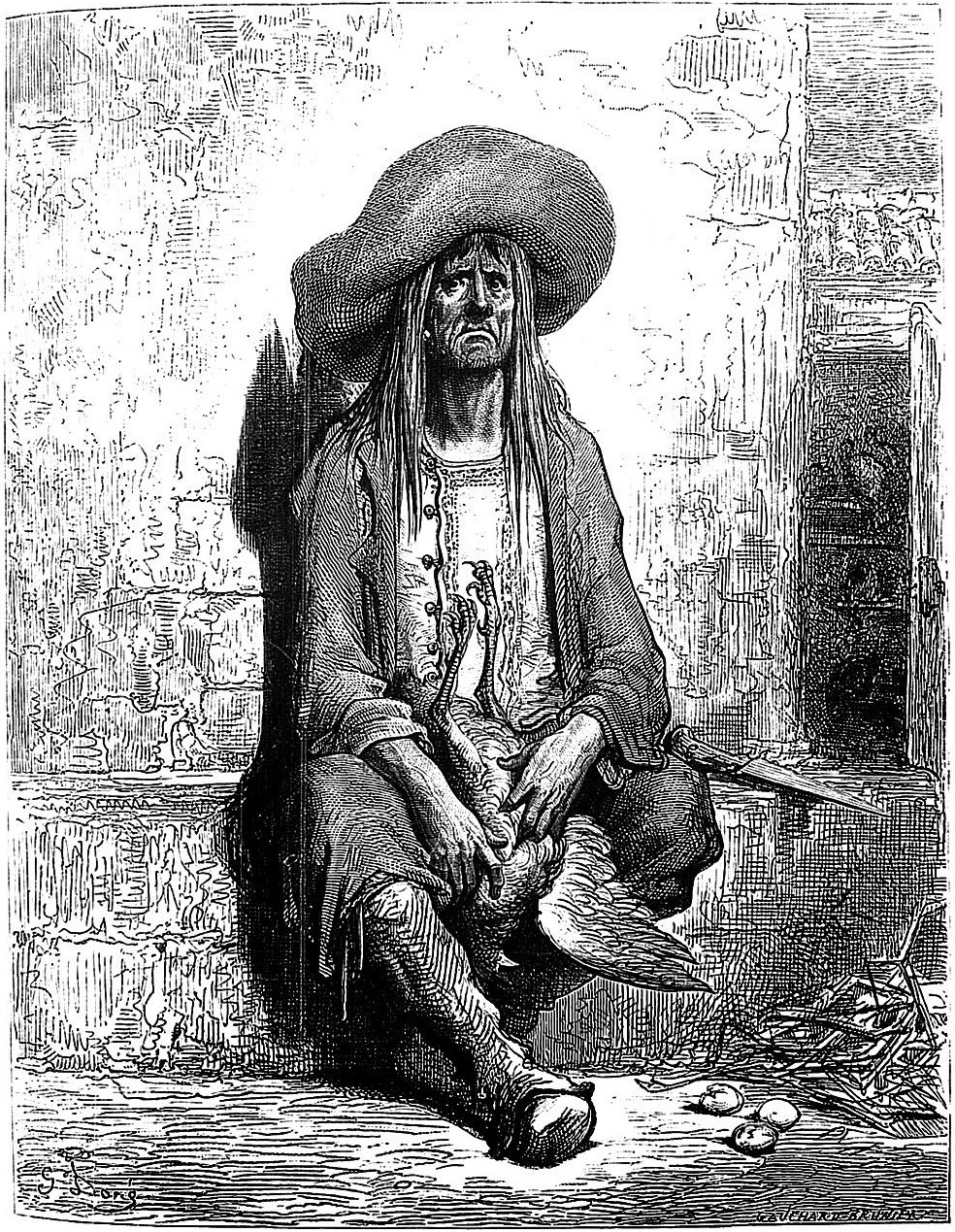
My little story will explain An olden maxim, which expresses How Avarice, in search of gain, May lose the hoard that it possesses. The fable tells us that a Hen Laid golden eggs, each egg a treasure; Its owner—stupidest of men— Was miserly beyond all measure. He thought a mine of wealth to find Within the Hen, and so he slew it: He found a bird of common kind— And lost a pretty fortune through it. For money-worms, who now and then Grow poor through trying to be wealthy, I tell my fable of the Hen; My tale is good, my moral healthy.
THE HEN WITH THE GOLDEN EGGS.
FABLE XCVI.
THE ASS THAT CARRIED THE RELICS.
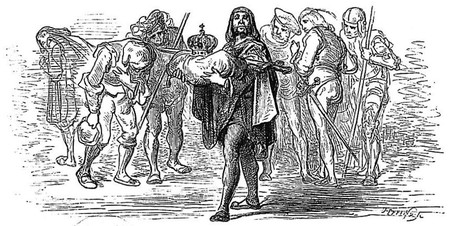
An Ass, with relics loaded, thought the crowd Knelt down to him, and straightway grew so proud; He took to his own merit, without qualms, Even the incense and loud chaunted psalms, Some one, to undeceive him, wisely said— "A foolish vanity has turned your head: They not to you, but to the idol pray; Where glory's due, there they the honour pay." When foolish magistrates rule o'er a town, It's not the man we bow to, but his gown.
FABLE XCVII.
THE SERPENT AND THE FILE.
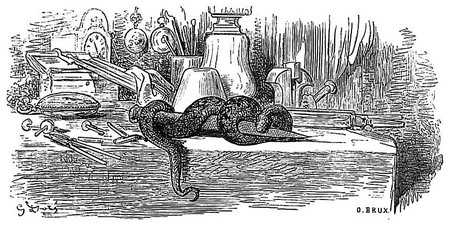
A Serpent once and Watchmaker were neighbours (Unpleasant neighbour for a working man); The Snake came creeping in among his labours, Seeking for food on the felonious plan; But all the broth he found was but a File, And that he gnawed in vain—the steel was tough. The tool said, with a calm contemptuous smile, "Poor and mistaken thing! that's quantum suff. You lose your time, you shallow sneak, you do, You'll never bite a farthing's worth off me, Though you break all your teeth: I tell you true, I fear alone Time's great voracity." This is for critics—all the baser herd. Who, restless, gnaw at everything they find. Bah! you waste time, you do, upon my word; Don't think your teeth can pierce the thinnest rind: To injure noble works you try, and try, but can't, To you they're diamond, steel, and adamant.
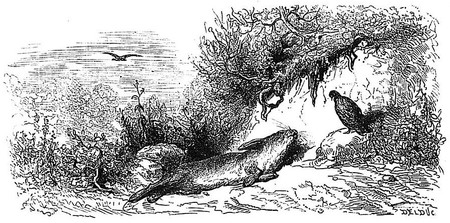
FABLE XCVIII.
THE HARE THE PARTRIDGE.
One should not mock the wretched. Who can tell He will be always happy? Fortune changes, Wise Æsop, in his fables, taught this well. My story is like his—which very strange is, The Hare and Partridge shared the selfsame clover, And lived in peace and great tranquillity, Till one day, racing all the meadows over, The huntsmen came, and forced the Hare to flee, And seek his hiding-place. The dogs, put out, Were all astray: yes, even Brifaut erred, Until the scent betrayed. A lusty shout Arouses Miraut, who then loud averred, From philosophic reasoning, 'twas the Hare, And ardently pushed forward the pursuit. Rustaut, who never lied, saw clearly where Had homeward turned again the frightened brute. Poor wretch! it came to its old form to die. The cruel Partridge, bitter taunting, said, "You boasted of your fleetness; now, then, try Your nimble feet." Soon was that scorn repaid: While she still laughed, the recompense was near. She thought her wings would save her from man's jaws. Poor creature! there was worse than that to fear: The swooping Goshawk came with cruel claws.
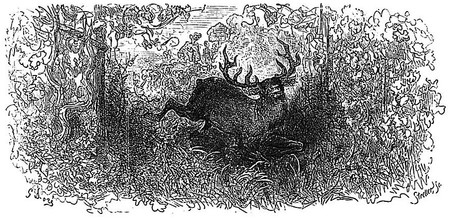
FABLE XCIX
THE STAG AND THE VINE.
A Stag behind a lofty Vine took shelter (Such vines are met with in a southern clime); Hunters and hounds pursued him helter-skelter, And searched and searched, but only lost their time. The huntsmen laid, as might have been expected, Upon the shoulders of their dogs the blame, The Stag, forgetting he had been protected, Vastly ungrateful all at once became; Upon the friendly Vine he made a dinner; But hounds and hunters soon came back again.
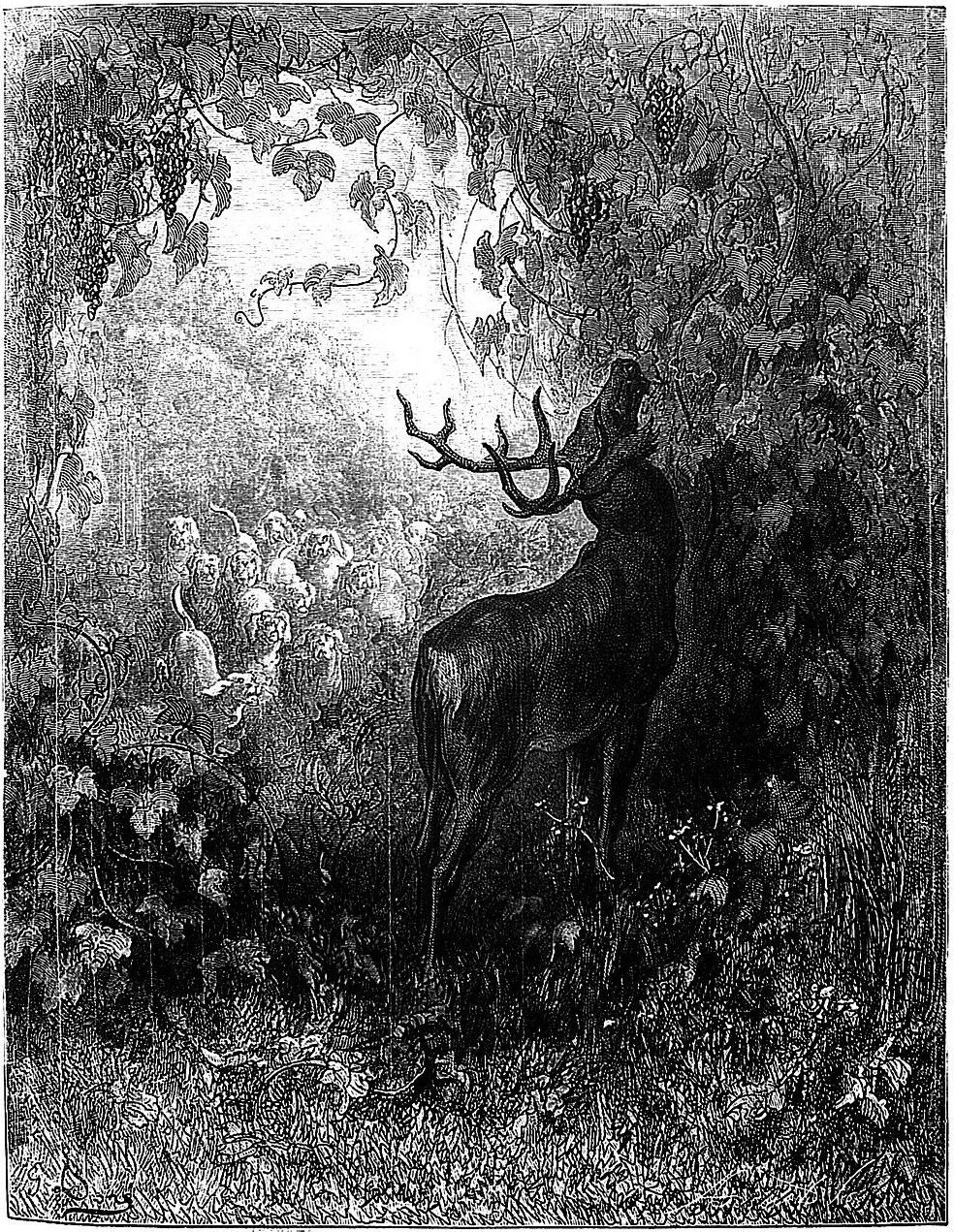
THE STAG AND THE VINE.
Discovered quickly—now the leaves were thinner— The Stag, of course, got set upon and slain. "I merit this!" exclaimed the dying glutton; "Ingratitude, like pride, must have a fall:" Another gasp, and he was dead as mutton; And no one present pitied him at all. How oft is hospitality rewarded By deeds ungrateful as the one recorded!
FABLE C.
THE LION GOING TO WAR.
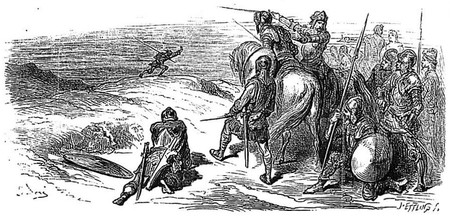
Lion planned a foray on a foe; Held a war-council; sent his heralds out To warn the Animals he'd strike a blow; Soon all were ready to help slay and rout— Each in his special way. The Elephant, To bear upon his back the baggage and supplies, And right, as usual. Then the Bear, to plant The flag upon the breach. The Fox's eyes Brighten at thought of diplomatic guile. The Monkey hopes to dupe with endless tricks. "But send away the Asses," says, meanwhile, Some courtier, in whose mind the fancy sticks; "They're only stupid. Pack off, too, the Hares." "No, not so," said the King; "I'll use them all: Our troop's imperfect, if they have no shares. The Ass shall be our startling trumpet call; The Hare is useful for our courier, mind." Prudent and wise the King who knows the way For every subject fitting task to find. Nothing is useless to the wise, they say.
FABLE CI.
THE ASS IN THE LION'S SKIN.
A donkey donned a Lion's hide, And spread a panic, far and wide (Although the Donkey, as a rule, Is not a fighter, but a fool). By chance, a little bit of ear Stuck forth, and made the matter clear. Then Hodge, not relishing the trick, Paid off its author with a stick. While those who saw the Lion's skin, But little dreamed who lurked within, Stood open-mouthed, and all aghast, To see a Lion run so fast. This tale applies, unless I err, To many folks who make a stir; And owe three-fourths of their success To servants, carriages, and dress.
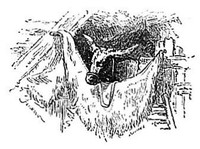
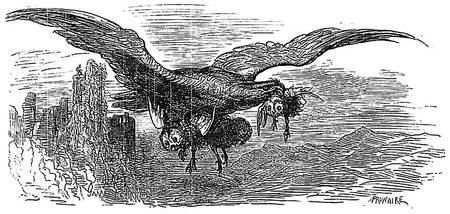
FABLE CII.
THE EAGLE AND THE OWL.
The Eagle and the Owl had treaty made— Ceased quarrelling, and even had embraced. One took his royal oath; and, undismayed, The other's claw upon his heart was placed: Neither would gulp a fledgling of the other. "Do you know mine?" Minerva's wise bird said. The Eagle gravely shook her stately head, "So much the worse," the Owl replied. "A mother Trembles for her sweet chicks—she does, indeed. It's ten to one if I can rear them then.
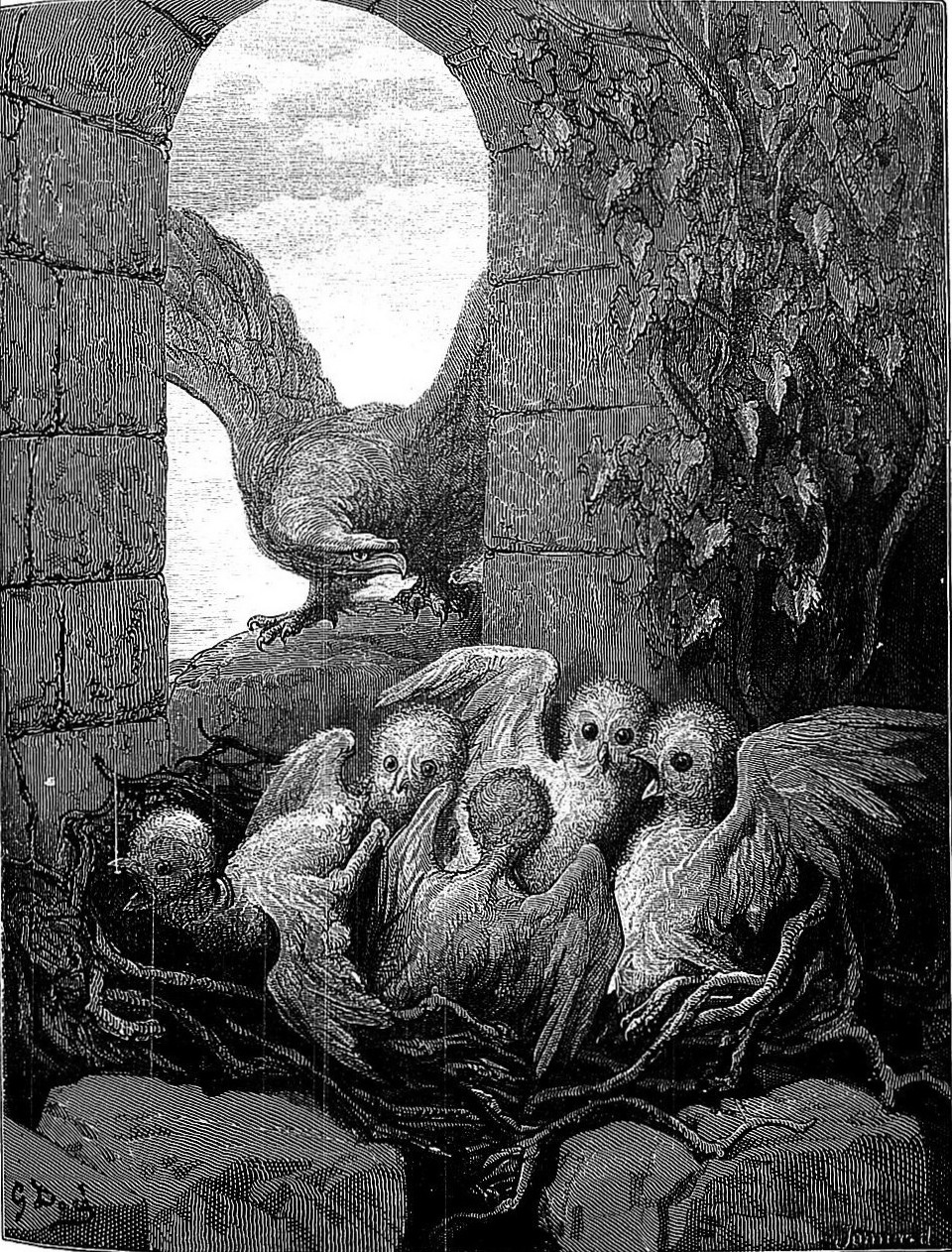
THE EAGLE AND THE OWL.
You are a king, and, therefore, take no heed Of who or what. The gods and lords of men Put all things on one level: let who will Say what they like. Adieu, my children dear, If you once meet them." "Nay, good ma'am, but still, Describe them," said the Eagle; "have no fear: Be sure I will not touch them, on my word." The Owl replied, "My little ones are small, Beautiful, shapely,—prettier, far, than all. By my description you will know the dears; Do not forget it: let no fate by you Find way to us, and cause me ceaseless tears." Well, one fine evening, the old Owl away, The Eagle saw, upon a rocky shelf, Or in a ruin, (who cares which I say?) Some little ugly creatures. To himself The Eagle reasoned, "These are not our friend's, Moping and gruff, and such a screeching, too: Let's eat 'em." Waste time never spends The royal bird, to give the brute his due; And when he eats, he eats, to tell the truth. The Owl, returning, only found the feet Of her dear offspring:—sad, but yet it's sooth. She mourns the children, young, and dear, and sweet, And prays the gods to smite the wicked thief, That brought her all the woe and misery. Then some one said, "Restrain thy unjust grief; Reflect one moment on the casualty. Thou art to blame, and also Nature's law, Which makes us always think our own the best. You sketched them to the Eagle as you saw: They were not like your portrait;—am I just?"
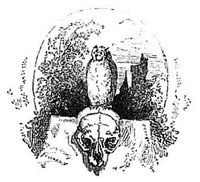
FABLE CIII.
THE SHEPHERD AND THE LION.
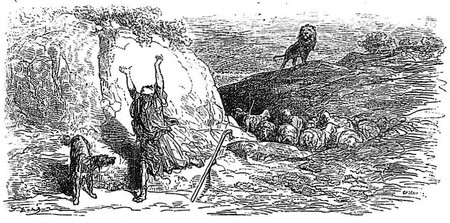
Fables are sometimes more than they appear: A crude, bare moral wearies some, I fear. The simplest animal to truth may lead; The story and the precept make one heed: They pass together better than apart: To please, and yet instruct, that is the art. To write for writing's sake seems poor to me; And for this reason, more especially— Numbers of famous men, from time to time, Have written fables in laconic rhyme, Shunning all ornament and verbose length, Wasting no word, unless to gain in strength. Phædrus was so succinct, some men found fault; Curt Æsop was far readier still to halt. But, above all, a Greek[1] did most excel, Who in four verses told what he would tell. If he succeeded, let the experts say; Let's match him now with Æsop, by the way. A Shepherd and a Hunter they will bring: I give the point and ending as they sing, Embroidering here and there, as on I go;— Thus Æsop told the story, you must know. A Shepherd, finding in his flocks some gaps, Thought he might catch the robber in his traps, And round a cave drew close his netted toils, Fearing the Wolves, and their unceasing spoils. "Grant, king of gods, before I leave the place," He cried, "grant me to see the brigand's face. Let me but watch him rolling in the net. That is the dearest pleasure I could get!" Then from a score of calves he chose the beast, The fattest, for the sacrificial feast. That moment stepped a Lion from the cave; The Shepherd, prostrate, all intent to save His petty life, exclaimed, "How little we Know what we ask! If I could only see Safe in my snares, that caused me so much grief, The helpless, panting, miserable thief, Great Jove! a Calf I promised to thy fane: An Ox I'd make it, were I free again." Thus wrote our leading author of his race; Now for the imitator, in his place.
FABLE CIV.
THE LION AND THE HUNTER.
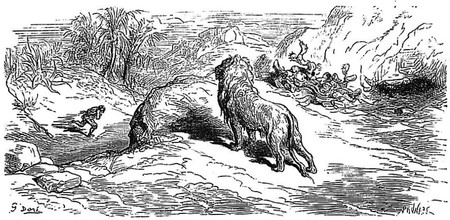
A Braggart, lover of the chase, Losing a dog, of noble race, Fearing 'twas in a Lion's maw, Asked the first shepherd that he saw If he would kindly show him where The robber had his favourite lair; That he might teach him, at first sight, The difference between wrong and right. The shepherd said, "Near yonder peak You'll find the gentleman you seek. A sheep a month, that is the fee I pay for ease and liberty. I wander where I like, you see." And, while he spoke, the Lion ran And put to flight the bragging man. "O Jupiter!" he cried, "befriend, And some safe refuge quickly send!" The proof of courage, understand, Is shown when danger is at hand. Some, when the danger comes, 'tis known, Will very quickly change their tone.
FABLE CV.
PHŒBUS AND BOREAS.
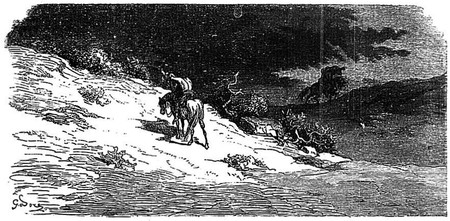
Phœbus and Boreas saw a traveller, 'Fended against bad weather prudently. Autumn had just begun, and then, you see, Caution is useful to the wayfarer. It rains and shines, and rainbows bright displayed Warned those who ventured out to take a cloak: The Romans called these months, as if in joke, The doubtful. For this season well arrayed, Our fellow, ready for the pelting rain, Wore a cloak doubled, and of sturdy stuff. "He thinks," the Wind said, "he is armed enough To 'scape all hazards; but it's quite in vain, For he has not foreseen that I can blow, So that no button in the world avails: I send cloaks flying as I do ships' sails. It will amuse us just to let him know; Now, you shall see." "Agreed," then Phœbus said; "Then let us bet, without more talking, come, Which of us first shall send him cloakless home: You can begin, and I will hide my head." 'Twas soon arranged, and Boreas filled his throat With vapour, till his cheeks balloons became. A demon's holiday of lightning-flame And storm came whistling, wrecking many a boat, Shattering many a roof—and all for what? About a paltry cloak. He's much ado To save him from a precipice or two. The Wind but wasted time—one's pleased at that— The more it raged, but firmer still he drew Around his breast the cloak: the cape just shook, And here and there a shred the tempest took. At last, the time was up, no more it blew, Then the hot Sun dispersed the cloudy haze, And pierced the weary horseman through and through. Beneath his heavy mantle sprung hot dew— No longer could he bear those fervent rays— He threw his cloak aside (a man of sense); Not half his power had Phœbus yet employed. Mildness had won—the Sun was overjoyed: Softness gains more than any violence.
THE BEAR AND THE TWO FRIENDS.
FABLE CVI.
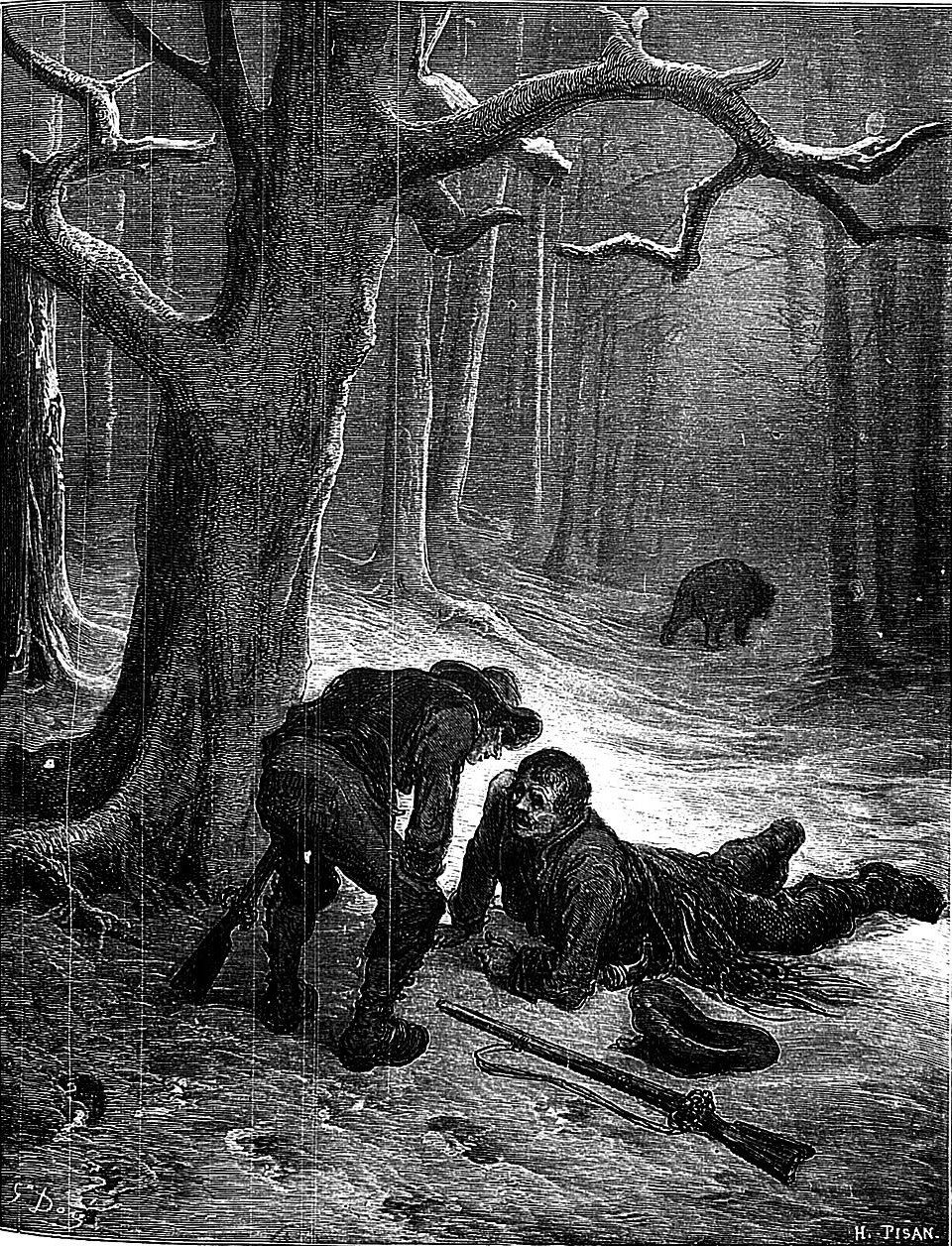
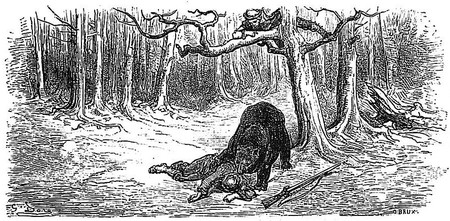
THE BEAR AND THE TWO FRIENDS.
Two Friends, in want, resolved to sell A Bear-skin, though the Bear was well, And still alive. The Furrier paid Them willingly; the bargain's made. It was the King of Bears, they said: They'd kill him in an hour or two, And what more could they hope to do? "The merchant has not such a skin, A guarantee through thick and thin, To fence from e'en the keenest cold With warm, soft, pliant fold on fold: Better to make two cloaks than one." The bargain's made, the business done, The Bear, in two days, was to die That they agreed on, presently. They found the Bear, who, at full trot, Came down upon them, raging hot. The men were thunder-struck; soon done With bargain-making, how they run! Life against money: they are mute. One climbs a tree, to shun the brute; The other, cold as marble, lies Upon his stomach—shuts his eyes; For he has heard that Bears, instead Of eating fear to touch the dead. The trap deceives the foolish Bear: He sees the body lying there, Suspects a trick, turns, smells, and sniffs, With many nuzzling cautious whiffs. "He's dead," said he, "and rather high;" Then seeks the forest that's hard by. The merchant, from the tree descending Quickly, to his companion's lending The aid he needs. "A wondrous sight, To think you've only had a fright. But where's his skin?—and did he say Aught in your ear, as there you lay? For he came, as I plainly saw, And turned you over with his paw." "He said, 'Another time, at least, Before you sell, first kill the beast."
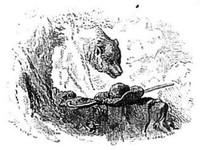
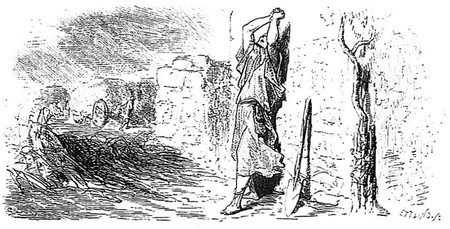
FABLE CVII.
JUPITER AND THE FARMER.
Jupiter had a farm to give away; Mercury told the world the chosen day. The people came to offer, rough they were, And listened grimly. One said it was bare And stubborn land; another half agreed. While they thus haggled, churlishly indeed, One bolder than the rest—but wiser?—no— Consents to take it, if Jove only grant The climate that he wishes; he will plant, And sow, and reap, if but the heat and cold May come and go, like slaves, as they are told. The seasons wait his nod: the wet and dry Obey his bidding from a servile sky. Jove grants his wish—our foolish fellow sways His sceptre bravely—rains and blows for days; Makes his own climate just as he may please: His neighbours, no more than Antipodes, Share his good weather. Still as well they fare; Their barns are teeming full; but his art bare. The next year quite a change; another way He sets the seasons, watching day by day: Still, there's some flaw—his crops are thin and poor, While loaded waggons crowd his neighbour's door. What can he do?—he falls before Jove's throne, Confesses all his folly: he alone Has been to blame. Jove, with much gentleness, Like a mild master, pities his distress. It is agreed that Providence is kind, And knows far better than a human mind What's good for us, and calmly bids us do it: We seldom see our way till we are through it.
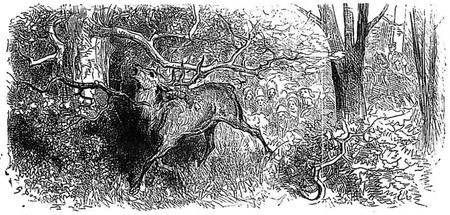
FABLE CVIII.
THE STAG VIEWING HIMSELF IN THE STREAM.
Beside a fountain in the wood A royal Stag admiring stood: His antlers pleased him well. But one thing vexed him to the heart: His slender legs ill matched the part On which he loved to dwell. "Nature has shaped them ill," said he, Watching their shadows peevishly: "Here is a disproportion! My horns rise branching, tall, and proud; My legs disgrace them, 'tis allowed, And are but an abortion."
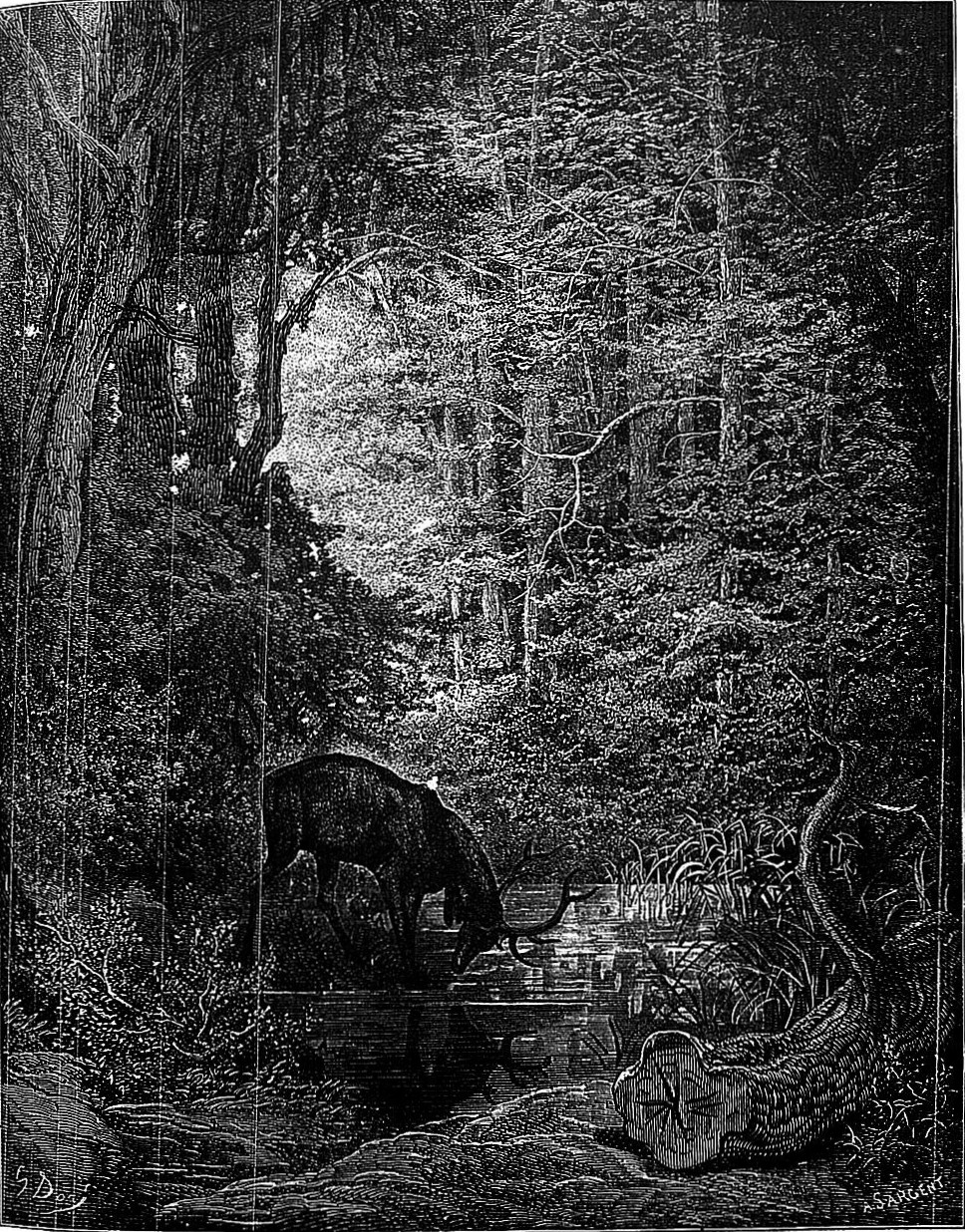
THE STAG VIEWING HIMSELF IN THE STREAM.
Just then a deer-hound frightened him, And lent a wing to every limb. O'er bush and brake—he's off! At those adornments on his brow The foolish creature praised just now He soon begins to scoff. Upon his legs his life depends: They are his best and only friends. He unsays every word, And curses Heaven, that has sent A dangerous gift. We all repent Speeches that are absurd. We prize too much the beautiful, And useful things spurn (as a rule); Yet fast will beauty fleet. The Stag admired the antlers high, That brought him into jeopardy, And blamed his kindly feet.
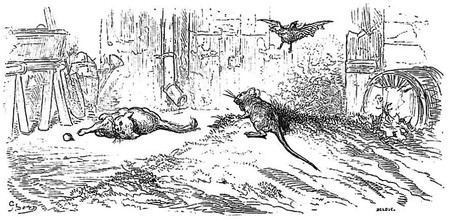
FABLE CIX.
THE COCKEREL, THE CAT, AND THE LITTLE RAT.
A Rat, so very young that it had seen Nothing at all, was at his setting out Almost snapped up; and what his fears had been He told his mother. Thus it came about— "I crossed the mountains bordering our land, Bold as a Rat that has his way to make; When two great animals, you understand, Before my eyes, their way towards me take. The one was gentle, tender, and so mild; The other restless, wild, and turbulent; A screeching voice, some flesh upon its head, A sort of arm, raised as for punishment. His tail a plume, a fiery plume displayed (It was a capon that the creature drew Like a wild beast new come from Africa); And with his arms he beat his sides, it's true, With such a frightful noise, that in dismay, E'en I, who pride myself on courage, ran And fled for fear, cursing the evil creature; As, but for him, I should have found a plan To make acquaintance with that gentle nature— So soft and sweet, and with a skin like ours; Long tail, and spotted, with a face so meek; And yet a glittering eye, of such strange powers: A sympathiser, sure as I can speak, With us the Rats, for he has just such ears. I was about to make a little speech, When, all at once, as if to rouse my fears, The other creature gave a dreadful screech, And I took flight." "My child," exclaimed the Rat, "That gentle hypocrite you liked so well, Was our malignant enemy—the Cat. The other, on whose form so foul you fell, Is simply harmless, and will be our meal, Perhaps, some day; while, as for that meek beast, On us he dearly loves to leap and steal, And crunch and munch us for his cruel feast. Take care, my child, in any case, Judge no one by their look or face."
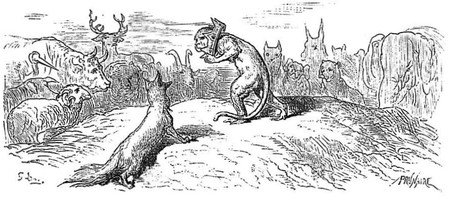
FABLE CX.
THE FOX, THE MONKEY, AND THE OTHER ANIMALS.
The Animals (the Lion dead) Resolved to choose a King instead; The crown was taken from its case— A dragon guarded well the place. They tried the crown, but, when they'd done, It would not fit a single one. Some heads too large, and some too small; Many had horns,—defects in all. The Monkey, laughing, tried it, too, And got his mocking visage through, With many wild, fantastic faces; And twisting gambols and grimaces. A hoop, at last, around his waist He wore it, and they cried, "Well placed!" He was elected. Each one paid Their homage to the King they'd made. The Fox alone laments the choice, But chokes it down with flattering voice. Paving his little compliments, To hide his secret sentiments. "Sire," to the King, he said, "I've pleasure To tell you I have found a treasure; A secret, but to me alone— All treasures fall unto the throne." The young King, eager at finance, Ran fast himself, to catch the chance. It was a trap, and he was caught. The Fox said, when his aid he sought, "You think to govern us and rule; You cannot save yourself, you fool!" They turned him out, and, with some wit, Agreed that few a crown will fit.
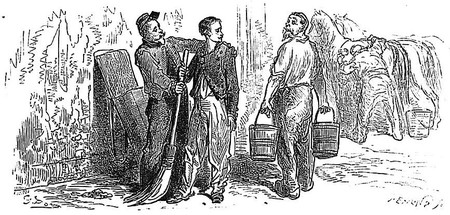
FABLE CXI.
THE MULE THAT BOASTED OF HIS FAMILY.
An Episcopal Mule, of its family proud, Would not keep his ancestry under a cloud, But chattered, and bragged of his mother the mare: Of her having done this, and her having been there; And vowed that so famous a creature ignored, Was a shame and disgrace to historian's record. He frankly disdained on a doctor to wait, And patiently stand at a poor patient's gate. At last, growing old, in the mill he's confined, Then his father, the donkey, came into his mind. A misfortune is useful, if only to bring A fool to his senses—a very good thing— It's sent for a purpose, and always will be Useful to some one or something, you see.
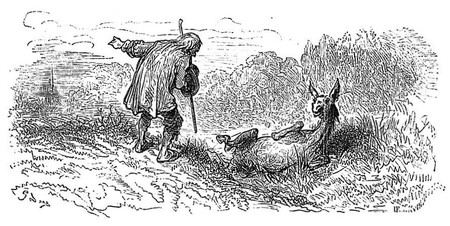
FABLE CXII.
THE OLD MAN AND THE ASS.
An Old Man, riding on a Donkey, saw A meadow thick with flowers, and full of grass. He instantly unbridled the poor Ass, And let him roam for twenty minutes' law. It scratch'd, and scratch'd, and munch'd, and chew'd, and bray'd Nipping the best, and kicking, for sheer fun: The meal refreshing was betimes begun. Just then the enemy came, all arrayed: "Fly," said the Old Man. "Wherefore?" said the beast; "Am I to carry double burden—double load? Am I to tramp once more upon the road?" "No," said the Old Man; "I'll stop here, at least." "To whom I may belong is no great matter. Go, save yourself from an unlucky blow; My master is my enemy, I know: I tell you in the best French I can patter."
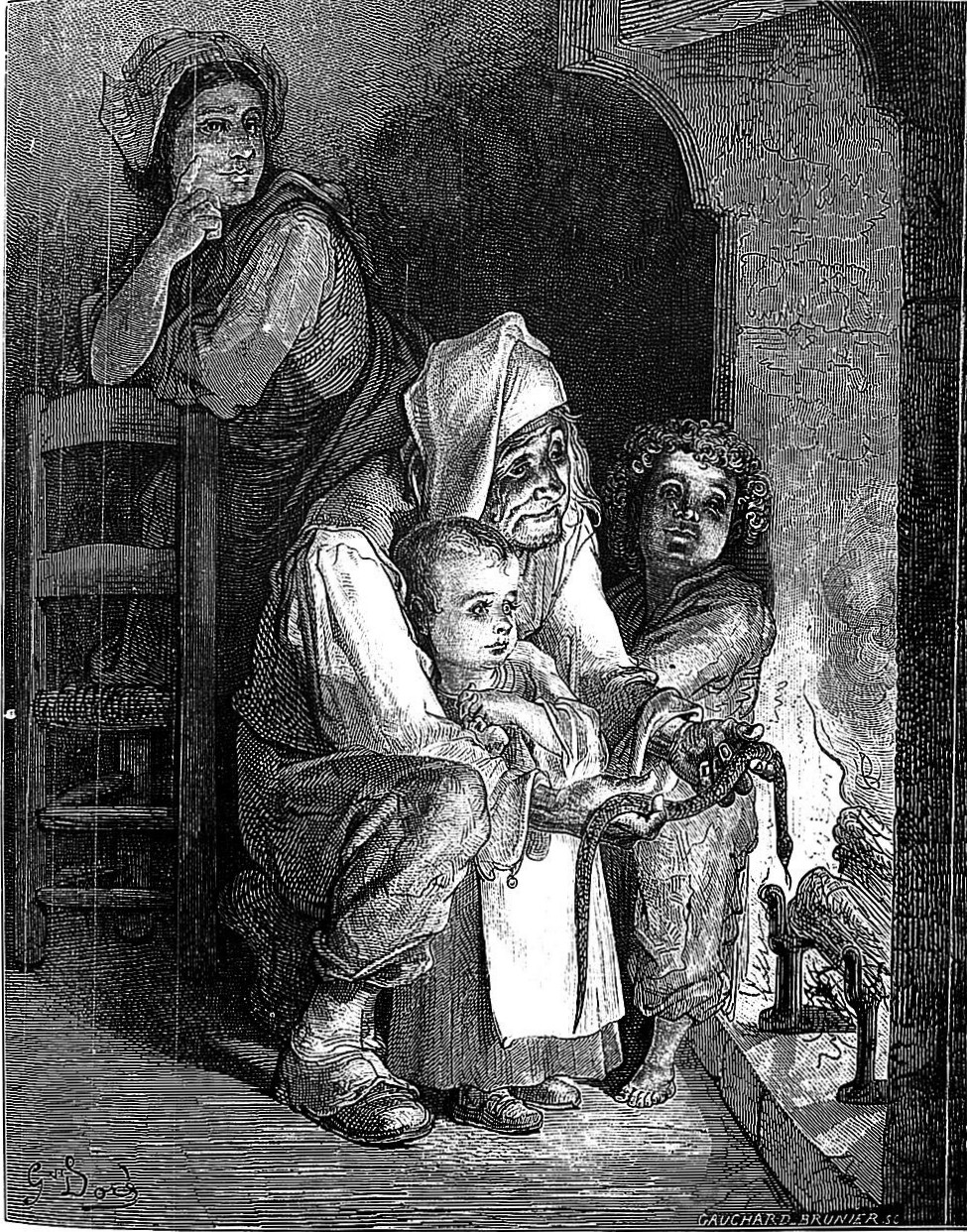
THE COUNTRYMAN AND THE SERPENT.
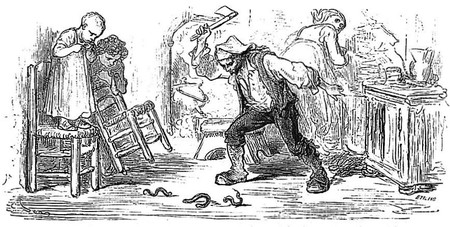
FABLE CXIII.
THE COUNTRYMAN AND THE SERPENT.
Æsop describes, as he's well able, A Peasant, wise and charitable, Who, walking on a winter day Around his farm, found by the way A snake extended on the snow, Frozen and numb—half dead, you know. He lifts the beast, with friendly care, And takes him home to warmer air— Not thinking what reward would be Of such an unwise charity. Beside the hearth he stretches him, Warms and revives each frozen limb. The creature scarcely feels the glow, Before its rage begins to flow: First gently raised its head, and rolled Its swelling body, fold on fold; Then tried to leap, and spring, and bite Its benefactor;—was that right? "Ungrateful!" cried the man; "then I Will give you now your due—you die!" With righteous anger came the blow From the good axe. It struck, and, lo! Two strokes—three snakes—its body, tail, And head; and each, without avail, Trying to re-unite in vain, They only wriggle in long pain. It's good to lavish charity; But then on whom? Well, that's just it. As for ungrateful men, they die In misery, and as 'tis fit.
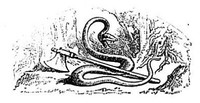
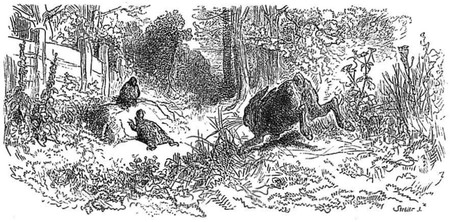
FABLE CXIV.
THE HARE AND THE TORTOISE.
It's not enough that you run fleet; Start early,—that's the way to beat. The Tortoise said unto the Hare, "I'll bet you, free, and frank, and fair, You do not reach a certain place So soon as I, though quick your pace." "So soon?" the nimble creature cries; "Take physic for your brains;—be wise"— "Fool or no fool, I make the bet." The bet is made, the stakes are set; But who the sporting judges were Is neither your nor my affair. Our Hare had but a bound to make, From him the swiftest hounds to shake. They run themselves almost to death, Yet he is scarcely out of breath; Plenty of time for him to browse, To sleep, and then again to rouse; Or boldly turn the while he's going, And mark which way the wind is blowing. Careless, he lets the Tortoise pace, Grave as a senator. To race With such a thing is but disgrace. She, in the meanwhile, strives and strains, And takes most meritorious pains; Slow, yet unceasing. Still the Hare Holds it a very mean affair To start too soon; but when, at last, The winning-post is almost past By his dull rival, then, 'tis true, He quicker than the arrow flew. Alas! his efforts failed to win, The Tortoise came the first one in. "Well," she said then, "now, was I right? What use was all your swiftness: light I held your speed, and won the prize; Where would you be, can you surmise, If with my house upon your shoulders, You tried to startle all beholders?"