Part 2 / Act 5 — PARLEYINGS WITH CERTAIN PEOPLE OF IMPORTANCE IN THEIR DAY (continued 2)
Reading edition
WITH GERARD DE LAIRESSE
The Art of Painting by Gerard le Lairesse, translated by J. F. Fritsch, was the "tome" to which Browning refers as having interested him when he was a boy and so given rise to this poem. The song at the end of the poem was first printed in a small volume called The New Amphion, published for the Edinburgh University Union Fancy Fair in 1886.
I Ah, but—because you were struck blind, could bless Your sense no longer with the actual view Of man and woman, those fair forms you drew In happier days so duteously and true,— Must I account my Gerard de Lairesse All sorrow-smitten? He was hindered too —Was this no hardship?—from producing, plain To us who still have eyes, the pageantry Which passed and passed before his busy brain And, captured on his canvas, showed our sky Traversed by flying shapes, earth stocked with brood Of monsters,—centaurs bestial, satyrs lewd,— Not without much Olympian glory, shapes Of god and goddess in their gay escapes From the severe serene: or haply paced The antique ways, god-counselled, nymph-embraced, Some early human kingly personage. Such wonders of the teeming poet's-age Were still to be: nay, these indeed began— Are not the pictures extant?—till the ban Of blindness struck both palette from his thumb And pencil from his finger. II Blind—not dumb, Else, Gerard, were my inmost bowels stirred With pity beyond pity: no, the word Was left upon your unmolested lips: Your mouth unsealed, despite of eyes' eclipse, Talked all brain's yearning into birth. I lack Somehow the heart to wish your practice back Which boasted hand's achievement in a score Of veritable pictures, less or more, Still to be seen: myself have seen them,—moved To pay due homage to the man I loved Because of that prodigious book he wrote On Artistry's Ideal, by taking note, Making acquaintance with his artist-work. So my youth's piety obtained success Of all too dubious sort: for, though it irk To tell the issue, few or none would guess From extant lines and colors, De Lairesse, Your faculty, although each deftly-grouped And aptly-ordered figure-piece was judged Worthy a prince's purchase in its day. Bearded experience bears not to be duped Like boyish fancy: 'twas a boy that budged No foot's breath from your visioned steps away The while that memorable "Walk" he trudged In your companionship,—the Book must say Where, when and whither,—"Walk," come what come may, No measurer of steps on this our globe Shall ever match for marvels. Faustus' robe, And Fortunatus' cap were gifts of price: But—oh, your piece of sober sound advice That artists should descry abundant worth In trivial commonplace, nor groan at dearth If fortune bade the painter's craft be plied In vulgar town and country! Why despond Because hemmed round by Dutch canals? Beyond The ugly actual, lo, on every side Imagination's limitless domain Displayed a wealth of wondrous sounds and sights Ripe to be realized by poet's brain Acting on painter's brush! "Ye doubt? Poor wights, What if I set example, go before, While you come after, and we both explore Holland turned Dreamland, taking care to note Objects whereto my pupils may devote Attention with advantage?" III So commenced That "Walk" amid true wonders—none to you, But huge to us ignobly common-sensed, Purblind, while plain could proper optics view In that old sepulchre by lightning split, Whereof the lid bore carven,—any dolt Imagines why,—Jove's very thunderbolt: You who could straight perceive, by glance at it, This tomb must needs be Phaeton's! In a trice, Confirming that conjecture, close on hand, Behold, half out, half in the ploughed-up sand, A chariot-wheel explained its bolt-device: What other than the Chariot of the Sun Ever let drop the like? Consult the tome— I bid inglorious tarriers-at-home— For greater still surprise the while that "Walk" Went on and on, to end as it begun, Chokefull of chances, changes, every one No whit less wondrous. What was there to balk Us, who had eyes, from seeing? You with none Missed not a marvel: wherefore? Let us talk. IV Say am I right? Your sealed sense moved your mind, Free from obstruction, to compassionate Art's power left powerless, and supply the blind With fancies worth all facts denied by fate. Mind could invent things, add to—take away, At pleasure, leave out trifles mean and base Which vex the sight that cannot say them nay But, where mind plays the master, have no place. And bent on banishing was mind, be sure, All except beauty from its mustered tribe Of objects apparitional which lure Painter to show and poet to describe— That imagery of the antique song Truer than truth's self. Fancy's rainbow-birth Conceived 'mid clouds in Greece, could glance along Your passage o'er Dutch veritable earth, As with ourselves, who see, familiar throng About our pacings men and women worth Nowise a glance—so poets apprehend— Since naught avails portraying them in verse: While painters turn upon the heel, intend To spare their work the critic's ready curse Due to the daily and undignified. V I who myself contentedly abide Awake, nor want the wings of dream,—who tramp Earth's common surface, rough, smooth, dry or damp, —I understand alternatives, no less Conceive your soul's leap, Gerard de Lairesse! How were it could I mingle false with true, Boast, with the sights I see, your vision too? Advantage would it prove or detriment If I saw double? Could I gaze intent On Dryope plucking the blossoms red, As you, whereat her lote-tree writhed and bled! Yet lose no gain, no hard fast wide-awake Having and holding nature for the sake Of nature only—nymph and lote-tree thus Gained by the loss of fruit not fabulous, Apple of English homesteads, where I see Nor seek more than crisp buds a struggling bee Uncrumples, caught by sweet he clambers through? Truly, a moot point: make it plain to me, Who, bee-like, sate sense with the simply true, Nor seek to heighten that sufficiency By help of feignings proper to the page— Earth's surface-blank whereon the elder age Put color, poetizing—poured rich life On what were else a dead ground—nothingness— Until the solitary world grew rife With Joves and Junos, nymphs and satyrs. Yes, The reason was, fancy composed the strife 'Twixt sense and soul: for sense, my De Lairesse, Cannot content itself with outward things, Mere beauty: soul must needs know whence there springs— How, when and why—what sense but loves, nor lists To know at all. VI Not one of man's acquists Ought he resignedly to lose, methinks: So, point me out which was it of the links Snapt first, from out the chain which used to bind Our earth to heaven, and yet for you, since blind, Subsisted still efficient and intact? Oh, we can fancy too! but somehow fact Has got to—say, not so much push aside Fancy, as to declare its place supplied By fact unseen but no less fact the same, Which mind bids sense accept. Is mind to blame, Or sense,—does that usurp, this abdicate? First of all, as you "walked"—were it too late For us to walk, if so we willed? Confess We have the sober feet still, De Lairesse! Why not the freakish brain too, that must needs Supplement nature—not see flowers and weeds Simply as such, but link with each and all The ultimate perfection—what we call Rightly enough the human shape divine? The rose? No rose unless it disentwine From Venus' wreath the while she bends to kiss Her deathly love? VII Plain retrogression, this! No, no: we poets go not back at all: What you did we could do—from great to small Sinking assuredly: if this world last One moment longer when Man finds its Past Exceed its Present—blame the Protoplast! If we no longer see as you of old, 'Tis we see deeper. Progress for the bold! You saw the body, 'tis the soul we see. Try now! Bear witness while you walk with me, I see as you: if we loose arms, stop pace, 'Tis that you stand still, I conclude the race Without your company. Come, walk once more The "Walk:" if I to-day as you of yore See just like you the blind—then sight shall cry —The whole long day quite gone through—victory! VIII Thunders on thunders, doubling and redoubling Doom o'er the mountain, while a sharp white fire Now shone, now sheared its rusty herbage, troubling Hardly the fir-boles, now discharged its ire Full where some pine-tree's solitary spire Crashed down, defiant to the last: till—lo, The motive of the malice!—all aglow, Circled with flame there yawned a sudden rift I' the rock-face, and I saw a form erect Front and defy the outrage, while—as checked, Chidden, beside him dauntless in the drift— Cowered a heaped creature, wing and wing outspread In deprecation o'er the crouching head Still hungry for the feast foregone awhile. O thou, of scorn's unconquerable smile, Was it when this—Jove's feathered fury—slipped Gore-glutted from the heart's core whence he ripped— This eagle-hound—neither reproach nor prayer— Baffled, in one more fierce attempt to tear Fate's secret from thy safeguard,—was it then That all these thunders rent earth, ruined air To reach thee, pay thy patronage of men? He thundered,—to withdraw, as beast to lair, Before the triumph on thy pallid brow. Gather the night again about thee now, Hate on, love ever! Morn is breaking there— The granite ridge pricks through the mist, turns gold As wrong turns right. O laughters manifold Of ocean's ripple at dull earth's despair! IX But morning's laugh sets all the crags alight Above the baffled tempest: tree and tree Stir themselves from the stupor of the night, And every strangled branch resumes its right To breathe, shakes loose dark's clinging dregs, waves free In dripping glory. Prone the runnels plunge, While earth, distent with moisture like a sponge, Smokes up, and leaves each plant its gem to see, Each grass-blade's glory-glitter. Had I known The torrent now turned river?—masterful Making its rush o'er tumbled ravage—stone And stub which barred the froths and foams: no bull Ever broke bounds in formidable sport More overwhelmingly, till lo, the spasm Sets him to dare that last mad leap: report Who may—his fortunes in the deathly chasm That swallows him in silence! Rather turn Whither, upon the upland, pedestalled Into the broad day-splendor, whom discern These eyes but thee, supreme one, rightly called Moon-maid in heaven above and, here below, Earth's huntress-queen? I note the garb succinct Saving from smirch that purity of snow From breast to knee—snow's self with just the tinct Of the apple-blossom's heart-blush. Ah, the bow Slack-strung her fingers grasp, where, ivory-linked Horn curving blends with horn, a moonlike pair Which mimic the brow's crescent sparkling so— As if a star's live restless fragment winked Proud yet repugnant, captive in such hair! What hope along the hillside, what far bliss Lets the crisp hair-plaits fall so low they kiss Those lucid shoulders? Must a morn so blithe Needs have its sorrow when the twang and hiss Tell that from out thy sheaf one shaft makes writhe Its victim, thou unerring Artemis? Why did the chamois stand so fair a mark Arrested by the novel shape he dreamed Was bred of liquid marble in the dark Depths of the mountain's womb which ever teemed With novel births of wonder? Not one spark Of pity in that steel-gray glance which gleamed At the poor hoof's protesting as it stamped Idly the granite? Let me glide unseen From thy proud presence: well mayst thou be queen Of all those strange and sudden deaths which damped So oft Love's torch and Hymen's taper lit For happy marriage till the maidens paled And perished on the temple-step, assailed By—what except to envy must man's wit Impute that sure implacable release Of life from warmth and joy? But death means peace. X Noon is the conqueror,—not a spray, nor leaf, Nor herb, nor blossom but has rendered up Its morning dew: the valley seemed one cup Of cloud-smoke, but the vapor's reign was brief; Sun-smitten, see, it hangs—the filmy haze— Gray-garmenting the herbless mountain-side, To soothe the day's sharp glare: while far and wide Above unclouded burns the sky, one blaze With fierce immitigable blue, no bird Ventures to spot by passage. E'en of peaks Which still presume there, plain each pale point speaks In wan transparency of waste incurred By over-daring: far from me be such! Deep in the hollow, rather, where combine Tree, shrub and brier to roof with shade and cool The remnant of some lily-strangled pool, Edged round with mossy fringing soft and fine. Smooth lie the bottom slabs, and overhead Watch elder, bramble, rose, and service-tree And one beneficent rich barberry Jewelled all over with fruit-pendants red. What have I seen! O Satyr, well I know How sad thy case, and what a world of woe Was hid by the brown visage furry-framed Only for mirth: who otherwise could think— Marking thy mouth gape still on laughter's brink, Thine eyes a-swim with merriment unnamed But haply guessed at by their furtive wink? And all the while a heart was panting sick Behind that shaggy bulwark of thy breast— Passion it was that made those breath-bursts thick I took for mirth, subsiding into rest. So, it was Lyda—she of all the train Of forest-thridding nymphs,—'twas only she Turned from thy rustic homage in disdain, Saw but that poor uncouth outside of thee, And, from her circling sisters, mocked a pain Echo had pitied—whom Pan loved in vain— For she was wishful to partake thy glee, Mimic thy mirth—who loved her not again, Savage for Lyda's sake. She crouches there— Thy cruel beauty, slumberously laid Supine on heaped-up beast-skins, unaware Thy steps have traced her to the briery glade, Thy greedy hands disclose the cradling lair, Thy hot eyes reach and revel on the maid! XI Now, what should this be for? The sun's decline Seems as he lingered lest he lose some act Dread and decisive, some prodigious fact Like thunder from the safe sky's sapphirine About to alter earth's conditions, packed With fate for nature's self that waits, aware What mischief unsuspected in the air Menaces momently a cataract. Therefore it is that yonder space extends Untrenched upon by any vagrant tree, Shrub, weed well-nigh; they keep their bounds, leave free The platform for what actors? Foes or friends, Here come they trooping silent: heaven suspends Purpose the while they range themselves. I see! Bent on a battle, two vast powers agree This present and no after-contest ends One or the other's grasp at rule in reach Over the race of man—host fronting host, As statue statue fronts—wrath-molten each, Solidified by hate,—earth halved almost, To close once more in chaos. Yet two shapes Show prominent, each from the universe Of minions round about him, that disperse Like cloud-obstruction when a bolt escapes. Who flames first? Macedonian, is it thou? Ay, and who fronts thee, King Darius, drapes His form with purple, fillet-folds his brow. XII What, then the long day dies at last? Abrupt The sun that seemed, in stooping, sure to melt Our mountain-ridge, is mastered: black the belt Of westward crags, his gold could not corrupt, Barriers again the valley, lets the flow Of lavish glory waste itself away —Whither? For new climes, fresh eyes breaks the day! Night was not to be baffled. If the glow Were all that's gone from us! Did clouds, afloat So filmily but now, discard no rose, Sombre throughout the fleeciness that grows A sullen uniformity. I note Rather displeasure,—in the overspread Change from the swim of gold to one pale lead Oppressive to malevolence,—than late Those amorous yearnings when the aggregate Of cloudlets pressed that each and all might sate Its passion and partake in relics red Of day's bequeathment: now, a frown instead Estranges, and affrights who needs must fare On and on till his journey ends: but where? Caucasus? Lost now in the night. Away And far enough lies that Arcadia. The human heroes tread the world's dark way No longer. Yet I dimly see almost— Yes, for my last adventure! 'Tis a ghost. So drops away the beauty! There he stands Voiceless, scarce strives with deprecating hands ... XIII Enough! Stop further fooling, De Lairesse! My fault, not yours! Some fitter way express Heart's satisfaction that the Past indeed Is past, gives way before Life's best and last, The all-including Future! What were life Did soul stand still therein, forego her strife Through the ambiguous Present to the goal Of some all-reconciling Future? Soul, Nothing has been which shall not bettered be Hereafter,—leave the root, by law's decree Whence springs the ultimate and perfect tree! Busy thee with unearthing root? Nay, climb— Quit trunk, branch, leaf and flower—reach, rest sublime Where fruitage ripens in the blaze of day! O'erlook, despise, forget, throw flower away, Intent on progress? No whit more than stop Ascent therewith to dally, screen the top Sufficiency of yield by interposed Twistwork bold foot gets free from. Wherefore glozed The poets—"Dream afresh old godlike shapes, Recapture ancient fable that escapes, Push back reality, repeople earth With vanished falseness, recognize no worth In fact new-born unless 't is rendered back Pallid by fancy, as the western rack Of fading cloud bequeaths the lake some gleam Of its gone glory!" XIV Let things be—not seem, I counsel rather,—do, and nowise dream! Earth's young significance is all to learn: The dead Greek lore lies buried in the urn Where who seeks fire finds ashes. Ghost, forsooth! What was the best Greece babbled of as truth? "A shade, a wretched nothing,—sad, thin, drear, Cold, dark, it holds on to the lost loves here, If hand have haply sprinkled o'er the dead Three charitable dust-heaps, made mouth red One moment by the sip of sacrifice: Just so much comfort thaws the stubborn ice Slow-thickening upward till it choke at length The last faint flutter craving—not for strength, Not beauty, not the riches and the rule O'er men that made life life indeed." Sad school Was Hades! Gladly,—might the dead but slink To life back,—to the dregs once more would drink Each interloper, drain the humblest cup Fate mixes for humanity. XV Cheer up,— Be death with me, as with Achilles erst, Of Man's calamities the last and worst: Take it so! By proved potency that still Makes perfect, be assured, come what come will, What once lives never dies—what here attains To a beginning, has no end, still gains And never loses aught: when, where, and how— Lies in Law's lap. What 's death then? Even now With so much knowledge is it hard to bear Brief interposing ignorance? Is care For a creation found at fault just there— There where the heart breaks bond and outruns time, To reach not follow what shall be? XVI Here 's rhyme Such as one makes now,—say, when Spring repeats That miracle the Greek Bard sadly greets: "Spring for the tree and herb—no Spring for us!" Let Spring come: why, a man salutes her thus: Dance, yellows and whites and reds,— Lead your gay orgy, leaves, stalks, heads Astir with the wind in the tulip-beds! There 's sunshine; scarcely a wind at all Disturbs starved grass and daisies small On a certain mound by a churchyard wall. Daisies and grass be my heart's bedfellows On the mound wind spares and sunshine mellows: Dance you, reds and whites and yellows!
WITH CHARLES AVISON
The manuscript of the Grand March written by Avison was in the possession of Browning's father, and a copy is given at the end of the poem. The Relfe who is two or three times mentioned was Browning's teacher of music, who was a learned contrapuntist.
I How strange!—but, first of all, the little fact Which led my fancy forth. This bitter morn Showed me no object in the stretch forlorn Of garden-ground beneath my window, backed By yon worn wall wherefrom the creeper, tacked To clothe its brickwork, hangs now, rent and racked By five months' cruel winter,—showed no torn And tattered ravage worse for eyes to see Than just one ugly space of clearance, left Bare even of the bones which used to be Warm wrappage, safe embracement: this one cleft— —Oh, what a life and beauty filled it up Startlingly, when methought the rude clay cup Ran over with poured bright wine! 'T was a bird Breast-deep there, tugging at his prize, deterred No whit by the fast-falling snow-flake: gain Such prize my blackcap must by might and main— The cloth-shred, still a-flutter from its nail That fixed a spray once. Now, what told the tale To thee,—no townsman but born orchard-thief,— That here—surpassing moss-tuft, beard from sheaf Of sun-scorched barley, horsehairs long and stout, All proper country-pillage—here, no doubt, Was just the scrap to steal should line thy nest Superbly? Off he flew, his bill possessed The booty sure to set his wife's each wing Greenly a-quiver. How they climb and cling, Hang parrot-wise to bough, these blackcaps! Strange Seemed to a city-dweller that the finch Should stray so far to forage: at a pinch, Was not the fine wool's self within his range —Filchings on every fence? But no: the need Was of this rag of manufacture, spoiled By art, and yet by nature near unsoiled, New-suited to what scheming finch would breed In comfort, this uncomfortable March. II Yet—by the first pink blossom on the larch!— This was scarce stranger than that memory,— In want of what should cheer the stay-at-home, My soul,—must straight clap pinion, well-nigh roam A century back, nor once close plume, descry The appropriate rag to plunder, till she pounced— Pray, on what relic of a brain long still? What old-world work proved forage for the bill Of memory the far-flyer? "March" announced, I verily believe, the dead and gone Name of a music-maker: one of such In England as did little or did much, But, doing, had their day once. Avison! Singly and solely for an air of thine, Bold-stepping "March," foot stept to ere my hand Could stretch an octave, I o'erlooked the band Of majesties familiar, to decline On thee—not too conspicuous on the list Of worthies who by help of pipe or wire Expressed in sound rough rage or soft desire— Thou, whilom of Newcastle organist! III So much could one—well, thinnish air effect! Am I ungrateful? for, your March, styled "Grand," Did veritably seem to grow, expand, And greaten up to title as, unchecked, Dream-marchers marched, kept marching, slow and sure, In time, to tune, unchangeably the same, From nowhere into nowhere,—out they came, Onward they passed, and in they went. No lure Of novel modulation pricked the flat Forthright persisting melody,—no hint That discord, sound asleep beneath the flint, Struck—might spring spark-like, claim due tit-for-tat, Quenched in a concord. No! Yet, such the might Of quietude's immutability, That somehow coldness gathered warmth, well-nigh Quickened—which could not be!—grew burning-bright With fife-shriek, cymbal-clash and trumpet-blare, To drum-accentuation: pacing turned Striding, and striding grew gigantic, spurned At last the narrow space 'twixt earth and air, So shook me back into my sober self. IV And where woke I? The March had set me down There whence I plucked the measure, as his brown Frayed flannel-bit my blackcap. Great John Relfe, Master of mine, learned, redoubtable, It little needed thy consummate skill To fitly figure such a bass! The key Was—should not memory play me false—well, C. Ay, with the Greater Third, in Triple Time, Three crochets to a bar: no change, I grant, Except from Tonic down to Dominant. And yet—and yet—if I could put in rhyme The manner of that marching!—which had stopped —I wonder, where?—but that my weak self dropped From out the ranks, to rub eyes disentranced And feel that, after all the way advanced, Back must I foot it, I and my compeers, Only to reach, across a hundred years, The bandsman Avison whose little book And large tune thus had led me the long way (As late a rag my blackcap) from to-day And to-day's music-manufacture,—Brahms, Wagner, Dvorak, Liszt,—to where—trumpets, shawms, Show yourselves joyful!—Handel reigns—supreme? By no means! Buononcini's work is theme For fit laudation of the impartial few: (We stand in England, mind you!) Fashion too Favors Geminiani—of those choice Concertos: nor there wants a certain voice Raised in thy favor likewise, famed Pepusch Dear to our great-grandfathers! In a bush Of Doctor's wig, they prized thee timing beats While Greenway trilled "Alexis." Such were feats Of music in thy day—dispute who list— Avison, of Newcastle organist! V And here 's your music all alive once more— As once it was alive, at least: just so The figured worthies of a waxwork-show Attest—such people, years and years ago, Looked thus when outside death had life below, —Could say "We are now" not "We were of yore," —"Feel how our pulses leap!" and not "Explore— Explain why quietude has settled o'er Surface once all awork!" Ay, such a "Suite" Roused heart to rapture, such a "Fugue" would catch Soul heavenwards up, when time was: why attach Blame to exhausted faultlessness, no match For fresh achievement? Feat once—ever feat! How can completion grow still more complete? Hear Avison! He tenders evidence That music in his day as much absorbed Heart and soul then as Wagner's music now, Perfect from centre to circumference— Orbed to the full can be but fully orbed: And yet—and yet—whence comes it that "O Thou"— Sighed by the soul at eve to Hesperus— Will not again take wing and fly away (Since fatal Wagner fixed it fast for us) In some unmodulated minor? Nay, Even by Handel's help! VI I state it thus: There is no truer truth obtainable By Man than comes of music. "Soul"—(accept A word which vaguely names what no adept In word-use fits and fixes so that still Thing shall not slip word's fetter and remain Innominate as first, yet, free again, Is no less recognized the absolute Fact underlying that same other fact Concerning which no cavil can dispute Our nomenclature when we call it "Mind"— Something not Matter)—"Soul," who seeks shall find Distinct beneath that something. You exact An illustrative image? This may suit. VII We see a work: the worker works behind, Invisible himself. Suppose his act Be to o'erarch a gulf: he digs, transports, Shapes and, through enginery—all sizes, sorts, Lays stone by stone until a floor compact Proves our bridged causeway. So works Mind—by stress Of faculty, with loose facts, more or less, Builds up our solid knowledge: all the same, Underneath rolls what Mind may hide not tame, An element which works beyond our guess, Soul, the unsounded sea—whose lift of surge, Spite of all superstructure, lets emerge, In flower and foam, Feeling from out the deeps Mind arrogates no mastery upon— Distinct indisputably. Has there gone To dig up, drag forth, render smooth from rough Mind's flooring,—operosity enough? Still the successive labor of each inch, Who lists may learn: from the last turn of winch That let the polished slab-stone find its place, To the first prod of pickaxe at the base Of the unquarried mountain,—what was all Mind's varied process except natural, Nay, easy even, to descry, describe, After our fashion? "So worked Mind: its tribe Of senses ministrant above, below, Far, near, or now or haply long ago Brought to pass knowledge." But Soul's sea,—drawn whence, Fed how, forced whither,—by what evidence Of ebb and flow, that 's felt beneath the tread, Soul has its course 'neath Mind's work overhead,— Who tells of, tracks to source the founts of Soul? Yet wherefore heaving sway and restless roll This side and that, except to emulate Stability above? To match and mate Feeling with knowledge,—make as manifest Soul's work as Mind's work, turbulence as rest, Hates, loves, joys, woes, hopes, fears, that rise and sink Ceaselessly, passion's transient flit and wink, A ripple's tinting or a spume-sheet's spread Whitening the wave,—to strike all this life dead, Run mercury into a mould like lead, And henceforth have the plain result to show— How we Feel, hard and fast as what we Know— This were the prize and is the puzzle!—which Music essays to solve: and here 's the hitch That balks her of full triumph else to boast. VIII All Arts endeavor this, and she the most Attains thereto, yet fails of touching: why? Does Mind get Knowledge from Art's ministry? What 's known once is known ever: Arts arrange, Dissociate, re-distribute, interchange Part with part, lengthen, broaden, high or deep Construct their bravest,—still such pains produce Change, not creation: simply what lay loose At first lies firmly after, what design Was faintly traced in hesitating line Once on a time, grows firmly resolute Henceforth and evermore. Now, could we shoot Liquidity into a mould,—some way Arrest Soul's evanescent moods, and keep Unalterably still the forms that leap To life for once by help of Art!—which yearns To save its capture: Poetry discerns, Painting is 'ware of passion's rise and fall, Bursting, subsidence, intermixture—all A-seethe within the gulf. Each Art a-strain Would stay the apparition,—nor in vain: The Poet's word-mesh, Painter's sure and swift Color-and-line-throw—proud the prize they lift! Thus felt Man and thus looked Man,—passions caught I' the midway swim of sea,—not much, if aught, Of nether-brooding loves, hates, hopes and fears, Enwombed past Art's disclosure. Fleet the years, And still the Poet's page holds Helena At gaze from topmost Troy—"But where are they, My brothers, in the armament I name Hero by hero? Can it be that shame For their lost sister holds them from the war?" —Knowing not they already slept afar Each of them in his own dear native land. Still on the Painter's fresco, from the hand Of God takes Eve the life-spark whereunto She trembles up from nothingness. Outdo Both of them, Music! Dredging deeper yet, Drag into day,—by sound, thy master-net,— The abysmal bottom-growth, ambiguous thing Unbroken of a branch, palpitating With limbs' play and life's semblance! There it lies. Marvel and mystery, of mysteries And marvels, most to love and laud thee for! Save it from chance and change we most abhor! Give momentary feeling permanence, So that thy capture hold, a century hence, Truth's very heart of truth as, safe to-day, The Painter's Eve, the Poet's Helena Still rapturously bend, afar still throw The wistful gaze! Thanks, Homer, Angelo! Could Music rescue thus from Soul's profound, Give feeling immortality by sound, Then were she queenliest of Arts! Alas— As well expect the rainbow not to pass! "Praise 'Radamisto'—love attains therein To perfect utterance! Pity—what shall win Thy secret like 'Rinaldo'?"—so men said: Once all was perfume—now, the flower is dead— They spied tints, sparks have left the spar! Love, hate, Joy, fear, survive,—alike importunate As ever to go walk the world again, Nor ghost-like pant for outlet all in vain Till Music loose them, fit each filmily With form enough to know and name it by For any recognizer sure of ken And sharp of ear, no grosser denizen Of earth than needs be. Nor to such appeal Is Music long obdurate: off they steal— How gently, dawn-doomed phantoms! back come they Full-blooded with new crimson of broad day— Passion made palpable once more. Ye look Your last on Handel? Gaze your first on Gluck! Why wistful search, O waning ones, the chart Of stars for you while Haydn, while Mozart Occupies heaven? These also, fanned to fire, Flamboyant wholly,—so perfections tire,— Whiten to wanness, till ... let others note The ever-new invasion! IX I devote Rather my modicum of parts to use What power may yet avail to re-infuse (In fancy, please you!) sleep that looks like death With momentary liveliness, lend breath To make the torpor half inhale. O Relfe, An all-unworthy pupil, from the shelf Of thy laboratory, dares unstop Bottle, ope box, extract thence pinch and drop Of dusts and dews a many thou didst shrine Each in its right receptacle, assign To each its proper office, letter large Label and label, then with solemn charge, Reviewing learnedly the list complete Of chemical reactives, from thy feet Push down the same to me, attent below, Power in abundance: armed wherewith I go To play the enlivener. Bring good antique stuff! Was it alight once? Still lives spark enough For breath to quicken, run the smouldering ash Red right-through. What, "stone-dead" were fools so rash As style my Avison, because he lacked Modern appliance, spread out phrase unracked By modulations fit to make each hair Stiffen upon his wig? See there—and there! I sprinkle my reactives, pitch broadcast Discords and resolutions, turn aghast Melody's easy-going, jostle law With license, modulate (no Bach in awe) Change enharmonically (Hudl to thank) And lo, upstart the flamelets,—what was blank Turns scarlet, purple, crimson! Straightway scanned By eyes that like new lustre—Love once more Yearns through the Largo, Hatred as before Rages in the Rubato: e'en thy March, My Avison, which, sooth to say—(ne'er arch Eyebrows in anger!)—timed, in Georgian years The step precise of British Grenadiers To such a nicety,—if score I crowd, If rhythm I break, if beats I vary,—tap At bar's off-starting turns true thunder-clap, Eyer the pace augmented till—what 's here? Titanic striding toward Olympus! X Fear No such irreverent innovation! Still Glide on, go rolling, water-like, at will— Nay, were thy melody in monotone, The due three-parts dispensed with! XI This alone Comes of my tiresome talking: Music's throne Seats somebody whom somebody unseats, And whom in turn—by who knows what new feats Of strength—shall somebody as sure push down, Consign him dispossessed of sceptre, crown, And orb imperial—whereto? Never dream That what once lived shall ever die! They seem Dead—do they? lapsed things lost in limbo? Bring Our life to kindle theirs, and straight each king Starts, you shall see, stands up, from head to foot No inch that is not Purcell! Wherefore? (Suit Measure to subject, first—no marching on Yet in thy bold C major, Avison, As suited step a minute since: no: wait— Into the minor key first modulate— Gently with A, now—in the Lesser Third!) XII Of all the lamentable debts incurred By Man through buying knowledge, this were worst: That he should find his last gain prove his first Was futile—merely nescience absolute, Not knowledge in the bud which holds a fruit Haply undreamed of in the soul's Spring-tide, Pursed in the petals Summer opens wide, And Autumn, withering, rounds to perfect ripe,— Not this,—but ignorance, a blur to wipe From human records, late it graced so much. "Truth—this attainment? Ah, but such and such Beliefs of yore seemed inexpugnable When we attained them! E'en as they, so will This their successor have the due morn, noon, Evening and night—just as an old-world tune Wears out and drops away, until who hears Smilingly questions—'This it was brought tears Once to all eyes,—this roused heart's rapture once?' So will it be with truth that, for the nonce, Styles itself truth perennial: 'ware its wile! Knowledge turns nescience,—foremost on the file, Simply proves first of our delusions." XIII Now— Blare it forth, bold C major! Lift thy brow, Man, the immortal, that wast never fooled With gifts no gifts at all, nor ridiculed— Man knowing—he who nothing knew! As Hope, Fear, Joy, and Grief,—though ampler stretch and scope They seek and find in novel rhythm, fresh phrase,— Were equally existent in far days Of Music's dim beginning—even so, Truth was at full within thee long ago, Alive as now it takes what latest shape May startle thee by strangeness. Truths escape Time's insufficient garniture: they fade, They fall—those sheathings now grown sere, whose aid Was infinite to truth they wrapped, saved fine And free through March frost: May dews crystalline Nourish truth merely,—does June boast the fruit As—not new vesture merely but, to boot, Novel creation? Soon shall fade and fall Myth after myth—the husk-like lies I call New truth's corolla-safeguard: Autumn comes, So much the better! XIV Therefore—bang the drums, Blow the trumpets, Avison! March-motive? that's Truth which endures resetting. Sharps and flats, Lavish at need, shall dance athwart thy score When ophicleide and bombardon's uproar Mate the approaching trample, even now Big in the distance—or my ears deceive— Of federated England, fitly weave March-music for the Future! XV Or suppose Back, and not forward, transformation goes? Once more some sable-stoled procession—say, From Little-ease to Tyburn—wends its way, Out of the dungeon to the gallows-tree Where heading, hacking, hanging is to be Of half-a-dozen recusants—this day Three hundred years ago! How duly drones Elizabethan plain-song—dim antique Grown clarion-clear the while I humbly wreak A classic vengeance on thy March! It moans— Larges and Longs and Breves displacing quite Crotchet-and-quaver pertness—brushing bars Aside and filling vacant sky with stars Hidden till now that day return to night. XVI Nor night nor day: one purpose move us both, Be thy mood mine! As thou wast minded, Man 's The cause our music champions: I were loth To think we cheered our troop to Preston Pans Ignobly: back to times of England's best! Parliament stands for privilege—life and limb Guards Hollis, Haselrig, Strode, Hampden, Pym, The famous Five. There 's rumor of arrest. Bring up the Train Bands, Southwark! They protest: Shall we not all join chorus? Hark the hymn, —Rough, rude, robustious—homely heart a-throb, Harsh voice a-hallo, as beseems the mob! How good is noise! what 's silence but despair Of making sound match gladness never there? Give me some great glad "subject," glorious Bach, Where cannon-roar not organ-peal we lack! Join in, give voice robustious rude and rough,— Avison helps—so heart lend noise enough! Fife, trump, drum, sound! and singers then Marching say "Pym, the man of men!" Up, heads, your proudest,—out throats, your loudest— "Somerset's Pym!" Strafford from the block, Eliot from the den, Foes, friends, shout "Pym, our citizen!" Wail, the foes he quelled,—hail, the friends he held, "Tavistock's Pym!" Hearts prompt heads, hands that ply the pen Teach babes unborn the where and when. —Tyrants, he braved them,—patriots, he saved them— "Westminster's Pym!"
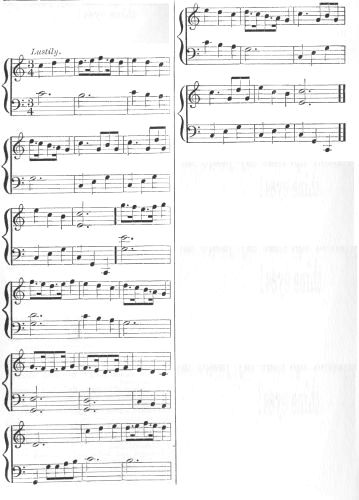
[See larger image]
[Listen]
FUST AND HIS FRIENDS
AN EPILOGUE
(Inside the House of Fust, Mayence, 1457.)
First Friend. Up, up, up—next step of the staircase Lands us, lo, at the chamber of dread! Second Friend. Locked and barred? Third Friend. Door open—the rare case! Fourth Friend. Ay, there he leans—lost wretch! Fifth Friend. His head Sunk on his desk 'twixt his arms outspread! Sixth Friend. Hallo,—wake, man, ere God thunderstrike Mayence —Mulct for thy sake who art Satan's, John Fust! Satan installed here, God's rule in abeyance, Mayence some morning may crumble to dust. Answer our questions thou shalt and thou must! Seventh Friend. Softly and fairly! Wherefore a-gloom? Greet us, thy gossipry, cousin and sib! Raise the forlorn brow, Fust! Make room— Let daylight through arms which, enfolding thee, crib From those clenched lids the comfort of sunshine! First Friend. So glib Thy tongue slides to "comfort" already? Not mine! Behoove us deal roundly: the wretch is distraught —Too well I guess wherefore! Behooves a Divine —Such as I, by grace, boast me—to threaten one caught In the enemy's toils,—setting "comfort" at naught. Second Friend. Nay, Brother, so hasty? I heard—nor long since— Of a certain Black Art'sman who,—helplessly bound By rash pact with Satan,—through paying—why mince The matter?—fit price to the Church,—safe and sound Full a year after death in his grave-clothes was found. Whereas 't is notorious the Fiend claims his due During lifetime,—comes clawing, with talons aflame, The soul from the flesh-rags left smoking and blue: So it happed with John Faust; lest John Fust fare the same,— Look up, I adjure thee by God's holy name! For neighbors and friends—no foul hell-brood flock we! Saith Solomon "Words of the wise are as goads:" Ours prick but to startle from torpor, set free Soul and sense from death's drowse! First Friend. And soul, wakened, unloads Much sin by confession: no mere palinodes! —"I was youthful and wanton, am old yet no sage: When angry I cursed, struck and slew: did I want? Right and left did I rob: though no war I dared wage With the Church (God forbid!)—harm her least ministrant— Still I outraged all else. Now that strength is grown scant, "I am probity's self"—no such bleatings as these! But avowal of guilt so enormous, it balks Tongue's telling. Yet penitence prompt may appease God's wrath at thy bond with the Devil who stalks —Strides hither to strangle thee! Fust. Childhood so talks.— Not rare wit nor ripe age—ye boast them, my neighbors!— Should lay such a charge on your townsman, this Fust Who, known for a life spent in pleasures and labors If freakish yet venial, could scarce be induced To traffic with fiends. First Friend. So, my words have unloosed A plie from those pale lips corrugate but now? Fust. Lost count me, yet not as ye lean to surmise. First Friend. To surmise? to establish! Unbury that brow! Look up, that thy judge may read clear in thine eyes! Second Friend. By your leave, Brother Barnabite! Mine to advise! —Who arraign thee, John Fust! What was bruited erewhile Now bellows through Mayence. All cry—thou hast trucked Salvation away for lust's solace! Thy smile Takes its hue from hell's smoulder! Fust. Too certain! I sucked —Got drunk at the nipple of sense. Second Friend. Thou hast ducked— Art drowned there, say rather! Faugh—fleshly disport! How else but by help of Sir Belial didst win That Venus-like lady, no drudge of thy sort Could lure to become his accomplice in sin? Folk nicknamed her Helen of Troy! First Friend. Best begin At the very beginning. Thy father,—all knew, A mere goldsmith ... Fust. Who knew him, perchance may know this— He dying left much gold and jewels no few: Whom these help to court with, but seldom shall miss The love of a leman: true witchcraft, I wis! First Friend. Dost flout me? 'T is said, in debauchery's guild Admitted prime guttler and guzzler—O swine!— To honor thy headship, those tosspots so swilled That out of their table there sprouted a vine Whence each claimed a cluster, awaiting thy sign To out knife, off mouthful: when—who could suppose Such malice in magic?—each sot woke and found Cold steel but an inch from the neighbor's red nose He took for a grape-bunch! Fust. Does that so astound Sagacity such as ye boast,—who surround Your mate with eyes staring, hairs standing erect At his magical feats? Are good burghers unversed In the humors of toping? Full oft, I suspect, Ye, counting your fingers, call thumbkin their first, And reckon a groat every guilder disbursed. What marvel if wags, while the skinker fast brimmed Their glass with rare tipple's enticement, should gloat —Befooled and beflustered—through optics drink-dimmed— On this draught and that, till each found in his throat Our Rhenish smack rightly as Raphal? For, note— They fancied—their fuddling deceived them so grossly— That liquor sprang out of the table itself Through gimlet-holes drilled there,—nor noticed how closely The skinker kept plying my guests, from the shelf O'er their heads, with the potable madness. No elf Had need to persuade them a vine rose umbrageous, Fruit-bearing, thirst-quenching! Enough! I confess To many such fool-pranks, but none so outrageous That Satan was called in to help me: excess I own to, I grieve at—no more and no less. Second Friend. Strange honors were heaped on thee—medal for breast, Chain for neck, sword for thigh: not a lord of the land But acknowledged thee peer! What ambition possessed A goldsmith by trade, with craft's grime on his hand, To seek such associates? Fust. Spare taunts! Understand— I submit me! Of vanities under the sun, Pride seized me at last as concupiscence first, Crapulosity ever: true Fiends, every one, Haled this way and that my poor soul: thus amerced— Forgive and forget me! First Friend. Had flesh sinned the worst, Yet help were in counsel: the Church could absolve: But say not men truly thou barredst escape By signing and sealing ... Second Friend. On me must devolve The task of extracting ... First Friend. Shall Barnabites ape Us Dominican experts? Seventh Friend. Nay, Masters,—agape When Hell yawns for a soul, 't is myself claim the task Of extracting, by just one plain question, God's truth! Where 's Peter Genesheim thy partner? I ask Why, cloistered up still in thy room, the pale youth Slaves tongue-tied—thy trade brooks no tattling forsooth! No less he, thy famulus, suffers entrapping, Succumbs to good fellowship: barrel a-broach Runs freely nor needs any subsequent tapping: Quoth Peter, "That room, none but I dare approach, Holds secrets will help me to ride in my coach." He prattles, we profit: in brief, he assures Thou hast taught him to speak so that all men may hear —Each alike, wide world over, Jews, Pagans, Turks, Moors, The same as we Christians—speech heard far and near At one and the same magic moment! Fust. That 's clear! Said he—how? Seventh Friend. Is it like he was licensed to learn? Who doubts but thou dost this by aid of the Fiend? Is it so? So it is, for thou smilest! Go, burn To ashes, since such proves thy portion, unscreened By bell, book and candle! Yet lately I weened Balm yet was in Gilead,—some healing in store For the friend of my bosom. Men said thou wast sunk In a sudden despondency: not, as before, Fust gallant and gay with his pottle and punk, But sober, sad, sick as one yesterday drunk! Fust. Spare Fust, then, thus contrite!—who, youthful and healthy, Equipped for life's struggle with culture of mind, Sound flesh and sane soul in coherence, born wealthy, Nay, wise—how he wasted endowment designed For the glory of God and the good of mankind! That much were misused such occasions of grace Ye well may upbraid him, who bows to the rod. But this should bid anger to pity give place— He has turned from the wrong, in the right path to plod, Makes amends to mankind and craves pardon of God. "Yea, friends, even now from my lips the Heureka— Soul saved!" was nigh bursting—unduly elate! Have I brought Man advantage, or hatched—so to speak—a Strange serpent, no cygnet? 'T is this I debate Within me. Forbear, and leave Fust to his fate! First Friend. So abject, late lofty? Methinks I spy respite. Make clean breast, discover what mysteries hide In thy room there! Second Friend. Ay, out with them! Do Satan despite! Remember what caused his undoing was pride! First Friend. Dumb devil! Remains one resource to be tried! Second Friend. Exorcise! Seventh Friend. Nay, first—is there any remembers In substance that potent "Ne pulvis"—a psalm Whereof some live spark haply lurks 'mid the embers Which choke in my brain. Talk of "Gilead and balm"? I mind me, sung half through, this gave such a qualm To Asmodeus inside of a Hussite, that, queasy, He broke forth in brimstone with curses. I'm strong In—at least the commencement: the rest should go easy, Friends helping. "Ne pulvis et ignis" ... Sixth Friend. All wrong! Fifth Friend. I 've conned till I captured the whole. Seventh Friend. Get along! "Ne pulvis et cinis superbe te geras, Nam fulmina" ... Sixth Friend. Fiddlestick! Peace, dolts and dorrs! Thus runs it "Ne Numinis fulmina feras"— Then "Hominis perfidi justa sunt sors Fulmen et grando et horrida mors." Seventh Friend. You blunder ... "Irati ne." Sixth Friend. Mind your own business! Fifth Friend. I do not so badly, who gained the monk's leave To study an hour his choice parchment. A dizziness May well have surprised me. No Christian dares thieve, Or I scarce had returned him his treasure. These cleave: "Nos pulvis et cinis, trementes, gementes, Venimus"—some such word—"ad te, Domine! Da lumen, juvamen, ut sancta sequentes Cor ... corda" ... Plague take it! Seventh Friend. —"erecta sint spe:" Right text, ringing rhyme, and ripe Latin for me! Sixth Friend. A Canon's self wrote it me fair: I was tempted To part with the sheepskin. Seventh Friend. Didst grasp and let go Such a godsend, thou Judas? My purse had been emptied Ere part with the prize! Fust. Do I dream? Say ye so? Clouds break, then! Move, world! I have gained my "Pou sto"! I am saved: Archimedes, salute me! Omnes. Assistance! Help, Angels! He summons ... Aroint thee!—by name, His familiar! Fust. Approach! Omnes. Devil, keep thy due distance! Fust. Be tranquillized, townsmen! The knowledge ye claim Behold, I prepare to impart. Praise or blame,— Your blessing or banning, whatever betide me, At last I accept. The slow travail of years, The long-teeming brain's birth—applaud me, deride me,— At last claims revealment. Wait! Seventh Friend. Wait till appears Uncaged Archimedes cooped-up there? Second Friend. Who fears? Here 's have at thee! Seventh Friend. Correctly now! "Pulvis et cinis" ... Fust. The verse ye so value, it happens I hold In my memory safe from initium to finis. Word for word, I produce you the whole, plain enrolled, Black letters, white paper—no scribe's red and gold! Omnes. Aroint thee! Fust. I go and return. (He enters the inner room.) First Friend. Ay, 't is "ibis" No doubt: but as boldly "redibis"—who 'll say? I rather conjecture "in Orco peribis!" Seventh Friend. Come, neighbors! Sixth Friend. I 'm with you! Show courage and stay Hell's outbreak? Sirs, cowardice here wins the day! Fifth Friend. What luck had that student of Bamberg who ventured To peep in the cell where a wizard of note Was busy in getting some black deed debentured By Satan? In dog's guise there sprang at his throat A flame-breathing fury. Fust favors, I note, An ugly huge lurcher! Seventh Friend. If I placed reliance As thou, on the beads thou art telling so fast, I 'd risk just a peep through the keyhole. Sixth Friend. Appliance Of ear might be safer. Five minutes are past. Omnes. Saints, save us! The door is thrown open at last! Fust (re-enters, the door closing behind him). As I promised, behold I perform! Apprehend you The object I offer is poison or pest? Receive without harm from the hand I extend you A gift that shall set every scruple at rest! Shrink back from mere paper-strips? Try them and test! Still hesitate? Myk,-was it thou who lamentedst Thy five wits clean failed thee to render aright A poem read once and no more?—who repentedst Vile pelf had induced thee to banish from sight The characters none but our clerics indite? Take and keep! First Friend. Blessed Mary and all Saints about her! Second Friend. What imps deal so deftly,—five minutes suffice To play thus the penman? Third Friend. By Thomas the Doubter, Five minutes, no more! Fourth Friend. Out on arts that entice Such scribes to do homage! Fifth Friend. Stay! Once—and now twice— Yea, a third time, my sharp eye completes the inspection Of line after line, the whole series, and finds Each letter join each—not a fault for detection! Such upstrokes, such downstrokes, such strokes of all kinds In the criss-cross, all perfect! Sixth Friend. There 's nobody minds His quill-craft with more of a conscience, o'er-scratches A sheepskin more nimbly and surely with ink, Than Paul the Sub-Prior: here 's paper that matches His parchment with letter on letter, no link Overleapt—underlost! Seventh Friend. No erasure, I think— No blot, I am certain! Fust. Accept the new treasure! Sixth Friend. I remembered full half! Seventh Friend. But who other than I (Bear witness, bystanders!) when he broke the measure Repaired fault with "fulmen"? Fust. Put bickerings by! Here 's for thee—thee—and thee, too: at need a supply (Distributing Proofs.) For Mayence, though seventy times seven should muster! How now? All so feeble of faith that no face Which fronts me but whitens—or yellows, were juster? Speak out lest I summon my Spirits! Omnes. Grace—grace! Call none of thy—helpmates! We 'll answer apace! My paper—and mine—and mine also—they vary In nowise—agree in each tittle and jot! Fust, how—why was this? Fust. Shall such "Cur" miss a "quare"? Within, there! Throw doors wide! Behold who complot To abolish the scribe's work—blur, blunder and blot! (The doors open, and the Press is discovered in operation.) Brave full-bodied birth of this brain that conceived thee In splendor and music,—sustained the slow drag Of the days stretched to years dim with doubt,—yet believed thee, Had faith in thy first leap of life! Pulse might flag— —Mine fluttered how faintly!—Arch-moment might lag Its longest—I bided, made light of endurance, Held hard by the hope of an advent which—dreamed, Is done now: night yields to the dawn's reassurance: I have thee—I hold thee—my fancy that seemed, My fact that proves palpable! Ay, Sirs, I schemed Completion that 's fact: see this Engine—be witness Yourselves of its working! Nay, handle my Types! Each block bears a Letter: in order and fitness I range them. Turn, Peter, the winch! See, it gripes What 's under! Let loose—? draw! In regular stripes Lies plain, at one pressure, your poem—touched, tinted, Turned out to perfection! The sheet, late a blank, Filled—ready for reading,—not written but Printed! Omniscient omnipotent God, thee I thank, Thee ever, thee only!—thy creature that shrank From no task thou, Creator, imposedst! Creation Revealed me no object, from insect to Man, But bore thy hand's impress: earth glowed with salvation: "Hast sinned? Be thou saved, Fust! Continue my plan, Who spake and earth was: with my word things began. "As sound so went forth, to the sight be extended Word's mission henceforward! The task I assign, Embrace—thy allegiance to evil is ended! Have cheer, soul impregnate with purpose! Combine Soul and body, give birth to my concept—called thine! "Far and wide, North and South, East and West, have dominion O'er thought, wingèd wonder, O Word! Traverse world In sun-flash and sphere-song! Each beat of thy pinion Bursts night, beckons day: once Truth's banner unfurled, Where 's Falsehood? Sun-smitten, to nothingness hurled!" More humbly—so, friends, did my fault find redemption. I sinned, soul-entoiled by the tether of sense: My captor reigned master: I plead no exemption, From Satan's award to his servant: defence From the fiery and final assault would be—whence? By making—as man might—to truth restitution! Truth is God: trample lies and lies' father, God's foe! Fix fact fast: truths change by an hour's revolution: What deed's very doer, unaided, can show How 't was done a year—month—week—day—minute ago? At best, he relates it—another reports it— A third—nay, a thousandth records it: and still Narration, tradition, no step but distorts it, As down from truth's height it goes sliding until At the low level lie-mark it stops—whence no skill Of the scribe, intervening too tardily, rescues —Once fallen—lost fact from lie's fate there. What scribe —Eyes horny with poring, hands crippled with desk-use, Brains fretted by fancies—the volatile tribe That tease weary watchers—can boast that no bribe Shuts eye and frees hand and remits brain from toiling? Truth gained—can we stay, at whatever the stage, Truth a-slide,—save her snow from its ultimate soiling In mire,—by some process, stamp promptly on page Fact spoiled by pen's plodding, make truth heritage Not merely of clerics, but poured out, full measure, On clowns—every mortal endowed with a mind? Read, gentle and simple! Let labor win leisure At last to bid truth do all duty assigned, Not pause at the noble but pass to the hind! How bring to effect such swift sure simultaneous Unlimited multiplication? How spread By an arm-sweep a hand-throw—no helping extraneous— Truth broadcast o'er Europe? "The goldsmith," I said, "Graves limning on gold: why not letters on lead?" So, Tuscan artificer, grudge not thy pardon To me who played false, made a furtive descent, Found the sly secret workshop,—thy genius kept guard on Too slackly for once,—and surprised thee low-bent O'er thy labor—some chalice thy tool would indent With a certain free scroll-work framed round by a border Of foliage and fruitage: no scratching so fine, No shading so shy but, in ordered disorder, Each flourish came clear,—unbewildered by shine, On the gold, irretrievably right, lay each line. How judge if thy hand worked thy will? By reviewing, Revising again and again, piece by piece, Tool's performance,—this way, as I watched. 'T was through glueing A paper-like film-stuff—thin, smooth, void of crease, On each cut of the graver: press hard! at release, No mark on the plate but the paper showed double: His work might proceed: as he judged—space or speck Up he filled, forth he flung—was relieved thus from trouble Lest wrong—once—were right never more: what could check Advancement, completion? Thus lay at my beck— At my call—triumph likewise! "For," cried I, "what hinders That graving turns Printing? Stamp one word—not one But fifty such, phœnix-like, spring from death's cinders,— Since death is word's doom, clerics hide from the sun As some churl closets up this rare chalice." Go, run Thy race now, Fust's child! High, O Printing, and holy Thy mission! These types, see, I chop and I change Till the words, every letter, a pageful, not slowly Yet surely lies fixed: last of all, I arrange A paper beneath, stamp it, loosen it! First Friend. Strange! Second Friend. How simple exceedingly! Fust. Bustle, my Schœffer! Set type,—quick, Genesheim! Turn screw now! Third Friend. Just that! Fourth Friend. And no such vast miracle! Fust. "Plough with my heifer, Ye find out my riddle," quoth Samson, and pat He speaks to the purpose. Grapes squeezed in the vat Yield to sight and to taste what is simple—a liquid Mere urchins may sip: but give time, let ferment— You 've wine, manhood's master! Well, "rectius si quid Novistis im-per-ti-te!" Wait the event, Then weigh the result! But, whate'er Thy intent, O Thou, the one force in the whole variation Of visible nature,—at work—do I doubt?— From Thy first to our last, in perpetual creation— A film hides us from Thee—'twixt inside and out, A film, on this earth where Thou bringest about New marvels, new forms of the glorious, the gracious, We bow to, we bless for: no star bursts heaven's dome But Thy finger impels it, no weed peeps audacious Earth's clay-floor from out, but Thy finger makes room For one world's-want the more in Thy Cosmos: presume Shall Man, Microcosmos, to claim the conception Of grandeur, of beauty, in thought, word or deed? I toiled, but Thy light on my dubiousest step shone: If I reach the glad goal, is it I who succeed Who stumbled at starting tripped up by a reed, Or Thou? Knowledge only and absolute, glory As utter be Thine who concedest a spark Of Thy spheric perfection to earth's transitory Existences! Nothing that lives, but Thy mark Gives law to—life's light: what is doomed to the dark? Where 's ignorance? Answer, creation! What height, What depth has escaped Thy commandment—to Know? What birth in the ore-bed but answers aright Thy sting at its heart which impels—bids "E'en so, Not otherwise more or be motionless,—grow, "Decline, disappear!" Is the plant in default How to bud, when to branch forth? The bird and the beast —Do they doubt if their safety be found in assault Or escape? Worm or fly, of what atoms the least But follows light's guidance,—will famish, not feast? In such various degree, fly and worm, ore and plant, All know, none is witless: around each, a wall Encloses the portion, or ample or scant, Of Knowledge: beyond which one hair's breadth, for all Lies blank—not so much as a blackness—a pall Some sense unimagined must penetrate: plain Is only old license to stand, walk or sit, Move so far and so wide in the narrow domain Allotted each nature for life's use: past it How immensity spreads does he guess? Not a whit. Does he care? Just as little. Without? No, within Concerns him? he Knows. Man Ignores—thanks to Thee Who madest him know, but—in knowing—begin To know still new vastness of knowledge must be Outside him—to enter, to traverse, in fee Have and hold! "Oh, Man's ignorance!" hear the fool whine! How were it, for better or worse, didst thou grunt Contented with sapience—the lot of the swine Who knows he was born for just truffles to hunt?— Monks' Paradise—"Semper sint res uti sunt!" No, Man's the prerogative—knowledge once gained— To ignore,—find new knowledge to press for, to swerve In pursuit of, no, not for a moment: attained— Why, onward through ignorance! Dare and deserve! As still to its asymptote speedeth the curve, So approximates Man—Thee, who, reachable not, Hast formed him to yearningly follow Thy whole Sole and single omniscience! Such, friends, is my lot: I am back with the world: one more step to the goal Thanks for reaching I render—Fust's help to Man's soul! Mere mechanical help? So the hand gives a toss To the falcon,—aloft once, spread pinions and fly, Beat air far and wide, up and down and across! My Press strains a-tremhle: whose masterful eye Will be first, in new regions, new truth to descry? Give chase, soul! Be sure each new capture consigned To my Types will go forth to the world, like God's bread —Miraculous food not for body but mind, Truth's manna! How say you? Put case that, instead Of old leasing and lies, we superiorly fed These Heretics, Hussites ... First Friend. First answer my query! If saved, art thou happy? Fust. I was and I am. First Friend. Thy visage confirms it: how comes, then, that—weary And woe-begone late—was it show, was it sham?— We found thee sunk thiswise? Second Friend. —In need of the dram From the flask which a provident neighbor might carry! Fust. Ah, friends, the fresh triumph soon flickers, fast fades! I hailed Word's dispersion: could heartleaps but tarry! Through me does Print furnish Truth wings? The same aids Cause Falsehood to range just as widely. What raids On a region undreamed of does Printing enable Truth's foe to effect! Printed leasing and lies May speed to the world's farthest corner— gross fable No less than pure fact—to impede, neutralize, Abolish God's gift and Man's gain! First Friend. Dost surmise What struck me at first blush? Our Beghards, Waldenses, Jeronimites, Hussites—does one show his head, Spout heresy now? Not a priest in his senses Deigns answer mere speech, but piles fagots instead, Refines as by fire, and, him silenced, all 's said. Whereas if in future I pen an opuscule Defying retort, as of old when rash tongues Were easy to tame,—straight some knave of the Huss-School Prints answer forsooth! Stop invisible lungs? The barrel of blasphemy broached once, who bungs? Second Friend. Does my sermon, next Easter, meet fitting acceptance? Each captious disputative boy has his quirk "An cuique credendum sit?" Well, the Church kept "ans" In order till Fust set his engine at work! What trash will come flying from Jew, Moor, and Turk When, goosequill, thy reign o'er the world is abolished! Goose—ominous name! With a goose woe began: Quoth Huss—which means "goose" in his idiom unpolished— "Ye burn now a Goose: there succeeds me a Swan Ye shall find quench your fire!" Fust. I foresee such a man.