THE COMIC ALMANACK For 1840. (continued 2)
Reading edition
After that, the gentlemen riders, of whom there were no less than seven, in complete armour, and the professionals, now ran at the ring; and the Baron was far, far the most skilful.
"How sweetly the dear Baron rides," said my wife, who was always ogling at him, smirking, smiling, and waving her handkerchief to him. "I say, Sam," says a professional to one of his friends, as, after their course, they came cantering up, and ranged under Jemmy's bower, as she called it;—"I say, Sam, I'm blowed if that chap in harmer musn't have been one of hus." And this only made Jemmy the more pleased; for the fact is, the Baron had chosen the best way of winning Jemimarann by courting her mother.
The Baron was declared conqueror at the ring; and Jemmy awarded him the prize, a wreath of white roses, which she placed on his lance; he receiving it gracefully, and bowing, until the plumes of his helmet mingled with the mane of his charger, which backed to the other end of the lists, and then, galloping back to the place where Jemimarann was seated, he begged her to place it on his helmet: the poor girl blushed very much, and did so. As all the people were applauding, Tagrag rushed up, and, laying his hand on the Baron's shoulder, whispered something in his ear, which made the other very angry, I suppose, for he shook him off violently. "Chacun pour soi," says he, "Monsieur de Taguerague;" which means, I am told, "every man for himself."
After this came the "Passage of Arms." Tagrag and the Baron run courses against the other champions; ay, and unhorsed two a-piece; whereupon the other three refused to turn out; and preciously we laughed at them, to be sure!
"Now, it's our turn, Mr. Chicot," says Tagrag, shaking his fist at the Baron: "look to yourself, you infernal mountebank, for, by Jupiter! I'll do my best;" and before Jemmy and the rest of us, who were quite bewildered, could say a word, these two friends were charging away, spears in hand, ready to kill each other. In vain Jemmy screamed; in vain I threw down my truncheon: they had broken two poles before I could say "Jack Robinson," and were driving at each other with the two new ones. The Baron had the worst of the first course, for he had almost been carried out of his saddle. "Hark you, Chicot!" screamed out Tagrag, "next time look to your head;" and, next time, sure enough, each aimed at the head of the other.
Tagrag's spear hit the right place; for it carried off the Baron's helmet, plume, rose-wreath and all; but his Excellency hit truer still—his lance took Tagrag on the neck, and sent him to the ground like a stone.
"He's won! he's won!" says Jemmy, waving her handkerchief; Jemimarann fainted, Lady Blanche screamed, and I felt so sick that I thought I should drop. All the company were in an uproar; only the Baron looked calm, and bowed very gracefully, and kissed his hand to Jemmy; when, all of a sudden, a Jewish-looking man, springing over the barrier, and followed by three more, rushed towards the Baron. "Keep the gate, Bob!" he holloas out. "Baron, I arrest you, at the suit of Samuel Levison, for——"
But he never said for what; shouting out, "Aha!" and "Sapprrrristie!" and I don't know what, his Excellency drew his sword, dug his spurs into his horse, and was over the poor bailiff and off before another word: he had threatened to run through one of the bailiff's followers, Mr. Stubbs, only that gentleman made way for him; and when we took up the bailiff, and brought him round by the aid of a little brandy-and-water, he told us all. "I had writ againsht him, Mishter Coxsh, but I didn't vant to shpoil shport; and, beshidesh, I didn't know him until dey knocked off his shteel cap!"
Here was a pretty business!
236
SEPTEMBER. [1840.
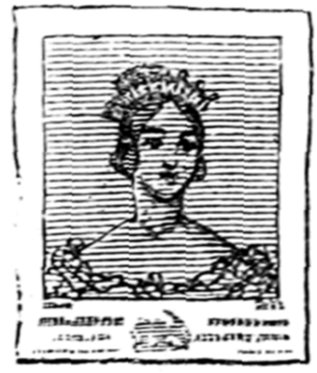
A line engraving of Her Majesty.
OUT-RIDERS TO THE QUEEN.
I'll have an excursion, a bit of desertion, September diversion, and where shall I go? If pleasure you mean, sir, at Windsor's the Queen, sir, I'd have you go in, sir, and see all the show.—At once, gay of heart, then for Windsor I start, and at Paddington see me in train to depart; and as steam's all the go, as you very well know, if we go slow to Windsor, we'll go quick to Slough.—The engine's a great 'un (at desperate rate on, 'twill speed us nor heed us, while we laugh and scoff), all happy go merry, like gunpowder, werry, as soon as it's fired the train will go off!—How rapid our pace is! I swear all the places, like horses at races, do seem to fly by! Oh! how precious quick now, and see if you're sick now, there's Ealing to cure you, so physic's my eye! See old Mr. Zitters, who dotes upon bitters, and, in the West Indies, put wormwood in shrubs: behold him alight now, to get appetite now (still bitters for ever!) at famed Wormwood Scrubs.—Here's Hanwell, where Smilem now weeps in th' Asylum; through moonshine and credit his trade cut its stick; woe followed his laughter, his wits they went after; a lunatic victim to Luna and tick!—Well now we're at Slough, and no farther need go, our raillery's over, the train has cried "wo!"—But the "bus," out and in, stows away thick and thin; dirt and clean, fat and lean, there for Windsor they pack; the sorry nags speed, very sorry indeed, with a whip at the flank and a load at the back.—Now all in a bustle, we rush to the Castle, and here comes the Queen ever smiling and gay, Hurrah! and God save her! she could not look braver; but those jockies in livery, pray who are they?—Oh! keep back your sneers, and hold in your jeers, they're her Majesty's ministers, princes, and peers. With their dingy blue jackets, and collars of red, their old Windsor uniforms, looking so dead; they might well pass for "Uniform Postmen" instead!—Now farewell and adieu to the Queen's retinue: for onward we strode, in the Royal abode, where fine ancient paintings, paraded to view, are shown by an ignorant thick-headed dunce, whose brogue murders Masters and English at once.—"Look, here is, an' plase ye, Paul-very-unaisy, and bad luck if there an't a rale Remembrant:" so if Dan did but follow the old fellow's tail, he'd be quite pleased to hear him call Raphael "Rapale!"—But it's going to rain, and although, to a man, we would have the Queen's reign be as long as it can; yet as soaking's "no go," we must rush back to Slough, where panting and gasping for breath we are dinn'd, sir—with "What is the matter? you're quite out of Wind-sir."
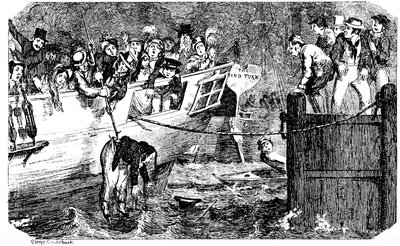
SEPTEMBER—Over-boarded and Under-lodged.
237
SEPTEMBER.—Over-boarded and Under-lodged.
We had no great reason to brag of our tournyment at Tuggeridgeville: but, after all, it was better than the turn-out at Kilblazes, where poor Lord Heydownderry went about in a black velvet dressing-gown, and the Emperor Napoleon Bonypart appeared in a suit of armour, and silk stockings, like Mr. Pell's friend, in "Pickwick;" we, having employed the gentlemen from Ashley's Anti-theatre, had some decent sport for our money.
We never heard a word from the Baron, who had so distinguished himself by his horsemanship, and had knocked down (and very justly) Mr. Nabb, the bailiff, and Mr. Stubbs, his man, who came to lay hands upon him. My sweet Jemmy seemed to be very low in spirits after his departure, and a sad thing it is to see her in low spirits: on days of illness she no more minds giving Jemimarann a box on the ear, or sending a plate of muffins across a table at poor me, than she does taking her tea.
Jemmy, I say, was very low in spirits; but, one day (I remember it was the day after Captain Higgins called, and said he had seen the Baron at Boulogne), she vowed that nothing but change of air would do her good, and declared that she should die unless she went to the sea-side in France. I knew what this meant, and that I might as well attempt to resist her, as to resist Her Gracious Majesty in Parliament assembled; so I told the people to pack up the things, and took four places on board the "Grand Turk" steamer for Boulogne.
The travelling carriage, which, with Jemmy's thirty-seven boxes and my carpet-bag, was pretty well loaded, was sent on board the night before; and we, after breakfasting in Portland Place (little did I think it was the—but, poh! never mind), went down to the Custom House in the other carriage, followed by a hackney-coach and a cab, with the servants and fourteen band-boxes and trunks more, which were to be wanted by my dear girl in the journey.
The road down Cheapside and Thames Street need not be described; we saw the Monument, a memento of the wicked popish massacre of Saint Bartholomew;—why erected here I can't think, as Saint Bartholomew's is in Smithfield,—we had a glimpse of Billingsgate, and of the Mansion House, where we saw the two-and-twenty shilling coal-smoke coming out of the chimneys, and were landed at the Custom House in safety.
Fourteen porters came out, and each took a package with the greatest civility; calling Jemmy her ladyship, and me your honour; ay, and your honouring and my ladyshipping even my man and the maid in the cab.
I somehow felt all over quite melancholy at going away: "Here, my fine fellow," says I to the coachman, who was standing very respectful, holding his hat in one hand and Jemmy's jewel-case in the other, "here, my fine chap," says I, "here's six shillings for you;" for I did not care for the money.
"Six what?" says he.
"Six shillings, fellow!" shrieks Jemmy; "and twice as much as your fare."
"Feller, marm!" says this insolent coachman; "feller yourself, marm: do you think I'm a-going to kill my horses, and break my precious back, and bust my carriage, and carry you, and your kids, and your traps, for six hog?" And with this the monster dropped his hat, with my money in it, and doubling his fist, put it so very near my nose that I really thought he would have made it bleed. "My fare's heighteen shillings," says he, "haint it?—hask hany of these gentlemen."
"Why, it ain't more than seventeen and six," says one of the fourteen porters; "but, if the gen'l'man is a gen'l'man, he can't give no less than a suffering any how."
I wanted to resist, and Jemmy screamed like a Turk: but, "Holloa!" says one; "What's the row?" says another; "Come, dub up!" roars a third: and I don't mind telling you, in confidence, that I was so frightened that I took out the sovereign and gave it. My man and Jemmy's maid had disappeared by this time; they always do when there's a robbery or a row going on.
I was going after them. "Stop, Mr. Ferguson," pipes a young gentleman of about thirteen, with a red livery waistcoat that reached to his ankles, and every variety of button, pin, string, to keep it together: "Stop, Mr. Heff," says he, taking a small pipe out of his mouth, "and don't forgit the cabman."
238"What's your fare, my lad?" says I.
"Why, let's see—yes—ho!—my fare's seven-and-thirty and eightpence eggs—ackly."
The fourteen gentlemen, holding the luggage, here burst out and laughed very rudely indeed; and the only person who seemed disappointed was, I thought, the hackney-coachman. "Why, you rascal!" says Jemmy, laying hold of the boy, "do you want more than the coachman?"
"Don't rascal me, marm!" shrieks the little chap in return. "What's the coach to me? Vy, you may go in an omlibus for sixpence if you like; vy don't you go and buss it, marm? Vy did you call my cab, marm? Vy am I to come forty mile, from Scarlot Street, Po'tl'nd Place, and not git my fare, marm?"
This speech, which takes some time to write down, was made in about the fifth part of a second; and, at the end of it, the young gentleman hurled down his pipe, and, advancing towards Jemmy, doubled his fist, and seemed to challenge her to fight. My dearest girl now turned from red to be as pale as white Windsor, and fell into my arms; what was I to do? I called, "Policeman!" but a policeman wont interfere in Thames Street; robbery is licensed there: what was I to do? Oh! my heart beats when I think of what my Tug did!
As soon as this young cab chap put himself into a fighting attitude, Master Tuggeridge Coxe—who had been standing by, laughing very rudely, I thought—Master Tuggeridge Coxe, I say, flung his jacket suddenly into his mamma's face (the brass buttons made her start, and recovered her a little), and, before we could say a word, was in the ring in which we stood (formed by the porters, nine orangemen and women, I don't know how many newspaper boys, hotel cads, and old clothesmen), and, whirling about two little white fists in the face of the gentleman in the red waistcoat, who brought a great pair of black ones up to bear on the enemy, was engaged in an instant.
But, law bless you! Tug hadn't been at Richmond School for nothing; and milled away—one, two, right and left—like a little hero as he is, with all his dear mother's spirit in him: first came a crack which sent his white hat spinning over the gentleman's cab, and scattered among the crowd a vast number of things which the cabman kept in it,—such as a ball of string, a piece of candle, a comb, a whip-lash, a little warbler, a slice of bacon, &c. &c.
The cabman seemed sadly ashamed of this display, but Tug gave him no time: another blow was planted on his cheek-bone; and a third, which hit him straight on the nose, sent this rude cabman straight down to the ground.
"Brayvo, my lord!" shouted all the people around.
"I won't have no more, thank yer," said the little cabman, gathering himself up; "give us over my fare, vil yer, and let me git away?"
"What's your fare now, you cowardly little thief?" says Tug.
"Vy, then, two-and-eightpence," says he, "go along,—you know it is:" and two-and-eightpence he had; and everybody applauded Tug, and hissed the cab-boy, and asked Tug for something to drink.
I now thought our troubles would soon be over; mine were very nearly so in one sense at least; for after Mrs. Coxe, and Jemimarann, and Tug, and the maid, and valet, and valuables had been handed across, it came to my turn. I had often heard of people being taken up by a plank, but seldom of their being set down by one. Just as I was going over, the vessel rode off a little, the board slipped, and down I soused into the water. You might have heard Mrs. Coxe's shriek as far as Gravesend; it rung in my ears as I went down, all grieved at the thought of leaving her a disconsolate widder. Well, up I came again, and caught the brim of my beaver hat—though I have heard that drowning men catch at straws:—I floated, and hoped to escape by hook or by crook; and, luckily, just then I felt myself suddenly jerked by the waist-band of my whites, and found myself hauled up in air at the end of a boat-hook, to the sound of "yeho! yeho! yehoi! yehoi!" and so I was dragged aboard. I was put to bed, and had swallowed so much water that it took a very considerable quantity of brandy to bring it to a proper mixture in my inside; in fact, for some hours I was in a very deplorable state.
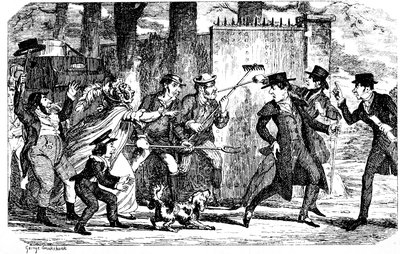
OCTOBER—Notice to quit.
239
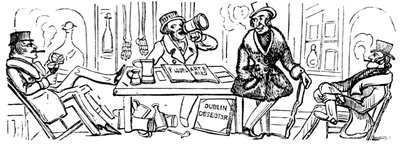
MEDICAL STUDENTS.
1. Medical Schools open.
DOCTORS' COMMONS.
This month, tho' not muggy, Improves by the mug; And people caught ale-ing, Repair to brown jug.
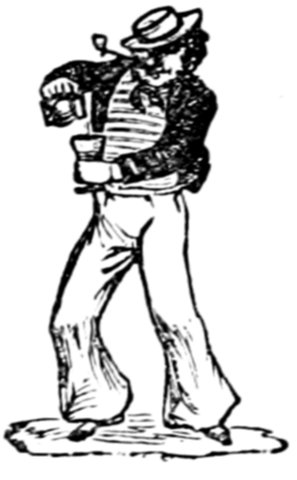
Jack and gill.
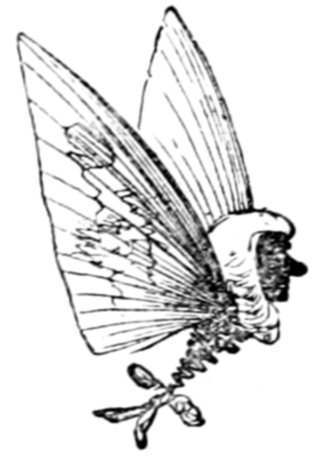
Brougham Butterfly.
Throw Physic to the dogs! A pipe-cheroot—
Pilot—and life-preserver—voilà tout!
A little lecture now and then to boot—
A school or hospital to bustle thro'—
A few hard terms—on easy terms—to keep,
Then brown stout—bagatelle—half-slew'd and sleep:
The Hall's not passed! but very oft passed by;
Hospital visits Students fain ward off;
With patients they're impatient—and the eye
Glances from book to beer—anon they scoff
At subjects—Somervile—and sick-inspection,
Cut up the section—and abjure dissection!
A blessed School of Physic—half-and-half!
The Lushington of each young Doctors' Commons;
Medical Students—sons of gin and chaff—
Going to pot—for heavy—"reg'lar rum 'uns"—
Porter or spirits sitting down to swill,
And every smoking Jack bless'd with his gill.
22. Lord Brougham reported dead.
"The Brougham or Meadow Brown Butterfly, is seen in October, flies low, and wanders about all parts of England and Scotland. Between its wings it carries a remarkable profile of Lord Brougham. The Caterpillar is chequered in green and black squares, resembling those on plaid trousers."—Juvenile Natural History.
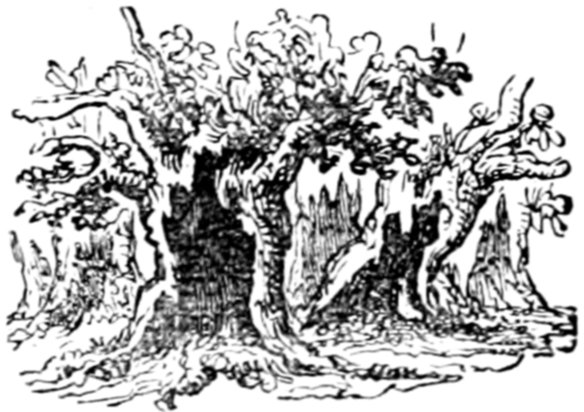
Heartless Hoax.
I'd be a butterfly, spreading my pinions,
All through the future, and far after fame;
I'd die by chance to astound the press minions;
I'd see when dead what they'd do with my name.
I'd have a carriage, and when it had spill'd me,
Wheel O, and Shafto, and Leader, and all,
If a hoax were got up to announce it had kill'd me,
Just when my death all the land would appal,
I'd be a butterfly!
I'd be a butterfly!
I'd come to life again safe after all:
240
OCTOBER.—Notice to Quit.
Well, we arrived at Boulogne; and Jemmy, after making inquiries, right and left, about the Baron, found that no such person was known there; and being bent, I suppose, at all events, on marrying her daughter to a lord, she determined to set off for Paris, where, as he had often said, he possessed a magnificent——, hotel he called it; and I remember Jemmy being mightily indignant at the idea; but hotel, we found afterwards, means only a house in French, and this reconciled her. Need I describe the road from Boulogne to Paris? or, need I describe that Capitol itself? Suffice it to say that we made our appearance there, at Murisse's Hotel, as became the family of Coxe Tuggeridge; and saw everything worth seeing in the metropolis in a week. It nearly killed me, to be sure; but, when you're on a pleasure party in a foreign country you must not mind a little inconvenience of this sort.
Well: there is, near the city of Paris, a splendid road and row of trees, which, I don't know why, is called the Shandeleezy, or Elysian Fields, in French: others, I have heard, call it the Shandeleery; but mine I know to be the correct pronunciation. In the middle of this Shandeleezy is an open space of ground, and a tent, where, during the summer, Mr. Franconi, the French Ashley, performs with his horses and things. As everybody went there, and we were told it was quite the thing, Jemmy agreed that we should go too; and go we did. It's just like Ashley's: there's a man just like Mr. Piddicombe, who goes round the ring in a huzzah-dress, cracking a whip; there are a dozen Miss Woolfords, who appear like Polish Princesses, Dihannas, Sultannas, Cachuchas, and heaven knows what! There's the fat man, who comes in with the twenty-three dresses on, and turns out to be the living skeleton! There's the clowns, the sawdust, the white horse that dances a hornpipe, the candles stuck in hoops, just as in our own dear country.
My dear wife, in her very finest clothes, with all the world looking at her, was really enjoying this spectacle (which doesn't require any knowledge of the language, seeing that the dumb animals don't talk it), when there came in, presently, "the great Polish act of the Sarmatian horse-tamer," on eight steeds, which we were all of us longing to see. The horse-tamer, to music twenty miles an hour, rushed in on four of his horses, leading the other four, and skurried round the ring. You couldn't see him for the sawdust, but everybody was delighted, and applauded like mad. Presently you saw there were only three horses in front; he had slipped one more between his legs, another followed, and it was clear that the consequences would be fatal, if he admitted any more. The people applauded more than ever; and when, at last, seven and eight were made to go in, not wholly, but sliding dexterously in and out, with the others, so that you did not know which was which, the house, I thought, would come down with applause; and the Sarmatian horse-tamer bowed his great feathers to the ground. At last the music grew slower, and he cantered leisurely round the ring; bending, smirking, see-sawing, waving his whip, and laying his hand on his heart, just as we have seen the Ashley's people do.
But fancy our astonishment, when, suddenly, this Sarmatian horse-tamer, coming round with his four pair at a canter, and being opposite our box, gave a start, and a—hupp! which made all of his horses stop stock-still at an instant!
"Albert!" screamed my dear Jemmy: "Albert! Bahbahbah—baron!"
The Sarmatian looked at her for a minute; and turning head over heels three times, bolted suddenly off his horses, and away out of our sight.
It was His Excellency the Baron de Punter!
Jemmy went off in a fit, as usual, and we never saw the Baron again; but we heard afterwards that Punter was an apprentice of Franconi's, and had run away to England, thinking to better himself, and had joined Mr. Richardson's army; but Mr. Richardson, and then London, did not agree with him; and we saw the last of him as he sprung over the barriers at the Tuggeridgeville tournament.
"Well, Jemimarann," says Jemmy, in a fury, "you shall marry Tagrag; and if I can't have a baroness for a daughter, at least you shall be a baronet's lady!" Poor Jemimarann only sighed; she knew it was of no use to remonstrate.
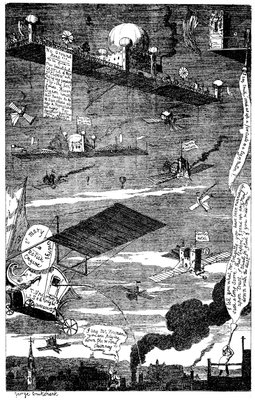
THE HEIGHT OF SPECULATION—Groundless Expectations.
241Paris grew dull to us after this; and we were more eager than ever to go back to London; for what should we hear, but that that monster, Tuggeridge, of the city—old Tug's black son, forsooth!—was going to contest Jemmy's claim to the property, and had filed I don't know how many bills against us in Chancery! Hearing this, we set off immediately, and we arrived at Boulogne, and set off in that very same Grand Turk which had brought us to France.
If you look in the bills, you will see that the steamers leave London on Saturday morning, and Boulogne on Saturday night; so that there is often not an hour between the time of arrival and departure. Bless us! bless us! I pity the poor Captain that, for twenty-four hours at a time, is on a paddle-box, roaring out, "Ease her! Stop her!" and the poor servants, who are laying out breakfast, lunch, dinner, tea, supper;—breakfast, lunch, dinner, tea, supper again;—for layers upon layers of travellers, as it were; and, most of all, I pity that unhappy steward, with those unfortunate tin basins that he must always keep an eye over.
Little did we know what a storm was brooding in our absence, and little were we prepared for the awful, awful fate that hung over our Tuggeridgeville property.
Biggs, of the great house of Higgs, Biggs, and Blatherwick, was our man of business: when I arrived in London I heard that he had just set off to Paris after me. So we started down to Tuggeridgeville instead of going to Portland Place. As we came through the lodge-gates we found a crowd assembled within them; and there was that horrid Tuggeridge on horseback, with a shabby-looking man, called Mr. Scapgoat, and his man of business, and many more. "Mr. Scapgoat," says Tuggeridge, grinning, and handing him over a sealed paper, "here's the lease; I leave you in possession, and wish you good morning."
"In possession of what?" says the rightful lady of Tuggeridgeville, leaning out of the carriage-window. She hated black Tuggeridge, as she called him, like poison: the very first week of our coming to Portland Place, when he called to ask restitution of some plate which he said was his private property, she called him a base-born blackamoor, and told him to quit the house. Since then there had been law-squabbles between us without end, and all sorts of writings, meetings, and arbitrations.
"Possession of my estate of Tuggeridgeville, madam," roars he, "left me by my father's will, which you have had notice of these three weeks, and know as well as I do."
"Old Tug left no will," shrieked Jemmy; "he didn't die to leave his estates to blackamoors—to negroes—to base-born mulatto story-tellers; if he did, may I be——"
"Oh hush! dearest mamma," says Jemimarann. "Go it again, mother!" says Tug, who is always sniggering.
"What is this business, Mr. Tuggeridge?" cried Tagrag (who was the only one of our party that had his senses); "what is this will?"
"Oh, it's merely a matter of form," said the lawyer, riding up. "For Heaven's sake, madam, be peaceable; let my friends, Higgs, Biggs, and Blatherwick, arrange with me. I am surprised that none of their people are here. All that you have to do is to eject us; and the rest will follow, of course."
"Who has taken possession of this here property?" roars Jemmy, again.
"My friend, Mr. Scapgoat," said the lawyer. Mr. Scapgoat grinned.
"Mr. Scapgoat," said my wife, shaking her fist at him (for she is a woman of no small spirit), "if you don't leave this ground, I'll have you pushed out with pitchforks, I will, you and your beggarly blackamoor, yonder." And, suiting the action to the word, she clapped a stable-fork into the hands of one of the gardeners, and called another, armed with a rake, to his help, while young Tug set the dog at their heels, and I hurrahed for joy to see such villainy so properly treated.
"That's sufficient, ain't it?" said Mr. Scapgoat, with the calmest air in the world. "Oh, completely," said the lawyer. "Mr. Tuggeridge, we've ten miles to dinner. Madam, your very humble servant." And the whole posse of them rode away.
242
NOVEMBER. [1840.
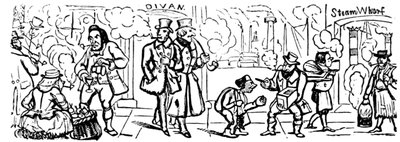
LONDON SMOKE.
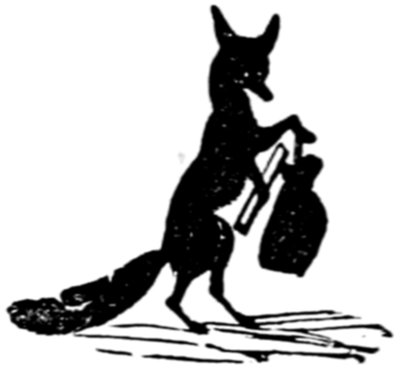
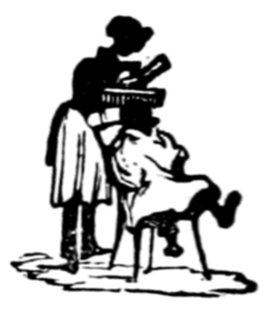
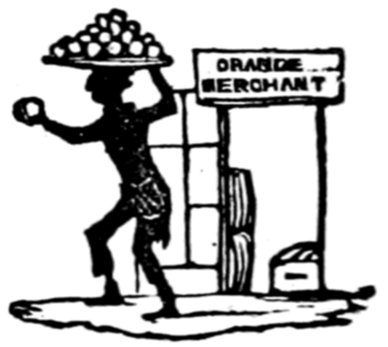
First Day of Term. The field-sports' rule reversed by legal wags, He clips. Bags do not bear the fox, but foxes, bags. Orange Lodge.
Smoke rules the roast! November, foggy, drear;
Oh! when from darkness will its days desist?
Month of suspicion, that leaves all to clear,
For though nought's stolen, everything is mist!
It is a bully month, whose vapouring flies
Wherever man is found, or woman walks;
An equal favourer of dis-guise and Guys,
Assassin patron both of knives and Faukes!
Densely impervious is its dark-winged air,
Driver of soot from roofs and chimney stacks,
London its fort—it is accounted there
The Great Emancipator of the blacks!
Smoke is its sister, and assister too;
Protean creature, taking every form,—
Now gently rising from an Irish stew,
Now rushing from a steamer in a storm!
Smoke; lo! it curleth from the Meersham fine,
Say it dissolves—so is mere sham to boot—
Clearly as-cended from the female line,
At all events, it comes from a she root!
Now it runs up a pipe, with odorous charms,
Bringing effluvia from the flue: who dips
In heraldry, will see its coat of arms
Should bear the barber's motto of "Eclipse."
Smoke will have sway; a very dingy yoke
It keeps us under, and 'tis time we broke it;
Alas! we can't, and e'en our very joke,
Reader, we find is nothing till you smoke it.
Smoke and November, then, go hand in hand,
Till time dismiss them thro' his "chaos" gates;
Time is a man of taste, he clears the land,
And just like smoke itself—he vapour hates!
5. William the Third landed.
Oranges come in.
All Orange lodges are by law forbad!
How so!—When into Bartolph Lane one dodges,
And finds, in plain defiance, man and lad,
Christian and Jew, all keeping Orange lodges?
11. St. Martin. (Patron of Betty.)
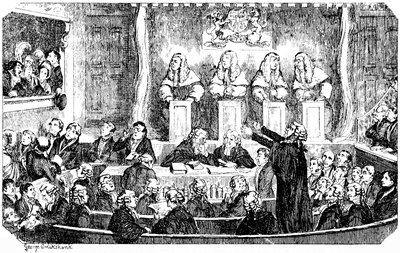
NOVEMBER—Law-Life Assurance.
243
NOVEMBER.—Law-Life Assurance.
We knew not what this meant, until we received a strange document from Higgs, in London; which begun, "Middlesex to wit. Samuel Cox, late of Portland Place, in the city of Westminster, in the said County, was attached to answer Samuel Scapgoat, of a plea, wherefore, with force and arms he entered into one messuage, with the appurtenances, which John Tuggeridge, Esq., demised to the said Samuel Scapgoat, for a term which is not yet expired, and ejected him." And it went on to say, that "we, with force of arms, viz., with swords, knives, and staves, had ejected him." Was there ever such a monstrous falsehood? when we did but stand in defence of our own; and isn't it a sin, that we should have been turned out of our rightful possessions upon such a rascally plea?
Higgs, Biggs, and Blatherwick had evidently been bribed; for, would you believe it? they told us to give up possession at once, as a will was found, and we could not defend the action. My Jemmy refused their proposal with scorn, and laughed at the notion of the will: she pronounced it to be a forgery, a vile blackamoor forgery; and believes to this day that the story of its having been made thirty years ago in Calcutta, and left there with old Tug's papers, and found there, and brought to England, after a search made by order of Tuggeridge, junior, is a scandalous falsehood.
Well, the cause was tried. Why need I say anything concerning it? What shall I say of the Lord Chief Justice but that he ought to be ashamed of the wig he sits in? What of Mr.——, and Mr.——, who exerted their influence against justice and the poor? On our side, too, was no less a man than Mr. Serjeant Binks, who, ashamed I am, for the honour of the British bar, to say it, seemed to have been bribed too; for he actually threw up his case! Had he behaved like Mr. Mulligan, his junior—and to whom, in this humble way, I offer my thanks—all might have been well. I never knew such an effect produced, as when Mr. Mulligan, appearing for the first time in that court, said, "Standing here, upon the pidestal of secred Thamis, seeing around me the arnymints of a profission I rispict; having before me a vinnerable Judge, and an elightened Jury—the counthry's glory, the netion's cheap defender, the poor man's priceless palladium—how must I thrimble, my Lard, how must the blush bejew my cheek—(somebody cried out 'O cheeks!' In the court there was a dreadful roar of laughing; and when order was established, Mr. Mulligan continued)—my Lard, I heed them not; I come from a counthry accustomed to opprission, and as that counthry—yes, my Lard, that Ireland (do not laugh, I am proud of it)—is ever, in spite of her tyrants, green, and lovely, and beautiful; my client's cause, likewise, will rise shuperior to the malignant imbecility—I repeat, the MALIGNANT IMBECILITY of those who would thrample it down; and in whose teeth, in my client's name, in my counthry's, aye, and my own, I, with folded arrums, hurl a scarnful and eternal defiance!"
"For Heaven's sake, Mr. Milligan"—"Mulligan, me Lard," cried my defender—"Well, Mulligan, then; be calm, and keep to your brief."
Mr. Mulligan did; and, for three hours and a quarter, in a speech crammed with Latin quotations, and unsurpassed for eloquence, he explained the situation of me and my family; the romantic manner in which Tuggeridge, the elder, gained his fortune, and by which it afterwards came to my wife; the state of Ireland; the original and virtuous poverty of the Coxes—from which he glanced passionately, for a few minutes (until the Judge stopped him), to the poverty of his own country; my excellence as a husband, father, landlord; my wife's, as a wife, mother, landlady. All was in vain—the trial went against us.
I was soon taken in execution for the damages; five hundred pounds of law expenses of my own, and as much more of Tuggeridge's. He would not pay a farthing, he said, to get me out of a much worse place than the Fleet.
I need not tell you that along with the land went the house in town and the money in the funds. Tuggeridge, he who had thousands before, had it all.
And when I was in prison who do you think would come and see me? None 244of the Barons, nor Counts, nor Foreign Ambassadors, nor Excellencies, who used to fill our house, and eat and drink at our expense,—not even the ungrateful Tagrag!
I could not help now saying to my dear wife, "See, my love, we have been gentlefolks for exactly a year, and a pretty life we have had of it. In the first place, my darling, we gave grand dinners, and everybody laughed at us."
"Yes, and recollect how ill they made you," cries my daughter.
"Then you must make a country gentleman of me."
"And send pa into dunghills," roared Tug.
"Then you must go to operas, and pick up foreign Barons and Counts."
"O, thank heaven! dearest papa, that we are rid of them," cries my little Jemimarann, looking almost happy, and kissing her old pappy.
"And you must make a fine gentleman of Tug, and send him to a fine school."
"And I give you my word," says Tug, "I'm as ignorant a chap as ever lived."
"You're an insolent saucebox," says Jemmy; "you've learned that at your fine school."
"I've learned something else, too, ma'am; ask the boys if I haven't," grumbles Tug.
"You hawk your daughter about, and just escape marrying her to a swindler."
"And drive off poor Orlando," whimpered my girl. "Silence, Miss," says Jemmy, fiercely.
"You insult the man whose father's property you inherited, and bring me into this prison, without hope of leaving it; for he never can help us after all your bad language." I said all this very smartly; for the fact is, my blood was up at the time, and I determined to rate my dear girl soundly.
"Oh! Sammy," said she, sobbing (for the poor thing's spirit was quite broken), "it's all true; I've been very, very foolish and vain, and I've punished my dear husband and children by my follies, and I do so, so repent them!" Here, Jemimarann at once burst out crying, and flung herself into her mamma's arms, and the pair roared and sobbed for ten minutes together; even Tug looked queer: and as for me, it's a most extraordinary thing, but I'm blest if seeing them so miserable didn't make me quite happy. I don't think for the whole twelve months of our good fortune I had ever felt so gay as in that dismal room in the Fleet where I was locked up.
Poor Orlando Crump came to see us every day; and we, who had never taken the slightest notice of him, in Portland Place, and treated him so cruelly that day, at Beulah Spa, were only too glad of his company now. He used to bring books for my girl, and a bottle of sherry for me; and he used to take home Jemmy's fronts, and dress them for her; and when locking-up time came, he used to see the ladies home to their little three-pair bed-room, in Holborn, where they slept now, Tug and all. "Can the bird forget its nest?" Orlando used to say (he was a romantic young fellow, that's the truth, and blew the flute, and read Lord Byron, incessantly, since he was separated from Jemimarann); "Can the bird, let loose in eastern climes, forget its home? Can the rose cease to remember its beloved bulbul?—Ah! no. Mr. Cox, you made me what I am, and what I hope to die—a hairdresser. I never see a curling-irons before I entered your shop, or knew Naples from brown Windsor. Did you not make over your house, your furniture, your emporium of perfumery, and nine-and-twenty shaving customers, to me? Are these trifles? Is Jemimarann a trifle? if she will allow me to call her so. O, Jemimarann! your pa found me in the workhouse, and made me what I am. Conduct me to my grave, and I never, never shall be different!" When he had said this, Orlando was so much affected, that he rushed suddenly on his hat, and quitted the room.
Then Jemimarann began to cry too. "O, pa!" said she, "isn't he, isn't he a nice young man?"
"I'm hanged if he ain't," says Tug. "What do you think of his giving me eighteenpence yesterday, and a bottle of lavender water for Mimarann?"
"He might as well offer to give you back the shop, at any rate," says Jemmy.
"What! to pay Tuggeridge's damages? My dear, I'd sooner die than give Tuggeridge the chance."
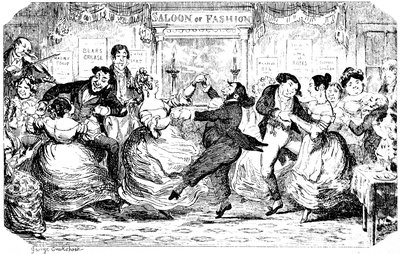
DECEMBER—Christmas Bustle.
245
1840.] DECEMBER.
Grate Wind.
Men and Measures.
Boxing Day.
A Muff-in-Belle.
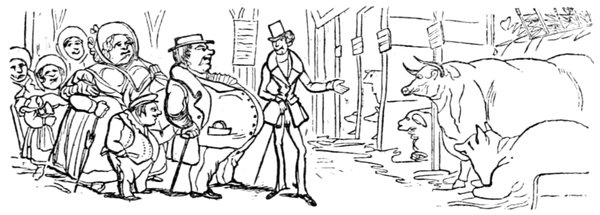
FAT CATTLE SHOW.
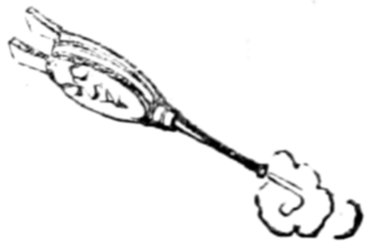
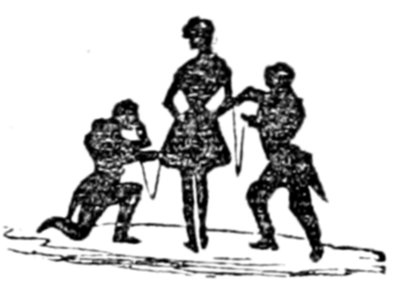
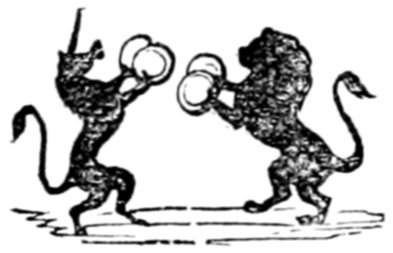
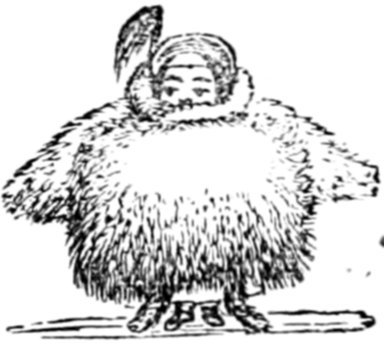
December should be a cheerful month, weather or no. It should be a warm one too, though never so cold. People blow their fires and use their bellows within, while the wind bellows without. Lawyers are glad over Coke. Men take measures to secure the comfort of their bodies, and preserve the coats of their stomachs. Though the Legislature does not sit, the middle classes rejoice in the carrying of many of their bills. Pastrycooks begin to mince matters; and "eyes" are turned towards "pies." Politicians affect sincerity; and Peel, tout sweet, becomes candid. Gross acts of plum-puddingizing are effected by means of a grocer; and Plum-tree-street is then the sweetest locality in St. Giles's. The Irish daily find fresh raisins for flocking there. With the sale of plums money gets current; but the sovereign is just now more valued than ever, and, at the great theatres, Stirling is all the go. The markets grow lively, and Smithfield puts forth its show. Pigs have lots of stuffing, and get so heavy that it is quite common to ask for a pig of lead. About oxen and sheep there is a decided ignis fat-you-us. Beasts visit beasts, and human fat cattle—to survey the quadrupedal—walk in, plump. Butchers display fine traits. Boxing day arrives, and with it the knocks of tradesmen, but they only make a hit when they are paid. People are obliged to wait for their own Nox till night. Merry drinks and games then stir not the fire, but the fire-side. The younger branches of families are indulged in wine that is elder, universal supperage supplies the place of universal suffrage; and the only ballot is for the bean in the cake. Christmas is as brave a fellow on land as ever Admiral Winter was at sea, and should be toasted accordingly. He lights our fires, and leaves few without fuel:—he tows up our colliers to warm our toes; and, though he is too kind to sink the barges, he always scuttles the coals! He is no revolutionist, for, whilst warming the little, he has a respect for the grate. "He is," says the Frenchman, "our defender, by de fender; and if he do seem cold, it is only because he is neither a bore nor a muff."
15. Mrs. Trimmer d. 1810.
Hurrah! for jolly Christmas, boys! his days are coming fast;
When rod is nought but rod'montade, and birch becomes bombast.
246
DECEMBER.—Christmas Bustle.
Tuggeridge vowed that I should finish my days there, when he put me in prison. It appears that we both had reason to be ashamed of ourselves, and were, thank God! I learned to be sorry for my bad feelings towards him, and he actually wrote to me, to say,—
"Sir,—I think you have suffered enough for faults which, I believe, do not lie with you, so much as your wife; and I have withdrawn my claims which I had against you while you were in wrongful possession of my father's estates. You must remember that when, on examination of my father's papers, no will was found, I yielded up his property, with perfect willingness, to those who I fancied were his legitimate heirs. For this I received all sorts of insults from your wife and yourself (who acquiesced in them); and when the discovery of a will in India proved my just claims you must remember how they were met, and the vexatious proceedings with which you sought to oppose them.
"I have discharged your lawyer's bill; and, as I believe you are more fitted for the trade you formerly exercised than for any other, I will give five hundred pounds for the purchase of a stock and shop when you shall find one to suit you.
"I enclose a draft for twenty pounds, to meet your present expenses. You have, I am told, a son, a boy of some spirit; if he likes to try his fortune abroad, and go on board an Indiaman, I can get him an appointment; and am, Sir, your obedient servant,
John Tuggeridge."
It was Mrs. Breadbasket, the housekeeper, who brought this letter, and looked mighty contemptuous as she gave it.
"I hope, Breadbasket, that your master will send me my things, at any rate," cries Jemmy. "There's seventeen silk and satin dresses, and a whole heap of trinkets, that can be of no earthly use to him."
"Don't Breadbasket me, mem, if you please, mem. My master says that them things is quite obnoxious to your spere of life. Breadbasket, indeed!" and so she sailed out.
Jemmy hadn't a word; she had grown mighty quiet since we had been in misfortune: but my daughter looked as happy as a queen; and Tug, when he heard of the ship, gave a jump that nearly knocked down poor Orlando. "Ah, I suppose you'll forget me now," says he, with a sigh; and seemed the only unhappy person in company.
"Why, you conceive, Mr. Crump," says my wife, with a great deal of dignity, "that, connected as we are, a young man born in a work——"
"Woman!" cried I (for once in my life determined to have my own way), "hold your foolish tongue. Your absurd pride has been the ruin of us, hitherto; and, from this day, I'll have no more of it. Hark ye, Orlando, if you will take Jemimarann, you may have her; and if you'll take five hundred pounds for a half share of the shop, they're yours; and that's for you, Mrs. Coxe."
And here we are, back again. And I write this from the old back shop, where we are all waiting to see the new year in. Orlando sits yonder, plaiting a wig for my Lord Chief Justice, as happy as may be; and Jemimarann and her mother have been as busy as you can imagine all day long, and are just now giving the finishing touches to the bridal dresses; for the wedding is to take place the day after to-morrow. I've cut seventeen heads off (as I say) this very day; and as for Jemmy, I no more mind her than I do the Emperor of China and all his Tambarins. Last night we had a merry meeting of our friends and neighbours, to celebrate our re-appearance among them; and very merry we all were. We begun with quadrilles, but I never could do 'em well; and, after that, to please Mr. Crump and his intended, we tried a gallopard, which I found anything but easy: for since I am come back to a life of peace and comfort, it's astonishing how stout I'm getting; so we turned at once to what Jemmy and me excels in—a country dance; which is rather surprising, as we was both brought up to a town life. As for young Tug, he showed off in a sailor's hornpipe; which Mrs. Coxe says is very proper for him to learn, now he is intended for the sea. But stop! here comes in the punchbowls; and if we are not happy, who is? I say I am like the Swish people, for I can't flourish out of my native hair.
247
EXTRACTS FROM THE ANNUAL REGISTER OF REMARKABLE OCCURRENCES IN 1839.
Jan. 9.—Discovery of the real Vegetable Pills:—A patient hoaxed the vendor, and, instead of taking them, sowed them in his garden. A fine crop of peas was the result. The man had been selling those pleasant vegetables, in boxes, disguised as pills by being covered with an outer coating of flour; but, from having been always in flower, they were now thoroughly blown!
In the north, a Coroner's inquest was held upon the body of a man who died from taking another kind of Vegetable Pills. On opening the body the interior was discovered to be one huge cabbage, of great dimensions, but dead, to its heart's core, of confinement and want of water—a beverage which the patient unfortunately never drank. The jury returned a verdict of "quits." "Quits, gentlemen!" exclaimed the dismayed Coroner—"never heard of such a thing! What do you mean?" "Why," replied the foreman, with some warmth, "we find that if the cabbage killed the man, the man most certainly killed the cabbage; and if that ain't quits, blow me!"
Jan. 24.—Her Majesty went on to the stage of Drury Lane Theatre, to inspect Van Amburgh and his beasts. The Queen was mistaken by many for the Lady of Lyons.
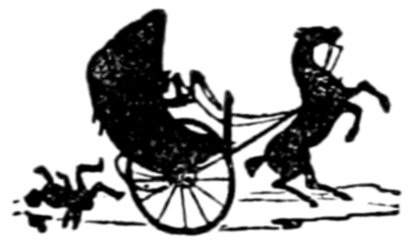
Cab-rearer.
Feb. 18.—Maroto did a bit of important slaughter, and murdered twelve generals, upon the plea of the general welfare. Rather a contradictory reason; but Don Carlos entered France in consequence. They say his chiefs were bribed by a palmer's stone, and it is certain there was some palming, any way. The only commander that now sticks to him is Cabrera, and he's not unlikely to be upset.
March 3.—Vestris attempted to be blown up. A private box given her in her own theatre—loaded with combustibles. Drawing cover—and discovery in consequence.
Some spiteful people envying Madame's fame,
Dare to pronounce it an Olympic game!
May 21.—Procession of the Temperance Society.
Tea-total army! how you march,
Tag-rag and bob-tail of Bohea:
With sober legs, and visage starch,
Looking like men "done to a Tea."
You're not so jolly o'er your fate,
As merry boys that drink and dance;
You're cross—and show (I temper hate!)
Bad temper in your temperance.
248Besides, I think I let truth slip,
Oh! marching most demure, mobocrasy.
And have you fairly "on the hip"
By hinting here at your hypocrisy!
For on this mighty celebration,
When all abroad for show you roam,
'Tis said, you'll scandalize your nation,
And get blind drunk a-going home!
May 23.—Queen Adelaide returned:—
This good Queen comes with health restored
Of which before she was defaulter:
Did she drink stout when on ship-board,
Or was she known to malt at Malta?
June 30.—The Sultan of Turkey died of delirium tremens; the Father of the Faithful going drunk to the seventh heaven! His son—scion of the same die-nasty—ascended the throne; but taught, by example, not to wine, hid his grief and drowned his father's cellars in the Bosphorus. Shortly after this his whole fleet abstained from Port—and absconded to Mehemet Ali.
July 2.—Birmingham riots. A smart fire, but no "Burns's Justice,"—down-fall of much uphold-stery. Beds in flames—among the mattresses great destruction of tick—credit vanishing. Sacrifice of property not unlike sacking. Town in a storm.
July 21.—Rage for publishing portraits of the Queen—some in the Lane and some in the line-manner: some done by Doo, and some engraved by Cousins—not by Cousin George, or Cousin Albert,—not by a Prince man, but a man of Prints. But muzzy-tinto seems the favourite style.
Aug. 30.—The Cinque Ports gave a banquet to the Duke of Wellington, where they did not sink port at all; on the contrary, the feast was carried on with much wine, and a great deal of spirit; and, although the room was surrounded with banners, nothing was found to flag. There were plenty of rations, and orations, and Lord Brougham's Waterloo Eulogy was a eulogy of the first water.
Sept. 7.—The Secretary of War dated a letter from Windsor Castle, mistaking it for his Home Office. As it was, it was only a blunder, but he might as well have kissed Her Majesty by mistake, and then it would have been a blunder-buss.
Sept. 12.—Poulett Thomson went to Canada, in the Pique frigate; and many people were much piqued at the circumstance. The ejaculation of "Shiver my timbers!" became prevalent, at the same time, with the great wood-dealers of British America.
Sept. 22.—Pump locked up at Ramsgate, during divine service.
Lock up the pump! no! no! we see
At once the whole report is scandal:
What dullards in that town must be
Who'd stop the music of a Handel
249Sept. 28.—The Lord Mayor's chaplain preached his annual sermon before the Corporation; and took for his text, "A citizen of no mean city." The Corporation, however, got offended at the discourse, which induced them to withhold the usual fifty-pound donation. The sermon contained such a dressing that they considered themselves overdone; and, refusing to be rated after that fashion, took their own notes, but withheld the fifty. The reverend gentleman is now of opinion that they are citizens of a very mean city indeed; and, if he has not a text, he has, at least, a pretext for saying so.
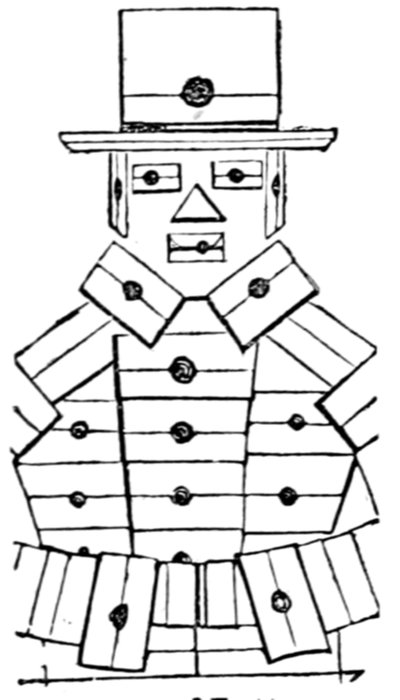
A Man of Letters.
Nov. 8.—Post-office arrangements proposed. Treasury issues one minute, which it takes twenty to read. Postage, not uniform, but promoted to a groat, to promote the circulation of fourpenny-pieces. The Chancellor of the Exchequer, having looked at the question in its every Baring—declines throwing the letters more open—to distribution. Nevertheless, correspondence will be so much increased, that this may be called a post age—and Lord Lichfield, A MAN OF LETTERS.
ASSOCIATION OF BRITISH ILLUMINATI, HELD AT BIRMINGHAM, IN AUGUST, 1839.
[We have been requested to insert the following selections from the proceedings of the Institution, in consequence of the unhandsome conduct of some of the newspapers, in refusing to publish any further reports unless they were paid for as advertisements.]
A great feature, in the meeting this year, has been the elegant and intelligible simplicity of the subjects and papers discussed; the following are a few of the most interesting:—
Mr. Bewdlite's paper "On the retrograde Progression of vegetable Ærolites, supposed to be caused by the flowing Stagnation of diurnal Currents, coming in Contact with a Board of Guardians," was much admired; as well as Dr. Terncow's admirable paper "On the Tendency of extreme Nervous Filaments to form Photogenic Conventions," and "The Advantages derived from forcing condensed Air into the Brain, to sharpen the Powers of Hearing," by which means a whisper at Dover could be distinctly heard at Boulogne.
Under the head of Section W, an interesting report was read by Dr. Buckleband, on some important geological and antiquarian discoveries, which were made, in the neighbourhood of Holborn, by the workmen employed in a lying down gas-pipes. It appeared that, at the depth of six feet below the mud formation, having passed through a stratum of London dirt, teeming with interesting reliquiæ of blacking-bottles and tobacco-pipes, in a fine state of 250petrifaction, together with traces of decayed vegetable matter, interspersed with bones of feline mammalia, they struck upon a mass of regular brickwork, which was, at first, supposed to be the remains of the Roman road which formerly ran from King's Cross to Evans's Hotel, in Covent Garden. On carefully removing the masonry, they arrived at a curiously constructed apartment, or cella, containing several dozen bottles, of modern form, reclining in sawdust round the walls. The wine in the bottles was found to be perfectly unimpaired by its long repose, and tasted fresh and sweet. One gentleman pronounced it to be the Massican wine so lauded by Pliny. Another, who had hitherto pretended to be a judge of old wine, stated that it was merely a compound of inferior port (fine rough flavour, 30s.) and red currant, with a small admixture of English brandy. The learned professor merely mentioned this absurd opinion as a matter of entertainment. One of the most singular features of this gratifying discovery, was one of the everlasting lamps, of which curious light a small jet was burning over the bins, with a flame exactly resembling gas. He expected a further report of their proceedings by the seven o'clock train. While the learned gentleman was speaking, the communication arrived. Much excitement prevailed as he read the paper; and one of the audience, in his nervous agitation, took another's snuff-box by mistake. It appeared that the workmen had descended, in company with several contributors to the "Gentleman's Magazine," and, following a long passage, similarly adorned with bottles, began to contemplate the idea of bringing to light an entire subterranean Roman city; probably destroyed by one of the early volcanic eruptions of the Mons Primula, or Primrose Hill, of the ancients. On ascending a flight of steps they came to a small door, which they eagerly forced open, and the astonished group found themselves in the "bottling department" of what had been apparently an early Roman "wine vaults."
Mr. Lyme Stone produced a fine fossil specimen of the claw of some extinct animal, which had been discovered by the excavators of the Southampton Railroad. He had shown it to the learned professor, who had drawn the entire animal from this single specimen; and, on comparing it with the Munkorsensauros, it was found to be correct, with the exception of the tail being curly instead of straight. Mr. Planecence inquired if it was not likely to be the claw of an eagle, in composition similar to those displayed in the New Road, where the two gentlemen, without any clothes, are represented as playing at single-stick. He was strengthened in this idea by observing an iron pin running through the claw, probably to fix it to the pedestal. Mr. Lyme Stone was sorry that the honourable and learned gentleman was such a confounded fool. The pin with which it was transfixed was evidently a weapon of chase, proving the existence of man upon the earth to be coeval with his desire for food.
An angry discussion would doubtless have taken place had not the hour sounded for dinner. The company speedily separated, and proved the superiority of the attraction that ducks and salmon possessed over inorganic incomprehensibles.
251
BLARNEYHUM ASS-TROLOGICUM PRO ANNO 1840.
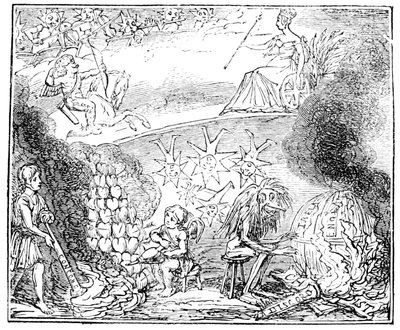
Courteous Reader,
Hold thy breath lightly, while I outpour to thee, in gentle diction, my prediction of events. Behold the Hieroglyphic Interpreter of the symbols of the present and the future; and what a posse of things—both in posse and in esse—it closes and discloses under its mystic mantle. Imagine thyself, for a moment, like the topmost sails of some goodly vessel,—the moon-raker—the star-gazer—the sky-scraper of the Firm-i-meant; and peruse what my prophecy doth, by a ruse, foretel. See the signs of my designs. Now, high in the mid-heaven, behold Albertus Sagittarius as the Cupid Archer, driving his love-dart through the window of that constellatory hotel, known in great and little Britain by the sign of the Virgo and Crown. Behold the Miss is hit. This is portentous of hymen; but other high men, lo! are typified in those dejected falling stars, pursuing their downward decadence from the court-yard of the palatial Inn. Now, then, shall marriage spread wide its pinions among people of all opinions, and the cord of con-cord 252shall be tied. See that gorgeous hecatomb of hearts, which the young trump, Love, fires and inspires with fame and flame. He, behold, is the rightful Duke of Victoria; husbanding his resources, and yet setting the tide of conquest through the world. Baby linen becomes shortly at a premium, and my art foresees a prevalence of Sun and Air!
Whirled into fire, see the political world, and ire burst from the soil of Ire-land. In fancy, I behold the flames, now in in-fancy, mount and swell. Jack Frost sits melancholy mad, and burns his fingers by the blaze he essays to raise; but there are other Jacks that want roasting, which the courteous Reader will smoke. The broils are not over; and, though the fierceness of the fire of politics will not evaporate the Thames, yet, from Westminster to the Tower, it shall send forth a hissing noise.
But sit thou lightly on thy throne, Victoria! for the tumult shall be tumultum in parvo; and thy people, convinced that it was infra dig. to abandon the spade for the pike, and assume the habits of the rake, will leave the fields of speculation for those of agriculture; and their sons and daughters, emulating thy good example, will betake them to arts of husbandry, cast away their divisions for multiplication, and thus enjoy the Irish sunshine of a genial reign.
Rigdum Funnidos.
253