Captain Mayne Reid (continued 2)
Reading edition
“Thanks, madam! A thousand thanks?”
And, this point settled, the amiable nobleman continued to talk to the relict of the retail storekeeper with as much amiability as if she had been his equal in rank.
Mrs Girdwood was delighted with him. How much superior this sprig of true British nobility to the upstart bloods of New York or Boston! Neither the Old Dominion, nor South Carolina itself, could produce such a charming creature! What a rare stroke of good fortune to have chanced so timeously across him! Blessings upon the head of that “Stoopid fellaw, Fwank!” as his lordship had styled the little valet.
Frank was entitled to a present, which some day Mrs Girdwood had mentally determined upon giving him.
Julia engaged for the next! Certainly not! Nor the next, nor the next. She should dance with him all night long if he desired it. And if it were to be so, how she would like to be released from that promise, and let all Newport know that Mr Swinton was—a lord!
So ran Mrs Girdwood’s thoughts—kept, of course, to herself.
In a quadrille, the opportunities of the vis-à-vis are only inferior to those of the partner. Maynard had improved his by engaging Julia Girdwood for the waltz! With this understanding they had separated upon the floor.
In less than ten minutes after a group might have, been observed on one side of the ball-room, consisting of two ladies and two gentlemen, who seemed to have some crooked question between them—a scene.
The ladies were Mrs Girdwood and her daughter; the gentlemen, Messrs Maynard and Swinton.
All four had just come together; the two last without exchanging speech or bow, but exhibiting in the exchanged glances sufficient sign of mutual recognition—sign, too, of some old antipathy.
In the confusion of the moment, Mrs Girdwood did not observe this. Her daughter did.
What was the trouble among them?
The conversation will explain it.
“Julia, my dear”—it was Mrs Girdwood who spoke—“I’ve engaged you for the first waltz—to Mr Swinton here. Mr Swinton—my daughter.”
The introduction had just ended as Maynard, coming forward to claim his promised partner, formed the fourth corner in the quartette. The music was commencing.
The hostile “stare” exchanged between the two gentlemen lasted only a second, when the young officer, recomposing his countenance, turned toward Miss Girdwood, at the same time offering his arm.
Yielding obedience to an authoritative look from her mother the lady appeared to hesitate about accepting it.
“You will excuse my daughter, sir,” said Mrs Girdwood, “she is already engaged.”
“Indeed!” exclaimed the ex-captain, looking grandly astonished at the mother, and turning to the daughter for an explanation.
“I think not, mamma?” answered Julia, with an air of indecision.
“But you have, my child! You know I had promised you to Mr Swinton here, before the ball began. It is very awkward! I hope, sir, you will excuse her?”
The last speech was addressed to Maynard.
He glanced once more toward Julia. She seemed still undecided. But her look might be translated, “Excuse me.”
So interpreting it, he said:
“If it be Miss Girdwood’s wish, I release her.”
Again he fixed his eyes upon her face, watching for the movement of her lips.
There was none!
Silence appeared to give consent. Forcibly the old adage came before Maynard’s mind—so forcibly, that with a bow, which comprehended the trio, he turned upon his heel, and disappeared among the dancers.
In six seconds after, Julia Girdwood was whirling around the room, her flushed cheek resting upon the shoulder of a man known to nobody, but whose dancing everybody admired.
“Who is the distinguished stranger?” was the inquiry on every lip. It was even put—lispingly of course—by the J.’s and the L.’s and the B.’s.
Mrs Girdwood would have given a thousand dollars to have satisfied their curiosity—to have spited them with the knowledge that her daughter was dancing with a lord!
Chapter Eleven.
Ball-Room Emotions.
In addition to the “bar” at which you settle your hotel account, the Ocean House has another, exclusively devoted to drinking.
It is a snug, shady affair, partially subterranean, and reached by a stairway, trodden only by the worshippers of Bacchus.
Beyond this limited circle its locality is scarcely known.
In this underground region the talk of gentlemen, who have waxed warm over their cups, may be carried on ever so rudely, without danger of its reaching the delicate ears of those fair sylphs skimming through the corridors above.
This is as it should be; befitting a genteel establishment, such as the Ocean House undoubtedly is; adapted also to the ascetic atmosphere of New England.
The Puritan prefers taking his drink “on the quiet.”
On ball nights, the bar-room in question is more especially patronised, not only by the guests of the House, but outsiders from other hotels, and “the cottages.”
Terpsichore is a thirsty creature—one of the best customers of Bacchus; and, after dancing, usually sends a crowd of worshippers to the shrine of the jolly god.
At the Ocean House balls, drink can be had upstairs, champagne and other light wines, with jellies and ices; but only underground are you permitted to do your imbibing to the accompaniment of a cigar.
For this reason many of the gentlemen dancers, at intervals, descended the stairway that led to the drinking-saloon.
Among others was Maynard, smarting under his discomfiture.
“A brandy smash!” he demanded, pausing in front of the bar.
“Of all men, Dick Swinton!” soliloquised he while waiting for the mixture. “It’s true, then, that he’s been turned out of his regiment. No more than he deserved, and I expected. Confound the scamp! I wonder what’s brought him out here? Some card-sharping expedition, I suppose—a razzia on the pigeon-roosts of America! Apparently under the patronage of Girdwood mère, and evidently in pursuit of Girdwood fille. How has he got introduced to them? I’d bet high they don’t know much about him.”
“Brandy smash, mister?”
“Well!” he continued, as if tranquillised by a pull at the iced mixture and the narcotic smell of the mint. “It’s no business of mine; and after what’s passed, I don’t intend making it. They can have him at their own price. Caveat emptor. For this little contretemps I needn’t blame him, though I’d give twenty dollars to have an excuse for tweaking his nose!”
Captain Maynard was anything but a quarrelsome man. He only thought in this strain, smarting under his humiliation.
“It must have been the doing of the mother, who for a son-in-law prefers Mr Swinton to me. Ha! ha! ha! If she only knew him as I do?”
Another gulp out of the glass.
“But the girl was a consenting party. Clearly so; else why should she have hung fire about giving me an answer? Cut out by Dick Swinton! The devil?”
A third pull at the brandy smash.
“Hang it! It won’t do to declare myself defeated. They’d think so, if I didn’t go back to the ball-room! And what am I to do there? I don’t know a single feminine in the room and to wander about like some forlorn and forsaken spirit would but give them a chance for sneering at me. The ungrateful wretches! Perhaps I shouldn’t be so severe on the little blonde I might dance with her? But, no! I shall not go near them. I must trust to the stewards to provide me with something in the shape of a partner.”
He once more raised the glass to his lips, this time to be emptied.
Then, ascending the stairs, he sauntered back to the hall-room.
He was lucky in his intercession with the gentlemen in rosettes. He chanced upon one to whom his name was not unknown; and through the intercession of this gentleman found partners in plenty.
He had one for every dance—waltz, quadrille, polka, and schottishe—some of the “sweetest creatures” on the floor.
In such companionship he should have forgotten Julia Girdwood.
And yet he did not.
Strange she should continue to attract him! There were others fair as she—perhaps fairer; but throughout the kaleidoscopic changes of that glittering throng, his eyes were continually searching for the woman who had given him only chagrin. He saw her dancing with a man he had good reason to despise—all night long dancing with him, observed by everybody, and by many admired.
In secret unpleasantness Maynard watched this splendid woman; but it was the acmé of bitterness when he saw her give ear to the whisperings of Richard Swinton, and lean her cheek upon his shoulder as they whirled around the room, keeping time to the voluptuous strains of the Cellarius.
Again occurred to him the same thought: “I’d give twenty dollars to have an excuse for tweaking his nose!”
He did not know that, at less cost, and without seeking it, he was near to the opportunity.
Perhaps he would have sought it, but for a circumstance that turned up just in time to tranquillise him.
He was standing by the entrance, close to a set screen. The Girdwoods were retiring from the room, Julia leaning on the arm of Swinton. As she approached the spot he saw that her eyes were upon him. He endeavoured to read their expression. Was it scornful? Or tender?
He could not tell. Julia Girdwood was a girl who had rare command of her countenance.
Suddenly, as if impressed by some bold thought, or perhaps a pang of repentance, she let go the arm of her partner, dropping behind, and leaving him to proceed with the others. Then swerving a little, so as to pass close to where Maynard stood, she said, in a hurried half-whisper:
“Very unkind of you to desert us!”
“Indeed!”
“You should have come back for an explanation,” added she, reproachfully. “I could not help it.”
Before he could make reply she was gone; but the accent of reproach left tingling in his ear was anything but disagreeable.
“A strange girl this!” muttered he, in astonished soliloquy. “Most certainly an original! After all, perhaps, not so ungrateful. It may have been due to the mother.”
Chapter Twelve.
“Après le Bal.”
The ball was almost over; the flagged and flagging dancers rapidly retiring. The belles were already gone, and among them Julia Girdwood. Only the wallflowers, yet comparatively fresh, were stirring upon the floor. To them it was the time of true enjoyment; for it is they who “dance all night till broad daylight.”
Maynard had no motive for remaining after Miss Girdwood was gone. It was, in truth, she who had retained him. But with a spirit now stirred by conflicting emotions, there would be little chance of sleep; and he resolved, before retiring to his couch, to make one more sacrifice at the shrine of Bacchus.
With this intent, he again descended the stairway leading to the cellar saloon.
On reaching the basement, he saw that he had been preceded by a score of gentlemen, who, like himself, had come down from the ball-room.
They were standing in knots—drinking, smoking, conversing.
Scarce giving any of them a glance, he stepped up to the bar, and pronounced the name of his drink—this time plain brandy and water.
While waiting to be served a voice arrested his attention. It came from one of three individuals, who, like himself, had taken stand before the counter, on which were their glasses.
The speaker’s back was toward him, though sufficient of his whisker could be seen for Maynard to identify Dick Swinton.
His companions were also recognisable as the excursionists of the row-boat, whose dog he had peppered with duck-shot.
To Mr Swinton they were evidently recent acquaintances, picked up perhaps during the course of the evening; and they appeared to have taken as kindly to him as if they, too, had learnt, or suspected him to be a lord!
He was holding forth to them in that grand style of intonation, supposed to be peculiar to the English nobleman; though in reality but the conceit of the stage caricaturist and Bohemian scribbler, who only know “my lord” through the medium of their imaginations.
Maynard thought it a little strange. But it was many years since he had last seen the man now near him; and as time produces some queer changes, Mr Swinton’s style of talking need not be an exception.
From the manner in which he and his two listeners were fraternising, it was evident they had been some time before the bar. At all events they were sufficiently obfuscated not to notice new-comers, and thus he had escaped their attention.
He would have left them equally unnoticed, but for some words striking on his ear that evidently bore reference to himself.
“By-the-way, sir,” said one of the strangers, addressing Swinton, “if it’s not making too free, may I ask you for an explanation of that little affair that happened in the ball-room?”
“Aw—aw; of what affair do yaw speak, Mr Lucas?”
“Something queer—just before the first waltz. There was a dark-haired girl with a diamond head-dress—the same you danced a good deal with—Miss Girdwood I believe her name is—and a fellow with moustache and imperial. The old lady, too, seemed to have a hand in it. My friend and I chanced to be standing close by, and saw there was some sort of a scene among you. Wasn’t it so?”
“Scene—naw—naw. Only the fellaw wanted to have a spin with the divine queetyaw, and the lady preferred dancing with yaw humble servant. That was all, gentlemen, I ashaw yaw.”
“We thought there had been a difficulty between him and you. It looked devilish like it.”
“Not with me. I believe there was a misunderstanding between him and the young lady. The twuth is, she pweaded a pwevious engagement, which she didn’t seem to have upon her cawd. For my part I had nothing to do with the fellaw—absolutely nothing—did not even speak to him.”
“You looked at him, though, and he at you. I thought you were going to have it out between you, there and then!”
“Aw—aw; he understands me bettaw—that same individual.”
“You knew him before, then?”
“Slightly, vewy slightly—a long time agaw.”
“In your own country, perhaps? He appears to be an Englishman.”
“Naw—not a bit of it. He’s a demmed Iwishman.”
Maynard’s ears were becoming rapidly hot.
“What was he on your side?” inquired the junior of Swinton’s new acquaintances, who appeared quite as curious as the older one.
“What was he! Aw—aw, faw that matter nothing—nothing.”
“No calling, or profession?”
“Wah, yas; when I knew the fellaw he was an ensign in an infantry wegiment. Not one of the cwack corps, yaw knaw. We should not have weceived him in ours.”
Maynard’s fingers began to twitch.
“Of course not,” continued the “swell.”
“I have the honaw, gentlemen, to bewong to the Gawds—Her Majesty’s Dwagoon Gawds.”
“He has been in our service—in one of the regiments raised for the Mexican war. Do you know why he left yours?”
“Well, gentlemen, it’s not for me to speak too fweely of a fellaw’s antecedents. I am usually cautious about such matters—vewy cautious, indeed.”
“Oh, certainly; right enough,” rejoined the rebuked inquirer; “I only asked because it seems a little odd that an officer of your army should have left it to take service in ours.”
“If I knew anything to the fellaw’s qwedit,” continued the Guardsman, “I should be most happy to communicate it. Unfawtunately, I don’t. Quite the contwawy!”
Maynard’s muscles—especially those of his dexter arm—were becoming fearfully contracted. It wanted but little to draw him into the conversation. One more such remark would be sufficient; and unfortunately for himself, Mr Swinton made it.
“The twuth is, gentlemen,” said he, the drink perhaps having deprived him of his customary caution—“the twuth is, that Mr Ensign Maynard—or Captain Maynard, as I believe he now styles himself—was kicked out of the Bwitish service. Such was the report, though I won’t be wesponsible for its twuth.”
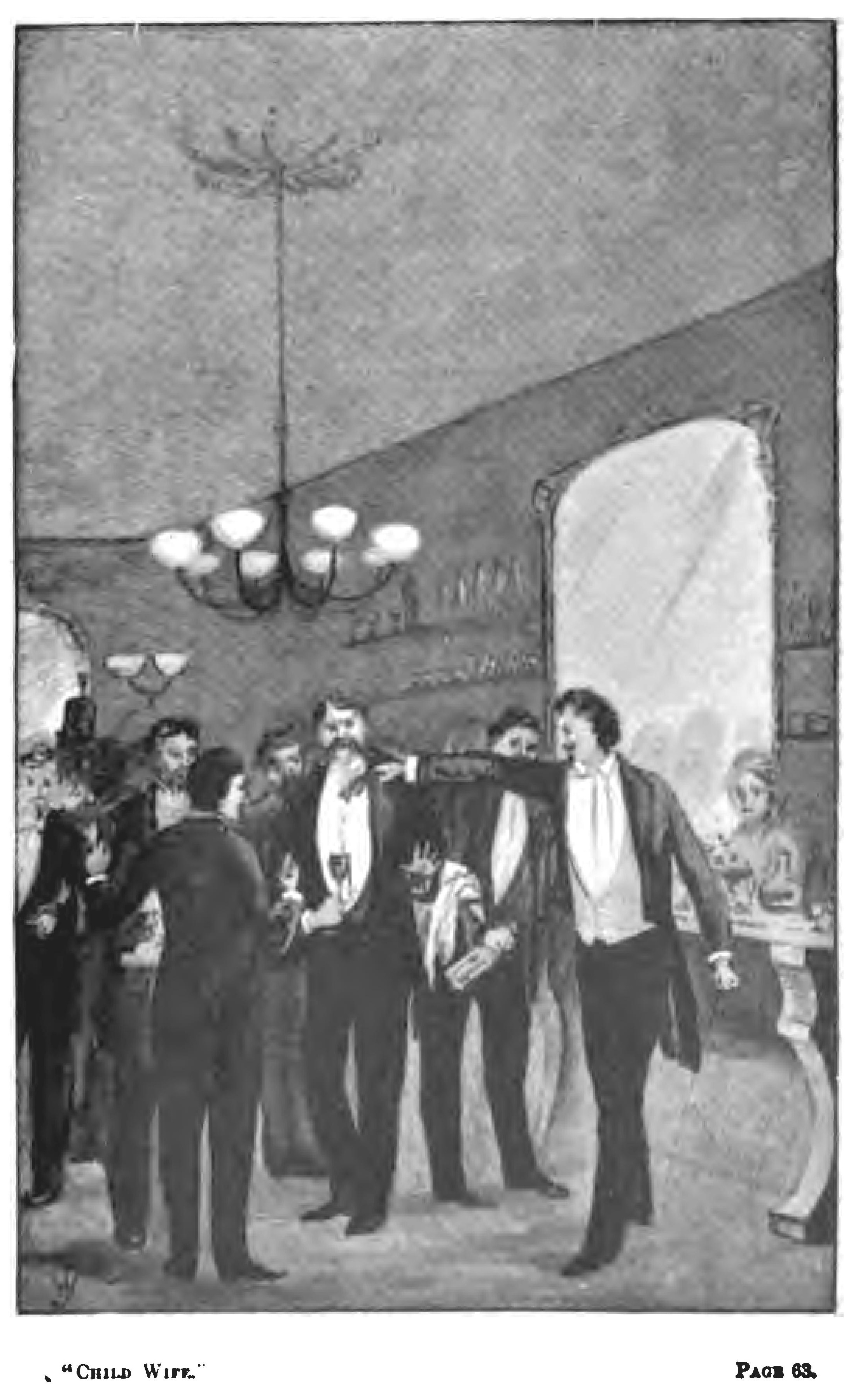
“It’s a lie!” cried Maynard, suddenly pulling off his kid glove, and drawing it sharply across his traducer’s cheek. “A lie, Dick Swinton! And if not responsible for originating it, as you say you shall be for giving it circulation. There never was such a report, and you know it, scoundrel!”
Swinton’s cheek turned white as the glove that had smitten it; but it was the pallor of fear rather than anger.
“Aw—indeed! you there, Mr Maynard! Well—well; I’m sure—you say it’s not twue. And you’ve called me a scoundwell! And yaw stwuck me with yaw glove?”
“I shall repeat the word and the blow. I shall spit in your face, if you don’t retract!”
“Wetwact!”
“Bah! there’s been enough pass between us. I leave you time to reflect. My room is 209, on the fourth storey. I hope you’ll find a friend who won’t be above climbing to it. My card, sir!”
Swinton took the card, and with fingers that showed trembling gave his own in exchange. While with a scornful glance, that comprehended both him and his acolytes, the other faced back to the bar, coolly completed his potation, and, without saying another word, reascended the stairway.
“You’ll meet him, won’t you?” asked the older of Swinton’s drinking companions.
It was not a very correct interrogatory; but, perhaps, judging by what had passed, the man who put it may have deemed delicacy superfluous.
“Of cawse—of cawse,” replied he of Her Majesty’s Horse Guards, without taking note of the rudeness. “Demmed awkward, too!” he continued, reflectingly. “I am here a stwanger—no fwend—”
“Oh, for that matter,” interrupted Lucas, the owner of the Newfoundland dog, “there need be no difficulty. I shall be most happy to act as your second.”
The man who thus readily volunteered his services was as arrant a poltroon as could have been found about the fashionable hostelry in which the conversation was taking place—not excepting Swinton himself. He, too, had good cause for playing principal in a duel with Captain Maynard. But it was safer to be second; and no man knew this better than Louis Lucas.
It would not be the first time for him to act in this capacity. Twice before had he done so, obtaining by it a sort of borrowed éclat that was mistaken for bravery. For all this he was in reality a coward; and though smarting under the remembrance of his encounter with Maynard, he had allowed the thing to linger without taking further steps. The quarrel with Swinton was therefore in good time, and to his hand.
“Either I, or my friend here,” he added.
“With pleasure,” assented the other.
“Thanks, gentlemen; thanks, both! Exceedingly kind of you! But,” continued Swinton in a hesitating manner, “I should be sowy to bwing either of you into my scwape. There are some of my old comwades in Canada, sarving with their wegiments. I shall telegwaph to them. And this fellaw must wait. Now, dem it! let’s dwop the subject, and take anothaw dwink.”
All this was said with an air of assumed coolness, of which not even the drinks already taken could cover the pretence. It was, in truth, but a subterfuge to gain time, and reflect upon some plan to escape without calling Maynard out.
There might be a chance, if left to himself; but once in the hands of another, there would be no alternative but to stand up.
These were the thoughts rapidly coursing through Mr Swinton’s mind, while the fresh drinks were being prepared.
As the glass again touched his lips, they were white and dry; and the after-conversation between him and his picked-up acquaintances was continued on his part with an air of abstraction that told of a terrible uneasiness.
It was only when oblivious with more drink that he assumed his swagger; but an hour afterward, as he staggered upstairs, even the alcoholic “buzzing” in his brain did not hinder him from having a clear recollection of the encounter with the “demmed Iwishman!”
Once inside his own apartment, the air of the nobleman a as suddenly abandoned. So, too, the supposed resemblance in speech. His talk was now that of a commoner—intoxicated. It was addressed to his valet, still sitting up to receive him.
A small ante-chamber on one side was supposed to be the sleeping-place of this confidential servant. Judging by the dialogue that ensued, he might be well called confidential. A stranger to the situation would have been surprised it listening to it.
“A pretty night you’ve made of it!” said the valet, speaking more in the tone of a master.
“Fact—fac—hic’p! you speak th’ truth, Frank! No—not pretty night. The very reverse—a d-damned ugly night.”
“What do you mean, you sot?”
“Mean—mee-an! I mean the g-gig-game’s up. ’Tis, by Jingo! Splend’d chance. Never have such ’nother. Million dollars! All spoiled—th’ infernal fella!”
“What fellow?”
“Who d’ye ’spose I’ve seen—met him in the ball—ball—bar-room—down below. Let’s have another drink! Drinks all round—who’s g-gig-goin’ drink?”
“Try and talk a little straighter! What’s this about?”
“Whas’t ’bout? What sh’d be about? Him—hic’p! ’bout him.”
“Him! who?”
“Who—who—who—why, Maynard. Of course you know Maynard? B’long to the Thirty—Thirty—Don’t reclect the number of regiment. No matter for that. He’s here—the c-c-confounded cur.”
“Maynard here!” exclaimed the valet, in a tone strange for a servant.
“B’shure he is! Straight as a trivet, curse him! Safe to spoil everything—make a reg’lar mucker of it.”
“Are you sure it was he?”
“Sure—sure! I sh’d think so. He’s give me good reason, c-curse ’im!”
“Did you speak to him?”
“Yes—yes.”
“What did he say to you?”
“Not much said—not much. It’s what he’s—what he’s done.”
“What?”
“Devil of a lot—yes—yes. Never mind now. Let’s go to bed, Frank. Tell you all ’bout in the morning. Game’s up. ’Tis by J-Jupiter!”
As if incapable of continuing the dialogue—much less of undressing himself—Mr Swinton staggered across to the bed; and, sinking down upon it, was soon snoring and asleep.
It might seem strange that the servant should lie down beside him, which he did. Not after knowing that the little valet was his wife! It was the amiable “Fan” who thus shared the couch of her inebriate husband.
Chapter Thirteen.
Challenging the Challenger.
“In faith, I’ve done a very foolish thing,” reflected the young Irishman, as he entered his dormitory, and flung himself into a chair. “Still there was no help for it. Such talk as that, even from a stranger like Dick Swinton, would play the deuce with me. Of course they don’t know him here; and he appears to be playing a great part among them; no doubt plucking such half-fledged pigeons as those with him below.
“Very likely he said something of the same to the girl’s mother—to herself? Perhaps that’s why I’ve been treated so uncourteously! Well, I have him on the hip now; and shall make him repent his incautious speeches. Kicked out of the British service! Lying cur, to have said it! To have thought of such a thing! And from what I’ve heard it’s but a leaf from his own history! This may have suggested it. I don’t believe he’s any longer in the Guards: else what should he be doing out here? Guardsmen don’t leave London and its delights without strong, and generally disagreeable, reasons. I’d lay all I’ve got he’s been disgraced. He was on the edge of it when I last heard of him.
“He’ll fight of course? He wouldn’t if he could help it—I know the sweep well enough for that. But I’ve given him no chance to get out of it. A kid glove across the face, to say nothing of a threat to spit in it—with a score of strange gentlemen looking on and listening! If ten times the poltroon he is, he dare not show the white feather now.
“Of course he’ll call me out; and what am I to do for a second? The three or four fellows I’ve scraped companionship with here are not the men—one of them. Besides, none of them might care to oblige me on such short acquaintance?
“What the deuce am I to do? Telegraph to the Count?” he continued, after a pause spent in reflecting. “He’s in New York, I know; and know he would come on at once. It’s just the sort of thing would delight the vieux sabreur, now that the Mexican affair is ended, and he’s once more compelled to sheathe his revolutionary sword. Come in! Who the deuce knocks at a gentleman’s door at this unceremonious hour?”
It was not yet 5 a.m. Outside the hotel could be heard carriage wheels rolling off with late roisterers, who had outstayed the ball.
“Surely it’s too soon for an emissary from Swinton? Come in!”
The door opening at the summons, discovered the night-porter of the hotel.
“Well! what want you, my man?”
“A gentleman wants you, sir.”
“Show him up!”
“He told me, sir, to give you his apologies for disturbing you at so early an hour. It’s because his business is very important.”
“Bosh! Why need he have said that?” Dick Swinton’s friend must be a more delicate gentleman than himself!
The last speech was in soliloquy, and not to the porter.
“He said, sir,” continued the latter, “that having come by the boat—”
“By the boat?”
“Yes, sir, the New York boat. She’s just in.”
“Yes—yes; I heard the whistle. Well?”
“That having come by the boat, he thought—he thought—”
“Confound it! my good fellow; don’t stay to tell me his thoughts secondhand. Where is he? Show him up here, and let him speak them for himself.”
“From New York?” continued Maynard, after the porter had disappeared. “Who of the Knickerbockers can it be? And what business of such importance as to startle a fellow from his sleep at half-past four in the morning—supposing me to have been asleep—which luckily I’m not Is the Empire city ablaze, and Fernando Wood, like a second Nero, fiddling in ruthless glee over its ruins? Ha! Roseveldt?”
“Maynard!”
The tone of the exchanged salutation told of a meeting unexpected, and after a period of separation. It was followed by a mutual embrace. Theirs was a friendship too fervent to be satisfied with the shaking of hands. Fellow campaigners—as friends—they had stood side by side under the hissing hailstorm of battle. Side by side had they charged up the difficult steep of Chapultepec, in the face of howitzers belching forth their deadly shower of shot—side by side fallen on the crest of the counterscarp, their blood streaming unitedly into the ditch.
They had not seen each other since. No wonder they should meet with emotions corresponding to the scenes through which they had passed.
Some minutes passed before either could find coherent speech. They only exchanged ejaculations. Maynard was the first to become calm.
“God bless you, my dear Count?” he said; “my grand instructor in the science of war. How glad I am to see you!”
“Not more than I to see you, cher camarade!”
“But say, why are you here? I did not expect you; though strange enough I was this moment thinking of you!”
“I’m here to see you—specially you!”
“Ah! For what, my dear Roseveldt?”
“You’ve said that I instructed you in the science of war. Be it so. But the pupil now excels his teacher—has gone far beyond him in fame. That’s why I’m here.”
“Explain yourself, Count!”
“Read this. It will save speech. You see it is addressed to yourself.”
Maynard took the sealed letter handed to him. It bore the superscription:
“Captain Maynard.”
Breaking it open, he read:
“The committee of German refugees in New York, in view of the late news from Europe, have hopes that freedom is not yet extinguished in their ancient fatherland. They have determined upon once more returning to it, and taking part in the struggle again begun in Baden and the Palatinate. Impressed by the gallantry displayed by you in the late Mexican war, with your protective kindness to their countrymen who served under you—and above all, your well-known devotion to the cause of liberty—they have unanimously resolved to offer you the leadership in this enterprise. While aware of its perils—as also of your courage to encounter them—they can promise you no reward save that of glory and a nation’s gratitude. To achieve this, they offer you a nation’s trust. Say, sir, are you prepared to accept it?”
Some half-dozen names were appended, at which Maynard simply glanced. He knew the men, and had heard of the movement.
“I accept,” he said, after a few seconds spent in reflection. “You can carry that answer back to the committee.”
“Carry back an answer! My dear Maynard, I come to carry you back.”
“Must I go directly?”
“This very day. The rising in Baden has begun, and you know revolutions won’t wait for any one. Every hour is important. You are expected back by the next boat. I hope there’s nothing to prevent it? What! There is something?”
“There is; something rather awkward.”
“Not a woman? No—no! You’re too much of a soldier for that.”
“No; not a woman.”
As Maynard said this a strange expression came over his countenance, as if he was struggling against the truth.
“No—no!” he continued, with a forced smile. “Not a woman. It’s only a man; indeed only a thing in the shape of one.”
“Explain, captain! Who, or what is he?”
“Well, it’s simply an affair. About an hour ago I slapped a fellow in the face.”
“Ha!”
“There’s been a ball to-night—in the hotel, here.”
“I know it. I met some of the people going away. Well?”
“There was a young lady—”
“I might have known that, too. Who ever heard of an affair without a lady, young or old, at the bottom of it? But excuse me for interrupting you.”
“After all,” said Maynard, apparently changing his tack, “I needn’t stay to tell you about the lady. She had little or nothing to do with it. It occurred in the bar-room after the ball was over, and she in her bed, I suppose.”
“Leave her to one side then, and let her sleep.”
“I had gone into this bar-room to take a drink, by way of night-cap, and was standing by the counter, when I heard some one making rather free use of my name. Three men were close beside me, talking in a very fast style, and, as I soon discovered, about myself. They had been imbibing a good deal, and did not chance to see me.
“One of the three I had known in England, when we were both in the British service.
“The other two—Americans I suppose them—I had only seen for the first time some two days ago. Indeed, I had then a little difficulty with them, which I needn’t stay to trouble you about now; though I more than half expected to have had a challenge for that. It didn’t come, however; and you may guess what sort they are.
“It was my quondam acquaintance of the English army who was taking liberties with my character, in answer to inquiries the other two were putting to him.”
“What was he telling them?”
“No end of lies; the worst of them being that I had been kicked out of the British service! Of course it was also his last. After that—”
“After that you kicked him out of the bar-room. I fancy I can see you engaged in that little bit of foot practice!”
“I was not quite so rude as that. I only slashed him across the cheek with my glove, and then handed him my card.
“In truth, when you were announced I thought it was his friend, and not mine: though, knowing the man as I do, the idea of his sending a messenger so early rather surprised me.
“I’m glad you’ve come, Count. I was in a devil of a dilemma—being acquainted with nobody here who could have served me for a second. I suppose I can reckon upon you?”
“Oh, that of course,” answered the Count, with as much insouciance as if he had been only asked for a cigar. “But,” he added, “is there no way by which this meeting may be avoided?”
It was not any craven thought that dictated the interrogatory. A glance at Count Roseveldt would have satisfied any one of this.
Full forty years of age, with moustache and whisker just beginning to show steel-grey, of true martial bearing, he at once impressed you as a man who had seen much practice in the terrible trade of the duello. At the same time there was about him no air either of the bully or bravado. On the contrary, his features were marked by an expression of mildness—on occasions only changing to stern.
One of these changes came over them, as Maynard emphatically made answer: “No.”
“Sacré!” he said, hissing out a French exclamation. “How provoking! To think such an important matter—the liberty of all Europe—should suffer from such a paltry mischance! It has been well said that woman is the curse of mankind!
“Have you any idea,” he continued, after this ungallant speech, “when the fellow is likely to send in?”
“Not any. Some time during the day, I take it. There can be no cause for delay that I can think of. Heaven knows, we’re near enough each other, since both are stopping in the same hotel.”
“Challenge some time during the day. Shooting, or whatever it may be, to-morrow morning. No railway from here, and boat only once a day. Leaves Newport at 7 p.m. A clear twenty-four hours lost! Sac-r-ré!”
These calculations were in soliloquy; Count Roseveldt, as he made them, torturing his great moustache, and looking at some imaginary object between his feet Maynard remained silent.
The Count continued his sotto voce speeches, now and then breaking into ejaculations delivered in a louder tone, and indifferently in French, English, Spanish, and German.
“By heavens, I have it?” he at length exclaimed, at the same time starting to his feet. “I have it, Maynard! I have it?”
“What has occurred to you, my dear Count?”
“A plan to save time. We’ll go back to New York by the evening’s boat!”
“Not before fighting! I presume you include that in your calculations?”
“Of course I do. We’ll fight, and be in time all the same.”
If Maynard had been a man of delicate susceptibilities he might have reflected on the uncertainty of such a programme.
He merely asked for its explanation.
“Perfectly simple,” responded the Count. “You are to be the challenged party, and, of course, have your choice both of time and weapons. No matter about the weapons. It’s the time that concerns us so.”
“You’d bring off the affair to-day?”
“Would, and will.”
“How if the challenge arrive too late—in the evening say?”
“Carrambo!—to use our old Mexican shibboleth—I’ve thought of that—of everything. The challenge shall come early—must come, if your adversary be a gentleman. I’ve hit upon a plan to force it out of him in good time.”
“Your plan?”
“You’ll write to him—that is, I shall—to say you are compelled to leave Newport to-night; that a matter of grand importance has suddenly summoned you away. Appeal to him, as a man of honour, to send in his invitation at once, so that you may arrange a meeting. If he don’t do so, by all the laws of honour you will be free to go, at any hour you may name.”
“That will be challenging the challenger. Will it be correct?”
“Of course it will. I’ll be answerable. It’s altogether en règle—strictly according to the code.”
“I agree to it, then.”
“Enough! I must set about composing the letter. Being a little out of the common, it will require some thought. Where are your pens and ink?”
Maynard pointed to a table, on which were the writing materials.
Drawing up a chair, Roseveldt seated himself beside it.
Then, taking hold of a pen, and spreading a sheet of “cream laid” before him, he proceeded to write the premonitory epistle, scarce consulting the man most interested in what it might contain. Thinking of the revolution in Baden, he was most anxious to set free his friend from the provoking compromise, so that both might bear the flag of freedom through his beloved fatherland.
The note was soon written; a copy carefully taken, folded up, and shoved into an envelope. Maynard scarce allowed the opportunity of reading it!
It had to be addressed by his directions, and was sent to Mr Richard Swinton, just as the great gong, screaming through the corridors of the Ocean House, proclaimed to its guests the hour for déjeuner à la fourchette.
Chapter Fourteen.
A Request for a Quick Fight.
The first shriek of the gong startled Mr Swinton from his slumber.
Springing out of his couch, he commenced pacing the floor with an unsteady stride.
He was in the dress he had worn at the ball, the straw kids excepted.
But he was not thinking either of dress or toilet. His mind was in an agony of excitement that precluded all thoughts about personal appearance. Despite the ringing in his brain, it was clear enough for him to recall the occurrences of the night. Too well did he remember to what he had committed himself.
His apprehensions were of a varied character. Maynard knew him of old; and was perhaps acquainted with his later, and less creditable, history. His character would be made known; and his grand scheme frustrated.
But this was nothing compared with the other matter upon his mind—the stain upon his cheek—that could only be wiped out at the risk of losing his life.
He shivered, as he went staggering around the room. His discomposure was too plain to escape the notice of his wife. In his troubled look she read some terrible tale.
“What is it, Dick?” she asked, laying her hand upon his shoulder. “There’s been something unpleasant. Tell me all about it.”
There was a touch of tenderness in the tone. Even the scarred heart of the “pretty horse-breaker” had still left in it some vestige of woman’s divine nature.
“You’ve had a quarrel with Maynard?” she continued. “Is that it?”
“Yes!” hoarsely responded the husband. “All sorts of a quarrel.”
“How did it arise?”
In speech not very coherent—for the alcoholic tremor was upon him—he answered the question, by giving an account of what had passed—not even concealing his own discreditable conduct in the affair.
There was a time when Richard Swinton would not have so freely confessed himself to Frances Wilder. It had passed, having scarce survived their honeymoon. The close companionship of matrimony had cured both of the mutual hallucination that had made them man and wife. The romance of an unhallowed love had died out; and along with it what little respect they might have had for one another’s character. On his side so effectually, that he had lost respect for himself, and he took but little pains to cover the uneasiness he felt—in the eyes of his wedded wife—almost confessing himself a coward.
It would have been idle for him to attempt concealing it. She had long since discovered this idiosyncracy in his character—perhaps more than all else causing her to repent the day when she stood beside him at the altar. The tie that bound her to him now was but that of a common danger, and the necessity of self-preservation.
“You expect him to send you a challenge?” said she, a woman, and of course ignorant of the etiquette of the duel.
“No,” he replied, correcting her. “That must come from me—as the party insulted. If it had only been otherwise—” he went on muttering to himself. “What a mistake not to pitch into him on the spot! If I’d only done that, the thing might have ended there; or at all events left me a corner to creep out of.”
This last was not spoken aloud. The ex-guardsman was not yet so grandly degraded as to make such a humiliating confession to his wife. She might see, but not hear it.
“No chance now,” he continued to reflect. “Those two fellows present. Besides a score of others, witnesses to all that passed; heard every word; saw the blow given; and the cards exchanged. It will be the talk of the hotel! I must fight, or be for ever disgraced!”
Another turn across the room, and an alternative presented itself. It was flight!
“I might pack up, and clear out of the place,” pursued he, giving way to the cowardly suggestion. “What could it matter? No one here knows me as yet; and my face might not be remembered. But my name? They’ll get that. He’ll be sure to make it known, and the truth will meet me everywhere! To think, too, of the chance I should lose—a fortune! I feel sure I could have made it all night with this girl. The mother on my side already! Half a million of dollars—the whole one in time! Worth a life of plotting to obtain—worth the risk of a life; ay, of one’s soul! It’s lost if I go; can be won if I only stay! Curse upon my tongue for bringing me into this scrape! Better I’d been born dumb?”
He continued to pace the floor, now endeavouring to fortify his courage to the point of fighting, and now giving way to the cowardly instincts of his nature.
While thus debating with himself, he was startled by a tapping at the door.
“See who it is, Fan,” he said in a hurried whisper. “Step outside; and whoever it is, don’t let them look in.”
Fan, still in her disguise of valet, glided to the door, opened it, and looked out.
“A waiter, I suppose, bringing my boots or shaving-water?”
This was Mr Swinton’s reflection.
It was a waiter, but not with either of the articles named. Instead, he was the bearer of an epistle.
It was delivered to Fan, who stood in the passage, keeping the door closed behind her. She saw that it was addressed to her husband. It bore no postmark, and appeared but recently written.
“Who sent it?” was her inquiry, couched in a careless tone.
“What’s that to you, cock-sparrow?” was the rejoinder of the hotel-servant; inclined toward chaffing the servitor of the English gentleman—in his American eyes, tainted with flunkeyism.
“Oh, nothing!” modestly answered Frank.
“If you must know,” said the other, apparently mollified, “it’s from a gentleman who came by this morning’s boat—a big, black fellow, six feet high, with moustaches at least six inches long. I guess your master will know all about him. Anyhow, that’s all I know.”
Without more words, the waiter handed over the letter, and took himself off to the performance of other dudes.
Fan re-entered the room, and handed the epistle to her husband.
“By the morning boat?” said Swinton. “From New York? Of course, there’s no other. Who can have come thence, that’s got any business with me?”
It just flashed across his mind that acceptances given in England could be transmitted to America. It was only a question of transfer, the drawer becoming endorser. And Richard Swinton knew that there were lawyers of the tribe of Levi, who had transactions in this kind of stamped paper, corresponding with each other across the Atlantic.
Was it one of his London bills forwarded to the American correspondent, ten days before the day of dishonour?
Such was the suspicion that came into his mind while listening to the dialogue outside. And it remained there, till he had torn open the envelope, and commenced reading.
He read as follows:
“Sir,—As the friend of Captain Maynard, and referring to what occurred between him and you last night, I address you.
“Circumstances of an important—indeed, peremptory—character require his presence elsewhere, necessitating him to leave Newport by the boat which takes departure at 8 p.m. Between this and then there are twelve hours of daylight, enough to settle the trifling dispute between you. Captain Maynard appeals to you, as a gentleman, to accept his offer for quick satisfaction. Should you decline it, I, speaking as his friend, and believing myself tolerably well acquainted with the code of honour, shall feel justified in absolving him from any further action relating to the affair, and shall be prepared to defend him against any aspersions that may arise from it.
“Until 7:30 p.m.—allowing half an hour to reach the boat—your friend will find me in Captain Maynard’s room.
“Yours obediently,—
“Rupert Roseveldt.
“Count of the Austrian Empire.”
Twice, without stopping, did Swinton peruse this singular epistle.
Its contents, instead of adding to the excitement of his spirit, seemed to have the effect of tranquillising it.
Something like a smile of satisfaction stole over his countenance, white engaged in the second reading.
“Fan?” he said, slipping the letter into his pocket, and turning hastily toward his wife, “ring the bell, and order brandy and soda—some cigars, too. And, hark ye, girl: for your life, don’t let the waiter put his nose inside the room, or see into it. Take the tray from him, as he comes to the door. Say to him, besides, that I won’t be able to go down to breakfast—that I’ve been indulging last night, and am so-so this morning. You may add that I’m in bed. All this in a confidential way, so that he may believe it. I have my reasons—good reasons. So have a care, and don’t make a mull of it.”
Silently obedient, she rang the bell, which was soon answered by a knock at the door.
Instead of calling “Come in?” Fan, standing ready inside the room, stepped out—closing the door after her, and retaining the knob in her hand.
He who answered was the same jocular fellow who had called her a cock-sparrow.
“Some brandy and soda, James. Ice, of course. And stay—what else? Oh! some cigars. You may bring half a dozen. My master,” she added, before the waiter could turn away, “don’t intend going down to breakfast.”
This with a significant smile, that secured James for a parley.
It came off; and before leaving to execute the order, he was made acquainted with the helpless condition of the English gent who occupied Number 149.
In this there was nothing to surprise him. Mr Swinton was not the only guest under his charge, who on that particular morning required brandy and soda. James rather rejoiced at it, as giving him claim for an increased perquisite.
The drink was brought up, along with the cigars, and taken in as directed; the gentleman’s servant giving the waiter no opportunity to gratify curiosity by a sight of his suffering master. Even had the door been left open, and James admitted to the room, he would not have gone out of it one whit the wiser. He could only have told that Frank’s master was still abed, his face buried under the bedclothes!
To make sure against surprise, Mr Swinton had assumed this interesting attitude; and for reasons unknown even to his own valet. On the rebolting of the door, he flung off the coverlet, and once more commenced treading the carpet.
“Was it the same waiter?” he asked; “he that brought the letter?”
“It was—James—you know?”
“So much the better. Out with that cork, Fan! I want something to settle my nerves, and make me fit for a good think?”
While the wire was being twisted from the soda bottle, he took hold of a cigar, bit off the end, lit, and commenced smoking it.
He drank the brandy and soda at a single draught; in ten minutes after ordering another dose, and soon again a third.
Several times he re-read Roseveldt’s letter—each time returning it to his pocket, and keeping its contents from Fan.
At intervals he threw himself upon the bed, back downward, the cigar held between his teeth; again to get up and stride around the room with the impatience of a man waiting for some important crisis—doubtful whether it may come.
And thus did Mr Swinton pass the day, eleven long hours of it, inside his sleeping apartment!
Why this manoeuvring, seemingly so eccentric?
He alone knew the reason. He had not communicated it to his wife—no more the contents of the lately received letter—leaving her to indulge in conjectures not very flattering to her lord and master.
Six brandies and sodas were ordered, and taken in with the same caution as the first. They were all consumed, and as many cigars smoked by him during the day. Only a plate of soup and a crust for his dinner—the dish that follows a night of dissipation. With Mr Swinton it was a day of dissipation, that did not end till 7:30 p.m.
At that hour an event occurred that caused a sudden change in his tactics—transforming him from an eccentric to a sane, if not sober, man!
Chapter Fifteen.
A Parting Glance.
Any one acquainted with the topography of the Ocean House and its adjuncts, knows that its livery-stable lies eastward—approached by a wide way passing round the southern end.
On that same evening, exactly at half-past seven o’clock, a carriage, issuing from the stable-yard, came rolling along toward the hotel. By the absence of livery coat, and the badgeless hat of the driver, the “hack” was proclaimed; while the hour told its errand. The steamer’s whistle, heard upon the far-off wharf, was summoning its passengers aboard; and the carriage was on its way to the piazza of the hotel to take up “departures.”
Instead of going round to the front, it stopped by the southern end—where there is also a set of steps and a double door of exit.
Two ladies, standing on the balcony above, saw the carriage draw up, but without giving it thought. They were engaged in a conversation more interesting than the sight of an empty hack, or even the speculation as to who was about to be taken by it to the boat. The ladies were Julia Girdwood and Cornelia Inskip; the subject of their converse the “difficulty” that had occurred between Captain Maynard and Mr Swinton, which, having been all day the talk of the hotel, had, of course, penetrated to their apartment.
Cornelia was sorry it had occurred. And, in a way, so also was Julia.
But in another way she was not. Secretly she took credit to herself for being the cause, and for this reason secretly felt gratification. It proved to her, so ran her surmises, that both these men must have had her in their mind as they quarrelled over their cups; though she cared less for the thoughts of Swinton than of Maynard.
As yet she was not so interested in either as to be profoundly anxious about the affair. Julia Girdwood’s was not a heart to be lost, or won, within the hour.
“Do you think they will have a duel?” asked the timid Cornelia, trembling as she put the inquiry.
“Of course they will,” responded the more daring Julia. “They cannot well get out of it—that is, Mr Swinton cannot.”
“And suppose one of them should kill the other?”
“And suppose they do—both of them—kill one another? It’s no business of ours.”
“Oh, Julia! Do you think it is not?”
“I’m sure it isn’t. What have we got to do with it? I should be sorry, of course, about them, as about any other foolish gentlemen who see fit to take too much drink. I suppose that’s what did it.”
She only pretended to suppose this, as also her expressed indifference about the result.
Though not absolutely anxious, she was yet far from indifferent. It was only when she reflected on Maynard’s coolness to her at the close of the ball, that she endeavoured to feel careless about the consequences.
“Who’s going off in this carriage?” she asked, her attention once more drawn to it by the baggage being brought out.
The cousins, leaning over the balustrade, looked below. Lettered upon a leathern trunk, that had seen much service, they made out the name, “CAPTAIN MAYNARD,” and underneath the well-known initials, “U.S.A.”
Was it possible? Or were they mistaken? The lettering was dim, and at a distance. Surely they were mistaken?
Julia remained with eyes fixed upon the portmanteau. Cornelia ran to her room to fetch a lorgnette. But before she returned with it, the instrument was no longer needed.
Miss Girdwood, still gazing down, saw Captain Maynard descend the steps of the hotel, cross over to the carriage, and take his seat inside it.
There was a man along with him, but she only gave this man a glance. Her eyes were upon the ex-officer of Mexican celebrity, her rescuer from the perils of the sea.
Where was he going? His baggage and the boat-signal answered this question.
And why? For this it was not so easy to shape a response.
Would he look up?
He did; on the instant of taking his seat within the hack.
Their eyes met in a mutual glance, half tender, half reproachful—on both sides interrogatory.
There was no time for either to become satisfied about the thoughts of the other. The carriage whirling away, parted two strange individuals who had come oddly together, and almost as oddly separated—parted them, perhaps for ever!
There was another who witnessed that departure with perhaps as much interest as did Julia Girdwood, though with less bitterness. To him it was joy: for it is Swinton of whom we speak.
Kneeling at the window of his room, on the fourth storey—looking down through the slanted laths of the Venetians—he saw the hack drive up, and with eager eyes watched till it was occupied. He saw also the two ladies below; but at that moment he had no thoughts for them.
It was like removing a millstone from his breast—the relief from some long-endured agony—when Maynard entered the carriage; the last spasm of his pain passing, as the whip cracked, and the wheels went whirling away.
Little did he care for that distraught look given by Julia Girdwood; nor did he stay to listen whether it was accompanied by a sigh.
The moment the carriage commenced moving, he sprang to his feet, turned his back upon the window, and called out:
“Fan!”
“Well, what now?” was the response from his pretended servant.
“About this matter with Maynard. It’s time for me to call him out. I’ve been thinking all day of how I can find a second.”
It was a subterfuge not very skilfully conceived—a weak, spasmodic effort against absolute humiliation in the eyes of his wife.
“You’ve thought of one, have you?” interrogated she, in a tone almost indifferent.
“I have.”
“And who, pray?”
“One of the two fellows I scraped acquaintance with yesterday at dinner. I met them again last night. Here’s his name—Louis Lucas.”
As he said this he handed her a card.
“What do you want me to do with it?”
“Find out the number of his room. The clerk will tell you by your showing the card. That’s all I want now. Stay! You may ask, also, if he’s in.”
Without saying a word she took the card, and departed on her errand. She made no show of alacrity, acting as if she were an automaton.
As soon as she had passed outside, Swinton drew a chair to the table, and, spreading out a sheet of paper, scribbled some lines upon it.
Then hastily folding the sheet, he thrust it inside an envelope, upon which he wrote the superscription:
“Louis Lucas, Esq.”
By this time his messenger had returned, and announced the accomplishment of her errand. Mr Lucas’s room was Number 90, and he was “in.”
“Number 90. It’s below, on the second floor. Find it, Fan, and deliver this note to him. Make sure you give it into his own hands, and wait till he reads it. He will either come himself, or send an answer. If he returns with you, do you remain outside, and don’t show yourself till you see him go out again.”
For the second time Fan went forth as a messenger.
“I fancy I’ve got this crooked job straight,” soliloquised Swinton, as soon as she was out of hearing. “Even straighter than it was before. Instead of spoiling my game, it’s likely to prove the trump card. What a lucky fluke it is! By the way, I wonder where Maynard can be gone, or what’s carried him off in such a devil of a hurry? Ha! I think I know now. It must be something about this that’s in the New York papers. These German revolutionists, chased out of Europe in ’48, who are getting up an expedition to go back. Now I remember, there was a count’s name mixed up with the affair. Yes—it was Roseveldt! This must be the man. And Maynard? Going along with them, no doubt. He was a rabid Radical in England. That’s his game, is it? Ha! ha! Splendid, by Jove! Playing right into my hands, as if I had the pulling of the strings! Well, Fan! Have you delivered the note?”
“I have.”
“What answer? Is he coming?”
“He is.”
“But when?”
“He said directly. I suppose that’s his step in the passage?”
“Slip out then. Quick—quick!”
Without protest the disguised wife did as directed, though not without some feeling of humiliation at the part she had consented to play.
Chapter Sixteen.
A Safe Challenge.
From the time of the hack’s departure, till the moment when the valet was so hastily sent out of the room, Mr Swinton had been acting as a man in full possession of his senses. The drink taken during the day had but restored his intellect to its usual strength; and with a clear brain he had written the note inviting Mr Louis Lucas to an interview. He had solicited this interview in his own apartment—accompanying the request with an apology for not going to that of Mr Lucas. The excuse was that he was “laid up.”
All this he could have done in a steady hand, and with choice diction; for Richard Swinton was neither dunce nor ignoramus.
Instead, the note was written in scribble, and with a chaotic confusion of phraseology—apparently the production of one suffering from the “trembles.”
In this there was a design; as also, in the behaviour of Mr Swinton, when he heard the footfall of his expected visitor coming along the corridor in the direction of his room. His action was of the most eccentric kind—as much so as any of his movements during the day.
It might have been expected that the ci-devant habitué of the Horse Guards, in conformity with past habits, would have made some attempt to arrange his toilet for the reception of a stranger. Instead, he took the opposite course; and while the footsteps of Mr Lucas were resounding through the gallery, the hands of Mr Swinton were busy in making himself as unpresentable as possible.
Whipping off the dress-coat he had worn at the ball, and which in his distraction he had all day carried on his shoulders; flinging the waistcoat after, and then slipping his arms out of the braces; in shirt-sleeves and with hair dishevelled, he stood to await the incoming of his visitor. His look was that of one just awakened from the slumber of intoxication.
And this character—which had been no counterfeit in the morning—he sustained during the whole time that the stranger remained in his room.
Mr Lucas had no suspicion that the Englishman was acting. He was himself in just that condition to believe in its reality; feeling, and as he confessed, “seedy as the devil.” This was his speech, in return to the salutations of Swinton.
“Yas, ba Jawve! I suppose yaw do. I feel just the same way. Aw—aw—I must have been asleep for a week?”
“Well, you’ve missed three meals at least, and I two of them. I was only able to show myself at the supper-table.”
“Suppaw! Yaw don’t mean to say it’s so late as that?”
“I do indeed. Supper we call it in this country; though I believe in England it’s the hour at which you dine. It’s after eight o’clock.”
“Ba heavins! This is bad. I wemembaw something that occurred last night. Yaw were with me, were you not?”
“Certainly I was. I gave you my card.”
“Yas—yas. I have it. A fellaw insulted me—a Mr Maynard. If I wemembaw awight, he stwuck me in the face.”
“That’s true; he did.”
“Am I wight too in my wecollection that yaw, sir, were so vewy obliging as to say yaw would act for me as—as—a fwend?”
“Quite right,” replied the willing Lucas, delighted with the prospect of obtaining satisfaction for his own little private wrong, and without danger to himself. “Quite right. I’m ready to do as I said, sir.”
“Thanks, Mr Lucas! a world of thanks! And now there’s no time left faw fawther talking. By Jawve! I’ve slept so long as to be in danger of having committed myself! Shall I wite out the challenge, or would yaw pwefer to do it yawself? Yaw know all that passed, and may word it as yaw wish.”
“There need be no difficulty about the wording of it,” said the chosen second, who, from having acted in like capacity before, was fairly acquainted with the “code.”
“In your case, the thing’s exceedingly simple. This Mr or Captain Maynard, as he’s called, insulted you very grossly. I hear it’s the talk of the hotel. You must call upon him to go out, or apologise.”
“Aw, sawtingly. I shall do that. Wite faw me, and I shall sign.”
“Hadn’t you better write yourself? The challenge should be in your own hand. I am only the bearer of it.”
“Twue—twue! Confound this dwink. It makes one obwivious of everything. Of cawse I should wite it.”
Sitting down before the table, with a hand that showed no trembling, Mr Swinton wrote:
“Sir—Referring to our interview of last night, I demand from you the satisfaction due to a gentleman, whose honour you have outraged. That satisfaction must be either a meeting, or an ample apology. I leave you to take your choice. My friend, Mr Louis Lucas, will await your answer.
“Richard Swinton.”
“Will that do, think you?” asked the ex-guardsman, handing the sheet to his second.
“The very thing! Short, if not sweet. I like it all the better without the ‘obedient servant.’ It reads more defiant, and will be more likely to extract the apology. Where am I to take it? You have his card, if I mistake not. Does it tell the number of his room?”
“Twue—twue! I have his cawd. We shall see.”
Taking up his coat from the floor, where he had flung it; Swinton fished out the card. There was no number, only the name.
“No matter,” said the second, clutching at the bit of pasteboard. “Trust me to discover him. I’ll be back with his answer before you’ve smoked out that cigar.”
With this promise, Mr Lucas left the room.
As Mr Swinton sat smoking the cigar, and reflecting upon it, there was an expression upon his face that no man save himself could have interpreted. It was a sardonic smile worthy of Machiavelli.
The cigar was about half burned out, when Mr Lucas was heard hurrying back along the corridor.
In an instant after he burst into the room, his face showing him to be the bearer of some strange intelligence.
“Well?” inquired Swinton, in a tone of affected coolness. “What says our fellaw?”
“What says he? Nothing.”
“He has pwomised to send the answer by a fwend, I pwesume?”
“He has promised me nothing: for the simple reason that I haven’t seen him!”
“Haven’t seen him?”
“No—nor ain’t likely neither. The coward has ‘swartouted.’”
“Swawtuated?”
“Yes; G.T.T.—gone to Texas!”
“Ba Jawve! Mr Lucas; I don’t compwehend yaw?”
“You will, when I tell you that your antagonist has left Newport. Gone off by the evening boat.”
“Honaw bwight, Mr Lucas?” cried the Englishman, in feigned astonishment. “Shawley you must be jawking.”
“Not in the least, I assure you. The clerk tells me he paid his hotel bill, and was taken off in one of their hacks. Besides, I’ve seen the driver who took him, and who’s just returned. He says that he set Mr Maynard down, and helped to carry his baggage aboard the boat. There was another man, some foreign-looking fellow, along with him. Be sure, sir, he’s gone.”
“And left no message, no addwess, as to where I may find him?”
“Not a word, that I can hear of.”
“Ba Gawd?”
The man who had called forth this impassioned speech was at that moment upon the deck of the steamer, fast cleaving her track towards the ocean. He was standing by the after-guards, looking back upon the lights of Newport, that struggled against the twilight.
His eyes had become fixed on one that glimmered high up on the summit of the hill, and which he knew to proceed from a window in the southern end of the Ocean House.
He had little thought of the free use that was just then being made of his name in that swarming hive of beauty and fashion—else he might have repented the unceremonious haste of his departure.
Nor was he thinking of that which was carrying him away. His regrets were of a more tender kind: for he had such. Regrets that even his ardour in the sacred cause of Liberty did not prevent him from feeling.
Roseveldt, standing by his side, and observing the shadow on his face, easily divined its character.
“Come, Maynard!” said he, in a tone of banter, “I hope you won’t blame me for bringing you with me. I see that you’ve left something behind you!”
“Left something behind me!” returned Maynard, in astonishment, though half-conscious of what was meant.
“Of course you have,” jocularly rejoined the Count. “Where did you ever stay six days without leaving a sweetheart behind you? It’s true, you scapegrace!”
“You wrong me, Count. I assure you I have none—”
“Well, well,” interrupted the revolutionist, “even if you have, banish the remembrance, and be a man! Let your sword now be your sweetheart. Think of the splendid prospect before you. The moment your foot touches European soil, you are to take command of the whole student army. The Directory have so decided. Fine fellows, I assure you, these German students: true sons of Liberty—à la Schiller, if you like. You may do what you please with them, so long as you lead them against despotism. I only wish I had your opportunity.”
As he listened to these stirring words, Maynard’s eyes were gradually turned away from Newport—his thoughts from Julia Girdwood.
“It may be all for the best,” reflected he, as he gazed down upon the phosphoric track. “Even could I have won her, which is doubtful, she’s not the sort for a wife; and that’s what I’m now wanting. Certain, I shall never see her again. Perhaps the old adage will still prove true,” he continued, as if the situation had suggested it: “‘Good fish in the sea as ever were caught.’ Scintillations ahead, yet unseen, brilliant as those we are leaving behind us!”
Chapter Seventeen.
“The Coward!”
The steamer that carried Captain Maynard and his fortunes out of the Narraganset Bay, had not rounded Point Judith before his name in the mouths of many became a scorned word. The gross insult he had put upon the English stranger had been witnessed by a score of gentlemen, and extensively canvassed by all who had heard of it. Of course there would be a “call out,” and some shooting. Nothing less could be expected after such an affront.
It was a surprise, when the discovery came, that the insulter had stolen off; for this was the interpretation put upon it.
To many it was a chagrin. Not much was known of Captain Maynard, beyond that public repute the newspapers had given to his name, in connection with the Mexican war.
This, however, proved him to have carried a commission in the American army; and as it soon became understood that his adversary was an officer in that of England, it was but natural there should be some national feeling called forth by the affair. “After all,” said they, “Maynard is not an American!” It was some palliation of his supposed poltroonery that he had stayed all day at the hotel, and that his adversary had not sent the challenge till after he was gone.
But the explanation of this appeared satisfactory enough; and Swinton had not been slow in making it known. Notwithstanding some shame to himself, he had taken pains to give it a thorough circulation; supposing that no one knew aught of the communication he had received from Roseveldt.
And as no one did appear to know of it, the universal verdict was, that the hero of C—, as some of the newspapers pronounced him, had fled from a field where fighting honours might be less ostentatiously obtained.
There were many, however, who did not attribute his departure to cowardice, and who believed or suspected that there must have been some other motive—though they could not conceive what.
It was altogether an inexplicable affair; and had he left Newport in the morning, instead of the evening, he would have been called by much harder names than those that were being bestowed upon him. His stay at the hotel for what might be considered a reasonable time, in part protected him from vituperation.
Still had he left the field to Mr Swinton, who was elevated into a sort of half-hero by his adversary’s disgraceful retreat.
The lord incognito carried his honours meekly as might be. He was not without apprehension that Maynard might return, or be met again in some other corner of the world—in either case to call him to account for any triumphant swaggering. Of this he made only a modest display, answering when questioned:
“Confound the fellaw! He’s given me the slip, and I don’t knaw where to find him! It’s a demmed baw!”
The story, as thus told, soon circulated through the hotel, and of course reached that part of it occupied by the Girdwood family. Julia had been among the first who knew of Maynard’s departure—having herself been an astonished eye-witness of it.
Mrs Girdwood, only too glad to hear he had gone, cared but little about the cause. Enough to know that her daughter was safe from his solicitations.
Far different were the reflections of this daughter. It was only now that she began to feel that secret longing to possess the thing that is not to be obtained. An eagle had stooped at her feet—as she thought, submitting itself to be caressed by her. It was only for a moment. She had withheld her hand; and now the proud bird had soared resentfully away, never more to return to her taming!
She listened to the talk of Maynard’s cowardice without giving credence to it. She knew there must be some other cause for that abrupt departure; and she treated the slander with disdainful silence.
For all this, she could not help feeling something like anger toward him, mingled with her own chagrin.
Gone without speaking to her—without any response to that humiliating confession she had made to him before leaving the ball-room! On her knees to him, and not one word of acknowledgment!
Clearly he cared not for her.
The twilight had deepened down as she returned into the balcony, and took her stand there, with eyes bent upon the bay. Silent and alone, she saw the signal-light of the steamer moving like an ignis fatuus along the empurpled bosom of the water—at length suddenly disappearing behind the battlements of the Fort.
“He is gone?” she murmured to herself, heaving a deep sigh. “Perhaps never more to be met by me. Oh, I must try to forget him!”
Chapter Eighteen.
Down with the Despots!
Time was—and that not “long, long ago”—when the arrival of a European steamer at New York was an event, as was also the departure. There were only “Cunarders” that came and went once a fortnight; at a later period making the trip hebdomadally.
Any one who has crossed the Atlantic by the Cunard steamers need not be told that, in New York, their point of landing and leaving is upon the Jersey shore.
In the days when such things were “sensations,” a crowd used to collect at the Cunard wharf, attracted thither by the presence of the vast leviathan.
Now and then were occasions when the motive was different or rather the attraction—when, instead of the steamer, it was some distinguished individual aboard of her: prince, patriot, singer, or courtesan. Gay, unreflecting Gotham stays not to make distinction, honouring all kinds of notoriety alike; or at all events giving them an equal distribution of its curiosity.
One of these occasions was peculiar. It was a departure; the boat being the Cambria, one of the slowest, at the same time most comfortable, steamers on the “line.”
She has been long since withdrawn from it; her keel, if I mistake not, now ploughing the more tranquil waters of the Indian Ocean.
And her captain, the brave, amiable Shannon! He, too, has been transferred to another service, where the cares of steam navigation and the storms of the Atlantic shall vex him no more.
He is not forgotten. Reading these words, many hearts will be stirred up to remember him—true hearts—still beating in New York, still holding in record that crowd on the Jersey shore alongside the departing steamer.
Though assembled upon American soil, but few of the individuals composing it were American. The physiognomy was European, chiefly of the Teutonic type, though with an intermingling of the Latinic. Alongside the North German, with light-coloured skin and huge tawny moustache, stood his darker cousin of the Danube; and beside both the still swarthier son of Italy, with gleaming dark eyes, and thick chevelure of shining black. Here could be noted, too, a large admixture of Frenchmen, some of them still wearing the blouse brought over from their native land; most of them of that brave ouvrier class, who but the year before, and two years after, might have been seen resolutely defending the barricades of Paris.
Only here and there could be distinguished an American face, or a word spoken in the English language—the speaker being only a spectator who had chanced upon the spot.
The main body of the assemblage was composed of other elements—men who had come there out of motives quite apart from mere curiosity. There were women, too—young girls with flaxen hair and deep blue eyes, recalling their native Rhineland, with others of darker skin, but equally pretty faces, from the country of Corinne.
Most of the cabin-passengers—there are no others in a Cunarder—had ascended to the upper deck, as is usual at the departure of a steamer. It was but a natural desire of all to witness the withdrawal of the stage-plank—the severance of that last link binding them to a land they were leaving with varied emotions.
Despite their private thoughts, whether of joy or sorrow, they could not help scanning with curiosity that sea of faces spread out before them upon the wharf.
Standing in family parties over the deck, or in rows leaning against the rail, they interrogated one another as to the cause of the grand gathering, as also the people who composed it.
It was evident to all that the crowd was not American; and equally so, that not any of them were about to embark upon the steamer. There was no appearance of baggage, though that might have been aboard. But most of them were of a class not likely to be carried by a Cunarder. Besides, there were no signs of leave-taking—no embracing or hand-shaking, such as may be seen when friends are about to be separated by the sea. For this they were on the wrong side of the Atlantic.
They stood in groups, close touching; the men smoking cigars, many of them grand meerschaum pipes, talking gravely to one another, or more jocosely to the girls—a crowd earnest, yet cheerful.
It was plain, too, the steamer was not their attraction. Most of them faced from her, casting interrogative glances along the wharf, as if looking for something expected to appear to them in this direction.
“Who are they?” was the question passed round among the passengers.
A gentleman who appeared specially informed—there is always one such in an assemblage—vouchsafed the desired information.
“They’re the refugees,” he said. “French, Germans, Poles, and what not, driven over here by the late revolutions in Europe.”
“Are they going back again?” inquired one who wanted further information.
“Some of them are, I believe,” answered the first speaker. “Though not by the steamer,” he added. “The poor devils can’t afford that.”
“Then why are they here?”
“They have some leaders who are going. One of them, a man named Maynard, who made some figure in the late Mexican war.”
“Oh, Captain Maynard! But he’s not one of them! He isn’t a foreigner.”
“No. But the men he commanded in Mexico were, most of them! That’s why they have chosen him for their leader.”
“Captain Maynard must be a fool,” interposed a third speaker. “The rising reported in Europe has no chance of success. He’ll only get his neck into a halter. Are there any Americans taking part in the movement?”
He of supposed special information guessed not.
He guessed correctly, though it was a truth not over creditable to his country—which, by his speech, could be no other than the “States.”
At that crisis, when filibustering might have been of some service to the cause of European freedom, the only American who volunteered for it was Maynard; and he was an American-Irishman! Still, to this great country—to a residence among its people, and a study of its free institutions—was he indebted for the inspiration that had made him what he was—a lover of Liberty.
Among those listening to the conversation was a group of three individuals: a man of more than fifty years of age, a girl of less than fourteen, and a woman whose summers and winters might number about midway between.
The man was tall, with an aspect of the kind usually termed aristocratic. It was not stern; but of that mild type verging upon the venerable—an expression strengthened by hair nearly white, seen under the selvedge of his travelling-cap.
The girl was an interesting creature. She was still but a mere child and wearing the dress of one—a gown sleeveless, and with short skirt—the hair hanging loose over her shoulders.
But under the skirt were limbs of a tournure that told of approaching puberty; while her profuse locks, precious on account of their rich colour, appeared to call for pins and a comb.
Despite the difficulty of comparing the features of a man of fifty and a child of fourteen, there was enough resemblance between these two to give the idea of father and daughter. It was confirmed by the relative position in which they stood; he holding her paternally by the hand.
Between them and the woman the relationship was of quite a different nature, and needed only a glance to make it known. The buff complexion of the latter, with the “white turban” upon her head, told her to be a servant.
She stood a little behind them.
The man alone appeared to heed what was being said; the girl and servant were more interested in the movements of the people upon the wharf.
The brief conversation ended, he approached the original speaker with the half-whispered question:
“You say there are no Americans in this movement. Is Captain Maynard not one?”
“I guess not,” was the reply. “He’s been in the American army; but I’ve heard say he’s Irish. Nothing against him for that.”
“Of course not,” answered the aristocratic-looking gentleman. “I merely asked out of curiosity.”
It must have been a strong curiosity that caused him, after retiring a little, to take out his note-book, and enter in it a memorandum, evidently referring to the revolutionary leader.
Furthermore, the information thus received appeared to have increased his interest in the crowd below.
Dropping the hand of his daughter, and pressing forward to the rail, he watched its evolutions with eagerness.
By this time the assemblage had warmed into a more feverish state of excitement. Men were talking in a louder strain, with more rapid gesticulations—some pulling out their watches, and looking impatiently at the time. It was close upon twelve o’clock—the hour of the steamer’s starting. She had already sounded the signal to get aboard.
All at once the loud talk ceased, the gesticulation was suspended, and the crowd stood silent, or spoke only in whispers. A spark of intelligence had drifted mysteriously amongst them.
It was explained by a shout heard afar off, on the outer edge of the assemblage.
“He is coming?”
The shout was taken up in a hundred repetitions, and carried on to the centre of the mass, and still on to the steamer.
It was succeeded by a grand huzza, and the cries: “Nieder mit dem tyrannen!” ”À bas les tyrants! Vive la République!”
Who was coming? Whose advent had drawn forth that heart-inspiring hail—had elicited those sentiments of patriotism simultaneously spoken in almost every language of Europe?
A carriage came forward upon the wharf. It was only a common street hack that had crossed in the ferryboat. But men gave way for it with as much alacrity as if it had been a grand gilded chariot carrying a king!
And those men far more. Ten, twenty times quicker, and a thousand times more cheerfully, did they spring out of its way. Had there been a king inside it, there would have been none to cry, “God bless His Majesty!” and few to have said, “God help him!”
A king in that carriage would have stood but slight chance of reaching the steamer in safety.
There were two inside it—a man of nigh thirty, and one of maturer age. They were Maynard and Roseveldt.
It was upon the former all eyes were fixed, towards whom all hearts were inclining. It was his approach had called forth that cry: “He is coming?”
And now that he had come, a shout was sent from the Jersey shore, that echoed along the hills of Hoboken, and was heard in the streets of the great Empire City.
Why this wonderful enthusiasm for one who belonged neither to their race nor their country? On the contrary, he was sprung from a people to them banefully hostile!
It had not much to do with the man. Only that he was the representative of a principle—a cause for which most of them had fought and bled, and many intended fighting, and, if need be, bleeding again. He was their chosen chief, advancing toward the van, flinging himself forward into the post of peril—for man’s and liberty’s sake, risking the chain and the halter. For this was he the recipient of such honours.
The carriage, slowly working its way through the thick crowd, was almost lifted from its wheels. In their enthusiastic excitement those who surrounded it looked as if they would have raised it on their shoulders and carried it, horses included, up the staging of the steamer.
They did this much for Maynard. Strong-bearded men threw their arms around him, kissing him as if he had been a beautiful girl, while beautiful girls clasped him by the hand, or with their kerchiefs waved him an affectionate farewell.
A colossus, lifting him from his feet, transported him to the deck of the steamer, amidst the cheers of the assembled multitude.
And amidst its cheers, still continued, the steamer swung out from the wharf.
“It is worth while to be true to the people,” said Maynard, his breast glowing with proud triumph, as he heard his name rise above the parting hurrah.
He repeated the words as the boat passed the Battery, and he saw the German Artillery Corps—those brave scientific soldiers who had done so much for their adopted land—drawn up on the esplanade of Castle Garden.
And once again, as he listened to their farewell salvo, drowning the distant cheers sent after him across the widening water.
Chapter Nineteen.
Blanche and Sabina.
On parting from the pier most of the passengers forsook the upper deck, and went scattering to their state-rooms.
A few remained lingering above; among them the gentleman to whom belonged the golden-haired girl, and the servant with skin of kindred colour.
He did not stay, as one who takes a leaving look at his native land. It was evidently not his. In his own features, and those of the child held in his hand, there was an unmistakable expression of “Englishism,” as seen in its nobler type.
The coloured domestic, more like America, was still not of the “States.” Smaller and more delicate features, with a peculiar sparkle of the eye, told of a West Indian origin—a negress for her mother, with a white man, perhaps Frenchman or Spaniard, for her father.
Any doubts about the gentleman’s nationality would have been dispelled by listening to a brief dialogue that soon after occurred between him and a fourth personage who appeared upon the scene.
This last was a young fellow in dark coat and trousers, the coat having flap-pockets outside. The style betokened him a servant—made further manifest by the black leathern cockade upon his hat.
He had just come from below.
Stepping up to the gentleman, and giving the unmistakable salute, he pronounced his master’s name:
“Sir George!”
“What is it, Freeman?”
“They are stowing the luggage between decks, Sir George; and want to know what pieces your excellency wishes to be kept for the state-rooms. I’ve put aside the black bag and the yellow portmanteau, and the large one with Miss Blanche’s things. The bullock trunk? Is it to go below, Sir George?”
“Why, yes—no. Stay! What a bother! I must go down myself. Sabina! keep close by the child. Here, Blanche! you can sit upon this cane seat; and Sabina will hold the umbrella over you. Don’t move away from here till I come back.”
Sir George’s assiduous care may be understood, by saying that Blanche was his daughter—his only child.
Laying hold of the brass baluster-rail, and sliding his hand along it; he descended the stair, followed by Freeman.
Blanche sat down as directed; the mulatto opening a light silk umbrella and holding it over her head. It was not raining; only to protect her from the sun.
Looking at Blanche, one could not wonder at Sir George being so particular. She was a thing to be shielded. Not that she appeared of delicate health, or in any way fragile. On the contrary, her form showed strength and rotundity unusual for a girl of thirteen. She was but little over it.
Perhaps it was her complexion he was thinking of. It certainly appeared too precious to be exposed to the sun.
And yet the sun had somewhere played upon, without spoiling it. Rather was it improved by the slight embrowning, as the bloom enriches the skin of the apricot. He seemed to have left some of his rays amidst the tresses of her hair, causing them to shine like his own glorious beams.
She remained upon the seat where her father had left her. The position gave her a fine view of the bay and its beautiful shores, of Staten Island and its villas, picturesquely placed amidst groves of emerald green.
But she saw, without observing them. The ships, too, swept past unobserved by her; everything, even the objects immediately around her upon the deck of the steamer. Her eyes only turned toward one point—the stairway—where people were ascending, and where her father had gone down.
And looking that way, she sat silent, though not abstracted. She was apparently watching for some one to come up.
“Miss Blanche,” said the mulatto, observing this, “you no need look, you fader not back for long time yet. Doan you ’member in dat Wes’ Indy steamer how much trouble dem baggages be? It take de governor great while sort ’em.”
“I’m not looking for father,” responded the child, still keeping her eyes sternward.
“Who den? You ben tinkin’ ’bout somebody.”
“Yes, Sabby, I’m thinking of him. I want to see how he looks when near. Surely he will come up here?”
“Him! Who you ’peak’ ’bout, Miss Blanche? De cap’in ob the ship?”
“Captain of the ship! Oh, no, no! That’s the captain up there. Papa told me so. Who cares to look at an old fellow like that?”
While speaking, she had pointed to Skipper Shannon, seen pacing upon the “bridge.”
“Den who you mean?” asked the perplexed Sabina.
“Oh, Sabby! sure you might know.”
“’Deed Sabby doan know.”
“Well, that gentleman the people cheered so. A man told papa they were all there to take leave of him. Didn’t they take leave of him in an odd way? Why, the men in big beards actually kissed him. I saw them kiss him. And the young girls! you saw what they did, Sabby. Those girls appear to be very forward.”
“Dey war’ nothin’ but trash—dem white gals.”
“But the gentleman? I wonder who he is? Do you think it’s a prince?”
The interrogatory was suggested by a remembrance. Only once in her life before had the child witnessed a similar scene. Looking out of a window in London, she had been spectator to the passage of a prince. She had heard the hurrahs, and seen the waving of hats and handkerchiefs. Alike, though with perhaps a little less passion—less true enthusiasm. Since then, living a tranquil life in one of the Lesser Antilles—of which her father was governor—she had seen little of crowds, and less of such excited assemblages as that just left behind. It was not strange she should recall the procession of the prince.
And yet how diametrically opposite were the sentiments that actuated the two scenes of which she had been spectator! So much that even the West Indian woman—the child of a slave—knew the difference.
“Prince!” responded Sabina, with a disdainful toss of the head, that proclaimed her a loyal “Badian.” “Prince in dis ’Merica country! Dere’s no sich ting. Dat fella dey make so much muss ’bout, he only a ’publican.”
“A publican?”
“Yes, missy. You dem hear shout, ‘Vive de publique!’ Dey all ’publicans in dis Unite States.”
The governor’s daughter was nonplussed; she knew what publicans were. She had lived in London where there is at least one in every street—inhabiting its most conspicuous house. But a whole nation of them?
“All publicans!” she exclaimed, in surprise. “Come, Sabby, you’re telling me a story.”
“’Deed no, Miss Blanche. Sabby tell you de truth. True as gospels, ebbery one of dese ’Merican people are ’publicans.”
“Who drinks it then?”
“Drink what?”
“Why, what they sell! The wine, and the beer, and the gin. In London they don’t have anything else—the publicans don’t.”
“Oh! now I comprehend you, missy. I see you no me unerstan’, chile. I no mean dat sort as sell de drink. Totally different aldegidder. Dere am republicans as doan believe in kings and kweens—not even in our good Victorie. Dey believe only in de common people dat’s bad and wicked.”
“Stuff, Sabby! I’m sure you must be mistaken. That young man isn’t wicked. At least he doesn’t look so; and they believe in him. You saw how they all honoured him; and though it does seem bold for those girls to have kissed him, I think I would have done so myself. He looked so proud, so beautiful, so good! He’s ten times prettier than the prince I saw in London. That he is!”
“Hush up, chile! Doan let your fader, de royal gov’nor, hear you talk dat way. He boun’ be angry. I know he doan favour dem ’publicans, and woan like you praise ’em. He hate ’em like pisen snake.”
Blanche made no rejoinder. She had not even listened to the sage caution. Her ears had become closed to the speeches of Sabina at sight of a man who was at that moment ascending the stair.
It was he about whom they had been conversing.
Once upon the deck he took his stand close to the spot where the child was seated, looking back up the bay.
As his face was slightly turned from her, she had a fair chance of scrutinising him, without being detected.
And she made this scrutiny with the ardent curiosity of a child.
He was not alone. By his side was the man she had seen along with him in the carriage.
But she had no eyes for the middle-aged gentleman with huge grizzly moustachios. Only for him, whose hand those girls had been so eager to clasp and kiss.
And she sat scanning him, with strange, wondering eyes, as the Zenaida dove looks upon the shining constrictor. Scanning him from head to foot, heedless of the speeches of Sabina, whose West Indian experience must have made her acquainted with the fascination of the serpent.
It was but the wonder of a child for something that has crossed its track—something new and abnormal—grander than a toy—brighter, even, than a fancy called up by the tales of Aladdin.
Chapter Twenty.
“The Wondering Eyes.”
Once more Maynard stood upon the deck of a sea-going vessel, his eyes bent upon the white seethy track lengthening out behind him.
In its sea-view the Empire City is unfortunate, presenting scarce a point worthy of being remembered. There is no salient feature like the great dome of Saint Paul’s, in London, the Arc de Triomphe, of Paris, or even the Saint Charles Hotel, as you sweep round the English Turn, in sight of New Orleans. In approaching New York City, your eye rests on two or three sharp spires, more befitting the architecture of a village church, and a mean-looking cupola, that may be the roof either of a circus or gasworks! The most striking object is the curious circular Castle with its garden behind it; but this requires a distant view to hide its neglected condition; and, lying low, it becomes only prominent when too near to stand scrutiny.
In the improvement of this point, New York has a splendid opportunity to redeem the shabbiness of its seaward aspect. It is still city property, I believe; and if it had Haussmart, instead of Hoffman, for its mayor, the city of Manhattan would soon present to its bay a front worthy of this noble estuary.
To return from our digression upon themes civic, economic, and architectural, to the Cambria steamer fast forging on toward the ocean.
The revolutionary leader had no such thoughts as he stood upon her deck, taking the last look at the city of New York. His reflections were different; one of them being, whether it was indeed to be his last!
He was leaving a land he had long lived in, and loved: its people and its institutions. He was proceeding upon an enterprise of great peril; not as the legalised soldier, who has no fear before him save death on the battle-field, or a period of imprisonment; but as a revolutionist and rebel, who, if defeated, need expect no mercy—only a halter and a tombless grave.