Chapter XVI · VOICE AND SPEECH
Reading edition
A cut carried horizontally backwards across the cartilage which projects forwards as Adam’s apple, a quarter of an inch below its notch, would show that it is V-shaped, the point of the V in front. Each limb of the V is a broad plate. In the mid-line is a gap, the rima glottidis, through which the windpipe communicates with the pharynx (Fig. 45). It is overhung by the stiff leaf-shaped epiglottis, the edge of which can be felt with the finger behind the tongue. (γλωττίς, the mouthpiece of a reed-pipe, is the term commonly used, for short, for the rima glottidis.) When air is being drawn into the lungs, the glottis is widely open. In speaking or singing it is almost closed. It is tightly shut whilst food is passing down the gullet.
The glottis is bounded, as to its anterior two-thirds, by two membranous folds, the vocal cords. In its posterior third it has a triangular cartilage, the arytenoid, on either side. A distinction is sometimes drawn between the anterior part, bounded by the vocal cords, and the whole glottis, the former being termed “rima vocalis”; but it is scarcely justified, for, although it is true that the anterior part is essentially the organ of voice, and its margins alone vibrate when high notes are sung, the anterior ends of the arytenoid cartilages also vibrate during the production of low notes. (The substance of these processes is not, properly speaking, cartilage; it resembles the epiglottis in containing a great abundance of elastic fibres.) And here we must warn the reader not to picture to himself a vocal “cord” as a kind of fiddle-string. It bears no resemblance to a cord, as we ordinarily understand the word; it is but a fold of mucous membrane, such as one might pinch up between finger and thumb from the inner side of the cheek. Its capacity for vibration depends upon the tenseness which is given to it by the pressure of the lymph with which it is distended, and vast numbers of exceedingly slender elastic fibres which traverse it.
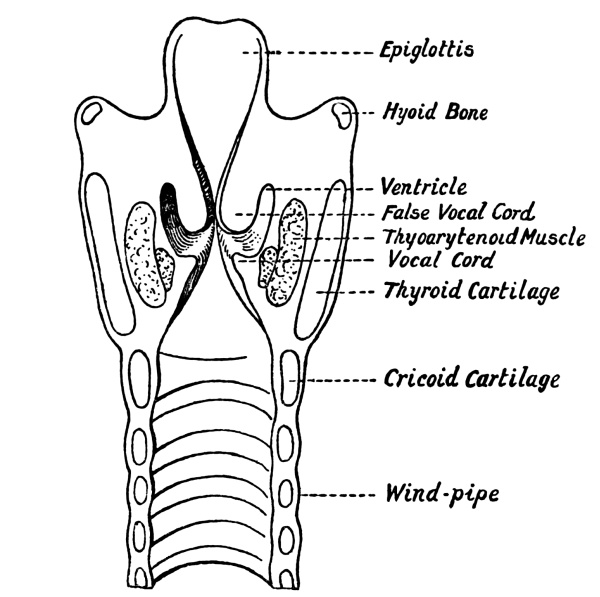
Fig. 44.—The Anterior Half of the Larynx seen from Behind.
The drawing shows the folds of mucous membrane, the vocal cords, which stretch from the tips of the arytenoid cartilages to the recess behind the median portion of the thyroid cartilage. To the outer side of each vocal cord is seen the thyro-arytenoid muscle (cut across), consisting of a broad outer portion, chiefly concerned in closing the glottis during the act of swallowing, and a smaller internal portion, which regulates the length and the thickness of the segment of the cord allowed to vibrate.
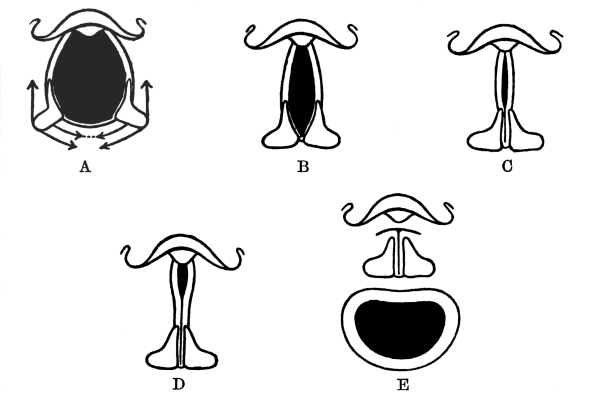
Fig. 45.—The Aperture of the Glottis seen from Above.
The leaf-like structure in front of it is the epiglottis; the two triangular structures at the back, the arytenoid cartilages; the white bands on either side, the vocal cords. A, The glottis is widely open during inspiration. Arrows show the lines of action of the muscles which rotate, and approximate, the cartilages. Attached to their outer angles, and pulling these angles forwards, the lateral crico-arytenoid muscles; pulling them backwards and inwards, the posterior crico-arytenoid muscles. Drawing the cartilages together, the arytenoid muscles. B, The glottis during speaking in a deep chest-voice, or when a low note of the lower register is being sung. C, During the production of a high note of the lower register. D, During the production of a note of the head-register. E, During the act of swallowing; the arytenoid cartilages are drawn towards the epiglottis the aperture is folded into a T; the pharynx (the tube behind the glottis) is distended.
The first cartilage below the thyroid—it may be felt with the finger—is termed “cricoid” (κρίκος, a ring), from its resemblance to a signet-ring. Narrow in front, its large signet projects upwards, within the V of the thyroid, behind, and on the top of the signet rest the two arytenoids. Each arytenoid is a triangular pyramid, its anterior, external, and upper angles prolonged into processes. It is united with the cricoid by a swivel joint, which allows its anterior process to swing inwards or outwards under the influence of two antagonistic muscles attached to its outer angle—the lateral and posterior crico-arytenoids. Another muscle attached only to the arytenoids draws them together. Still another muscle—or two muscles, for it is in two separate bands—unites the anterior process of the arytenoid with the back surface of the thyroid just on the outer side of the attachment into that cartilage of the vocal cord. The internal thyro-arytenoid muscle is a comparatively narrow band; the external thyro-arytenoid muscle is thick and broad.[3] By the simultaneous contraction of the encircling muscles the larynx is closely squeezed together, the anterior portion of the slit forming a T, with the transverse limb in front. This occurs only in swallowing. Under the co-operating contractions of the several muscles, the glottis assumes a variety of shapes. The external crico-arytenoids rotate the anterior angles of the arytenoid cartilages inwards (Fig. 45, A). If at the same time the arytenoid muscle draws the cartilages together, the glottis is reduced to a slit (Fig. 45, C). The posterior crico-arytenoid muscles rotate the cartilages outwards. If the arytenoid muscle is at the same time relaxed, the glottis gapes to its fullest extent (Fig. 45, A). The freer the opening, the less is the resistance to the blast of air, the gentler the vibrations of the cords, the lower the voice. The closer the slit, the greater is the resistance which the air in the windpipe has to overcome in passing through it, and consequently the more ample the vibrations into which it throws the vocal cords.
The vocal cords are the tongues of a reed-pipe, which, commencing in the chest at the point where the great bronchi join to form the windpipe, comprises the larynx, and, above the larynx, the complicated chambers of the throat, mouth, and nasal cavities, including the spaces within the bones of the head which open out of them. The pitch of the voice depends upon (1) the length of the vocal cords, and (2) their tension. The first factor is fixed for every individual. The voice is base, baritone, tenor, in a man; contralto, mezzo-soprano, soprano, in a woman—in proportion as the cords are long, of medium length, or short. A man’s vocal cords measure, on the average, 15 millimetres, a woman’s 11 millimetres. When a boy is from twelve to fifteen years of age his vocal cords double in length, and the “breaking” of the voice occurs as he gives up trying to get high notes out of his longer cords, and allows them to produce manly tones of an octave lower.
The lower posterior angles of the thyroid cartilages articulate with the cricoid. If the four cartilages are freed from all soft tissues without disturbing the thyro-cricoid, or crico-arytenoid joints, and if, while the thyroid is held in one hand, a finger of the other is placed on the front of the cricoid, it will be found that as this is depressed the arytenoid cartilages which rest upon its signet are tilted upwards and forwards within the thyroid; as it is raised, they are tilted away from it. In life this movement is effected by a muscle—the crico-thyroid (Fig. 46)—attached to the front of the cricoid cartilage and to the under border of the lateral plate of the thyroid. This is the muscle of supreme importance in the production of the voice. The thyroid cartilage is slung in a fixed position by the hyoid bone (to be felt in the neck above it). The crico-thyroid muscle, being unable to depress the thyroid, raises the front of the cricoid cartilage, tilts back the arytenoids, tightens the vocal cords. As the voice ascends the scale, the tension of the cords is progressively increased, and their vibrations rendered proportionately more rapid. The range of the human voice is about three and a half octaves; of individual voices about two octaves; if the shrill cry of a baby, which may reach the third G above the middle C, or even higher (E⁗ or F⁗), be excluded. Exceptional voices have a range far greater than two octaves. Falsetto voice is produced by throwing half of the vocal cord out of vibration (the way in which this is accomplished is not clear), and at the same time raising the back of the tongue to the wall of the throat in such a manner as to cut off all the lower part of the upper resonating chamber, leaving it only the mouth and the cavities of the nose.
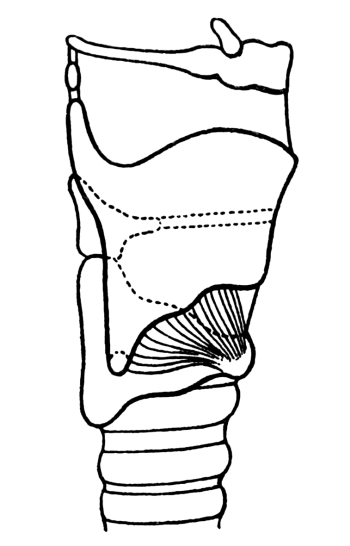
Fig. 46.—The Larynx from the Right Side.
From above downwards: the hyoid bone, thyro-hyoid membrane, thyroid cartilage, cricoid cartilage, trachea. The upper and posterior angle of the wing of the thyroid cartilage is suspended from the hyoid bone; its lower and posterior angle articulated with the cricoid cartilage. On the summit of the cricoid cartilage it articulates the arytenoid. Dotted lines indicate the position of the vocal cord. The crico-thyroid muscle, which raises the front of the cricoid, tilting the arytenoid cartilage backwards and tightening the vocal cord, extends, fan-like, from the front of the cricoid to the lower border of the wing of the thyroid.
So far the mechanism of voice is easily understood. As the scale is ascended, the vocal cords are progressively tightened by the contraction of the crico-thyroid muscles. But an analysis of the feelings experienced during singing (and of the quality of the sounds produced) shows that by themselves these muscles are not able to make changes in the tension of the cords sufficient to account for the full range of the voice. Or, put in another way, the tension of the vocal cords is not altered to the extent which would be necessary if upon it alone depended a range of from two to three octaves. It is obvious that by some means the length or thickness, or both, of the portions of the cords vibrating is changed as the scale is ascended. If commencement be made on a low note, a point is reached, after a certain number of notes have been sung, at which a sudden change occurs. There is an alteration in the quality of sound, the more marked, the less well trained the singer. The singer experiences a feeling of relief. If a finger be placed on his crico-thyroid muscle, a relaxation of its anterior fibres can be detected. As he proceeds up the scale, these fibres again tighten. At a certain point there is again a change in the quality of voice, and in the feelings which accompany its production. The two points at which change occurs are said to divide the voice into three “registers”—the lower, or chest-register, the middle, and the upper, or head-register. A great effort is needed to hold either register above its natural range.
The physiology of the registers is a subject far too thorny for handling in this book. The larynx can be watched with the laryngoscope during the production of notes of different pitch, but observers are not in accord regarding the appearances which it presents, or their interpretation. The possibilities of changing the reed which vibrates, the vocal cord, otherwise than by increasing the direct pull upon it exerted by the crico-thyroid muscle, appear to be as follows: (1) During the production of the lowest notes the elastic portion of the arytenoid cartilage may be included with the cord. It may be thrown out of vibration by its rotation inwards (under the action of the lateral crico-arytenoid muscle) until it is pressed against its fellow. (2) Certain portions of the cord may be damped by partial contractions of the internal thyro-arytenoid muscle. It has been frequently stated, although the statement is not accepted by all anatomists, that some of the fibres which take origin from the arytenoid cartilage end in the cord, instead of passing right through to the thyroid. It is supposed that by their contraction they throw the posterior portion of the cord—even, it is asserted, as much as its posterior two-thirds in the higher head-notes—out of vibration. (3) It appears that the width (thickness) of the cord vibrating is also regulated by the contraction of the thyro-arytenoid muscle. Those who regard the diminution in the thickness and width of the vibrating fold of mucous membrane and underlying elastic tissue as the chief factor in the adaptation of the larynx for the middle register lay great stress upon the sense of relief from muscular effort which accompanies the transition. Less force is needed to tighten the thinner cord. They also call attention to the loss in volume of the voice when the lower register is left, and to its greater softness. The lower is spoken of as the thick register, the middle as thin, and the upper (on the hypothesis that part only of the cord vibrates) as the small register.
Singing reveals the possibilities of the larynx as a musical instrument. In speech the larynx plays a part, but the form of the syllabic sounds and the relative prominence of overtones in the vowels is of more importance than pitch. Flexibility of voice is dependent upon ability to increase or diminish at will the size of the resonating chambers of the throat, mouth, and nose, or the freedom of access to them. Conversation is carried on in the lower or chest-register. When a practised speaker mounts a platform, he spends the first few minutes in ascertaining the pitch of the hall—that is to say, the pitch of his voice to which the room resonates most freely. Having found the proper tone, he endeavours to maintain a uniform tension of his vocal cords, and therefore a uniform pitch. He relieves the monotony of speech by suitable variations of its overtones. Nothing is more uncomfortable to listen to than an oration delivered in cadences. The speaking voice should be full, round, and musical, and free from affectation—as guiltless of the intoning or preaching quality as it is of harshness or of vulgar flatness. A flexible voice is capable of producing, as occasion calls for them, tones of any and every quality. With the throat and mouth set for the syllable “haw,” it is impossible to do justice to such words as “king ” and “queen.” The voice-tones of a superior person are as distasteful to the hearer as those of a vulgarian. Unpleasant also is a nasal twang, illogically so called, since it is due, not to the opening of the resonating chambers of the nose, but to the restriction of the entry of air into them. In this it is somewhat similar to the effect produced by a severe cold. Resonance in the nasal chambers produces a clear, ringing voice.
A little consideration of the varying qualities of different voices suffices to show how largely they depend on resonance. When vowel-sounds are analysed, it is found that the distinctive character of each of them is dependent upon the overtones which it contains. For every vowel the overtones are fixed, or very nearly so, no matter what may be the pitch of the note to which the vowel is sounded.
It is much to be regretted that the alphabet was settled before the physiology of speech was understood. Were it based upon reasonable principles, children would be spared the bewilderment which overtakes them when they endeavour to establish in their minds some kind of relation between the names of consonants and their effects upon the blast of air as it passes through throat and mouth, and between tongue and palate, teeth and lips. The vowels, had physiologists defined them, would have been real pure vowel-tones—ōō, o, ah, ēē—sounds which can be sustained for an indefinite time, and allowed to die away without deterioration in their quality. A (é as pronounced in France) is doubtfully pure—it has a tendency to tail off in ēē; ī is frankly a diphthong, ai (ah-ēē). Try to hold a long final note on the syllable “nigh ”! An international standard of vowel-sounds would have been fixed, by giving the vibrating periods of the tuning-forks for which in each several case the resonating chambers are shaped, and defining the relative accentuation of each overtone. Greatest boon of all, the irruption of the Essex dialect would have been dammed. It would not have been allowed to inundate London, or to submerge Australia, debasing our English tongue. In Cockney speech vowels degenerate down the line of greatest indolence. Aw becomes or, or ar; a becomes i. It requires a greater effort to pronounce a full a than a flat a, a definite flat a than i. And worse than a Cockney’s unwillingness to take the trouble necessary for the production of dignifiedvowel-tones is his reluctance to make the effort required for the holding of any tone. In his mouth virile, self-reliant vowels are replaced by emasculated diphthongs, which collapse as they present themselves to the ear. It costs trouble to fix the mouth-chamber before a vowel is sounded and to hold it steady until it is finished. Ah slides down through ai to ēē; i slips into ēē. “Cow” becomes kyow; “you,” ye-u-ow; “cart,” kyart. And just as the effort needed for the filling of the vowels is shirked, so also is grudged the expenditure of an accessory blast for their aspiration.
When a vowel is whispered, although the vocal cords do not vibrate, the blast passing through the resonating chambers produces the overtones characteristic of the vowel. Anyone who feels his own larynx while he sings, to the same note, the various vowels between ōō and ēē—he may please himself as to the number of ai, eu, and ŭ vowels he interposes between these two extremes—will recognize that it is pulled farther and farther upwards by the muscles which surround it. The cavity of the mouth is at the same time made shorter and broader for each succeeding vowel. Singing the several vowels before a piano, and at the same time striking various keys, it is felt in the mouth that the resonance of that chamber is reinforced by certain selected notes. Certain tuning-forks, when sounded in front of the mouth shaped for a vowel, ring out more loudly, because the mouth-cavity resonates to their prime tones. The overtones of the vowels can be analysed in this way. Conversely, by sounding simultaneously an appropriate selection of tuning-forks, each with the right degree of force, the overtones of a vowel can be synthesised. Thus if whilst one tuning-fork is sounding B₁♭ (B♭ above middle C), two others be added giving B₂♭ (loud) and F₃ (soft), the composite sound resembles the vowel o. If to these same three forks, with F₃ sounding more strongly, B₃♭ and a loud D₄ be added, the sound changes to ah.
The organ of voice is a combination of a reed-pipe with resonating chambers, the shape of which can be changed at will. The quality characteristic of a vowel is given to it by adding to the note produced in the larynx sounds due to the resonance of the throat and mouth. On the assumption (not allowed by all authorities) that, since the resonating chambers are not sound-producers, they can only add to the larynx-tone, as “formants” of a vowel, its own harmonics—sounds which they have picked out of it—it follows that, if, when the prime is changed, the resonators were not adapted to the new note, they would be dumb. If this attitude in regard to the question be justified, there must be a certain amount of variation in the quality of a vowel as the scale is ascended. But a vowel is not a musical tone; it is a conventional sound. Its whole value depends upon its retaining, as nearly as may be, the same quality, whatever be the pitch of its prime tone. By adjusting the form of the throat and mouth, we can not only prevent one vowel from passing into another, but we can keep it so nearly true to itself as to convince the ear that its quality is unchanged: ōō remains ōō, and ah ah, although the form of the sound as produced on C♯ is different to its form when sung to C.
Apart from the general distinction that low notes are taken more easily with vowels requiring a large mouth-cavity, and high notes with those providing a small one, there are certain very distinct relations between vowel-sounds and musical tones which need to be borne in mind in setting words to music. A singer changes a word when he feels that its vowel-tone does not allow him to give to the note to which it is set the fullest expression of which he is capable.
An account of the physiology of the production of consonants is to be found in most text-books of grammar.