Volume 4 — THE CAPTAIN OF THE NEW FAITH IN THE CAPITAL OF THE CAESARS.
Reading edition
I PAUL'S VOYAGE TO ROME.
When Paul appealed to Caesar it became necessary to send him to Rome. It happened that a convoy of prisoners under the charge of a captain of the Augustan cohort and a detachment of soldiers was being despatched to the capital, and Paul was sent under the captain's charge. No ship was found sailing directly from Caesarea to Rome, so a coaster was taken which went as far as Myra, touching at Sidon. At Myra was found one of the great imperial grain ships bound for Italy.
The winds were contrary and the ship was constantly driven off her course, and at last put into the roadstead of Fair Havens on the south coast of the island of Crete. So much time had been consumed that the season was now late and navigation dangerous. A council was held at which Paul, an experienced sailor, advised wintering where they were. But the demand for grain was always urgent in Rome, and the grain ships were always rushed on as fast as possible. The centurion decided to take the chances and proceed, at least as far as Phoenix, which was nearer Italy and a better harbor. On a bright day with a fair south wind they weighed anchor and sailed west, going close inshore and barely weathering Cape Matala.
{463}
{464}
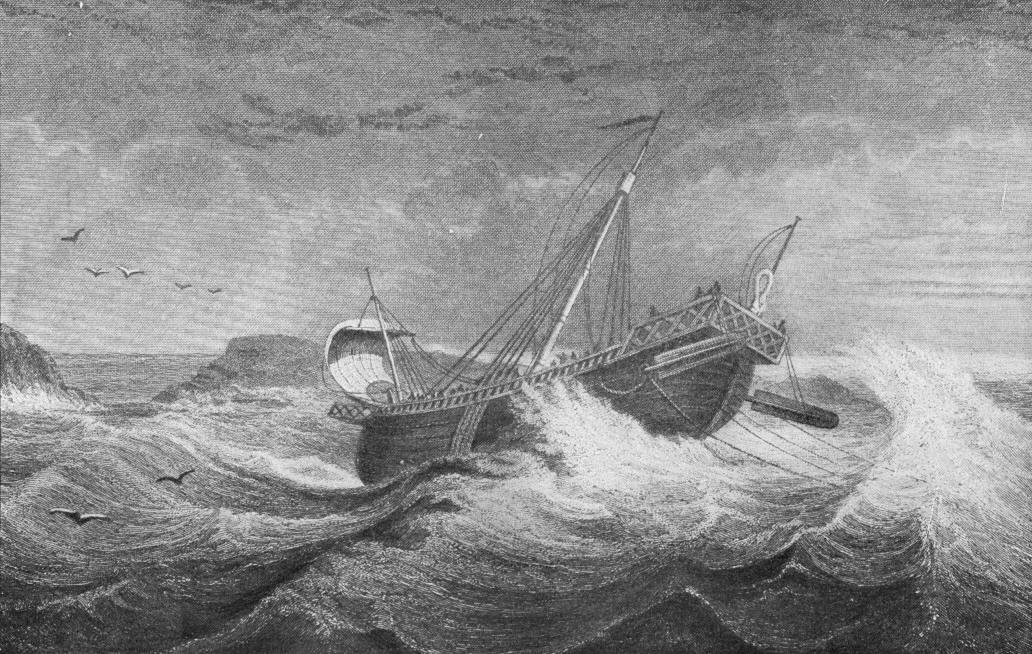
THE SHIP ON WHICH PAUL SAILED FOR ROME JUST BEFORE THE WRECK.
This very interesting picture is taken from an old book, now long out of print, "The Voyage and Shipwreck of St. Paul," by James Smith. Owned by Miss Mary Medlicott, reference librarian of the Springfield Public Library, and used by her kind permission.
The picture was carefully drawn to show the exact position of the ship, and is without doubt very accurate. The ship itself was drawn from ancient models. Four anchors are out at the stern, the two huge rudders are raised to escape the smashing of the heavy seas, and the ropes which undergirded the vessel to prevent leaking are shown. The sailors have just raised the small foresail preparatory to beaching the ship. A heavy sea is running and the clouds are dark with rain. The rocky coast is shown near by.
{465}
Half way across the Gulf of Mesura, the wind suddenly shifted to the north, and, sweeping down from the snowy summits of the Cretan mountains which towered seven thousand feet above them, struck the ship with the force of a typhoon. Instantly it grew dark and the sea was a smother of foam. The terrified crew had not time to furl the heavy mainsail, and simply let the ship run with the wind. Very fortunately they had a little better weather under the lee of the small island of Clauda, where they were able to pull in the small boat, which was dragging behind half full of water, and get control of the ship. Recovering somewhat from the panic, the crew began to make the best of a perilous situation. It was impossible to make any near-by port, and the great danger was that the northerly gale would blow them upon the deadly Syrtis or quicksands of the African coast. They shortened sail, and got the ship up into the wind so that, drifting broadside, she made progress west instead of south. She was leaking, and they passed strong cables underneath her to hold the timbers together. The next day she was still leaking badly, so they lightened her by throwing out some of the cargo. The next day after that, they cast overboard even the ship's furniture. So they drifted with little or no food, day after day and night after night, seeing neither sun nor star, despair growing upon their haggard faces. But Paul stood up and gave them good cheer, practically assuming command, and assuring them that every soul should be saved. At last, after drifting helplessly for fourteen days, at midnight they heard the sound of breakers on some unknown shore. The {466} sailors sounded and found twenty fathoms, then again and found fifteen. Then, fearing to be cast on a rocky shore, they put out four anchors from the stern and waited for the day. Their situation was still desperate, the rain was falling in sheets, and in the pauses of the storm they could hear the roar of the surf. Some of the sailors now attempted to desert the ship. On the pretense of getting out another anchor by the bow, they let down the small boat into the sea. Paul discovered the move and warned the centurion, saying that they must not leave the ship. The centurion promptly cut the rope which held the boat and it drifted away in the darkness. Toward morning Paul moved about among the men inspiring them with courage. He insisted that all hands should take some food, and with better spirit they further lightened the almost foundering ship by throwing out some of the grain. When day broke they found themselves at the entrance of a bay with a sandy shore. They decided then to beach the ship at once. They cast off the anchors, hoisted the sail, and let her drive to the shore, where the bow stuck fast in the sand, but the stern began to break up. The soldiers wished to kill the prisoners, but the centurion forbade, commanding every man to save himself. Some swam ashore, some came in on pieces of wreckage, and the whole ship's company was saved.
They found that they had drifted upon the island of Malta, a little speck in the Mediterranean, missing which they must have perished. Here they stayed three months. Then they sailed on the ship "The Twin Brothers," and, touching at Syracuse and Rhegium, they reached Puteoli, the harbor of entry for Rome.
{467}
{468}
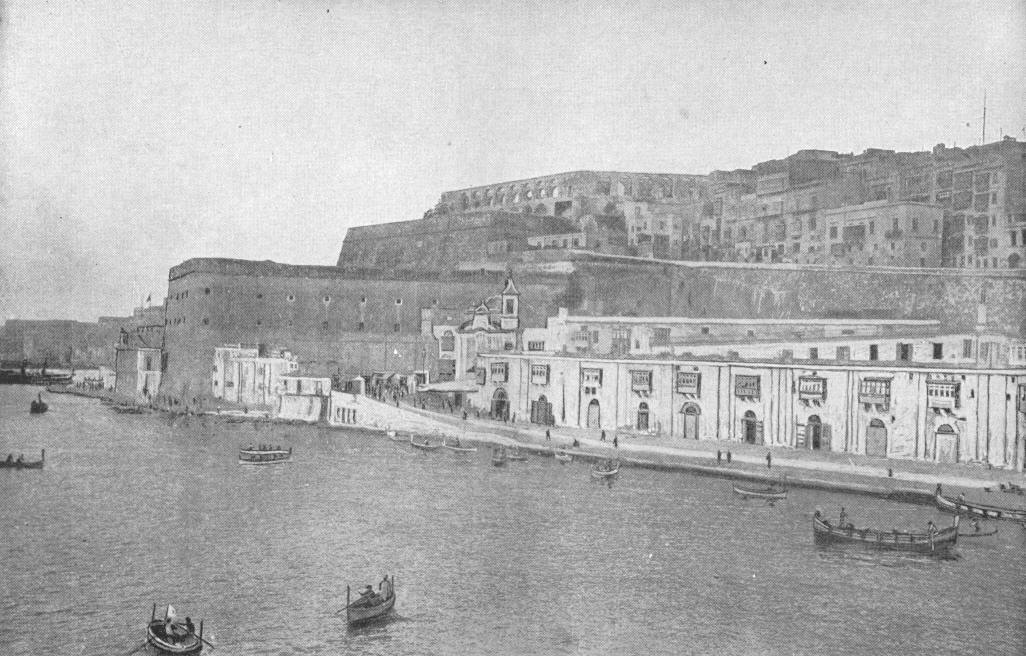
MALTA
The island of Malta, on which Paul was shipwrecked, played, in later days, a most important part in the history of the Mediterranean. It was occupied by the famous knights of Malta who, for many years, kept it as a Christian stronghold against the Turks. In 1568 the famous siege began, which lasted for 20 years, conducted by the great sultan Solyman in person. He was finally obliged to retreat, defeated with terrible loss. The island is held at present by England, and has very extensive fortifications.
{469}
II A WINTER'S STORM ON THE MEDITERRANEAN. The Shipwreck.
And when it was determined that we should sail for Italy, they delivered Paul and certain other prisoners to a centurion named Julius, of the Augustan company. And embarking in a ship of Adramyttium, which was about to sail to ports on the coast of Asia, we put to sea, Aristarchus, a Macedonian of Thessalonica, being with us. And the next day we touched at Sidon: and Julius treated Paul kindly, and gave him leave to go to his friends and refresh himself. And putting to sea from thence, we sailed under the lee of Cyprus, because the winds were contrary. And when we had sailed across the sea which is off Cilicia and Pamphylia, we came to Myra, a city of Lycia. And there the centurion found a ship of Alexandria sailing for Italy; and he put us therein. And when we had sailed slowly many days, and were come with difficulty over against Cnidus, the wind not further suffering us, we sailed under the lee of Crete, over against Salmone; and with difficulty coasting along it we came to a certain place called Fair Havens; nigh whereunto was the city of Lasea.
And when much time was spent, and the voyage was now dangerous, because the winter was near, Paul admonished them, and said unto them, "Sirs, I perceive that the voyage will be with injury and much loss, not only of the lading and the ship, but also of our lives." But the centurion gave more heed to the master and to the owner of {470} the ship, than to those things which were spoken by Paul. And because the haven was not commodious to winter in, the larger part advised to put to sea from thence, if by any means they could reach Phoenix, and winter there; which is a haven of Crete, looking northeast and southeast. And when the south wind blew softly, supposing that they had obtained their purpose, they weighed anchor and sailed along Crete, close inshore. But after no long time there beat down from it a tempestuous wind, which is called Euraquilo: and when the ship was caught, and could not face the wind, we gave way to it, and were driven.
And running under the lee of a small island called Clauda, we were able, with difficulty, to secure the boat: and when they had hoisted it up, they used ropes, undergirding the ship; and, fearing lest they should be cast upon the Syrtis, they lowered the gear, and so were driven. And as we labored exceedingly with the storm, the next day they began to throw the freight overboard; and the third day they cast out with their own hands the tackling of the ship. And when neither sun nor stars shone upon us for many days, and no small tempest lay on us, all hope that we should be saved was now taken away.
And when they had been long without food, then Paul stood forth in the midst of them, and said, "Sirs, ye should have hearkened unto me, and not have set sail from Crete, and have gotten this injury and loss. And now I exhort you to be of good cheer: for there shall be no loss of life among you, but only of the ship. For there stood by me this night an angel of the God whose I am, whom also I serve, saying, 'Fear not, Paul; thou must stand before Caesar: and lo, God hath granted thee all them that sail with thee.' Wherefore, sirs, be of good cheer: for I believe God, that it shall be even so as it hath been spoken unto me. Howbeit we must be cast upon a certain island."
{471}
{472}
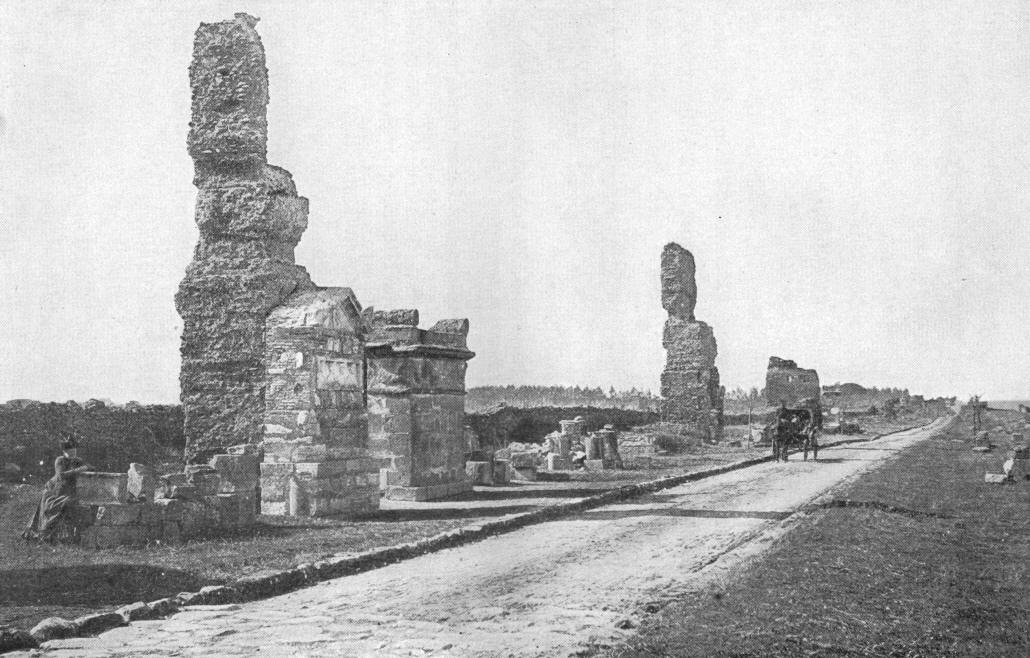
I. THE APPIAN WAY, OVER WHICH PAUL TRAVELED TO ROME. The ruins are those of ancient tombs. In the foreground are stones of the old Roman pavement. Owned by Prof. E. J. Brady, Department of Latin, Smith College, and used by his kind permission.
The "Via Appia," the oldest and most celebrated of Roman roads, was constructed as far as Capua A. U. C. 442 by the censor, Appius Claudius. Procopius, writing 800 years later, describes it as broad enough for two chariots to pass. It was paved with stones brought from distant quarries and so fitted together as to seem formed by nature. He says that the road was then in perfect condition.
{473}
But when the fourteenth night was come, as we were driven to and fro in the Adriatic Sea, about midnight the sailors surmised that they were drawing near to land; and they sounded, and found twenty fathoms: and after a little space, they sounded again, and found fifteen fathoms. And fearing lest we should be cast ashore on rocky ground, they let go four anchors from the stern, and wished for the day. And as the sailors were seeking to flee out of the ship, and had lowered the boat into the sea, pretending that they would lay out anchors from the bow, Paul said to the centurion and to the soldiers, "Except these abide in the ship, ye cannot be saved."
Then the soldiers cut away the ropes of the boat, and let her fall off. And while the day was coming on, Paul besought them all to take some food, saying, "This day is the fourteenth day that ye wait and continue fasting, having taken nothing. Wherefore I beseech you to take some food: for this is for your safety: for there shall not a hair perish from the head of any of you."
And when he had said this, and had taken bread, he gave thanks to God in the presence of all: and he broke it, and began to eat. Then were they all of good cheer, and themselves also took food. And we were in all in the ship two hundred threescore and sixteen souls. And when they had eaten enough, they lightened the ship, throwing {474} out the wheat into the sea. And when it was day, they knew not the land: but they perceived a certain bay with a beach, and they took counsel whether they could drive the ship upon it. And casting off the anchors, they left them in the sea, at the same time loosing the bands of the rudders; and hoisting up the foresail to the wind, they made for the beach. But lighting upon a place where two seas met, they ran the vessel aground; and the bow struck and remained unmovable, but the stern began to break up by the violence of the waves. And the soldiers' counsel was to kill the prisoners, lest any of them should swim out, and escape. But the centurion, desiring to save Paul, stayed them from their purpose; and commanded that they which could swim should cast themselves overboard, and get first to the land: and the rest, some on planks, and some on other things from the ship. And so it came to pass, that they all escaped safe to the land.
III AT MALTA Paul Sails Again for Rome on the Ship "Twin Brothers."
And when we were escaped, then we knew that the island was called Malta. And the barbarians showed us uncommon kindness: for they kindled a fire, and received us all, because of the present rain, and because of the cold. But when Paul had gathered a bundle of sticks, and laid them on the fire, a viper came out by reason of the heat, and fastened on his hand.
{475}
{476}
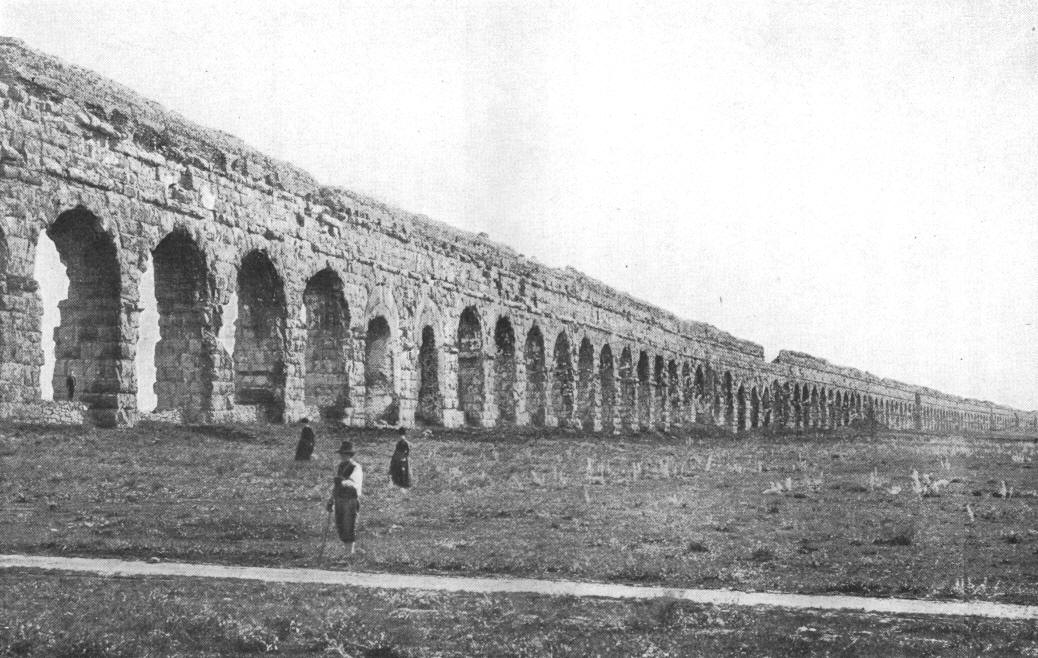
II. ALONG THE APPIAN WAY, THE GREAT ROMAN AQUEDUCT. Owned by Prof. E. J. Brady, Department of Latin, Smith College, and used by his kind permission.
The Appian Way has been called the "Queen of Roads." It was in Paul's time the crowded approach to the metropolis of the world. Near the city the road passed under the aqueduct, which was continually dripping water, hence called by Juvenal "the moist gate".
"Praetors, proconsuls to their provinces Hasting, or on return in robes of state; Lictors and rods, the ensigns of their power, Legions and cohorts, turms of horse and wings; Or embassies from regions far remote, In various habits on the Appian Way."
--Milton's "Paradise Regained"
{477}
And when the barbarians saw the reptile hanging from his hand, they said one to another, "No doubt this man is a murderer, whom, though he hath escaped from the sea, yet Justice hath not suffered to live."
Howbeit he shook off the reptile into the fire, and took no harm. But they expected that he would have swollen, or fallen down dead suddenly: but when they were long in expectation, and beheld nothing amiss come to him, they changed their minds, and said that he was a god.
Now in the neighborhood of that place were lands belonging to the chief man of the island, named Publius; who received us, and entertained us three days courteously. And it was so, that the father of Publius lay sick of fever and dysentery: unto whom Paul entered in, and prayed, and laying his hands on him healed him. And when this was done, the rest also which had diseases in the island came, and were cured: who also honored us with many honors; and when we sailed, they put on board such things as we needed.
And after three months we set sail in a ship of Alexandria, which had wintered in the island, whose sign was "The Twin Brothers." And touching at Syracuse, we tarried there three days. And from thence we made a circuit, and arrived at Rhegium: and after one day a south wind sprang up, and on the second day we came to Puteoli: where we found brethren, and were intreated to tarry with them seven days: and so we came to Rome. And from thence the brethren, when they heard of us, came to meet us as far as The Market of Appius, and The Three Taverns: whom when Paul saw, he thanked God, and took courage.
{478}
IV PAUL AT THE CITY ON THE TIBER. He Preaches the Gospel in the Capital of the World.
And when we entered into Rome, Paul was permitted to abide by himself with the soldier that guarded him.
And it came to pass, that after three days he called together those that were the chief of the Jews: and when they were come together, he said unto them, "I, brethren, though I had done nothing against the people, or the customs of our fathers, yet was delivered prisoner from Jerusalem into the hands of the Romans: who, when they had examined me, desired to set me at liberty, because there was no cause of death in me. But when the Jews spoke against it, I was constrained to appeal unto Caesar; not that I had anything to accuse my nation of. For this cause therefore did I intreat you to see and to speak with me: for because of the hope of Israel I am bound with this chain."
And they said unto him, "We neither received letters from Judaea concerning thee, nor did any of the brethren come hither and report or speak any harm of thee. But we desire to hear of thee what thou thinkest: for as concerning this sect, it is known to us that everywhere it is spoken against."
{479}
{480}
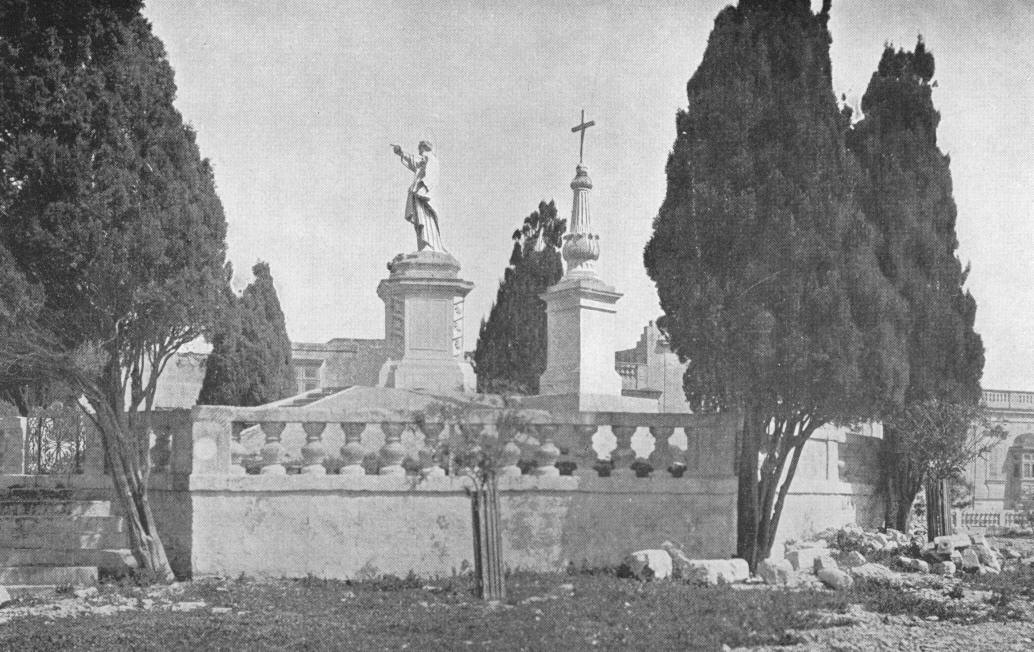
STATUE OF PAUL ON THE ISLAND OF MALTA.
{481}
And when they had appointed him a day, they came to him into his lodging in great number; to whom he expounded the matter, testifying the kingdom of God, and persuading them concerning Jesus, both from the law of Moses and from the prophets, from morning till evening. And some believed the things which were spoken, and some disbelieved. And when they agreed not among themselves, they departed, after Paul had spoken one word, "Well spoke the Holy Spirit by Isaiah the prophet unto your fathers, saying,--
'Go thou unto this people, and say, By hearing ye shall hear, and shall in no wise understand; And seeing ye shall see, and shall in no wise perceive: For this people's heart is waxed gross, And their ears are dull of hearing, And their eyes they have closed; Lest haply they should perceive with their eyes, And hear with their ears, And understand with their heart, And shall turn again, And I should heal them.'
Be it known therefore unto you, that this salvation of God is sent unto the Gentiles: they will also hear."
And he abode two whole years in his own hired dwelling, and received all that went in unto him, preaching the kingdom of God, and teaching the things concerning the Lord Jesus Christ with all boldness, none forbidding him.
{482}
This is the close of the story of Paul as it is given in the Acts, but half his service for the world, and half the adventures which attended that service are not told here. We have a glimpse of what the complete story must have been, in these words of his which might be inscribed to his honor in the world's temple of fame:--
"Of the Jews five times received I forty stripes save one. Thrice was I beaten with rods, once I was stoned, thrice I suffered shipwreck, a night and a day have I been in the deep: in journeyings often, in perils of rivers, in perils of robbers, in perils from my countrymen, in perils from the Gentiles, in perils in the city, in perils in the wilderness, in perils in the sea, in perils among false brethern; in labor and travail, in watchings often, in hunger and thirst, in fastings often, in cold and nakedness.
To this should be added the great hero's farewell. In prison, aged, infirm, about to die, he wrote these words, yet they are filled with the same dauntless spirit of courage and faith which always animated Paul, the Apostle.
"For I am already being offered, and the time of my departure is come. I have fought the good fight, I have finished the course, I have kept the faith: henceforth there is laid up for me the crown of righteousness, which the Lord, the righteous judge, shall give to me at that day; and not only to me, but also to all them that have loved his appearing."
{483}