Volume 4 — How the Lord Jesus Began to Win the Love of Many People. (continued 2)
Reading edition
And they reasoned one with another, saying, "It is because we have no bread." And Jesus perceiving it saith unto them, "Why reason ye, because ye have no bread? do ye not yet perceive, neither understand? have ye your heart hardened? Having eyes, see ye not? and having ears, hear ye not? and do ye not remember? When I broke the five loaves among the five thousand, how many baskets full of broken pieces took ye up?"
They say unto him, "Twelve."
"And when the seven among the four thousand, how many baskets full of broken pieces took ye up?"
And they say unto him, "Seven."
{177}
And he said unto them, "Do ye not yet understand?" Then understood they that he bade them not to beware of the leaven of bread, but of the teaching of the Pharisees and Sadducees.
And they come unto Bethsaida. And they bring to him a blind man, and beseech him to touch him. And he took hold of the blind man by the hand, and brought him out of the village; and when he had spit on his eyes, and laid his hands upon him, he asked him, "Seest thou aught?"
And he looked up, and said, "I see men; but I behold them as trees, walking."
Then again he laid his hands upon his eyes; and he looked steadfastly, and was restored, and saw all things clearly. And he sent him away to his home, saying, "Do not even enter into the village."
{178}
IV THE SHADOW OF THE CROSS How the Lord Jesus Spoke Sad News to His Disciples.
And Jesus went forth with his disciples, into the villages of Caesarea Philippi: and on the way he asked his disciples, saying unto them, "Who do men say that I am?"
And they told him, saying, "John the Baptist: and others, Elijah; but others, One of the prophets."
And he asked them, "But who say ye that I am?" Peter answereth and saith unto him, "Thou art the Christ."
And he charged them that they should tell no man of him. And he began to teach them, that the Son of man must suffer many things, and be rejected by the elders, and the chief priests, and the scribes, and be killed, and after three days rise again. And he spoke the saying openly. And Peter took him, and began to rebuke him. But he turning about, and seeing his disciples, rebuked Peter, and saith, "Get thee behind me, Satan: for thou mindest not the things of God, but the things of men."
And he called unto him the multitude with his disciples, and said unto them, "If any man would come after me, let him deny himself, and take up his cross, and follow me. For whosoever would save his life shall lose it; and {179} whosoever shall lose his life for my sake and the gospel's shall save it. For what doth it profit a man, to gain the whole world, and lose his life? For what should a man give in exchange for his life? For whosoever shall be ashamed of me and of my words in this sinful generation, the Son of man also shall be ashamed of him, when he cometh in the glory of his Father with the holy angels." And he said unto them, "Verily I say unto you, There are some here of them that stand by, who shall in no wise taste death, till they see the kingdom of God come with power."
And they went forth from thence, and passed through Galilee; and he would not that any man should know it. For he taught his disciples, and said unto them, "The Son of man is delivered up into the hands of men, and they shall kill him; and when he is killed, after three days he shall rise again."
But they understood not the saying, and were afraid to ask him.
Sometime later Jesus again tried to make them understand. Then they were going up to Jerusalem; and Jesus was going before them: and they were amazed; and they that followed were afraid. And he took again the twelve, and began to tell them the things that were to happen unto him, saying, "Behold, we go up to Jerusalem; and the Son of man shall be delivered unto the chief priests and the scribes; and they shall condemn him to death, and shall deliver him unto the Gentiles: and they shall mock him, and shall spit upon him, and shall scourge him, and shall kill him; and after three days he shall rise again."
{180}
V THE TRANSFIGURATION How the Disciples Caught a Vision of the Lord Jesus' Glory and How They Were Afterward Taught a Lesson in Faith and Service.
Soon after he spoke of what he must suffer Jesus took with him Peter, and James, and John, and brought them up into a high mountain apart by themselves: and he was transfigured before them: and his garments became shining, exceeding white; so as no fuller on earth can whiten them. And there appeared unto them Elijah with Moses: and they were talking with Jesus.
And Peter saith to Jesus, "Rabbi, it is good for us to be here: and let us make three lodging places; one for thee, and one for Moses, and one for Elijah." For he knew not what to answer; for they became greatly afraid.
And there came a cloud overshadowing them: and there came a voice out of the cloud, "This is my beloved Son: hear ye him." And suddenly looking round about, they saw no one any more, save Jesus only with themselves.
And as they were coming down from the mountain, he charged them that they should tell no man what things they had seen, until the Son of man should have risen again from the dead. And they kept the saying, questioning among themselves what the rising again from the dead might mean.
{181}
And when they came to the disciples, they saw a great multitude about them, and scribes questioning with them. And straightway all the multitude, when they saw him, were greatly amazed, and running to him saluted him. And he asked them, "What question ye with them?" And one of the multitude answered him, "Master, I brought unto thee my son, who hath a dumb spirit; and wheresoever it taketh him, it dasheth him down: and he foameth, and grindeth his teeth and pineth away: and I spoke to thy disciples that they should cast it out; and they were not able."
And he answereth them and saith, "O faithless generation, how long shall I be with you? how long shall I bear with you? bring him unto me."
And they brought him unto him: and when he saw him, at once the spirit tore him grievously; and he fell on the ground and wallowed, foaming. And he asked his father, "How long is it since this hath come unto him?"
And he said, "From a child. And oft-times it hath cast him both into the fire and into the water, to destroy him: but if thou canst do anything, have compassion on us, and help us."
And Jesus said unto him, "If thou canst! All things are possible to him that believeth."
Straightway the father of the child cried out, and said, "I believe; help thou mine unbelief."
And when Jesus saw that a multitude came running together, he rebuked the unclean spirit, saying unto him, "Thou dumb and deaf spirit, I command thee, come out {182} of him, and enter no more into him." And having cried out, and torn him much, the demon came out: and the child became as one dead; insomuch that most said, "He is dead." But Jesus took him by the hand, and raised him up; and he arose.
And when he was come into the house, his disciples asked him privately, saying, "How is it that we could not cast it out?"
And he said unto them, "This kind can come out by nothing, save by prayer."
{183}
{184}
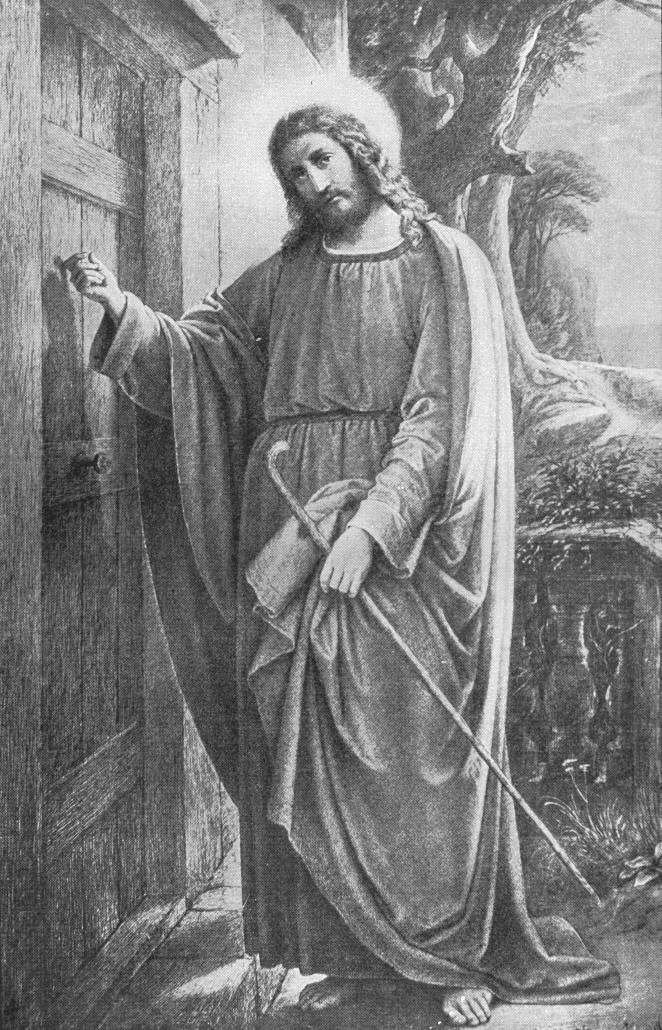
"LO! I STAND AT THE DOOR AND KNOCK" By Carl Schönherr
{185}
VI TEACHING THE DISCIPLES How the Lord Jesus Spoke of Humility and of Forgiveness.
And there come near unto him James and John, the sons of Zebedee, saying unto him, "Master, we would that thou shouldest do for us whatsoever we shall ask of thee."
And he said unto them, "What would ye that I should do for you?" And they said unto him, "Grant unto us that we may sit, one on thy right hand, and one on thy left hand, in thy glory."
But Jesus said unto them, "Ye know not what ye ask. Are ye able to drink the cup that I drink? or to be baptized with the baptism that I am baptized with?"
And they said unto him, "We are able."
And Jesus said unto them, "The cup that I drink ye shall drink; and with the baptism with which I am baptized shall ye be baptized: but to sit on my right hand or on my left hand is not mine to give: but it is for those for whom it hath been prepared."
And when the ten heard it, they began to be moved with indignation concerning James and John.
And Jesus called them to him, and saith unto them, "Ye know that they who rule over the Gentiles lord it over them; and their great ones exercise authority over them. {186} But it is not so among you: but whosoever would become great among you, shall be your minister: and whosoever would be first among you, shall be servant of all. For verily the Son of man came not to be ministered unto, but to minister, and to give his life a ransom for many."
The Story of the Ungrateful Servant.
At another time came Peter, and said to him, "Lord, how often shall my brother sin against me, and I forgive him? until seven times?"
Jesus saith unto him, "I say not unto thee, Until seven times; but, Until seventy times seven.
"Therefore is the kingdom of heaven likened unto a certain king, who would make an accounting with his servants. And when he had begun to reckon, one was brought unto him, who owed him ten thousand talents. But because he had nothing with which to pay, his lord commanded him to be sold, and his wife, and children, and all that he had, and payment to be made. The servant therefore fell down before him, saying, 'Lord, have patience with me, and I will pay thee all.' And the lord of that servant, being moved with compassion, released him, and forgave him the debt. But that servant went out, and found one of his fellow-servants, who owed him a hundred pence: and he laid hold of him, and took him by the throat, saying, 'Pay what thou owest.'
"So his fellow-servant fell down and besought him, saying, 'Have patience with me, and I will pay thee.' And he would not: but went and cast him into prison, till he {187} should pay that which was due. So when his fellow-servants saw what was done, they were exceeding sorry, and came and told unto their lord all that was done. Then his lord called him unto him, and saith to him, 'Thou wicked servant, I forgave thee all that debt, because thou besoughtest me: shouldest not thou also have had mercy on thy fellow-servant, even as I had mercy on thee?' And his lord was wroth, and delivered him to the torturers, till he should pay all that was due. So shall also my heavenly Father do unto you, if ye forgive not everyone his brother from your hearts."
{188}
VII JESUS AND LITTLE CHILDREN How the Lord Jesus Spoke of Little Children, and How He Gave Them His Blessing.
The disciples came unto Jesus, saying, "Who then is greatest in the kingdom of heaven?"
And he called to him a little child, and set him in the midst of them, and said, "Verily I say unto you, Except ye turn, and become as little children, ye shall in no wise enter into the kingdom of heaven. Whosoever therefore shall humble himself as this little child, the same is the greatest in the kingdom of heaven. And whoso shall receive one such little child in my name receiveth me: but whoso shall cause one of these little ones who believe on me to stumble, it would be better for him if a great millstone should be hanged about his neck, and he were sunk in the depth of the sea.
"See that ye despise not one of these little ones; for I say unto you, that in heaven their angels do always behold the face of my Father who is in heaven. How think ye? if any man have a hundred sheep, and one of them be gone astray, doth he not leave the ninety and nine, and go unto the mountains, and seek that which goeth astray? And if so be that he find it, verily I say unto you, he rejoiceth {189} over it more than over the ninety and nine which have not gone astray. Even so it is not the will of your Father who is in heaven, that one of these little ones should perish."
And they brought unto him little children, that he should touch them: and the disciples rebuked them. But when Jesus saw it, he was moved with indignation, and said unto them,--
"Suffer the little children to come unto me: forbid them not: for of such is the kingdom of heaven."
"Verily I say unto you, whosoever shall not receive the kingdom of God as a little child, he shall in no wise enter therein." And he took them in his arms, and blessed them, laying his hands upon them.
{190}
VIII JESUS AT JERUSALEM How the Lord Jesus Visited Jerusalem at the Feast of Tabernacles, and How He Taught of Light and Freedom.
And after these things Jesus walked in Galilee: for he would not walk in Judaea, because the Jews sought to kill him. Now the feast of the Jews, the feast of tabernacles, was at hand. His brethren therefore said unto him, "Depart hence, and go into Judaea, that thy disciples also may behold thy works which thou doest. For no man doeth anything in secret, and himself seeketh to be known openly. If thou doest these things, manifest thyself to the world." For even his brethren did not believe on him.
Jesus therefore saith unto them, "My hour is not yet come; but your time is always ready. The world cannot hate you; but me it hateth, because I testify of it, that its works are evil. Go ye up to the feast: I go not up yet to this feast; because my time is not yet fulfilled."
And having said these things to them, he remained still in Galilee.
Jesus Goes Secretly to Jerusalem.
But when his brethren were gone up to the feast, then went he also up, not publicly, but in secret. The Jews {191} therefore sought him at the feast, and said, "Where is he?" And there was much discussion among the multitudes concerning him: some said, "He is a good man"; others said, "Not so, but he leadeth the multitude astray." Howbeit no man spoke openly of him for fear of the Jews.
But when it was now the midst of the feast Jesus went up into the temple, and taught. The Jews therefore marveled, saying, "How knoweth this man letters, having never learned?" Jesus therefore answered them, and said, "My teaching is not mine, but his that sent me. If any man willeth to do his will, he shall know of the teaching, whether it be of God, or whether I speak from myself. He that speaketh from himself seeketh his own glory: but he that seeketh the glory of him that sent him, the same is true, and no unrighteousness is in him."
Some therefore of them of Jerusalem said, "Is not this he whom they seek to kill? And lo, he speaketh openly, and they say nothing unto him. Can it be that the rulers indeed know that this is the Christ? Howbeit we know this man whence he is: but when the Christ cometh, no one knoweth whence he is."
Jesus therefore spoke in the temple, teaching and saying, "Ye both know me, and know whence I am; and I am not come of myself, but he that sent me is true, whom ye know not. I know him; because I am from him, and he sent me."
They sought therefore to take him: but no man laid his hand on him, because his hour was not yet come. But of the multitude many believed on him; and they said, {192} "When the Christ shall come, will he do more signs than those which this man hath done?"
The Pharisees heard the multitude murmuring these things concerning him; and the chief priests and the Pharisees sent officers to take him. Jesus therefore said, "Yet a little while am I with you, and I go unto him that sent me. Ye shall seek me, and shall not find me: and where I am, ye cannot come."
"Is this the Christ?"
Now on the last day, the great day of the feast, Jesus stood and cried, saying, "If any man thirst, let him come unto me, and drink. He that believeth on me, as the scripture hath said, from within him shall flow rivers of living water."
Some of the multitude therefore, when they heard these words, said, "This is of a truth the prophet." Others said, "This is the Christ." But some said. "What, doth the Christ come out of Galilee? Hath not the scripture said that the Christ cometh of the line of David, and from Bethlehem, the village where David was?" So there arose a division in the multitude because of him. And some of them would have taken him; but no man laid hands on him.
The officers therefore came to the chief priests and Pharisees, and they said unto them, "Why did ye not bring him?" The officers answered, "Never man so spoke."
The Pharisees therefore answered them, "Are ye also led astray? Hath any of the rulers believed on him, or of the Pharisees? But this multitude which knoweth not the law are accursed."
{193}
Nicodemus saith unto them, "Doth our law judge a man, except it first hear from himself and know what he doeth?"
They answered and said unto him, "Art thou also of Galilee? Search, and see that out of Galilee ariseth no prophet."
Again therefore Jesus spoke unto them, saying, "I am the light of the world: he that followeth me shall not walk in darkness, but shall have the light of life."
The Pharisees therefore said unto him, "Thou bearest witness of thyself; thy witness is not true."
Jesus answered and said unto them, "Even if I bear witness of myself, my witness is true; for I know whence I came, and whither I go; but ye know not whence I come, or whither I go. Ye judge after the flesh; I judge no man. Yea and if I judge, my judgment is true; for I am not alone, but I and the Father that sent me. Yea and in your law it is written, that the witness of two men is true. I am he that beareth witness of myself, and the Father that sent me beareth witness of me."
They said therefore unto him, "Where is thy Father?"
Jesus answered, "Ye know neither me, nor my Father: if ye knew me, ye would know my Father also." These words spoke he in the treasury, as he taught in the temple: and no man took him; because his hour was not yet come.
"The Truth Shall Make You Free."
Jesus therefore said to those Jews which had believed him, "If ye abide in my word, then are ye truly my {194} disciples; and ye shall know the truth, and the truth shall make you free."
They answered unto him, "We are Abraham's children, and have never yet been in bondage to any man: how sayest thou, 'Ye shall be made free'?"
Jesus answered them, "Verily, verily, I say unto you, Everyone that committeth sin is the bondservant of sin. And the bondservant abideth not in the house for ever: the son abideth for ever. If therefore the Son shall make you free, ye shall be free indeed. I know that ye are Abraham's children; yet ye seek to kill me, because my word hath not free course in you. I speak the things which I have seen with my Father: and ye also do the things which ye heard from your father."
They answered and said unto him, "Our father is Abraham."
Jesus saith unto them, "If ye were Abraham's children, ye would do the works of Abraham. But now ye seek to kill me, a man that hath told you the truth, which I heard from God: this did not Abraham. Ye do the works of your father."
They said unto him, "We have one Father, even God." Jesus said unto them, "If God were your Father, ye would love me: for I came forth and am come from God; for neither have I come of myself, but he sent me. Why do ye not understand my speech? Even because ye cannot hear my word. Ye are of your father the devil, and the evil desires of your father it is your will to do. He was a murderer from the beginning, and stood not in the truth, {195} because there is no truth in him. When he speaketh a lie, he speaketh of his own: for he is a liar, and the father thereof. But because I say the truth, ye believe me not. Which of you convicteth me of sin? If I say truth, why do ye not believe me? He that is of God heareth the words of God: for this cause ye hear them not, because ye are not of God."
The Jews answered and said unto him, "Say we not well that thou art a Samaritan, and hast a demon?"
Jesus answered, "I have not a demon; but I honor my Father, and ye dishonor me. But I seek not mine own glory: there is one that seeketh and judgeth. Verily, verily, I say unto you, If a man keep my word he shall never see death."
The Jews said unto him, "Now we know that thou hast a demon. Abraham is dead, and the prophets; and thou sayest, 'If a man keep my word, he shall never taste of death.' Art thou greater than our father Abraham, who is dead? and the prophets are dead: whom makest thou thyself?"
Jesus answered, "If I glorify myself, my glory is nothing: it is my Father that glorifieth me; of whom ye say, that he is your God; and ye have not known him: but I know him; and if I should say, I know him not, I shall be like unto you, a liar: but I know him, and keep his word. Your father Abraham rejoiced to see my day; and he saw it, and was glad."
The Jews therefore said unto him, "Thou art not yet fifty years old, and hast thou seen Abraham?"
{196}
Jesus said unto them, "Verily, verily, I say unto you, Before Abraham was, I am."
They took up stones therefore to cast at him: but Jesus hid himself, and went out of the temple.
{197}
IX AT THE FEAST OF THE DEDICATION How the Lord Jesus Visited Jerusalem Yet Again, How He Restored Sight to the Blind, and How He Taught of the Good Shepherd.
At the feast of the dedication in the winter season, Jesus came again to Jerusalem. And as he passed by, he saw a man blind from his birth. And his disciples asked him, saying, "Rabbi, who sinned, this man, or his parents, that he should be born blind?"
Jesus answered, "Neither did this man sin, nor his parents: but this happened that the works of God should be made manifest in him. I must work the works of him that sent me, while it is day: the night cometh, when no man can work. When I am in the world, I am the light of the world."
When he had thus spoken, he spat on the ground, and made clay of the spittle, and anointed his eyes with the clay, and said unto him, "Go, wash in the pool of Siloam."
He went away therefore, and washed, and came seeing. The neighbors therefore, and they which saw him before, and knew him as a beggar, said, "Is not this he that sat and begged?"
Some said, "It is he": others said, "No, but he is like him."
{198}
He said, "I am he,"
They said therefore unto him, "How then were thine eyes opened?"
He answered, "The man that is called Jesus made clay, and anointed mine eyes, and said unto me, 'Go to Siloam, and wash': so I went away and washed, and I received sight."
And they said unto him, "Where is he?"
He saith, "I know not."
They brought to the Pharisees him that before was blind.
Now it was the Sabbath on the day when Jesus made the clay, and opened his eyes. Again therefore the Pharisees also asked him how he received his sight. And he said unto them, "He put clay upon mine eyes, and I washed, and see."
Some therefore of the Pharisees said, "This man is not from God, because he keepeth not the Sabbath."
But others said, "How can a man who is a sinner do such signs?"
And there was a division among them. They said therefore unto the blind man again, "What sayest thou of him, now that he has opened thine eyes?"
And he said, "He is a prophet."
The Jews did not believe that he had been blind, and had received his sight, until they called the parents of him that had received his sight, and asked them, saying, "Is this your son, who ye say was born blind? how then doth he now see?"
His parents answered and said, "We know that this is {199} our son, and that he was born blind: but how he now seeth, we know not; or who opened his eyes, we know not; ask him; he is of age; he shall speak for himself."
These things said his parents, because they feared the Jews: for the Jews had agreed already, that if any man should confess Jesus to be Christ, he should be put out of the synagogue. Therefore said his parents, "He is of age; ask him." So they called a second time the man that was blind, and said unto him, "Give glory to God: we know that this man is a sinner."
He therefore answered, "Whether he is a sinner, I know not: one thing I know, that, whereas I was blind, now I see."
They said therefore unto him, "What did he to thee? how opened he thine eyes?"
He answered them, "I told you even now, and ye did not hear: wherefore would ye hear it again? would ye also become his disciples?"
And they reviled him, and said, "Thou art his disciple; but we are disciples of Moses. We know that God hath spoken unto Moses: but as for this man, we know not whence he is."
The man answered and said unto them, "Why, herein is the marvel, that ye know not whence he is, and yet he opened mine eyes. We know that God heareth not sinners: but if any man be a worshiper of God, and do his will, him he heareth. Since the world began it was never heard that anyone opened the eyes of a man born blind. If this man were not from God, he could do nothing."
{200}
They answered and said unto him, "Thou wast altogether born in sins, and dost thou teach us?" And they cast him out.
Jesus heard that they had cast him out; and finding him, he said, "Dost thou believe on the Son of God?"
He answered and said, "And who is he, Lord, that I may believe on him?"
Jesus said unto him, "Thou hast both seen him, and he it is that speaketh with thee."
And he said, "Lord, I believe." And he worshiped him. And Jesus said, "For judgment came I into this world, that they which see not may see; and that they which see may become blind."
Those of the Pharisees which were with him heard these things, and said unto him, "Are we also blind?"
Jesus said unto them, "If ye were blind, ye would have no sin: but now ye say, 'We see': your sin remaineth." Jesus then told them of--
The Good Shepherd and the Sheep.
"Verily, verily, I say unto you, he that entereth not by the door into the fold of the sheep, but climbeth up some other way, the same is a thief and a robber. But he that entereth in by the door is the shepherd of the sheep. To him the porter openeth; and the sheep hear his voice: and he calleth his own sheep by name, and leadeth them out. When he hath put forth all his own, he goeth before them, and the sheep follow him: for they know his voice. And a stranger will they not follow, but will flee from him: for they know not the voice of strangers.
"Verily, verily, I say unto you, I am the door of the {201} sheep. All that came before me are thieves and robbers: but the sheep did not hear them. I am the door: by me if any man enter in, he shall be saved, and shall go in and go out, and shall find pasture. The thief cometh not, but that he may steal, and kill, and destroy: I came that they may have life, and may have it abundantly. I am the good shepherd: the good shepherd layeth down his life for the sheep. He that is a hireling, and not a shepherd, whose own the sheep are not, beholdeth the wolf coming, and leaveth the sheep, and fleeth, and the wolf snatcheth them, and scattereth them: he fleeth because he is a hireling, and careth not for the sheep. I am the good shepherd; and I know mine own, and mine own know me, even as the Father knoweth me, and I know the Father; and I lay down my life for the sheep. And other sheep I have, which are not of this fold: them also I must bring, and they shall hear my voice; and they shall become one flock, one shepherd. Therefore doth the Father love me, because I lay down my life, that I may take it again. No one taketh it away from me, but I lay it down of myself. I have power to lay it down, and I have power to take it again. This commandment received I from my Father."
After these and other sayings, the Jews being angry with him, sought again to take him, but he escaped from them.
And he went away again beyond Jordan into the place where John was at the first baptizing; and there he abode. And many came unto him; and they said, "John indeed did no sign: but all things whatsoever John spoke of this man were true." And many believed on him there.
{202}
X STORIES OF THE DIVINE FORGIVENESS How the Lord Jesus Spoke of the Love of God for Poor Sinners.
Now all the publicans and sinners were drawing near unto him to hear him. And both the Pharisees and the scribes murmured, saying, "This man receiveth sinners? and eateth with them."
And he told them--
The Story of the Lost Sheep.
He said, "What man of you, having a hundred sheep, and having lost one of them, doth not leave the ninety and nine in the wilderness, and go after that which is lost, until he find it? And when he hath found it, he layeth it on his shoulders, rejoicing. And when he cometh home, he calleth together his friends and his neighbors, saying unto them, 'Rejoice with me, for I have found my sheep which was lost.' I say unto you, that even so there shall be joy in heaven over one sinner that repenteth, more than over ninety and nine righteous persons, which need no repentance."
The Story of the Lost Money.
"What woman having ten pieces of silver, if she lose one piece, doth not light a lamp, and sweep the house, and {203} seek diligently until she find it? And when she hath found it, she calleth together her friends and neighbors, saying, 'Rejoice with me, for I have found the piece which I had lost.' Even so, I say unto you, there is joy in the presence of the angels of God over one sinner that repenteth."
The Story of the Prodigal Son.
"A certain man had two sons: and the younger of them said to his father, 'Father, give me the portion of goods that falleth to me.' And he divided unto them his property. And not many days after the younger son gathered all together, and took his journey into a far country; and there he wasted his substance with riotous living. And when he had spent all, there arose a mighty famine in that country; and he began to be in want. And he went and joined himself to one of the citizens of that country; and he sent him into his fields to feed swine.
"And he would fain have been filled with the husks that the swine did eat: and no man gave unto him. But when he came to himself he said, 'How many hired servants of my father's have bread enough and to spare, and I perish here with hunger! I will arise and go to my father, and will say unto him, Father, I have sinned against heaven, and in thy sight: I am no more worthy to be called thy son: make me as one of thy hired servants.'
"And he arose, and came to his father. But while he was yet a great way off, his father saw him, and was moved with compassion, and ran, and fell on his neck, and kissed him. And the son said unto him, 'Father, I have sinned against {204} heaven, and in thy sight: I am no more worthy to be called thy son.' But the father said to his servants, 'Bring forth quickly the best robe, and put it on him; and put a ring on his hand, and shoes on his feet: and bring the fatted calf, and kill it, and let us eat, and make merry: for this my son was dead, and is alive again; he was lost, and is found.' And they began to be merry. Now his elder son was in the field: and as he came and drew nigh to the house, he heard music and dancing. And he called to him one of the servants, and inquired what these things might be.
"And he said unto him, 'Thy brother is come; and thy father hath killed the fatted calf, because he hath received him safe and sound.' But he was angry, and would not go in: and his father came out, and intreated him. But he answered and said to his father, 'Lo, these many years do I serve thee, and I never transgressed a commandment of thine: and yet thou never gavest me a kid, that I might make merry with my friends: but when this thy son came, who hath devoured thy living with harlots, thou killedst for him the fatted calf.'
"And he said unto him, 'Son, thou art ever with me, and all that is mine is thine. But it was meet to make merry and be glad: for this thy brother was dead, and is alive again; and was lost, and is found.'"
The Story of the Dishonest Steward.
"There was a certain rich man, who had a steward; and the same was accused unto him that he was wasting {205} his goods. And he called him, and said unto him, 'What is this that I hear of thee? render the account of thy stewardship; for thou canst be no longer steward.' And the steward said within himself, 'What shall I do, seeing that my lord taketh away the stewardship from me? I have not strength to dig; to beg I am ashamed. I am resolved what to do, that, when I am put out of the stewardship, they may receive me into their houses.' And calling to him each one of his lord's debtors, he said to the first, 'How much owest thou unto my lord?' And he said, 'A hundred measures of oil.' And he said unto him, 'Take thy account and sit down quickly and write fifty.' Then said he to another, 'And how much owest thou?' And he said, 'A hundred measures of wheat.' He saith unto him, 'Take thy account, and write fourscore.' And his lord commended the unrighteous steward because he had done wisely: for the sons of this world are for their own generation wiser than the sons of the light. And I say unto you, Make to yourselves friends by means of the mammon of unrighteousness; that, when it shall fail, they may receive you into the eternal habitations. He that is faithful in a very little is faithful also in much: and he that is unrighteous in a very little is unrighteous also in much. If therefore ye have not been faithful in the unrighteous mammon, who will commit to your trust the true riches? And if ye have not been faithful in that which is another's, who will give you that which is your own? No servant can serve two masters: for either he will hate the one, and love the other; or else he will hold to one, and despise the other. Ye cannot serve God and mammon."
{206}
And the Pharisees, who were lovers of money, heard all these things; and they scoffed at him. And he said unto them, "Ye are they that justify yourselves in the sight of men; but God knoweth your hearts: for that which is exalted among men is an abomination in the sight of God."
The Story of the Rich Man and the Poor Man.
"Now there was a certain rich man, and he was clothed in purple and fine linen, faring sumptuously every day: and a certain beggar named Lazarus was laid at his gate, full of sores, and desiring to be fed with the crumbs that fell from the rich man's table; even the dogs came and licked his sores. And it came to pass, that the beggar died, and that he was carried away by the angels into Abraham's bosom: and the rich man also died, and was buried. And in Hades he lifted up his eyes, being in torments, and seeth Abraham afar off, and Lazarus in his bosom. And he cried and said, 'Father Abraham, have mercy on me, and send Lazarus, that he may dip the tip of his finger in water, and cool my tongue; for I am in anguish in this flame.'
"But Abraham said, 'Son, remember that thou in thy lifetime receivedest thy good things, and Lazarus in like manner evil things: but now here he is comforted, and thou art in anguish. And beside all this, between us and you there is a great gulf fixed, that they who would pass from hence to you may not be able, and that none may cross over from thence to us.'
"And he said, 'I pray thee therefore, father, that thou wouldest send him to my father's house; for I have five {207} brethren; that he may testify unto them, lest they also come into this place of torment.'
"But Abraham saith, 'They have Moses and the prophets; let them hear them.'
"And he said, 'Nay, father Abraham: but if one go to them from the dead, they will repent.'
"And he said unto him, 'If they hear not Moses and the prophets, neither will they be persuaded, if one rise from the dead.'"
The Story of the Men Who Made Excuses.
And it came to pass, at another time, when he went into the house of one of the rulers of the Pharisees on a Sabbath to eat bread, that they were watching him.
And he said unto those which were bidden, when he marked how they chose out the chief seats, "When thou art bidden of any man to a marriage feast, sit not down in the chief seat; lest haply a more honorable man than thou be bidden of him, and he that bade thee and him shall come and say to thee, 'Give this man place'; and then thou shalt begin with shame to take the lowest place. But when thou art bidden, go and sit down in the lowest place; that when he that hath bidden thee cometh, he may say to thee, 'Friend, go up higher': then shalt thou have glory in the presence of all who are at the feast with thee. For everyone that exalteth himself shall be humbled; and he that humbleth himself shall be exalted."
And he said to him also that had bidden him, "When thou makest a dinner or a supper, call not thy friends, nor {208} thy brethren, nor thy kinsmen, nor rich neighbors; lest they also bid thee again, and a recompense be made thee. But when thou makest a feast, bid the poor, the maimed, the lame, the blind: and thou shalt be blessed; because they have not wherewith to recompense thee: for thou shalt be recompensed in the resurrection of the just."
And when one of those who sat at the feast with him heard these things, he said unto him, "Blessed is he that shall eat bread in the kingdom of God." But he said unto him, "A certain man made a great supper; and he bade many: and he sent forth his servant at supper time to say to them that were bidden, 'Come; for all things are now ready.' And they all with one consent began to make excuse. The first said unto him, 'I have bought a field, and I must needs go out and see it: I pray thee have me excused.' And another said, 'I have bought five yoke of oxen, and I go to prove them: I pray thee have me excused.' And another said, 'I have married a wife, and therefore I cannot come.'
"And the servant came and told his lord these things. Then the master of the house being angry said to his servant, 'Go out quickly into the streets and lanes of the city, and bring in hither the poor and maimed and blind and lame.' And the servant said, 'Lord, what thou didst command is done, and yet there is room.' And the lord said unto the servant, 'Go out into the highways and hedges, and compel them to come in, that my house may be filled. For I say unto you, that none of those men who were bidden shall taste of my supper.'"
{209}
{210}
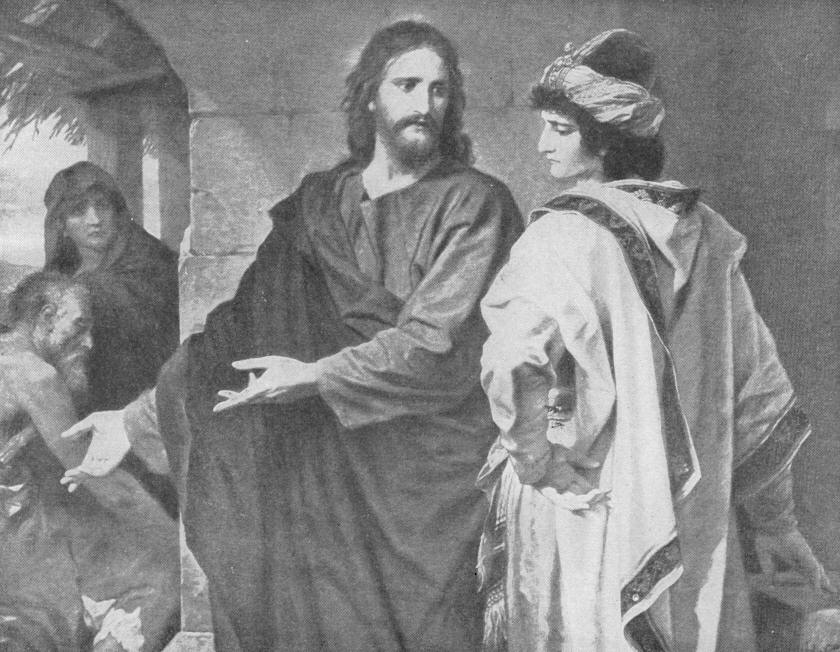
CHRIST AND THE RICH RULER By Heinrich Hofmann (1824- )
{211}
XI THE RICH YOUNG MAN. How the Lord Jesus Spoke of the Evil of Pride, and of the Dangers of the Love of Riches.
And as he was going forth, there ran one to him, and kneeled to him, and asked him, "Good Master, what shall I do that I may inherit eternal life?"
And Jesus said unto him, "Why callest thou me good? none is good save one, even God. Thou knowest the commandments, Do not kill, Do not commit adultery, Do not steal, Do not bear false witness, Do not defraud, Honor thy father and mother."
And he said unto him, "Master, all these things have I observed from my youth." And Jesus looking upon him loved him, and said unto him, "One thing thou lackest: go, sell whatsoever thou hast, and give to the poor, and thou shalt have treasure in heaven: and come, follow me." But his countenance fell at the saying, and he went away sorrowful: for he was one that had great possessions.
And Jesus looked round about, and saith unto his disciples, "With what difficulty shall they that have riches enter into the kingdom of God!"
And the disciples were amazed at his words. But Jesus answereth again, and saith unto them, "Children, how hard is it for them that trust in riches to enter into the {212} kingdom of God! It is easier for a camel to go through a needle's eye, than for a rich man to enter into the kingdom of God."
And they were astonished exceedingly, saying unto him, "Then who can be saved?" Jesus looking upon them saith, "With men it is impossible, but not with God: for all things are possible with God."
And one of the multitude said unto him, "Master, bid my brother divide the inheritance with me."
But he said unto him, "Man, who made me a judge or a divider over you?" And he said unto them, "Take heed, and keep yourselves from all covetousness: for a man's life consisteth not in the abundance of the things which he possesseth."
The Story of the Foolish Rich Man.
Jesus said, "The ground of a certain rich man brought forth plentifully: and he reasoned within himself, saying, 'What shall I do, because I have not where to bestow my harvests?' And he said, 'This will I do: I will pull down my barns, and build greater; and there will I bestow all my corn and my goods. And I will say to my soul, Soul, thou hast much goods laid up for many years; take thine ease, eat, drink, be merry.' But God said unto him, 'Thou fool, this night is thy soul required of thee; and the things which thou hast prepared, whose shall they be?'
"So is he that layeth up treasures for himself, and is not rich toward God."
{213}
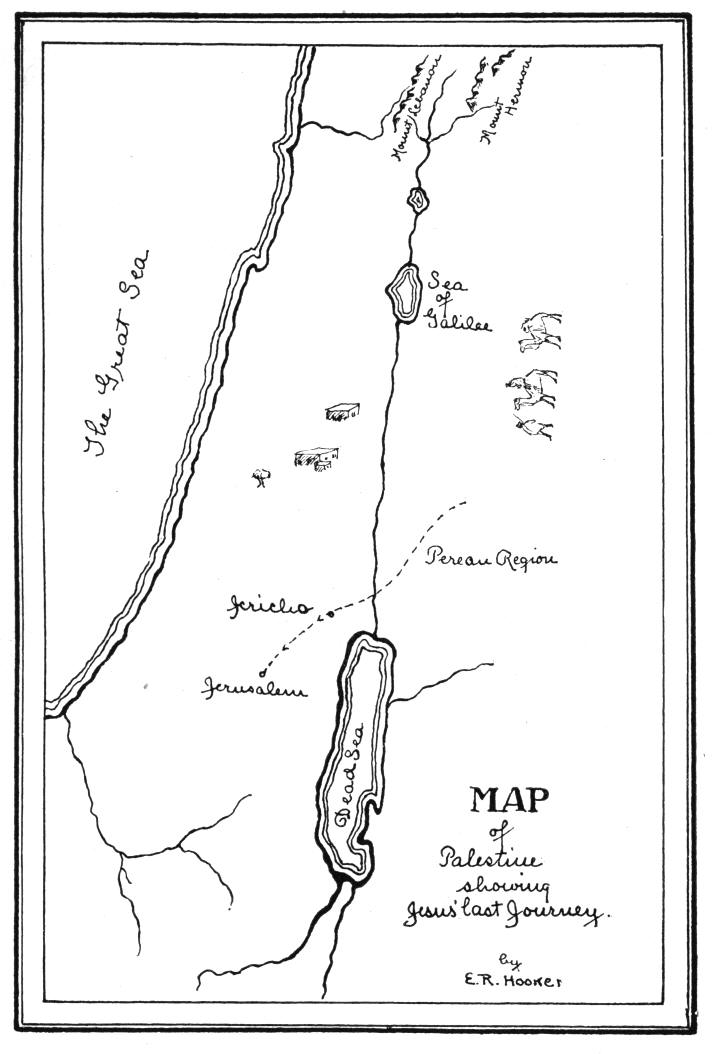
Map of Palestine showing Jesus' last Journey. by E. R. Hooker
{214}
{215}
XII THE RAISING OF LAZARUS FROM THE DEAD. How the Lord Jesus Showed His Love for His Friends.
Now a certain man was sick, Lazarus of Bethany, of the village of Mary and her sister Martha. The sisters therefore sent unto him, saying, "Lord, behold, he whom thou lovest is sick."
But when Jesus heard it, he said, "This sickness is not unto death, but for the glory of God, that the Son of God may be glorified thereby."
Now Jesus loved Martha, and her sister, and Lazarus. When therefore he heard that he was sick, he abode yet two days in the place where he was. Then after this he saith to the disciples, "Let us go into Judaea again."
The disciples saith unto him, "Rabbi, the Jews were but now seeking to stone thee; and goest thou thither again?"
Jesus answered, "Are there not twelve hours in the day? If a man walk in the day, he stumbleth not, because he seeth the light of this world. But if a man walk in the night, he stumbleth, because the light is not in him."
These things spake he: and after this he saith unto them, "Our friend Lazarus is fallen asleep; but I go, that I may awake him out of sleep."
{216}
The disciples therefore said unto him, "Lord, if he is fallen asleep, he will recover."
Now Jesus had spoken of his death: but they thought that he spoke of taking rest in sleep.
Then Jesus therefore said unto them plainly, "Lazarus is dead. And I am glad for your sakes that I was not there, that ye may believe; nevertheless let us go unto him."
Thomas therefore, who is called Didymus, said unto his fellow-disciples, "Let us also go, that we may die with him."
So when Jesus came, he found that Lazarus had been in the tomb four days already. Now Bethany was near Jerusalem, about fifteen furlongs off; and many of the Jews had come to Martha and Mary, to console them concerning their brother. Martha therefore, when she heard that Jesus was coming, went and met him: but Mary still sat in the house. Martha therefore said unto Jesus, "Lord, if thou hadst been here, my brother had not died. And even now I know that, whatsoever thou shalt ask of God, God will give thee."
Jesus saith unto her, "Thy brother shall rise again." Martha saith unto him, "I know that he shall rise again in the resurrection at the last day."
Jesus said unto her, "I am the resurrection, and the life: he that believeth on me, though he die, yet shall he live: and whosoever liveth and believeth on me shall never die. Believest thou this?"
She saith unto him, "Yea, Lord: I have believed that thou art the Christ, the Son of God, even he that cometh into the world."
{217}
{218}
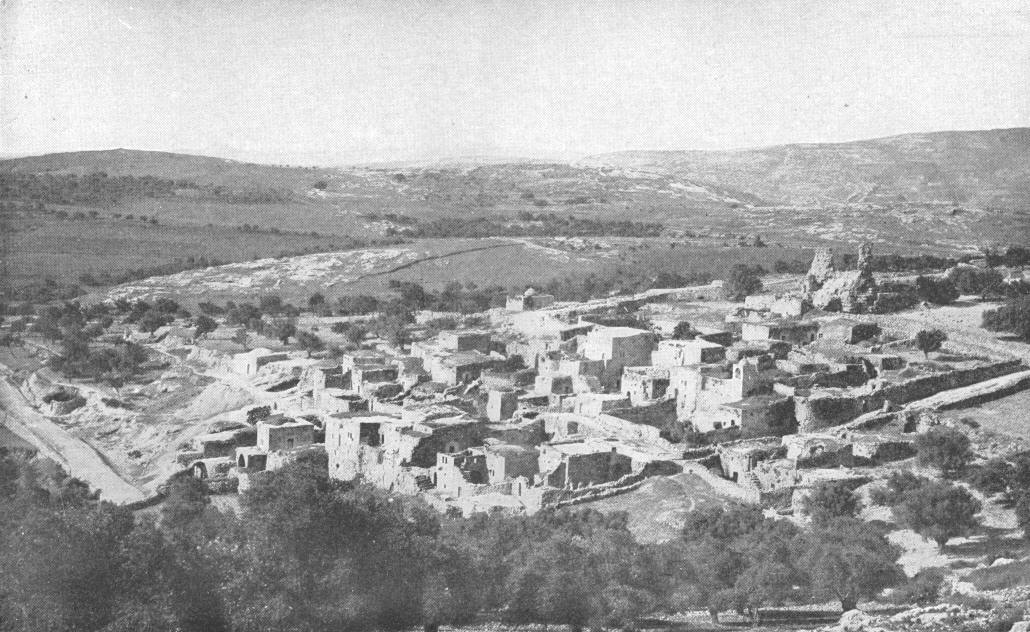
BETHANY.
The ruins to the right are the traditional house of Mary and Martha From a photograph belonging to Miss Julia W. Snow, and used by her kind permission.
The little town of Bethany, nestling among the hills, was one of the favorite resting places of Jesus. Here he would come when weary of the world and his incessant struggle against evil, and seek the peace and quiet of the home of his friends.
{219}
And when she had said this, she went away, and called Mary her sister secretly, saying, "The Master is here, and calleth thee."
And she, when she heard it, arose quickly, and went unto him.
(Now Jesus was not yet come into the village, but was still in the place where Martha met him.)
The Jews then which were with her in the house, and were comforting her, when they saw Mary, that she rose up quickly and went out, followed her, supposing that she was going to the tomb to weep there. Mary therefore, when she came where Jesus was, and saw him, fell down at his feet, saying unto him, "Lord, if thou hadst been here, my brother had not died."
When Jesus therefore saw her weeping, and the Jews also weeping which came with her, he groaned in the spirit, and was troubled, and said, "Where have ye laid him?" They say unto him, "Lord, come and see."
Jesus wept. The Jews therefore said, "Behold how he loved him!"
But some of them said, "Could not this man, who opened the eyes of him that was blind, have caused that this man also should not die?"
Jesus therefore again groaning cometh to the tomb. Now it was a cave, and a stone lay against it. Jesus saith, "Take ye away the stone."
Martha, the sister of him that was dead, saith unto him, "Lord, by this time it will be offensive: for he hath been dead four days."
{220}
Jesus saith unto her, "Said I not unto thee, that, if thou believedst, thou shouldest see the glory of God?"
So they took away the stone. And Jesus lifted up his eyes, and said, "Father, I thank thee that thou heardest me. And I knew that thou hearest me always: but because of the multitude which standeth around I said it, that they may believe that thou didst send me."
And when he had thus spoken, he cried with a loud voice, "Lazarus, come forth."
He that was dead came forth, bound hand and foot with grave-clothes; and his face was bound about with a napkin. Jesus saith unto them, "Loose him, and let him go."
Many therefore of the Jews, which came to Mary and beheld that which he did, believed on him. But some of them went away to the Pharisees, and told them the things which Jesus had done.
The rulers of the Jews then began to plot to kill Jesus. Jesus therefore walked no more openly among the Jews, but departed thence into the country near to the wilderness, into a city called Ephraim; and there he tarried with the disciples.
{221}
XIII ZACCHAEUS THE PUBLICAN. How the Lord Jesus, Still Doing Loving Deeds, Began the Journey Which Was to Lead to the Cross.
After some weeks of retirement, Jesus again went to Jerusalem. On the way, he and his disciples came to Jericho: and as he went out from Jericho, with his disciples and a great multitude, the son of Timaeus, Bartimaeus, a blind beggar, was sitting by the wayside. And when he heard that it was Jesus of Nazareth, he began to cry out, and say, "Jesus, thou son of David, have mercy on me."
And many rebuked him, that he should hold his peace: but he cried out the more a great deal, "Thou son of David, have mercy on me."
And Jesus stood still, and said, "Call ye him."
And they called the blind man, saying unto him, "Be of good cheer: rise, he calleth thee."
And he sprang up, and came to Jesus. And Jesus answered him, and said, "What wilt thou that I should do unto thee?" And the blind man said unto him, "Lord, that I may receive my sight."
And Jesus said unto him, "Go thy way; thy faith hath made thee whole." And straightway he received his sight, and followed Jesus in the way.
{222}
And he entered and was passing through Jericho. And behold, a man called by name Zacchaeus; who was a chief publican, and rich. And he sought to see who Jesus was; and could not for the crowd, because he was little of stature. And he ran on before, and climbed up into a sycamore tree to see him: for he was to pass that way. And when Jesus came to the place, he looked up, and said unto him, "Zacchaeus, make haste, and come down; for to-day I must abide at thy house."
And he made haste, and came down, and received him joyfully. And when they saw it, they all murmured, saying, "He is gone in to lodge with a man that is a sinner."
And Zacchaeus stood, and said unto the Lord, "Behold, Lord, the half of my goods I give to the poor; and if I have wrongfully exacted aught of any man, I restore fourfold."
And Jesus said unto him, "To-day is salvation come to this house, forasmuch as he also is a son of Abraham. For the Son of man came to seek and to save that which was lost."
(This is the close of Jesus' ministry outside Jerusalem. After this he and his disciples continued their journey to the city. The enemies of Jesus were plotting against him, and the storm of their hatred was about to break. Nevertheless, fully conscious of what his fate must be, the hero of humanity took up the journey to the cross.)
{223}
GETHSEMANE
'Tis midnight,--and on Olive's brow, The star is dimmed that lately shone; 'Tis midnight--In the garden now The suffering Saviour prays alone. 'Tis midnight,--and, from all removed, Immanuel wrestles, lone with fears; E'en the disciple that He loved Heeds not his Master's grief and tears. 'Tis midnight,--and for others' guilt The Man of sorrows weeps in blood; Yet He, who hath in anguish knelt, Is not forsaken by his God. 'Tis midnight,--and, from ether-plains, Is borne the song that angels know; Unheard by mortals are the strains That sweetly soothe the Saviour's woe.
--W. B. Tappan.
{224}
RIDE ON IN MAJESTY
Ride on! ride on in majesty! In lowly pomp ride on to die. O Christ, Thy triumphs now begin O'er captive death and conquered sin. Ride on! ride on in majesty! The winged squadrons of the sky Look down with sad and wondering eyes To see the approaching sacrifice. Ride on! ride on in majesty! The last and fiercest strife is nigh: The Father on His sapphire throne Expects His own anointed Son. Ride on! ride on in majesty! In lowly pomp ride on to die; Bow Thy meek head to mortal pain; Then take, O God, Thy power, and reign.
--H. H. Milman.
{225}
CALVARY
There is a green hill far away, Without a city wall, Where the dear Lord was crucified Who died to save us all. We may not know, we cannot tell What pains He had to bear; But we believe it was for us He hung and suffered there. He died that we might be forgiven, He died to make us good, That we might go at last to Heaven, Saved by His precious blood. There was no other good enough To pay the price of sin; He only could unlock the gate Of Heaven, and let us in. O, dearly, dearly has He loved, And we must love Him, too, And trust in His redeeming blood, And try His works to do.
--Mrs. Cecil Frances Alexander.
{226}
THE VICTOR
Look, ye saints, the sight is glorious, See the "Man of Sorrows" now; From the fight returned victorious, Every knee to Him shall bow: Crown Him, crown Him; Crowns become the Victor's brow. Crown the Saviour, angels, crown Him: Rich the trophies Jesus brings: In the seat of power enthrone Him, While the vault of Heaven rings: Crown Him, crown Him; Crown the Saviour "King of kings." Sinners in derision crowned Him, Mocking thus the Saviour's claim; Saints and angels crowd around Him, Own His title, praise His Name: Crown Him, crown Him; Spread abroad the Victor's fame. Hark, those bursts of acclamation! Hark, those loud triumphant chords! Jesus takes the highest station: O what joy the sight affords! Crown Him, crown Him; "King of kings, and Lord of lords."
--Thomas Kelly.
{227}
How the Lord Jesus spent His last days in Jerusalem, how He loved His friends unto the end, how He fell into the hands of His enemies, and how he crowned a life of service with a heroic death.
{228}
PERSONS OF THE STORY. The LORD JESUS. The Disciples. Lazarus. Mary. Martha. Judas. Annas. Caiaphas. Herod. Pilate, the Roman Governor. Joseph of Arimathaea. The people of Jerusalem, Pharisees, priests, soldiers, the two thieves. Mary, the mother of Jesus. Mary Magdalene and other women. PLACES OF THE STORY. Jerusalem. Bethany. An upper chamber in the city. Gethsemane. Palace of the high priest. The Hall of Judgment. Pilate's palace. The palace of Herod. Pilate's Judgment Hall. Calvary.
{229}
I THE SUPPER AT BETHANY How the Lord Jesus Was Bid to a Feast of Loving Tribute.
The passover of the Jews was at hand: and many went up to Jerusalem out of the country before the passover, to purify themselves. They sought therefore for Jesus, and spoke one with another, as they stood in the temple, "What think ye? That he will not come to the feast?"
Now the chief priests and the Pharisees had given commandment, that, if any man knew where he was, he should show it, that they might take him.
Jesus therefore six days before the passover came to Bethany, where Lazarus was, whom Jesus raised from the dead. So they made him a supper there: and Martha served; and Lazarus was one of them that sat at meat with him. Mary therefore took a pound of ointment of spikenard, very precious, and anointed the feet of Jesus, and wiped his feet with her hair: and the house was filled with the odor of the ointment. But Judas Iscariot, one of his disciples, who was about to betray him, saith, "Why was not this ointment sold for three hundred pence, and given to the poor?"
{230}
But Jesus said, "Let her alone; why trouble ye her? she hath wrought a good work on me. For ye have the poor always with you, and whensoever ye will ye can do them good: but me ye have not always. She hath done what she could: she hath anointed my body beforehand for the burying. And verily I say unto you, Wheresoever the gospel shall be preached throughout the whole world, that also which this woman hath done shall be spoken of for a memorial of her."
{231}
{232}
THE TRIUMPHANT ENTRY OF JESUS INTO JERUSALEM.
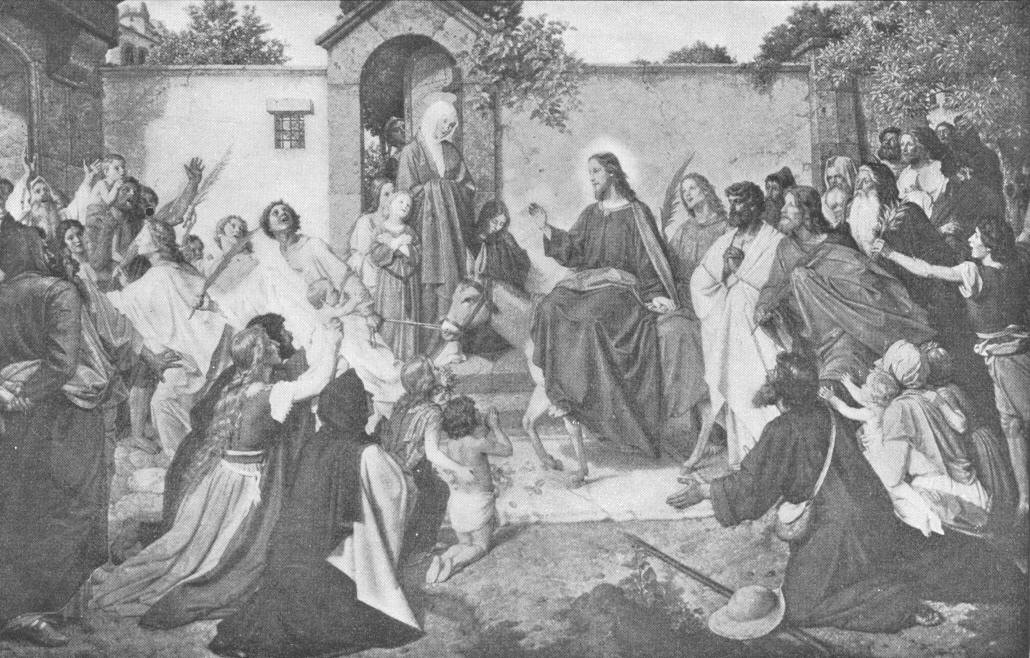
{233}
II THE ENTRY INTO JERUSALEM. How the Lord Jesus Rode for Once in Triumph. (THE WEEK OF THE CRUCIFIXION--SUNDAY.)
The next morning he went to Jerusalem, and when he drew near Bethphage and Bethany, at the mount that is called the Mount of Olives, he sent two of the disciples, saying, "Go your way into the village over against you; in which as ye enter ye shall find a colt tied, whereon no man ever yet sat: loose him, and bring him. And if any one ask you, 'Why do ye loose him?' thus shall ye say, 'The Lord hath need of him.'"
And they that were sent went away, and found even as he had said unto them. And as they were loosing the colt, the owners thereof said unto them, "Why loose ye the colt?"
And they said, "The Lord hath need of him."
And they brought him to Jesus: and they threw their garments upon the colt, and set Jesus thereon. And as he went, they spread their garments in the way. And as he was now drawing nigh, at the descent of the Mount of Olives, the whole multitude of the disciples began to rejoice {234} and praise God with a loud voice for all the mighty works which they had seen; saying,--
"Blessed is the King that cometh in the name of the Lord: peace in heaven, and glory in the highest!"
And some of the Pharisees from the multitude said unto him, "Master, rebuke thy disciples."
And he answered and said, "I tell you that, if these shall hold their peace, the stones will cry out."
And when he drew nigh, he saw the city and wept over it, saying, "If thou hadst known in this day, even thou, the things which belong unto peace! but now they are hid from thine eyes. For the days shall come upon thee, when thine enemies shall besiege thee, and keep thee in on every side, and shall dash thee to the ground, and thy children within thee; and they shall not leave in thee one stone upon another; because thou knewest not the time of thy visitation."
And he entered into Jerusalem, into the temple; and when he had looked round about upon all things, it being now eventide, he went out unto Bethany with the twelve.
And every day he was teaching in the temple; and every night he went out, and lodged in the Mount of Olives. And all the people came early in the morning to him in the temple, to hear him.
But the chief priests and the scribes and the principal men of the people sought to destroy him: and they could not find what they might do; for the people all hung upon him, listening.
{235}
{236}
JESUS AND THE MONEY-CHANGERS. By Heinrich Hofmann
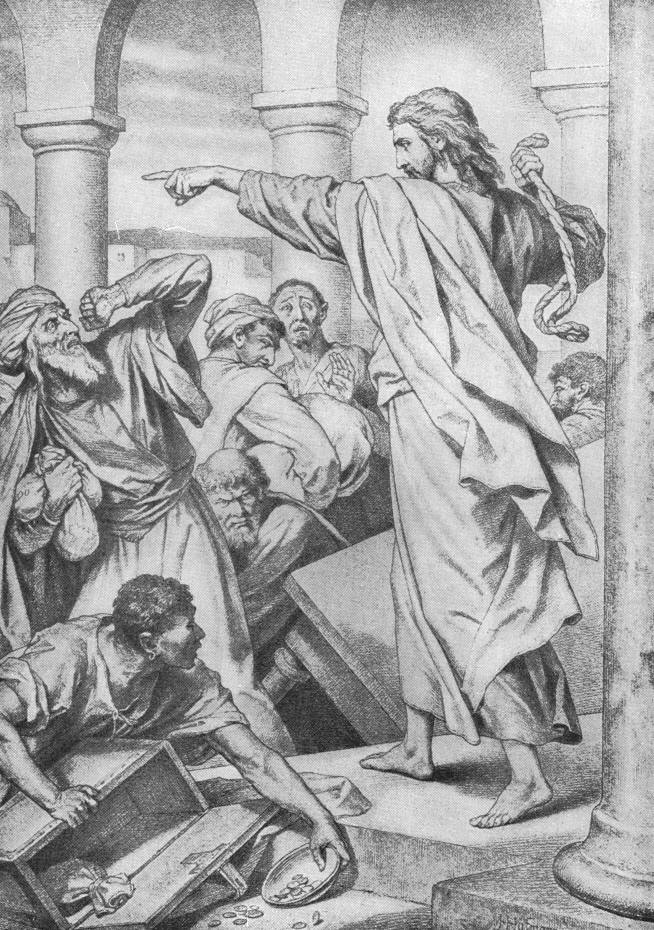
{237}
III IN THE TEMPLE. How the Lord Jesus Drove the Money Changers from the House of God. (THE WEEK OF THE CRUCIFIXION--MONDAY.)
On Monday, Jesus came into the city, and taught, but we know little of what he said on this day. Perhaps it was on this day that the following incident occurred, by which he taught that God's house should be pure:--
And Jesus entered into the temple of God, and cast out all them that sold and bought in the temple, and overthrew the tables of the money-changers, and the seats of them that sold the doves; and he saith unto them, "It is written, 'My house shall be called a house of prayer: but ye make it a den of robbers.'"
And the blind and the lame came to him in the temple: and he healed them. But when the chief priests and the scribes saw the wonderful things that he did, and the children that were crying in the temple and saying, "Hosanna to the son of David"; they were moved with indignation, and said unto him, "Hearest thou what these are saying?"
And Jesus saith unto them, "Yea: did ye never read, 'Out of the mouth of babes and sucklings thou hast perfected praise'?"
And he left them, and went forth out of the city to Bethany, and lodged there.
{238}
IV LAST DAYS IN JERUSALEM How the Lord Jesus Spoke with Those that Hated Him. (THE WEEK OF THE CRUCIFIXION--TUESDAY.)
And it came to pass, on one of the days, as he was teaching the people in the temple, and preaching the gospel, there came upon him the chief priests and the scribes with the elders; and they spoke, saying unto him, "Tell us: By what authority doest thou these things? or who is he that gave thee this authority?"
And he answered and said unto them, "I also will ask you a question; and tell me: The baptism of John, was it from heaven, or from men?"
And they reasoned with themselves, saying, "If we shall say, 'From heaven'; he will say, 'Why did ye not believe him?' But if we shall say, 'From men'; all the people will stone us: for they are persuaded that John was a prophet."
And they answered that they knew not whence it was.
And Jesus said unto them, "Neither tell I you by what authority I do these things." And he told them--
The Story of the Wicked Husbandmen.
Jesus said, "A man planted a vineyard, and let it out to husbandmen, and went into another country for a long {239} time. And at the season he sent unto the husbandmen a servant, that they should give him of the fruit of the vineyard: but the husbandmen beat him, and sent him away empty. And he sent yet another servant: and him also they beat, and handled him shamefully, and sent him away empty. And he sent yet a third: and him also they wounded, and cast him forth. And the lord of the vineyard said, 'What shall I do? I will send my beloved son: it may be they will reverence him.'
"But when the husbandmen saw him, they reasoned one with another, saying, 'This is the heir: let us kill him, that the inheritance may be ours.' And they cast him out of the vineyard, and killed him. What therefore will the lord of the vineyard do unto them? He will come and destroy these husbandmen, and will give the vineyard unto others."
And when they heard it they said, "God forbid." But he looked upon them, and said, "What then is this that is written,--
'The stone which the builders rejected, The same was made the head of the corner'?
"Everyone that falleth on that stone shall be broken to pieces; but on whomsoever it shall fall, it will scatter him as dust."
And the scribes and the chief priests sought to lay hands on him in that very hour; and they feared the people: for they saw that he spoke this parable against them. And they watched him, and sent forth spies, which pretended to be righteous, that they might take hold of his {240} speech, so as to deliver him up to the authority of the governor.
The Question About Tribute.
And they asked him, saying, "Master, we know that thou sayest and teachest rightly, and acceptest not the person of any, but of a truth teachest the way of God: Is it lawful for us to give tribute unto Caesar, or not?"
But he perceived their craftiness, and said unto them, "Show me a penny. Whose image and superscription hath it?"
And they said, "Caesar's."
And he said unto them, "Then render unto Caesar the things that are Caesar's, and unto God the things that are God's."
And they were not able to take hold of the saying before the people: and they marveled at his answer, and held their peace.
The Greatest of All Commandments.
And one of the scribes came, and heard them questioning together, and knowing that he had answered them well, asked him, "What commandment is the first of all?"
Jesus answered, "The first is, 'Hear, O Israel; The Lord our God, the Lord is one: and thou shalt love the Lord thy God with all thy heart, and with all thy soul, and with all thy mind, and with all thy strength.' The second is this, 'Thou shalt love thy neighbor as thyself.' There is none other commandment greater than these."
{241}
{242}
ON THE MOUNT OF OLIVES. From a photograph taken by Mrs. Fontaine Meriwether, and used by her kind permission
This view is near the top of the mountain on the road which winds over it towards Bethany.
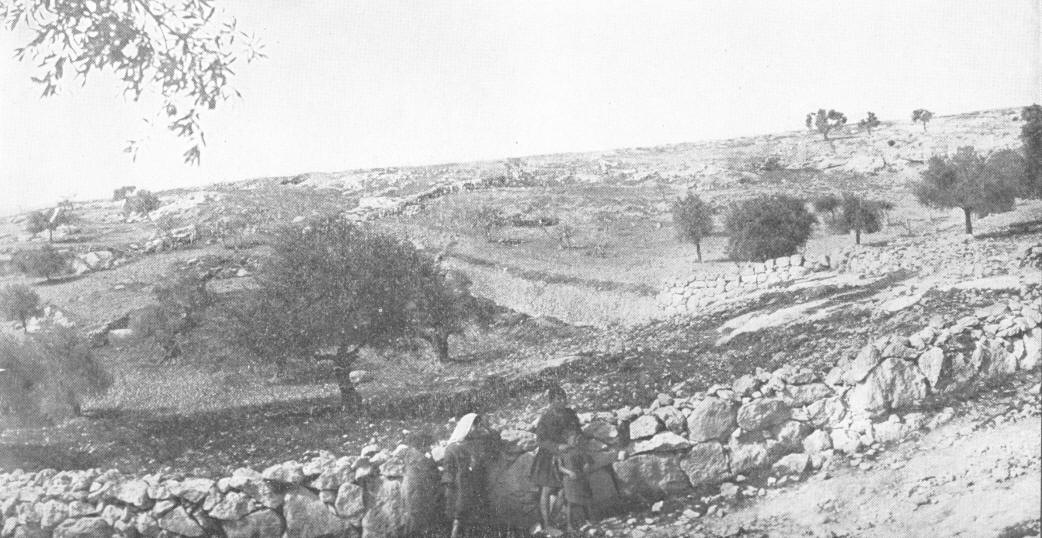
{243}
And the scribe said unto him, "Of a truth, Master, thou hast well said that he is one; and there is none other but he: and to love him with all the heart, and with all the understanding, and with all the strength, and to love his neighbor as himself, is much more than all whole burnt offerings and sacrifices."
And when Jesus saw that he answered discreetly, he said unto him, "Thou art not far from the kingdom of God."
And no man after that durst ask him any question.
How the Lord Jesus Spoke with Those that Loved Him. The Poor Widow.
And he sat down over against the treasury, and beheld how the multitude cast money into the treasury: and many that were rich cast in much. And there came a poor widow, and she cast in two mites, which make a farthing. And he called unto him his disciples, and said unto them, "Verily I say unto you, This poor widow cast in more than all they which are casting into the treasury: for they all did cast in of their abundance; but she of her want cast in all that she had, even all her living."
"We Would See Jesus."
Now there were certain Greeks among those who went up to worship at the feast: these therefore came to Philip, who was of Bethsaida of Galilee, and said, "Sir, we would see Jesus."
Philip cometh and telleth Andrew: Andrew cometh, and Philip, and they tell Jesus. And Jesus answereth them, saying, "The hour is come, that the Son of man should {244} be glorified. Verily, verily, I say unto you, Except a grain of wheat fall into the earth and die, it abideth by itself alone; but if it die, it beareth much fruit. He that loveth his life shall lose it; and he that hateth his life in this world shall keep it unto life eternal. If any man serve me, let him follow me; and where I am, there shall also my servant be: if any man serve me, him will the Father honor. Now is my soul troubled; and what shall I say? Father, save me from this hour. But for this cause came I unto this hour. Father, glorify thy name." There came therefore a voice out of heaven saying, "I have both glorified it, and will glorify it again."
The multitude therefore, that stood by, and heard it, said that it had thundered: others said, "An angel hath spoken to him."
Jesus answered and said, "This voice hath not come for my sake, but for your sakes. Now is the judgment of this world: now shall the prince of this world be cast out. And I, if I be lifted up from the earth, will draw all men unto myself."
The Story of the Faithful Servant.
Jesus said, "A certain man going into another country, called his own servants, and delivered unto them his goods. And to one he gave five talents, to another two, to another one; to each according to his several ability; and he went on his journey. Straightway he who received the five talents went and traded with them, and made other five talents. In like manner he also who received the two {245} gained other two. But he who received the one went away and digged in the earth, and hid his lord's money.
"Now after a long time the lord of those servants cometh, and maketh a reckoning with them. And he who received the five talents came and brought other five talents, saying, 'Lord, thou deliveredst unto me five talents: lo, I have gained other five talents.'
"His Lord said unto him, 'Well done, thou good and faithful servant: thou hast been faithful over a few things, I will set thee over many things: enter thou into the joy of thy lord.'
"And he also who received the two talents came and said, 'Lord, thou deliveredst unto me two talents: lo, I have gained other two talents.'
"His lord said unto him, 'Well done, thou good and faithful servant; thou hast been faithful over a few things, I will set thee over many things: enter thou into the joy of thy lord.'
"And he also who had received the one talent came and said, 'Lord, I knew thee that thou art a hard man, reaping where thou didst not sow, and gathering where thou didst not scatter: and I was afraid, and went away and hid thy talent in the earth: lo, thou hast thine own.'
"But his lord answered and said unto him, 'Thou wicked and slothful servant, thou knewest that I reap where I sowed not, and gather where I did not scatter; thou oughtest therefore to have given my money to the bankers, and at my coming I should have received back mine own with interest. Take ye away therefore the talent from him, {246} and give it unto him that hath the ten talents. For unto everyone that hath shall be given, and he shall have abundance: but from him that hath not, even that which he hath shall be taken away. And cast ye out the unprofitable servant into the outer darkness: there shall be weeping and gnashing of teeth.'"
The Judgment of the King.
Then said Jesus, "But when the Son of man shall come in his glory, and all the angels with him, then shall he sit on the throne of his glory: and before him shall be gathered all the nations: and he shall separate them one from another, as the shepherd separateth the sheep from the goats: and he shall set the sheep on his right hand, but the goats on the left. Then shall the King say unto them on his right hand, 'Come, ye blessed of my Father, inherit the kingdom prepared for you from the foundation of the world: for I was hungry, and ye gave me meat: I was thirsty, and ye gave me drink: I was a stranger, and ye took me in; naked, and ye clothed me: I was sick, and ye visited me: I was in prison, and ye came unto me.'
"Then shall the righteous answer him, saying, 'Lord, when saw we thee hungry, and fed thee? or thirsty, and gave thee drink? And when saw we thee a stranger, and took thee in? or naked, and clothed thee? And when saw we thee sick, or in prison, and came unto thee?'
"And the King shall answer and say unto them, 'Verily I say unto you, Inasmuch as ye did it unto one of the least of these my brethren, ye did it unto me.'
{247}
"Then shall he say also unto them on the left hand, 'Depart from me, ye cursed, into the eternal fire which is prepared for the devil and his angels: for I was hungry, and ye gave me no meat: I was thirsty, and ye gave me no drink: I was a stranger, and ye took me not in; naked, and ye clothed me not; sick, and in prison, and ye visited me not.'
"Then shall they also answer, saying, 'Lord, when saw we thee hungry, or thirsty, or a stranger, or naked, or sick, or in prison, and did not minister unto thee?'
"Then shall he answer them, saying, 'Verily I say unto you, Inasmuch as ye did it not unto one of the least of these, ye did it not unto me. And these shall go away into eternal punishment: but the righteous into eternal life.'"
{248}
V THE LAST SUPPER How the Lord Jesus Showed His Love for His Friends on the Last Night of Their Fellowship. (THE WEEK OF THE CRUCIFIXION--WEDNESDAY--THURSDAY.)
(We do not know how Jesus spent Wednesday. Perhaps he did not go to the city, but remained in loving talk with his disciples and friends at Bethany. We do not know what he did on Thursday, until night. Then comes the story of the Last Supper, and the long talk between Jesus and his disciples.)
Judas Plans to Betray Jesus.
Now after two days was the feast of the passover and the unleavened bread: and the chief priests and the scribes sought how they might take him by treachery, and kill him: but they said, "Not during the feast, lest haply there shall be a tumult of the people."
And Judas Iscariot, he that was one of the twelve, went away unto the chief priests, that he might deliver him unto them. And they, when they heard it, were glad, and promised to give him money. And he sought how he might conveniently deliver him unto them.
The Preparation for the Supper.
And on the first day of unleavened bread, when they sacrificed the passover, his disciples say unto him, "Where {249} wilt thou that we go and make ready that thou mayest eat the passover?"
And he sendeth two of his disciples, and saith unto them, "Go into the city, and there shall meet you a man bearing a pitcher of water: follow him; and wheresoever he shall enter in, say to the goodman of the house, 'The Master saith, Where is my guest-chamber, where I shall eat the passover with my disciples?' And he will himself show you a large upper room furnished and ready: and there make ready for us."
And the disciples went forth, and came into the city, and found as he had said unto them: and they made ready the passover.
The Last Supper.
And when the hour was come, he sat down, and the apostles with him. And he said unto them, "I have earnestly desired to eat this passover with you before I suffer."
And he received a cup, and when he had given thanks, he said, "Take this, and divide it among yourselves: for I say unto you, I will not drink from henceforth of the fruit of the vine, until the kingdom of God shall come."
And he took bread, and when he had given thanks, he broke it, and gave to them, saying, "This is my body which is given for you: this do in remembrance of me."
And the cup in like manner after supper, saying, "This cup is the new covenant in my blood, even that which is poured out for you."
And during supper, the devil having already put into the heart of Judas Iscariot, Simon's son, to betray him, {250} Jesus, knowing that the Father had given all things into his hands, and that he came forth from God, and goeth unto God, riseth from supper, and layeth aside his garments; and he took a towel, and girded himself. Then he poureth water into the basin, and began to wash the disciples' feet, and to wipe them with the towel wherewith he was girded. So he cometh to Simon Peter. He saith unto him, "Lord, dost thou wash my feet?"
Jesus answered and said unto him, "What I do thou knowest not now; but thou shalt understand hereafter."
Peter saith unto him, "Thou shalt never wash my feet."
Jesus answered him, "If I wash thee not, thou hast no part with me."
Simon Peter saith unto him, "Lord, not my feet only, but also my hands and my head."
Jesus saith to him, "He that is bathed needeth only to wash his feet, and is clean every whit: and ye are clean, but not all."
For he knew him that should betray him; therefore said he, "Ye are not all clean."
So when he had washed their feet, and taken his garments, and sat down again, he said unto them, "Know ye what I have done to you? Ye call me 'Master,' and, 'Lord': and ye say well; for so I am. If I then, the Lord and the Master, have washed your feet, ye also ought to wash one another's feet. For I have given you an example, that ye also should do as I have done to you. Verily, verily, I say unto you, A servant is not greater than his lord; neither one that is sent greater than he that sent him. If ye know these things, blessed are ye if ye do them."
{251}
{252}
THE LAST SUPPER. By Leonardo da Vinci (1452-1519)
This was painted on the wall of a monastery in Milan. It has been damaged and mutilated, and now is almost faded out.
This is one of the greatest pictures ever painted. The following is an explanation of the picture: "Judas half turns to discover of whom St. Peter is speaking so passionately, and is preparing himself to deny everything. But he is already discovered. St. James the Less, passing his arm over the shoulder of St. Andrew, touches St. Peter to tell him that the traitor is at his side. St. Andrew looks at Judas with horror, and St. Bartholomew, at the end of the table, has started up from his seat to regard him more intently. At the left of Christ, St. James protests his innocence by a natural gesture. St. Thomas, pressing near to Christ, seems to ask 'One of us?' St. Philip, the youngest of the apostles, places his hand over his heart and rises to protest his fidelity. St. Matthew repeats the terrible words to the indignant St. Simon, who refuses to believe them. St. Thaddeus, who has first told them to him, points to Matthew to confirm them. The dying rays of evening light add deeper somberness to the sad face of the Christ."
--Stendhal, "History of Italian Painters"
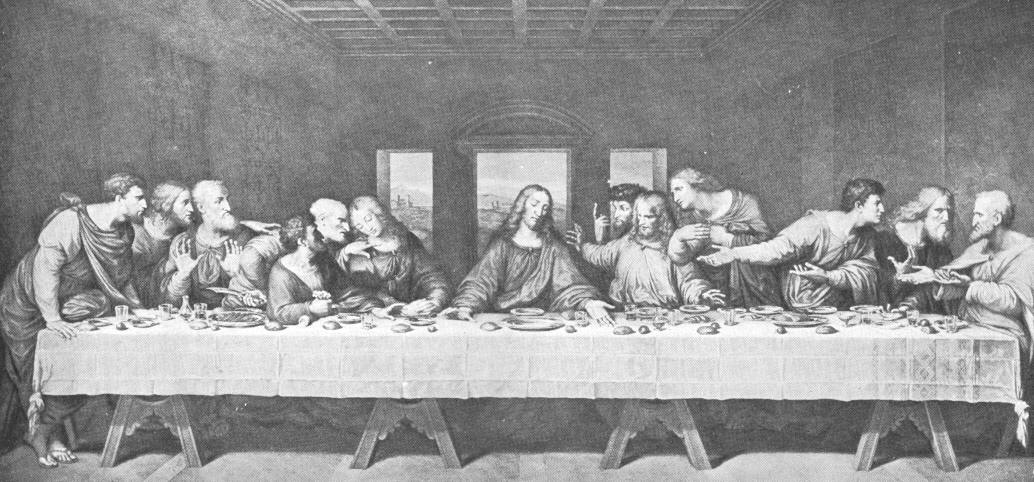
{253}
When Jesus had thus said, he was troubled in spirit, and said, "Verily, verily, I say unto you, one of you shall betray me."
The disciples looked one on another, doubting of whom he spoke. There was at the table reclining in Jesus' bosom one of his disciples, whom Jesus loved. Simon Peter therefore beckoneth to him, and saith unto him, "Tell us who it is of whom he speaketh."
He leaning back, as he was, on Jesus' breast, said unto him, "Lord, who is it?"
Jesus therefore answereth, "He it is, for whom I shall dip the sop, and give it him."
So when he had dipped the sop, he took and gave it to Judas, the son of Simon Iscariot. And after the sop, then entered Satan into him. Jesus therefore saith unto him, "What thou doest, do quickly."
Now no man at the table knew why he spoke this to him. For some thought, because Judas had the bag, Jesus said unto him, "Buy what things we have need of for the feast"; or, that he should give something to the poor. He then having received the sop went out straightway: and it was night.
When therefore he was gone out, Jesus said, "Now is the Son of man glorified, and God is glorified in him. Little children, yet a little while I am with you. Ye shall seek me: and as I said unto the Jews, 'Whither I go, ye cannot come'; so now I say unto you. A new commandment I give unto you, that ye love one another; even as I have loved you, that ye also love one another. By this shall all {254} men know that ye are my disciples, if ye love one another."
Simon Peter saith unto him, "Lord, whither goest thou?"
Jesus answered, "Whither I go, thou canst not follow me now; but thou shalt follow afterwards."
Peter saith unto him, "Lord, why cannot I follow thee now? I will lay down my life for thee."
Jesus answereth, "Wilt thou lay down thy life for me? Verily, verily, I say unto thee, The cock shall not crow, before thou hast denied me thrice."
"Let Not Your Heart be Troubled."
"Let not your heart be troubled: ye believe in God, believe also in me. In my father's house are many mansions; if it were not so, I would have told you; for I go to prepare a place for you. And if I go to prepare a place for you, I come again, and will receive you unto myself; that where I am, there ye may be also. And whither I go, ye know the way."
Thomas saith unto him, "Lord, we know not whither thou goest; how know we the way?"
Jesus saith unto him, "I am the way, and the truth, and the life: no one cometh unto the Father, but by me. If ye had known me, ye would have known my Father also: from henceforth ye know him, and have seen him."
Philip saith unto him, "Lord, show us the Father, and it sufficeth us."
Jesus saith unto him, "Have I been so long time with you, and dost thou not know me, Philip? he that hath seen me hath seen the Father; how sayest thou, 'Show us the Father?'
{255}
{256}
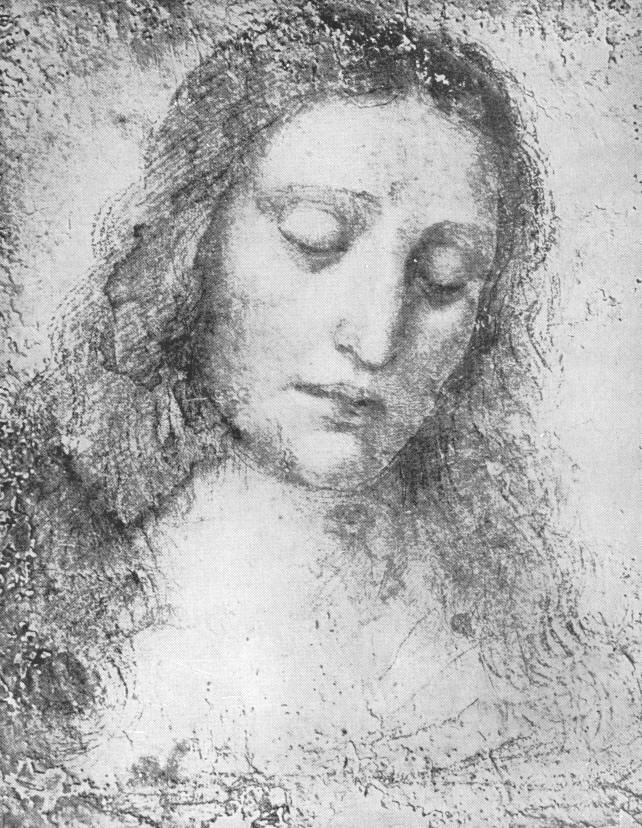
HEAD OF CHRIST. By Leonardo da Vinci (1452-1519)
This was a study made by the great master for his picture, "The Last Supper."
{257}
Believest thou not that I am in the Father, and the Father in me? The words that I say unto you I speak not from myself: but the Father abiding in me doeth his works. Believe me that I am in the Father, and the Father in me: or else believe me for the very works' sake. Verily, verily, I say unto you, He that believeth on me, the works that I do shall he do also; and greater works than these shall he do; because I go unto the Father. And whatsoever ye shall ask in my name, that will I do, that the Father may be glorified in the Son. If ye shall ask me anything in my name, that will I do. If ye love me, ye will keep my commandments. And I will pray the Father, and he shall give you another Comforter, that he may be with you for ever, even the Spirit of truth: whom the world cannot receive; for it beholdeth him not, neither knoweth him: ye know him; for he abideth with you, and shall be in you. I will not leave you comfortless. I come unto you. Yet a little while, and the world beholdeth me no more; but ye behold me: because I live, ye shall live also. In that day ye shall know that I am in my Father, and ye in me, and I in you. He that hath my commandments, and keepeth them, he it is that loveth me: and he that loveth me shall be loved of my Father, and I will love him, and will manifest myself unto him."
Judas (not Iscariot) said unto him, "Lord, why is it that thou wilt manifest thyself unto us, and not unto the world?"
Jesus answered and said unto him, "If a man love me, he will keep my word: and my Father will love him, and {258} we will come unto him, and make our abode with him. He that loveth me not keepeth not my words: and the word which ye hear is not mine, but the Father's who sent me.
"These things have I spoken unto you, while yet abiding with you. But the Comforter, even the Holy Spirit, whom the Father will send in my name, he shall teach you all things, and bring to your remembrance all that I said unto you. Peace I leave with you; my peace I give unto you: not as the world giveth, give I unto you. Let not your heart be troubled, neither let it be afraid. Ye heard how I said to you, 'I go away, and I come unto you.' If ye loved me, ye would have rejoiced, because I go unto the Father: for the Father is greater than I. And now I have told you before it come to pass, that, when it is come to pass, ye may believe. I will no more speak much with you, for the prince of the world cometh: and he hath nothing in me; but that the world may know that I love the Father, and as the Father gave me commandment, even so I do."
Jesus is the True Vine.
"I am the true vine, and my Father is the husbandman. Every branch in me that beareth not fruit, he taketh away: and every branch that beareth fruit, he cleanseth, that it may bear more fruit. Already ye are clean because of the word which I have spoken unto you. Abide in me, and I in you. As the branch cannot bear fruit of itself, except it abide in the vine; so neither can ye, except ye abide in me. I am the vine, ye are the branches:
{259}
{260}
MOUNT OF OLIVES--GETHSEMANE. The Mount of Olives, the traditional site of Gethsemane, on the right--the space inclosed by a wall.
"It was a garden or orchard marked probably by some slight inclosure. The name Gethsemane means 'the oil press,' and doubtless it was so called from a press to crush the olives yielded by the countless trees from which the hill derives its designation."
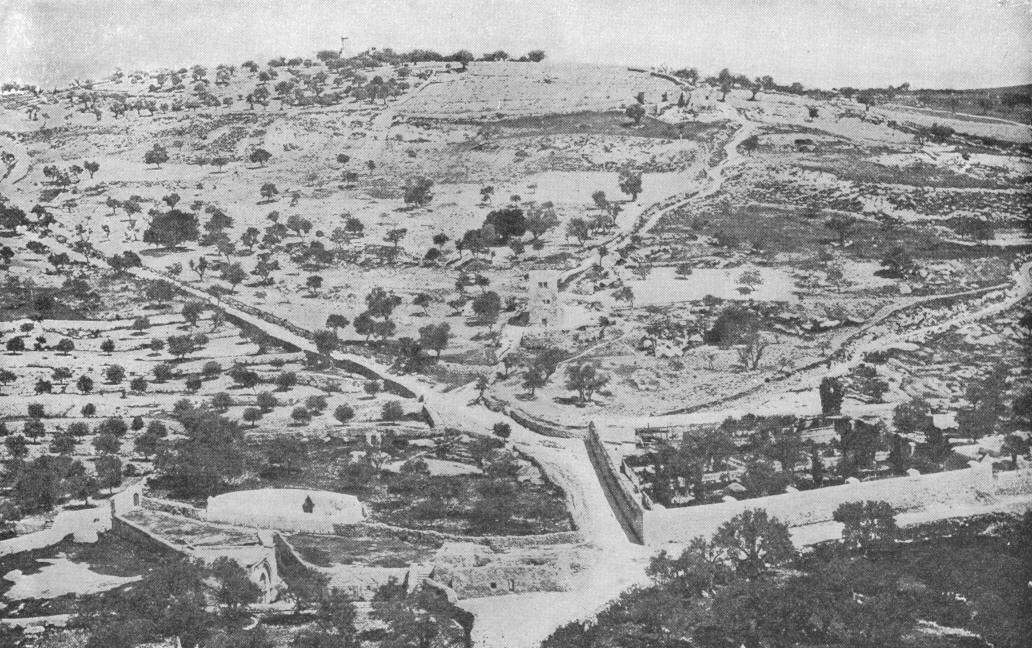
{261}
He that abideth in me, and I in him, the same beareth much fruit: for apart from me ye can do nothing. If a man abide not in me, he is cast forth as a branch, and is withered; and they gather them and cast them into the fire, and they are burned. If ye abide in me, and my words abide in you, ask whatsoever ye will, and it shall be done unto you. Herein is my Father glorified, that ye bear much fruit; and so shall ye be my disciples. Even as the Father hath loved me, I also have loved you: abide ye in my love. If ye keep my commandments, ye shall abide in my love; even as I have kept my Father's commandments, and abide in his love. These things have I spoken unto you, that my joy may be in you, and that your joy may be full. This is my commandment, that ye love one another, even as I have loved you. Greater love hath no man than this, that a man lay down his life for his friends. Ye are my friends, if ye do the things which I command you. No longer do I call you servants; for the servant knoweth not what his lord doeth: but I have called you friends; for all things that I heard from my Father I have made known unto you. Ye did not choose me, but I chose you, and appointed you, that ye should go and bear fruit, and that your fruit should abide: that whatsoever ye shall ask of the Father in my name, he may give it you. These things I command you, that ye may love one another."
Jesus Prays for His Disciples.
These things spoke Jesus; and lifting up his eyes to heaven, he said, "Father, the hour is come; glorify thy {262} Son, that the Son may glorify thee: even as thou gavest him authority over all flesh, that to all whom thou hast given him, he should give eternal life. And this is life eternal, that they should know thee the only true God, and Jesus Christ whom thou didst send. I have glorified thee on the earth, I have accomplished the work which thou hast given me to do. And now, O Father, glorify thou me with thine own self with the glory which I had with thee before the world was. I manifested thy name unto the men whom thou gavest me out of the world: thine they were, and thou gavest them to me; and they have kept thy word. Now they know that all things whatsoever thou hast given me are from thee: for the words which thou gavest me I have given unto them; and they received them, and knew of a truth that I came forth from thee, and they believed that thou didst send me. I pray for them: I pray not for the world, but for those whom thou hast given me; for they are thine: and all things that are mine are thine, and thine are mine: and I am glorified in them. And I am no more in the world, but these are in the world, and I come to thee. Holy Father, keep them in thy name whom thou hast given me, that they may be one, even as we are one. While I was with them, I kept in thy name those whom thou hast given me: and I guarded them, and not one of them perished, but the son of perdition; that the scripture might be fulfilled. But now I come to thee; and these things I speak in the world, that they may have my joy made full in themselves. I have given them thy word; and the world hated them, because they are not of the {263} world, even as I am not of the world. I pray not that thou shouldest take them from the world, but that thou shouldest keep them from the evil. They are not of the world, even as I am not of the world. Sanctify them in the truth: thy word is truth. As thou didst send me into the world, even so sent I them into the world. And for their sakes I sanctify myself, that they themselves also may be sanctified in truth. Neither for these only do I pray, but for them also that believe on me through their word; that they may all be one; even as thou, Father, art in me, and I in thee, that they also may be in us: that the world may believe that thou didst send me. And the glory which thou hast given me I have given unto them; that they may be one, even as we are one; I in them, and thou in me, that they may be perfected into one; that the world may know that thou didst send me, and lovedst them, even as thou lovedst me. Father, I desire that those whom thou hast given me should be with me to behold the glory, which thou hast given me: for thou lovedst me before the foundation of the world. O righteous Father, the world knew thee not, but I knew thee; and these knew that thou didst send me; and I made known unto them thy name, and will make it known; that the love wherewith thou lovedst me may be in them, and I in them."