Volume 1 — THE TEN WAZIRS; OR THE HISTORY OF KING AZADBAKHT AND HIS SON.[130]
Richard Francis Burton translation · Edition 2
THE TEN WAZIRS; OR THE HISTORY OF KING AZADBAKHT AND HIS SON.[130]
There was once, of old days, a king of the kings, whose name was Azádbakht; his capital was hight Kunaym Madúd[131] and his 56kingdom extended to the confines of Sístán[132] and from the confines of Hindostan to the Indian Ocean. He had ten Wazirs, who ordered his kingship and his dominion, and he was possessed of judgment and exceeding wisdom. One day he went forth with certain of his guards to the chase and fell in with an Eunuch riding a mare and hending in hand the halter of a she-mule, which he led along. On the mule’s back was a domed litter of brocade purfled with gold and girded with an embroidered band set with pearls and gems, and about it was a company of Knights. When King Azadbakht saw this, he separated himself from his suite and, making for the horsemen and that mule, questioned them, saying, “To whom belongeth this litter and what is therein?” The Eunuch answered, (for he knew not that the speaker was King Azadbakht,) saying, “This litter belongeth to Isfahand, Wazir to King Azadbakht, and therein is his daughter, whom he is minded to marry to the King hight Zád Sháh.”
As the Eunuch was speaking with the king, behold, the maiden raised a corner of the curtain that shut in the litter, so she might look upon the speaker, and saw the king. When Azadbakht beheld her and noted her fashion and her loveliness, (and indeed never did seer[133] espy her like,) his soul inclined to her and she took hold upon his heart and he was ravished by her sight. So he said to the Eunuch, “Turn the mule’s head and return, for I am King Azadbakht and in very sooth I will marry her myself, inasmuch as Isfahand her sire is my Wazir and he will accept of this affair and it will not be hard to him.” Answered the Eunuch, “O king, Allah prolong thy continuance, have patience till I acquaint my lord her parent, and thou shalt wed her in the way of consent, for it besitteth thee not, neither is it seemly for thee, to 57seize her on this wise, seeing that it will be an affront to her father an if thou take her without his knowledge.” Quoth Azadbakht, “I have not patience to wait till thou repair to her sire and return, and no shame will betide him, if I marry her.” And quoth the eunuch, “O my lord, naught that in haste is done long endureth nor doth the heart rejoice therein; and indeed it behoveth thee not to take her on this unseemly wise. Whatsoever betideth thee, destroy not thyself with haste, for I know that her sire’s breast will be straitened by this affair and this that thou dost will not win thy wish.” But the king said, “Verily, Isfahand is my Mameluke and a slave of my slaves, and I reck not of her father, an he be fain or unfain.” So saying, he drew the reins of the mule and carrying the damsel, whose name was Bahrjaur,[134] to his house married her. Meanwhile, the Eunuch betook himself, he and the knights to her sire and said to him, “O my lord, thou hast served the king a many years’ service and thou hast not failed him a single day; and now he hath taken thy daughter without thy consent and permission.” And he related to him what had passed and how the king had seized her by force. When Isfahand heard the eunuch’s words, he was wroth with exceeding wrath and assembling many troops, said to them, “Whenas the king was occupied with his women[135] we took no reck of him; but now he putteth out his hand to our Harim; wherefore ’tis my rede that we look us out a place wherein we may have sanctuary.” Then he wrote a letter to King Azadbakht, saying to him, “I am a Mameluke of thy Mamelukes and a slave of thy slaves and my daughter at thy service is a hand-maid, and Almighty Allah prolong thy days and appoint thy times to be in joy and gladness! Indeed, I went ever waist-girded in thy service and in caring to conserve thy dominion and warding off from 58thee all thy foes; but now I abound yet more than erewhile in zeal and watchfulness, because I have taken this charge upon myself, since my daughter is become thy wife.” And he despatched a courier to the king with the letter and a present. When the messenger came to King Azadbakht and he read the letter and the present was laid before him, he rejoiced with joy exceeding and occupied himself with eating and drinking, hour after hour. But the chief Wazir of his Wazirs came to him and said, “O king, know that Isfahand the Wazir is thine enemy, for that his soul liketh not that which thou hast done with him, and this message he hath sent thee is a trick; so rejoice thou not therein, neither be thou misled by the sweets of his say and the softness of his speech.” The king hearkened to his Wazir’s speech, but presently made light of the matter and busied himself with that which he was about of eating and drinking, pleasuring and merrymaking. Meanwhile, Isfahand the Wazir wrote a letter and sent it to all the Emirs, acquainting them with that which had betided him from King Azadbakht and how he had forced his daughter, adding, “And indeed he will do with you more than he hath done with me.” When the letter reached the chiefs,[136] they all assembled together to Isfahand and said to him, “What was his affair?”[137] Accordingly he discovered to them the matter of his daughter and they all agreed, of one accord, to strive for the slaughter of the king; and, taking horse with their troops, they set out to seek him. Azadbakht knew naught till the noise of the revolt beset his capital city, when he said to his wife Bahrjaur, “How shall we do?” She answered, “Thou knowest best and I am at thy commandment;” so he bade fetch two swift horses and bestrode one himself, whilst his wife mounted the other. 59Then they took what they could of gold and went forth, flying through the night to the desert of Karmán;[138] while Isfahand entered the city and made himself king. Now King Azadbakht’s wife was big with child and the labour pains took her in the mountain; so they alighted at the foot, by a spring of water, and she bare a boy as he were the moon. Bahrjaur his mother pulled off a coat of gold-woven brocade and wrapped the child therein, and they passed the night in that place, she giving him the breast till morning. Then said the king to her, “We are hampered by this child and cannot abide here nor can we carry him with us; so methinks we had better leave him in this stead and wend our ways, for Allah is able to send him one who shall take him and rear him.” So they wept over him with exceeding sore weeping and left him beside the fountain, wrapped in that coat of brocade: then they laid at his head a thousand gold pieces in a bag and mounting their horses, fared forth and fled. Now, by the ordinance of the Most High Lord, a company of highway robbers fell upon a caravan hard by that mountain and despoiled them of what was with them of merchandise. Then they betook themselves to the highlands, so they might share their loot, and looking at the foot thereof, espied the coat of brocade: so they descended to see what it was, and behold, it was a boy wrapped therein and the gold laid at his head. They marvelled and said, “Praised be Allah! By what misdeed cometh this child here?” Thereupon they divided the money between them and the captain[139] of the highwaymen took the boy and made him his son and fed him with sweet milk and dates,[140] till he came to his house, when he appointed a nurse 60for rearing him. Meanwhile, King Azadbakht and his wife stayed not in their flight till they came to the court of the King of Fars, whose name was Kisra[141]. When they presented themselves to him, he honoured them with all honour and entertained them with handsomest entertainment, and Azadbakht told him his tale from incept to conclusion. So he gave him a mighty power and wealth galore and he abode with him some days till he was rested, when he made ready with his host and setting out for his own dominions, waged war with Isfahand and falling in upon the capital, defeated the whilome Minister and slew him. Then he entered the city and sat down on the throne of his kingship; and whenas he was rested and his kingdom waxed peaceful for him, he despatched messengers to the mountain aforesaid in search of the child; but they returned and informed the king that they had not found him. As time ran on, the boy, the son of the king, grew up and fell to cutting the way[142] with the highwaymen, and they used to carry him with them, whenever they went banditing. They sallied forth one day upon a caravan in the land of Sistan, and there were in that caravan strong men and valiant, and with them a mighty store of merchandise. Now they had heard that in that land banditti abounded: so they gathered themselves together and gat ready their weapons and sent out spies, who returned and gave them news of the plunderers. Accordingly, they prepared for battle, and when the robbers drew near the caravan, they fell upon them and the twain fought a sore fight. At last the caravan-folk overmastered the highwaymen by dint of numbers, and slew some of them, whilst the others fled. They also took the boy, the son of King Azadbakht, and seeing him as he were the moon, a model of beauty and loveliness, bright of face and engraced with grace, asked him, “Who is thy father, and how camest thou with these 61banditti?” And he answered, saying, “I am the son of the Captain of the highwaymen.” So they seized him and carried him to the capital of his sire, King Azadbakht. When they reached the city, the king heard of their coming and commanded that they should attend him with what befitted of their goods. Accordingly they presented themselves before him, and the boy with them, whom when the king saw, he asked them, “To whom belongeth this boy?” and they answered, “O King, we were going on such a road, when there came out upon us a sort of robbers; so we fought them and beat them off and took this boy prisoner. Then we questioned him, saying, Who is thy sire? and he replied, I am the son of the robber-captain.” Quoth the king, “I would fain have this boy;” and quoth the captain of the caravan, “Allah maketh thee gift of him, O king of the age, and we all are thy slaves.” Then the king (who was not aware that the boy was his son) dismissed the caravan and bade carry the lad into his palace and he became as one of the pages, while his sire the king still knew not that he was his child. As the days rolled on, the king observed in him good breeding and understanding and handiness galore and he pleased him; so he committed his treasuries to his charge and shortened the Wazirs’ hand therefrom, commanding that naught should be taken forth save by leave of the youth. On this wise he abode a number of years and the king saw in him only good conduct and the habit of righteousness. Now the treasuries had been aforetime in the hands of the Wazirs to do with them whatso they would, and when they came under the youth’s hand, that of the Ministers was shortened from them, and he became dearer than a son to the king who could not support being separated from him. When the Wazirs saw this, they were jealous of him and envied him and sought a device against him whereby they might oust him from the King’s eye,[143] but found no means. At last, when Fate 62descended,[144] it chanced that the youth one day of the days drank wine and became drunken and wandered from his right wits; so he fell to going round about within the king’s palace and Destiny led him to the lodging of the women, in which there was a little sleeping chamber, where the king lay with his wife. Thither came the youth and entering the dormitory, found there a spread couch, to wit, a sleeping place: so he cast himself on the bed, marvelling at the paintings that were in the chamber, which was lighted by one waxen taper. Presently he fell asleep and slumbered heavily till eventide, when there came a hand-maid, bringing with her as of wont all the dessert, eatables and drinkables, usually made ready for the king and his wife, and seeing the youth lying on his back, (and none knowing of his case and he in his drunkenness unknowing where he was), thought that he was the king asleep on his couch; so she set the censing-vessel and laid the perfumes by the bedding, then shut the door and went her ways. Soon after this, the king arose from the wine-chamber and taking his wife by the hand, repaired with her to the chamber in which he slept. He opened the door and entered when, lo and behold! he saw the youth lying on the bed, whereupon he turned to his wife and said to her, “What doth this youth here? This fellow cometh not hither save on thine account.” Said she, “I have no knowledge of him.” Hereupon the youth awoke and seeing the king, sprang up and prostrated himself before him, and Azadbakht said to him, “O vile of birth,[145] O traitor of unworth, what hath driven thee to my dwelling?” And he bade imprison him in one place and the Queen in another.
63
The First Day.
OF THE USELESSNESS OF ENDEAVOUR AGAINST PERSISTENT ILL FORTUNE.
When the morning morrowed and the king sat on the throne of his kingship, he summoned his Grand Wazir, the Premier of all his Ministers, and said to him, “How seest thou the deed this robber-youth hath done?[146] He hath entered my Harim and lain down on my couch and I fear lest there be an object between him and the woman. What deemest thou of the affair?” Said the Wazir, “Allah prolong the king’s continuance! What sawest thou in this youth?[147] Is he not ignoble of birth, the son of thieves? Needs must a thief revert to his vile origin, and whoso reareth the serpent’s brood shall get of them naught but biting. As for the woman, she is not at fault; since from time ago until now, nothing appeared from her except good breeding and modest bearing; and at this present, an the king give me leave, I will go to her and question her, so I may discover to thee the affair.” The king gave him leave for this and the Wazir went to the Queen and said to her, “I am come to thee, on account of a grave shame, and I would fain have thee soothfast with me in speech and tell me how came the youth into the sleeping-chamber.” Quoth she, “I have no knowledge whatsoever of it, no, none at all,” and sware to him a binding oath to that intent, whereby he knew that the woman had no inkling of the affair, nor was in fault and said to her, “I will show thee a sleight, wherewith thou mayst acquit thyself and thy face be whitened before the king.” Asked 64she, “What is it?” and he answered, “When the king calleth for thee and questioneth thee of this, say thou to him:—Yonder youth saw me in the boudoir-chamber and sent me a message, saying:—I will give thee an hundred grains of gem for whose price money may not suffice, so thou wilt suffer me to enjoy thee. I laughed at him who bespake me with such proposal and rebuffed him; but he sent again to me, saying:—An thou consent not thereto, I will come one of the nights, drunken, and enter and lie down in the sleeping-chamber, and the king will see me and slay me; so wilt thou be put to shame and thy face shall be blackened with him and thine honour dishonoured. Be this thy saying to the king, and I will fare to him forthright and repeat this to him.” Quoth the Queen, “And I also will say thus.” Accordingly, the Minister returned to the king and said to him, “Verily, this youth hath merited grievous pains and penalties after the abundance of thy bounty, and no kernel which is bitter can ever wax sweet;[148] but, as for the woman, I am certified that there is no default in her.” Thereupon he repeated to the king the story which he had taught the Queen, which when Azadbakht heard, he rent his raiment and bade the youth be brought. So they fetched him and set him before the king, who bade summon the Sworder, and the folk all fixed their eyes upon the youth, to the end that they might see what the sovran should do with him. Then said Azadbakht to him (and his words were words of anger and the speech of the youth was 65reverent and well-bred), “I bought thee with my money and looked for fidelity from thee, wherefore I chose thee over all my Grandees and Pages and made thee Keeper of my treasuries. Why, then, hast thou outraged mine honour and entered my house and played traitor with me and tookest thou no thought of all I have done thee of benefits?” Replied the youth, “O king, I did this not of my choice and freewill and I had no business in being there; but, of the lack of my luck, I was driven thither, for that Fate was contrary and fair Fortune failed me. Indeed, I had endeavoured with all endeavour that naught of foulness should come forth me and I kept watch and ward over myself, lest default foreshow in me; and none may withstand an ill chance, nor doth striving profit against adverse Destiny, as appeareth by the example of the merchant who was stricken with ill luck and his endeavour availed him naught and he fell by the badness of his fortune.” The king asked, “What is the story of the merchant and how was his luck changed upon him by the sorriness of his doom?” Answered the youth, “May Allah prolong the king’s continuance!” and began
THE STORY OF THE MERCHANT WHO LOST HIS LUCK.[149]
There was once a merchant man, who prospered in trade, and at one time his every dirham won him fifty. Presently, his luck turned against him and he knew it not; so he said to himself, “I have wealth galore, yet do I toil and travel from country to country; so better had I abide in my own land and rest myself in my own house from this travail and trouble and sell and buy at home.” Then he made two parts of his money, and with one bought wheat in summer, saying “Whenas winter cometh, I shall sell it at a great profit.” But, when the cold set in wheat fell to 66half the price for which he had purchased it, whereat he was concerned with sore chagrin and left it till the next year. However, the price then fell yet lower and one of his intimates said to him, “Thou hast no luck in this wheat; so do thou sell it at whatsoever price.” Said the merchant, “Ah, long have I profited! so ’tis allowable that I lose this time. Allah is all-knowing! An it abide with me ten full years, I will not sell it save for a gaining bargain.”[150] Then he walled up in his anger the granary-door with clay, and by the ordinance of Allah Almighty, there came a great rain and descended from the terrace-roofs of the house wherein was the wheat so that the grain rotted; and the merchant had to pay the porters from his purse five hundred dirhams for them to carry it forth and cast it without the city, the smell of it having become fulsome. So his friend said to him, “How often did I tell thee thou hadst no luck in wheat? But thou wouldst not give ear to my speech, and now it behoveth thee to go to the astrologer[151] and question him of thine ascendant.” Accordingly the trader betook himself to the astrologer and questioned him of his star, and astrophil said to him, “Thine ascendant is adverse. Put not forth thy hand to any business, for thou wilt not prosper thereby.” However, he paid no heed to the astrologer’s words and said in himself, “If I do my business, I am not afraid of aught.” Then he took the other half of his money, after he had spent the first in three years, and builded him a ship, which he loaded with a cargaison of whatso seemed good to him and all that was with him and embarked on the sea, so he might voyage questing gain. The ship remained in port some days, till he should be certified whither he would wend, and he said, “I will ask the traders what this merchandise profiteth and in what land ’tis wanted and how much can it gain.” They directed him to a far country, where his 67dirham should produce an hundredfold. So he set sail and made for the land in question; but, as he went, there blew on him a furious gale, and the ship foundered. The merchant saved himself on a plank and the wind cast him up, naked as he was, on the sea-shore, where stood a town hard by. He praised Allah and gave Him thanks for his preservation; then, seeing a great village nigh hand, he betook himself thither and saw, seated therein, a very old man, whom he acquainted with his case and that which had betided him. The Shaykh grieved for him with sore grieving, when he heard his tale and set food before him. He ate of it and the old man said to him, “Tarry here with me, so I may make thee my overseer[152] and factor over a farm I have here, and thou shalt have of me five dirhams a day.” Answered the merchant, “Allah make fair thy reward, and requite thee with His boons and bounties.” So he abode in this employ, till he had sowed and reaped and threshed and winnowed, and all was clean in his hand and the Shaykh appointed neither agent nor inspector, but relied utterly upon him. Then the merchant bethought himself and said, “I doubt me the owner of this grain will never give me my due; so the better rede were to take of it after the measure of my wage; and if he give me my right, I will return to him that I have taken.” So he laid hands upon the grain, after the measure of that which fell to him, and hid it in a hiding place. Then he carried the rest and meted it out to the old man, who said to him “Come, take thy wage, for which I conditioned with thee, and sell the grain and buy with the price clothes and what not else; and though thou abide with me ten years, yet shalt thou still have this hire and I will acquit it to thee on this wise.” Quoth the merchant in himself, “Indeed, I have done a foul deed by taking it without his permission.” Then he went to fetch that 68which he had hidden of the grain, but found it not and returned, perplexed, sorrowful, to the Shaykh, who asked him, “What aileth thee to be mournful?” and he answered, “Methought thou wouldst not pay me my due; so I took of the grain, after the measure of my hire; and now thou hast paid me all my right and I went to bring back to thee that which I had hidden from thee, but found it gone, for those who had come upon it have stolen it.” The Shaykh was wroth, when he heard these words, and said to the merchant, “There is no device against ill luck! I had given thee this but, of the sorriness of thy doom and thy fortune, thou hast done this deed, O oppressor of thine own self! Thou deemedst I would not fulfil to thee thy wage; but, by Allah, nevermore will I give thee aught.” Then he drove him away from him. So the merchant went forth, woeful, grieving, weeping-eyed, and wandered along the sea-shore, till he came to a sort of duckers[153] diving in the sea for pearls. They saw him weeping and wailing and said to him, “What is thy case and what garreth thee shed tears?” So he acquainted them with his history, from incept to conclusion, whereby the duckers knew him and asked him “Art thou Such-an-one, son of Such-an-one?” He answered “Yes;” whereupon they condoled with him and wept sore for him and said to him, “Abide here till we dive upon thy luck this next time and whatso betideth us shall be between us and thee.”[154] Accordingly, they ducked and brought up ten oyster-shells, in each two great unions: whereat they marvelled and said to him, “by Allah, thy luck hath re-appeared and thy good star is in the ascendant!” Then the pearl-fishers gave him the ten pearls and said to him, “Sell two of them and make them thy stock-in-trade: and hide the rest against the time of thy straitness.” So he took them, joyful and 69contented, and applied himself to sewing eight of them in his gown, keeping the two others in his mouth; but a thief saw him and went and advertised his fellows of him; whereupon they gathered together upon him, and took his gown and departed from him. When they were gone away, he arose, saying, “The two unions I have will suffice me,” and made for the nearest city, where he brought out the pearls for sale. Now as Destiny would have it, a certain jeweller of the town had been robbed of ten unions, like those which were with the merchant; so, when he saw the two pearls in the broker’s hand, he asked him, “To whom do these belong?” and the broker answered, “To yonder man.” The jeweller, seeing the merchant in pauper case and clad in tattered clothes, suspected him and said to him, “Where be the other eight pearls?” The merchant thought he asked him of those which were in the gown, whenas the man had purposed only to surprise him into confession, and replied, “The thieves stole them from me.” When the jeweller heard his reply, he was certified that it was the wight who had taken his good; so he laid hold of him and haling him before the Chief of Police, said to him, “This is the man who stole my unions: I have found two of them upon him and he confesseth to the other eight.” Now the Wali knew of the theft of the pearls; so he bade throw the merchant into jail. Accordingly they imprisoned him and whipped him, and he lay in trunk a whole year, till, by the ordinance of Allah Almighty, the Chief of Police arrested one of the divers aforesaid, and imprisoned him in the prison where the merchant was jailed. The ducker saw him and knowing him, questioned him of his case; whereupon he told them his tale, and that which had befallen him; and the diver marvelled at the lack of his luck. So, when he came forth of the prison, he acquainted the Sultan with the merchant’s case and told him that it was he who had given him the pearls. The Sultan bade bring him forth of the jail, and asked him of his story, 70whereupon he told him all that had befallen him, and the Sovran pitied him and assigned him a lodging in his own palace, together with pay and allowances for his support. Now the lodging in question adjoined the king’s house, and whilst the merchant was rejoicing in this and saying, “Verily, my luck hath returned, and I shall live in the shadow of this king the rest of my life,” he espied an opening walled up with clay and stones. So he cleared the opening the better to see what was behind it, and behold, it was a window giving upon the lodging of the king’s women. When he saw this, he was startled and affrighted and rising in haste, fetched clay and stopped it up again. But one of the eunuchs[155] saw him, and suspecting him, repaired to the Sultan, and 71told him of this. So he came and seeing the stones pulled out, was wroth with the merchant and said to him, “Be this my 72reward from thee, that thou seekest to unveil my Harim?” Thereupon he bade pluck out his eyes; and they did as he commanded. The merchant took his eyes in his hand and said, “How long, O star of ill-omen, wilt thou afflict me? First my wealth and now my life!” And he bewailed himself, saying, “Striving profiteth me naught against evil fortune. The Compassionate aided me not, and effort was worse than useless.”[156] “On like wise, O king,” continued the youth, “whilst fortune was favourable to me, all that I did came to good; but now that it hath turned against me, everything turneth to mine ill.” When the youth had made an end of his tale, the king’s anger subsided a little, and he said, “Return him to the prison, for the day draweth to an end, and to-morrow we will look into his affair, and punish him for his ill-deeds.”
73
The Second Day.
OF LOOKING TO THE ENDS OF AFFAIRS.
When it was the next day, the second of the king’s Wazirs, whose name was Baharún, came in to him and said, “Allah advance the king! This deed which yonder youth hath done is a grave matter, and a foul misdeed and a heinous against the household of the king.” So Azadbakht bade fetch the youth, because of the Minister’s speech; and when he came into the presence, said to him, “Woe to thee, O youth! There is no help but that I do thee die by the dreadest of deaths, for indeed thou hast committed a grave crime, and I will make thee a warning to the folk.” The youth replied, “O king, hasten not, for the looking to the ends of affairs is a column of the kingdom, and a cause of continuance and assurance for the kingship. Whoso looketh not to the issues of actions, there befalleth him that which befel the merchant, and whoso looketh to the consequences of actions, there betideth him of joyance that which betideth the merchant’s son.” The king asked, “And what is the story of the merchant and his sons?” and the youth answered, “Hear, O king,
THE TALE OF THE MERCHANT AND HIS SONS.”[157]
There was once a merchant, who had abundant wealth, and a wife to boot. He set out one day on a business journey, leaving his wife big with child, and said to her, “Albeit, I now leave thee, 74yet I will return before the birth of the babe, Inshallah!” Then he farewelled her and setting out, ceased not faring from country to country till he came to the court of one of the kings and foregathered with him. Now this king needed one who should order his affairs and those of his kingdom and seeing the merchant well-bred and intelligent, he required him to abide at court and entreated him honourably. After some years, he sought his Sovran’s leave to go to his own house, but the king would not consent to this; whereupon he said to him, “O king, suffer me go and see my children and come again.” So he granted him permission for this and, taking surety of him for his return, gave him a purse, wherein were a thousand gold dinars. Accordingly, the merchant embarked in a ship and set sail, intending for his mother-land. On such wise fared it with the trader; but as regards his wife, news had reached her that her husband had accepted service with King Such-an-one; so she arose and taking her two sons, (for she had borne twins in his absence,) set out seeking those parts. As Fate would have it, they happened upon an island and her husband came thither that very night in the ship. So the woman said to her children, “The ship cometh from the country where your father is: hie ye to the sea-shore, that ye may enquire of him.” Accordingly, they repaired to the sea-shore and going up into the ship, fell to playing about it and busied themselves with their play till evening evened. Now the merchant their sire lay asleep in the ship, and the noisy disport of the boys troubled him; whereupon he rose to call out to them “Silence” and let the purse with the thousand dinars fall among the bales of merchandise. He sought for it and finding it not, buffeted his head and seized upon the boys, saying, “None took the purse but you: ye were playing all about the bales, so ye might steal somewhat, and there was none here but you twain.” Then he took his staff, and laying hold of the children, fell to beating them and flogging them, whilst they wept, and the crew came round about them saying, “The 75boys of this island are all rogues and robbers.” Then, of the greatness of the merchant’s anger, he swore an oath that, except they brought out the purse, he would drown them in the sea; so when by reason of their denial his oath demanded the deed, he took the two boys and binding them each to a bundle of reeds, cast them into the water. Presently, finding that they tarried from her, the mother of the two boys went searching for them, till she came to the ship and fell to saying, “Who hath seen two boys of mine? Their fashion is so and so and their age thus and thus.” When the crew heard her words, they said, “This is the description of the two boys who were drowned in the sea but now.” Their mother hearing this began calling on them and crying, “Alas, my anguish for your loss, O my sons! Where was the eye of your father this day, that it might have seen you?” Then one of the sailors asked her, “Whose wife art thou?” and she answered, “I am the wife of Such-an-one the trader. I was on my way to him, and there hath befallen me this calamity.” When the merchant heard her words, he knew her and rising to his feet, rent his raiment and beat his head and said to his wife, “By Allah, I have destroyed my children with mine own hand! This is the end of whoso looketh not to the endings of affairs. This is his reward who taketh not time to reflect.” Then he took to wailing and weeping over them, he and his wife, and he said to his shipmates, “By Allah, I shall never enjoy my life, till I light upon news of them!” And he began to go round about the sea, in quest of his sons, but found them not. Meanwhile, the wind carried the two children from the ship towards the land, and cast them up on the sea-shore. As for one of them, a company of the guards of the king of those parts found him and carried him to their lord, who marvelled at him with exceeding marvel and adopted him, giving out to the folk that he was his own son, whom he had hidden,[158] of 76his love for him. So the folk rejoiced in him with joy exceeding, for their lord’s sake, and the king appointed him his heir-apparent and the inheritor of his kingdom. On this wise a number of years passed, till the king died and they enthroned the youth sovran in his stead, when he sat down on the seat of his kingship and his estate flourished and his affairs prospered with all regularity. Meanwhile, his father and mother had gone round about, in quest of him and his brother, all the islands of the sea, hoping that the tide might have cast them up, but found no trace of them; so they despaired of them and took up their abode in a certain of the islands. One day, the merchant, being in the market, saw a broker, and in his hand a boy he was crying for sale, and said in himself, “I will buy yonder boy, so I may solace myself with him for my sons.”[159] So he bought him and bore him to his house; and, when his wife saw him, she cried out and said, “By Allah, this is my son!” Accordingly his father and mother rejoiced in him with exceeding joy and asked him of his brother; but he answered, “The waves parted us and I knew not how it went with him.” Therewith his father and mother consoled themselves with him and on this wise a number of years passed by. Now the merchant and his wife had homed them in a city of the land where their other son was king, and when the boy they had recovered grew up, his father assigned unto him merchandise, to the end that he might travel therewith. Upon this he fared forth and entered the city wherein his brother ruled and anon news reached the king that a merchant had come thither with merchandise befitting royalties; so he sent for him and the young trader obeyed the summons and going in to him, sat down before him. Neither of them knew the 77other; but blood moved between them[160] and the king said to the merchant youth, “I desire of thee that thou tarry with me and I will exalt thy station and give thee all that thou requirest and cravest.” Accordingly, he abode with him awhile, never quitting him; and when he saw that he would not suffer him to depart from him, he sent to his father and mother and bade them remove thither to him. Hereat they resolved upon moving to that island, and their son still increased in honour with the king, albeit he knew not that he was his brother. Now it chanced one night that the king sallied forth without the city and drank and the wine got the mastery of him and he became drunken. So, of the youth’s fear for his safety, he said, “I will keep watch myself over the king this night, seeing that he deserveth this from me, for that which he hath done with me of kindly deeds;” and he arose forthright and baring his brand, stationed himself at the door of the king’s pavilion. But one of the royal pages saw him standing there, with the drawn sword in his hand, and he was of those who envied him his favour with the king; therefore, he said to him, “Why dost thou on this wise at this time and in the like of this place?” Said the youth, “I am keeping watch and ward over the king myself, in requital of his bounties to me.” The page said no more to him; however, when it was morning, he acquainted a number of the king’s servants with the matter, and they said, “This is an opportunity for us. Come, let us assemble together and acquaint the king therewith, so the young merchant may lose regard with him[161] and he rid us of him and we be at rest from him.” So they assembled together and going in to the king, said to him, “We have a warning wherewith we would warn thee.” Quoth he, “And what is your warning?” and quoth they, “This 78youth, the trader, whom thou hast taken into favour and whose rank thou hast exalted above the chiefest of thy lords, we saw yesterday bare his brand and design to fall upon thee, to the end that he might slay thee.” Now when the king heard this, his colour changed and he said to them, “Have ye proof of this?” They rejoined, “What proof wouldst thou have? An thou desirest this, feign thyself drunken again this night and lie down as if asleep, and privily watch him and thou wilt see with thine eyes all that we have mentioned to thee.” Then they went to the youth and said to him, “Know that the king thanketh thee for thy dealing yesternight and exceedeth in commendation of thy good deed;” and they prompted him again to do the like. Accordingly, when the next night came, the king abode on wake, watching the youth; and as for the latter, he went to the door of the pavilion and unsheathing his scymitar, stood in the doorway. When the king saw him do thus, he was sore disquieted and bade seize him and said to him, “Is this my reward from thee? I showed thee favour more than any else and thou wouldst do with me this abominable deed.” Then arose two of the king’s pages and said to him, “O our lord, an thou order it, we will smite his neck.” But the king said, “Haste in killing is a vile thing, for ’tis[162] a grave matter; the quick we can kill, but the killed we cannot quicken, and needs must we look to the end of affairs. The slaying of this youth will not escape us.”[163] Therewith he bade imprison him, whilst he himself went back to the city and, his duties done, fared forth to the chase. Then he returned to town and forgot the youth; so the pages went in to him and said to him, “O king, an thou keep silence concerning yonder youth, who designed to slaughter thee, all thy servants will presume upon the king’s majesty, and indeed the folk talk of this matter.” Hereat the king waxed wroth and 79cried, “Fetch him hither;” and bade the headsman strike off his head. So they brought the youth and bound his eyes; and the sworder stood at his head and said to the king, “By thy leave, O my lord, I will smite his neck.” But the king cried, “Stay, till I look into his affair. Needs must I put him to death and the dispatching of him will not escape me.” Then he restored him to the prison and there he abode till it should be the king’s will to do him die. Presently, his parents heard of the matter; whereupon his father arose and going up to the palace, wrote a letter and presented it to the king, who read it, and behold, therein was written, saying, “Have ruth on me, so may Allah have ruth on thee, and hasten not in the slaughter of my son; for indeed I acted hastily in a certain affair and drowned his brother in the sea, and to this day I bemourn him. An thou must needs kill him, kill me in his stead.” Therewith the old merchant, weeping bitterly, prostrated himself before that king, who said to him, “Tell me thy tale.” Said the merchant, “O my lord, this youth had a brother and I in my haste cast the twain into the sea.” And he related to him his story, first and last, whereupon the king cried with a mighty loud cry and casting himself down from the throne, embraced his father and brother and said to the merchant. “By Allah, thou art my very father and this is my brother and thy wife is our mother.” And they abode weeping, all three of them. Then the king acquainted his people with the matter and said to them, “O folk, how deem ye of my looking to the consequences of action?;” and they all marvelled at his wisdom and foresight. Then he turned to his sire and said to him, “Hadst thou looked to the issue of thine affair and made due delay in whatso thou didst, there had not betided thee this repentance and chagrin all this time.” Thereupon he sent for his mother and they rejoiced one in other and lived all their days in joy and gladness. “What then” (continued the young treasurer), “is more grievous than the lack of looking to the ends of things? Wherefore hasten thou not in the slaying 80of me, lest penitence betide thee and sore chagrin.” When the king heard this, he said, “Return him to the prison till the morrow, so we may look into his affair; for that deliberation in such is advisable and the slaughter of this youth shall not escape us.”
81
The Third Day.
OF THE ADVANTAGES OF PATIENCE.[164]
When it was the third day, the third Wazir came in to the king and said to him, “O king, delay not the matter of this youth, because his deed hath caused us fall into the mouths of folk, and it behoveth that thou slay him forthright, that the talk may be cut from us and it be not said:—The king saw on his bed a man with his wife and spared him.” The king was chagrined by these words and bade bring the youth. Accordingly, they fetched him in fetters, and indeed the king’s anger was upstirred against him by the Minister’s speech and he was troubled; so he said to him, “O base of birth, thou hast dishonoured us and marred our mention, and needs must I do away thy life from the world.” Quoth the youth, “O king, make use of patience in all thine affairs, so wilt thou win to thy wish, for that Allah Almighty hath appointed the issue of long-suffering to be in abounding good, and indeed by patience Abú Sábir ascended from the pit and sat down upon the throne.” Asked the king, “Who was Abu Sábir, and what is his tale?” and the youth answered, saying, “Hear thou, O king,
THE STORY OF ABU SABIR.”
There was once a man, a village headman,[165] Abu Sabir hight, and he had much black cattle and a buxom wife, who had borne 82him two sons. They abode in a certain hamlet and there used to come thither a lion and rend and devour Abu Sabir’s herd, so that the most part thereof was wasted and his wife said to him one day, “This lion hath wasted the greater part of our property. Arise, mount thy horse and take thy host and do thy best to kill him, so we may be at rest from him.” But Abu Sabir said, “Have patience, O woman, for the issue of patience is praised. This lion it is which transgresseth against us, and the transgressor, perforce must Almighty Allah destroy him. Indeed, ’tis our long-suffering that shall slay him,[166] and he that doth evil needs must it recoil upon him.” A few days after, the king went forth one morning to hunt and falling in with the lion, he and his host, gave chase to him and ceased not pursuit till they slew him. This news reached Abu Sábir who improved the occasion to his wife, “Said I not to thee, O woman, that whoso doth evil, it shall recoil upon him? Haply an I sought to slay the lion myself, I had not prevailed against him, and this is the issue of patience.” It befel, after this, that a man was slain in Abu Sabir’s village; wherefore the Sultan bade plunder the village, and they spoiled the patient one’s goods with the rest. Thereupon his wife said to him, “All the king’s officers know thee; so do thou prefer thy plaint to the sovran, that he may bid thy beasts to be restored to thee.” But he said to her, “O woman, said I not to thee that he who worketh wrong shall be wronged? Indeed, the king hath done evil, and right soon he shall suffer the issues of his deed, for whoso taketh the goods of the folk, needs must his goods be taken.” A man of his neighbours heard his speech, and he was an envier of his; so he went to the Sultan and acquainted him therewith, whereupon the king sent and plundered all the rest of his goods and drave him forth from the village, and his wife and family with him. They 83went wandering in the waste grounds about the hamlet and his wife said to him, “All that hath befallen us cometh of thy slowness in affairs and thy helplessness.” But he said to her, “Have patience, for the issue of patience is good.” Then they walked on a little way, and thieves met them and despoiling them of whatso remained with them, stripped them of their raiment and took from them the two children; whereupon the woman wept and said to her husband, “Hearkye, my good man, put away from thee this folly and up with us to follow the thieves, so, peradventure they may have compassion on us and restore the children to us.” He replied, “O woman, have patience, for he who doth evil shall be requited with evil and his frowardness shall revert upon him. Were I to follow them, belike one of them would take his sword and smite my neck and slay me; but have patience, for the issue of patience is praised.” Then they fared on till they made a village[167] in the land of Kirman, and by it a river of water; so the man said to his wife, “Tarry thou here, whilst I enter the village and look us out a place wherein we may home ourselves.” And he left her by the water and entered the village. Presently, up came a horseman in quest of water, wherewith to water his horse: he saw the woman and she was pleasing in his eyes; so quoth he to her, “Arise, mount with me and I will take thee to wife and entreat thee kindly.” Quoth she, “Spare me, so may Allah spare thee! Indeed I have a husband.” But he drew his dudgeon and said to her, “An thou obey me not, I will smite thee and slay thee.” When she saw his frowardness, she wrote on the ground in the sand with her finger, saying, “O Abu Sabir, thou hast not ceased to be patient, till thy good is gone from thee and thy children and now 84thy wife, who was more precious in thy sight than everything and than all thy monies, and indeed thou abidest in thy sorrow the whole of thy life long, so thou mayest see what thy patience will profit thee.” Then the horseman took her, and setting her behind him, went his way. As for Abu Sabir, when he returned, he saw not his wife but he read what was writ upon the ground, wherefore he wept and sat awhile sorrowing. Then said he to himself, “O Abu Sabir, it behoveth thee to be patient, for haply there shall betide thee an affair yet sorer than this and more grievous;” and he went forth a-following his face,[168] like to one love-distraught and passion-madded, till he came to a gang of labourers working upon the palace of the king, by way of forced labour.[169] When the overseers saw him, they laid hold of him and said to him, “Work thou with these folk at the palace of the king; else we will imprison thee for life.” So he fell to working with them as a labourer and every day they gave him a bannock of bread. He wrought with them a month’s space, till it chanced that one of the labourers mounted a ladder and falling, brake his leg; whereupon he cried out and shed tears. Quoth Abu Sabir to him, “Have patience and weep not; for in thine endurance thou shalt find ease.” But the man said to him, “How long shall I have patience?” And he answered, saying, “Long-suffering bringeth a man forth of the bottom of the pit and seateth him on the throne of the kingdom.” It so fortuned that the king was seated at the lattice, hearkening to their talk, and Abu Sabir’s words angered him for the moment; wherefore he bade bring him before him and they brought him forthright. Now there was in the king’s palace an underground dungeon and therein a vast silo[170] and a deep, into which the king caused cast Abu Sabir, saying to him, “O little of wit, soon shall we see 85how thou wilt come forth of the pit to the throne of the kingdom.” Then he used continuously to come and stand at the mouth of the pit and say, “O little of wit, O Abu Sabir,[171] I see thee not come forth of the pit and sit down on the king’s throne!” And he assigned him each day two bannocks of bread, whilst Abu Sabir kept silence and spake not, but patiently bore whatso betided him. Now the king had a brother, whom he had imprisoned in that pit of old time, and he had died there; but the folk of the realm deemed him still alive, and when his durance grew long, the courtiers of the king used to talk of this and of the tyranny of their liege Lord, and the bruit spread abroad that the sovran was a tyrant, so they fell upon him one day and slew him. Then they sought the silo and brought out therefrom Abu Sabir, deeming him the king’s brother, for that he was the nearest of folk to him in favour and the likest, and he had been long in the pit. So they doubted not but that he was the Prince and said to him, “Reign thou in thy brother’s room, for we have slain him and thou art sovran in his stead.” But Abu Sabir was silent and spoke not a word;[172] and he knew that this was the result of his patience. Then he arose and sitting down on the king’s throne, donned the royal dress and dispensed justice and equity, and affairs prospered; wherefore the lieges obeyed him and the subjects inclined to him and many were his soldiers. Now the king, who erst had plundered Abu Sabir’s goods and driven him forth of his village, had an enemy; and the foe mounted horse against him and overcame him and captured his capital; wherefore he betook him to flight and came to Abu Sabir’s city, craving support 86of him and seeking that he should succour him. He knew not that the king of the city was the headman whom he had spoiled; so he presented himself before him and made complaint to him; but Abu Sabir knew him and said to him, “This is somewhat of the issue of patience. Allah the Most High hath given me power over thee.” Then he commanded his guards to plunder the unjust king and his suite; so they spoiled them and stripping them of their clothes, put them forth of his country. When Abu Sabir’s troops saw this, they marvelled and said, “What be this deed the king doth? There cometh a king to him, craving protection, and he spoileth him! This is not the fashion of kings.” But they dared not speak of this. Presently, news came to the king of highwaymen in his land; so he set out in quest of them and ceased not to follow after them, till he seized on them all, and behold, they were the very thieves who had plundered him and his wife by the way and had carried off his children. Accordingly he bade bring them before him, and when they came into his presence, he questioned them, saying, “Where are the two boys ye took on such a day?” Said they, “They are with us and we will present them to our lord the king for Mamelukes to serve him and give him wealth galore that we have gotten together and doff all we own and repent from lawlessness and fight in thy service.” Abu Sabir, however, paid no heed to their words, and seized all their good and bade put them all to death. Furthermore, he took his two boys and rejoiced in them with exceeding joy, whereat the troops murmured among themselves, saying, “Verily, this is a greater tyrant than his brother! There cometh to him a gang of thieves, and they seek to repent and proffer two boys by way of peace-offering, and he taketh the two lads and all their good and slayeth them! Indeed this be violent oppression.” After this came the horseman, who had seized Abu Sabir’s wife, and complained of her to the king that she would not give him possession of her person, and solemnly declared that she was his wife. The king 87bade bring her before him, that he might hear her plea and pronounce judgment upon her. So the horseman came with her before him, and when the king saw her, he knew her and taking her from her ravisher, bade put him to death. Then he became aware of the troops, that they murmured against him and spake of him as a tyrant; so he turned to his courtiers and ministers and said to them, “As for me, by Allah of All-might,[173] I am not the king’s brother! Nay, I am but one whom the king imprisoned upon a word he heard from me and he used every day to come and taunt me therewith. Ye deem me the king’s brother; but I am Abu Sabir and the Lord hath given me the kingship in virtue of my patience. As for the king who sought protection of me and I plundered him, ’twas he who first wronged me, for that he plundered me aforetime and drave me forth of my native land and banished me, without due cause; wherefore I requited him with that which he had done to me, in the way of lawful retribution. As for the highwaymen who proffered repentance, there was no repentance for them with me, because they began upon me with foul dealing and waylaid me by the road and despoiled me and seized my good and my sons, the two boys that I took of them, and those ye deemed Mamelukes are my very sons; so I avenged myself on the thieves of that which they did with me whilome and requited them with strict justice. As for the horseman whom I slew, this woman I took from him was my wife and he seized her by force, but Allah the Most High hath restored her to me; so this was my right, and my deed that I have done was righteous, albeit ye, judging by the externals of the matter, deemed that I had done this by way of tyranny.” When 88the folk heard these words, they marvelled and fell prostrate before him; and they redoubled in esteem for him and exceeding affection and sued pardon of him, admiring that which Allah had done with him and how He had given him the kingship by reason of his longsuffering and his patience and how he had raised himself by his endurance from the bottom of the pit to the throne of the kingdom, what while Allah cast down the late king from the throne into the pit.[174] Then Abu Sabir foregathered with his wife and said to her, “How deemest thou of the fruit of patience and its sweetness and the fruit of haste and its bitterness? Verily, all that a man doth of good and evil, he shall assuredly encounter the same.” “On like wise, O king” (continued the young treasurer), “it besitteth thee to practise patience, whenever it is possible to thee, for that longsuffering is the wont of the noble, and it is the chiefest of their reliance, especially for kings.” When the king heard this from the youth, his wrath subsided; so he bade return him to the prison, and the folk dispersed that day.
89
The Fourth Day.
OF THE ILL EFFECTS OF IMPATIENCE.
When it was the fourth day, the fourth Wazir, whose name was Zúshád,[175] made his appearance and prostrating himself to his liege lord, said to him, “O king, let not the talk of yonder youth delude thee, for that he is not a truth-teller. As long as he shall remain alive, the folk will not leave talking nor will thy heart cease to be occupied with him.” Cried the king, “By Allah, thou sayst sooth and I will cause fetch him this day and slay him between my hands.” Then bade he bring the youth; so they fetched him in fetters and he said to him, “Woe to thee! Thinkest thou to appease my heart with thy prate, whereby the days are spent in talk? I mean to do thee die this day and be quit of thee.” Said the youth, “O king, ’tis in thy power to put me out of the world whenso thou wilt, but haste is the wont of the ignoble and patience the sign of the noble. An thou do me to death, thou wilt repent, and when thou desire to bring me back to life, thou wilt not be able. Indeed, whoso acteth hastily in an affair, there befalleth him what befel Bihzád, son of the king.” Quoth the king, “And what is his tale?” Replied the treasurer, “O king, hear
THE STORY OF PRINCE BIHZAD.”[176]
There was once, of olden time, a king and he had a son Bihzad hight, there was not in his tide a fairer than he and he loved to 90fellow with the folk and to mix with the merchants and sit and talk with them. One day, as he was seated in an assembly, amongst a number of people, he heard them talking of his own beauty and loveliness, and saying, “There be not in his time a fairer than he.” But one of the company said, “Indeed, the daughter of King Such-an-one is seemlier than he.” When Bihzad heard this saying, his reason fled and his heart fluttered and he called the last speaker and said to him, “Repeat to me that which thou saidst and tell me the truth concerning her whom thou avouchest to be goodlier than I and whose daughter she is.” Quoth the man, “She is the daughter of King Such-an-one;” whereupon Bihzad’s heart clave to her and his colour changed. Presently the news reached his sire, who said to him, “O my son, this maiden to whom thy heart cleaveth is at thy command and we have power over her; so wait till I demand her in wedlock for thee.” But the Prince said, “I will not wait.” So the king hastened in the matter and sent to demand her of her sire, who required of him an hundred thousand dinars paid down to his daughter’s dowry. Quoth Bihzad’s father, “So be it,” and weighed out what was in his treasuries, and there remained to his charge but a little of the dower.[177] So he said, “Have patience, O my son, till we gather together the rest of the money and send to fetch her for thee, since now she is become thine.” Therewith the Prince waxed wroth with exceeding wrath and cried, “I will not have patience;” so he took his sword and his lance[178] and mounting his horse, went forth and fell to cutting the way[179]. It chanced one day that he fell upon a company of folk who overcame him by dint of numbers and taking him 91prisoner, pinioned him and carried him to the lord of that land wherein he was a-highwaying. This king saw his semblance and loveliness and misdoubting of him, said, “This be no robber’s favour. Tell me truly, O youth, who thou art.” Bihzad was ashamed to acquaint him with his condition and preferred death for himself; so he answered, “I am naught but a thief and a bandit.” Quoth the king, “It behoveth us not to act hastily in the matter of this youth, but that we look into his affair, for that impatience gendereth penitence.” So he imprisoned him in his palace and assigned him one to serve him. Meanwhile the news spread abroad that Bihzad, son of the sovran, was lost, whereupon his father sent letters in quest of him to all the kings including him with whom he was imprisoned. When the letter reached the latter, he praised Almighty Allah for that he had not anyways hastened in Bihzad’s affair and bidding them bring him before himself, said to him, “Art thou minded to destroy thy life?” Quoth Bihzad, “I did this for fear of shame;” and the king said, “An thou fear shame, thou shouldst not practise haste in thy doings; knowest thou not that the fruit of impatience is repentance? Had we hasted, we also, like thee, had repented.” Then he conferred on him a robe of honour and engaged to him for the completion of the dowry and sent to his father, giving him the glad tidings and comforting his heart with news of his son’s safety; after which he said to Bihzad, “Arise, O my son, and go to thy sire.” Rejoined the Prince, “O king, complete thy kindness to me by hastening my going-in to my wife; for, an I go back to my sire, the time will be long till he send a messenger and he return, promising me dispatch.” The king laughed and marvelled at him and said to him, “I fear for thee from this precipitancy, lest thou come to shame and win not thy wish.” Then he gave him muchel of wealth and wrote him letters, commending him to the father of the Princess, and despatched him to them. When he drew near their country, the king came forth to 92meet him with the people of his realm and assigned him a fine lodging and bade hasten the going-in of his daughter to him, in compliance with the other king’s letter. He also advised the Prince’s father of his son’s coming and they busied themselves with the affair of the young lady. When it was the day of the bride’s going-in[180] Bihzad, of his impetuosity and lack of patience, betook himself to the wall, which was between himself and her lodging and wherein was a hole pierced, and of his haste looked through it, so he might see his bride. But her mother espied him[181] and this was grievous to her; so she took from one of the pages two red-hot iron spits and thrust them into the hole through which the Prince was looking. The spits ran into his eyes and put them out and he fell down fainting and the wedding-festival was changed to mourning and sore concern. “See, then, O king” (continued the youth), “the issue of the Prince’s haste and lack of deliberation, for indeed his impatience bequeathed him long penitence and his joy turned to annoy; and on like wise was it with the woman who hastened to put out his eyes and delayed not to deliberate. All this was the doing of haste; wherefore it behoveth the king not to be hasty in putting me to death, for that I am under the hold of his hand, and whatso time thou desirest my slaughter, it shall not escape thee.” When the king heard this his anger subsided and he said, “Return him back to the prison till to-morrow, so we may look into his case.”
93
The Fifth Day.
OF THE ISSUES OF GOOD AND EVIL ACTIONS.
When it was the fifth day, the fifth Wazir, whose name was Jahrbaur,[182] came in to the king and prostrating himself before him, said, “O king, it behoveth thee, an thou see or hear one look on thy house,[183] that thou pluck out his eyes. How then should it be with him whom thou sawest a middlemost thy palace and on thy royal bed, and he suspected with thy Harim, and not of thy lineage or of thy kindred? So do thou away this shame by putting him to death. Indeed, we urge thee not to this, except for the assurance of thine empire and of our zeal for thy loyal counselling and of our affection to thee. How can it be lawful that this youth should live for a single hour?” Therewith the king was filled with fury and cried, “Bring him forthright.” So they fetched the youth whom they set before him in fetters, and the king said to him, “Woe to thee! Thou hast sinned a great sin and the time of thy survival hath been long;[184] but needs must we put thee to death, because there is no ease for us in thy life till we take it.” Quoth the youth, “Know O king, that I, by Allah, am guiltless, and by reason of this I hope for life, for that he who is innocent of all offence goeth not in fear of pains and penalties, neither greateneth his mourning and his concern; but whoso hath sinned, needs must his sin be expiated upon him, though his life be prolonged, and it shall overtake him, even as it overtook Dádbín the king and his Wazir.” Asked Azadbakht, “How was 94that?” and the youth said, “Hear, O King (whose days may Allah increase!),
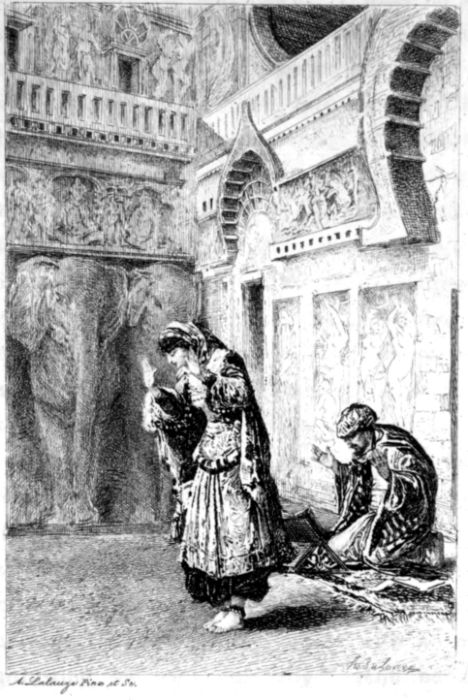
THE STORY OF KING DADBIN AND HIS WAZIRS.”[185]
There was once a king in the land of Tabaristan,[186] by name Dádbín, and he had two Wazirs, one called Zorkhan and the other Kárdán.[187] The Minister Zorkhan had a daughter, there was not in her day a fairer than she nor yet a chaster or a more pious, for she was a faster, a prayer and an adorer of Allah the Almighty, and her name was Arwà.[188] Now Dadbin, the king, heard tell of her praises; so his heart clave to her and he called the Wazir her sire and said to him, “I desire of thee that thou marry me to thy daughter.” Quoth Zorkhan, “O my liegest lord, suffer me to consult her, and if she consent, I will marry thee with her.” And the king said, “Haste thee with this.” So the Minister went in to his daughter and said to her, “O my daughter, the king seeketh thee of me and desireth to marry thee.” She said, “O my father, I desire not a husband, and if thou wilt marry me, marry me not but with a mate who shall be mine inferior in rank and I nobler than he, so he may not turn to other than myself nor lift his eyes upon me,[189] and marry me not to one who is nobler than I, lest I be with him as a slave-girl and a serving-woman.” Accordingly the Wazir returned to the king and acquainted him with that which his daughter had said, whenas he redoubled in desire and 95love-longing for her, and said to her sire, “An thou marry me not to her of good grace, I will take her in thy despite and by force.” The Minister again betook himself to his daughter and repeated to her the king’s words, but she replied, “I want no husband.” So he returned to the king and told him what she said, and he was wroth and threatened him, whereupon the father took his daughter and fled with her. When this came to the king’s knowledge, he despatched troops in pursuit of Zorkhan, to stop the road upon him, whilst he himself went out and overtaking the Wazir, smote him on the head with his mace[190] and slew him. Then he took his daughter by force and returning to his dwelling place, went in to her and married her. Arwa resigned herself with patience to that which betided her and committed her case to Allah Almighty; and indeed she was used to serve Him night and day with a goodly service in the house of King Dadbin her husband. It befel one day that the king had occasion to make a journey; so he called his second Wazir Kardan and said to him, “I have a charge to commit to thy care, and it is yonder lady, my wife, the daughter of the Wazir Zorkhan, and I desire that thou keep her and guard her thy very self, because I have not in the world aught dearer than she.” Quoth Kardan in his mind, “Of a truth, the king honoureth me with an exceeding honour in entrusting me with this lady.” And he answered, “With love and all gladness.” When the king had departed on his journey, Kardan said in himself, “Needs must I look upon this lady whom the king loveth with all this love.” So he hid himself in a place, that he might espy her, and saw her surpassing description; wherefor he was confounded at her and his wit was wildered and love gat the lordship of him, so that he sent to her, 96saying, “Have pity on me, for indeed I perish for the love of thee.” She sent back to him and replied, “O Wazir, thou art in the place of faith and confidence, so do not thou betray thy trust, but make thine inward life like unto thine outward[191] and occupy thyself with thy wife and that which is lawful to thee. As for this, ’tis mere lust and women are all of one and the same taste.[192] And if thou wilt not be forbidden from this talk, I will make thee a byword and a reproach among folk.” When the Minister heard her answer, he knew that she was chaste of soul and body; wherefore he repented with the utmost of repentance and feared for himself from the king and said, “Needs must I devise a device whereby I may destroy her; else shall I be disgraced with the king.” Now when the king returned from his journey, he questioned Kardan of the affairs of his kingdom, and the Wazir answered, “All is right well, O king, save a vile matter, which I have espied here and with which I am ashamed to confront the sovran; but, if I hold my peace thereof, I fear lest other than I discover it and I shall have played traitor to the king in the matter of my warning and my trust.” Quoth Dadbin, “Speak, for to me thou art none other than a truth-teller, a trustworthy and a loyal counsellor in whatso thou sayest, undistrusted in aught.” And the Minister said, “O king, this woman to whose love thy heart cleaveth and of whose piety thou talkest and her fasting and her praying, I will plainly prove to thee that this is craft and guile.” Hereat the king was troubled and said, “What may be the matter?” and the Wazir replied, “I would have thee wot that some days after thy departure, one came to me and said to me, Come, O Wazir, and look. So I went to the door of the queen’s sleeping-chamber and behold, she was sitting with 97Abu al-Khayr, her father’s page, whom she favoureth, and she did with him what she did, and such is the manner of that which I saw and heard.” When Dadbin heard this, he burnt with rage and said to one of his eunuchs,[193] “Go and slay her in her chamber.” But the eunuch said to him, “O king, Allah prolong thy life! Indeed, the killing of her may not be in this way neither at this time; but do thou bid one of thine Castratos take her up on a camel and carry her to one of the trackless wolds and cast her down there; so, if she be guilty, Allah shall cause her to perish, and if she be innocent, He will deliver her, and the king shall be free from default against her; for that this lady is dear to thee and thou slewest her father by reason of thy love for her.” Quoth the king, “By Allah, thou sayst sooth!” Then he bade one of his eunuchs carry her on a camel to one of the far-off wilds and cut-off wolds and there leave her and wend his ways, and he forbad her torment to be prolonged. So he took her up and betaking himself with her to the desert, left her there without provaunt or water and returned, whereupon she made for one of the hills, and ranging stones before her in form of prayer-niche, stood praying. Now it chanced that a camel-driver, belonging to Kisrà[194] the king, lost certain camels, and his lord threatened him, if he found them not, that he would slay him. Accordingly he set out and plunged into the wastes till he came to the place where the lady was, and seeing her standing at prayer utterly alone, waited till she had made an end of her orisons, when he went up to her and saluted her with the salam, saying, “Who art thou?” Quoth she, “I am a hand-maid of the Almighty.” He asked, “What doest thou in this desolate place?” and she answered, “I serve Allah the Most High.” When he saw her beauty and loveliness, he fell in love with her, and said to her, “Harkye! Do thou 98take me to mate and I will be tender to thee and use thee with exceeding ruth, and I will further thee in obedience to Allah Almighty.” But she answered, saying, “I have no need of wedlock and I desire to abide here alone with my Lord and His worship; but an thou wouldst have ruth upon me and further me in the obedience of Allah the Most High, carry me to a place where there is water and thou wilt have done me a kindness.” Thereupon he took her to a place wherein was running water and setting her down on the ground, left her and went his ways, marvelling at her. After he left her, he found his camels, by her blessing, and when he returned, King Kisra asked him, “Hast thou found the camels?” He answered “Yes,” and acquainted him with the affair of the damsel, and detailed to him her beauty and loveliness: whereupon the king’s heart clave to her and he mounted with a few men and betook himself to that place, where he found the lady and was amazed at her, because he saw her surpassing the description wherewith the camel-driver had described her to him. So he accosted her and said to her, “I am King Kisra, greatest of the kings. Wilt thou not have me to husband?” Quoth she, “What wilt thou do with me, O king, and I a woman abandoned in the waste?” And quoth he, “Needs must this be, and if thou wilt not consent to me, I will take up my abode here and devote myself to Allah’s service and thy service, and with thee worship the Almighty.” Then he bade set up for her a tent and another for himself, facing hers, so he might adore Allah with her, and fell to sending her food; and she said in herself, “This is a king, and ’tis not lawful for me that I suffer him for my sake to forsake his lieges and his land.” Presently she said to the serving-woman, who used to bring her the food, “Speak the king that he return to his women, for he hath no need of me, and I desire to abide in this place, so I may worship therein Allah the Most High.” The slave-girl returned to the king and told him this, whereupon he sent back to her, saying, “I have no 99need of the kingship and I also desire to tarry here and worship Allah with thee in this waste.” When she found this earnestness in him, she fell in with his wishes, and said, “O king, I will consent to that which thou desirest and will be to thee a wife, but on condition that thou bring me Dadbin the king and his Wazir Kardan and his Chamberlain the chief Eunuch, and that they be present in thine assembly, so I may speak a word with them in thy presence, to the intent that thou mayst redouble in affection for me.” Quoth Kisra, “And what is thy want unto this?” So she related to him her story from first to last, how she was the wife of Dadbin the king and how the Wazir Kardan had misspoken of her honour. When King Kisra heard this, he redoubled in love-longing for her and affection and said to her, “Do whatso thou willest:” then he let bring a litter[195] and carrying her therein to his dwelling-place, entreated her with the utmost honour and espoused her. Presently he sent a great army to King Dadbin and fetching him and his Wazir Kardan and the Eunuch-chamberlain, caused bring them before him, they unknowing the while what he might purpose to do with them. Moreover, he caused set up for Arwa a pavilion[196] in the courtyard of his palace, and she entered it and let down the curtain before herself. When the servants had set their seats and they had seated themselves, Arwa raised a corner of the curtain and said, “O Kardan, rise to thy feet, for it besitteth not that thou sit in the like of this assembly, before this mighty King Kisra.” When the Wazir heard these words, his heart fluttered and his joints were loosened and he rose to his feet of his fear. Then said she to him, “By the virtue of Him who hath made thee stand up to judgment in this standing-stead, and thou abject and humiliated, I conjure thee speak the truth and say what egged thee on to lie against me and 100drive me from my home and from the land of my husband and made thee practise thus against a man and a Moslem so as to slay him.[197] This is no place wherein lying availeth nor may artifice be herein.” When the Wazir was ’ware that she was Arwa and heard her speech, he knew that it behoved him not to lie and that naught would avail him save truth; so he bowed his head groundwards and wept and said, “Whoso doth evil, needs must he incur it, albe his day be prolonged. By Allah, I am he who hath sinned and transgressed, and naught prompted me unto this but fear and overmastering desire and the misery writ upon my brow.[198] And indeed this woman is pure and chaste and free from all fault.” When King Dadbin heard this, he beat his face and said to Kardan, his Wazir, “Allah slay thee![199] ’Tis thou that hast parted me and my wife and wronged me!” But Kisra the king said to him, “Allah shall assuredly slay thee, because thou hastenedst and lookedst not into thine affair, and knewest not the guilty from the guiltless. Hadst thou wrought deliberately, the unright had been made manifest to thee from the right; so when this villain Wazir purposed thy ruin, where was thy judgment and whither went thy sight?” Then he asked Arwa, “What wilt thou that I do with them?” and she answered, “Accomplish on them the ordinance of Almighty Allah:[200] let the slayer be 101slain and the transgressor transgressed against, even as he transgressed against us; yea, and to the well-doer weal shall be done even as he did unto us.” So she gave her officers order concerning Dadbin and they smote him on the head with a mace and slew him, and she said, “This is for the slaughter of my sire.” Then she bade set the Wazir on a beast and bear him to the desert whither he had caused her to be borne, and leave him there without provaunt or water; and she said to him, “An thou be guilty, thou shalt suffer the punishment of thy guilt and die in the desert of hunger and thirst; but an there be no guilt in thee, thou shalt be delivered, even as I was delivered.” As for the Eunuch-chamberlain, who had counselled King Dadbin not to slay her, but to cause carry her to the desert, she bestowed on him a costly robe of honour and said to him, “The like of thee it befitteth kings to hold in favour and promote to high place, for that thou spakest loyally and well, and a man is requited according to his deed.” And Kisra the King made him Wali in a certain province of his empire. “Know, therefore, O king” (continued the youth), “that whoso doeth good is requited with good, and he who is guiltless of sin and offence feareth not the issue of his affair. And I, O my liege lord, am free from guilt, wherefore I hope in Allah that He will show forth the truth to mine auspicious king, and vouchsafe me the victory over enemies and enviers.” When the king heard this, his wrath subsided and he said, “Return him to the prison till the morrow, so we may look into his case.”
102
The Sixth Day.
OF TRUST IN ALLAH.
When it was the sixth day, the wrath of the Wazirs redoubled, because they had not won their will of the youth and they feared for their lives from the liege lord; so three of them went in to him and prostrating themselves between his hands, said to him, “O king, indeed we are loyal counsellors to thy dignity and fondly solicitous for thy weal. Verily, thou persistest long in leaving this youth alive and we know not what is thine advantage therein. Every day findeth him yet on life and the talk of folk redoubleth suspicion on thee; so do thou do him dead, that the talk may be made an end of.” When the king heard this speech, he said, “By Allah, verily ye say sooth and speak rightly!” Then he bade them bring the young treasurer and when he came into the presence said to him, “How long shall I look into thy case, and find no helper for thee and see them athirst for thy blood?” The youth answered, “O king, I hope for succour only from Allah, not from created beings: an He aid me, none shall have power to harm me, and if He be with me and on my side, because of the truth, from whom shall I fear, because of untruth? Indeed, I have made my intent with Allah a pure intent and a sincere, and I have severed my expectation from the help of the creature; and whoso seeketh aid of Allah findeth of his desire that which Bakhtzamán found.” Quoth the king, “Who was Bakhtzaman and what is his story?” and quoth the youth, “Hear, O king,
THE STORY OF KING BAKHTZAMAN.”[201]
There was once a king of the kings, whose name was Bakhtzaman, 103and he was a great eater and drinker and carouser. Now enemies of his made their appearance in certain parts of his realm, which they coveted; and one of his friends said to him, “O king, the foe intendeth for thee: be on thy guard against him.” Quoth Bakhtzaman, “I reck not of him, for that I have weapons and wealth and warmen and am not afraid of aught.” Then said his friends to him, “Ask aid of Allah, O king, for He will help thee more than thy wealth and thy weapons and thy warriors.” But he turned a deaf ear to the speech of his loyal counsellors, and presently the enemy came upon him and waged war upon him and got the victory over him and profited him naught his trust in other than Allah the Most High. So he fled from him and seeking one of the sovrans, said to him, “I come to thee and lay hold upon thy skirts and take refuge with thee, so thou mayst help me against my foe.” The king gave him money and men and a mighty many and Bakhtzaman said in himself, “Now am I fortified with this force and needs must I conquer my foe with such combatants and overcome him;” but he said not, “With the aid of Allah Almighty.” So his enemy met him and overcame him again and he was defeated and put to the rout and fled at random: his troops were dispersed from him and his money lost and the enemy pursued him. Thereupon he sought the sea and passing over to the other side, saw a great city and therein a mighty citadel. He asked its name and that of its owner, and they said to him, “It belongeth to Khadídán[202] the king.” So he fared on till he came to the royal palace and concealing his condition, passed himself off for a horseman[203] and sought service with King Khadidan, who attached him to his attendance and entreated him with honour; but his heart still clung to his mother-land and his 104home. Presently, it chanced that an enemy came out against King Khadidan; so he sent his troops to meet him and made Bakhtzaman head of the host. Then they went forth to the field and Khadidan also came forth and ranged his troops and levelled lance and sallied out in person and fought a sore fight and overcame his foe, who with his troops ignominiously fled. When the king and his army returned in triumph, Bakhtzaman said to him, “Harkye, O king! This be a strange thing I see in thee that thou art compassed about with this mighty great army, yet dost thou apply thyself in person to battle and adventurest thy life.” Quoth the king, “Dost thou call thyself a knight and a learned wight and deemest that victory is in the many of men?” Quoth Bakhtzaman, “Such is indeed my belief.” And Khadidan the king cried, “By Allah, then, thou errest in this thy belief!” presently adding, “Woe and again woe to him whose trust is in other than Allah! Indeed, this army is appointed only for phantasy and majesty, and victory is from Allah alone. I too, O Bakhtzaman, whilome believed that victory was in the number of men,[204] and an enemy came out against me with eight hundred head, whilst I had eight hundred thousand. I trusted in the tale of my troops, whilst my foe trusted in Allah, so he defeated me and routed me and I was put to a shameful flight and hid myself in one of the mountains, where I met with a Religious who had withdrawn himself from the world. So I joined myself to him and complained to him of my case and acquainted him with all that had befallen me. Quoth the Recluse, Wottest thou why this befel thee and thou wast defeated? Quoth I, I know not; and he said, Because thou didst put thy trust in the multitude of thy warmen and reliedst not upon Allah the Most High. Hadst thou put thy trust in the Almighty and believed of Him that it is He alone 105who advantageth and endamageth thee, never had thy foe availed to cope with thee. Return unto Allah. So I returned to my right senses, and repented at the hands of that Religious, who said to me:—Turn back with what remaineth to thee of troops and confront thy foes, for, if their intents be changed and turned away from Allah, thou wilt overcome them, e’en wert thou alone. When I heard the Solitary’s words, I put my trust in Allah of All-Might; and, gathering together those who remained with me, fell upon mine enemies at unawares in the night. They deemed us many and fled with the shamefullest flight, whereupon I entered my city and repossessed myself of my place by the might of Almighty Allah, and now I fight not but trusting in His aid.” When Bakhtzaman heard these words he awoke from his heedlessness and cried, “Extolled be the perfection of God the Great! O king, this is my case and my story, nothing added and naught subtracted, for I am King Bakhtzaman and all this happened to me: wherefore I will seek the gate of Allah’s mercy and repent unto Him.” So he went forth to one of the mountains and worshipped Allah there awhile, till one night, as he slept, a personage appeared to him in a dream and said to him, “O Bakhtzaman, Allah accepteth thy repentance and openeth on thee the door of succour and will aid thee against thy foe.” When he was assured of this in the dream, he arose and turned back, intending for his own city; and when he drew near thereunto, he saw a company of the king’s retainers, who said to him, “Whence art thou? We see that thou art a foreigner and fear for thee from this king, for that every stranger who entereth this city, he destroyeth him, of his dread of King Bakhtzaman.” Said Bakhtzaman, “None shall prejudice him nor profit him save Allah the Most High.” And they replied, “Indeed, he hath a vast army and his heart is fortified in the multitude of his many.” When King Bakhtzaman heard this, his mind was comforted and he said to himself, “I place my trust in 106Allah. An He will, I shall overcome mine enemy by the might of the Lord of Omnipotence.” So he said to the folk, “Wot ye not who I am?” and they said, “No, by Allah.” Cried he, “I am King Bakhtzaman.” When they heard this and knew that it was indeed he, they dismounted from their horses and kissed his stirrup, to do him honour, and said to him, “O king, why thus risk thy life?” Quoth he, “Indeed, my life is a light matter to me and I set my trust in Almighty Allah, looking to Him for protection.” And quoth they, “May that suffice thee!” presently adding, “We will do with thee that which is in our power and whereof thou art worthy: hearten thy heart, for we will succour thee with our substance and our existence, and we are his chief officers and the most in favour with him of all folk. So we will take thee with us and cause the lieges follow after thee, because the inclination of the people, all of them, is thee-wards.” Said he, “Do whatso Allah Almighty enableth you to do.” So they carried him into the city and hid him with them. Then they agreed with a company of the king’s chief officers, who had aforetime been those of Bakhtzaman, and acquainted them with this; whereat they rejoiced with joy exceeding. Then they assembled together to Bakhtzaman, and made a covenant and handfast of fealty with him and fell upon the foe and slew him and seated King Bakhtzaman again on the throne of his kingship. And his affairs prospered and Allah amended his estate and restored to him His bounty, and he ruled his subjects justly and abode in the obedience of the Almighty. “On this wise, O king,” (continued the young treasurer), “he with whom Allah is and whose intent is pure, meeteth naught save good. As for me, I have no helper other than the Almighty, and I am content to submit myself to His ordinance, for that He knoweth the purity of my intent.” With this the king’s wrath subsided and he said, “Return him to the prison till the morrow, so we may look into his case.”