Rockets, Missiles, and Spacecraft of the National Air and Space Museum
Reading edition
SMITHSONIAN INSTITUTION
LYNNE C. MURPHY
Published by the Smithsonian Institution Press, Washington, D.C., 1976
1
Welcome to the National Air and Space Museum, part of the Smithsonian family. The flight of the Wrights in 1903 opened the door to ever more rapid and powerful ascents into the third dimension. This country, putting its scientific and technical talents to work, has produced an array of fascinating and complex machines. Fortunately, nearly all of the most significant ones have been preserved, and a sampling of them is included in this booklet. I hope that you will enjoy it, and that it will add to your understanding of what air and space progress has meant to all of us.
Michael Collins Director, National Air and Space Museum
2
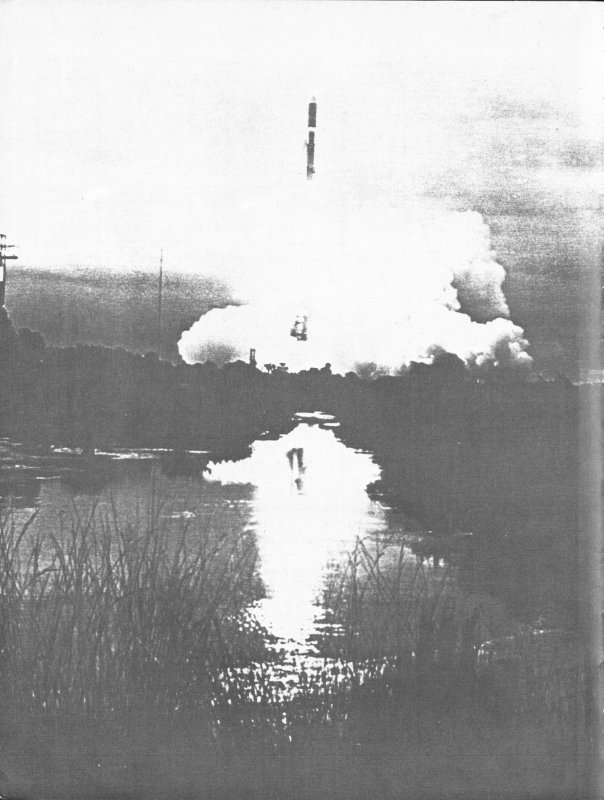
Viking 2—bound for Mars—is launched aboard Titan Centaur on September 9, 1975.
4
Library of Congress Cataloging in Publication Data
National Air and Space Museum.
Rockets, missiles, and spacecraft of the National Air and Space Museum, Smithsonian Institution, Washington, D.C. Bibliography: p.
1. Astronautics—United States—Exhibitions.
2. National Air and Space Museum.
I. Murphy, Lynne C.
II. Title: Rockets, missiles, and spacecraft of the National Air and Space Museum ... TL506.U6W376 1976 629.4′0973′0740153 76-6961
Printed in the U.S.A. Designed by Elizabeth Sur
Negative numbers and photo credits
1, A-42103 (SI); 2, 74-H-1066 (NASA); 3, 74-H-1244 (NASA); 4, A-3757 (SI); 5, 72-8670 (SI); 6, 58-Explorer I-1 (NASA); 7, 62-Mariner II-34 (NASA); 8, 63-Mariner II-26 (NASA); 9, 62-MA 6-74 (NASA); 10, 62-MA6-111 (NASA); 11, 65-H-934 (NASA); 12, 65-H-937 (NASA); 13, 69-H-1199 (NASA); 14, 69-H-1367 (NASA); 15, 76-4880-81 (SI); 16, P-14054 (JPL, NASA, Pasadena, California); 17, 73-H-993 (NASA); 18, 74-H-239 (NASA); 19, 75-15926 (SI); 20, 74-H-1220 (NASA); 21, A-50483 (SI); 22, 65-H-817 (NASA); 23, 76-1706 (SI); 24, 76-1705 (SI); 25, 71-H-413 (NASA); 26, 62-NC-2 (NASA); 27, 63-ARCAS-1 (NASA); 28, 75-16094 (SI); 29, 75-16228 (SI); 30, 75-16276 (SI); 31, 61-DELTA-4-6 (NASA); 32, 66-H-223 (NASA); 33, VAN-11 (NASA); 34, 67-H-1008 (NASA); 35, 66-H-28 (NASA); 36, 60-TIROS-5 (NASA); 37, 69-H-1915 (NASA); 38, 68-H-111 (NASA); 39, 62-RELAY-17 (NASA); 40, 71-H-1414 (NASA); 41, 69-H-285 (NASA); 42, 66-H-871 (NASA); 43, 76-H-1182 (NASA); 44, 69-H-1986 (NASA); 45, 76-1704 (SI); 46, A-459994 (SI); 47, A-5293 (SI); 48, A-1085 (SI); 49, 75-11488 (SI); 50, A-4554 (SI); 51, 72-H-1240 (NASA); 52, 63-CENTAUR-15 (NASA); 53, 75-13753 (SI); 54, 76-2756 (SI); 55, 76-2687 (SI); 56, 75-H-461 (NASA); 57, 76-4479-6 (SI); 58, 62-MA6-109 (NASA); 59, 71-H-1380 (NASA); 60, 65-H-1021 (NASA); 61, A-5367 (SI); 62, 75-10232 (SI); 63, A-5073 (SI); 64, 75-16091 (SI); 65, 76-1625-11 (SI); 66, 73-733 (SI); 67, SPACE-12 (NASA); 68, 67-H-1609 (NASA); 69, 64-H-2795 (NASA); 70, 65-H-674 (NASA); 71, 76-1707 (SI); 72, 76-1708 (SI); 73, 73-H-928 (NASA); 74, 71-H-398 (NASA); 75, 68-H-423 (NASA); 76, 68-H-422 (NASA); 77, 75-H-248 (NASA); 78, 75-H-1081 (NASA); 79, 75-H-891 (NASA); 80, 75-H-1077 (NASA); 81, 71-H-525 (NASA); 82, 61-MR3-76 (NASA); 83, 65-H-2355 (NASA); 84, 72-H-734 (NASA); 85, 62-F1-2 (NASA); 86, 67-H-1205 (NASA); 87, 71-H-1416 (NASA); 88, 70-H-1392 (NASA); 89, 71-H-335 (NASA); 90, 74-H-63 (NASA); 91, S-71-45480 (NASA, Johnson Space Center); 92, 72-H-1571 (NASA).
5