THIRD PERIOD (continued 2)
Reading edition
We invited Mr. Robinson to accompany us to the battleground in order that the question of location might be definitely settled. He agreed to join us on the train at Pierre at midnight on July 14th. Mr. Robinson failed to keep his engagement, but, at Belle Fourche, his son, a boy of about twenty years old, reported to us, stating his father had asked him to go with us. He was of no assistance, however, as he knew nothing about the matter, and did not seem interested in it.
After several days' search, we found the location described in Mr. Robinson's history in the map before referred to, but neither General Morton nor I could reconcile the topography represented on the map with the location as we remembered it. There were no evidences of a fight, no rifle pits, which we remembered well to have made, and which could not have been obliterated. We spent several days trying to find the true location, but were eventually compelled to abandon the search, the conditions being exceedingly unfavorable to the investigation because of poor roads, rains, and excessively hot weather.
Mr. Camp and I both corresponded with General Charles King, also present at this battle, and who Mr. Robinson claimed had furnished him with the map from which he made the location. General King replied that he had never furnished Mr. Robinson with a map sufficient to make the location and, after examining the map in his book, said it was not the correct location.
I am now in receipt of a letter from Mr. Camp, dated June 21, 1917, in which he informs me that he went on another expedition and, after considerable search, found the true location on June 19th, in Section 10, Township 18 north, Range 8 east, which is on Gap Creek, one of the main branches of Rabbit Creek, about three miles from Reva Gap, three-quarters of a mile from Mr. W. W. Mitchell's house, and nine miles north of Robinson's location. Mr. Camp found the rifle pits and many other convincing evidences of the fight, including numerous empty shells, much broken pottery and other Indian utensils, all of which corresponded to my own and other reports of the battle.
Crook stayed in the Black Hills recuperating for several weeks, when, the campaign being closed, the whole command proceeded to Fort Robinson, where it was disbanded and the various organizations sent to their proper posts. I was transferred to Camp Sheridan, where Nannie joined me and where Chief "Touch the Clouds," of the Minneconjous, came in and surrendered (Appendix, 412).
During our second stay at Sheridan, many interesting incidents occurred. Spotted Tail gave a dog feast in Nannie's honor, which she gladly attended and danced freely with the squaws, to their great delight. They boiled many dogs in large kettles, but Nannie did not have the courage to partake of the feast, which she ever afterwards regretted.
One afternoon a Sister of Charity from a Kansas City convent drove to my quarters with a novice, stating that she had been sent to me by General Mackenzie, then commanding Fort Robinson. She was on a mission to procure subscriptions for the erection of a hospital at Kansas City.
Sister Mary remained with us for several days. A very intelligent and entertaining woman, she was a welcome guest to both Nannie and me. Expressing a desire to see Spotted Tail, we prepared a little entertainment and invited him to the house, together with a few ladies and officers, Lieutenant Schwatka, who afterwards became famous, being one. The refreshments consisted of cider, cakes and apples.
Spotted Tail appeared in full Indian dress, accompanied by one of his wives and his daughter, Shonkoo, an interesting girl of seventeen. Sister Mary, dressed in the conventional robes of her order, conversed with Spotted Tail through the interpreter for some time before we passed the refreshments.
After all present had been provided with a glass of cider, Sister Mary danced gaily to the center of the room and announced that she would like to clink glasses with the great chief Spotted Tail. Upon hearing her request, Spotted Tail, quite as gracefully and gaily, danced up to her. This wild country could hardly show a stranger spectacle than a Sister of Charity, in her peaceful robes, and a savage warrior, in his war-like paraphernalia, clinking glasses!
The conversation lasted for some hours, the squaw and her daughter saying little. Finally it occurred to me that it might be interesting to Sister Mary to take this young girl back with her to the convent, and I made the suggestion to her. Her eyes sparkled with delight as she said that it would be a feather in her cap. "Is it possible that we can arrange it?" she asked.
On making the suggestion to Spotted Tail, his face also beamed. He would like nothing better than that his daughter should live among the white people and learn their ways and customs, and he had great confidence in the Sisters of Charity. While the matter was thoroughly discussed by Sister Mary and Spotted Tail, I watched Shonkoo and her mother.
The mother appeared delighted, but Shonkoo was expressionless. I suggested to the interpreter that it might be well to see what the daughter had to say, but when this was communicated to Spotted Tail, he said, "That is all right. She will go."
I arranged to furnish the transportation to the railroad, a distance of about one hundred miles. They would be ready to depart in three days, Spotted Tail stating that he would bring his daughter then to my quarters and place her in charge of the sister.
The morning the start was to be made, everything was ready but Shonkoo. In her place came a message from Spotted Tail to Sister Mary and me to the effect that Shonkoo had eloped the night before with a young Indian by the name of Lone Elk, and Sister Mary returned to her convent despondent, empty handed, and minus the feather in her cap, so far as her efforts to civilize Shonkoo were concerned.
Detail to Paris Exposition
In 1876, being senior captain of cavalry and expecting promotion, I obtained six months' leave of absence, but, on organization of General Crook's expedition to the Powder River I surrendered my leave until the Sioux trouble should be ended. When I returned to Camp Sheridan, the six months' leave was renewed, and we started for Washington. I met General Crook at Fort Laramie. We stopped a day or two before proceeding in our ambulance toward the railroad at Cheyenne. We were twelve miles from Laramie when the Adjutant General, Nickerson, overtook us, with a message from General Crook, who had not known of our departure, stating his appreciation of my services during the campaign, adding that he felt under more obligations to me than to any other officer in the campaign, and that if there was any official favor possible for him to obtain, I had only to ask. Sure of my majority in a short time, I could see nothing to ask that he might procure for me, but, after Nickerson departed, Nannie assured me that she could find something, and jokingly referred to her remark while in Arizona that she was going to Europe with me some day. So, when we arrived in Washington, she said, "There is to be an international exposition in Paris next May, 1878. Why don't you ask the General to recommend you for a detail there?" I took her advice and made application to be so detailed, to the Secretary of War.
Colonel Reynolds, of my regiment, had been retired, and Colonel Devin, whom I had never met, joined the headquarters at Fort D. A. Russell.
I sent my application to the Secretary of War through the adjutant, Johnson, who knew my history, supposing that General Crook would endorse it favorably. But, in spite of the fact that everybody in the regiment knew I would be promoted before my leave expired, the papers were endorsed by the Colonel, "Respectfully forwarded disapproved. This officer's services are needed with his company." It was successively endorsed by General Crook at Omaha, General Sheridan at Chicago, and General Sherman at Washington, "Respectfully forwarded disapproved."
These advices to the Secretary seemed to me unfair. I was introduced to him, and told him I had been unfairly treated. He encouraged me to explain, which I did, adding that I had served in my proper command more constantly since I entered the service than any officer in the army. I knew little of the record of my colonel, but I asked to have our records examined, and that if he had not been absent from his command two days to my one I would withdraw my application; but that if I were correct I asked to have the colonel's unfavorable endorsement and those influenced by it ignored. A day or two afterward the Secretary sent for me. "I am more surprised at the result than by your statement," he said. "It is short of the facts, and I shall consider the endorsements valueless; but," he added, "why do you suppose the President will send an attaché to that exposition?"
"Mr. Secretary," I replied, "because he ought to. The President sent McClellan and other attachés to previous expositions, such as the Crystal Palace Exposition in London. Officers who have served in the Civil and Indian Wars are as much entitled to such benefits as General McClellan." The next day a note from him stated the President had decided to appoint three attachés, one from each arm of the service. This announcement in the press immediately prompted numerous applications, but Secretary McCrary assured me my appointment would issue shortly.
Nannie and I sat at a table at the Ebbitt House next to that of General Sherman. As we went in to dinner that day, General Sherman stretched out his hand to Nannie, saying, "Mrs. Mills, I want to congratulate you." Nannie diplomatically replied, "What for?" though she knew well. "Why, you are going to Paris. The President detailed your husband as military attaché to the Paris Exposition today." Nannie replied, "I thank you, General Sherman." General Sherman then stated in his frank and noble way, "Don't thank me, Mrs. Mills; I had nothing to do with it."
These details show Nannie was my inspiration. She approved of every move made in the matter and was more elated than I at the result.
We sailed in March, 1878, on a Cunard steamer. My insurance policy required that I obtain permission to visit a foreign country, but at the offices of the Knickerbocker I was told that the company would issue such a permit only if I agreed to forfeit my policy should I enter any city in which there was an epidemic. I told them to "go to," that I would live longer than their company, and surrendered my policy, on which I had paid eleven assessments.
Within three years their company went into bankruptcy, and I am still living!
We had an uneventful passage, although very distressing to Nannie on account of sea-sickness. During a two weeks' stop in London we visited Nannie's relatives, Mrs. Langworthy, at Guys House, Maidenhead, near Windsor Castle. The Langworthys were delightful people and our acquaintance a very agreeable experience, although it began in a rather embarrassing way.
Neither of us had much experience in "high society," or had the money to flourish in it. We carried to Guys House no other clothing than that in our traveling bags. At the depot, a great retinue of lackeys clad in knee breeches, and coach and baggage wagon apparently waited for some great personage. But Mr. Edward Langworthy, the son, introduced himself, and asked for our luggage, when we rather shamefacedly confessed that we had only our two valises.
We were dressed simply, like most Americans, but we had America's courage, and met the situation without much chagrin. The Langworthys dressed for dinner, but we had to make the best of what we had. We had a bedroom lit by candles and without fire, although it was March and the weather very cold.
In the ante-room the next morning I saw a large washtub in the middle of the bare floor, two-thirds full of water, and a chair containing some towels and soap. I remarked, "Nannie, look at that. Do they expect us to bathe in that cold room in that cold water? I will not do it."
Nannie replied, "Well, I am too proud to have them think we do not wash," and, seizing the soap, she made a lot of lather and sprinkled water on the floor to leave conclusive evidence that we really were civilized.
Mrs. Langworthy asked me, "How do you get about in London?" I replied that we used the omnibus, as Nannie thought the "Hansom cabs" unsafe, and refused to ride in them. Mrs. Langworthy said, "You shouldn't do that. Only tradespeople and banker's clerks ride in omnibuses."
Before going to Paris my commission as major in the 10th Cavalry arrived. A military tailor made me a uniform, which, with the gay attire Nannie bought in both London and Paris, satisfied Mrs. Langworthy on our second visit, made after returning from Paris, that we Americans could do right after all! We enjoyed our visits in their beautiful house, a fine English estate, and always recalled our acquaintance with our delightful English relatives with much pleasure.
We were in Paris at the opening of the exposition, where we met the other attachés. Among the Americans we met Lucien Young, a very interesting naval officer, in whose carriage Nannie and I rode to the opening. Our uniforms conformed much with the Prussian style, especially my helmet. Leaving the exposition immediately behind the Prince of Wales' entourage, the French took us for Germans, and looked upon us very coldly. Some bright Frenchman, discovering on my helmet the words, "E Pluribus Unum," called out to his countrymen that we were Americans, when we received almost as many cheers as the Prince of Wales himself.
Invited by President McMahon to a review of thirty thousand cavalry, I was informed that a French captain would have a mount for me in the Bois de Boulogne. There were eight American officers in Paris, most of them in official capacity, and when I arrived they were all there. As the senior, they insisted I approach the French officer. Speaking little French, I was somewhat embarrassed. But with the assurance of an American, I called out to the dapper young French artillery officer, "Good morning, captain; do you speak English?" "No, I do not," he replied, "but I speak American, which is much better. I spent four years as military attaché in Washington, the most beautiful city in the world."
It is needless to say that his diplomacy made us all his friends.
As Nannie had anticipated, this year's service at the Paris Exposition was the greatest practical and instructive education of my life. A practical skilled mechanic, I understood the intricacies of mechanics, and here in one building was assembled all the latest and most novel machinery of the world. The sewing machine was then in the height of its progressive construction. England, hitherto the foremost nation in machinery construction, was fast losing its place to America and France. The English machine was distinguished by its clumsy, angular and heavy parts and the difficulty of keeping it in order. The French machines were better, but the American machine stood first in all that made it handy, graceful, symmetrical and useful. And so it was with all the other machinery. Electric light and power was in its infancy, but here, as in all else, the best appliances for its use were American.
I started out in the hope of learning a great deal from the foreign nations in my conceived invention and construction of a woven cartridge belt and other web equipment, which I felt sure could be made as strong and of as firm consistency as leather, and much better than leather because it was lighter, more flexible, did not require oiling, and was less likely to break in the process of wetting and drying when exposed to the weather. However, after visiting factories in France, England and Germany, I found that they knew less about weaving such fabrics than we did in America.
Nannie and I traveled much during our stay abroad.
France had been humiliated by Germany's conquest and exaction of the then unheard of indemnity, but she was not despondent. In the dining room of our boarding house, 44 Rue de Clichy, were two female figures on pedestals representing Alsace and Lorraine, tears streaming down their cheeks; and when the proprietress, Madame Thierry, would speak of them the tears would roll down her cheeks, too. The sympathy of Americans was generally with France.
In Germany we found a remarkable condition. In one sense unspoiled by her great victories, so cheaply bought, and the acquisition of so much wealth in indemnity, the nation was just starting two propagandas. One was to organize productive industry and encourage the sciences and arts, with the object of making their nation foremost as a commercial producer. At the same time, Germany planned to carry her products to the four corners of the earth, in which, for forty years, she was entirely successful.
The second, as unholy and unrighteous as the first, was praiseworthy, was militarism, in which the rulers of the nation sought to make the profession of the soldier universal, with the deliberate and cold-blooded purpose of conquering the rest of the world, as Alexander, Hannibal, Cæsar and Napoleon had planned before. Germany had in view also the creation of a navy which could overcome England's, so she might rule the world on both land and sea. But for the heroism and self-sacrifice of the little kingdom of Belgium, with only eight millions of people, they would have succeeded.
We saw many idle soldiers lying on the grassy parapets of their forts smoking, while near them women dressed in rags carried dirt in wheelbarrows to form additional parapets. Nannie instinctively foresaw the future. She even then denounced those people as barbarous and inhuman, and for the rest of her life she hated bitterly German militarism.
In England we found the people divided into numerous classes, royalty, nobility, gentlemen, tradespeople, and common people. Many of these latter, for want of the ambition and self-reliance necessary to bring about success, had become sordid and drunken.
There were hundreds of street cars in Paris and its environs broad-mindedly labeled "American Railway," but hardly one in England.
In Manchester (then a larger city than New York), an apparently intelligent Scotch policeman, recognizing me as an American, proudly pointed to a brand new street car with one horse, and remarked, "I suppose you don't have anything like that in America?" When I replied that every city in the United States having twenty thousand population had a street car system, he evidently regarded me as a sort of American Baron Munchausen.
The upper classes relied upon their control of the sea by the largest navy in the world, indirectly to extort taxes from their millions of subjects in their vast possessions, governed without their consent. Suppressing ambition for democracy and restraining maritime commerce of other nations, is perhaps not as cruel and barbarous as the intended control of the world by Germany, but is quite as unrighteous and has been and still is detrimental to the progress and advancement of weaker peoples.
Of all countries we visited, Switzerland seemed to possess the best free democratic government and the people were the happiest. They looked you in the face with a cheerful smile wherever you met them and were content with their condition, as they have been for over three hundred years.
The difference between Europeans and Americans we found to be marked. For instance, on one of the Lake Geneva passenger steamers from Vevey to Geneva we found a thousand passengers, composed about equally of Americans, English, French, Germans, Spaniards, and Italians. While talking to a well-dressed American of perhaps twenty-five years of age, a band of about thirty Italians appeared on the upper deck, where most of the passengers were assembled.
Most of the passengers, especially the English, would not speak to each other without a formal introduction, so social greetings were few. When the band had played a few minutes, this American took off his hat and placed a handkerchief over it and carried it through the crowd, remarking, "Something for the band, please." He approached every passenger on deck. Europeans stared, astonished at the action of this man from the "Woolly West," but Americans smiled encouragement. He obtained probably the largest contribution the leader had ever received. He proceeded to the band and every man and woman was gazing at him in perfect silence when he turned over the handkerchief to the leader, until some American clapped and every American joined in. We were all proud of our countryman.
At 44 Rue de Clichy our son, Anson Cassel, was born on November 19, 1878. He was our joy for the next fifteen years. His birth delayed our return until March, 1879, when we took passage on a Cunarder. In Washington I received orders to proceed to the headquarters of the 10th Cavalry.
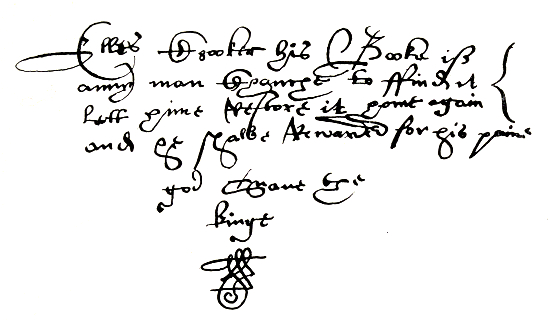
Inscription in Nannie's Family Bible, Dated 1614.
Inherited from Hannah Hippisly Martin.
Translated and in Modern Handwriting, It Reads as Below:
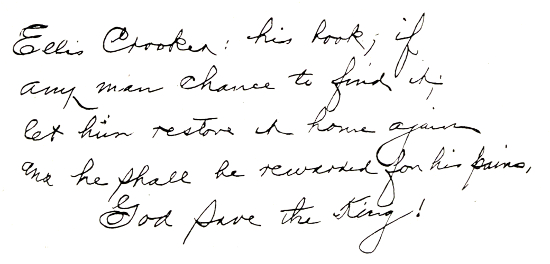
Ellis Crooker: his book; if any man chance to find it; let him restore it home again and he shall be rewarded for his pains, God Save the King!
Out West Again
We traveled to Fort Concho, Texas, an uncomfortable and unprepossessing post, by ambulance from San Antonio, arriving April 11, 1879, and I served with the 10th Cavalry (colored) for twelve years, and was executive officer for Colonel B. H. Grierson, commanding the post, regiment and district under General Ord, department commander.
A big-hearted man, the only experience Grierson had in military affairs was as a general of volunteers, with which he was successful. With no experience in the regular army, even the best intentions did not fit him for the required discipline. He left the details of the post and regiment entirely to me, signing only papers which went to his superiors. He was too prone to forgive offenses and trust to promises for reform, which rendered the discipline and reputation of the regiment poor.
In May, 1881, Indian troubles took me with a squadron of four companies to Fort Sill. Nannie accompanied me the 225 miles, and there, on October 22d, our daughter, Constance Lydia, a joy and comfort to us both, was born. She was only eight days old when we were ordered back to Concho, making that trip, as we had the previous one, by wagon transportation, Nannie with her baby and little Anson riding in the ambulance.
In July, '82, the headquarters of the regiment was transferred to Fort Davis, when we again made a 225 miles journey with wagon and ambulance transportation.
Fort Davis was dry and cool, a most pleasant climate, but as hostile Indians occasionally made raids on the citizens, as at Fort Concho, we were kept busy. Fort Davis is near El Paso. My interests took us frequently to that city. Among other activities, jointly with Judge Crosby I built the largest hotel then in Texas.
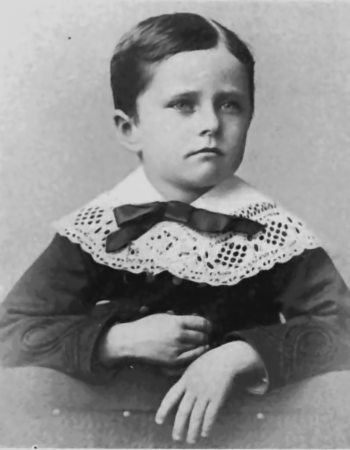
Little Anson at Five and One-Half Years.
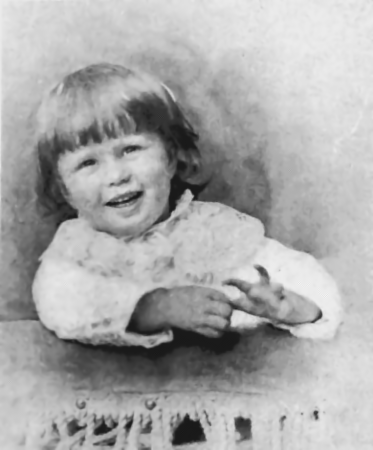
Constance at Two and One-Half Years.
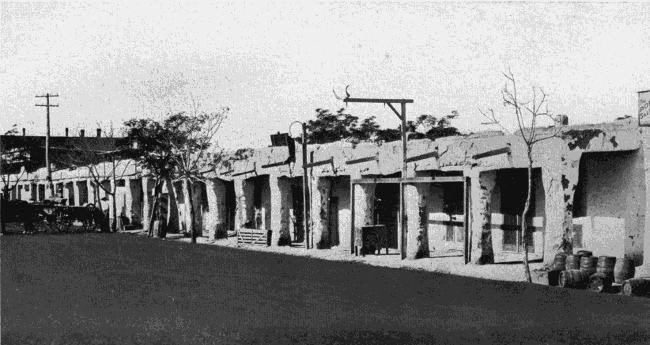
Street in El Paso in Its Deserted Days, About 1870.
April 1, 1885, the regiment exchanged stations with the Third Cavalry in Arizona. We made that long and distressing march also with wagon and ambulance transportation. Arriving at El Paso in a terrible sand-storm, we found the Rio Grande unfordable. The only bridge crossed into Mexico three miles below the New Mexican line. According to international law, we could not pass over Mexican territory without the consent of the two governments, so we were delayed a week most uncomfortably, awaiting the tedious international interchanges to enable us to cross. We finally arrived at Deming (in a terrible sand-storm), meeting most of the troops of the 3d Cavalry there.
I was ordered to Fort Thomas on the Gila River, next to Yuma, the hottest post in the republic and the most sickly, excepting none. It was one of the most desolate posts in which we ever served. The valley was very low and hot. The mountains on each side of the river were some six or seven thousand feet higher than the valley and only about six or eight miles apart, so what little rain there was fell on these mountains.
I have often seen a heavy storm pass across the river from mountain to mountain, and watched almost a cloudburst of rain falling from the immense height only to be absorbed by the arid atmosphere before it reached the valley. Here many of our soldiers died in an epidemic of a very malignant, burning fever, which the post surgeon, Dr. Edward Carter, was unable to check. Informed that if we had ice the doctor could save many lives, I made requisition for an ice machine to cost three thousand dollars. It was twice returned by the War Department disapproved, the principal reason being that the Quartermaster General and the Surgeon General could not agree which department should pay for the wood to run the engine!
Exasperated, I appealed to General Sheridan personally. General Sheridan gave the two chieftains his opinion of them in such strong language that the appropriation for the machine was soon furnished, the first authorized in the army.
Our little daughter Constance was taken with the disease, and Dr. Carter told us that she might not recover without ice. I wired Colonel Shafter, commanding Fort Grant, half way to the railroad seventy miles away, and he supplied me with two hundred pounds, rolled in blankets, within twelve hours. The day after the doctor reduced my daughter's temperature and she recovered.
While at Thomas the Northern Apaches went on the warpath, Geronimo and his wild followers devastating the settlements and killing many men, women and children, whom we buried in the post cemetery. This war lasted two years before our troops drove the Apaches into Mexico and, by agreement with the Mexican Government, followed them there, capturing Geronimo.
Contract Surgeon Dr. Leonard Wood, now the senior major general in the United States Army (who at one time attended my family), volunteered to act as surgeon in the expedition into Mexico, carrying his kit on his back while commanding a company of friendly Indians, which he did excellently. For this General Miles, commanding the department, became much attached to him.
To carry water into the post I had set the men to work building ditches, and also planted several hundred trees, which began to grow well. General Miles, visiting the camp on inspection, told me I deserved a better post. He relieved General Grierson from Fort Grant and placed me in command of that seven-company post. General Grierson recommended its abandonment for want of water, but General Miles said he knew I could get water from the mountains and make Grant one of the best posts. He supported me in requisitions for all the material and money I needed.
At a cost of sixteen thousand dollars I put in a most excellent water and sewage system, with a cement-walled lake in the middle of the parade ground, sixty by two hundred feet. Heretofore the parade ground and the officers' yards were bare of grass because of the extreme drought and the millions of ants which ate the grass. We put fountains all over the post, capable of throwing water one hundred feet high, as the reservoirs had four hundred feet pressure. I established a small water motor which sawed all the wood and ran all the machines in the carpenter shop.
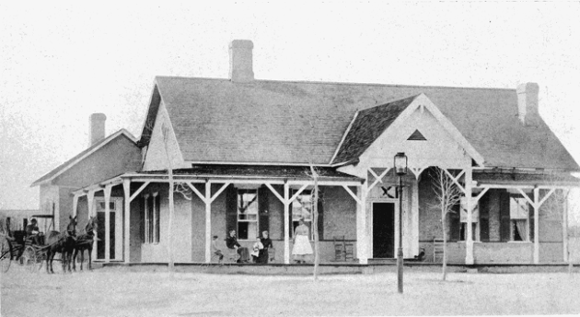
My Family and Commanding Officer's Quarters, Fort Thomas, A. T.
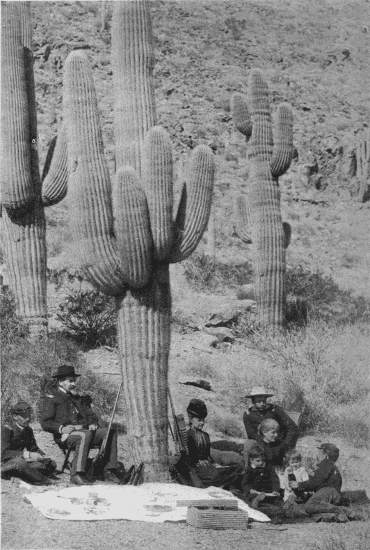
Picnic Under Columnar Cactus Near Fort Thomas, A. T. Read, Mills, Mrs. Viele, Whipple, Nannie, Little Anson, Constance, Freeman.
General Miles visited the post after my work was completed and issued a very complimentary order which gave me a standing throughout the army as one capable of meeting unusual difficulties in my line.
Grant was in a most beautiful climate, about four thousand feet above the sea, with Mount Graham six thousand feet higher, three miles away. The climate, trees, foliage, flowers and rapid streams of this mountain were much like the Adirondacks, so we built a small log hut camp there for the ladies and children.
Nannie's description of a visit to this camp is better than any I can write.
In Camp, Near Fort Grant,
July 18, 1888.
My Dear Mother:
We left the post at a little after two on Saturday afternoon. Anson had a big mule to ride, little Anson had a horse led by an orderly, I had a pony with Constance on behind me. I was astride. We soon had to ascend and of all the trails you could imagine! I could not have undertaken it if I had seen it. I would just as lief ride a pony upstairs, indeed rather, for if he fell I should not have so far to go, but on the trail if the pony had made a misstep in some places we should have gone helter-skelter down a long way. I thought it was quite dangerous, but Anson would not let me dismount for he said if I walked once I would not want to ride, and indeed I could not have walked far, for we began to rise so rapidly that one gets out of breath soon. We zigzagged up the steepest places and at last reached the top, where it is perfectly lovely, the ground is covered with grass and some of the most beautiful flowers I have ever seen, and such quantities. There are loads of trees, principally pines. When we go back we shall have to walk about three miles, for it is very dangerous to ride down such steep places. We are all good walkers, however, and can do it nicely. I would not have missed coming up for anything, for the ride was an entirely new experience and one that I shall never have again. It is perfectly lovely in the camp, and though this is the rainy season and we have rains every day, it only lasts a short time and the sun soon dries things up. Yesterday it hailed.
When we reached the top of the steep road, we were about 8,000 feet above the sea, but we then began to descend in order to camp near water, so we are only about 7,000 feet or a little more above the sea. Graham peak, which is 10,600 feet elevation, is six miles from here and easily reached, that is, it is a perfectly good and safe road, but steep, and on account of the altitude the air of course is rarified and one so soon gets out of breath. We are going there in a few days, after we get used to the altitude. We all have immense appetites, and though our feet are wet sometimes for hours, take no cold.
I am so sorry Anson had to go down to Tucson, for it is extremely hot there. I think we shall soon know where we are going, and when. I forgot to say that Anson came up with us Saturday and went down Monday. Our camp is about six miles from the post, and it takes three or four hours to come, so you may know how steep it is. We are all in tents, as the log cabin that Anson had commenced is not yet finished. Our party consists of Mrs. Corbusier, her five boys, Mrs. Viele and her sister (a young lady), myself and two children and the chaplain. Across the pretty little brook which runs through the camp are four more tents occupied by several sergeants' families, and lower down the creek are the soldiers, who are felling trees and building the cabin. I forgot to say we have two cooks in our party, very necessary adjuncts when one considers the numerous and healthy appetites.
Your loving daughter,
Nannie.
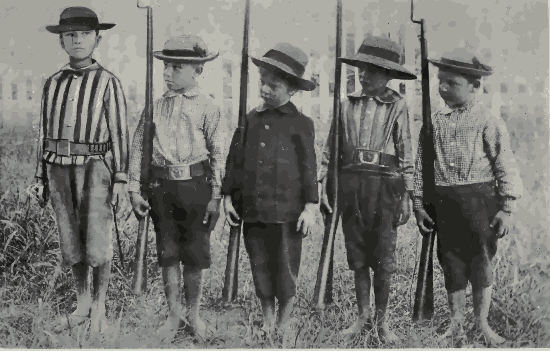
Little Anson's Company at Fort Grant, Constance in Center.
Anson Constance Willie Corbusier
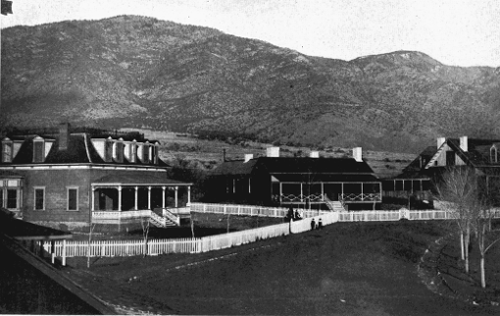
Commanding Officer's and Adjacent Quarters at Fort Grant.
Camp on the Mountains,
July 22, 1888.
My Dear Mother:
We have been here a week yesterday, and notwithstanding it has rained every day, we have had a good time. The rains do not last long and it soon dries up. There are the greatest quantity of beautiful flowers here. I have a large bouquet in my tent about fifteen inches in diameter and taller than it is wide. We have had bear meat, a young fawn and wild strawberries. The nights are if anything too cold. We have taken several tramps, one of them to an old hunter's camp. He comes over to see us often and enjoys the break in his loneliness. He is alone in his camp except for a dog, which is almost as dear to him as a child, and two or three ponies. He is going to show us the way to the top of the mountains. He came over to see us last night and sat by the big log camp fire, and while we popped corn regaled us with numerous tales, all of which I took with a grain of salt.
You would be surprised to see how comfortable we can be in camp with a very little. I have turned a box on one side for a book case, put another on top where I keep my writing materials, over it all I have thrown a large towel, and with the bunch of flowers I spoke of on top, it looks very well. I have another box for washstand, another for clothes, and with nails driven in the tent poles to hang clothes, medicine bag, little looking glass, canteen, etc., things are quite shipshape.
Your loving daughter,
Nannie.
Fort Grant, A. T.,
August 4, 1888.
My Dear Mother:
We were up in the mountains when I last wrote you. Anson came back from the court he was on and he and the doctor came up on the mountain. We went the next day on horses and burros to the summit of Mt. Graham. It was about four miles from our camp, and is ten thousand six hundred feet above the level of the sea. We wrote our names and put them in the tin can left by the surveyors. Anson and Constance Lydia both wrote their own names. It was a very pleasant trip. I rode a burro, astride, of course, as I shall never ride any other way. Anson is going to take my picture as I appeared. Anson came up to the camp on Friday. On Saturday we went to the summit. That same evening, in a pouring rain, a courier came in bringing a copy of dispatches from San Carlos saying six Indians had gotten away and the troops were after them. Of course we could not tell but it was the beginning of another big outbreak. The commanding officer of Fort Grant said he had already sent out some pack mules and might have to send out all the rest, but if we wished to come down to the post next day he would send us what animals he could spare. We immediately decided to come down to the post, for in case of an outbreak, the Indians could easily take our camp. We left the camp about two o'clock Sunday afternoon. Anson was mounted on a horse with Constance behind him. I had a big white mule with little Anson behind me. We rode about a mile and reached the steep part of the trail where I was afraid to ride down. Indeed the whole party, about thirteen of us, dismounted and walked down the steepest part. We could in places look down on the post which looked so green, like an oasis in the desert. Mrs. Viele, Constance and I walked for about two miles, as we did not care to ride over places steeper than a pair of stairs, but the rest mounted before we did. We reached the post about six o'clock, pretty tired. The next day, Monday, I was stiff and tired, but everything in the house needed straightening up.
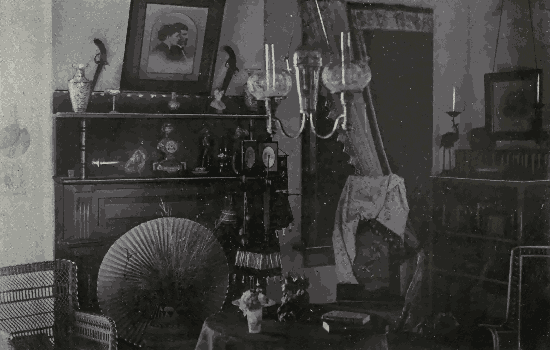
Our Sitting Room at Fort Grant, A. T.
Tuesday Anson told me that General Miles would be here on Thursday. As the new commanding officer very kindly said we could keep this house till his wife came, thus saving us the trouble of a move, we had to entertain General Miles. We straightened up the house and expected him about eleven o'clock Thursday morning, when lo! he drove in at seven in the morning, before we were out of bed. We hurried to dress, and as he expected to go right on to San Carlos immediately after breakfast, I told Sallie to cook the chickens for breakfast that we had intended giving him for dinner. Breakfast was late, of course, as General Miles took a nap and a bath, and it was ten o'clock when we were through. I hurried to fix him a box of luncheon to take with him, and they would have started immediately but some telegram came which decided him to wait for further news. We sent to the butcher's for a roast of beef, as we had eaten up the chickens intended for dinner. He had no meat fit to roast, so Sallie chopped it up and made a meat roll. We had dinner at five o'clock, General Miles, Colonel Pearson and Mr. Jerome taking dinner with us. The latter is a cousin of Lady Randolph Churchill. We had soup, fish, claret, meat, vegetables, olives, champagne, pudding and coffee, a dish of flowers in the center of the table and flowers in the finger bowls. I should have had a salad, but there was no oil in the commissary. After dinner I rearranged the lunch, and they got off. I told General Miles he was like a flea, no one ever knew where to put one's finger on him.
He laughed and said, "About as disagreeable as one, also." He told lots of funny stories and was very pleasant. He praised the post which Anson has improved so much and which certainly looked at its best, all beautifully green, the lake full of clear water, the fine fountains playing and the sun shining through them. General Miles showed Anson an endorsement he had made on an official paper regarding him (Anson) which was extremely complimentary. In fact, he could not have said more, as he praised him to the skies.
I hope the Indian business will be settled soon. I was so sorry to leave the mountains. It was delightful up there, and we intended to stay three weeks longer. We were there only two weeks. It was so cool at nights we had to have a big fire and sleep under several blankets, indeed one or two nights I slept under four blankets and a buffalo robe.
Your loving daughter,
Nannie.
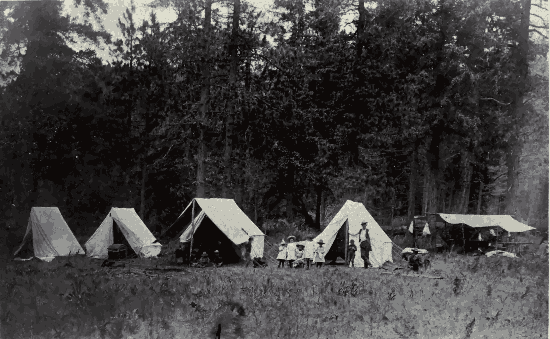
Summer Camp on Mt. Graham, Near Fort Grant.
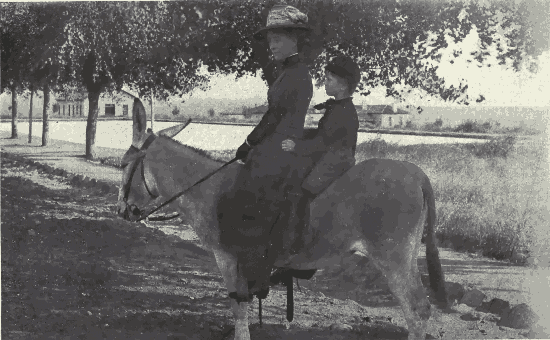
Nannie and Constance at Fort Grant, Artificial Lake in Background.
At this time, anticipating promotion, I took leave and, selling most of our belongings, we went to Boston. Here we bought a carload of household goods, shipping it by the Santa Fe. The car was burned at Deming, but the railroad company had insured it and we recovered the full value of our new goods. But among the losses which could not be valued was Nannie's diary, which she had kept in detail for eighteen years and from which she expected to write a book. That was one of the discouragements we faced in planning mutually to write our reminiscences.
In May, 1889, I was assigned to duty at Fort Bliss, Texas, as supervising engineer under Colonel Nettleton of the Geological Survey. I remained until April, 1890, when as lieutenant colonel of the 4th Cavalry, with three companies of that regiment, I was stationed at the Presidio, San Francisco, as executive officer under Col. W. M. Graham of the 5th Artillery.
This large post, adjacent to a very large and interesting city, was the most enjoyable station we ever had. The children enjoyed it, Anson going to school and Constance having a good teacher at home.
Numerous balls, dances and other amusements in addition to strenuous duties, kept us all busy and healthy. Here, again, we had the good fortune to have Dr. Leonard Wood, then a regular army doctor, as our family physician.
Col. W. R. Shafter commanded Angel Island in San Francisco Harbor and he, Colonel Graham and I constituted the first board under the new law for examination of officers for promotion. It was a very lively, and, I think, an efficient board. We examined some thirty-three officers.
When some members of the 4th Cavalry murdered a citizen, at regimental headquarters, Walla Walla, I was sent to command the regiment, the colonel being suspended for neglect. We liked Presidio, so this move was a disappointment. To our surprise we found Walla Walla among the most pleasant, agreeable and efficient posts at which we had ever been stationed. The officers and ladies were unanimously harmonious and the regiment, notwithstanding the bad reputation it had for this murder, was in every way the best disciplined and efficient I had ever served in.
Nannie, as usual, was one of the leaders in all the entertainments, which were patronized not only by the ladies and officers of the post, but by an equal number of citizens from the beautiful city of Walla Walla, at that time the wealthiest town in proportion to its population in the country.
The command was an interesting one because of the great number of semi-civilized Indians in the vicinity who were trying hard to make an honest living under great disadvantages. The citizens did not credit them with good intentions because of their inability to make a living out of the soil. They were driven from pillar to post, but always came to the army for relief, trusting, as all our North American Indians have always trusted, in the officers.
In July, 1892, with our two children, we made a most enjoyable tour of Alaska, by way of Seattle and the steamship "Queen," through the inner deep water channels with their still water and surrounding mountains covered with inexhaustible cedar. We visited dense forests of timber near Sitka, where the warm Chinook winds carry sufficient moisture to keep them damp through the entire year, so that no forest fires ever occur. The moss accumulated over fallen trees, which did not decay. Huge trees several hundred years old grow upon others, as large and as ancient, though dead. Fallen logs preserve so well that many are as available as the standing trees for lumber. Cattle live the year around on this constantly growing moss.
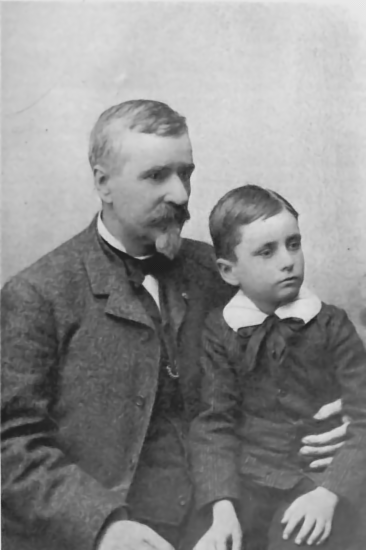
Father and Son at 58 and 13. Taken at Fort Walla Walla.
We stopped at Wrangell and Juneau, and spent some time at Sitka, visiting Treadwell, the great silver mine. We stopped a couple of days to see the wonderful Muir glacier, traveling several miles over the surface of the solid ice mass. Twenty-seven miles long and several miles wide, it moves gradually downward to the sea by force of gravity, averaging seventy feet per day. As it moves, this great mass tears from the solid granite below huge masses of rocks, and pedestrians can hear the crushing of the rocks. On reaching the salt water, which is very deep, the ice begins to soften and disintegrate, and periodically falls in great shales, sometimes two miles in length and nine hundred feet deep, into the water, only two hundred feet being above the water line.
The captain stood off two miles from the glacier for us to see a berg break off, which happened in the afternoon. We could plainly see this immense body of ice fall into the water. It careened, disappeared, broke into many parts and finally appeared on the surface as bergs moving out to sea. The waves caused by this immense movement of ice rocked the ship as if we were in a storm.
I was promoted colonel of cavalry, not assigned, while I held command of the 4th. On the colonel's restoration, in February, 1893, I was assigned as colonel of the 3d Cavalry at Fort McIntosh, and joined February 28, 1893, where I had as adjutant Thomas B. Dugan and as quartermaster John T. Knight, both efficient officers.
The Garza Mexican troubles on the Rio Grande were then in full force, and my regiment was assigned to duty along the lower Rio Grande, leaving two companies of infantry at McIntosh.
Numerous bands of Mexicans, half from Mexico and half from the United States, committed depredations, stole property and killed Americans all along the river to Brownsville. This so-called Garza war kept my troops busy marching, and in the difficult effort to punish them we lost a number of men.
Another disturbing element between the two countries was the formation of large islands in the river. The shifting stream produced these "bancos," as they were called, which, when two or three hundred acres in extent, were claimed by the more excitable and lawless of both sides. They were used as a refuge by smugglers and other criminals denying the jurisdiction of both countries.
One of the bancos, Banco de Vela, was used by an American as a pasturage for about three thousand sheep. The Mexican customs authorities put the herders in jail and took the sheep into Mexico, as confiscated under their revenue laws. In retaliation the sheriff of the Texan county put the Mexicans found on the banco in jail.
Colonel Minero, commanding the 4th Mexican Cavalry, at the city of Reynosa, was opposite Banco de Vela. My regiment, the 3d U. S. Cavalry, was drawn up on one side to prevent further arrests and probable conflicts between the contending parties. This situation caused the organization of the Boundary Commission, of which I was later a member. (Text, 281.)
Ordered to relieve the 2d Cavalry under Colonel Wade, my regiment arrived at Fort Reno, June 24, 1893. I had always stated that if I ever became colonel and the authorities gave me an insignificant command of but one or two companies, the band and the laundresses, I would apply for retirement. A few days after reaching Fort Reno, one company was detached, leaving me but two companies of my own regiment. I wrote General Miles, commanding the department, my official and personal friend, that as regulations held me responsible for the efficiency and discipline of my regiment, I would prefer to take advantage of my right to retire on thirty years, unless I could be furnished with at least half of the regiment. For that purpose I asked six months' leave.
The general replied that he would, if it were possible, furnish me the half or the whole of my regiment, but the conditions were such that he could not. When I applied, he recommended my leave. Nannie, with Constance, had preceded me to Worcester, where I went to make arrangements to retire and devote my attention to my cartridge belt factory there.
But General Gresham, who knew of my familiarity with the banco troubles, told me the President had decided to appoint a Boundary Commissioner, and offered me the post. Supposing that it would only last a year or two, and knowing that I was well acquainted with the people of both sides and the nature of the questions involved, I decided to accept. Then it was discovered that I could not lawfully do so, unless I resigned my army commission, as no one could hold two government positions. The Secretary told me he was so anxious I should take the place, he would procure a resolution from Congress authorizing me to accept it as a colonel of cavalry, with pay and allowances as such, which he did. I entered upon this duty, not expecting it to last long, or to become a general.
As I look back over my military career I am impressed with the changes which time has wrought in the size of the military establishment. When I was made a colonel, there were but seventy-two colonels in the line, although forty-five States, represented by ninety senators, were then in the Union.
When I was made a general officer there were but nine general officers in the line of the army; while at that time the President of the United States had eight cabinet officers.
Since leaving active service I have retained my interest in military affairs, and have been so intimately connected with military orders as to be an ex-commander of the Loyal Legion, an ex-commander of the Order of Indian Wars, and am an honorary member of the Indiana Society of Engineers.
BREVET COMMISSIONS IN THE ARMY
Prior to the Civil War the Government established a satisfactory system of brevets, conferred on officers who distinguished themselves in action, so regulated that rights to promotion of those commissioned in special corps might not be infringed, while allowing the beneficiary to exercise rank and command by authority of his brevet whenever placed on duty with a mixed command. Thus, when a company of artillery and one of infantry served together, a junior captain with the brevet rank of major might assume and exercise command. (When a Captain I so exercised the rank of brevet Lieutenant Colonel, over a real lieutenant colonel by priority of date.) During the Civil War, however, the conferring of brevets was so overdone by political and other influences that in one or two instances a captain in a non combative corps acquired the rank of major general. The situation was so absurd and confusing that Congress passed a law declaring that under no circumstances should a brevet be exercised for rank or command. This rendered brevets practically worthless. The army became dissatisfied and secured another method of rewarding distinguished service, medals of honor, but this, also overdone, is becoming unsatisfactory.
As time passed those modestly breveted outgrew all their brevets, while those immodestly breveted were generally of the non combative corps stationed about Washington. In 1892, a bill was introduced in Congress to allow the restoration of the brevet "uniform" and "address."
I wrote the following protest:
Headquarters, 4th Cavalry,
Fort Walla Walla, Washington,
April 12, 1892.
To the Adjutant General,
U. S. Army,
Washington, D. C.
Sir: In the matter of Senate Bill No. 2699, for the restoration of brevet "uniform" and "address," I beg to make the following suggestions, and request that they be referred to the Committee on Military Affairs in the United States Senate, for such consideration as in its judgment they may seem to merit.
That all officers holding brevet commissions, whether above or below their present grade, may wear the insignia of their highest brevet rank on each side of the coat collar. Those conferred for gallantry in specific actions, on a red ground and those for faithful or meritorious service, not in action, on a white ground.
The reasons that impel me to this action are as follows:
It is well known that about the close of the war, brevets in many cases, by reason perhaps of propinquity to power, were given in such extravagant profusion as to destroy in a great degree their value to those of the deserving, and it goes without saying that as a rule a greater proportion of these highest grades by the promotions of time have worn out by covering over with other commissions a greater proportion of the modestly breveted.
It is also true that an officer holding a brevet below his present grade, and conscious of equal merit with his comrade who holds one above his present rank, will take equal pride in wearing the evidences of its appreciation if he be permitted to do so, especially if he can show that it was won in battle.
The proposed bill, however, as I understand it, will not permit him to do either, and will, I fear, rather tend to confuse by putting on the shoulder rank without command, with no easy method of determining the actual rank or right to command.
To illustrate the effect that this bill, as proposed, would have on the Army, that is, on the officers on the active list, a reference to the last Army Register will show a total of 391 field officers in the entire Army, most of whom hold brevets below their present grade, and would be ignored by the present bill; all but 67 of the 391 hold brevet rank above their present grade, distributed in corps throughout the Army, as follows:
Adjutant General's Department 9
Inspector General's Department 0
Quartermaster's Department 10
Subsistence Department 8
Medical Department 7
Pay Department 3
Engineer Department 6
10 Regiments of Cavalry 8
5 Regiments of Artillery 7
25 Regiments of Infantry 9
—
Total 67
It will be observed that of the 67 total, the Line of the Army have but 24, while the Staff have 43; and as a rule, even in the Staff, the noncombatant corps lead in honors.
Of this total of 67 field officers, in the entire active Army, holding brevets above their actual rank, 26 hold the brevet rank of General, and of these the Line of the Army has but six, while the Staff Corps have 20, and of these 20 Generals in the Staff Corps the Adjutant General's Department has 6, the Quartermaster's Department has 5, and the Subsistence Department has 6.
I have the honor to be
Very respectfully, your obedient servant,
Anson Mills,
Lieutenant Colonel 4th Cavalry,
Commanding Regiment.
As a result, Senator Sherman, chairman of the military committee of the Senate, advised me he had induced the Senate to withdraw the bill, which it had already passed.
In Washington Again
Asked to select the secretary to the Boundary Commission, on recommendation of Adjutant General Ruggles, I picked Mr. John A. Happer, a beardless youth of twenty, a minor clerk in the War Department. The Secretary doubled his pay to comport with the importance of the position, and Mr. Happer at once procured what he considered to be suitable personal attire, which included a fashionable cane and very sharp-toed buff shoes. Walking down the street with me, he remarked, "Colonel, why don't you wear a cane?"
I replied, "For the same reason that you wear one."
"How is that?" he asked, "I don't understand."
"Well," I replied, "you don't need a cane, and vanity impels you to wear one. I need a cane and vanity impels me not to wear it."
Later, on our first visit to El Paso, at La Coste, beyond San Antonio, he saw some Mexicans loading cotton. Calling to me from the car door, he said, "Colonel, do please come here. What induces those men to wear those foolish sharp-pointed hats?"
"Well," I replied, "I suppose they were moved by the same logic that induced you to buy sharp-pointed shoes."
Soon after, the inherent good sense I knew him to possess when I selected him, led him to abandon both cane and shoes, and he has become a prominent and successful citizen of El Paso.
After President McKinley's election, General Miles asked me if I intended to apply for promotion. I replied that I never applied for anything unless I thought I had more than an even chance of getting it, but that, if anyone high in authority would give me that assurance, I would. "I believe you have more than an even chance," he answered. "There is but one colonel I will recommend before you, and that is Shafter."
I made the application the next morning. Adjutant General Ruggles made a detailed statement of my official services which I took to my friend, General Flagler, telling what General Miles had said. He promised me his help. In his office I met my classmate, General Merritt, then commanding the Department of the East in New York, who stated, "Mills, there is but one thing for me to do. When I return to my office I will also recommend you." I was soon promoted, but, according to the resolution of Congress appointing me Boundary Commissioner with the pay and allowances of colonel of cavalry, I had no additional pay for the nineteen years I served on that duty, holding the rank of brigadier general and receiving only colonel's pay.
Nannie and I, with our two children, stopped at the Richmond Hotel, in Washington, while we looked for the home we intended to rent or purchase. Senator White, now Chief Justice, also lived at the Richmond. Standing in the office one day, when Nannie entered and asked the clerk for her key, I saw Senator White was near her. She turned in her usual dignified manner to enter the elevator. Not knowing my relation to her, Senator White asked the clerk, "Who is that lady?" When he replied, "Mrs. Mills," Senator White said, "She is the most beautiful woman I ever saw."
While in El Paso on boundary business I received a telegram stating that Anson was seriously ill with appendicitis and was being operated on. I took the first train for Washington and arrived Sunday morning, but too late. Anson died during the night, February 25, 1894. He had been taken suddenly sick the Sunday previous, but, not knowing as much about the disease as they do now, the doctors deferred the operation until too late. It was the great sorrow of our life, and we could not help resenting all the rest of our lives the sad fate of one so young and promising.
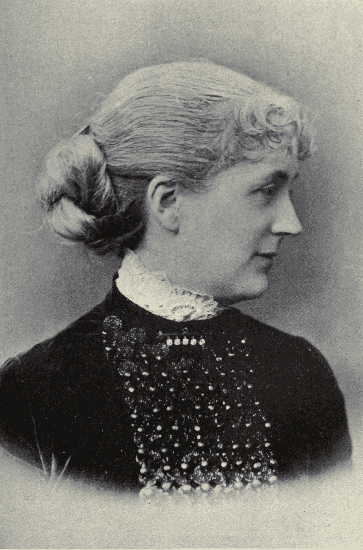
Nannie.
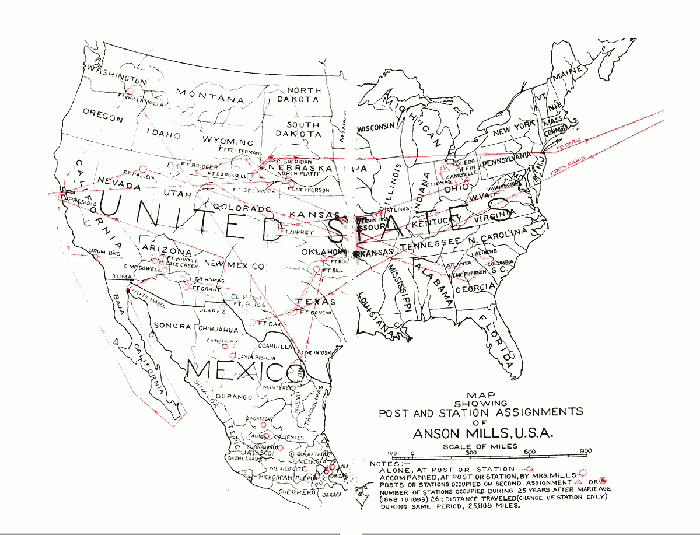
This graphic map illustrates how constantly Nannie followed me after marriage throughout my military service.
MAP SHOWING POST AND STATION ASSIGNMENTS OF ANSON MILLS, U.S.A.
SCALE OF MILES (see chart above)
NOTES:— ALONE, AT POST OR STATION—△ ACCOMPANIED, AT POST OR STATION, BY MRS. MILLS—◯ POSTS OR STATIONS OCCUPIED ON SECOND ASSIGNMENT ◬ OR ☉ NUMBER OF STATIONS OCCUPIED DURING 25 YEARS AFTER MARRIAGE (1868 TO 1893) 26; DISTANCE TRAVELED (CHANGE OF STATION ONLY) DURING SAME PERIOD, 25,808 MILES.
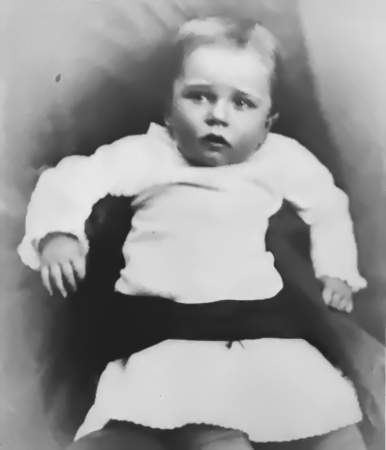
Little Anson at Seventeen Months.
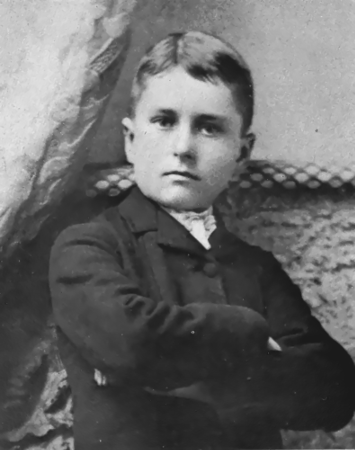
Little Anson at Twelve Years.
Carefully preserved among his mother's papers is a letter from our son to me, and my reply to him. Shortly before she died, Nannie brought these to my attention, saying she thought them of sufficient worth to merit publication, considering that the boy was but fifteen when he wrote, but three weeks before he died. I append the two letters here:
Hotel Richmond,
Washington, D. C.,
February 4, 1894.
My Dear Father:
I received your letter of the 27th with the letter from Walla Walla, and am very glad to hear from you. I hope that the boundary work will not take as long as the Mexican commissioner thinks.
The newspaper gave a list of the West Point cadets who failed in the last examination, and I was glad to see that Carl was not in the list. I guess Carl will be able to pull through if he works hard.
I am getting along quite well in school, but I wish that the teacher would rush a little as I think that we are not progressing as rapidly as we might. I got excellent in the carpenter shop last month and as I couldn't have gotten any higher than excellent and there were only a few boys who received marks that high, I think that I have done pretty well. I am on good terms with the carpenter and always try to do what he says and he helps me along and is very nice to me.
The weather is very cloudy and rainy today and I hope that it will clear off soon. We went to see a play called "The Senator" last Saturday and enjoyed it very much. I saw Grover and Mrs. Cleveland in one of the boxes. Last night Mamma went to a reception at the White House and shook hands with Grover, it was the last card reception of the season and Mamma says that there was a very large crowd there.
This afternoon Mamma, Tootsie and I went out to Tacoma to see the Martins, they seem to think that Carl is all right, and I think Nellie expects to make a visit to West Point in the summer when Carl will be a 3d classman. I have made the acquaintance of two boys here in the hotel, but one of them went away yesterday so there is only one left. We generally play cards in the evening and have a good deal more fun than if we were by ourselves.
The other day I went to the dead letter office and saw the clerks sorting out the dead letters. They have show cases in which they put all the extra curious things that pass through their hands. They have live rattlesnakes and everything you can think of.
Mamma called on Mrs. Happer a few days ago and Mrs. Happer said that there has only been one meeting of the club since you left and I guess that is why they have not taken me there yet. Caldwell wrote me a letter the other day and said that you stopped to see him when you passed through San Antonio. Caldwell seemed greatly pleased with his new house and I hope that he will get along all right.
Nearly all the boys around here want to go in the Navy, but I am going to stick to the Army. I don't see how anybody could prefer the Navy to the Army, but each fellow has his choice and if they want to go to the Navy it will leave that much more room in the Army for me. I am still anxious to go on that big game hunting trip to Maine and I guess this fall I will have to go on a good hunt if nothing turns up to mar it.
Uncle Tom has made me a new belt for my rifle and it is a very good one. As it is time for me to go to bed I will close. We all send our love and hope that you will be back soon. I remain,
Your loving son,
Anson C. Mills.
El Paso, Texas,
February 11, 1894.
My Dear Boy:
I have just received your long letter so nicely typewritten and can not tell you in words how interesting it is to me to learn so many things of you and from you, for my hopes and fears are now more centered in you than in anyone else in the world; not that I love Mamma and Sister less or that they are deserving of less interest, but from the fact that (as you are now old enough to understand) as the world goes more is expected of boys and men, so that if I were to die suddenly the future of both Mamma and Sister would depend much upon you. So do not fail in every way possible to arm yourself for this responsibility should it come.
My mother died when I was about your age and left me the oldest of nine children, and while I did the best I could I had much care, but as Father lived to manage the business I did not have as much as you may have if I go.
I am glad you are getting along well at school for that is more important to you than all else just now, in fact, for the next five years. Don't be impatient for the teachers to go along faster. You do well enough if you keep up with the course, only strive to be thorough and understand all well that you go over so that if you go to West Point,—as I intend you shall when you are twenty, if you then still desire to,—that you may not be rattled.
I am glad you put the "C" in your name for if you had been fortunate enough to have seen and known your grandfather Cassel for whom it stands you would never fail to put it in. He was one of the best looking and most graceful men I ever saw, as straight as an arrow, with quick gait and quick speech, but few words, and liked by everybody and so correct in business that the cashiers in the banks would doubt themselves before doubting him. According to the laws of heredity you should inherit some of these qualities and I have thought sometimes I have already seen them in you, though it is hard to see the man in the boy, lest I had known him as a boy, which, of course, I did not.
Of course, you are as likely to inherit the traits of my father whom also you were unfortunate not to know at an age when you would appreciate, but he also had none that you need fear the development of in yourself, nor had either of your grandmothers.
I want you to read carefully the enclosed clipping on "Individuality," and mark the words underscored, for I think you can now understand the thoughts and ideas of our bright namesake. I think it is true, as he says, that heredity counts a great deal, perhaps not as much as surroundings and teachings, and I think, too, that he might have added that all three, heredity, surroundings, and teachings come mostly from the mother and there is where your great good fortune lies, if you improve it as you should and I think you will.
I want you to mark well what he says about individuality. Don't be restrained from doing things that seem sensible just because a lot of machine made boys say it is not the thing, nor do things not sensible because they say so. I have often regretted that I did not let you sit up all night at Fort Grant for fear it may in all your after life repress your individuality in thoughts and actions, for almost everything that man does or refrains from doing is from an instinct or teaching, like the parent talks, and not from brave independent and noble impulse of thought and reason like Paul Revere or Franklin, Cushing, Jefferson, Lincoln, Jackson, and Edison, who did new things useful to man.
I hear that Judge Maxey went hunting at Brownsville the other day and that the party killed three deer. We will look out for them when we get down there and tell you how it is.
Kiss both Mamma and Sister for me and tell them I will write to them both soon, though it is a great labor now that I am without my typewriter.
Your affectionate father,
Anson Mills.
The day before Anson's death, Nannie asked him what he wished she should say to me from him when I arrived, when he replied:
"Tell him I can't show how much I like him. I'm not strong enough. It will look as if I didn't like him. Tell him I love him very much." Of which she made a memorandum which I still have.
After eight months we purchased No. 2 Dupont Circle, on the most beautiful park and in the best social surroundings of the city. My position in the diplomatic service led us into the best society in Washington; we were invited everywhere we wanted to go, and were able to entertain all those who invited us, so that Nannie was able to exercise her abundant ability in making friends. We had at our house during the next twenty years several hundred interesting people of the army, navy, marine corps, senators and members of the different embassies, who were our guests.
One of Washington's greatest attractions was the opportunity it gave of renewing old friendships. We were always glad to welcome such guests as Gen. and Mrs. Freeman, Col. and Mrs. Corbusier, Col. and Mrs. Shunk, Miss Florence Cassel, and many others, old and new friends.
Early in 1894 Nannie joined the Washington Club, which she greatly enjoyed and of which she was a governor at the time of her death. She was also on the board of managers of several hospitals, and belonged to many charitable societies.
Washington was our permanent residence for the next twenty-three years, although Nannie and I, with Constance and our relatives, spent some time in Chihuahua, Santa Rosalia, Monterey, Zacatecas, Aguas Calientes, Guanajuato, Guadalajara, Mexico City, Jalapa, Puebla, Orizaba, and Queretaro, all in Mexico. (See graphic map U. S. and Mex., page 216.)
It was my professional duty to go to some of these places two or three times, the better to qualify myself by learning from the Mexicans views relating to the important boundary question. After she had heard of the simple character of the people and the interesting antiquities and customs of the country, Nannie always wanted to go with me.
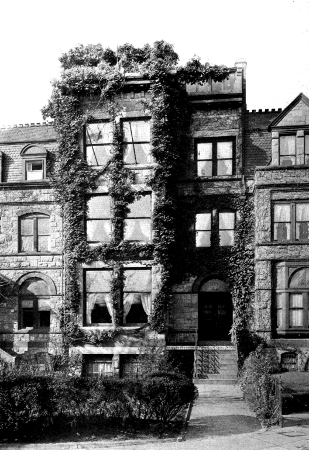
Our Washington Residence. (Text, 223.)
While at Aguas Calientes, bathing in the hot springs, Nannie, knowing the embarrassments of military courts in determining when an officer was drunk, brought me a copy of an inscription she had found on the wall of her room, probably left there by one seeking recovery from delirium tremens and at the same time preparing a test for the consideration of the members of the next court before which he might be brought.
"Not drunk is he who from the floor Can rise again and still drink more, But drunk is he who helpless lies Without the power to drink or rise."
Spending most of our time in Washington, we found members of both Houses of Congress were much misunderstood by the people. They are constant hard workers with small salaries and almost universally honorable, honest men, and not, as many people believe, as they do of the army and navy, idle and uninterested in the government's welfare. Public sentiment has compelled many legislators to abandon the profession for another where they are better understood and better paid.
Among these noble men, I want to pay a tribute to a few of the finest statesmen the country has seen since the War of the Rebellion; men who trimmed their sails to no passing breeze but stood steadfastly for that public policy which would in their opinion bear best fruits for the great republic in the future. First among them, I put President Cleveland, Senator Hoar and Senator Root.
Cleveland, I consider the Washington of his time. When special classes of labor, having in their trust the railroads, the principal utilities of the whole people, declared their purpose to strike and by force and violence make their class the ruling class, the President issued his famous executive order that "if it took all the money in the treasury and all the soldiers in the army to carry a postal card from New York to San Francisco, the card would be delivered."
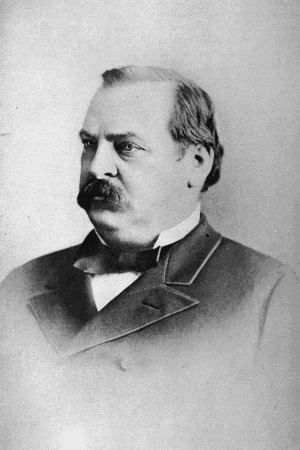
President Grover Cleveland.
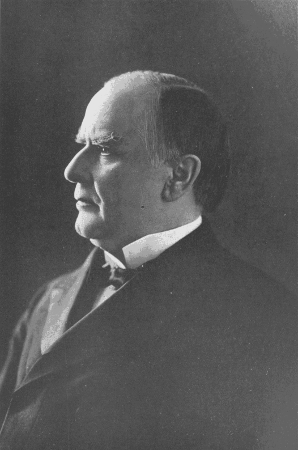
Copyright, Parker.
President William Mckinley.
Copyright by Schervee.
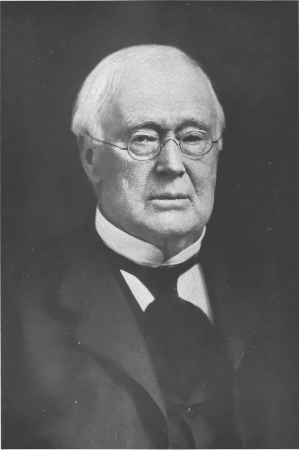
Senator George F. Hoar.
Copyright, Pach Bros.

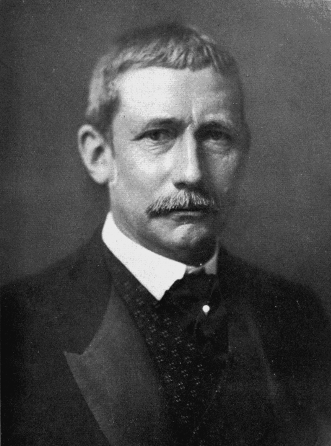
Elihu Root
Unfortunately this glorious example had no power in later years, when self-styled statesmen with greater opportunities cowered before a similar threat and surrendered the liberties of a majority of the people.
Hoar was the Franklin of his period. The Spanish War so inflated our military reputation "because a wretched kern we slew" as to cause a frenzy for "World Power"—when conquest, exploitation and subjugation of other lands and other peoples with their trade and commerce after the manner of other world powers was proposed. Hoar valiantly sought to prevent this fatal mistake by requiring that "the Constitution should follow the flag." He was defeated by but one vote (I think) in the Peace Commission, in the Senate, and in the Supreme Court. There is nothing more pathetic in history than his remark when called upon to assist in an appropriation for the restoration of Plymouth Rock, "Plymouth Rock was washed away by the loss of these votes."
Root, the Hamilton of his occasion, when chairman of the recent constitutional convention of his great State, sought to reform its criminal and civil jurisprudence, so that its courts should be instruments for the detection and punishment of crimes and disorders rather than for technical avoidance of that righteous end.
Though these three great statesmen failed of complete success, their noble and self-sacrificing example must surely inspire others. Meanwhile, "in the sunset of life which gave mystical lore," they have said figuratively to the American people as did Roman gladiators in another arena, "Caesar, we who are about to die salute you."
Many high school graduates have no better conception of the meaning of Jefferson's "Declaration of Independence" and the "Constitution" of Washington and Franklin than of the book of Mormon. They do not realize what our liberties cost, and how easy it is to lose or, once lost, how difficult it is to recover them.
On March 5, 1810, Mr. Jefferson wrote to his friend Governor Langdon of Virginia:
"While in Europe, I often amused myself with contemplating the characters of the then reigning sovereigns of Europe. Louis the XVI was a fool, of my own knowledge, and despite of the answers made for him at his trial. The King of Spain was a fool; and of Naples, the same. They passed their lives in hunting, and dispatched two couriers a week one thousand miles to let each know what game they had killed the preceding days. The King of Sardinia was a fool. All these were Bourbons. The Queen of Portugal, a Braganza, was an idiot by nature; and so was the King of Denmark. Their sons, as regents, exercised the powers of government. The King of Prussia, successor to Frederick the Great, was a mere hog in body as well as in mind. Gustavus of Sweden, and Joseph of Austria, were really crazy; and George of England, you know, was in a straight-waistcoat. There remained, then, none but old Catherine, who had been too lately picked up to have lost her common sense. In this state Bonaparte found Europe; and it was this state of its rulers which lost it with scarce a struggle. These animals had become without mind and powerless; and so will every hereditary monarch be after a few generations. Alexander, the grandson of Catherine, is as yet an exception. He is able to hold his own. But he is only of the third generation. His race is not yet worn out. And so endeth the book of Kings, from all of whom the Lord deliver us, and have you, my friend, and all such good men and true, in his holy keeping."
The Kaiser found Europe in a similar condition in 1914. England, Germany, Austria, Russia, and Italy had emperors by divine right, with royal families, lords and nobles, most of whom were either moral or physical and mental degenerates. The later George is so imbecile as not to require a straight-jacket, as did his predecessor, and the Kaiser, a moral degenerate, sought only to play the rôle of Napoleon. When all Europe seemed in a peaceful and prosperous condition, he, by his foolish cablegrams, sought to distract George's and Nicholas' attention from his planning, while the secretive diplomats of England, France, and Russia on one side, and Germany, Austria and Italy on the other, blindfolded their people by many vari-colored state papers, and backed them over night into war, of which they knew nothing until armies were moving. Had proper publicity been given by any interested nation, war would not have ensued.
Our government, too, was somewhat responsible, in that we placed before our war college a statue of that greatest of moral degenerate rulers (not excepting Nero) miscalled "Frederick the Great," thus giving his successor, the Kaiser, to understand we approved his militarism. Strange that our people permit this statue to remain.
What the war is about the world's people have no intelligent conception. Yet unless the American people educate themselves to an intelligent understanding of the hazard of their liberties, we may become too entangled to extricate ourselves.
Every American should ponder these things and ask whether our citizenship has not become so diluted as to endanger the perpetuity of the great republic, and whether it is not now necessary to return to the high schools and colleges the careful study of the Declaration of Independence and the Constitution. Another great law-giver of three generations past, Dr. Lyman Beecher, evidently had in his sunset of life "mystical lore" to see these present shadows. I submit his words here for the people who may read this to ponder, and for study in the schools.
"We must educate! We must educate! Or we must perish by our own prosperity. If we do not, short will be our race from the cradle to the grave. If in our haste to be rich and mighty, we outrun our literary and religious institutions, they will never overtake us; or only come up after the battle of liberty is fought and lost, as spoils to grace the victory, and as resources of inexorable despotism for the perpetuity of our bondage.
"We did not, in the darkest hour, believe that God had brought our fathers to this goodly land to lay the foundation of religious liberty, and wrought such wonders in their preservation, and raised their descendants to such heights of civil and religious liberty, only to reverse the analogy of His providence, and abandon His work.
"No punishments of Heaven are so severe as those for mercies abused; and no instrumentality employed in their infliction is so dreadful as the wrath of man. No spasms are like the spasms of expiring liberty, and no wailing such as her convulsions extort.
"It took Rome three hundred years to die; and our death, if we perish, will be as much more terrific as our intelligence and free institutions have given us more bone, sinew, and vitality. May God hide from me the day when the dying agonies of my country shall begin! O thou beloved land, bound together by the ties of brotherhood, and common interest, and perils, live forever—one and undivided."
There were others following close on to the great men I mention; some I know more or less intimately, such as William McKinley, Charles W. Fairbanks, and Joseph Cannon and Champ Clark, in the legislature; in the army, Generals Sherman, Sheridan and Miles stand out, and in the navy, Admirals Dewey and Schley—all of them American patriots of the very highest order.
Many amusing incidents in our social life come back to me as I write. At a dinner given by Mr. Romero, the Mexican Ambassador, Mr. Cannon escorted Mrs. Mills to the table. I heard her say of some peculiar Mexican dishes, "Mr. Cannon, where do you suppose these come in?" He replied in his quaint and curious way, "Mrs. Mills, I spent my first twelve years in Washington trying to find out how they did things, and now I don't care a dom how they do 'em."
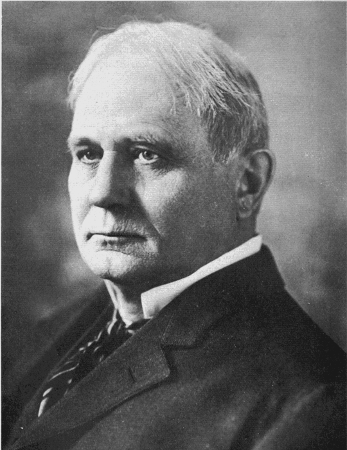
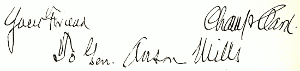
Your Friend Champ Clark
To Gen. Anson Mills
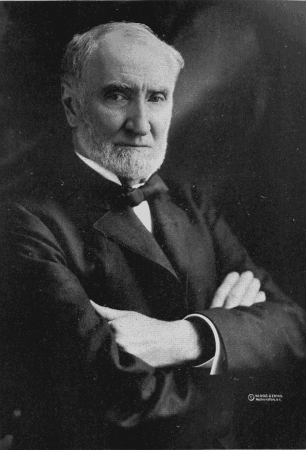
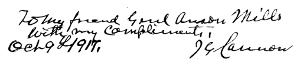
To my friend Genl Anson Mills
With my compliments.
Oct 9th 1917. J G Cannon
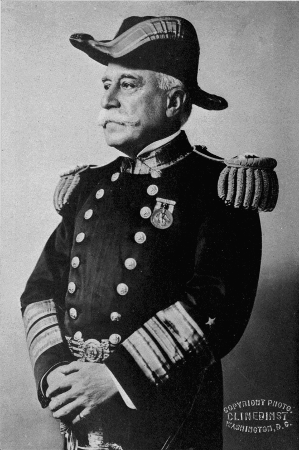
Admiral George Dewey.
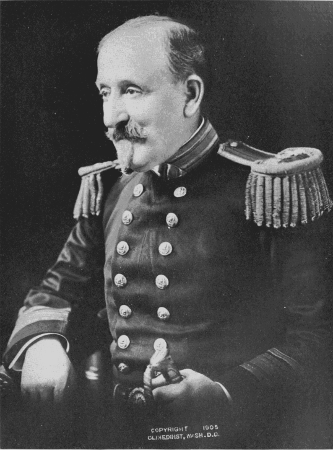
Admiral Winfield Scott Schley.
At a stag dinner of some eighteen guests at my house, Minister Wu Ting Fang sat at my right, and opposite sat Lieutenant General Young. General Young proposed the health of his host. All sat down save the Chinese Minister, who, after a pause, exclaimed, "Gentlemen, I think General Young has forgotten something." Young, not well acquainted with him, looked astounded. After a pause, the Minister went on, "I am a Chinaman, but I spent four years in London, two in Madrid, and I have been here now in America a short time. I know something about civilization, and know that no man ever got up this dinner. I propose the health of the hostess." The wit and humor of the Chinaman were loudly acclaimed. He became well acquainted with Nannie, visiting her frequently, and entertained her with interesting stories of his experiences at home and abroad. In turn, she was able to interest him in our large experience in the vicissitudes of the army and travel generally.
As evidence of Nannie's superior capabilities in administering household affairs it should be mentioned that she kept two servants, Menger Caldwell and Sally Caldwell, his wife, for eleven years, from 1882 to 1893, and at Washington, Dora Miller Kelly, fourteen years, from 1896 to her death in 1910, and her brother, Martin V. B. Miller, seventeen years, from 1900 to date. (Cut, 241.)
All these servants were so capable and satisfactory that their long service seems to warrant the appearance of their pictures in this narrative.
Our daughter, Constance, attended the excellent schools in Washington, grew up, and soon entered society, when our house was visited by a host of young people of both sexes. After enjoying this interesting period, she became engaged to a young officer of artillery, Winfield Scott Overton, and two years later, they were married at our home, on the 30th day of April, 1903.
Captain Overton graduated from West Point just before the Spanish War. He served in the Philippines and was seriously wounded at the battle of La Loma, March 25, 1899. He remained in the hospital in the Philippines for some time, and has been operated upon several times since, but never fully recovered, and in June, 1908, he was compelled to retire from the service. They have three beautiful children, Hannah Elton, six; Constance Elizabeth, four, and Mabel Helen, three years old. (Cut, 240.)
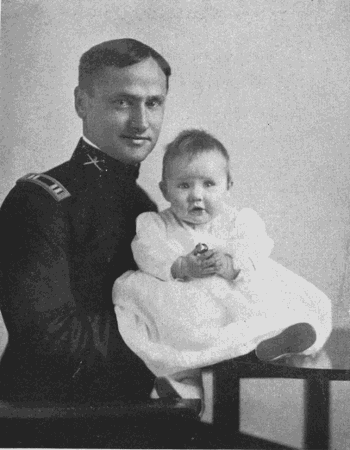
Captain W. S. Overton With Nancy.
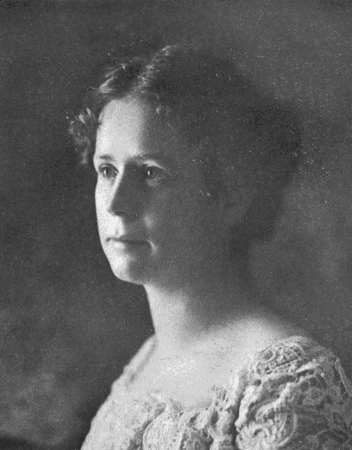
Constance Mills Overton.
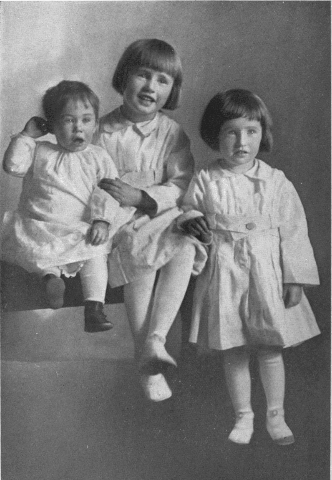
Our Grandchildren, Hannah Elton, Constance Elizabeth And Mabel Helen Overton in 1916.
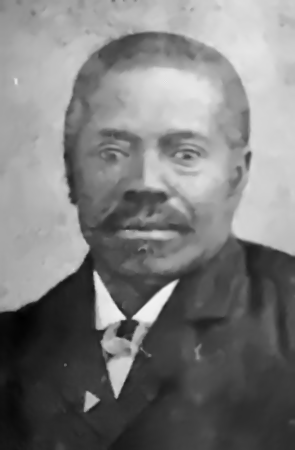
Menger Caldwell.
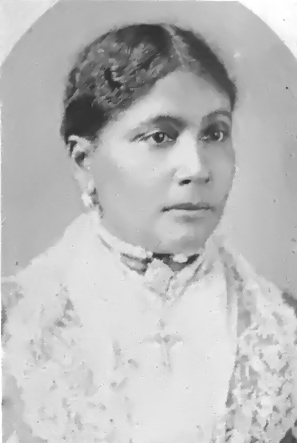
Sally Caldwell.
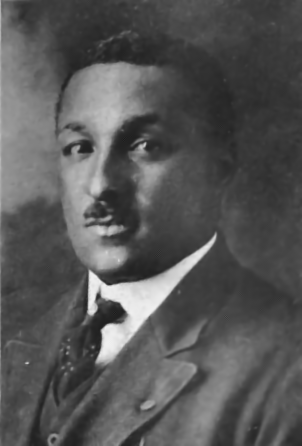
Martin V. B. Miller.
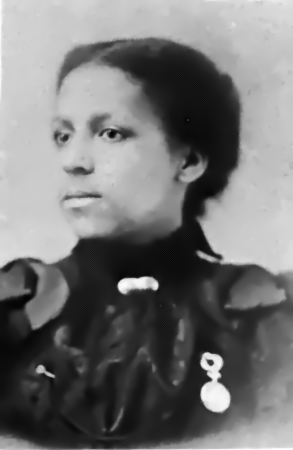
Dora Miller Kelly.
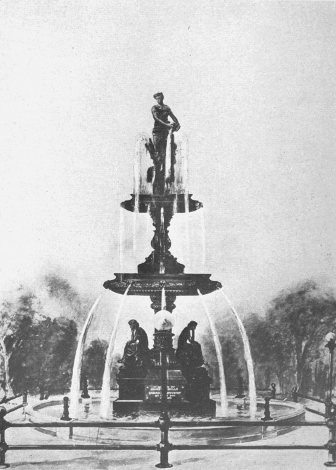
Mills Memorial Fountain, Thorntown.
In 1908 Nannie and I visited my birthplace, Thorntown, Indiana, a beautiful but sleepy town of about two thousand inhabitants. An epidemic of typhoid fever was raging, caused by poor drainage and a layer of impervious clay about twenty feet below the surface, which caused contamination of the wells.
A prominent minister requested me to donate a library to my native town. Thinking more good could be done by building a pure water system, I said that if the town would maintain a fountain monument to the memory of my father and mother, I would build a water and sewer system.
A town meeting accepted my proposition. I employed Mr. Charles Brossman, a civil engineer, to draw plans and superintend the building of an excellent water system, which pumped pure water from far below the impervious clay, carrying it to an elevated tank sufficient to supply the whole city with water; also the main sewers of a system to carry off the impure drainage; and to erect a fountain in memory of my parents.
When the work was completed, the town gave a celebration in my honor, which I attended, together with my family and many of our relatives on both sides. About ten thousand people were present. I made a few remarks, presenting the works to the city, and my daughter, Constance, unveiled the fountain. Many speeches were made, the principal one by Mr. A. Morrison, representing that district in Congress.
The water-works and sewer system have proved a great convenience, and added to the health of the city. So far the city has kept its faith in maintaining the fountain beautiful, clean, flowing, and in neat repair.
In Washington we invested a large sum in U. S. two-per-cent bonds, the proceeds of the woven equipment business. The peculiar laws relating to the reserve of national banks forcing these bonds to a six per cent premium, we disposed of them at a profit. With this money we bought property at Pennsylvania Avenue and Seventeenth Street and erected the first steel-frame perfectly fireproof building in Washington.
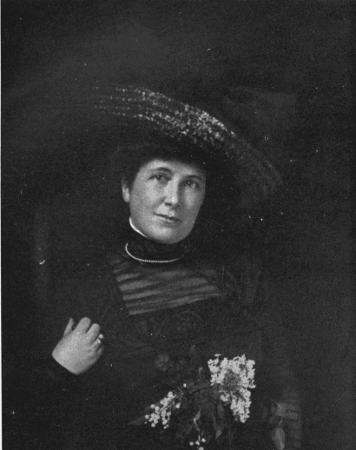
Miss Kathleen Cassel Kline.
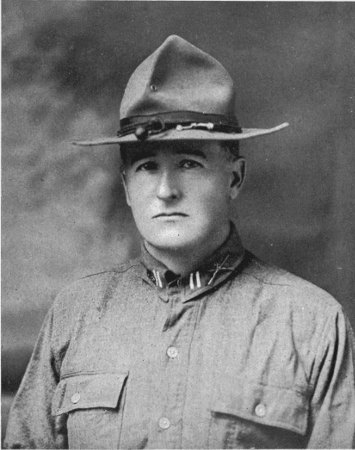
Captain Carl Anson Martin.
After retirement, while I was conducting the cartridge belt factory at Worcester, Nannie spent much of her time in Gloucester, Mass. In 1910 she bought property on a rocky ledge eighty-four feet above and a half a mile from the sea and built a fireproof residence. In writing her sister Katie, she said, "We have called our place 'Bayberry Ledge,' a very suitable name, for it is on a ledge of rocks and has lots of bayberry bushes on it. Anson has deeded it to me, and it is the dearest spot I know in the world." For seven years, until her death, Nannie spent most of her summers here cultivating flowers and enjoying the freedom of the country life, where, too, she entertained many of her relatives and old army friends during the hot seasons, among them General John M. Wilson, my classmate, Miss Waller, General and Mrs. Geo. M. Sternberg, General Wm. H. Bisbee, Mr. and Mrs. Keblinger, Mr. and Mrs. Batchelder, Mr. and Mrs. Follett, and our favorite nephew, Captain Carl A. Martin, and our favorite niece, Miss Kathleen Kline.
By 1912 the only piece of property I had remaining in El Paso became so valuable that I tore down the two-story building then on it, and built a monolithic cement building twelve stories high, containing no steel beams, the concrete being held in place by steel rods interspersed through the walls, columns, floors and roof. There is no wooden floor in the entire building from basement to turret, even the wash-boards in the rooms are made of cement and on all sides not exposed to parks the windows are fireproof. This was said to be the first building of the kind erected in the United States, and, so far as I know, it is still the only one of that magnitude.
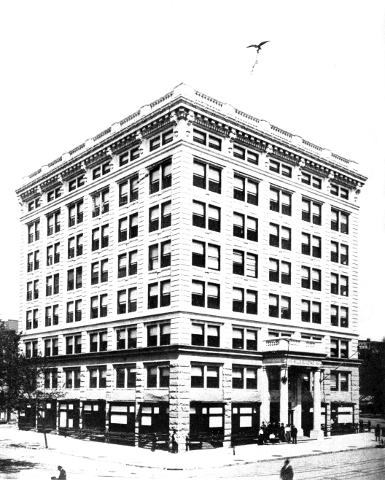
Mills Building, Washington, D. C.
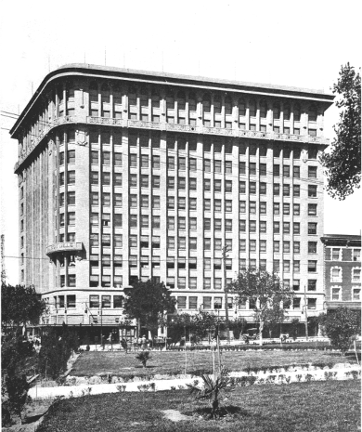
Mills Building, El Paso.
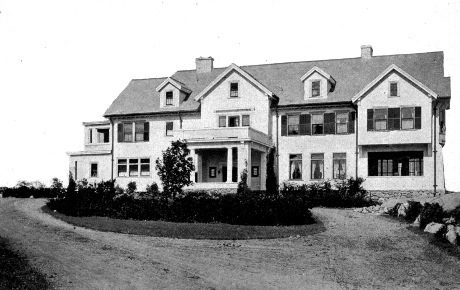
Nannie's Residence, Bayberry Ledge. (Text, 245.)
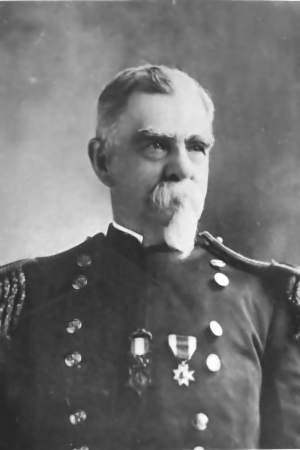
Brigadier General John M. Wilson (classmate). (Text, 245.)
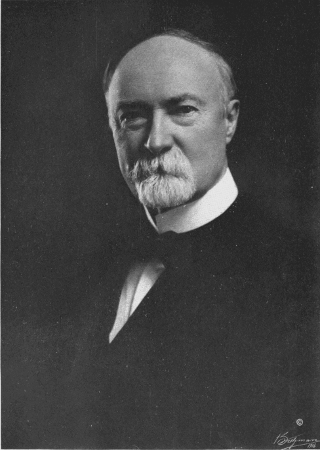
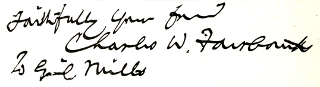
Faithfully your friend Charles W. Fairbanks To Genl Mills (Text, 233.)
Consolidation of the El Paso and Juarez Street Railways
When the Santa Fe, Mexican Central, Texas & Pacific, and Sunset Routes were completed to El Paso, about 1880, the five thousand people of El Paso, and eight thousand of Juarez, organized four street railways, two in El Paso (one on El Paso Street and one on Santa Fe Street), connecting with the two similar Mexican roads on the Juarez side at the middle of the Stanton and Juarez Street bridges. Stock in these roads was subscribed in the East, but each road had a president, four directors and other officers, all of whom, to be popular with the public, made deadheads of the officials of the two cities, policemen, collectors of customs, revenue officers, and so forth. There was, therefore, great maintenance expense and little revenue for the stockholders, and the equipment soon degenerated into a most impoverished condition. When it became necessary to assess stockholders or go into bankruptcy, Senator Bate, from Tennessee, a personal friend, complained to me that he and his wife had twenty-five thousand dollars in stock of the El Paso street road. He was unable to pay his assessments and, as El Paso was said to be my town, he thought I ought to do something to relieve him. We went to El Paso and he had some stormy interviews with the managers of his road. Suggesting the possibility of a consolidation of the four roads, I told him that as I had the confidence of the Mexicans as well as the Americans of the two cities, if he was willing to come with me, we might encourage the stockholders in New York to give proxies for a majority of the stock.
We saw the principal stockholders in New York, one of them a cousin of J. P. Morgan, obtained proxies for a majority of the stock and power of attorney to represent the stockholders in the consolidation of the four roads.
The El Paso street road was advertised for sale under foreclosure. Authorized by its stockholders to purchase, I did so, and then obtained from the Mexican stockholders and others in El Paso proxies for a majority of the stock in the other roads. Calling a meeting of each of the four roads, I proposed a consolidation into one company, making the circuit through both cities, to be styled the El Paso and Juarez Traction Company, with charters from the States of Texas and Chihuahua. Governor Ahumanda of Chihuahua and the Governor of Texas both granted the charters. The four companies made a statement of their financial condition and expressed willingness to merge in the new international company. It had a capital of two hundred thousand dollars, distributed to each company in proportion to their annual gains for the past five years. The directors of the four companies elected officers for the new company. Messrs. Z. T. White, Jos. Magoffin, John A. Happer, Max Weber and I were elected directors, and by them I was elected president. There was some disagreement as to the stock to be allotted the Santa Fe Street Company, and the officers to be elected, so Messrs. White, Maxon and Gordon declined to enter the consolidation. It was agreed to run the roads jointly, but the Santa Fe company kept its own organization. The four companies were run under our management as one road, all deadheads were cancelled and the company soon prospered.
At this time Stone and Webster of Boston offered to buy the company at its stock valuation, two hundred thousand dollars, and, after some delay in correspondence, the sale was accomplished. The new company at once put in an electric system and it has since grown to be one of the best car companies in the United States, well managed, with two million dollars capital, and some sixty miles of road.
It can be justly claimed, I think, that this was a most material development for the cities of El Paso and Juarez. Too much credit can not be given those who joined me in the project, Messrs. Magoffin, Happer, Weber, and others. Printed proceedings of this consolidation may be found in the El Paso Library.
The Reformation of El Paso
The American War of the Rebellion and the Mexican Maximilian War left El Paso and Juarez almost destroyed. Neither recovered until the advent of the several railroads in 1881, when thousands of men, good, bad and indifferent, were attracted by the easier access by rail. Many had good intentions, but many were of that noisy, lawless character that usually drifts to cities under such conditions. Gambling, especially among the Mexicans, was soon a leading amusement on both sides of the river, and the saloon and red light districts for many years gave the two cities the just reputation of being among the most disorderly and lawless in the country.
No mayor could be elected unless he harmonized with and fostered all three of the above mentioned elements—some mayors lived in the red light district. Notwithstanding that righteous and well intending people were in a majority, the bravest of them were unable for many years to work any reformation, business and professional men being ostracised when demanding reform. Many cruel murders were committed, but it was impossible under the dominance of the three bad elements to procure convictions.
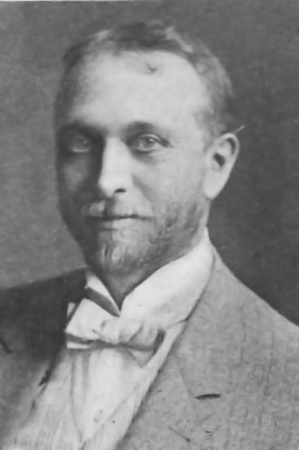
Horace B. Stevens.
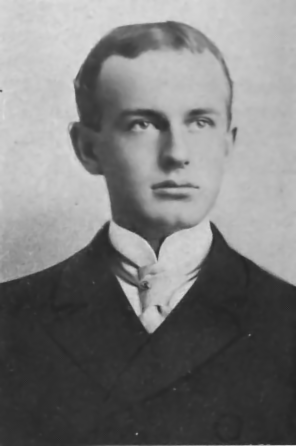
John A. Happer.
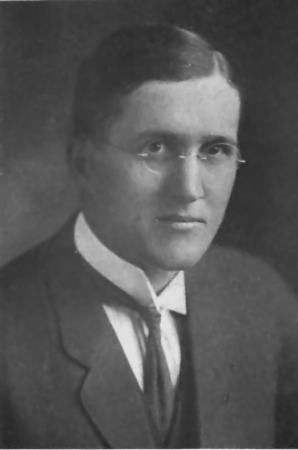
W. Wilbur Keblinger.
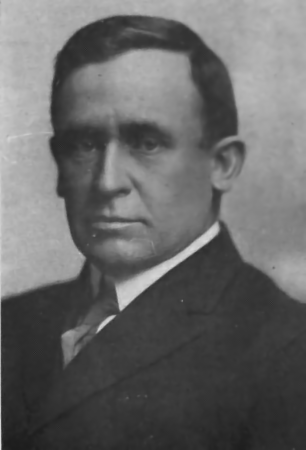
Frank R. Batchelder.
An experience of mine with an El Paso jury about eight years prior to the reformation will illustrate the task these reformers had.
While defending a suit for some $11,000 for liens on buildings, I received two anonymous notes asking me to bribe the jury. I handed them to the judge that he might make an example of the case. While he and the lawyers in the case were in consultation in chambers, a message was sent that a man wished to see me at a certain place. Suspecting the author of the notes, I suggested that if the Judge and attorneys approved I would try to entrap him. All consented, remaining in chambers until I returned. Compton, the "end man" of the jury, was the man who sent for me, and suggested that I pay him $3,000 for a favorable judgment, stating he had canvassed the jury and a majority had agreed. I replied that as a business man I could not part with so large a sum on the guarantee of one man. I asked to see them all privately, two at a time, after 9 p.m., at my room at the Sheldon Hotel. Compton agreed.
I told the Judge this, and placed myself at his disposal.
Calling in Sheriff Ten Eyck and Court Reporter McKelligon, he told them to report at my room at 8.45, and follow my instructions.
I secreted them behind a folding bed in a corner. When Compton came, he started to search the room. But I told him if he wanted to do business with me to sit down and do it, asking peremptorily where the second man was. He was down stairs, and when Compton brought him up I asked them to state plainly what they could do. Hunt, the other man (reputed to be a brother of Sarah Althea Hill, who married Judge Terry) (Text, 338), handed me a paper with the names of all the jurors with the sums a majority had agreed to receive, some as low as $50. I placed the paper in my pocket and after a little further talk to make sure they had been well heard, told Compton to bring up the next man. But he never returned.
This was Saturday, and all concerned were pledged to secrecy, but when Judge Willcox called court to order on Monday morning, there was not standing room to be had! The Judge said:
"Gentlemen of the Jury: Since last session the defendant in this case has handed me certain letters which I desire to read to you. The first appears to have been filed in the post office, El Paso, on the 20th day of June of the present year, and is as follows: 'Mr. Mills, if you want to win your case you must fix the jurymen in this case liberally or you will lose. A friend.' The second is as follows: 'Mr. Mills if you are going to do anything do it quick and have it money and nothing else. Go to the man at the west end of the jury box. It must be money or you will lose. A friend.'"
The judge asked each juryman if he knew anything of the letters. All denied any knowledge, the end men most vehemently.
Called to the stand, I told my story, omitting mention of the witnesses. When I read the amounts to be paid each juryman, a most respectable salesman and neighbor of mine who was named at a very low price, cried out, "For God's sake, Judge, stop this! My parents are respectable people, and when they read this it will break their hearts!"
In the midst of my narrative Compton violently declared, "You are a —— damned liar." The sheriff forced him back into his seat. Compton and Hunt were sworn, and denied all that I had stated.