MY FIRST BOOK (continued 2)
Reading edition
'THE SOCIAL KALEIDOSCOPE'
By GEORGE R. SIMS
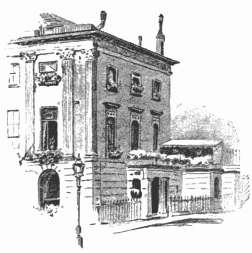
MY first book hardly deserved the title. I have 12 CLARENCE TERRACE only a dim remembrance of it now, because it is one of those things which I have studiously set myself to forget. I was very proud of it before I saw it. After I had seen it, I realised in one swift moment's anguish the concentrated truth of the word vanity as applied to human wishes. Hidden away in the bottom corner of an old box, which is not to be opened until after I am dead, that first book lies at the present moment; that is to say, unless the process of decay, which had already set in upon the paper on which it was printed, has gone on to the bitter end, and the book has disappeared entirely of its own accord.
Before that book was published, I used to lie awake at night and fancy how great and how grand a thing it would be for me to see a book with my name on the cover lying on Smith's bookstalls, and staring me in the face from the booksellers' windows. After it was published, I felt that I owed Messrs. Smith & Sons a deep debt of gratitude for refusing to take it, and my heart rejoiced within me greatly that the only booksellers who exhibited it lived principally in old back streets and half-finished suburban thoroughfares.
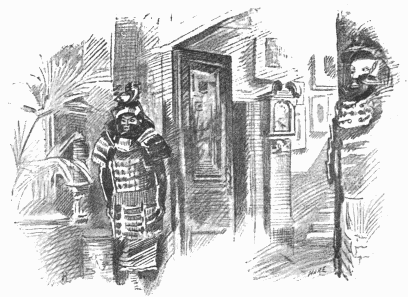
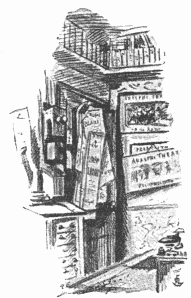
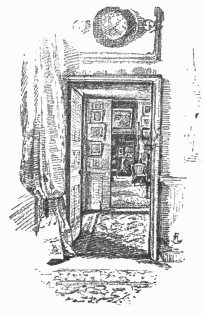
THE HALL
Stay—I will go upstairs to my lumber room, I will open that box, I will dig deep down among the buried memories of the past, and I will find that book, and I will summon up my courage and ask the publishers of this volume to kindly allow the cover of that book to be reproduced here. It is only by looking at it as I looked at it that you will thoroughly appreciate my feelings on the subject.
I have found the box, but my heart sinks within me as I try to open the lid. All my lost youth lies there. The key is rusty and will hardly turn in the lock.
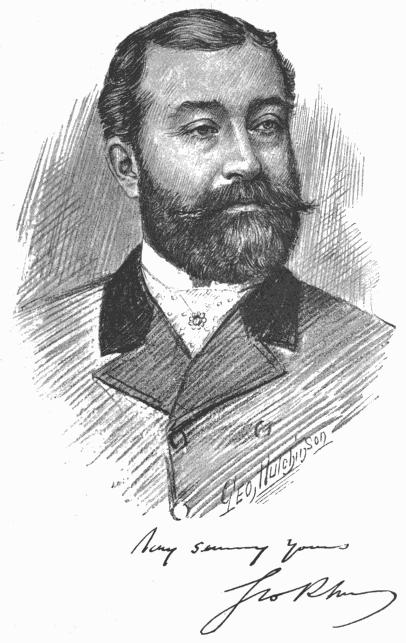
So—so—so, at last! Ghosts of the long ago, come forth from your resting-places and haunt me once again.
Dear me! dear me! how musty everything smells; how old, and worn, and time-stained everything is. A folded poster:
'Grecian Theatre
'Mr. G. R. Sims will positively not appear this evening at the entertainment held in the Hall.'
Yes, I remember. I had been announced, entirely without my consent or knowledge, to appear at a hall attached to the Grecian Theatre with Mrs. Georgina Weldon, and take part in an entertainment. This notice was stuck about outside the theatre in GEORGE R. SIMS consequence of my indignant remonstrance. My old friend Mr. George Conquest had, I need hardly say, nothing to do with that bill. Some one had taken the hall for a special occasion. I think it was something remotely connected with lunatics.

My first play! Poor little play—a burlesque written for my brothers and sisters, and played by us in the Theatre Royal Day Nursery. There were some really brilliant lines in it, I remember. They were taken bodily from a burlesque of H. J. Byron's, which I purchased at Lacy & Son's (now French's) in the Strand—'a new and original burlesque by Master G. R. Sims.' My misguided parents actually had the playbill printed and invited friends to witness the performance. They little knew what they were doing by pandering to my boyish vanity in such a way. But for that printed playbill, and that public performance in my nursery, I might never have taken to the stage, and inflicted upon a long-suffering public Adelphi melodrama and Gaiety burlesque, farcical comedy and comic opera; I might have remained all my life an honest, hard-working City man, relieving my feelings occasionally by joining in the autumn discussions in the Daily Telegraph. I was still in the City when my first book was published. I used, in those days, to get to the City at nine and leave it at six, but I had a dinner hour, and in that dinner hour I wrote short stories and little things that I fancied were funny, and I used to put them in big envelopes and send them to the different magazines. I sent about twenty out in that way. I never had one accepted, but several returned.
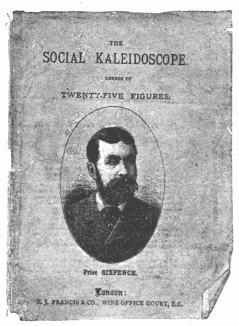
I wrote my first book in my dinner hour, in a City office. I have just found it. Here is the cover. You will observe that it has my portrait on it. I look very ill and thin and haggard. That was, perhaps, the result of going without my dinner in order to devote myself to 'literature.'
If you could look inside that book, if you could see the paper on which it is printed, you would understand the shock it was to me when they laid it in my arms and said: 'Behold your firstborn.'
All the vanity in me (and they tell me that I have a good deal) rose up as I gazed at the battered wreck upon the cover—the man with the face that suggested a prompt subscription to a burial club.
But I shouldn't have minded that so much if the people who bought my book hadn't written to me personally to complain. One gentleman sent me a postcard to say that his volume fell to pieces while he was carrying it home. Another assured me that he had picked enough pieces of THE SNUGGERY straw out of the leaves to make a bed for his horse with, and a third returned a copy to me without paying the postage, and asked me kindly to put it in my dustbin, because his cook was rather proud of the one he had in his back garden.
Still the book sold (the sketches had all previously appeared in the Weekly Dispatch), and when the first edition was exhausted, a new and better one was prepared (without that haggard face upon the cover), and I was happy.
The sale ran into thirty thousand the first year of publication, and as I was fortunate enough to have published it on a royalty, I am glad to say it is still selling.
'The Social Kaleidoscope' was my first book. With it I made my actual début between covers.
I hadn't done very well before then; since then I have, from a worldly point of view, done remarkably well—far better than I deserved to do, my good-natured friends assure me, and I cordially agree with them.
But I had made a good fight for it, and I had suffered years of disappointment and rebuff. I began to send contributions to periodicals when I was fourteen years old, and a boy at Hanwell College. Fun was the first journal I favoured with my effusions, and week after week I had a sinking at the heart as I bought that popular periodical and searched in vain for my comic verses, my humorous sketches, and my smart paragraphs.
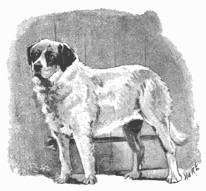
It took me thirteen years to get something printed and paid for, but I succeeded at last, and it was Fun, my early love, that first took me by the hand. When I was on the staff of Fun, and its columns were open to me for all I cared MR. SIMS'S 'LITTLE DAWG' to write, I used often to look over the batch of boyish efforts that littered the editor's desk, and let my heart go out to the writers who were suffering the pangs that I had known so well.
I had had effusions of mine printed before that, but I didn't get any money for them. I had the pleasure of seeing my signature more than once in the columns of certain theatrical journals, in the days when I was a constant first-nighter, and a determined upholder of the privileges of the pit. And I even had some of my poetry printed. In the old box to which I have gone in search of the first edition of my first book, there are two papers carefully preserved, because they were once my pride and glory. One is a copy of the Halfpenny Journal, and the other is a copy of the Halfpenny Welcome Guest. On the back page of the correspondence column of the former there is a poem signed 'G. R. S.,' addressed to a young lady's initials in affectionately complimentary terms. Alas! I don't know what has become of that young lady. Probably she is married, and is the mother of a fine family of boys and girls, and has forgotten that I ever wrote verses in her honour. I think I sent her a copy of the Halfpenny Journal, but a few weeks after a coldness sprang up between us. She was behind the counter of a confectioner's shop in Camden Town, and I found her one afternoon giggling at a young friend of mine who used to buy his butterscotch there. My friend and I had words, but between myself and that fair confectioner 'the rest was silence.'
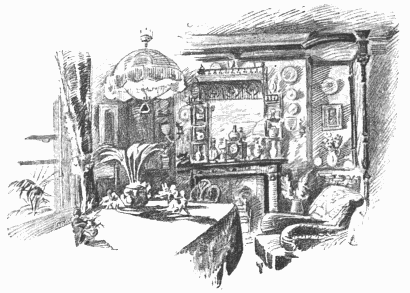
THE DINING-ROOM
I was really very much distressed that my pride compelled me never again to cross the threshold of that establishment. There wasn't a confectioner's in all Camden Town that could come within measurable distance of it for strawberry ices.
In the correspondence column of the Halfpenny Welcome Guest, which is among my buried treasures, there is an 'answer' instead of the poem which I had fondly hoped to see inserted in its glorious pages. And this is the answer: 'G. R. S.—Your poem is not quite up to our standard, but it gives decided promise of better things. We should advise you to persevere.'
I am quoting from memory, for after turning that box upside down, I can't lay my hand on this particular Welcome Guest, though I know that it is there. I don't know who the editor was who gave me that kindly pat on the head, but THE LIBRARY whoever he was he earned my undying gratitude. At the time I felt I should have liked him better had he printed my poem. I was no more fortunate with my prose than I was with my poetry. I began to tell stories at a very early age, but it was not until after I had succeeded in getting a poem printed among the 'Answers to Correspondents' that I took seriously to prose with a view of publication. I was encouraged to try my hand at writing stories by the remembrance of the success which had attended my efforts at romantic narrative when I was a school-boy.
There were eight other boys in the dormitory I slept in at Hanwell (the College, not the Asylum), and they used to make me tell them stories every night until they fell asleep, and woe betide me if I cut my narrative short while one of them remained awake. I wasn't much of a boy with a bolster or a boot, but they were all champions, and many a time when I had married the hero and heroine and wound up my story did I have to start a fresh complication in a hurry to save myself from chastisement. I remember on one occasion, when I was dreadfully sleepy, and I had got into a fearful fog as to who committed the murder, I made a wild plunge at a ghost to get me out of the difficulty, and the whole dormitory rose to a boy and set about me with bolsters in their indignation at such a lame and impotent conclusion.
Night after night did those maddening words, 'Tell us a story,' salute my ears as I laid my weary little head upon the pillow, and I had to tell one or run the gauntlet of eight bolsters and sixteen slippers, to say nothing of the biggest boy of all, who kept a reserve pair of boots hidden away under his bed for purposes not altogether unconnected with midnight excursions to a neighbouring orchard.
'SIR HUGO'
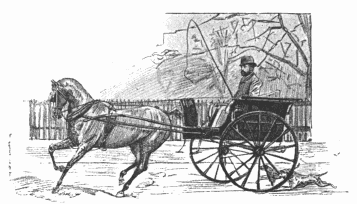
It was the remembrance of my early story-telling days that prompted me, when poetry seemed a drug in the market, to try my hand at what is now, I believe, called 'The Complete Novelette.'
I set myself seriously to work, laid in a large stock of apples and jumbles, and spent several consecutive afternoons in completing a story which I called 'A Pleasant Evening.' After I had written it I copied it out in my best hand, and then, with fear and trembling, I sent it to the Family Herald.
I sent it to the Family Herald because I had heard a lady who visited at our house say that she knew a lady who knew a lady who had sent a story to the Family Herald, never having written anything before in her life, and the story had been accepted, and the writer had received five pounds for it by return of post.
THE BALCONY
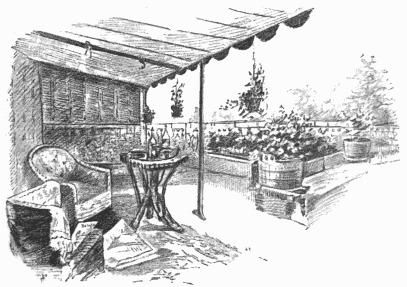
I didn't receive anything by return of post, but in about a fortnight my manuscript came back to me. Nothing daunted, I carefully cut off the corner on which 'Declined with thanks' had been written, and I sent the story to Chamber's Journal. Here it met with a similar fate, but I fancy it took a little longer to come back, and it bore signs of wear and tear. I knew, or I had read, that it was not wise to let your manuscript have the appearance of being rejected, so I spent several unpleasant evenings in writing 'A Pleasant Evening' out again, and I sent it to All the Year Round.
It came back! This time I didn't take the trouble to open it I knew it directly I saw it, and as it reached me so I flung it in my desk and bit my lips, and made up my mind that after all it was better to be accepted as a poet in the 'Answers to Correspondents' column of the Halfpenny 'Beauty,' an old Favourite, Twenty Years old. Journal than to be rejected as a story-writer by the editors of higher-priced periodicals.
But though I played with poetry again, I didn't even succeed in getting into the 'Answers to Correspondents.' My vaulting ambition o'erleaped its selle, and I sent my verses to journals which didn't 'correspond.' In those days I kept a little book, in which I entered all the manuscripts I sent to editors, and from it now I copy the following instructive record. R stands for 'Returned':—
Once a Week'The Minstrel's Curse'R.
Belgravia'After the Battle'R.
Broadway'After the Battle'R.
Fun'Nearer and Dearer'R.
Fun'An Unfortunate Attachment' R.
Fun'A Song of May'R.
Banter'Nearer and Dearer'R.
Judy'An Unfortunate Attachment'R.
London Society'The Minstrel's Curse'R.
Owl'Nearer and Dearer'R.
Returned! Returned! Returned! All I got for my pains was the chance of making a joke in my diary on my birthday. In those days of my wild struggles with Fate I find written against the 2nd of September, 'Many unhappy Returns.'
I believe that I should have flung up authorship in despair, and never have had a first book, but for the chance remark of the dear old doctor who looked after my health in the days when I hadn't to pay my own doctor's bills.
He was talking about me one day in my father's private office, and I happened to be passing, and I heard him say, 'He's a nice lad—what a pity he scribbles!' Scribbles! the
THE DRAWING-ROOM
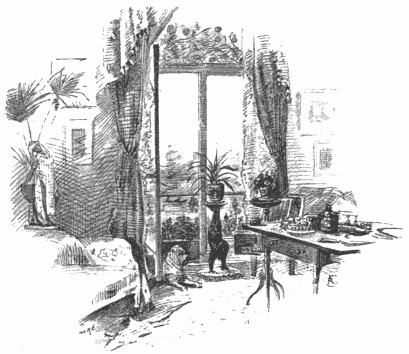
word burnt itself into my brain, it seared my heart, it brought the hot blood to my cheeks, and the indignant tears to my eyes. Was I not ready to write an acrostic at a moment's notice on the name of the sweetheart of any fellow who asked me to do it? Had I not written a poem on the fall of Napoleon, which my eldest sister had read aloud to her schoolfellows, and made them all mad with jealousy to think there wasn't a brother among the lot of them who could even rhyme decently? Had I not had stories rejected by the Family Herald, All the Year Round, and Chambers's Journal, and a letter on the subject of the crossing opposite St. Mark's Church, Hamilton Terrace, printed in the Marylebone Mercury? And was I to be dubbed a scribbler, and pitied for my weakness? It is nearly twenty years since those words were uttered, and my dear old doctor rests beyond the reach of all human ills, but I can hear them now. They have never ceased to ring in my ears as they rang that day.
'FAUST UP TO DATE'
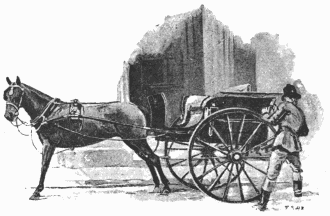
My pride was wounded, my vanity was hurt, I was put upon my mettle. I registered a silent vow there and then that some day I would have a noble revenge on my friendly detractor, and make him confess that he was wrong when he said that it was a pity I scribbled.
From that hour I set myself steadily to be an author. I wrote poetry by the mile, prose by the acre, and I sent it to every kind of periodical that I could find in the 'Post Office Directory.'
I had to pass through years of rejection, but still I wrote on, and still I spent all my pocket-money on books, and postage-stamps, and paper.
And at last the chance came. I was allowed to write paragraphs in the Weekly Dispatch by a friend who was a real journalist, and had a column at his disposal to fill with gossip.
After doing the work for a month for nothing, I had the whole column given to me, and one day I received my first guinea earned by scribbling.
MR. SIMS'S DINNER PARTY
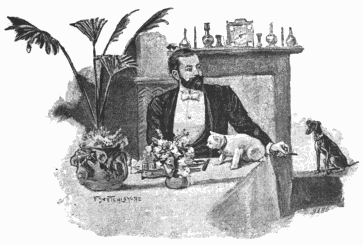
I was a proud man when I went out of the Dispatch office that day with a sovereign and a shilling in my hand. I had forced the gates of the citadel at last. I had marched in with the honours of war, and I was marching out with the price of victory in my hand.
Soon afterwards there came another chance. The editor of the Dispatch wanted a series of short complete stories. I asked to be allowed to try if I could do them. Under the title of 'The Social Kaleidoscope,' I wrote a series of short stories or sketches, and from that day no week has passed that I have not contributed something to the columns of a weekly journal.
When the sketches were complete, the publisher of the Dispatch offered to bring them out in book form for me and publish them in the office.
'The Social Kaleidoscope' was my first book, and that is how it came into the world.
Years afterwards, my chance came with the dear old fellow who had said that it was a pity I scribbled so. Fortune had smiled upon me in one way then, and I was earning an excellent income with my pen. But my health had broken down, and it was thought necessary that I should place myself in the hands of a celebrated surgeon. I had not seen my old doctor for some years, but my people wished that he should be consulted, because he had known me so well in the days of my youth.
So I submitted, and he came, and he shook his head and agreed that so-and-so was the man to take me in hand.
'I think he'll cure you, my dear fellow,' said the doctor; 'he's the most skilful surgeon we have for cases like yours, but his fee is a heavy one. Still, you can afford it.'
'Yes, doctor,' I replied, 'thanks to my scribbling, I can.'
That was the hour of my triumph. I had waited for it for fifteen years, but it had come at last.
The dear old boy gripped my hand. 'I was wrong,' he said, with a quiet smile, 'and I confess it; but we'll get you well, and you shall scribble for many a year to come.'
And I am scribbling still.
'DEPARTMENTAL DITTIES'
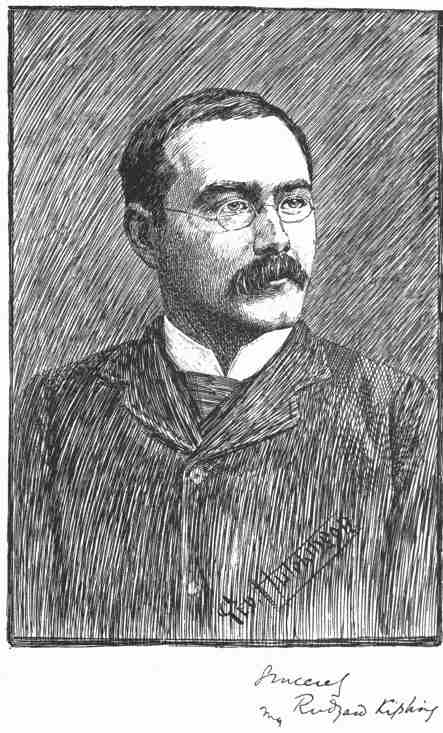
By RUDYARD KIPLING
THE NEWSPAPER FILES
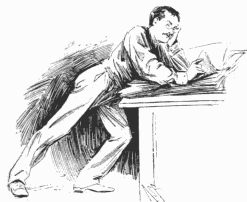
AS there is only one man in charge of a steamer, so there is but one man in charge of a newspaper, and he is the editor. My chief taught me this on an Indian journal, and he further explained that an order was an order, to be obeyed at a run, not a walk, and that any notion or notions as to the fitness or unfitness of any particular kind of work for the young had better be held over till the last page was locked up to press. He was breaking me into harness, and I owe him a deep debt of gratitude, which I did not discharge at the time. The path of virtue was very steep, whereas the writing of verses allowed a certain play to the mind, and, unlike the filling in of reading matter, could be done as the spirit served. Now, a sub-editor is not hired to write verses: he is paid to sub-edit. At the time, this discovery shocked me greatly; but, some years later, when I came to be a sort of an editor in charge, Providence dealt me for my subordinate one saturated with Elia. He wrote very pretty, Lamblike essays, but he wrote them when he should have been sub-editing. Then I saw a little of what my chief must have suffered on my account. There is a moral here for the ambitious and aspiring who are oppressed by their superiors.
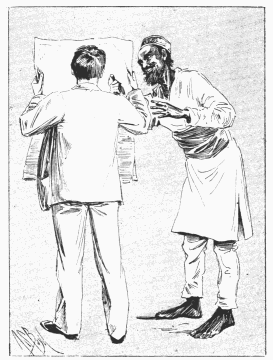
'YOUR POTERY VERY GOOD, SIR; JUST COMING PROPER LENGTH TO-DAY'
This is a digression, as all my verses were digressions from office work. They came without invitation, unmanneredly, in the nature of things; but they had to come, and the writing out of them kept me healthy and amused. To the best of my remembrance, no one then discovered their grievous cynicism, or their pessimistic tendency, and I was far too busy, and too happy, to take thought about these things.
So they arrived merrily, being born out of the life about me, and they were very bad indeed, and the joy of doing them was payment a thousand times their worth. Some, of course, came and ran away again, and the dear sorrow of going in search of these (out of office hours, and catching them) was almost better than writing them clear. Bad as they were, I burned twice as many as were published, and of the survivors at least two-thirds were cut down at the last moment. Nothing can be wholly beautiful that is not useful, and therefore my verses were made to ease off the perpetual strife between the manager extending his advertisements and my chief fighting for his reading-matter. They were born to be sacrificed. Rukn-Din, the foreman of our side, approved of them immensely, for he was a Muslim of culture. He would say: 'Your potery very good, sir; just coming proper length to-day. You giving more soon? One-third column just proper. Always can take on third page.'
Mahmoud, who set them up, had an unpleasant way of referring to a new lyric as 'Ek aur chiz'—one more thing—which I never liked. The job side, too, were unsympathetic, because I used to raid into their type for private proofs with old English and Gothic headlines. Even a Hindoo does not like to find the serifs of his f's cut away to make long s's.
And in this manner, week by week, my verses came to be printed in the paper. I was in very good company, for there is always an undercurrent of song, a little bitter for the most part, running through the Indian papers. The bulk of it is much better than mine, being more graceful, and is done by those less than Sir Alfred Lyall—to whom I would apologise for mentioning his name in this gallery—'Pekin,' 'Latakia,' 'Cigarette,' 'O.,' 'T. W.,' 'Foresight,' and others, whose names come up with the stars out of the Indian Ocean going eastward.
Sometimes a man in Bangalore would be moved to song, and a man on the Bombay side would answer him, and a man in Bengal would echo back, till at last we would all be crowing together like cocks before daybreak, when it is too dark to see your fellow. And, occasionally, some unhappy Chaaszee, away in the China Ports, would lift up his voice among the tea-chests, and the queer-smelling yellow papers of the Far East brought us his sorrows. The newspaper files showed that, forty years ago, the men sang of just the same subjects as we did—of heat, loneliness, love, lack of promotion, poverty, sport, and war. Further back still, at the end of the eighteenth century, Hickey's Bengal Gazette, a very wicked little sheet in Calcutta, published the songs of the young factors, ensigns, and writers to the East India Company. They, too, wrote of the same things, but in those days men were strong enough to buy a bullock's heart for dinner, cook it with their own hands because they could not afford a servant, and make a rhymed jest of all the squalor and poverty. Lives were not worth two monsoons' purchase, and perhaps the knowledge of this a little coloured the rhymes when they sang:
In a very short time you're released from all cares—
If the Padri's asleep, Mr. Oldham reads prayers!
The note of physical discomfort that runs through so much Anglo-Indian poetry had been struck then. You will find it most fully suggested in 'The Long, Long Indian Day,' a comparatively modern affair; but there is a set of verses called 'Scanty Ninety-five,' dated about Warren Hastings's time, which gives a lively idea of what our seniors in the Service had to put up with. One of the most interesting poems I ever found was written at Meerut, three or four days before the Mutiny broke out there. The author complained that he could not get his clothes washed nicely that week, and was very facetious over his worries.
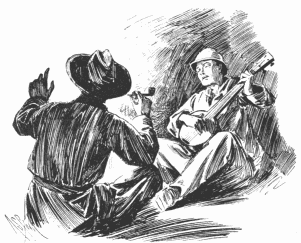
My verses had the good fortune to last a little longer than some others, which were more true to facts and certainly better workmanship. Men in the Army, and the Civil Service, and the Railway, wrote to me saying that the rhymes might be made into a book. Some of them had been sung to the banjoes round camp fires, and some had run as far down coast as Rangoon and Moulmein, and up to Mandalay. A real book was out of the question, but I knew that Rukn-Din and the office plant were at my disposal at a price, if I did not use the office time. Also, I had handled in the previous year a couple of small books, of which I was part
SUNG TO THE BANJOES ROUND CAMP FIRES
owner, and had lost nothing. So there was built a sort of a book, a lean oblong docket, wire-stitched, to imitate a D.O. Government envelope, printed on one side only, bound in brown paper, and secured with red tape. It was addressed to all heads of departments and all Government officials, and among a pile of papers would have deceived a clerk of twenty years' service. Of these 'books' we made some hundreds, and as there was no necessity for advertising, my public being to my hand, I took reply-postcards, printed the news of the birth of the book on one side, the blank order-form on the other, and posted them up and down the Empire from Aden to Singapore, and from Quetta to Colombo. There was no trade discount, no reckoning twelves as thirteens, no commission, and no credit of any kind whatever. The money came back in poor but honest rupees, and was transferred from the publisher, the left-hand pocket, direct to the author, the right-hand pocket. Every copy sold in a few weeks, and the ratio of expenses to profits, as I remember it, has since prevented my injuring my health by sympathising with publishers who talk of their risks and advertisements. The down-country papers complained of the form of the thing. The wire binding cut the pages, and the red tape tore the covers. This was not intentional, but Heaven helps those who help themselves. Consequently, there arose a demand for a new edition, and this time I exchanged the pleasure of taking in money over the counter for that of seeing a real publisher's imprint on the title-page. More verses were taken out and put in, and some of that edition travelled as far as Hong-Kong on the map, and each edition grew a little fatter, and, at last, the book came to London with a gilt top and a stiff back, and was advertised in the publishers' poetry department.
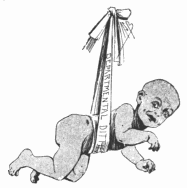
But I loved it best when it was a little brown baby with a pink string round its stomach; a child's child, ignorant that it was afflicted with all the most modern ailments; and before people had learned, beyond doubt, how its author lay awake of nights in India, plotting and scheming to write something that should 'take' with the English public.
JUVENILIA
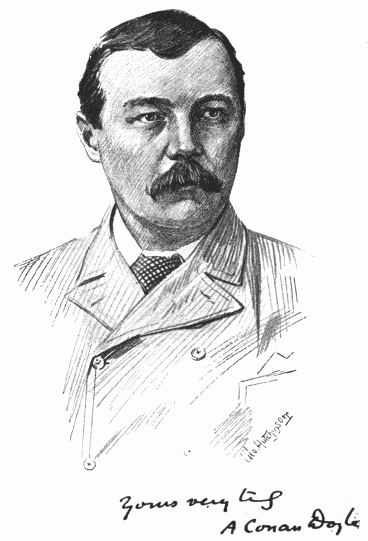
By A. CONAN DOYLE
I WAS SIX
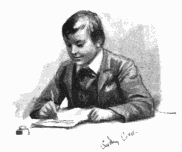
IT is very well for the master craftsman with twenty triumphs behind him to look down the vista of his successes, and to recall how he picked out the path which has led him to fame, but for the tiro whose first book is perilously near to his last one it becomes a more invidious matter. His past presses too closely upon his present, and his reminiscences, unmellowed by the flight of years, are apt to be rawly and crudely personal. And yet even time helps me when I speak of my first work, for it was written seven-and-twenty years ago.
I was six at the time, and have a very distinct recollection of the achievement It was written, I remember, upon foolscap paper, in what might be called a fine bold hand—four words to the line, and was illustrated by marginal pen-and-ink sketches by the author. There was a man in it, and there was a tiger. I forget which was the hero, but it didn't matter much, for they became blended into one about the time when the tiger met the man. I was a realist in the age of the Romanticists. I described at some length, both verbally and pictorially, the untimely end of that wayfarer. But when the tiger had absorbed him, I found myself slightly embarrassed as to how my story was to go on. 'It is very easy to get people into scrapes, and very hard to get them out again,' I remarked, and I have often had cause to repeat the precocious aphorism of my childhood. On this occasion the ON THE PRAIRIES AND THE OCEANS situation was beyond me, and my book, like my man, was engulfed in my tiger. There is an old family bureau with secret drawers, in which lie little locks of hair tied up in circles, and black silhouettes and dim daguerreotypes, and letters which seem to have been written in the lightest of straw-coloured inks. Somewhere there lies my primitive manuscript, where my tiger, like a many-hooped barrel with a tail to it, still envelops the hapless stranger whom he has taken in.
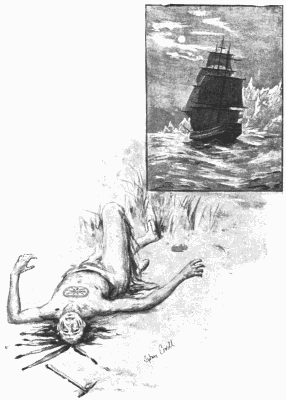
Then came my second book, which was told and not written, but which was a much more ambitious effort than the first. Between the two, four years had elapsed, which were mainly spent in reading. It is rumoured that a special meeting of a library committee was held in my honour, at which a bye-law was passed that no subscriber should be permitted to change his book more than three times a day. Yet, even with these limitations, by the aid of a well-stocked bookcase at home, I managed to enter my tenth year with a good deal in my head that I could never have learned in the class-rooms.
MY DÉBUT AS A STORY-TELLER
I do not think that life has any joy to offer so complete, so soul-filling as that which comes upon the imaginative lad, whose spare time is limited, but who is able to snuggle down into a corner with his book, knowing that the next hour is all his own. And how vivid and fresh it all is! Your very heart and soul are out on the prairies and the oceans with your hero. It is you who act and suffer and enjoy. You carry the long small-bore Kentucky rifle with which such egregious things are done, and you lie out upon the topsail yard, and get jerked by the flap of the sail into the Pacific, where you cling on to the leg of an albatross, and so keep afloat until the comic boatswain turns up with his crew of volunteers to handspike you into safety. What a magic it is, this stirring of the boyish heart and mind! Long ere I came to my teens I had traversed every sea and knew the Rockies like my own back garden. How often had I sprung upon the back of the 'WITH THE EDITOR'S COMPLIMENTS' charging buffalo and so escaped him! It was an everyday emergency to have to set the prairie on fire in front of me in order to escape from the fire behind, or to run a mile down a brook to throw the bloodhounds off my trail. I had creased horses, I had shot down rapids, I had strapped on my mocassins hind-foremost to conceal my tracks, I had lain under water with a reed in my mouth, and I had feigned madness to escape the torture. As to the Indian braves whom I slew in single combats, I could have stocked a large graveyard, and, fortunately enough, though I was a good deal chipped about in these affairs, no real harm ever came of it, and I was always nursed back into health by a very fascinating young squaw. It was all more real than the reality. Since those days I have in very truth both shot bears and harpooned whales, but the performance was flat compared with the first time that I did it with Mr. Ballantyne or Captain Mayne Reid at my elbow.
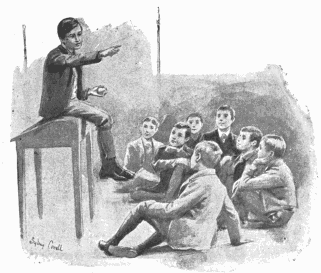
In the fulness of time I was packed off to a public school, and in some way it was discovered by my playmates that I had more than my share of the lore after which they hankered. There was my début as a story-teller. On a wet half-holiday I have been elevated on to a desk, and with an audience of little boys all squatting on the floor, with their chins upon their hands, I have talked myself husky over the misfortunes of my heroes. Week in and week out those unhappy men have battled and striven and groaned for the 'HAVE YOU SEEN WHAT THEY SAY ABOUT YOU?' amusement of that little circle. I was bribed with pastry to continue these efforts, and I remember that I always stipulated for tarts down and strict business, which shows that I was born to be a member of the Authors' Society. Sometimes, too, I would stop dead in the very thrill of a crisis, and could only be set agoing again by apples. When I had got as far as 'With his left hand in her glossy locks, he was waving the blood-stained knife above her head, when—— ' or 'Slowly, slowly, the door turned upon its hinges, and with eyes which were dilated with horror, the wicked Marquis saw—— ' I knew that I had my audience in my power. And thus my second book was evolved.
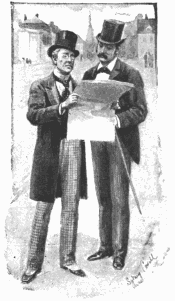
It may be that my literary experiences would have ended there had there not come a time in my early manhood when that good old harsh-faced schoolmistress, Hard Times, took me by the hand. I wrote, and with amazement I found that my writing was accepted. Chambers's Journal it was which rose to the occasion, and I have had a kindly feeling for its mustard-coloured back ever since. Fifty little cylinders of manuscript did I send out during eight years, which described irregular orbits among publishers, and usually came back like paper boomerangs to the place that they had started from. Yet in time they all lodged somewhere or other. Mr. Hogg, of London Society, was one of the most constant of my patrons, and Mr. James Payn wasted hours of his valuable time in encouraging me to persevere. Knowing as I did that he was one of the busiest men in London, I never received one of his shrewd and kindly and most illegible letters without a feeling of gratitude and wonder.
I have heard folk talk as though there were some hidden back door by which one may creep into literature, but I can say myself that I never had an introduction to any editor or publisher before doing business with them, and that I do not think that I suffered on that account. Yet my apprenticeship was a long and trying one. During ten years of hard work, I averaged less than fifty pounds a year from my pen. I won my way into the best journals, Cornhill, Temple Bar, and so on; but what is the use of that when the contributions to those journals must be anonymous? It is a system which tells very hardly against young authors. I saw with astonishment and pride that 'Habakuk Jephson's Statement' in the Cornhill was attributed by critic after critic to Stevenson, but, overwhelmed as I was by the compliment, a word of the most lukewarm praise sent straight to my own address would have been of greater use to me. After ten years of such work I was as unknown as if I had never dipped a pen into an ink-bottle. Sometimes, of course, the anonymous system may screen you from blame as well as rob you of praise. How well I can see a dear old friend running after me in the street, waving a London evening paper in his hand! 'Have you seen what they say about your Cornhill story?' he shouted. 'No, no. What is it?' 'Here it is! Here it is!' Eagerly he turned over the column, while I, trembling with excitement, but determined to bear my honours meekly, peeped over his shoulder. 'The Cornhill this month,' said the critic, 'has a story in it which would have made Thackeray turn in his grave.' There were several witnesses about, and the Portsmouth bench are severe upon assaults, so my friend escaped unscathed. Then first I realised that British criticism had fallen into a shocking state of decay, though when some one has a pat on the back for you you understand that, after all, there are some very smart people upon the literary Press.
'MRS. THURSTON'S LITTLE BOY WANTS TO SEE YOU, DOCTOR'
And so at last it was brought home to me that a man may put the very best that is in him into magazine work for years and years and reap no benefit from it, save, of course, the inherent benefits of literary practice. So I wrote another of my first books and sent it off to the publishers. Alas for the dreadful thing that happened! The publishers never received it, the Post Office sent countless blue forms to say that they knew nothing about it, and from that day to this no word has ever been heard of it. Of course it was the best thing I ever wrote. Who ever lost a manuscript that wasn't? But I must in all honesty confess that my shock at its disappearance would be as nothing to my horror if it were suddenly to appear again—in print. If one or two other of my earlier efforts had also been lost in the post, my conscience would have been the lighter. This one was called 'The Narrative of John Smith,' and it was of a personal-social-political complexion. Had it appeared I should have probably awakened to find myself infamous, for it steered, as I remember it, perilously near to the libellous. However, it was safely lost, and that was the end of another of my first books.
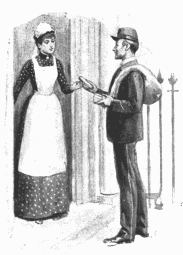
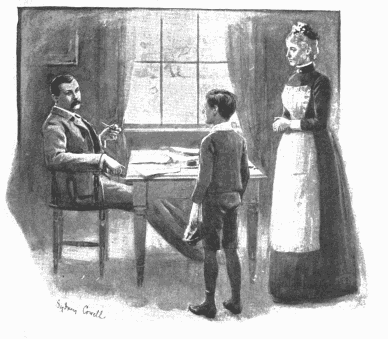
Then I started upon an exceedingly sensational novel, which interested me extremely at the time, though I have never heard that it had the same effect upon anyone else afterwards. I may urge in extenuation of all shortcomings that it was written in the intervals of a busy though ill-paying practice. And a man must try that and combine it with literary work before he quite knows what it means. How often have I rejoiced to find a clear morning before me, and settled down to my task, or rather, dashed ferociously at it, as knowing how precious were those hours of quiet! Then to me enter my housekeeper, with tidings of dismay. 'Mrs. Thurston's little boy wants to see you, doctor.' 'Show him in,' say I, striving to fix my scene in my mind that I may splice it when this trouble is over. 'Well, my boy?' 'Please, doctor, mother wants to know if she is to add water to that medicine.' 'Certainly, certainly.' Not that it matters in the least, but it is well to answer with decision. Exit the little boy, and the splice is about half accomplished when he suddenly bursts into the room again. 'Please, doctor, when I got back mother had taken the medicine without the water.' 'Tut, tut!' I answer. 'It really does not matter in the least.' The youth withdraws with a suspicious glance, and one more paragraph has been written when the husband puts in an appearance. 'There seems to have been some misunderstanding about that medicine,' he remarks coldly. 'Not at all,' I say, 'it really didn't matter.' 'Well, then, why did you tell the boy that it should be taken with water?' And then I try to disentangle the business, and the husband shakes his head gloomily at me. 'She feels very queer,' says he; 'we should all be easier in our minds if you came and looked at her.' So I leave my heroine in the four-foot way with an express thundering towards her, and trudge sadly off, with the feeling that another morning has been wasted, and another seam left visible to the critic's eye in my unhappy novel. Such was the genesis of my sensational romance, and when publishers wrote to say that they could see no merit in it, I was, heart and soul, of the same way of thinking.
MR. ANDREW LANG
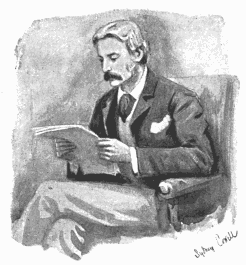
And then, under more favourable circumstances, I wrote 'Micah Clarke,' for patients had become more tractable, and I had married, and in every way I was a brighter man. A year's reading and five months' writing finished it, and I thought I had a tool in my hands that would cut a path for me. So I had, but the first thing that I cut with it was my finger. I sent it to a friend, whose opinion I deeply respected, in London, who read for one of the leading houses, but he had been bitten by the historical novel, and very naturally he distrusted it. From him it went to house after house, and house after house would have none of it. Blackwood found that the people did not talk so in the seventeenth century; Bentley that its principal defect was that there was a complete absence of interest; Cassells that experience had shown that an historical novel could never be a commercial success. I remember smoking over my dog-eared manuscript when it returned for a whiff of country air after one of its descents upon town, and wondering what I should do if some sporting, reckless kind of publisher were suddenly to stride in and make me a bid of forty shillings or so for the lot. And then suddenly I bethought me to send it to Messrs. Longmans, where it was fortunate enough to fall into the hands of Mr. Andrew Lang. From that day the way was smoothed to it, and, as things turned out, I was spared that keenest sting of ill-success, that those who had believed in your work should suffer pecuniarily for their belief. A door had been opened for me into the temple of the Muses, and it only remained that I should find something that was worthy of being borne through it.
'THE TRAIL OF THE SERPENT'
By M. E. BRADDON
MY first novel! Far back in the distinctness of childish memories I see a little girl who has lately learnt to write, who has lately been given a beautiful brand-new mahogany desk, with a red velvet slope, and a glass ink-bottle, such a desk as might now be bought for three-and-sixpence, but which in the forties cost at least half a guinea. Very proud is the little girl, with the Kenwigs pigtails and the Kenwigs frills, of that mahogany desk, and its infinite capacities for literary labour, above all, gem of gems, its stick of variegated sealing-wax, brown, speckled with gold, and its little glass seal with an intaglio representing two doves—Pliny's doves, perhaps, famous in mosaic, only the little girl had never heard of Pliny, or his Laurentine Villa.
Armed with that desk and its supply of stationery, Mary Elizabeth Braddon—very fond of writing her name at full length, and her address also at full length, though the word 'Middlesex' offered difficulties—began that pilgrimage on the broad high road of fiction, which was destined to be a longish one. So much for the little girl of eight years old, in the third person, and now to become strictly autobiographical.
My first story was based on those fairy tales which first opened to me the world of imaginative literature. My first attempt in fiction, and in round-hand, on carefully pencilled double lines, was a story of two sisters, a good sister and a wicked, and I fear adhered more faithfully to the lines of the archetypal story than the writer's pen kept to the double fence which should have ensured neatness.
The interval between the ages of eight and twelve was a prolific period, fertile in unfinished MSS., among which I can now trace an historical novel on the Siege of Calais, an Eastern story, suggested by a passionate love of Miss Pardoe's Turkish tales, and Byron's 'Bride of Abydos,' which my mother, a devoted Byron worshipper, allowed me to read aloud to her—and doubtless murder in the reading—a story of the Hartz Mountains, with audacious flights in German diablerie; and lastly, very seriously undertaken, and very perseveringly worked upon, a domestic story, the outline of which was suggested by the same dear and sympathetic mother.
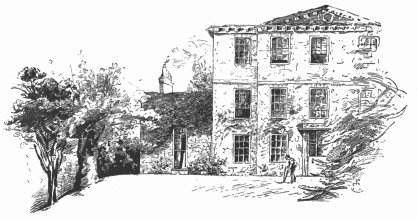
LICHFIELD HOUSE, RICHMOND
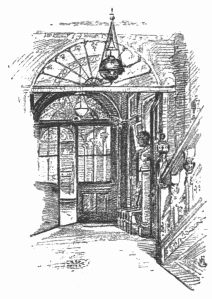
Now it is a curious fact, which may or may not be common to other story-spinners, that I have never been able to take kindly to a plot—or the suggestion of a plot—offered to me by anybody else. The moment a friend tells me that he or she is desirous of imparting a series of facts—strictly true—as if truth in fiction mattered one jot!—which in his or her opinion would make the ground plan of an admirable, startling, and altogether original three-volume novel, I know in advance that my imagination will never grapple with those startling circumstances—that my thoughts will begin to wander before my friend has got half through the remarkable chain of events, and that if the obliging purveyor of romantic incidents were to examine me at the end of the story, I should be spun ignominiously. For the most THE HALL part, such subjects as have been proposed to me by friends have been hopelessly unfit for the circulating library; or, where not immoral, have been utterly dull; but it is, I believe, a fixed idea in the novel-reader's mind that any combination of events out of the beaten way of life will make an admirable subject for the novelist's art.
My dear mother, taking into consideration my tender years, and perhaps influenced in somewise by her own love of picking up odd bits of Sheraton or Chippendale furniture in the storehouses of the less ambitious second-hand dealers of those simpler days, offered me the following scenario for a domestic story. It was an incident which, I doubt not, she had often read at the tail of a newspaper column, and which certainly savours of the gigantic gooseberry, the sea-serpent, and the agricultural labourer who unexpectedly inherits half a million. It was eminently a Simple Story, and far more worthy of that title than Mrs. Inchbald's long and involved romance.
An honest couple, in humble circumstances, possess among their small household gear a good old easy chair, which has been the pride of a former generation, and is the choicest of their household gods. A comfortable cushioned chair, snug and restful, albeit the chintz covering, though clean and tidy, as virtuous people's furniture always is in fiction, is worn thin by long service, while the dear chair itself is no longer the chair it once was as to legs and framework.
THE DINING-ROOM
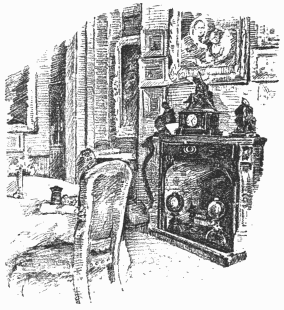
Evil days come upon the praiseworthy couple and their dependent brood, among whom I faintly remember the love interest of the story to have lain; and that direful day arrives when the average landlord of juvenile fiction, whose heart is of adamant and brain of brass, distrains for the rent. The rude broker swoops upon the humble dovecot; a cart or hand-barrow waits on the carefully hearth-stoned doorstep for the household gods; the family gather round the cherished chair, on which the rude broker has already laid his grimy fingers; they hang over the back and fondle the padded arms; and the old grandmother, with clasped hands, entreats that, if able to raise the money in a few days, they may be allowed to buy back that loved heirloom.
THE DRAWING-ROOM
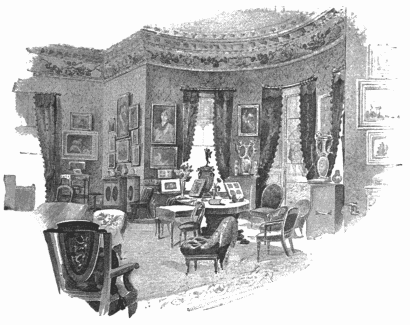
The broker laughs the plea to scorn; they might have their chair, and cheap enough, he had no doubt. The cover was darned and patched—as only the virtuous poor of fiction do darn and do patch—and he made no doubt the stuffing was nothing better than brown wool; and with that coarse taunt the coarser broker dug his clasp-knife into the cushion against which grandfatherly backs had leaned in happier days, and lo! an avalanche of banknotes fell out of the much-maligned horsehair, and the family was lifted from penury to wealth. Nothing more simple—or more natural. A prudent but eccentric ancestor had chosen this mode of putting by his savings, assured that, whenever discovered, the money would be useful to—somebody.
So ran the scenario; but I fancy my juvenile pen hardly held on to the climax. My brief experience of boarding school occurred at this time, and I well remember writing 'The Old Arm Chair' in a penny account book, in the schoolroom of Cresswell Lodge, and that I was both surprised and offended at the laughter of the kindly music-teacher who, coming into the room to summon a pupil, and seeing me gravely occupied, inquired what I was doing, and was intensely amused at my stolid method of composition, plodding on undisturbed by the voices and occupations of the older girls around me. 'The Old Arm Chair' was certainly my first serious, painstaking effort in fiction; but as it was abandoned unfinished before my eleventh birthday, and as no line thereof ever achieved the distinction of type, it can hardly rank as my first novel.
There came a very few years later the sentimental period, in which my unfinished novels assumed a more ambitious form, and were modelled chiefly upon 'Jane Eyre,' with occasional tentative imitations of Thackeray. Stories of gentle hearts that loved in vain, always ending in renunciation. One romance there was, I well remember, begun with resolute purpose, after the first reading of 'Esmond,' and in the endeavour to give life and local colour to a story of the Restoration period, a brilliantly wicked interval in the social history of England, which, after the lapse of thirty years, I am still as bent upon taking for the background of a love story as I was when I began 'Master Anthony's Record' in Esmondese, and made my girlish acquaintance with the reading-room of the British Museum, where I went in quest of local colour, and where much kindness was shown to my youth and inexperience of the book world. Poring over a folio edition of the 'State Trials' at my uncle's quiet rectory in sleepy Sandwich, I had discovered the passionate romantic story of Lord Grey's elopement with his sister-in-law, next in sequence to the trial of Lawrence Braddon and Hugh Speke for conspiracy. At the risk of seeming disloyal to my own race, I must add that it seemed to me a very tinpot order of plot to which these two learned gentlemen bent their legal minds, and which cost the Braddon family a heavy fine in land near Camelford—confiscation which I have heard my father complain of as especially unfair—Lawrence being a younger son. The romantic story of Lord Grey was to be
THE EVENING ROOM
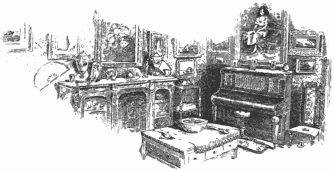
the subject of 'Master Anthony's Record,' but Master Anthony's sentimental autobiography went the way of all my earlier efforts. It was but a year or so after the collapse of Master Anthony, that a blindly enterprising printer of Beverley, who had seen my poor little verses in the Beverley Recorder, made me the spirited offer of ten pounds for a serial story, to be set up and printed at Beverley, and published on commission by a London firm in Warwick Lane. I cannot picture to myself, in my after-knowledge of the bookselling trade, any enterprise more futile in its inception or more feeble in its execution; but to my youthful ambition the actual commission to write a novel, with an advance payment of fifty shillings to show good faith on the part of my Yorkshire speculator, seemed like the opening of that pen-and-ink paradise which I had sighed for ever since I could hold a pen. I had, previously to this date, found a Mæcenas in Beverley, in the person of a learned gentleman who volunteered to foster my love of the Muses by buying the copyright of a volume of poems and publishing the same at THE SMOKING-ROOM his own expense—which he did, poor man, without stint, and by which noble patronage of Poet's Corner verse he must have lost money. He had, however, the privilege of dictating the subject of the principal poem, which was to sing—however feebly—Garibaldi's Sicilian campaign.
The Beverley printer suggested that my Warwick Lane serial should combine, as far as my powers allowed, the human interest and genial humour of Dickens with the plot-weaving of G. W. R. Reynolds; and, furnished with these broad instructions, I filled my ink-bottle, spread out my foolscap, and, on a hopelessly wet afternoon, began my first novel—now known as 'The Trail of the Serpent'—but published in Warwick Lane, and later in the stirring High Street of Beverley, as 'Three Times Dead.' In 'Three Times Dead' I gave loose to all my leanings to the violent in melodrama. Death stalked in ghastliest form across my pages: and villainy reigned triumphant till the Nemesis of the last chapter. I wrote with all the freedom of one who feared not the face of a critic; and, indeed, thanks to the obscurity of its original production, and its re-issue as the ordinary two-shilling railway novel, this first novel of mine has almost entirely escaped the critical lash, and has pursued its way as a chartered libertine. People buy it and read it, and its faults and follies are forgiven as the exuberances of a pen unchastened by experience; but faster and more facile at that initial stage than it ever became after long practice.
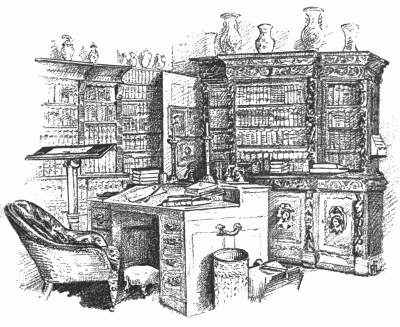
THE LIBRARY
I dashed headlong at my work, conjured up my images of horror or of mirth, and boldly built the framework of my story, and set my puppets moving. To me, at least, they were living creatures, who seemed to follow impulses of their own, to be impelled by their own passions, to love and hate, and plot and scheme of their own accord. There was unalloyed pleasure in the composition of that first story, and in the knowledge that it was to be actually printed and published, and not to be declined with thanks by adamantine magazine editors, like a certain short story which I had lately written, and which contained the germ of 'Lady Audley's Secret.' Indeed, at this period of my life, the postman's knock had become associated in my mind with the sharp sound of a rejected MS. dropping through the open letter-box on to the floor of the hall, while my heart seemed to drop in sympathy with that book-post packet.
Short of never being printed at all, my Beverley-born novel could have hardly entered upon the world of books in a more profound obscurity. That one living creature ever bought a number of 'Three Times Dead' I greatly doubt. I can recall the thrill of emotion with which I tore open the envelope that contained my complimentary copy of the first number, folded across, and in aspect inferior to a gratis pamphlet about a patent medicine. The miserable little wood block which illustrated that first number would have disgraced a baker's whitey-brown bag, would have been unworthy to illustrate a penny bun. My spirits were certainly dashed at the technical shortcomings of that first serial, and I was hardly surprised when I was informed a few weeks later, that although my admirers at Beverley were deeply interested in the story, it was not a financial success, and that it would be only obliging on my part, and in accordance with my known kindness of heart, if I were to restrict the development of the romance to half its intended length, and to accept five pounds in lieu of ten as my reward. Having no desire that the rash Beverley printer should squander his own or his children's fortune in the obscurity of Warwick Lane, I immediately acceded to his request, shortened sail, and went on with my story, perhaps with a shade less enthusiasm, having seen the shabby figure it was to make in the book world. I may add that the Beverley publisher's payments began and ended with his noble advance of fifty shillings. The balance was never paid; and it was rather hard lines that, on his becoming bankrupt in his poor little way a few years later, a judge in the Bankruptcy Court remarked that, as Miss Braddon was now making a good deal of money by her pen, she ought to 'come to the relief' of her first publisher.
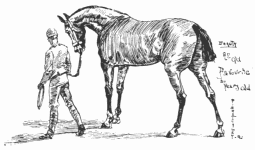
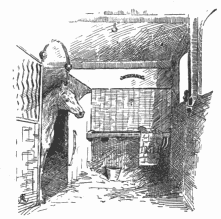
And now my volume of verses being well under way, I went with my mother to farmhouse lodgings in the neighbourhood of that very Beverley, where I spent perhaps the MISS BRADDON'S FAVOURITE MARE happiest half-year of my life—half a year of tranquil, studious days, far from the madding crowd, with the mother whose society was always all sufficient for me—half a year among level pastures, with unlimited books from the library in Hull, an old farm-horse to ride about the green lanes, the breath of summer, with all its sweet odours of flower and herb, around and about us; half a year of unalloyed bliss, had it not been for one dark shadow, the heroic figure of Garibaldi, the sailor-soldier, looming large upon the foreground of my literary labours, as the hero of a lengthy narrative poem in the Spenserian metre.
My chief business at Beverley was to complete the volume of verse commissioned by my Yorkshire Mæcenas, at that time a very rich man, who paid me a much better price for my literary work than his townsman, the enterprising printer, and who had the first claim on my thought and time.
With the business-like punctuality of a salaried clerk, I went every morning to my file of the Times, and pored and puzzled over Neapolitan revolution and Sicilian campaign, and I can only say that if Emile Zola has suffered as much over Sedan as I suffered in the freshness of my youth, when flowery meadows and the old chestnut mare invited to summer idlesse, over the fighting in Sicily, his dogged perseverance in uncongenial labour should place him among the Immortal Forty. How I hated the great Joseph G. and the Spenserian metre, with its exacting demands upon the rhyming faculty!
THE ORANGERY
How I hated my own ignorance of modern Italian history, and my own eyes for never having looked upon Italian landscape, whereby historical allusion and local colour were both wanting to that dry-as-dust record of heroic endeavour! I had only the Times correspondent; where he was picturesque I could be picturesque—allowing always for the Spenserian straining—where he was rich in local colour I did my utmost to reproduce his colouring, stretched always on the Spenserian rack, and lengthened out by the bitter necessity of finding triple rhymes. Next to Giuseppe Garibaldi I hated Edmund Spenser, and it may be from a vengeful remembrance of those early struggles with a difficult form of versification, that, although throughout my literary life I have been a lover of England's earlier poets, and have delighted in the quaintness and naïveté of Chaucer, I have refrained from reading more than a casual stanza or two of the 'Faëry Queen.' When I lived at Beverley, Spenser was to me but a name, and Byron's 'Childe Harold' was my only model for that exacting verse. I should add that the Beverley Mæcenas, when commissioning this volume of verse, was less superb in his ideas than the literary patron of the past. He looked at the matter from a purely commercial standpoint, and believed that a volume of verse, such as I could produce, would pay—a delusion on his part which I honestly strove to combat before accepting his handsome offer of remuneration for my time and labour. It was with this idea in his mind that he chose and insisted upon the Sicilian campaign as a subject for my muse, and thus started me heavily handicapped on the racecourse of Parnassus.
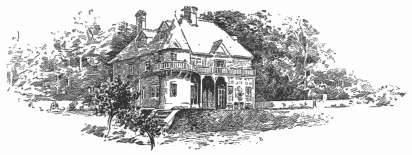
MISS BRADDON'S COTTAGE AT LYNDHURST
The weekly number of 'Three Times Dead' was 'thrown off' in brief intervals of rest from my magnum opus, and it was an infinite relief to turn from Garibaldi and his brothers in arms to the angels and the monsters which my own brain had engendered, and which to me seemed more alive than the good great man whose arms I so laboriously sang. My rustic pipe far better loved to sing of melodramatic poisoners and ubiquitous detectives; of fine houses in the West of London, and dark dens in the East. So the weekly chapter of my first novel ran merrily off my pen while the printer's boy waited in the farmhouse kitchen.
Happy, happy days, so near to memory, and yet so far! In that peaceful summer I finished my first novel, knocked Garibaldi on the head with a closing rhapsody, saw the York spring and summer races in hopelessly wet weather, learnt to love the Yorkshire people, and left Yorkshire almost broken-heartedly on a dull, grey October morning, to travel Londonwards through a landscape that was mostly under water.
MISS BRADDON'S INKSTAND

And, behold, since that October morning I have written fifty-three novels; I have lost dear old friends and found new friends, who are also dear, but I have never looked on a Yorkshire landscape since I turned my reluctant eyes from those level meadows and green lanes where the old chestnut mare used to carry me ploddingly to and fro between tall, tangled hedges of eglantine and honeysuckle.
'THE HOUSE OF ELMORE'
By F. W. ROBINSON
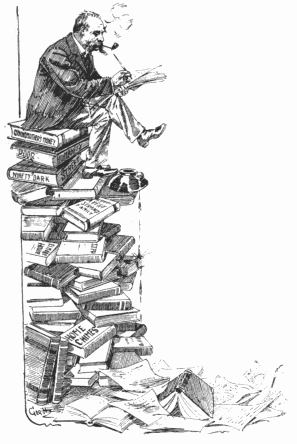
IT is a far cry back to 1853, when dreams of writing a book had almost reached the boundary line of 'probable events.' I was then a pale, long-haired, consumptive-looking youth, who had been successful in prize poems—for there were prize competitions even in those far-off days—and in acrostics, and in the acceptance of one or two short stories, which had been actually published in a magazine that did not pay for contributions (it was edited by a clergyman of the Church of England, and the chaplain to a real duke), which magazine has gone the way of many magazines, and is now as extinct as the dodo. It was in the year 1853, or a month or two earlier, that I wrote my first novel—which, upon a moderate computation, I think, would make four or five good-sized library volumes, but I have never attempted to 'scale' the manuscript. It is in my possession still, although I have not seen it for many weary years. It is buried with a heap more rubbish in a respectable old oak chest, the key of which is even lost to me. And yet that MS. was the turning-point of my small literary career. And it is the history of that manuscript which leads up to the publication of my first novel; my first step, though I did not know it, and hence it is part and parcel of the history of my first book—a link in the chain.
When that manuscript was completed, it was read aloud, night after night, to an admiring audience of family members, AT TWENTY and pronounced as fit for publication as anything of Dickens or Thackeray or Bulwer, who were then in the full swing of their mighty capacities. Alas! I was a better judge than my partial and amiable critics. I had very grave doubts—'qualms,' I think they are called—and I had read that it was uphill work to get a book published, and swagger through the world as a real live being who had actually written a novel. There was a faint hope, that was all; and so, with my MS. under my arm, I strolled into the palatial premises of Messrs. Hurst & Blackett ('successors to Henry Colburn' they proudly designated themselves at that period), laid my heavy parcel on the counter, and waited, with fear and trembling, for some one to emerge from the galleries of books and rows of desks beyond, and inquire the nature of my business. And here ensued my first surprise—quite a dramatic coincidence—for the tall, spare, middle-aged gentleman who advanced from the shadows towards the counter, proved, to my intense astonishment, to be a constant chess antagonist of mine at Kling's Chess Rooms, round the
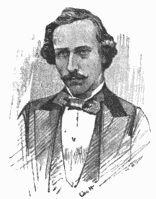
(From a photograph by Elliott & Fry)
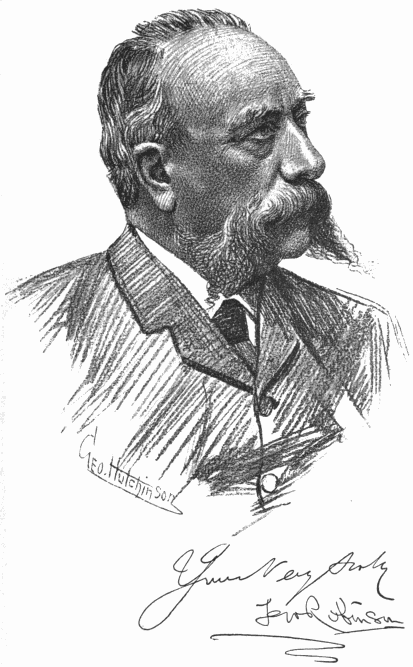
corner, in New Oxford Street—rooms which have long since disappeared, together with Horwitz, Harrwitz, Loewenthal, Williams, and other great chess lights of those far-away times, who were to be seen there, night after night, prepared for all ELMORE HOUSE comers. Kling's was a great chess house, and I was a chess enthusiast, as well as a youth who wanted to get into print. Failing literature, I had made up my mind to become a chess champion, if possible, although I knew already by quiet observation of my antagonists, that in that way madness lay, sheer uncontrollable, raging madness—for me at any rate. And the grave, middle-aged gentleman behind the counter of 13 Great Marlborough Street, proved to be the cashier of the firm, and used—being chess-mad with the rest of us—to spend his evenings at 'Kling's.' He was a player of my own strength, and for twelve months or so had I skirmished with him over the chessboard, and fought innumerable battles with him. He had never spoken of his occupation, nor I of my restless ambitions—chess players never go far beyond the chequered board.
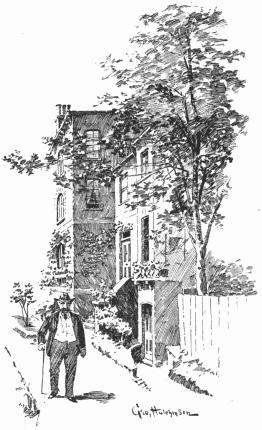
'Hallo, Robinson!' he exclaimed in his surprise, 'you don't mean to say that you—— '
And then he stopped and regarded my youthful appearance very critically.
'Yes, Mr. Kenny—it's a novel,' I said modestly; 'my first.'
'There's plenty of it,' he remarked dryly. 'I'll send it upstairs at once. And I'll wish you luck, too; but,' he added, AT THIRTY kindly preparing to soften the shock of a future refusal, 'we have plenty of these come in—about seven a day—and most of them go back to their writers again.'
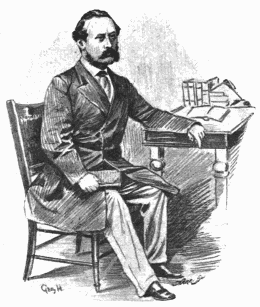
'Ye-es, I suppose so,' I answered, with a sigh.
For a while, however, I regarded the meeting as a happy augury—a lucky coincidence. I even had the vain, hopeless notion that Mr. Kenny might put in a good word for me, ask for special consideration, out of that kindly feeling which we had for each other, and which chess antagonists have invariably for each other, I am inclined to believe. But though we met three or four times a week, from that day forth not one word concerning the fate of my manuscript escaped the lips of Mr. Kenny. It is probable the incident had passed from his memory; he had nothing to do with the novel department itself, and the delivery of MSS. was a very common everyday proceeding to him. I was too bashful, perhaps too proud, an individual to ask any questions; but every evening that I encountered him I used to wonder 'if he had heard anything,' if any news of the book's fate had reached him, directly or indirectly; occasionally even, as time went on, I was disposed to imagine that he was letting me win the game out of kindness—for he was a gentle, kindly soul always—in order to soften the shock of a disappointment which he knew perfectly well was on its way towards me.
MR. ROBINSON'S LIBRARY
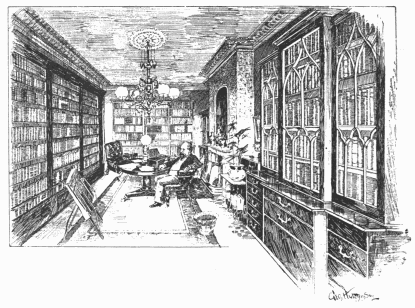
Some months afterwards, the fateful letter came to me from the firm, regretting its inability to make use of the MS., and expressing many thanks for a perusal of the same—a polite, concise, all-round kind of epistle, which a publisher is compelled to keep in stock, and to send out when rejected literature pours forth like a waterfall from the dusky caverns of a publishing house in a large way of business. It was all over, then—I had failed! From that hour I would turn chess player, and soften my brain in a quest for silver cups or champion amateur stakes. I could play chess better than I could write fiction, I was sure. Still, after some days of dead despair, I sent the MS. once more on its travels—this time to Smith & Elder's, whose reader, Mr. Williams, had leapt into singular prominence since his favourable judgment of Charlotte Brontë's book, and to whom most MSS. flowed spontaneously for many years afterwards. And in due course THE GARDEN of time, Mr. Williams, acting for Messrs. Smith & Elder, asked me to call upon him—for the MS.!—at Cornhill, and there I received my first advice, my first thrill of exultation. 'Presently, and probably, and with perseverance,' he said, 'you will succeed in literature, and if you will remember now, that to write a good novel is a very considerable achievement. Years of short story-writing is the best apprenticeship for you. Write and rewrite, and spare no pains.' I thanked him, and I went home with tears in my eyes of gratitude and consolation, though my big story had been declined with thanks. But I did not write again. I put away my MS., and went on for six or eight hours a day at chess for many idle months before I was in the vein for composition, and then, with a sudden dash, I began 'The House of Elmore.' It was half finished when another strange incident occurred. I received one morning a letter from Lascelles Wraxall (afterwards Sir Lascelles Wraxall, Bart., as the reader may be probably aware), informing me that he was one of the readers for Messrs. Hurst & Blackett, and that it had been his duty some time ago to decide unfavourably against a story which I had submitted to the notice of his firm, but that he had intended to write to me a private note urging me to adopt literature as a profession. His principal object in writing at that time was to suggest my trying the fortunes of the novel, which he had already read, with Messrs. Routledge, and he kindly added a letter of introduction to that firm in the Broadway—an introduction which, by the way, never came to anything.
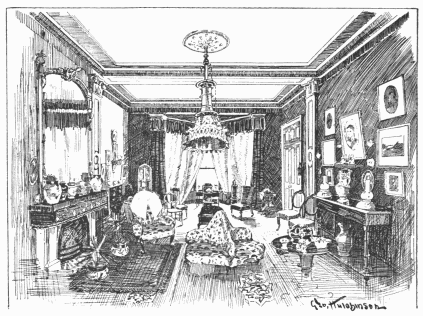
THE DRAWING-ROOM
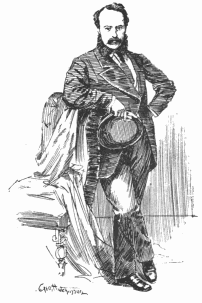
Poor Lascelles Wraxall, clever writer and editor, press-man and literary adviser, real Bohemian and true friend—indeed, everybody's friend but his own—I look back at him with feelings of deep gratitude. He was a rolling stone, and when I met him for the first time in my life, years afterwards, he had left Marlborough Street for the Crimea; he had been given a commission in the Turkish Contingent at Kertch; he had come back anathematising the Service, and 'chock full' of grievances against the Government, and he became once more editor and sub-editor, and publisher's hack even, until he stepped into his baronetcy—an empty title, for he had sold the reversion of the estates for a mere song long AT FORTY ago—and became special correspondent in Austria for the Daily Telegraph. And in Vienna he died, young in years still—not forty, I think—closing a life that only wanted one turn more of 'application,' I have often thought, to have achieved very great distinction. There are still a few writing men about who remember Lascelles Wraxall, but they are 'the boys of the old brigade.'
It was to Lascelles Wraxall I sent, when finished, 'The House of Elmore,' as the reader may very easily guess. Wraxall had stepped so much out of his groove—for the busy literary man that he was—to take me by the hand, and point the way along 'the perilous road;' he had given me so many kind words, that I wrote my hardest to complete my new story before I should fade from his recollection. The book was finished in five weeks, and in hot haste, and for months again I was left wondering what the outcome of it all was to be; whether Wraxall was reading my story, or whether—oh, horror!—some other reader less kindly disposed, and more austere and critical, and hard to please, had been told off to sit in judgment upon my second MS.
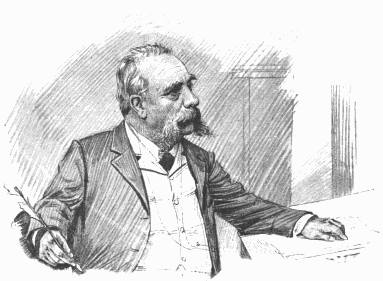
MR. ROBINSON AT WORK
I went back to chess for a distraction till the fate of that book was pronounced or sealed—it was always chess in the hours of my distress and anxiety—and I once again faced Charles Kenny, and once again wondered if he knew, and how much he knew, whilst he was deep in his king's gambit or his giuoco piano; but he was not even aware that I had sent in a second story, I learned afterwards. And then at last came the judgment—the pleasant, if formal, notice from Marlborough Street that the novel had been favourably reported upon by the reader, and that Messrs. Hurst & Blackett would be pleased to see me at Marlborough Street to talk the matter of its publication over with me. Ah! what a letter that was!—what a surprise, after all!—what a good omen!
And some three months afterwards, at the end of the year 1854, my first book—but my second novel—was launched into the reading world, and I have hardly got over the feeling yet that I had actually a right to dub myself a novelist!
When the first three notices of the book appeared, wild dreams of a brilliant future beset me. They were all favourable notices—too favourable; but John Bull, The Press, and Bell's Messenger (I think they were the papers) scattered favourable notices indiscriminately at that time. Presently the Athenæum sobered me a little, but wound up with a kindly pat on the back, and the Saturday Review, then in its seventh number, drenched me with vitriolic acid, and brought me to a lower level altogether; and, finally, the Morning Herald blew a loud blast to my praise and glory—that last notice, I believe, having been written by my old friend Sir Edward Clarke, then a very young reviewer on the Herald staff, with no dreams of becoming Her Majesty's Solicitor-General just then! 'The House of Elmore' actually paid its publishers' expenses, and left a balance, and brought me in a little cheque; and thus my writing life began in sober earnest.
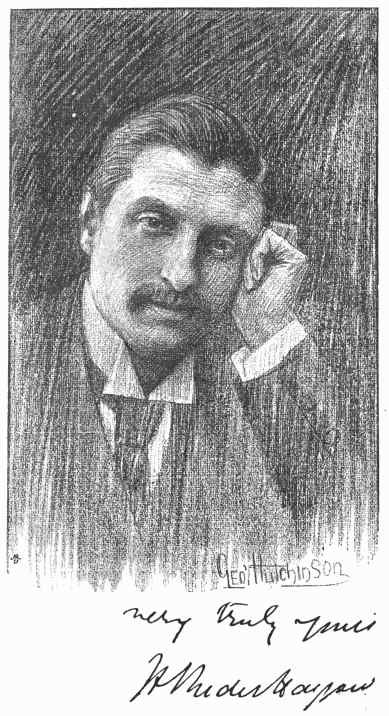
'DAWN'
By H. RIDER HAGGARD
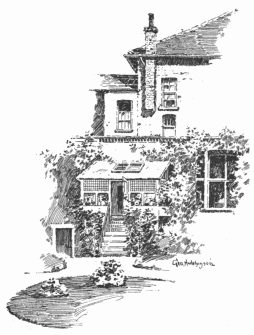
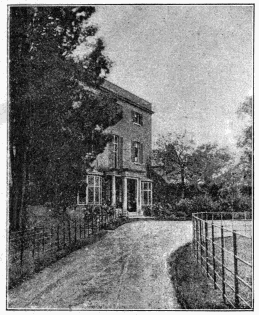
THE FRONT GARDEN[B] I THINK that it was in an article by a fellow-scribe, where, doubtless more in sorrow than in anger, that gentleman exposed the worthlessness of the productions of sundry of his brother authors, in which I read that whatever success I had met with as a writer of fiction was due to my literary friends and 'nepotic criticism.' This is scarcely the case, since when I began to write I do not think that I knew a single creature who had published books—blue books alone excepted. Nobody was ever more outside the ring, or less acquainted with the art of 'rolling logs,' than the humble individual who pens these lines. But the reader shall judge for himself.
To begin at the beginning: My very first attempt at imaginative writing was made while I was a boy at school. One of the masters promised a prize to that youth who should best describe on paper any incident, real or imaginary. I entered the lists, and selected the scene at an operation in a hospital as my subject. The fact that I had never seen an operation, nor crossed the doors of a hospital, did not deter me from this bold endeavour, which, however, was justified by its success. I was declared to have won in the competition, though, probably through the forgetfulness of the master, I remember that I never received the promised prize. My next literary effort, written in 1876, was an account of a Zulu war dance, which I witnessed when I was on the staff of the Governor of Natal. It was published in the Gentleman's Magazine, and very kindly noticed in various papers. A year later I wrote another article, entitled 'A Visit to the Chief Secocoeni,' which very nearly got me into trouble. I was then serving on the staff of Sir Theophilus Shepstone, and the article, signed with my initials, reached South Africa in its printed form shortly after the annexation of the Transvaal. Young men with a pen in their hands are proverbially indiscreet, and in this instance I was no exception. In the course of my article I had described the Transvaal Boer at home with a fidelity that should be avoided by members of a diplomatic mission, and had even gone the length of saying that most of the Dutch women were 'fat.' Needless to say, my remarks were translated into the Africander papers, and somewhat extensively read, especially by the ladies in question and their male relatives; nor did the editors of those papers forbear to comment on them in leading articles. Shortly afterwards, there was a great and stormy meeting of Boers at Pretoria. As matters began to look serious, somebody ventured among them to ascertain the exciting cause, and returned with the pleasing intelligence that they were all talking of what the Englishman had written about the physical proportions of their womenkind and domestic habits, and threatening to take up arms to avenge it. Of my feelings on learning this news I will not discourse, but they were uncomfortable, to say the least of it. Happily, in the end, the gathering broke up without bloodshed, but when the late Sir Bartle Frere came to Pretoria, some months afterwards, he administered to me a sound and well-deserved lecture on my indiscretion. I excused myself by saying that I had set down nothing which was not strictly true, and he replied to the effect that therein lay my fault. I quite agree with him; indeed, there is little doubt but that these bald statements of fact as to the stoutness of the Transvaal 'fraus,' and the lack of cleanliness in their homes, went near to precipitating a result that, as it chanced, was postponed for several years. Well, it is all done with now, and I take this opportunity of apologising to such of the ladies in question as may still be in the land of life.
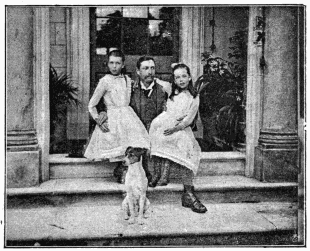
MR. RIDER HAGGARD AND HIS DAUGHTERS
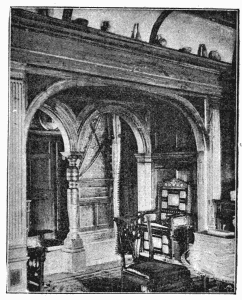
This unfortunate experience cooled my literary ardour, yet, as it chanced, when some five years later I again took up my pen, it was in connection with African affairs. These pages are no place for politics, but I must allude to them in explanation. It will be remembered that the Transvaal was annexed by Great Britain in 1877. In 1881 the Boers rose in rebellion and administered several thrashings to our troops, whereon the Government of this country came suddenly to the conclusion that a wrong had been done to the victors, and, subject to some paper restrictions, gave them back their independence. As it chanced, at the time I was living on some African property belonging to me in the centre of the operations, and so disgusted was I, in common with thousands of others, at the turn which matters had taken, that I shook the dust of South Africa off my feet and returned to England. Now, the first impulse of an aggrieved Englishman is to write to the Times, and if I remember right I took this course, but, my letter not being inserted, I enlarged upon the idea and composed a book called 'Cetewayo and his White Neighbours.' This semi-political work, or rather history, was very carefully constructed from the records of some six years' experience, and by the help of a shelf full of blue books that stare me in the face as I write these words; and the fact that it still goes on selling seems to show that it has some value in the eyes of students of South African politics. But when I had written my book I was confronted by a difficulty which I had not anticipated, being utterly without experience in such affairs—that of finding somebody willing to publish it. I remember that I purchased a copy of the Athenæum, and selecting the names of various firms at hazard, wrote to them offering to submit my manuscript, but, strange to say, none of them seemed anxious to peruse it. At last—how I do not recollect—it came into the hands of Messrs. Trübner, who, after consideration, wrote to say that they were willing to bring it out on the half profit system, provided that I paid down fifty pounds towards the cost of production. I did not at all like the idea of parting with the fifty pounds, but I believed in my book, and was anxious to put my views on the Transvaal rebellion and other African questions before the world. So I consented to the terms, and in due course 'Cetewayo' was published in a neat green binding. Somewhat to my astonishment, it proved a success from a literary point of view. It was not largely purchased—indeed, that THE HALL fifty pounds took several years on its return journey to my pocket, but it was favourably, and in some instances almost enthusiastically, reviewed, especially in the colonial papers.
About this time the face of a girl whom I saw in a church at Norwood gave me the idea of writing a novel. The face was so perfectly beautiful, and at the same time so refined, that I felt I could fit a story to it which should be worthy of a heroine similarly endowed. When next I saw Mr. Trübner I consulted him on the subject.
'You can write—it is certain that you can write. Yes, do it, and I will get the book published for you,' he answered.
Thus encouraged I set to work. How to compose a novel I knew not, so I wrote straight on, trusting to the light of nature to guide me. My main object was to produce the picture of a woman perfect in mind and body, and to show her character ripening and growing spiritual, under the pressure of various afflictions. Of course, there is a vast gulf between a novice's aspiration and his attainment, and I do not contend that Angela as she appears in 'Dawn' fulfils this ideal; also, such a person in real life might, and probably would, be a bore—
Something too bright and good
For human nature's daily food.
Still, this was the end I aimed at. Indeed, before I had done with her, I became so deeply attached to my heroine that, in a literary sense, I have never quite got over it. I worked very hard at this novel during the next six months or so, but at length it was finished and despatched to Mr. Trübner, who, as his firm did not deal in this class of book, submitted it to five or six of the best publishers of fiction. One and all they declined it, so that by degrees it became clear to me that I might as well have saved my labour. Mr. Trübner, however, had confidence in my work, and submitted the manuscript to Mr. John Cordy Jeaffreson for report; and here I may pause to say that I think there is more kindness in the hearts of literary men than is common in the world. It is not a pleasant task, in the face of repeated failure, again and again to attempt the adventure of persuading brother publishers to undertake the maiden effort of an unknown man. Still less pleasant is it, as I can vouch from experience, to wade through a lengthy and not particularly legible manuscript, and write an elaborate opinion thereon for the benefit of a stranger. Yet Mr. Trübner and Mr. Jeaffreson did these things for me without fee or reward. Mr. Jeaffreson's report I have lost or mislaid, but I remember its purport well. It was to the effect that there was a great deal of power in the novel, but that it required to be entirely rewritten. The first part he thought so good that he advised me to expand it, and the unhappy ending he could not agree with. If I killed the heroine, it would kill the book, he said. He may have been right, but I still hold to my first conception, according to which Angela was doomed to an early and pathetic end, as the fittest crown to her career. That the story needed rewriting there is no doubt, but I believe that it would have been better as a work of art if I had dealt with it on the old lines, especially as the expansion
MR. RIDER HAGGARD'S STUDY
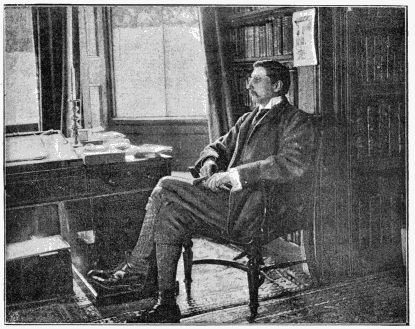
of the beginning, in accordance with the advice of my kindly critic, took the tale back through the history of another generation—always a most dangerous experiment. Still, I did as I was told, not presuming to set up a judgment of my own in the matter. If I had worked hard at the first draft of the novel, I worked much harder at the second, especially as I could not give all my leisure to it, being engaged at the time in reading for the Bar. So hard did I work that at length my eyesight gave out, and I was obliged to complete the last hundred sheets in a darkened room. But let my eyes ache as they might, I would not give up till it was finished, within about three months from the date of its commencement. Recently, I went through this book to prepare it for a new edition, chiefly in order to cut out some of the mysticism and tall writing, for which it is too remarkable, and was pleased to find that it still interested me. But if a writer may be allowed to criticise his own work, it is two books, not one. Also, the hero is a very poor creature. Evidently I was too much occupied with my heroines to give much thought to him; moreover, women are so much easier and more interesting to write about, for whereas no two of them are alike, in modern men, or rather, in young men of the middle and upper classes, there is a paralysing sameness. As a candid friend once said to me, 'There is nothing manly about that chap, Arthur'—he is the hero—'except his bull-dog!' With Angela herself I am still in love; only she ought to have died, which, on the whole, would have been a better fate than being married to Arthur, more especially if he was anything like the illustrator's conception of him in the current edition.
In its new shape 'Dawn' was submitted to Messrs. Hurst & Blackett, and at once accepted by that firm. Why it was called 'Dawn' I am not now quite clear, but I think it was because I could find no other title acceptable to the publishers. The discovery of suitable titles is a more difficult matter than people who do not write romances would suppose, most of the good ones having been used already and copyrighted. In due course the novel was published in three fat volumes, and a pretty green cover, and I sat down to await events. At the best I did not expect to win a fortune out of it, as if every one of the five hundred copies printed were sold, I could only make fifty pounds under my agreement—not an extravagant reward for a great deal of labour. As a matter of fact, but four hundred and fifty sold, so the net proceeds of the venture amounted to ten pounds only, and forty surplus copies of the book, which I bored my friends by presenting to them. But as the copyright of the work reverted to me at the expiration of a year, I cannot grumble at this result. The reader may think that it was mercenary of me to consider my first book from this financial point of view, but to be frank, though the story interested me much in its writing, and I had a sneaking belief in its merits, it never occurred to me that I, an utterly inexperienced beginner, could hope to make any mark in competition with the many brilliant writers of fiction who were already before the public. Therefore, so far as I was concerned, any reward in the way of literary reputation seemed to be beyond my reach.
SOME CURIOS
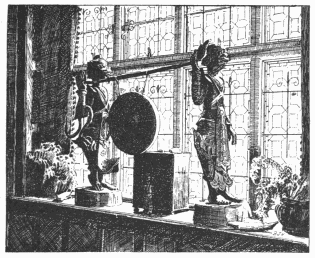
It was on the occasion of the publication of this novel that I made my first and last attempt to 'roll a log,' with somewhat amusing results. Almost the only person of influence whom I knew in the world of letters was the editor of a certain society paper. I had not seen him for ten years, but at this crisis I ventured to recall myself to his memory, and to ask him, not for a favourable notice, but that the book should be reviewed in his journal. He acceded to my prayer; it was reviewed, but after a fashion for which I did not bargain. This little incident taught me a lesson, and the moral of it is: never trouble an editor about your immortal works; he can so easily be even with you. I commend it to all literary tiros. Even if you are in a position to command 'puffs,' the public will find you out in the second edition, and revenge itself upon your next book. Here is a story that illustrates the accuracy of this statement; it came to me on good authority, and I believe it to be true. A good many years ago, the relation of an editor of a great paper published a novel. It was a bad novel, but a desperate effort was made to force it upon the public, and in many of the leading journals appeared notices so laudatory that readers fell into the trap, and the book went through several editions. Encouraged by success, the writer published a second book, but the public had found her out, and it fell flat. Being a person of resource, she brought out a third work under a nom de plume, which, as at first, was accorded an enthusiastic reception by previous arrangement, and forced into circulation. A fourth followed under the same name, but again the public had found her out, and her career as a novelist came to an end.
To return to the fate of 'Dawn.' In most quarters it met with the usual reception of a first novel by an unknown man. Some of the reviewers sneered at it, and some 'slated' it, and made merry over the misprints—a cheap form of wit that saves those who practise it the trouble of going into the merits of a book. Two very good notices fell to its lot, however, in the Times and in the Morning Post, the first of these speaking about the novel in terms of which any amateur writer might feel proud, though, unfortunately, it appeared too late to be of much service. Also, I discovered that the story had interested a great many readers, and none of them more than the late Mr. Trübner, through whose kind offices it came to be published, who, I was told, paid me the strange compliment of continuing its perusal till within a few hours of his death, a sad event that the enemy might say was hastened thereby. In this connection I remember that the first hint I received that my story was popular with the ordinary reading public, whatever reviewers might say of it, came from the lips of a young lady, a chance visitor at my house, whose name I have forgotten. Seeing the book lying on the table, she took a volume up, saying—
A STUDY CORNER
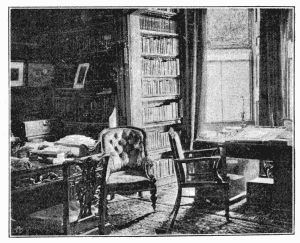
'Oh, have you read 'Dawn'? It is a first-rate novel; I have just finished it.' Somebody explained, and the subject dropped, but I was not a little gratified by the unintended compliment.