VI YOUNG GERMANY (continued 3)
Mary Morison translation
This sort of criticism says little for Börne's æsthetic sense. Of his political sagacity convincing proof is given by his pronouncements on Talleyrand. In 1830 he at once feels quite confident that Talleyrand will serve France well in London, and does not allow his confidence to be shaken by the Parisians' hatred of that diplomatist. He sees the absurdity of the loud complaint of the Liberal newspapers that Talleyrand, as one of the framers of the Peace of Vienna, is certain to support the Holy Alliance. He comprehends that neither the Holy Alliance nor anything else is holy to Talleyrand. And long afterwards he again refers to the unreasonableness of the accusation brought against that sagacious diplomatist of having served and betrayed every government in turn, acutely remarking that he did not betray governments, he only deserted them, and that not until they were dead. What Börne reads in Talleyrand's hard face is necessity, cast as it were in bronze.
But the chief cause of the leniency of Börne's judgments is to be sought, not in his intellect, but in his heart, in the tenderness of his nature, in the strong bias towards kindly interpretation, which is not contradicted by his many violent, inconsiderate utterances; for these themselves, closely examined, prove to be but expressions of his love to his kind. He was a loving-hearted man, and in so far a Christian by nature, by instinct. This is the explanation of his conversion to Christianity. The reproach of hypocrisy in his case is a foolish one; his conception of Christianity may not have been profound, but he acted from honest, independent conviction. He became a Christian because he was a democrat and a humanitarian. To him Christianity was not simply a continuation and supplement of Judaism, it was rather the religion of humanity, and more especially "the religion of all poor devils." Every man who loved his kind was in Börne's eyes a Christian. Christianity was moreover to him the religion of liberty, especially in its Catholic form; for it was as Catholicism that it had destroyed the world-empire of the Romans. In the ardent love of liberty of these Poles with whom he has so much sympathy, he sees a proof of the liberalising power of Catholicism.[7]
Börne does not personally believe in the dogmas of Christianity, or consider that faith is its essence; yet any attack on these dogmas is most repugnant to him. He sneers at Saint-Simonism because of its antagonism to the Christian religion, and he considers Strauss's Life of Jesus to be not only a useless, but a mischievous book. All this makes it easy to understand how it was possible for him, in the last years of his life, to be completely carried away by a democratic Catholic like Lamennais, whose Paroles d'un Croyant, an attempt to blend Liberalism with religion, he translated and overrated. Religious Radicalism, as here expressed, was the magic formula to which the free and the locked-up powers of his own soul responded.
In the course of the first volumes of the Letters from Paris, Börne, following the general trend of Oppositionist feeling in Germany, progressed from enthusiasm for constitutionalism to hope of revolution. In April 1832, not six months after their publication, one of the leaders of the Opposition, Dr Siebenpfeiffer, issued a general invitation to all the different German nationalities to attend a great national festival, to be held at the castle of Hambach, near Neustadt on the Haardt, on the 27th of May, the anniversary of the concession of the Bavarian constitution. It was to be a festival of brotherhood for all whose desire and aim was the regeneration of Germany. This festival, however, seemed so suspicious to the government of Rhenish Bavaria, that it was forbidden; strangers were prohibited from visiting Neustadt or its environs from the 26th to the 28th of May, and any assemblage of more than five persons in the streets or other public places was forbidden. These prohibitions excited such general discontent that the authorities were obliged to withdraw them.
People streamed to the festival from every point of the compass. Almost every German country sent representatives—the majority, of course, being inhabitants of the Palatinate itself. Even Frenchmen were there in large numbers, and Poles naturally were not lacking. The assembly numbered about thirty thousand in all.
Börne, who came from Paris, was the most fêted guest. His journey to Neustadt was a sort of triumphal procession. He was cheered everywhere. Torchlight processions and serenades were the order of the day.
He writes from Freiburg; "You have no idea what an impression my Letters from Paris have made in Germany. I never expected anything like it myself. Meyer, Wurm, and others had given out, had printed, that I could never again show myself in Germany, because I should be turned out of all respectable society. Nice prophets they are! I have done nothing but receive homage ever since I arrived. My room is never empty. I often have not chairs enough for my visitors. At the Hambach festival all present desired to make my acquaintance. It was so fatiguing that it has made me ill. When I made my appearance on the street in Neustadt, shouts were heard from the restaurants and from the passing carriages of: 'Hurrah for Börne! hurrah for the author of the Letters from Paris!' The Heidelberg students serenaded me. All the patriots, Wirth and the rest, declared that the credit of the patriotic movement in Germany was due to me; I was first; the others all came after. Many, moved to tears, arid unable to speak for emotion, embraced me warmly. It has been the same thing here in Freiburg. The students came to my house in the evening, serenaded me, and shouted: 'Hurrah for the champion of German liberty!'... What will my critics say to this, those critics who called me a bad patriot? Public opinion does not allow itself to be misled." Absurdly enough, with all this enthusiasm, his watch was stolen at the Hambach festival.
On the morning of the 27th of May, the enormous procession made its way from Neustadt to the ruins of the castle of Hambach. Every one wore black, red, and gold colours, and black, red, and gold flags were carried in front of the procession, the ranks of which were swelled by a great number of women, wearing black, red, and gold belts. Siebenpfeiffer and the Bavarian Liberal journalist, Wirth, were the principal speakers. They proclaimed the sovereignty of the people to be the foundation on which every state must rest, and declared that Germany would ere long be a republic. All the speeches made were violent, and all described the degradation of Germany as the work of her sovereigns, in combination with the aristocrats. Wirth proposed the toast (for which he had afterwards to do penance by a long imprisonment) of "The united free states of Germany," and "federated republican Europe," and shouted as he waved the sword of honour that had been presented to him: "Accursed, three times accursed be the rulers of Germany!" These words were re-echoed by part of the assembly; there were shouts of: "Down with kings and princes! To arms! To arms!"
The participators in the Hambach festival had, however, no immediate, practical aim in view. Supposing the moment to have been favourable—a tolerably doubtful supposition—they allowed it to pass without taking advantage of it.
Heine writes humorously and bitterly: "I dare hardly tell the story, it seems so incredible, yet I have it from a reliable source, from a man who is an honest and truthful republican, and was himself a member of the committee at Hambach which deliberated on the impending revolution. This man told me in confidence that, when it came to the question of competence, to a dispute as to whether the patriots then assembled at Hambach were really competent to begin a revolution in the name of the whole of Germany, those who advised immediate action were outvoted, and the conclusion arrived at was that they were incompetent." Heine calls this the best story he has ever heard, good enough to make him forget all the troubles of this vale of tears, and even to cheer him after death in the dusky tedium of the realm of shades. Then he speaks words of comfort to kings and princes, tells them how it is quite unnecessary that they should imprison any more worthy citizens; they may sleep in peace; they are in no danger; the German revolution is still far off; the question of competence is not yet decided.[8]
For many years after he made Heine's literary and personal acquaintance, Börne's feeling towards that author was a friendly one; he spoke of him with affection, gave him his full due as a poet, and more especially appreciated him as a great power in the service of universal emancipation. But their natures were too unlike to permit of his judgment being quite unprejudiced. From 1831 onwards we come upon spiteful references to Heine in the Letters. Although Börne was devoid of petty vanity, the frequent comparisons made between Heine and himself rankled in his mind, especially as, in the matter of ability and gifts, they were often to his disadvantage. And Heine's Französische Zustände ("The Situation in France") offended and wounded him; its perusal roused in him a feeling of ill-humour to which he gave vent (in the last volume of the Letters from Paris) in cutting satire, which struck Heine as it were from above, and, in the eyes of many readers, stamped him with the brand of political untrustworthiness.
It was in reality the deep-seated antagonism between the natures of the two fellow-combatants that found vent on this occasion. Börne did not understand the real nature of the difference between himself and Heine. To him it seemed to be the difference between manly earnestness and boyish frivolity, or, taken in its highest aspect, between devotion to truth and devotion to form, to art. With accurate perception he detected and exposed some of the small puerilities and snobberies of which Heine, when dazzled by the tinsel of life, could at a time be guilty, and also some of his unjust mockeries of ideal endeavour clothed in clumsy or naïvely popular form. Börne detested the Rothschilds, by whom Heine was impressed and fascinated. Börne, who felt out of his element in drawing-rooms, was quite at home among democratic artisans, and in gatherings of German emigrants, no matter how wild the schemes they planned, or how unpractical the undertakings for which they collected money; Heine, on the contrary, was annoyed by the constant solicitations to support this or that democratic undertaking, was quite unsuited to be a member of the democratic fraternity, preferred, in spite of his revolutionary leanings, to keep himself to himself, and had no intention whatever of being on terms of hail fellow well met with any chance band of emigrant fellow-countrymen.
In a letter dated the 25th of February 1833, Börne jeers at Heine for various things, amongst others for writing of the inhuman policy pursued by Austria for the last three hundred years as "sublime perseverance"; for calling King Louis of Bavaria, whom he afterwards so unmercifully satirised, "one of the noblest and most intellectual monarchs that ever sat upon a throne"; and for declaring it to be "courageous and admirable" of the Messrs. Rothschild to remain in Paris during the cholera, while he, at the same time, casts ridicule on the unpaid exertions of the German patriots. On these points, and others, Börne is right, but nevertheless he shows no delicate discernment or profound comprehension of Heine's real character.
In the case of Heine, as in the case of Goethe, he stood face to face with a genius he was unable to judge impartially, though he by no means wronged his restless contemporary to the same extent or in the same manner as he did his great predecessor.
XI
HEINE
For Heinrich Heine also, as already observed, the present moment in the development of the new German Empire is an unfavourable one. He is reproached with so much, that it is difficult to summarise. First there is his infatuation for France, and his supposed or real frivolity; then his un-German extraction and wit, his sentimentality, his foppery, his wantonness; and lastly, the defiant manner in which he parades his irreligion. New Germany is indifferent in religious matters, but tacitly so, and in the matter of morals it is thoroughly disciplined. In the Germany of to-day the highest virtues, truthfulness, independence, high spirit, and sensitiveness, are of much less account than dutifulness, correctness, social discipline, military smartness—Schneidigkeit, as it is called. In Heine's time the opposite was the case. No value was put on discipline. Piety counted for more than religion, humanity for more than patriotism. The best men of those days did not regard patriotism as an unqualified virtue; nor did they consider that justice ceased to be a virtue when shown to another nation.
To an abstract Radical bent of mind there was added in Heine's case the hatred of Prussia, whose future he did not foresee, whose strength he did not realize—that strength of which Carlyle gives us the best idea in his delineation of the father of Frederick the Great, a strength which lay in the ability, by means of sober severity, to conquer chaos, crush all foolish opposition, and rule. Heine's was no undefined dislike, it was the Rhinelander's mortal enmity to Prussia. Read his lines to the Prussian eagle:
"Du hässlicher Vogel! wirst du einst, Mir in die Hände fallen, So rupfe ich dir die Federn aus Und haue dir ab die Krallen. Du sollst mir dann in luft'ger Höh' Auf einer Stange sitzen Und ich rufe zum lustigen Schiessen herbei Die rheinischen Bogenschützen."[1]
At the Congress of Vienna, after repeatedly refusing, Prussia at last consented to take over the Rhine Provinces. Instead of the rounding off of her frontier in the east for which she had hoped, she thus acquired territory at a distance, and came to rule over a race of Germans totally unlike the Old-Prussians. This Rhine Province was the region where, in days gone by, the line of separation between Kelts and Germans lay. Most of it had been included in the Roman military province. At a later period the land came under priestly rule, which accounts for the fact that it was in no way influenced in the eighteenth century by the spirit of Frederick the Great. Old, decaying clericalism came here into direct contact with the French Revolution, and the propagators of the revolutionary ideas were joyfully welcomed.
The Old-Prussian's feeling towards the Rhinelanders was the distrust of antipathy, a feeling the Rhinelanders returned with interest. At the Rhine the Prussians were, and continued to be strangers, unwelcome strangers. When he spoke of a son serving in the army, the Rhinelander said: "He is with the Prussians." The government official transferred from Berlin to Cologne or Düsseldorf put on airs, and disparaged everything, and the Rhinelander long regarded a transfer to one of the old Prussian provinces as a sort of exile to Siberia. Complaints were heard everywhere of Prussia's inability to gain the affections of the peoples she had conquered.[2]
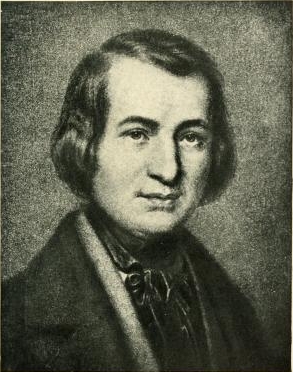
HEINRICH HEINE
Heinrich Heine was born near the close of the century at Düsseldorf, then capital of the duchy of Jülich-Cleve-Berg. For six years the town was garrisoned by French revolutionary troops. They took their departure in 1801, and Max Joseph of Pfalz-Zweibrücken became Grand Duke; but in 1806 he was made King of Bavaria, and Joachim Murat was installed as Grand Duke in his stead. Only two years later Murat had to make way for the eldest son of the King of Holland, or, in reality, as the boy was not of age, for Napoleon, as his guardian. The country was now governed exactly according to the French pattern; serfdom, feudal law, and statute-labour were abolished, and complete religious liberty was proclaimed. This last innovation led to Napoleon's being revered by the Jewish population of the Rhine Provinces as their saviour from the oppression of a thousand years.
There can be no doubt that the contact with the audacious, victorious Frenchmen of that day powerfully influenced Heine's mental development. His respect for traditional authority was early undermined. His natural wit was developed in the direction of what the French call esprit. The germs of his enthusiastic admiration for Napoleon were generated. That enthusiasm seems to us to-day to be an isolated phenomenon in the German literature of the century; in reality it was very far from being so.
Let us go back to Wieland, and we shall find that he held Napoleon in the same high estimation, even before such an opinion had been justified by the events of history. In 1798 he declares that France stands in need of a dictator, and that no one is fit for the post except General Bonaparte, then in Egypt. In 1800 he prophesies that Bonaparte will and must make himself king, and defends him against the attacks of the English newspapers. Napoleon, having been told of these prophecies, had a lengthy interview with Wieland at Erfurt in 1808.
None of the great Germans at the end of the eighteenth and beginning of the nineteenth century knew what national enmity meant. It was without a spark of any such feeling that Goethe, in the capacity of spectator, made the campaign of 1793 in France. Schiller valued his certificate of French citizenship, and believed that it might come to be of use to his children. Knebel, Goethe's friend, wished that he dared sing Napoleon's victories. Goethe himself looked on with complacency while Napoleon shattered the kingdom of Frederick the Great into fragments; it is evident that he must have regarded that kingdom of Prussia as a passing phenomenon in the history of Germany. He had witnessed Napoleon's rise and victorious career, and had seen him suppress that anarchy which was so hateful to himself, the aristocrat and evolutionist. At last he made his personal acquaintance, saw him surrounded by his marshals, in an atmosphere of brightness, amiability, geniality, general irresistibility. The personal impression made upon him by Napoleon was such as to increase his previous admiration for him. Hence it was that even after the Russian campaign, even during the rehabilitation of Germany, Goethe continued to say: "It is all of no use; the man is too strong for them." It was not till all was over that he made a sort of compulsory amends by writing a play for the fête on the occasion of the peace.
Goethe's valuation of Napoleon has been the subject of much discussion; less well known is the impression which the great Frenchman made on Hegel, who, as Heine's teacher and chosen philosopher, influenced him quite as much as Goethe. Hegel was born a subject of the small, despotically-ruled State of Würtemberg. He longed for a fatherland, but had never known what it was to have one, and in the beginning of the century he was so embittered by the situation in Germany, and roused to such anger and scorn by the political stupidity of his countrymen, that he, like Goethe, welcomed Napoleon with the unqualified enthusiasm of a cosmopolitan. He had spent his youth dreaming of a possible reconciliation of the real with the ideal, but had never come into contact with a real living power until Napoleon crossed his path and aroused his enthusiasm. It was said of Goethe that he took advantage of the distraction caused by the roar of the cannon at Jena to marry Christiane Vulpius without rousing remark; of Hegel it was said that he finished his work Die Phænomenologie des Geistes ("Philosophy of Mind") in Jena itself, while the battle was raging. It is a fact that it was exactly at this time that he despatched the last pages of the work to his publisher; and there is a very striking contrast between his calm indifference to the ruin of Prussia and his keen anxiety lest any of the precious packets of manuscript should be lost in transit at that unsettled time. A letter to his publisher, which accompanied one of the packets, bears the date of the battle.
In the work, to which the finishing touches were put under such circumstances, Hegel expounded his theory of the development of the human mind with a curious mixture of historical and psychological argument. He maintained that humanity had now reached its goal, that such individual mortals as had attained to the highest degree of understanding, now possessed the insight of gods, that their lives, lives of far-reaching influence, were now simply the harmonious unfolding of an existence such as the Greeks imagined that of their gods to be, absolutely contented, absolutely reconciled. While Hegel was writing his concluding words, which are to the effect that history is but a play of the spirit that is conscious of itself as spirit, Napoleon drew rein at the gates of Jena.
And Hegel saw him, and seeing him, rejoiced. "I have seen the emperor, that soul of the world," he writes from Jena. "It truly gives one a strange feeling to see one such single individual who, concentrated on a single point, sitting on his horse here in Jena, influences and rules the world. As far as the Prussians are concerned, nothing better could have been prognosticated—but only such a man could have made such way between Thursday and Monday; it is impossible to refuse him admiration." And it is not only the emperor Hegel admires, but the whole French people. Three months later he writes that in the history of the day he sees convincing proof that culture overcomes barbarism, that intellect overcomes unintellectuality. And he even adds: "I have long wished the French army success, now all do so; nor can it fail to be successful, considering the enormous difference between its leaders and soldiers and those of the enemy."[3]
If Heine had ever imagined that his enthusiasm for Napoleon required any apology, he might have found one in the fact that he was but following in the footsteps of the man whom he invariably spoke of with reverence as "the great Hegel, the greatest philosopher Germany has produced since Leibnitz," the man of whom he makes the very questionable assertion that he quite unquestionably "towers high above Kant," and whom he criticises with such lenient and gentle disparagement as the following utterance conveys: "Hegel allowed himself to be crowned in Berlin, and alas, to be anointed too."
Not only Heine's great models and teachers, but contemporaries like Varnhagen von Ense, who had actually shed his blood in the war against Napoleon, shared his enthusiasm, and were equally free from patriotic enmity to France. Of the Dane Baggesen, who, half German by nature, was fain to be more German than the Germans, Varnhagen writes: "His hatred of Napoleon and the French is peculiarly offensive; it is an aversion which amounts to loathing, and yet it is groundless, for all that is good in us Germans, all that we are proudest of in ourselves, he holds in horror and would fain suppress with the help of Kant, Jacobi, Voss, and Klopstock." Kant is evidently included in this list on account of the very un-German "categorical imperative," the others on account of the extreme narrowness of their patriotism.
The cult of Napoleon is thus, we see, to be traced in the words and works of the men who had the greatest influence on Heine's development and on that of young Germany in general.
It inspired Heine's muse several years before it became epidemic in France, and Heine rises to an equal height of enthusiasm with Beyle and Hugo. It is not too much to say that the poetic expression of this enthusiasm in his youthful poem The Two Grenadiers (which he probably wrote at the age of eighteen, though he himself claims to have written it at sixteen) surpasses anything of the same nature that exists in French. Not even Béranger's Souvenirs du Peuple is so simply grand, although it, better than any other poem, has given tangible and touching expression to the French popular Napoleonic legend. In Heine's Grenadiers the rhythm of each line answers exactly to its mood and matter—the mournful iambics: Der Andre sprach: das Lied ist aus; the fiery anapæsts: Dann reitet mein Kaiser wohl über mein Grab. The grenadier's impossible request to his comrade to carry his corpse to France passes almost unnoticed. The wildness of the principal strophe: Was schert mich Weib, was schert mich Kind, the grenadier's protest against the supposition that he is tied by the wife and child he has left at home, contrasts forcibly with the sentimentality of the Romantic style. It is only ostensibly that this poem glorifies fidelity to Napoleon personally; what it really glorifies is loving fidelity to the great leader, unbounded enthusiasm for the great personality.
The gift of describing by means of introducing characters into lyric poetry was common to both Béranger and Heine. But Béranger was a song-writer, Heine a genius. The Two Grenadiers begins, as Heine almost always begins, quietly, smoothly. Nothing could be more unlike this than Victor Hugo's lyric attack: Lui! toujours lui! Heine does not produce his effect by direct representation, but by delineation of the less important, of the small things in which the great are reflected, and which provide a standard to gauge them by; then at last, following on and issuing from the simple dialogue, comes the burst of visionary enthusiasm.
That the object of this worship was hardly worthy of it, does not make the feeling itself less admirable. It is a feeling of exactly the same kind that Heine describes in the Reisebilder, when he tells how, as a child, he saw Napoleon riding through the ducal garden in Düsseldorf. The chapter begins: "But what were my feelings when I saw himself, saw him with my own highly-favoured eyes, himself, Hosannah! the Emperor!" Note the Hosannah! In the moment of ecstasy, the recollections of childhood bring the Old Testament cry of salutation and rejoicing to his lips. And what did the child think on the occasion? He remembered that it was forbidden, under a penalty of five thalers, to ride through the avenue. And, lo and behold! there was the emperor, with all his officers, riding straight through—the shuddering trees bent forward as he passed....
As a political poet, Heine is considered to be revolutionary, and so he was. But his political animosity is exclusively aroused by medieval conditions, medieval beliefs. He is anti-clerical in good earnest, but not democratic in good earnest. His longest political poem, Deutschland, ein Wintermärchen, ("Germany, a Winter's Tale"), gives abundant evidence of this. It rises to real passion only where the poet's invisible companion, the lictor with the terrible axe, breaks up the skeletons of the Three Kings in the Cathedral of Cologne, "the miserable skeletons of superstition." But it is in this great poem, Heine's most important work, that we have the clearest expression of the political feelings and principles which animated him, the element, new to German poetry, of warlike challenge and hand-to-hand struggle. Nothing of the kind is to be found in Goethe. In the end, indeed, Goethe was persuaded of "the absolute pitiableness of the time," but he feared that the overthrow of existing authorities would only make things worse. Not even in Schiller can we find any direct reference to the politics of the day. His political feeling finds a vent in dramas whose theme is liberty. But in Heine, from 1830 onwards, we have always this direct expression of the faith that was in him. His soul was in politics. And in politics he was honest, even in cases where his honesty was misunderstood.
Turn to that passage in the Reisebilder which is most frequently cited as an expression of his boastfulness and affectation, the passage following on the description of his visit to the battlefield of Marengo: "'This will be a fine day,' called my travelling companion.—Yes, it will be a fine day, silently echoed my heart, uplifted in prayer, trembling with sadness and joyfulness. Yes, it will be a fine day, and the sun of liberty will gladden the earth. A new generation will spring up and flourish, begotten in free embrace, not in a prison bed, under the control of clerical warders; and this free birth will generate free thoughts and feelings, of which we born serfs have not even a presentiment ..." then at the end these words: "I know not if I deserve that a laurel wreath should one day be laid on my coffin. Poetry, dearly as I have loved it; has always been to me but a divine plaything, or a weapon consecrated to divine purposes.... But lay on my coffin a sword, for I was a brave soldier in the Liberation War of humanity."
This political warfare of Heine's is spoken of with the utmost contempt by German historians of literature, historians proper, and literary critics; not only by Menzel, but by such men as Goedeke, Treitschke, Grisebach (Heine's imitator and denouncer), and Hehn, whose perception in other cases is so remarkably acute. Even Scherer is cold and depreciatory. When the Italian poet Carducci some years ago celebrated Heine in an ode as a hero in the struggle of liberty, even Karl Hillebrand, the best literary critic in Germany, who had at one time been Heine's secretary, and had always spoken of him with reverence and admiration, made a sort of protest, declaring that Heine himself had never taken the thing so seriously. This disfavour and distrust is not surprising. The frivolity in Heine's character led in his youth to repellent political vacillation. In 1827, in the hope of being appointed to a professorship at Munich, he was ready to disown his previous principles to please King Louis, but gained nothing by it. He offered at the same time to defend the wretched Duke of Brunswick, the diamond-Duke, in return for a Brunswick order; but in this case also he was disappointed. It was not till 1830 that he began to show political strength of character.
We must also remember that in Heine's writings there is an absence of all "pathetic gesture." He was too proud to employ it. Germans cannot understand this. But grievous wrong is done him. The pathos was in his soul. His whole soul is in the little poem Enfant Perdu, with which one of the divisions of Romancero concludes, and which he wrote when he was no longer young. He really was what he here calls himself, an advanced and forgotten outpost, left to be shot down. And when, in his posthumous prose hymn, he cries: "I am the sword, I am flame," it is but the truth. The light of his flame, the sparks of his sword-blows, still shine bright. Many still warm themselves at his fire.
As already mentioned, Börne, in his Letters from Paris, calls Heine an inconsistent, vacillating, characterless politician. He does not so much reproach him with overrating himself personally as with overrating the influence of the individual human being. For it is Börne's opinion that the individual is no longer of much importance. Even a Voltaire or a Rousseau would not be a powerful influence nowadays. Individuals are now merely the heralds of the people. This Heine forgets. Then, in his desire to please the democrats, he declares that the Jesuitic-aristocratic party in Germany malign him because he makes a bold stand against absolutism; but almost at the same time, in order to curry favour with the aristocrats, says that he has made a stand against Jacobinism, and that he is, and always will be, a good monarchist.
Börne does not always understand a joke. Heine gives a droll account of a Paris millinery establishment which he frequented the summer before he writes, where he, as a royalist, was one against sixteen, the eight young shop-girls and their eight lovers being all violently aggressive republicans. Elsewhere he writes: "God knows I am no Republican. I know that when the Republicans are victorious, they will cut off my head ... a piece of foolishness for which I am quite ready to forgive them." Börne adds: "Not I. A lunatic asylum would be the proper place for Republicans that were such fools as to suppose that it was necessary to get rid of Heine in order to attain their aims."
In spite of their jesting tone, there is something in these and similar utterances of Heine's which puzzles the reader. Intermittent outbursts of violent Radicalism, everywhere an undertone of the most pronounced revolutionary feeling—and these constantly recurring assurances that he is not a Jacobin, not even a Republican.
An explanation is required, an explanation which no one has yet offered.
For to say that Heine was characterless, characterless to such a degree, that in the most serious matters, and with the eyes of two great nations upon him, he perpetually contradicted himself, is no explanation at all. The vagueness, the contradiction must lie in his principles.
Remember his faithful, boundless devotion to Napoleon, which once more and for the last time finds expression in the Winter's Tale, in the dirge of the dead emperor, brought in his coffin from St. Helena to Paris:
"Die elysäischen Felder entlang, Durch des Triumphes Bogen, Wohl durch den Nebel, wohl über den Schnee Kam langsam der Zug gezogen...."[4]
And then think of the scene (from the Reisebilder) on the battlefield of Marengo. The Russian asks Heine: "Are you a good Russian?" And Heine answers: "Yes, I am a good Russian." For, he goes on to explain, the incessant change of war-cries and of representatives in the great struggle has now led to this—that the most enthusiastic friends of the Revolution look for the salvation of the world from the domination of Russia, look upon the Emperor Nicholas as the standard-bearer of liberty in Europe. The Russian government is permeated with Liberal ideas, its absolutism is simply a dictatorship, which gives it the power to put these ideas into practice, &c., &c.
The mistake is colossal in its simplicity. But for our present purpose this is of no consequence. What interests us is the fact that Russian absolutism, thus understood by Heine, received from him the same measure of approval and sympathy as he had formerly bestowed on the rule of Napoleon. Give this due consideration. Heine, the most advanced representative of Radicalism among the poets of his time, declares the Emperor Nicholas, the most tyrannical autocrat of his time, to be the standard-bearer of liberty! Can this be the same man who took a childish pleasure in invariably associating in his mind the thought of royal or imperial rank with the thought of the guillotine? Remember his words to Barbarossa: "Du wirst hier an ein Brett geschnallt—das senkt sich, &c., &c." (They fasten you to a plank—it is lowered, &c), and the concluding apostrophe to the venerable old emperor: "Die Republikaner lachen uns aus—sehn sie an unserer Spitze—so ein Gespenst mit Scepter und Krön." (The Republicans will laugh us to scorn, if they see us led by an old spectre like you, with sceptre and crown). We see that he sets some value on the opinion of the Republicans, sees things to a certain extent from their standpoint.
Or again, think of that extraordinarily witty poem "1649-1793-?" which first treats of the short and sharp justice meted out to kings in the English and French Revolutions, and then prophesies the impending German revolution, but declares that:
"Der Deutsche wird die Majestät Behandeln stets mit Pietät. In einer sechsspännigen Hofkarosse, Schwarz panaschirt und beflort die Rosse— Hoch auf dem Bock mit der Trauerpeitsche Der weinende Kutscher—so wird der deutsche Monarch einst nach dem Richtplatz kutschirt, Und unterthänigst guillotinirt."[5]
If this is not simply playing with words and with feelings, there must be an explanation of it, a key to it which Heine himself did not possess. For that there is self-contradiction in such words is undeniable.
The explanation is that Heine was at one and the same time a passionate lover of liberty and an out-and-out aristocrat. He had the freedom-loving nature's thirst for liberty, pined and languished for it, and loved it with his whole soul; but he had also the great nature's admiration for human greatness, and the refined nature's nervous horror of the rule of mediocrity.
In other words, there was not a drop of conservative blood in Heinrich Heine's heart. His blood was revolutionary. But neither was there a drop of democratic blood in his heart. His blood was aristocratic, his desire was to see genius acknowledged as leader and ruler.
When, in his historical retrospects or previsions, he sees a worthless king or emperor guillotined, he applauds. But he would give to Cæsar that which is Cæsar's. Apodote ta Kaisaros Kaisari is the saying of Jesus which is most deeply engraved on his mind. He does not dread a condition of liberty, to which any liberty we have yet known on earth is child's play; but he does not believe that liberty would result from the realisation of the Philistine ideals of the average mind. All mediocrity, Liberal and Republican mediocrity included, he abhors, as inimical to great individuality, to great liberty.
Hence his distrust of the North American Republic, his want of enthusiasm for its liberty:
"Manchmal kommt mir in den Sinn Nach Amerika zu segeln, Nach dem grossen Freiheitsstall, Der bewohnt von Gleichheitsflegeln...."[6]
If Heine adores the Marseillaise, it is because the Marseillaise is to him the symbol of the great revolt. If he worships Napoleon, it is because Napoleon is the over-thrower of kings and of the old order of the world; and if, in Napoleon's case, he overlooks all that is inimical to liberty, it is because Napoleon is in his eyes the representative of the people, free from any suspicion of democratic mediocrity.
It is only at a rare time, when he is despondent, when he is not himself, but is making use of a borrowed formula, that Heine commits himself to the foolish, plebeian assertion that the power of the great personality is a thing of the past—a theory which is in reality nothing but the classic expression of middle-class envy. In his heart of hearts Heine is so convinced of the contrary that he can go to the mad extreme of imagining Nicholas, the obdurate representative of the principle of coercion, to be the chief champion of liberty in Europe. But Nicholas was at least a personality, a power. And Heine was genius enough to feel that in the last instance personalities and powers are the only things that count. Numbers do not, neither do monarchs, not even in quantities. Hence Heine's standing joke on the subject of the three dozen German monarchs.
What Heine dreaded was perhaps in the first place a life without beauty. Fourier's Phalanstery, the great home of labour, where everything, down to the beer, is equally distributed, where there is no room for any superfluity, not even for the superfluity which is known by the name of art, seemed to him to be inevitable in the future, but did not satisfy him.
But still more repugnant to him was a life without all greatness, with equality in mediocrity as its religion, and hatred to genius, to inquiring minds, to those who openly discard Nazarene asceticism, as its only real morality. And equally repugnant to him was society as he knew it, dominated by an unintellectual clergy and an unrefined aristocracy, and society as he foresaw it, composed of emancipated slave souls, who had only exchanged the servility which was their instinct for free indulgence in the envy which lay at the root of all their morality.
He certainly took part with those who rose in revolution against Louis XVI., that worthy locksmith who became a king. But he as certainly took part with Cæsar against Brutus, that dunce of a usurer, who could do nothing but stick a knife into a great man.
Heine imagined himself to be a monarchist; he called himself so from sincere conviction, because he was a Cæsarian, and had not the word to express it. He imagined himself to be a democrat, and called himself so; because he was born a plebeian, hated all unjust privileges of birth, and felt himself in eternal opposition to the squirearchy and the clergy. But in his inmost soul he was consistent. The apparent contradiction in his political sympathies and tendencies arose from the fact that he loved greatness and beauty as truly as he loved liberty, and that he was not prepared to sacrifice the highest development of humanity on the altar of unreal equality and real mediocrity.
XII
HEINE
It seems most probable that Heinrich Heine was born on the 13th of December 1797. His father, Samson Heine of Hanover, as a young man took part in a campaign in Flanders and Brabant, in the capacity of quartermaster (with the rank of an officer) to the Duke of Cumberland, but after his marriage with Peira (Betty) von Geldern, settled down as a merchant in Düsseldorf. He was a handsome, placid, grave man, without much ability, even as a merchant. He had no taste for art or poetry, but he had a childish love of a fine uniform, and aristocratic tastes for gambling, actresses, dogs, and horses. He is said to have taken twelve horses with him when he removed to Düsseldorf. The poet's mother was a woman of keen intelligence and deep feeling, and was very musical. She had received a good education, spoke French and English as fluently as German, was a disciple of Rousseau, whose Émile she had studied, and an admirer of Goethe. She early rebelled against prejudice and conventionality, and differed from her husband, who reverenced Napoleon, in being an ardent patriot. Education was her hobby, and she taught her children with great care and patience. Both parents were free-thinkers in the matter of religion—the father indifferent, the mother a deist; but they brought up their children in the observance of the old Jewish ritual.
After a short time at a Jewish school for young children, where, it may be, the foundation was laid for that knowledge of the Bible which is so conspicuous in his writings, Heinrich was placed in an educational establishment carried on in an old Franciscan monastery by French ecclesiastics, principally Jesuits, who were at the same time educated men of the world. He had had a happy childhood in his home, and at school, too, he found friends and protectors, who took his part when his religion or his mocking tongue threatened to get him into trouble.
The earliest noticeable peculiarity in the future poet was a nervousness, which steadily grew upon him, and which showed itself in the disagreeable and even painful effect produced in him by any kind of noise. Piano-playing and loud talk, at times even his sister's sweet, melodious voice, affected him as screaming affects ordinary nerves. And his sense of smell was as acute as his hearing. From a child he, like Goethe, loathed tobacco smoke. He had no taste for music, and never learned to dance. At fifteen he began to write good verse.
The Rhineland, with its joyousness, but also with its superstition, tradition, and legend; the Catholic worship of these parts, with its medieval buildings and ceremonies and pilgrimages, over which the Romantic poetry of the day cast a transfiguring halo; the impressions produced by Jewish descent, by the poetry of the Bible, and by the craving for liberty, and the self-contempt engendered in the Jews by oppression; the enthusiasm for the French and for Napoleon, and afterwards, following quickly upon this, the patriotic awakening of Germany, which led all the pupils in the highest class of the school, Heine among them, to attempt (most of them in vain) to enlist as volunteers in the War of Liberation—all these outward conditions and psychological experiences formed and set their imprint on the boy's mind. The great humorists, such as Cervantes and Swift, were his chosen reading; Don Quixote and Gulliver's Travels his favourite books.
In his sixteenth year he had a first romantic attachment to a girl of his own age, Josepha by name, the daughter of an executioner, who lived with her aunt, the widow of another executioner, a woman avoided and feared by all. Heine has told us that the young girl was strangely pale, that her movements were rhythmic and dignified, that she had finely cut features, large, dark eyes, and blood-red hair. She knew and taught him many ballads, was, he himself tells us, the first to awaken his taste for popular poetry, and altogether, what with her radiant beauty and the atmosphere of weirdness and horror that surrounded her, exercised no small influence on the budding poet. In Heine's first poems we observe a tendency towards thoughts of death and the grave, which seems to have been one result of the tender attachment of the two children. In No. 6 of the Dream Pictures, the eternal damnation which is the price that must be paid for the possession of the beautiful woman who appears in the dream, seems to symbolise the dishonour which clung to the executioner's whole race, and acted like a curse on all who dared to connect themselves with it.
After 1816, Josepha's image is supplanted in Heine's soul by that of another young girl. His parents, on whom the brilliant career of the Rothschilds had made a great impression, destined their Harry (as he was originally called) to be a merchant. They sent him first to a commercial school in Düsseldorf, then for a few months to a banker in Frankfort, and finally placed him in an office in Hamburg, where his uncle, the well-known Salomon Heine, had risen to be a great man in the commercial world. In 1818, with the help of this rich uncle, on whom he remained practically dependent for the rest of his life, Heine began business for himself, as a commission agent for English drapery goods. Few were surprised when, in the following spring, the firm of "Harry Heine & Co." stopped payment. But in his uncle's house Heine had found not only the crusty benefactor who, generous to his nephew as he was, never understood him and was always irritated by him, but also, in that benefactor's third daughter Amalie, the woman who was to be the fate of his youth, and whom he has extolled and execrated under various names—Maria, Zuleima, in correspondence Molly. He is never tired of celebrating her charms; she shines in beauty resplendent as that of the goddess who emerged from the sea foam; her eyes, lips, and cheeks are those of the Madonna in the Cathedral of Cologne; her eyes are violets, her hands lilies, &c., &c. But it does not appear that she ever loved him. He hoped in time to win her affections, and it is possible that he may now and again have received tokens of her favour; from his poems we are led to understand that her marriage to a landed proprietor from Königsberg, in the year 1821, stunned him at the time, and was afterwards regarded by him as unpardonable treachery.
Heine had shown how little fitted he was for the career of a merchant, and had moreover acquired a thorough distaste for it; fresh help from his uncle now enabled him to prepare himself for one of the learned professions. In 1819, soon after the Jewish Reform secession, he left Hamburg, and travelled by Düsseldorf to Bonn, there to study law and work for the degree which his uncle required that he should take.
The University of Bonn, which was closed for several years during the French rule, had lately been reopened, and had a staff of excellent professors. But it was just at this time that, in consequence of the Resolutions of Karlsbad, the prosecution of the students' unions (Burschenschaften) and of all national movements among the students began; and almost immediately after his arrival at the university, Heine, having taken part in a fête on the anniversary of the battle of Leipzig, was summoned before a magistrate and involved in a petty and futile political law-suit, which could not fail to arouse in him a keen personal detestation of the new reaction. The certificate he received at the matriculation examination in 1819 was to the effect that he knew no Greek, had only a slight and unpractical knowledge of Latin, and was not qualified to enter for examination in mathematics at all; but that he was "not entirely wanting in knowledge of history" and that "his German work, though strange in style, showed praiseworthy effort."
The young student, in the velvet coat and frilled shirt, with lace falling over his white, beautifully shaped hands, aimed at careless elegance in dress and deportment. He was of middle height; his light-brown hair, which he wore rather long, framed a beardless, regular-featured face. The nose was almost Grecian, the eyes were blue, the mouth was large and expressive, and the lips were often parted in that cold, scornful smile so frequently referred to in his poems.
He attended lectures on the history of the German language, on the Germania of Tacitus, on the Niebelungenlied, and other historical and literary subjects; dividing his time between these and the law course, lectures on Roman law, German law, &c. A professor who had an undoubted influence upon the young poet was A. W. Schlegel, the leader of the Romantic school. To him Heine showed his verses. Almansor was written about this time.
Towards the end of 1820 Heine left Bonn for Göttingen, with the good intention of applying himself diligently to the study of law at the university there. But, as he tells us very plainly in the Harzreise, the place was distasteful to him, and in the course of a few months, moreover, on account of some trifling quarrel with another student, he was rusticated. This led to his going to Berlin in 1821. There, in Varnhagen's house, the intellectual centre of the day, where Rahel gathered around her the aristocracy of culture, talent, and birth, he soon made acquaintance with the élite of the best society of the capital. At night, in Lutter and Wegener's restaurant in the Behrenstrasse (still in existence), he met the leading lights and genial Bohemians of the day, among them men like E. T. W. Hoffmann and Grabbe. And here, after several fruitless attempts, he succeeded in finding a publisher, who was willing to take the risk of bringing out his first collection of poems and to give him forty copies of the book by way of payment. It appeared in December, 1821, made his name known, almost famous, and at once called forth both imitations and parodies.
At the university Heine attended the lectures of the first scholars of the day—Hegel, to whom he was ardently devoted; Bopp, the great authority on Sanscrit; Wolf, the classical philologist; and Eduard Gans, the great lawyer. He entered with youthful zeal into the schemes of a circle of men whose object it was to bring about a reform of Judaism, and who were attempting to initiate the Jews into the ideas of European culture. With an equal amount of youthful bitterness, he attacked in Almansor, in foreign garb, the renegade Jews who deserted the common cause; and also, though indirectly, Christianity, which he regarded as a hostile power. Almansor was published, along with Heine's other youthful work, William Ratcliff, in 1823; it was acted, but had no success, because of the race hatred felt for its author.[1]
The life Heine led in Berlin was not compatible with any proper progress in his studies. It was but a continuation of the dissipated life to which he had accustomed himself in Hamburg. In 1823 he determined to turn over a new leaf, and consequently left Berlin, went first to his parents at Lüneburg, thence to Hamburg, and from Hamburg returned to Göttingen, where in 1825 he took his degree of Doctor of Law. Immediately after this he was baptized. He did not change his religion from conviction of the truth of Christianity; on the contrary, his antipathy to it was strong, and he was thoroughly ashamed of the step which he took simply with the aim of extricating himself from the humiliating and galling position of dependence on his uncle; income, office, or profession being attainable on no other condition. His frame of mind at this time is depicted in that overrated fragment, Der Rabbi von Bacharach, which, in spite of some spirited and artistic passages, really proves that Heine was incapable of writing a historical novel. At the end of this work, the author, in the disguise of a fictitious character, confesses the shame he felt at going over to a religion which to him was the enemy's camp.
In the correspondence between Varnhagen and Rahel, we find occasional allusions to Heine, which give us a good idea of him as he was in those days. Curiously enough, the first time Varnhagen mentions "our little Heine," he quotes an exhortation of Rahel's to the young man, which is very remarkable, because it shows with what acute perception she had at once discovered the very author with whom he had, indeed, something in common, but whom it would have been fatal to him, both personally and in a literary sense, to resemble. The exhortation is: "You must not become a Brentano. I cannot stand that!" At another time she writes jestingly: "Heine must and shall be real, even if he has to be thrashed into it.
'Be real, O man!'"
And Varnhagen, too, understood him well. How acute is the following remark in a letter to Rahel, written six years later: "And now, in addition to all the other wise and clever people who entertain you, you have Heine with you, the original, the far-travelled, the fresh Heine! Fresh in this case does not necessarily mean fresh from the sea; for salt herring, too, and that because they are salted, may be called fresh." The same idea recurs in an observation he makes on Heine at the age of thirty: "I hope you will see him often, and that he will try to benefit by his intercourse with you. He requires to be preserved in a good spiritual atmosphere, for there is something about him that spoils easily."[2]
Rahel and Varnhagen were the first to proclaim Heine's talent. The earliest laudatory notice of his poems was written by his fashionable diplomatic patron. Yet it is plain that they detected and deplored the weaknesses in his character, which might become dangerous, even fatal, to his great poetic gifts.
XIII
HEINE
The most popular of Heine's books in our day, that with which his name is most inseparably connected, the Buch der Lieder of 1827, consists of groups of poems belonging to different years and periods.
The first group, Junge Leiden (1817-1821), is, as such, the weakest. It is divided into four parts: Dream Pictures, Songs, Romances, Sonnets. The subjects treated are: early recollections of Düsseldorf and of a happy childhood there, his love to his mother, Napoleon worship, much Catholic Rhineland romance, churchyard dances of death with rattle of bones, and all sorts of visions. We have the jesting tone—jocose complaints of the embarrassments resulting from the all too speedy disappearance of the ducats; and the bitter tone, produced by the poet's resentment of the humiliations to which he, as an unsuccessful and defaulting young merchant, was subjected by the wealthy citizens of Hamburg. We have outbursts of affection for college friends, and of admiration for A. W. Schlegel, a man as distinguished in the literary world as at the university; and also patriotic outbursts in the "Burschen" style, which Heine quickly tired of. We have passionate expression of the self-consciousness of genius, and we have love-griefs and plaints of various sorts—first love's aspirations (blended in E. T. W. Hoffmann's manner with churchyard horrors), and then exceedingly sentimental laments over unreturned love, and outbursts of wild, despairing accusation of the false one, who has given him his deathblow, and who drinks his blood and eats his heart at her wedding feast. In one single poem, Die Fensterschau, the mood suddenly changes into a sort of coarse jollity.
Of these youthful poems, which for the most part are old-fashioned in form, the best are the famous epigrammatic quatrain beginning: "Anfangs wollt' ich fast verzagen" (I at first was near despairing), the earliest example of the condensation of Heine's style; a few of the sonnets, which are much more passionate than the great majority of German sonnets; and lastly, among the romances, Belsazer, probably inspired by Byron's Hebrew Melodies, and the inimitable ballad of the Two Grenadiers, already referred to.
The second group, which owes its odd title, Lyric Intermezzo, to the fact that it first appeared as a lyric interlude between the two bad tragedies, Almansor and Ratcliff, published in 1823, treats of the same subjects as the first, but in more uncommon forms and with freer artistic manipulation. Two critics, Ernst Elster and Wilhelm Bölsche (the former in the introduction to his edition of the original text of the Buch der Lieder, the latter in an independent work on Heine), have pointed out with much critical acumen that in this division we seldom have a direct expression of the poet's love troubles, but rather a sort of extract of them, which he gives us from memory. His imagination runs riot among the old sufferings, now and again actually playing with them; hence we have an occasional unlucky expression; the reader at times doubts the reality of the feeling, and becomes suspicious of the constant assurances of a killing grief, in despite of which life goes on and art is not neglected.
But it was only natural that Heine should fall back upon this one passion, even though it had received no new nourishment in the interval. He had felt none since which could compare with it in strength or in influence upon his inner life. It was, and it remained, the most important incident in his life. It seems as if any happiness it brought him had been most transient; hence the first time he sang of his love he dwelt exclusively on its woes, on the absence of all return, on his forsakenness, on the treachery and cold cruelty of the beloved. Now that he was so far disenthralled, he related the whole real or imaginary history of the passion, from the day when it first awoke to life to the hour when he was as dead for her; and imparted greater piquancy and fulness to its life story by giving each of its separate moments some background drawn from nature in one or other of her many moods. In the Dream Pictures night reigned supreme. Now we have the budding of the leaf, the singing of the birds, and the starlight of May.
That the love supposed to be at first felt by the beloved one for the poet is only a fiction, and does not really agree with the facts of the case, Heine involuntarily discloses when he paints tender scenes between them. For in these the lover never feels himself to be the possessor; even when he holds the object of his desire in his arms his only feeling is longing:
"Lehn deine Wang' an meine Wang', Dann fliessen die Thränen zusammen! Und an mein Herz drück fest dein Herz, Dann schlagen zusammen die Flammen! Und wenn in die grosse Flamme fliesst Der Strom von unseren Thränen, Und wenn dich mein Arm gewaltig umschliesst— Sterb' ich vor Liebessehnen."[1]
This favoured lover, who, when the flames meet, dies of longing, betrays himself to be in reality a thoroughly unsatisfied lover.
Hence the best of the purely erotic poems are those which express love's longing and those which depict its sad decay. Conspicuous amongst the poems of tender longing is the charming Oriental song, Auf Flügeln des Gesanges, Herzliebchen, trag' ich dich fort, which fascinates by its exotic Indian landscape and by its delicate fervency of feeling. Heine longed for India as Goethe longed for Italy; his spiritual home was on the banks of the Ganges, as Goethe's was on the banks of the Tiber. It is probable that Bopp's lectures first turned his thoughts in the direction of that Oriental dream-land; but in picturing it he employs the purely imaginative, Romantic style, which he inherited, remodelled for himself, and used in painting the far-off and alluring.
How simply beautiful is such a verse as:
"Dort wollen wir niedersinken Unter dem Palmenbaum, Und Lieb' und Ruhe trinken Und träumen seligen Traum."[2]
But a verse like:
"Dort liegt ein rothblühender Garten Im stillen Mondenschein, Die Lotosblumen erwarten Ihr trautes Schwesterlein."[3]
beautiful as it is, caressing as it sounds, has something of the unnaturalness which often strikes the reader in Heine's painting of nature. The colouring is vivid, but not real; local colours obtrude themselves to the detriment of the general tone. "Rothblühender," (red-blooming) is hardly the word that it would naturally occur to one to use in describing a garden seen by moonlight. In the lines: "Gegenüber am Fenster sassen Rosengesichter dämmernd und mondbeglänzt." (At the opposite window glimmered rose-faces, bright in the moonlight glow), from the later poem Abenddämmerung ("Twilight"), we have the same sort of effect, produced at the same expense of naturalness. The declaration that the lotus flowers are expecting their dear sister sounds like an old-fashioned compliment in the midst of this gorgeous Ganges imagery. We have much the same expression in the stanza:
"Es flüstern und sprechen die Blumen Und schau'n mitleidig mich an: Sei unsrer Schwester nicht böse, Du trauriger, blasser Mann!"[4]
This is a madrigal style which Heine leaves behind in his later work.
Another of the verses in this wonderfully emotional song of the Ganges has characteristics which point to Heine's derivation from the Romantic school, with its arbitrary interpretation of nature:—
"Die Veilchen kichern und kosen Und schau'n nach den Sternen empor."[5]
It is quite audacious enough to represent violets as caressing each other; we are reminded of Hans Andersen's enchanted gardens; to make them titter is certainly too much of a good thing. Émile Zola affects this same style in his description of the Paradou garden.
The next song, which is conceived in the same spirit, the song of the lotus flower that fears the splendour of the sun, is a charming poem, despite its flower-innocence, marvellously, meltingly sensuous. Sensual-spiritual desire is here intensified till it reaches the verge of hysteria; for the poet, not content with making the lotus flower blossom and glow and shine and exhale fragrance and tremble, when her lover, the moon, awakes her with his rays, actually makes her weep.[6]
Next in real feeling to the poems of desire come those that express the relinquishment, the cessation of the passion. The finest example is poem No. 59 in the Intermezzo, which in its first verse describes the falling of a star, the star of love, from heaven; in its second, the falling of the apple-blossoms from the tree; in its third, the sinking of a swan to its watery grave; then sums all up in the concluding verse:
"Es ist so still und dunkel! Verweht ist Blatt und Blüth', Der Stern ist knisternd zerstoben, Verklungen das Schwanenlied."[7]
It is very characteristic of Heine that, as the poem stands, it does not produce the impression that he has really witnessed any one of the three natural scenes depicted; they are simply symbols, arbitrarily selected and combined.
Amongst this passionate verse he has interspersed poems of a totally different description, treating of far more trivial amours. Some of the most exceptionable of these he did not include in the Buch der Lieder, not even, for example, the very harmless:—
"Du sollst mich liebend umschliessen, Geliebtes, schönes Weib! Umschling mich mit Armen und Füssen Und mit dem geschmeidigen Leib!"[8]
But we have, among others, Die Welt ist dumm, die Welt ist blind ("The world is stupid, the world is blind"), with its description of burning kisses. There are also other epigrammatic verses of a serious, passionate character, such as the well-known Ich hab' dich geliebet und liebe dich noch ("I have loved thee long, and I love thee now"); and, finally, in the very famous Ein Jüngling liebt ein Mädchen, die hat einen Andern erwählt ("A young man loves a maiden, who another to him prefers"), with intentional triviality of diction, and with an impersonality which is unusual with him, Heine generalises the human fate which has made of him an erotic poet.
To the collection of poems which form the second part of the Lyric Intermezzo, the title Heimkehr ("The Home-Coming") is given. They were written in 1823-1824 in Hamburg and Cuxhaven, and the "home-coming" is the poet's return to Hamburg, the scene of his love romance, where the sight of all the familiar surroundings causes his heart's wounds to bleed afresh. With this main theme is associated another, new in German poetry—the sea, which Heine now saw for the first time.
Mingled with the lamentations over his lost love, which the sight of the environments of the old tragedy calls forth, are records of new impressions. There is first a wild outbreak of the old passion; he broods once more over all its agonies; he is miserable in the streets, where he feels as if the houses were falling on him, and still more miserable in the rooms where she plighted her faith to him. What is new in these songs of unhappy love is the hatred, always alike passionate and wild, that flames up over the grave of buried happiness.
But on his travels the poet has met the family of his beloved, and her younger sister resembles her, especially when she laughs; she has the same eyes, the eyes that have made him so unhappy. In a letter dated August 23rd, 1823, he tells his best friend that "a new folly has been engrafted on the old." Ernst Elster's careful study of letters and poems has enabled him to show that about this time Heine's first and very unfortunate passionate attachment to Amalie Heine was superseded by a passion for Therese Heine, who was her sister's junior by eight years. Eveline and Ottilie are the poetic names bestowed on Therese. The new passion was a violent one, but in all probability met with as little return as the first. Hence the well-known lines:
"Wer zum ersten Male liebt, Sei's auch glücklos, ist ein Gott; Aber wer zum zweiten Male Glücklos liebt, der ist ein Narr. Ich, ein solcher Narr, ich liebe Wieder ohne Gegenliebe; Sonne, Mond und Sterne lachen, Und ich lache mit—und sterbe."[9]
In the year 1828 Therese Heine was engaged and married to a Dr. Adolf Halle. Among Heine's posthumous poems are bitterly satirical verses on the bridegroom and the wedding. He had the unchivalrous poet's habit of revenging himself by satire when he met with a rebuff. But the poems in Heimkehr which refer to Therese are not inspired with the bitterness and hatred which Heine frequently displays in writing of her elder sister. He praises Therese's beauty, her lovely eyes, her purity; she is like a flower; he prays to her as others pray to Paul and Peter and the Madonna; and he struggles against his feelings, dreads this new passion. Both pride and shyness forbid him to declare it; it would be better for her if she did not love him; at times he has himself tried to prevent the awakening of love in her soul; but, having been only too successful in the attempt, the desire for her love once more asserts itself. He is too proud to speak of his passion and of his suffering, mockery and jests are on his lips, while inwardly he is bleeding to death; but she does not understand him, does not see that his heart is trembling, is breaking. Hence these lines:
"O, dieser Mund ist viel zu stolz Und kann nur küssen und scherzen; Er spräche vielleicht ein höhnisches Wort, Während ich sterbe vor Schmerzen."[10]
But this time the threat of dying is not intended to be taken literally. For in another poem we find the sincere assurance:—
"Glaub' nicht, dass ich mich erschiesse, Wie schlimm auch die Sachen steh'n! Das Alles, meine Süsse, Ist mir schon einmal gescheh'n."[11]
Undoubtedly, however, he felt deeply and suffered greatly this time also. Strange as it sounds, cousin-love, which is, as a rule, merely the initiation into the life of passion, its first preliminary stage,[12] (Note 20) was the only serious, and not perfectly transient passion known to young Heine. And no feeling experienced later, in his mature manhood, approached in intensity to this youthful twin-passion for two sisters, the second of whom reminded him of the first.
Among the emotional poems which refer to this episode in his psychic history, Heine introduced (exactly as he did in the Intermezzo) verses relating to less serious love affairs, to college adventures, and even to quite low, venal, erotic pleasures. He omitted from the Buch der Lieder some of the most objectionable of these, which originally formed part of the Heimkehr, amongst others the amusing, though impudent:
"Blamier mich nicht, mein schönes Kind, Und grüss mich nicht unter den Linden; Wenn wir nachher zu Hause sind, Wird sich schon Alles finden."[13]
—and even such a merry wanton rhyme as:—
"Himmlisch war's, wenn ich bezwang Meine sündige Begier; Aber wenn's mir nicht gelang, Hatt' ich doch ein gross Plaisir."[14]
What we are most struck by in the poems of this division is the author's double gift of song and painting. Along with the capacity for producing those outbursts of mixed passion, which sound like the unaffected heart-cry of modern humanity, he here reveals a special talent for painting, for producing figures by means of light and shade and colour, without outline.
There is the scene in the lonely parsonage, with the disunited, despairing family (Der bleiche, herbstliche Halbmond). The son is determined to be a highway robber, the daughter has made up her mind to sell herself to the Count. With all its vividness, however, this scene is not one of the best. There is too much old-fashioned Romanticism in the idea of the dead father in his black robes standing outside, knocking at the window. The next poem, Das ist ein schlechtes Wetter, is a most masterly production. We see the little old woman hobbling across the street with her lantern late on the dark and stormy evening, to make purchases for her tall, beautiful daughter, who is lying in the arm-chair at home, blinking sleepily at the light, her golden locks falling over her sweet face—it is like an old Dutch painting.
Still finer is the group of eight poems which was the result of his stay at Cuxhaven. Wir sassen am Fischerhause is a little marvel of artistic ability—that talk with the girls, sitting outside the fisherman's hut, in which far-off India and Ultima Thule are described in a few words: "By the Ganges all is brightness and fragrance, giant trees blossom, and beautiful, tranquil men and women kneel to the lotus flowers. In Lapland the people are dirty and small; their heads are flat and their mouths are wide; they cower round the fire, roast fish, and screech and scream."
Then there are merry poems, treating of light characters like the girl whom he searches for through the whole town and finds in a fashionable hotel, and the girl in whose heart the blue hussars are quartered.
And lastly, there are single epigrammatic verses, which every one now knows by heart, but which, at the time they appeared, gave great offence and made enemies for their author. Especially noteworthy is the famous:
"Selten habt ihr mich verstanden, Selten auch verstand ich euch, Nur wenn wir im Koth uns fanden, So verstanden wir uns gleich."[15]
It is incomprehensible that this verse should ever have been regarded as a confession of unclean instincts. It only applies to those who find their way straight to any exceptionable or indecent passage in a book, as the sow finds her way to the mire, and stops there. That it never occurred to Heine that he was making any admission of having desired to appeal to his reader's sensual instincts or cynic tendencies is best proved by the poem which immediately follows on the lines in question, the one beginning:
"Doch die Kastraten klagten, Als ich meine Stimm' erhob; Sie klagten und sie sagten: Ich sänge viel zu grob."[16]
He could not have declared more unmistakably that, where he is straightforward, plain-spoken, or cynical, it is only the result of his modern tendency to realistic truthfulness, of his antipathy to romantic embellishment, and of his instinctive inclination to face the bitter truth of life.
And there is quite as little justification for the general complaint of what Julian Schmidt has called the low-mindedness of Heine's sudden leaps from the sublime to the sordid. We have a typical instance of these sudden changes of style and mood in the poem Frieden ("Peace"), one of the group of North Sea poems, in which Heine, during a calm at sea, beholds the giant form of Jesus, the Prince of Peace, striding over sea and land. He is clothed in white; his head touches the clouds; the heart in his breast is the sun, the red, flaming sun, and this sun-heart sheds its illuminating, warming rays over land and sea. Then there is a sudden revulsion of mood. Heine calls to mind a miserable, canting fellow in Berlin, weak in mind and body, strong in faith—what would not he give to be able to hit upon such pious imagery, by means of which he might ingratiate himself with those in power and perhaps attain to the position of court-councillor in the pious town on the Spree—what dreams he would have of a hundred thalers rise in salary!
Heine most undoubtedly spoiled the effect of his beautiful vision. He broke up his poem, shattered its melody with grotesque discords; but yet it is easy to understand that in the case of a poet with his experience of modern life, the second vision was a perfectly natural sequel to the first; and in any case it is unjustifiable to speak of this connection of ideas, this "idea-leap," as a symptom of low-mindedness. In this connection Wilhelm Bölsche makes the true and pertinent observation that no one has accused Goethe of low-mindedness because he allows the gibes of Mephistopheles to follow directly upon Faust's confession of faith to Gretchen (Heinrich Heine, p. 106). And yet the only difference is that in Faust the pathos and the ribaldry are put into the mouths of two people, whereas in the lyric poem the poet makes himself directly responsible for both.
Almost at the end of this collection (Heimkehr), we come upon a couple of poems which are distinguished by depth of feeling and perfection of form. The particular arrangement of their rhymes would distinguish them from the majority of the small poems, if nothing else did, as it is one we seldom meet with in Heine. The first, Dämmernd liegt der Sommerabend ("Summer eve with day is striving"), which describes the beautiful elf-maiden bathing in the river by moonlight, has the diaphanous haze of a Corot landscape. The rhythmic treatment of the second gives it a unique place in the collection. It is the pathetic, fantastic:
"Der Tod, das ist die kühle Nacht, Das Leben ist der schwüle Tag. Es dunkelt schon, mich schläfert, Der Tag hat mich müd gemacht. Über mein Bett erhebt sich ein Baum, Drin singt die junge Nachtigall; Sie singt von lauter Liebe, Ich hör' es sogar im Traum."[17]
The next division of the Buch der Lieder, Aus der Harzreise (1824), contains the delightful mountain-rhymes conceived in the course of a walking tour which Heine took by way of refreshment after his law studies in Göttingen. Here we have charming pictures of mountain scenery and peasant life, and a tone of witty, bold self-laudation, kept up with irresistible audacity. The beautiful and witty poem about the knight of the Holy Spirit was doubtless suggested by the catechising scene in Faust, but has an originality of its own which has made it popular all the world over.
The Buch der Lieder closes with the North Sea poems (Die Nordsee, 1825-1826), inspired by two visits to Norderney, and written in forcible, irregular rhythm. In them we observe first and foremost a particular understanding of nature which is a new gain for German poetry.
As far as nature was concerned, Goethe seemed to have exhausted everything. His love for every living thing, his feeling of kinship with animals and plants, his persuasion that the human being is one with all other beings, his intuition of the unity that underlies perpetual change of form—this gift of resolving all nature into feeling was his earliest characteristic. It was soon superseded, or rather supplemented, by his capacity for observing and reproducing natural scenes without any ascription of his own feelings to them. He studies nature, becomes an observer and investigator, and finally, thanks to the steadily increasing profundity of his observation, in combination with his genial intuition, an epoch-making discoverer in two great domains of natural science. We see him pass through all the phases of a great mind in its relation to nature—the emotional, the religious-pantheistic, the poetic-scientific—and see him in the end lay such exclusive stress upon material impressions that he thrusts all that is psychical from him as merely disturbing. His views become more and more positive and realistic. In his essay on granite he writes: "I do not fear the reproach of its being a spirit of contradiction that has led me from the observation and delineation of the human heart, that youngest, most multiform, most mobile, most changeable part of creation, that which it is easiest to unsettle and to shake, to the observation of nature's oldest, firmest, deepest, most immovable son"[18] —namely, granite.
In what domain was it still possible for a German poet to display fresh, original understanding of nature? From the human heart to granite Goethe had embraced them all.
There was one left. Goethe had never sung the sea. He saw it for the first time when he was nearly forty, in Venice, from the Lido. "I heard a loud noise," he writes; "it was the sea, and I soon saw it, rolling high waves up the beach, as it drew back. It was midday and ebb-tide. At last, then, I have seen the sea also with my own eyes." A little further on we come upon the short sentence: "Yes, the sea is a wonderful sight." In the Fifth Act of the Second Part of Faust, where the sea and navigation are touched on, it is less the sea itself that is in question than the rescuing of land from it and the making of canals. This was all that Goethe had written about the sea.
In Heine's North Sea poems we hear, for the first time in German poetry, the roar of the ocean, with all its freshness and in all its might. Here for the first time we have shells in the sand beneath our feet, and sea-gulls in the air above us. The sea is painted in storm and calm, from the shore and from the ship, by day and by night, with the peace that at times lies over it, and with the madness of the hurricane; we have the sweet day-dreams to which it gives rise, and also the sea-sickness; there arise from its depths and there hover over its expanse a whole company of mythic figures, old and new, old that have been metamorphosed into new, a world of gods and goddesses, Tritons and Oceanides, at times pathetic, more frequently burlesque. And yet there is comparatively little description; it is the poet's own memories, griefs, and hopes that fill these poems. And it is his intense longing to be able to breathe freely that breaks forth in the famous cry with which the ten thousand Greeks, after their long and terrible march, hailed the element that spoke to them of home: "Thalatta! Thalatta!—I salute thee, O eternal sea!"
Amongst these poems are some of Heine's most beautiful and unforgettable. First there is the humorously frivolous idyll Die Nacht am Strande ("Night by the Seashore"); the poet's visit to the pretty fisherman's daughter, with the masterly description of her appearance, as she sits bending over the fire:
"Dass die flackernd rothen Lichter Zauberlieblich wiederstrahlen Auf das glühende Antlitz, Auf die zarte, weisse Schulter, Die rührend hervorlauscht Aus dem groben, grauen Hemde, Und auf die kleine, sorgsame Hand, Die das Unterröckchen fester bindet Um die feine Hüfte."[19]
Then we come on a poem which is unique in its lyric vigour, Erklärung ("Declaration"), to that Agnes whose name the poet would fain write on the dark vault of heaven with the highest fir of Norway, dipped in the crater of Etna. And there is also the little, reflective poem Fragen ("Questions"), admirable in its pregnant brevity, which gives us an idea of the mood in which Heine conceived the foolhardy idea of writing a "Faust," after Goethe, a plan which he actually did not hesitate to mention to Goethe himself, when he visited him in Weimar. In some of these North Sea poems, and that even when he is belittling and sneering at himself, there is a repellent tone of self-satisfaction. Amongst those which are quite free from it, must be mentioned that masterly piece of pure humour, Im Hafen ("In Harbour"), the immortal fantasy of the Town Cellar of Bremen, in which Heine, whose sobriety was almost equivalent to total abstinence, gives us a most irresistible picture of a clever man's merry carouse.
XIV
HEINE
It is impossible for a northerner of mature years and fairly sound artistic training to study Heinrich Heine's poems without feeling his taste offended by figures and expressions which in Heine's case early became lifeless mannerisms. The Romance nations do not feel this. One actually hears competent critics of Romance nationality compare Heine's lyrics with Goethe's, and give the preference to Heine's as more plastic and more spiritual. To Romance readers Goethe is, as a rule, wanting in transparency; the French say of Heine: On y voit mieux. They do not feel that in Goethe's case words always represent things; whereas in Heine's case, expressions are often set pieces, which are inserted to produce a certain poetical effect, but which have no vision, no actuality behind them. Few poets have made such abuse of lily-hands, rose-cheeks, and violet-eyes, these monstrous colour-blotches, in describing female beauty, or of the various attributes of spring—flowers that exhale fragrance, nightingales that sing both day and night—in proclaiming the praises of the lovely month of May. The nightingale in particular becomes under his treatment a purely heraldic bird in the coat-of-arms of love.
In Goethe's case all the words are images, and this is the reason why he requires to employ so little imagery. In Heine's the words are constantly allegories, devoid of perspicuity and of that inward connection which is the logic of poetry. Take as an instance: "Aus meinen Thränen spriessen—vie' blühende Blumen hervor,"[1] where by flowers poems are meant; or: "Sprüh'n einmal vert dächt'ge Funken—aus den Rosen, sorge nie—diese Welt glaubt nicht an Flammen—und sie nimmt's für Poesie,"[2] where we are presented with a skein of images more entangled than those of the notorious old Scandinavian transcriptions of the decadent period in Skaldic poetry—sparks struck out of roses; sparks, which the everyday world will not accept as fire; rose sparks, which are called poetry!
What one objects to most in these poems with their allegorical rhetoric is the combination of sentimentality and materialism. Sighs and tears are talked of as if sighs were very loud breaths and tears very tangible substances. We have, for instance: "Und meine Seufzer werden—ein Nachtigallenchor" (And from my sighs go flying, A choir of nightingales), still further materialised by the addition of: "Und vor deinem Fenster soll singen—das Lied der Nachtigall" (And the nightingales at thy window, Shall sing all the summer hours). A still more striking instance is to be found in the typical poem of the lonely tear:—
"Was will die einsame Thräne? Sie trübt mir ja den Blick, Sie blieb aus alten Zeiten In meinem Auge zurück."[3]
We are initiated into this particular tear's family history and present lonely situation; it had many bright sisters, who now are no more, so that it is left solitary in its eyecorner. It is addressed much as one would address any good old comrade, told to go its way, now that all the others have gone:—
"Du alte, einsame Thräne, Zerfliesse jetzunder auch!"[4]
The sentimentality is so crude that no parody could be more comic than this mournful apostrophe, which the arch-scoffer wrote in all good faith.
Every defect in the artist as a man, comes out in his art. It is always a want of simplicity, of genuine feeling, that produces the sentimental or ostentatious or clap-trap expression. Heine's shortcomings in this way are strongly felt when we compare certain outbursts of his with Goethe's expression of similar feelings.
Take, for example, the poem in which Heine describes himself as the ill-fated Atlas; condemned to bear the whole world of suffering:
"Du stolzes Herz, du hast es ja gewollt, Du wolltest glücklich sein, unendlich glücklich, Oder unendlich elend, stolzes Herz! Und jetzo bist du elend."[5]
These are lines one does not forget. But the exclamation of the first line, which expresses a perilous extreme of self-reliance, becomes self-complacency when Heine's stanza is placed alongside of Goethe's simple and grand
"Alles geben die Götter, die Unendlichen, Ihren Lieblingen ganz: Alle Freuden, die unendlichen, Alle Schmerzen, die unendlichen, Ganz."[6]
It would be most unreasonable to blame Heine because he employs other and more violent methods than Goethe does—to say, for instance, of a poem like Ein Jüngling liebt ein Mädchen ("A young man loves a maiden"), that Goethe would have shrunk from the grotesqueness of the bitter, desperate ending: "Und wem sie just passieret, Dem bricht das Herz entzwei" (And he to whom it happens, It breaks his heart in two). It would have been abhorrent to him for much the same reason that it would have been abhorrent to an old Greek. What is simply new, simply modern in the feeling, is justifiable. Even the grotesqueness is in this case artistically led up to.
But at times the grotesque grimace is all that is left of the modern element. Take that famous poem: Mein Herz, mein Herz ist traurig ("My heart, my heart is heavy"). It contains an admirable description of a wide landscape, viewed from the height of the old bastion. We see the blue town moat, with a boy fishing from a boat, and away on the other side of the moat, small and clear, we see summer-houses and gardens, men and oxen, meadows and woods, girls bleaching clothes, a turning mill-wheel sending out diamond dust, and at the foot of the old grey tower a sentry-box, with the sentry walking up and down, his gun flashing in the sunlight. H. C. Andersen, writing of this poem, remarks, "And the end is so affecting: 'Ich wollt', er schösse mich todt'" (I wish he would shoot me dead). Affecting? No. Startling; for nothing has prepared us for it. The ejaculation is possibly not entirely insincere; but it is so nervous that it is practically meaningless; it is in so far untruthful, that these big words only express a momentary mood, not a serious, determined desire.
Goethe has expressed, if not longing for death, at least reconciliation to the idea of death, in the famous, immortal lines:
"Ueber allen Gipfeln Ist Ruh. In allen Wipfeln Spürest du Kaum einen Hauch. Die Vögelein schweigen im Walde. Warte nur, balde Ruhest du auch."[7]
It is unnecessary to direct attention to the contrast between the two poet-natures which is revealed by a comparison of this melody in words with Heine's discord; but note, from the purely artistic point of view, how marvellously in keeping all the different parts of the little poem are. It is one breath from the first word to the last: The calm of evening over the forest and in the human soul, the cessation of all desire, the resolution of all discords, the heart, great and tender, feeling itself one with all nature.
Alongside of this perfection, the defects of Heine's lyric effect-style, in its occasional inartistic application, show up only too glaringly. It is akin, in its weaknesses, to the allegorising, fantastic style of the German Romanticists, from whom Heine, the poet, is lineally descended. And yet he is as far from being a genuine Romanticist as he is from being what some consider him, a genuine modern realist.
He calls his Atta Troll the last free forest ditty of Romance. Others have, in unfriendly criticism, called his poetry the decomposition process of Romance. "I wrote Atta Troll" he says, "for my own amusement, in the whimsical dream-style that prevailed in that Romantic school in which I passed the pleasantest years of my youth, and ended up by thrashing the schoolmaster." But in this case the Romanticism is really only the rich, glittering garment, in which the modern spirit masques, and which it finally throws off. None of the elements of Romance are wanting—animals talk, bears exchange ideas, we listen to a pug-dog's confidences, and we are conducted into a legendary region, the valley of Roncesvalles. Not even the blue flower is wanting:
"Ronceval, du edles Thal, Wenn ich deinen Namen höre, Bebt und duftet mir im Herzen Die verscholl'ne blaue Blume."[8]
The dream-world reveals itself to us; great spirit eyes look into ours. The poet, with his guide, goes hunting in the Pyrenees. This guide has an old mother, who is reputed to be a witch. We are introduced into the witch's hovel, with the stuffed birds, the ghost-like vultures, and at night bears and ghosts perform a burlesque and weird dance.
The spirit as well as the style of this poem is Romantic to a certain point; there are declamations against the clumsy, didactic poetry of the day, against utilitarianism as applied to poetry, and there is literary satire (of Freiligrath, Karl Mayer, Gustav Pfizer) in the style favoured by the Romanticists.
And yet there is sedulous realism in the representation of localities and circumstances. Strictly speaking, the poem is simply an account of a stay which Heine and a young French lady friend make at Cauterets in the Pyrenees, where they see a bear dance in the market-place. The bear escapes from his master, takes flight to the mountains, where he is hunted down, shot, and flayed by Laskaro, the guide. The poet's Juliette gets the skin to lay on the floor by her bed; and Heine gives us the superfluous information that many a night he himself has stood bare-footed on this same skin.
So the tale is realistic enough. The details of the journey too are faithfully reproduced. We get the impression that Heine's description of the little mountain town up to which he clambered, and where the children danced in a circle to the accompaniment of their own singing, exactly corresponds with what he saw and heard. Even the refrain of the song: Girofflino, Girofflette, is doubtless the real one.
Nevertheless the finest, most powerful parts of this poem are not in the least realistic. They are visions. And the finest vision is that in which by night from the window of the cottage the poet watches the whole Wild Hunt tear three times round the horizon. He never did finer figure-painting than the passage in which we follow the shining figures across the darkness of the night sky—Diana, the fairy Abunde, and the beautiful Herodias, in wild wantonness playing at ball with the Baptist's bloody head.
A parallel may be drawn between Heine's art and that of Rembrandt. There is nothing academic about either of them; both bear the distinct stamp of modernity. But when we call Heine a great realistic poet, we make an assertion of the same qualified truth as when we call Rembrandt the great colourist. Rembrandt cannot be said to be one of the greatest colour-realists, for the reason that several painters surpass him in the power of reproducing local colour and its exact value, and of showing the actual form and colour of an object seen in half darkness. It is not colour, but light, that is the main thing with Rembrandt.[9] To him light is life; the battle of life is the battle of light, and the tragedy of life is the tragedy of light, struggling and dying in damp and darkness. To indicate in what his real greatness as a painter lies, he ought rather to be called a luminist (an expression of Fromentin's) than a colourist, if by luminist we understand an artist whose specialty is the apprehension and treatment of light. He sometimes sacrifices drawing, even painting, in his eagerness to produce some effect of light. Think, for example, of the badly painted corpse in the Lesson in Anatomy. But it is exactly what makes him less successful than the realists in tasks requiring absolute truthfulness—the painting of hands, the exact reproduction of stuffs—that makes him so great when he causes light to express what it alone indicates to him, the inner life, the world of waking visions.
Something similar to this is the case with Heine. How few real figures this great poet has bequeathed to us! Those who would measure his deserts by what he has done in this way find themselves obliged to fall back upon that crude, grotesque sketch of an old Jew servant, Hyacinth, as his best character.
No, if Heine is to be judged by his pictures of real life, many an inferior poet surpasses him.
But think of his visions, of the world of waking dreams in his poems and in his prose! As a rule he starts closer to earth than other poets, but presently, above the darkness of earth a gleaming vision appears—and disappears.
This is felt even in such small poems as the one already referred to as containing the talk in the fisherman's cottage about the Ganges and Lapland.
Think too of the way in which Heine calls up the image of Napoleon before his readers. In the Two Grenadiers it has the effect of a vision. The words, "Dann reitet mein Kaiser wohl über mein Grab" ('Tis my Emperor riding, right over my grave), are like a revelation in the darkness of night, illuminated by the glitter of swords. In the equally admirable description in the Reisebilder, the vision is conjured up in the form of a recollection of childhood.
Or remember how Heine brings the image of Jesus before us. In the poem Frieden ("Peace") he sees him, robed in glittering white, striding over the waves. In Deutschland, ein Wintermärchen ("Germany, a Winter's Tale"), he paints a grey, winter morning on the Paderborn heath; when the mist rises, he sees by the side of the road, in the dawning light, a wooden crucifix with the image of the great enthusiast, who desired to save mankind, and now hangs there "as a warning to others."