VI YOUNG GERMANY
Mary Morison translation
LONDON: WILLIAM HEINEMANN.
1905
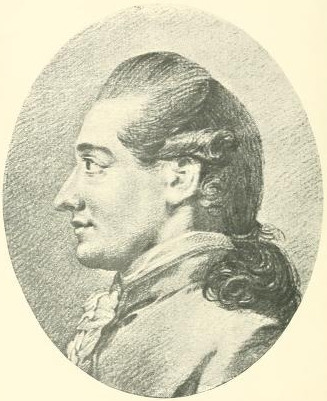
GOETHE
CONTENTS
I.THE POLITICAL BACKGROUND
II.PHILOSOPHY AND REACTION
III.SPIRIT OF THE OPPOSITION
IV.INFLUENCE OF THE REVOLUTION OF JULY
V.INFLUENCE OF BYRON
VI.VALUE OF THE NEW LITERATURE
VII.BÖRNE
VIII.BÖRNE
IX.BÖRNE
X.BÖRNE
XI.HEINE
XII.HEINE
XIII.HEINE
XIV.HEINE
XV.HEINE AND GOETHE
XVI.HEINE
XVII.HEINE
XVIII.LITERATURE AND PARTY
XIX.IMMERMANN
XX.HEGELIANISM
XXI.YOUNG GERMANY AND MENZEL
XXII.GUTZKOW, LAUBE, MUNDT
XXIII.RAHEL, BETTINA, CHARLOTTE STIEGLITZ
XXIV.FREDERICK WILLIAM IV. OF PRUSSIA
XXV.THE NEUTRAL LITERATURE
XXVI.POLITICAL POETRY, PHILOSOPHICAL REVOLUTION
XXVII.REVOLUTIONARY POETRY
XXVIII.REVOLUTIONARY POETRY
XXIX.THE REVOLUTION
XXX.CONCLUSION
LIST OF PORTRAITS GOETHE CHAMISSO BÖRNE HEINE IMMERMANN HEGEL GUTZKOW
"Si l'artiste ne se précipite pas dans son oeuvre, comme Curtius dans le gouffre, comme le soldat dans la redoute, sans réfléchir; et si, dans ce cratère, il ne travaille pas comme le mineur enfoui sous un éboulement; s'il contemple les difficultés au lieu de les vaincre une à une, l'oeuvre reste inachevée, elle périt au fond de l'atelier, ou la production devient impossible, et l'artiste assiste au suicide de son talent"—BALZAC.
YOUNG GERMANY
I
THE POLITICAL BACKGROUND
From the days of the Holy Alliance onward, the spirit of systematic reaction brooded over the German countries—a reaction which dated from the Congress of Vienna, and had its centre in Austria. Its most typical representative, Metternich, a pupil of Talleyrand, a less adroit but far more mischievous man than his master, hoped to extend it to the whole of Europe. Everything that had been shaken, loosened, or overturned by the Revolution or by Napoleon was to be repaired and re-established. In the struggle with the great enemy they had been obliged at last to resort to every possible method, had been forced to appeal to the people instead of simply commanding, to appeal to their sentiment in place of their allegiance, and even to promise a thing as contrary to all cabinet policy, as youthfully revolutionary, as "the regeneration of Germany." There had been, it is true, a very noticeable difference between the Austrian and the Prussian watchwords. "Justice and Order," "Order and Peace," were the cues of the Austrian proclamations; those of the Prussian were "The Nation," "Freedom and Honour," "Germany." Still both of the great German States had made more concessions to the spirit of the times than at all suited the ideas of their leading statesmen. And no sooner was the enemy driven off, the heir of the Revolution crippled, and "the war of freedom" ended, than it became their object to put an end to the freedom as they had put an end to the war.
The generation that had grown up during the war with France had expected to see a united Germany arise as the result of victory. As far back as 1812, Stein had sketched a plan for the reunion of the scattered parts of the former German Empire, and Arndt and Görres had given expression to the same idea. But the Peace of Paris, in 1814, decreed: "The German States shall be independent, and united by a federative league;" and herewith all hopes of unification were dashed to the ground. Almost a generation passed before the people were again animated by the thought. In place of the unified State arose the German Confederacy, der deutsche Bund, or, as Jahn called it, Bunt, a many-coloured harlequin's garb for the nation; and the disappointment was a bitter one.
The dream of freedom shared the fate of the dream of unification. To animate their peoples in the struggle with Napoleon, several of the princes had promised them constitutional government. Of the larger States, only Bavaria, Baden, and Würtemberg, the former members of the Napoleonic Rhenish Confederacy, kept these promises. Bavaria and Baden received constitutions in 1818; Würtemberg, where for once the king was more liberally minded than the estates, in 1819; and in little Saxe-Weimar, Karl August, the pioneer of political freedom in Germany, had given his people a free constitution and inaugurated a Parliamentary idyll as far back as 1816.
All this, however, was of small significance in view of the fact that Austria, after, as well as before, the Peace, represented the reactionary principle, and that Prussia, with a population more inclined than any of the others to political activity, adhered unhesitatingly to the Metternichian principles.
Yet the Prussian people not only desired a constitution, but possessed a right to it. They had it in black and white. In an edict of 1810, the Chancellor, Prince Hardenberg, the restorer of the power of Prussia, had held out the prospect of representative government. During the war with Napoleon the promise had been repeated, and finally, in an ordinance of the 22nd of May 1815, a formal promise had been made to the people, a clear intimation of the king's intention to appoint without delay a committee whose task it should be to prepare the draft of a constitution. But as the Metternichian principles gained ground, the realisation of this plan was postponed. When Görres ventured to present to Hardenberg an address from the Rhine provinces, in which the King of Prussia was reminded of his promise, the only answer he received was, that the king who had given the promise had also, in his wisdom, reserved the right to judge of the proper time for its fulfilment. On several later occasions the king declared himself to be bound by his promise, but at the same time always insisted that the question of time must be left to his fatherly care to decide. And meanwhile full twenty-five years passed—the rest of the king's life.[1]
The object of the Powers was to eradicate every trace of the Napoleonic administration. In Hanover, for example, the Code Napoléon, with its public, verbal judicial proceedings, was abolished, and the old inquisitional system of the sixteenth century, with its secret modes of procedure, was re-established. The peasants, who had been liberated by the French, had to return to serfdom and villeinage. The principle of equality before the law was set at naught, the aristocracy re-acquiring the political and social privileges which they had possessed in the eighteenth century.
And just as the first germs of a freer political life were ready to sprout in South Germany, an event occurred which gave the signal for much stronger, much hastier reaction, one symptom of which was the employment of the most violent measures in the repression of unimportant and innocent expressions of popular feeling. This event was the assassination of Kotzebue, or, to be more correct, the enthusiasm for the assassin which his deed awakened throughout Germany, then suffering from oppression and espionage.
The strong national feeling and the enthusiasm for freedom which had asserted themselves during the conflict with France, had in the years following on that conflict given birth to two movements among the youth of Germany, to which the attention of the Governments were now directed—the gymnastic and the student movement (Turnwesen and Burschenschaftswesen).
Jahn, the populariser of gymnastics, who succeeded Fichte in the favour of the youth of Germany, opened the first school of gymnastics in Berlin. He had belonged to Lützow's free-lance Jaegercorps, was a German of Germans and a hater of the French, and went about with his long, unkempt grey hair hanging over his shoulders, bare-necked, his broad shirt-collar thrown wide open, and a thick, knotted stick in his hand. In the course of the holiday excursions which he made with his pupils, whenever they came upon a French sign-board or met a fashionably-dressed man, they would draw up round the object of their detestation, bawling: "Oh! Oh!" On these excursions the strictest temperance in food and drink was observed; they lived chiefly on bread and water, and bivouacked at night under the open sky. From round the fire rose the strains of the worthy Massmann's beautiful Turnerwanderlied:
"Stubenwacht, Ofenpacht, Hat die Herzen weich gemacht, Wanderfahrt, Turnerart Macht sie frank und hart."[2]
This Massmann, who, besides being one of the leaders of the gymnastic movement, was one of the founders of the students' unions (Burschenschaften), is the same who figures so frequently as scapegoat in Heine's poems and prefaces.[3]
Jahn soon became the object of the most ardent admiration, not only on the part of immature youth, but of men of note and of public bodies. Poets inscribed their verses to him; a philologist like Thiersch dedicated his Pindar to him, and compared German to Greek gymnastics; two universities invested him with an honorary degree. He himself was a most loyal subject, but it was the fashion among his long-haired, bare-necked gymnasts with the unbleached linen jackets to jeer at the army, especially at the dandy officers of the guard. They raved, too, against abstract enemies; among their rules was one for the assassination of the enemy of the good cause; they were to aim with a dagger at his eyes, and, when the victim covered his face, to strike at his heart.
This movement emanated from Berlin, the student movement from Thuringia. The latter began as a sort of semi-national, semi-Christian enthusiasm, and aimed among other things at the reform of the low standard of manners and morals among the students. Originating in one of the small States of Germany, it took for its programme that famous song of Arndt's which declares the whole of Germany to be the German's fatherland.
Amongst the Jena professors a certain Fries had most influence among the students, the same Fries who, in the preface to Hegel's Philosophy of Right, is loaded with invective as being the representative of shallowness. He was a violent Liberal, who had said that Hegel's new theories did not grow in the gardens of science, but in the hotbeds of servility; and under his fostering care the endeavour after unity and abstract liberty spread amongst the youth of the universities. The banner of the Burschen was black, red, and gold, said to have been suggested by the colours of the uniform of Lützow's Corps, black, with red facings and gold buttons.
The Reformation commemoration-festival in 1817 first drew general attention to the gymnastic and student societies (Turner and Burschen). It had suggested the idea of a meeting at the Wartburg of delegates from all the German student unions. In a pamphlet published on the occasion of the festival by Karl Sand, he names as the three enemies of German nationalism from time immemorial, Roman imperialism, monasticism, and militarism. On the 18th of October, five hundred students, headed by several professors, marched up from Eisenach to the Wartburg, where they dined in the Knights' Hall, placed at their disposal by the liberal Karl August. After the repast the gymnasts gave a display of their agility for the benefit of the astonished natives. In the evening great bonfires were lighted, and then Jahn proposed that, following the example of Luther, who had burned the Papal Bull, they should burn what the enemies of the good cause had written. Massmann feelingly expressed his approval of the proposal, and bundles of old printed paper were produced, on which were inscribed the titles of the detested books written by the enemies of the gymnasts. There were three by the notorious Schmalz, the first Rector of the University of Berlin, the Police Statute Book of the equally notorious Prussian Minister of Justice, Herr von Kamptz, the Code Napoléon, Kotzebue's Deutsche Geschichte, Haller's Restauration, &c., &c. The last things thrown into the flames were a Uhlan's corset, a queue, and a corporal's baton.[4]
When Fries in high-flown language bade the students farewell, he particularly impressed on them that they had been in the country of German liberty, liberty of action and of thought: "Here there is no standing army," &c.; an expression rendered more absurd by the fact that the army of Weimar consisted of a number of worthy artisans, who at times, in consideration of a small payment, appeared as hussars, with high riding-boots and spurs, but without horses. In Hegel's preface to the Philosophy of Right he remarks, à propos of this speech, that Fries was not ashamed, on the occasion of a notorious public demonstration, to say of the constitution of the State that it was from below, from the people, that life would come, if true public spirit prevailed; that only by the sacred chain of friendship could a community, a society, be inviolably united. Hegel calls this the very hall-mark of shallowness, this melting down of the elaborate architecture of a rationally designed state into "a broth of feeling, friendship, and enthusiasm."
Massmann published an account of the festival, in which he described how night still brooded over Germany, but proclaimed that the blood-red dawn was about to break.
Metternich succeeded in persuading both Prince Hardenberg and the Emperor Alexander to bring pressure to bear on Karl August in the matter of this festival, and ever afterwards Karl August's nickname at the court of Vienna was "der Altbursche."
Amongst the books burnt in effigy at the Wartburg were some of Kotzebue's. Kotzebue was publishing at this time in Weimar his Litterarisches Wochenblatt, a journal which flattered Russia and made merry over the youth of Germany. Little as Goethe generally sympathised with youth, he rejoiced with them, for once, at the insult offered to his old enemy.[5]
As Councillor of the Russian Legation, Kotzebue from time to time sent communications to St. Petersburg, and was consequently supposed to be a Russian spy. It is probable that his communications were no more than harmless reports on literary matters, but, be this as it may, in the eyes of the students, he was Beelzebub—Beltze- or Kotze-bue. At the University of Giessen at this time, under the leadership of three brothers Follen, fanatical Republicans, a species of Radicalism had developed, which gloated over the idea of the assassination of tyrants and their instruments. In the students' songs such expressions occurred as: "Freiheitsmesser gezückt!—Hurrah! den Dolch durch die Kehle gedrückt." (Draw freedom's knife from its sheath!—Hurrah! Thrust the poniard into the throat.) Karl Follen, the leading spirit, had completely under his influence that young, narrow-minded mystic, Karl Sand, who had the image of Jesus constantly before his eyes, and who, on the 23rd of March 1819, drove his poniard into old Kotzebue's neck. On a strip of paper which he left lying beside the corpse, was, amongst other writing, this line by Follen: "You, too, may be a Christ."
It was perfectly clear that this murder, committed in a moment of religious exaltation, could not be laid to the charge of the Liberal youth of Germany; nevertheless, and more especially as Sand became a species of saint in the popular estimation, Metternich and Gentz, the Emperor of Austria, the King of Prussia, and the Czar, who was irritated by this expression of Russophobia, took united action, and the Resolutions of Karlsbad were passed—provisional, exceptional legislation for the universities, the "demagogues," and the press. Thus a censorship of the German press came into existence, answering to that prevailing in Russia now. Gentz was not mistaken when he called this the greatest retrograde movement that had taken place for thirty years.
Under the pretext of combating a great revolutionary party, which they knew did not exist, the Governments began a war of persecution against what was then called Liberalism. Even the professor of theology at the University of Berlin, De Wette, was dismissed, because he had written a private letter of condolence to Sand's mother, which was seized and opened by the police. The reaction went the length of attacking the men who represented the German national feeling which had arisen during the war. Jahn was arrested, first confined in a fortress, and then sent to live in a small town under police supervision. Arndt was entangled, as a "demagogue," in a criminal case, and lost his appointment. Görres, who was dismissed, escaped over the frontier.
In Prussia the censorship was not only exercised in the case of books and newspapers printed in the country, but extended to foreign printed matter. All German newspapers published in England, France, or Holland were forbidden. The whole stocks of some publishers, Brockhaus, for example, were subjected to a special censorship, on account of one or two pamphlets published by them. At all the universities trusted agents of the Government were appointed to watch over the disposition of the students and the lectures of the professors. All gymnastic and student societies were put down. The so-called old German dress, and the black, red, and gold colours were forbidden. The police especially distinguished themselves in the carrying out of these last prohibitions; they hunted coats, caps, tassels, ribbons, and pipe-bowls, and any man caught wearing a straw hat, a red waistcoat, and a black coat was imprisoned on a charge, of high treason.
Some Marburg students in the Twenties had ordered foils from a manufactory in Solingen, and it was reported that the usual trade-mark, "Prince," was wanting on these particular foils. The government of Hesse-Cassel instituted an inquiry for the purpose of discovering if the omission had been ordered by the students. To the great annoyance of the police, no cause for accusation was found. "I am sorry for your statesmen," said the French Minister, Comte de Serre, to the famous Niebuhr about this time; "they are making war on students."
A specially keen look-out was kept for prohibited combinations among students. When Arnold Ruge was imprisoned, Herr von Kamptz set the whole police on the chase after a walking-stick belonging to him, on which the names of some Jena students were carved, the corpus delicti being finally confiscated in Stralsund. Ruge was tortured by long pauses between his examinations, having to spend the intervals in a cell where life was rendered unendurable by vermin. Fritz Reuter had to expiate the crime of having "worn the German colours in broad daylight" by imprisonment, first in a miserable hole in Berlin, and after having been condemned for high treason, in dirty fortress cells. A youthful political offender in Bavaria was sentenced to fortress-imprisonment for treason on an indictment of which one of the gravest clauses was that something resembling a German prince's robe had been found in his room. Chiefly at the instigation of Austria, thousands of young Prussians were either imprisoned or driven into exile. In short, the Liberal middle-class youth of the Germany of those days was as unprotected by the law and as much persecuted as are, in our days, the Socialistic youth of the fourth estate of the same country, or the Liberal youth of Russia.
Political and religious reaction went, as usual, hand in hand. In the year 1821, the Prussian Government concluded a concordat with the Pope, which gave the Roman Catholic Church an influence in Prussia such as would have been unimaginable under Frederick the Great. In the following year a new liturgy, more nearly resembling the Roman, was introduced into the Protestant Church. And it is exceedingly significant that the word Protestantism now fell into disrepute. By a Ministerial decree of the year 1821, the terms Protestant and Protestantism were forbidden in Prussia; the censors received orders not to pass these words, but to substitute the word Evangelical.
The sadness that takes possession of all progressively inclined minds during long and apparently hopeless periods of reaction now weighed upon the spiritual élite of Germany. But the great majority fell a quick prey to carelessness and political indifference. With the reaction, at first forced on them from without, they soon familiarised themselves. Many began to be of opinion that a representative constitution, such as had been promised to Prussia, was a thing of no value. Others felt it deeply that Prussia, which had made such sacrifices in the war with Napoleon, had not succeeded in obtaining a constitution, while the South German States, which had to the last made common cause with the enemy, had long enjoyed popular government and the privilege of Parliamentary debate; but they concealed their shame under a mask of contempt for these skirmishers, a contempt that had a strong family resemblance to envy and anger. It was malevolently pointed out that the Bundestag, in which Austria and Prussia predominated, took good care that the trees of the South German Parliamentary system were well pruned down. The various Governments had, moreover, succeeded in bringing such opposition as arose in the South German States into disrepute. Ministers often succeeded in preventing an election that was objectionable to them; they also won over opponents by direct bribery or fear of dismissal; and they had always the final resource, to which they frequently resorted, of completely disregarding the oppositionist resolutions of the Chambers. As the power was in the hands of the Governments, it lay in the nature of things that the proceedings of the Parliaments, up to 1830, were of no serious interest.
The German press had never occupied a high position. All discussion of State matters being now prohibited, it had to confine itself, as regarded politics, to the simple chronicling of facts, and to fill its columns with court news, accounts of storms and floods, the birth of marvellous monsters in the animal, and the appearance of new stars in the theatrical, world.
The cultivated classes sought a kind of compensation for their exclusion from politics in a frantically exaggerated interest in the theatre. Never had the adoration of a prima donna or a ballet-dancer been carried to such an extreme. In the Berlin of the Twenties every other interest was swallowed up in the question of the superiority of German or Italian music. People thought of nothing but the rivalry between Spontini and Weber. When Börne came to Berlin in 1828, the public mind was so engrossed with the famous singer, Henriette Sontag, that no one remembered anything about Börne, except that he had written an article on her. In his Letters from Paris (in "Härings-Salat") he gives a witty and yet veracious account of how he was met and saluted everywhere with the cry: "This is the man who wrote about Sontag!" Even in 1832, everything—the agitation in France, the Polish defeat, sympathy with the exiled Poles—everything was forgotten in the enthusiasm for the feet of the great danseuse Taglioni, which were then setting out on their triumphal progress through Europe. The chief representative of the reactionary spirit in Prussia, the Hofmarschall and future diplomatist, General Theodor Heinrich von Rochow, writes in May 1832 to von Nagler, the Postmaster-General: "She is to dance, consequently there is great rejoicing, and occupation in abundance.... Taglioni's mimetic grace has dispelled the threatening signs of the times."[6] The word occupation here is significant. The performance did not merely please, it occupied.[7]
As regards literature, the generation of that day luxuriated in an idolisation of the octogenarian Goethe, which accepted everything that the aged master wrote or said as wisdom, and beauty, and inspired poetry. All his life long he had had to struggle against hatred and misunderstanding; now the reverence for him verged on the ridiculous; in Berlin it verged on idiocy.[8] In Zelter's Letters to Goethe he writes, on the subject of the latter's Elpenor: "Posterity will not believe that the sun of our days beheld the forthcoming of such a work."[9] All those who had obstructed Goethe's path so long as his name still belonged to combatant literature, became his votaries from the moment that that name conveyed undisputed authority, and could be employed as a sort of Conservative and national emblem. Otherwise literature languished. The day of romantic poetical fancy was at an end—Raupach and Müllner ruled the stage, Clauren fiction. Light literature sank deeper and deeper into the slough of vulgarity and pruriency.
II
PHILOSOPHY AND REACTION
German philosophy, all the branches of which shot out vigorously after the flood of Romanticism had fertilised the ground with its deposit, at the same time changed colour. Through the unpropitiousness of circumstances, it became farther removed from reality than heretofore, though more closely bound up with existing conditions.
Hegel is the great example. In March 1819, Karl Sand murdered Kotzebue; on the 22nd of October of the preceding year, Hegel entered on his professorial duties at the University of Berlin. From the programme which he gave his audience in his opening address, it could be clearly deduced that Hegel's philosophy and the Prussian State in its existing form were closely connected; for the said philosophy was based on the omnipotence of the Idea, the State on the power of intelligence and culture. Of the fact that Prussia, allowing herself to be led by Austria, was at this very time proving false to her character and traditions by entering on a policy of spiritual and political reaction, no account was taken. Yet the Resolutions of Carlsbad were already drafted, and it was Prussia that took the initiative in issuing all the petty tyrannical regulations which soon placed the whole of Germany under police surveillance. But the sentimental politics of the students were as obnoxious to Hegel as sentimental philosophy; the Wartburg rendezvous was to him a piece of romantic foolery, and Sand's poniard-thrust an abomination. In the preface to the Philosophy of Right, the first and most important work he produced in Berlin, he not only condescended to defend the persecution of the demagogues, but demeaned himself by playing police agent, and denouncing his former colleague, Fries, to the Governments: "It is to be hoped that neither office nor title will serve as a talisman for principles destructive both of morality and public order." From this time onward Hegel became the philosophic dictator of Germany. He ruled from Berlin over the whole domain of German thought.
Yet in this same philosophy, even in a work with such a pronounced Conservative tendency as the Philosophy of Right there existed a portentous ambiguity. As early as in the above-mentioned notorious preface we find the proposition which was to become the classic motto of the age, which was first appropriated eagerly by the Conservatism of the Restoration period, and then used as a battering-ram by Hegel's younger disciples. It is in larger print than the rest, in two lines:
"What is rational is real, What is real is rational."
What does this mean? Hegel goes on to explain that when reflection, feeling, or whatever other form the subjective consciousness may assume, regards the present as vanity, it is itself false, finds itself in emptiness. But, on the other hand, the doctrine that the idea is a mere idea or figment, philosophy meets with the assertion that nothing is real except the idea. What is all-important is to recognise that which is eternal in the present, temporal, transient; in other words, in this case, not to construct a state, but to understand the state as it exists.
Hegel's biographer, Haym, rightly says that not even the doctrine of divine right is so dangerous as this, which declares everything existing to be sacred. But, on the other hand, it may with equal right be maintained that not even the destructive ardour of the youthful revolutionaries went so far as this doctrine, which grants reality only to what is rational, and to all else nothing but a mock reality, which can and should be defied, disregarded, overturned, exploded. Hence Robert Prutz could say of this same proposition that by it all doubt was removed, the old God of darkness hurled into the abyss, and a new, eternally reigning Zeus, the idea that comprehends itself, man as a thinking being, raised to the throne.[1]
The interpretations of Hegel's philosophy that soon appeared were many and widely different, but the kinship between his doctrines and Goethe's poetry was felt by all the initiated. Hegel became the strongest ally of the little circle of Goethe votaries in Berlin, and the two men, known as the absolute poet and the absolute philosopher, were the objects of a common veneration. The orthodox Hegelian even saw a significant coincidence in the circumstance that Hegel was born on the 27th of August and Goethe on the 28th. In the Twenties, the faithful gathered round the festive board on the evening of the 27th of August, drank the toast of the master in the kingdom of thought, and called to mind the saying in the preface to the Philosophy of Right about the owl of Minerva, which begins its flight only when the shades of night are gathering. "But as soon as the midnight hour had struck, an orator rose to proclaim the glad tidings that Apollo, the God of day and of song, was now in his sun-chariot, ushering in the 28th, the glorious day."[2]
The patriotism which in 1813 had driven the enemy out of the country, contained two radically different elements, a historical, retrospective tendency, which soon developed into Romanticism, and a liberal-minded, progressive tendency, which developed into the new Liberalism. When the reaction came, it sought support in many of the theories of Romanticism, and finally took the whole movement into its pay. Men like Görres, Friedrich Schlegel, and others, passed from the camp of Romanticism into that of reaction.
The freedom-loving group had, of course, during the wars with Napoleon, shared the Romanticists' hatred of France. But when their sympathies came to take the shape of wishes and demands (for liberty of the press, constitutional government, the franchise, &c), the hatred of France inevitably evaporated. And the stronger the reaction became, the more keenly were all eyes turned to that neighbouring country which possessed Parliamentary government. The heroes of French Liberalism were soon men of great consequence in the estimation of the German Liberals; indeed at a distance they seemed of more consequence than they did at home. In Germany, after the victory over Napoleon, as after the great defeat, quietness was the first duty of the citizen.[3] All was obedience and silence. And the result was what it usually is when a highly gifted but unenergetic people are incapable of throwing off a yoke; its pressure generated self-contempt, and the self-contempt a kind of desperate wit, of chronic "gallows-humour"; the better sort developed a real passion for solacing themselves with derision of their own impotence. The observation of existing conditions gave constantly recurring occasion for irony directed against themselves—against visionary Romanticism, the spirit of patience and submission in the domain of politics, orthodoxy and pietism in the domain of religion. Caricature-like developments of political life, religion, and poetry incited to sarcasm, that sometimes ruthlessly wounded patriotic feeling, sometimes assumed a frivolous tone which, taken in connection with the French leanings of Liberalism, was, or inevitably seemed to be, more French than German.
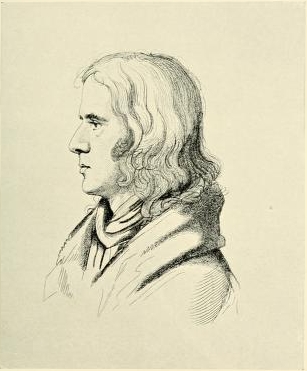
CHAMISSO
III
SPIRIT OF THE OPPOSITION
The most notable of the freedom-loving poets and prose authors of the period are embodiments of some of the shades of opinion which have been alluded to. Adalbert von Chamisso, who, by virtue of his famous prose tale, Peter Schlemihl, and certain of his qualities, belongs to the German Romantic School, while in other respects he approaches more nearly to the French ideal of thought and writing, is, in some of his most characteristic poems, and even in his epigrams, a mouthpiece of the grief of the better sort over the steadily growing political and social reaction. As early as 1822, in his poem, Die goldene Zeit ("The Golden Age"), he ridicules an age in which that man is a Jacobin who has openly expressed his belief that 2 and 2 make 4; in the Nachtwächterlied ("Watchman's Song") he scoffs at the power of the Jesuits; in Joshua and Das Dampfross ("The Steam Horse"), at those who have robbed time of its secret, and learned how to force it backwards day by day; in Das Gebet der Wittwe ("The Widow's Prayer") he gives a darkly pessimistic picture of the heartless rule of the powers that be, with its complete indifference to the fate of the common people; finally he sums up his view of the times in this bitterly humorous quatrain, which greets us sadly in the form of a four-part catch:
KANON. "Das ist die Noth der schweren Zeit! Das ist die schwere Zeit der Noth! Das ist die schwere Noth der Zeit! Das ist die Zeit der schweren Noth!"[1]
Count August von Platen-Hallermünde, whose youthful efforts were Romantic, both in their choice of subject and in their imitation of the forms of the Spanish drama, afterwards waged systematic war with Romanticism. Its latest developments in Germany he holds up to ridicule, without possessing enough of critical tact to discriminate between the authors who did and those who did not belong to the Romanticist group. He quits the literary drama to cultivate the political lyric muse, as he gradually arrives at the conviction that the pitiable condition of public affairs is also at the bottom of the German people's lack of appreciation of power and style and form in poetry. He finds life in Germany impossible to endure, and seeks, under the sunny skies of Sicily, amidst its reminiscences of antiquity, to forget the heavy atmosphere and the political abuses of his Northern home. But he cannot completely distract his thoughts from the ignominy there. He writes his Berlin national song, which begins with the chorus:
"Diesen Kuss den Moscoviten, Deren Nasen sind so schmuck; Rom mit seinen Jesuiten Nehme diesen Händedruck!"[2]
We find also the following bitter outburst of national self-contempt, written in wrath over the maltreatment of his poems by the censor:
"Doch gieb, o Dichter, dich zufrieden, Es büsst die Welt nur wenig ein; Du weisst es längst, man kann hienieden Nichts Schlechtres als ein Deutscher sein."[3]
Romantically as Platen's adversary, Heinrich Heine, starts, the modern spirit soon makes itself perceptible in his prose. Even before he touches on the subject of politics proper, he amuses himself, in his Reisebilder, by making taunting allusions to German conditions and to the way in which German stolidity accommodates itself to them.
And the love of liberty, abstract, political liberty, was all along the true passion of Ludwig Börne, who long appeared to occupy himself with purely æsthetic matters, being known for whole decades only as a dramatic critic and writer of short stories.
That these authors found readers and admirers bears witness to the fact that the thinking part of the German people at the end of the Twenties was laying aside its faith in authority in the domain of politics as well as in general intellectual matters. At this time the persecution of the students' unions (Burschenschaften) was being carried on with the utmost ardour. They were broken up everywhere. But they formed again at once, and in one German State, Bavaria, after the accession of King Ludwig, they were actually sanctioned by the police. The divisions that occurred among them show the directions of the various currents of public opinion at that time. In Erlangen, after 1827, there were three unions, at feud with each other—Teutonia, Arminia, and Germania.
Teutonia was the organ of pure Romanticism, of religious mysticism, and declared that politics in no way concerned it. Arminia's principles were strict morality and the pursuit of science; it aimed at the reformation of the conditions of public life, and also at the unity and liberty of Germany. Germania answered to the Radical tendencies of the day. It dropped the older Tugendbund's requirement of strict morality, emancipated itself from the rule of authority, including authority in the matter of religion, and declared the belief that its aim—which in the case of this union also was the unity and liberty of Germany—could only be attained by revolution. Though it was essentially a political organisation, it would be ridiculous to call it an important and dangerous one.
These three main movements were soon represented at all the German universities, and significantly enough, it was, as a rule, the one represented by Germania, which had the greatest influence.
IV
INFLUENCE OF THE REVOLUTION OF JULY
In 1830, while things were in this state of stagnation, oppression, and ferment, the news of the Paris Revolution of July arrived, and acted upon public feeling in Germany like an electric shock. All eyes were turned towards Paris, and among thinking people real enthusiasm was felt.
The effect was perhaps most plainly observable among the quite young men.
Two months before the Revolution, Karl Gutzkow, then nineteen, had, as he himself has told us, no understanding whatever of European politics. He neither knew who Polignac was, nor what it meant to violate la Charte (the French constitution). He only knew that in spite of all the persecution of the German student unions (Burschenschaften), they were still alive, and that the object to be attained was the unification of Germany. If he thought at all of upheavals which might hasten the march of events, he looked for them rather from the direction of Erlangen or Jena than from Paris; at the utmost he conceived it possible that a troop of returning Philhellenes landing armed at Stralsund, might take forcible possession of the town and call the Pomeranian militia (Landwehr) to arms, and that the peasants, driven to it perhaps by famine, might join in the revolt.
At this time the French author, Saint-Marc Girardin, had come to Berlin to study the German language, the Prussian school system, and also the University theology as represented by Schleiermacher and Neander, and the Pietism emanating from Halle. As a contributor to the Journal des Débats, he received his newspaper regularly from Paris, and with the eager interest of the aspirant to office, followed the progress of the Opposition in France. Gutzkow gave him a German lesson daily; they read one of Kotzebue's comedies, which the Frenchman preferred as practice to Goethe or Schiller, but they invariably drifted into political discussions. Gutzkow made no attempt to conceal from Saint-Marc Girardin the slight general significance he attached to the French constitutional struggle, openly ascribing a greater influence on the course of history to the student union in Jena than to the Chamber of Deputies in Paris. Girardin smilingly gave a polite answer. From time to time these conversations were interrupted by Eduard Gans, the famous Prussian professor, Hegel's most renowned disciple in the faculty of law, Varnhagen's and Heine's friend, who in fluent French joined in the political argument, and made a great impression on Girardin by his woolly black hair and his whiskers. Gutzkow, who had heard the fashionably dressed, subtle and sarcastic professor ridicule the student movement from his professorial chair, and laughingly confess that he too once on a day, on the banks of the Saale, had deliberated upon the best means of helping Germany to an imperial crown, entreated the French politician not to believe that the youth of Germany thought with Gans. "I am quite aware of it," answered Girardin, "you intend to liberate the world with Sanscrit."
On the 3rd of August 1830, the king's birthday was celebrated with song and speech in the great hall of the Berlin University. The students stood crowded together in front of the barrier behind which sat professors, officials, and officers of high rank. The famous philologist Boekh was the orator, and from the gallery above his head songs were sung by the University choir, under the leadership of Music-Director Zelter, Goethe's correspondent. The Rector of the University, Professor Schmalz, with queue and sword, went from chair to chair, exchanging a few words with the most honoured guests. But Gans, excited and impatient, passed round letters from Friedrich von Raumer, who had just come from Paris. The Crown Prince, afterwards Frederick William IV., sat and smiled; but all knew that a few days ago in France a king had been dethroned. It was as if the thunder of the barricade cannonade were booming through the festive hall. Boekh's speech on the subject of the fine arts did not succeed in arousing attention, and when Hegel read from the chair the names of the prizewinners of the year, no one except the medallists listened. Gutzkow did hear with one ear that he had taken the prize in the faculty of philosophy, but with the other he heard of a people that had deposed a king, of cannonades, of thousands fallen in the fight. He was oblivious to the congratulations offered him; he did not even open the case which contained the gold medal with the king's portrait; he had forgotten the hope of a professorship which he had connected with the thought of winning this medal; he stood dazed, thinking of Saint-Marc Girardin and his prophecies, and of what he himself had prophesied of the German Burschenschaft. Then he rushed off to a confectioner's shop in Unter den Linden, and for the first time in his life read a newspaper with avidity. He could hardly await the publication of the official gazette that evening; not because he was impatient to see his name in the list of medallists; all he wished was to know the state of matters in Paris, whether or not the barricades were still standing, whether France was to come forth from Lafayette's hands a republic or a monarchy. "Science lay behind me," he writes, "history before me."[1]
And Gutzkow is a type of the youngest generation of the Germany of that day—the young men of twenty.
Almost simultaneously with Karl Gutzkow's political awakening, there occurred a memorable misunderstanding in the study of the octogenarian Goethe. A visitor, greeted by the old man with exclamations of joy over the great event in Paris, at first believed that he meant the Days of July, and only gradually came to understand that he was talking of the decision of the scientific dispute between Cuvier and Saint-Hilaire in favour of the latter. This famous misunderstanding has long enough been regarded as only a symptom of Goethe's limitation in matters political; it is but fair to point out that the anecdote is also an indication of the old sage's justifiable indifference to over-estimated political events. The scientific dispute was, by reason of the idea involved, and its transforming effect on the spiritual map of the world, a weightier matter than the French Revolution of July. Does not Saint-Hilaire's theory of the unity of "plan" herald The Origin of Species! But the picture of the overwhelming effect of the French political catastrophe on the youngest generation stands out all the sharper against the background of Goethe's impassibility.[2]
The impression made on eminent individuals belonging neither to the youngest nor the oldest generation was very deep.
The most intellectual and open-minded woman of the day, the most distinguished of Goethe's female admirers, Rahel, who by this time was sixty, was in entire sympathy with the Revolution. To her, as a woman, the social side was of more interest than the political. Saint-Simonism takes strong hold upon her; her marvellously youthful mind perceives its possibilities, and in the events of July she sees the beginning of the triumph of its social theories.
To the reviving, inspiriting impression of the Revolution of July was now added another, which gave a sharp edge to the passionate political feeling of the younger generation—the impression, to wit, made by the outbreak of the Polish revolt. It is most plainly observable in the case of Platen, who in wild excitement addresses a poetical adjuration to the Crown Prince of Prussia (said to be the most favourably disposed) to take the part of unhappy Poland, and also writes the Polenlieder, the only poems of his that rise to the height of passion, proud songs of liberty, full of outspoken scorn of the autocrat who was worshipped at the German courts as an almighty being, and of those who allowed themselves to be bribed and bought with his roubles.
On Ludwig Börne's mind the news of the Revolution of July acted with the effect of a flash of lightning.
In the summer of 1830 he was at the watering-place of Soden, near Frankfort-on-Main, recovering from a long bout of rheumatic fever and repeated attacks of hemorrhage. His Journal shows that his political hopes were almost extinguished, his desires stifled. A soul like his, whose aspiration after liberty was a passion, whose hunger and thirst after righteousness consumed his vital force, was unable permanently to bear the heavy weight of political reaction.
He was now forty-four, and since the time of the War of Liberation, that is to say as youth and grown man, had had experience of nothing but the triumphs of baseness and its persecution of all rectitude, all freedom of opinion. He had never been able to lift his eyes from the sheet of paper he was writing on, without seeing pallid fear of every great passion, of ideals, of youth itself, enthroned in high places, side by side with the animal instinct of self-preservation and animal self-indulgence—the Metternich and Gentz principle. He had given up none of the convictions of his youth and manhood, but the world to him was draped in mourning weeds. He had the feeling in Germany of sitting at the bottom of the sea, a diving-bell providing him with just enough air to keep him from suffocation. In Paris he had breathed fresh air. There the light of the sun, human voices, the sounds of life had enraptured him. Now, down among the fishes, he shivered with cold. He suffered the most terrible ennui. The stillness made him ill; the narrowness of everything galled him to the quick.
He describes himself as one of those natures which cannot in the long run endure the "solo music" of existence. "Symphonies of Beethoven or thunder-storms" were a necessity to him. He was one of the people who feel themselves out of place in a box at the theatre, who sit from choice in the pit, in the middle of the crowd.
It seemed to him as if in Germany the bullion of life were minted underground, in the silence of midnight, like counterfeiters' coin. Those who worked did not enjoy, and those who enjoyed, who in the light of day set the money in circulation that had been coined in fear and trembling in the darkness, did not work. In France a man of health and spirit lived a life like that of a king's messenger, who is sent with despatches to foreign towns, never twice to the same place, and who on his long journeys sees and enjoys life in its most different developments; in Germany he lived like a postilion, who is always taking the same short journey back and forwards between two post-houses, receiving a miserable tip from fortune for his trouble. The postilion was perfectly able to take the journey in his sleep; he knew every stone on his ten miles of road; and this in Germany was called thoroughness; but Börne, sitting in the little hotel in Soden, watching the geese fighting in the yard, and studying the jealousy of the turkey-cocks and the coquetry of the turkey-hens, was not grateful for the opportunity of remarkable thoroughness afforded him.[3]
When the news reached him that Polignac's ministry had issued the famous ordinances, had violated the constitution, he cried, anticipating all the consequences of this step: "And God said, let there be light!"
The news of the Revolution of July followed. Every day he awaited the hour of the arrival of the newspaper with impatience; he walked out the country road, on the lookout for the mail; if it delayed too long, he went all the way to Höchst, where the papers came from. Soon he felt unable to remain in Soden. He returned to Frankfort, and astonished, electrified his environment by his fire. The silent, invalid-looking Börne was unrecognisable; a miracle seemed to have happened; he was young and strong again. All his old dreams seemed to have become realities, and everything in him that he had been forcibly keeping down sprang up again like a spring when pressure is removed.
Frankfort did not long satisfy him; presently we hear of him in Paris.
On the 7th of September he writes from Strasburg: "The first French cockade I saw was on the hat of a peasant who passed me in Kehl coming from Strasburg. It seemed to me like a little rainbow after the flood of our time, a sign of peace from a reconciled God. But when the bright tri-coloured flag greeted my eyes—oh! words cannot express my emotion. My heart beat so violently that I was on the point of fainting.... The flag was on the middle of the bridge, its staff rooted in French ground, but part of the bunting waving in German air. Ask the first Secretary of Legation you meet if this is not a breach of international law. It was only the red stripe of the flag that fluttered over our native soil. And this is the one colour of French liberty that will be ours. Red, blood, blood—and alas! not blood shed on the battlefield."
Börne is here only the mouthpiece of a feeling which had taken possession of most of the many in Germany who were susceptible of enthusiasm. The heroism shown by the French students, polytechnicians, and working men during les trois jours glorieux was admired as much as in France itself, and doubly admired as the proof of an energy which the German people appeared to have lost. There was a universal inclination to drift into exaggerated contempt of their own want of political aptitude and insight, their own want of ability to act at the decisive moment.
Thus powerfully did events act upon characters like Börne, and upon the enthusiasts who were to be found in greatest numbers in the scholarly class. Let us complete the picture by observing their effect on the men of the reaction.
Gentz, who had at first exulted over Charles X.'s energy, grew anxious as the coup d'état approached. "I look upon the ordinance against newspapers and books," he writes, "as a tremendous venture, of the success of which I am as yet by no means assured.... Such weapons ought to be played with only by people who are sure of their strength and of the means at their disposal. To venture into such regions means ruin for men like Polignac and Peyronnet."[4]
As soon, however, as the first alarm had subsided, he and his spiritual kindred set to work to take advantage of every mistake made by the Liberals. Wisely turned to account, the after-effects of the Revolution of July in Germany, by the occasion they gave for ruthless repression and persecution, censorship, and imprisonment, might lame the German Liberal movement for many a day; might (as Metternich said a few years later of the Hambach Festival) make the anniversary of the Revolution a day of rejoicing for the good instead of for the bad. And only a year later, Gentz, who at times had seen the future in a very dark light, was able to write: "Away with all gloomy forebodings now! We are not to die, Europe is not to die, and what we love is not to die. I am proud of never having despaired."[5]
Metternich had enough literary taste to admire Börne, and Gentz was a fanatical Heine enthusiast. Before the Revolution of July it was still possible to look upon Heine as essentially the poet of unhappy love and the poetical humorist, with a touch of blasphemy and frivolity.
In the summer of 1830 Heinrich Heine was at Heligoland, dreaming on the shore, gazing out to sea, listening to the plash of the waves. He had given up all hope of better times. He occupied himself with reading the few books he had taken with him—Homer, the Bible, the history of the Lombards, and some old volumes on witches and witchcraft. He could hardly himself believe that he had quite lately been the editor of the Politische Annalen in Munich. Two days after the Revolution of July had taken place, but before the news of it had reached Heligoland, he wrote, in one of his letters from that island, that he had now determined to let politics and philosophy alone, and to devote himself entirely to the observation of nature and to art; that all this torture and trouble was to no purpose; that however great sacrifices he might make in the general cause, they would be of little or no avail; the world, doubtless, did not stand still, but it moved in a circle, with no result whatever; when he was young and inexperienced, he had believed that even if the individual perished in the war of human liberation, the great cause would be victorious in the end; now he recognised the fact that humanity, like the ocean, moved according to fixed laws of ebb and flow.
Even if these expressions have been strung together at a later period, even if the letters are not genuine, but a fragment of memoir inserted later, for the sake of contrast, in the book on Börne[6], they will undoubtedly give us a correct picture of Heine's mental attitude at that time.
On the 6th of August he writes: "I was sitting reading Paul Warnefried's History of the Lombards, when the thick packet of newspapers, with the warm, glowing-hot news, arrived from the mainland. Each item was a sunbeam, wrapped in printed paper, and together they kindled my soul into a wild glow. I felt as if I could set the whole ocean, to the very North Pole, on fire, with the red heat of enthusiasm and mad joy that glowed within me." It was all like a dream to him; the name Lafayette especially was like the echo of one of the stories of his earliest childhood; he could hardly believe that the man who had ridden in front of the grandfathers of the present generation in the American War of Independence was once more on horseback, the hero of the nation. He felt as if he must go to Paris and see it for himself.
He writes with a passionate fervour, which he soon feels obliged to temper with a touch of self-contempt: "Lafayette, the tri-colour flag, the Marseillaise.... It intoxicates me. Bold, ardent hopes spring up, like trees with golden fruit and with branches that shoot up wildly, till their leaves touch the clouds.... My longing for rest is gone. I know once more what I desire, what I ought to, what I must, do.... I am the son of the Revolution, and again I take into my hand the charmed weapons, over which my mother spoke the magic spell.... Flowers, flowers! that I may crown my head for the death struggle. And the lyre, too; give me the lyre! that I may sing a song of battle.... Words like flaming stars, that shoot down from the sky, set palaces on fire, and illuminate huts.... Words like burnished javelins, that whirr up into the seventh heaven and transfix the pious hypocrites who have insinuated themselves into the holy of holies.... I am all gladness and song, all sword and flame, and quite possibly mad."
Among other things, he tells how the fisherman who some days later rowed him out to the sandbank from which they bathed, told him the news smilingly, with the words: "The poor people have won the victory." Heine expresses his astonishment at the correct instinct of the common man. And yet the exact opposite was the real state of matters; it was the rich people who in the end were and remained the victors.
But an utterance such as the last quoted suffices to show the light in which German authors regarded the Revolution of July. It inspired in them the same religious emotion with which forty years previously the leading spirits of the Germany of that day had regarded the great Revolution. It was not to them the result of the strength of the Liberal bourgeoisie, and of their ability to persuade the lower classes to work and shed their blood for them; it was the general signal for the political, economical, and religious emancipation of humanity. It was the great deed that with one blow freed all nations from the yoke, all minds from oppression.
In 1847 one of the foremost of the Radical writers of the Forties, Robert Prutz (at the time of the Revolution only fourteen), gave an excellent reproduction of the impression it created. "For fifteen years," he says, "it had seemed as if the eternal generative power of the world's history were paralysed. For fifteen years they had been building and cementing, holding congresses, forming alliances, spreading the net of police supervision over the whole of Europe, forging fetters, peopling prisons, erecting gallows—and three days had sufficed to overturn one throne, and make all the others tremble. It was not true then, after all, what the sovereigns had boasted, what the court romanticists had said and sung."[7] The millennial reign of the Holy Alliance had lasted fifteen years. It seemed as if a new spring must be at hand in the political and intellectual life of the German people.
V
THE INFLUENCE OF BYRON
The classical literature of Germany in the end of the eighteenth and the early years of the nineteenth century was in subject or form imitative of the antique; the Romantic literature which followed swore allegiance to the Middle Ages; both stood aloof from surrounding actualities, from the Now, from existing political or social conditions; neither directly aimed at producing any change in these. The ideal floated in the deep blue ether of Greece or in the Catholic sky of the Middle Ages. Now it was resolutely dragged down to earth. The modern ideal, an ideal which contains no mythic element, manifested itself to the dreamers and the workers. And with a haste, a violence, that too often made prose journalistic, poetry only lyric or quite fragmentary, the opposition poets and prose writers set to work to draw all modern life into the sphere of literature. From the fact of this inclusion, this appropriation, taking place when things were on a war footing, wit and satire became more prominent powers than they had ever been before in Germany; and the mood and inspiration of the "Sturm und Drang" period seemed to have revived, so far as aggressive defiance of the established was concerned. It was a strong craving for liberty that first induced Heine and Börne to strike out a new path in German literature, and afterwards inspired the writers who followed them, and were known by the vague name of "Young Germany."
But there was one great man who, foreigner though he was, influenced German intellectual life by his personality, writings, and actions more than any of the famous men of the past. This was Lord Byron. It was long before men's eyes in Germany were opened to his artistic weaknesses and deficiencies. Gutzkow alone, about the year 1835, begins to criticise him discerningly. But the Byron whom Goethe had admired and shown favour to (though principally because of that in him which the old master attributed to his own influence), Byron, with his contempt for the real negation of liberty that lay concealed beneath the "wars of liberty" against Napoleon, with his championship of the oppressed, his revolt against social custom, his sensuality and spleen, his passionate love of liberty in every domain, transfigured by his death as a liberator, seemed to the men of that day to be an embodiment of all that they understood by the modern spirit, modern poetry.
Wilhelm Müller, the poet of the Griechenlieder, sings of him with fervent enthusiasm:
"Siebenunddreissig Trauerschüsse? Und wen haben sie gemeint? Sind es siebenunddreissig Siege, die er abgekämpft dem Feind? Sind es siebenunddreissig Wunden, die der Held trägt auf der Brust? . . . . . . . . . . . . . . . . . . . . . . . . . . . . . . . . . . . . . . . . . . . Siebenunddreissig Jahre sind es, welche Hellas heut beweint! Sind' die Jahre, die du lebtest? Nein um diese wein ich nicht: Ewig leben diese Jahre in des Ruhmes Sonnenlicht, Auf des Liedes Adlerschwingen, die mit nimmer müdem Schlag Durch die Bahn der Zeiten rauschen, rauschend grosse Seelen wach. Nein, ich wein um andre Jahre, Jahre die du nicht gelebt, Um die Jahre, die für Hellas du zu leben hast gestrebt: Solche Jahre, Monde, Tage kündet mir des Donners Hall, Welche Lieder, welche Kämpfe, welche Wunden, welchen Fall! Einen Fall im Siegestaumel auf den Mauern von Byzanz, Eine Krone dir zu Füssen, auf dem Haupt der Freiheit Kranz!"[1]
Byron's pride and his contempt for political slavery meet us again in Platen; his aristocratic tone, his antipathy to prejudice, his taste for travel, his love of animals and of nature, his charm and his irony, live again in Prince Pückler. How enormously he influenced the formation of Heine's poetical ideal needs no insisting on, so forcibly does it strike every one who is familiar with the development of the modern literature of Europe. But it is both remarkable and instructive to observe the light in which he was looked upon by Börne, the first pioneer of the new German literary movement, a fundamentally different character from the English poet. One would naturally imagine that the vain, frivolous sides of Byron's personality would repel him, as these same qualities did in the case of Heine. Far from it. Note the expressions he employs in writing about him (Briefe aus Paris, No. 44) after reading Moore's Life of Byron. He calls the book wine that sends a glow of warmth through the poor German wayfarer, shivering on his journey through life. He feels almost ill with envy of such a life:
"Like a comet that submits to no rules and regulations of the star community, Byron wandered through the world, wild and free; came without welcome, departed without farewell, preferring solitude to the thraldom of friendship. His feet never touched the dry earth; through storm and shipwreck he steered undauntedly onwards, and the first harbour he came to was the grave. Oh, how he was tossed about! But what islands of bliss did he not discover!... His was the kingly nature ... he is king who lives as he lists. When I hear people say that Byron only lived for thirty-seven years, I laugh; he lived for a thousand. And when they pity him because he was so melancholy! Is not God melancholy? Melancholy is God's gladness. Is it possible to be glad when one loves? Byron hated men because he loved mankind, hated life because he loved eternity. I would give all the joys of my life for a year of Byron's sorrows."
We observe not only that Börne takes everything about Byron seriously, but that he is quite unconscious of the same self-indulgent temperament in Byron which repelled him so strongly in Goethe. And it is still more surprising that Börne should consider his own nature to be akin to Byron's. He writes:—
"Perhaps you ask me in surprise how such a beggarly fellow as I come to compare myself with Byron; in which case I must tell you something that you do not know. When Byron's genius on his journey through the firmament first came to this earth, he stayed for a night with me. But the lodging was not to his mind; he left again at once, and took up his quarters at the Hotel Byron. I sorrowed over this for many a year, grieved over my insignificance, my failure. But that is past now; I have forgotten it, and live contented in my poverty. My misfortune is that I was born in the middle class, for which I am not suited."
Words such as these bear striking witness to the magic power which the shade of Byron still exercised over the minds of the leaders of literature.
VI
VALUE OF THE NEW LITERATURE
It was under the conditions and influences just described that the German opposition literature of 1820 to 1848 came into being. In surveying such a large group of intellectual productions, we naturally look upon them in the first instance as being, taken generally, a series of documents which inform us how the people of that country and that time thought and felt, what were the developments of their civilisation, what their hopes, their wishes, their philanthropy, their devotion to liberty, their sense of right, their ideal of good government, and, finally, what their taste was—that is to say, in what manner an author required to write who wished to be read and to awaken real interest.
Our historical curiosity on these points being satisfied, there next involuntarily arises the question of the actual value of the literature. In the case of philosophical writings this question turns mainly upon the measure of new truth they contain; or if, as is too often necessary, we are obliged to regard them chiefly in the light of productions of the imagination, it turns upon the scope and suggestiveness of their hypotheses. In the case of poetry and fiction, and also to a certain extent in the case of the allied historical and descriptive writings, the question of their value is the same as the question of their beauty; for by beauty we mean artistic worth.
It is a well-known fact that out of a very large number of authors only one or two continue to be read after the lapse of a few generations; out of an enormous number of works there is only one here and there that people continue to make their own. Of the writers of the period under consideration, very few are known and read to-day out of Germany; in Germany of course a considerably greater number; still, comparatively few of the productions of that day are in the hands of the general reading public.
The first rough criticism is thus the work of time; after the lapse of so many years, such and such an author does not sell, whilst another is perpetually coming out in new editions. But it is no absolute proof of the worth of a writer that he long continues to have a wide circle of readers. It does not prove that his place is among the best, only that he is among the most approachable, the most entertaining. A high degree of culture, or of refinement of mind, may stand in the way of a wide circulation, though they ensure lasting fame.
At the present day, out of Germany, only two of the philosophical writers of that day, Feuerbach and Schopenhauer, are still read, the former little, the latter much; but it was at a later period that Schopenhauer began to influence men's minds, and both these thinkers are read less for the sake of their matter than for their original, daring style. Of the poets, only Heine is much and steadily read out of Germany. In Germany he is looked on and judged as the stinging-nettle in the garden of literature; he stings the historians' fingers and they curse him. In histories of literature and magazine articles his prose is described as old-fashioned and his poetry as artificial; yet his works, now that the copyright has expired, are republished in innumerable editions. Both in and out of Germany he is as much sung as read. His poems have given occasion to more than 3000 musical compositions. In 1887 the solo-songs alone (leaving out of account the duets, quartettes and choruses) numbered 2,500. Hueffer has counted one hundred and sixty settings of "Du bist wie eine Blume," eighty-three each of "Ich hab' im Traum geweinet" and "Leise zieht durch mein Gemuth," seventy-six of "Ein Fichtenbaum steht einsam," and thirty-seven of "Ich weiss nicht was soll es bedeuten." Amongst these compositions are many of the most beautiful songs of Schubert, Mendelssohn, Schumann, Brahms, Robert Franz, and Rubinstein—very few of which the poet himself can have heard. Of all the German lyric poets Heine is the one whose songs have been most frequently set to music. After him, with his 3000 compositions, comes Goethe, with about 1700; the others follow far behind.
Out of Germany Heine's fame not merely lives unassailed, but is steadily growing and spreading. In France he occupies men's minds as if he were a contemporary. He is the only foreign poet whom Frenchmen regard as one of their own, one of their greatest. No other foreign author is so frequently mentioned in the French literature of our own day, and none is named with greater admiration, not even Shelley or Poe. Edmond de Goncourt makes use of the strong expression, that all modern French writers when compared with Heine remind him of commercial travellers; and Théophile Gautier said that the Philistines sought to drag the stones to build a pyramid above Heine's grave.
A question that is constantly cropping up in one civilised society or another is: What works should be included in a library of the hundred best books? The answers of course vary very much. But in all Romanic and Slavonic countries, Heine's name is sure to be one of the first on the lists. On English lists there are usually ninety English books and ten foreign, but Heine's name is certain to be among the ten. The belief that it is possible to find a hundred books which would be the best reading for every one, a belief which has its origin in the Protestant notion of there being one such great book, is of course childish, and the question interesting only in so far as it shows what an entirely impersonal ideal of culture exists in the mind both of the questioner and of those who naïvely set themselves to answer his question. It is instructive, however, à propos of Heine, to notice the results in certain specific cases. No small astonishment was expressed in Germany a few years ago, when a great number of English lists were published, and Heine was found in them all—a distinction shown to no other German author, for there were lists which contained no book by Goethe.
This universal fame is not, however, founded on Heine's merits alone, but also on the fact that much of his writing demands only the very slightest amount of culture for its comprehension, and of refinement of mind for its enjoyment; the latter quality being indeed rather a hindrance to the enjoyment of some of it. Still its main foundation is the fact that, after all, his talent was, in its way, the most eminent of that period.
If, then, the value of a literary work of art is evidenced by its power of resistance to time, and its attraction for foreign readers, and yet these qualities form no proper criterion of its value, how are we to gauge it? By the originality and vigour of the spiritual life and of the emotion of which the work is an expression, together with its power of impressing these characteristics on the reader. All art is the expression of some emotion, and has for its object the production of emotions. The deeper a signet gem is cut, the sharper, the clearer are the outlines in wax. The deeper the impression in the soul of the artist, the clearer, the more forcible is its artistic expression. The emotions of the artist differ from those of other men only in this, that they leave in his memory that species of impression, which, when he reproduces it, infects listener or reader.
The questions to which any work provides us with answers are such as the following: How far-sighted was the author? How deeply did he penetrate into the life of his time? How characteristically did he feel joy, or grief, or sadness, or love, or enthusiasm, or cynicism? We say: So great was the horror, or disgust, inspired in him by stupidity or wickedness; so sharply or wittily did he revenge himself and us on contemptible stupidity or worthlessness. From the best we receive an impression of high-mindedness or greatness, of love of truth or love of beauty; in the case of inferior men we suffer from deficiency in understanding, in depth of feeling, in sense of beauty, or in strength of character.
Now the literary group under consideration includes no creative minds of the highest, and only one of very high rank, namely Heine. It bequeathed to posterity little that was tangibly great. It denied, it emancipated, it cleared up, it let in fresh air. It is strong through its doubt, its hatred of thraldom, its individualism.
In Germany, especially in North Germany, it has never stood so low in general estimation as at the present day. Those writers who, about the year 1830, made war upon all the forms of tyranny which weighed upon the German-speaking peoples, have in our days been overtaken by an unpopularity which shows no signs of decrease.
The explanation is simple. The younger generation of the Germany of to-day, which has the unification of the Empire behind it—that unification which to the men of 1830 was a fantastic hope—and which has seen Germany put forth its united strength in prompt, universally successful action, that generation takes little interest in the old dreamy speculations as to how the unification was to be brought about, and is bored by these old writers' everlasting ridicule of German sleepiness and inactivity, German pedantry and theorising, now that results have shown how practical and how resolute the flouted Germany could be when an opportunity was offered her.
More especially since the Franco-German war, the writers who half a century ago were always praising France at the expense of Germany, or maintaining that liberty would bring to Germany those blessings which actually came to her through Bismarck, have been placed under a sort of ban. They are looked on as bad patriots and foolish prophets. Only a small minority are able to perceive how powerfully that very indignation, that scorn for the contemptible existing conditions, helped to bring on the change and improvement that followed. And still fewer in number are those who read in the literature of the Thirties and Forties a living reproach for betrayed or forgotten ideals, and who, as they turn over the leaves of these old books, ask themselves sadly what, in the new order of things, has become of the best that these men fought for.
VII
BÖRNE
Of the authors who in those days stood in the foremost rank, Ludwig Börne is now almost the most neglected. The subjects on which he wrote are obsolete, and none but those interested in the personality of the writer read his short prose pieces in the form of newspaper articles or letters, for the sake of the style, or of the spirit in which the subject is treated. It was in the later years of his life that Börne first really made a name for himself by his Letters from Paris; and the abstract hatred of princes and the republican faith which find expression in these letters are entirely out of place in the young Empire of to-day. No personality could be more utterly out of keeping with the new order of things. Where the idea of the State is by slow degrees becoming all-powerful: where, from above, despotically socialistic, it seeks to restrict initiative, transforms as many citizens as possible into paid officials, and gives the paid official precedence of the simple citizen, and from below, revolutionarily socialistic, strives with all its might to restrict individual freedom of action: there markedly self-reliant characters inevitably disappear, and the rugged, independent individuality seems something illegal, something which no one can accept as a model of culture. Börne's was just such an angular individuality and perfectly independent character.
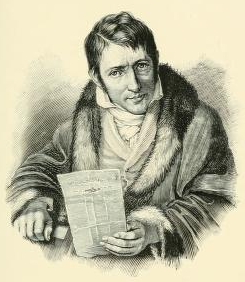
LUDWIG BÖRNE
In the German middle-class of to-day, speaking generally, the only task that seems worthy of a man is to build up, to forward, to strengthen or remould the already acquired. The iconoclastic tendency of Börne's mind at once alarms. The fire which warmed his age and generation is to the new generation that of a Don Quixote who charges with his lance at fortress and castle walls. And yet Börne, too, had a hand in the production of the iron architecture of the new Iron Age of Germany. His fire melted the ore out of which the new pillars of society have been cast.
Perhaps nothing has injured Börne more in the estimation of the present generation than his violently prejudiced denunciation of Goethe. Goethe, as productive and intelligent spirit, is so great, and his temperament and personality are so unique, that in our own day a man's judgment of him gives a valuable clue to that man's mind and character. And although in those days there were quite a number of writers, not only belonging to the clerical party, but also among the opposition, who detested Goethe, there can be no doubt that Börne gave clear proof of narrow-mindedness by the manner in which he wrote of the venerable old man in Weimar, by the nature of his protests against the general belief in Goethe's greatness as a man and as a poet.
But in order to understand how it came about and what it signified that a revolutionary political moralist like Börne entertained a feeling of positive hatred and of lasting and lively resentment towards the greatest genius in all German literature, it is necessary that we should understand how, from his very birth, Börne's fate placed him in a position of antagonism to the great man whom he was driven to judge by an alien and therefore a false standard.
Goethe and Börne were natives of the same town, born, one thirty-seven years after the other, in Frankfort-on-Main. Frankfort was an old imperial fortified city, with gates and towers which indicated the boundaries of the town in earlier days, and an outer circle of gates, towers, walls, bridges, ramparts and moats round the new town. It was a fortified place enclosing smaller fortifications in the shape of monastic buildings and castle-like mansions. There was something unalterable about the town, which was surrounded by a sort of halo of ancient, venerable independence. It was a patrician republic, in which a stranger was practically without the pale of the law. Woe to him if he engaged in a law-suit with a Frankfort citizen in a Frankfort court of justice, though it might be clear as noon-day that he was in the right! The ruling families formed an exclusive coterie, and their social intercourse was marked by much old-fashioned ceremony. No one dreamed of the possibility of tampering with any of the old political or social institutions of the city. The authorities had no spirit of enterprise, the inhabitants no feeling that change of any kind was possible. Such a thing as political cohesion with the rest of Germany was unthought of. In the Germany of that day each town, and in the town each quarter, was a little world by itself.
Goethe was a young patrician. His father was an Imperial Councillor (kaiserlicher Rath). As soon as the young man had acquired a thorough knowledge and understanding of his native town, it must have seemed to him that fate could not possibly have any other lot in store for him but that of a prosperous Frankfort citizen. For the town enthralled him; its best families took possession of the handsome, gifted youth, their women made much of him, their tradition bound him. There was nothing to attract him to the larger towns, Vienna or Berlin, which were then practically as far from Frankfort as Rome and St. Petersburg are in our days. Fate appeared to have destined him to become in due time a lawyer, paterfamilias, public official, house-owner, and literary notability in his native town.[1]
Goethe's actual evasion of this fate was, as every one knows, mainly due to the fact which calls down Börne's wrath upon him, that he became the retainer of a prince, that the Duke of Weimar gave him an important appointment at his little court.
Börne, too, was born in Frankfort-on-Main, but in the Jews' quarter. In his day it was a misfortune to be born a Jew in Germany; for there, as elsewhere, the Jews had none of the rights of citizens. But it was a special misfortune to be born a Jew in Frankfort-on-Main. In other large towns, the position which Jews by this time took in society to a certain extent counterbalanced their political disqualifications. Both in Vienna and Berlin many Jewish houses were frequented as centres of liberal-minded culture and brilliant wit. Jewesses of genius like Rahel, charming Jewesses like Henriette Herz, Baroness Grotthuis, Baroness Arnstein, the Prince of Reuss's consort, and many others, were soon to become leaders of society in the capitals of Prussia and Austria. But in Frankfort, in every walk of life, the barrier between the religions was an impassable one.
All Jews were compelled to live in the narrow, mean, over-populated Judengasse, which was their only place of abode for 334 years, from 1462 onwards. The contrast we read of in novels between the outward meanness and inward splendour of the Ghettos did not exist here; the interiors of the houses corresponded to their exteriors; in the small, dark rooms no display of splendour or of taste was possible. A few years ago we had the best of all opportunities of judging of the kind of life the inhabitants of the Judengasse must have lived. One side of the street was pulled down, and a single stunted row of deformed, hunchbacked, cramped, startled-looking houses, in which great gaps had already been made by the axe of the leveller, was exposed to the full light of day, from which their little blinking bull's-eye windows gave them the appearance of shrinking.
As soon as it began to grow dark, all the inhabitants of the Ghetto were locked in. When they walked through the streets or round the ramparts in the day-time, they dared not set foot on the pavement or foot-paths, but had to keep to the middle of the road. They were obliged to take off their hats and make a low bow to every passer-by who called: "Mach mores, Jud'!" In order to prevent their too rapid increase, only fourteen couples were permitted to marry each year. Although even at that time a large proportion of the Frankfort Jews, with Rothschild at their head, were wealthy, a strong society barrier existed between the religions. They were even separated in the Masonic Lodges, which are consecrated to "brotherly love" and the worship of "the highest Being."
It is clear that such a condition of things must have had a strong influence on a receptive young mind.
On the 6th of May 1786, in house No. 118 of that Judengasse which has now disappeared, there was born to the "Jew merchant Jakob Baruch" a third son, the same who in 1818, shortly before his baptism, exchanged the name Juda Low Baruch, given him at his birth, for that of Ludwig Börne. The family stood in very high estimation. Börne's grandfather was a rich and remarkably benevolent man. He built and fitted up a synagogue for the community at his own expense. He was the business agent at Neckarsulm of the Teutonic Order, and was thence transferred, on account of his ability and honesty, to Mergentheim, the headquarters of the Order, where he took up his residence. An Electorship becoming vacant, he did such good service, in the course of the election, to the House of Hapsburg, that Maria Theresa with her own hand signed a document promising all sorts of privileges to him and his descendants if they should at any time take up their abode in Austria.
This man's son, Jakob Baruch, inherited, it seems, his father's ability and sagacity without his orthodox religious faith. He was a clever man of business, with considerable diplomatic talent, much esteemed at courts and by high officials for his knowledge of human nature, his clearsightedness and coolness; a cold, prudent man, to whom life had taught the lesson that the best thing those in his position could do was to live quietly and thus avoid exciting hatred. He held enlightened opinions on religious subjects, and the wearisome Jewish ceremonial, which, chiefly for his father's sake, he felt obliged to observe with all his household, was a burden to him personally. It was not till late in life that he tried to emancipate himself. Being a rich man's son, he had received a fair education; it is said that he was at the same school in Bonn as Prince Metternich; but his cautiousness led him to give strict orders to his own son's one tutor to confine himself to the old Jewish course of instruction—the Bible, the prayer-book, and the Talmud.
The boy was quiet and shy. As he was the one of her children his mother cared least for, and was constantly in disgrace with the tyrannical old servant, his home-life was one of severe discipline, his father too, no doubt with the manifestation of independence in thought or action. One result of this was, that when he first came into contact with the outer world, his emotions blunted, his intellect doubly keen, he looked at everything from the purely intellectual point of view. A thing was stupid or not stupid, and that was all.[2]
The religious observances of his home and of the synagogue aroused in the boy a feeling of aversion as dead ritual; the religious instruction he received at home made as little impression on him as his attendance at the synagogue. Certain prayers, as, for instance, the prayer for the reinstitution of sacrificial worship, displeased him, in spite of his boyish orthodoxy. To the horror of those about him, he said: "That is a stupid prayer."
His learning was mere committing to memory, his teacher not believing himself what he taught; and it was all quickly forgotten. As a grown man, he did not know a single word of Hebrew, had no understanding whatever of Jewish customs, and no affection even for the Old Testament, of which Heine was such an enthusiastic admirer. The man who himself reminds us of an Old Testament prophet, has not one allusion to the prophets in all his writings. From time to time, indeed, with complete indifference, and merely as a well-known illustration, he refers to some Bible narratives; but as Steinthal acutely observes, he quotes even such a passage as Samuel's republican warning against the establishment of a kingdom, which one would expect to excite his every sympathy, as if he were quoting one of Æsop's fables.[3]
Schiller's essay, The Mission of Moses, was the first hint of a rational conception of religion that reached the boy. It made a deep impression on him, and shook his faith. Naïvely simple as the essay is, with its implicit trust in the historic accuracy of the Bible narrative, it yet inevitably produced a revolution in the mind of the youthful reader, who now for the first time saw the most important events in the life of his people and of their lawgiver divested of every miraculous element, Providence itself being superseded by "destiny."
Various anecdotes exist, illustrating the awakening of the spirit of criticism in the boy, and the play of the different forces which formed his character. One day, when it was raining heavily and the road was inch-deep in mud, he was walking with his tutor outside the gates of the town. "Let us walk on the footpath," said Börne. "Do you not know," answered the teacher, "that we are forbidden to do that?" The boy's reply, "no one sees us," gave the tutor an opportunity for a moral exhortation, with remarks on the sacredness of law. "That is a stupid law," said Börne.
The tutor was careful to avoid occasions of exciting bitterness in the child. But there were so many. No Jew was allowed to be present at any open-air public amusements, not even at a balloon ascent. On all festive occasions, as, for instance, when the town was decorated for the reception of royal guests, the Jews were shut up in the Judengasse; on the day of the coronation of Leopold II. some of their leading men ventured out, but were at once arrested and taken to the guard-house. They were prohibited from entering most of the hotels, and from setting foot in any public grounds or open spaces. The general rule was: Where there is green grass, no Jew must be seen. On Sundays the gates of the Judengasse were locked at four o'clock in the afternoon, and the sentry allowed no one to pass out except persons taking letters to the post-house or going for medicine to the apothecary's. Little Börne used to say: "I only don't go out because the sentry is stronger than I am." Yet when the boy, who early showed signs of a distinctly benevolent disposition, was accosted one day by two beggars, the one a Jew, the other a Christian, it was to the latter he gave all the money he had in his pocket. "Why do you not give the preference to one of your own people?" asked the tutor. "Because it is written in the Proverbs of Solomon that we are to heap coals of fire on our enemies' heads." The conscientious tutor would not hear of this reason: "it was based on the false assumption that the Christians are the enemies of the Jews."
It is easy to understand that such impressions, received in childhood, must have caused Börne's ancestry to weigh more upon his mind than it would have done under normal conditions. And even if he could have forgotten it, the frequent humiliations experienced in his youth, and in later years the perpetual allusions to his nationality made both by his opponents and his champions, would have constantly reminded him of it. With reference to these perpetual allusions he writes in Briefe aus Paris (Feb. 7, 1832): "It is like a miracle! The thing is always happening, and yet is always new to me. One set of people reproach me with being a Jew; another set forgive me for it; a third go the length of praising me for it; but they one and all think of it. It is as if they had been conjured into this magic Jewish circle; none of them can get clear of it. And I know quite well what is the evil spell. These poor Germans! They live in the basement, weighed down by seven stories of higher ranks, and it eases their perturbed minds to talk of human beings who live even lower down than they do, right down in the cellar. The fact that they are not Jews consoles them for not even being court-councillors (Hofräthe)."
It cannot, however, be asserted that Börne was peculiarly sensitive on the subject of his Jewish extraction. He often declaimed with the greatest indignation against the oppression of the unfortunate inhabitants of the Ghettos, but he could not do what many expected of him, could not advocate the emancipation of the Jews with greater warmth than other kindred causes. A pursuit of liberty with only that end in view he looked upon as one-sided and egoistic.
Moreover, the Jews inspired him with a feeling of dissatisfaction, of aversion, originating in the antipathy which Frankfort commerce, consisting chiefly in banking business, early awoke in the born poet and idealist. It horrified him to hear a Frankfort merchant speak with the same enthusiasm and ardour of Rothschild or the Austrian loan, with which "a lover of art would speak of a Raphael." In 1822 he wrote: "My aversion from traders and Jews, as such, has reached a climax, now that I have got away from Frankfort, and see what it really means to enjoy life." Börne was by no means incapable of appreciating great commercial undertakings from the æsthetic as well as the practical point of view. Not many years later, the exchange and the harbour of Hamburg excite his lively admiration. But the Frankfort merchants, Rothschild among them, appeared to him, with their speculations in government stock, to be connected with what he abhorred above everything—the dismembered state of Germany and the Metternichian principles. His writings abound in thrusts at "the ennobled German Jews, who are on terms of the most familiar intimacy with all the ministers and royal mistresses," and in consequence look with complete indifference on the Poles' struggle for liberty. Rothschild especially is to him the symbol of evil: "The government could not be more despicable if Rothschild the Jew were king, and had formed a ministry of bill-brokers.... Rothschild will stand till the last day of kings. What a day of reckoning! what a crash!" In his bitter hatred of him he goes so far as to call it a disgrace to the Jewish nation when Rothschild is sentenced in Paris to two days' imprisonment for declining, in spite of repeated warnings, to have his cabriolet numbered. Börne had, of course, no personal enmity to the man, but he detests him as "the great broker of all those State loans which give monarchs the power to defy liberty." Being firmly persuaded, after the Revolution of July, that another great revolution was close at hand, he mistakenly considers it stupid of the Jews to curry favour with those in power throughout Europe. But he is right when he calls them "stupider than cattle" for imagining that in the event of a threatening revolution they will be protected by the governments.
With sound political judgment he perceives, what events in Russia have confirmed, that it is exactly at such a time that those in power will deliver them up to the tender mercies of popular hatred in order to escape themselves.[4]
The fact of Börne's being born without the pale of Christian society did not produce in him any excessive sympathy with his co-religionists; but the severe discipline of his joyless childhood, the coldness of his parents, the aversion aroused in him by the cupidity, cowardly caution, and other vices generated by oppression which he observed in those around him, all contributed to forge a spirit that could never be bent, softened, or broken—a character on whose adamantine firmness neither flattery nor threats made the smallest impression. The severity of this character of ermine-white purity, a severity born of the burning love of justice, at times clad itself in the garment of humorous irony, at times in that of scathing ire. As a writer Börne was for Germany much what Paul Louis Courier was for France, that is to say, a political tribune, as satirical and as liberty-loving as the Frenchman, less clear-sighted in matters of the day, but with more feeling, more imagination, an all-round richer nature.[5]
For in Börne's case firmness of character did not preclude gentleness of disposition. The weak, always rather sickly boy, who grew up in a sunless street, shut off from fresh air and from nature, was tender-hearted. The germ of tenderness in his nature was perhaps first developed by reading that German author who exercised most influence on the formation of his opinions and his style—Jean Paul. It is from Jean Paul, his best comforter in the dark days of his youth, that Börne, the author, is directly descended.
To him Jean Paul was the poet of those who are born in obscurity. He loved him as the spokesman of those who suffer wrong. He saw in him a priest of justice, an apostle of mercy. His famous commemorative oration gives us some idea of his youthful enthusiasm, and at the same time shows what it was in Jean Paul's style that he endeavoured to make his own. Real emotion makes itself felt through the artificial antitheses in such a passage as this:—