Volume 2 — JOHN ARBUTHNOT
Reading edition
(1667-1735)

rbuthnot's place in literature depends as much on his association with the wits of his day as on his own satirical and humorous productions. Many of these have been published in the collections of Swift, Gay, Pope, and others, and cannot be identified. The task of verifying them is rendered more difficult by the fact that his son repudiated a collection claiming to be his 'Miscellaneous Works,' published in 1750.
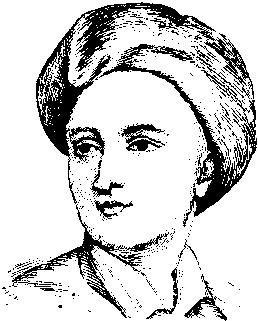
John Arbuthnot was born in the manse near Arbuthnot Castle, Kincardineshire, Scotland, April 29th, 1667. He was the son of a Scotch Episcopal clergyman, who was soon to be dispossessed of his parish by the Presbyterians in the Revolution of 1688. His children, who shared his Jacobite sentiments, were forced to leave Scotland; and John, after finishing his university course at Aberdeen, and taking his medical degree at St. Andrews, went to London and taught mathematics. He soon attracted attention by a keen and satirical 'Examination of Dr. Woodward's Account of the Deluge,' published in 1697. By a fortunate chance he was called to attend the Prince Consort (Prince George of Denmark), and in 1705 was made Physician Extraordinary to Queen Anne. If we may believe Swift, the agreeable Scotchman at once became her favorite attendant. His position at court was strengthened by his friendships with the great Tory statesmen.
JOHN ARBUTHNOT
Arbuthnot's best remembered work is 'The History of John Bull'; not because many people read or will ever read the book itself, but because it fixed a typical name and a typical character ineffaceably in the popular fancy and memory. He is credited with having been the first to use this famous sobriquet for the English nation; he was certainly the first to make it universal, and the first to make that burly, choleric, gross-feeding, hard-drinking, blunt-spoken, rather stupid and decidedly gullible, but honest and straightforward character one of the stock types of the world. The book appeared as four separate pamphlets: the first being entitled 'Law is a Bottomless Pit, Exemplified in the Case of Lord Strutt, John Bull, Nicholas Frog, and Lewis Baboon, Who Spent All They Had in a Law Suit'; the second, 'John Bull in His Senses'; the third, 'John Bull Still in His Senses'; and the fourth, 'Lewis Baboon Turned Honest, and John Bull Politician.' Published in 1712, these were at once attributed to Swift. But Pope says, "Dr. Arbuthnot was the sole writer of 'John Bull'"; and Swift gives us still more conclusive evidence by writing, "I hope you read 'John Bull.' It was a Scotch gentleman, a friend of mine, that writ it; but they put it on to me." In his humorous preface Dr. Arbuthnot says:--
"When I was first called to the office of historiographer to John Bull, he expressed himself to this purpose:--'Sir Humphrey Polesworth, I know you are a plain dealer; it is for that reason I have chosen you for this important trust; speak the truth, and spare not.' That I might fulfill those, his honorable intentions, I obtained leave to repair to and attend him in his most secret retirements; and I put the journals of all transactions into a strong box to be opened at a fitting occasion, after the manner of the historiographers of some Eastern monarchs.... And now, that posterity may not be ignorant in what age so excellent a history was written (which would otherwise, no doubt, be the subject of its inquiries), I think it proper to inform the learned of future times that it was compiled when Louis XIV. was King of France, and Philip, his grandson, of Spain; when England and Holland, in conjunction with the Emperor and the allies, entered into a war against these two princes, which lasted ten years, under the management of the Duke of Marlborough, and was put to a conclusion by the treaty of Utrecht under the ministry of the Earl of Oxford, in the year 1713."
The characters disguised are: "John Bull," the English; "Nicholas Frog," the Dutch; "Lewis Baboon," the French king; "Lord Strutt," the late King of Spain; "Philip Baboon," the Duke of Anjou; "Esquire South," the King of Spain; "Humphrey Hocus," the Duke of Marlborough; and "Sir Roger Bold," the Earl of Oxford. The lawsuit was the War of the Spanish Succession; John Bull's first wife was the late ministry; and his second wife the Tory ministry. To explain the allegory further, John Bull's mother was the Church of England; his sister Peg, the Scotch nation; and her lover Jack, Presbyterianism.
That so witty a work, so strong in typical freehand character drawing of permanent validity and remembrance, should be unread and its author forgotten except by scholars, is too curious a fact not to have a deep cause in its own character. The cause is not hard to find: it is one of the books which try to turn the world's current backward, and which the world dislikes as offending its ideals of progress. Stripped of its broad humor, its object, rubbed in with no great delicacy of touch, was to uphold the most extreme and reactionary Toryism of the time, and to jeer at political liberalism from the ground up. Its theoretic loyalty is the non-resistant Jacobitism of the Nonjurors, which it is so hard for us now to distinguish from abject slavishness; though like the principles of the casuists, one must not confound theory with practice. It seems the loyalty of a mujik or a Fiji dressed in cultivated modern clothes, not that of a conceivable cultivated modern community as a whole; but it would be very Philistine to pour wholesale contempt on a creed held by so many large minds and souls. It was of course produced by the experience of what the reverse tenets had brought on,--a long civil war, years of military despotism, and immense social and moral disorganization. In 'John Bull,' the fidelity of a subject to a king is made exactly correspondent, both in theory and practice, with the fidelity of a wife to her husband and her marriage vows; and an elaborate parallel is worked out to show that advocating the right of resistance to a bad king is precisely the same, on grounds of either logic or Scripture, as advocating the right of adultery toward a bad husband. This is not even good fooling; and, its local use past and no longer buoyed by personal liking for the author, the book sinks back into the limbo of partisan polemics with many worse ones and perhaps some better ones, dragging its real excellences down with it.
In 1714 the famous Scriblerus Club was organized, having for its members Pope, Swift, Arbuthnot, Gay, Congreve, Lord Oxford, and Bishop Atterbury. They agreed to write a series of papers ridiculing, in the words of Pope, "all the false tastes in learning, under the character of a man of capacity enough, but that had dipped into every art and science, but injudiciously in each." The chronicle of this club was found in 'The Memoirs of the Extraordinary Life, Works, and Discoveries of Martinus Scriblerus,' which is thought to have been written entirely by Arbuthnot, and which describes the education of a learned pedant's son. Its humor may be appreciated by means of the citation given below. The first book of 'Scriblerus' appeared six years after Arbuthnot's death, when it was included in the second volume of Alexander Pope's works (1741). Pope said that from the 'Memoirs of Scriblerus' Swift took his idea of 'Gulliver'; and the Dean himself writes to Arbuthnot, July 3d, 1714:--
"To talk of 'Martin' in any hands but Yours is a Folly. You every day give better hints than all of us together could do in a twelvemonth. And to say the truth, Pope, who first thought of the Hint, has no Genius at all to it, in my mind; Gay is too young; Parnell has some ideas of it, but is idle; I could put together, and lard, and strike out well enough, but all that relates to the Sciences must be from you."
Swift's opinion that Arbuthnot "has more wit than we all have, and his humanity is equal to his wit," seems to have been the universal dictum; and Pope honored him by publishing a dialogue in the 'Prologue to the Satires,' known first as 'The Epistle to Dr. Arbuthnot,' which contains many affectionate personal allusions. Aitken says, in his biography:--
"Arbuthnot's attachment to Swift and Pope was of the most intimate nature, and those who knew them best maintained that he was their equal at least in gifts. He understood Swift's cynicism, and their correspondence shows the unequaled sympathy that existed between the two. Gay, Congreve, Berkeley, Parnell, were among Arbuthnot's constant friends, and all of them were indebted to him for kindnesses freely rendered. He was on terms of intimacy with Bolingbroke and Oxford, Chesterfield, Peterborough, and Pulteney; and among the ladies with whom he mixed were Lady Mary Wortley Montagu, Lady Betty Germain, Mrs. Howard, Lady Masham, and Mrs. Martha Blount. He was, too, the trusted friend and physician of Queen Anne. Most of the eminent men of science of the time, including some who were opposed to him in politics, were in frequent intercourse with him; and it is pleasant to know that at least one of the greatest of the wits who were most closely allied to the Whig party--Addison--had friendly relations with him."
From the letters of Lord Chesterfield we learn that
"His imagination was almost inexhaustible, and whatever subject he treated, or was consulted upon, he immediately overflowed with all that it could possibly produce. It was at anybody's service, for as soon as he was exonerated he did not care what became of it; insomuch that his sons, when young, have frequently made kites of his scattered papers of hints, which would have furnished good matter for folios. Not being in the least jealous of his fame as an author, he would neither take the time nor the trouble of separating the best from the worst; he worked out the whole mine, which afterward, in the hands of skillful refiners, produced a rich vein of ore. As his imagination was always at work, he was frequently absent and inattentive in company, which made him both say and do a thousand inoffensive absurdities; but which, far from being provoking, as they commonly are, supplied new matter for conversation, and occasioned wit both in himself and others."
Speaking to Boswell of the writers of Queen Anne's time, Dr. Johnson said, "I think Dr. Arbuthnot the first man among them. He was the most universal genius, being an excellent physician, a man of deep learning, and a man of much humor." He did not, however, think much of the 'Scriblerus' papers, and said they were forgotten because "no man would be the wiser, better, or merrier for remembering them"; which is hard measure for the wit and divertingness of some of the travesties. Cowper, reviewing Johnson's 'Lives of the Poets,' declared that "one might search these eight volumes with a candle to find a man, and not find one, unless perhaps Arbuthnot were he." Thackeray, too, called him "one of the wisest, wittiest, most accomplished, gentlest of mankind."
Thus fortunate in his sunny spirit, in his genius for friendship, in his professional eminence, and in his literary capacity, Dr. Arbuthnot saw his life flow smoothly to its close. He died in London on February 27th, 1735, at the age of sixty eight, still working and playing with youthful ardor, and still surrounded with all the good things of life.
THE TRUE CHARACTERS OF JOHN BULL, NIC. FROG, AND HOCUS
From 'The History of John Bull,' Part I.
For the better understanding the following history, the reader ought to know that Bull, in the main, was an honest, plain-dealing fellow, choleric, bold, and of a very unconstant temper; he dreaded not old Lewis either at backsword, single falchion, or cudgel play; but then he was very apt to quarrel with his best friends, especially if they pretended to govern him. If you flattered him, you might lead him like a child. John's temper depended very much upon the air; his spirits rose and fell with the weather-glass. John was quick and understood his business very well; but no man alive was more careless in looking into his accounts, or more cheated by partners, apprentices, and servants. This was occasioned by his being a boon companion, loving his bottle and his diversion; for, to say truth, no man kept a better house than John, nor spent his money more generously. By plain and fair dealing John had acquired some plums, and might have kept them, had it not been for his unhappy lawsuit.
Nic. Frog was a cunning, sly fellow, quite the reverse of John in many particulars; covetous, frugal, minded domestic affairs, would pinch his belly to save his pocket, never lost a farthing by careless servants or bad debtors. He did not care much for any sort of diversion, except tricks of High German artists and legerdemain. No man exceeded Nic. in these; yet it must be owned that Nic. was a fair dealer, and in that way acquired immense riches.
Hocus was an old, cunning attorney; and though this was the first considerable suit that ever he was engaged in, he showed himself superior in address to most of his profession. He kept always good clerks, he loved money, was smooth-tongued, gave good words, and seldom lost his temper. He was not worse than an infidel, for he provided plentifully for his family, but he loved himself better than them all. The neighbors reported that he was henpecked, which was impossible, by such a mild-spirited woman as his wife was.
HOW THE RELATIONS RECONCILED JOHN AND HIS SISTER PEG, AND WHAT RETURN PEG MADE TO JOHN'S MESSAGE
From the 'History of John Bull,' Part I.
John Bull, otherwise a good-natured man, was very hard-hearted to his sister Peg, chiefly from an aversion he had conceived in his infancy. While he flourished, kept a warm house, and drove a plentiful trade, poor Peg was forced to go hawking and peddling about the streets selling knives, scissors, and shoe-buckles; now and then carried a basket of fish to the market; sewed, spun, and knit for a livelihood till her fingers' ends were sore: and when she could not get bread for her family, she was forced to hire them out at journey-work to her neighbors. Yet in these, her poor circumstances, she still preserved the air and mien of a gentlewoman--a certain decent pride that extorted respect from the haughtiest of her neighbors. When she came in to any full assembly, she would not yield the pas to the best of them. If one asked her, "Are you not related to John Bull?" "Yes," says she, "he has the honor to be my brother." So Peg's affairs went till all the relations cried out shame upon John for his barbarous usage of his own flesh and blood; that it was an easy matter for him to put her in a creditable way of living, not only without hurt, but with advantage to himself, seeing she was an industrious person, and might be serviceable to him in his way of business. "Hang her, jade," quoth John, "I can't endure her as long as she keeps that rascal Jack's company." They told him the way to reclaim her was to take her into his house; that by conversation the childish humors of their younger days might be worn out.
These arguments were enforced by a certain incident. It happened that John was at that time about making his will and entailing his estate, the very same in which Nic. Frog is named executor. Now, his sister Peg's name being in the entail, he could not make a thorough settlement without her consent. There was indeed a malicious story went about, as if John's last wife had fallen in love with Jack as he was eating custard on horseback; that she persuaded John to take his sister into the house the better to drive on the intrigue with Jack, concluding he would follow his mistress Peg. All I can infer from this story is that when one has got a bad character in the world, people will report and believe anything of them, true or false. But to return to my story.
When Peg received John's message she huffed and stormed:--"My brother John," quoth she, "is grown wondrous kind-hearted all of a sudden, but I meikle doubt whether it be not mair for their own conveniency than for my good; he draws up his writs and his deeds, forsooth, and I must set my hand to them, unsight, unseen. I like the young man he has settled upon well enough, but I think I ought to have a valuable consideration for my consent. He wants my poor little farm because it makes a nook in his park wall. You may e'en tell him he has mair than he makes good use of; he gangs up and down drinking, roaring, and quarreling, through all the country markets, making foolish bargains in his cups, which he repents when he is sober; like a thriftless wretch, spending the goods and gear that his forefathers won with the sweat of their brows; light come, light go; he cares not a farthing. But why should I stand surety for his contracts? The little I have is free, and I can call it my own--hame's hame, let it be never so hamely. I ken well enough, he could never abide me, and when he has his ends he'll e'en use me as he did before. I'm sure I shall be treated like a poor drudge--I shall be set to tend the bairns, darn the hose, and mend the linen. Then there's no living with that old carline, his mother; she rails at Jack, and Jack's an honester man than any of her kin: I shall be plagued with her spells and her Paternosters, and silly Old World ceremonies; I mun never pare my nails on a Friday, nor begin a journey on Childermas Day; and I mun stand becking and binging as I gang out and into the hall. Tell him he may e'en gang his get; I'll have nothing to do with him; I'll stay like the poor country mouse, in my awn habitation."
So Peg talked; but for all that, by the interposition of good friends, and by many a bonny thing that was sent, and many more that were promised Peg, the matter was concluded, and Peg taken into the house upon certain articles [the Act of Toleration is referred to]; one of which was that she might have the freedom of Jack's conversation, and might take him for better or for worse if she pleased; provided always he did not come into the house at unseasonable hours and disturb the rest of the old woman, John's mother.