COAL
Reading edition
WHAT IS COAL AND HOW IS IT FORMED?
Coal is a combustible rock that was formed by the accumulation and partial decay of vegetation. When coal was forming millions of years ago, most of the state was a low coastal plain bordered on the west and southwest by a shallow sea. A large variety of plants grew in great swamps which covered this coastal plain (fig. 9). When the plants died, they accumulated in the swamps to form thick masses of peat that were eventually covered by shallow seas and buried beneath mud and sand. Periodically, the region was above sea level, new swamps developed, new peat deposits accumulated, and more sediments were laid down. This process occurred repeatedly until over 3,000 feet of sediments had been deposited. Then the sediments were slowly compacted and hardened so that sandstones, shales, limestones, and coals were formed.
13
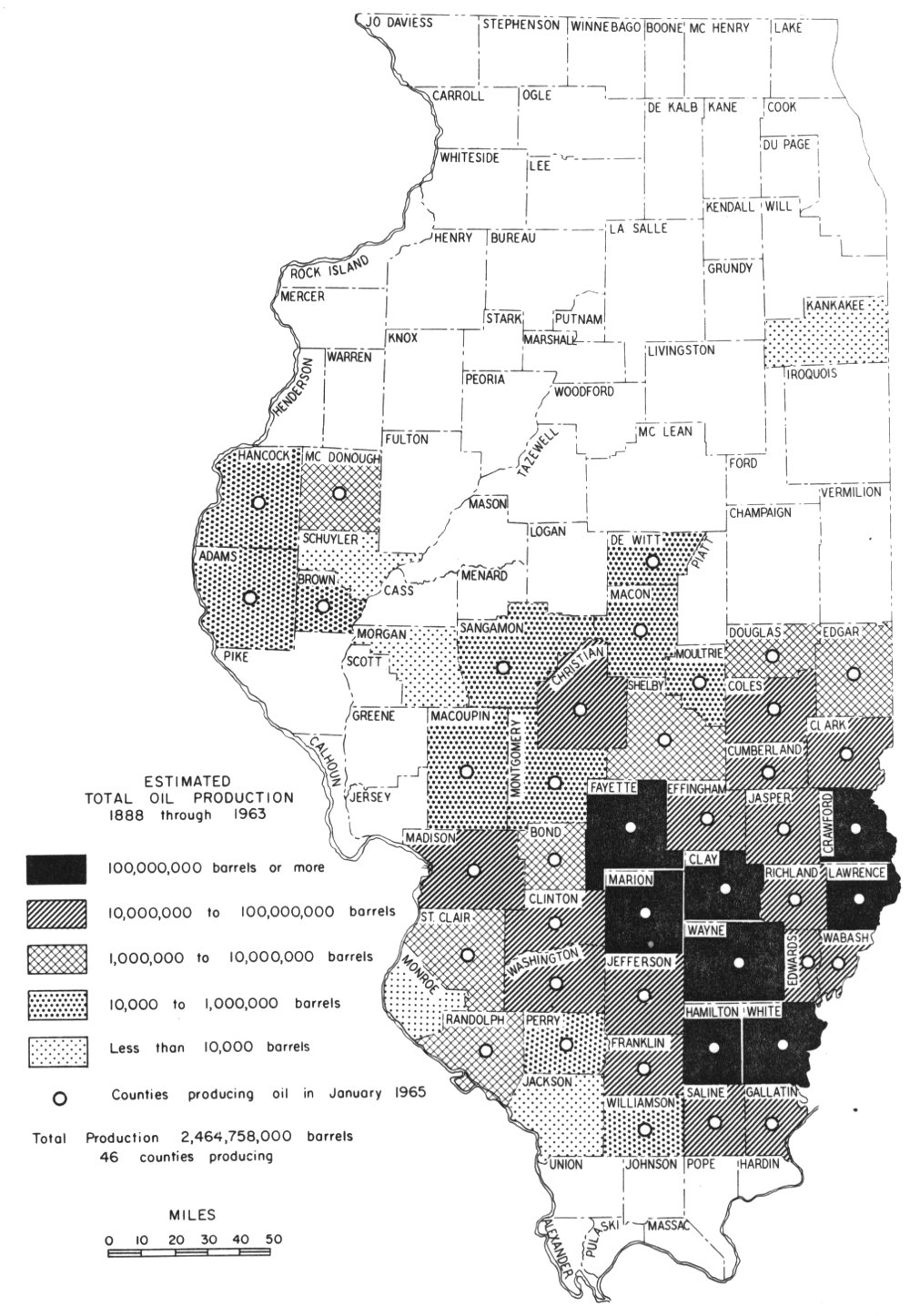
Figure 8—Estimated total oil production by counties from 1888 through 1963.
Counties producing oil in January 1965
Total Production 2,464,758,000 barrels
46 counties producing
14
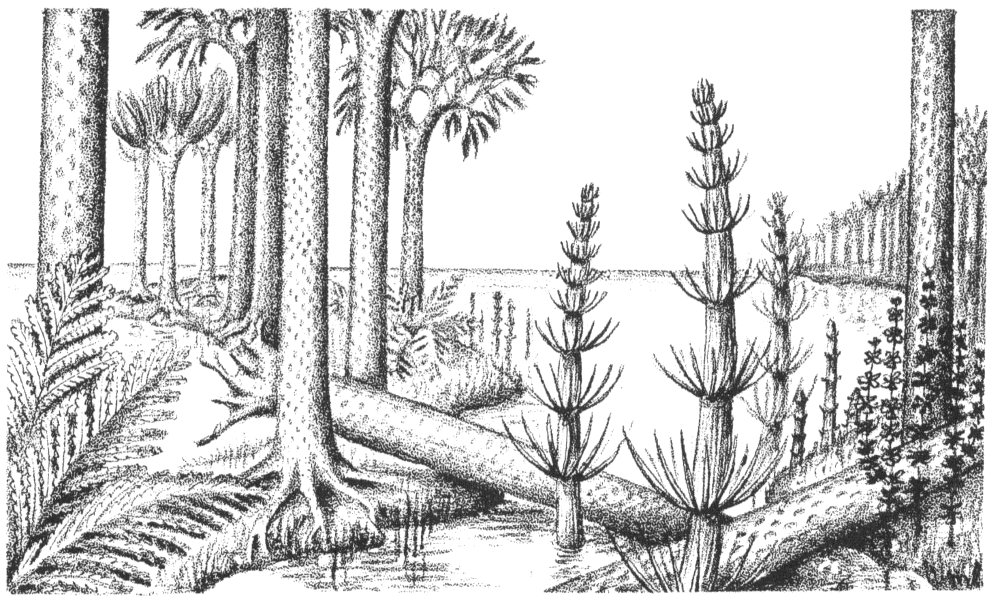
Figure 9—Reconstruction of coal-forming swamp.
HOW DO WE KNOW THAT COAL WAS DERIVED FROM PLANT MATERIALS?
Although plant impressions or fossilized wood can be seen in coal, they are more common in shales and sandstones associated with the coal. Often roots can be seen in the clay that lies just under the coal, and in some places stumps of trees from the coal swamp forest are preserved in the sediments adjacent to the coal (fig. 10). When pieces of coal are examined with a microscope, carbonized plant remains can be seen.
HOW MANY COAL SEAMS ARE PRESENT IN ILLINOIS?
There are at least 40 different coal seams in Illinois, but most are relatively thin. Seven coal seams have been mined extensively, and all together 20 or more have been mined.
15
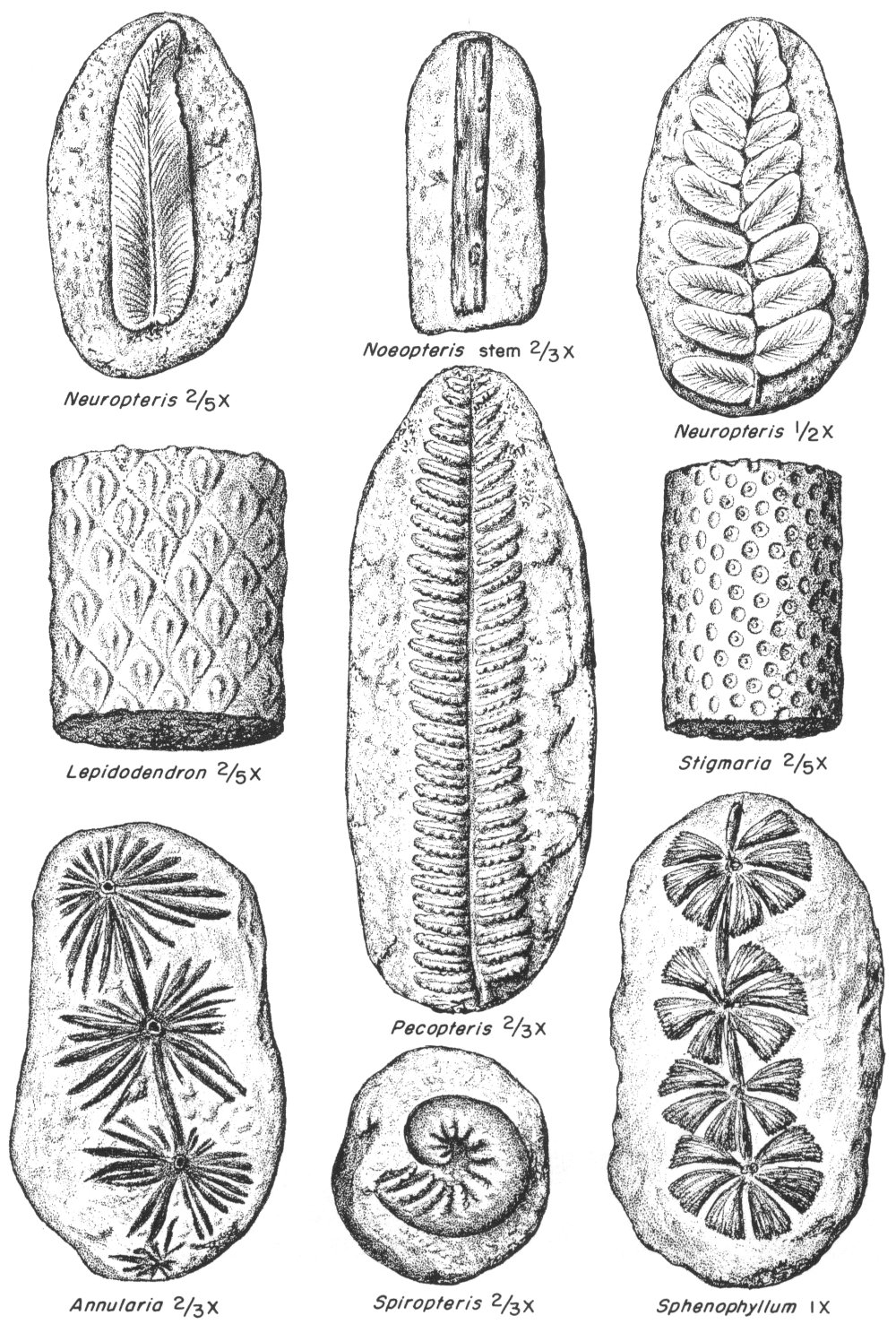
Figure 10—Some root, stem, and leaf fossils found in Illinois coal-bearing rocks.
Neuropteris ⅖×
Nosopteris stem ⅔×
Neuropteris ½×
Lepidodendron ⅖×
Pecopteris ⅔×
Stigmaria ⅖×
Annularia ⅔×
Spiropteris ⅔×
Sphenophyllum 1×
16
HOW IS ILLINOIS COAL MINED?
In Illinois there are two main ways of mining coal: strip (open-cut) and underground. Strip or open-cut mines (fig. 11) usually operate where the coal is at very shallow depths, although such mining is done as much as 100 feet deep or more in some places. Many old underground mines produced coal from seams that were less than 100 feet deep because they did not have the large machinery for strip mining when these mines were started. An abandoned mine, 1,004 feet deep, near Assumption is the deepest underground coal mine in the state. Coal is now being mined at depths somewhat over 800 feet in Jefferson County.
HOW DOES ILLINOIS RANK AS A COAL PRODUCER?
Illinois ranks fourth in production of coal in the United States. It is exceeded only by West Virginia, Kentucky, and Pennsylvania. Some of the largest and most efficient mines in the country are operated in Illinois. Underground mines in Illinois have the highest rate of tons mined per man each day in the country, and this rate is increasing. Increased mining efficiency has made it possible to hold the price of coal low enough so that it can successfully compete against other fuels for many uses.
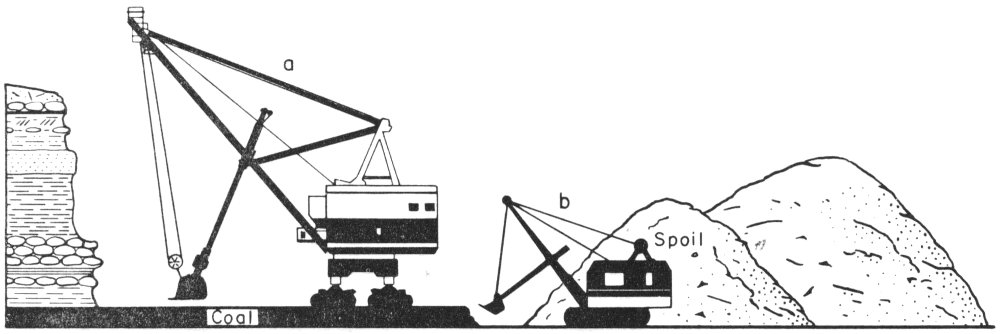
Figure 11—Diagram of strip mine showing: (a) stripping shovel, and (b) coal-loading shovel.
17
HOW MUCH COAL IS PRODUCED IN ILLINOIS ANNUALLY AND HOW VALUABLE IS IT?
In the last 10 years, an average of about 46 million tons of coal has been mined each year (fig. 12). In 1963, approximately 51.6 million tons were produced, which were valued at about $196,000,000 at the mine. Since 1961, strip mines have produced over half of the coal mined in Illinois.
HOW LONG WILL OUR COAL SUPPLIES LAST?
It will take well over 1,000 years at the present rate of mining in Illinois to exhaust our coal reserves. An estimated 140 billion tons of coal in seams of minable thickness remain in the ground in our state; these are the largest known reserves of bituminous coal of any state in the United States.
WHAT IS COAL USED FOR?
Electric power generation consumes the greater part of the annual coal production in Illinois. Coal is also used for home and commercial heating, for production of coke, and for manufacturing various chemical compounds from coal tar. Products derived from coal tar include drugs and medicines, plastics, synthetic fibres, perfumes, flavorings, dyes, synthetic rubbers, explosives, specialized oils, solvents, wood preservatives, tarlike paving and roofing materials, and some gas. The gas is both produced and utilized in the coke industry.
WHAT IS COKE?
Coke is a material produced by burning coal in the absence of air so that most of the gases and water are driven off without consuming the solid portion. The resulting solid coke is a strong, porous, combustible substance.
HOW IMPORTANT IS COKE AND HOW IS IT USED?
The structure and nature of coke make it a valuable fuel for blast furnace use in the production of steel. In the past, most of the coal used in the manufacture of coke has come from areas of higher quality coal outside of our state. However, at present, over 1,000,000 tons of Illinois coal are mined annually for the production of metallurgical coke.
18
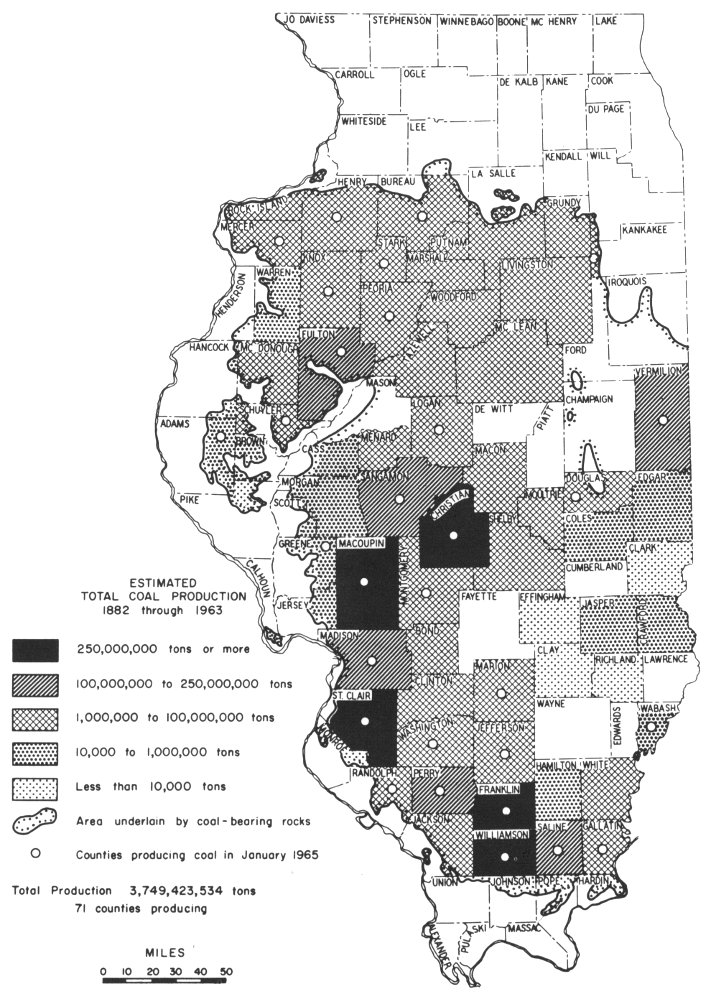
Figure 12—Estimated total coal production by counties from 1882 through 1963.
Area underlain by coal-bearing rocks
Counties producing coal in January 1965
Total Production 3,749,423,534 tons
71 counties producing
19