ILLUSTRATED CATALOGUE OF THE COLLECTIONS OBTAINED FROM THE INDIANS OF NEW MEXICO AND ARIZONA IN 1879. (continued 3)
Reading edition
2155. (41922). Necklace of acorn hulls, tuck-we-tah-qua-we. Fig. 565.
2156. (41923). The same kind of an ornament.
STATUETTES.
These objects vary in form, size, and decoration, the largest being about thirty inches high, the smallest not more than five. They are objects of worship in one form or another. The illustrations in the woodcuts and colored plates will convey a better idea of them than could be given in a description. They are entirely composed of wood, with feathers and other small ornaments attached to them occasionally.
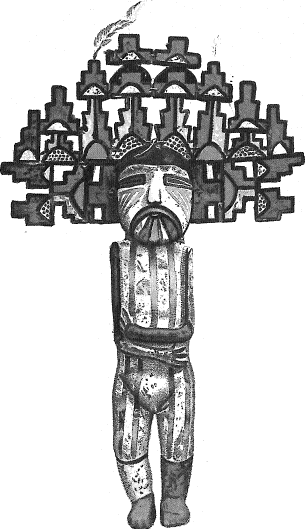
Fig. 571 (41951)
2157. (41951). This is the largest one of these images in the collection, very highly ornamented with bright variegated colors. See Fig. 571.
2158. (41952). One of these objects, differing only in size and manner of decoration.
2159. (41953). This is a specimen of one of these images exhibited in Fig. 567. The form is common to many of them, showing the pyramidal projections attached to the head, with feathered tips.
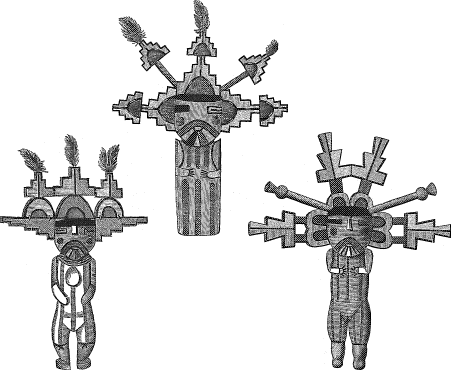
Fig. 566 (41959) (⅕) Fig. 567 (41953) (⅕) Fig. 569 (41956) (⅕)
2160-2161. 2160, (41954), and 2161, (41955). Similar objects.
2162. (41956). Fig. 569. This exhibits a female figure with variegated colors, and in addition to the pyramidal projections from the head has two round sticks with a ball and crown.
2163-2164. 2163, (41957), and 2164, (41958). Similar to Fig. 569.
2165. (41959). Fig. 566. The general characteristics of this specimen are the same as those already referred to, but it differs in the arrangement of the head attachments; two rows of pyramids are shown; the lower one is inverted; the two rows are separated by three arches; the upper pyramids are ornamented at the tips with feathers. A necklace of acorn hulls is around the neck, with a shell ornament attached to it. Garters are represented at the knees. In this specimen, as in many others, the feet are only represented by stubs. The body is decorated to represent fancifully colored clothing.
2166-2168. 2166, (41960); 2167, (41961); 2168, (41962). Similar to the preceding.
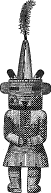
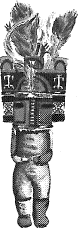
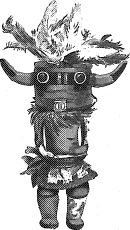
Fig. 568 (41967) (¼) Fig. 570 (41963) Fig. 572 (41969)
2169. (41963). This is well shown in Fig. 570.
2270-2172. 2170, (41964); 2171, (41965); 2172, (41966). Objects of the same character.
2173. (41967). This specimen (Fig. 568) differs considerably in form from those previously mentioned. As will be observed by reference to the figure, it has a conical projection from the top of the head, representing a hat with a feather at the top, with two short, round blocks at the base of the hat, and two round balls to represent ears. The skirt is of cloth. The specimen is brilliantly decorated with paint.
2174. (41968). Shows the form and details of carving, highly colored.
2175. (41969). A brilliantly colored image, which is well shown in colors in Fig. 572.
2176-2180. 2176, (21970); 2177, (41971); 2178, (21972); 2179, (21973); 2180, (41974), are similar objects.
ANIMAL SUBSTANCES.
HORN AND BONE.
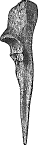
Fig. 575 (41891) (⅓)
2181. (40113). Large ladle from horn of mountain sheep, called ál-ly-ku. See Fig. 573.
2182-2188. 2182, (41891); 2183, (41892); 2184, (41893); 2185 (41894); 2186 (41895); 2187 (41897); and 2188 (41898). No. 2182 is a bone awl or perforator, of which the others are examples, as shown in Fig. 575.
2189-2192. 2189, (41990); 2190, (41991); 2191, (41992); 2192, (41193). Goats’ horns perforated with small round holes, through which arrow shafts are passed to smooth and straighten them. Fig. 576 is an illustration of one of them, called hoth-quen.
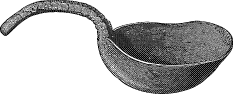
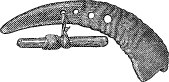
Fig. 573 (40113) (¼) Fig. 576 (41992) (¼)
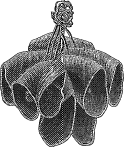
Fig. 574 (41855) (⅓)
2193-2196. 2193, (41994); 2194, (41995); 2195, (41996); 2196, (41997). Bundles of arrow shafts.
2197. (41855). Bunch of ox hoofs or toes used as a rattle in dances. These same objects are frequently attached to the edges of turtle shells for the same purpose. See Fig. 574 in Zuñi collection.
2198-2199. 2198, (41763), and 2199, (41764). Small hoops with painted net-work stretched across them; dance ornaments.
2200-2201. 2200, (42346), and 2201, (42347). Shell ornaments, ya-wag-sha-na.
2202. (41854). Medicine shells.
SKIN.
2203. (41737). Cap made from the skin of a panther’s head, with feathers attached to the top of it, called pow-how-wi-ta-nah-chi.
2204. (41738). Head-dress made of the skin of a panther’s head, so as to preserve the natural appearance of the animal, with feather ornaments attached.
2205. (41740). Fur cap, ornamented with feathers.
2206. (41743). Boy’s sling, tow-wow-kin-pi.
2207. (41842). Large rabbit-skin robe, made by twisting strands of rabbit-skins with the fur attached, and then sewing the strands together, tah-ru-pe.
2208. (41843). Small robe of the same character.
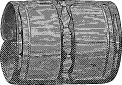
Fig. 579 (42354) (⅓)
2209. (42354). Buckskin wrist-guards, faced with metal, Fig. 579. These guards are common with nearly all tribes of Indians, and are designed to protect the wrist from the string of bows used in war and in hunting.
2210. (41869). Women’s buckskin leggings.
2211. (41870). Women’s buckskin leggings.
2212. (41739). Anklet of buckskin, pi-la-wak-chi.
2213. (41741). Anklet of buckskin.
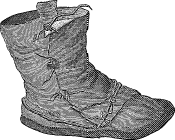
Fig. 578 (41828) (⅕)
2214. (41828). A pair of men’s moccasins, which the accompanying illustration shows well. They are made of buckskin, but differ from the usual manner of making moccasins, called pow-chi. See Fig. 578.
2215. (41721). Baby’s moccasins, tow-tow-chi-we-ha.
2216. (41722). Pair child’s moccasins, tow-tow-chi-we-ha.
2217. (41723). Woman’s moccasins, tow-chi.
2218. (41829). Pair of child’s moccasins, pow-tow-chi-u-wez-ha. The following are specimens of children’s moccasins:
2219-2222. 2219, (41830); 2220, (41831); 2221, (41832); 2222, (41833).
2223. (41755). Small gaming ball covered with goat skin.
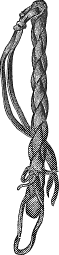
Fig. 580 (41719) (⅙)
2224. (41745). Buckskin paint bag, beaded.
2225. (41746). Buckskin paint bag, beaded.
2226. (41747). Buckskin paint bag, ornamented with fringe.
2227. (41748). Buckskin paint bag, ornamented with fringe.
2228. (41827). Deer-skin pouch, la-hab-ush-i-wa.
2229. (41657). Small deer-skin quiver and one arrow.
2230. (41841). Buckskin embroidered with beads.
2231. (41871). Buckskin dyed black.
2232. (41872). Buckskin dyed black.
2233. (41873). Buckskin dyed black.
2234-2235. 2234, (41717), and 2235, (41719), are riding whips made of plaited leather or raw-hide, called wi-wa-pi. See Fig. 580.
2236. (41176). A flat drum, made by stretching goat-hide over a wide hoop, and tightened by lacing crosswise around the edge with a cord of the same hide. One side is plain, the other is decorated with a figure, which is not interpreted. This specimen is from Shinumo, but it does not differ from those used by many of the other Pueblo tribes. Fig. 581.
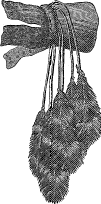
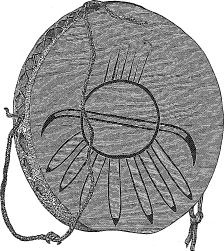
Fig. 577 (42351) Fig. 581 (41176) (⅙)
2237. (42351). Fig. 577. Leather wristlets, ornamented with wild turkey feathers.
2238-2239. 2238, (42352), and 2239, (42353), are objects of the same kind, differing somewhat in ornamentation.
2240. (42354). Ornamental wristlets with metal facing.
2241. (42355). Buckskin wrist-guard, to protect the wrist from the bowstring when shooting arrows.
2242-2243. 2242, (42356), and 2243, (42357), are similar objects, made of leather.
2244. (42358). Anklets of leather or rawhide strips.
2245. (42359). Anklets.
2246-2247. 2246, (41749), and 2247, (41750). Leather bags for fire stones.
2248. (41850). Leather attachments for moccasins.
2249. (41765). Leather gaming ball, tat-chi.
2250. (41758). Leather or rawhide lash rope with rings, called pe-qui-sha.
2251. (41874). Specimen of undressed rawhide.
2252. (41875). Rawhide bag, painted, cah-he-ne-si-vah.
2253. (41844). Narrow strip of canvas, painted to represent some fanciful feature. The following are specimens of the same:
2254-2258. 2254, (41845); 2255, (41846); 2256, (41847); 2257, (41848); 2258, (41849).
WOVEN FABRICS.
2259. (41834). Woven belts or sashes, of which the following are examples, and which are well shown in colors by Figs. 582 and 583:
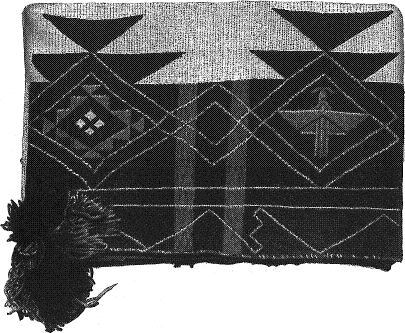
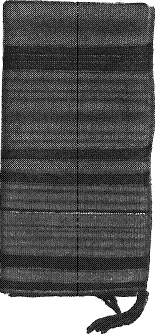
Fig. 582 (41255) Fig. 583 (41823)
2260-2269. 2260, (41713); 2261, (41803); 2262, (41255); 2263, (41823); 2264, (41835); 2265, (41836); 2266, (41837); 2267, (41838); 2268, (41839); 2269, (41840).
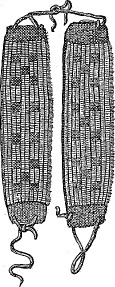
Fig. 584 (42365) (¼)
2270. (41718). Woven waist belt, ornamented with sheep and goats’ toes, attached to the lower edge of the belt.
2271. (41751). Head ornament of braided hair.
2272. (42361). Flat circular pad, composed of hair, over which the Shinumo women wear their hair, which appears like two wheels over the ears.
2273. (41767). Head ornament for flower dance, called tah-chi.
2274. (41769). Ornament similar to the preceding.
2275. (41766). Maiden’s hair strings for head-dress, called chi-ca-ha-pi.
2276. (41735). Rosette for head-dress in dance.
2277. (41736) Rosette with hair tufts attached; dance ornament for the head.
2278. (41744). Woolen tassel, ornament for dress.
2279. (41762). Neck ornament, with feathers attached, called how-wah-he-qua-wi.
2280. (41759). Feather charms.
2281. (41761). Woven band for the head, called mong-at-a.
2282. (42365). Fig. 584. Anklets, ornamented with porcupine quills; some are beaded.
The following are specimens of the anklets, variously ornamented:
2283-2286. 2283, (42362); 2284, (42363); 2285, (42364); 2286, (42366).
2287. (41742). Woman’s knit leggings.
2288. (41826). Woven hair sinch or saddle-girt, ah-chis-clah.
2289. (41757). Braided lasso or lariat.
COLLECTIONS FROM LAGUNA.
ARTICLES OF CLAY.
WATER VASES.
These are mostly of the usual form, though some should, probably on account of their shape, be designated as jars. A few have the margin undulate, and some are without any distinct neck.
They are generally well made and very symmetrical, of white ware, with decorations in black, brown, or red colors.
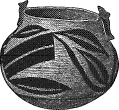
Fig. 585 (41295) (⅓)
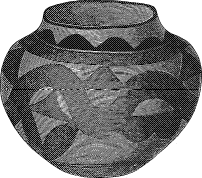
Fig. 586 (42385) (⅓)
2290. (41295). Small, with opposite handles or ears, resembling rats peeping into the vessel; body decorated with broad oblique stripes and figures resembling corn blades. Shown in Fig. 585.
2291. (42382). Small, decorated with birds fighting, their feathers ruffled. Fig. 612.
2292. (42384). Small, with a single broad undulate band around the body, having a white stripe in the middle marked with a row of dots.
2293. (42385). Fig. 586. Scalloped and straight band around the neck; body with two interlaced undulate bands, with triangles alternately in the inclosed and upper spaces.
2294. (42380). Red base, upright black bands in the center, with brown band below neck, and oblique bars extending from rim downward. See Fig. 610.
2295. (42381a). Fig. 587. The leaves in the decorations of this piece are probably designed to represent corn blades. There is something about the figures here used which leads one to believe they are, in part, at least, symbolical.
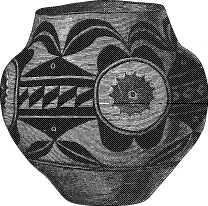
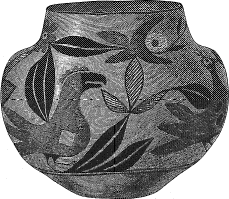
Fig. 587 (42381) (¼) Fig. 588 (42386) (¼)
2296. (42386). Fig. 588. Large. Large flower ornaments surrounding large birds with crests and ruffled feathers, one in each space. The large-billed bird may be intended for a raven; the other the California quail.
2297. (42387). Small margin, with images of three birds with spread wings on it; figures of two birds, with a few small flowers covering the body. See Fig. 611.
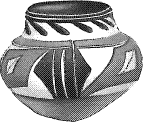
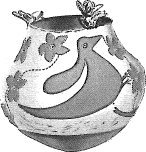
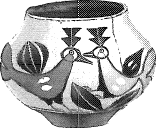
Fig. 610 (42380) Fig. 611 (42387) Fig. 612 (42382)
2298. (42388). Small. Zigzag band around the neck; figures on the body as in Fig. 585.
2299. (42389). Jar-shaped; zigzag band extending on neck and shoulder; a straight and scalloped band just below the shoulder.
2300. (42390). No neck, broadest near the top; birds, and flowers with stem. Small.
2301. (41391). Without neck; birds only, small.
2302. (42392). Without neck. Birds picking grass. Small flowers.
2303. (42393). Scalloped margin; birds only, small.
2304. (42394), Fig. 589. Scalloped margin. Deer, which seems to be biting the leaves of a plant.
2305. (42395). Fig. 590.
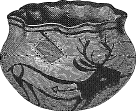
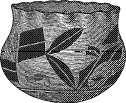
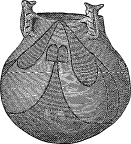
Fig. 589 (42394) (⅓) Fig. 590 (42395) (⅓) Fig. 591 (42398) (⅓)
2306. (42396). Jug-shaped, scalloped margin, with four bands of crescents on the body.
2307. (42397). Jug-shaped, with square month; zigzag line around the neck. Scrolls and oblique diamond figures on the body; small.
2308. (42398). Fig. 591. Ears in the form of animals peeping into the vessel.
2309. (42399). Small, with crude images of animals on the margin; birds alone on the body.
2310. (42400). Small; no neck, square mouth; image of a rabbit at each corner on the rim; birds and checkered square on the body.
2311. (42401). Small and similar to preceding, except that there are only corn leaves and a little square on the body.
2312. (41402). Similar in form to the preceding; image of an animal at one corner only; zigzag line around the neck; double undulate line around the body, with dots above and below.
2313. (41403). Similar to No. 2310, except that it is more slender and jar-shaped; image of a dog or coyote at each corner; figure of a ladle and a diamond on the body.
2314. (41404). Jar-shaped, with a round mouth, one animal on the margin; triangular lines on the body.
2315. (42406). Regular shaped olla of medium size; large figure of leaf twigs arranged in the form of a Maltese cross, surrounded on the side by broad curved lines or stripes.
The following are but slightly decorated:
2316-2317. 2316, (42376), and 2317, (42378). With one or two simple narrow bands or lines.
2318. (42780). With slight oblique lines on the neck, and a few broad upright lines in two groups on the body.
2319-2320. 2319, (42379), and 2320, (42381b). Without decorations of any kind.
WATER JUGS AND JARS.
2321. (41299). Fig. 593, Canteen with the images of four dogs or coyotes on it. Leaf decorations.
2322. (41300). Canteens, regular form. Irregular figures.
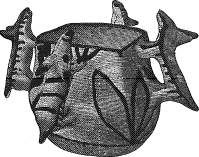
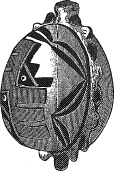
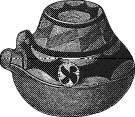
Fig. 593 (41299) (½) Fig. 594 (42412) (⅓) Fig. 595 (42413) (⅓)
2323. (42412). Fig. 594. Canteen of regular form, scalloped band, leaves and geometrical figures.
2324. (42413). Fig. 595. Olla-shaped canteen. The top is depressed and ornamented with a scalloped band; immediately below this is a broad band consisting of two plain, narrow stripes, between which is a row of oblong figures arranged in a zigzag pattern; around the middle of the vessel there is a sparsely serrate band, interrupted at intervals by small circles, in each of which there is the form of a cross.
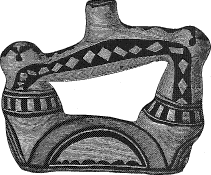
Fig. 596 (42409) (⅓)
2325. (42409). Fig. 596. The ornamentation on this piece is rather peculiar and worthy of attention, especially the bands around the columns.
2326. (42411). Double pepper and salt box, square form, with two handles side by side; birds mounted on the handles; figures of elk on the sides and ends in procession.
2327. (42475). Moccasin; rude.
PITCHERS.
These are well formed, evidently in imitation of those introduced by the white population. All similar in form, with handles. White ware with decorations; of medium size.
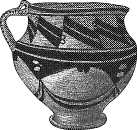
Fig. 592 (41298) (⅓)
2328. (41298). Shown in Fig. 592.
2329. (42405). Diamond scroll in the upper zone; a band of triangles with points directed upward in lower zone.
2330. (42406). Flower or rosette in upper zone, one on each side; no other figures.
2331. (42407). Broad band around the neck, from which two long-pointed triangles or acuminate figures point downwards; then another simple straight band, and below this a zigzag band.
2332. (42408). Scroll band around the neck; a band of hour-glass figures around the shoulder.
2333. (42410). With an undulate band around the bowl.
EFFIGIES.
These are of white decorated ware, and in the form of birds and quadrupeds; the orifice being usually in the top of the head, but in birds it is occasionally at the tail, and in the quadruped forms sometimes in the breast.
Birds.
These are frequently without feet, &c.; one or two double ones are on pedestals.
2334-2347. 2334, (41301); 2335, (41302), Fig. 597; 2336, (41303), Fig. 598; 2337, (41304); 2338, (41305); 2339, (42414), Fig. 608; 2340, (42415), Fig. 599; 2341, (42418), Fig. 609; 2342, (42419); 2343, (42423); 2344, (42426); 2345, (42427); 2346, (42428); 2347, (42429), are all similar to that represented in the Figures; some of them are intended to represent other birds than ducks.
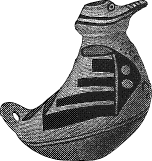
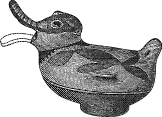
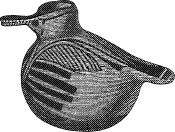
Fig. 597 (41302) (⅓) Fig. 598 (41303) (⅓) Fig. 599 (42415) (½)
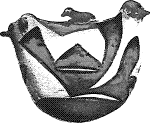
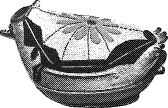
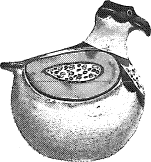
Fig. 605 (42420) Fig. 608 (42414) Fig. 609 (42418)
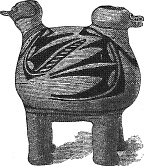
Fig. 600 (42417) (⅓)
2348. (42417). Fig. 600. With two heads on a pedestal.
2349. (42420). Two heads, but not on a pedestal; a handle on the back in the form of a fox or dog. See Fig. 605.
2350-2352. 2350, (42421); 2351, (42422); 2352, (42424). Similar to those shown in Fig. 598, but the decorations are scrolls and triangular figures. The first has a flower or rosette on the breast.
2353. (42425). Two-headed; not on pedestal; lines, triangles, &c.
2354. (42435). With a crest and long tail; apparently a rooster.
Quadrupeds.
2355. (41306). Fig. 601. This represents a sheep. The orifice is in front of the head.
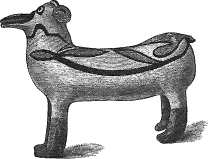
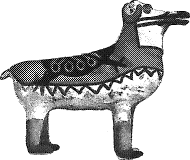
Fig. 601 (41306) (⅓) Fig. 607 (41307)
2356-2357. 2356, (41307), Fig. 607, and 2357, (41309). These are probably intended for sheep, but they are so rude that it is not possible to determine with any certainty. Bark colored.
2358. (41308). A cow; although rude, the characteristics are well given, even to the hoofs and udder; spotted on the back and breast. Coloring on the sides intended to represent hair.
2359. (42430). Shown in Fig. 606.
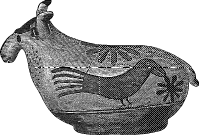
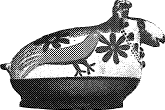
Fig. 602 (42431) (⅓) Fig. 606 (42430)
2360. (42431). Fig. 602. This and the preceding figure are evidently intended to represent rabbits.
2361-2362. 2361, (42432), and 2362, (42433). Similar to the last; apparently intended for a figure of the ass (Burro), though the spots on the former are inappropriate. The latter is decorated on the side with the figure of another quadruped.
2363. (42434). Animal unknown.
2364-2365. 2364, (42436), and 2365, (42437). Animal not determinable; decorated with spots.
2366-2371. 2366, (42438), Fig. 603; 2367, (42439); 2368, (42440); 2369, (42441); 2370, (42442); 2371, (42443). Antelope and elk. The first is evidently an antelope, and possibly the third and fifth. The rest are certainly elk. Decorations simple.
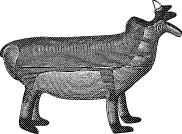
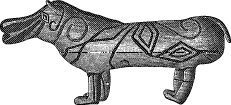
Fig. 603 (42438) (⅓) Fig. 604 (42444) (⅓)
2372. (42444). Probably a dog or coyote, with scrolls and diamond figures. See Fig. 604.
2373. (42445). Probably a horse.
Human figures—dolls.
2374-2377. 2374, (42447); 2375, (42448); 2376, (42449); 2377, (42450). Females; simple.
2378. (42446). Is a pretty fair representation of a chair.
EATING BOWLS.
The Laguna bowls are mostly of two sizes, either large or small. The former are eating bowls and are of the general form, or perhaps more hemispherical than usual. The small ones vary in shape from the preceding form to that of a flat-bottomed basin. The decorations present but little similarity to those we have previously described from other tribes; white ware with colored decorations.
Small bowls. Decorations all external:
2379. (41296). Square mouth, with two sides somewhat flattened. Scrolls and leaf-like figures on the outside.
2380. (41297). Fig. 616. Shown in the figure.
2381. (42451). Basin-shaped, with a handle on one side and a lip on the other; simple marginal and basal band with oblique lines.
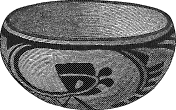
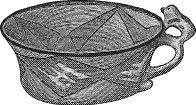
Fig. 616 (41297) (½) Fig. 617 (42452) (⅓)
2382. (42452). Fig. 617. Same form, with handle on which is seated some animal, apparently a dog, no lip. Band of diamond figures with central spaces. These two are the only specimens which have handles.
The following are quite small, basin-shaped, decorated with leaflike figures:
2383-2388. 2383, (42453); 2384, (42454); 2385, (42457); 2386, (42458); 2387, (42459); 2388, (42460).
The two following are small, of regular form:
2389. (42455). With two zigzag lines around the body.
2390. (42456). With geometrical figures.
Large bowls.
2391. (41265). No external decorations; radiating lines and large spaces inside.
2392. (42474). Inner zigzag marginal line as on Zuñi bowls; outer decorations also somewhat like the usual triangular figures on the Zuñi bowls.
The following are without inner decorations:
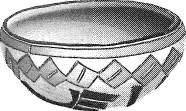
Fig. 614 (42469)
2393-2395. 2393, (42466); 2394, (42468); 2395, (42472). With broad band of geometrical figures; the first with a narrow scalloped band bordering the large band below.
2396-2397. 2396, (42461), and 2397, (42473), Fig. 613. With irregular geometrical figures; no band.
2398. (42469). With diamond marginal band; irregular figures below. Fig. 614.
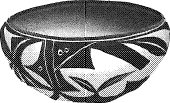
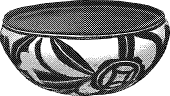
Fig. 613 (42473) Fig. 615 (42471)
2399. (42470). The large circular scroll with irregular figures; no band.
2400. (42471). Scalloped circle with a square in it, and leaf-like figures. Fig. 615.
COLLECTIONS FROM ACOMA.
ARTICLES OF CLAY.
WATER VASES.
There are but few pieces of this pottery, yet a careful examination of these since my return increases my desire to procure more. The Acoma bears a strong resemblance, especially in the ornamentation, to that from Laguna. All that was obtained was of white ware with decorations in color. In this pottery, in most cases where animals are figured, they have a base or ground on which to stand.
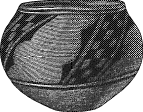
Fig. 618 (39581) (¼)
2401. (39578). Medium size, figures of birds, ant-hills, and cactus. No band on the neck.
2402. (39581). Fig. 618.
2403. (39582). Very pretty specimen, quite symmetrical, broad jar-shaped, a scalloped band on the neck with little tassels suspended from it, possibly intended to imitate fringe. Large triangles on the body pointing to the right, each tipped with a flower.
2404. (39730). Small scalloped band around the neck similar to Fig. 624.
2405. (41310). Large double band of triangles on the neck; body with a band of large diamonds, or squares placed as diamonds, with checkered centers and crescents.
2406. (41313). No band on the neck; birds and ant hills.
2407. (41314). No band on neck; large elk and some irregular figures.
2408. (41315). No band on neck; bird on the ground amid leaves and flowers.
2409. (41316). Fig. 619. The ornamentation on this is more than usually spirited.
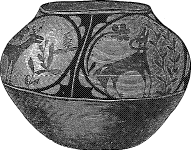
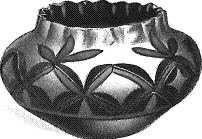
Fig. 619 (41316) (¼) Fig. 621 (41318)
2410. (41318). Scalloped margin, no neck-band; belt of large open diamonds around the body, each upper corner capped with three leaves. See Fig. 621.
2411. (41317). Large size; a double band of crescents around the neck; then on the shoulder an arched band with a central stripe of diamonds; below this a double line of inverted crescents, and below this a large three-leafed plant. See Fig. 620.
2412. (42378). Plain.
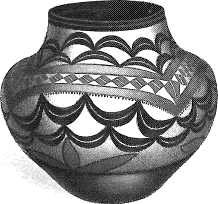
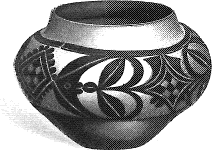
Fig. 620 (41317) Fig. 622 (42377)
2413. (42383). Small, with lines of outline crescents around the body.
2414. (42377). See Fig. 622.
PITCHERS.
White decorated ware with handles:
2415. (41311). Regular form, of medium size, with a broad zigzag band around the neck and another around the body. The latter has in each large fold something like an arrow-head with point broken off.
2416. (41312). Olla-shaped neck with snort oblique bands; body with large and small triangles.
EATING BOWLS.
The following specimens are small:
2417. (42461). Shaped exactly like the small soup bowl in use at the present day among the whites; with foot encircled by a vine with well-formed leaves. A pretty piece.
2418. (42462). Regular form, with an outline zigzag band.
2419. (42463) and (42464). Very small, conical in shape, the former marked with slender lines running around it, the latter with dots.
COLLECTION FROM COCHITI.
ARTICLES OF CLAY.
WATER VESSELS.
Size: height 6 to 9 inches, diameter 6 to 15 inches.
These are of the same form as those of Zuñi, but the curves and outlines are much more graceful, and there is a delicacy in the finish which places them above the Zuñi pottery and indicates a greater freedom and confidence in the ceramic artist. The rim is often slightly flared, the neck more distinct and regularly formed.
The only figure given of this interesting group is not one of the regularly formed specimens. They are all white ware with decorations in black.
2420. (39501). Scalloped band around the neck; body divided into three compartments by upright double lines with rosette in one and twigs in the others.
2421. (39502), Pueblo or terraced figures around the body bordered by an undulate line below. This is of special interest.
2422. (39503). Decorated with sunflower, the stem and leaves on the body; straight and undulate lines around the neck.
2423. (39504). Decorated with straight and undulate bands.
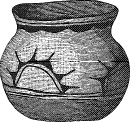
Fig. 623 (39733) (⅓)
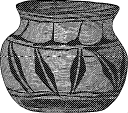
Fig. 624 (39731) (⅓)
2424. (39505). With figures of birds on the neck; and a tolerably well executed true meander or Greek fret around the body. Evident imitation of European pattern.
2425. (39506). Straight and undulate lines on the neck, triangle pointing downwards, leaves and insects on the body.
2426. (39509). Depressed; with rosettes and geometrical figures on the upper half of the body.
2427. (39634). Globular in form, without neck; scalloped marginal band; figures of chickens on the body.
2428. (39731). Fig. 624. Small size.
2429. (39733). Small size, similar in form to the preceding, with scalloped band around the neck, and scalloped arches on the body. Shown in Fig. 623.
Globular vessels with handles, used for holding water. These are of two forms: those which are almost or quite spherical, with wide month at the top; and those which resemble tea-pots, and open through a spout in the form of the head of a bird or other animal. These are sometimes globular, with opening at the top. Size shown in the illustrations.
2430. (39557). Undulate band around the margin; figures of fish on the body.
2431. (39558). Undulate line round the margin; figures of deer, bird, and fruit.
2432. (39559). With figures of triangles and leaves on the body.
2433. (39560). With head of a bird projecting from one side; marked with outline triangular and lunar figures on the body.
2434. (39561). Head of an animal projecting from one side.
Canteen-shaped vessels, with openings through a spout in the form of the head of some animal. In some instances, where these are in the form of a bird with the head for a spout, at the opposite end or side is the representation of a tail, but often the latter is wanting. Handle single, and usually on the top, unless otherwise specially mentioned.
2435-2436. 2435, (39563), and 2436, (39567). These are bird-shaped, with simple meander bands round the neck, and procession or herd of sheep or goats on the body. Head and tail shown. The former is seen in Fig. 625.
2437. (39564). Form of a bird without tail; decorations simple.
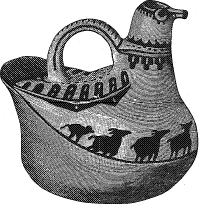
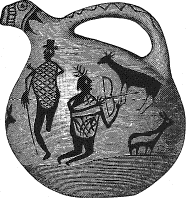
Fig. 625 (39563) (⅓) Fig. 626 (39565) (⅓)
2438. (39565). Shown in Fig. 626.
2439. (39568). Bird without tail; figure of an Indian with a gun in his hand, leading a calf followed by a cow.
2440. (39569). Bird with rude tail; figures of fishes and bird and a scalloped band below.
2441. (39570). Bird without tail; feather figures on breast; oblique checkered band to represent wing.
2442. (39571). With two heads opposite, handle crosswise between them; serrate bands around the necks; figures of birds on the body.
2443. (39572). Representing a double-headed duck, with a single tail at opposite end; square handle; outline flower or rosette on the body.
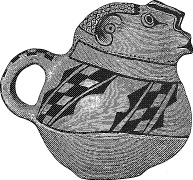
Fig. 627 (39573) (⅓)
2444. (39573). Form and decorations shown in Fig. 627. Probably intended for a dog.
2445. (39574). Form like preceding; decorations, fish, and grass; latter well shown.
2446. (39575). Similar in form to preceding, but with the fore-legs added. Decorations, collar or band around the neck and fish, on the body.
2447. (39579). Without handle, canteen-shaped, with dark head on one side; decorated with flowers and birds.
2448. (39696). Bird’s head on top, tail present, no handle; jug-shape; feather on back, scrolls and flower on the side.
2449. (39697). Animal’s head; no tail; open on top as well as through a spout; scalloped margin; birds and twigs on the body.
2450. (39698). Similar in form to the preceding, and with similar decorations.
2451. (39699). Similar in form, but not open on top. Man, boy, and birds, with lines or shading to represent the ground.
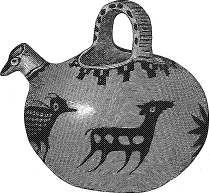
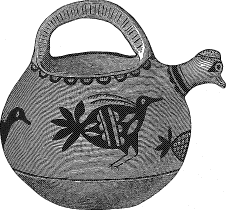
Fig. 628 (39720) (⅓) Fig. 629 (39725) (⅓)
2452-2458. 2452, (39701); 2453, (39713); 2454, (39715); 2455, (39720); Fig. 628; 2456, (39725), Fig. 629; 2457, (39727); 2458, (39730). These are somewhat of bird form, with globular body and without tail. Nos. 2455, 2456, and 2457 are open on top, the others are not. Decorated with figures of birds, and sometimes flowers or twigs. The bird figures on No. 2453 (39713) are evidently intended for turkeys. This is without handle, and open at the top.
2459. (39700). Bird without tail; figures of deer and some other animal, also trees.
2460. (39703). Duck-shaped, without tail; rude figures of animals and birds.
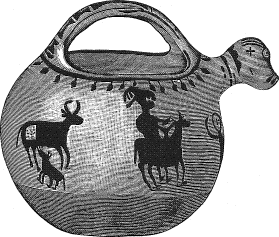
Fig. 630 (39511) (⅓)
2461. (39511). Fig. 630.
2462. (39704). Bird-shape, no tail; outline figures of Indians.
2463-2465. 2463, (39706); 2464, (39712); 2465, (39721), Fig. 632. Usual bird form as shown, and with similar animal figures.
2466. (39705). Resembles specimen shown in Fig. 629.
2467-2468. 2467, (39707), and 2468, (39708). Same form; decorations in outline, former of plants, latter of animals; rude.
2469. (39709). Same form; figure of an Indian chasing a deer.
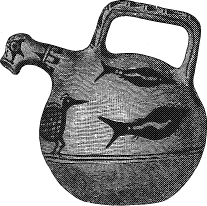
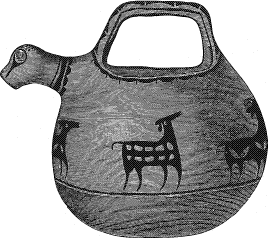
Fig. 631 (39717) (⅓) Fig. 632 (39721) (⅓)
2470-2471. 2470, (39710), and 2471, (39717). Fig. 631. Decorated with figures of fish.
2472. (39711). Usual form; oblique; double serrate band and figures of fish.
2473. (39714). Fig. 634.
2474. (39718). Fig. 633.
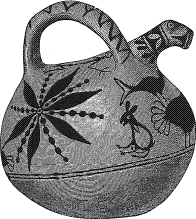
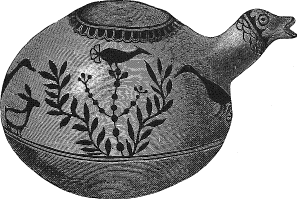
Fig. 633 (39718) (⅓) Fig. 634 (39714) (⅓)
2475. (39719). Fig. 635.
2476. (39722). Fig. 636. This belongs to the globular group above described.
2477. (39723). Similar to the preceding and belongs to the same group; with figures of sheep and fish.
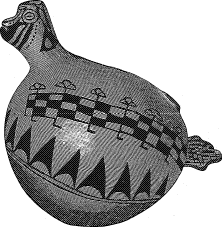
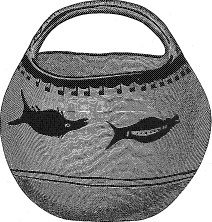
Fig. 635 (39719) (⅓) Fig. 636 (39722) (⅓)
2478. (39724). Fig. 637.
2479. (39726). Fig. 638. A true canteen.
2480. (39728).
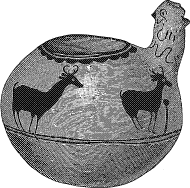
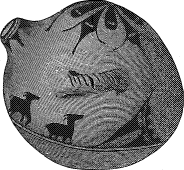
Fig. 637 (39724) (⅓) Fig. 638 (39726) (⅓)
2481. (39729). Fig. 639.
2482. (39508). Bird with tail more elongate in form than usual. Oblique checkered band on the side.
2483. (39514). Similar to water jars in the form of birds, and without handles.
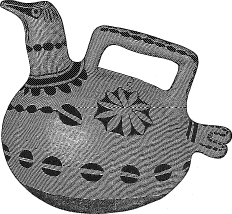
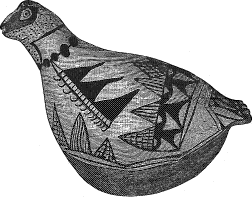
Fig. 639 (39729) (⅓) Fig. 640 (39562) (⅓)
2484. (39562). Fig. 640.
2485. (39515). Rosette of leaves on the back; tail well formed, probably represents the dove.
2486. (39516). No head, merely a spout; decorations simple.
2487. (39517). Evidently intended for a hen.
2488. (39518). Fig. 642.
2489. (39584). Simulates a hen; feathers on the back, deer on the sides.
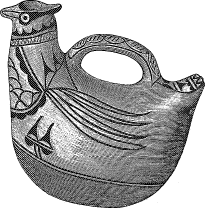
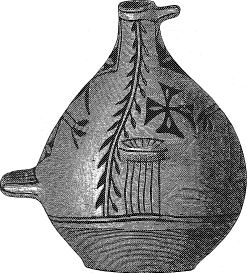
Fig. 641 (39585) (⅓) Fig. 642 (39518) (¼)
2490. (39585). With handle, wings rudely figured. Shown in Fig. 641.
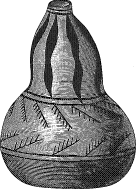
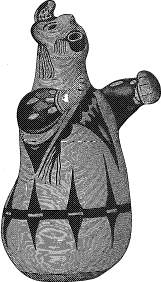
Fig. 643 (39580) (⅓) Fig. 644 (39576) (⅓)
2491. (39586). Similar in form to No. 2480; wings represented by figure, behind them the figures of a bird, evidently a duck, resembling the head of the vessel. Of the usual tea-pot shape.
2492. (39583). Without handle, canteen-shaped; open on top, with head apparently of turtle on one side: decorations, bird and rosette.
2493. (39580). Fig. 643. Simple jar.
2494. (39576). Fig. 644. Figure of a priest.
2495-2496. 2495, (39777), and 2496, (39778). Simple water jars of black ware, pitcher-shaped, with slight projection on the body for handle. These were evidently obtained from some other tribe.
EATING BOWLS.
There is but one specimen of Cochiti manufacture in the collection.
2497. (39512). Of ordinary shape; white ware, decorated with black on the inside only; a central ring with radiating corn-leaf figures.
ORNAMENTS, EFFIGIES, AND TOYS.
All small. White ware, slightly decorated unless otherwise specified.
2498. (39520). Head of some animal too rude to identify.
2499. (39521). Double-headed bird figure on a pedestal.
2500. (39526). Black ware. Sitting annual; very rude.
2501. (39527). Black ware. Probably jack-rabbit; handle at the back.
2502. (39528). Black ware. Young birds. The three last mentioned are most likely from some other pueblo.
2503. (39824). Fig. 647. Black ware.
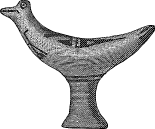
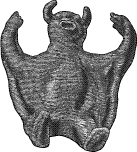
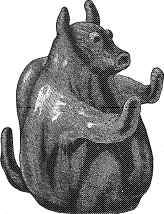
Fig. 645 (39857) (½) Fig. 646 (39825) (⅓) Fig. 647 (39824) (⅓)
2504. (39825). Fig. 646. Black ware.
2505-2506. 2505, (39826), and 2506, (39827). Similar grotesque figures of black ware.
2507. (39854). Double-headed figure of a bird on pedestal.
2508. (39855). Bird on pedestal; ruffled back.
2509-2518. 2509, (39856); 2510, (39857), Fig. 645; 2511, (39858); 2512; (39859); 2513, (39860); 2514, (39861); 2515, (39769); 2516, (39775); 2517, (39883); 2518, (39862), are figures of birds on pedestals, except No. 2514, which is the figure of a little duck, and probably is a toy water vessel.
2519. (39524). A toy cup or basket in the shape of an olla, with handle, the figure of the little water insect or worm appears on this, the only instance in the Cochiti pottery.
COLLECTION FROM SANTO DOMINGO.
ARTICLES OF CLAY.
WATER VESSELS.
There are but nine pieces of this pottery, and all but two of these are small images or drinking vessels in the form of birds.
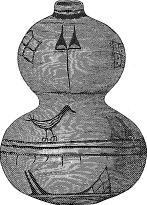
Fig. 649 (39510) (⅓)
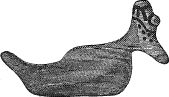
Fig. 648 (39657) (½)
2520. (39510). A double globe jar or canteen. White ground, with ornamentations in black, as seen in Fig. 649. Depression in the center is probably designed to receive a band or cord to carry it with.
2521. (39513). Large black bowl; no ornamentation.
Images of black ware; two pieces; a bird on pedestal and a quadruped.
2522-2523. 2522, (39652a); 2523, (39652b).
2524-2525. 2524, (39653), and 2525, (39654). Human images, very rude.
2526. (39658). Bird on pedestal.
Small drinking vessels in the form of birds. White ornamented ware.
2527. (39655). With four rows of dots on the side; no tail.
2528. (39656). With handle; tail and neck ornamented.
2529. (39657). No ornamentation except a line or two and some dots on the head. Fig. 648.
COLLECTIONS FROM TESUKE.
ARTICLES OF STONE.
METATES, MORTARS, ETC.
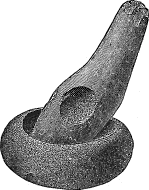
Fig. 650 (42341) (⅓)
2530. (39809). Stone metate for grinding grain, brown sandstone.
2531. (39810). Quartzitic stone mortar for grinding mineral pigment.
2532. (39811). Quite small mineral pigment mortar of quartz rock.
2533. (39821). Gaming ball of fine-grained sandstone.
2534. (42215). Discoidal quartz pounder.
2535. (42341). Fig. 650. Paint mortar. This mortar was made from a somewhat rounded sandstone boulder by grinding out a cavity. In the cut, which was drawn for another purpose, the pestle is represented with a small cup-shaped cavity on one side of it, in which the fluid pigment from the mortar was poured and used with the brush of the artist for decorative purposes. This is the only specimen of the kind in the collection, and the only one found where the pestle combines the cup with it.
ARTICLES OF CLAY.
WATER VASES.
This group, though comparatively small, contains some of the largest and grandest pieces in the entire collection, some of the vases being twenty inches in height and twenty-two in diameter, having a capacity of ten gallons. It consists of white ware with decorations in black, bearing a strong resemblance to that of Cochiti, brown micaceous, and polished brown ware without ornamentation, and black ware without ornamentation.
Tinajas or vases. Well formed and similar in shape to those from Cochiti.
2536. (39507). With oblique diamond figures on the neck, and geometrical figures on the body.
2537. (39520). Upper half only decorated with rude figures of leaves and twigs.
2538. (39523). Similar to the preceding.
2539. (39525). Without neck; a broad and true meander band around the middle, with three-leaved flower above and below on each coil.
2540. (39530). Neck ornamented with a straight and an undulate line; body as in No. 2539.
2541. (39531). With rosette and triangular figures somewhat similar to those on Zuñi ollas.
2542. (39532). Decorations similar to those on Cochiti olla, No. 2421.
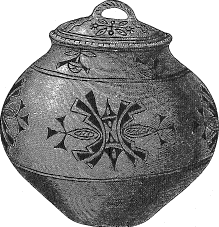
Fig. 651 (39533) (¼)
2543. (39801). Covered; a beautiful specimen, probably the most chaste and artistic of the entire collection.
2544. (39533). Fig. 651. Similar to the preceding.
2545. (39534). Serrate band around the neck; body with broad band and large circular spaces, each having four dark indentations.
2546. (39542). Neck with straight and undulate lines and short sigmoid figures; body with figures of a plant.
2547. (39549). Neck similar to the preceding; body with a zigzag line dotted along the upper side, and small ovoid spots above and below it, one in each indentation.
2548. (39635). Plain black, polished, large.
2549. (39639). Like the last.
2550. (39660). Large size; dotted line around the neck; heavy band around the shoulder, with sharp and long serrations pointing downward; body with alternate ornamental ovals and four-pointed stars.
2551. (39661). Straight and undulate lines around the neck; body divided into spaces by broad, double-scalloped, perpendicular stripes, having the middle white with an undulate line in the white portion; the intermediate spaces have a sun-shaped figure in the upper corner, from which a double serrate stripe descends obliquely.
2552. (39664). Birds and undulate line on the neck; a straight line with ring dots on the shoulder, broad meander band, with triple leaf ornament around the body.
2553. (39665). Neck with meander as in the preceding; a slender vine, well made, around the body.
2554. (39682). Rather slender; undulate margin; vine around the neck; body with broad band of three-leaved flowers.
2555. (39683). Neck with straight and undulate lines; body with undulate line terraced above as heretofore described, but above this is a row or band of small distinct ovals.
2556. (39685). Black, without ornamentation.
2557. (39686). Large bowl-shaped olla, without neck, decorated with vine, cross, scrolls, &c.
2558. (39687).
2559. (39740). Upper half with marginal scalloped band, from which hang, obliquely, leaves with bent spines on their margin; below this a serrate and then a double straight line.
2560. (39741). Squatted in shape. Vine with leaves around the middle of the body.
2561. (39772). Small; slender vine around the neck, dotted line around the shoulder, and three-leafed vine around the body.
2562. (39773). With flaring rim; scalloped band around the margin; regular zigzag line around the shoulder, from each lower point of which descend plants.
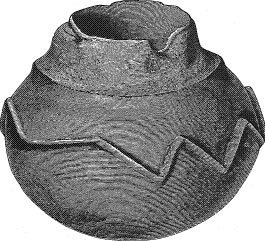
Fig. 654 (39813) (⅓)
2563. (39789). Same decorations as No. 2539, but of the regular form.
2564. (39800). Small scalloped lines around the body.
2565. (39802). Brown, without ornamentation.
2566. (39803).
2567. (39805).
2568. (39806). Fig. 652.
2569. (39813). Fig. 654.
2570. (39814).
2571. (39815). Neck colored, with a white zigzag line running through it; body with curious, large leaf-like ornaments of an angular shape.
2572. (39817). With similar leaf-like figures, but narrower and differently arranged. Shown in Fig. 653. The piece is injured, and the cords seen in the figure were tied about it by the natives to keep it from, going to pieces.
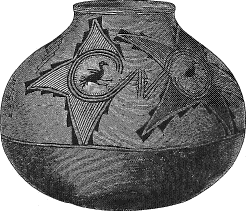
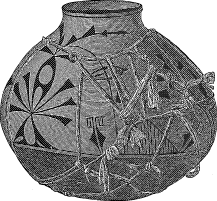
Fig. 652 (39806) (⅕) Fig. 653 (39817) (⅓)
2573. (39816). With a large zigzag band around the upper half of the body, terraced above and below.
2574. (39818). Very large and beautiful specimen, decorated on the body somewhat like some of the Zuñi pottery. The large circular scrolls are formed of a vine with leaves on the outer side. There are but few of the triangular figures seen in the Zuñi piece; there is a regular and true serrate marginal band; below this on the neck a broad band with diamond spaces.
2575. (39819). With a broad band around the neck composed of squares placed obliquely, with an oblong white space in each; body with a simple, narrow, straight band or double line.
2576. (39822). Large scalloped band around the neck, a little leaf pendant from each point; the body with alternate large stars and ornamental diamonds.
2577. (39823). This has the rim slightly flaring, a scalloped band and leaves around the neck; the body profusely decorated with geometrical figures. This belt is divided into four spaces, in each of which there is a checkered, terraced pyramid pointing downward; the lower part and sides of each space is occupied with triangular and sagittate figures.
2578. (39868). Small; neck with a row of ovals; the shoulder with a true herring-bone band; a vine with spiny leaves around the body.
2579. (39865).
WATER JUGS AND JARS.
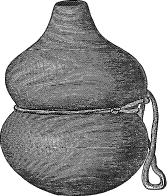
Fig. 655 (39812) (⅓)
2580. (39812). Plain double-bellied water bottle of micaceous ware. See Fig. 655.
2581. (39834).
2582. (41366). Water jug. Fig. 519.
2583. (39790). Jar or urn of white ware, with two handles ornamented with the usual meander.
PITCHERS.
2584. (39745). A regular well-formed pitcher, with proper lip and handle. White ware ornamented with serrate lines, triangles, and circle. The only one from this tribe.
EATING BOWLS.
The Tesuke bowls vary considerably in form, some having the slope straight, others flaring and of the usual form, others biscuit-shaped. No large specimens were obtained.
2585. (39613). Usual bowl-shape, with flaring margin; no external decorations; inner surface with circular scrolls.
2586. (39647). Biscuit-shaped, with broad meander band externally; no decoration internally.
The following are similar in form and decoration:
2587-2590. 2587, (39666); 2588, (39669); 2589, (39788); 2590, (39648). Outside plain; inner marginal band a slender vine.
The following numbers are plain, of brown micaceous ware, biscuit-shaped, small:
2591-2593. 2591, (39667); 2592, (39668); 2593, (39835).
The following are of the same ware, platter-shaped:
2594-2599. 2594, (39672); 2595, (39678); 2596, (39679); 2597, (39680); 2598, (39681); 2599, (39792).
2600. (39793). Square.
2601. (39797). Regular bowl-shaped, with foot.
2602. (39673). Biscuit-shaped, with band of straight and undulate lines.
2603. (39674). No outer decorations; inside with radiating serrate lines, and leaves.
2604. (39675). No inner decorations; on outside a marginal serrate band, and a band of leaves around the body.
2605. (39676). Biscuit-shaped; vine, with leaves, around the middle.
2606. (39677). Uo outer ornaments; on inner surface a center leaf-cross, and above this, radiating lines.
2607. (39688). Decorated on inner surface only. A central flower and submarginal band of oval leaves.
2608. (39742). Biscuit-shaped; zigzag line, with two leaves at each point on the outside.
2609. (39743), Plain red, flower-pot shaped.
2610. (39744). Flower-pot shaped, with zigzag lines or vines running up and down, a leaf at each point.
2611. (39776). Largest bowl of the group.
2612. (39787). Regular shape; zigzag band on the outside.
2613. (39798). Small, regular shape, with vines on the inside.
2614. (39799). Small figures and birds on the inside.
COOKING VESSELS.
These are always plain black ware, and are of several forms.
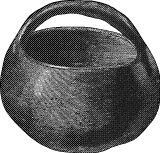
Fig. 657 (39615) (½)
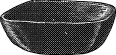
Fig. 659 (39695) (½)
Pots. Shaped like the Zuñi vessels.
2615-2632. 2615, (39601); 2616, (39602); 2617, (39605); 2618, (39606); 2619, (39607); 2620, (39608); 2621, (39611); 2622, (39670); 2623, (39671); 2624, (39689); 2625, (39735); 2626, (39736); 2627, (39737); 2628, (39738); 2629, (39794); 2630, (39795), with handle; 2631, (39828); 2632, (39874).
Bowl-shaped:
2633-2635. 2633, (39603); 2634, (39604); 3635, (39615), with handle. See Fig. 657.
Platter-shaped:
2636-2646. 2636, (39609); 2637, (39610); 2638, (39612); 2639, (39614); 2640, (39690); 2641, (39691); 2642, (39692); 2643, (39693); 2644, (39694); 2645, (39695), shown in Fig. 659; 2646, (39739).
TOYS.
2647. (39791). Ornamented bird on pedestal.
Blackbirds on pedestals:
2648-2657. 2648, (39804); 2649, (39807); 2650, (39808); 2651, (39820); 2652, (39829); 2653, (39830); 2654, (39831), Fig. 656; 2655, (39832), Fig. 658; 2656, (39833); 2657, (39836).
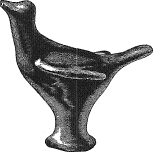
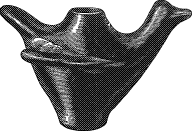
Fig. 656 (39831) (½) Fig. 658 (39832) (½)
VEGETAL SUBSTANCES.
MEDICINES.
2658. (39751). O-sha. Root used as medicine for rheumatism, internally and externally.
2659. (39752). Zerba-lobo. Wolf root, for pulmonary complaints.
2660. (39753). O-cha. Root used for rheumatism.
2661. (39754). Ka-cha-na. Root, semi-medicinal and magic. To prevent breach or wounds, and for sore eyes; external use.
COLLECTIONS FROM SANTA CLARA.
ARTICLES OF CLAY.
WATER VASES.
This is all black and frequently polished ware without ornamentation. The method of producing the black polish is explained in another part of the catalogue.
Bowls and ollas. Black, without ornamentation. Some of these are of comparatively large size.
2662-2670. 2662, (39645); 2663, (39748), Fig. 662; 2664, (39749); 2665, (39750); 2666, (39779); 2667, (39780), Fig. 660; 2668, (39781); 2669, (39782); 2670, (39786). A very pretty covered jar; cover with a handle. Fig. 672.
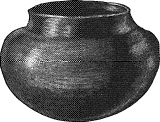
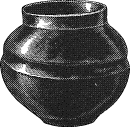
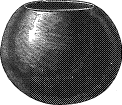
Fig. 660 (39780) (⅓) Fig. 661 (39629) (½) Fig. 662 (39748) (⅓)
2671. (39838). Small with scalloped margin.
2672. (39866).
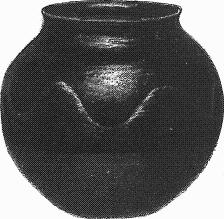
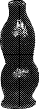
Fig. 671 (39834) (¼)
Fig. 672 (39786) (¼)
2673. (39629). Fig. 661. Vase with depressed band around the center; rim forming a band; base small.
2674. (39834). Double lobed bottle or canteen. See Fig. 671.
EATING-BOWLS.
These are of black polished ware without decoration of any kind, and of various forms, globular, bowl-shaped, and platter-shaped or true platters.
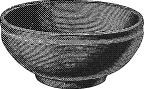
Fig. 663 (39632) (½)
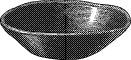
Fig. 664 (39646) (⅓)
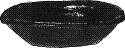
Fig. 668 (39793) (¼)
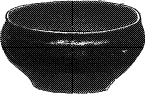
Fig. 669 (39628) (¼)
Globular and small:
2675-2676. 2675, (39556), and 2676, (39616).
Bowl-shaped:
2677-2678. 2677, (39617), and 2678, (39618). With flared and notched rim.
2679-2680. 2679, (39619), Fig. 667, and 2680, (39620). These two with flared and scalloped rim.
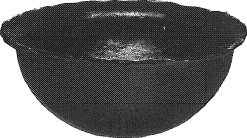
Fig. 667 (39619) (⅕)
2681. (39621). A cooking vessel.
39628), Fig. 669; 2683, (39632), Fig. 663; 2684, (39646), Fig. 664; 2685, (39633); 2686, (39636); 2687, (39637); 2688, (39638); 2689, (39643).
Platter-shaped:
2690-2691. 2690, (39630), and 2691, (39640). Scalloped rim.
39646), see Fig. 664; 2695, (39649), scalloped rim; 2696, (39784); 2697, (39785); 2698, (39796).
2699. (39793). Fig. 668. Small platter-shaped dish of black polished ware.
COOKING VESSELS.

Fig. 670 (39626) (¼)
2700. (39794). Small pot, no handle.
2701. (39795). Small pot with handle.
2702-2705. 2702, (39623); 2703, (39626), Fig. 670; 2704, (39627); 2705, (39629). Small pots without handles, with a constriction or indentation around the middle.
2706-2707. 2706, (39837), and 2707, (39840). Small pitchers with handles and lips.
2708. (39839). Canteen with spout and mouth above.
EFFIGIES.
Bird figures, polished, on pedestals. All similar to those shown in the figures.
2709-2720. 2709, (39841); 2710, (39842); 2711, (39843); 2712, (39844); 2713, (39845); 2714, (39846); 2715, (39847); 2716, (39848), Fig. 666; 2717, (39849), Fig. 665; 2718, (39850); 2719, (39554); 2720, (39555). The last two are hollow, with an orifice in the back; no pedestal.
2721. (39553). Canteen in shape of a bird; no pedestal.
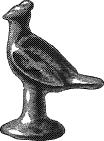
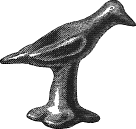
Fig. 665 (39849) (½) Fig. 666 (39848) (½)
COLLECTIONS FROM SAN JUAN.
ARTICLES OF CLAY.
EATING BOWLS.
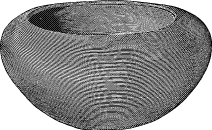
Fig. 675 (39590) (⅓)
2722-2723. 2722, (39587) and 2723, (39588). These two with handles on each sides. Sides straight.
2724-2725. 2724, (39589), and 2725, (39590). Biscuit-shaped, as shown in Fig. 675.
2726. (39591). Platter-shaped, with scalloped margin.
2727. (39592). Red ware, of medium size, with outer broad marginal band of triangular figures.
Pots. Plain, black:
2728-2731. 2728, (39593); 2729, (39594); 2730, (39747); 2731, (39625). Canteen-shaped, with handles or ears at or near the top; small circular orifice. See Fig. 673.
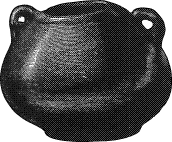
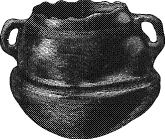
Fig. 673 (39625) (½) Fig. 674 (39650) (⅓)
2732. (39650). A similar vessel of black ware, with larger orifice, the margin of which is scalloped. Large ears or handles near the top on each side. Bottom oval, and an impressed band around middle of body. In some of the canteen-shaped vessels this depression is for holding the cord with which the vessel is transported. See Fig. 674.
2733. (39659). A jug-shaped pitcher of decorated red ware, with regular handle neatly formed. Ornamented with a looped vine and twigs, with leaves well drawn; neck slender and orifice with lip, but less in proportion than in ordinary pitcher.
COLLECTION FROM JEMEZ.
ARTICLES OF CLAY.
2734. (39926). Fig. 676. A very singular and pretty water vessel, obtained at the Jemez pueblo. White ware decorated in black and brown. It is probable that the peculiar form is given from mere fancy, and not for the purpose of adapting it to any particular use, as it appears to be simply a water vessel.
COLLECTION FROM THE JICARILLA APACHES.
ARTICLES OF CLAY.
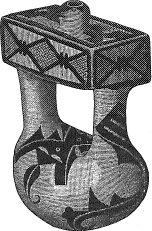
Fig. 676 (39926) (⅓)
This is a light brown micaceous ware, and the pieces are all small, or comparatively so. They consist of pots, pitchers, and cups.
This small collection, though not obtained directly from the Jicarilla Apaches, is attributed to them, for the reason that wherever found among other tribes it is by them accredited to the Apaches. It is manufactured, however, by some of the Pueblos along the Rio Grande, and occasionally by the more western Pueblos. The party did not visit the Apaches mentioned, and are not positively certain that they manufacture pottery. These facts are mentioned in this connection to show that there is some question as to the origin of this small collection.
Vase-shaped pots:
2735-2741. 2735, (39535); 2736, (39536); 2737, (39537); 2738, (39538); 2739, (39539); 2740, (39540); 2741, (39544). This and the next two have the rims scalloped.
2742-2744. 2742, (39545); 2743, (39546); 2744, (39547).
Pot-shaped:
2745-2751. 2745, (39595); 2746, (39596); 2747, (39597); 2748, (39598); 2749, (39599); 2750, (39600); 2751, (39851).
Pitchers and cups, with handles of regular form:
2752. (39543). Finger impressions around the middle.
2753-2754. 2753, (39540), and 2754, (39548). scalloped margin.
2755. (39770). With an undulate impressed line around the middle.
Miscellaneous:
2756. (39852). Incense-burner, somewhat in the shape of a beaver hat, with a rim in the form of a bird; a small orifice in the middle.
2757. (39853). Bird image.
COLLECTIONS FROM OLD PECOS.
ARTICLES OF STONE.
2758. (39756). Flint scraper. Rudely shaped, of hard cherty rock, flat on the inner face, convex on the back.
2759. (39757). An irregular square flat piece of sand-stone, on one side of which is a small circular cup-shaped depression.
2760. (39758a). A small mortar composed of fine-grained sand-stone, half broken away; being of quite soft stone, it was probably used for pulverizing food of some kind.
2761. (39758b). Quartz mortar made from, a round water-worn boulder. The cavity is symmetrical; diameter five inches.
2762. (39759). Half of a cherty water-worn boulder from which flakes for flints have been chipped.
2763. (39760). Small round cherty boulders, frequently used in chipping for flints, but in this instance they seem to have been used as hammers.
2764. (39761). Hammer made from a section of a broken rubbing or grinding stone of calcareous rock.
2765. (39762). Maul from broken rubbing stone or grinder, grooved at each end; rhyolite.
2766. (39763). Rudely shaped sinker (or what is called a sinker), rounded at each end and grooved in center; schistose rock.
2767. (39764). Rudely shaped chisel or celt of metamorphic schist.
2768. (39759). Rough chipping stone; agate.
2769. (39760). Three irregular round balls of flint-stone, flaked by hammering.
ARTICLES OF CLAY.
2770. (41771). Fragments of pottery from the old and new court, exhibiting Spanish glaze.
2771. (41772). Pottery fragments, decorated in colors. Old and new court.
2772. (41773). Ancient fragments, glazed.
2773. (41774). Fragments of pottery from the old court, showing glaze with white ground.
2774. (41775). Miscellaneous fragments of pottery from various parts of the ruins.
2775. (41794). Fragments of pottery, showing white coating, from new court.
2776. (41796). Pottery fragments, showing Spanish glaze inside; new court.
2777. (41797). Fragments with edges chipped.
2778. (41798). Rim pieces of black pottery were from the old court.
2779. (41799). Fragments of red pottery from new court.
2780. (41800). Fragments of plain pottery from both old and new courts.
2781. (42344). Specimens of adobe mortar from the walls of the Pecos ruins.
2782. (42345). Specimen of same.
2783. (42373). Chimney pots from Casa Blanca, Old Pecos.
2784. (42374). Very large cooking pot in fragments from Casa Blanca, Old Pecos.
ARTICLES OF WOOD.
2785. (41276). Beam of wood from the old court.
COLLECTIONS FROM THE CAÑON DE CHELLY.
ARTICLES OF CLAY.
WATER VESSELS.
2786-2789. 2786, (40813), Fig. 678; 2787, (40814), Fig. 677; 2788, (40815), Fig. 679; 2789, (40816), Fig. 680. These pieces are white ware, decorated with black. The colors in great part still remain, showing that they are comparatively modern. The lines represent colors and not indentations.
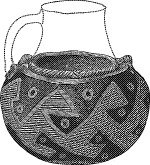
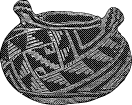
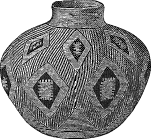
Fig. 677 (40814). (⅓) Fig. 678 (40813). (⅓) Fig. 679 (40815). (¼)
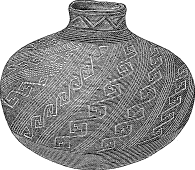
Fig. 680 (40816). (¼)
2790. (40796). Fig. 681. Upper part broken; supposed to have been a pitcher, as part of the handle remains. From Cliff House ruins, Cañon de Chelly. Red ware. Comparatively modern.
The following articles are ancient ware, from the same place as the preceding:
2791. (40600). Small vase of white ware, probably comparatively modern. The design, though simple, is somewhat peculiar and different from what is usually found on pottery of the present day. See Fig. 683.
2792. (42202). Fig. 682. Similar in form, size, and color to the preceding; the design, as will be seen by reference to the figure, is a common one.
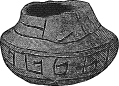
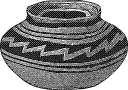
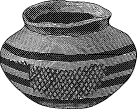
Fig. 681 (40796) (⅕) Fig. 682 (42202) (⅓) Fig. 683 (40600) (½)
2793. (40812). Pitcher. White ware, with black decorations. See Fig. 690.
2794-2795. 2794, (40819), Fig. 691, and 2795, (40820), Fig. 688. Pitchers, white; ware figured.
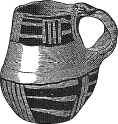
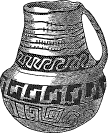
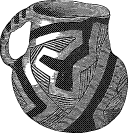
Fig. 688 (40820) (½) Fig. 690 (40812) (¼) Fig. 691 (40819) (⅓)
2796. (40824). Very small pitcher with handle; of uncolored ware.
2797. (42203). A very pretty pitcher of white ware, with decorations in black, much faded, showing age, although so well and truly formed it is evidently not modern. Fig. 692.
2798. (40601). A round-bottomed pitcher-shaped vessel, white ware with black lines; the colors are much faded, showing age. Fig. 689. The design is evidently of a previous age, and we will be justified, perhaps, in saying that it belongs to the period of transition from the rigid lines and angles to the curves.
2799. (40811). Fig. 687, Small pitcher, e-musch-ton-tsān-nā, originally of white ware; bowl uncolored.
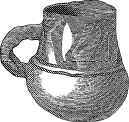
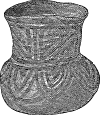
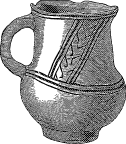
Fig. 687 (40811) (⅓) Fig. 689 (40601) (½) Fig. 692 (42203) (⅓)
BOWLS.
2800. (40823). Small bowl, with handle each side, white, with black colors. Fig. 684.
2801. (40825). A small paint-pot shown in Fig. 685.
2802. (40857). Fig. 686. A small pot, apparently blackened by fire, unadorned except with the spine-like projections around the lower half; probably used for a paint-pot.
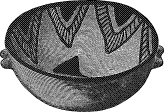
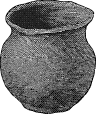
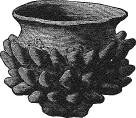
Fig. 684 (40823) (½) Fig. 685 (40825) (½) Fig. 686 (40857) (½)
COOKING VESSELS.
2803-2806. 2803, (40817), Fig. 693; 2804, (40818), Fig. 696; 2805, (40821), Fig. 695; 2806, (40822), Fig. 694. These are the old corrugated ware, but with the exception of the third they do not show the action of fire, but were probably used for cooking vessels.
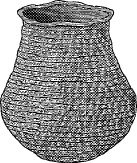
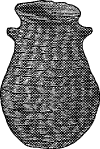
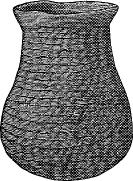
Fig. 693 (40817) (¼) Fig. 694 (40822) (⅓) Fig. 695 (40821) (¼)
COLLECTIONS FROM PICTOGRAPH ROCKS.
ARTICLES OF CLAY.
2807. (39873). Fig. 697. A corrugated pot 11 inches high and 10 inches in diameter at the widest point. Evidently coil-made; the different coils slightly overlap each other tile-fashion. On the inside it is smooth and does not show the coils. It has been blackened by the fire , the original color having been a dark slate, the natural color of the clay. It was evidently but slightly burned at first; very ancient.
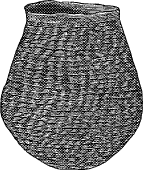
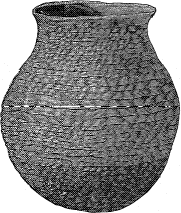
Fig. 696 (40818) (⅓) Fig. 697 (39873) (¼)
COLLECTIONS FROM OTHER LOCALITIES.
ARTICLES OF CLAY.
MISCELLANEOUS.
2808. (39529). Black, polished olla, rather large; from Ponake Pueblo.
2809. (39551). Unadorned moccasin from Pueblo of New Mexico.
2810. (41770). Fragments of pottery, ornamented, colored, and plain, from ruins near Pueblo of Nutria.
2811. (41776). Fragments of plain pottery from Agricultural Camp, six miles east of San Antonio Springs.
The following specimens are from the same locality:
2812-2818. 2812, (41777), painted; 2813, (41778), corrugated; 2814, (41779), ribbed; 2815, (41780), bird’s head painted on it; 2816, (41781), painted; 2817, (41782), corrugated; 2818, (41783), ribbed.
2819. (41784). Fragments of pottery from Old Zuñi Mesa, three miles southeast of Zuñi.
2820-2822. 2820, (41785); 2821, (41786); 2822, (41787), are fragments of the corrugated, ribbed, indented, and decorated ware, from the Zuñi Mesa.
2823-2825. 2823, (41791); 2824, (41792); 2825, (41793), are also fragments of pottery from the Zuñi Mesa.
2826. (41795). Fragments of pottery from top of Zuñi Church.
2827-2829. 2827, (41788); 2828, (41789); 2829, (41790). Fragments of ancient pottery from the environs of Wolpi. The specimens are of the corrugated and laminated forms and are decorated in color.
2830. (41981). Notched stick, with bone, used as musical instrument. See description of similar objects from Wolpi.
2831. (42224). Small wooden ladle; locality not known.
2832. (42049). Fragment of pottery with the edges ground off, probably a pottery trowel, from Pictograph Rocks, about sixty miles east of Fort Wingate, N. Mex.
2833. (42252). Fragment of pottery from Wolpi may be a charm, but likely a pottery smoother or trowel.
2834. (42348). Chips of jasper and fragments of pottery from mound in Missouri, opposite St. Louis.
2835. (42368). Handle of pottery ladle from Wolpi.
2836. (42370). Portion of large yellow corrugated vessel from near Wolpi.
STATUETTES.
The following numbers are specimens of statuettes, of micaceous clay, representing human beings in various attitudes, both male and female. They are attributed to the Cochiti Pueblos, but as they were obtained in Santa Fé from traders, the correctness of their origin may be doubted. They were made, however, by some of the Rio Grande Pueblos not very remote from Santa Fé:
2837-2858. 2837, (42001); 2838, (42002); 2839, (42003); 2840, (42004); 2841, (42005); 2842, (42006); 2843, (42007); 2844, (42008); 2845, (42009); 2846, (42010); 2847, (42011); 2848, (42012); 2849, (42013); 2850, (42014); 2851, (42015); 2852, (42016); 2853, (42017); 2854, (42018); 2855, (42019); 2856, (42020); 2857, (42021); 2858, (42022).