Chapter VI
Reading edition
LEGUMES AND NUTS
84. General Composition of Legumes.—Peas, beans, lentils, and peanuts are the legumes most generally used for human food. As a class, they are characterized by high protein content and a comparatively low per cent of starch and carbohydrates. They contain the largest amount of nitrogenous compounds of any of the vegetable foods, and hence are particularly valuable in the human ration as a substitute for meats.[32] For feeding animals the legumes are highly prized, particularly the forage crops, clover and alfalfa. These secure their nitrogen, which is the characteristic element of protein, from the free nitrogen of the air, through the workings of bacterial organisms found in the nodules on the roots of the plants. The legumes appear to be the only plants capable of making use of the nitrogen of the air for food purposes.
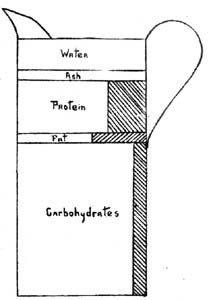
85. Beans contain about 24 per cent of protein and but little fat, less than is found in any of the grain or cereal products. The protein of the bean differs from that of cereals in its general and structural composition. It is a globulin known as legumin, and is acted upon mainly by ferments working in alkaline solutions, as in the lower part of the digestive tract. Beans have about the same amount of ash as the cereals, but the ash is richer in potash and lime.