Chapter LVI
Reading edition
GREAT BRITAIN.
BY CAROLINE ASHURST BIGGS.
Women Send Members to Parliament—Sidney Smith, Sir Robert Peel, Richard Cobden—The Ladies of Oldham—Jeremy Bentham—Anne Knight—Northern Reform Society, 1858—Mrs. Matilda Biggs—Unmarried Women and Widows Petition Parliament—Associations formed in London, Manchester, Edinburgh, 1867—John Stuart Mill in Parliament—Seventy-three Votes for his Bill—John Bright's Vote—Women Register and Vote—Lord-Chief-Justice of England Declares their Constitutional Right—The Courts give Adverse Decisions—Jacob Bright secures the Municipal Franchise—First Public Meeting—Division on Jacob Bright's Bill to Remove Political Disabilities—Mr. Gladstone's Speech—Work of 1871-2—Fourth Vote on the Suffrage Bill—Jacob Bright fails of Reëlection—Efforts of Mr. Forsyth—Memorial of the National Society—Some Account of the Workers—Vote of the New Parliament, 1875—Organized Opposition—Diminished Adverse Vote of 1878—Mr. Courtney's Resolution—Letters—Great Demonstrations at Manchester—London—Bristol—Nottingham—Birmingham—Sheffield—Glasgow—Victory in the Isle of Man—Passage of Municipal Franchise Bill for Scotland—Mr. Mason's Resolution—Reduction of Adverse Majority to 16—Conference at Leeds—Mr. Woodall's Amendment to Reform Bill of 1884—Meeting at Edinburgh—Other Meetings—Estimated Number of Women Householders—Circulars to Members of Parliament—Debate on the Amendment—Resolutions of the Society—Further Debate—Defeat of the Amendment—Meeting at St. James Hall—Conclusion.
In writing a history of the woman suffrage movement, it is difficult to say where one should begin, for although the organized agitation which arose when John Stuart Mill first brought forward his proposal in parliament dates back only eighteen years, the foundations for this demand were laid with the very earliest parliamentary institutions in England. As a nation we are fond of working by precedents, and it is a favorite saying among lawyers that modern English law began with Henry III. In earlier Saxon times women who were freeholders of lands or burgesses in towns had the same electoral rights as men. We have records of the reigns of Mary and Elizabeth, showing that ladies of the manse, in their own right, sent members to parliament. Down to the time of the civil wars women were accustomed to share in the election of "parliament men." In 1640, some women voted in an election for the county of Suffolk, Sir Simonds d'Ewes being high-sheriff:
Who, as soon as he had notice thereof, sent to forbid the same, conceiving it a matter verie unworthy of anie gentleman, and most dishonourable in such an election to make use of their voices, although in law they might have been allowed.
The spirit of the Puritans was not favorable to woman's equality; but, though disused, the right was never absolutely taken away by law. In a celebrated trial, Olive vs. Ingram (reign of George II.) the chief-justice gave it as his opinion that "a person paying scot and lot," and therefore qualified to vote, was a description which included women; and all the writs of election down to the time of William IV. were made to "persons" who were freeholders. However, for all purposes of political life this right was as good as dead, being absolutely forgotten. But still the local franchises remained. We have no data to determine whether these were as completely neglected as the parliamentary franchise. Parishioners voted for overseers of the poor and for other local boards; and women were never legally disqualified from voting in these elections. The lowest period in the condition of women appears to have been reached at the end of the last century, though they were not then indifferent to politics. "You cannot," says Miss Edgeworth's Lady Davenant, "satisfy yourself with the common namby-pamby phrase, 'Ladies have nothing to do with politics.' * * * Female influence must exist on political subjects as well as on all others; but this influence should always be domestic not public; the customs of society have so ruled it." This sentence exactly represented ordinary English feeling. It was never considered derogatory to an English lady to take an active part in elections, provided she did so for some member of her family; but of direct responsibility she had none.
In the ferment of opinion which preceded the great Reform bill, woman's claim to participate in it was never heard. The new franchises which were then for the first time created applied exclusively to male persons, but in the old franchises continuing in force, the word "person" alone is strictly used. Mr. Sidney Smith said:
In reserving and keeping alive the qualifications in existence before those itself created, this statute falls back exactly to the accustomed phraseology of the earlier acts. Whenever it confers a new right it restricts it to every male person. Whenever it perpetuates existing franchises, it continues them to every person, leaving the word "male" out on system.
This may have been little more than an oversight, or it may have been that respect for precedent which used to be an inherent quality in English statesmen. But it is curious that the first petition ever, to our knowledge, presented for women's suffrage to the House of Commons should date from this same year. It was presented on August 3, 1832, and is the worthy predecessor of many thousands in later times. Hansard thus describes it:
Mr. Hunt said he had a petition to present which might be a subject of mirth to some honorable gentlemen, but which was one deserving of consideration. It came from a lady of rank and fortune, Mary Smith of Stanmore, in the county of York. The petition stated that she paid taxes, and therefore did not see why she should not have a share in the election of a representative; she also stated that women were liable to all the penalties of the law, even death, and ought to have a voice in the fixing of them; but so far from this, on their trials both judges and jurors were of the opposite sex. She could see no good reason for the exclusion of women from political rights while the highest office of the State, that of the crown, was open to the inheritance of females; and, so we understood, the petitioner expressed her indignation against those vile wretches who would not marry, and yet would exclude females from a share in the legislation. The prayer of the petition was that every unmarried female, possessing the necessary pecuniary qualifications, should be entitled to vote for members of parliament.
The following year Sir Robert Peel in opposing vote by ballot said:
The theoretical arguments in favor of woman suffrage were at least as strong as those in favor of vote by ballot. There were arguments in favor of extending the franchise to women to which it was no easy matter to find a logical answer. Other and more important duties were entrusted to women. Women were allowed to hold property, to vote on many occasions in right of that property; nay, a woman might inherit the throne and perform all the functions of the first office of the State. Why should they not vote for a member of parliament?
But Sir Robert Peel evidently had no idea that a time would come when women would ask this question in downright seriousness. Meanwhile the preference for the words "male person" in the new enactments still continued. It was employed in the Municipal Corporation Reform act, 1835; and in the Irish poor-law act of 1838, women, as well as clergymen, were expressly excluded from election as poor-law guardians. The repeal of the corn-laws brought the political work of women to the front; they formed local committees, collected funds and attended meetings. In a speech on free-trade, delivered in Covent Garden Theater January 15, 1845, Richard Cobden said:
There are many ladies present, I am happy to say; now, it is a very anomalous fact that they cannot vote themselves, and yet that they have a power of conferring votes upon other people. I wish they had the franchise, for they would often make much better use of it than their husbands.
Again in 1848, in supporting a motion of Mr. Joseph Hume in the House of Commons to the effect that the elective franchise should be extended to all householders, Mr. Cobden said:
A gentleman asked me to support universal suffrage on the ground of principle, and I said to him, if it is a principle that a man should have a vote because he pays taxes, why should not a widow who pays taxes and is liable to serve as church-warden and overseer, have a vote for members of parliament? The gentleman replied that he agreed with me.
In 1853, Mr. W. J. Fox, member for Oldham, in acknowledging the presentation to him by the ladies of Oldham of a signet-ring bearing the inscription, "Education, the birthright of all," spoke strongly in favor of women having a definite share in political life:
If women have nothing to do with politics, honest men ought to have nothing to do with politics. They keep us pure, simple, just, earnest, in our exertions in politics and public life. They have to do with it, because while the portion of man may be by the rougher labors of the head and hands to work out many of the great results of life, the peculiar function of woman is to spread grace and softness, truth, beauty, benignity over all. Nor is woman confined to this. In fact I wish that her direct as well as indirect influence were still larger than it is in the sphere of politics. Why, we trust a woman with the sceptre of the realm, consider her adequate to make peers in the State and bishops in the Church; surely she must be adequate to send her representatives to the lower House. I know the time may not have come for mooting a question of this sort; but I know the time will come, and that woman will be something more than a mere adjective to man in political matters. She will become a substantive also. And why not?
Other speakers and writers brought forward the same point. Jeremy Bentham declared he could find no reasons for the exclusion of women, though he laid no stress on the matter; Herbert Spencer in "Social Statics" (1851), Mr. Thomas Hare in his book on "Representation," and Mr. Mill in "Representative Government," all discussed it. In 1843 Mrs. Hugo Reid published an excellent volume, "A Plea for Woman," in which she maintained that "There is no good ground for the assumption that the possession and exercise of political privileges are incompatible with home duties." In 1841 a strong article appeared in the Westminster Review, written by Mrs. Margaret Mylne, a Scotch lady still living. Mrs. Stuart Mill's admirably comprehensive article appeared in the same review in 1851.[536] In 1846, also, Col. T. Perronet Thompson, the well-known anti-corn-law advocate, wrote:
Whenever the popular party can agree upon and bring forward any plan which shall include the equal voting of women, they will not only obtain an alliance of which most men know the importance, but they will relieve the theory of universal suffrage from the stigma its enemies never fail to draw upon it, of making its first step a wholesale disqualification of half the universe concerned.
Among other writers and speakers on the subject, we must also enumerate Anne Knight, an earnest warm-hearted Quaker lady. She sometimes lectured upon it, and many of her letters written to Mrs. Elizabeth Pease Nichol of Edinburgh, Lord Brougham, and others, are still preserved, in which she eagerly advocates the admission of women to the suffrage. She assisted in founding the Sheffield Female Political Association. On February 26, 1851, this association held a meeting at the Democratic Temperance Hotel, Sheffield, and unanimously adopted an address, which was the first manifesto dealing with the suffrage ever formulated by a meeting of women in England:
Address of the Sheffield Political Association to the Women of England—Beloved Sisters: We, the women of the democracy of Sheffield, beg the indulgence of addressing you at this important juncture. We have been observers for a number of years of the various plans and systems of organization which have been laid down for the better government and guidance of democracy, and we are brought to the conclusion that women might with the strictest propriety be included in the proclamation of the people's charter; for we are the majority of the nation, and it is our birth-right, equally with our brother, to vote for the man who is to sway our political destiny, to impose the taxes which we are compelled to pay, to make the laws which we with others must observe; and heartily should we rejoice to see the women of England uniting for the purpose of demanding this great right of humanity, feeling assured that were women thus comprehended, they would be the greatest auxiliaries of right against might. For what would not the patient, energetic mind of woman accomplish, when once resolved? The brave and heroic deeds which history records are our testimony that no danger is too great, no struggle too arduous for her to encounter; thus confirming our convictions that woman's coöperation is greatly needed for the accomplishment of our political well-being. But there are some who would say: "Would you have woman enjoy all the political rights of men?" To this we emphatically answer: Yes! for does she not toil early and late in the factory, and in every department of life subject to the despotism of men? and we ask in the name of justice, must we continue ever the silent and servile victims of this injustice? perform all the drudgery of his political societies and never possess a single political right? Is the oppression to last forever? We, the women of the democracy of Sheffield, answer, No! We put forth this earnest appeal to our sisters of England to join hand and heart with us in this noble and just cause, to the exposing and eradicating of such a state of things. Let us shake off our apathy and raise our voices for right and liberty, till justice in all its fulness is conceded to us. This we say to all who are contending for liberty, for what is liberty if the claims of women be disregarded? Our special object will be the entire political enfranchisement of our own sex; and we conjure you, our sisters of England, to aid us in accomplishing this holy work. We remain with heartfelt respect, your friends.[537]
At the end of 1858 there was established in Newcastle-on-Tyne an association called the Northern Reform Society, which had universal suffrage for its object, and it expressly invited the contributions of women. Letters were written by Matilda Ashurst Biggs, and afterwards by two or three women in different parts of the country, offering to become members. In acknowledging these letters, the secretary stated that the Northern Reform Union only contemplated the extension of the franchise to men, although he admitted that many of its leading members were individually in favor of "woman suffrage" but they believed that by asking for manhood suffrage, they were advancing a step towards universal franchise. He added. "The society will be very glad of women's subscriptions, and trusts that they will use their best efforts to promote its extension." Undoubtedly, there has never been any reluctance to accept the subscriptions of women towards promoting the objects of men. In commenting upon this letter, Mrs. Biggs[538] said in the Newcastle Guardian, February 19, 1859:
I have never given my rights to be merged in those of any other person, and I feel it an injustice that I, who am equally taxed with men, should be denied a voice in making the laws which affect and dispose of my property, and made to support a State wherein I am not recognized as a citizen. I consider that a tyranny which renders me responsible to laws in the making of which I am not consulted. The Northern Reform Society, which "takes its stand upon justice," should claim for us at least that we be exempted from the duties, it we are to be denied the rights belonging to citizens.
These books, speeches and letters though scattered and unconnected, slowly prepared the ground for the organized agitation. Another Reform bill grew into preparation. Men's thoughts were turned again towards the question of representation, and every word spoken on behalf of the enfranchisement of women assumed double force as it drew near to a political issue. The enfranchisement of women advanced from a question of philosophical speculation to actual politics in the election of John Stuart Mill member of parliament for Westminster in 1865. In his election address, Mr. Mill, as previously in his work on representative government, openly avowed this article of political faith. Nevertheless, the first speech of which we have record in the House of Commons plainly vindicating the right of women to the vote, was that of a man who differed from Mr. Mill in every other feature of his political life and creed—Mr. Disraeli. He used almost the same form of argument as Sir Robert Peel had done thirty years before, but unlike the former statesman he backed it up with his vote and personal influence for many succeeding years. It was in 1866 that he spoke these words, long and gratefully remembered by the women of the country:
In a country governed by a woman—where you allow woman to form part of the estate of the realm—peeresses in their own right for example—where you allow a woman not only to hold land, but to be a lady of the manor and hold legal courts—where a woman by law may be a church-warden and overseer of the poor,—I do not see, where she has so much to do with the State and Church, on what reasons, if you come to right, she has not a right to vote.
These words from Disraeli were the spark that fired the train. In answer to a request from Miss Jessie Boucherett, Mrs. Bodichon and Miss Bessie R. Parkes, Mr. Mill replied that if they could find a hundred women who would sign a petition for the franchise, he would present it to the House of Commons. A committee was immediately formed in London, and the petition was circulated. In two or three weeks it had received 1,499 signatures. Among these were many who in after years took a prominent part, not only in suffrage, but in other movements for the elevation of women. The petition was presented by Mr. Mill in May, 1866, and was received with laughter. He then gave notice of a motion to introduce into the Reform bill a provision to the same effect. The committee[539] immediately began to circulate petitions and pamphlets. Two of these were by Mrs. Bodichon, "Reasons for, and Objections against the Enfranchisement of Women," being the substance of a paper she had read at the Social Science Congress, in October, 1866. We give the text of the petition, as it differed somewhat from those circulated in after years:
To the Honorable, the Commons of the United Kingdom of Great Britain and Ireland, in Parliament assembled:
The humble petition of the undersigned,—showeth, That your petitioners fulfill the conditions of property or rental prescribed by law as the qualification of the electoral franchise, and exercise in their own names the rights pertaining to such conditions; that the principles in which the government of the United Kingdom is based, imply the representation of all classes and interests in the State; that the reasons alleged for withholding the franchise from certain classes of her majesty's subjects do not apply to your petitioners. Your petitioners therefore humbly pray your honorable House to grant to such persons as fulfill all the conditions which entitle to a vote in the election of members of parliament, excepting only that of sex, the privilege of taking part in the choice of fit persons to represent the people in your honorable House.
This form of petition was only signed by unmarried women and widows of full age, holding the legal qualification for voting in either county or borough, but there were other forms for other classes of persons. On March 28, the Right Hon. H. A. Bruce presented a petition from 3,559 persons, mostly women. Mr. Mill, in April, presented one with 3,161 names collected by the Manchester committee, and the Right Hon. Russell Gurney one signed by 1,605 qualified women, i. e., free-holders and householders who would have had the vote had they been men. In all 13,497 were counted in the parliamentary report this session; among these were many clergymen, barristers, physicians and fellows of colleges.
While we are on the subject of petitions we may as well briefly glance at what was done in this branch of work during succeeding years.[540] No better method could be found of testing public opinion, or of affording scope for quiet, intelligent agitation. Many friends could help by circulating petitions, distributing literature at the same time and arguing away objections. In 1868 there were presented 78 petitions with nearly 50,000 signatures. One of them, headed by Mrs. Somerville and Florence Nightingale, contained 21,000 names, and was a heavy but delightful burden which Mr. Mill could hardly carry to the table. This petition excited great attention. During all these years no petitions were presented against granting the suffrage to women. These numbers were undoubtedly a surprise to many members of parliament who were inclined to look upon woman suffrage as an "impracticable fad," "the fantastic crochet of a few shrieking sisters." But the collection and arrangement of the signatures took up incalculable time, and after a few years this method of agitation was discarded to a great extent in the large political centres. Friends became wearied out with the toilsome process of year by year collecting signatures, which when presented were silently and indifferently dropped into the bag under the table of the House of Commons. But during the early days of the movement these petitions, signed by all classes of men and women, were invaluable in arousing interest in our movement.
In 1867, for the better prosecution of the work, instead of one committee embracing the whole of England, separate associations were formed in London, Manchester and Edinburgh. The London committee consisted of ladies only, Miss Frances Power Cobbe, Mrs. Fawcett, Miss Hampson, Miss Hare, Mrs. Lucas, Mrs. Stansfeld, with Mrs. Taylor as secretary. In the Manchester committee Mr. Jacob Bright, M. P., at once took up the position of leader and advocate which he afterwards so long and nobly maintained in the House of Commons. Miss Becker was appointed secretary. The Edinburgh committee elected Mrs. McLaren[541] for their president. At a special general meeting, November 6, 1867, it was resolved that these three societies should form one national society, thus securing the advantages of coöperation while maintaining freedom of action. The same rule applied to societies in Birmingham, Bristol and other towns.
To return to the debate in the House of Commons on May 20, 1867 on clause 4 of the Representation of the People bill. Mr. Mill moved to leave out the word "man" and insert the word "person." His speech has been too long before the public to need quotation; it is a model of inductive reasoning and masterly eloquence. The debate which followed was very unequal in character, but the division was gratifying, for he received 73 votes (including pairs, 81); 194 voted against him. Mr. Mill wrote afterwards to a friend:
We are all delighted at the number of our minority, which is far greater than anybody expected the first time, and would have been greater still had not many members quitted the House, with or without pairing, in the expectation that the subject would not come on. But the greatest triumph of all was John Bright's vote.
At the election for Manchester, held near the end of 1867 (when Mr. Jacob Bright was elected), Lily Maxwell, whose name had been accidentally left on the parliamentary register, recorded her vote. No objection was taken to it by the returning officer, or by the agents of either candidate. The Times devoted a leading article to it. The circumstance was of no legal value, but it was useful to show that a woman could go through the process of recording a vote in a parliamentary election even before the Ballot act was passed. The idea gained ground that by the new Reform act the right to vote had been secured to women. The Reform act of 1867, sec. 3, declares that:
Every man shall in and after the year 1868 be entitled to be registered as a voter, and when registered, to vote for a member to serve in parliament.
In the substitution of the word "man" for that of "male person" in the Reform act of 1832, a great difference was already discernable, but this difference was more important when taken into conjunction with what was popularly known as "Lord Romilly's act," an act for shortening the language used in acts of parliament (13 and 14 Vict.). This act provides, "that all words importing the masculine gender shall be deemed and taken to include females, unless the contrary is expressly provided"; and in the Representation of the People act there was no express provision to the contrary. This had been pointed out by one or two members at the time.
Accordingly the several societies united in a systematic endeavor to procure the insertion of women's names on the registers of electors under the new Reform act. A circular respectfully requesting the boards of overseers to insert on the list of voters the names of all persons who had paid their rates, was sent to several hundred boards in different parts of the country. Very few replies were received, but women were placed on the lists in many counties, in Aberdeen, Salford and many small districts in Lancaster, Middlesex, Kent, etc. The overseers of Manchester declined compliance. In that city there were 5,100 women householders who claimed their votes, and when the revision courts were opened in September, this claim came on for consideration. The case was ably argued, but the revising barrister decided against admitting it, granting, however, a case for trial at the Court of Common Pleas. Another case was also granted, being that of Mrs. Kyllman, a free-holder, her claim being under the old free-holding franchise 8 Henry VI., to wit.:
Elections of knights of the shire shall be made in each county by people dwelling and resident therein of whom each has free-hold to the value of £40 by the year.
In the majority of districts the revising barristers disallowed the claims; but in four district-revision courts the women's names were admitted. In Finsbury, one of the metropolitan boroughs, Mr. Chisholm Anstey was revising barrister, and he admitted them on account of ancient English law; in Cockermouth, Winterton and two townships of Lancashire, the revising barrister admitted them upon his interpretation of the Reform act taken in conjunction with Lord Romilly's act. In the suffrage report for this year the number of women placed on the electoral roll by these decisions is estimated at about 230, but undoubtedly there were others concerning whom no information was received. In many cases the women voted: 15 did so in Finsbury (not only was there no disturbance, but hardly any remark was made, and they expressed their surprise that it was so easy a thing to do); 12 in Gordon and 10 in Levenshulme, both little districts in Lancashire, and smaller numbers in other places. In Chester the parliament candidate issued his election placards to "Ladies and Gentlemen."
On November 7, the case of the 5,000 Manchester women householders was argued before the Court of Common Pleas. Mr. J. D. Coleridge (now Lord Coleridge, Lord-chief-justice of England) and Dr. Pankhurst were the counsel for the appellants. Mr. John Coleridge in an able argument spoke of the ancient constitutional right of women to take part in elections. He produced copies from the record office of several indentures returning members to parliament, the signatures of which were in the hand-writing of women, or to which women were parties. He argued that the term "man" in the Reform act included woman, not only generally but specifically, under the provisions of Lord Romilly's act. The case was argued before Lord-chief-justice Boville; the decision was given on November 9, and decisively pronounced that the new Reform act had never intended to include women, and that they were incapacitated from voting. This decision did not affect the women who were already on the register, and many voted in the general election which took place afterwards. Thus women have been shut out from electoral rights, not by any decree of parliament, but by this decision of the Court of Common Pleas. However there was no appeal from this Court, except to parliament, and from this time forward the character of the agitation changed. The year 1868 ended with a legal decision which seemed crushing in its finality, while the same year had given the most conclusive proof that women wished to vote, and would do so whenever the opportunity offered.
The next year, 1869, gave another convincing proof that women were eager to vote, and brought us the most substantial triumph yet obtained, due to the wisdom and skilful tactics of Mr. Jacob Bright, member of parliament for Manchester. This victory was the municipal franchise for women. Early in 1869 Mr. Hibbert introduced a bill to regulate the conditions of the municipal franchise. By the Municipal Corporation Amendment act, passed in 1835, male persons only were authorized to vote. The present bill was to amend that. Mr. Jacob Bright, seconded by Sir Charles Dilke and Mr. Peter Rylands, proposed the omission of the word "male" from the bill, and the insertion of a clause securing to women the right of voting in municipal elections. Mr. Hibbert concurred in the introduction of these amendments, though he did not anticipate they would lead to any result beyond a discussion. A circular containing full information upon the ancient and existing rights of women to vote in local affairs was sent to each member of parliament by the Manchester committee. It showed that before the passing of the Municipal Corporation act of 1835, women rate-payers had rights similar to those of men in all matters pertaining to local government and expenditure; and that in non-corporate districts they still exercised such rights, under the provisions of the Public Health act, and other statutes guarding the electoral privileges of the whole body of rate-payers. But when any district was incorporated into a municipal borough, the women rate-payers were disfranchised, although those not included within its boundaries remained possessed of votes. It showed also that women can vote in parochial matters, and take part in vestry meetings, called for various purposes, such as the election of church-wardens and way-wardens, the appointment of overseers, the sale of parish property, and, formerly, the levying of church-rates; also that they can vote in the election of poor-law guardians—that in fact, in none of those ancient voting customs, was the sex of the ratepayers taken into consideration as either a qualification or disqualification. We quote from the Manchester society:
In the House of Commons on June 7, 1869, on consideration of the Municipal Franchise bill as amended, Mr. Jacob Bright rose to move that in this act and the said recited act (Municipal Corporation Reform act, 1835) wherever words occur which import the masculine gender, the same shall be held to include females for all purposes connected with and having reference to the election of or power to elect representatives of any municipal corporation. He stated that his object was to give the municipal vote to every rate-payer within the municipal limits; to give to municipal property the representation which all property enjoyed elsewhere; that had the proposition been an innovation, a departure from the customary legislation of the country, he would not have brought it in as an amendment to a bill; but that his object was to remove an innovation—to resist one of the most remarkable invasions of long-established rights which the legislation of this or any other country could show. The bill before the house was an amendment of the Municipal Corporation act of 1835. That act was the only act in regard to local expenditure and local government which established this disability. Before and since, all acts of parliament gave every local vote to every rate-payer. The Health of Towns act of 1848 had a clause almost identical with the one he was moving. He was therefore asking the House not only to make the bill in harmony with the general legislation of the country, but to allow it to be in harmony with its latest expressed convictions as shown in the act of 1848. There were in England 78 non-corporate towns which were not parliamentary boroughs, with populations varying from 20,000 to 6,000. In these every rate-payer voted. There was little if any difference between their government and that of municipal towns. Who could assign a reason why women should vote in one and not in the other? Every parochial vote was in the hands of the whole body of rate-payers. Women held the most important parochial offices. The sister of the member for Stockport had acted as overseer. Miss Burdett Coutts had been urged to take the office of guardian. Had she been a large rate-payer in a municipal town, what an absurdity to shut her out from the vote! He then showed how the process of disfranchisement was going on, and quoted Darlington and Southport. The latter town was incorporated in 1867. In 1866, 2,085 persons were qualified to vote for commissioners; 588 of these were women. From the moment of incorporation these votes were extinguished without a reason being assigned, though they had exercised them from time immemorial. Such would be the case with any town incorporated in the future. He appealed to the metropolitan members, and showed them that unless his clauses were carried, when they came to establish corporations throughout the metropolis, as some of them desired, all the female rate-payers would be struck off the roll; that over a population of 3,000,000 this exclusion would prevail. He stated that where women had the vote they exercised it to an equal degree with the men. Mr. Lings, the comptroller for the city of Manchester, affirms that according to his experience the number of men and women who vote in local affairs bears a just proportion to the number of each on the register. He showed that as the bill was a largely enfranchising measure, his clause was in strict harmony with it, but that while the bill sought to increase the representation of those who were already considerably represented, the clause which he wished to add would give representation to those who within municipal towns were totally deprived of it. He concluded by saying that questions had come to him, since these amendments had been on the paper, from women in different parts of the country, and from those who by their social and intellectual positions might be regarded as representatives of their sex, asking why there should always be this tender regard for the representation and therefore the protection of men, and this apparent disregard for the interest of women; and he appealed to the House, by its decision, to show that as regards these local franchises it had a common regard for the whole body of rate-payers.
Mr. Jacob Bright's motion, which he supported with all the tact, earnestness and judgment of which he afterwards gave such repeated proofs in bringing forward his Women's Disabilities bill, was seconded by Mr. Rylands. Mr. Bruce (the home secretary) said he had shown conclusively that this proposition was no novelty, and that women were allowed to vote in every form of local government, except under the Municipal Corporations act. The clause introduced no anomaly, and he should give it his cordial support. Mr. Hibbert also supported the clause, which was agreed to amid cheers, and it was passed without a dissentient word or the faintest shadow of opposition, as was also the proposal of Sir Charles Dilke, to leave out the word "male" in the first clause.
In the House of Lords an attempt was made by Lord Redesdale to reverse the decision of the House of Commons, but the proposal found no seconder, and therefore fell to the ground. The Earl of Kimberley, on behalf of the government, supported the proposition, as did also Lord Cairns, from the opposition benches. The Municipal Franchise bill became law in August, 1869. One well-known statesman said at the time, "This is a revolution; this vote means still another, and there never was so great a revolution so speedily accomplished." In 1869 the Ballot act had not been passed; this was in the days of open voting. It was therefore possible to ascertain with accuracy in how large a proportion the women householders availed themselves of their restored right to vote whenever a contested election took place. On the following November a letter of inquiry was sent to the town clerk of every municipal borough in England and Wales, and by their courtesy in replying it was ascertained that the women voted in very large numbers. In our municipal towns the average ratio of women householders to men householders is about one to seven. This varies greatly in different localities. In Tewkesbury, for instance, there was only one woman householder to twenty-three men householders, while in Bath the proportion had risen as high as one to three. The women voters were in about the same proportion. In the larger boroughs the proportion was especially good, while there were cases in which the polling of the women exceeded that of the men. In Bodmin, Cornwall, two women voted, one of whom was 92 and the other 94 years of age.
The first public meeting in connection with women's suffrage was held in Manchester, April 14, 1868, in the assembly room of the Free Trade Hall. The occasion was one of great interest. Mr. Henry D. Pochin, the mayor of Salford (which adjoins Manchester), took the chair, and the first resolution was moved by Miss Becker, seconded by the venerable Arch-deacon Sandford, and supported by Mr. T. B. Potter, M. P.:
Resolved, That the exclusion of women from the exercise of the franchise in the election of members, being unjust in principle and inexpedient in practice, this meeting is of opinion that the right of voting should be granted to them on the same conditions as it is or may be granted to men.
The other resolutions were spoken to by Dr. Pankhurst, Mrs. Pochin (who had also written a very exhaustive pamphlet on "The Claim of Woman to the Elective Franchise," signed, Justitia), Mr. Chisholm Anstey, Mr. Jacob Bright, M. P., Miss Annie Robertson of Dublin, Mr. F. W. Myers, fellow of Trinity College, Cambridge, and Mr. J. W. Edwards. This meeting, and the one which followed in Birmingham, May 6, are fair types of those which have followed by thousands. With few exceptions they have been addressed by men and women jointly; the resolutions passed have generally been of a directly practical and political character. They have been presided over, whenever possible, by the chief magistrate, or some other well-known man in the locality; in comparatively few cases have women presided, and very seldom, indeed, strangers. Thus they have been modeled closely on the ordinary English political meeting; and this form, quite apart from the principles discussed at the meetings, has done much to identify women's suffrage with the practical politics of the day. The first meeting ever held in London (July, 1869,) excited much attention. Admittance here was by ticket. Mrs. Peter A. Taylor took the chair; Miss Biggs read the report, and a noble array of speakers followed.[542]
The principle of women's suffrage was unhesitatingly conceded by the passing of the Municipal Amendment act of 1869. The time was come to demand its application in parliamentary elections. Moreover, the decision of the Court of Common Pleas had left no mode of action possible except for parliament to reverse that decision. Mr. Jacob Bright, therefore, on the first day of the session gave notice of his intention to introduce a bill to remove the electoral disabilities of women. Sir Charles Dilke, a Liberal, and Mr. E. B. Eastwick, a Conservative, also gave their names on the back of the bill.
A Bill to remove the Electoral Disabilities of Women:
Be it enacted by the Queen's most excellent Majesty, by and with the advice and consent of the Lords, spiritual and temporal, and Commons in this present parliament assembled, and by the authority of the same, as follows:
First—That in all acts relating to the qualification and registration of voters or persons entitled or claiming to be registered and to vote in the election of members of parliament, wherever words occur which import the masculine gender, the same shall be held to include females for all purposes connected with, and having reference to the right to be registered as voters, and to vote in such elections, any law or usage to the contrary notwithstanding.
On February 16, the bill was read for the first time, and on May 4, it came on for its second reading. Mr. Jacob Bright earnestly appealed to the House to grant this measure of justice:
The women who are interested in this subject, he concluded, are only acting in the spirit of one of the noblest proverbs of our language, "God helps those who help themselves." Is it a matter of regret to us that they should have these aspirations? Ought it not rather to be a subject of satisfaction and of pride? That this bill will become law, no one who has observed the character of this agitation and who knows the love of justice in the British people can doubt. I hope it will become law soon, for I have a desire which will receive the sympathy of many in this House. I have a strong desire that when our children come to read the story of their country's fame, it may be written there that the British parliament was the first great legislative assembly in the world, which, in conferring its franchises, knew nothing of the distinctions of strong and weak, of male and female, of rich and poor.
The result of the division surprised and cheered all the supporters of the measure. The government was neutral, and members of the cabinet voted on either side according to their own opinions. The second reading was carried by a vote of 124 to 91, being a majority in its favor of 33. Those who witnessed that division will never forget the grateful enthusiasm with which Mr. Jacob Bright was received when he came up to the ladies' gallery, with his wife leaning upon his arm. But our triumph was short-lived. Before the bill went into committee, a week later, it became known that the government intended to depart from its attitude of neutrality. A strong pressure was exercised to crush the bill, and the contest of course became hopeless. On the division for going into committee 220 votes were counted against 94 in its favor.
It became evident that we were in for a long contest, which would require not only patience, courage and determination, but a high degree of political sagacity. Organizations had to be perfected, and additional societies established; meetings had to be called, and lectures given to explain the question. In March of this year the Women's Suffrage Journal was established in Manchester. Miss Becker has conducted this monthly from the beginning with great talent and spirit; it is frequently quoted by the ordinary press, and its pages contain the best record extant of the movement. This same year of 1870, which witnessed our first parliamentary defeat, brought compensation also of such magnitude as to outweigh the temporary overthrow of the franchise bill. This was the Elementary Education act, by which women were not only admitted to vote for school-board candidates, but expressly enabled to sit on these boards, and thus exercise not only elective, but legislative functions of the most important character. The election clause reads thus:
The school-board shall be elected in the manner provided by this act, in a borough by the persons whose names are on the burgess roll of such borough for the time being in force, and in a parish not situated in the metropolis, by the rate-payers.
In London, with the sole exception of the city, the persons who elect the vestries, i. e. the rate-payers, are the electors—this includes women as a matter of course. In the city only, the electors were to be the same persons who elected common-council-men, and as these included men only, women are thus excluded from voting in the school-board election, though even here it may be observed they are eligible to sit on the board. Thus, within the space of two years, two important measures were extended unexpectedly.
In 1871 Mr. Jacob Bright again introduced the Women's Disabilities Removal bill, and it was also supported by Mr. Eastwick and Dr. Lyon Playfair. It was thrown out in the division upon the second reading on May 3, by a majority of 69; 151 (including tellers and pairs 159) voting for it, and 220 (including tellers and pairs 228) voting against it. The most remarkable feature of the debate was a speech made by Mr. Gladstone, which certainly justified the confidence that women have subsequently entertained that the great minister was willing to see justice done to them:
The ancient law recognized the rights of women in the parish; I apprehend they could both vote and act in the parish. The modern rule has extended the right to the municipality, so far as the right of voting is concerned.... With respect to school-boards, I own I believe that we have done wisely, on the whole, in giving both the franchise and the right of sitting on the school-board to women. Then comes a question with regard to parliament, and we have to ask ourselves whether we shall or shall not go further.... I admit, at any rate, that as far as I am able to judge, there is more presumptive ground for change in the law than some of the opponents of the measure are disposed to own.... I cannot help thinking that, for some reason or other, there are various important particulars in which women obtain much less than justice under social arrangements.... I may be told that there is no direct connection between this and the parliamentary franchise, and I admit it, but at the same time I am by no means sure that these inequalities may not have an indirect connection with a state of law in which the balance is generally cast too much against women, and too much in favor of men. There is one instance which has been quoted, and I am not sure there is not something in it—I mean the case of farms.... I believe to some extent in the competition for that particular employment women suffer in a very definite manner in consequence of their want of qualification to vote. I go somewhat further than this, and say that so far as I am able to form an opinion of the general tone and color of our law in these matters, where the peculiar relation of men and women is concerned, that law does less than justice to women [hear, hear], and great mischief, misery and scandal result from that state of things in many of the occurrences and events of life. [Cheers.] ... If it should be found possible to arrange a safe and well-adjusted alteration of the law as to political power, the man who shall attain that object, and who shall see his purpose carried onward to its consequences in a more just arrangement of the provisions of other laws bearing upon the condition and welfare of women, will, in my opinion, be a real benefactor to his country. [Cheers.]
In another portion of his speech Mr. Gladstone said that the personal attendance of women in election proceedings, until the principle of secret voting should be adopted, was in his eyes an objection of the greatest force—thus giving reason to believe that as soon as vote by ballot was secured, this objection would be removed. Mr. Gladstone did not on this occasion vote against the bill, but left the House without voting.
In 1872, our indefatigable leader again moved the second reading of the bill on the 4th of May. His speech was calm and masterly, and he was ably supported, but the division remained much the same; 143 for the bill and 222 against it. This year the Scotch Education bill was passed, which extended the voting of women and their election on school-boards to Scotland; thus the principle of direct representation on a matter so important as national education was recognized. The Ballot act also, which at once rendered elections orderly and safe, henceforth gave increased security and comfort to women who were voting in municipal elections.
In this year a new committee was established in London called the Central committee, to which all other branches of the society had the right of appointing delegates, and the movement received thereby a considerable increase of strength and solidity.[543]
Meantime each branch of the society was working away indefatigably. During 1871, the Suffrage Journal recorded 135 public meetings, and during 1872, 104 in England and 63 in Scotland. The work in Scotland was chiefly carried on in the way of lectures by Miss Jane Taylour, who during these early years of the movement was an untiring and spirited pioneer, Miss Agnes McLaren often accompanying her and helping her to organize the meetings.
We must not omit to mention Mary Burton (sister of John Hill Burton the historiographer of Scotland), who was also one of the most energetic workers of the Edinburgh committee, especially in the north of Scotland; and Mrs. Dick Lauder who had the courage to free herself from the opinions in which she had been educated, and with much sacrifice devoted herself to the work. Space fails us fitly to record the indomitable efforts of Eliza Wigham, one of the honorable secretaries of the Edinburgh committee. In England, Mrs. Ronniger organized and spoke at many meetings, as did Mrs. Fawcett, Miss Rhoda Garrett, Miss Becker, Miss Craigen and, less frequently, Mrs. Josephine Butler, Lady Amberley, Miss Annie Young and others. Mrs. Grote, wife of the historian and herself a well-known author, took part in one meeting held in Hanover Square rooms, London, on March 26, 1870. Mrs. Grote was then upwards of seventy years of age. Rising with great majesty, she spoke with all the weight that age, ability and experience could give, greatly impressing her audience. Miss Helen Taylor, step-daughter of John Stuart Mill, also made her maiden speech at this meeting; it was delivered with much grace, excellent in thought as in manner.
Many additional local committees were established, and good work was done by familiarizing the public mind with the principles of the association. Ward meetings were held in which the women burgesses and municipal voters were assembled, and while the responsibilities of the vote they already possessed were pointed out to them, attention was called to the prior importance of the vote which was withheld from them.
In 1873, for the fourth time, our unwearied champion, Mr. Jacob Bright, brought forward his bill. This time the second reading was fixed for April 30. He was supported in the debate by Mr. Eastwick, Sergeant Sherlock, Lord John Manners, Mr. Fawcett, Mr. Heron, Mr. Henley, and Sir J. Trelawny. While all these gentlemen deserved our thanks for the able assistance they rendered the cause, the speech of Mr. Henley, Conservative member for Oxfordshire, so old a member that he was styled the "Father of the House," excited special attention. He said he had once felt considerable doubt and dislike of the measure, but after careful watching of the way in which women gave the local votes, he had come to the conclusion that an extension of the principle would be useful. The votes in favor of the bill increased at this debate to 155 (with tellers and pairs 172), a larger number than had ever before been obtained, while the opposition remained stationary.
Along with the petitions of this year were two memorials signed by upwards of 11,000 women, and presented to Mr. Gladstone and Mr. Disraeli. Every English county, with the exception of the smallest, Rutland, and most large towns sent representative signatures. An effort was made this session by Mr. William Johnston, the member for Belfast, to introduce amendments into the Irish Municipal bill, which would have had the effect of extending the municipal franchise to Irish women householders. But the bill was withdrawn, and similar efforts made in subsequent years have met with the like fate.
This year the death of Mr. John Stuart Mill saddened the hearts of all. He will never be forgotten as the first man who carried this question into the arena of practical politics and gave it the weight of an honored name. The strength and vitality of the movement were further tested by a disaster which threatened to do it a lasting injury. The general election took place early in the spring of 1874, and to the regret and consternation of the friends of equal suffrage, their able and devoted leader, Mr. Jacob Bright, lost his seat for Manchester—a loss in a great degree attributable to his unshrinking advocacy of an unpopular question. Never did his clients, for whom he had sacrificed so much, feel so deeply the need of the power which the franchise would have given them to keep so good a friend in the House of Commons. Not only was Mr. Bright defeated, but Mr. Eastwick, the friend who had always seconded the bill, also lost his seat with about seventy others of our supporters. We were thus compelled to look around for fresh leaders. The task of bringing in a bill was accepted by Mr. Forsyth, the Conservative member for Marylebone, one of the London boroughs; with him were associated Mr. Stansfeld, Mr. Russell Gurney and Sir R. Anstruther, men differing widely on matters of party politics. The bill was introduced early in the session, but no day was found for it, and in the middle of July it was withdrawn. Considerable discussion was excited by the unexpected action of Mr. Forsyth, who on his own responsibility inserted in the bill an additional clause by which married women were especially excluded from its operation. Although the insertion of this clause would probably have made no difference, the bulk of legal opinion being that under the law of coverture, married women even when possessed of property are not "qualified persons," yet the society joined in requesting that this additional clause should be dropped and the original form of the bill adhered to.
Memorials, signed by upwards of 18,000 women headed by Florence Nightingale, Harriet Martineau, Lady Anna Gore Langton (sister of the Duke of Buckingham), Frances Power Cobbe, Anna Swanwick, were again this year forwarded to Mr. Disraeli and Mr. Gladstone. An important memorial was also forwarded from a large conference held in Birmingham in January, which represents very accurately the special aspects of the question in England. The president of the conference was Mrs. William Taylor, sister-in-law of Mr. Peter A. Taylor, M. P.:
To the Right Honorable William Ewart Gladstone, M. P., First Lord of Her Majesty's Treasury:
The memorial of members and friends of the National Society for Women's Suffrage, in conference assembled at Birmingham, January 22, 1874, showeth, that your memorialists earnestly desire to urge on the attention of her majesty's government the justice and expediency of abolishing the disability which precludes women, otherwise legally qualified, from voting in the election of members of parliament.
They submit that the disability is anomalous, inasmuch as it exists only in respect to the parliamentary franchise. The electoral rights of women have been from time immemorial equal and similar to those of men in parochial and other ancient franchises, and in the year 1869 a measure was passed, with the sanction of the administration of which you are the head, restoring and confirming the rights of women ratepayers to the exercise of the municipal franchise.
The electoral disability is further anomalous, because by the law and constitution of this realm, women are not disabled from the exercise of political power. Writs, returning members to serve in the House of Commons, signed by women as electors or returning officers, are now in existence, and the validity of such returns has never been disputed. Women who were heirs to peerages and other dignities exercised judicial jurisdiction and enjoyed other privileges appertaining to such offices and lordships without disability of sex. The highest political function known to the constitution may be exercised by a woman. The principle that women may have political power is coëval with the British constitution. On the other hand the practice of women taking part in voting at popular elections is equally ancient in date, and has been restored and extended by the action of the present parliament. Your memorialists therefore submit that to bring the existing principle and practice into harmony by removing the disability which prevents women who vote in local elections from voting in the election of members of parliament, would be a step in the natural process of development by which institutions, while retaining the strength and authority derived from the traditions of the past, and preserving the continuity of the national life, continually undergo such modifications as are needed in order to adapt them to the exigencies of the age and the changed conditions of modern life.
They also submit that the old laws regulating the qualifications of electors do not limit the franchise to male persons; that the laws under which women exercised the parochial franchise were couched in the same general terms as those regulating the parliamentary suffrage, and that while the latter were not expressly limited to men, the former were not expressly extended to women. There is, therefore, a strong presumption that the exclusion of women from the parliamentary suffrage was an infringement on their ancient constitutional rights, rendered possible in a barbarous age by the comparative weakness and smallness of the number of persons affected by it, and continued until the exclusion had become customary. The franchise of women in local elections has been from time to time under judicial consideration, and their right to take part in such elections has been repeatedly confirmed by the judges. During the arguments in these cases, the question of their right to vote in the election of members of parliament was frequently mooted and conflicting opinions thereon incidently expressed by various judges, but the matter was never judicially decided, and no authoritative judgment was ever given against the right until the year 1868, after the passing of two modern acts of parliament in 1832 and 1867, the former of which for the first time in English history, in terms, limited the franchise created by it to every "male person," and the latter to every "man" qualified under its provisions. Your memorialists submit that had the question of the right of women to vote in the election of members of parliament been raised in the law courts under the old statutes which contain no reference to sex, and before the passing of the limiting acts of 1832 and 1867, that the precedents which had determined the right in their favor in the construction of the law as to local government must have been held to apply to the case of qualified freeholders or others who claimed the right as regards parliamentary government.
They submit also, that even after these limiting acts, women had reasonable grounds for claiming the suffrage under the existing law. There is an act of parliament which declares that "in all acts, words importing the masculine gender shall be deemed and taken to include females, ... unless the contrary is expressly provided." The act of 1867 contained clauses imposing personal liabilities and pecuniary burdens on certain classes of ratepayers. In these clauses, as in the enfranchising clauses, and throughout the act, words importing the masculine gender were alone used. No provision was made that these words should not include females. Accordingly in enforcing the act the extra liabilities and burdens were imposed on women ratepayers, to many of whom they caused grievous hardship. There was, therefore, reason to expect that the enfranchising clauses would bear the same interpretation, inasmuch as they were confessedly offered as an equivalent for the increased liabilities. But when the women who had been subjected to the liabilities claimed their votes, they found that words importing the masculine gender were held to include women in the clauses imposing burdens, and to exclude them in the clauses conferring privileges, in one and the same act of parliament.
This kind of injustice was shown in a marked manner in the case of certain women ratepayers of Bridgewater, who, in a memorial addressed to you in 1871, set forth the grievance of most heavy and unjust taxation which was levied on them, in common with the other householders of that disfranchised borough, for the payment of a prolonged commission respecting political bribery. The memorialists felt it to be unjust and oppressive, inasmuch as, not exercising the franchise nor being in any way directly or indirectly concerned in the malpractices which led to the commission, they were nevertheless required to pay not less than three shillings in the pound according to their rental. To that memorial you caused a reply to be sent through Mr. Secretary Bruce, stating that "it was not in the power of the secretary of State to exempt women owning or occupying property from the local and imperial taxation to which that property is liable." While fully admitting this, your memorialists beg to represent that it is in the power of the legislature to secure to women the vote which their property would confer, along with its liability to local and imperial taxation, were it owned or occupied by men.
They submit that this concession has recently been granted in respect to local taxation, and that if justice demands that Women should have a voice in controlling the municipal expenditure to which their property contributes, justice yet more urgently demands that they should have a voice in controlling the imperial expenditure to which the same property is liable. The local expenditure of the country amounts to about £30,000,000, the imperial expenditure to about £70,000,000 annually; if, therefore, the matter be regarded as one of taxation only, the latter vote is of more importance than the former. Local government deals with men and women alike, and knows no distinction between male and female ratepayers. But imperial government deals with men and women on different principles, and in such a manner that whenever there is any distinction made in the rights, privileges and protection accorded to them respectively, the difference is always against women and in favor of men. They believe this state of things is a natural result of the exclusion of women from representation, and it will be found impracticable to amend it until women are admitted to a share in controlling the legislature.
By the deprivation of the parliamentary vote, women, in the purchase or renting of property, obtain less for their money than men. In a bill which passed the House of Commons last session, provision was made for the amalgamation in one list of the municipal and parliamentary registers of electors. In that list it appeared that the same house, the same rent and the same taxes conferred on a man the double vote in municipal and parliamentary government, and on a woman the single vote only, and that the less honorable and important one. When the occupation of a house is transferred from a man to a woman, say to the widow of the former owner, that home loses the privilege of representation in the imperial government, though its relations with the taxgatherer continue unaltered. There have been various societies formed with a view to enable persons to acquire portions of landed or real property, partly for the sake of the vote attached to such property. Should a woman purchase or inherit such an estate, the vote, which has been one important consideration in determining the value, would be lost through her legal disability to exercise it.
The deprivation of the vote is a serious disadvantage to women in the competition for farms. A case is recorded of one estate in Suffolk from which seven widows have been ejected, who, if they had possessed votes, would have been continued as tenants. A sudden ejection often means ruin to a family that has sunk capital in the land, and it is only too probable that no day passes without the occurrence of some such calamity to some unhappy widow, who, but for the electoral disability, might have retained the home and the occupation by which she could have brought up her family in comfort and independence.
Besides this definite manner in which the electoral disability injures women farmers, it has a more or less directly injurious influence on all self-dependent women who maintain themselves and their families by other than domestic labor. A disability, the basis of which is the presumed mental or moral incapacity of the subject of it to form a rational judgment on matters within the ordinary ken of human intelligence, carries with it a stigma of inferiority calculated to cause impediment to the entrance on or successful prosecution of any pursuit demanding recognized ability and energy. This presumed incapacity is probably the origin of the general neglect of the education of women, which is only now beginning to be acknowledged, and the absence of political power in the neglected class renders it difficult if not impossible to obtain an adequate share for girls in the application of educational funds and endowments. So long as women are specifically excluded from control over their parliamentary representatives, so long will their interests be postponed to claims of those who have votes to give; and while parliament shall continue to declare that the voices of women are unfit to be taken into account in choosing members of the legislature, the masses of men will continue to act as if their wishes, opinions and interests were undeserving of serious consideration.
It is now nearly two years since you, in your place in the House of Commons, said that the number of absolutely self-dependent women is increasing from year to year, and that the progressive increase in the number of such women is a very serious fact, because those women are assuming the burdens that belong to men; and you stated your belief that when they are called upon to assume those burdens, and to undertake the responsibility of providing for their own subsistence, they approach the task under greater difficulties than attach to their more powerful competitors. Your memorialists therefore ask you to aid women in overcoming these difficulties, by assisting to place them, politically at least, on a level with those whom you designate as "their more powerful competitors."
One of the greatest hindrances in the path of self-dependent women is the opposition shown by members of many trades and professions to women who attempt to engage in them. The medical and academical authorities of the University of Edinburgh have successfully crushed the attempt of a small band of female students to qualify themselves for the medical profession, and the same spirit of "trades unionism" is rife in the industrial community. A few months ago the printers of Manchester, learning that a few girls were practicing type-setting, and endeavoring to earn a little money thereby, instantly passed a rule ordaining a strike in the shop of any master printer who should allow type set up by women to be sent to his machines to be worked. At the present time, in a manufacturing district in Yorkshire where there are "broad" and "narrow" looms, at the former of which much more money can be earned, the men refuse to allow women to work at the broad looms, though they are quite able to manage them, because the work is considered too remunerative for women. At Nottingham there is a particular machine at which very high wages can be earned, at which women now work, and the men, in order to drive them out of such profitable employment, have insisted on the masters taking no more women on, but as those at present employed leave, supplying their places by men. A master manufacturer reports: "We have machines which women can manage quite as well or better than men, yet are they not permitted by a selfish combination of the strong against the weak." These are only samples of the cases that are constantly occurring of successful attempts to drive women out of remunerative occupations. Your memorialists submit that women would be more able to resist such attempts if they had the protection of the suffrage; and that men would be less likely to be thus aggressive and oppressive if they had learned to regard women as their political equals.
Besides the restrictions on the industrial liberties of women effected by combinations of men, there are existing and proposed legislative restrictions from which men are exempt, and which exercise a powerful influence on the market for their labor. For the coming session we have the proposal further to limit their hours of paid labor in factories, and to place other restrictions on their labor in shops; also a proposition to place married women on the footing of half-timers. Without here expressing any opinion as to the wisdom of these proposals, we urge that members of the House of Commons would be more capable of dealing with them in a just and appreciative spirit if they were responsible for their votes to the persons whose interests are directly concerned and whose liberties they are asked to curtail; and, further, that it is a grave question how far it is safe to trust the industrial interests of women, as a class, to the irresponsible control of the men who have manifested to individuals and to sections of working women the spirit indicated by the examples we have cited.
In the same speech you spoke of a state of the law in which the balance is generally cast too much against women and too much in favor of men. Since you directed your attention to this matter, you have not been able either to introduce or to assist others who have introduced measures to ameliorate the state of the law respecting women, and such proposals have been unable to win consideration from parliament. Your memorialists cannot believe that this neglect has arisen from want of a desire on your part to deal with the grievances under which you have admitted that your countrywomen suffer; they are therefore led to the conclusion that you have been unable to take into consideration the affairs of an unrepresented class, owing to the preoccupation of parliament with the concerns of those to whom it is directly responsible.
You stated that "the question was, to devise a method of enabling women to exercise a sensible influence, without undertaking personal functions and exposing themselves to personal obligations inconsistent with the fundamental particulars of their condition as women," and that the objection to the personal attendance of women at elections was in your mind an objection of the greatest force. They respectfully submit that the exercise of the municipal franchise involves the personal attendance of women at the polls, and that since your words were uttered changes have been effected which render the process of voting absolutely identical for municipal and parliamentary elections, and the whole proceeding perfectly decorous and orderly. Experience has proved that women can vote at municipal elections without prejudice to the fundamental particulars of their condition as women, whatever these may be; and this experience shows that they may vote in parliamentary elections without the smallest personal prejudice or inconvenience. The school-board elections have also shown that women can appeal to large constituencies and go through the ordeal of public meetings, addresses and questions from electors, to which men must submit who seek the suffrages of a great community, without any sacrifice of womanly dignity, or of the respect and consideration accorded to their position and their sex. They therefore submit that events have obviated the objections you entertained in 1871 to the proposal to give representation to women, and that the course taken by the administration over which you preside in assenting to the extension of the municipal and school-board franchise to them; in calling them to the public functions of candidates and members of school-boards; and lastly, of securing the passing of a law which renders the process of voting silent and secret, have taken away all reasonable grounds for objecting on the score of practical inconvenience to the admission of women to the exercise of a vote, which they would have to give in precisely the same manner, but not nearly so often, as those votes which they already deliver.
It has been said that there is neither desire nor demand for the measure, and further, that women do not care for and would not use the suffrage if they possessed it. But the demand for the parliamentary franchise is enormously greater than was the demand for the municipal franchise, and for the school-board franchise there was no apparent call. Yet these two measures were passed purely on their own merits, and it was not held to be necessary to impose on their promoters, over and above the obligation to make out their case, the condition that a majority of the women of England or of a particular district should petition for the proposed boon. Experience proved the wisdom and justice of this course, for although women throughout the country had taken no active part in agitating for the municipal franchise, no sooner was the privilege accorded than they freely availed themselves of it, and statistics obtained from some of the largest boroughs in the kingdom show that from the first year that women possessed the suffrage, they have voted in about equal proportion with men to the number of each on the register. The parliamentary vote is more honorable and important than the municipal vote; it is, therefore, safe to conclude that women who value and use the latter will appreciate and exercise the former as soon as it shall be bestowed upon them. Your memorialists submit that great injustice and injury are done by debarring these women from a voting power which there is such strong presumptive ground for believing that they would freely exercise but for the legal restraint.
Your memorialists are especially moved to call your attention to the urgency of the claim at the present time, when a bill extending the application of the principle of household suffrage is about to be proposed to parliament, which bill received last year such expressions of approval from members of her majesty's government as to lead to the belief that they are willing to take the proposal into serious consideration. They submit that the claim and the need for representation of women householders are even more pressing than that of agricultural laborers. The grievances under which women suffer are equally great, and the demand for the franchise has been pressed by a much greater number of women and for a much longer period of time than in the case of county householders now excluded. The number of persons who petitioned last session for the County Franchise bill and for the Women's Disabilities bill respectively were, for the former, 1,889, and for the latter, 329,206. The latter bill has received most influential support from both sides of the House, and more votes have been recorded in its favor than have been given for any bill not directly supported as a party measure by one or other of the great parties in the State. Under these circumstances your memorialists earnestly request that you will use your influence as leader of the House of Commons and of the government to secure the passing of the bill introduced by Mr. Jacob Bright, either as a substantive enactment, or as an integral portion of the next measure that shall be passed dealing with the question of the representation of the people.
Signed on behalf of the conference,
Caroline M. Taylor, President.
The first vote that was given by the new parliament was on April 7, 1875, Mr. Forsyth having moved the second reading in an able speech. It at once became manifest that the question had made great progress in the country. In spite of the loss of the seventy friends at the preceding general election, our strength in the new parliament had greatly increased. Including tellers and pairs, 170 voted for the bill, and only 250 against. This result appears to have alarmed our opponents, who proceeded to form an association of peers, members of parliament and other influential persons, to resist the claims of women to the suffrage. They issued a circular which will be read by future generations with a smile of amazement.[544]
It may have been partly owing to the influence of this association that the next year, when Mr. Forsyth again brought forward his bill, April 26, 1876, although the numbers of our friends and supporters remained undiminished, the opponents had considerably increased. This was due, also, no doubt, in great degree to the unexpected attitude taken on this question by the Right Hon. John Bright, the most powerful living advocate for freedom and representative government. In Mr. Mill's division of 1867, Mr. Bright had voted in favor of the measure, and while his brother had charge of the bill, he had never opposed it. His opposition speech in this debate, therefore, caused extreme disappointment and discouragement. It had little of the force which had always characterized his pleas for political justice. The most eloquent voice in the House of Commons lost its magic power when no longer inspired by truth. The women in the gallery listened with sorrowful hearts. Though they knew Mr. Bright's opinion could not block the wheels of progress, yet they felt intense regret that so honored a friend to freedom should abandon his most cherished principles when applied to women.
The parliamentary history of the next few years may be very briefly recorded. In 1877 the bill had again passed into the hands of our beloved leader, Mr. Jacob Bright, who had resumed his place in the House of Commons, as member of parliament for Manchester. After a debate of great interest, and while our advocate, Mr. Leonard Courtney, was speaking, the opponents of the measure burst into a tumultuous uproar, which effectually drowned his voice. This new method of setting up shouts and howls in place of arguments, has since been brought to bear on more than one public question, but it was then comparatively novel. Mr. Courtney, nothing daunted, would not give way, and when six o'clock, which is the hour for closing the debates on Wednesday, struck, it was no longer possible to take a division.
The following year, 1878, Mr. Jacob Bright was unable from failing health to continue in charge of the bill in the House of Commons, and a deputation of members from each society waited on Mr. Courtney and placed it in his hands. June 19, was set for the second reading. In his speech Mr. Courtney dwelt on the benefits that may accrue to women from representation. He added:
The political reasons for granting the prayer of the bill appear to me to be undeniable, but I confess they are not the reasons why I most strongly support it. I believe it will develop a fuller, freer and nobler character in women by admitting them into the sphere of political thought and duty. Some may say, "But what is to be the end?" I do not know that we are always bound to see the goal towards which we are moving. If we are moving on right principles; if we are actuated by a feeling of justice; if the hand that moves above us and leads us on is a hand in which we can place implicit confidence,—then I say, trust to that light, follow that hand, without fear of the future.
The bill was again lost by 219 votes against 140, thus showing a smaller adverse majority than on the last division. This year Mr. Russell Gurney died. His name will always be associated with the women's suffrage movement, which he had supported ever since Mr. Mill's division in 1867. The death of Lady Anna Gore Langton about this time was also a severe loss.
The last time that the question was brought before that parliament was the following summer, 1870. Mr. Courtney, after taking counsel with his parliamentary friends, made an important change in the conduct of his measure. It had hitherto been brought forward as a bill, which, if passed, would have made the actual change desired in the law; as the parliament was now verging towards its close, it was thought wiser to test the opinion of the House by bringing the question forward in the form of a resolution. Two purposes were served by this change: one was that many men who were in favor of the principle of women's suffrage had objected to it when brought forward as an isolated measure of reform involving a large addition to the constituency, and possibly therefore a new election; the other was, that the time for discussion of a private member's bill is very limited. On Wednesdays, when such bills come on, the House only sits in the morning, and the debate must be concluded at a quarter before six, while the forms of the House afford greater facilities for discussing and voting upon motions. Mr. Courtney in a clear and exhaustive speech moved his resolution as follows:
That in the opinion of this House it is injurious to the best interests of the country that women who are entitled to vote in municipal, parochial and school-board elections when possessed of the statutory qualifications, should be disabled from voting in parliamentary elections, although possessed of the statutory qualifications, and that it is expedient that this disability should be forthwith repealed.
The debate was animated, but the result on division was much the same as before: 113 (including tellers and pairs, 144) voting for it, and 217 (with tellers and pairs, 248) against it. Thus closed the ninth parliament of Victoria, as far as women's suffrage was concerned.
The steady perseverance and unflagging courage of the devoted band of men and women had achieved victories at many points along the line of attack.[545] Every suffrage meeting was the means of gaining converts. The agitation for the suffrage kept the memory of women's wrongs and grievances fresh before the public mind. These years saw the medical profession legally thrown open to women, and facilities given them in school and hospital for obtaining that education which had been hitherto sought abroad. Pharmacy no longer excluded them. London University opened its gates. The Irish Intermediate Education bill, in 1878, which was originally introduced for boys only, was, after several energetic discussions, widened, so as to include girls. Women began to be elected as poor-law guardians. A Scotch Married Women's Property bill was passed, which was a great improvement on the former law. A Matrimonial Causes Amendment act was also carried, which enables magistrates to grant a judicial separation to wives who are brutally treated, along with a maintenance for their children. Some of our friends regretted that these side issues should absorb the time of those who might otherwise have been working exclusively for suffrage; but this was a short-sighted fear. By broadening the basis of work, by asking simultaneously for better laws, better education, better employments and wider fields of usefulness, the sympathies of more women were engaged; while underlying and supporting all was the steady agitation for the suffrage with its compact organization of committees, meetings, publications and petitions which kept parliament awake to the fact that though still disfranchised, women had claims which it could not afford to ignore.
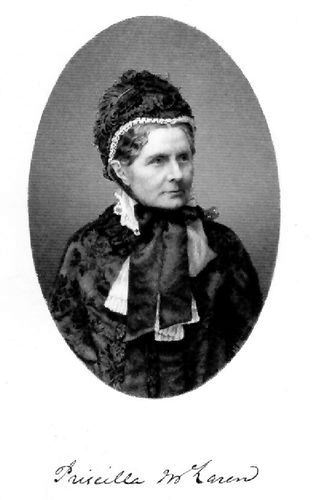
This was a time when the agitation for the suffrage had apparently reached a stationary condition, neither advancing nor receding, in which it was destined to remain for some years longer. Other causes, as the abolition of West Indian slavery and the corn laws, have had a similar period of apparent torpor succeeding the first activity. Justin McCarthy in his "History of our own Times," says:
This is, from whatever cause, a very common phenomenon in our political history. A movement which began with the promise of sweeping all before it, seems to lose all its force, and is supposed by many observers to be now only the care of a few earnest and fanatical men. Suddenly it is taken up by a minister of commanding influence, and the bore or the crotchet of one parliament is the great party controversy of a second, and the accomplished triumph of a third.
During the year of 1879, it was thought desirable to ascertain by some practical test what were the various reasons which caused thinking women to wish for the suffrage; and letters were addressed to ladies who were eminent either in literature or art, or who were following scientific or professional careers, or were engaged in any form of philanthropic work. The answers that were returned were collected into a pamphlet of exceeding interest, which was sent to each member before the debate, and it was amazing to watch from the gallery how the little green pamphlet was consulted and quoted from, in the most opposite quarters of the House, by friends who sought fresh arguments from it or by enemies who were looking for some sentence on which to base a sarcasm.[546]
As a specimen of these letters Miss Frances Power Cobbe said:
So far from the truth is the reiterated statement of certain honorable members of parliament that women do not desire the franchise, that in my large experience I have scarcely ever known a woman possessed of ordinary common sense, and who had lived some years alone in the world, who did not earnestly wish for it. The women who gratify these gentlemen by smilingly deprecating any such responsibilities, are those who have dwelt since they were born in well-feathered nests, and have never needed to do anything but open their soft beaks for the choicest little grubs to be dropped into them. It is utterly absurd (and I am afraid the members of parliament in question are quite aware they are talking nonsense) to argue from the contented squawks of a brood of these callow creatures, that full grown swallows and larks have no need of wings, and are always happiest when their pinions are broken.
The production of this pamphlet marked an era in women's suffrage literature. It was impossible after this to doubt that a large body of thinking women, not the queens of society, but the women who wrote, read, thought, or worked, were in favor of having full admission to political rights and responsibilities.
The chief work of the society had now crystallized into five or six great centres. Edinburgh, under the presidency of Mrs. McLaren, assisted by Miss Wigham and Miss Kirkland, treasurer and secretary, was the recognized centre of activity for Scotland. In Ireland there was a committee in Dublin, of which Mrs. Haslam is the most active member; and the North of Ireland Committee, led by Miss Isabella Tod.[547] The three principal associations in England were those of London,[548] including the east and north-east counties; Manchester,[549] taking charge of the north of England and Wales, and Bristol[550] looking after the West. The officers of the several committees of the three kingdoms form a National Central Committee which has its headquarters in London and superintends all of the work bearing specially upon the action of parliament.
Petitions were still sent in, but no longer in such enormous numbers. It had become evident that parliament cared little for a long roll of names from the unrepresented classes; they were now chiefly collected as a means of discovering how public opinion stood in any particular district. For instance, in 1879, a petition was sent from 1,447 women householders of Leicester. The total number of women householders in this town was 2,610, of whom only 1,991 could be applied to, and there is no reason to suppose that public opinion was more advanced in Leicester than in the majority of large manufacturing towns.
The municipal elections occur in England every November, and our custom in some towns was to call meetings of the women householders in every ward in which there was a contest, to explain to them the responsibilities resting upon the voters, and after an earnest address from some one of the ladies, to invite the respective candidates to speak. By these means not only was the interest of the women awakened in local politics, but the candidates themselves were reminded of the interests of an important section of their constituencies.
With the beginning of 1880, came again the promise of a reform bill. The majority of the Liberal members of the House of Commons had pledged themselves to their constituents in its favor. But as our enemies were still reiterating that women themselves did not care for the franchise, some further proof of their sympathy was in order. The first great demonstration in favor of women was held in Free Trade Hall, Manchester, which seats about 5,000 people, February 3, where women were admitted free, and seats reserved for men in the gallery at 2s. 6d. each. This arrangement was adopted to make it a meeting of women. One hundred gentlemen were present besides the reporters.
The purpose of the demonstration had been explained at preliminary ward meetings to which men and women came in crowds. On the night in question the scene exceeded the most sanguine expectations. Those who had witnessed the great free trade gatherings which assembled to hear Charles Villiers, Richard Cobden and John Bright, never saw a more enthusiastic audience. Mrs. Duncan McLaren of Edinburgh, who had been invited to preside, took her seat followed by an array of distinguished women, such as had never before graced any platform in the history of the three kingdoms, while the vast area and galleries were crowded with women of wealth and culture; factory women, shop-keepers and hard toilers of every station were also there. Some had walked twenty miles to attend that great meeting. They sat on the steps of the platform, climbed on every coigne of vantage, stood in dense masses in every aisle and corner. A large over-flow meeting was also held in the neighboring Memorial Hall over which Mrs. Lucas presided, but even this could not accommodate all who came, and thousands went away disappointed. It was truly a marvelous meeting, grand in its numbers, grand in the enthusiasm which had brought so many thousands together unattracted by the names of any distinguished speakers, to sympathize with each other in a great national movement, and to proclaim unity of action until it was gained; and it was grand also in the impressiveness of the words that were uttered. The president in her clear grave tones which were heard in the breathless stillness over that large assembly, said:
It seems like a dream. But only a grave reality could have brought so many women together. Need we wonder that the beneficent designs of Providence have been so imperfectly carried out when only one-half the intellect and heart of the nation have hitherto been called into action, and the powers of the other half have been almost wholly suppressed? Women are learning along with good men that politics in the true sense has to do with human interests at large.
When Mrs. McLaren had concluded, one speaker after another, gave her special testimony in favor of the necessity of obtaining representation. The number was so great that no one was allowed more than ten minutes.[551]
This demonstration was quickly followed by others that were every way as successful. In connection with one at St. James' Hall, London, over which Viscountess Harberton presided, a procession of working women marched through the streets with a banner on which was inscribed "We're far too low to vote the tax; we're not too low to pay." Here also an overflow meeting was held to accommodate the numbers that could not be admitted into the hall. On November 4, the same scene was repeated at the Colston Hall, Bristol, and Mrs. Beddoe, the wife of a popular physician in that city presided, and on November 11, the last demonstration of that year was convened in the Albert Hall, Nottingham, where Mrs. Lucas took the chair. The following year saw no relaxation in these efforts. The Birmingham demonstration took place on February 22, 1881. It was a most inclement night and great fears had been entertained that it would prove a failure, but nothing had power to keep the crowds of women away or to lessen their enthusiasm. Mrs. Crosskey, the wife of Dr. Crosskey, one of the most respected of the Birmingham Liberal leaders, presided. The next was in St. George's Hall, Bradford, on November 22, and here again Mrs. McLaren took the chair, and said:
We are here to-night in the spirit of self-sacrifice. We have had our sorrows in working on this question. We are here because we know there are on our statute books unjust laws which subject many women to sorrow and suffering, and the fact that we have worked our way to such a platform proves that women are capable of holding a political position, and ought to have a voice in our national affairs. We cannot rest contented under the consciousness of injustice because there are women who accept it as their natural condition. We feel it our duty to arouse our sex everywhere to a sense of their high destiny. The inspiration for this work has come from a higher source than ourselves, and we have had often to feel that God does not leave his children to fight their battles alone.
In 1882 there were two more demonstrations. The first was in Albert Hall, Sheffield, on February 27, Lady Harberton presiding, and it was crowded to overflowing with women of all ranks and conditions of society. The demonstration at Glasgow was on November 3, and no way inferior to the other in brilliancy and interest.[552]
These demonstrations conclusively proved that the suffrage is desired, not only by a few educated women, the leaders of the movement, but by the great masses of the hard-working women. They proved also woman's political capacity and organizing power. No body of persons could possibly do more to manifest their desire for political liberty than the women who have organized and attended these demonstrations. So far as I am aware no such meetings have been attempted by the agricultural laborers over whose enfranchisement the House of Commons has been so deeply exercised, and though the absence of interest which these classes of men have as a whole shown in the question of the franchise is no argument for depriving them of it, the political knowledge and aspirations that women have shown for more than fifteen years ought to count for something in establishing their claim.