FUNNY HOW-DO-YOU-DO'S.
Reading edition
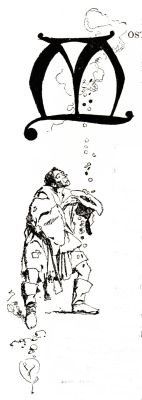
ost amusing are the styles of salutation in different countries, and also very interesting. The following are a few that have been recently brought to notice:
The Chinese gentleman, meeting a friend, shakes his own hand, and inquires in the most complimentary terms about his friend's health. The friend shakes his own hand also, and answers that he is well, but calls himself the most abusive names he can think of, and they pass on.
The French and Italian gentlemen kiss and embrace their men friends when they feel great delight at meeting.
The American fool grasps his friend's hand at the level with his hat, and gently jiggles it.
The politician, just before election, meeting a voter, slaps him vigorously on the back, and shakes his hand at the same time.
The Gambier Islanders rub noses, and if their welcome is very hearty, they each hold their breath for a few seconds, and then give a most alarming sniff, thereby showing great pleasure at meeting you.
HE HAD FALLEN OFF.
Patrick was a new man in the light-horse regiment, but his cheerfulness and witty replies had already established him as a favorite. He had one drawback, however, and that was his awkwardness when on a horse's back. Naturally his position required the opposite of this, and Patrick worked hard and faithfully to acquire the ease and naturalness of his comrades when riding. He congratulated himself that this was at last accomplished; but one day when on parade his horse shied and threw him with considerable force. When he regained consciousness he found that his arm had broken with the fall. With his usual characteristic good humor the poor fellow smiled in his pain as he said:
"Well, well, it's too bad. I thought I had improved in my riding a great deal, but instead I have fallen off."
COULDN'T HEAR THE MUSIC.
Colonel Brown was a mighty fox-hunter, and loved the sport beyond words. He owned a fine pack of hounds, and, during the season, thought of nothing but his hunters, his dogs, and the weather. He was once entertaining a friend from America, whose ideas of hunting any animal involved the use of fire-arms, and who had never seen a fox-hound. He had been with difficulty persuaded to go forth one morning with the Colonel and some friends to a meet, and they were waiting impatiently for the hounds to take the scent. Presently there burst upon their listening ears the din of thirty canine voices in full cry. The Colonel's eyes gleamed, and as he settled his feet in the stirrups and stretched his arm towards the yelping pack, he cried,
"Major, listen to that heavenly music!"
The Major pricked up his ears for a second or two, and then replied,
"I can't hear a thing, those dogs are making such a noise."
The Colonel put his spur savagely into his horse's side, and dashed away, leaving his guest to his own devices.
HE WANTED PAREGORIC.
It is a good thing to remember the right word at the right time, but it is not every one who does it by such a curious succession of ideas as the man who dashed into a Western drug store, and accosted the clerk with:
"Say—I want some medicine, and I want it quick, too! But for the life of me I can't tell what the name is!"
"Well, how on earth do you expect to get it, then?" demanded the disgusted clerk. "I can't help you!"
"Yes, you can, too!" said the would-be customer, promptly. "What's the name of that bay on the lower part of this lake—eh?"
"Do you mean Put-in-Bay?"
"That's it! That's it! And what's the name of the old fellow that put in there once, you know? Celebrated character, you know?"
"Are you talking about Commodore Perry?"
"Good! I've got it! I've got it!" shouted the customer. "That's what I want! Gimme ten cents' worth of paregoric!"
FRANKLIN'S LOAN.
We often learn by sad experience that it is a very unwise plan to give money to the poor. It is much wiser either to loan or to require some slight return in work. This plan tends to raise the respect of the recipient, rather than to form the easily acquired habit of begging. In an old English magazine we find the following letter from Dr. Franklin to some unknown beggar; it is amusing as well as instructive:
"April 22, 1784.
"I send you herewith a bill for ten Louis-d'or. I do not pretend to give such a sum; I only lend it to you. When you shall return to your country you cannot fail of getting into some business that will in time enable you to pay all your debts. In that case, when you meet with another honest man in similar distress, you must pay me by lending this sum to him, enjoining him to discharge the debt by like operation when he shall be able, and shall meet with such another opportunity. I hope it may thus go through many hands before it meets with a knave to stop its progress. This is a trick of mine for doing a deal of good with a little money. I am not rich enough to afford much in good work, and so am obliged to be earning and make the most of a little."
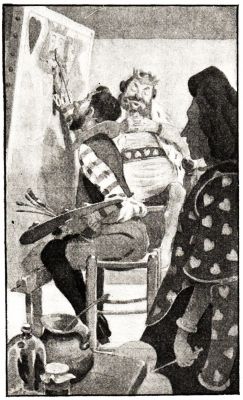
If your Majesty will kindly Stop your funning for a while, I will make a portrait of you In the very best of style. But if you keep on jesting, I am very much afraid Instead of as the king, you'll as The joker be portrayed.