FOREIGN STAMPS ON APPROVAL.
Reading edition
Agents wanted at 50% com. Lists free.
CHAS. B. RAUD, New London, Conn.
FREE 10 VARIETIES; to all sending for approval sheets 50% commission. References required.
FRANK W. ALDEN, Waterville, Maine.
125 dif. Gold Coast, Costa Rica, etc., 25c.; 40 U. S., 25c. Liberal com. to agents. Large bargain list free.
F. W. Miller, 904 Olive St., St. Louis, Mo.
STAMPS! 100 all dif. Barbados, etc. Only 10c. Ag'ts w't'd at 50% com. List free. L. DOVER & CO., 1469 Hodiamont, St. Louis, Mo.

MR. CHARLES CARLETON COFFIN
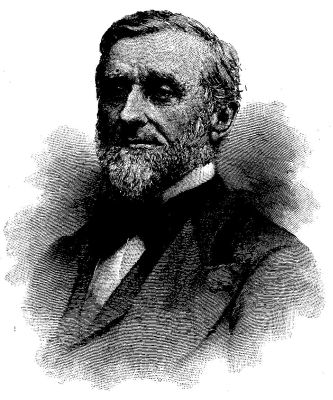
On the 2d of March, at his home in Brookline, Massachusetts, hardly more than a fortnight after his golden-wedding anniversary, Mr. Charles Carleton Coffin passed away. He died suddenly, and so escaped the pain and weariness of lingering illness. Some readers of the Round Table who were in the great throng of young people in the New York Building at the World's Fair, when we kept our first reunion in the beautiful White City, no doubt remember Mr. Coffin as one of the speakers on that happy occasion. With Kirk Munroe, Charles Dudley Warner, and others, Mr. Coffin was present then, and he said several things which made a deep impression on my mind as I looked over the sea of bright young faces gathered under our starry flag. He told the boys that they owed something to their country, that they must grow up prepared to be her lovers and defenders, to stand up for her through all things, and to be good true citizens, and Americans who cared for America wherever they might go.
What Mr. Coffin said that day with his voice so eloquently he had been saying in print for many years. He wrote nineteen books, all of them the gift of a fine mind and true heart, to the boys and girls of America. The names of these books are familiar to you, and the very titles are attractive, as, for example, My Days and Nights on the Battle-field, Following the Flag, Winning his Way, The Boys of '76, Our New Way 'Round the World, and similar stirring and suggestive names. Among Mr. Coffin's delightfully exciting volumes, I am very fond of The Story of Liberty, a book which carries us back to old England, and shows us the cradle of our American freedom in the mother-land. Mr. Coffin had the rare art of standing outside his story and letting it tell itself. He marshalled its incidents and events with historic accuracy, and so made his narrative always useful and acceptable as supplementary reading to the boy or girl who was studying a period at school, but he also allowed his people to speak and act in a natural way. His books unroll like the panorama at the show, and a very satisfactory panorama they are, ideally painted for the library of young America.
Personally Mr. Coffin was full of enthusiasm and enjoyment in his work, and he cared a great deal for his youthful audience. He did not under-rate their intelligence and write down to them. He took it for granted that our young people are intelligent and interested in both work and play, and his books paid them the compliment of dealing with serious themes, though always in a sprightly manner. All his books are so beautifully illustrated that they are really fine picture galleries, in which one sees how people dressed, how buildings and streets looked, and how houses were furnished in the times of which Mr. Coffin wrote.
A man who spent his life in such a beautiful way, writing books so worthy, and never writing a sentence one would wish omitted, bestowed a great gift on his period. His books will live and continue to give pleasure to hosts of young people, to whom Mr. Coffin will be a guide and friend in years to come, for the author of a good book never dies.
Winter News from Jamaica.
It is our winter now in the shape of north winds and cold rains, beginning in November and ending in March or April, and we thoroughly detest them.
I would like to know something about Lord Byron. My great-uncle was at school with him, and I would like to know about him, as I have never read anything about him, or scarcely ever read anything of his.
I have a dear little kitten now—a tortoise-shell. He is very funny. Last night his mother, Trilby, was very uneasy till we let her out. Then after we had shut the door my kitty became unhappy too. So my father opened the door, and cat and kitten ran against each other. Trilby had a nice fat rat. We suppose she must have smelt it outside. Her child's name is Tony. He hates Tipsy, my little dog, and poor Tipsy is so frightened of it, and always walks away when she sees the dear fluffy pet. Would it bother dear Mrs. Sangster if I wanted her autograph? I love Harper's Round Table, as I am sure all members of the Order do.
I have eleven Seychells stamps, and two Sicilies, of which I am very proud. The 1d. blue Jamaica, cut in half, is, I believe, not in any catalogue, though it is perfectly genuine. I have a lovely Lilium Speciosa open now. My aunt gave it to me. The other day we caught a mongoose in a trap, but before my father could shoot it, Tipsy and Bennie, her child, had killed it. Poor Tipsy in the excitement of killing sent her own sharp tooth right through her lip. It must have hurt her dreadfully. I have about 2500 stamps. The other "Round-Tablers" have helped me a lot.
Nellie Stephens. Radnor, Hagley Gap, Jamaica, W. I.
Mrs. Sangster will send her autograph if you ask her.
How Shingles are Made.
In making shingles on a large scale the logs are first cut into blocks by what is termed the "band" saw. They are then taken to the "knee-bolter," where the bark and sap are cut off, making the blocks smooth on all sides. From the knee-bolter they are carried to the "power-feed machine," where a piece is cut out at each movement that is the exact thickness of the shingle. They then drop into a "carrier," where they are transported to the "knot-sawyers," who cut out all knots and even up the edges. They are then packed into bunches, whence they are taken to the "dry kiln" to dry. Only the "red-cedar shingle" is manufactured in this (the southwestern) part of the State. Every bunch has to be weighed when taken from the dry kiln, after which it is loaded on cars and shipped to different parts of the United States. The average mill employs from twelve to twenty men.
Ruel M. Nims. Cosmopolis, Wash.
Questions and Answers.
C. Arnold Kruckman, 1235 North Thirteenth Street, St. Louis, is a bright "Shut-in," and wants to join a literary club as a corresponding member, and to contribute to amateur papers. The N.A.P.A., dear Sir Arnold, is a national association of young persons who publish or contribute to amateur papers. It has a full set of officers, elected annually. Besides, there are, in close affiliation with the National Association, local or district associations, as the Pacific, the Maryland, the New England, etc., each having its own officers. Indeed, so many officers are there that one has to get pretty well into the "dom" in order to tell off-hand who is who, and where all belong. If you fail to hear from President Hancock of the National Association, write to Edgar R. Bauer, 3328 South Ninth Street, your city, to Fred W. Arnold, 3221 State Street, Chicago, or to Charles R. Burger, Colorado Springs, Col.
H. Barker asks how to make a strong but cheap battery to operate an electric bell. It is better to buy than to make a battery, because cheaper. You can get from Bonnell & Co., New York, a good cell for seventy-five cents that will last a long time, and it is what is called a "dry" battery, hence it does not overflow. If you must make one, you will find the "dry" kind expensive, so make a gravity one. Take a glass candy jar and put into the bottom some old copper, any shape. To it attach covered wire, leading out of the jar. Suspend about the middle a piece of zinc, and fasten to it a second wire. Pour lukewarm water in until the zinc is well covered, and drop into it a dozen bits of blue vitriol (sulphate of copper). Let stand for two or three days, cleaning the zinc with a brush daily. Lester L. Riley, 929 East Fifth Street, Dayton, O., wants to send to publishers of amateur papers some stories, poems, etc. Who wants them? W. Randall Sperlock, 3108 Imogene Avenue, Mt. Auburn, Cincinnati, O., is desirous of procuring a copy of Harper's Young People, No. 640, dated February 2, 1892. Who can sell it to him?
Edward D. Cassin: Tuition in the large colleges varies from $40 to $150 a year. Select your college and apply to the Dean for rates. Military academies are located at many points—Manlius, N. Y., Chester, Pa., Cornwall, N. Y., etc. See list of them in the advertising pages of Harper's Magazine. Subjects embraced in the New York Regents' examination are some twenty in number. For full information, which would require this entire page to give you here, apply to Melvil Dewey, Secretary of the State Board of Regents, Albany. The price of the papers, with full explanations, is twenty-five cents. The principal of your school is likely to possess a copy.
This Department is conducted in the interest of stamp and coin collectors, and the Editor will be pleased to answer any question on these subjects so far as possible. Correspondents should address Editor Stamp Department.
The new Cuban Republic, it is understood, has made arrangements with parties in New York city for the printing of bonds and postage-stamps. As yet no designs for stamps have been seen.
In the past few months I have had occasion to examine a large number of stamps, and several collections belonging to members of the "Round Table." I am sorry to say that a great many of the stamps show that they have not been handled with the care they should have had, especially in the matter of hinges, or "stickers." These are seemingly very insignificant things, and any dealer will supply hinges for 10c. per 1000, while for 15c. a very superior quality can be obtained. Home-made hinges frequently injure the stamps through chemicals in the gum or paste making a change in the color of the stamp. Of course the majority of stamps I have seen have been very common stamps, but every collector should take as great pains in the mounting of common stamps as of the most valuable specimens. I advise you to use the best hinges that can be obtained. Their cost is insignificant, and they will save you many damaged stamps.
I have sometimes been asked to recommend Philatelic publications. This has led me to investigate as to the number of Philatelic publications that have been issued up to date. I find that their number is at least 16,000, and probably 20,000 in all. Of these about one-half are in the English language, and most of these have been issued in America. Nearly one-third are in the German language. The balance is distributed among the French, Spanish, Italian, Dutch, etc. Most Philatelic journals have ended their career before the end of the first volume, and very few survive a second year.
C. C. Dunning, Wrightsville, Pa., wants to exchange rare coins.
J. F. Hammond, Harford, N.Y., wants to exchange stamps.
J. Hall.—Beware of counterfeit grilled stamps. They are apt to deceive any one not an expert.
J. Schmidtberger.—Only 363 sets of the U. S. State Department $5, $10, and $20 stamps were made. They should be of equal value, but they are not. The $5 is worth the other three together.
J. A. Rayce.—English stamps are often marked by perforations in the form of initials. This is done to prevent theft, as the owners can prove their property.
J. O'Neal.—Your gold coins have no premiums. You can get a coin book through any dealer.
B. B. Morris.—The 1857 "flying eagle" is worth 5c. if it has been circulated but still in fine condition. The 1856 "flying eagle" is worth $4.
Squire Reick.—No premium.
Reader.—Take the offer of $1 for the 1822 silver half-dollar. You can do no better.
A. Parrish.—I cannot tell you what advertisers mean by "good," but I should say they do not mean uncancelled.
R. N. Kofoid.—It is not advisable to take Revenue stamps from legal documents, unless these documents of themselves have no value at this time.
J. Kolb.—Afghanistan postage-stamps, either used or unused, are very scarce. It is almost an impossibility to obtain a perfect used copy, for the reason that the postage officials in Afghanistan construe their instructions to cancel the stamps used for postage by tearing out a piece of the same, therefore genuinely used stamps from this country can be obtained in no other form.
Philatus.
A bath as cleansing, sweet and mild As Ivory makes it, always seems To bring such comfort, that the child Drops fast asleep with happy dreams.
Copyrighted, 1896, by The Procter & Gamble Co., Cin'ti.