THE RAVELLED MITTEN.
Reading edition
BY SOPHIE SWETT.
(In Two Parts.)
II.
Tilly Coombs watched the sled as it went crunching and jingling up the hill, and then entered her house, with a long sigh that the party was over.
"I'm getting to have good times; they treat me 'most as if I was other folks," she said to herself, happily. She would have liked to tell her mother about the good time, but her father had come home. She heard his querulous voice, and knew that he had been drinking just enough to make it unsafe to disturb him; so she crept softly up to her room—a cold and bare nook under the eaves. She pulled off her ravelled mitten and gazed at it ruefully. "That was an awful queer thing to do!" she said to herself aloud. "And, my! wa'n't it cold in that barn? But nobody saw me—not a soul! Nobody will ever know! The worst of it is, if I had been ketched, then nobody would ever believe that Alf wasn't a thief! An awful queer thing!" For a minute or two Tilly was lost in painful and perplexing reflection. Then she suddenly shook her fist fiercely at her small, crooked reflection in the cracked piece of looking-glass upon the wall. "Tilly Coombs, don't you never darst to think, as long as you live, that anything she did was queer!" she said, in an impressive whisper that echoed from all the empty corners of the dreary little room. And then Tilly tucked a ravelled mitten under the ragged ticking of her bed, and slept in peace.
While she slept, in the great farm-house at the top of Butternut Hill they were still debating whether she should be arrested at once for the theft of the spoons, or whether Patty should try to influence her to confession and the restoration of the property.
It was Aunt Eunice who suggested the latter course. Uncle Reuben believed in stern justice. He said that the Coombs family was a disgrace to the town; the father was drunken and good for nothing, and the son— His voice broke there; he had always felt that Alf Coombs was to blame for Dave's running away.
"We never heard anything really bad about Alf Coombs until—until he ran away," Anson insisted. Aunt Eunice said she thought Mrs. Coombs seemed like a good woman; and Patty tried to defend Tilly, although it was difficult to explain her knitting up that ravelled mitten! She said Ruby Nutting wouldn't believe anything against Tilly, and you couldn't make her. But Uncle Reuben shook his head over that, and said he was afraid Ruby Nutting wasn't very sensible, and Ruby's father seemed to pity bad folks just as much as good ones, and to take just as much comfort doctoring them—without any pay.
But it was finally decided that Patty should tell Tilly of the proof of her guilt that had been discovered. If Patty failed to influence her, then Aunt Eunice would no longer object to her arrest.
Patty lay awake a long time that night, dreading her mission; she wished she might ask Ruby Nutting to help her, but Uncle Reuben thought it best that no one should be told. When she did sleep she dreamed a dreadful dream, in which Tilly Coombs was being pursued down the long hill, through the great snow-drifts, by an army of spoons with grotesque faces, their mouths made of the initial letter that marked the stolen spoons—O for Oliver, Grandma Barclay's maiden name; they were driving Tilly into the mill-pond, which was open as if it were summer, in spite of the January drifts, and Patty awoke with a start and a cry. But bad as was the fantastic dream, Patty said to herself that the reality was worse.
When Pelatiah opened the back door the next morning, a fine pair of chickens plucked and dressed hung upon the knob. That circumstance seemed mysterious. Why should a thief who would steal a dozen spoons have a weak conscience in the matter of a pair of chickens? Where could Tilly Coombs get a pair of chickens? Patty added these mysteries to the one about the ravelled mitten upon which Tilly had knit and knit and yet worn it unmended, and felt as bewildered as she did when Anson made her listen to something out of the rebus corner of the Butternut Weekly Voice. But Uncle Reuben still insisted that it was a clear case; the thief had restored the chickens in order to stifle suspicion about the spoons. As to how the thief became possessed of the chickens, he "didn't think it would trouble Coombses to rob hen-roosts."
So as Patty set out to accuse Tilly of the theft the little spark of hope which the deepened mystery had aroused in her was almost quenched.
Tilly came to the door, and Patty tried to look at her with judicial severity, as she had seen Uncle Reuben look at offenders, but she broke down suddenly at sight of Tilly's beaming, friendly face.
"Oh, Tilly," she cried, "you will give them back, won't you? It was such a dreadful thing to do! But no one shall ever know; Uncle Reuben says so, if you will only give them back."
The warmth and color faded out of Tilly's face until it looked wan and pinched in the morning light.
"It's no matter about the chickens. You needn't even have given those back. Of course it's always terrible to—to take things, but if you'll only give back the spoons."
"The spoons?" echoed Tilly, and there seemed to be such genuine bewilderment in her tone that Patty felt inclined to believe Uncle Reuben's accusation that she was sly. "I don't know anything about any spoons."
"Tilly, your mitten caught on the basket and was ravelled, and—and I saw you knitting it up in the barn." Patty's tone was rather pitiful than accusing, but Tilly's face flamed angrily.
"I didn't s'pose you was one to go peeking round and spying on folks," she cried. "I guess I've got a right to do a little knitting anywheres that I'm a mind to, and—and you can't say 'twas a mitten."
"I saw it, Tilly, a red mitten. This is the yarn that was caught on the basket." Polly drew from her pocket the red ravelling, wound upon a bit of paper.
"Yarn!" echoed Tilly, contemptuously taking a bit between her thumb and finger. "I call that worsted!"
"And are your mittens yarn?" cried Tilly, eagerly. "Because that would prove—-"
"I never said they were," said Tilly, quickly, the color deepening in her cheeks, "I never said anything about them, and I sha'n't show them to anybody. And I never saw your old spoons in all my born days—so there!" Tilly would have shut the door, but Patty prevented her.
"Oh, Tilly, I'm afraid you don't realize. Uncle Reuben will send a sheriff to arrest you. And the girls have thought so much of you—especially Ruby Nutting."
"You needn't say a word about her." Tilly swallowed a lump chokingly. "You needn't tell her, nor anything. She hasn't got anything to do with it. She's give me all the chance I've had to get good times, and her father has been awful good to us; and now I suppose they won't be any more. But—but poor folks must expect to be called thieves, and took up. The worst is, now they'll be sure Alf broke into that store, and he didn't! no more'n your cousin did! No, that isn't the worst. The worst is that Miss Farnham, the milliner, won't have me now! She was going to take me half a day to do chores and help her; 'twas an awful good chance! It chirked mother right up to think we were going to be so much like folks, and now—" Tilly kept her voice steady, but it was by a strong effort.
"Tilly, it might come right now if you would only tell all about it," said Patty, earnestly. "It seems as if there were some mystery."
"You go 'long home!" cried Tilly, fiercely, and slammed the door upon Patty. Her sharp, hard, little features were working convulsively, and Patty heard a long sob inside the door.
She went home feeling more strongly than ever that there was a mystery, and pleaded earnestly for Tilly. Aunt Eunice joined her, and promised to go and see Tilly's mother, and talk with her about the matter if Uncle Reuben would delay his sterner measures.
They might not have been able to persuade him to do so—his bitter grief for his son had served to harden him against Alf Coombs's relatives—if nature had not seemed to take Tilly's part and enforced a delay; the heavy snow-fall was followed by a pouring rain and what they called at Butternut Corner an old-fashioned January thaw. Uncle Reuben was a mill-owner, and his property was threatened by the freshet, so he had no time to think of Tilly Coombs.
Aunt Eunice had a touch of her old enemy rheumatism, and could not go down to confer with Mrs. Coombs, and so the matter remained unsettled.
On the very first day when the sun shone out Ruby Nutting came up the hill to ask Patty to take a walk. It made no difference that they would go over shoe in mud with every step. Ruby wouldn't take no for an answer; that was the way with Ruby; besides, she said that this was something very particular. When they reached the foot of the hill Patty found herself being led into the road which bordered the old mill-pond, and she shrank back.
"Yes, we're going to miser Jensen's house, but you needn't be afraid; he has gone away for the winter. There won't be any more clothes-lines or hen-roosts robbed now. And that makes me think. Oh, Patty, what did your aunt think of those chickens that were tied to her door-knob? And what did you think of losing your nice roasted ones? But I didn't mean to tell you that I took them until you had seen poor Tramp. Your aunt liked Tramp; she will forgive me when she knows I took them for him."
"You took them—for Tramp?" repeated Patty, in bewilderment. "I heard that Tramp was mad!"
Tramp was an old dog which had roamed the streets of Butternut Corner and Bymport for years, making his home for a week or two at one place or another, as the fancy seized him, generally welcome, for he was a favorite.
"He had one of his fits, convulsions, in the street at Bymport; he has often had them at our house, poor fellow! It seemed as if he came there when one was coming on, knowing that we would take care of him. Some foolish person raised a cry of mad dog, and people chased him with pistols and clubs; he ran up here, and they lost track of him. That night on your sled Alvan Sage told me that he had heard a dog whining, as if in pain, in the miser's house; he said no one dared to go near, because they thought it must be the mad dog. That was a week after they had driven poor Tramp out of Bymport, and I thought of him suffering and without food, and I seized the first basket I could lay hands on, and pulled out a pair of roast chickens. I thought I never should get there through the drifts! I borrowed a lantern at Jake Nesmith's, and it really wasn't far, but the drifts were so deep! The poor dog's leg had been hurt by a stone or a club so he could hardly move, and he was half frozen and starved. Tilly, if you could have seen him eat your chickens, I know you would have thought it better than to have them for the party! I built a fire—luckily there was wood in the cellar—and I've been there every day in all the rain to take care of him. Papa has been with me, and to-morrow we're going to send Tramp to my Uncle Rufus at Bethel, who is very fond of dogs, and will take great care of him. We couldn't take him home, because Aunt Estelle is so nervous, and she wouldn't believe he wasn't mad. I knew you would like to see old Tramp."
"But—but the ravelled mitten!" faltered Patty, who couldn't as yet "see through things."
"How did you know about that?" asked Ruby, in astonishment. "I caught my mitten on your basket in my haste to get the chickens, and the edge was all ravelled off, and—the very queerest thing that ever happened!—some one knit it on again—with yarn. The mittens are worsted; see the difference." Ruby held up the mended mitten, with an edge of coarse yarn, to Patty's gaze. "It was done at the party! I think it must have been Grandma Pitkin who did it. Perhaps it had dropped from my pocket in the dressing-room, and she saw it. Wasn't it kind of her? I must go and thank her."
Patty tried to say "it wasn't Grandma Pitkin; it was Tilly Coombs," but there was a lump in her throat that choked her. And it happened that they just then reached a turn in the road and saw a girl's figure ahead of them. She walked from side to side of the road, keeping her eyes on the ground, and occasionally prodding into it with a stick which she carried.
"It's Tilly Coombs, and she seems to be searching for something," said Ruby.
Patty darted on ahead, and seized Tilly around the neck with both arms. Even then Patty saw how pitifully worn and pale the girl had grown. What had been only a little comedy to Ruby, pleasant because she had so happily relieved the dog's sufferings, had been almost a tragedy to Tilly Coombs.
"TILLY, CAN YOU EVER FORGIVE ME?" SAID PATTY.
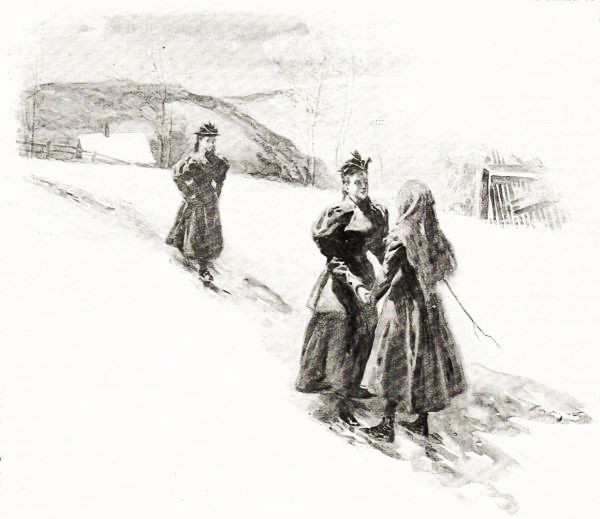
"Tilly, can you ever forgive me?" said Patty, struggling with a tendency to cry. "I know all about it—how you knitted the mitten to keep Ruby from being found out, and how you bore it all and didn't tell."
"You hain't been telling her?" said Tilly, anxiously. "I don't think she knows she lost the spoons. I saw that she came down this road that night, and I've been hunting for them. I ain't going to have a mite of trouble come on her. She's been different to me from what anybody ever was before, not looking down on me as if I was the dirt under her feet. And her father, too, he's come and come to see mother when he knew there wa'n't a cent to pay him with. I have bore a sight"—Tilly's strained voice threatened to break—"but I can bear more. I won't have trouble come to her if I can help it. You hain't been telling her all about it?"
Ruby came up to them before there was time for an answer.
"Hunting for something, Tilly?" she asked, easily. "I'm afraid you won't find it in all this mud."
"No—-no, I hain't found them," stammered Tilly, uncertain whether Ruby knew about the spoons. "But"—and her face lighted with sudden eagerness—"I've found something queer; you see if it isn't queer." Tilly turned back, running before them up to the door of the miser's little house. "No, it isn't the tracks," she added, as Ruby hurriedly explained about the dog. "It's the door-stone; it looks as if it had been moved lately. If you are looking along on the ground, as I was, you notice it."
"Well, what if it has?" asked Ruby, wondering, and a little impatient.
"Somebody might have hidden something there," said Tilly, whose longing to find the spoons was evidently desperate.
"Some of the miser's treasures or his clothes-line booty," cried Ruby, gayly, for miser Jensen was suspected of petty thieving, and Butternut Corner breathed more freely when his summer sojourn was over. "Girls, let's pry the stone up!"
"I tried to, alone, but I couldn't," said Tilly, eagerly bringing a long stake from the tumble-down fence.
The three girls tried for a long time with their united strength. The stone was flat and not very heavy, but was unwieldy, while Tramp, let out of the house, barked and capered with excitement in spite of his injured leg.
When at last the stone was overturned, there was indeed something snugly tucked into a hole dug beneath it—a bundle tied up in a bandana handkerchief. Miser Jensen always wore old-fashioned bandana handkerchiefs. When the girls opened it they found it filled, not with spoils of the Butternut Corner clothes-lines, but with watches and jewelry, most of it marked with the name of Burton, the Bymport jeweller, whom Dave Perley and Alf Coombs were suspected of having robbed.
Patty burst into tears of joy.
"It was miser Jensen who robbed the store! Tilly, don't you see what it means? No one can ever say it was the boys again!"
Tilly trembled in all her thin little frame, but her face was alight with joy. "I know where they are! I can tell now," she said, proudly, "Alf wrote to me. They are both in my cousin's store in L——; it's a jewelry store. It was because Alf liked to see watches and things fixed that he was always at Burton's, and so they suspected him. Dave didn't want to be a minister or a farmer; that was why he ran away, but he wants to come home; he says it doesn't pay to run away; and now he can!"
All the cloud lifted from Butternut Hill. Patty could go home and tell Uncle Reuben and Aunt Eunice; it seemed to her too good to be true.
They forgot all about the spoons; even Tilly forgot them. And when Aunt Eunice heard the good news, she said she didn't care anything about the spoons, but she would do everything she could to make amends to Tilly Coombs for the unjust suspicions.
The spoons were found the very next day. Jake Nesmith, the blacksmith, saw the corner of the napkin in which they were wrapped sticking out of a mud-puddle. Ruby had pulled them out of the basket with the chickens, and dropped them in the snow.
Wheels had gone over them, and they had to be sent down to Burton's to be bent into shape—that was all.
Alf Coombs is still in his cousin's store, where he does well, but Dave has come home to Butternut Hill. He says he isn't sure that he shall ever be a minister or a farmer, but he is sure he shall never be wild again. The awful suspicion that fell upon him cured him of that. Miser Jensen was found and arrested, and confessed the theft; he escaped from prison, but there is no fear that he will ever return to Butternut Corner. Dr. Nutting wished to send Tilly to the Academy with Ruby—the whole story of the ravelled mitten was told after the spoons were found; no one could expect a human girl like Patty to keep it—but Tilly thought she had a knack for millinery, and she liked to be independent, and Miss Farnham wanted her; she says she is a good business woman, although she is only fifteen.
The doctor always takes off his hat to Tilly Coombs, while he gives only a careless nod to the other fifteen-year-old girls. The minister, who is his great friend, and hears a good deal about Butternut Corner people through him, does so too, and just now the young people of the Corner are making preparations for another birthday surprise party. They have hired the new Town-hall, because the little house at the foot of the hill wouldn't begin to hold Tilly's troops of friends, and everything is to be in the very best style that is known to Butternut Corner, because they want Tilly to feel that she is "just like other folks."
The All-Boston interscholastic football eleven for 1895 is as follows:
Jack Hallowell, Hopkinsonend.
J. J. Purtell, English High-Schooltackle.
L. Warren, Cambridge High-Schoolguard.
G. Calahan, English High-Schoolcentre.
W. D. Eaton, English High-Schoolguard.
R. C. Seaver, Brookline High-Schooltackle.
Lee Beardsell, Cambridge High-Schoolend.
A. D. Saul, Cam. High-Schoolquarter-back.
T. H. Maguire, Boston Lat. Schoolhalf-back.
A. C. Whittemore, Eng. H.-S.half-back.
C. Watson, Cam. High-Schoolfull-back.
J. J. PURTELL, Tackle.
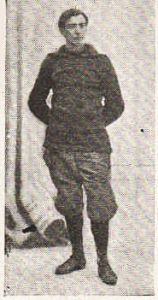
LEE BEARDSELL, End.
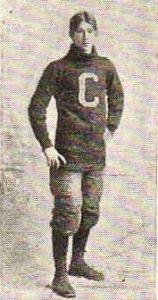
GEORGE CALAHAN, Centre.
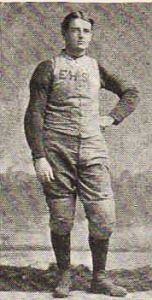
T. H. MAGUIRE, Half-back.
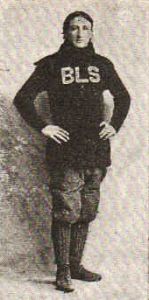
L. WARREN, Guard.
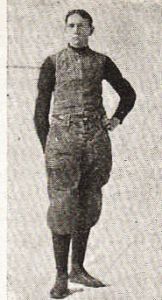
W. D. EATON, Guard.
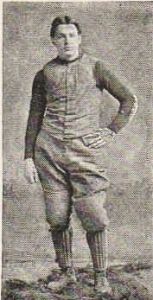
A. C. WHITTEMORE, Half-back.
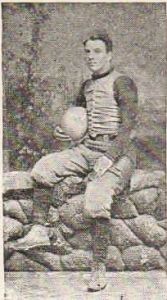
R. C. SEAVER, Tackle.
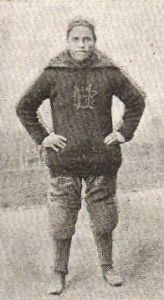
JACK HALLOWELL, End.
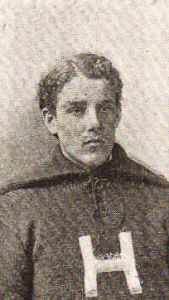
CARROLL WATSON, Full-back.
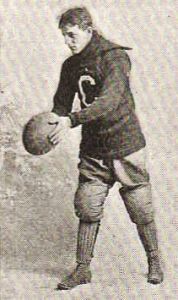
A. D. SAUL, Quarter-back.
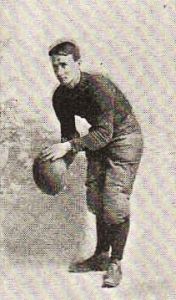
The substitutes for this team are S. W. Lewis, Brookline High-School, end; A. P. Martin, Hopkinson, tackle; Oliver Talbot, Brookline High-School, guard; Brayton, Boston Latin School, centre; E. H. Sherlock, English High-School, quarter-back; and W. W. Aechtler, Brookline High-School, back.
The first requirement that has been considered in selecting the players for this representative All-Boston eleven has been sand. By sand is meant not only physical fearlessness, but even more than that—the moral courage to go into every game and play the hardest kind of football to the end, whether the team is winning or is being overwhelmingly beaten. That is the spirit that is worth more to a team than muscle or science, for without it muscle and science are powerless. It is that which has had more influence than anything else in determining the selection of the All-Boston team. Not that the eleven sandiest boys have been chosen, but the eleven who combine sand and skill in the best ratio. There are no quitters in this combination.
For centre, there is no doubt that Calahan of English High is the most capable man. His playing is as aggressive and lively as any boy's in the League; for he makes himself felt in tackle and end plays, and opens up holes in beautiful style for his backs. The best man for substitute centre would be Brayton of Boston Latin. Warren of Cambridge High is probably the best guard the League has ever developed. He has unlimited sand and endurance, understands the theory of his position perfectly, and is a most valuable rusher and interferer. Close behind him in prowess comes Eaton of English High. Before this year he has played centre, but now he has turned out to be a powerful guard. English High's surest play was to rush Eaton through the other guard. When the referee would call "third down, three yards to gain," Eaton almost invariably would make it first down. Far behind these two guards, but next best, is Talbot of Brookline.
For tackles, one is easily decided on; that is Seaver of Brookline High, who has played a steady, sandy, reliable game throughout the year. The other tackle is harder to choose. I give the place to Purtell of English High, because, while not so valuable a man on the attack as Martin of Hopkinson, his defence is much more reliable. At end one man has shown a decided superiority in all the duties of the position; that, is Hallowell of Hopkinson. He keeps his eye on the ball every moment that it is in play, gets down on kicks beautifully, and I doubt if the aggregate gains round his end in all the League games would amount to ten yards. The other end I give to Beardsell of Cambridge High. He is not so brilliant as Lewis of Brookline High, but is much steadier and more aggressive. Lewis is apt to weaken when his team is losing ground, while Beardsell can be depended upon at any stage of the game.
Everybody admits that Arthur Saul, of Cambridge High, is the best quarter-back of the year, and everybody is full of praise for his plucky work. Not since the days when Bob Wrenn played quarter for this same team have such hard tackling and clever passing been seen. In only one thing does Sherlock of English High, his nearest rival, outclass him; that is in running his team. But giving signals, while very important, is not essentially the duty of a quarter-back, as in many of the 'varsity teams some other player calls them. And Saul is far and away ahead of all the other quarters in every other respect.
The trio of backs I would select are Whittemore of English High, Maguire of Boston Latin, and Watson of Cambridge High. On offence, it would not matter much just who took the middle position; but on defence Whittemore and Maguire should play rush-line half-backs, and Watson full-back, for he is the surest man to tackle and handle punts. All three of these men can kick well; but the brunt of this work would fall to Maguire, as he gets the ball away much more quickly than the others. Whittemore and Watson could both buck the centre, and all three are exceptionally good 'round-the-end men. For substitute half we have Aechtler of Brookline, who is just a trifle behind the others. It is his weak defence that deprives him of a regular place.
Maguire should be Captain of this team. After his work with the Boston Latin team there can be little doubt of his capability. To be sure, Calahan was Captain of the winning team, and did all manner of fine work in that capacity. But his team was much better supported by the school, and had the services of a thoroughly competent coach, while Maguire did all the work of getting his team together. Moreover, Maguire has the advantage of position and of experience, having been Captain part of last season. And Calahan has never been really put to the test, as his men have always been victorious, and never even in danger of losing a game. In Maguire the team would have a courteous, energetic, brainy Captain, and, above all, a Captain for whom they would always instinctively do their best work.
The standing of the teams in the Senior League is as follows:
GamesGamesGamesPointsPoints
Won.Lost.Tied.Won.Lost.
E. H. S.5005614
Hop.4104036
B. H. S.2302216
C. H. & L.041840
C. M. T. S.0411436
SCORES OF GAMES PLAYED.
English High4—Brookline0
English High18—Hopkinson6
English High4—Boston Latin0
English High16—Cambridge High and Latin0
English High14—Cambridge Manual8
Hopkinson6—Boston Latin2
Hopkinson6—Brookline High4
*Hopkinson6—Cambridge High and Latin8
Hopkinson16—Cambridge Manual6
Boston Latin6—Brookline0
*Boston Latin0—Cambridge High and Latin4
Boston Latin6—Cambridge Manual0
Brookline High18—Cambridge High and Latin0
*Brookline High4—Cambridge Manual0
Cambridge High0—Cambridge Manual0
* Protested; ordered to be played over; forfeited by Cambridge.
The standing in the Junior League is:
GamesGamesGamesPointsPoints
Won.Lost.Tied.Won.Lost.
Somerville High50110610
Newton High4116932
Chelsea High4207674
Roxbury Latin3308241
Dedham High1311640
Hyde Park High1412084
Roxbury High050670
The results of the New York, Pennsylvania, and Connecticut Interscholastic League schedules are here given for the purpose of record:
NEW YORK I.S.F.B.A.
FIRST SECTION.
Cutler24—Hamilton0
Trinity16—Columbia Grammar0
Trinity54—Hamilton0
Trinity24—Cutler4
Colombia Grammar forfeited to Cutler.
SECOND SECTION.
Berkeley30—Barnard0
Berkeley34—De La Salle0
Barnard forfeited to De La Salle.
FINAL GAME.
Berkeley38—Trinity0
PHILADELPHIA I.S.F.B.A.
October18De Lancey22—Adelphi6
""Penn Charter68—Cheltenham0
""Germantown30—Haverford0
"25De Lancey34—Haverford0
""Germantown, by forfeit from Cheltenham.
""Penn Charter28—Adelphi0
November1Penn Charter54—De Lancey0
""Cheltenham40—Haverford0
""Germantown12—Adelphi2
"8Adelphi12—Haverford4
""De Lancey34—Cheltenham0
"15Germantown18—De Lancey6
""Penn Charter34—Haverford0
""Cheltenham4—Adelphi0
"22Germantown6—Penn Charter4
CONNECTICUT I.S.F.B.A.
NORTHERN DIVISION.
October26Hartford22—New Britain12
""Norwich F. A.4—Conn. Lit. Inst.4
"30Conn. Lit. Inst.14—Norwich F. A.0
November2Hartford22—Conn. Lit. Inst.0
SOUTHERN DIVISION.
October26Bridgeport14—Hillhouse H.-S.4
""Meriden54—Waterbury0
November2Bridgeport42—Meriden0
FOR THE CHAMPIONSHIP.
November9Bridgeport10—Hartford10
"16Bridgeport4—Hartford4
"28Bridgeport16—Hartford12
If we may judge from the number of protests continually cropping up in the New York League, there must be something radically wrong with school sport in this town. The unhealthy desire to win seems to characterize the young athletes of New York to a far greater extent than the healthy spirit of indulging in sport for sport's sake. The greed for medals and pennants seems to overshadow the true object of all these contests, and this develops a spirit of professionalism, which, if not smothered at once, will, in a very short while, put an end to every kind of inter-school contests that are now known.
When I speak of the greed for medals I am not talking at random. I am telling of what I know. Last spring, at some games on the Berkeley Oval, two young men who were tied for second place in a certain event sat on the turf near where I stood, talking over the commercial aspect of their prowess. They were trying to arrange a deal. One proposed to the other to surrender second place if his rival would allow him to keep the medal. The second mercenary, however, would not agree to this. He, too, wanted the medal, and was perfectly willing that the first "sport" should take the "empty honor" of second place. Both athletes being therefore so morally corrupt, no deal could be arranged as to who should have the medal, and they were thus forced by their very spirit of unsportsmanship to decide the tie by actual contest. This is a true story, in spite of its apparent enormity, and I know the names of both young men.
When such a spirit exists among individuals, it is easy to see how entire teams may be led into a misconception of the ethics of sport. I have no doubt, too, that a good many young men look upon it as clever work to evade the rules and to compass an end in some unfair way, provided they can do it without entailing punishment. A great deal of this sort of thing doubtless started from ignorance, but nowadays it is done because former breaches of honesty have been allowed to pass unpunished. This sort of thing could not happen if the principals of the schools were unanimous in their determination to keep sport clean and absolutely honest. There are two or three head-masters, I know, who feel this way, but the others wink at a great many small infractions, and by so doing encourage greater ones which they know nothing of.
Now that athletics have become such an important feature in the life of American boys and men, I believe that it is just as important for school athletes to be instructed and advised in these matters as it is in any other branch of endeavor where morals and honesty and similar qualities are involved. The trouble is that young men hitherto have been left entirely too much to shift for themselves in athletics. It is not to be expected that they should always do the right thing, and so those who are responsible for these young men are to blame if they have not counselled them as they should.
In other words, the time has now come when every school that recognizes athletics must recognize that there is a moral as well as a muscular development to be looked to, and those pedagogues are unfaithful to their trusts who do not give a greater amount of attention to the former than they do to the latter.
To bring a general discussion to a point with specific examples, let me cite St. Paul's School, Concord, and Lawrenceville. At both of these institutions the professors give personal attention to sport, and there are especial and particular men—men of position, education, integrity—in charge of the moral side of the scholars' athletic development. Because of the clamlike attitude of the authorities of St. Paul's, I know less of the particular methods in vogue up there. But with the conditions at Lawrenceville I am familiar.
Several years of experience there have shown the authorities that the sports of the students can be kept in better condition if expert players are detailed to manage the coaching and the games, but yet they do not believe in hiring a man for the football season regardless of his character and career in college. Since 1889 the policy of Lawrenceville has been to have men as instructors who were not only the best all-'round athletes of their college, but also the best scholars, and held in high esteem for character. In 1889, for instance, George, Princeton's centre-rush, went to Lawrenceville to teach mathematics. After school hours he coached the football team, following up the players day after day throughout the season. This is done in the just conviction that boys should be taught how to play as well as how to study. Two years ago Mr. George retired from active work in football, and is now only an adviser, holding his position in the mathematical department.
In 1893 Lawrenceville secured Street, who played with Garfield on the Williams team for three seasons, and received the cup given to the man who made the best record in athletics during his college course. Street was engaged to teach Latin and English, and incidentally he has taken up the control of athletics. To him has been intrusted the responsibility of allowing certain men to engage in football and baseball; he gets up all the plays the boys use; he also follows up the team every day in its practice, being practically Captain at all times, except when a match-game is in progress. Street is a man of most excellent character, and will not allow boys on the various teams to use profane language for a moment.
Evert unfair dodge and trick which a boy exhibits is instantly stopped, and the men are urged to play perfectly straight, honest ball. Such a thing as slugging, therefore, is unknown. The same thing is done in the baseball season. This year Ward, the Princeton player, went to the school to teach mathematics. He was the Latin salutatorian of his class last year, and won the Fellowship in Mathematics, besides being considered the brightest man Princeton has graduated in fifteen years. He is to help the Lawrenceville students in football and baseball just as Street is doing.
Now the point of this recital is to show that Lawrenceville has at present on its pedagogic staff representatives of five large college teams, each one of whom is known as well for the honesty as for the quality of the game he played on the field. I believe that the future of our college athletics rests with the schools that are this year, and next year, and so on, sending out to the larger institutions men who will control the athletic organizations. Boys who learn bad tricks in schools will play them in a more outlandish and stronger way when they reach college teams. I believe, therefore, that it is the duty of schoolmasters to see to it that their wards are instructed in the ethics of sport as well as in the rule of three; for boys who have been left to themselves to learn, and have learned to win by unfair means, will turn out badly, as far as their future in athletics is concerned, and they may then justly look back to their school days, and blame those whose duty it was to teach them the truth of sport. Beneath the surface of these words are a wanting and a suggestion which I sincerely trust may be heeded and accepted.
It is pleasant to learn that all the world is not hunting after medals, and that the spirit of true sportsmanship is still alive in the land—even if it is in the minority! As a consequence of my sermons of the last few weeks I have received a number of letters. One correspondent says: "I won a swimming match once, and got a ribbon for it, and I prize that just as highly as though it were a gold medal. I think the old Grecian and Roman method of awarding wreaths a striking lesson for this age, and I hope they will play a prominent part in the forth-coming Olympian games."
The poor showing made by the Cambridge Manual-Training School team this fall was largely due to poor management. They had for manager and coach a graduate who knew nothing of football nor of training a team. As a consequence, they went into the games a pitifully overworked and spiritless set, depending upon fantastic tricks to win victories. The futility of it caused the appointment of a coach who had played football and understood the game. It was too late, however, to do any better than tie the demoralized Cambridge High team in the Thanksgiving-day game.
Owing to a delay in the receipt of the photographs, the announcement of the All-New-York interscholastic football team has been necessarily postponed until next week.
The Graduate.