THE CROWN OF AN AMERICAN QUEEN.
Reading edition
BY SALLY NELSON ROBINS.
In the age when America was but a name and Virginia only a hamlet, there was a dusky queen who wore a silver crown by order of his most sacred Majesty King Charles II., King of England, Scotland, France, Ireland, and Virginia.
There are few distinct Indian personalities. Powhatan, Pocahontas, Opechancanough, Totopotomoi and his wife the Queen of the Pamunkeys, are savage heroes which sentinel the seventeenth century; they all belonged to the Pamunkey tribe of the Great Powhatan Confederacy, the most powerful Indian combination that ever existed.
When the boisterous and heroic Nathaniel Bacon was in the flush of his wonderful success, and had brought his followers to Jamestown, he demanded of the Governor redress for Indian depredations and outrages. When the assembly in council was sitting, the Queen of the Pamunkeys came in, leading her son by the hand. She came to tell of grievances also. She wore a dress of black and white wampum peake and a mantle of deer-skin, "cut in a frenge" six inches from the outer edge. It fell loosely from her shoulders to her feet. On her head was a crown of "purple bead of shell, drilled." She was a beautiful woman, old chronicles tell us, and she walked in with a proud but aggrieved countenance.
She sat down in the midst of the assembly, listening eagerly to the arguments for the suppression and, if need be, the extinction of her race. And she remembered Totopotomoi bleeding for these people who would not recognize her rights. She arose and made a speech in her own tongue, eloquent with gesticulation; the refrain of it was a mad wail: "Totopotomoi chepiak! Totopotomoi chepiak!" (i.e., Totopotomoi dead).
Colonel Hill the younger, touched a fellow-member on the shoulder, and whispered: "What she says is true. Totopotomoi fought with my father, and fell with his warriors."
But the assembly would not listen to the poor suffering Queen. They wanted more men to fight more battles, and the Queen of the Pamunkeys must furnish her quota.
"How many men will you furnish?" asked Nathaniel Bacon. "How many will you give to fight and subdue the treacherous tribes which threaten our peace?"
The Queen was silent. She remembered her husband and his slain braves. She had fears for her son, and she would not speak.
"How many?" asked Bacon again.
The poor Queen had her head turned away, and bowed.
"How many?" demanded the famous rebel again.
Then she slowly turned her lovely face, and softly whispered, "Six."
Her answer infuriated Bacon, who considered the number contemptible. "How many more?" again he asked.
The Queen gave him a glance of indignant hate, and haughtily answered, "Twelve." Then she gathered her robes about her, and majestically left the room.
Once again do we see the Queen of the Pamunkeys, and now in fear and adversity. Bacon in his mad career destroyed the Pamunkey settlement—the same tribe which had so nobly assisted the English.
The poor Queen, terrified, fled far into the forest, accompanied by "onely a little Indian boy." Her old nurse followed her, but was captured. Bacon ordered the old woman to guide him to a certain point, but she, full of revenge, led him in an opposite direction, whereupon the rebel ordered her to be knocked in the head.
The Queen wandered about almost crazy, and at last determined to return and throw herself upon Bacon's mercy; but as she was rushing towards her desolated wigwam she came upon the body of her murdered nurse, which so affrighted her that she ran back into the wilderness, where she remained "fourteen daies without food, and would have perished but that she gnawed on the legg of a terrapin which the little Indian boy brought her."
THE GIFT OF KING CHARLES TO THE QUEEN.
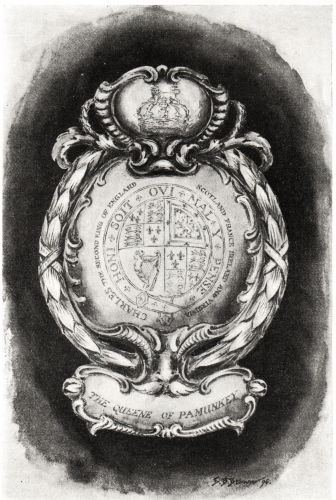
So this Queen in history has but a few bold touches, but they pass her down as a martyr, in consequence of which, and for what her husband did, Charles II. bestowed upon her a silver crown, with the lion of England, the lilies of France, and the harp of Ireland engraved thereon.
Savages are not averse to the baubles of civilization, and the crown which their Queen wore was a blessed treasure to her tribe for a hundred years after the Queen was dead.
The Pamunkey tribe, or a pitiful remnant of them, still dwell in Virginia, on the river which bears their name. They have a chief and their own government. Annually they send tribute of fish and game and Indian handiwork to the Governor of Virginia. They are weakening physically, and pray for new blood from the Western reservation.
Once they started for the West, carrying their best treasure, the silver crown. They came to the plantation of Mr. Morson, at Falmouth, and there bad weather and sickness made them halt. Mr. Morson attended to their physical wants, and allowed them to pitch their tents upon his land until their distress abated.
"What do we owe you?" asked the chief, when they had decided to return to their former Virginia reservation.
"Nothing," said Mr. Morson. Perhaps he remembered Totopotomoi and his sorrowing Queen.
"Then we will give you what we value most," and the chief presented to Mr. Morson the crown of the Queen of the Pamunkeys. For three generations it staid in the Morson family, but lately it has been purchased by the Association for the Preservation of Virginia Antiquities.
The crown is really a frontlet, and the Queen of the Pamunkeys wore it upon her brow surmounted by a red velvet cap; the cap has long ago been entirely destroyed by moths; two silver chains bound the frontlet to the head.
The All-New-York Interscholastic Football Team for 1896 is as follows:
Harold Hasbrouck, Berkeleyleft end.
Jeremiah Manning, De La Salleleft tackle.
B. P. Kinney, St. Paul'sleft guard.
W. B. Boorum, Jun., Poly. Prep.centre.
G. H. Miller, De La Salleright guard.
Marshall Page, Trinityright tackle.
D. P. White, St. Paul'sright end.
T. B. Taylor, Trinityquarter-back.
W. Dickerson, Jun., B'klyn Highhalf-back.
J. D. Tilford, Jun., De La Saller. h.-b.
S. L. M. Starr, St. Paul'sfull-back.
HAROLD HASBROUCK, End.
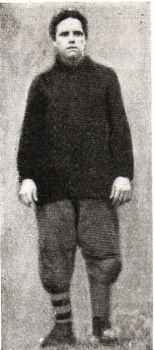
B. P. KINNEY, Guard.
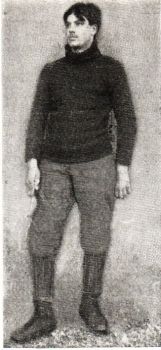
W. B. BOORUM, JUN., Centre.
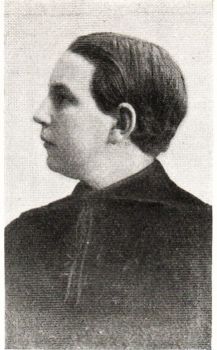
G. H. MILLER, Guard.
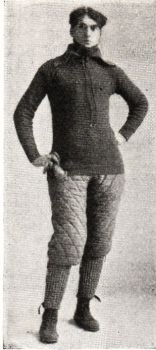
D. P. WHITE, End.
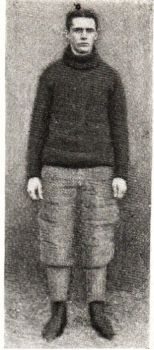
S. L. M. STARR, Full-back and Captain.
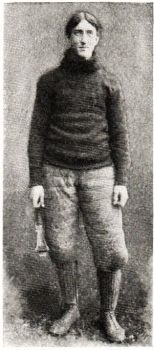
WALTER DICKERSON, JUN., Half-back.
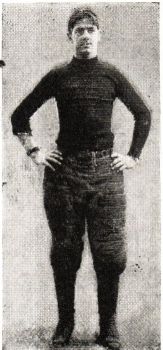
JEREMIAH MANNING, Tackle.
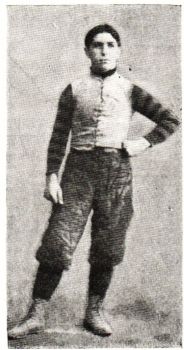
T. B. TAYLOR, Quarter-back.
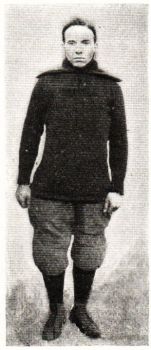
MARSHALL PAGE, Tackle.
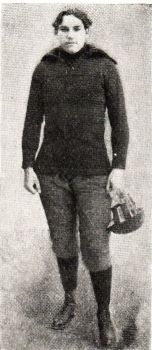
J. D. TILFORD, Half-back.
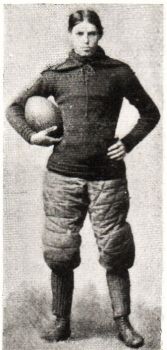
The selection of an All-New-York Football team this year is not an easy task. There is a wealth of material to choose from, but the very fact of there being so many players of almost equal merit makes the task all the harder. The season just closed has been a remarkable one in the history of interscholastic football both in New York and Brooklyn, and the contest for the championship of both cities has been a most stubborn one. The teams have shown marked improvement in their knowledge of the game and the variety and execution of their plays, and the boys have shown an aptitude for the sport that gives great promise for the future. The team selected is a remarkably heavy one, and under proper coaching and training would undoubtedly put up a magnificent game against any college eleven.
Hasbrouck of Berkeley School is undoubtedly entitled to the position of left end. He weighs 177 pounds, is a very fast runner, a sure tackler, and strong at breaking up interference. He played on the '93, '94, and '95 teams, and understands his position thoroughly. He gets down the field under kicks with remarkable speed, and rarely, if ever, misses a tackle. He is not liable to be easily hurt, and only once during the season has he been injured painfully, his injury consisting of the dislocation of a shoulder. He captained the Berkeley team this year, and would undoubtedly have turned out a far stronger team had he not been hampered by outside influences.
At left tackle Manning of De La Salle seems to be the best choice. He weighs 176 pounds, is a very fast runner, a hard tackler, and a sure ground-gainer when the ball is given to him. A remarkably powerful fellow, he rarely is injured, and has played the entire season through, improving with every game. He breaks through his opponent with great fierceness, and goes at interference with a determination that is simply irresistible.
Kinney of St. Paul's is thoroughly able to take care of the position of right guard. He weighs 187½ pounds, is a player of great strength and courage, breaks through his man fiercely and with determination, and added to his ability to block hard is the qualification of an able tackler. He has played two seasons on the St. Paul's team, and is a steady, reliable player that makes his presence felt in every game. He runs well with the ball, gets his head low, and carries his tackler along with him whenever he is met.
At centre, Boorum of Brooklyn Poly. Prep. could easily handle any man that has played that position in the two interscholastic leagues this season. He weighs 170 pounds, puts the ball in play with accuracy and precision, and blocks his man strongly and surely. He is a tower of strength in blocking centre plays, and has no fear of the strongest kind of interference.
At right guard I place Miller of De La Salle, who formerly played on the Peekskill Military Academy. Miller weighs 185 pounds, and is one of the strongest, fiercest, and most determined players of the Interscholastic League to-day. He is a little over six feet in height, and built proportionately. His strong feature is in his guards'-back play, in which he smashes the opponents' line wide open for his backs with the ball. He is also good at tackling and breaking through the line of his opponents, and from the beginning to the end of a game he is constantly at his opponent, and works and worries him off his feet. Add to these qualities the fact that he runs well with the ball, strong and hard, and we have a man for the position who certainly will have no trouble in making a college team.
Page of Trinity has been selected for the position of right tackle. He has a weight of 174 pounds, and his ability to run with the ball has won for him this position, as there are no other men playing the position to-day who can combine these qualities so well as himself. Hoffman of Cutler School, however, who has been playing guard, might be a better man for the position, but as I have been selecting men for positions in which they have actually played, I am compelled to give this tackle to Page.
White of St. Paul's, although he weighs only 144 pounds, has earned the position of right end. He plays it fearlessly, and with a dash and spirit that have attracted attention wherever his team has appeared on the grid-iron this year. His defence is admirable, and his offence all that could be desired. He is a sure tackler, a swift runner, and fast down the field on kicks and punts, and the position of right end will be well taken care of in his hands.
At quarter-back the contest is a close one between Taylor of Trinity and Blout of St. Paul's. Both are ideal in their position, but of late Blout has fallen off considerably in his passing, while Taylor improves with every game that is played. This fact alone gives the position to Taylor. He weighs 148 pounds, and gets into the interference for his runner with the same accuracy and swiftness with which he gets the ball to his man. He strikes his opponent low with the shoulder, and hard, and almost invariably puts the tackler out if he has the opportunity to do so. He also runs well with the ball himself, when it is given to him from one of the backs on a pass, and as a tackler he has few equals in the Interscholastic League to-day.
At left half-back the choice falls upon Dickerson of Brooklyn High-School. He weighs 174 pounds. He was Captain of his team this year, and ran it in a masterly manner. His line-bucking is a strong feature of his play. He meets the line low and hard, and never ceases to work forward with the ball until he is absolutely down with the team on top of him. He is also good at punting, and has made some remarkable kicks this year.
At right half I place Tilford, the Captain of the De La Salle team, which won the New York Interscholastic championship this year. Although a light man, weighing only 136 pounds, his play this season has been of such a dashing and brilliant nature that he has displaced all other aspirants for the position. Strange as it may seem, he is the equal of any half-back to-day in breaking the line, and is a very fast runner, sure ground-gainer, and strong at tackling.
Sidney Starr, of St. Paul's School, has been selected for the position of full-back. He weighs 175 pounds, and probably there are few men who can excel him in interfering for the runner on end plays, or in backing him up when bucking the line. Starr is also a kicker of more than average ability. He gets his punts off quickly without any hesitation, and has the faculty of putting a twist on his punts that makes it very hard for the opposing backs to handle them accurately. As Captain of the St. Paul's team this year, champions of the Brooklyn Interscholastic League, he has run his team with great judgment and skill, and is entitled to much credit for the successful manner in which he carried them all through the season.
Although I give him the position of full-back, after a careful consideration of his qualifications, I am forced to state that the position would have fallen to Franklin Bien, Jun., of Berkeley, were it not for the fact that Bien's playing this year has been greatly handicapped by the injury he received early in the season during the game between Berkeley School and St. Paul's at Garden City. Bien is the equal of Starr in his all-round work, but his liability to injury in a game makes him slightly timid in his work, and takes away the dash and the spirit and determination that characterized him during the preceding season. For this reason Starr gets the position, and for this reason alone.
Bien is entitled to a position as first substitute full-back. As substitute guards I would name Gilson of Berkeley, Rafter of De La Salle. As substitute guard and tackle, Hoffman of Cutler. As substitute ends, Bennett of De La Salle and Loraine of St. Paul's; and as substitute centre, Taves of Trinity.
This All-New-York Eleven makes up a very heavy team. The line especially averages a good weight, and under proper coaching ought to be able to stand up against a team of older players with credit to itself. With such a line as this in front of them, the two plunging backs, Starr and Tilford, ought to be able to make big gains through any opponents, and, on the whole, I think that if the New York schools should send this team to represent them against any other combination of eleven men, they could feel perfectly confident that their side of the field would be well taken care of.
The All-Chicago Interscholastic Football Team for 1896 is as follows:
Frank Linden, Hyde Park H.-S.left end.
William Prentiss, Evanston H.-S.left tackle.
William Mitchell, Evanston H.-S.left guard.
Gordon Mackay, Hyde Park H.-S.centre.
Gunnar Gram, Lake View H.-S.right guard.
Guy Knickerbocker, Hyde Park H.-S.right tackle.
Lynn Schoellenburger, Englewood H.-S.right end.
William Talcott, Englewood H.-S.quarter-back.
Clayton Teetzel, Englewood H.-S.left half-back.
James Henry, Englewood H.-S.right half-back.
D. P. Trude, Hyde Park H.-S.full-back.
FRANK LINDEN, Left End.
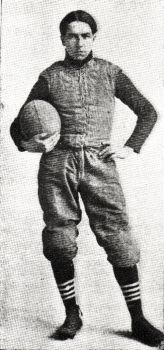
CLAYTON TEETZEL, Left Half-back.
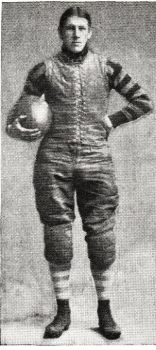
GORDON MACKAY, Centre.
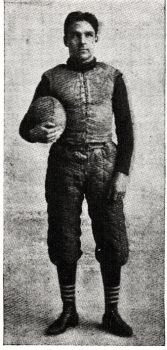
JAMES HENRY, Right Half-back.
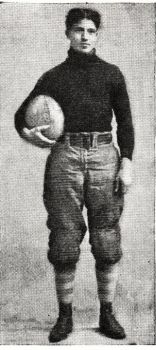
LYNN SCHOELLENBURGER, Right End.
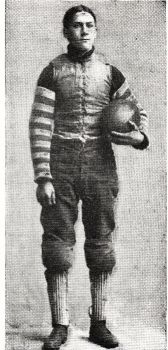
D. P. TRUDE, Full-back.
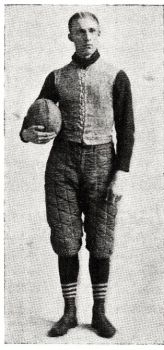
GUY KNICKERBOCKER, Right Tackle.
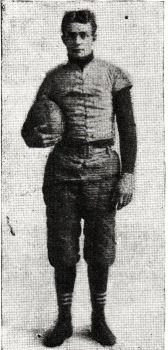
WILLIAM MITCHELL, Left Guard.
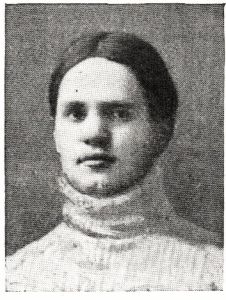
WILLIAM PRENTISS, JUN., Left Tackle.
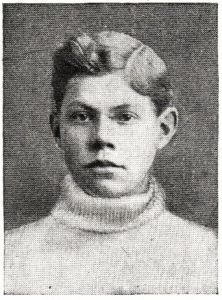
GUNNAR GRAM, Right Guard.
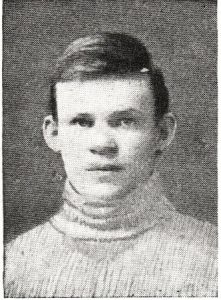
WILLIAM TALCOTT, Quarter-back.
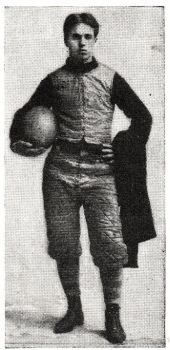
In choosing the All-Chicago eleven from among the best players in the Cook County High-School Football League, the principal difficulty has been to attempt a consideration of all the players who might be candidates, and to be equally just toward those who played on weak teams, where they could naturally not show their value to such advantage as their fellows on stronger elevens. The task is rendered all the more difficult on account of the many games that were protested and postponed. However, taking all things into consideration, there seems to be little doubt that the eleven men above named would form the best eleven to represent Cook County schools.
For captain of the eleven, Talcott, quarter-back of the Englewood High-School, is the best man. He is as capable of bringing out the greatest results from a team under his command as any one. He is a brainy player, a general who uses good sound sense, and whose forethought is shown in every signal he gives. He has coolness combined with quickness, and is an indefatigable worker.
The best all-round player that has turned up in Chicago this year is Clayton Teetzel, the left half-back of the champion Englewood team. He is a man of experience, and knows the game thoroughly. Teetzel is a sprinter, and has made many remarkable runs on the field this year, and these runs have resulted from head-work rather than accident. He is an excellent dodger, runs hard, guards himself well, and bucks the line low. He is a sure tackler, seldom letting a man pass him within reach.
James Henry, of Englewood, deserves the position of right half-back on the All-Chicago team. While Teetzel is a dodger and wriggler, Henry is a steady and sure line-bucker. He cannot run so fast as Teetzel, but for short gains through the line he has no superior in Cook County. He follows his interference well, and tackles hard, and is not liable to injury. Another very fast runner is Trude of Hyde Park H.-S., who ranks as the best of the full-backs. In line-bucking he is as sure of a gain as any man on this team. There has been but little kicking in the games this fall, but Trude has shown himself to be capable of punting with the best of them. He is quick to handle the ball, and knows how to send it down the field.
For left end I should choose Frank Linden, of Hyde Park, as he has done the best work this year in that position. He is one of the fastest men in the school, and always gets off with the ball. He is a hard tackler, and attends strictly to his business. Prentiss of Evanston will take care of left tackle. He was one of the surest men on his team, frequently carrying the ball for good gains. He has the knack of breaking through and nailing his man behind the line. He also possesses unusual power in getting his opponent out of the way or in blocking him on the defence. Gordon Mackay, who played centre for Hyde Park, is the quickest and snappiest man for that position. He gets into the play well, tackles fairly, and rarely lets his man through, although he frequently breaks in himself.
Guy Knickerbocker, of Hyde Park, should go to right tackle. With Linden, Trude, and Mackay he played on the champion Hyde Park team of 1895, and consequently may be ranked as a player of some experience. He is aggressive, he knows how to handle his man and keep him guessing, and he blocks well; he weighs 179 pounds, and by his weight partially overcomes his principal fault of not running low enough.
Right end should be taken care of by Schoellenburger of Englewood. He is the heaviest player for the position, but he is fairly quick, and seldom allows a gain around his end. He is unusually good at breaking up interference, carries the ball well, and seldom allows the runner to get outside of him. If Freedlander, the captain of the North Division team, had played this year as he did last, I should have given him the position, but his work has fallen off, and he may now only rank as substitute.
Of all the difficulties of choice for this eleven, the selection of guards seems to be the greatest. There are four players of nearly equal rank, but taking everything into consideration, Mitchell of Evanston and Gram of Lake View seem to have the best claims for the All-Chicago team. Mitchell is the cleverest of all in running with the ball, and he knows his defensive work perfectly. Gram does the best offensive work. He is rather light, but exceedingly quick, and takes advantage of every opportunity offered. In defensive work Dowd of Englewood or Eberling of Evanston may equal him, but they do not excel.
The other substitutes of this team are Orchard of Evanston at quarter-back; Johnson and Becker, of North Division, half-backs; Miller of Hyde Park and Sutler of Lake View, tackles.
SHADY SIDE ACADEMY (PITTSBURG) FOOTBALL TEAM.
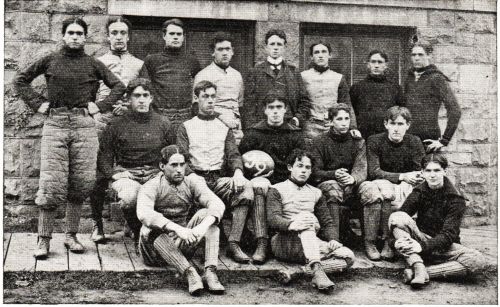
The Shady Side Academy Football team of Pittsburg finished the season with five victories and two defeats to its credit. This record places them second among the Pittsburg schools, with Kiskiminetas first. At the opening of the season things did not look very bright, as there were several important positions to fill and a scarcity of material. In the first game the team played very fast and snappy football, but against Braddock High-School the work was poor, and the coach was somewhat discouraged. However, the eleven showed some improvement when they met Pittsburg High-School, and easily defeated them.
In the game with Kiskiminetas the team was in poor condition, and was easily defeated; but when Kiskiminetas played the return game, both teams were in good condition, and Kiskiminetas again won. In the second contest with Pittsburg High-School both teams showed improvement over their form in the first game, and it was only after a hard straggle that Shady Side won, 4 to 0.
As to the best playing on the team, perhaps McConnel should be mentioned first. He was the best tackler on the team, and demonstrated this fact a number of times by the way he prevented opponents from scoring, and his interference was also good. He played his position at quarter-back better than any of the other quarter-backs among the schools. Scheldecker and Kirke were both hard tacklers, and the former was the best man in the line to run with the ball.
The Brooklyn Association has begun early to prepare for the baseball season, and the baseball committee has completed the schedule for the games that must decide the championship next spring. Unless something turns up to modify the schedule, it will be played as follows:
April 28—Adelphi vs. Brooklyn Latin.
May 1—Brooklyn High vs. Pratt, and Poly. Prep. vs. Adelphi.
May 5—Adelphi vs. Pratt, Brooklyn High vs. Brooklyn Latin, and Poly. Prep. vs. St. Paul.
May 8—Brooklyn Latin vs. Pratt, St. Paul vs. Adelphi, and Brooklyn High vs. Poly. Prep.
May 12—Pratt vs. Poly. Prep., and St. Paul vs. Brooklyn High.
May 15—St. Paul vs. Pratt, Poly. Prep. vs. Brooklyn Latin, and Adelphi vs. Brooklyn High.
The All-Boston Interscholastic Football Team will be announced next week.
"FOOTBALL FACTS AND FIGURES."—By Walter Camp.—Post 8vo, Paper, 75 Cents.
The Graduate.