Trees of Illinois (continued 3)
Reading edition
Habitat: Bottomland woods, along streams.
Range: Nova Scotia across to southern Manitoba, south to central Texas, east to south-central Florida.
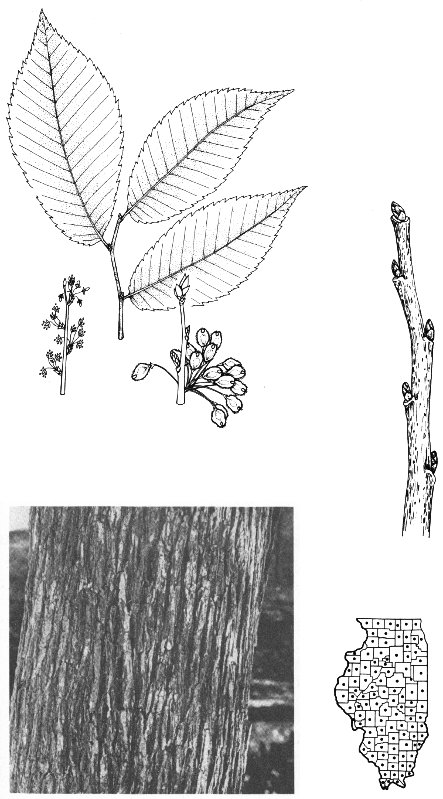
Distinguishing Features: American Elm may be distinguished from the Winged Elm and the Rock Elm by its lack of corky wings on the branchlets. It differs from the Slippery Elm by its relatively smooth leaves and the lack of rusty-colored hairs on its buds. The Siberian Elm, which is also similar, does not have distinctly asymmetrical leaves. Hackberry leaves, which are also somewhat similar in appearance, have three main veins originating at the base of each leaf blade.
305
306
SIBERIAN ELM Ulmus pumila L.
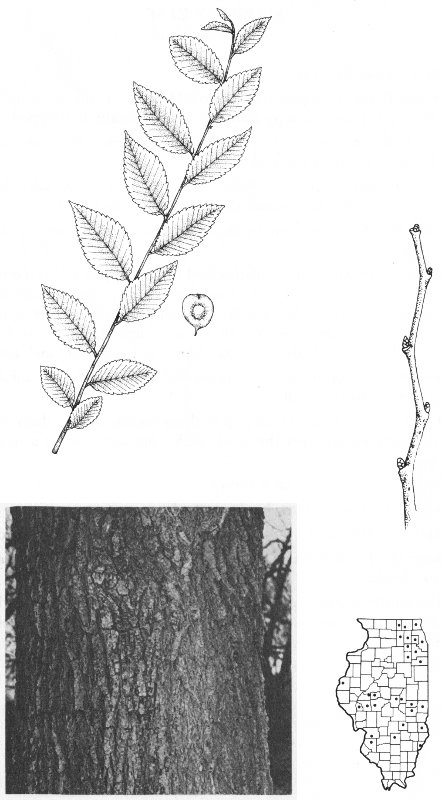
Growth Form: Small tree to 35 feet tall; trunk diameter up to 1 foot; crown broadly rounded, with slender branchlets.
Bark: Gray or brown, shallowly furrowed at maturity.
Twigs: Slender, brown or grayish, smooth; leaf scars alternate, half-round, with 3 bundle traces.
Buds: Spherical, reddish-brown, up to ⅛ inch in diameter, somewhat hairy.
Leaves: Alternate, simple; blades short-pointed at the tip, tapering or rounded at the asymmetrical base, up to 7 cm long, up to half as broad, mostly singly toothed along the edges, smooth on both surfaces; leafstalks very short, usually smooth.
Flowers: In drooping clusters of 2-5, appearing before the leaves begin to unfold, greenish, small, without petals.
Fruit: Nearly round, winged fruits, up to ½ inch in diameter, not notched, smooth, 1-seeded.
Wood: Hard, heavy, pale brown.
Use: Grown chiefly as an ornamental and frequently reproducing around old buildings.
Habitat: Along roads, around buildings.
Range: Native of Asia; widely planted in the United States and naturalized from Minnesota to Kansas and eastward.
Distinguishing Features: The Siberian Elm is distinguished by its small, smooth, singly-toothed leaves.
307
308
SLIPPERY ELM Ulmus rubra Muhl.
Other Name: Red Elm.
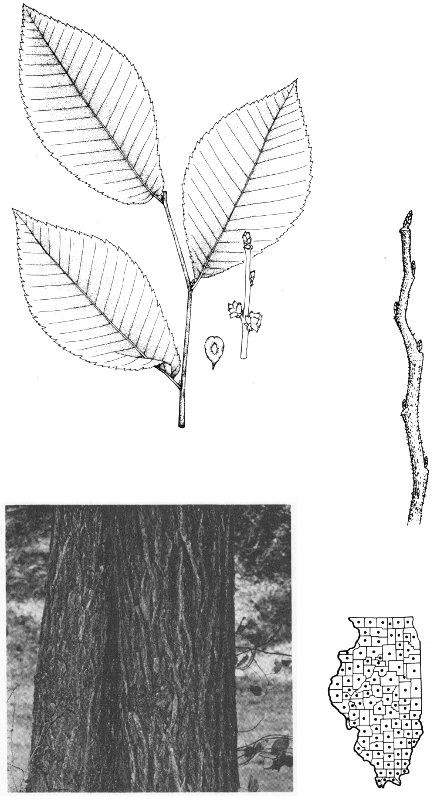
Growth Form: Moderate tree up to 80 feet tall; trunk diameter up to 4 feet; crown broadly rounded or occasionally flat-topped.
Bark: Reddish-brown to gray, with shallow furrows; the inner bark becomes slippery when chewed.
Twigs: Rather stout, reddish-brown, with short, gray hairs; leaf scars alternate, half-round, each with 3 bundle traces.
Buds: Nearly round, up to one-fourth inch in diameter, with rusty-colored hairs.
Leaves: Alternate, simple; blades oval to elliptic, pointed at the tip, strongly asymmetrical at the base, up to 7 inches long, about half as wide, coarsely doubly toothed along the edges, the upper surface green and very rough to the touch, the lower surface smooth or hairy; leafstalks stout, hairy, up to one-half inch long.
Flowers: In drooping clusters, appearing before the leaves unfold, greenish, hairy, small.
Fruit: Circular, winged fruits up to three-fourths inch in diameter, not hairy except over the seed, each wing surrounding a single seed.
Wood: Heavy, strong, dark brown.
Uses: Shipbuilding, farm implements, fence posts.
Habitat: Bottomland woods; along streams; rocky, upland woods.
Range: Quebec across Ontario to North Dakota, south to Texas, east to Florida.
Distinguishing Features: The rough, sandpapery texture of the asymmetrical leaves distinguishes this elm from all others in the state.
309
310
ROCK ELM Ulmus thomasii Sarg.
Other Name: Cork Elm.
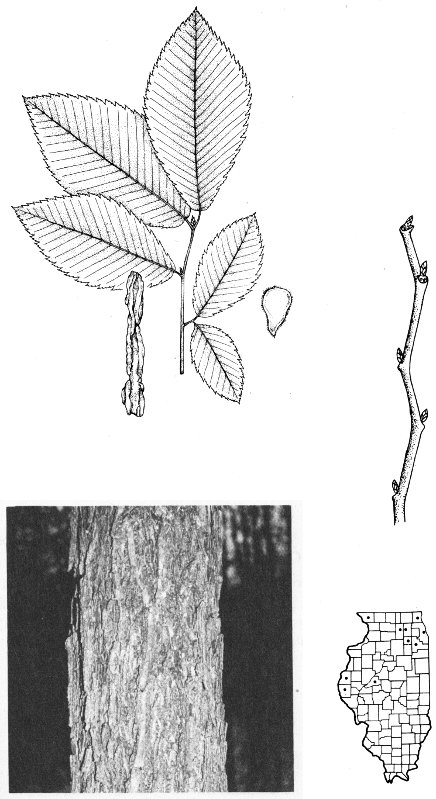
Growth Form: Medium tree up to 75 feet tall; trunk diameter up to three feet; crown narrow, oblong, with drooping branches.
Bark: Grayish-brown, with shallow furrows.
Twigs: Slender, brown, smooth or finely hairy, usually with corky wings; leaf scars alternate, half-round, each with 3 bundle traces.
Buds: Lance-shaped, pointed, brown, more or less hairy, up to one-fourth inch long.
Leaves: Alternate, simple; blades oval to oblong, pointed at the tip, rounded at the slightly asymmetrical base, up to 4 inches long, doubly toothed, green, smooth, and shiny on the upper surface, paler and hairy on the lower surface; leafstalks up to one-half inch long, smooth.
Flowers: In drooping clusters of 2-4, appearing before the leaves begin to unfold, greenish-red, hairy, small.
Fruit: Oval, winged fruits up to one-half inch long, hairy, each wing with a shallow notch at the top and surrounding a single seed.
Wood: Hard, strong, heavy, close-grained, pale brown.
Uses: Railroad ties, farm implements, hockey sticks.
Habitat: Wooded slopes, rock ledges.
Range: Quebec to Ontario and Minnesota, southwestward to Kansas, east to Tennessee.
Distinguishing Features: Rock Elm differs from other elms in Illinois by its corky-winged twigs and its smooth leafstalks.
311
312
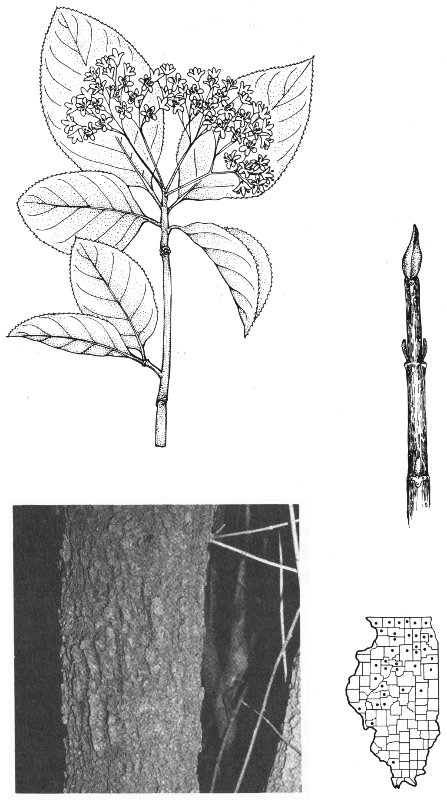
SWEET VIBURNUM Viburnum lentago L.
Other Names: Nannyberry; Wild Raisin; Sheepberry.
Growth Form: Small tree to 25 feet tall; trunk diameter up to 5 inches; crown rounded.
Bark: Reddish-brown, broken into irregular plates.
Twigs: Slender, grayish, sometimes with orange dots, smooth; leaf scars opposite, crescent-shaped, with 3 bundle traces.
Buds: Red, nearly smooth, long-pointed, up to ¾ inch long.
Leaves: Opposite, simple; blades ovate, pointed at the tip, tapering or rounded at the base, up to 3 inches long, about half as wide, sharply and finely toothed along the edges, green and slightly hairy on the upper surface, yellow-green and minutely black-dotted on the lower surface; leafstalks up to 1½ inches long, sometimes rusty-hairy, winged.
Flowers: Many in broad, round-topped clusters, slightly fragrant, appearing during April and May, each flower small and creamy-white.
Fruit: Fleshy, oval to ellipsoid, blue-black, up to ½ inch long, sweet, containing a single stone.
Wood: Hard, heavy, close-grained, dark orange-brown.
Use: Sometimes planted as an ornamental.
Habitat: Rocky woods; woods along streams.
Range: Quebec across to Manitoba, south to Colorado, east across northern Illinois to Georgia.
Distinguishing Features: The Sweet Viburnum, like other viburnums, has opposite, simple leaves which are finely and sharply toothed. It differs from other viburnums in Illinois by its long-pointed leaves and its winged leaf stalks.
313
314
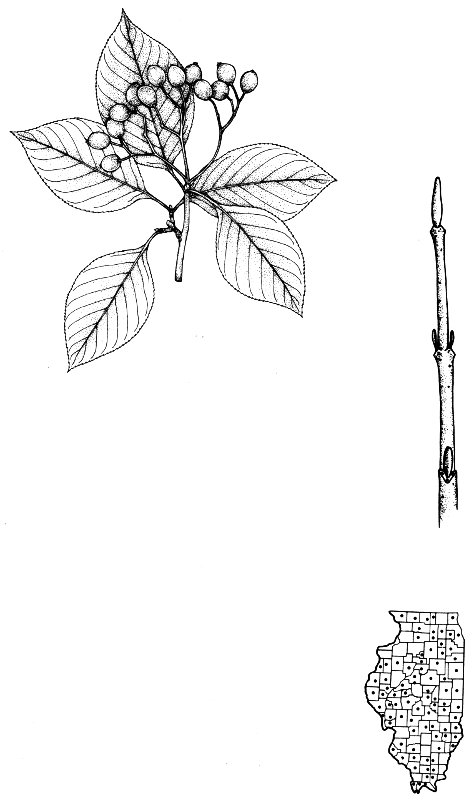
BLACK HAW Viburnum prunifolium L.
Other Name: Nannyberry.
Growth Form: Small tree to 25 feet tall; trunk diameter up to 6 inches; crown irregular.
Bark: Reddish-brown, broken into irregular plates.
Twigs: Slender, grayish, sometimes with orange dots, smooth; leaf scars opposite, crescent-shaped, with 3 bundle traces.
Buds: Brown, nearly smooth, up to ½ inch long.
Leaves: Opposite, simple; blades oval to ovate, short-pointed at the tip, rounded or tapering to the base, up to 3 inches long and 2 inches broad, finely and sharply toothed along the edges, dark green and smooth on the upper surface, paler and smooth on the lower surface; leafstalks up to ⅔ inch long, smooth, scarcely or not at all winged.
Flowers: Many in broad, round-topped clusters, appearing during April and May, each flower small and white.
Fruit: Fleshy, oval to ellipsoid, blue-black, up to ⅔ inch long, sweet, containing a single stone.
Wood: Hard, heavy, strong but brittle, coarse-grained, reddish-brown.
Use: Sometimes planted as an ornamental.
Habitat: Rocky woods.
Range: Connecticut across to Michigan, southwest to Kansas, south to Texas, east to Florida.
Distinguishing Features: Black Haw differs from the Sweet Viburnum by the absence of wings along the leafstalks. It differs from the Rusty Nannyberry by the absence of rusty hairs on the buds and leafstalks.
315
316
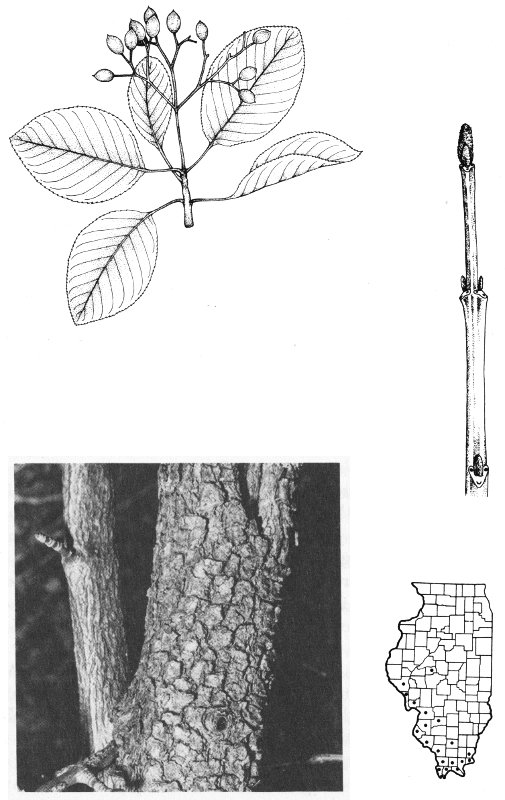
RUSTY NANNYBERRY Viburnum rufidulum Raf.
Other Name: Southern Black Haw.
Growth Form: Small tree to 30 feet tall; trunk diameter up to 8 inches; crown irregular.
Bark: Dark brown, broken into square plates.
Twigs: Slender, somewhat rusty-hairy; leaf scars opposite, crescent-shaped, with 3 bundle traces.
Buds: Rusty-hairy, up to ½ inch long.
Leaves: Opposite, simple; blades elliptic to obovate, short-pointed or rounded at the tip, rounded or tapering to the base, up to 3 inches long, about half as wide, sharply and finely toothed along the edges, dark green and usually smooth on the upper surface, paler and with some rusty hairs on the lower surface; leafstalks up to ¾ inch long, rusty-hairy.
Flowers: Many in broad, round-topped clusters, appearing during April and May, each flower small and creamy-white.
Fruit: Fleshy, oblong, to obovoid, blue-black, up to ⅔ inch long. sweet, containing a single stone.
Wood: Hard, heavy, strong but brittle, close-grained, dark orange-brown.
Use: Sometimes planted as an ornamental.
Habitat: Dry, rocky woods.
Range: Virginia across to Missouri, south to Texas, east to Florida.
Distinguishing Features: The most distinguishing characteristics of the Rusty Nannyberry are the rusty-hairy buds and leaf stalks.
317
318