VOLUME XIV SLICE VI Inscriptions to Ireland, William Henry (continued 10)
Reading edition
Negative Working of the Commerce Provisions.—For nearly a hundred years these provisions were important only in their negative effects of preventing the states from granting special privileges to their citizens or taxing unequally the citizens of other states. The decision in 1824 of Gibbons v. Ogden stopped the attempt of the state of New York to grant the monopoly of steamboat traffic on the waters of that state. Had the clear and unequivocal opinion in that case been different, local ingenuity doubtless would have devised a multitude of discriminations. “The power to tax involves the power to destroy,” and ever since the decision of McCulloch v. Maryland in 1819 it has been held that no agencies created by the federal government, such as banks or legal tender notes, are subject to state taxation, and the rule has also been laid down repeatedly by the Supreme Court (for the first time in 1886) that no burden can be laid upon the act of taking goods into or out of the state, of soliciting sales, or of delivering goods even though the tax is without discrimination as between the state’s own citizens and others; that is, interstate commerce “cannot be taxed at all” (Robbins v. Shelby County Taxing District, 120 U.S. 489).3 Federal control of interstate commerce has been interpreted by the courts to be exclusive of any control by the states. This is not self-evident in the clause, “Congress shall have power to regulate commerce among the several states.” Over some other subjects the power of the federal and state governments is concurrent, the state being able to act until Congress enacts some conflicting legislation. Although the early decisions suggested that the power of Congress was exclusive, yet for nearly a century no positive decision was rendered and no positive action was taken by Congress. Between 1870 and 1886 the states made great progress in the regulation of railways on the assumption that until Congress had acted the states were free to act. The question was put beyond doubt in a series of decisions establishing the principle that the non-action of Congress indicates its will that commerce shall be free and untrammelled and that the states cannot interfere either through their police power or their taxing power.4
Positive Federal Regulation.—Though the regulation of interstate commerce up to the Civil War was mainly negative, some positive actions of the federal government had indirect effects on commerce, as, for example, the coinage of money, the establishment of post-offices, the charter of the first and second United States banks, and the charter of the Pacific Railroad. The power to do these things was conferred by the Constitution in some cases directly, in other cases by implication in that any means appropriate to lawful ends might be employed (as in case of charter of the United States Bank, McCulloch v. Maryland). From 1850 to 1862 the federal government had made numerous land grants in aid of railways, but always to the states, not directly to the corporations, and it had never until 1862 granted a charter to a railway, canal, turnpike or transportation company. In 1866 Congress passed an act authorizing railway companies whose roads were operated by steam to carry passengers, freight, &c., “on their way from any state to another state and to receive compensation therefor and to connect with roads of other states so as to form continuous lines for the transportation of the same to the place of destination.”5 This act, so vague and general in its terms, had very little effect, though it has been the occasion of considerable litigation to determine its influence upon existing police laws of the states. In 1884 Congress established the Bureau of Animal Industry for preventing the exportation of diseased cattle and for the extirpation of disease among domestic animals. This had little significance at the time for interstate commerce, its purpose being to meet the objections of foreign countries to the importation of American meat. In 1887 was passed the Interstate Commerce Act, providing a national commission to supervise interstate railways. In 1888 was passed an Arbitration Act, replaced in 1898 by an act which provides that in case of disputes between common carriers subject to the Interstate Commerce Act and their employees, conciliation shall be tried, and, in case this should fail, indicates the methods that may be used for the voluntary submission of the dispute to a board of arbitration. In 1890 was passed the Sherman Anti-Trust Act, making illegal every contract and combination in restraint of trade or commerce among the several states or with foreign nations. In 1893 a Safety Appliance Act, the administration of which was put into the hands of the Interstate Commerce Commission, promoted the safety of employees and travellers, and required the roads engaged in interstate commerce to equip their cars and locomotives with automatic couplers and brakes. In 1895 was prohibited the interstate carriage of condemned carcasses of animals, and of lottery tickets (see above reference to the interpretation of the Lottery Act), in 1897 of obscene literature, and in 1900 of game killed in violation of state laws. In 1901 carriers engaged in interstate commerce were required to make full reports of all accidents to the Interstate Commerce Commission. In 1902 was prohibited the interstate carriage of dairy products falsely labelled or branded as to the state or territory in which produced, and in 1903 the Secretary of Agriculture was empowered to establish rules concerning importation and transportation of live stock. In 1903 the Bureau of Corporations was established with power to investigate the conduct of corporations engaged in interstate and foreign commerce, excepting common carriers subject to the Interstate Commerce Act. In 1903 the Interstate Commerce Act was amended by the Elkins Act, making much more difficult the granting of rebates. In 1905 the President was authorized to grant medals of honour to persons who by their daring save life or prevent accident on railways. In 1906 the Interstate Commerce Act was amended in important particulars (specified below). In 1906 were passed pure food laws, greatly enlarging the duties of the Department of Agriculture in reference to inspection of foods prepared for interstate commerce.
The Interstate Commerce Act.—The period of positive action by Congress in the regulating of interstate commerce practically begins, therefore, with the enactment of the Interstate Commerce Act of February 1887, the outcome of fully seventeen years of agitation and discussion. The law was modelled in large part upon English acts. It applied to common carriers wholly by railway, and partly by railway and partly by water when both are used under a common arrangement for continuous shipment; forbade unjust discrimination and undue and unreasonable preference; made it unlawful to charge more for a shorter than for a longer distance over the same line in the same direction, the shorter being included within the longer distance (though a carrier might be freed by the Commission from the working of this provision); and forbade pooling and division of earnings. The administration of the law was entrusted to a Commission of five members, appointed by the President. From this act much was expected, but eighteen years of its operation gave as net results little more than a greater uniformity of railway accounting and much better understanding by the public of the nature of the railway problem. Discrimination and secret rebates continued. The anti-pooling clause (pretty generally recognized by the well-informed to be a mistake) prevented open but not secret agreements between carriers, and probably hastened the movement toward consolidation. The long and short haul clause was made meaningless by the judicial interpretation that any competition, even that of other carriers subject to the act, justified the railway in charging more for a shorter than for a longer haul. The effectiveness of the Commission was destroyed by the judicial decision that it had no power to fix rates for the future. Until 1897, the Commission, when it adjudged a rate unreasonable, usually declared what rate was reasonable, and directed the carrier to reduce the rate by a given date to the designated maximum. Of 135 orders made in decisions rendered in the first ten years of the Commission, 68 prescribed a maximum rate for the future. In 1897 it was finally decided in the Cincinnati Freight Bureau Case (167 U.S. 479) that Congress had not conferred upon the Commission the power to prescribe any rate for the future. The court said that Congress might fix the rate itself or authorize a sub-tribunal to do so, but that Congress had not yet given that authority.
The need of further legislation had been felt from the beginning by many, and after 1903 the agitation became very active. The position taken by President Roosevelt in his message to Congress in 1904 made the amendment of the Interstate Commerce Act the principal political issue before Congress in the sessions of 1905 and of 1906. After the most remarkable senatorial debates heard at Washington in years, followed with close interest by the country, a number of amendments became law on the 29th of June 1906. The act was strengthened to a degree hardly expected by the most earnest advocates of revision. A number of minor changes made in the light of experience were: increasing the number of commissioners to seven and their pay to $10,000; facilitating procedure and the taking of evidence; requiring thirty days notice of a change of rates; requiring appeal from the Commission’s decision to be taken within thirty days; empowering the Commission to establish joint rates and to order switches to be built. The following are generally thought to be still more important changes: (1) Including within the application of the act pipe lines (particularly for oil), express and sleeping car companies, and all the facilities and services in connexion with goods transported; (2) giving publicity to railway business by empowering the Commission to prescribe all forms of accounts and to examine the books at all times, and by forbidding any other accounts or memoranda to be kept by the companies; and (3) empowering the Commission to prescribe reasonable maximum rates to take effect within not less than thirty days and to continue not over two years unless set aside by the courts.
The Anti-Trust Act of 1890.—The growth of large corporations with some degree of monopoly power, the so-called trusts, had called forth in a number of the states anti-trust laws before 1890. When it became evident that the states were not succeeding in dealing with the problem, public sentiment found expression in the Sherman Anti-Trust Act, approved on the 2nd of July 1890. This act declared illegal and criminal, punishable by fine or imprisonment or both, every contract in restraint of trade or commerce among the several states or with foreign nations. The statute thus changed the common law wherein such contracts were merely unenforceable but not criminal. This act was at first construed by the Supreme Court as applying to any contract in restraint of interstate commerce, whether reasonable or unreasonable (Trans-Missouri Freight Association, 166 U.S. 331), but later, in 1905 (Stock Yards case, 25 Supreme Court Reporter 276) it was held that the act did not apply to agreements for the better conduct of business which incidentally affected interstate commerce.6 The act has been interpreted to apply to transportation (Freight Association case, 166 U.S. 290, and Northern Securities case), with results felt even by some of the advocates of railway regulation to be unfortunate. It applies to unlawful combinations of manufacturers to divide the territory and regulate the prices (Addyston Pipe Trust Case, 175 U.S. 211). In the Sugar Trust case (1895 U.S. v. Knight Co. 156 U.S.) it was declared that the statute did not apply to a manufacturing company which had acquired nearly complete control of the manufacture of refined sugar by means of the purchase of stock of other refining companies.
The Attorney-General submitted to the Senate, in June 1906, a statement of the results of all suits instituted by the Department of Justice under the anti-trust law, the Interstate Commerce Act and the Elkins Act, in the period from 1887 to June 1906 inclusive. Thirty-six suits were still pending; of the 250 which had been disposed of in some manner 186 ended in dismissal, non-prosecution or acquittal, and 64 were successful in securing in whole or in large part the object of the suit (in 30 cases conviction, in 34 cases the granting of a petition or an injunction, &c.). In addition to these results of federal efforts to regulate industry must be counted the cases in which carriers complied with the orders of the Interstate Commerce Commission without suit; but even then the total by 1906 was somewhat meagre.
The establishment of the Bureau of Corporations in 1903, and the considerable extension of the powers of inspection of the Department of Agriculture are recent changes of which the results cannot yet be fairly judged. The aim of the Bureau of Corporations is to ensure publicity in the management of corporations engaged in interstate and foreign commerce. The first commissioner, Mr James R. Garfield, showed much activity in pursuing the purposes of the act, and published informing reports upon the beef trust (1905), and upon the Standard Oil Company (1906). But the effect and possible extension of federal interference became from this time burning political questions of far-reaching importance of too recent a date to be dealt with historically in this article.
See also the Annual Reports of the Interstate Commerce Commission since 1887, and decisions; Prentice and Egan, The Commerce Clause of the Federal Constitution (Chicago, 1898); Reports of the Commissioner of Corporations on the Beef Industry (1905), on the Transportation of Petroleum (1906); W. Z. Ripley (ed.). Trusts, Pools and Corporations (1905), containing leading cases and analyses of the voluminous “trust” literature; F. N. Judson, The Law of Interstate Commerce and its Federal Regulation (Chicago, 1905); Beale and Wyman, Railroad Rate Regulation (Boston, 1906); Frank Hendrick, The Power to Regulate Corporations and Commerce (New York, 1906), favouring less of new legislation.
(F. A. F.)
1 The lottery tickets were included only by a divided court (Lottery Cases, 188 U.S. 321) four judges emphatically dissenting. The moral issue doubtless influenced a decision so difficult to reconcile with other opinions of the court, which otherwise had held regularly that commerce involves the physical movement of persons or things and does not include the contractual relations between citizens incident to commercial intercourse. Not all things incidental to commerce are included in it, and it has been held that the following are not included: bills of exchange (in 1850, Nathan v. Louisiana, 8 How. 73), trade marks (in 1879, trade mark cases, 100 U.S. 82), insurance (in 1869, Paul v. Virginia, 8 Wall. 168), and manufacturing (in 1895, U.S. v. Knight Co., 156 U.S. 1). In the last-named case, which concerned a combination of sugar refineries controlling a large proportion of the product of the country, it was said that commerce succeeds manufacture and is not a part of it. The relation of the manufacturer to interstate and foreign commerce being thus only incidental and indirect, the business is subject to state control. By a series of decisions the transportation of persons has been decided to be commerce. (In 1848, passenger cases, 7 How. 283. In 1867, Crandall v. Nevada 6, Wall. 35. In 1875, Henderson v. the Mayor of New York, 92 U.S. 259, &c.).
2 The question arose with reference to the police power of the state in those states prohibiting the liquor traffic, and in 1889 it was held (Leisy v. Hardin) that, in the absence of legislation by Congress, the right to sell goods taken into a state was unrestricted. This made it impossible for a state to exclude the importation of liquors to be sold within its territory, but this difficulty was remedied by the Wilson Original Package Bill of 1890, which made liquor subject to the police powers of the state to which it was carried.
3 However, a very important distinction is drawn between taxing the commerce and taxing property employed in commerce. With the increase of interstate commerce, the states have been hard pushed to find sources of revenue adequate to their increasing needs. The courts, therefore, have sought to draw a line between taxes on the privilege of carrying on interstate commerce and taxes on the property employed in carrying on such commerce as a part of the general body of property in the state. Thus it has been held in the case of State Freight Tax (1872, 15 Wall. 232) that a state could not lay a tax on freight transported from one state to another, and yet the same year the court held in State Tax on Gross Receipts (15 Wall. 284) that a tax was valid when laid upon the receipts of railways organized under the laws of the state, as upon a fund which had become incorporated with the general mass of property. This latter decision was by a divided court (three of the nine judges dissenting), but it has since been frequently confirmed. The tax on gross receipts of all railway companies doing business in the state has been supported when levied in proportion to the mileage within as compared with the total within and without the state (Erie Ry. v. Pa., 21 Wall. 492). This so-called “unit rule,” as applied either to gross receipts or to the entire value of an interstate railway, has been upheld in a number of decisions. The method of taxation by gross receipts, however, has not tended to increase of late, but the unit rule, as applied to ad valorem taxes on property, is more and more being applied. Every case involving the distinction between a tax on commerce and a tax on property employed in commerce presents its own difficulties, yet a practical way is thus found to prevent discriminating action by the several states, while leaving to them adequate sources of revenue.
4 1873, State Freight Tax, 15 Wall. 232; 1887, Robbins v. Shelby County Taxing District, 120 U.S. 489; Wabash R. R. Company v. Illinois, 118 U.S. 557. The last-named case arose out of the attempts of the state of Illinois to prevent discrimination between two shippers, both being its own citizens and within its own borders, one of whom was being charged more than the other for a shorter shipment on the same line and in the same direction, from a point outside the state. The court, applying the established definition of interstate commerce with verbal formality of logic, decided that the state could do nothing, for even in such a case all regulation of interstate commerce, from the beginning to the end of a shipment, was confided to Congress exclusively. Thus a clause whose clear purpose was to prevent one state from burdening unequally the citizens of other states was successfully invoked by a private corporation to forbid the state securing equality of treatment for its own citizens as regards such parts of shipments as lay within its own borders. Most railway traffic was by this decision declared to be subject to legislation by Congress but Congress had not acted. The impossibility of this situation was so evident that the Interstate Commerce Act, long under discussion, became a law a few months later.
5 This was probably aimed at the discriminating between New York and Philadelphia (see speech of Charles Sumner on the railroad usurpation of New Jersey in U.S. Senate, February 14, 1865).
6 In the Northern Securities case, Justice Brewer, who had concurred in the opinion in the Trans-Missouri Freight Association case, took occasion to say that while he still believed the former case had been correctly decided, he thought that the reasons given for the judgment were in some respects faulty, and that the ruling should have been that the contracts there considered were unreasonable restraints and as such were forbidden by the act.
INTERVAL, a space left between the component parts of a continuous series, a pause in continuous action, a period of time intervening between two other points of time or chronological sequence of events. The Lat. intervallum, from which the English word has come through the French, originally meant a space between the palisades on a rampart (vallum), or between the rampart and the tents of the legionaries. In medical language “interval” is used of the intervening periods between attacks or paroxysms of a disease, particularly of the periods of a rational or normal condition of mind sometimes experienced by an insane person, a “lucid interval”; this phrase frequently occurs in legal documents from the 13th to the 15th centuries, non compos mentis sed gaudet lucidis intervallis. In music “interval” expresses the distance in pitch between two or more musical sounds (see Music). Interval, or more commonly “intervale,” is used, particularly in North America, as a geographical term for a low-lying tract of land along the banks of rivers, frequently overflowed by freshets, or more loosely for any low level land shut in by hills. This particular application, as also the form “intervale,” is due to a confusion of the termination of the word with “vale,” valley.
INTESTACY (Lat. intestatus, one who has not made a will, from testari, to bear witness), the condition of the property of a person who dies without making a will. Here the law of England distinguishes sharply between his real and his personal property. The devolution of the former is regulated by the rules of inheritance (q.v.). The destination of the latter is marked out by the Statute of Distributions. The proper conditions of a testamentary disposition of property will be found under the heading Will.
The distribution of an intestate’s personal property is carried out under the authority of administrators, whose duties are generally the same as those of executors under a will. Administration was until 1857 a matter cognizable by the ecclesiastical courts, and the ordinary was in fact the administrator until the passing of an act of Edward III. for administration upon intestacy (1357). An earlier statute (Westminster 2, 1275), directed against the abuses of the system, required the ordinary, instead of applying the residue of the estate to “pious uses,” to pay the debts of the intestate. The act of Edward III. went further in providing that “in case where a man dieth intestate, the ordinaries shall depute of the next and most lawful friends of the dead person intestate to administer his goods,” with power to sue for debts due to the deceased, and under obligation to pay debts due by him, and to answer to the ordinary like executors in the case of testament. Administrators remained on this footing of deputies appointed by the ordinary until the Probate Act 1857 transferred the jurisdiction in administration of the ecclesiastical courts to the new court of probate.
The courts of law having held that by the grant of administration the authority of the ecclesiastical courts was exhausted, the administrator became entitled to the privilege, similar to that formerly enjoyed by the ordinary, of dealing as he pleased with residue of the property. The next of kin of the same degree of relationship to the deceased were thus aggrieved by the preference of the administrator, and it was to remedy this grievance that the Statute of Distributions 1670/1 was passed. It empowered the ordinary to take a bond from the administrator binding him to make a fair and complete distribution of the property among the next of kin. Such distribution is to be in the following manner: one-third to the wife of the intestate, and all the residue by equal portions to and amongst the children, and their representatives if any of such children be dead, exclusive of children who shall have any estate by the settlement of the intestate, or shall be advanced by the intestate in his lifetime by portions equal to the shares allotted to the other children under the distribution. If such advancement should be less than the share of the other children in distribution, then it shall be made equal thereto. But the “heir-at-law, notwithstanding any land that he shall have by descent or otherwise from the intestate, is to have an equal part in distribution with the rest of the children” (§ 5). By § 6, if there be no children nor any legal representatives of children, one moiety of the property is to be allotted to the wife of the intestate, the residue “to be distributed equally to any of the next of kindred of the intestate who are equal in degree and those who legally represent them.” By § 7 there shall “be no representation admitted among collaterals after brothers’ and sisters’ children; and in case there be no wife, then all the said estate to be distributed equally to and among the children; and in case there be no child, then to the next of kindred in equal degree of or unto the intestate and their legal representatives as aforesaid, and in no other manner whatsoever.” For the protection of creditors it is enacted that there shall be no distribution till a full year after the intestate’s death, and if any debts should be discovered after distribution, the persons sharing the estate shall refund the amount of the same ratably. With reference to the above rules the following points may be observed: (1) The husband’s absolute right to administer his wife’s estate is not affected by the act. This was made clear by a later act of the same reign. (The Statute of Frauds 1677). Administration is now granted to the representatives of the husband where he has died without taking out administration to his wife, unless it can be shown that the wife’s next of kin are beneficially interested. (2) The widow, in the event of there being no children or next of kin, takes only her half. The other half goes to the crown. The widow’s rights, however, have been enlarged by the Intestate Estates Act 1890. By this act where a man dies wholly intestate and without issue, his property, both real and personal, shall, if it does not exceed £500 in net value, belong to his widow absolutely. If the estate exceeds £500 net, the widow is entitled to £500 out of the estate and has a charge for that amount upon the real and personal property of the deceased. (3) The child or children take equally, two-thirds if the widow be alive, and the whole if she be dead. If some of the children be alive and some dead having issue, then such issue will take their parents’ share equally among themselves. There has been some difference of opinion as to whether if all the children have predeceased their parent but have left issue, such grandchildren take as between themselves per stirpes as representatives of their parent or per capita as next of kin. Thus if A and B predecease their father but A leaves three children and B one, should the property be divided into fourths, or first into moieties and then one moiety subdivided into thirds among A’s children and the other moiety be given undivided to B’s child? It is now settled that the latter method of distribution is the correct one, and it is thought that this will also apply when only great-grandchildren are alive. (4) The next of kin must be ascertained according to the rules of consanguinity, which are the same in English as in the civil law. Degree is calculated from the intestate, through the common ancestor if any, to the kindred. Thus from son to father is one degree, to grandfather two degrees, to brother two degrees, to uncle three degrees, and so on. The statute ordains distribution to be made “to the next of kindred in equal degrees pro suo cuique jure, according to the laws in such cases and the rules and limitations hereafter set down.” Equality in degree is therefore not in all cases accompanied by equality in rights of succession. Neglecting the cases of wife and children already noticed, the father excludes all other next of kin. So would a mother, in default of a father surviving, but an act of 1685 enacted that in such a case the brothers and sisters, and children of brothers and sisters, of the intestate should share equally with the mother. In the absence of brothers or sisters and their representatives, the mother in the case supposed would take the whole. Mothers-in-law and stepmothers are not within the rules of consanguinity. As between a brother and a grandfather who are both in the second degree, preference is given to the brother; but a grandfather, being in the second degree, will exclude an uncle, who is in the third. An uncle and a nephew, both being in the third degree, take together. Brothers or sisters of the half blood take equally with brothers and sisters of the whole blood. The rule which prohibits representation after brothers’ and sisters’ children would, in a case where the next of kin were uncles or nephews, wholly exclude the children of a deceased uncle or nephew. Also, as between the son of a brother and the grandson of a brother, the latter would not be admitted by representation. Where a brother and the children of a deceased brother are the next of kin, they will take per stirpes, i.e. the brother will take one half, and the children of the other brother will take the other half between them. When the next of kin are all children of the deceased brothers or sisters, they will take equally per capita. Subject to these modifications, the personal property will be divided equally among the next of kin of equal degree, e.g. great-grandfathers would share with uncles or aunts, as being in the third degree. Failing next of kin, under these rules, the estate goes to the crown as ultimus haeres, a result which is more likely to happen in the case of illegitimate persons than in any other.
Personal or movable property takes its legal character from the domicile of the owner, and the distribution of an intestate’s goods is therefore regulated by the law of the country in which the intestate was domiciled. A domiciled Scotsman, for example, dies intestate in England, leaving personal property in England; the administrator appointed by the court of probate will be bound to distribute the property according to the Scots rules of succession.
In the law of Scotland the free movable estate of the intestate is divided amongst the nearest of kin, the full blood excluding the half blood, and neither mother nor maternal relations being originally admitted. The heir of the heritable (i.e. real) property if one of the next of kin must collate with the next of kin if he wishes to share in the movables. Proximity of kin is reckoned in the same order as in the case of inheritance. The Intestate Movable Succession Act 1855 among other changes allows the issue of a predeceasing next of kin to come in the place of their parent in succession to an intestate, gives the father of an intestate dying without issue one-half of the movable property in preference to brothers and sisters, and to the mother if the father be dead a similar preference to the extent of one-third, and admits brothers and sisters uterine in the absence of brothers and sisters german or consanguinean.
In the United States the English Statute of Distribution has been taken as the basis of the law for the distribution of personal property in intestacy, and its principles have been applied to real property also. “In a majority of the states the descent of real and personal property is to the same persons and in the same proportions, and the regulation is the same in substance as the English Statute of Distribution. In Georgia the real and personal property of the intestate is considered as altogether of the same nature and upon the same footing.” There are many states, however, in which the distribution differs materially from the English statute. In Illinois the distribution is the same as descent of real property. In Alabama the whole goes to the widow if there are no children (Phillips v. Lawing, 1907, 43 Southern Rep. 494). In many states the husband’s share is in all cases like the widow’s, as in Texas, New York and Washington. In Pennsylvania he takes an equal share with the children.
The statutes of each state of the American union must be consulted, as no general rules can be laid down. As to the right to the intestate’s interest in community property in the states where the law of “community”—of “acquets and gains”—prevails, see Inheritance.
INTESTINAL OBSTRUCTION (Ilius), in surgery, a condition in which the onward passage of the faeces is prevented. It is often associated with phenomena due to strangulation of the gut, leading to gangrene, and with systemic poisoning due to the absorption of toxins, resulting from the decomposition of the retained faeces. Intestinal obstruction may be conveniently divided into acute and chronic.
Acute Intestinal Obstruction forms one of the most urgent of surgical emergencies. The following are its chief causes: (1) strangulation by bands or adhesions or through apertures; (2) volvulus; (3) the impaction of foreign bodies; (4) acute intussusception; (5) strangulation over a band or acute kinking of the gut; (6) the termination supervening on chronic obstruction; (7) congenital malformations of the intestines.
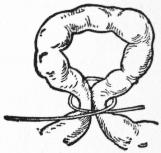
Fig. 1.—Diagram to show how Strangulation by a Band may take place.
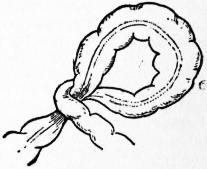
Fig. 2.—Diagram to show how Volvulus may take place.
Strangulation by Bands or Adhesions or through Apertures.—These terms are applied to obstruction by constricting bands within the abdomen. These may be the result of the stretching of old inflammatory adhesions, the result of former peritonitis. These bands are commonly situated between different parts of the mesentery or between the mesentery and another organ such as the appendix. Two methods of producing strangulation exist; in the first the bowel passes under an arch or loop formed by some short constricting band and cannot return, or if the band is long it may form a noose in which the bowel is strangled (fig. 1); in the second the remains of a foetal structure (Meckel’s diverticulum) becoming adherent to some other organ may ensnare the intestine in the loop. A coil of intestine may also slip into a hole in the mesentery or omentum or find its way into a pouch of peritoneum, forming what is known as an internal hernia. The onset of symptoms is sudden and abrupt. The patient is seized with acute abdominal pain associated with collapse. The pain is usually referred to the region of the umbilicus; this localization, however, is no guide to the situation of the lesion. Vomiting is early and persistent, generally assuming a faecal character between the second and the ninth day. There is no obvious tumour; constipation is present, the abdominal walls are flaccid at first, but if no relief is obtained become tender when peritonitis ensues. This form of obstruction is most frequent in young people, and there is usually a history of previous peritonitis. In cases not treated by operation the average duration is five to seven days, and death takes place from exhaustion or from toxaemia following peritonitis.
Volvulus means a torsion or twisting of the gut. There are two chief varieties: (1) in which the bowel is twisted upon its mesenteric axis (fig. 2); (2) in which it is wound round another coil of intestine. The sigmoid flexure is the situation in which volvulus most commonly takes place, but it may occur in the caecum and small intestine. When once present, plastic peritonitis fixes the coil in position and the blood supply becomes obstructed. Volvulus is generally preceded by a history of chronic constipation. The acute symptoms start abruptly and are similar to those of internal strangulation, but the pain at first is more intermittent in type. There is usually early tenderness over the spot and constipation is absolute. Much distress is occasioned by abdominal distension from flatus, which develops with remarkable rapidity. The swelling is localized at first. Spontaneous natural cure is unknown, and without surgical interference death is inevitable.
Impacted Foreign Bodies.—Gall-stones may cause obstruction when they are of large size. These gall-stones when lodged in the intestine may there be enlarged by subsequent accretion. Leichenstern describes such a stone with a circumference of 5 in., and Sir F. Treves removed from the intestine of an old lady a calculus, the large size of which was due to layers of magnesia, the patient having taken carbonate of magnesia daily for many years. Gall-stones may give rise to intermittent sub-acute attacks of incomplete obstruction and finally give rise to an acute attack accompanied by severe pain and vomiting, which is constant and early becomes faecal. The abdomen is soft and flaccid and the affected coil is rarely to be felt. The symptoms vary with the situation of the obstruction and are generally more urgent the nearer to the duodenum. Foreign bodies that have been swallowed by accident or otherwise may give rise to obstruction, though extraordinary objects, as knives, coins, pipes, flints, &c. swallowed by jugglers, are known to have passed by rectum without injury. In cases where the foreign body lodges in the intestine the caecum and duodenum are favourite situations for obstruction. In the museum of the Royal College of Surgeons is a specimen in which the duodenum is blocked by a mass of pins weighing nearly a pound. Foreign bodies may remain weeks or months in situ before giving rise to serious symptoms, the progress of the larger substances being marked by temporary obstruction. In a case quoted by Duchaussoy the obstructing mass consisted of over 700 cherry stones. The diagnosis of obstruction by foreign bodies has been much simplified since the introduction of the X-rays. Enteroliths may themselves cause obstruction. They may consist of masses of indigestible vegetable material matted together with faeces and mucous. In Scotland they are frequently found to consist of husks of coarse oatmeal (aenoliths). In thin persons large enteroliths and foreign bodies may be palpable. The symptoms are those similar to obstruction by a large gall-stone.
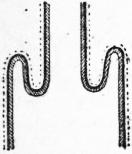
Fig. 3.—Diagram to show how an Intussusception takes place.
Acute Intussusception forms about 30% of all cases of intestinal obstruction, and is the most common variety found in children. More than 50% of the cases are found during the first ten years of life, and half that amount in babies under one year; the large preponderance is in males. By intussusception is meant an invagination or protrusion of a part of the intestine in the lumen of the intestine immediately below it; the lower part of the intestine may be said to have swallowed that immediately above it. The mesentery attached to the upper portion is necessarily dragged in with it. The condition may be seen by referring to the diagram (fig. 3). The invaginated portion is termed the intussusceptum, and the lower portion which it enters is known as the intussuscipiens. It is to the constriction of the vessels in the entering mesentery and later to their possible complete obstruction that are due the late serious phenomena of intussusception, e.g. gangrene or rupture of the gut. Peritonitis also ensues, and by the formation of adhesions between the serous coats of the entering and returning parts leads to irreducibility of the intussusception. A cure occasionally ensues from spontaneous reduction of the invagination, or again permanent stenosis of the intestine may result from the adhesion of the opposed surfaces, or the occurrence of gangrene may lead to perforation of the intestine with acute septic peritonitis. Occasionally when there is no perforation adherence takes place between the segments, and the gangrenous portion sloughs off and is discharged by the rectum. The cause of intussusception is said to be violent peristaltic action, however produced. Polypoid tumours or masses of worms, or masses of irritating ingesta, are said to lead to its occurrence. X. Dolore and R. Leriche contend that the primary factor is congenital mobility of the caecum. They state that in 48% of foeti the caecum is mobile in half, fixation gradually going on; while in 8.5% of adults it retains its mobility. They thus endeavour to account for the fact that in 300 collected cases 204 occurred in children less than one year old. Intussusception is met with in four chief situations: (a) the ileo-caecal, which is said to be the most frequent, constituting 44% of all cases (Treves); (b) the enteric variety, involving the small intestine; (c) the colic form; (d) the ileo-colic, the ileum being invaginated through the ileo-caecal valve. Intussusception may be acute or chronic, sometimes lasting intermittently for years. The acute form is the most common. In young children an attack occurs with severe pain, at first paroxysmal but later continuous; vomiting is less early and less continuous than in strangulation by bands, and diarrhoea tenesmus, much straining and the passage of blood mucus from the anus are common. Collapse soon supervenes. Early in the case the abdomen is but little distended, and in about half the cases a distinct tumour can be felt. In some cases the invaginated gut may be felt protruding through the sphincter. Chronic intussusception occurs more frequently in adults than in children; the symptoms may resemble chronic enteritis and be so masked that the nature of the illness remains undiagnosed until an acute attack supervenes, or the patient succumbs to the diarrhoea, vomiting and haemorrhage.
Congenital Malformations of the Intestines.—Cases have been recorded in which the small intestine ended in a blind pouch. Imperforate anus is a fairly frequent occurrence in young infants, but attention is usually called to the condition. Partial strictures of the intestine, if the stricture be not too narrow, may pass unnoticed for years, and final complete obstruction may result from a blockage of the stricture by some foreign substance such as a plug of hard faecal matter or a fruit stone.
Treatment of Acute Intestinal Obstruction.—Early diagnosis and early laparotomy are essential, and it is important to operate before the patient is poisoned by the absorption of toxins from the bowel. To administer purgatives is worse than useless. Of massage and abdominal taxis Sir F. Treves says: “These are to be condemned, as they may rupture the already moribund bowel and make effective a threatened perforation. These measures are for the most part feeble excuses for avoiding or delaying the operation.” The operation may be undertaken in one or two stages, and includes the opening and evacuation of the distended intestines and the search for and reduction or removal of the obstruction.
Chronic Intestinal Obstruction.—The causes of chronic obstruction are very numerous, and may be divided into the following groups: (1) intra-intestinal conditions, i.e. the impaction of foreign bodies and impaction of faeces; (2) affections of the intestinal wall such as stricture, new growths in the intestine, particularly those of a malignant type, adhesions or matting together of the intestines from peritonitis or kinking of the gut from disease of the mesenteric glands; (3) chronic intussusception; (4) compression of the bowel by a tumour or bands developing outside the intestine. Of these the commonest are malignant growths and faecal impaction.
The general symptoms of chronic obstruction are more or less alike. The patient is attacked with gradually increasing constipation, which may alternate with diarrhoea which is generally set up by the irritation of the retained faeces. In obstruction due to malignant growths the character of the motions is changed, they become scybalous, pipe-like or flattened. The abdomen becomes distended, and at intervals severe symptoms may supervene, consisting of pain and vomiting with complete constipation owing to some temporary complete obstruction. The attacks usually pass off, and relief may be obtained naturally or by the administration of a purgative, but they have a tendency to recur and in malignant disease to increase to complete obstruction. Finally a seizure may persist and take on all the characters of an acute attack, and death may supervene from exhaustion, perforation or peritonitis, unless immediately treated. When it arises from simple stricture no tumour is to be felt, but in malignant disease the tumour may be frequently palpated, unless during an acute attack when the abdomen is much distended with gas.
Faecal Impaction is not uncommon in adult females who have suffered from chronic constipation. The common seat of the blockage is in the colon, chiefly in the sigmoid flexure and in the rectum, but it may occur in the caecum. The accumulation may form a doughy tumour which in parts may be nodular and intensely hard. The causes are due to the state of the contents of the bowel itself, to congenital or acquired weakness and diminished expulsive power of the bowel, or to painful affections of the anus, fissures, piles and painful bladder affections. The acute symptoms are always preceded by a prolonged period of malaise; the breath is offensive and the tongue foul, and the temperature may be raised from the absorption of toxins. Faecal impaction requires the regular and repeated administration of large enemata, given through a long tube, together with the administration of calomel and belladonna. Large impacted masses in the rectum may be broken up and removed by a scoop.
Strictures of the Intestinal Wall.—Simple strictures are infrequent, and are dealt with by the operation of lateral anastomosis. They follow dysenteric or tuberculous ulceration or the passage of gall-stones. Stricture due to carcinoma of the intestinal wall occurs usually in the old or middle-aged, and the symptoms come on insidiously. As soon as the condition is diagnosed an attempt should be made to remove the tumour if freely movable, or if this is not possible to afford relief by short-circuiting the intestine or by colotomy.
Chronic Intussusception has been frequently mistaken in the diagnosis for rectal polypus, cancer, tuberculous peritonitis, &c. (Treves). If diagnosed it may be reduced by inflation with air, but frequently too many adhesions are present for this to be possible, and laparotomy with excision of the mass should be undertaken; the results are said to be very encouraging.
Compression of the bowel due to a tumour or bands external to the bowel may occasionally give rise to obstruction. An exploratory operation should be undertaken for the excision of the tumour, or the separation of adhesions and release of the bowel, or if the intestines are much matted together by peritonitis an intestinal anastomosis may give relief. Obstruction due to paralysis of the muscular coat of the intestine has been described (adynamic obstruction), but its existence is a subject of dispute.
(H. L. H.)
INTESTINE (Lat. intestinus, internal, usually in neuter plural intestina, from intus, within), in anatomy, the lower part of the alimentary canal; in man and mammals divided into the smaller intestine, from the pylorus to the iliocaecal valve, and the larger, reaching from the caecum and colon to the end of the rectum. The word is frequently applied to the whole of the alimentary canal in invertebrates. (See Alimentary Canal.)
INTOXICATION (Lat. toxicare, intoxicare, to smear with poison, toxicum, an adaptation of Gr. τοξικόν, sc. φάρμακον, a poison smeared on arrows; τόξον, bow), poisoning, or the action of poisons, whether of drugs, bacterial products, or other toxic substances, and hence the condition resulting from such poisoning, particularly the disorder of the nervous system produced by excessive drinking of alcohol (see Inebriety and Drunkenness).
INTRA, a town of Piedmont, Italy, in the province of Novara, on the W. shore of Lake Maggiore, 685 ft. above sea-level, 12 m. N. of Arona by steamer. Pop. (1901) 6924. It is situated between two torrents, which afford water-power for cotton and silk mills, hat factories, foundries, &c.; these chiefly belong to Swiss proprietors, who have fine villas with beautiful gardens. The church is a large edifice of 1708-1751.
INTRADOS (a French term, Lat. intra, within, Fr. dos, back), in architecture, the under-curved surface or soffit of an arch (q.v.).
INTRANSIGENT (adopted from the Fr. intransigeant, taken, through the Spanish intransigente, from the Lat. in, not, and transigere, to come to an understanding), one whose attitude is that of an irreconcilable. The term is used chiefly of politicians of an advanced type; those in complete antagonism to the existing form of government; but is especially applied on the continent of Europe to members of legislatures holding extreme Radical views. In this sense the word was first used in the political troubles which arose in Spain in the years 1873-1874. Intransigentism implies an attitude of uncompromising disagreement with political opponents. The word is also used non-politically, in the sense of intractability and intolerance.
INTRINSIC (through Fr. intrinsique, from Lat. intrinsecus, inwardly; inter, within, secus, following, from root of sequi, to follow), an adjective originally applied to something internal or inside another, but now ordinarily used to express a quality inherent in or inseparable from a person, thing or abstract conception. In anatomy the term is, however, still used of a muscle which has both its origin and insertion in the organ in which it is found.
INTROSPECTION (from Lat. introspicere, to look within), in psychology, the process of examining the operations of one’s own mind with a view to discovering the laws which govern psychic processes. The introspective method has been adopted by psychologists from the earliest times, more especially by Hobbes, Locke, Berkeley, Hume, and English psychologists of the earlier school. It possesses the advantage that the individual has fuller knowledge of his own mind than that of any other person, and is able therefore to observe its action more accurately under systematic tests. On the other hand it has the obvious weakness that in the total content of the psychic state under examination there must be taken into account the consciousness that the test is in progress. This consciousness necessarily arouses the attention, and may divert it to such an extent that the test as such has little value. Such psychological problems as those connected with the emotions and their physical concomitants are especially defective in the introspective method; the fact that one is looking forward to a shock prepared in advance constitutes at once an abnormal psychic state, just as a nervous person’s heart will beat faster when awaiting a doctor’s diagnosis. The purely introspective method has of course always been supplemented by the comparison of similar psychic states in other persons, and in modern psycho-physiology it is of comparatively minor importance.
See Psychology, Attention, &c.; a clear statement will be found in G. F. Stout’s Manual of Psychology (1898), i. 14.
INTUITION (from Lat. intuēri, to look at), in philosophy, a term applied to immediate or direct apprehension. The truth of a theorem in geometry is demonstrated by a more or less elaborate series of arguments. This is not the case, according to the intuitionalist school of philosophy, with the apprehension of universal principles, which present themselves as necessarily true in their own right, without any sort of proof. The fact that things which are equal to the same things are equal to one another is apprehended directly or immediately without demonstration. Similarly in ethics the intuitional school holds that the principles of right and wrong are immediately apprehended without reference to any other criterion and without any appeal to experience. Ethical intuitionalism sometimes goes even farther, and holds that the conscience when faced with any particular action at once assigns to it a definite moral value. Such a view presupposes that the moral quality of an action has, as it were, concrete reality which the special faculty of conscience immediately recognizes, much in the same way as a barometer records atmospheric pressure. The intuitionalist view is attacked mainly on the ground that it is false to the facts of experience, and it is maintained that many of the so-called immediate a priori judgments are in point of fact the result of forgotten processes of reasoning, and therefore a posteriori. Minor grounds of attack are found in the difficulty of discovering in certain primitive peoples any intuitive conception of right and wrong, and in the great differences which exist between moral systems in different countries and ages.
INULIN (C6H10O5)x, in chemistry, a starch-like carbohydrate, known also as alantin, menyanthin, dahlin, synanthrin and sinistrin. It occurs in many plants of the large genus Compositae, to which the elicampane (Lat. inula) belongs; and forms a white tasteless powder, sparingly soluble in cold water, very soluble in hot water and insoluble in alcohol. It is not coloured blue by iodine; and it reduces ammoniacal silver and gold solutions, but not Fehling’s solution. Heated with water or dilute acids, it is converted into laevulose.
INVAR, an alloy of nickel and steel, characterized by an extremely small coefficient of thermal expansion; it is specially useful in the construction of pendulums and of geodetic measuring apparatus, in fact, in all mechanical devices where it is an advantage to avoid temperature compensation. The name was chosen as expressing the invariability of its dimensions with heat. (See Clock; Geodesy.)
INVARIABLE PLANE, in celestial mechanics (see Astronomy), that plane on which the sum of the moments of momentum of all the bodies which make up a system is a maximum. It derives its celebrity from the demonstration by Laplace that to whatever mutual actions all the bodies of a system may be subjected, the position of this plane remains invariable.
A conception of it may be reached in the following way. Suppose that from the centre of gravity of the solar system (instead of which we may, if we choose, take the centre of the sun), lines or radii vectores be drawn to every body of the solar system. As the planet revolves around the centre, each radius vector describes a surface of which the area swept over in a unit of time measures the areal velocity of the planet. The constancy of this velocity in the case of the sun and a single planet is formulated in Kepler’s second law. Next pass any plane through the centre of motion and project the area just defined upon that plane. We shall thus have a projected areal velocity, the product of which by the mass of the planet is the moment of momentum of the latter. Form this product for every body or mass of matter in the system, and the sum of the moments is then invariable whatever be the direction of the plane of projection. In the case of a single body revolving around the sun this plane is that of its orbit. When all the bodies of the system are taken into account, the invariable plane is a certain mean among the planes of all the orbits.
In the case of the solar system the moment of Jupiter is so preponderant that the position of the invariable plane does not deviate much from that of the orbit of Jupiter. The influence of Saturn comes next in determining it, that of all the other planets is much smaller. The latest computation of the position of this plane is by T. J. J. See, whose result for the position of the invariable plane is inclination to ecliptic 1° 35′ 7″.74, longitude of node on ecliptic 106° 8′ 46″.7 (Eq. 1850).
INVENTORY (post-class. Lat. inventarium, a list or repertory, from invenire to find), a detailed list, schedule or enumeration in writing, of goods and chattels, credits and debts, and sometimes also of lands and tenements.
(i) In law, perhaps its earliest, and certainly its most important use has been in connexion with the doctrine of “benefit of inventory,” derived by many legal systems from the beneficium inventarii of Roman law, according to which an heir might enter on his ancestor’s inheritance without being liable for the debts attaching to it or to the claims of legatees beyond the value—previously ascertained by “inventory”—of the estate. The benefit of inventory exists in Scots law, in France (bénéfice d’inventaire), in Italy, Mauritius (Civil Code, Art. 774), Quebec (Civil Code, Art. 660), St Lucia (Civil Code, Art. 585), Louisiana (Civil Code, Arts. 1025 et seq.), and under the Roman Dutch law in Ceylon. In South Africa benefit of inventory is superseded by local legislation.
(ii.) In many systems of law, the duty is imposed on executors and administrators of making an “inventory” of the estate of the testator or intestate, in order to secure the property to the persons entitled to it. In England this duty was created by statute in 1529. In modern practice an inventory is not made unless called for, but the court may order it ex officio, and will do so on the application of any really interested party. Similar provisions for an inventory of the estate of deceased persons are made in Scots law (Probate and Legacy Duties Act 1808 (s. 38), and Executors (Scotland) Act 1900 (s. 5), and in most of the British colonies. In Scotland, prior to the Finance Act 1894 (which imposed a tax, called “estate duty,” on the principal value of all property, heritable or movable, passing on death), the stamp duty on movable property was termed “inventory duty.”
In the United States, the duty of preparing an inventory is generally imposed on executors and administrators; see Kent, Commentaries on American Law (new ed., 1896), ii. 414, 415; and cf. Gen. Stats. of Connecticut, 1888, s. 578; New York Stats. s. 2714; New Jersey (Orphans Court, s. 58).
(iii.) An analogous duty of preparing an “inventory” is imposed in many countries on guardians and curators. In Scotland judicial factors are charged with a similar statutory duty (Act of Sederunt, Nov. 25th, 1857, under the Bankruptcy (Scotland) Act 1856) as regards the estate of insolvent debtors.
(iv.) In Scots law, the term “inventory” is also applied to a list of documents made up for any purpose, e.g. the inventory of process or the inventory of documents, in an action, and the inventory of title-deeds produced on a judicial sale of lands.
(v.) In England an “inventory” of the personal chattels comprised in the security is required to be annexed to a bill of sale (Bills of Sale Act 1882, s. 5). See also Executors and Administrators.
INVERARAY, a royal and municipal burgh, the county town of Argyllshire, Scotland. Pop. (1901) 1369. It lies on the southern shore of a bay, where the river Aray enters Loch Fyne, 40 m. directly N.W. of Glasgow, and 85 m. by water. The town consists of one street running east and west, and a row of houses facing the bay. Near the church stands an obelisk in memory of the Campbells who were hanged, untried, for their share in the Argyll expedition of 1685 in connexion with the duke of Monmouth’s rebellion. The ancient market-cross, 8 ft. high, supposed to have been brought from Iona in 1472, is a beautiful specimen of the Scottish sculptured stones. The chief industry is the herring fishery, the herring of Loch Fyne being celebrated. The town originally stood on the north side of the bay, clustering round the ancient baronial hold, attributed to Sir Colin Campbell of Lochow, “the Singular,” who flourished at the end of the 14th century, but it was removed to its present site in the middle of the 18th century. Inveraray was erected into a burgh of barony in 1472; and Charles I., while a prisoner in Carisbrooke Castle, raised it to a royal burgh in 1648. Much has been done for it by the ducal house of Argyll, whose seat, Inveraray Castle, is about 1 m. from the town. This handsome square structure, built between 1744 and 1761 from designs by Robert Adam, consists of two storeys, with a round overtopping tower at each corner. Some fine tapestry and valuable relics were destroyed by fire in 1877, but the damage to the castle was repaired in 1880. The earls and dukes of Argyll were great planters of trees—mainly larch, spruce, silver fir and New England pines—and their estates around Inveraray are consequently among the most luxuriantly wooded in the Highlands. Duniquoich, a finely timbered conical hill about 900 ft. high, adjoins the castle on the north and is a picturesque landmark.
INVERCARGILL, the chief town of Southland county, South Island, New Zealand, 139 m. by rail S.W. by W. from Dunedin. Pop. (1906) 7299. It lies on a deep estuary of the south coast named New River Harbour, which receives several streams famous for trout-fishing. It is the centre of the large grazing and farming district of Southland; and has a number of factories, including breweries, foundries, woollen mills and timber-works. The plan of the town is rectangular, with wide streets; and there is a fine open reserve. The harbour is deep and well sheltered, but the greater part of the trade passes through the neighbouring Bluff Harbour, on which is Campbelltown, 17 m. S. of Invercargill by rail. Bluff Harbour is the port of call and departure for steamers for Melbourne and Hobart. Exports are wool, preserved meat and timber. The district of Southland was surveyed in 1841, but was reported unfavourable, and settlement was delayed till 1857. Southland was a separate province between 1860 and 1870, but, failing financially as such, rejoined the parent province of Otago. Invercargill became a municipality in 1871, and there are five suburban municipalities. The town is the regular starting-point of a journey to the famous lakes Wakatipu and Te Anau, which are approached by rail.
INVERELL, a town of Gough county, New South Wales, Australia, on the Macintyre river, 341 m. N. of Sydney, with which it is connected by rail. Pop. (1901) 3293. It is the centre of a prosperous agricultural district producing, chiefly, wheat and maize; the vine is also largely grown and excellent wine is made. Silver, tin and diamond mines are worked near the town. Inverell became a municipality in 1872.
INVERKEITHING, a royal and police burgh of Fifeshire, Scotland. Pop. (1901) 1676. It is situated on an inner bay of the shore of the Firth of Forth, 3½ m. S.E. of Dunfermline and 13¼ m. N.W. of Edinburgh by the North British railway, via the Forth Bridge. The chief industries are tanning, shipbuilding, milling, paper-making, rope-making and brick-making. With Stirling, Dunfermline, Culross and Queensferry, Inverkeithing returns one member to parliament (the Stirling district burghs). It received its charter from David I. St Peter’s, the parish church, dates from the 12th century, but having been nearly destroyed by fire was rebuilt in 1826 in the Gothic style, the ancient tower, however, being preserved. Sir Samuel Greig, the father of the Russian navy and designer of the fortifications at Cronstadt, was born at Inverkeithing in 1735. About half-way towards Dunfermline the battle of Inverkeithing or Pitreavie took place on the 20th of July 1650, when Cromwell’s forces defeated the Royalists. A mile and a half to the south lies North Queensferry (pop. 594), the first railway station on the north side of the Forth Bridge. A little to the west lies the bay of St Margaret’s Hope, which in 1903 was acquired by the government as the site for the naval base of Rosyth, so named from the neighbouring ruined castle of Rosyth, once the residence of Queen Margaret, wife of Malcolm Canmore. On the west side of the Forth Bridge, in the fairway, lies the rocky islet of Bimar with a lighthouse, and immediately to the east is the island of Inchgarvie (Gaelic, “the rough island”), which once contained a castle used as a State prison, the ruins of which were removed to make way for one of the piers of the Forth Bridge.
INVERNESS, a royal, municipal and police burgh, seaport and county town of Inverness-shire, Scotland. Pop. (1891), 19,303; (1901) 21,238. It lies on both banks, though principally on the right, of the Ness; and is 118 m. N. of Perth by the Highland railway. Owing to its situation at the north-eastern extremity of Glen More, the beauty of its environment and its fine buildings, it is held to be the capital of the Highlands; and throughout the summer it is the headquarters of an immense tourist traffic. The present castle, designed by William Burn (1789-1870), dates from 1835, and is a picturesque structure effectively placed on a hill by the river’s side; it contains the court and county offices. Of the churches, the High or Parish church has a square tower surmounted with a steeple, containing one of the bells which Cromwell removed from Fortrose cathedral. On the left bank of the river stands St Andrew’s Episcopal Cathedral, in the Decorated Gothic, erected in 1866 from designs by Dr Alexander Ross. Among the schools are the High School, the collegiate school, the school of science and art, and the Royal Academy, incorporated by royal charter in 1792. Other public buildings are the museum, public library, observatory, the northern infirmary, the district asylum, an imposing structure at the base of Dunain Hill (940 ft.), the Northern Counties Blind Institute, the Highland Orphanage and the Town Hall, opened in 1882. In front of the last stands the Forbes Memorial Fountain, and near it is the old town cross of 1685, at the foot of which, protected since the great fire of 1411, is the lozenge-shaped stone called Clach-na-Cudain (Stone of the Tubs), from its having served as a resting-place for women carrying water from the river. The old gaol spire, slightly twisted by the earthquake of 1816, serves as a belfry for the town clock. Half a mile to the west of the Ness is the hill of Tomnahurich (Gaelic, “The Hill of the Fairies”), upon which is one of the most beautifully-situated cemeteries in Great Britain. The open spaces in the town include Victoria park, Maggot Green and the ground where the Northern Meeting—the most important athletic gathering in Scotland—is held at the end of September. Inverness is the great distributing centre for the Highlands. Its industries, however, are not extensive, and consist mainly of tweed (tartan) manufactures, brewing, distilling, tanning, soap and candle-making; there are also nurseries, iron-foundries, saw-mills, granite works, and the shops of the Highland Railway Company. There is some shipbuilding and a considerable trade with Aberdeen, Leith, London and the east coast generally, and by means of the Caledonian Canal with Glasgow, Liverpool and Ireland. The Caledonian Canal passes within 1 m. of the town on its western side. In Muirtown Basin are wharves for the loading and unloading of vessels, and at Clachnaharry the Canal enters Beauly Firth. There is little anchorage in the Ness, but at Kessock on the left bank of the river-mouth, where there are piers, a breakwater and a coastguard station, there are several acres of deep water. The river at Inverness is crossed by four bridges, two of them for pedestrians only, and a railway viaduct. The town, which is governed by a provost, bailies and council, unites with Forres, Fortrose and Nairn (Inverness Burghs) in sending one member to parliament.
Inverness was one of the chief strongholds of the Picts, and in 565 was visited by Columba with the intention of converting the Pictish king Brude, who is supposed to have resided in the vitrified fort on Craig Phadrick (550 ft.), 1½ m. W. of the town. The castle is said to have been built by Malcolm Canmore, after he had razed to the ground the castle in which Macbeth according to tradition murdered Duncan, and which stood on a hill ½ m. to the north-east. William the Lion (d. 1214) granted the town four charters, by one of which it was created a royal burgh. Of the Dominican abbey founded by Alexander III. in 1233 hardly a trace remains. On his way to the battle of Harlaw in 1411 Donald of the Isles burned the town, and sixteen years later James I. held a parliament in the castle to which the northern chieftains were summoned, of whom three were executed for asserting an independent sovereignty. In 1562, during the progress undertaken to suppress Huntly’s insurrection, Queen Mary was denied admittance into the castle by the governor, who belonged to the earl’s faction, and whom she afterwards therefor caused to be hanged. The house in which she lived meanwhile stands in Bridge Street. Beyond the northern limits of the town Cromwell built a fort capable of accommodating 1000 men, but with the exception of a portion of the ramparts it was demolished at the Restoration. In 1715 the Jacobites occupied the royal fortress as barracks, and in 1746 they blew it up.
INVERNESS-SHIRE, a highland county of Scotland, bounded N. by Ross and Cromarty, and the Beauly and Moray Firths, N.E. by the shires of Nairn and Elgin, E. by Banff and Aberdeen shires, S.E. by Perthshire, S. by Argyllshire and W. by the Atlantic. It includes the Outer Hebrides south of the northern boundary of Harris, and several of the Inner Hebrides (see Hebrides) and is the largest shire in Scotland. It occupies an area of 2,695,037 acres, or 4211 sq. m., of which more than one-third belongs to the islands. The county comprises the districts of Moidart, Arisaig and Morar in the S.W., Knoydart in the W., Lochaber in the S., Badenoch in the S.E. and the Aird in the N. Excepting comparatively small and fertile tracts in the N. on both sides of the river Ness, in several of the glens and on the shores of some of the sea lochs, the county is wild and mountainous in the extreme and characterized by beautiful and in certain respects sublime scenery. There are more than fifty mountains exceeding 3000 ft. in height, among them Ben Nevis (4406), the highest mountain in the British Isles, the extraordinary assemblage of peaks forming the Monadhliadh mountains in the S.E., Ben Alder (3757) in the S., and the grand group of the Cairngorms on the confines of the shires of Aberdeen and Banff.
In the north-west the Beauly river (16 m. long) is formed by the confluence of the Farrar and the Glass. The Enrick (18 m.), rising in Loch-nan-Eun, takes a north-easterly direction for several miles, and then flowing due east falls into Loch Ness, just beyond Drumnadrochit, close to the ruined keep of Castle Urquhart. The Ness (7 m.), a fine stream for its length, emerges from Loch Dochfour and enters the sea to the north of Inverness. The Moriston (19 m.), flows out of Loch Clunie, and pursuing a course E. by N.E. falls into Loch Ness 4 m. south of Mealfourvounie (2284 ft.) on the western shore opposite Foyers. The Lochy (9 m.), issuing from the loch of that name, runs parallel with the Caledonian Canal and enters Loch Linnhe at Fort William. The Spean (18 m.), flowing westwards from Loch Laggan, joins the Lochy as it leaves Loch Lochy. The Nevis (12 m.), rising at the back of Ben Nevis, flows round the southern base of the mountain and then running north-westwards enters Loch Linnhe at Fort William. The Leven (12 m.), draining a series of small lochs to the north-west of Rannoch, flows westward to Loch Leven, forming during its course the boundary between the shires of Inverness and Argyll. The Dulnain (28 m.), rising in the Monadhliath Mountains, flows north-eastwards and enters the Spey near Grantown, falling in its course nearly 2000 ft. The Truim (15½ m.), rising close to the Perthshire frontier, flows N.N.E. into the Spey. Three great rivers spring in Inverness-shire, but finish their course in other counties. These are the Spey, which for the first 60 m. of its course belongs to the shire; the Findhorn (70 m.), rising in the Monadhliath Mountains a few miles N.W. of the source of the Dulnain; and the Nairn (38 m.), rising within a few miles of Loch Farraline. The two falls of Foyers—the upper of 40 ft., the lower of 165 ft.—are celebrated for their beauty, but their volume is affected, especially in drought, by the withdrawal of water for the works of the British Aluminium Company, which are driven by electric power derived from the river Foyers, the intake being situated above the falls. Other noted falls are Moral on the Enrick and Kilmorack on the Beauly.
The number of hill tarns and little lakes is very great, considerably more than 200 being named. Loch Ness, the most beautiful and best known of the larger lakes, is 22½ m. long, 1¾ m. broad at its widest point (Urquhart Bay), has a drainage area of 696 m., and, owing to its vast depth (751 ft.), uniformity of temperature, and continual movement of its waters, never freezes. It is the largest body of fresh water in Great Britain, and forms part of the scheme of the Caledonian Canal. A few miles S.W. is Loch Oich (4 m. long), also utilized for the purposes of the Canal, which reaches its summit level (105 ft.) in this lake. To the S.W. of it is Loch Lochy (9½ m.), which is also a portion of the Canal. Loch Arkaig (12 m.) lies in the country of the Camerons, Achnacarry House, the seat of Lochiel, the chief of the clan, being situated on the river Arkaig near the point where it issues from the lake. The old castle was burnt down by the duke of Cumberland, but a few ruins remain. After Culloden Prince Charles Edward found shelter in a cave in the “Black Mile,” as the road between Lochs Arkaig and Lochy is called. Loch Quoich (6 m.) lies N. by W. of Loch Arkaig, and Loch Garry (4½ m.) a few miles to the N.E.; Loch Morar (11½ m. long by 1½ broad) is only about 600 yds. from the sea, to which it drains by the river Morar, which falls over a rocky barrier, at the foot of which is a famous salmon pool. The loch is 1017 ft. deep and is thus the deepest lake in the United Kingdom. It contains several islands, on one of which Lord Lovat was captured in 1746. Loch Laggan (7 m.) and Loch Treig (5½ m.) in the south of the county are both finely situated in the midst of natural forests. The principal salt-water lochs on the Atlantic seaboard are Loch Hourn (“Hell’s Lake,” so named from the wild precipices rising sheer from the water), running inland for 14 m. from the Sound of Sleat and separating Glenelg from Knoydart; and Loch Nevis (14 m.), a few miles farther south.
The parallel roads of Glen Roy, a glen with a north-easterly to south-westerly trend, a few miles east of Loch Lochy, presented a problem that long exercised the minds of geologists. At heights of 1148 ft., 1067 ft. and 835 ft., there run uninterruptedly along each side of the glen terraces of a width varying from 3 to 30 ft. Local tradition ascribes them to the Ossianic heroes, and John Playfair (1748-1819) argued that they were aqueducts. The fact that they occur also in the neighbouring Glen Gloy and Glen Spean, however, disposes of an artificial origin. John MacCulloch (1773-1835) propounded the theory that they were lacustrine and not marine, and Agassiz followed him with the suggestion that the water had been held up by a barrier of glacier ice. This view is now generally accepted, and the roads may therefore be regarded as the gently sloping banks of lakes dammed up by glacier ice. Glen More-nan-Albin, or the Great Glen, is a vast “fault,” or dislocation, 62 m. in length, through which Thomas Telford constructed (1804-1822) the Caledonian Canal connecting Loch Linnhe and the Moray Firth. Glen More is said to be liable to shocks of earthquake, and Loch Ness was violently agitated at the time of the great Lisbon earthquake (1755).
Among the glens renowned for beauty are Glen Urquhart and Glen Moriston to the west of Loch Ness, Glen Feshie in the east, and Glen Nevis at the southern base of Ben Nevis. Glen Garry, to the west of Loch Oich, gave its name to the well-known cap or “bonnet” worn both in the Highlands and Lowlands. In Glen Finnan, at the head of Loch Shiel, Prince Charles Edward raised his standard in 1745, an incident commemorated by a monument erected in 1815 by Alexander Macdonald of Glenaladale. The great straths or valleys are in the north and east, the chief among them being Strathfarrar, Strathglass and Strathnairn, and the heads of Strathearn and Strathspey.
Geology.—Almost the entire area of this county is occupied by the younger Highland schists and metamorphic rocks. East of Loch Ericht and the rivers Traim and Spey as far as Airemore and between there and Duthel there are quartzites and quartzose schists; on the remaining area the various kinds of schistose and gneissose rock have hardly been worked out in detail. Granite masses occur in numerous isolated patches; the largest is on the eastern boundary and includes the flanks of Cairn Gorm, Cairn Tout, Braeriach, Carn Ban and Meall Tisnail. Other smaller ones are found at Ben Nevis, where the lower part of the mountain is granite, the upper part porphyritic felsite; between Moy and Ben Buidhe Mhor; E. of Foyers, including Whitebridge, Aberchalder and Loch Farraline; at Ben Alder, W. of Loch Ericht and another between that loch and the river Pattack; at Banavie on the W. of the river Lochy; around the upper end of Loch Clunie and at several other places. The dioritic mass of Rannoch Moor just enters this county between Loch Ericht and Loch Ossian.
The Old Red Sandstone extends into this county from Nairn through Culloden Moor past Inverness and down Loch Ness to a point south of Foyers; it occurs also on the south-east side of Loch Oich, and around Beauly, where it forms the falls of Kilmorach. These rocks consist at the base of coarse breccias and conglomerates passing upwards into chocolate-coloured sandstone and flags, with the shaly series containing limestone nodules known as the fish bed from the abundance and importance of its fossil contents; it is well exposed in the Big Burn and near Loch Ashie. At a higher horizon come more purple flags and grits. The Great Glen which traverses the county is an old line of earth fracture along which displacements have been produced during more than one geological period. Roches moutonnées, glacial striations and moraines and other evidences of the great Ice age are abundant, besides the parallel roads of Glen Roy to which allusion has already been made. The lowest of these terraces is prolonged into Glen Spean. At numerous places on the coasts the remains of old marine terraces occur at 100 ft. and 25 ft. above the sea.
Of the small isles belonging to Inverness-shire those of Rum and Eigg are of the greatest interest. The northern part of Rum is made of Torridonian rocks, shales below and red sandstones above; altogether over 10,000 ft. are visible. These rocks have suffered thrusting and the shales are thus made in places to overlie the sandstones. A few patches of Torridonian occur in the south. Tertiary peridotites in laccolitic masses cover a large area in the south of the island and form the highest ground. These are penetrated by eucrites and gabbros, followed later by granites; and the whole has been subsequently crushed into a complex gneissose mass. Still later, dolerite sills and sheets and dikes of granophyre and quartz felsite followed in the same region. Eigg is mainly built of great basaltic lava flows with intrusions of doleritic rocks; these were succeeded by more acid intrusions, and again by a more basic series of dikes. Pitchstones occur among the later rocks. The Sgurr is capped by a thick intrusion of pitchstone. Jurassic rocks, including the Estuarine Lower Oolite sandstones, shales and limestones and Middle Oolite Oxfordian rocks are found in the north of this island; there is also a small trace of Upper Cretaceous sandstone. Canna, Sanday and Muck are almost wholly basaltic; a small patch of Jurassic occurs on the south of the last-named island. (See also Skye.)
Forests and Fauna.—Deer forests occupy an enormous area, particularly in the west, in the centre, in the south and south-east and in Skye. From the number of trees found in peat bogs, the county must once have been thickly covered with wood. Strathspey is still celebrated for its forests, and the natural woods on Loch Arkaig, in Glen Garry, Glen Moriston, Strathglass and Strathfarrar, and at the head of Loch Sheil, are extensive. The forests consist chiefly of oak, Scotch fir, birch, ash, mountain-ash (rowan), holly, elm, hazel and Scots poplar, but there are also great plantations of larch, spruce, silver fir, beech and plane. Part of the ancient Caledonian forest extends for several miles near the Perthshire boundary. Red and roe deer, the Alpine and common hare, black game and ptarmigan, grouse and pheasant abound on the moors and woodlands. Foxes and wild cats occur, and otters are met with in the lakes and streams. There are also eagles, hawks and owls, while great flocks of waterfowl, particularly swans, resort to Loch Inch and other lakes in Badenoch. Many of the rivers and several of the lochs abound with salmon and trout, the salmon fisheries of the Beauly, Ness and Lochy yielding a substantial return.
Climate and Agriculture.—Rain is heavy and frequent in the mountains, but slighter towards the northern coast; the fall for the year varying from 73.17 in. at Fort William to 43.17 in. at Fort Augustus, and 26.53 in. at Inverness. The mean temperature for the year is 47.2° F., for January 38.5° and for August 58°. Although since 1852 the cultivated area has increased greatly, actually the percentage of land under crops is still small. The Aird and Beauly districts, some of the straths and several of the glens are fertile. Oats are the predominant crop, barley is grown (mostly for the distilleries), but the wheat acreage is trifling. Of green crops turnips do well in certain districts, artificial manures being extensively used. In those quarters where the soil is dry, potatoes are successfully raised. An immense number of the holdings are crofts averaging 5 acres or under. About 50% are between 5 acres and 50; but few are above 50. The operations of the Crofters’ Commission (1886) have been beneficial in a variety of ways. Not only have rentals been reduced considerably and arrears cancelled, but the increased sense of security resulting from the granting of fair rentals, fixity of tenure and compensation for disturbance has induced tenants to reclaim waste land, to enlarge their holdings and to apply themselves more thriftily and with greater enterprise and intelligence to the development of their farms. On the large holdings the most modern methods of husbandry are followed, the farm buildings are excellent and the implements up-to-date. The hills furnish good pastures. The flocks of sheep are exceptionally heavy, the chief varieties on the uplands being Cheviots and black-faced and in some of the lower districts Leicesters and half-breeds. Of the cattle the principal breed is the Highland, the largest and best herds of which are in the Western Isles. Polled and shorthorns are also reared, and Ayrshires are kept for dairy purposes. Great numbers of the hardy Highland ponies are raised on the hill farms, and the breed of agricultural horses was improved by the introduction of Clydesdale stallions. Where pigs are reared they appear to be kept, especially amongst the crofters, for domestic consumption.
Industries.—Manufactures are few. Indeed, excepting the industries carried on in Inverness, they are almost entirely confined to distilling—at Fort William, Kingussie, Carbost, Muir of Ord and some other places—brewing, woollens (especially tartans, plaids and rough tweeds), milling and (at Kirktown near Inverness) artificial manures. The catering for the wants of thousands of sportsmen and tourists, however, provides employment for a large number of persons, and has led to the opening of hotels even in the remotest regions. The fisheries, on the other hand, are of great value, especially to the Hebrideans. The kelp industry has died out.
Communications.—Owing to its physical character communication by rail is somewhat restricted, but the Highland railway enters the shire from the south near Dalwhinnie and runs to Inverness via Aviemore and Daviot. Another portion of the same system also reaches the county town from Nairnshire. The Dingwall and Skye railway passes along the southern shore of Beauly Firth. In the south-west the West Highland railway (North British) enters the county 2 m. N.W. of Rannoch station and terminates at Mallaig, via Fort William and Banavie, sending off at Spean Bridge a branch to Fort Augustus. There is also communication by steamer with the piers of the Caledonian Canal and with the Western Isles, and a considerable amount of shipping reaches Beauly and Inverness by way of Moray Firth. Coaches supplement rail and steamer at various points.
Population and Government.—The population was 90,121 in 1891, and 90,104 in 1901, when 43,281 persons spoke Gaelic and English, and 11,722 Gaelic only. The only considerable towns are Inverness (pop. in 1901, 23,066) and Fort William (2087). The county returns one member to parliament, but the county town, along with Forres, Fortrose and Nairn, belongs to the Inverness district group of parliamentary burghs. Inverness forms a sheriffdom with Elgin and Nairn, and there are resident sheriffs-substitute at Inverness, Fort William, Portree and Lochmaddy. The county is under school-board jurisdiction, and there are voluntary schools (mostly Roman Catholic) in several places. The secondary schools in Inverness and some in the county earn grants for higher education. The town council of Inverness subsidizes the burgh technical and art school. At Fort Augustus is a well-known collegiate institution for the education of the sons of well-to-do Roman Catholics.
History.—To the north of the boundary hills of the present counties of Argyll and Perth (beyond which the Romans attempted no occupation) the country was occupied by the Picts, the true Caledonians. The territory was afterwards called the province of Moray, and extended from the Spey and Loch Lochy to Caithness. These limits it retained until the 17th century, when Caithness (in 1617), Sutherland (in 1633) and Ross-shire (in 1661) were successively detached. Towards the end of the 6th century Columba undertook the conversion of the Picts, himself baptizing their king, Brude, at Inverness; but paganism died hard and tribal wars prevented progress. In the 11th century, after the death of Duncan, Scotland was divided between Macbeth and the Norwegian leader Thorfinn, who took for his share the land peopled by the northern Picts. Malcolm Canmore, avenging his father, defeated and slew Macbeth (1057), and at a later date reduced the country and annexed it to the kingdom of Scotland. In 1107, when the bishopric of Moray was founded, the influence of the Church was beginning to effect some improvement in manners. Nevertheless, a condition of insurrection supervened until the reign of David I., when colonists of noble birth were settled in various parts of the shire. After the battle of Largs (1263) the Norse yoke was thrown off. In 1303 Edward I.’s expedition to Scotland passed through the northern districts, his army laying siege to Urquhart and Beaufort castles. After the plantation the clan system gradually developed and attained in the shire its fullest power and splendour. The Frasers occupied the Aird and the district around Beauly; the Chisholms the Urquhart country; the Grants the Spey; the Camerons the land to the west and south of Loch Lochy (Locheil); the Chattan—comprising several septs such as the Macphersons, Mackintoshes, Farquharsons and Davidsons—Badenoch; the Macdonalds of the Isles Lochaber; the Clanranald Macdonalds Moidart, Knoydart, Morar, Arisaig and Glengarry; and the Macleods Skye. Unfortunately the proud and fiery chieftains were seldom quiet. The clans were constantly fighting each other, occasionally varying their warfare by rebellion against the sovereign. In many quarters the Protestant movement made no headway, the clansmen remaining steadfast to the older creed. At the era of the Covenant, Montrose conducted a vigorous campaign in the interests of the Royalists, gaining a brilliant victory at Inverlochy (1645), but the effects of his crusade were speedily neutralized by the equally masterly strategy of Cromwell. Next Episcopacy appeared to be securing a foothold, until Viscount Dundee fell at Killiecrankie, that battle being followed by a defeat of the Highlanders at Cromdale in 1690. The futile rising headed by Mar in 1715 led to a combined effort to hold the clans in check. Forts were constructed at Inverness, Kilchumin (Fort Augustus) and Kilmallie (Fort William); Wade’s famous roads—exhibiting at many points notable examples of engineering—enabled the king’s soldiers rapidly to scour the country, and general disarming was required. Prince Charles Edward’s attempt in 1745 had the effect of bringing most of the clans together for a while; but the clan system was broken up after his failure and escape. Heritable jurisdictions were abolished. Even the wearing of the Highland dress was proscribed. The effects of this policy were soon evident. Many of the chieftains became embarrassed, their estates were sold, and the glensfolk, impoverished but high-spirited, sought homes in Canada and the United States. As time passed and passion abated, the proposal was made to raise several Highland regiments for the British army. It was entertained with surprising favour, and among the regiments then enrolled were the 79th Cameron Highlanders. With the closing of the chapter of the Jacobite romance the shire gradually settled down to peaceful pursuits.
The county in parts is rich in antiquarian remains. Stone axes and other weapons or tools have been dug up in the peat, and prehistoric jewelry has also been found. Lake dwellings occur in Loch Lundy in Glengarry and on Loch Beauly, and stone circles are numerous, as at Inches, Clava, and in the valley of the Ness. Pictish towers or brochs are met with in Glenbeg (Glenelg), and duns (forts) in the Aird and to the west and south-west of Beauly and elsewhere. Among vitrified forts the principal are those on Craig Phadrick, Dundbhairdghall in Glen Nevis, Dun Fionn or Fingal’s fort on the Beauly, near Kilmorack, Achterawe in Glengarry and in Arisaig.
See J. Cameron Lees, History of the County of Inverness (Edinburgh, 1897); C. Fraser-Mackintosh, Letters of Two Centuries (Inverness, 1890); Alexander Mackenzie, Histories of the Mackenzies, Camerons, &c. (Inverness, 1874-1896); A. Stewart, Nether Lochaber (Edinburgh, 1883); Alexander Carmichael, “Grazing and Agrestic Customs of the Outer Hebrides” (Crofters’ Commission Report, 1884).
INVERSION (Lat. invertere, to turn about), in chemistry, the name given to the hydrolysis of cane sugar into a mixture of glucose and fructose (invert sugar); it was chosen because the operation was attended by a change from dextro-rotation of polarized light to a laevo-rotation. In mathematics, inversion is a geometrical method, discovered jointly by Stubbs and Ingram of Dublin, and employed subsequently with conspicuous success by Lord Kelvin in his electrical researches. The notion may be explained thus: If R be a circle of centre O and radius r, and P, Q be two points on a radius such that OP·OQ = r2, then P, Q are said to be inverse points for a circle of radius r, and O is the centre of inversion. If one point, say P, traces a curve, the corresponding locus of Q is said to be the inverse of the path of P. The fundamental propositions are: (1) the inverse of a circle is a line or a circle according as the centre of inversion is on or off the circumference; (2) the angle at the intersection of two circles or of a line and a circle is unaltered by inversion. The method obviously affords a ready means for converting theorems involving lines and circles into other propositions involving the same, but differently placed, figures; in mathematical physics it is of special value in solving geometrically electrostatical and optical problems.
INVERURIE, a royal, municipal and police burgh of Aberdeenshire, Scotland, situated at the confluence of the rivers Don and Ury, 16¼ m. N.W. of Aberdeen by rail, on the Great North of Scotland railway. Pop. (1901) 3624. Paper-making, milling, and the making of mineral waters are the chief manufactures, but the town is an important centre of the cattle trade with London, markets being held at frequent intervals. It also contains the workshops of the Great North of Scotland railway. Inverurie belongs to the Elgin district group of parliamentary burghs. At Harlaw, about 3 m. to the N.W., was fought in 1411 the great battle between Donald, lord of the Isles, and the royal forces under the earl of Mar. Not far from the scene of this conflict stands Balquhain Castle, a seat of the Leslies, now a mere shell, which was occupied by Queen Mary in September 1562 before the fight at Corrichie between her forces, led by the earl of Moray, and those of the earl of Huntly. The granite block from which she is said to have viewed the combat is still called the Queen’s Chair or the Maiden Stone. Near Bennachie (1619 ft.) are stone circles and monoliths supposed to be of Druidical origin. There is a branch line from Inverurie to Old Meldrum, 5¾ m. to the N.E. by rail, a market town with a charter dating from 1672, where brewing and distilling are carried on.
INVESTITURE (Late Lat. investitura), the formal installation into an office or estate, which constituted in the middle ages one of the acts that betokened the feudal relation between suzerain and vassal. The suzerain, after receiving the vassal’s homage and oath of fealty, invested him with his land or office by presenting some symbol, such as a clod, a banner, a branch, or some other object according to the custom of the fief. Otto of Freising says: “It is customary when a kingdom is delivered over to any one that a sword be given to represent it, and when a province is transferred a standard is given.” As feudal customs grew more stereotyped, the sword and sceptre, emblematic respectively of service and military command and of judicial prerogatives, became the usual emblems of investiture of laymen. The word investiture (from vestire, to put in possession) is later than the 9th century; the thing itself was an outcome of feudal society.
It is in connexion with the Church that investiture has its greatest historical interest. The Church quite naturally shared in feudal land-holding; in addition to the tithes she possessed immense estates which had been given her by the faithful from early times, and for the defence of which she resorted to secular means. The bishops and abbots, by confiding their domains to laymen on condition of assistance with the sword in case of need, became temporal lords and suzerains with vassals to fight for them, with courts of justice, and in short with all the rights and privileges exercised by lay lords. On the other hand there were bishop-dukes, bishop-counts, &c., themselves vassals of other lords, and especially of the king, from whom they received the investiture of their temporalities. Many of the faithful founded abbeys and churches on condition that the right of patronage, that is the choice of beneficiaries, should be reserved to them and their heirs. Thus in various ways ecclesiastical benefices were gradually transformed into fiefs, and lay suzerains claimed the same rights over ecclesiastics as over other vassals from whom they received homage, and whom they invested with lands. This ecclesiastical investiture by lay princes dates at least from the time of Charlemagne. It did not seem fitting at first to confer ecclesiastical investiture by such military and worldly emblems as the sword and sceptre, nor to exact an oath of fealty. The emperor Henry I. invested bishops with a glove; Otto II. presented the pastoral staff; Conrad II., according to Wipo, went farther and required from the archbishop of Milan an oath of fealty. By the time of Henry III. investiture with ring and crozier had become the general practice: it probably had been customary in some places since Otto II.