Volume I
Reading edition
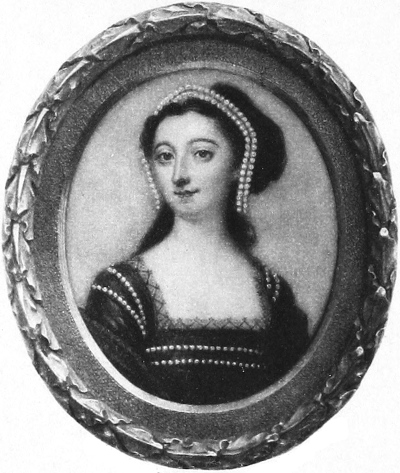
C. F. Zincke. Pinx. Emery Walker Ph. Sc.
Mrs. Montagu née Elizabeth Robinson from a miniature in the possession of Miss Montagu
ELIZABETH MONTAGU THE QUEEN OF THE BLUE-STOCKINGS
HER CORRESPONDENCE FROM 1720 TO 1761
BY HER GREAT-GREAT-NIECE EMILY J. CLIMENSON AUTHORESS OF “HISTORY OF SHIPLAKE,” “HISTORICAL GUIDE TO HENLEY-ON-THAMES,” “PASSAGES FROM THE DIARIES OF MRS. P. LYBBE POWYS,” ETC., ETC.
WITH ILLUSTRATIONS
IN TWO VOLUMES—VOL. I
LONDON JOHN MURRAY, ALBEMARLE STREET 1906
PRINTED BY WILLIAM CLOWES AND SONS, LIMITED LONDON AND BECCLES
AFFECTIONATELY DEDICATED TO MY COUSINS MAGDALEN WELLESLEY AND ELIZABETH MONTAGU BY THE AUTHORESS
PREFACE.

From my early youth I heartily desired to know more of the life of my great-great-aunt, Mrs. Elizabeth Montagu. Every scrap of information I could pick up respecting her I accumulated; therefore when my cousins, Mrs. Wellesley and her sister, Miss Montagu, in October, 1899, gave me the whole of her manuscripts contained in 68 cases, holding from 100 to 150 letters in each, my joy was unbounded!
In 1810 my grandfather, the 4th Baron Rokeby (her nephew and adopted son), published two volumes of her letters; these were followed by two more volumes in 1813. To enable him to perform this pleasing task he asked all her principal friends to return her letters to him, beginning with the Dowager Marchioness of Bath,[1] daughter of the Duchess of Portland, who gave him back the earliest letters to her mother, many carefully inserted in a curious grey paper book by the duchess, who placed the date of reception on each, and evidently valued them exceedingly. The Rev. Montagu Pennington returned her letters to his aunt, Mrs. Elizabeth Carter, the learned translator of Epictetus; Mrs. Freind those to her husband; and many other people did the same. From General Pulteney, at Lord Bath’s death, she had asked for and received her correspondence with Lord Bath, which she carefully preserved. At the death of Lord Lyttelton, the executors, at her request, returned her her letters; those to Gilbert West and other correspondents were returned in the same manner. Meanwhile she kept all letters of her special friends, as well as notabilities, so that one may deem the collection quite unique, though doubtless many letters have disappeared, notably those of Sir Joshua Reynolds, many of whose letters were destroyed by an ignorant caretaker of Mrs. Montagu’s house, Denton Hall, near Newcastle-on-Tyne. There are none of Horace Walpole’s, from whom she must have received some; and those from several other celebrities she knew well are missing.
Owing to the enormous quantity of letters undated, the sorting has been terribly difficult, and I spent one entire winter in making up bundles and labelling each year. My grandfather made a variety of mistakes as to the dates of the letters. I hope I have atoned for some of his deficiencies, though a few mistakes are probably inevitable. He nearly blinded himself by working at night, and my grandmother[2] had constantly to copy the letters in a large round hand to enable him to make them out. After my grandmother’s death he discontinued arranging them, though they might have been continued till 1800, the year of Mrs. Montagu’s death.
In the present volumes only her early life is presented, interwoven with portions of her most intimate friends’ letters to herself. Were the whole of this vast correspondence printed, a large bookcase could be filled with the volumes. In order to consult the varied tastes of the general reader, I have endeavoured to pick out the most interesting portions of her letters, such as relate to customs, fashions in dress, price of food, habits, but I have often groaned in spirit at having to leave out much that was noble in sentiment, or long comments upon contemporary books and events. If life should be spared me, I hope to be able to continue my narrative, for, like the ring produced by a stone thrown on the water, her circle of friends and acquaintances increased yearly, and not only comprised her English friends and every person of distinction in Great Britain, but also the most distinguished foreigners of all nations, notably the French. It has been asserted that Gilbert West was the first person to influence Mrs. Montagu on religious points. That his amiable Christianity may have strengthened her religious opinions I do not deny, but I hope it will be seen from this book that from her earliest days, when at the height of her joie de vivre, the religious sentiment was existent—a religion that prompted her ever to the kindest actions to all classes, that had nothing bitter or narrow in it, no dogmatism. Adored by men of all opinions, and liking their society, she was the purest of the pure, as is amply proved by the letters of Lord Lyttelton, Dr. Monsey, and others, but she was no prude with all this. Her worthy husband adored her, and no wife could have been more devoted and obedient than she was. His was a noble character, and doubtless influenced her much for good. As a wife, a friend, a camarade in all things, grave or gay, she was unequalled; as a housewife she was notable, beloved by her servants, by the poor of her parish, and by her miners and their wives and children. She planned feasts and dances and instituted schools for them, and fed and clothed the destitute.
With Mr. Raikes[3] she was one of the first people to institute Sunday-schools. She was as interested in Betty’s rheumatism as she was in the conversation of a duke or a duchess; a discussion with bishops and Gilbert West on religion, or with Emerson on mathematics, or Elizabeth Carter on Epictetus, all came alike to her gifted nature. She danced with the gay, she wept with the mourner; her sympathies never lay idle, even to the very end of life; and in a century which has been deemed by many to be coarse, uneducated, and irreligious, her sweet wholesome nature shone like a star, and attracted all minor lights. Where in the twentieth century should we find a coterie of men and women of the highest rank and influence in the world, either from intellect or position, so content and devoted to each other, so free from the petty jealousies and sarcasms of the present fashionable society, so anxious for each other’s welfare, socially and morally; so free from cant or prudery, so devoted to each other’s interest?
A great and terrible break in this book was caused by the death of my beloved husband in May, 1904, after a long, lingering illness. I doubt if I should have taken courage to resume my pen if it had not been for my friend Mr. A. M. Broadley, whose interest in my literary work and affectionate solicitude for myself has been a kindly spur to goad me on to action, so as to complete the present volumes. To him I tender my thanks for past and present encouragement, as well as many other kindnesses.
EMILY J. CLIMENSON.
CONTENTS TO VOL. I.
PAGE
Preface vii
List of Illustrations xv
CHAPTER I.
The Robinson, Sterne, and Morris families — Birth and childhood of Elizabeth Montagu — Correspondence with Duchess of Portland (passim) — Dr. Middleton’s second wife — “Fidget” — A summons — Tunbridge Wells — Mrs. Pendarves — Lady Thanet — Miss Anstey — Bevis Mount — The Wallingfords — A suit of “cloathes” — Anne Donnellan 1–25
CHAPTER II.
Correspondence with Duchess of Portland (passim) — Sir Robert Austin — The goat story — The Freinds — Country beaux — Thomas Robinson, barrister — Lady Wallingford — Duke of Portland’s letter — A coach adventure — Influenza — Smallpox — Cottage life — Bath — Lord Noel Somerset — Dowager Duchess of Norfolk — Frost Fair on the Thames — The plunge bath — “Long” Sir Thomas Robinson — Lord Wallingford’s death — The menagerie at Bullstrode — Lady Mary Wortley Montagu — Princess Mary of Hesse — Monkey Island — Lydia Botham — Mrs. Pendarves — Lord Oxford — Admiral Vernon — Anne Donnellan — Charlemagne — Dr. Young’s Night Thoughts — Duchess of Kent — Mr. Achard 26–62
CHAPTER III.
Hairdressing — Correspondence with Duchess of Portland (passim) — Sarah Robinson attacked by smallpox — Hayton Farm — A country squire — Handel — Dr. Middleton — Laurence Sterne — Duke of Portland’s letter — A brother’s tribute — Carthagena — The Westminster election — A South Sea lawsuit — Lord Oxford’s death — Panacea of bleeding — A one-horse chaise — A Windsor hatter — Lord Sandwich’s marriage — Ducal baths — Domestic service — Cibber’s Life — Peg Woffington — Dowager Duchess of Marlborough — Revolution in Russia — New Year’s Day — Lord George Bentinck — Northfleet Fair — Sir R. Walpole — Duchess of Norfolk’s masquerade — Sir Hans Sloane — A House of Lords debate — The Opera — Garrick 63–107
CHAPTER IV.
Love triumphs — Sir George Lyttelton — Edward Montagu — Anne Donnellan’s advice — Elizabeth’s engagement and marriage — Correspondence with Duchess of Portland — “Delia” Dashwood — Odd honeymoon etiquette — Mr. Robinson’s letter — Dr. Middleton’s letter — Cally Scott — Mrs. Freind — Père Courayer — Works of Manor — The Dales — Whig principles — Correspondence with Edward Montagu — Hanoverian troops — Handel’s Oratorios — Young’s Night Thoughts — A country beau and roué — A bolus — The Lord Chancellor — Dr. Sandys — A cook 108–140
CHAPTER V.
Journey to London — The floods — A faithful steward — The Rogers’ pedigree — A curious letter — Mr. Montagu’s visit to Newcastle — Birth of “Punch” — Inoculation — Baby clothes — Sandleford Priory — A parson and his wife — Countess of Granville — Correspondence with Duchess of Portland — Courayer — Woman’s education — Lord Orford’s letter to General Churchill — Preparation for inoculation — Elizabeth’s letter to her husband — Army discipline — Physicians’ fees — Pope’s grotto — A highwayman — Dangers of a post-chaise — “Punch’s” chariot — A Bath ball — “Mathematical inseration” — Midgham — A footpad — The Ministry — Pope’s Dunciad — Mrs. Pococke — Sugar tax — The Pretender — Sir Septimus Robinson — “Hide” Park — Gowns and fans — The wearing of “Punch” — A wet-nurse — Aprons — Orange trees — Lord Anson — Clothes and table-linen — Stowe — Thoresby — Death of “Punch” — Loss of an only child — Submission to God’s will — Duchess of Marlborough’s death — A Raree Show — Cattle disease — Mrs. Robinson’s illness 141–197
CHAPTER VI.
Correspondence with the Duchess of Portland — Donnington Castle — Tunbridge Wells — Dr. Young and Colley Cibber — Buxton — Tonbridge Castle — The 1745 rising in Scotland — George Lewis Scott — National terrors — Wade’s army — County meeting at York — The Northern gentry — General Cope’s defeat at Preston Pans — Sussex privateers — Tunbridge ware — Walnut medicine — D. Stanley’s letter to Duke of Montagu — Cattle murrain — Fears of invasion — The Law regiment — Romney Marsh — A footman — A brave gamekeeper 198–226
CHAPTER VII.
Correspondence with Duchess of Portland — Death of Mrs. Robinson — Lydia Botham — The Hill Street house — “Such a Johnny” — Courayer — Mr. Carter’s death — Denton estate — Elixir of vitriol and tar-water — Dr. Shaw — Young Edward Wortley Montagu — General election — Huntingdon Election — Dr. Pococke — Mrs. Theophilus Cibber — Courayer’s figure — A high and dry residence — Lady Fane’s grottoes — In search of an axletree — Winchester Cathedral — Mount Bevis — The New Forest — Wilton House — Savernake — Courayer’s letter — Matthew Robinson, M.P. for Canterbury — Lyttelton’s Monody — Thomas Robinson’s death — Coffee House, Bath — Cambridge — Richardson’s Clarissa — Peace of Aix-la-Chapelle — Spa — The Hague — James Montagu’s death — Price of tea 227–263
CHAPTER VIII.
Ranelagh masquerade — Tunbridge Wells — Duke of Montagu’s death — Coombe Bank — The feather screen — Hinchinbrook — The Miss Gunnings — Chinese room in Hill Street — A parson’s children — Dowager Duchess of Chandos — Lord Pembroke’s death — The earthquake — Death of Dr. Middleton — Anniversary of Elizabeth’s wedding day — Mrs. Boscawen — Gilbert West — Barry and Garrick — Embroidered flounces — “The cousinhood” — West family — Berenger — Hildersham — Miss Maria Naylor — The “Pollard Ashe” — Mrs. Percival’s death — Dr. Shaw’s death — The Dauphin — Dr. Middleton’s works — Anne Donnellan — Nathaniel Hooke 264–296
LIST OF ILLUSTRATIONS. VOL. I.
Mrs. Montagu (née Elizabeth Robinson) Frontispiece
From a miniature by C. F. Zincke, in the possession of The Hon. Elizabeth Montagu, Farnham Royal. (Photogravure.)
TO FACE PAGE
Mount Morris, near Hythe, Kent 8
From an old print, 1809.
Miss Morris, Grandmother of Mrs. Montagu 16
From a picture (artist unknown), in the possession of the Hon. Elizabeth Montagu. (Photogravure.)
Mr. and Mrs. Matthew Robinson (Mrs. Montagu’s Father and Mother) 32
From a picture by W. Hamilton, in the possession of The Hon. Elizabeth Montagu, Farnham Royal. (Photogravure.)
W. Freind, D.D., Dean of Canterbury 64
From the picture by T. Worlidge.
William, Second Duke of Portland 76
From the picture by Thomas Hudson, in the possession of the Duke of Portland. (Photogravure.)
Lady Mary Wortley Montagu 80
From a miniature (artist unknown), in the possession of Mrs. Climenson. (Photogravure.)
Sir Thomas Robinson (1st Baron Rokeby) 100
From a picture (artist unknown), in the possession of The Hon. Elizabeth Montagu, Farnham Royal. (Photogravure.)
Morris Robinson 144
From the picture by the Rev. M. W. Peters, R.A., in the possession of The Hon. Elizabeth Montagu, Farnham Royal. (Photogravure.)
Sandleford Priory, near Newbury, Berkshire 152
From a photograph.
Denton Hall, Northumberland 160
Margaret Cavendish Harley, Duchess of Portland 192
From the picture by Thomas Hudson, in the possession of the Duke of Portland. (Photogravure.)
Lady Lechmere (née Howard), Afterwards Lady (Thomas) Robinson 208
From a picture (artist unknown), in the possession of The Hon. Elizabeth Montagu, Farnham Royal. (Photogravure.)
Gilbert West 296
From an engraving by E. Smith, after W. Walker.
Robinson Pedigree In pocket at end of Vol.
ELIZABETH MONTAGU
THE QUEEN OF THE BLUE-STOCKINGS