Chapter XIX · LEAD AND ITS COMPOUNDS
Reading edition
Of all the metals employed in the arts and industries, none lends itself to such general applicability as lead. In its metallic state it is so plastic that it can be readily moulded. It forms compounds which for colour and persistence have enduring properties superior to most of the metals. There are few articles of manufacture that have not been directly or indirectly brought into contact with lead, and in many of the newer industries the association is extremely close. The census for 1891 showed that there were 132,010 persons employed in lead processes. Of these, 123,829 were painters, 2431 workers in leaden goods, and 5750 were lead-miners. If we add to these the numbers employed in the potteries, electric accumulator works, etc., it will be at once seen that a very large proportion of the artisan class is brought into contact with lead. It is this wide use of the metal, the extremely poisonous character of its compounds, and the peculiarly subtle manner in which they act upon the human organism, that make lead a dangerous substance. Besides, it is frequently present in the water, the aërated beverages, and the wine we drink; the food we eat may be contaminated by having been cooked in common earthenware or in cheap enamelled pots, or by tinning as in canned goods. The acid juices of fruits or foods may dissolve out the lead in the solder. The clothing we wear may have been dyed by lead compounds, and thus not only industrially but in our domestic and personal lives we are daily running the risk of plumbism.
Lead-mining and the Health and Surroundings of the Miner.
Professor Louis, in his article on Mining, p. 538, has briefly alluded to lead-mining. As in the following pages the subject of lead generally is dealt with, I feel that the reader will have a fuller grasp of all the points relating to lead and its history, if I slightly amplify what he has said by throwing a little side-light upon the medical and social aspects of the lead-miner’s life. Lead-mining in this country is an extremely old industry. Bars of pig-lead have been found in Derbyshire stamped with the imperial arms of Rome, indicating that the Romans worked our mines and smelted the ore. Since 1401 lead-mining has been carried on in the North of England, and has given employment to many families in the remote dales of Cumberland and Durham. It was formerly a source of very great wealth, but the mines have been gradually closing, owing to the importation of cheaper lead and of ores richer in silver than those that exist in this country. To-day it is rather a decaying than a prosperous industry. At present only 15,000 tons of lead are melted annually on Tyneside. Most of it is foreign pig-lead. During 1895 there were 250,000 tons of ore converted into pig-lead in this country. It is perhaps more to the poverty of silver in the native ore than to the cost of production of the raw material that the diminished output of recent years is to be ascribed. It hardly pays the proprietor to extract the silver when it is present in small quantity. English pig-lead contains a very small percentage of silver, seldom more than from 8 to 10 ounces to the ton. Foreign ores vary as regards the amount of silver held. In Spanish ore there may be as much silver as 40 to 80 ounces to the ton, and in Greek 80 ounces. Australian ores show very great variations. In some of the veins the ore contains 60 ounces to the ton, while in other samples there may be 500 ounces or even more.
So far as lead-mining in the North is concerned, the methods adopted for obtaining the ore are antiquated. Owners are apparently afraid to risk money in the enterprise, and as a consequence the means by which lead is mined are much inferior to those for getting coal. Lead mines, too, are not under the same Government regulations as collieries. Their ventilation is bad, the roadways are ill kept, and the mines are often damp, while the means of descent into, and ascent from, the mines, by a series of ladders, are arduous for the workers. So far as the mining of the ore is concerned, there is in this country practically no risk to the miner from lead poisoning, for he is dealing with almost a pure ore, viz., galena, which is a sulphide. Metallic lead is harmless compared with its compounds, the oxide and carbonate. It is this circumstance that explains why lead-miners at Broken Hill in Australia suffer so severely from colic and convulsions, while their confreres in England escape. The ore at Brocken Hill is very largely a carbonate. The English lead-miner runs the ordinary risks to life and limb from accidents, and in a special manner his health is endangered by pulmonary consumption and rheumatism, largely the result of exposure when returning from work heated and fatigued, also of the barrack system in vogue in certain places for housing the miners.
There is not much lead-mining carried on in France, but where it is there is freedom from plumbism among the miners as in our own country, with the exception of an outbreak of colic that occurred among the men who were working in the veins at Asprières (Aveyron), where the mineral was found, like the Australian ore, to be composed mostly of cerusite or carbonate of lead. It is to a similar condition of the ore in the lead mines of Sierra de Gador that are attributed the 400 to 500 cases of colic annually observed by Dr Bayer among 12,000 miners—a malady to which the crushing of the cerusite in the dry state no doubt very largely contributes. (Poisons Industriels, Paris, 1901, p. 14.)
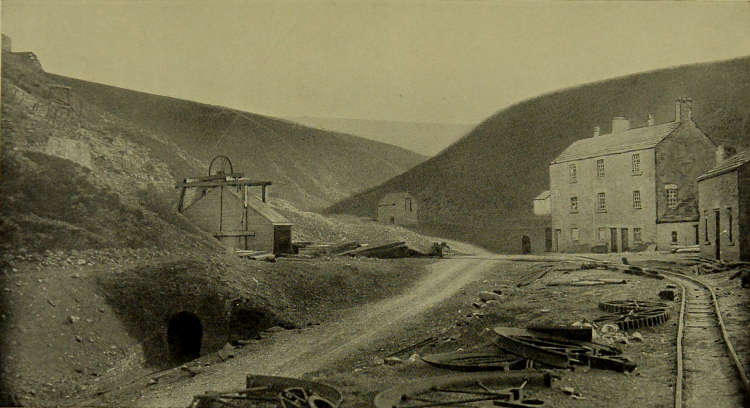
Fig. 68.—A Lead Mine. Large building on right is the lodging for the Miners; lower part of building is occupied as a stable. Top of shaft seen high up on left; lower down, the “level” or drift with hauling machinery.
The dales of Durham in which lead-mining is carried on are sparsely populated: they are bleak, and swept by cold winds for the greater part of the year. In many instances the miners live a considerable distance from their work, and as railways have not yet penetrated into these remote corners of England, the men have to cover the ground on foot. Lead-miners are brought very little into touch with the outer world. They form a class by themselves, and cling with affection to their homes on the hillsides: they closely intermarry, and thus form not only one family socially but industrially as well. Their wages are small, seldom more than ten to twelve shillings a week, and yet, unless compelled through sheer necessity to renounce their badly paid and not too healthy occupation, they will not leave the district for the more lucrative work of coal-mining. As a class they are thrifty, intelligent, temperate, and religious. They are not long-lived. Pulmonary phthisis is extremely prevalent among lead-miners. In close proximity to some of the mines large “lodging shops” or “barracks” have been erected, where many of the workmen stay during the week. In one district, Dr William Robinson of Sunderland, formerly of Stanhope, found that 166 miners occupied one of these shops during three or four days and nights in the week. Often the barracks are in a filthy condition, for they are badly kept. As the sleeping accommodation is limited, the bedrooms are crowded to excess. In one room, 16 feet by 13½ and 9¾, there were 20 miners accommodated, i.e., at the rate of 124 cubic feet of air per man, while the model regulations of the Local Government Board require not less than 400. Most of the rooms have no fireplaces: the windows are fixed, and consequently there is no means of ventilation. As large numbers of men have to be accommodated, the beds are crowded together in two tiers 3 feet 6 inches from each other, so that there is barely space to pass between them. Since the rooms are occupied by different sets of miners working alternate shifts, the beds are hardly cooled before being again occupied, while in consequence of the air of the rooms not being renewed, the stench is overpowering. Bad as the sleeping accommodation is, the day rooms are not any better. The closet accommodation, too, is scanty and often badly placed. In his lodgings as well as at his work many a lead-miner is exposed to the influence of very unwholesome atmospheric conditions, the results of which are seen in his deteriorated constitution and diminished resistance to disease. The air of the lodging-shops is heavy with the effluvia from the bodies of their occupants. Sooner or later lead-miners suffer from asthma and pulmonary catarrh, the end of which is often tubercular consumption, and as the men expectorate upon the floors of the sleeping-room, the tubercle bacilli find in the badly-lit and ill-ventilated rooms the conditions which favour their multiplication. In this manner, and apart from his work, the lead-miner is brought under the influence of the microbe of pulmonary phthisis. The excessive amount of carbonic dioxide in the mines, the unconsumed products given off by the burning candles and those given off by explosion of gunpowder, render the atmosphere of the mine for the greater part of the twenty-four hours unhealthy. By the workman who lives a few miles from the mines, and who has to walk home across a bleak and wind-swept moor, tired and heated after a hard day’s work and wearing wet clothes, colds on the chest are readily caught and not readily got rid of. Out of these repeated pulmonary catarrhs consumption is prone to develop. Commencing work in the open air as a crusher and washer of ore, the son of a lead-miner—for the occupation is largely hereditary—will for health compare most favourably with any young artisan, but he has only to work a few years in the mine when he becomes short-winded. Once this defect is induced it gradually increases, and so at the age of forty to forty-five the lead-miner is old for his years: an asthmatic, he is the subject of wheezing cough and expectoration, and is often obliged to give up work entirely before the age of fifty. Life, however, may be prolonged for years, for the summer months bring abatement of the symptoms; the improvement, however, is only temporary, for the cold winds of winter and spring again light up the chest affection. Since in the mine the air is dusty, and the worker inhales particles of grit, pathological changes in the lungs are established similar to those mentioned in the chapter on Dust and Disease. The lung of one lead-miner that I have is almost solid from excess of fibrous tissue, and it feels as hard as stone, see Fig. 39. On microscopical examination the alveolar structure of the lung is found to be replaced by dense fibro-connective tissue. In the expectoration of some of the lead-miners I have found tubercle bacilli. The pulmonary disease of lead-miners, therefore, like that of workers in dusty trades, may be either a simple form of fibrotic phthisis due to inhalation of grit, or it may be a truly tubercular lesion grafted on to the less formidable fibrosis. The average age at death of lead-miners is about fifty. Nearly 50 per cent. of them die from chest diseases. In the dales around Stanhope, in the county of Durham, the death-rate from phthisis among a secluded population of lead-miners was 4.7, while in another part of the same Union composed of farmers it was only 0.6.
Lead-smelting.
While the miners in this country do not suffer from lead poisoning, the same cannot be said of the men who smelt the ore. I have seen several smelters die from plumbism. In a few instances I have witnessed son after son in a family thus carried off before the age of thirty. The fume that escapes from the flue of the smelting shop contains oxide and sulphate of lead, and it is the inhalation of this that causes plumbism. Usually the lead fume is conducted into a long flue, 5 feet high and 3 feet wide; in some places the flue is carried up the side of a hill for a mile or two before it terminates in the chimney. This allows of the deposition from the fume of some of the oxide and sulphate of lead which is recoverable. At one large smelting works which I visited along with my colleagues on the White Lead Commission, we found that recovery of the deposited lead by men entering the flues was attended by such serious symptoms that we recommended two hours at a stretch as the maximum time for men to work in cleaning out the flues. Twenty cases of plumbism in lead-smelters were reported to the Home Office in 1900.
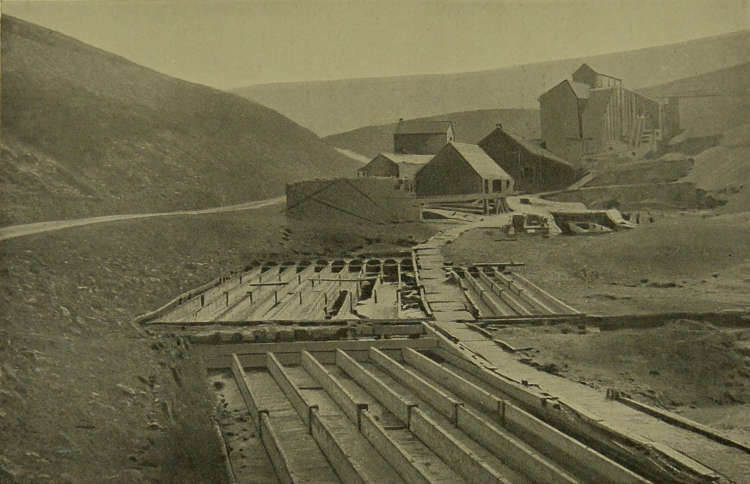
Fig. 69.—Other View of Lead Mine. Crushing Machinery, etc., in shadow; Washing Troughs, Sluices, “Sludges” in foreground.
Although British galena contains usually but a very small quantity of silver, this can be profitably extracted when present in the ratio of even 2 of silver to 1000 of lead. Frequently the amount of silver present in foreign ores is so large that manufacturers prefer to extract the more valuable metal only. Desilvering of lead ore is generally carried out by the Pattinson process, introduced in 1829. Until that date silver was not extracted from galena. The ore had to be converted into an oxide in order to separate the silver, and the oxide resmelted to recover the lead, but unless the lead contained 8 to 11 ounces of silver to the ton it did not pay to extract it. While its removal has increased the production of silver, its extraction is by some authorities believed to have improved the quality of the lead. On the other hand it is stated that lead pipes made from desilverised ore are, when used for conveying drinking water into our houses, found to be too soft. They are more readily acted upon by water, and become consequently a more frequent cause of plumbism than the harder pipes made from British galena, from which the silver has not been extracted. The introduction of the Pattinson process has caused silver extraction to become a special industry. The process depends upon the formation of an eutectic alloy of silver and lead.[50] It is unnecessary to describe the Pattinson process, since it is detailed in all text-books on metallurgy and chemistry. Suffice it to say that the desilvering plant usually contains five pots made of cast iron and set in masonry, and by a series of melting and skimming, cooling and transferring the separated silver and lead to a series of pots in succession, all the silver, practically speaking, can be removed from the lead. Although I have frequently examined men engaged in desilvering lead I have rarely found them the subjects of plumbism. Two cases of lead poisoning were reported to the Home Office in 1900 as having occurred in silver-smelters.
Red Lead; Lead Oxide; Litharge; Massicot; Minium.
Lead oxide, the yellow and red, is got by melting metallic lead in a furnace exposed to atmospheric air. By means of a long iron rabble a workman keeps raking the molten liquid so that it is brought into intimate contact with the oxygen of the air. When removed from the furnace and cooled, the product assumes a red or yellowish colour according to the amount of oxygen it contains, and is known as the red oxide of lead and minium, or as massicot. During the operation of melting and raking the lead a certain amount of fume escapes from the open mouth of the furnace. The fume ought to be removed by a strong upward draught through a hooded chimney. Where this is not done and the men approach too near the mouth of the furnace, fume is inhaled, with the result that the workmen suffer from plumbism. A fairly large number of red-lead makers become anæmic and suffer from colic and wrist-drop. Great as is the risk run by the red-lead worker through inhaling the fumes from the molten metal, it is less than that incurred during the crushing and packing of the finished product. The substitution of mechanical agitation of the molten lead in the furnace for that done by hand by the workman would diminish the danger, since it would allow the doors of the furnace to be closed, except during the charging of the interior. The packing of casks with red lead should be conducted in closed spaces provided with a hood and such means as will create an effective draught. The workmen ought to wear overalls, have frequent baths, and be inspected at least every fortnight by a doctor. Men can work longer in red than in white lead without losing their health. There is no truth in the statement that they are absolutely free from the severer forms of plumbism. As a rule, I have found the symptoms of lead poisoning in massicot makers on the average milder than those observed in white-lead workers; but the result depends upon the proximity and length of exposure to lead compounds rather than upon the particular nature of the compound itself—always, of course, remembering that the more soluble the lead compound the greater the danger. Some physicians have had quite other experience. Layet, for example, in a paper read before the Congress of Hygiene at Turin, 1880, stated that minium is more dangerous than white lead, and that the form of poisoning is just as severe, if not more so. He had found red-lead makers more liable to what is known as encephalopathy, i.e., the cerebral type of Saturnism, than white-lead workers.
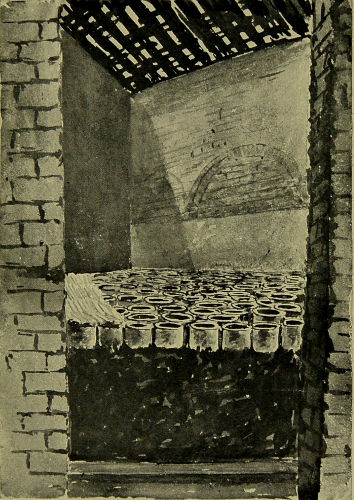
Fig. 70.—A “Blue” Bed in a White Lead Factory, showing tan in lowest part, and resting on it rows of earthenware pots containing acetic acid. Resting upon the pots in left hand corner can be seen thin sheets of metallic lead.
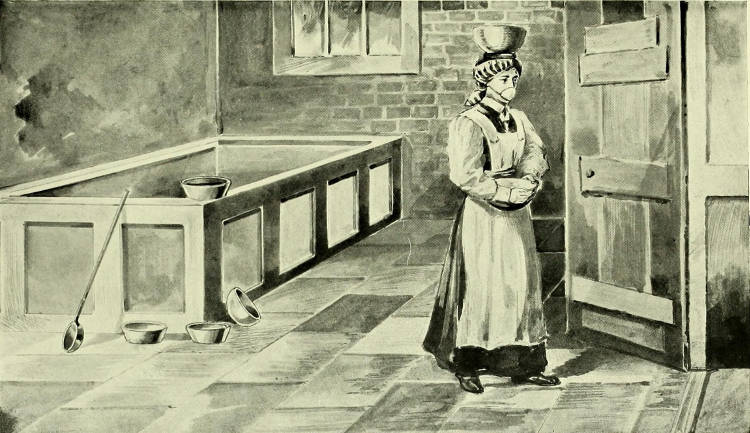
Fig. 71.—Female carrying Basins filled with Washed White Lead from Vat to Stoves.
White Lead; Carbonate of Lead (Céruse, Fr.)
All the soluble salts of lead are capable of inducing plumbism, and of these the carbonate is perhaps the most prolific cause of lead poisoning. In Britain most of the white lead of commerce is made by the old Dutch process. Thin sheets of metallic lead (wickets) are taken to the stacks or blue beds. The floor of the stack is covered by a layer of tan, and on the tan is arranged a series of earthenware pots containing dilute acetic acid. Upon the pots are placed the sheets of lead. Boards are laid over these, and thus the first layer is formed. Tan is thickly strewn over the boards, and when this has reached a sufficient thickness, other rows of pots partially filled with dilute acetic acid and covered over by thin sheets of lead are arranged on the tan, and the whole is covered over by boards. This second layer is followed by others similarly constructed, until by a succession of tiers the ceiling is reached, when the doorway is built up by boards and kept closed for a period varying from ten to fifteen weeks, during which the conversion of blue into white lead by corrosion takes place. The stacks are ventilated by means of a shaft at each corner. Once the “blue” beds are made up and the doorway closed, the tan begins to get warm and evolve carbonic acid. In consequence of this heat the acetic acid becomes volatilised, and through the interaction between the lead and acetic acid on the one hand, and the carbonic acid on the other, chemical changes of a nature not thoroughly understood occur, which ultimately end in the production of the basic carbonate of lead, or what is popularly known as white lead. When this conversion is believed by the manufacturer to have taken place, the stack is opened. It is then no longer spoken of as a “blue” but as a “white” bed. Workpeople enter the white bed to strip it of the corroded lead. What was originally placed in the blue bed as a thin layer of metallic lead has become converted, if the corrosion has been satisfactory, into a much thicker plate made up of a white crisp incrustation of lead carbonate, which often conceals from view very thin pieces of unaltered metallic lead. In stripping the white lead off the unchanged metal a considerable amount of dust is given off, the inhalation of which was previously much more frequently a cause of plumbism in the workpeople than now, owing to the fact that present regulations require that the white beds must be watered by means of a “rose.” The carbonate and unaltered lead removed from the white beds used formerly to be taken direct to the rollers, crushed and washed, so as to separate the two. After washing, the white lead is placed in earthenware vessels and taken to the stoves to be dried. The emptying or drawing of stoves has been the cause of a larger number of severe and fatal cases of lead poisoning than any other department in a white lead factory. Until 1898 the filling and emptying of stoves was very largely done by women, young and middle-aged, but the work was found to be so detrimental to female life that the White Lead Commission recommended that no woman or girl should be allowed to work in the stoves. I have known young women die from plumbism within three months after entering a white lead factory and working in the stoves. It takes from three to five days for the white lead to become thoroughly dried in the old form of stoves, after which it is packed into casks. Since the White Lead Commission published its Report there have been many improvements in stoves. There are many now in use which will tend still to diminish plumbism. In some factories wagons ladened with basins of moist white lead are run on rails into the drying chamber, while in others the white lead is made to fall mechanically on to a series of large revolving discs in a closed chamber heated by air. Packing is often a dusty and dangerous process if it is not conducted in a confined space ventilated by a shaft and fan. The white lead is mixed with oil and converted into paint. When visiting the white lead works in Paris of Messrs Expert-Besançon et Cie., a short while ago, I found that while the old Dutch method of manufacture was in use there was an immunity from plumbism among the employés that created a favourable impression upon me. That freedom I found was in the main due to the following circumstances: (1) no female labour was employed; (2) stoving was practically done away with; (3) the white lead was taken direct from the stacks to the rollers, where it was crushed and washed; then (4) passed through a series of rollers and mixed with oil, which gradually displaced the water,[51] so that a perfectly finished paint escaped from the last roller, practically free from, or containing only a very small percentage of water, and was passed automatically into casks, thus abolishing some of the dusty and dangerous processes as well as the handling of the white lead; (5) careful personal supervision of the workers, and attention to cleanliness; (6) regular medical inspection; and (7) alternation of employment. I reported to the Secretary of State upon these facts, with the result that they were laid before the white lead manufacturers of this country, many of whom adopted in a modified form the practice observed in Besançon’s works. English makers have since then informed me that it not only saves labour and therefore cheapens production (the product itself not suffering in quality), but has materially diminished the number of cases of lead poisoning in their factories.
White lead can be made by other methods. In what is known as the chamber process strips of lead are suspended over parallel bars in a chamber, which is heated by steam, and into which carbonic acid is passed, while acetic acid is present in pans on the floor. The result is the same, viz., formation of white lead by a process of corrosion, only the conversion is much more rapid, being four or five weeks as against the ten to fifteen required by the stack process. The subsequent treatment of the white lead is the same in both cases. Much of the white lead manufactured in Germany is made by the chamber process, and in that country emptying the chamber is regarded as dangerous to health.
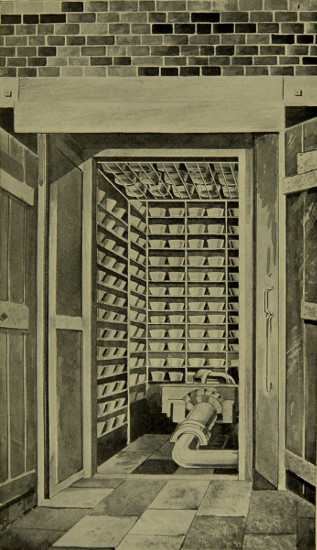
Fig. 72.—Interior of Stove for drying White Lead.
By the old Dutch process an excellent and very pure white lead is no doubt produced. The drawbacks to the method are that it is tedious, and that some parts of the process are extremely dusty, and therefore dangerous. There have been various attempts to manufacture lead carbonate by quicker methods, and of these the method of obtaining white lead by the action of acetic acid and glycerine upon the red oxide may be mentioned. In it the first step consists in reducing metallic lead to litharge by placing pig-lead in a furnace and allowing a jet of steam to play upon the vapour of the molten metal. The lead oxide is subsequently crushed into a fine powder. This, as I saw it, can be a very dusty and dangerous process. The red oxide is placed in large revolving barrels along with acetic acid and glycerine, and the churning is allowed to go on for about two hours. A greenish-white liquid is the result, and this is allowed to escape from the barrels into storage vats, from which it is conveyed into large cylinders called carbonators. Into these carbonating tanks carbonic dioxide obtained from burning coke and lime is conveyed, and the gas is allowed to bubble through the mass for about an hour, when carbonate or white lead is formed. After running off the supernatant liquid, the deposited lead carbonate is removed through pipes to the presses, where it is washed and any acetate that may cling to it is removed. After this it is taken to the stoves, into which it is run on a series of long narrow wagons, the workmen not entering the stove at all. By the third day it is sufficiently dried to be ready for packing or mixing with oil to make paint. This method of manufacture is known as the precipitation process. In it there is no handling of the white lead until it reaches the presses. The dangerous parts of the process are: (1) the grinding of the lead oxide: this is dusty; (2) the pressing: in this the men handle the white lead, and as a consequence I have observed in young workmen marked anæmia, tremor of muscles, colic, and the presence of a deep blue line on the gums; and (3) filling the barrels with the finished white lead, when danger arises from inhalation of dust. In some works ammonia is substituted for glycerine. Conducted as an experiment, white lead manufactured on the lines just detailed is extremely satisfactory, but financially it is not very successful. Although the precipitation process is more rapid it is more costly, and as a consequence factory after factory which has adopted this method has been obliged to close.
In the manufacture of white lead by the Bischof process the first stage consists, after converting metallic lead into litharge, in the reduction of the litharge to suboxide in gas-tight cylinders by means of water gas at a temperature of about 300° C. The suboxide is moistened in mechanical mixers with water, and converted into hydrate. By means of carbonic acid, dilute acetic acid and glycerine, the hydrate is converted into white lead in a gas-tight apparatus, and after separation of the liquid and washing of the sludge, the aqueous white lead is mixed with oil by mechanical means, and becoming thus ordinary white lead paint, it is packed ready for the market. No female labour is employed in the factory. The manufacture of white lead by the Bischof process at the time of writing is still to a large extent experimental, but it gives promise of commercial success. As the work is done by machinery, and is for the most part wet, there is no dust given off. The only possible unhealthy part of the process I observed was the mixing of the suboxide of lead with water, but where this is done mechanically, as I presume it can be in chambers provided with ventilating shafts, all danger can be averted.
In white lead factories the dangerous processes are emptying the white beds, washing the incompletely converted metallic lead plates, crushing, grinding, sifting, filling the pots with white lead for the stoves, emptying the stoves and packing the barrels with the dry white lead. It is the continual absorption into the body of very minute quantities of lead compounds either by the pulmonary or digestive tract that causes plumbism. The skin, too, offers another channel by which it may enter the system. Although it is usually in the form of dust that lead enters the body, it can also enter it in the form of fume, and possibly, too, mixed with steam in which the particles of lead are either dissolved or suspended.
Lead carbonate is an extremely fine white powder, and is largely sought after as a pigment by house painters, by plumbers for searing joints, and by pottery manufacturers for making the glazes in which the ware is dipped. As a pigment it is said by a large number of house decorators to be superior to any other. There is a decided preference in the trade, too, for that made by the stack process. It always commands a higher price, the reason being that it is believed to have much greater covering power than white lead made by some of the other processes. On account of white lead being such a dangerous product, both in its manufacture and manipulation, the question of finding a suitable substitute has often been raised. This subject was carefully gone into by the White Lead Committee a few years ago.
Zinc white, for example, was recommended, but the opinion come to was that while zinc oxide was practically free from the dangers incidental to lead carbonate, and answered well for internal decoration, for covering purposes and endurance in all kinds of weather there was no pigment equal to white lead. It is this widespread belief among house painters generally that makes white lead such a valuable commercial product.
The question of finding a substitute for white lead has not been confined to Britain alone. One hundred and twenty years ago, Courtois presented to the Academy of Dijon some zinc white, which was remarkable on account of its permanence, and in 1783 Guyton de Morveau recommended, from hygienic motives and on account of its chemical properties, zinc oxide for lead carbonate. Ten years ago a small representative committee reported to the Commission des Logements Insalubres of the city of Paris upon zinc white as a likely substitute. As far back as 1849 the Minister of Public Works ordered that all the Government buildings in France were to be painted with zinc oxide instead of lead carbonate, and although in 1852 the Minister of the Interior followed with a similar request to the various prefects, the resolution remained a dead letter. It was indicated to a fresh committee, appointed in 1891, that from an economic and industrial point of view, zinc white was inferior to white lead, that it had no great covering power, little durability, that it cost more, and that therefore the painting of State buildings by it would entail an unjustifiable expense. Some persons, on the other hand, held the belief that zinc white possessed just as good covering properties, so long as it was mixed with a larger proportion of oil and less of turpentine, and that the painter gave a sufficient amount of attention to his work so as to make the coating flat, also that it was not so readily blackened by sulphurous vapours. As for the increased expense, it was to be remembered that if zinc white costs more, it is also less heavy, and therefore weight for weight gives a larger body of material. The Commission, taking into consideration the hygiene of dwellings, the health of the workers, and the interest of landlords, and having the choice of two substances before it, of which one is almost harmless, and the other a strong poison, adopted the following resolutions: (1) the employment of zinc white to the exclusion of white lead will be specified in all the orders for painting; (2) the Commission renews the wish expressed in 1880 in regard to the exclusion of white lead in all public works. No special action followed these recommendations. Within the last few months the question has again been raised in France, and on this occasion more vigorously than before. The operative painters met in congress, and passed resolutions denouncing the use of lead in the manufacture of paint, and demanding that the law for compensation for accidents should be extended to include cases of plumbism. To the painters’ representatives the Minister of Commerce, at a personal interview, while admitting that the law on accidents was imperfect, stated that it was too soon to hope for its amendment. He undertook to do all he could to enforce the decree of 1849, that no more lead should be employed in painting and decorating State buildings. In France zinc sulphide, oxysulphide, and oxide have all been tried as substitutes for white lead, but although there is a belief that these can replace lead carbonate, there is an unwillingness on the part of architects and house-painters to discontinue the use of lead. In Britain other chemical compounds in addition to the above have been tried, e.g. sulphate of barium, but although this is a beautifully white substance, it does not mix so well with oil nor has it the covering power of white lead. The surface of the object painted can be seen through the coating of barium sulphate, a circumstance probably due to the fact that the barium salt exists in a more highly developed crystalline form than the lead compound.
In March 1901 the Comité Consultatif d’Hygiène of France reported upon this subject[52] that the manufacture of white lead has become less and less the harmful industry it was owing to the Expert-Besançon process of grinding and mixing the white lead in water, with the subsequent addition of oil as it passes through the rollers, careful medical examination of the workmen employed, and the removal from the works of those who seem to be susceptible to plumbism, or are inclined to the free use of alcohol. The Committee of Hygiene recognises that in house painters, want of cleanliness, also the excessive use of alcohol and absinthe, are responsible for much of the lead poisoning, and therefore, since it is impossible to regulate and control the habits of these men, they ought to be provided with paints which do not contain such an injurious substance as white lead. In zinc white the committee is of opinion that a proper substitute can be found for lead for most purposes. Many architects and builders still object to the use of zinc white, but there are many, on the other hand, who claim for it the same advantages as regards covering power and endurance, and who maintain that when exposed to sulphuretted vapour it forms a sulphide which is white compared with the black sulphide similarly obtained from lead. The zinc coating dries more slowly, and there is therefore some loss of time; the work of laying on, too, may be a little more difficult, and for polishing purposes zinc mastics do not harden so well. Zinc is not so good in calico-printing as white lead. There are some things therefore, the committee admits, that lead may be better for than zinc. It is also admitted that even zinc oxide may be accidentally contaminated by small quantities of arsenic and lead, also that it is slightly more expensive—for example, it costs 0.0152 franc more for each metre of work done. The committee concludes its report by stating that both in the manufacture of zinc white and in its application as a paint it is free from the dangers incidental to lead, and therefore it is worthy of a lengthened trial as forming the basis of colours for house painting, since there is a considerable amount of educated opinion to show that it can be substituted for white lead. The French Government is asked to set the example by having the public buildings painted with oxide of zinc.
No industry, unless, perhaps, it be that of pottery manufacture, has caused so much plumbism as the manufacture of white lead, and yet in none has strict attention to regulations and personal hygiene been so productive of good as in these two industries.[53] The bulk of the work is unskilled labour. In Newcastle and neighbourhood, until the last three years, most of the work in the dangerous processes was performed by women who led rather a casual life, and who took to the trade as a last resource, owing to the idleness, illness, or death of their parents or husbands. They were mostly of the poorest class, and were often ill-fed and ill-clad. After a few weeks or, at the most, a few months of pretty regular employment in a lead factory, particularly if much of the time was spent in stripping the white beds or emptying the stoves, young women would suffer severely from plumbism. As already stated, I have known young women who were strong and healthy when they entered a white lead factory, die from Saturnine poisoning within three months. In one instance a young woman had, to my knowledge, only worked forty days, spread over a period of nine weeks, when she succumbed to lead poisoning. I am firmly convinced that women, especially young women, are much more susceptible to plumbism than men. The predisposition to lead poisoning is in both sexes doubtless spread over all periods of life, but so far as occupation exposure to lead is concerned, my opinion is (1) that women are more susceptible than men; (2) that while female liability is greatest between the ages of eighteen and twenty-three years, that of men is later; and (3) that while females rapidly break down in health under the influence of lead, men can work a longer time in the factory without suffering, their resistance apparently being greater. In addition to a sexual predisposition to plumbism there is also an individual and a family tendency as well. It is difficult to explain this susceptibility of certain persons to lead poisoning. As to the fact, however, there is no doubt. It is partly a constitutional, and it may be partly a temporary and accidental condition. We find illustrations of constitutional predisposition to certain maladies in the greater liability of some people, for instance, to contract infectious diseases than others, in the readiness, for example, with which they catch typhoid fever and suffer severely from it. We have similar illustrations of the influence of age in the early years of adult life being those in which enteric fever is most severe. As an indication of how susceptibility to plumbism may be accidentally and temporarily developed, I would instance the influence of poverty, which, by preventing the purchase of wholesome and abundant food, allows the gastric juice probably to dissolve out more of the lead that has been swallowed. No doubt much of the greater prevalence of plumbism hitherto observed in women who have worked in white lead factories is to be explained by the fact that they have until recently worked in larger numbers than the men in the dangerous processes, for since June 1898, the date in which the Home Office required that male should replace female labour in these processes, the number of cases of plumbism in the men has increased, and correspondingly decreased among the women. Taking for example my own district, the number of cases of plumbism notified to the Home Office from Newcastle-upon-Tyne for the two six months’ periods preceding and succeeding June 1898, the date of the displacement of female by male labour, is as follows:—
1st December 1897 to 31st May 1898 Notifications. Fatal Cases.
Males. Females. Males. Females.
19 66 1 4

85 5
1st June to 30th November 1898 82 12 0 2
94 2
Between January and October 1898, Dr M. Legge states that there were received at the Home Office from certifying surgeons, 192 reports of plumbism. Of these the stoves supplied 76 patients and the white beds 31. The ages of the workers being—
Under 20 yrs. 20 to 30. 30 to 40. 40 to 50. 50 to 60. Over 60 yrs.
7 84 58 24 15 1
In three instances the patients had worked less than one week in the factory. In four-fifths of the total cases the lead poisoning took the form of colic, in the remaining one-fifth paralysis and cerebral symptoms.
Next to the susceptibility of women generally, and of young women in particular, I would say that all young adult life offers less resistance to plumbism than mature and middle age. In the House of Commons, 17th February 1898, the Home Secretary stated that there had been 37 cases of lead poisoning in factories and lead works among boys under eighteen years of age which had proved fatal.
Looking back upon the tables just presented, it will be observed that when males undertake the work hitherto discharged by females in white lead factories they develop plumbism in a ratio which might raise doubt in the mind of the reader as to the susceptibility of women to plumbism being greater than that of men. Admitting for the moment that the susceptibility is equal in the two sexes, and the fact, too, that in both the illness may be severe, still I unhesitatingly assert that in the main the symptoms are neither so severe in men, nor does the malady run so rapidly to a fatal termination as it does in women. In a word, females contract lead poisoning more readily, the symptoms are usually more acute, they suffer more severely, and they succumb to it more quickly than males. In women acute lead poisoning is more prone to assume the cerebral type than in men. We have, it is true, only the experience of the last three years to enable us to form an opinion as to the abolition of female labour in the dangerous processes of white lead manufacture having been a wise recommendation on the part of the White Lead Commission, but limited as the time is, the records of the Newcastle-upon-Tyne Royal Infirmary are not devoid of interest on this point.
LEAD POISONING.
In-patients admitted into Royal Infirmary, Newcastle-upon-Tyne.
Year. Total. Recoveries. Deaths. Remaining on Books.
Males. Females. Males. Females.
1892 44 15 27 2 1 2
1893 32 5 25 ... ... 2
1894 31 7 20 ... ... 4
1895 35 11 18 1 ... 5
1896 38 12 22 ... 2 2
1897 21 7 12 1 1 ...
1898 36 22 12 ... ... 2
1899 20 19 1 ... ... ...
1900 14 14 ... ... ... ...
It will be observed that the number of deaths is equal for the two sexes.
A decade ago the Newcastle Infirmary wards were scarcely ever clear of a case or two of lead poisoning. At present weeks or months may pass without one being in the wards. Beyond male labour having been substituted for that of females in the dangerous processes in the factories, and the circumstance that men are believed to do more work than women, I am not aware that there has been any reduction[54] in the number of people engaged in white lead manufacture on Tyneside that will explain the smaller number of cases of plumbism coming into the Infirmary, nor beyond the workhouses is there any other institution in this neighbourhood, other than the Royal Infirmary, to which patients suffering from plumbism could go. During 1898, the year in which men exchanged places with the women in the dangerous departments in white lead factories, the number of cases of plumbism admitted into the Infirmary was slightly greater than for one or two of the previous years, a circumstance possibly explained by the greater irregularity of work on the part both of the men and women, and the fact that the men were of a casual class and had not become accustomed to the work. Immediately after the abolition of female labour, not only is there observed a marked fall in the number of female admissions, but there is this astonishing feature, that while during 1900 only 14 cases, all males, were admitted, for the first time in the history of the Newcastle Infirmary within our memory a whole year passed without even one female being received. During the last three years, as also during 1893–1894, no death from acute lead poisoning took place in the Infirmary. There has been, too, a remarkable absence lately in the Newcastle daily press of announcements of coroner’s inquests having been held upon fatal cases of lead poisoning in the district compared with what there was a few years ago. Nothing could be stronger testimony to the wisdom of the Home Office in having enforced the recommendations than these facts. Although the manufacturers at the time strongly resisted the recommendation of the White Lead Committee, I believe they now admit that it was a proper step, also that work under the present system is better done than formerly, and that there is less sickness among the employés. The difficulty of substituting male for female labour, which manufacturers anticipated and which was their principal objection, has not been realised; the men do more work, and therefore the cost of production has not been increased, although wages have been higher; the men, too, are more cleanly. Improved methods of manufacture and diminished handling of products have doubtless contributed also to this satisfactory result. As the men have come to recognise the dangerous character of their occupation, and have made up their minds to follow it until they can get something better, they have become more careful, and therefore suffer less in proportion from plumbism. Casual work and irregularity of employment certainly play a not unimportant part in causing lead poisoning. The casual labourer is often ignorant and careless. As these pages are passing through the press, a man who had been stripping a white bed in a factory on Tyneside was found eating food with hands unwashed and covered with dust, while his face and beard showed only too plainly the presence of the same material. He stated that he had not been informed of any danger, and that no regulations had been read out to him. How easily, therefore, lead poisoning may be caused and almost as easily prevented. Dr Morison Legge found that of 1463 persons employed off and on in white lead works, the incidence of lead poisoning was 6 per cent. of the average number regularly employed, and in those with casual employment 39 per cent. Taking the whole number of hands passing through white lead factories in a year, the difference between these two, however, is less marked than at first appears, the numbers being 5 per cent. for the employed and 8.3 for the casual workers. Out of thirteen factories with regular employment four of them had no cases of plumbism to report at all, even although in one of these factories 110 persons were employed, whereas from two factories in which there was a large amount of casual employment 50 cases of plumbism were reported. The reasons why casual hands suffer more than those regularly employed are to be found in their carelessness and want of personal cleanliness, intemperate habits as regards alcohol, tobacco-chewing when at work, and unwillingness to wear respirators. During 1900 there were reported to the Home Office 356 cases of plumbism in white lead workers, but Dr Legge says, if two firms, one in Newcastle and the other in London, were excluded from the 18 firms, the total would fall to 175.
I have dwelt at considerable length on female labour and casual employment in lead works, and I hope have shown that the abolition of women’s work in white lead factories has been followed by marked improvement both in the conditions of labour and in the reduced number of cases of plumbism. Female labour, however, is still very largely employed in other trades where lead compounds are used. It may therefore be expected that I should offer some explanation of the attitude I have assumed in regard to this important industrial question. Where the two sexes are as far as possible equally exposed to the influence of lead, women probably suffer more rapidly, certainly more severely than men. To a certain extent the reason is to be found in the fact that lead exercises an injurious influence upon the reproductive functions of women. It deranges menstruation. Usually there is an excessive loss at the monthly periods, which causes women to become anæmic; in a few instances, on the other hand, the loss is scanty. It is upon pregnant women that the metal exercises its worst effects. The ecbolic or abortifacient action of lead is beyond dispute. It is knowledge of this fact that has caused women of the lower classes when pregnant to resort to diachylon pills, which contain a small quantity of lead, for the purpose of producing miscarriage. When a white lead worker becomes pregnant it is almost impossible for her to go to the end of term if she continues to follow her employment. As a rule she mis*-carries, but if, perchance, she goes to term, the child is either born dead, or dies shortly after birth from convulsions. In the liver and kidneys of still-born children of female lead workers that I submitted to Professor Bedson for chemical analysis, there were found minute quantities of lead. Chemical analysis, therefore, confirms clinical experience as regards the cause of death in these children. As to the injurious influence of lead upon maternity I shall give a few illustrations taken from my own and others’ experience. Mrs H., aged thirty-five, worked in a white lead factory for six years, before which she had four children born at full time. Since going to the lead works she has had nine miscarriages in succession and no living child. Mrs M., aged thirty, has had seven children and three miscarriages. The last two children were born and all the miscarriages took place after entering the lead factory. Mrs F. has had three miscarriages since taking up lead work. Mrs K., aged thirty-four, had four living children before going into the lead factory, and two living children afterwards. Still following her occupation, she had six miscarriages in succession, became the subject of plumbism, and was under my care in the Infirmary for a few months on account of colic and paralysis; she made a good recovery, but did not return to the lead factory; next pregnancy she went to term and had a living child, which survived. If additional medical testimony were required to support the opinion I have put forward as to the pernicious influence of lead upon maternity, it is to be found in that of M. Constantin Paul, a French physician, who has published in detail his experience of 15 pregnancies of 4 women working in a type foundry. Ten of these pregnancies ended in abortion, 2 in premature labour, 1 in a still-birth, and 1 in a living child, who died a few hours after birth. In another series the facts are just as instructive. Five women before working in lead had borne 9 children without one abortion. After exposure to lead there was a total of 36 pregnancies. Of these, 26 ended in abortion, 1 in premature labour, 2 in still-births, while 5 of the children born at full time died within one year after birth. Constantin Paul, grouping together a large number of pregnancies, viz., 123, found that of these, 64 ended in abortion, 4 in premature confinement, 5 children were born dead, and 20 of the infants died within the first twelve months. Of 1000 pregnancies reported by Tardien, 609 ended in abortion (Poisons Industriels, Office du Travail, Paris 1901, p. 5). In the potteries Miss Paterson and Miss Deane, two of H.M. Inspectors of Factories,[55] found that “out of the 77 married women reported as suffering from lead poisoning during this period (the year ended 31st March 1897) 15 have been childless and have had no miscarriages; 8 have had 21 still-born children, 35 have had 90 miscarriages, and of these, 15 have had no child born; 36 have had 101 living children, of whom 61 are still alive, the great majority of the 40 who are dead succumbed to convulsions in infancy.” Dr J. F. Arlidge,[56] Certifying Surgeon for Stoke, has published his experience of 239 married women working in lead processes in the china and earthenware industry. Of the children born before the mothers worked in lead 40.4 per cent. died. Of each 100 pregnancies there were 7.0 miscarriages, while, during or after lead employment, of the children born only 36.5 per cent. died, and the percentage of miscarriages was 11.8. Of the 239 women there were 71 who had had no children prior to working in lead. These 71 women had subsequently 302 children (of whom 114 died) and 38 miscarriages; that is, for every 100 children born 37.7 died, and 11.1 of every 100 pregnancies resulted in miscarriage. Dr J. F. Arlidge’s statistics show that in female pottery workers employed in lead processes the percentage of miscarriages is higher than in those engaged in other departments, but neither is this nor the death-rate of children born under these circumstances so great as M. Paul, Tardien, and I have found.
If lead exercises a prejudicial effect upon the reproductive powers of women it is also capable, although to a less degree, of diminishing the virility of men. Children of female lead workers almost invariably die of convulsions shortly after birth or during the first twelve months. If a child is the offspring of parents, both of whom are lead workers, it is puny and ill-nourished, and is either born dead, or dies a few hours after birth. The power of lead not only to kill the offspring but to destroy for the time being the child-bearing powers of woman is remarkable, and it is this circumstance, along with the fact that women suffer more readily and severely from lead poisoning, that are the main arguments for keeping them out of the dangerous processes in any industry in which lead compounds are used. It is through the intermediary of the temporary structure known as the “after-birth” that the poison is transmitted to the fœtus in utero. Roques (Mouvement Medical, 1872), is of opinion that a mother working in lead conveys through her milk to the child she is suckling the metallic poison, and that there is produced a slow and progressive deterioration of the infant’s constitution. Prof. Bedson has analysed for me the milk of suckling lead workers without finding any trace of lead therein. Whether or not lead is only occasionally present in the mammary secretion, it is undesirable that women who have an infant at the breast should work in the dangerous processes.
Lead is a subtle poison. Most of its salts have in small doses no unpleasant taste nor odour, they are very soluble, and they produce their baneful effects sometimes in such an insidious manner that the health of the operative becomes so gradually undermined that he is often precipitated into a serious illness without any warning. In most instances, however, there are prodromata, for lead causes colic or severe pain in the abdomen. Usually this is one of the earliest symptoms to cause a lead worker to seek medical advice, while in others, as just mentioned, there is such a gradual deterioration of health that it is not until the system is thoroughly impregnated with lead and pathological changes have been established in the internal organs that the individual comes for relief. Lead poisoning is widespread owing to the large number of industries into which lead in some form or other enters, and the accidental contamination of our food and drink. The metal gains an entrance into the system through the respiratory passages, the digestive canal, and very occasionally through the skin. It has been demonstrated clinically that the injection of acetate of lead up the nostril has resulted in the absorption of the salt by the nasal mucous membrane, and the production of paralysis. How far very fine white lead dust falling upon the eyelids may be dissolved in the lachrymal secretion and be absorbed, I am not at present in a position to state. Inhaled as impalpable dust, it is drawn into the respiratory passages, where it is dissolved and passes into the blood, or it is suspended in the saliva in the mouth and swallowed. On reaching the stomach it is acted upon by the hydrochloric acid of the gastric juice, converted into a soluble salt, and absorbed. Elsewhere[57] I have given in detail a series of experiments showing the solubility of white lead in the juices of different parts of the digestive tract, which, while confirming, at the same time explains the important fact already known to managers of white lead factories, viz., the great danger of employés commencing work in the factory in the morning without having breakfasted. As lead is a direct poison to the system, nature does her best to eliminate it by the fæces and through the kidneys.
The symptoms of plumbism are manifold. Usually easy of recognition, they are sometimes so obscure as to render the malady difficult of detection even by a careful physician. One of the earliest signs is pallor of the countenance. There is developed a degree of anæmia which gradually increases until the features become altered and expressionless, a form of bloodlessness which since it is characteristic of lead poisoning, is spoken of as Saturnine cachexia. This becomes very pronounced, so that it is easy to recognise lead workers by sight. A few weeks’ work will transform a healthy-looking, florid young woman or man into a pallid and listless individual. During the time that pallor is developing, the individual often complains of a disagreeable metallic taste in the mouth, especially on rising in the morning, and of a distaste for food, so that he proceeds to his work in the morning without breaking his fast. There is no more certain way of courting plumbism than for any one to work in a factory where lead compounds are handled without having food in his stomach. This is a fact which the digestive experiments alluded to in my Gulstonian Lectures have placed beyond all question. It was therefore not only a humane action, but it was a wise step, from a white lead manufacturer’s point of view, when the employers gave a free breakfast to their hands before beginning work each morning in the factory, and it was a short-sighted policy that led them to abandon it.
Two forms of lead poisoning are met with, the acute and chronic. It is with lead as with many other poisons. One individual may work for several months or years without suffering, while another may succumb to its harmful influence in as many weeks. The manufacture of white lead is one of the industries that will not allow of familiarity breeding contempt. The most careful worker may suffer, so too may the oldest who has passed unscathed for years. Alcoholic excess predisposes to plumbism. Why colic is such a common and early symptom of Saturnine poisoning is because the alimentary canal is one of the principal channels by which lead enters the system, and lead is known to have a special affinity for muscular fibre and nerve tissue, and to induce spasm. Colic is often attended by vomiting and by obstinate constipation. The pain is of varying degrees of severity. Sometimes it is so mild that the individual is able to follow his occupation but in discomfort. At other times it is so severe that he rolls about in agony, and is with difficulty kept in bed. Occasionally relieved by pressure of the hand upon the abdomen, it is under other circumstances often aggravated by it. The pulse is slow, small, and feeble during the attack, although at times it is found to be hard and showing high tension. In severe colic the individual is collapsed—the face wears an anxious expression—there is sleeplessness, and the function of the kidneys is seriously impaired. Notwithstanding the severe nature of the pain in lead colic and the general derangement of internal functions, the symptoms by degrees yield to treatment. After recovery most of those who have been ill return too early to their employment. One attack of plumbism unfortunately predisposes to another. On examining the mouth of a lead worker there is usually to be seen a bluish line along the margin of the gums close to the teeth. The gums are ulcerated, and in the case of old lead workers they are retracted, and thus expose a considerable length of the fang. Although a valuable help in diagnosis, the presence of the blue line on the gums must not be regarded as an indication that the individual possessing it is at the time suffering from lead poisoning, for the line may be present for months without there being either any complaint or any symptom of ill-health. It tells the tale that the individual has been exposed to lead, and that the metal is present in his system, so that when associated with certain other signs and symptoms the presence of the blue line on the gums clenches the diagnosis of plumbism. The line itself is due to a deposit of sulphide of lead in the epithelial cells of the gum or in the large connective tissue cells present along the ulcerated edges. The blue line is met with under two different circumstances. It may be observed on the sound gums of white lead workers who have recently entered a factory, and who have been employed for a few hours in emptying a stove. If the mouth is rinsed with water it disappears, a circumstance which shows that this line is simply a deposit of lead on and not in the gum. The other is much more permanent: it persists for months despite the use of mouth washes and the administration of medicine internally. I know of no mouth wash, tooth paste, or drug that is capable of removing the blue line from the gum under from eight to twelve weeks.
It is upon the nervous system that the worst effects of lead are seen. Usually after having experienced one or more attacks of colic, but sometimes without these, a lead worker suddenly or gradually loses power in his hands and fingers. His hands become paralysed, hang powerless by his side, and the patient is said to be suffering from “wrist drop.” This renders him unable to feed or dress himself. Both hands are usually affected, but not in equal degree. Bilateral paralysis is always suggestive of some form of metallic poisoning. In “wrist drop” the extensor muscles of the fingers and wrists rapidly waste. As a rule the affection is painless, but in some instances the loss of power is preceded by muscular tenderness. The muscles of the shoulders and upper arm, too, may be affected, or the weakness affects the muscles of the foot, and causes “ankle drop.” When the malady is of a more pronounced type the muscles of the trunk become paralysed. In this form the individual is perfectly helpless: he lies like a log, unable to turn or move himself in bed, and for the time being his condition is usually one of danger. It is characteristic of lead paralysis even in such minor forms as “wrist drop,” that it not only completely unfits the individual to earn his living, but to attend to his own personal wants. The paralysis is slow to disappear even when medicine, massage, and electricity are used.
One of the worst forms of acute plumbism is what is known as acute lead encephalopathy, and to this women seem to be more predisposed than men. A female lead worker has perhaps been observed by her friends to have been getting paler and paler, and to have lost her appetite. She complains on getting up in the morning of severe headache which prevents her taking food, but notwithstanding these she goes to work, and is probably not more than an hour or two in the lead factory when she is seen to fall on the floor in convulsions. She is unconscious, and the convulsions come and go. In this condition she is taken home or to an infirmary, where within the next two days she dies, never having regained consciousness; or by the third day consciousness returns, but she keeps moaning on account of severe pain in her head. It is now noticed that she is blind; she loathes her food and is often sick. Recovery is slow. The power of vision may be gradually restored, or it remains permanently lost, and thus it happens that, at a comparatively early age, a young woman who has only worked in the dangerous processes of a white lead factory for a few weeks or months, and who has suffered from acute encephalopathy, not only swims for her life during the seizure, but may be rendered permanently blind, and thereby completely unable ever afterwards to earn her living. In the form of lead encephalopathy that I have just portrayed, there is usually some premonitory headache before the individual is struck down in convulsions, but in not a few instances the warning is of another kind, and of such a nature that it may be overlooked even by experienced medical men. I refer to symptoms of hysteria occurring unexpectedly in a young female lead worker. The patient does not seem ill. There is rather an exaltation than depression of her mental faculties and her feelings, and yet out of what appears to be ordinary hysteria the patient may pass into a state of coma, with or without convulsions, and die within three or four days. Under any circumstance it is a very fine line that divides functional from organic disease of the brain, and in lead poisoning this is particularly the case. To toxic hysteria, therefore, which often masks a deeper malady and is apt to throw both the friends of the patient and the medical attendant off their guard, I attach considerable importance as a premonition of acute lead encephalopathy. We have seen that after recovery from acute encephalopathy a patient may remain temporarily or permanently blind, and there may or may not be paralysis, but in some instances the mind is so shattered by the illness that complete consciousness is never regained. The patient passes into a state of acute mania, which is usually fatal, or the symptoms are subacute, recovery is incomplete, and the individual passes the remainder of his or her days in an asylum.
The question of insanity in lead workers has been very ably dealt with by Dr Robert Jones,[58] the Medical Superintendent of the London County Asylum, Claybury, Essex. Taking the proportion of 1 lead worker, in the broad sense of the word, to every 58 of the adult population, there ought to be in Claybury 18 male patients belonging to that class. As a matter of fact, however, out of 1050 males in the asylum, there are 35 who have been lead workers, plumbers, painters, and glaziers, but excluding pottery workers and miners. In examining the histories of 3500 male patients admitted into Claybury, Dr Jones found that of these 133 were artisans, who in their trade had possibly become impregnated with lead; their occupation was as follows:—
Painters 75
Decorators 13
Plumbers 18
Gasfitters 13
Labourers in lead works 6
Grainers 3
Gasmeter Makers 2
Colour Grinder 1
File Cutter 1
Tea Lead Roller 1
133
Of these, 19 had signs of lead poisoning upon admission, such as paralysis, colic, and blue line on gums, while in 22 there was a history of convulsions (encephalopathy), headache, giddiness, and paralysis. Of the 133 cases the following is the analysis of their mental condition:—
Mania 37
Melancholia 33
Dementia 19
Dementia with Epilepsy 10
Dementia with General Paralysis 24
(?) General Paralysis 7
Alcoholic Mania 3
133
“The proportion of general paralytics among these possible lead cases is 18 per cent.: the average yearly percentage of general paralytics to the total average number of male patients admitted into asylums for the five years 1893–97 was 13.1, and it appears to me there is a strong presumptive evidence that lead may be a factor in the cause of general paralysis of the insane.” Elsewhere[59] I have drawn attention to the association of lead poisoning and general paralysis, and indicated that as there is in the plumbic form a larger percentage of recoveries than in general paralysis proper, the probability is that the malady is not exactly of the same nature, but is rather a pseudo-general paralysis. Dr Jones summarises his conclusions thus: (1) that lead poisoning is a contributory factor to insanity; (2) that the mental symptoms may be grouped among one or other of the following varieties: (a) toxæmia, with sensory disturbances, which tend to get well; (b) hallucinations of sight and hearing, usually chronic and irrecoverable; (c) general paralysis with tremors, increased knee-jerks, inco-ordination, listlessness, and dementia, which tend to get well.
So far I have depicted the acute rather than the chronic form of lead poisoning. There still remains that form in which the individual, after having been exposed for a lengthened period to the influence of lead, and having experienced one or more attacks of colic, indicating that his system is becoming impregnated with lead, is never well; he is profoundly anæmic, is the subject of frequent headache, imperfect vision, and incomplete wrist drop. Albumen is present in the urine, and there is a slight degree of dropsy of the face, hands, and feet, physical signs that point with these just mentioned to structural alterations having occurred in the kidneys, liver, heart, and blood-vessels, retina, and nervous system. Life drags on from day to day, only to end in a lingering illness, or it is brought to a sudden close either by uræmic convulsions, or in consequence of rupture of a blood-vessel in the brain. At the post-mortem examination in chronic cases the kidneys and liver are found to be hard and their secreting structure replaced by a low form of connective tissue, while in acute lead encephalopathy the brain may be dry on its surface and retracted, on section hard and dry, or watery and pale, the blood-vessels being congested. On microscopic examination very delicate changes have been found in some of the large nerve-cells of the brain and spinal cord, and also in the structure of the liver and kidneys. What, then, is the cause of death in acute lead encephalopathy? In most of my own fatal cases, lead was detected in the liver, kidneys, muscles, and brain, etc. To the fact that lead has been found in the brain, and has probably formed some complex chemical compound with it, may be attributed the convulsive seizures, insanity, and possibly, too, death. At the most it has always been a very minute quantity of lead that has been found in the brain after death. In one of my patients Professor Bedson found on chemical analysis only O.779 grain in a brain and cerebellum that together weighed 51.5 ounces: while from another brain and cerebellum that weighed 48 ounces, he obtained only 0.634 grain of lead. From another brain Professor Bedson removed 4.04 milligrammes of lead, while in a case reported by Mr Wynter Blyth there were 99.7 milligrammes of sulphate of lead found in the brain and 17.4 in the cerebellum. A brain whose nerve-cells have become poisoned by lead cannot functionate as in health, but as in some of the rapidly fatal cases of encephalopathy, occurring in young female lead workers hitherto healthy, no trace of the metal was detected in the brain on careful chemical examination, death must have been caused by some other circumstance than the hypothetical presence of lead in the brain. The human body is a laboratory, wherein even in health animal products are hourly being formed, and which if retained in the system would poison the individual. Were it not for the activity of such eliminating organs as the kidneys and bowels, life would be constantly menaced by this auto-intoxication. Lead in some people rapidly induces structural changes in the liver and kidneys, or it quickly interferes with the functional activity of these organs, so that poisonous materials generated by the individual himself are not removed. It is the circulation of these in the system and their action upon the brain, aided probably by the presence of a soluble compound of lead in the blood, that is the cause of the convulsions and death in some cases of acute lead encephalopathy. Occasionally lead workers are admitted into hospital suffering from convulsions and delirium, which are not due to lead, or at any rate to lead alone. In many of these cases there is a strong alcoholic history, that it is difficult to say how much is due to lead and how much to alcohol. Alcohol we know predisposes to plumbism.
Treatment—Preventive and Curative.
Of precautionary measures requiring mention I would allude to the avoidance of excess of all kinds on the part of the workpeople, including the use of alcohol; to the need of nutritious food, plenty of milk, and the avoidance of acid fruits; attention to personal cleanliness as secured by frequent washing, change of working clothes, good ventilation of the workrooms, and the wearing of respirators.
A year ago, M. Armand Gautier presented to the Prefect of Police in Paris a report in which he showed that in Paris alone there were upwards of 30,000 persons exposed to the fumes, dust, and combinations of lead, and that the hospital treatment of the working people whose illness was due to lead poisoning cost the municipality a very large amount of money every year. In an earlier report presented to the Council d’Hygiène, and dealing with the admissions into the hospitals between 1870–80, he showed that this expense corresponded to a residence of 11,140 days in these institutions. In 1881 the French Government appointed a Commission to inquire into the prevalence of lead poisoning, and to draw out regulations. The enforcement of the rules was followed by a decided improvement in the number of cases. From 1881 to 1883 the number of patients fell from 552 to 421, and the number of days spent by patients in the hospitals fell one-half. This satisfactory decrease, however, was not maintained, despite the fact that the Clichy white lead works, which used to contribute nearly 50 per cent. of lead cases, was closed, and new methods of production had been introduced. So far as white lead works are concerned, there is not the least doubt that the substitution of the moist for the dry method of dealing with lead carbonate materially diminished the amount of ill-health among the workpeople, and yet, while this improvement was taking place, the number of cases of plumbism rose all over Paris, owing to an increase in the amount of lead used in other trades, which had not attended to hygienic requirements. The number of fatal cases also of lead poisoning in Paris rose. Of 552 patients ill between 1877 and 1880, 5 died; of 248 ill between 1887 and 1889, 16 died; of 302 ill between 1890 and 1893, died; while of 314 ill between 1894 and 1897, 17 died. The fact therefore remains that since 1881, when fresh and more stringent regulations for French white lead workers were introduced, the number of patients suffering from lead poisoning, and dying from it, in Paris, has risen. The explanation of this anomaly is to be found in the fact that the victims of plumbism are no longer supplied by the white lead works in the same proportion as formerly, but that they come from other industries that have not yet been brought under the regulations. Of these industries house painting has contributed the largest number of patients. This trade, along with colour grinding, supplied no less than 223 patients during the years 1894 to 1898. The proof that improvement in methods of manufacture, e.g. the substitution of the wet for the dry method, has been satisfactory, is shown by the fact that before the introduction of the regulations of 1881, white lead operatives occupied the second line on the list of dangerous trades, to-day they occupy the sixth. It is in consequence of the increasing prevalence of Saturnine poisoning in house painters that the agitation at present going on in Paris against the use of white lead as a pigment, and alluded to in previous pages, has reached such dimensions.
A few years ago the white lead works at Clichy furnished for a long period nearly one-half of the cases of plumbism admitted into the hospitals of Paris. Demolition of this factory was followed by a rapid diminution in the number of cases of lead poisoning seeking admission. This circumstance shows that in some factories the conditions under which the work is carried on are more unhealthy than in others. On Tyneside we are not without a similar experience. There are some white lead works in which there is always more plumbism than in others, and the explanation is that either the works are older and the ventilation worse, or that the general management is in some way or other not so good. It is the same class, often the same people, who work in all the factories, for they occasionally migrate from one to another, and yet there remains the undesirable fact of a larger amount of sickness among the hands in some of the works than in others. As an illustration, take for example the lead-poisoned patients admitted into the Royal Infirmary, Newcastle-upon-Tyne, from October 1890 to March 1893—
Factory A 52 cases.
„ B 15 „
„ C 8 „
„ D 5 „
„ E ... „
88 „
Of 88 patients, one factory, not the largest, supplied nearly two-thirds of the total admissions. As illustrating the preventableness of industrial white lead poisoning, it is worth mentioning that in one of the largest and best conducted factories in the Newcastle district, there has only been one fatal case of lead poisoning within the last twenty years, and since the enforcement by the Home Office of the recommendations of the White Lead Committee, the factory that sent 52 out of the 88 cases stated in the preceding table to the Infirmary in two and a half years, at present scarcely sends one patient per annum. Lead-poisoned females are now practically never met with in Newcastle, and male patients are becoming every year rarer. As long ago as 1849, Combe proposed that instead of washing, then drying the white lead in stoves, and subsequently packing it in barrels for sale, it would be safer from a worker’s point of view, since it would rid the atmosphere of dust, if the lead carbonate on its removal from the white beds were ground and washed at once in water, then forced to travel through a series of rollers and washers into oil under rollers. The oil displaces the water, and as a consequence the white lead escapes from the last roller as finished paint.[60] In order to obtain the white lead as a paint, the soft paste as it comes from the grinding stones, and which contains 15 to 20 per cent. of water, can be at once mixed and incorporated as it passes through the rollers with increasing fractions of 10 per cent. of oil. The water is thus gradually eliminated from the paste, so that the product as it escapes from the last roller contains hardly 1 per cent. of water, can be packed, and is ready for the market. Mr T. H. Leathart of Newcastle-on-Tyne, who has adopted this method in his works,[61] informs me that the paint is, practically speaking, free from water, there being not even .5 per cent. of it in the finished product. By the adoption of this method of manufacture there has not only been a saving of labour, but better health among the workmen, owing to the absence of dust. This small change in the method of manufacture has had a wonderful influence on health. The grinding and packing of all dry white lead should be conducted in hermetically-sealed compartments. Even to this there is the drawback that as time goes on, owing to the vibration of the machinery, the joints of the wood and iron become loose and the dust escapes. The defect, however, can be easily remedied.
In 1899 the Chief Inspector of Factories issued special rules for white lead works, which were an advance upon those of previous years, and which have undoubtedly diminished plumbism in this industry. It is unnecessary to reproduce these rules here, but the main points included in them are that plans for new works or structural alteration of old factories must be submitted to the Chief Inspector of Factories; white beds must be watered when being emptied; drying stoves are to be ventilated, and no person is allowed to draw a Dutch stove on more than two days in any week; no women are allowed to work in the white beds, rollers, washbecks or stoves, or in any place where dry white lead is packed, or in other work exposing her to white lead dust; there must be weekly medical examination of every person employed in a lead process, with suspension in the case of illness, and medical re-examination before returning to work; suitable respirators, overalls, and head-coverings must be provided by the occupiers; adequate washing appliances are required, with cessation of work ten minutes before each meal-time and the end of the day’s work for the purpose of washing. The duties of persons employed are similarly defined, and any person obtaining employment under an assumed name or on any false pretence is liable to a penalty. It is enacted, too, (Factory and Workshop Act, 1891, sections 9 and 11) that the rules shall be kept posted up in conspicuous places in the factory, so that they can be conveniently read by the persons employed. Any person who is bound to observe the rules and fails to do so, or acts in contravention of them, is liable to a penalty. In such cases the occupier also is liable to a penalty unless he proves that he has taken all reasonable means by publishing, and to the best of his power, enforcing the rules, to prevent contravention or non-compliance. To extreme temperance in the use of alcohol, and to a weekly or fortnightly alternation of employment for the workpeople in the factory, I attach great importance as preventive agents.
A sanitary drink has to be provided for the workers by the employers. It is usually composed of Epsom salts and lemon juice, or some other acid, dissolved in water. The provision of an acidulated drink for persons employed in white lead works is a subject to which the members of the White Lead Commission gave considerable attention, but I candidly confess that the Committee never attached any great importance to it as a means of preventing plumbism. The theory upon which its administration is based is that the sanitary drink converts any lead which may have been swallowed into the rather insoluble sulphate, and that thereby the risk of plumbism is diminished. When the drink contains a slight excess of acid, then instead of being a safeguard it may become the reverse. Besides, after all, lead sulphate is not very much less insoluble in gastric juice than lead carbonate, and the men who go to the barrel to obtain the sanitary drink are not careful enough to rub their moustache clean before drinking. Within limits, when carefully prepared and not too acid, the sanitary drink possesses certain advantages on account of its being a mild aperient, but beyond this it is only doubtfully a preventive. The workpeople should be given to understand that there is no real antidote to lead poisoning, and that they must be constantly on their guard against it. Personal cleanliness is, I repeat, of the greatest importance. Such drinks as the acid lemonade just described, milk and coffee, etc., however useful they may be of themselves, cannot altogether prevent lead poisoning, and it is unwise therefore to allow the workpeople to shelter themselves under this belief.
Curative.—During the attack of colic, warm applications to the abdomen, and the administration of a mild aperient, such as magnesium sulphate or castor oil, especially if there is constipation, and there is the prospect of the medicine being retained on the stomach. Occasionally a warm bath may be called for, or if pain is severe, the administration of a hypodermic injection of morphia. In milder cases, or when the immediate urgency of the colic has passed away, iodide of potassium is a good eliminant, but the internal administration of this drug in plumbism requires caution, since it may dissolve out lead that has been deposited in the tissues, flush the blood with a soluble lead salt, and thereby aggravate, and often dangerously too, the symptoms of lead poisoning. For paralysis the internal administration of iodide of potassium with nux vomica, and the use of massage will, in most cases, succeed, but recovery is usually slow and often incomplete. Electricity gives encouraging results, and as practised in the manner suggested by Dr Lewis Jones (see p. 375), has been productive of a great amount of good. For acute lead encephalopathy the subcutaneous injection of pilocarpine and the inhalation of nitrite of amyl have in my hands answered well. Bleeding, and the injection of large quantities (about 500 centimetres) of an artificial serum made from sulphate of soda, 5 grammes; common salt, 1 gramme; corrosive sublimate, 0.05 gramme; and distilled water, 200 centimetres, under the skin of the abdomen, is a line of treatment that finds favour with many French physicians. I need scarcely add that lead poisoning is too serious a malady for its treatment to be undertaken by the laity without the advice of a doctor.
Chromate of Lead; Dye Works.
The use of chrome dyes has been followed by lead poisoning which in a few instances has ended fatally. Chrome dyeing by means of lead compounds was one of the unhealthy occupations relegated by the Home Secretary to the Dangerous Trades Committee for its opinion. The dye is obtained by mixing a solution of bichromate of soda or potass with sugar of lead, or by acting upon lead carbonate with a solution of bichromate of soda or potass. In the Final Report of the Dangerous Trades Committee, p. 26, it is stated how the different colours may be got. To obtain deep orange colour, hanks of yarn are dipped first in a solution of lime, and then in a solution of brown sugar of lead; the dip is again repeated, and after this the hanks are dipped in bichromate of potass or soda, and finally they are boiled in lime water. For yellow chrome colour the treatment is similar, with the exception that the goods are not boiled in lime water, but washed in dilute hydrochloric acid. To obtain chrome lemon colour, the yarn is dipped first in an alkaline lead solution, then in bichromate of soda, and subsequently washed in cold water. Green chrome is got by dipping the lemon-stained yarn in an indigo bath. In all of these processes the bichromate of soda acts upon the lead and produces a chromate. This forms not so much a dye as a coloured coating on the surface of the fibre of the yarn. In the process of dyeing no risk to health is incurred by the workpeople. The danger commences when the goods have become dried and the coloured dust of chromate of lead is given off, as may be seen in the noddling and bundling departments of a factory. In several large dye works, both in England and Scotland, I have seen the girls who handle and pull the yarn covered with yellow dust, found them anæmic, complaining of headache, and showing a well-marked blue line on their gums, while several of them complained that they had suffered from colic, and been off work through it for a time. In some instances more serious symptoms developed. A fatal termination is not unknown. The contents of the stomach when vomited often exhibit the same colour as the yarn the girls handle. In one mill there was quite an epidemic of lead poisoning among the women owing to some of them, on account of the cold weather, having stopped the running of the fan. As a consequence the atmosphere of the carding-room became impregnated with yellow dust, and many of the girls became ill, one of them dying from unmistakable lead poisoning. When the fan was re-started all the illness disappeared. Improved ventilation puts an end to poisoning in chrome dye works. The dust-laden air ought to be drawn down and away from the workers. In the dyeing of cotton, lead compounds are similarly used, but an effort is being made to supplant these by aniline and vegetable dyes. Whether aniline colours are capable of entirely taking the place of lead chromate under all circumstances of climate, etc., still remains to be seen. The opinions of manufacturers are divided upon the point of aniline dyed goods standing exposure to the sun like those coloured by lead chromate. Some maintain that the colours are not so permanent. The subject is therefore not yet ripe for the expression of an absolute opinion. Another danger to which workers in chrome dyeing works are exposed, is the occurrence of chrome holes or scars on the hands of the men who work with the bichromate solution. Perforation of the septum of the nose does not occur.
Calico Printing.
This subject may be conveniently discussed with that immediately preceding. The pattern is printed on the cotton cloth in lead salts. The cloth is then passed through a solution of bichromate of soda. Only the letters or portions of the pattern that have been printed in lead retain the chrome colour. There is no risk to the operative in the process of printing. The danger resides rather in the dust given off in the drying-room, to which the cloth is taken. Here, owing to the heat of the room and the handling of the calico, a certain amount of dust may be present. The question of aniline substitutes for lead has been discussed by manufacturers, but among them there is no unanimity upon the matter, especially in those engaged in the export trade. In indigo blue dye works where the calico is printed with copper sulphate and lead acetate, the men may suffer as much from the copper as the lead.
Enamelling of Iron Plates and Hollow Ware.
The enamelling of iron plates is an industry which is mostly confined to Birmingham and Wolverhampton and their immediate neighbourhood. Enamelled iron plates are used for advertising purposes, for announcing the names of railway stations, etc. The process of manufacture consists in first cleansing the iron plate, smearing it with gum-water, and sifting a fine dust on to it, or in allowing to trickle over it powder suspended in water. The powder may contain as much as 25 per cent. of lead, or in some instances no lead at all. The plate having been coated in one of these ways is placed in a furnace and exposed to an intense heat. On removal it is seen on cooling to have received its first coat of enamel. In order to obtain the required red, blue, or brown colours the plate is subsequently swilled. The colours are put on at first roughly with a broad brush, and then a finer one so as to get an even surface, after which it is smoothed by a camel’s hair brush. The plate thus swilled is allowed to dry on hot pipes at a moderate temperature. The process up to this stage is wet, and therefore not dangerous, besides the lead compounds used are often fritted, and these are known to be very insoluble. It is in the subsequent treatment known as stencilling that the danger commences. This part of the work is generally done by women, who by means of a nail-brush rub off the colour on the surface of the plate which is exposed through the openings cut in the stencil, and which correspond to the alphabetical letters, etc., of the advertisement. This is a very dusty process. The atmosphere of the workroom becomes thick from the coloured particles of dust given off from the plate, and these fall upon the hair and clothing of the workpeople. There is often a large percentage of lead in the dust, so that when this is inhaled for several hours, during each working day in the week, it becomes a cause of plumbism occasionally of a severe character, and running to a fatal termination.
Brushing-off through the stencil is usually performed over perforated tables down which there is a strong draught, but if the aspirating force is weak the dust rises and impregnates the atmosphere, so that it is almost impossible to see across the workroom. After the plate has been stencilled it is again placed in the furnace, and the processes of swilling, drying, stencilling, and firing are repeated according to the kind of colours required in the advertisement. These processes may be repeated as many as eight or nine times. Red and other compounds of lead are largely used for enamelling, and may be present to the extent of from 25 to 33 per cent. Formerly arsenic was also used, but such serious consequences followed that its employment has been discontinued.
In this industry, as in white lead works, it is the young female operatives who are the most susceptible to plumbism. A few years ago there was a great amount of ill-health among the hands owing to imperfect ventilation of the workrooms. The White Lead Committee recommended that there should be a medical inspection of all the workers once a month, and that no girl under 20 years of age should be employed as a brusher-off in the stencilling process; that no female should be employed without medical testimony as to her fitness for the work, experience having shown that anæmic, scrofulous, and ill-nourished persons are more predisposed to plumbism than those that are healthy; that after an illness of any kind a medical certificate should be furnished. The Committee would have been glad if the employers could have seen their way to give half a pint of milk every forenoon to each of the workers, for experience has shown, both in this country and abroad, that milk is to some extent a prophylactic against plumbism. Dr Morison Legge,[62] in his report upon the enamelling of iron plates, says that for last year only 10 cases of lead poisoning occurred in 689 persons engaged in the dangerous processes. He attributes the fact of the cases being few to the periodic medical examination, the removal of dust by fans, and the encouraging efforts which are being made by large firms to substitute other things for lead.