JOURNAL OF A NATURALIST. (continued 2)
Reading edition
Flowers, in all ages, have been made the representatives of innocence and purity. We decorate the bride, and strew her path with flowers: we present the undefiled blossoms, as a similitude of her beauty and untainted mind; trusting that her destiny through life will be like theirs, grateful and pleasing to all. We scatter them over the shell, the bier, and the earth, when we consign our mortal blossoms to the dust, as emblems of transient joy, fading pleasures, withered hopes; yet rest in sure and certain trust that each in due season will be renewed again. All the writers of antiquity make mention of their uses and application in heathen and pagan ceremonies, whether of the temple, the banquet, or the tomb—the rites, the pleasures, or the sorrows of man; and in concord with the usages of the period, the author of the “Book of Wisdom” says, “Let us crown ourselves with rose-buds and flowers before they wither.” All orders of creation, “every form of creeping things and abominable beasts,” have been, perhaps, at one time or another, by some nation or sect, either the objects of direct worship, or emblems of an invisible sanctity; but though individuals of the vegetable world may have veiled the mysteries, and been rendered sacred to particular deities and purposes, yet in very few instances, we believe, were they made the representatives of a deified object, or been bowed down to with divine honors. The worship of the one true Being could never have been polluted by any symbol suggested by the open flowers and lily-work of the temple.
The love of flowers seems a naturally implanted passion, without any alloy or debasing object as a motive: the cottage has its pink, its rose, its polyanthus; the villa, its geranium, its dahlia, and its clematis: we cherish them in youth, we admire them in declining 55days; but, perhaps, it is the early flowers of spring that always bring with them the greatest degree of pleasure, and our affections seem immediately to expand at the sight of the first opening blossom under the sunny wall, or sheltered bank, however humble its race may be. In the long and sombre months of winter our love of nature, like the buds of vegetation, seems closed and torpid; but, like them, it unfolds and reanimates with the opening year, and we welcome our long-lost associates with a cordiality, that no other season can excite, as friends in a foreign clime. The violet of autumn is greeted with none of the love with which we hail the violet of spring; it is unseasonable, perhaps it brings with it rather a thought of melancholy than of joy; we view it with curiosity, not affection: and thus the late is not like the early rose. It is not intrinsic beauty or splendor that so charms us, for the fair maids of spring cannot compete with the grander matrons of the advanced year; they would be unheeded, perhaps lost, in the rosy bowers of summer and of autumn; no, it is our first meeting with a long-lost friend, the reviving glow of a natural affection, that so warms us at this season: to maturity they give pleasure, as a harbinger of the renewal of life, a signal of awakening nature, or of a higher promise; to youth, they are expanding being, opening years, hilarity and joy; and the child, let loose from the house, riots in the flowery mead, and is
“Monarch of all he surveys.”
There is not a prettier emblem of spring than an infant sporting in the sunny field, with its osier basket wreathed with butter-cups, orchises, and daisies. With summer flowers we seem to live as with our neighbors, in harmony and good-will: but spring flowers are cherished as private friendships.
The amusements and fancies of children, when connected with flowers, are always pleasing, being generally the conceptions of innocent minds unbiassed by artifice or pretence; and their love of them seems to spring from a genuine feeling and admiration, a kind of sympathy with objects as fair as their own untainted 56minds: and I think that it is early flowers which constitute their first natural playthings; though summer presents a greater number and variety, they are not so fondly selected. We have our daisies strung and wreathed about our dress; our coronals of orchises and primroses; our cowslip balls, &c.; and one application of flowers at this season I have noticed, which, though perhaps it is local, yet it has a remarkably pretty effect, forming for the time one of the gayest little shrubs that can be seen. A small branch or long spray of the white thorn, with all its spines uninjured, is selected; and on these its alternate thorns, a white and a blue violet, plucked from their stalks, are stuck upright in succession, until the thorns are covered, and when placed in a flower-pot of moss, has perfectly the appearance of a beautiful vernal flowering dwarf shrub, and as long as it remains fresh is an object of surprise and delight.
No portion of creation has been resorted to by mankind with more success for the ornament and decoration of their labors than the vegetable world. The rites, emblems, and mysteries of religion; national achievements, eccentric masks, and the capricious visions of fancy, have all been wrought by the hand of the sculptor, on the temple, the altar, or the tomb; but plants, their foliage, flowers, or fruits, as the most graceful, varied, and pleasing objects that meet our view, have been more universally the object of design, and have supplied the most beautiful, and perhaps the earliest, embellishments of art. The pomegranate, the almond, and flowers, were selected, even in the wilderness, by divine appointment, to give form to the sacred utensils; the rewards of merit, the wreath of the victor, were arboraceous; in later periods, the acanthus, the ivy, the lotus, the vine, the palm, and the oak, flourished under the chisel, or in the loom of the artist; and in modern days, the vegetable world affords the almost exclusive decorations of ingenuity and art. The cultivation of flowers is of all the amusements of mankind the one to be selected and approved as the most innocent in itself, and most perfectly devoid of injury or annoyance to 57others; the employment is not only conducive to health and peace of mind, but probably more good-will has arisen, and friendships been founded by the intercourse and communication connected with this pursuit than from any other whatsoever: the pleasures, the ecstasies of the horticulturist are harmless and pure; a streak, a tint, a shade, becomes his triumph, which though often obtained by chance, are secured alone by morning care, by evening caution, and the vigilance of days: an employ which, in its various grades, excludes neither the opulent nor the indigent, and teeming with boundless variety, affords an unceasing excitement to emulation without contempt or ill-will.
The bouquet may be an exile now; but the revolutions of fashion will surely return this beautiful ornament to favor again. With us the nosegay yet retains its station as a decoration to our Sunday beaux; but at our spring clubs and associations it becomes an essential, indispensable appointment; a little of the spirit of rivalry seeming to animate our youths in the choice and magnitude of this adornment. The superb spike of a Brompton, or a ten weeks’ stock, long cherished in some sheltered corner for the occasion, surrounded by all the gaiety the garden can afford, till it presents a very bush of flowers, forms the appendage of their bosoms, and, with the gay knots in their hats, their best garments, and the sprightly hilarity of their looks, constitutes a pleasing village scene, and gives an hour of unencumbered felicity to common man and rural life, not yet disturbed by refinement and taste.
“Oh, who can hold a fire in his hand
By thinking on the frosty Caucasus?”
And yet the shivering of the aspen, or poplar tree (populus tremula), in the breeze will give us the sensation of coldness, and communicate an involuntary shuddering. The construction of the foliage of this tree is peculiarly adapted for motion: a broad leaf placed upon a long footstalk, so flexile, as scarcely to be able to support the leaf in an upright posture: the upper part of this stalk, on which the play or action seems mainly to 58depend, is contrary to the nature of footstalks in general, being perfectly flattened, and, as an eminent botanist and esteemed gentleman, Dr. I. Stokes, observes, is placed at a right angle with the leaf, being thus peculiarly fitted to receive the impulse of every wind that blows. This stalk is furnished with three strong nerves, placed parallel, and acting in unison with each other; but towards the base the stalk becomes round, and then the nerves assume a triangular form, and constitute three distinct supports and counteractions to each other’s motions. I know no petiole with a similar conformation, or better calculated for the vibration of a leaf. The leaf-stalks of plants are very curious constructions; and the nerves and vessels contained in them, which are the vehicles of a large portion of that nourishment which plants receive through their foliage from the air, seem in general differently placed, and fitted for variety of operation. The poplar is a tree that occasions at times a great deal of trouble in our pasture lands, by the tendency which it has to extend its roots, and throw out suckers. Three or four of this species in a hedge-row, bounding a meadow in my occupation, oblige me every year that the field is mowed, by their prolificacy, to send a man with his stock-ax to remove their numerous offspringing; a mere temporary expedient, tending rather to increase the complaint, as eradication by trenching with the spade can alone effectually check the encroachments of runners so tenacious of life, and rapid in growth.
The dyer’s broom[19] (genista tinctoria) abounds with us, and becomes a perfect encumbrance in our clay-land pastures. It is seldom eaten by cattle, except in cases of great necessity, and remains untouched, if other food be obtainable, giving a deceitful appearance of verdure to a naked pasture. It yet retains a place in some of our dispensatories; but its medicinal virtues are probably never made trial of in modern practice, the lenient assuasives of our forefathers seeming unequal to contention with the constitutions of these days. I know not any use to which it is applicable but for the dyer. Our poorer people a few years ago used to collect it by cartloads, 59about the month of July; and the season of “woodwaxen” was a little harvest to them: but it interfered greatly with our haymaking. Women could gain each about two shillings a day, clear of all expenses, by gathering it; but they complained that it was a very hard and laborious occupation, the plant being drawn up by the roots, which are strongly interwoven in the soil. The dyer gave them eight-pence for a hundred weight; but I fear the amount was greatly enhanced by the dishonest practice of watering the load, for the specious purpose of keeping it green; and the old woodwaxers tell me, that, without the increase of weight which the water gave the article, they should have had but little reward for their labor. Greediness here, however, as in most other cases, ruined the trade, the plant becoming so injured and stinted by repeated pullings, as to be in these parts no longer an object worth seeking for; and our farmers rather discountenance the custom, as the “green-weed” preserves and shelters at its roots a considerable quantity of coarse herbage, which in the winter and spring months is of great importance to the young cattle browsing in the pastures. The use of this dyer’s broom is to prepare woollen cloths for the reception of another color. It communicates to the article a dull yellow, which will then, by being dipped in another liquor or composition, according to the shade required, receive a green hue. Vegetable filaments, cotton, flax, &c., are very differently formed from those threads afforded by animals, as silk and wool, and are differently disposed to receive colors. The dye that will give a fine color to the one, is perhaps rejected by the other; and this plant is rarely or never used by the dyer for cotton articles. That certain natural productions receive and retain, and others reject or soon part with artificial colorings, are in some cases in consequence of the nature of the substance, and in others by reason of the conformation of the fibre; but any examination of this kind would only occasion a tedious discussion and remain very obscure at last. We find certain effects produced and reason upon them, but so small are the parts operated upon, minute the agents, and equivocal 60the connexion, that we can do little more than theorize upon the subject; but perhaps I may slightly instance the difference existing in the fibre of flax and silk. The parts which compose the filaments of the former are generally considered as being flat and flaky, whereas those of the latter are tubular and round: this conformation renders silk so soft to the touch, and refracting more perfectly the rays of light, occasions much of its lustre, and the brilliancy of its hues. Perhaps we have no art or trade less confined within the trammels of formulæ than that of the dyer; every professor appearing to have his own methods of acquiring particular tints and shades, guided often in his proportions by that mutable sense, the taste, and regulating the temperature of his compositions, not by the thermometer, but by the feeling of the hand;—and so capricious are these tests, so different the sensations of the operator, or the variable influences of solar light, that success on one day does not insure a similar result on another.
Color is probably only reflected light; but by what means the absorption of oxygen increases the lustre is not quite obvious—yet the power of the sun’s rays, in augmenting the intensity of the hues of many things, is well known: there is an admirable green color for foliage, to be obtained by the union of the light Prussian blue with the dark gamboge; but I could never acquire this clear and lustrous, without compounding it in the light of the sun. As the young artist will find this a most useful pigment, I may in addition say, that a small bit of the light Prussian, with three or four times the quantity of gamboge, must be laid upon the pallet, or in the saucer, and with a drop or two of water, only enough to make it work easily, be most thoroughly united and incorporated by the finger, with the sun shining upon the mixture, adding more gamboge repeatedly during the operation, until the blue is subdued and a clear green produced; but if a tedious operation, yet perseverance will ultimately produce a very brilliant permanent green.
We have our walls in many places here decorated with most of the varieties of the great snapdragon (antirrhinum 61majus); the white, the pink, and the common: and that beautiful deviation, with a white tube and crimson termination, is slowly wandering from the garden, and mixing with its congeners. It has not, perhaps, been generally observed, that the flowers of this plant, “bull-dogs,” as the boys call them, are perfect insect traps; multitudes of small creatures seek an entrance into the corolla through the closed lips, which upon a slight pressure yield a passage, attracted by the sweet liquor that is found at the base of the germen; but when so admitted, there is no return, the lips are closed, and all advance to them is impeded by a dense thicket of woolly matter, which invests the mouth of the lower jaw—
“Smooth lies the road to Pluto’s gloomy shade;
But ’tis a long, unconquerable pain,
To climb to these ethereal realms again.”
But this snapdragon is more merciful than most of our insect traps. The creature receives no injury when in confinement; but, having consumed the nectareous liquor, and finding no egress, breaks from its dungeon by gnawing a hole at the base of the tube, and returns to liberty and light. The extraordinary manner in which the corolla of this plant is formed, the elastic force with which the lower limb closes and fits upon the projection of the upper, manifest the obvious design in the great Architect, “whose hands bended the rainbow;” and the insects are probably the destined agents whereby the germen is impregnated, for as soon as this is effected, the limbs become flaccid, lose their elasticity, are no longer a place of confinement, but open for the escape of any thing that might have entered. The little black pismire is a common plunderer of this honey.
It is a perplexing matter to reconcile our feelings to the rigor, and our reason to the necessity, of some plants being made the instrument of destruction to the insect world. Of British plants we have only a few so constructed, which, having clammy joints and calyxes, entangle them to death. The sun-dew (droseræ) destroys in a different manner, yet kills them without torture. 62But we have one plant in our gardens, a native of North America, than which none can be more cruelly destructive of animal life, the dogsbane (apocynum androsæmifolium),[20] which is generally conducive to the death of every fly that settles upon it. Allured by the honey on the nectary of the expanded blossom, the instant the trunk is protruded to feed on it, the filaments close, and, catching the fly by the extremity of its proboscis, detain the poor prisoner writhing in protracted struggles till released by death, a death apparently occasioned by exhaustion alone; the filaments then relax, and the body falls to the ground. The plant will at times be dusky from the numbers of imprisoned wretches. This elastic action of the filaments may be conducive to the fertilizing of the seed by scattering the pollen from the anthers, as is the case with the berberry; but we are not sensible that the destruction of the creatures which excite the action is in any way essential to the wants or perfection of the plant, and our ignorance favors the idea of a wanton cruelty in the herb; but how little of the causes and motives of action of created things do we know! and it must be unlimitable arrogance alone that could question the wisdom of the mechanism of him “that judgeth rightly;” the operations of a simple plant confound and humble us, and, like the hand-writing on the wall, though seen by many, can be explained but by ONE.[21]
The different manner in which vegetables exert their organic powers to effect the destruction of insects, is not perhaps unworthy of a brief notice; some, as those above mentioned, accomplish it by means of elastic or irritable actions, adhesive substances, and so forth; but we have another plant in our green-houses, the glaucous birthwort (aristol. glauca), that effects these purposes without any of these means, but principally by conformation. The whole internal surface of the tubular flower is beset with minute strong spines, pointing downwards; these present no impediment to the descent of the animal which may seek for the sweet liquor lodged upon the nectarium at the base of the blossom, nor is there any obstruction provided for its return by 63means of valves or contractions, the tube remaining open; but the creature cannot crawl up by reason of the inverted spines, and to prevent its escape by flying up the tube, the flower makes an extraordinary curve, bending up like a horn, so that any winged creature must be beaten back by striking against the roof of this neck as often as it attempts to mount, and falling back to the bulbous prison at the base of the flower, dies by confinement and starvation, and there we find them: a certain number of these perishing, the blossom fades and drops off.
All the varieties of this snapdragon have the power of maintaining a state of vegetation in great droughts, when most other plants yield to the influence of the weather; and it is the more remarkable in these plants, as the places in which they chiefly delight to vegetate are particularly exposed to the influence of the sun. In that hot dry summer of 1825, when vegetation was in general burned up and withered away, yet did this plant continue to exist on parched walls, and draw nutriment from sources apparently unable to afford it; not in full vigor certainly, but in a state of verdure beyond any of its associates. The common burnet (poterium sanguisorba) of our pastures, in a remarkable degree, likewise possesses this faculty of preserving its verdure, and flourishing amid surrounding aridity and exhaustion. It is probable that these plants, and some others, have the power of imbibing that insensible moisture, which arises from the earth even in the driest weather, or from the air which passes over them. The immense evaporation proceeding from the earth, even in the hottest season, supplies the air constantly with moisture; and as every square foot of this element can sustain eleven grains of water, an abundant provision is made for every demand. We can do little more than note these facts: to attempt to reason upon the causes, why particular plants are endowed with peculiar faculties, would be mere idleness; yet, in remarking this, we cannot pass over the conviction, that the continual escape of moisture from one body, and its imbibition by another, this unremitting motion and circulation of matter, are parts 64of that wonderful ordination, whereby the beneficence and wisdom of Providence are manifested: without the agency of evaporation, not dwelling on the infinitude of effects and results, no vegetation could exist, no animal life continue.
The ivy[22] (hedera helix), the dark-looking ivy, almost covers with its thick foliage the pollards in our hedge-rows; and, creeping up the sides of the old barn, and chimney of the cottage, nearly hides them from our sight; affording a sheltered roosting-place to many poor birds, and is almost their only refuge in the cold season of the year. But the ivy can boast of much more extensive service to the poor wayfaring beings of creation, than the merely affording them a covering from the winds of winter. Those two extreme quarters of our year, autumn and spring, yield to most animals but a very slender and precarious supply of food; but the ivy in those periods saves many from want and death; and the peculiar situations, in which it prefers to flourish, are essential to the preservation of this supply, as in less sheltered ones it would be destroyed. In the month of October the ivy blooms in profusion, and spreading over the warm side of some neglected wall, or the sunny bark of the broad ash on the bank, its flowers become a universal banquet to the insect race. The great black fly (musca grossa), and its numerous tribe, with multitudes of small winged creatures, resort to them; and there we see those beautiful animals, the latest birth of the year, the admiral (vanessa atalanta) and peacock (vanessa Io) butterflies, hanging with expanded wings like open flowers themselves, enjoying the sunny gleam, and feeding on the sweet liquor that distils from the nectary of this plant. As this honey is produced in succession by the early or later expansion of the bud, it yields a constant supply of food, till the frosts of November destroy the insects, or drive them to their winter retreats. Spring arrives; and in the bitter months of March, April, and even May, at times, when the wild products of the field are nearly consumed, the ivy ripens its berries, and then almost entirely constitutes the food of the missel-thrush, wood-pigeon, and some 65other birds; and now these shy and wary birds, that commonly avoid the haunts of man, constrained by hunger, will approach our dwellings, to feed upon the ripe berries of the ivy. Now too the blackbird and the thrush resort to its cover, to conceal their nests. These early-building birds find little foliage at this period sufficient to hide their habitations; and did not the ivy lend its aid to preserve them, and no great number are preserved, perhaps few nests would be hidden from the young eyes that seek them. The early expansion of the catkins of the sallow (salix caprea), and others of the willow tribe, whence the bee extracts its first food, and the late blooming of this ivy, are indispensable provisions for the existence of many of the insect race; the “young raven does not cry in vain,” nor is any thing abandoned by that power which called it into being.
We all seem to love the ivy,
“The wanton ivy wreath’d in amorous twines,”
more than any other uncultured evergreen that we possess; yet it is difficult satisfactorily to answer why we have this regard for it. As a lover of the lone, the ivy-mantled ruin, I have often questioned with myself the cause and basis of my regard for that, which was but a fragment of what might have been formerly splendid, and intrinsically possessed but little to engage admiration, yet wreathed in the verdure of the ivy, was admired; but was never satisfied, perhaps unwilling to admit the answer that my mind seemed to give. The ivy is a dependent plant, and delights in waste and ruin. We do not often tolerate its growth when the building is in repair and perfect; but, if time dilapidate the edifice, the ivy takes possession of the fragment, and we call it beautiful; it adorns the castle, but is an indispensable requisite to the remains of the monastic pile. There is an abbey in the North of England, which has been venerated by all its late possessors. It is trimmed, made neat, and looks, perhaps, much as it did formerly, except being in ruins. The situation is exquisite, the remains are splendid, yet with many it fails to excite 66such interest as it should do. It is a bare reality. A ruin in the West of England once interested me greatly. The design of revisiting and drawing it was expressed at the time. A few days only elapsed; but the inhabitant of a neighboring cottage had most kindly labored hard in the interval, and pulled down “all the nasty ivy, that the gentleman might see the ruin.” He did see it, but every charm had departed. These two instances, from many that might be advanced, manifest that ivy most frequently gives to these ancient edifices the idea of beauty, and contributes chiefly to influence our feelings when viewing them. The ruins of a fortress, or warlike tower, may often historically interest us from the renown of its founder or its possessor, some scene transacted, some villain punished, hero triumphant, or cause promoted, to which we wished success: but the quiet, secluded, monastic cell, or chapel, has no tale to tell; history hardly stays to note even its founder’s name; and all the rest is doubt and darkness; yet, shrouded in its ivied folds, we reverence the remains, we call it picturesque, we draw, we engrave, we lithograph the ruin. We do not regard this ivy as a relic of ancient days; as having shadowed the religious recluse, and with it often, doubtless, piety and faith; for it did not hang around the building in old time, but is comparatively a modern upstart, a sharer of monastic spoils, a usurper of that which has been abandoned by another. The tendril pendent from the orient window, lightly defined in the ray which it excludes, twining with graceful ease round some slender shaft, or woven amid the tracery of the florid arch, is elegantly ornamental, and gives embellishment to beauty; but the main body of the ivy is dark, sombre, massy; yet, strip it from the pile, and we call it sacrilege, the interest of the whole is at an end, the effect ceases,—
“One moment seen, then lost for ever.”
Yet what did the ivy effect? what has departed with it? This evanescent charm perhaps consists in the obscurity, in the sobriety of light it occasioned, in hiding the 67bare reality, and giving to fancy and imagination room to expand, a plaything to amuse them.
We still retain the name of this plant as given by Pliny, though we know no reason why it was so called; but the word “helix,” winding about, or twisting, is sufficiently apposite.
The foxglove (digitalis purpurea) is found with us in one or two places only, rather existing than flourishing manifesting, like many other plants, a marked partiality to particular soils. It produces an abundance of seed, yet seems to wander little from the station its progenitors had fixed on, as if that alone was congenial to its habits; but with us the soil varies greatly. In the West of England, it thrives and increases with particular luxuriance; but many counties may be searched in vain for a single specimen. It seems to prefer a sandy, gravelly, or loose drained soil; not I think vegetating in strong retentive earths. We have few indigenous plants, not one, perhaps, which we have so often summoned to aid us in our distresses as the foxglove: no plant, not even the colchicum, has been more the object of our fears, our hopes, our trust, and disappointment, than this: we have been grateful for the relief it has afforded, and we have mourned the insufficiency of its powers;—
——“Thy last, sole aid (which art can give)
The wo-worn parent seeks, and, hoping, clings
In tearless wretchedness to thee; watches with
Anxious heart thy subtle progress through the
Day, and of thee fitful dreams through all the
Night—
——spare, if thou
Canst, his hopeless grief; save worth, save beauty,
From an early grave.”
As a mere flower, the digitalis is a very handsome plant; and could we rely upon its yielding the virtues it is considered to possess, or could we regulate or control its influence, it would exist unrivalled for beauty and worth amidst our island plants. Why such a name as “foxesgloves,” was bestowed upon this plant it is difficult to say, perhaps from the bare resemblance to 68finger-cases presented by its flowers: but I am not one of those who cavil or jeer at the common, or “vulgar names,” as we are in the habit of denominating the unscientific appellations of plants; for we must remember, that the culling of herbs and simples, and compounding preparations from them, to relieve the sufferings of nature, were the first rudiments of all our knowledge, the most grateful exertion of human talent, and, after food and clothing, the most necessary objects of life. In ages of simplicity, when every man was the usual dispenser of good or bad, benefit or injury, to his household or his cattle—ere the veterinary art was known, or the drugs of other regions introduced, necessity looked up to the products of our own clime, and the real or fanciful virtues of them were called to the trial, and manifests the reasonableness of bestowing upon plants and herbs such names as might immediately indicate their several uses, or fitness for application; when distinctive characters, had they been given, would have been little attended to; and hence, the numbers found favorable to the cure of particular complaints, the ailments of domestic creatures, or deemed injurious to them. Modern science may wrap up the meaning of its epithets in Greek and Latin terms; but in very many cases they are the mere translations of these despised, “old, vulgar names.” What pleasure it must have afforded the poor sufferer in body or in limb,—what confidence he must have felt for relief, when he knew that the good neighbor who came to bathe his wounds, or assuage his inward torments, brought with him such things as “all-heal, break-stone, bruise-wort, gout-weed, fever-few” (fugio), and twenty other such comfortable mitigators of his afflictions; why, their very names would almost charm away the sense of pain! The modern recipe contains no such terms of comfortable assurance: its meanings are all dark to the sufferer; its influence unknown. And then the good herbalist of old professed to have plants which were “all good:” they could assuage anger by their “loosestrife;” they had “honesty, truelove, and heartsease.” The cayennes, the soys, the ketchups, and extratropical condiments 69of these days, were not required, when the next thicket would produce “poor man’s pepper, sauce alone, and hedge-mustard;” and the woods and wilds around, when they yielded such delicate viands as “fat-hen, lambs-quarters, way-bread, butter and eggs, with codlins and cream,” afforded no despicable bill of fare. No one ever yet thought of accusing our old simplers of the vice of avarice, or love of lucre; yet their “thrift” is always to be seen: we have their humble “pennywort, herb two-pence, moneywort, silverweed, and gold.” We may smile, perhaps, at the cognomens, or the commemorations of friendships, or of worth, recorded by the old simplers, at their herbs, “Bennet, Robert, Christopher, Gerard, or Basil;” but do the names so bestowed by modern science read better, or sound better? it has “Lightfootia, Lapeyrousia, Hedwigia, Schkuhria, Scheuchzeria;” and surely we may admit, in common benevolence, such partialities as “good King Henry, sweet William, sweet Marjory, sweet Cicely, Lettuce, Mary Gold, and Rose.” There are epithets, however, so very extraordinary, that we must consider them as mere perversions, or at least incapable of explanation at this period. The terms of modern science waver daily; names undergo an annual change, fade with the leaf, and give place to others; but the ancient terms, which some may ridicule, have remained for centuries, and will yet remain, till nature is swallowed up by art. No: let our ancient herbalists, “a grave and whiskered race,” retain the honors due to their labors, which were most needful and important ones at those periods: by them were many of the casualties and sufferings of man and beast relieved; and by aid of perseverance, better constitutions to act upon, and faith to operate, than we possess, they probably effected cures, which we moderns should fail to accomplish if attempted.
Upon an old bank, tangled with bushes and rubbish, we find in abundance that very early translated, and perfectly domesticated flower, the cottage snowdrop (galanthus nivalis); a plant that is undoubtedly a native of our island, for I have seen it in situations where nature only could introduce it, where it was never planted 70by the hand of man, or strayed from any neighboring cultivation. Yet in most places where we find this flower, it is of manifest or suspicious origin; and with us it partakes of this latter character, though no remains of any ancient dwelling are observable near it. The damask rose, the daffodil, or the stock of an old bullace plum, will long remain, and point out where once a cottage existed; but all these, and most other tokens, in time waste away and decay; while the snowdrop will remain, increase, and become the only memorial of man and his labors.[23] Many flowers present strong distinctive characters, or will, at least often do, excite in us variable feelings: the primrose, and the daisy, if not intrinsically gay, call forth cheerful and pleasing sensations; and the aspect or glance of some others will awaken different affections. The snowdrop is a melancholy flower. The season in which the “fair maids of February” come out, is the most dreary and desolate of our year: they peep through the snow that often surrounds them, shivering and cheerless: they convey no idea of reviving nature, and are scarcely the harbingers of milder days, but rather the emblem of sleety storms, and icy gales, (snowdrop weather), and wrap their petals round the infant germ, fearing to admit the very air that blows; and, when found beyond the verge of cultivation, they most generally remind us of some deserted dwelling, a family gone, a hearth that smokes no more. A lover of cold, it maintains the beautiful ovate form of its flower only in a low temperature; warmth expanding the petals, vitiating its grace, and destroying its character. It seems to preserve its native purity free from every contamination; it will become double, but never wanders into varieties, is never streaked or tinged with the hues of other flowers.
One of our pasture grasses is particularly affected by dry weather. Several are injured frequently by drought acting upon the stalk, not molesting the root, but withering the succulent base of the straw, which arises from the upper joint; in consequence of which, the panicle, and connecting straw, dry away, while the foliage and lower leaves remain uninjured. None are so obnoxious 71to this injury as the yellow oat-grass (avena flavescens), and in some seasons almost the whole of its panicles will be withered in a field of surrounding verdure. Pastures that are grazed must from circumstances be drier than those covered with herbage fit for the scythe; yet, from some unknown cause, this oat-grass seems less injured in this respect in grazing grounds, than in those where the herbage is reserved for mowing.
The plain, simple, unadorned vervain[24] (verbena officinalis) is one of our most common, and decidedly waste-loving plants. Disinclined to all cultured places, it fixes its residence by way-sides, and old stone quarries, thriving under the feet of every passing creature. The celebrity that this plant obtained in very remote times, without its possessing one apparent quality, or presenting by its manner of growth, or form, any mysterious character to arrest the attention, or excite imagination is very extraordinary, and perhaps unaccountable: most nations venerated, esteemed, and used it; the ancients had their Verbenalia, at which period the temples and frequented places were strewed and sanctified with vervain; the beasts for sacrifice, and the altars, were verbenated, the one filleted, the other strewed, with the sacred herb; no incantation or lustration was perfect without the aid of this plant. That mistletoe[25] should have excited attention in days of darkness and ignorance, is not a subject of surprise, from the extraordinary and obscure manner of its growth and propagation, and the season of the year in which it flourishes; for even the great lord Bacon ridicules the idea of its being propagated by the operations of a bird as an “idle tradition,” saying, that the sap which produces this plant is such as the “tree doth excerne and cannot assimilate.” These circumstances, and its great dissimilarity from the plant on which it vegetates, all combine to render it a subject of superstitious wonder: but that a lowly, ineffective herb like our vervain should have stimulated the imaginations of the priests of Rome, of Gaul, and of Greece, the magi of India, and the Druids of Britain, is passing comprehension; and, as Pennant observes, “so general a consent proves that the custom arose before 72the different nations had lost all communication with each other.” We might with some appearance of reason, perhaps, name the Druids of Gaul as the point, whence certain mysteries and observances were conveyed to the priesthood of various nations; but it would be difficult to assign a motive for their fixing upon such plants as vervain, and some others, to give efficacy to their ceremonies and rites. In some of the Welsh counties, vervain is known by the name of “Ilyssiaur hudol,” the enchanter’s plant. It seems to have had ascribed to it the power of curing the bites of all rabid animals, arresting the progress of the venom of serpents, reconciling antipathies, conciliating friendships, &c. Gerard, after detailing some of its virtues from Pliny, observes, that “many odde old wives’ fables are written of vervaine tending to witchcraft and sorcerie, which you may read elsewhere, for I am not willing to trouble you with reporting such trifles as honest ears abhorre to hear.” To us moderns its real virtues are unknown; regular practice does not allow that it possesses any medicinal efficacy, and its fanciful peculiarities are in no repute; yet it seems to hanker after its lost fame, and lingers around the dwellings of man; for though not solely found about our habitations, as Miller thought, yet generally, when perceived, it is near some inhabited or ruined residence, not as a stray from cultivation, but from preference. Our village doctresses, an almost extinct race of useful, valuable women, the consolers, the comforters, and often mitigators of the ailments of the poor, still make use of vervain tea as a strengthener, and the dried powder of its leaves as a vermifuge; but probably in another generation all the venerated virtues of the vervain will be consigned to oblivion. This plant seems to be the native growth of many districts in Europe, Asia, and Africa.
The dyers’ weed, yellow weed, weld, or wold (reseda luteola),[26] thrives in all our abandoned stone quarries, upon the rejected rubbish of the lime-kiln, and waste places of the roads, apparently a perfectly indigenous plant. Unmindful of frost, or of drought, it preserves a degree of verdure, when nearly all other vegetation is 73seared up by these extremes in exposed situations. It was, and is yet, I believe, cultivated in England for the use of the dyer. We import it, however, into Bristol from France; and it sells in that city for ten shillings per cwt. in a dry state. It gives a fine, permanent, yellow color to cottons, silks, and woollens, in a variety of shades, by the aid of alum, &c. A blue tincture changes these to as fine a green. Injury has certainly been occasioned by writers on agricultural affairs recommending, without due inquiry, the culture of this or that crop; and I would not incur a censure that I blame in another; yet I cannot but suggest the possible profit that might arise from the culture of this plant. If foreigners derive sufficient encouragement to import it, notwithstanding the charges of freight, port duties, and various consequent expenses, why can it not be grown with us, and afford superior remuneration, not having such deductions to diminish the profits? The culture of it seems very simple, the manner of conducting the crop, and harvesting the product, attended with little trouble or risk. Marshal[27] prefers a good soil; others again say, that it becomes stalky in a rich soil. With us it grows luxuriantly, three or four feet high, on a thin, stony, undressed soil, apparently the very station it prefers; and we have about us much land of this kind, not intrinsically worth ten shillings an acre. It might be rash to predict the amount of a crop in such soils, but a ton to an acre is said to be but a small allowance; yet the produce of only this quantity, which would procure in the market a return of 10l. without any expenditure for manure, no more manual labor after the seed is sown, for nine months, than three thinnings, and cleanings with the hoe, and the crop harvested within the year, would be no trifling profit, and may be deserving of some consideration.[28] The bark, the wood, the flower, the leaves of many of our native trees and plants afford a yellow dye; we have no color so easily produced as this is; and it is equally remarkable, that, 74amidst all the varied hues of spring, yellow is the most predominant in our wild and cultured plants. The primrose, cowslip, pilewort, globe-flower, butter-cup, cherlock, crocus, all the cabbage tribe, the dandelions, appear in this dress. The very first butterfly, that will
“aloft repair,
And sport, and flutter in the fields of air,”
is the sulphur butterfly (gonepteryx rhamni),[29] which in the bright sunny mornings of March we so often see under the warm hedge, or by the side of some sheltered copse, undulating, and vibrating like the petal of a primrose in the breeze. The blossoms of many of our plants afford for the decoration of the fair a vast variety of colors and intermediate tints; but they are all of them, or nearly so, inconstant or fugitive before the light of the sun, or mutable in the dampness of the air, except those obtained from yellow flowers: circumstances may vary the shade, but yet it is mostly permanent. Yellow is again the livery of autumn, in all the shades of ochre and of orange; the “sere and yellow leaf” becomes the general cast of the season, the sober brown comes next, and then decay.
Many impressions commonly fade away and become effaced as other objects create fresh sensations; but the love of nature, where the regard has been a settled principle, is more permanent, and influences the feelings as long as the occupations of life preserve any interest in our minds. As a child, I viewed the wild field flowers and cropped them with delight; as a young botanist, culled with rapture the various species, returning often and again to my almost exhaustless treasure in the copse; and even now, in the “sere and yellow leaf,” when, in some mild vernal evening, I stroll through the grove, see the same floral splendor which year after year has been spread before me, I mark it with admiration and surprise, find it enchanting still, and fancy the present loveliness superior to all that has been before. There we see that beautiful little brilliant of the earth, like the name it bears (day’s eye), cheerful and pleasing to all. The exquisite chasteness of mien, and form of 75this flower, the contrast of its colors, and simplicity of attitude which it displays when springing from out its grassy tuft, can hardly be surpassed by any from another region. By its side peeps out the bright gleeful blue eyes of the little germander speedwell, in joyful gaiety—a lowly domestic plant that loves and seeks alliance with its kind, and in small family associations, by united splendor, decorates the foliage around. And there we find the stitch-wort, mingling her snowy bloom immaculately pure, with pallid green: too delicate to vegetate alone, it seeks the shelter of the hedge or copse, trembles when the breeze goes by, and seems an emblem of innocence and grace. And there the bright-flowered lotus with its pealike bloom, in social union glows as burnished gold, animating and gilding with its lustre all the tribes that spring near it; and fifty others, too, we note, which, though common and disregarded by reason of our familiarity with them, or expelled from favor by the novelty of far-fetched fair ones, deserve more attention than we are disposed to afford them. There are few plants which we look upon with more perfect contempt than that common product of every soil, the ‘dandelion.’[30] Every child knows it, and the little village groups which perambulate the hedges for the first offspring of the year, amuse themselves by hanging circlets of its stalks linked like a chain round their necks: yet if we examine this in all the stages of its growth, we shall pronounce it a beautiful production; and its blossom, though often a solitary one, is perhaps the very first that enlivens the sunny bank of the hedge in the opening year, peeping out from withered leaves, dry stalks, and desolation, as a herald, telling us that nature is not dead, but reposing, and will awaken to life again. And some of us, perhaps, can remember the pleasure it afforded us in early days, when we first noticed its golden blossoms under the southern shelter of the cottage hedge, thinking that the ‘winter was past,’ and that ‘the time of the singing of birds was come;’ and yet, possibly, when seen, it may renew some of that childish delight, though the fervor of expectation is cooled by experience and time. The form 76of this flower, with its ligulate petals many times doubled is elegant and perfect; the brightness and liveliness of the yellow, like the warm rays of an evening sun, are not exceeded in any blossom, native or foreign, that I know of; and this, having faded away, is succeeded by a head of down, which loosened from its receptacle, and floating in the breeze, comes sailing calmly along before us, freighted with a seed at its base; but so accurately adjusted is its buoyant power to the burden it bears, that steadily passing on its way, it rests at last in some cleft or cranny in the earth, preparatory to its period of germination, appearing more like a flight of animated creatures than the seed of a plant. This is a very beautiful appointment! but so common an event as hardly to be noticed by us; yet it accomplishes effectually the designs of nature, and plants the species at distances and in places that no other contrivance could so easily and fitly effect. The seeds, it is true, might have fallen and germinated around the parent plant, but this was not the purpose of nature; yet may seem to some a very unnecessary contrivance for the propagation of a common dandelion, whose benefits to mankind as a medicine, though retained in our pharmacopœias, and occasionally resorted to, seem of no great importance. Nor are we sensible that its virtues are essential to any portion of the creation; but this very circumstance should abate our pride, our assumed pretensions of knowledge, as we may be assured that its existence, though hidden from us, is required in the great scheme of nature, or such elaborate and sufficient contrivances for its continuation and increase would never have been called into action by Nature, who is so remarkably simple in all her actions, economical in her ways, and frugal of her means.
Some very extraordinary vegetable productions are now on the table before me. Though not gathered in this neighborhood, I am induced to give them a place with our notables, because I believe that they have not been noticed, and afford a strong example of the persevering endeavors that plants exert at times to maintain existence. One of these is the tufted head and 77entire roots of a grass, gathered from a down fed by sheep from time immemorial. It is probably that of the hard fescue (festuca duriuscula), which, having been constantly eaten down by cattle, has never thrown up flowering stems, giving out only radical leaves. These appear to have been cropped short, as soon as they have sprung up, the less succulent and strawy portions only being left, like a ball upon the surface, as a bush constantly clipped by the gardener’s shears. The root appears to have annually increased, though the upper parts it was destined to nourish have been destroyed, until it became a lock of closely compacted fibres, like a tuft of hair, six or eight inches in length. Furze bushes,[31] growing upon many downs in Wales, Devon, and Cornwall, assume commonly the appearance of large, green, dense balls, every tender leaf being constantly shorn away by the sheep and rabbits that frequent those places, and present, upon a larger scale, the very appearance of these grass balls. Our specimens are rather local than general, and were the produce of the Malvern hills.
The common brambles (rubus cæsius and fruticosus) may almost be considered as evergreens. Hedgers to be sure they are: but we have few, perhaps no other shrubby plant, naturally deciduous, excepting the privet, that will retain its verdure through the year, preserving, by a peculiar construction of its vessels, a portion of foliage unseared by frosts, and contending with gales that destroy and strip away all the honors of its neighbors. This circumstance enables us to observe a curious, strongly defined line upon the leaves, like a glossy whitish film, meandering over the surface, becoming progressively larger, with a fine intestinal-like line running through the centre. What occasioned this sinuous path long puzzled me satisfactorily to ascertain, considering it entirely of vegetable origin; and all the various polymorphous parasitics were successively thought of. At one time I deemed it like puccinia, which vegetates beneath the cuticle of leaves: but this was rejected; and probably I might long have wandered in error, had not the Rev. Mr. Kirby dissipated all my 78conjectures by informing me that it was the pathway of a small caterpillar. There are several species of them which are placed by Reaumur in a tribe called “mineuses,” all of which live upon the parenchyma, or pulpy substance found between the cuticles or skins of leaves, gradually increasing in size until matured for transformation to the chrysalis, when they eat their way through the leaf, ultimately becoming moths, remarkable for the brilliant metallic lustre of their wings, the fine central line being the rejectments of the creature in the infant stages of its growth. Though several plants afford sustenance to these races, we have none on which this tortuous path is more strongly defined than the leaves of brambles, and the ever-blowing rose. Notices of such incidents may perhaps be considered as too trifling to record; but the naturalist, from the habit of observing, sees many things not obvious to all persons: his province is to investigate all the operations of nature, and if he record them truly, he has done his duty; prolix and dull as his remarks will be to some, yet to another they may afford information, or tend to elucidate a conjecture. The bramble is a sadly reprobated plant, and I cannot say much in its favor as an independent individual, nor would I introduce it, to incommode by its society a thriving mound of white thorn or of crab: but it generally introduces itself, and will flourish greatly, where other and better fences languish, and then, by intertwining its long flexile runners with the weakly products of the hedge-row, will compose a guard, where without it we could with difficulty have raised one. It will intrude, however, into many places where it is not required, originating probably from the rejectments of birds, and become a very unwelcome and tenacious inhabitant. Its long tendrils are much used by us as binders for thatching, being pegged down to prevent the straw coverings of ricks and such things being carried away by the winds, and we are satisfied with its performances. By the assistance of the bramble also, the new-placed turf is secured on the graves of our poorer neighbors, until it unites and forms a uniform sod; and during this service it will occasionally root 79itself, and become an inhabitant not easily ejected from our church-yards. Badgers are said to feed much upon the fruit of the bramble. They are certainly very fat and fleshy about the time that the blackberry is ripe; but it is probable that the acorns and crabs, which it finds at the same season, contribute most to its nourishment.
The maple[32] (acer campestre) is found growing in all our fences, generally reduced by the hedger’s bill to serve the same humble purposes as the thorns and sloes associated with it. Sometimes, however, it is permitted to assume the rank of a tree, when, if not possessing dignity, it is certainly beautiful, and becomes an ornament in the hedge-row. It is the earliest sylvan beau that is weary of its summer suit; first shifting its dress to ochery shades, then trying a deeper tint, and lastly assuming an orange vest; thus setting a fashion that ere long becomes the garb of all except the rustic oak, which looks regardlessly at the beau, and keeps its verdant robe unchanged. Soon tired of this, the maple takes a pattern from his sober neighbor ash, throws its gaudy trim away, and patiently awaits with all his peers the next new change. In spring the woodbine wreathes its knots of green around the rugged limbs of the maple; the rose beneath puts on its emerald gems, and then our gallant sir will wear such colors too, fluttering through all its summer’s day. When first the maple begins to autumnize the grove, the extremities of the boughs alone change their color, but all the internal and more sheltered parts still retain their verdure, which gives to the tree the effect of a great depth of shade, and displays advantageously the light, lively coloring of the sprays. We find the maple useful in our hedges, not from the opposition it affords, but by reason of its very quick growth from the stool after it has been cut, whence it makes a fence in a shorter time than most of its companions; and when firewood is an object, it soon becomes sufficiently large for this purpose. The singular ruggedness of the branches and shoots when they have attained a year’s growth, and the depth of the furrows, give it a strongly marked character among our shrubs. 80The under side of the leaves in autumn, when they become yellow, and dashed here and there with a few specks of red and brown, appear, when magnified, like a very beautiful and perfect mosaic pavement, with all its tesseræ arranged and fitted. If one of these rugged young shoots be cut through horizontally with a sharp knife, its cork-like bark presents the figure of a star with five or more rays, sometimes irregularly, but generally exactly defined. A thin slice from the surface is a beautiful and curious object in the microscope, exhibiting the different channels, and variously formed tubes, through which the sap flows, and the air circulates for the supply of all the diversified requirements of the plant; and it is good and delightful to contemplate the wonderful mechanism that has been devised by the Almighty Architect, for the sustenance and particular necessities of the simple maple, this “ditch trumpery,” as Gilpin calls it; which naturally leads one to consider that, if he have so regarded such humble objects, how much more has he accounted worthy of his beneficence the more highly destined orders of his creation! As Evelyn says, on another occasion, “I beg no pardon for this application, but deplore my no better use of it.” Modern practice records no medicinal virtues to be derived from the maple; but Pliny, in the quaint language of old Philemon Holland, tells us that a cataplasm made from the roots of this tree is “singular to be applied for the griefs of the liver, and worketh mightily.” In summer the leaves of the hedge-row maple often assume a whitish, mouldy look, which appears to be a mere exudation, as it neither presents any after-character, nor have I observed that any thing results from it. The young leaves, soon after their appearance in the spring, are beset with numerous fine spines of a bright red color, most probably occasioned by the puncture of some insect, though I have never been able to discover any of the larvæ inclosed in them. Some insects wound the leaves and sprays of plants for nutriment, though generally the object seems to be the formation of a nidus for their young, by the fluid that issues from the wound: but insects do something more 81than merely puncturing the parts to force a liquor to exude; a simple wound will not accomplish the desired object, as the sap not only hardens on the surface, but acquires a particular form and consistence, and even at times enlarges to a separate vegetable matter. The insect that wounds the leaf of the oak, and occasions the formation of the gall-nut, and those which are likewise the cause of the apple rising on the sprays of the same tree, and those flower-like leaves on the buds have performed very different operations, either by the instrument that inflicted the wound, or by the injection of some fluid to influence the action of the parts. That extraordinary hairy excrescence on the wild rose (cynips rosæ), likewise the result of an insect’s wounds, resembles no other nidus required for such creatures that we know of; and these red spines on the leaf of the maple are different again from others. It is useless to inquire into causes of which we probably can obtain no certain result, but, judging by the effects produced by different agents, we must conclude, that, as particular birds require and fabricate from age to age very different receptacles for their young, and make choice of dissimilar materials, though each species has the same instruments to effect it, where, generally speaking, no sufficient reasons for such variety of forms and texture is obvious, so it is fitting that insects should be furnished with a variety of powers and means to accomplish their requirements, having wants more urgent, their nests being at times to be so constructed as to resist the influence of seasons, to contain the young for much longer periods, even occasionally to furnish a supply of food, or be a storehouse to afford it when wanted by the infant brood.
The wild clematis, or traveller’s joy (clematis vitalba), thrives greatly in some of the dry stony parts of our parish, insinuating its roots into the clefts and passages of our limestone rocks, where those of many other plants could not find admission or support; and forms in our hedge-rows a heavy shapeless mass of runners and branches, encumbering and overpowering its neighbors; many of which it often destroys; and we see the 82clematis clinging round a few stinted, half-vegetating thorns, constituting the only fence, miserable as it is. The runners or branches are very strong and flexile, and are much used by our peasantry as a binding for hedge fagots. The tubes, lymph ducts, and air-vessels of this plant appear in a common magnifier beautifully arranged, being large, and admitting the air freely to circulate through them. Our village boys avail themselves of this circumstance, cut off a long joint from a dry branch, light it, and running about, use it as their seniors do the tobacco-pipe. They call it “smoke wood,” and the action of the breath constantly agitating the fire, it will long continue kindled. The pores are well seen by drawing some bright colored liquor into them. I have often observed the long feathered part of the seed at the entrance of holes made by mice on the banks, and probably in hard seasons the seed may yield these creatures part of their supply. The diversity of form and arrangement in the pores of the roots, stems, and branches of plants, and the nerves, air-vessels, and fibres of the leaves, are extremely wonderful and beautiful; and it is possible that all the genera, species, and varieties, have more or less a different conformation of some of these parts. It is from the agency of these vessels, imbibing both from the air and the earth, compounding, decomposing, and discharging, in a way we know little about, that the sweetness of our fruits, the oil, the bread, and wine to glad the heart of man, proceed; and grateful should we be for them. From the vegetable world man derives his chief enjoyments: much of his fuel, most of his food, and the chief of his clothing, have once circulated in the tubes of a plant. The clematis plant possesses the power of preserving its verdure, and even thriving, in situations and seasons, when most other shrubby vegetation fails or languishes. With us its roots run amid loose stones, and in rocky places, far from any spring or apparent moisture; and yet, in those uncommonly dry summers of 1825 and 1826, it seemed to flourish with more than usual vigor throwing out its long tendrils, of a fine healthy green color, adorned with a profusion of blossoms, itself and 83the bramble being in some places the only thriving vegetation in a fence. It is marvellous how fibrous-rooted vegetables, the roots of which penetrate no depth into the soil, are enabled in some seasons to preserve any appearance of verdure, the earth they are fixed in seeming divested of all moisture by the power of the sun, and being heated like a sand-bath. The warmth of the earth in 1825 I omitted to record; but in the following year, which was more dry, and nearly as hot, the thermometer buried in the earth to the depth of three inches, in a flower border where many plants were growing in that sort of languid state which they present in such exhausting seasons, indicated the heat of 110°.
Having said thus much of the clematis, the “withywind” of our peasantry, it must not be supposed that I advocate the advantages of this plant as a fence, but only tolerate it where we cannot induce much else to thrive, it making something of a boundary line; and perhaps that is all, for very frequently its numerous tendrils, and the downy clusters of its caudated seeds are so interwoven, that the snow accumulates upon the bush, and presses the whole to the earth, so that in the spring we commonly find a gap to be repaired where the clematis has thriven. About February, or towards the end of winter, this plant becomes stripped of its feathery seeds, which is accomplished by mice, I believe the harvest and the long-tailed one (mus sylvaticus) principally; with these they form nest-like beds in the upper and thickest part of the hedge, resorting to them in the day-time, where they enjoy in tolerable safety the air and warmth of the season, in preference to their cold and damp apartments in the earth, and I have occasionally disturbed them in their dormitories; but at this time it is not observed that the seeds are much fed upon by them, and probably are only collected as shelter in a temporary dwelling.
The little excursions of the naturalist, from habit and from acquirement, become a scene of constant observation and remark. The insect that crawls, the note of the bird, the plant that flowers, or the vernal green 84leaf that peeps out, engages his attention, is recognized as an intimate, or noted from some novelty that it presents in sound or aspect. Every season has its peculiar product, and is pleasing or admirable, from causes that variously affect our different temperaments or dispositions; but there are accompaniments in an autumnal morning’s woodland walk, that call for all our notice and admiration: the peculiar feeling of the air, and the solemn grandeur of the scene around us, dispose the mind to contemplation and remark; there is a silence in which we hear every thing, a beauty that will be observed. The stump of an old oak is a very landscape, with rugged alpine steeps bursting through forests of verdant mosses, with some pale, denuded, branchless lichen, like a scathed oak, creeping up the sides or crowning the summit. Rambling with unfettered grace, the tendrils of the briony (tamus communis) festoon with its brilliant berries, green, yellow, red, the slender sprigs of the hazel, or the thorn; it ornaments their plainness, and receives a support its own feebleness denies. The agaric, with all its hues, its shades, its elegant variety of forms, expands its cone sprinkled with the freshness of the morning; a transient fair, a child of decay, that “sprang up in a night, and will perish in a night.” The squirrel, agile with life and timidity, gamboling round the root of an ancient beech, its base overgrown with the dewberry (rubus cæsius), blue with unsullied fruit, impeded in his frolic sports, half angry, darts up the silvery bole again, to peep and wonder at the strange intruder on his haunts. The jay springs up, and, screaming, tells of danger to her brood; the noisy tribe repeat the call, are hushed, and leave us; the loud laugh of the woodpecker, joyous and vacant; the hammering of the nuthatch (sitta europæa), cleaving its prize in the chink of some dry bough; the humblebee, torpid on the disk of the purple thistle, just lifts a limb to pray forbearance of injury, to ask for peace, and bid us
“Leave him, leave him to repose.”
The cinquefoil, or the vetch, with one lingering bloom 85yet appears, and we note it from its loneliness. Spreading on the light foliage of the fern, dry and mature, the spider has fixed her toils, and motionless in the midst watches her expected prey, every thread and mesh beaded with dew, trembling with the zephyr’s breath. Then falls the “sere and yellow leaf,” parting from its spray without a breeze tinkling in the boughs, and rustling scarce audibly along, rests at our feet, and tells us that we part too. All these are distinctive symbols of the season, marked in the silence and sobriety of the hour; and form, perhaps, a deeper impression on the mind, than any afforded by the verdant promises, the vivacities of spring, or the gay, profuse luxuriance of summer.
Such notes as these, such passing observations, are perhaps little fitted for, or deserving of, arrangement, yet, in a woodland autumnal ramble, we are naturally almost irresistibly, led to contemplate that beautiful and varied race of vegetation included under the name of fungi, so particularly fostered by this season, and which so greatly delight to spring up in sylvan moisture and decay: nor is there perhaps any country better constituted for the production of the whole of this family than England is, particularly that portion of them denominated agarics.[33] The various natures of our soil and pastures, the profusion of our woods and copses, the humidity of our climate, united with the general warmth of our autumn, accelerating rapid decay, and putrescence of vegetable matter, all combine to give existence to this race. No county is, I believe, more favored for the production of most of the kinds than Monmouth, with its deep dark woods, and alpine downs. A residence in that portion of the kingdom for some years introduced to my notice a larger portion of this singular race than every botanist is acquainted with. A sportsman then, but I fear I shall be called a recreant brother of the craft, when I own having more than once let my woodcock escape, to secure and bear away some of these fair but perishable children of the groves. Travellers tell us of the splendor of this race in the jungles of Madagascar, but nothing surely can exceed the beauty 86of some old copse in Monmouthshire, deep in the valley, calm, serene, shaded by the pensile, elegant, autumnal-tinted sprays of the birch, the ground enamelled with every colored agaric, from the deep scarlet to pallid white, the gentle gray, and sober brown, and all their intermediate shadings. Fungi must be considered as an appendage and ornament of autumn; they are not generally in healthy splendor until fostered by the evening damps and dews of September, and in this season no part of the vegetable world can exceed them in elegance of form, and gentleness of fabrication: but these fragile children of the earth are beauties of an hour:
“Transient as the morning dew,
They glitter and exhale,”
and must be viewed before advancing age changes all their features. There is a pale gray fungus (agaricus fimiputris) that may very commonly be observed in September on the edges of heaps of manure, and in pasture grounds, most beautifully delicate, almost like colored water just congealed, trembling in the air from the slightness of its form, its sober tints softly blending with each other, lined and penciled with an exactitude and lightness that defy imitation. The verdigris agaric (agaricus æruginosus) is found under tall hedge-rows, and near shady banks, and few can exceed it in beauty when just risen from its mossy bed in all the freshness of morning and of youth, its pale green-blue head varnished with the moisture of an autumnal day; the veil, irregularly festooned around its margin, glittering like a circlet of emeralds and topazes from the reflected colors of the pileus. But it is by examination alone that the beauties of this despised race can be perceived, not by a partial and inadequate description.
The certain appearance of many of the fungi can by no means be relied upon, they being as irregular in their visits as some of the lepidopterous class of insects. It is probable that decayed vegetable matter is in most cases the source whence this race of plants arises, while a certain degree of moisture and temperature, acting in concord with a precise state of decay, appears necessary 87to influence the sprouting of the seminal or radical matter. The beautiful floriform hydnum (hydnum floriforme) is very irregular in its appearance, whence it is a species seldom found by the botanist. The mitred helvella (helvella mitra) will abound, and then years may intervene and not a specimen be discovered. In 1825, a little, gray puff ball (lycoperdon cinereum), about the size of a large pin’s head, abounded, covering patches of grass in all our fields, looking like froth, and in decay, when discharging its seed, like a spongy curd; though it had not been observed, not having vegetated, or very sparingly, for upwards of ten years. Others again, particularly the ligneous ones, remain permanently fixed for a long period. The fingered clavaria (clavaria hypoxylon) may be found vegetating on the stump of an old hazel in the orchard for twenty years in succession. That this elegant race has attracted so few votaries many reasons may be assigned. The agarics in particular are very versatile in their nature, and we frequently want an obvious, permanent character, to indicate the species, affording sufficient conviction of the individual. The rapid powers of vegetation in some will change the form and hues almost before a delineation can be made, or an examination take place, requiring nearly a residence with them to become acquainted with their various mutations; and we have no method of preserving them to answer the purpose of comparison. These are all serious impediments to the investigation of this class; yet, perhaps, I may with some confidence suggest, that any one, who is so circumstanced as to afford the time, so situated as to find a supply of these productions, and will bestow on them a patient examination, will find both pleasure and gratification in contemplating the beauty, the mechanism, the forms, the attitudes, of the whole order of fungi.
As far as we can observe, it appears to be an established ordinance of nature, that all created things must have a final period. This mandate is effected by various means, slow and nearly imperceptible in some cases, but operative in all. As in the animal world, after disease or violence has extinguished life, the dispersion is 88accomplished by the agency principally of other animals, or animated creatures; so, in the vegetable world, vegetating substances usually effect the entire decomposition: for though, in the larger kinds, the high and lofty ones of the forest, insects are often the primary agents, yet other minute substances are commonly found to accelerate or complete the dissolution. Fungi in general, particularly those arranged as sphæria, trichia, peziza, and boletus, appear as the principal and most numerous agents, and we find them almost universally on substances in a certain state of decay, or approximation to it; though there are a few genera of this class which are attached to, and flourish on, living vegetation. The primary decline is possibly occasioned by putrescence of the sap, or defective circulation, and this unhealthy state of the plant affording the suitable soil for the germination of the parasitic fungus; for there must be an original though inert seed, till these circumstances vivify its principle. By what means the parasite finishes the dissolution is not quite obvious; but of that insidious race the byssi, of which family is the dry-rot (byssus septica), the radicals penetrate like the finest hairs into the substance, and thus destroy the cohesion of the fibres. So do the nidulariæ, many of the agarics, the boleti, and others; and it is not unlikely that this operation is the general principle of action of the whole race, though not so obvious in the minuter kinds. These terminators, many of which present but little character to the naked eye, under the microscope we find to be of various forms, though not always so distinguishable from each other as the flowers of our garden. Some of the genera of plants appear to have distinct agents assigned to them, and the detection and enumeration of them have been carried to considerable extent by some of the foreign naturalists; but, to point out the variety and curious organization of these substances, we will only instance four, to be found on the common plants of the garden or the copse: the laurel, the elm, the sycamore, and the beech.
The laurel (prunus laurocerasus) is not, properly speaking, a deciduous plant, though it casts its leaves 89in considerable numbers during the spring and summer seasons. These long resist the common agents of dissolution, like those of the holly, by means of the impenetrable varnish that is spread over them. This, however, wears off, and they decay; but their destruction is at times accelerated by a small excrescent substance, which fixes on the leaf, breaks the surface, and admits humidity. It appears in the form of a small black speck, and, when ripe, discharges a yellow powder from the centre; but as soon as one speck, which is the vessel containing the capsules, has fixed itself on one side of the leaf, a similar one will be found immediately opposite on the other; and hence it is well named by Lamarck the two-fronted uredo (uredo bifrons).[34] This I believe to be peculiar to the laurel and the holly.
The leaf of the elm in autumn may commonly be observed marked with dark-colored blotches, which are the “plague spot” of its destruction. These leaves remain in large proportions uninjured through the winter months; but when spring arrives, the spots become matured, the surface cracks, and the capsules discharge their seeds. Lamarck names it sphæria xylomoides, but mentions another as a more early observer. At these spots the decay of the leaf generally commences.
Most persons must have observed that the upper surface of the leaves of the sycamore (acer pseudo-platanus) is blotched with dark-colored spots (xyloma acerinum) in autumn. This leaf is detached by the earliest frosts, and falling to the ground the spots commence their operations by corroding away the portions of the leaf that surrounds them, but continue attached themselves, appearing as raised, shining, vermicular lines. This has been mentioned by Lamarck and others, and is only now noticed to point out the variously 90constituted agents that accomplish the destruction of the foliage of plants.
The bark, the wood, have other deputed powers of destruction, many of which are very beautifully fabricated. To dwell on them would extend too much these remarks, designed rather as observations than details; yet I am tempted to introduce two. The sphæria coryli of Lamarck (peziza coryli) is occasionally to be found in the month of January, and through the winter until April, upon old hazel sticks, and engages our attention by the regularity of its tubercles. The seed, or first principle of production, whatever this may be, by means unknown to us, has been fixed upon the inner bark of the wood. Gently increasing, it bursts its way through the outer bark, which now hangs as a fringe about it; the seed vessels expand, and a dusty substance, being most probably the matter that continues the species, is dispersed around. A singular plant (sphæria faginea?) is found upon the decayed wood of the beech-tree,[35] in the earlier part of the spring. It appears on the surface of it in little nodules, which, gradually uniting and increasing, form a regular black crust. Upon examination we find, that little round bodies have forced a passage through the outer bark, and enlarged into small round tubes, which ultimately become the conductors of the seminal dust, discharged from round, beaked seed vessels, embedded beneath upon the inner bark. This plant presents us with a very remarkable instance of the attention of nature to the preservation of minute and little observed things; the protection of the seed vessel, and the dissemination, being most particularly and carefully provided for.
These specimens are only individuals among hundreds, which present us with a world of beauty, variety, and wonder. I would not wish it to be understood that it is maintained, by any thing here intimated, that the 91dissolution of vegetable matter is effected solely by the agency of insects or parasitic plants, Nature having various ways of accomplishing her purposes; but only mean to contend that, in numerous cases, these weak instruments are made use of to accelerate the decay and dispersion of it.
We are not favorably circumstanced for any great abundance of the race of fungi: the old fir grove—which produces such varieties, and the oak and birch copses, which have shed their leaves for ages, and given rise to many, are not found with us; yet we have a small scattering too, some of which are perhaps not undeserving of notice; and, though rather partial to a class which has afforded me many hours of gratification and delight, yet, sensible of the little interest they generally create, I must limit my mention to a very few.
The odorous agaric (agaricus odorus) may perhaps be locally found in plenty, but to me it has always been a plant of rare occurrence. Its colors are delicate and modest, rather than splendid, and a near acquaintance only makes us sensible of the justness of its name. We have another scented agaric (agaricus fragrans), much more commonly to be met with, which diffuses its fragrance to some distance: but the former species does not spread its fragrance until brought into a temperate apartment, when it fills the room with an odor like that proceeding from the heliotrope, or from fresh bitter almonds, and communicates it to our gloves, or whatever it touches. I have found it sparingly here among dry beech leaves in Wolf-ridge copse.
There is a rare, local, and I believe unnoticed agaric, trailing its long roots in October among the small decayed fragments of some old hedge, elegant in itself, but more remarkable from the colored fluid it contains, which upon being wounded it emits, not as a milky fluid, but like an orange-colored, tasteless, spirituous extract, long retaining its color upon paper, and tingeing the hand like the celandine, or blood-wort, (sanguinalis canadensis); and hence I have called it a “stainer.” Every part discharges this ichor, but it 92flows rather more copiously from the roots: in general appearance like A. varius. It may possibly be passed over as that species; but this is a race which being local, precarious, mutable, or fugacious, is seen by the wandering naturalist alone, and we must leave these mysterious but beautiful productions of nature to their solitudes and woods.[36]
As weeds will grow with flowers, the unsightly with the beautiful, so do we meet with here much more abundantly that extraordinary and offensive production the stinking phallus (phallus impudicus). They do not dwell near each other, however; this being found in the month of June on many of our hedge-banks. The smell it discharges has been thought to be like that arising from some decayed animal substance; but it is of a much more subtle kind, as if the animal fetor had been volatilized by carbonate of ammonia. Many persons in their country walks, at this period of the year, must have been occasionally surprised by a sudden disagreeable smell of this nature, and probably concluded that it proceeded from some dead animal, when most likely it was produced by this fungus: yet to find it is not always an easy matter; for the odor is so diffused on all sides, that it rather leads us astray from the object than aids our search, the plant being hidden frequently in the depth of the hedge. I have at times found it by watching the flight of the flies, which are attracted by its fetor. This strong smell is supposed to reside in the green gelatinous substance which is attached to the cell of the pileus; but the odor is at times discharged by this phallus, before the stem has arisen from the egglike wrapper by which it is inclosed. This is a very unpleasant plant to delineate, as its odor, when in a room, is so very offensive, that few persons would willingly tolerate its presence; and its growth is so rapid in an increased temperature, that the form and appearance 93soon become changed. The seed is supposed to reside in the cells of the pileus, and the gelatinous matter which we find on its summit; and on this, and every part of the plant, slugs of various kinds are commonly found feeding, which, retiring to their holes in the earth, from the contents of their stomachs probably propagate this phallus. That many of our agarics, and those boleti which have central stems, are so diffused around by the agency of these creatures, it is reasonable to conclude for it is a very usual thing to find the gills of these plants, in which the seed resides, so entirely eaten away by slugs as to have no remains perceptible, except a little of the flesh and the outer skin; and they prefer those plants which are somewhat advanced in age, and in which we suppose the seminal matter to be more perfected.
The various provisions which have been devised for the dispersion of the seeds of plants, and introducing them into proper situations for germination, are not the least admirable portion of the wonderful scheme of creation. Every class of beings appears appointed by collateral means to promote these designs; man, beasts, birds, and reptiles; and, for aught we know, the very fishes, by consuming, propagate the algæ in the depths of the ocean. Even insects, by the fecundation of plants, perform an office equivalent to dissemination; and the multiplied contrivances of hooks, awns, wings, &c., and the elastic and hygrometic powers with which seeds are furnished, manifest what infinite provision has been made for the dispersion of seeds, and successive production of the whole race of vegetation.
The turreted puff (lycoperdon fornicatum) is one of our rare cryptogamous plants. I have had one specimen, in which the volvæ or wrappers of seven or eight individuals grew together, each throwing out a head or capitulum, forming a cluster the size of a doubled fist. It appears, from a close examination of this plant, that the upper part bearing the head was originally the inner skin or lining of the wrapper, which inclosed and shut it in. Upon the bursting of the wrapper, this inner skin peeled up, or loosened itself from the bottom, and 94rising, became finally detached from the wrapper in every part excepting at the points of the clefts, where it remained fixed; in the same manner as a man might be supposed able to pull up the skin from the hollow of the hand, and let it remain attached at the tips of the fingers. This puff dries remarkably well, and even shows the general form more distinctly than when recent.
The starry puff (lycoperdon stellatum) is rather difficult to find, but is a much more common plant, delighting to grow amidst the herbage of some dry bank, and so is hidden from common observation; but the winds of autumn detach it from the banks, and it remains driving about the pastures, little altered until spring, when it decays.
We have the morell (morchella esculenta),[37] but to this I must subjoin “rarissimè.” Bolton and Micheli represent the pileus as cellular, like a honeycomb. All that I have seen are mesenterically puckered. In what part of this morell the seeds reside is obscure: not in the hollows of the pileus, I think. That part of our morell, which in an agaric would be flesh, is found by the microscope to consist of fine woolly fibres united in a mass: and probably the seed is contained in this part; for when the plant is mature, and begins to dry, the outer coating cracks, and tears these filaments asunder, and gives the seminal matter, if contained in this part, a free passage for escape.
The bell-shaped nidularia (nidularia campanulata) is common with us, the smooth (nidularia lævis) is much less so. I do not mention them on account of their rarity, but to notice the singular size of the seeds of this genus. The principle, by which nearly the whole of the fungi are continued, is in most instances obscure. A dust, considered as seminal, is observable in some of the genera; in others, even this is imperceptible; but in the nidularia the actual seeds, for they are not 95capsules, are visible at the bottom of the bell-shaped receptacle, of the size of a turnip seed, or of a large, flattened pin’s head; loose, but attached by a filament, which in the striated species (nidularia striata), in moist weather, I have drawn out to nearly three inches in length. This thread appears designed to secure the vegetation of the seed, by affording it the power of deriving nutriment from the parent plant, during the period it is exerting its strength to vegetate in the earth. Heavy rains, I apprehend, fill the bells, and float out the seeds in the spring months, the filaments then stretching to their full extent. In severe weather we often find these bells emptied of their contents; and from observing the excrement of mice about the places of their growth, I conclude they are eaten by these creatures. The long mandibles of the little shrew are well fitted for this operation. I have never found the plant in such quantities as to yield them any considerable supply; yet it is remarkable, that the seeds of one genus only, out of such a numerous class, should be so visible, and of such a size, as to become an article of food to an animal like a mouse.
But we must dismiss the vegetable tribes, and enter upon the world of sensitive nature. The quadrupeds naturally present themselves first to our notice, but with us they are few in number; our population scares them, our gamekeepers kill them, and inclosures extirpate their haunts. Yet the marten[38] (mustela martes) lingers with us still, and every winter’s snow becomes instrumental to its capture, betraying its footsteps to those who are acquainted with the peculiar trace which it leaves. Its excursions generally terminate at some hollow tree, whence it is driven into a bag; and we are surprised, that a predaceous animal, not protected by laws or arbitrary privileges, and of some value too, should still exist. Of all our animals called vermin, we have none more admirably fitted for a predatory life than the marten: it is endowed with strength of body; is remarkably quick and active in all its motions; has an eye so large, clear, perceptive, and movable in its orbit, that nothing can stir without its observation; and 96it is supplied apparently with a sense of smelling as perfect as its other faculties. Its feet are well adapted to its habits, not treading upright on the balls alone, but with the joint bending, the fleshy parts being embedded in a very soft and delicate hair, so that the tread of the animal, even upon decayed leaves, is scarcely audible; by which means it can steal upon its prey without any noise betraying its approach. The fur is fine, and the skin so thin and flexible, as to impede none of its agile movements. Thus every thing combines to render the marten a very destructive creature. It seems to have a great dislike to cold, residing in winter in the hollow of some tree, deeply embedded in dry foliage, and when in confinement, covering and hiding itself with all the warm materials it can find. In genial seasons it will sleep by day in the abandoned nest of the crow or buzzard, and its dormitory is often discovered by the chattering and mobbing of different birds on the tree. It is certainly not numerous in England, our woods being too small, and too easily penetrated, to afford it adequate quiet and shelter. Its skin is still in some little request, being worth about two shillings and sixpence in the market; but it is used only for inferior purposes, as the furs of colder regions than ours are better, and more easily obtained.
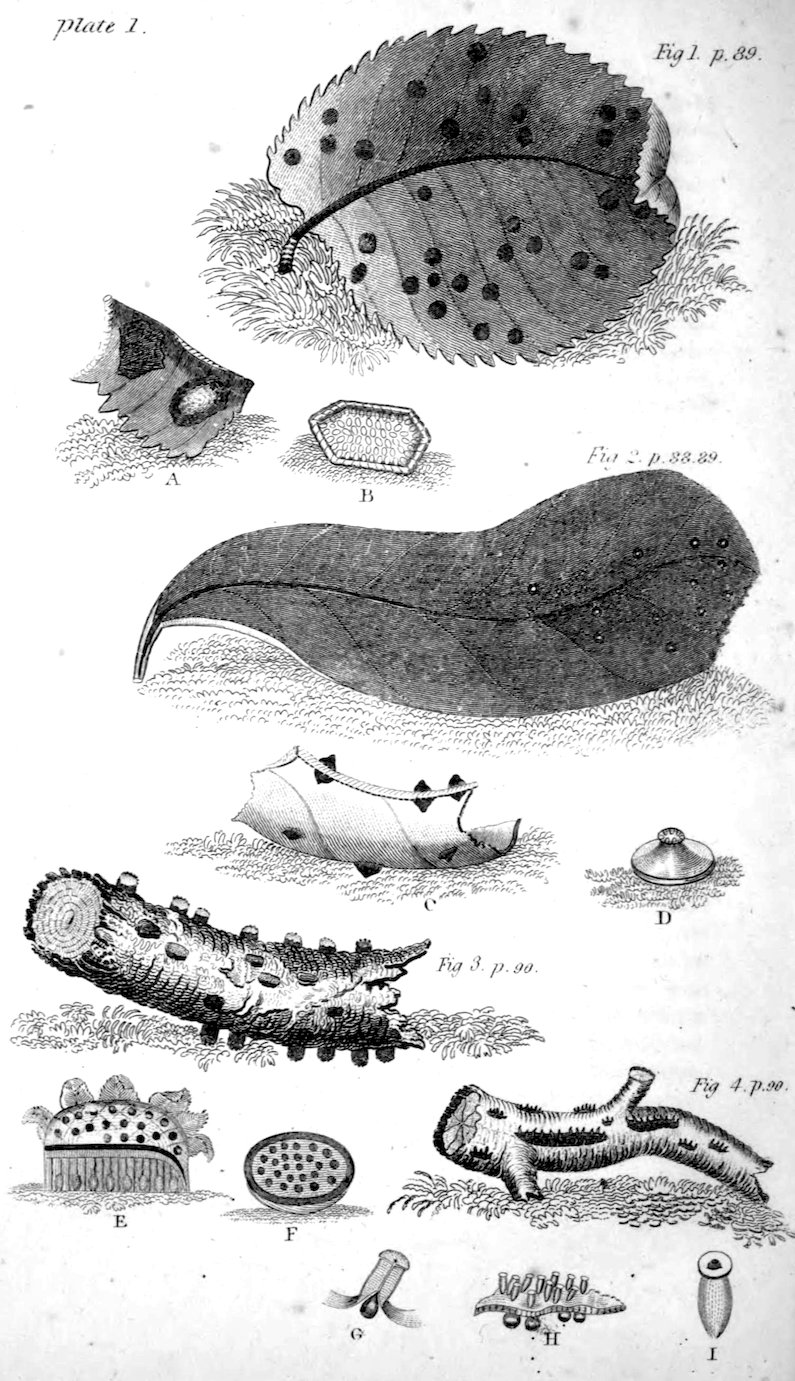
plate 1. Fig. 1. p. 89. Fig. 2. p. 88–89. Fig. 3. p. 90. Fig. 4. p. 90.
Notwithstanding all the persecutions from prejudice and wantonness to which the hedgehog[39] (erinaceus europæus) is exposed, it is yet common with us; sleeping by day in a bed of leaves and moss, under the cover of a very thick bramble or furze-bush, and at times in some hollow stump of a tree. It creeps out in the summer evenings; and, running about with more agility than its dull appearance promises, feeds on dew-worms and beetles, which it finds among the herbage, but retires with trepidation at the approach of man. In the autumn, crabs, haws, and the common fruits of the hedge, constitute its diet. In the winter, covering itself deeply in moss and leaves, it sleeps during the severe weather; and, when drawn out from its bed, scarcely any thing of the creature is to be observed, it exhibiting only a ball of leaves, which it seems to attach to its spines by 97repeatedly rolling itself round in its nest. Thus comfortably invested, it suffers little from the season. Some strong smell must proceed from this animal, as we find it frequently, with our sporting dogs, even in this state; and every village boy with his cur detects the haunts of the poor hedgehog, and as assuredly worries and kills him. Killing every thing, and cruelty, are the common vices of the ignorant; and unresisting innocence becomes a ready victim to prejudice or power. The snake, the blind-worm, and the toad, are all indiscriminately destroyed as venomous animals whenever found; and it is well for the last-mentioned poor animal, which, Boyle says, “lives on poison, and is all venom,” if prolonged sufferings do not finish its being: but even we, who should know better, yet give rewards for the wretched urchin’s head! that very ancient prejudice of its drawing milk from the udders of resting cows being still entertained, without any consideration of its impracticability from the smallness of the hedgehog’s mouth; and so deeply is this character associated with its name, that we believe no argument would persuade to the contrary, or remonstrance avail with our idle boys, to spare the life of this most harmless and least obtrusive creature in existence.
If we were to detail the worst propensities of man, disgusting as they might be, yet the one most eminently offensive would be, cruelty—a compound of tyranny, ingratitude, and pride; tyranny, because there is the power—ingratitude, for the most harmless and serviceable are usually the object—pride, to manifest a contempt of the weakness of humanity. There is no one creature, whose services Providence has assigned to man, that contributes more to his wants, is more conducive to his comforts, than the horse; nor is there one which is subjected to more afflictions than this his faithful servant. The ass, probably, and happily, is not a very sensitive animal, but the poor horse no sooner becomes the property of man in the lower walks of life, than he commonly has his ears shorn off; his knees are broken, his wind is broken, his body is starved, and his eyes——!! I fear, in these grades of society, mercy 98is only known by the name of cowardice, and compassion designated simplicity and effeminacy; and so we become cruel, and consider it as valiance and manliness. Cruelty is a vice repeatedly marked in Scripture as repugnant to the primest attributes of our Maker, “because he delighteth in mercy.” One of the three requisites necessary for man to obtain the favor of Heaven, and which was of more avail than sacrifice and oblation, was that of “showing mercy;” and He, who has left us so many examples in a life of compassion and pity, hath most strongly enforced this virtue, by assuring us, that the “merciful are blessed, for they will obtain mercy.”