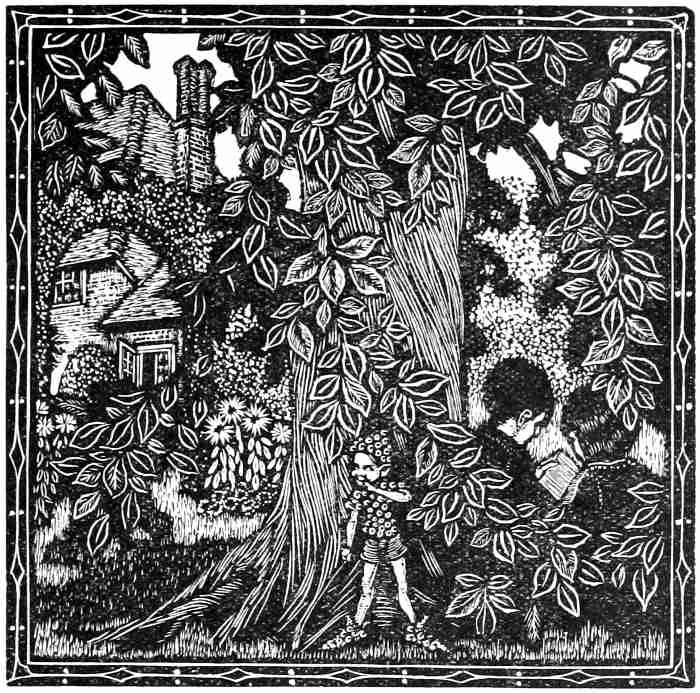
MORNING AND MAY
Reading edition
1
THIS IS THE KEY
This is the Key of the Kingdom: In that Kingdom is a city; In that city is a town; In that town there is a street; In that street there winds a lane; In that lane there is a yard; In that yard there is a house; In that house there waits a room; In that room an empty bed; And on that bed a basket— A Basket of Sweet Flowers: Of Flowers, of Flowers; A Basket of Sweet Flowers. Flowers in a Basket; Basket on the bed; Bed in the chamber; Chamber in the house; House in the weedy yard; Yard in the winding lane; Lane in the broad street; Street in the high town; Town in the city; City in the Kingdom— This is the Key of the Kingdom. Of the Kingdom this is the Key.
2
A NEW YEAR CAROL
Here we bring new water from the well so clear, For to worship God with, this happy New Year. Sing levy dew, sing levy dew, the water and the wine; The seven bright gold wires and the bugles that do shine. Sing reign of Fair Maid, with gold upon her toe,— Open you the West Door, and turn the Old Year go. Sing reign of Fair Maid with gold upon her chin,— Open you the East Door, and let the New Year in. Sing levy dew, sing levy dew, the water and the wine; The seven bright gold wires and the bugles they do shine.
3
HEY! NOW THE DAY DAWNS
"Hay, nou the day dauis; The jolie Cok crauis; Nou shroudis the shauis, Throu Natur anone. The thissell-cok cryis On louers wha lyis, Nou skaillis the skyis; The nicht is neir gone. "The feildis ouerflouis With gowans that grouis, Quhair lilies lyk lou is, Als rid as the rone. The turtill that true is, With nots that reneuis, Hir pairtie perseuis; The nicht is neir gone. "Nou Hairtis with Hyndis, Conforme to thair kyndis, Hie tursis thair tyndis, On grund whair they grone. Nou Hurchonis, with Hairis, Ay passis in pairis; Quhilk deuly declaris The nicht is neir gone...."
"Hey! now the day dawns; The jolly Cock crows; Thick-leaved the greenshaws, Through Nature anon. The thistle-cock cries On lovers who lies, All cloudless the skies; The night is near gone. "The fields overflow With daisies a-blow, And lilies like fire shine, And red is the rowan. The wood-dove that true is Her crooling reneweth, And her sweet mate pursueth; The night is near gone. "Now Harts with their Hinds Conform to their kinds, They vaunt their branched antlers, They bell and they groan. Now Urchins[1] and Hares Keep apassing in pairs; Which duly declares The night is near gone...." Alexander Montgomerie
4
THE SLUGGARD
'Tis the voice of a sluggard; I heard him complain— "You have waked me too soon; I must slumber again;" As the door on its hinges, so he on his bed, Turns his sides, and his shoulders, and his heavy head. "A little more sleep, and a little more slumber"— Thus he wastes half his days, and his hours without number; And when he gets up, he sits folding his hands, Or walks about saunt'ring, or trifling he stands. I passed by his garden, and saw the wild brier The thorn and the thistle grow broader and higher; The clothes that hang on him are turning to rags; And his money still wastes till he starves or he begs. I made him a visit, still hoping to find That he took better care for improving his mind; He told me his dreams, talked of eating and drinking, But he scarce reads his Bible, and never loves thinking. Said I then to my heart: "Here's a lesson for me; That man's but a picture of what I might be; But thanks to my friends for their care in my breeding, Who taught me betimes to love working and reading." Isaac Watts
5
HARK, HARK, THE LARK
Hearke, hearke, the Larke at Heaven's gate sings, And Phoebus 'gins arise, His Steeds to water at those Springs On chaliced Flowres that lyes: And winking Mary-buds begin To ope their Golden eyes: With every thing that pretty is, My Lady sweet, arise: Arise, arise! William Shakespeare
6
THE LARK NOW LEAVES HIS WATERY NEST
The lark now leaves his watery nest, And climbing shakes his dewy wings; He takes your window for the East, And to implore your light, he sings: Awake, awake! the morn will never rise Till she can dress her beauty at your eyes. The merchant bows unto the seaman's star, The ploughman from the sun his season takes; But still the lover wonders what they are Who look for day before his mistress wakes: Awake, awake! break through your veils of lawn; Then draw your curtains, and begin the dawn! Sir William Davenant
7
EARLY MORN
When I did wake this morn from sleep, It seemed I heard birds in a dream; Then I arose to take the air— The lovely air that made birds scream; Just as a green hill launched the ship Of gold, to take its first clear dip. And it began its journey then, As I came forth to take the air; The timid Stars had vanished quite, The Moon was dying with a stare; Horses, and kine, and sheep were seen As still as pictures, in fields green. It seemed as though I had surprised And trespassed in a golden world That should have passed while men still slept! The joyful birds, the ship of gold, The horses, kine and sheep did seem As they would vanish for a dream. William H. Davies
8
GOOD-MORROW
Pack, clouds, away, and welcome day! With night we banish sorrow. Sweet air, blow soft, mount, lark, aloft To give my Love good morrow. Wings from the wind to please her mind, Notes from the lark I'll borrow: Bird, prune thy wing, nightingale, sing, To give my Love good morrow! To give my Love good morrow Notes from them all I'll borrow. Wake from thy nest, robin redbreast! Sing, birds, in every furrow, And from each bill let music shrill Give my fair Love good morrow! Blackbird and thrush in every bush, Stare,[2] linnet, and cock-sparrow, You pretty elves, amongst yourselves Sing my fair Love good morrow! To give my Love good morrow Sing, birds, in every furrow! Thomas Heywood
9
THE QUESTION
I dreamed that, as I wandered by the way, Bare Winter suddenly was changed to Spring, And gentle odours led my steps astray, Mixed with a sound of waters murmuring Along a shelving bank of turf, which lay Under a copse, and hardly dared to fling Its green arms round the bosom of the stream, But kissed it and then fled, as thou mightest in dream. There grew pied wind-flowers and violets, Daisies, those pearled Arcturi of the earth, The constellated flower that never sets; Faint oxlips; tender blue-bells, at whose birth The sod scarce heaved; and that tall flower that wets— Like a child, half in tenderness and mirth— Its mother's face with heaven's collected tears, When the low wind, its playmate's voice, it hears. And in the warm hedge grew lush eglantine, Green cowbind and the moonlight-coloured May And cherry-blossoms, and white cups, whose wine Was the bright dew, yet drained not by the day; And wild roses, and ivy serpentine With its dark buds and leaves, wandering astray; And flowers azure, black, and streaked with gold, Fairer than any wakened eyes behold. And nearer to the river's trembling edge There grew broad flag-flowers, purple prankt with white, And starry river-buds among the sedge, And floating water-lilies, broad and bright, Which lit the oak that overhung the hedge With moonlight beams of their own watery light; And bulrushes, and reeds of such deep green As soothed the dazzled eye with sober sheen. Methought that of these visionary flowers I made a nosegay, bound in such a way That the same hues, which in their natural bowers Were mingled or opposed, the like array Kept these imprisoned children of the Hours Within my hand,—and then, elate and gay, I hastened to the spot whence I had come, That I might there present it—oh! to Whom? Percy Bysshe Shelley
10
THE FRESH AIR
The fresh air moves like water round a boat. The white clouds wander. Let us wander too. The whining, wavering plover flap and float. That crow is flying after that cuckoo. Look! Look!... They're gone. What are the great trees calling? Just come a little farther, by that edge Of green, to where the stormy ploughland, falling Wave upon wave, is lapping to the hedge. Oh, what a lovely bank! Give me your hand. Lie down and press your heart against the ground. Let us both listen till we understand, Each through the other, every natural sound... I can't hear anything to-day, can you, But, far and near: "Cuckoo! Cuckoo! Cuckoo!"? Harold Monro
11
WEATHERS
This is the weather the cuckoo likes, And so do I; When showers betumble the chestnut spikes, And nestlings fly: And the little brown nightingale bills his best, And they sit outside at "The Travellers' Rest," And maids come forth sprig-muslin drest, And citizens dream of the south and west, And so do I. This is the weather the shepherd shuns, And so do I; When beeches drip in browns and duns, And thresh, and ply; And hill-hid tides throb, throe on throe, And meadow rivulets overflow, And drops on gate-bars hang in a row, And rooks in families homeward go, And so do I. Thomas Hardy
12
GREEN RAIN
Into the scented woods we'll go, And see the blackthorn swim in snow. High above, in the budding leaves, A brooding dove awakes and grieves; The glades with mingled music stir, And wildly laughs the woodpecker. When blackthorn petals pearl the breeze, There are the twisted hawthorn trees Thick-set with buds, as clear and pale As golden water or green hail— As if a storm of rain had stood Enchanted in the thorny wood, And, hearing fairy voices call, Hung poised, forgetting how to fall. Mary Webb
13
SONG ON MAY MORNING
Now the bright morning Star, Dayes harbinger, Comes dancing from the East, and leads with her The Flowry May, who from her green lap throws The yellow Cowslip and the pale Primrose. Hail, bounteous May, that dost inspire Mirth and youth and young desire, Woods and Groves, are of thy dressing, Hill and Dale doth boast thy blessing. Thus we salute thee with our early Song, And welcome thee, and wish thee long. John Milton
14
SISTER, AWAKE!
Sister, awake! close not your eyes. The day her light discloses, And the bright morning doth arise Out of her bed of roses. See the clear sun, the world's bright eye, In at our window peeping: Lo, how he blusheth to espy Us idle wenches sleeping! Therefore awake! make haste, I say, And let us, without staying, All in our gowns of green so gay Into the park a-maying.
15
HERE WE COME A-PIPING
Here we come a-piping, In Springtime and in May; Green fruit a-ripening, And Winter fled away. The Queen she sits upon the strand, Fair as lily, white as wand; Seven billows on the sea, Horses riding fast and free, And bells beyond the sand.
16
AS WE DANCE ROUND
As we dance round a-ring-a-ring, A maiden goes a-maying; And here a flower, and there a flower, Through mead and meadow straying: O gentle one, why dost thou weep?— Silver to spend with; gold to keep; Till spin the green round World asleep, And Heaven its dews be staying.
17
OLD MAY SONG
All in this pleasant evening, together come are we, For the summer springs so fresh, green, and gay; We tell you of a blossoming and buds on every tree, Drawing near unto the merry month of May. Rise up, the master of this house, put on your charm of gold, For the summer springs so fresh, green, and gay; Be not in pride offended with your name we make so bold, Drawing near unto the merry month of May. Rise up, the mistress of this house, with gold along your breast; For the summer springs so fresh, green and gay; And if your body be asleep, we hope your soul's at rest, Drawing near unto the merry month of May. Rise up, the children of this house, all in your rich attire, For the summer springs so fresh, green, and gay; And every hair upon your heads shines like the silver wire: Drawing near unto the merry month of May. God bless this house and arbour, your riches and your store, For the summer springs so fresh, green, and gay; We hope the Lord will prosper you, both now and evermore, Drawing near unto the merry month of May. And now comes we must leave you, in peace and plenty here, For the summer springs so fresh, green, and gay; We shall not sing you May again until another year, To draw you these cold winters away.
18
SONG OF THE MAYERS
Remember us poor Mayers all, And thus do we begin, To lead our lives in righteousness, Or else we die in sin. We have been rambling all the night, And almost all the day, And now returning back again, We have brought you a bunch of May. A bunch of May we have brought you, And at your door it stands, It is but a sprout, but it's well budded out By the work of our Lord's hands. The hedges and trees they are so green, As green as any leek, Our Heavenly Father, He watered them With his heavenly dew so sweet. The heavenly gates are open wide, Our paths are beaten plain, And if a man be not too far gone, He may return again. The life of man is but a span, It flourishes like a flower; We are here to-day, and gone to-morrow, And are dead in an hour. The moon shines bright, and the stars give a light, A little before it is day, God bless you all, both great and small, And send you a joyful May.
19
AND AS FOR ME
... And as for me, thogh that I can but lyte,[3] On bokės for to rede I me delyte, And to hem yeve[4] I feyth and ful credènce, And in myn herte have hem in reverence So hertėley, that there is gamė noon That fro my bokės maketh me to goon, But hit be seldom on the holyday, Save, certeynly, whan that the month of May Is comen, and that I here the foulės[5] singe And that the flourės ginnen for to springe,— Farewel my boke, and my devocioun! Now have I than swich[6] a condicioun, That, of alle the flourės in the mede, Than love I most these flourės whyte and rede, Swiche as men callen daysies in our toun. To hem have I so greet affeccioun, As I seyde erst, whan comen is the May, That in my bed ther daweth me no day, That I nam up, and walking in the mede, To seen this flour agein the sonnė sprede, When hit uprysith erly by the morwe; That blisful sightė softneth all my sorwė[7].... And whan that hit is eve, I rennė blyve,[8] As soon as evere the sonnė ginneth weste, To seen this flour, how it wol go to reste, For fere of nyght, so hateth she derknesse!... Geoffrey Chaucer
20
THE SPRING
What bird so sings, yet so does wail? O, 'tis the ravished nightingale! "Jug, jug, jug, jug, tereu," she cries, And still her woes at midnight rise. Brave prick-song! who is't now we hear? None but the lark so shrill and clear; Now at heaven's gates she claps her wings, The morn not waking till she sings. Hark, hark, with what a pretty throat Poor robin-redbreast tunes his note; Hark, how the jolly cuckoos sing Cuckoo—to welcome in the spring! Cuckoo—to welcome in the spring! John Lyly
21
SPRING, THE SWEET SPRING
Spring, the sweet Spring, is the year's pleasant king; Then blooms each thing, then maids dance in a ring, Cold doth not sting, the pretty birds do sing: Cuckoo, jug, jug, pu we, to witta woo! The Palm and May make country houses gay, Lambs frisk and play, the shepherds pipe all day, And we hear aye birds tune this merry lay: Cuckoo, jug, jug, pu we, to witta woo! The fields breathe sweet, the daisies kiss our feet, Young lovers meet, old wives a-sunning sit, In every street these tunes our ears do greet: Cuckoo, jug, jug, pu we, to witta woo! Spring, the sweet Spring! Thomas Nash
22
A MAY DAY
... And now all nature seemed in love; The lusty sap began to move; New juice did stir the embracing vines, 27113 And birds had drawn their valentines. The jealous trout that now did lie, Rose at a well-dissembled fly: There stood my friend with patient skill, Attending of his trembling quill.[9] Already were the eaves possessed With the swift pilgrim's daubèd nest: The groves already did rejoice In Philomel's triumphing voice. The showers were short, the weather mild, The morning fresh, the evening smiled. Joan takes her neat-rubbed pail and now She trips to milk the sand-red cow; Where, for some sturdy football swain, Joan strokes[10] a sillabub or twain. The field and gardens were beset With tulip, crocus, violet; And now, though late, the modest rose Did more than half a blush disclose. Thus all looked gay, all full of cheer, To welcome the new-liveried year. Sir Henry Wotton
23
EASTER
I got me flowers to straw thy way, I got me boughs off many a tree: But thou wast up by break of day, And brought'st thy sweets along with thee. The Sun arising in the East, Though he give light, and the East perfume,[11] If they should offer to contest With thy arising, they presume. Can there be any day but this, Though many sunnes to shine endeavour? We count three hundred, but we misse: There is but one, and that one ever. George Herbert
24
PLEASURE IT IS
Pleasure it is To hear, iwis,[12] The birdės sing. The deer in the dale, The sheep in the vale, The corn springing; God's purveyance For sustenance It is for man. Then we always To Him give praise, And thank Him than, And thank Him than. William Cornish