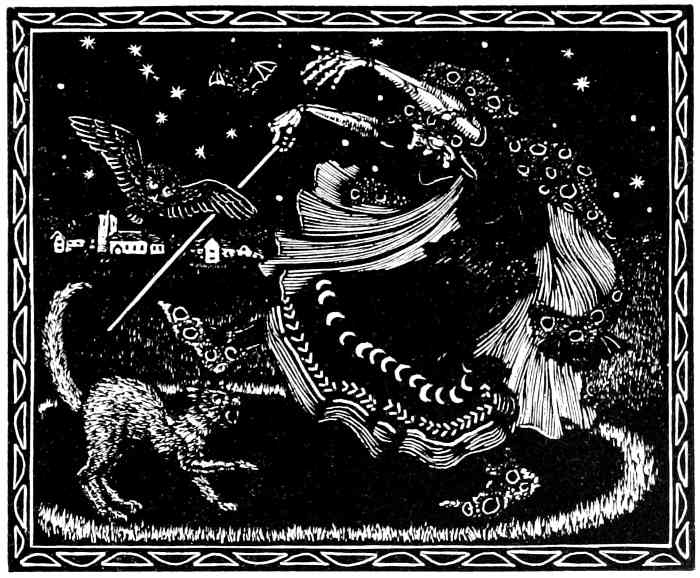
"LIKE STARS UPON SOME GLOOMY GROVE"
Reading edition
262
SPRING QUIET
Gone were but the Winter, Come were but the Spring, I would go to a covert Where the birds sing. Where in the whitethorn Singeth a thrush, And a robin sings In the holly-bush. Full of fresh scents Are the budding boughs Arching high over A cool green house: Full of sweet scents, And whispering air Which sayeth softly: "We spread no snare; "Here dwell in safety, Here dwell alone, With a clear stream And a mossy stone. "Here the sun shineth Most shadily; Here is heard an echo Of the far sea, Though far off it be." Christina Rossetti
263
A WIDOW BIRD
A widow bird sat mourning for her love Upon a wintry bough; The frozen wind crept on above, The freezing stream below. There was no leaf upon the forest bare, No flower upon the ground, And little motion in the air Except the mill-wheel's sound. Percy Bysshe Shelley
264
ECHO'S LAMENT FOR NARCISSUS
Slow, slow, fresh fount, keep time with my salt tears; Yet, slower yet; O faintly, gentle springs; List to the heavy part the music bears; Woe weeps out her division when she sings. Droop herbs and flowers; Fall grief in showers, Our beauties are not ours; O, I could still, Like melting snow upon some craggy hill, Drop, drop, drop, drop, Since nature's pride is now a withered daffodil. Ben Jonson
265
THIS LIFE
This Life, which seems so fair, Is like a bubble blown up in the air By sporting children's breath, Who chase it everywhere, And strive who can most motion it bequeath. And though it sometimes seem of its own might Like to an eye of gold to be fixed there, And firm to hover in that empty height, That only is because it is so light. But in that pomp it doth not long appear; For when' tis most admired—in a thought, Because it erst[116] was nought, it turns to nought. William Drummond
266
SWEET CONTENT
Art thou poor, yet hast thou golden slumbers? O, sweet content! Art thou rich, yet is thy mind perplexed? O, punishment! Dost thou laugh to see how fools are vexed To add to golden numbers golden numbers? O, sweet content! O, sweet, O sweet content! Work apace, apace, apace, apace; Honest labour bears a lovely face; Then hey nonny, hey nonny, nonny! Canst drink the waters of the crispèd spring? O, sweet content! Swimm'st thou in wealth, yet sink'st in thine own tears? O, punishment! Then he that patiently want's burden bears, No burden bears, but is a king, a king! O, sweet content! O, sweet, O, sweet content! Work apace, apace, apace, apace; Honest labour bears a lovely face; Then hey nonny, hey nonny, nonny! Thomas Dekker
267
OH, SWEET CONTENT
Oh, sweet content, that turns the labourer's sweat To tears of joy, and shines the roughest face; How often have I sought you high and low, And found you still in some lone quiet place; Here, in my room, when full of happy dreams, With no life heard beyond that merry sound Of moths that on my lighted ceiling kiss Their shadows as they dance and dance around; Or in a garden, on a summer's night, When I have seen the dark and solemn air Blink with the blind bats' wings, and heaven's bright face Twitch with the stars that shine in thousands there. William H. Davies
268
RARELY, RARELY, COMEST THOU
Rarely, rarely, comest thou, Spirit of Delight! Wherefore hast thou left me now Many a day and night? Many a weary night and day 'Tis since thou art fled away. How shall ever one like me Win thee back again? With the joyous and the free Thou wilt scoff at pain. Spirit false! thou hast forgot All but those who need thee not. As a lizard with the shade Of a trembling leaf, Thou with sorrow art dismayed; Even the sighs of grief Reproach thee, that thou art not near, And reproach thou wilt not hear. Let me set my mournful ditty To a merry measure, Thou wilt never come for pity, Thou wilt come for pleasure. Pity then will cut away, Those cruel wings, and thou wilt stay. I love all that thòu lovest, Spirit of Delight! The fresh Earth in new leaves drest, And the starry night, Autumn evening, and the morn When the golden mists are born. I love snow, and all the forms Of the radiant frost; I love waves, and winds, and storms, Everything almost Which is Nature's, and may be Untainted by man's misery. I love tranquil solitude And such society As is quiet, wise, and good; Between thee and me What difference? but thou dost possess The things I seek, not love them less. I love Love—though he has wings, And like light can flee, But above all other things, Spirit, I love thee— Thou art love and life! O come, Make once more my heart thy home! Percy Bysshe Shelley
269
BIRTHRIGHT
Lord Rameses of Egypt sighed Because a summer evening passed; And little Ariadne cried That summer fancy fell at last To dust; and young Verona died When beauty's hour was overcast. Theirs was the bitterness we know Because the clouds of hawthorn keep So short a state, and kisses go To tombs unfathomably deep, While Rameses and Romeo And little Ariadne sleep. John Drinkwater
270
O SORROW!
... "O Sorrow, Why dost borrow The natural hue of health, from vermeil lips?— To give maiden blushes To the white rose bushes? Or is't thy dewy hand the daisy tips? "O Sorrow, Why dost borrow The lustrous passion from a falcon-eye?— To give the glow-worm light? Or, on a moonless night, To tinge, on siren shores, the salt sea-spry? "O Sorrow, Why dost borrow The mellow ditties from a mourning tongue?— To give at evening pale Unto the nightingale, That thou mayst listen the cold dews among? "O sorrow, Why dost borrow Heart's lightness from the merriment of May?— A lover would not tread A cowslip on the head, Though he should dance from eve till peep of day— Nor any drooping flower Held sacred for thy bower, Wherever he may sport himself and play. "To Sorrow, I bade good-morrow, And thought to leave her far away behind; But cheerly, cheerly, She loves me dearly; She is so constant, to me, and so kind: I could deceive her And so leave her, But oh! she is so constant and so kind.... "Come then, Sorrow! Sweetest Sorrow! Like an own babe I nurse thee on my breast: I thought to leave thee And deceive thee, But now of all the world I love thee best. "There is not one, No, no, not one But thee to comfort a poor lonely maid; Thou art her mother, And her brother, Her playmate, and her wooer in the shade."... John Keats
271
WHEN THE LAMP IS SHATTERED
When the lamp is shattered, The light in the dust lies dead— When the cloud is scattered The rainbow's glory is shed. When the lute is broken, Sweet tones are remembered not; When the lips have spoken, Loved accents are soon forgot. As music and splendour Survive not the lamp and the lute, The heart's echoes render No song when the spirit is mute:— No song but sad dirges, Like the wind through a ruined cell, Or the mournful surges That ring the dead seaman's knell. When hearts have once mingled Love first leaves the well-built nest; The weak one is singled To endure what it once possest. O Love, who bewailest The frailty of all things here, Why choose you the frailest For your cradle, your home, and your bier? Its passions will rock thee As the storm rocks the ravens on high: Bright reason will mock thee, Like the sun from a wintry sky. From thy nest every rafter Will rot, and thine eagle home Leave thee to naked laughter, When leaves fall and cold winds come. Percy Bysshe Shelley
272
ONCE
He sees them pass As the light is graying, Each lad and lass In their beauty gaying And a voice in his aching heart is saying: "Once—once even I Was straight as these, As clear of eye, And as apt to please When I tuned my voice to balladries. Now my eyes are dim, Their old fires forsaking, And each wasted limb As a branch is shaking, And my grief-bowed heart will soon be breaking. —Ah, if One comes not Beckoning nigh To that land where hums not One small fly, These Strong and Fair shall be as I." Eric N. Batterham
273
UPON THE IMAGE OF DEATH
Before my face the picture hangs That dailie should put me in minde Of those cold qualms and bitter pangs That shortly I am like to finde: But yet, alas! full little I Do think hereon, that I must die. I often look upon a face Most uglie, grislie, bare, and thin; I often view the hollow place Where eyes and nose have sometime been; I see the bones across that lie; Yet little think, that I must die. I read the label underneathe, That telleth me whereto I must: I see the sentence eke that saithe "Remember, man, that thou art duste;" But yet, alas, but seldom I Do think indeed, that I must die! Continually at my bed's head An hearse doth hang, which doth me tell That I, ere morning, may be dead, Though now I feel myself full well: But yet, alas, for all this, I Have little minde that I must die! The gowne which I do use to weare, The knife, wherewith I cut my meate, And eke that old and ancient chair Which is my only usual seate, All these do tell me I must die; And yet my life amende not I! My ancestors are turned to clay, And many of my mates are gone; My youngers daily drop away;— And can I think to 'scape alone? No, no, I know that I must die; And yet my life amende not I! Not Solomon, for all his wit, Nor Samson, though he were so strong, No king, nor ever person yet, Could 'scape, but Death laid him along! Wherefore I know that I must die; And yet my life amende not I! Though all the east did quake to hear Of Alexander's dreadful name, And all the west did likewise fear The sound of Julius Caesar's fame, Yet both by death in duste now lie; Who then can 'scape, but he must die? If none can 'scape Death's dreadful darte, If rich and poor his beck obey, If strong, if wise, if all do smarte, Then I to 'scape shall have no way. O grant me grace, O God, that I My life may mende, sith I must die! Robert Southwell
274
ADIEU! FAREWELL EARTH'S BLISS!
Adieu! farewell earth's bliss! This world uncertain is: Fond are life's lustful joys, Death proves them all but toys. None from his darts can fly: I am sick, I must die— Lord, have mercy on us! Rich men, trust not in wealth, Gold cannot buy you health; Physic himself must fade; All things to end are made; The plague full swift goes by: I am sick, I must die— Lord, have mercy on us! Beauty is but a flower Which wrinkles will devour: Brightness falls from the air; Queens have died young and fair Dust hath closed Helen's eye: I am sick, I must die— Lord, have mercy on us! Strength stoops unto the grave Worms feed on Hector brave; Swords may not fight with fate; Earth still holds ope her gate; Come! come! the bells do cry: I am sick, I must die— Lord, have mercy on us! Wit with his wantonness, Tasteth death's bitterness. Hell's executioner Hath no ears for to hear What vain art can reply. I am sick, I must die— Lord, have mercy on us! Haste, therefore, each degree To welcome destiny! Heaven is our heritage; Earth but a player's stage. Mount we unto the sky! I am sick, I must die— Lord, have mercy on us! Thomas Nash
275
MESSAGES
What shall I your true-love tell, Earth-forsaking maid? What shall I your true-love tell, When life's spectre's laid? "Tell him that, our side the grave, Maid may not conceive Life should be so sad to have, That's so sad to leave!" What shall I your true-love tell, When I come to him? What shall I your true-love tell— Eyes growing dim! "Tell him this, when you shall part From a maiden pined; That I see him with my heart, Now my eyes are blind." What shall I your true-love tell? Speaking-while is scant. What shall I your true-love tell, Death's white postulant? "Tell him—love, with speech at strife, For last utterance saith: I, who loved with all my life, Love with all my death." Francis Thompson
276
DOUBTS
When she sleeps, her soul, I know, Goes a wanderer on the air, Wings where I may never go, Leaves her lying, still and fair, Waiting, empty, laid aside, Like a dress upon a chair.... This I know, and yet I know Doubts that will not be denied. For if the soul be not in place, What has laid trouble in her face? And, sits there nothing ware and wise Behind the curtains of her eyes, What is it, in the self's eclipse, Shadows, soft and passingly, About the corners of her lips, The smile that is essential she? And if the spirit be not there, Why is fragrance in the hair? Rupert Brooke
277
HARK
Hark! now everything is still, The screech-owl and the whistler shrill Call upon our dame aloud, And bid her quickly don her shroud. Much you had of land and rent; Your length in clay's now competent. A long war disturbed your mind; Here your perfect peace is signed. Of what is't fools make such vain keeping?— Sin their conception, their birth weeping, Their life a general mist of error, Their death a hideous storm of terror. Strew your hair with powders sweet, Don clean linen, bathe your feet, And (the foul fiend more to check) A crucifix let bless your neck: 'Tis now full tide 'tween night and day; End your groan, and come away. John Webster
278
A LYKE-WAKE DIRGE
This ae nighte, this ae nighte, Every nighte and alle, Fire and sleet and candle-lighte, And Christe receive thy saule. When thou from hence away art past, Every nighte and alle, To Whinny-muir thou comest at last; And Christe receive thy saule. If ever thou gavest hosen and shoon, Every nighte and alle, Sit thee down and put them on; And Christe receive thy saule. If hosen and shoon thou ne'er gav'st nane, Every nighte and alle, The whinnes sall prick thee to the bare bane; And Christe receive thy saule. From Whinny-muir that thou may'st pass, Every nighte and alle, To Brig o' Dread thou comest at last, And Christe receive thy saule. From Brig o' Dread that thou may'st pass, Every nighte and alle, To Purgatory fire thou com'st at last, And Christe receive thy saule. If ever thou gavest meat or drink, Every nighte and alle, The fire sall never make thee shrink; And Christe receive thy saule. If meat and drink thou ne'er gav'st nane Every nighte and alle, The fire will burn thee to the bare bane, And Christe receive thy saule. This ae nighte, this ae nighte, Every nighte and alle, Fire and sleet and candle-lighte, And Christe receive thy saule.
279
HE IS THE LONELY GREATNESS
He is the lonely greatness of the world— (His eyes are dim), His power it is holds up the Cross That holds up Him. He takes the sorrow of the threefold hour— (His eyelids close), Round Him and round, the wind—His Spirit—where It listeth blows. And so the wounded greatness of the World In silence lies— And death is shattered by the light from out Those darkened eyes. Madeleine Caron Rock
280
"O SING UNTO MY ROUNDELAY"
O sing unto my roundelay, O drop the briny tear with me, Dance no more at holyday Like a running river be! My love is dead, Gone to his death-bed, All under the willow-tree. Black his cryne[117] as the winter night, White his rode[118] as the summer snow, Red his face as the morning light, Cold he lies in the grave below: My love is dead, Gone to his death-bed, All under the willow-tree.... See, the white moon shines on high; Winter is my true-love's shroud, Whiter than the morning sky, Whiter than the evening cloud. My love is dead, Gone to his death-bed, All under the willow-tree.... With my hands I'll dent[119] the briars Round his holy corse to gre;[120] Ouph[121] and fairy, light your fires, Here my body still shall be. My love is dead, Gone to his death-bed, All under the willow-tree.... Thomas Chatterton
281
FEAR NO MORE
Feare no more the heate o' th' Sun, Nor the fureous Winters rages, Thou thy worldly task hast don, Home art gon, and tane thy wages. Golden Lads and Girles all must, As Chimney-Sweepers, come to dust. Feare no more the frowne o' th' Great, Thou art past the Tirants stroake, Care no more to cloath, and eate, To thee the Reede is as the Oake: The Scepter, Learning, Physicke must, All follow this, and come to dust. Feare no more the Lightning flash, Nor the all-dreaded Thunder-stone, Feare not Slander, Censure rash, Thou hast finished joy and mone. All Lovers young, all Lovers must, Consigne to thee, and come to dust.... William Shakespeare
282
A LAND DIRGE
Call for the robin-redbreast and the wren, Since o'er shady groves they hover, And with leaves and flowers do cover The friendless bodies of unburied men. Call unto his funeral dole The ant, the field-mouse, and the mole, To rear him hillocks that shall keep him warm, And (when gay tombs are robbed) sustain no harm; But keep the wolf far thence, that's foe to men, For with his nails he'll dig them up again. John Webster
283
THE GRAVE OF LOVE
I dug, beneath the cypress shade, What well might seem an elfin's grave; And every pledge in earth I laid, That erst thy false affection gave. I pressed them down the sod beneath; I placed one mossy stone above; And twined the rose's fading wreath Around the sepulchre of love. Frail as thy love, the flowers were dead Ere yet the evening sun was set: But years shall see the cypress spread, Immutable as my regret. Thomas Love Peacock
284
THE BURIAL
All the flowers of the spring Meet to perfume our burying; These have but their growing prime, And man does flourish but his time. Survey our progress from our birth— We are set, we grow, we turn to earth, Courts adieu, and all delights, All bewitching appetites! Sweetest breath and clearest eye, Like perfumes go out and die; And consequently this is done As shadows wait upon the sun. Vain the ambition of kings Who seek by trophies and dead things To leave a living name behind, And weave but nets to catch the wind. John Webster
285
ON THE TOMBS IN WESTMINSTER ABBEY
Mortality, behold and fear! What a change of flesh is here! Think how many royal bones Sleep within these heaps of stones; Here they lie had realms and lands, Who now want strength to stir their hands; Where from their pulpits sealed with dust They preach:—"In greatness is no trust." Here's an acre sown indeed With the richest royallest seed That the Earth did e'er suck in Since the first man died for sin: Here the bones of birth have cried:— "Though gods they were, as men they died!" Here are sands, ignoble things, Dropt from the ruined sides of Kings: Here's a world of pomp and state Buried in dust, once dead by fate. Francis Beaumont
286
A FUNERALL SONG
(Lamenting Syr Phillip Sidney)
Come to me, grief, for ever; Come to me, tears, day and night; Come to me, plaint, ah, helpless; Just grief, heart tears, plaint worthy. Go from me dread to die now; Go from me care to live more; Go from me joys all on earth; Sidney, O Sidney is dead. He whom the court adornèd, He whom the country courtesied, He who made happy his friends, He that did good to all men. Sidney, the hope of land strange, Sidney, the flower of England, Sidney, the spirit heroic, Sidney is dead, O dead. Dead? no, no, but renownèd, With the Anointed onèd;[122] Honour on earth at his feet, Bliss everlasting his seat. Come to me, grief, for ever; Come to me, tears, day and night; Come to me, plaint, ah, helpless; Just grief, heart tears, plaint worthy.
287
ON JOHN DONNE'S BOOK OF POEMS
I see in his last preached and printed Booke, His Picture in a sheet. In Pauls I looke, And see his Statue in a sheete of stone, And sure his body in the grave hath one. Those sheetes present him dead; these, if you buy, You have him living to Eternity. John Marriot
288
O, LIFT ONE THOUGHT
Stop, Christian passer-by!—Stop, child of God, And read with gentle breast. Beneath this sod A poet lies, or that which once seemed he. O, lift one thought in prayer for S.T.C.; That he who many a year with toil of breath Found death in life, may here find life in death. Mercy for praise—to be forgiven for fame He asked, and hoped, through Christ. Do thou the same! Samuel Taylor Coleridge
289
ELEGY
To the Memory of an unfortunate Lady.
... Most souls, 'tis true, but peep out once an age, Dull, sullen prisoners in the body's cage; Dim lights of life, that burn a length of years, Useless, unseen, as lamps in sepulchres; Like eastern kings, a lazy state they keep, And close confined to their own palace, sleep.... Yet shall thy grave with rising flowers be dressed, And the green turf lie lightly on thy breast: There shall the morn her earliest tears bestow, There the first roses of the year shall blow; While angels with their silver wings o'ershade The ground, now sacred by thy relics made. So peaceful rests, without a stone, a name, What once had beauty, titles, wealth and fame. How loved, how honoured once, avails thee not To whom related, or by whom begot; A heap of dust alone remains of thee: 'Tis all thou art, and all the proud shall be! Poets themselves must fall, like those they sung, Deaf the praised ear, and mute the tuneful tongue. Ev'n he whose soul now melts in mournful lays Shall shortly want the generous tear he pays; Then from his closing eyes thy form shall part, And the last pang shall tear thee from his heart: Life's idle business at one gasp be o'er, The Muse forgot, and thou beloved no more! Alexander Pope
290
UPON A CHILD THAT DIED
Here she lies, a pretty bud, Lately made of flesh and blood: Who, as soone, fell fast asleep, As her little eyes did peep. Give her strewings; but not stir The earth, that lightly covers her. Robert Herrick
291
THE TURNSTILE
Ah! sad wer we as we did peäce The wold church road, wi' downcast feäce, The while the bells, that mwoaned so deep Above our child a-left asleep, Wer now a-zingėn all alive Wi' tother bells to meäke the vive. But up at woone pleäce we come by, 'Twer hard to keep woone's two eyes dry; On Steän-cliff road, 'ithin the drong, Up where, as vo'k do pass along, The turnėn stile, a-païnted white, Do sheen by day an' show by night. Vor always there, as we did goo To church, thik stile did let us drough, Wi' spreadėn eärms that wheeled to guide Us each in turn to tother zide. An' vu'st ov all the traïn he took My wife, wi' winsome gaït an' look; An' then zent on my little maïd, A-skippen onward, over-jaÿ'd To reach ageän the pleäce o' pride, Her comely mother's left han' zide. An' then, a-wheelėn roun', he took On me, 'ithin his third white nook. An' in the fourth, a-sheäken wild, He zent us on our giddy child. But eesterday he guided slow My downcast Jenny, vull o' woe, An' then my little maïd in black, A-walkėn softly on her track; An' after he'd a-turned ageän, To let me goo along the leäne, He had noo little bwoy to vill His last white eärms, an' they stood still. William Barnes
292
THE EXEQUY
... Sleep on, my Love, in thy cold bed Never to be disquieted! My last good-night! Thou wilt not wake Till I thy fate shall overtake: Till age, or grief, or sickness must Marry my body to that dust It so much loves; and fill the room My heart keeps empty in that tomb. Stay for me there: I will not fail To meet thee in that hollow vale. And think not much of my delay: I am already on the way, And follow thee with all the speed Desire can make, or sorrows breed. Each minute is a short degree And every hour a step towards thee.... Henry King
293
"I FOUND HER OUT THERE"
I found her out there On a slope few see, That falls westwardly To the salt-edged air, Where the ocean breaks On the purple strand, And the hurricane shakes The solid land. I brought her here, And have laid her to rest In a noiseless nest No sea beats near. She will never be stirred In her loamy cell By the waves long heard And loved so well. So she does not sleep By those haunted heights The Atlantic smites And the blind gales sweep, Whence she often would gaze At Dundagel's famed head, While the dipping blaze Dyed her face fire-red; And would sigh at the tale Of sunk Lyonnesse, As a wind-tugged tress Flapped her cheek like a flail; Or listen at whiles With a thought-bound brow To the murmuring miles She is far from now. Yet her shade, maybe, Will creep underground Till it catch the sound Of that western sea As it swells and sobs Where she once domiciled, And joys in its throbs With the heart of a child. Thomas Hardy
294
I NEVER SHALL LOVE THE SNOW AGAIN
I never shall love the snow again Since Maurice died: With corniced drift it blocked the lane And sheeted in a desolate plain The country side. The trees with silvery rime bedight Their branches bare. By day no sun appeared; by night The hidden moon shed thievish light In the misty air. We fed the birds that flew around In flocks to be fed: No shelter in holly or brake they found. The speckled thrush on the frozen ground Lay frozen and dead. We skated on stream and pond; we cut The crinching snow To Doric temple or Arctic hut; We laughed and sang at nightfall, shut By the fireside glow. Yet grudged we our keen delights before Maurice should come. We said, In-door or out-of-door We shall love life for a month or more, When he is home. They brought him home; 'twas two days late For Christmas day: Wrapped in white, in solemn state, A flower in his hand, all still and straight Our Maurice lay. And two days ere the year outgave We laid him low. The best of us truly were not brave, When we laid Maurice down in his grave Under the snow. Robert Bridges
295
THE COMFORTERS
When I crept over the hill, broken with tears, When I crouched down on the grass, dumb in despair, I heard the soft croon of the wind bend to my ears, I felt the light kiss of the wind touching my hair. When I stood lone on the height my sorrow did speak, As I went down the hill, I cried and I cried, The soft little hands of the rain stroking my cheek, The kind little feet of the rain ran by my side. When I went to thy grave, broken with tears, When I crouched down in the grass, dumb in despair, I heard the sweet croon of the wind soft in my ears, I felt the kind lips of the wind touching my hair. When I stood lone by thy cross, sorrow did speak, When I went down the long hill, I cried and I cried, The soft little hands of the rain stroked my pale cheek, The kind little feet of the rain ran by my side. Dora Sigerson Shorter
296
THE CHILDLESS FATHER
"Up, Timothy, up with your staff and away! Not a soul in the village this morning will stay; The hare has just started from Hamilton's grounds, And Skiddaw is glad with the cry of the hounds." —Of coats and of jackets grey, scarlet, and green, On the slopes of the pastures all colours were seen; With their comely blue aprons, and caps white as snow, The girls on the hills made a holiday show. Fresh sprigs of green boxwood, not six months before, Filled the funeral basin at Timothy's door; A coffin through Timothy's threshold had passed; One child did it bear, and that child was his last. Now fast up the dell came the noise and the fray, The horse and the horn, and the "hark! hark away!" Old Timothy took up his staff, and he shut, With a leisurely motion, the door of his hut. Perhaps to himself at that moment he said, "The key I must take, for my Helen is dead." But of this in my ears not a word did he speak, And he went to the chase with a tear on his cheek. William Wordsworth
297
"LYDIA IS GONE THIS MANY A YEAR"
Lydia is gone this many a year, Yet when the lilacs stir, In the old gardens far or near, This house is full of her. They climb the twisted chamber stair; Her picture haunts the room; On the carved shelf beneath it there, They heap the purple bloom. A ghost so long has Lydia been, Her cloak upon the wall, Broidered, and gilt, and faded green, Seems not her cloak at all. The book, the box on mantle laid, The shells in a pale row, Are those of some dim little maid, A thousand years ago. And yet the house is full of her, She goes and comes again; And longings thrill, and memories stir, Like lilacs in the rain. Out in their yards the neighbours walk, Among the blossoms tall; Of Anne, of Phyllis do they talk, Of Lydia not at all. Lizette Woodworth Reese
298
REMEMBRANCE
Cold in the earth—and the deep snow piled above thee, Far, far removed, cold in the dreary grave! Have I forgot, my only Love, to love thee, Severed at last by Time's all-severing wave? Now—when alone—do my thoughts no longer hover Over the mountains, on that northern shore, Resting their wings where heath and fern-leaves cover Thy noble heart for ever, ever more? Cold in the earth—and fifteen wild Decembers, From those brown hills, have melted into spring: Faithful, indeed, is the spirit that remembers After such years of change and suffering! Sweet Love of youth, forgive, if I forget thee, While the world's tide is bearing me along; Other desires and other hopes beset me, Hopes which obscure, but cannot do thee wrong! No later light has lightened up my heaven, No second morn has ever shone for me; All my life's bliss from thy dear life was given, All my life's bliss is in the grave with thee. But, when the days of golden dreams had perished, And even Despair was powerless to destroy; Then did I learn how existence could be cherished, Strengthened, and fed, without the aid of joy. Then did I check the tears of useless passion— Weaned my young soul from yearning after thine; Sternly denied its burning wish to hasten Down to that tomb already more than mine. And, even yet, I dare not let it languish, Dare not indulge in memory's rapturous pain; Once drinking deep of that divinest anguish, How could I seek the empty world again? Emily Brontë
299
SONG
When I am dead, my dearest, Sing no sad songs for me; Plant thou no roses at my head, Nor shady cypress-tree: Be the green grass above me With showers and dewdrops wet; And if thou wilt, remember, And if thou wilt, forget. I shall not see the shadows, I shall not feel the rain; I shall not hear the nightingale Sing on, as if in pain: And dreaming through the twilight That doth not rise nor set, Haply I may remember And haply may forget. Christina Rossetti
300
"WHERE SHALL THE LOVER REST"
Where shall the lover rest Whom the fates sever From his true maiden's breast Parted for ever?— Where, through groves deep and high Sounds the far billow, Where early violets die Under the willow. Eleu loro Soft shall be his pillow. There through the summer day Cool streams are laving: There, while the tempests sway, Scarce are boughs waving; There thy rest shalt thou take, Parted for ever, Never again to wake Never, O never! Eleu loro Never, O never! Sir Walter Scott
301
REMEMBER
Remember me when I am gone away, Gone far away into the silent land; When you can no more hold me by the hand, Nor I half turn to go yet turning stay. Remember me when no more day by day You tell me of our future that you planned: Only remember me; you understand It will be late to counsel then or pray. Yet if you should forget me for a while And afterwards remember, do not grieve: For if the darkness and corruption leave A vestige of the thoughts that once I had, Better by far you should forget and smile Than that you should remember and be sad. Christina Rossetti
302
READEN OV A HEAD-STWONE
As I wer readėn ov a stwone, In Grenley church-yard, all alwone, A little maïd ran up, wi' pride To zee me there; an' pushed azide A bunch o' bennets, that did hide A verse her father, as she zaïd, Put up above her mother's head To tell how much he loved her. The verse wer short, but very good, I stood an' larn'd en where I stood:— "Mid[123] God, dear Meäry, gi'e me greäce "To vind, lik' thee, a better pleäce, "Where I, oonce mwore, mid zee thy feäce; "An' bring thy children up, to know "His word, that they mid come an' show "Thy soul how much I loved thee." "Where's father, then," I zaid, "my chile?" "Dead, too," she answered wi' a smile; "An' I an' brother Jem do bide "At Betty White's, o'tother zide "O' road." "Mid He, my chile," I cried, "That's father to the fatherless, "Become thy father now, an' bless "An' keep, an' leäd, an' love thee." —Though she've a-lost, I thought, so much, Still He don't let the thoughts o't touch Her litsome heart, by day or night; An' zoo, if we could teäke it right, Do show He'll meäke his burdens light To weaker souls; an' that his smile, Is sweet upon a harmless chile, When they be dead that loved it. William Barnes
303
GOLDEN SLUMBERS
Golden slumbers kiss your eyes, Smiles awake you when you rise. Sleep, pretty wantons, do not cry, And I will sing a lullaby. Rock them, rock them, lullaby. Care is heavy, therefore sleep you; You are care, and care must keep you. Sleep, pretty wantons, do not cry, And I will sing a lullaby: Rock them, rock them, lullaby. Thomas Dekker
304
MATER DOLOROSA
I'd a dream to-night As I fell asleep, O! the touching sight Makes me still to weep: Of my little lad, Gone to leave me sad, Ay, the child I had, But was not to keep. As in heaven high, I my child did seek, There in train came by Children fair and meek, Each in lily white, With a lamp alight; Each was clear to sight, But they did not speak. Then, a little sad, Came my child in turn, But the lamp he had O it did not burn! He, to clear my doubt, Said, half-turned about, "Your tears put it out; Mother, never mourn." William Barnes
305
WEEP YOU NO MORE
Weep you no more, sad fountains! What need you flow so fast? Look how the snowy mountains Heaven's sun doth gently waste! But my sun's heavenly eyes View not your weeping, That now lies sleeping Softly, now softly lies Sleeping. Sleep is a reconciling, A rest that peace begets: Doth not the sun rise smiling When fair at even he sets? Rest you then, rest, sad eyes! Melt not in weeping, While she lies sleeping Softly, now softly lies Sleeping.
306
FAERY SONG
Shed no tear—O shed no tear! The flower will bloom another year. Weep no more—O weep no more! Young buds sleep in the root's white core. Dry your eyes—O dry your eyes! For I was taught in Paradise To ease my breast of melodies— Shed no tear. Overhead—look overhead 'Mong the blossoms white and red— Look up, look up—I flutter now On this flush pomegranate bough— See me—'tis this silvery bill Ever cures the good man's ill— Shed no tear—O shed no tear! The flower will bloom another year. Adieu—Adieu—I fly, adieu, I vanish in the heaven's blue— Adieu, Adieu! John Keats
307
THE WORLD OF LIGHT
They are all gone into the world of light! And I alone sit lingering here; Their very memory is fair and bright, And my sad thoughts doth clear. It glows and glitters in my cloudy breast Like stars upon some gloomy grove, Or those faint beams in which this hill is drest After the Sun's remove. I see them walking in an Air of glory, Whose light doth trample on my days; My days, which are at best but dull and hoary, Mere glimmering and decays. O holy hope! and high humility, High as the Heavens above! These are your walks, and you have showed them me, To kindle my cold love. Dear, beauteous Death! the Jewel of the Just! Shining nowhere but in the dark; What mysteries do lie beyond thy dust, Could man outlook that mark! He that hath found some fledged bird's nest may know At first sight if the bird be flown; But what fair Well, or Grove he sings in now, That is to him unknown. And yet, as Angels in some brighter dreams Call to the soul, when man doth sleep, So some strange thoughts transcend our wonted themes, And into glory peep.... Henry Vaughan
308
SILENT IS THE HOUSE
Silent is the house: all are laid asleep: One alone looks out o'er the snow-wreaths deep, Watching every cloud, dreading every breeze That whirls the wildering drift, and bends the groaning trees. Cheerful is the hearth, soft the matted floor; Not one shivering gust creeps through pane or door; The little lamp burns straight, its rays shoot strong and far: I trim it well, to be the wanderer's guiding-star. Frown, my haughty sire; chide, my angry dame; Set your slaves to spy; threaten me with shame! But neither sire, nor dame, nor prying serf shall know, What angel nightly tracks that waste of frozen snow. What I love shall come like visitant of air, Safe in secret power from lurking human snare; What loves me, no word of mine shall e'er betray, Though for faith unstained my life must forfeit pay. Burn, then, little lamp; glimmer straight and clear— Hush! a rustling wing stirs, methinks, the air: He for whom I wait, thus ever comes to me; Strange Power! I trust thy might; trust thou my constancy. Emily Brontë
309
THE MISTRESS OF VISION
... Secret was the garden; Set i' the pathless awe Where no star its breath can draw. Life, that is its warden, Sits behind the fosse of death. Mine eyes saw not, and I saw. It was a mazeful wonder; Thrice three times it was enwalled With an emerald— Sealèd so asunder. All its birds in middle air hung a-dream, their music thralled. The Lady of fair weeping, At the garden's core, Sang a song of sweet and sore And the after-sleeping; In the land of Luthany, and the tracts of Elenore. With sweet-pangèd singing, Sang she through a dream-night's day; That the bowers might stay, Birds bate their winging, Nor the wall of emerald float in wreathèd haze away.... Her song said that no springing Paradise but evermore Hangeth on a singing That has chords of weeping, And that sings the after-sleeping To souls which wake too sore. "But woe the singer, woe!" she said; "beyond the dead his singing-lore, All its art of sweet and sore He learns, in Elenore!" Where is the land of Luthany, Where is the tract of Elenore? I am bound therefor. "Pierce thy heart to find the key; With thee take Only what none else would keep; Learn to dream when thou dost wake, Learn to wake when thou dost sleep. Learn to water joy with tears, Learn from fears to vanquish fears; To hope, for thou dar'st not despair, Exult, for that thou dar'st not grieve; Plough thou the rock until it bear; Know, for thou else couldst not believe; Lose, that the lost thou may'st receive; Die, for none other way canst live. When earth and heaven lay down their veil, And that apocalypse turns thee pale; When thy seeing blindeth thee To what thy fellow-mortals see; When their sight to thee is sightless; Their living, death; their light, most lightless; Search no more— Pass the gates of Luthany, tread the region Elenore." Where is the land of Luthany, And where the region Elenore? I do faint therefor. "When to the new eyes of thee All things by immortal power, Near or far, Hiddenly To each other linkèd are, That thou canst not stir a flower Without troubling of a star; When thy song is shield and mirror To the fair snake-curlèd Pain, Where thou dar'st affront her terror That on her thou may'st attain Perséan conquest; seek no more, O seek no more! Pass the gates of Luthany, tread the region Elenore." So sang she, so wept she, Through a dream-night's day; And with her magic singing kept she— Mystical in music— The garden of enchanting In visionary May; Songless from my spirits' haunting, Thrice-threefold walled with emerald from our mortal mornings grey.... Francis Thompson