The Fugitive Slave Bill: a Fragment.
Reading edition
But ours is the saddest part of this sad business. It would be hard enough to live surrounded by bondmen, even though we had never known any other way of life. Still, for one who had grown up with young slaves for playmates and for nurses, there might be much in the relation to quiet the conscience and soothe the sensibilities. Strong attachments, we all know, are often realized, even in a condition of things so anomalous. Perhaps, too, a large number of those about us would be as feeble in capacity as humble in their circumstances. One so born might tolerate such a position. But how different,—how, in comparison, and in every way intolerable, to be set as watchmen and interceptors of these, the brighter and the better, who, beyond all controversy, have outgrown the estate of bondage, and who are so loudly called of God to be freemen, that they will brave any peril in obedience to the call! How can we do this and still be men and Christians? Would our brethren at the south do it for us? If we have, in our haste, so covenanted, must we not rather pay the penalty than fulfil the bond? I recognize obedience to civil government as the solemn duty of all save those who without cause are made outlaws by the State. Government protects our hearths and shelters those who are dearest to us. But we can honor the law by submitting to its penalties as well as by complying with its demands, and the penalty would be my election when a man who had seized his manhood at the peril of his life should claim of me shelter and the means of escape. Before I refuse that, "may my right hand forget its cunning and my tongue cleave to the roof of my mouth."
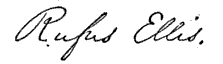
(signature) Rufus Ellis.