Massacre at Blount's Fort.
Reading edition
On the west side of the Appalachicola River, some forty miles below the line of Georgia, are yet found the ruins of what was once called "Blount's Fort." Its ramparts are now covered with a dense growth of underbrush and small trees. You may yet trace out its bastions, curtains, and magazine. At this time the country adjacent presents the appearance of an unbroken wilderness, and the whole scene is one of gloomy solitude, associated as it is with one of the most cruel massacres which ever disgraced the American arms.
The fort had originally been erected by civilized troops, and, when abandoned by its occupants at the close of the war, in 1815, it was taken possession of by the refugees from Georgia. But little is yet known of that persecuted people; their history can only be found in the national archives at Washington. They had been held as slaves in the State referred to; but during the Revolution they caught the spirit of liberty, at that time so prevalent throughout our land, and fled from their oppressors and found an asylum among the aborigines living in Florida.
During forty years they had effectually eluded, or resisted, all attempts to re-enslave them. They were true to themselves, to the instinctive love of liberty, which is planted in every human heart. Most of them had been born amidst perils, reared in the forest, and taught from their childhood to hate the oppressors of their race. Most of those who had been personally held in degrading servitude, whose backs had been seared by the lash of the savage overseer, had passed to that spirit-land where the clanking of chains is not heard, where slavery is not known. Some few of that class yet remained. Their gray hairs and feeble limbs, however, indicated that they, too, must soon pass away. Of the three hundred and eleven persons residing in "Blount's Fort" not more than twenty had been actually held in servitude. The others were descended from slave parents, who fled from Georgia, and, according to the laws of slave States, were liable to suffer the same outrages to which their ancestors had been subjected.
It is a most singular feature in slave-holding morals, that if the parents be robbed of their liberty, deprived of the rights with which their Creator has endowed them, the perpetrator of these wrongs becomes entitled to repeat them upon the children of their former victims. There were also some few parents and grandchildren, as well as middle-aged persons, who sought protection within the walls of the Fort against the vigilant slave-catchers who occasionally were seen prowling around the fortifications, but who dare not venture within the power of those whom they sought to enslave.
These fugitives had planted their gardens, and some of them had flocks roaming in the wilderness; all were enjoying the fruits of their labor, and congratulating themselves upon being safe from the attacks of those who enslave mankind. But the spirit of oppression is inexorable. The slaveholders finding they could not themselves obtain possession of their intended victims, called on the President of the United States for assistance to perpetrate the crime of enslaving their fellow men. That functionary had been reared amid southern institutions. He entertained no doubt of the right of one man to enslave another. He did not doubt that if a man held in servitude should attempt to escape, he would be worthy of death. In short, he fully sympathised with those who sought his official aid. He immediately directed the Secretary of War to issue orders to the Commander of the "Southern Military District of the United States" to send a detachment of troops to destroy "Blount's Fort," and to "seize those who occupied it and return them to their masters."[1]
General Jackson, at that time Commander of the Southern Military District, directed Lieut.-Colonel Clinch to perform the barbarous task. I was at one time personally acquainted with that officer, and know the impulses of his generous nature, and can readily account for the failure of his expedition. He marched to the vicinity of the Fort, made the necessary recognisance, and returned, making report that "the fortification was not accessible by land."[2]
Orders were then issued to Commodore Patterson, directing him to carry out the directions of the Secretary of War. He at that time commanded the American flotilla lying in "Mobile Bay," and instantly issued an order to Lieut. Loomis to ascend the Appalachicola River with two gun-boats, "to seize the people in Blount's Fort, deliver them to their owners, and destroy the Fort."
On the morning of the 17th Sept., A. D. 1816, a spectator might have seen several individuals standing upon the walls of that fortress watching with intense interest the approach of two small vessels that were slowly ascending the river, under full-spread canvas, by the aid of a light southern breeze. They were in sight at early dawn, but it was ten o'clock when they furled their sails and cast anchor opposite the Fort, and some four or five hundred yards distant from it.
A boat was lowered, and soon a midshipman and twelve men were observed making for the shore. They were met at the water's edge by some half dozen of the principal men in the Fort, and their errand demanded.
The young officer told them he was sent to make demand of the Fort, and that its inmates were to be given up to the "slaveholders, then on board the gun-boat, who claimed them as fugitive slaves!" The demand was instantly rejected, and the midshipman and his men returned to the gun-boats and informed Lieut. Loomis of the answer he had received.
As the colored men entered the Fort they related to their companions the demand that had been made. Great was the consternation manifested by the females, and even a portion of the sterner sex appeared to be distressed at their situation. This was observed by an old patriarch, who had drunk the bitter cup of servitude, one who bore on his person the visible marks of the thong, as well as the brand of his master, upon his shoulder. He saw his friends faultered, and he spoke cheerfully to them. He assured them that they were safe from the cannon shot of the enemy—that there were not men enough on board the vessels to storm their Fort, and finally closed with the emphatic declaration: "Give me liberty or give me death!" This saying was repeated by many agonized fathers and mothers on that bloody day.
A cannonade was soon commenced upon the Fort, but without much apparent effect. The shots were harmless; they penetrated the earth of which the walls were composed, and were there buried, without further injury. Some two hours were thus spent without injuring any person in the Fort. They then commenced throwing bombs. The bursting of these shells had more effect. There was no shelter from these fatal messages. Mothers gathered their little ones around them and pressed their babes more closely to their bosoms, as one explosion after another warned them of their imminent danger. By these explosions some were occasionally wounded and a few killed, until, at length, the shrieks of the wounded and groans of the dying were heard in various parts of the fortress.
Do you ask why these mothers and children were thus butchered in cold blood? I answer, they were slain for adhering to the doctrine that "all men are endowed by their Creator with the inalienable right to enjoy life and liberty." Holding to this doctrine of Hancock and of Jefferson, the power of the nation was arrayed against them, and our army employed to deprive them of life.
The bombardment was continued some hours with but little effect, so far as the assailants could discover. They manifested no disposition to surrender. The day was passing away. Lieut. Loomis called a council of officers and put to them the question, what further shall be done? An under officer suggested the propriety of firing "hot shot at the magazine." The proposition was agreed to. The furnaces were heated, balls were prepared, and the cannonade was resumed. The occupants of the Fort felt relieved by the change. They could hear the deep humming sound of the cannon balls, to which they had become accustomed in the early part of the day, and some made themselves merry at the supposed folly of their assailants. They knew not that the shot was heated, and was therefore unconscious of the danger which threatened them.
The sun was rapidly descending in the west. The tall pines and spruce threw their shadows over the fortification. The roar of the cannon, the sighing of the shot, the groans of the wounded, the dark shades of approaching evening, all conspired to render the scene one of intense gloom. They longed for the approaching night to close around them in order that they might bury the dead, and flee to the wilderness for safety.
Suddenly a startling phenomena presented itself to their astonished view. The heavy embankment and timbers protecting the magazine appeared to rise from the earth, and the next instant the dreadful explosion overwhelmed them, and the next found two hundred and seventy parents and children in the immediate presence of a holy God, making their appeal for retributive justice upon the government who had murdered them, and the freemen of the north who sustained such unutterable crimes.[3]
Many were crushed by the falling earth and the timbers; many were entirely buried in the ruins. Some were horribly mangled by the fragments of timber and the explosion of charged shells that were in the magazine. Limbs were torn from the bodies to which they had been attached. Mothers and babes lay beside each other, wrapped in that sleep which knows no waking.
The sun had set, and the twilight of evening was closing around them, when some sixty sailors, under the officer second in command, landed, and, without opposition, entered the Fort. The veteran sailors, accustomed to blood and carnage, were horror-stricken as they viewed the scene before them. They were accompanied, however, by some twenty slaveholders, all anxious for their prey. These paid little attention to the dead and dying, but anxiously seized upon the living, and, fastening the fetters upon their limbs, hurried them from the Fort, and instantly commenced their return towards the frontier of Georgia. Some fifteen persons in the Fort survived the terrible explosion, and they now sleep in servile graves, or moan and weep in bondage.
The officer in command of the party, with his men, returned to the boats as soon as the slaveholders were fairly in possession of their victims. The sailors appeared gloomy and thoughtful as they returned to their vessels. The anchors were weighed, the sails unfurled, and both vessels hurried from the scene of butchery as rapidly as they were able. After the officers had retired to their cabins, the rough-featured sailors gathered before the mast, and loud and bitter were the curses they uttered against slavery and against those officers of government who had then constrained them to murder women and helpless children, merely for their love of liberty.
But the dead remained unburied; and the next day the vultures were feeding upon the carcasses of young men and young women, whose hearts on the previous morning had beaten high with expectation. Their bones have been bleaching in the sun for thirty-seven years, and may yet be seen scattered among the ruins of that ancient fortification.
Twenty-two years elapsed, and a representative in Congress, from one of the free States, reported a bill giving to the perpetrators of these murders a gratuity of five thousand dollars from the public treasury, as a token of the gratitude which the people of this nation felt for the soldierly and gallant manner in which the crime was committed toward them. The bill passed both houses of Congress, was approved by the President, and now stands upon our statute book among the laws enacted at the 3d Session of the 25th Congress.
The facts are all found scattered among the various public documents which repose in the alcoves of our National Library. But no historian has been willing to collect and publish them, in consequence of the deep disgrace which they reflect upon the American arms, and upon those who then controlled the government.
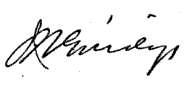
(signature) J. R. Giddings