Extract from an unpublished Poem on Freedom.
Reading edition
Oh, Freedom! when thy morning march began, Coëval with the birth and breath of man; Who that could view thee in that Asian clime, God-born, soul-nursed, the infant heir of time— Who that could see thee in that Asian court, Flit with the sparrow, with the lion sport, Talk with the murmur of the babbling rill And sing thy summer song upon the hill— Who that could know thee as thou wast inwrought The all in all of nature's primal thought, And see thee given by Omniscient mind, A native boon to lord, and brute, and wind, Could e'er have dreamed with fate's prophetic sleep, The darker lines thy horoscope would keep, Or trembling read, thro' tones with horror thrilled, The damned deeds thy future name would gild? Lo! The swart chief of Afric's vergeless plains, Poor Heaven-wept child of nature's joys and pains, Mounts his fleet steed with wind-directed course, Nor checks again his free unbridled horse, But lordless, wanders where his will inclines From Tuats heats to Zegzeg's stunted pines! View him, ye craven few, ye living-dead! Wrecks of a being whence the soul has fled! Ye Goths and Vandals of his plundered coast! Ye Christian Bondous, who of feeling boast,[7] Who quickly kindling to historic fire Contemn a Marius' or a Scylla's ire,[8] Or kindly lulled to sympathetic glow, Lament the martyrs of some far-off woe, And tender grown, with sorrow hugely great Weep o'er an Agis' or Jugurtha's fate![9] View him, ye hollow heartlings as he stalks The dauntless monarch of his native walks Breathes the warm odor which the girgir bears,[10] Shouts the fierce music of his savage airs, Or madly brave in hottest chase pursues The tawny monster of the desert dews; Eager, erect, persistent as the storm, Soul in his mien, God's image in his form! Yes, view him thus, from Kaffir to Soudan, And tell me, worldlings, is the black a man? See, the full sun emerging from the deep, Climbs with red eye, the light-illumined steep, And brightly beautiful continuous smiles A fecund blessing on those Indian Isles! Like eastern woods which sweeten as they burn, So, the parched earths to odorous flowrets turn, And feathered fayes their murmurous wings expand, Waked by the magic of his conjuror's wand, Flash their red plumes, and vocalize each dell Where browse the fecho and the dun-gazelle,[11] While half forgetful of her changing sphere, The loathful summer lingers year by year. Here, in the light of God's supernal eye— His realms unbounded, and his woes a sigh— The dusky son of evening placed whilcome Found with the Gnu an ever-vernal home, And wiser than Athenas' wisest schools,[12] Nor led by zealots, nor scholastic rules, Gazed at the stars that stud yon tender blue, And hoped, and deemed the cheat of death untrue; Yet, supple sophist to a plastic mind,[13] Saw gods in woods, and spirits in the wind, Heard in the tones that stirred the waves within, The mingled voice of Hadna and Odin, Doomed the fleeced tenant of the wild to bleed A guileless votive to his harmless creed, Then gladly grateful at each rite fulfilled, Sought the cool shadow where the spring distilled, And lightly lab'rous thro' the torpid day, Whiled in sweet peace the sultry eve away. Or if perchance to nature darkly true, He strikes the war-path thro' the midnight dew, Steals in the covert on the sleeping foe, And wreaks the horrors of a barbarous woe; Yet, yet returning to the home-girt spot— The vengeful causes and the deed forgot—[14] Where greenest boughs o'er sloping banks impend, And gurgling waves to bosky dells descend; Intent the long expectant brood to sea, He halts beneath the broad acacia tree; And warmly pressed by wonder-gloating eyes, Displays the vantage of each savage prize; Stills with glad pride and plundered gems, uncouth, The ardent longings of his daughter's youth; Bids the dark spouse the tropic meal prepare, Mid laughing echoes from the bird-voiced air; Passes before him in a fond review The merry numbers of his crisp-haired crew;[15] Recounts the dangers of the last night's strife, Joys with their joy, and lives their inner life; And then when slow the lengthened day expires, Mid twilight balms and star-enkindled fires, With all the father sees each form retire, A ruthless heathen, but a loving sire.[16] Innocuously thus, thro' long, long years Untaught by learning, yet unknown to fears, The swarthy Afric whiled the jocund hours, A petted child of nature's rosiest bowers, Till lured by wealth the hardy Portuguese,[17] Seeks the green waters of his Eastern seas, And venturous nations more excursive grown, Scan his glad coast from radiant zone to zone, Then Fortune's minion in a foreign clime, Cursed by his own and damned to later time, Of incest born and by the chances thrown A tainted alien on a ravished throne, Gapes the foul flatteries of a fawning train, And fatuous mock'ries, which themselves disdain, A fancied monarch, but the witless sport Of adulation, and a practiced court, Vaunts to his broad realms and Timour-like proclaims Illusive titles of barbaric names, Cheats his own nature, and now generous grown,[18] Dispenses souls and empires not his own, Draws the deep purple round his royal seat, Lifts his low crest, affects the God complete, By giving with light breath, oh, shame to tell! These heirs of Heav'n unto the fate of hell. Sped by the mandate of his recreant train, Lo! commerce, broad winged seraph of the main! Shook her white plumage and coqueting, won Propitious favors from the southern sun, Till manly hearts and keel-impelling gales, Furled on the coast her half-reluctant sails. Abashed, amazed, with fear-dilated eye The marvelling tribes these new-born wonders spy; See from the shore, bright glittering in the sun, The moving freightage of each galleon; Wait till the measured strokes of oars bring near These way-lost wanderers of another sphere, Then timorously glad, yet awe-struck still, Lead from the sunshine to the breezy hill; With courteous grace a resting place assign 'Neath rustling leaves and grape-empurpled vine, And led by craft in artless pride make known The lustrous lurements of their gorgeous zone, As in the field some skilful ranger sets The fraudful cordage of his specious nets, Places some fragrant viand in the snare, And captive takes the unsuspicious hare; So the bold strangers with superior will Lay their base plans with disingenuous skill, Ope their stored treasures and with art display Their worthless figments to the air of day, Roll their large lids, and with grave gestures laud Each tinsel trinket and each painted gaud; With mystic signs of strange import apply Some gew-gaw bauble to the gloating eye; Touch with nice skill, yet craft-dissembled smile, Gems from the mine and spices from the Isle, Affect no care, yet hope a thrifty sale— The wealth of Empires in th' opposing scale— While he, the poor victim of their selfish creed, Prescient of evil art foredoomed to bleed, Pleased yet alarmed, desiring but deterred, Flutters still nearer like a snake-charmed bird; Alas, too often taken with a toy— Too soon to weep a kindred fate with Troy! Evils received, like twilight stars dilate, The less the light, the larger grows their state; Thus the first error in that savage air, Spreads as a flame, and leaves a ruin there. Too dearly generous and too warmly true,[19] The simple black wears out the fatal clew,— From barter flies to trade; from trade to wants; From wants to interests and derided haunts; Thence, rolls from off the once-sequestered shore, The turgid tide of havoc and of war; No warning ringing from the red adunes, No prophets rising, and no Laocoons, Remotest tribes the baleful influence own; Feel to extremes, and at their centres groan. Now laughs the stranger at their anguished throes,[20] Feeds on their ills, and battens on their woes; Glads his freed conscience at each pillaged mine, And finds forgiveness at a Christian shrine; By specious creeds and sophists darkly taught,[21] To semble virtue and dissemble thought, With Saviour-seeming smile, adds fuel to the flame,— Ulysses' craft, without Ulysses' aim,— And sadly faithful to his dark designs, Fiction improves; heroic rage refines; For lo! Achilles, victor of the train! Draws Hector lifeless, round the Ilian plain; But ah! these later Greeks more cruel strive, And bind their victim to the load alive! Oh, beats there, Heaven, beneath thy gorgeous blue, One heart so basely to itself untrue, So dead of pulse, and so insensate grown, It feels not such a cause dear as its own? Dwells there a being 'neath thine eye, oh, God! A fellow-worm from out the self-same clod, Whose fevered blood does not impatient boil, Fierce as a tiger's in the hunter's toil, To see degenerate men and States prolong, So foul a deed—so thrice accursed a wrong? Tell me, ye loud-voiced winds that ceaseless roll, Eternal miracles from pole to pole, Breathes there on earth so vile and mean a thing That crushed, it will not turn again and sting? And say! ye tyrants in your boasted halls, Read ye no warnings on your darkened walls? Hear ye no seeming mutterings of the cloud Break from the millions which your steps have bowed? Think ye, ye hold in your ignoble thrall, Mind, soul, thought, taste, hope, feeling, valor, all? No; these unfettered scorn your nerveless hand, Sport at their will, and scoff at your command, Range through arcades of shadow-brooding palms, Snuff their free airs and breathe their floating balms, Or bolder still, on fancy's fiery wing—[22] Caught from their letters at the noon-day spring— With star-eyed science, and her seraph train Read the bright secrets of yon azure plain; Hear Loxian murmurs in Rhodolphe's caves[23] Meet with sweet answers from the nymph-voiced waves; Sit with the pilot at Phœnicia's helm, And mark the boundries of the Lybian realm; See swarthy Memnon in the grave debate, Dispute with gods, and rule a conqu'ring state, And warmly and kindling dare—yes, dare to hope, A second Empire on the future's scope! And thou, my country, latest born of time! Dearest of all, of all the most sublime! How long shall patriots own, with blush of shame, So foul a blot upon so fair a name? How long thy sons with filial hearts deplore, A Python evil on thy Cyprean shore? What! and wilt thou, the moral Hercules Whose youth eclipsed the dream of Pericles, Whose trunceant bands heroically caught, The Spartan phalanx with the Attic thought, The wizard throne of age-nursed error hurled, Defied a tyrant and transfixed a world! Wilt thou see Afric like old Priam sue, The bones of children as in nature due, And foully craven, ingrate-like forget, Thy life, thy learning's her dishonored debt? Say; wilt not thou, whose time-ennobling sons— Thy Jay's, thy Franklin's and thy Washington's, Caught the bright cestus from fair freedom's God, And bound it as a girdle to thy sod; Ah! wilt not thou with generous mind confess The might of woe, the strength of helplessness? High-Heaven's almoner to a world oppressed, Who in the march of nations led the rest![24] Will there no Gracchus in thy Senate stand And speak the words that millions should command? No Clysthementhe 'neath thy broad arched dome, Predict the fortunes with the crimes of Rome? Shall time yet partial in his cycling course, Bring thee no Fox, no Pitt, no Wilberforce? Still must thou live and corybantic die, A traceless meteor in a clouding sky; Thy name a cheat; thyself, a world-wide lie? No; there will come, prophetic hearts may trust, Some embryo angel of superior dust, With brow of cloud and tongue of livid flame— Another Moses, but in time and name— Whose Heaven-appealing voice shall bid thee pass— On either hand a wall of living glass;— Ope for the Lybian with convulsive shock His more than Horeb's adamantine rock, And gazing from some second Pisgah, see Thy idol broken and thy people free.
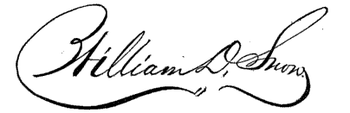
(signature) William D. Snow
Richmond, Dec. 1st, 1853.
FOOTNOTES:
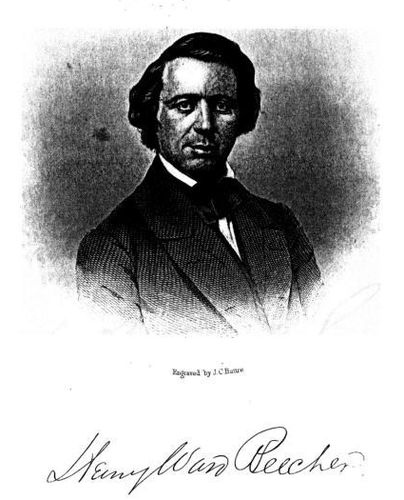
Henry Ward Beecher. (Engraved by J. C. Buttre)