Business.
Reading edition
Atlanta’s Business Grows Four Times as Fast as the Population, and the Population Grows Twice as Fast as the Average of the United States. Posted Receipts on its Newspapers Exceed those of Baltimore, Brooklyn, Buffalo, Omaha, or New Orleans... Atlanta is the business center of the Southeast. Almost all the great concerns of national extent make this city their Southern headquarters, and this has created the phenomenal demand for offices. As a result, Atlanta has more tall fire-proof steel-frame office-buildings than any other Southern City.
Atlanta’s business is indicated by the bank clearings, which were $145,000,000 for the year 1903. In 1894 they were $56,000,000. This shows more clearly than words the rapid growth of the city as a business center.
From the latest available data, the trade of Atlanta is estimated as follows:
Wholesale $40,000,000
Retail 20,000,000
Manufactures 27,000,000
Fuel 2,000,000
Horses and Mules 6,250,000
—————
Total $95,250,000
Atlanta Manufactures in 1904.
In April 1904 the Atlanta Chamber of Commerce sent letters to most of the manufacturers of the city, asking for a statement of the capital invested, the number of wage earners, the total wages paid, the value of raw material used and the product; also the percentage of increase in each item since June, 1900, when the U. S. Census was taken. The returns show an average increase of 53 1-4 per cent. in capital, 52 1-3 per cent. in wage earners, 55 per cent. in wages paid, 56.7 per cent. in raw material used and 62 per cent. in the value of the product. Applying these percentages of increase to the Census figures of 1900, gives the following for April, 1904 in contrast with 1890 and 1900:
Capital. Wage Earners. Total Wages. Raw Material. Value Product.
1890. $9,508,962 7,957 $3,206,285 $5,914,571 $13,074,037
1900. 16,045,156 9,356 3,103,989 8,563,524 16,707,027
1904. 25,309,937 15,267 5,079,385 14,185,935 28,985,476
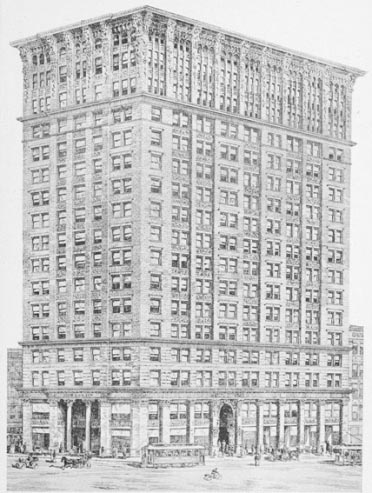
CANDLER BUILDING.
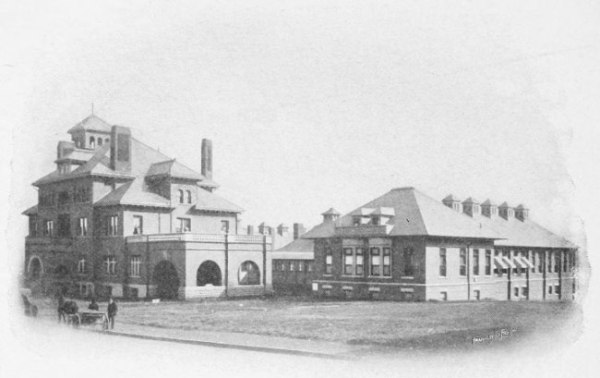
GRADY HOSPITAL.
Atlanta’s principal manufacturing establishments are in cotton, iron, machinery, lumber, sheet metal, terra cotta, brick, fertilizer, wagons, carriages, furniture, candy and crackers, cigars, coffins, chemicals, printing, lithographing, electrotyping, stamping, paper and paper bags, flour and meal, paints, varnish, cottonseed oil and cake, ice, harness, belts, hosiery, underwear, neckwear, woolen goods, gins, engines, sash, doors and blinds, mantels, iron beds, spring beds, trunks, desks, tables, pickles, condiments, baking powder, bread and cakes, clothing, overalls, millinery, suspenders, picture-frames and moulding.
In money value, cotton goods and fertilizers lead the list. There are three large cotton factories, and Atlanta is headquarters for the Virginia-Carolina Chemical Company, the largest producer of fertilizers in the South. It is also the headquarters of several large sawmill companies.
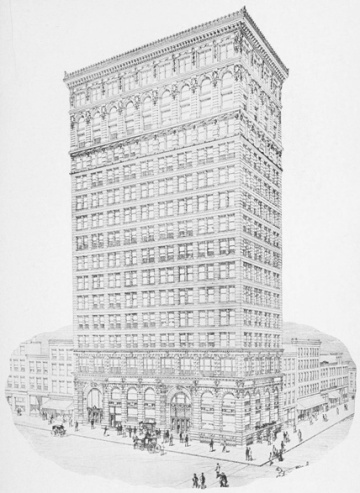
FOURTH NATIONAL BANK BUILDING.
Atlanta Banks.
The clearings and deposits of the associated banks of Atlanta are reported as follows by Mr. Darwin G. Jones, manager of the Atlanta Clearing House Association:
CLEARINGS BY YEARS.
1894 $56,589,228.04
1895 65,318,254.71
1896 69,026,033.17
1897 72,005,161.52
1898 71,964,809.03
1899 83,058,397.11
1900 96,375,251.22
1901 111,755,849.98
1902 131,200,457.25
1903 144,992,037.59
These reports show that business has doubled in seven years.
Deposits December 1st Each Year.
The deposits of the Clearing House banks of Atlanta at the end of the week nearest December 1st of each year, are reported by Manager Jones as follows:
1893 $3,977,930.98
1894 4,779,640.99
1895 6,672,006.87
1896 5,957,634.51
1897 6,385,336.51
1898 6,756,991.36
1899 7,764,990.85
1900 9,011,902.85
1901 11,080,127.68
1902 12,935,639.60
1903 13,080,098.35
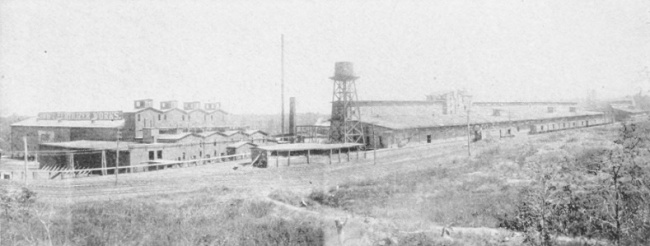
SWIFT FERTILIZER WORKS.
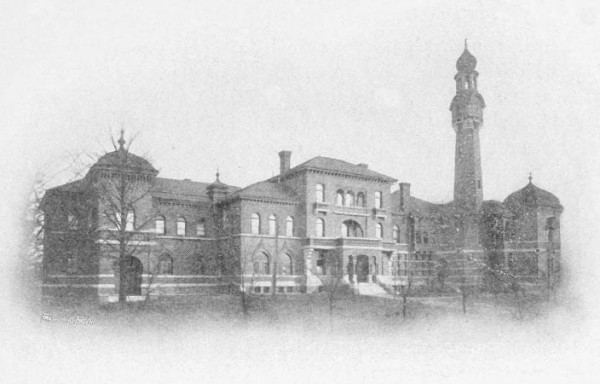
JEWISH ORPHANAGE.
Government Receipts in the Southeast.
One of the facts indicating the greatness of the territory, of which Atlanta is the center, is the Government receipts in the Southeast.
The receipts of the Federal Government through internal revenue, customs, duties and Presidential Post offices is stated as follows, in the latest official reports:
Alabama $ 1,039,341.83
Florida 3,139,624.55
Georgia 1,812,239.10
Tennessee 2,942,593.17
North Carolina 4,933,641.99
South Carolina 1,063,063.17
—————
Total $14,930,503.81
Growth of Postal Business.
The growth of business is strikingly shown by the postal receipts for the year ending June 30th, 1890, 1894 and 1903:
1890 $159,262.61
1894 201,649.92
1903 477,047.45
Comparison with other cities, by various barometers of trade and industry, indicates that Atlanta does more business than any city of 100,000 population in the United States. As a newspaper center it is phenomenal. The receipts from second-class mail matter at Atlanta were $55,658.83 during the year ending June 30, 1903. This shows that on newspapers and periodicals Atlanta pays the Government more than Brooklyn, Baltimore, Buffalo, Washington, Omaha, New Orleans, Louisville, or Indianapolis.
The receipts of the Atlanta Post-office for the year ending June 30, 1903, were $477,047.45, an increase of fourteen and four-fifths per cent. over the receipts of the preceding year.
Insurance.
Atlanta is the third insurance center of the United States, and easily first in the South.
The receipts of premiums reported to agencies here are estimated at $8,000,000, about equally divided between fire and life insurance.
Atlanta is the headquarters of the Southeastern Tariff Association. There are no burdensome insurance laws in this State and taxes are reasonable.
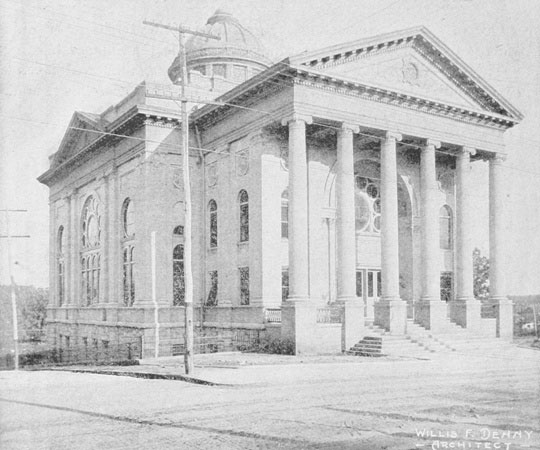
JEWISH TEMPLE.
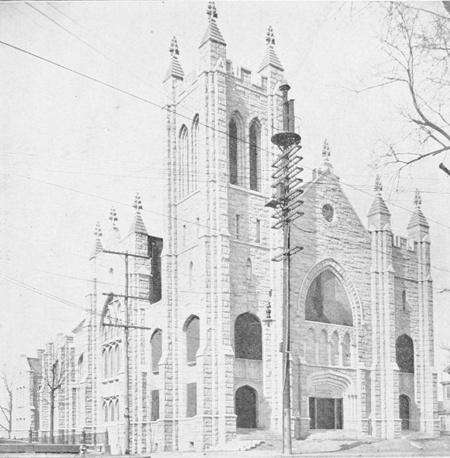
FIRST METHODIST CHURCH.
Cotton.
Atlanta is the center of large cotton operations, and receives about 115,000 bales annually. There are several large warehouses and compresses. The 12 lines of railroads give ample facilities for collecting the crop from adjoining territory and forwarding it overland to eastern mills or to the coast for export. Both of the Round Bale Companies are represented in this city.
Transportation.
Atlanta is the railroad center of the Southeast. Twelve radiating lines furnish ample facilities for distribution of manufactures and merchandise from this point. Five of these lines belong to the Southern Railway. Here is a list of the lines:
Southern to Washington. Southern to Knoxville. Georgia Railroad to Augusta. Southern to Birmingham. Southern to Fort Valley. Southern to Brunswick. [2]Seaboard Air Line to Birmingham. Seaboard Air Line to Portsmouth. Western & Atlantic to Chattanooga. Atlanta & West Point to Montgomery. Central of Georgia Railway to Savannah. Louisville & Nashville to Knoxville.
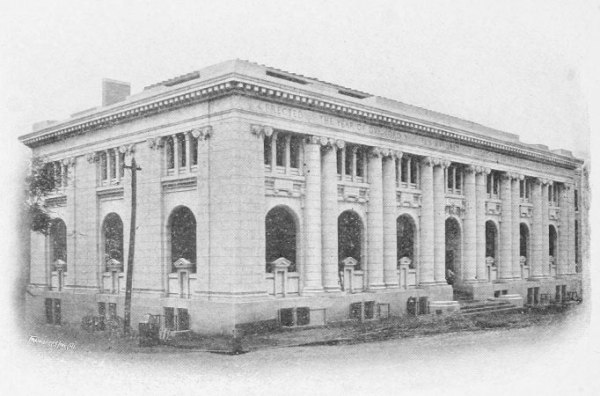
CARNEGIE LIBRARY.
The connections of these make many more routes over which there are through trains, as for example, to Columbus and Albany.
The Southern Railway, Central of Georgia Railway, and Atlanta and West Point Railway have let the contract for a union passenger station at the corner of Mitchell and Madison streets, and will spend about a million dollars on the structure. Altogether they will spend two millions on the station and terminal facilities connected with it.
Atlanta’s hotel accommodations are superior to those of almost any other city in the South. The Piedmont is a fire-proof building of the best class, with steel frame. The Kimball, the Aragon, the Majestic, and the Marion have long enjoyed an enviable reputation with the traveling public. There are numerous smaller hotels and any number of boarding-houses. Atlanta is the stop-over point for the Florida winter travel, both going and coming, and is rapidly becoming a summer resort by reason of its elevation, bracing atmosphere, and cool climate.
The Radius of Distribution.
Atlanta’s advantages as a distributing point are shown by the central location with reference to Southeastern towns. There are seventy-nine towns of exceeding 4,000 population in Alabama, North Carolina, South Carolina, Georgia and Mississippi. The average distances of these towns by States from Atlanta, Savannah and Nashville are as follows:
ATLANTA SAVANNAH NASHVILLE
Alabama 195 miles 419 miles 269 miles
North Carolina 400 miles 352 miles 629 miles
South Carolina 239 miles 193 miles 526 miles
Georgia 147 miles 233 miles 386 miles
Mississippi 423 miles 606 miles 440 miles
———— ———— ————
1,404 miles 1,803 miles 2,250 miles
Average distance of towns in five States 280.8 miles 360.6 miles 450 miles
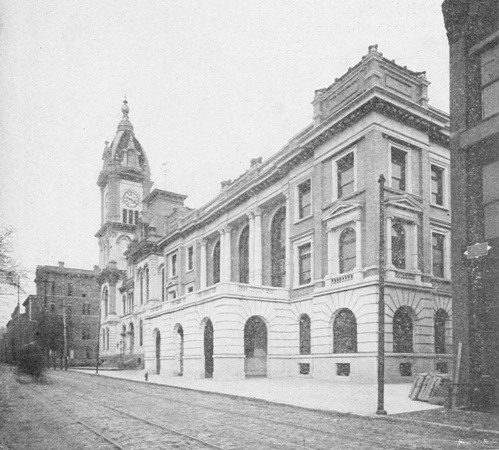
COURT HOUSE—FROM THE SOUTH.
Street Railways.
Atlanta has a fine system of street railways, with one hundred and forty-two miles of track radiating from the heart of the city to the residence portion and thence to the suburbs. In some directions they reach out for eight miles, as in the case of College Park, Decatur and the Chattahoochee River.
The service is excellent, and there are one hundred miles of tracks within the city limits. The uniform fare is five cents, but there are transfers from incoming lines to any part of the city. Almost any spot on a car line, within the city limits, can be reached from any other point inside the city for one fare.
There is ample service to all the parks and resorts, and an electric line to Marietta is nearly completed.
Light and Power.
Atlanta is well supplied with gas at a low figure—$1.00 per thousand cubic feet. It is so economical that gas stoves are very largely used for cooking purposes and not a few for heating.

LAKE ABANA—GRANT PARK.
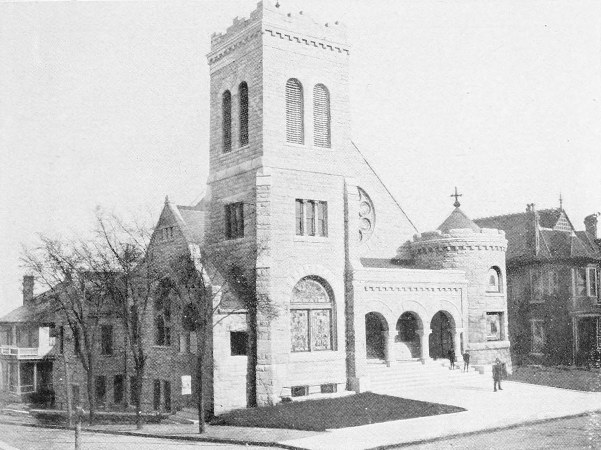
NORTH AVENUE PRESBYTERIAN CHURCH.
The Georgia Railway and Electric Company has two large plants for the generation of electric current for light and power. The city is well illuminated by arc lights and electricity is largely used by business offices and residences.
The same company has a steam-heating plant, and pipes have been laid in the principal streets for this service.
Great Power Plant.
The Atlanta Water and Electric Power Company has erected on a massive masonry dam across the Chattahoochee River, at Bull Sluice shoals, fifteen miles from Atlanta, and in a few months the plant will be completed and equipped to deliver 11,000 horse-power of electric current in the city. The total investment will be $2,000,000. The power plant will give a tremendous stimulus to manufacturing.
As the steam and electric powers already in existence furnish 45,000 horse-power, which is in constant use, the addition of 11,000 horse-power will increase the manufacturing industries of Atlanta by twenty-five per cent. This is considered a very moderate estimate; for within the three and three-fourths years following the census of June, 1900, the product of Atlanta factories increased from $16,721,000 to $27,417,000, and the number of wage earners from 9,368 to more than 14,000.
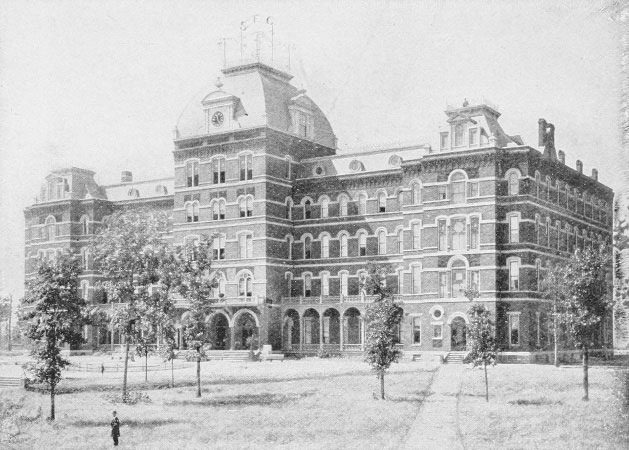
SOUTHERN FEMALE COLLEGE.
Rapid Growth of Business
The business of Atlanta is growing four times as fast as its population, although the population grows twice as fast as that of the country. The rate of increase in population for the United States has been two per cent. per annum during the past decade. In Atlanta, it has been approximately four per cent. During the year 1903, the business of Atlanta increased fifteen per cent. as measured by postal receipts. Since the Exposition of 1895, bank clearings have more than doubled and bank deposits have nearly trebled.
Chamber of Commerce.
During the thirty years of their existence the Chamber of Commerce, and its predecessor, the Board of Trade, have been active in protecting and promoting the interests of Atlanta. Meetings in the public interest have usually been called at the Chamber of Commerce, and it was there that the first meeting to organize the Cotton States and International Exposition was held. All important questions affecting business have been discussed there and a score or so of standing committees have been constituted by the Chamber to look after the interests of Atlanta. The Chamber of Commerce is the open forum for the discussion of all matters which affect the general welfare of the community, and in this way the organization has exerted a powerful influence.
The present officers are:
Robert F. Maddox, President; Samuel D. Jones, Vice-President; Walter G. Cooper, Secretary, and Joseph T. Orme, Treasurer.
Daily Newspapers.
Atlanta has three daily newspapers. The Constitution, a morning paper, acquired national reputation under the management of Henry W. Grady, and has continued under the management of Clark Howell to hold a leading position among the newspapers of America.
The Atlanta Journal is a large afternoon paper which acquired national reputation under the management of Hoke Smith, and has continued to grow under the management of James R. Gray.
The third daily newspaper is the Atlanta News, a penny afternoon paper organized during the summer of 1902. It appeared August 4th and rapidly acquired a large circulation. A bright future is predicted. Editors, John Temple Graves and Charles Daniel; Business Manager, Chas. Daniel.
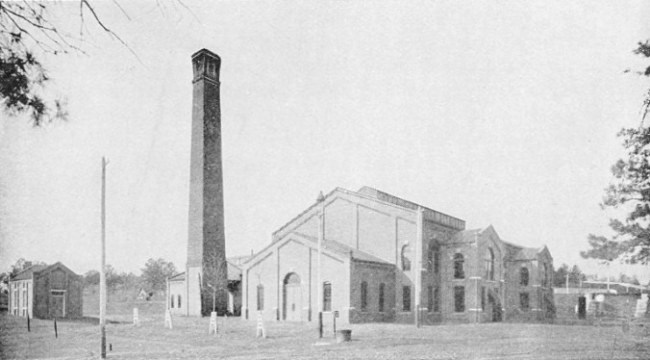
WATER WORKS PUMPING STATION.
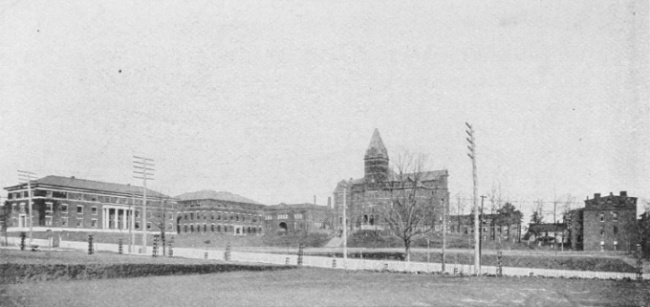
TECHNOLOGICAL SCHOOL.