III GOTHIC ARMOUR
Reading edition
Plate armour reached the perfection of workmanship in the second half of the fifteenth century. At no period was it so light, yet impervious, with curves and angles so admirably directed to deflect the impact of sword or lance, and articulations so skilfully devised to mitigate the restraint on freedom of movement necessarily imposed by a sheathing of steel. Never was armour so closely fitted to the contour of the body, and thus so elegant, so easily and therefore so constantly worn. This, the so-called “Gothic Armour,” is the cynosure of collectors, and is so rarely to be obtained that a fairly perfect cap-à-pie suit may command some £2000.
This Gothic armour is the armour of the Van Eycks and Memling, of Perugino and Leonardo, and of the earlier works of Albert Dürer. The sumptuously illuminated French and English manuscripts of the fifteenth century depict it in use in every vicissitude of war or combat, by sea and land, on horse and foot, and testify how little it impeded the freedom of action of the wearer. They show that it was rarely concealed in campaigning by any textile garment, and also that when worn by prince or noble, it might be gilded, entirely or partially, even almost fantastically. Thus the upper half may be gilt, and the nether limbs left burnished steel; or these gilt and the body steel; but more often the alternate plates of the articulated breast and back defences, the arms, or the elbow and knee pieces, are gilt, while the rest presents the normal sheeny surface of steel.
The general characteristics of Gothic armour have been described in Armour in England, illustrated in Fig. 19, by the fine and accurately modelled suit of the Beauchamp effigy at Warwick. Though many fine suits have been brought to this country from abroad, none are in any way connected with English wearers, and none could therefore be illustrated in the former monograph. It seems incredible that nothing should have been preserved either of the weapons or armour with which the long struggle for supremacy in France was maintained during the minority and rule of a king, too studious and placable for days when his turbulent subjects cared only for war. Of the armour and weapons of the thousands of men-at-arms who fell victims to the Wars of the Roses, the direct outcome of the disappointing issue of the French Wars, and so annihilating to English art, perhaps but a helmet and a few weapons remain. The extermination of the old nobility; the completeness of the change in habit and thought introduced into this country by the Renaissance, affecting alike art, literature, and costume; the change in religion, the revolution in the science of warfare, and the absolute centralisation of the ambitious and luxurious nobility in the court or camp of Henry VIII., together with that vainglorious and wealthy despot’s passion for extravagant dress, novelty and pomp, combined to break most effectually with the past and to render all Gothic armour mere obsolete lumber. Contemporary pictures of Henry VIII.’s proceedings, especially of his meeting with Maximilian, in which the English retinue is equipped in the new closed armet while Germans wear the old visored sallad, as well as the accounts of his forces and his purchases of arms, convince us that out-of-date armour and weapons, even if still serviceable, were no longer, as heretofore, passed on to the lower ranks of retainers. Hall relates of the muster of the city bands in the thirty-first year of Henry VIII. that “all were put aside who had Jackes, coates of plate, coates of mail, and bryganders, and appointed none but such as had whyte harness, except such as should bear the morish pykes, which had no harness but skulles.” The destruction of obsolete armour in this reign must have been very complete, for no suits of the Gothic armour worn down to this date by the fathers and grandfathers of the courtiers of Henry have been preserved.
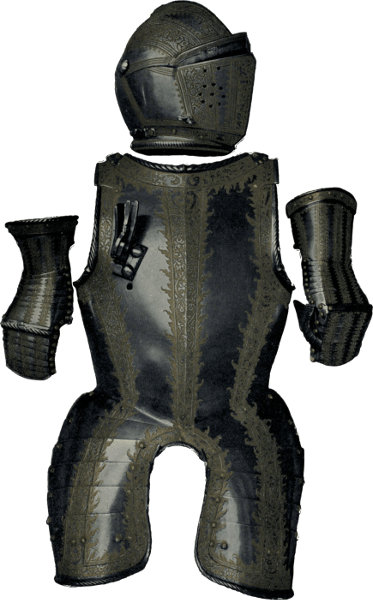
Plate III.—Half Suit, engraved and parcel-gilt. Collection of the Duke of Westminster.
France and the Low Countries have been swept nearly as bare, anything that might have been spared by former ages having been finally destroyed when the houses of the nobility were gutted during the Revolution. In more conservative Italy and Spain a few Gothic suits have escaped destruction, and though the Art Renaissance of the one, and wealth and pride of the other, were inimical to the preservation of obsolete arms, yet probably some few specimens have passed from the hands of private possessors into those of wealthy amateurs of France and England. Germany, however, has ever been the inexhaustible treasure-house whence Gothic arms and armour have leaked from the hands of private possessors into those of collectors. In Germany even the trading towns had clung to their ancient buildings, walls, and traditions, and in many of the old Town Halls the furniture, arms, and weapons of the civic guards, and the old implements of punishment and torture, are still preserved. The innumerable feudal castles of the lesser nobility have to a yet greater extent preserved the belongings of their ancient occupants, who clung to their titles, heraldry, arms, and weapons as symbols of vanishing rights and power, and of ancient pretensions and privileges, so out of harmony with the world beyond. The ubiquitous and assiduous dealer has long found in them a happy hunting-ground for arms and weapons, whence to obtain the bulk of those he disposed of.
In addition, some important stores of Gothic armour have been disgorged from the Levant, trophies of the incessant wars maintained by the Turks against Christendom. A large quantity existed at Constantinople, and the story goes that a ship, some fifty years ago, was actually freighted to Genoa with old armour as ballast. The indefatigable dealer Pratt of New Bond Street became possessed of some of this armour, which he made up into suits in the best way he could, restoring but too liberally the parts that were missing. The suit illustrated, Fig. 3, is in Lord Zouche’s collection at Parham, where it is catalogued as from the Church of Irene at Constantinople: it no doubt formed part of this consignment. The head-piece, an Italian sallad, is of later date, while the remainder, though so beautiful in form, does not appear to be either entirely homogeneous or complete. Other suits in Lord Zouche’s extensive collection are from the same source. Another much smaller series of Gothic armour was brought to England from the Isle of Rhodes and most fortunately did not pass through the hands of any dealer, and is thus in an absolutely trustworthy condition, the very rust not having been removed. It consists of a number of pieces, approximately of one date, many of particular elegance and interest, both on account of the armourer’s marks, and the examples of engraving they present.
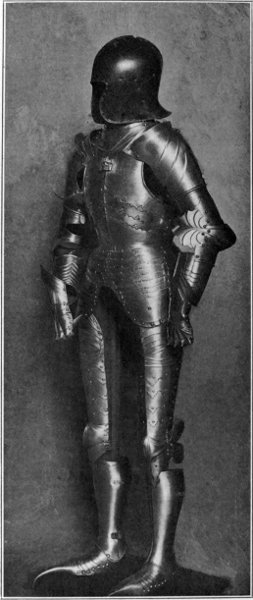
Fig. 3.—Gothic Armour, said to be from the Church of Irene at Constantinople. At Parham.
By the kindness of Sir Noel Paton two of his four fine Gothic cap-à-pie suits are illustrated. The first, Figs. 4 and 5, is German work of the second half of the fourteenth century.
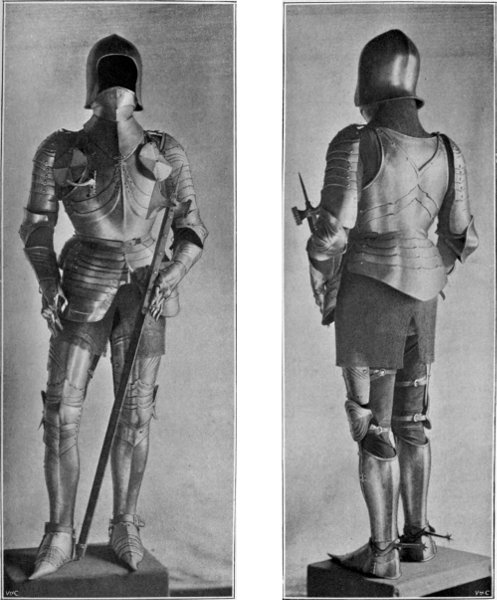
Figs. 4 and 5.—Gothic Armour. Said to be from an old mansion in the Tyrol. Front and Back views. Sir Noël Paton’s Collection.
Sir Noël observes that “the upper part of the suit especially is remarkable for its perfect condition, the original straps being intact, and the inner and outer surface of the metal having been scarcely touched by rust.” The graceful and doubly articulated and engrailed breast and back-plates are beautifully designed, and finished in the manner of the great master armourer Lorenz Colman of Augsburg. The curiously plain collar is attached to the pectoral by a bolt and staple, and there is a fixed lance-rest, these appliances adapting the suit for tilting rather than war. There are no tuilles, one of the most persistent features of Gothic suits, and no pauldrons or shoulder-guards. The brassards, coudières, genouillières, formed of an unusual number of plates, and especially the gauntlets, are of great beauty, and resemble those of Lorenz Colman’s suits. These and the solerets à la poulaine retroussé, to quote Sir Noël’s description, “are exceptionally beautiful and artistic in design. Of the sollerets, however, unfortunately only the left, with its fine, long-necked spur silvered and thickly patinated, is genuine.” “The head-piece is a strong bassinet of the type styled barbute by Viollet le Duc, and possibly of somewhat earlier date, and bears on either side the armourer’s mark.” The fine preservation of the metal “is due no doubt to the fact that the suit had remained for many generations in one place—an old mansion in the northern Tyrol, whence so late as 1872 or 1873 it was obtained by a well-known Parisian dealer, from whom it passed to Pratt of New Bond Street; after whose death it came into my hands.”
The second of Sir Noël’s suits (Fig. 6), of about the same date, resembles more the armour of Italian pictures and actual Italian suits. The articulated and channelled breast-plate is remarkably bold and graceful in its lines, as are the entire brassards, more especially the coudières. “The spiked rondelles and the gauntlets have much picturesque character, and the tuilles are exceptionally fine in form. The sollerets are of the kind called arc tiers point. The head-piece is a close helmet of good design and apparently contemporary.” In general effect the armour is light but dignified: though the breast-plate bears a Gothic R, no history attaches to it.
The great interest and beauty of the Parham suit, Fig. 3, lies in the particularly elegant and finely laminated and engrailed breast and back-plates. Like Sir Noël’s German suit, it has no tuilles and retains the staple for fastening the collar and the lance-rest. The sollerets and perhaps some other pieces are restorations. It is without armourer’s marks, but resembles Nuremberg work in general form and detail.
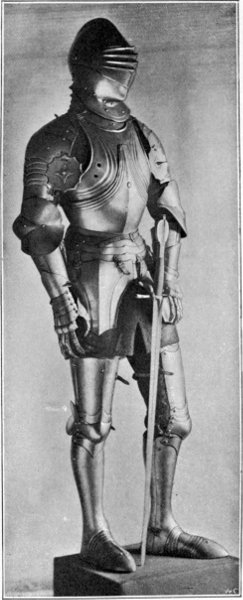
Fig. 6.—Gothic Armour. Probably Italian. Sir Noël Paton’s Collection.
Two magnificent Nuremberg Gothic cap-à-pie suits are in the Wallace Collection, at present inaccessible. One is on foot, partly fluted, consisting of sallad with movable visor, mentonnière, jointed breast and back-plate, and quite complete body armour with pointed-toed sollerettes, and skirt of riveted mail. The other, for man and horse, is equally complete and ornamented with brass bands, the sallad with visor and mentonnière being of fine form and contemporary.
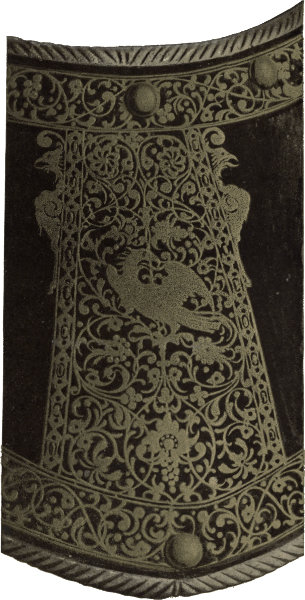
Plate IV.—Gold damascening on russet ground. Late Italian suit. Tower of London.
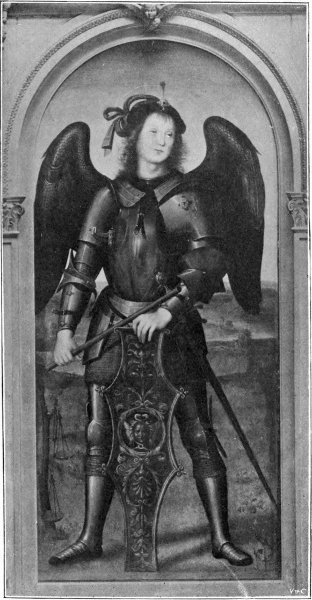
Fig. 7.—St. Michael. By Perugino. National Gallery.
For suits of Gothic armour which have belonged to known wearers, and have been handed down with unbroken pedigree, we must go to the great collections of Europe, and especially to those which, like the Viennese, were commenced while armour was still worn. Of sculptured representations of Gothic armour none surpass the Beauchamp effigy at Warwick. A no less accurate figure is that by Peter Vischer, also in gilt bronze, of Count Otto IV. of Henneburg, 1490, from the Church of Romhild in Thuringia. There is a cast of this in the South Kensington Museum, as well as one of the gilt bronze effigy of Count Weinsberg at Munich, in armour which is remarkable in several respects. Italian Gothic armour of different periods can best be studied in the National Gallery. A suit (Fig. 7) of about the close of the century is from one of the compartments of the famous altar-piece by Perugino, removed from the Certosa at Pavia in 1786, and painted according to Vasari about 1490. It represents St. Michael in full armour, except the head. The underlying mail shows, as usual in Italian pictures, at the elbows, the skirt, and below the knees, and has a deep edging of brass rings. The breast-plate, though in two, is arranged so that the body could not easily be bent. The shoulder-guards are less exaggerated than in contemporary French and English armour, but the elbow-guards seem large, angular, and loosely fitting. The sollerets are well made, unpointed, and leave the red stocking exposed at the toe and heel. The sword, on the left hip, is in a velvet scabbard with a beautifully and simply worked steel hilt and cross quillons slightly curved towards the blade. The shield is fine in form and typically Italian, bearing a Medusa’s head and other classic ornaments, boldly embossed. The hands are bare, the right holding a slender staff or wand. In the figure of St. William by Ercole di Giulio Cesare Grandi of Ferrara, the head is bare and there are no plate defences to the neck, shoulders, or forearms. The top of the mail shirt shows as a narrow band round the throat, and covers the shoulders with short and very wide-open sleeves, its lower edge appearing between the tuilles over a second skirt of mail. Mail appears again below the knees and forms the covering of the feet, all edges being finished with rings of brass as usual. The breast-plate is large, plain, and of one piece; there are but three taces, with bold, finely formed, and ridged tuilles. The brassards, including the large butterfly-shaped coudière, appear from beneath the widely open sleeves of mail. The leg armour is also plain, but with the wings of the genouillières exceptionally large. The sword, unsheathed, is a magnificent weapon with gilt or brass pommel and grip and horizontally curved quillons. The striking figure of St. George by Pisano, in the broad-brimmed Tuscan hat, is of earlier date, as the artist died in 1451 or 1452. The mail shows beneath a thick quilted surcoat over which the great ill-fitting shoulder and other body defences are fixed. The limbs are almost completely sheathed in plate over the mail, but the pieces fit so loosely that the whole has a shambling appearance and seems ready to fall off. The sollerets are square-toed with long rowelled spurs. The armour represented in Boccacino’s Procession to Calvary is almost identical, save that the mail sleeves are less baggy and shoulder pieces are worn. The St. William in Garofalo’s Madonna and Child from Ferrara, though probably painted in the 16th century, preserves the exaggerated butterfly wings to the coudières and genouillières, and the Gothic tuilles, but has fluted sollerets and shows no mail. The St. Demetrius of L’Ortolano, who painted in the first quarter of the sixteenth century, shows fluted shoulder pieces and coudières, and half sollerets, leaving the front of the foot to a defence of mail.
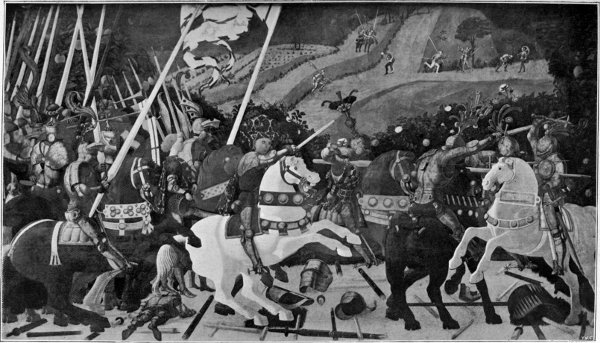
Fig. 8.—The Battle of Sant’ Egidio. By Uccello. National Gallery.
The most interesting picture in the National Gallery (Fig. 8) to the student of armour, however, is that representing the battle of Sant’ Egidio by Uccello, fought in 1416, when Carlo Malatesta, Lord of Rimini, and his nephew Galeazzo, were taken prisoners by Braccio di Montone. Uccello was born in 1397 and died in 1475, but there is no evidence as to the year in which the picture was painted. It appears to represent an attempt to rescue the Lord of Rimini, by a knight clothed cap-à-pie in very advanced plate armour and wielding a horseman’s hammer. The breast and back plates are articulated; tuilles, where worn, are very short; the large pauldrons are of very varied construction, and either roundels or coudières with butterfly expansions are worn indifferently; in all cases the figures are completely cased in plate armour, though some wear mail gorgets, except that Malatesta has been partly disarmed and is protected by mail alone. De Commines observes that it was the law of arms in Italy to strip those taken to their shirts and dismiss them. The chief interest lies in the head-pieces, which, except in the cases of the prisoners and some trumpeters, are closed armets with baviers and visors hinged at the side, of varied form, the occularia being in all cases notched out at the upper margin of the visor and forming either round or half-round holes or slits. These armets are provided with most fantastic crests and plumes, the crown of the helmet being in several cases covered with velvet, overlaid with goldsmith’s work and merging into the crest. All have the roundels at the back of the neck.
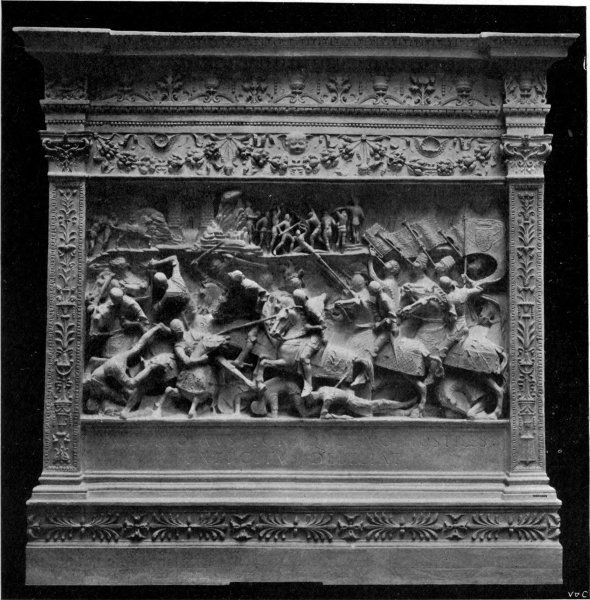
Fig. 9.—Carved Relief for the Visconti Tomb in the Certosa at Pavia. South Kensington Museum.
Another notable representation of an Italian battle (Fig. 9), in which the mounted combatants are clothed in complete typical Gothic armour, is to be seen in the cast from the Visconti Tomb of the Certosa, Pavia, in the South Kensington Museum. The armour is of the most beautiful type, and the figures are singularly supple and full of action. The armet is more fully developed and almost uniform in type. The visor works on pivots, the occularium is a slit above it, and the bavier is a separate piece fastened by straps at the back. The event represented is the battle before Brescia in 1402. As a full-sized representation of the latest Italian Gothic armour nothing can perhaps be finer than the fifteenth century effigy of Guidarello Guidarelli surnamed Braccioforte from Ravenna, of which there is also a cast in the South Kensington Museum. The tuilles are flexible and pointed, formed of narrow horizontal plates; the shoulder-plates are bossed into lions’ heads; and the armet has a double visor without bavier.
The statue of St. George, made by Donatello for the Florentine corporation of armourers in 1416, is almost Roman in costume and of little interest.
The account of the almost contemporary battle of Fornovo, 1495, by Philip de Commines bears testimony to the excellence of this Italian armour, especially of the close armets. The flower of the allied forces of Italy consisted of 2500 men-at-arms under the Marquis of Mantua, Count di Cajazzo, and Signor John Bentivoglio of Bologna, with other nobles, all well barded, with fine plumes of feathers and bourdonasses, or hollow lances, brightly painted, and used in tournaments. Great bodies of men-at-arms were in reserve. The French van contained 350 men-at-arms, 200 mounted crossbow-men of the king’s guard—who fought on foot, however—300 archers and 3000 Swiss foot, several of the highest nobility dismounting to fight amongst them. In the main body were the king’s guards, pensioners, 100 Scottish archers, about 900 men-at-arms, and 2500 Swiss, the whole army not exceeding 9000 men. The Italian men-at-arms delivered a charge, with lances couched, at a gentle gallop; the Estradiots, who should have supported them with their scimitars, retired to plunder the sumpter-horses; whereupon the men-at-arms who had charged and broken their lances fled, and their infantry gave ground. Those who had not charged also threw away their lances and fled, sword in hand, and were pursued and cut up. With the French were “a great number of grooms and servants, who flocked about the Italian men-at-arms, when they were dismounted, and knocked most of them on the head. The greatest part of them had their hatchets (which they cut their wood with) in their hands, and with them they broke up their head-pieces, and then knocked out their brains, otherwise they could not easily have killed them, they were so very well armed; and to be sure there were three or four of our men to attack one man-at-arms. The long swords also which our archers and servants wore did very good execution.” The losses on the French side were but three gentlemen, nine Scottish archers, twenty horse of the vanguard, and some servants. The Italians lost 3500 men on the field, of whom 350 were men-at-arms, including six or eight of the Marquis of Mantua’s relatives and other persons of quality. The lances “lay very thick upon the field, and especially the bourdonasses; but they were good for nothing, for they were hollow and light, and weighed no more than a javelin, yet they were finely painted.”
Battles in England were much more serious affairs and were stubbornly contested. Those of the Wars of the Roses opened with a cannonade, after which the archers engaged and the billmen followed, nobles fighting on foot in their ranks to encourage them. Lord Richard Herbert “twice by fine force passed through the battaill of his adversaries,” at Banbury, “polle axe in hand”: at the battle of Towcester many were taken because they left their horses and decided to fight on foot. The Earl of Warwick dismounted at Barnet to “try the extremity of hand strokes”; but penetrating too far among the enemy to encourage his men, and not being properly supported, he was slain.
At Bosworth the archers formed the forward on both sides. Richard’s archers “with a sodein clamour lette arrowes flee at theim. On the other syde they paied theim home manfully again with the same. But when they came nere together, they laied on valeauntly with swordes.” The Earl of Oxford, however, kept his men in close order, and the enemy gave way, wholesale desertion sealing the fate of the battle. Henry was not engaged, but kept afar off “with a fewe companye of armed menne.” Richard on horseback made a desperate attempt to get at him, but was unsupported and slain.
The English costume is described in the Plumpton Correspondence, when the Archbishop of York, having dues to collect in 1441, quartered 200 men-at-arms in Ripon and held it “like a towne of warre.” These borderers wore “breast-plate, vambrace, rerebrace, greves and guischers, gorgett and salett, long spears and lancegayes.” English levies were not always so well armed. The 5000 men who came down from the north in the reign of Richard III. were “evell apparelled and worsse harneysed in rustic harneys.” Under Henry VII. the Duke of Bedford took out “3000 mene which were harneysed but barely, for theyr breste plates were for the most parte lether.” The array taken to Calais by Edward IV. in 1475 is in striking contrast to this. Hall relates that “the men were so well armed and so surely in all things appoynted and provided that the Frenche naciõ were not onely amased to behold them, but much more praysed them and there order. In this army were 1500 men of armes well horsed, of the which the moste parte were barded and rychely trapped, after the most galiard fashion, havyng many horses decked in one suyte. There were farther 15,000 archers beryng bowes and arrowes, of the which a greate parte were on horsebacke. There were also a great number of fighting men and others, as well to set up Tentes and Pavillions, as to serve their Artilarie.” De Commines adds that the men-at-arms, comprising the flower of the English nobility, were richly accoutred after the French fashion, well mounted, most of them barded, and each one with several persons in his retinue.
This Gothic armour, the lightest and most graceful ever produced, was ideal so long as it was customary for men-at-arms to fight indifferently on foot or mounted. The mixed tourney was still in vogue, fought the first day with sharp spears, the second day with swords, the third on foot with poll-axes. The Lord Scales and the Bastard of Burgundy, and the Duke of Albany and Duke of Orleans fought such tourneys, the latter having the misfortune to kill his antagonist by a spear-thrust. It was, in battle too, most honourable to fight on foot among the archers, and there was always a large number of gentlemen volunteering among them to “encourage the infantry” and make them fight the better. “The Burgundians had learnt this custom from the English when Duke Philip made war upon France during his youth for two-and-thirty years together without any truce.” De Commines adds that at Montlhéry the order was given to the Burgundians that every man should alight without any exception. Knights equipped by the most renowned of the armourers of Italy and Germany were almost invulnerable until overthrown; but English and Burgundian armour was not an equal protection, as the rash Duke of Burgundy, who seems to have had all his armour home-made at Dijon or Hesdin, discovered to his cost on the field of Nancy, when his skull was cloven by a halberd, and two pike-thrusts penetrated the lower part of his body.
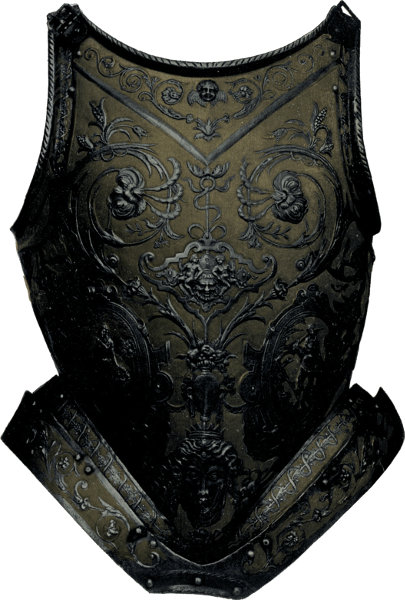
Plate V.—Breastplate, embossed and parcel-gilt. French. Collection of Mr. David Currie.
This fashion of armour appears to have been devised in the ateliers of the Missaglias of Milan. A work by Wendelin Böheim, custodian of the Imperial collections of armour in Vienna, published last year in Berlin (Meister der Waffenschmiedekunst vom xiv bis im xviii Jahrhundert), gives a short biographical sketch of this renowned family of armourers, who migrated to Milan towards the middle of the fourteenth century, from Ello, a village not distant from Asti and Lake Lecco. Petrajolo da Missaglia, the founder of the family, settled in Milan as an armourer towards the middle of the fourteenth century, and built the house in the Via degli Spadari where his sculptured poinçon or armourer’s mark is still to be seen. The work of his son Tomaso da Missaglia greatly augmented the already world-wide reputation of the armour of Milan, and deserved in 1435 the recognition of Filipo Maria Visconti, who freed him in 1450 from taxes until his death somewhere about 1469. The armour by him is plain, the best known being that at Vienna of the Palsgrave Frederick the Victorious about 1450, with closed helm, roundels, unfingered gauntlets, and pointed sollerets over 13 inches in length. The suit is less graceful than German Gothic armour. The equally renowned son of Tomaso, Antonio, was born about 1430, assisting in his father’s extensive business at the age of twenty. Large commissions were received, such as that in 1466, of the value of 20,000 lire, for 100 harness for the ducal mercenaries, and others from Duke Francesco, the Pope, Don Alfonso of Arragon, afterwards King of Naples, etc. On his father’s death in 1469, their great patron the Duke presented him with an estate and mill, and in 1470 he added the iron mines near Canzo to his patrimony. Soon after, in 1492, a Venetian envoy sent home an account of Missaglia’s works, finding finished harness to the value of many thousand ducats. His death took place near the end of the century; the exact date being unknown, like the name of his immediate successor. There are mentions of several Missaglias about whom little is known, one working in 1466 for Louis XI. Antonio was the last to bear the name of Missaglia, succeeding members of the family assuming that of Negroli, a name first met with about 1515, when a Giovanni Negroli appears as master of the works. The tomb in St. Satyro, Milan, preserves the inscription Negroli da Ello qualunque detto Missaglia. Few examples of Antonio’s work are known. One of these, a plain suit made for the Neapolitan Count Cajazzo about 1480, is in the Vienna Imperial collections. The breast and back plates are not articulated, the pauldrons and tuilles are large and massive, coudières elegant, only the right gauntlet fingered, the leg-pieces with few articulations, and the suit, as so often seen in illustrations, is minus the sollerets. The head-piece is a sallad singularly painted in oils with the Count’s armorial bearings, reminding us of the beautifully painted armour of Pisano’s St. George published by the Arundel Society, which must have been executed prior to 1450. A jousting suit by him of much later date is engraved and partly gilded, apparently made in 1498 for an envoy of Ludovico Moro to the Emperor Maximilian.
Italian Gothic armour is very much rarer than German. Thoroughness is a German characteristic, and once embarked on a given course the German pursues it until, as is so apparent in their general iron-work, the result becomes exaggeration verging on the grotesque. The Missaglias introduced a certain grace of line into Milanese armour, and the German armourers pursued this vein, making the figures erect and slender and imbuing the waist and bust with womanly elegance. The Italians probably kept to much the same lines, for most representations of armour towards the third quarter of the fifteenth century display the same graceful characteristics, brought to a pitch, however, but little consonant with the stern realities of war, and brusquely set aside before the close of this century.
One of the most formidable of Missaglia’s competitors north of the Alps was Hans Grünewalt, born about 1440 and died 1503, regarded by Böheim as one of the foremost armourers of his day. The founder of the bells of St. Sebaldus in 1396, Heinrich Grünewalt, appears to have been the grandfather of a family which became considerable in Nuremberg, building the still standing Pilatus House, properly the “Zum geharnischten Mann.” Hans was employed by Maximilian when King of the Romans, and no armourer in Germany was more sought after. While he flourished Nuremberg was the most renowned of any city of Germany for the production of armour, but on his death Augsburg was allowed to entirely supplant it.
The Colman family migrated from Bâle to Augsburg about 1377, to again quote from Böheim. Georg, the father of Lorenz, was well established as an armourer when he was joined in 1467 by his famous son. In 1477 they were honoured with a commission from Maximilian, then King of the Romans, for a complete harness for horse and man, which was executed to his entire satisfaction. Georg died two years later. In 1490 Lorenz was appointed Court Armourer, and he had prospered so far as to be able to afford pecuniary assistance to the ever-needy Maximilian. Towards 1506 he worked for the Court of Mantua, receiving through the house of Fugger a payment of no less than 4000 florins for a harness which gave such satisfaction that a further sum was sent him as a present. In 1507 Maximilian again employed him, and in 1508 begged him to repair personally to Court, when probably the important change in the fashion of armour, resulting in the Maximilian fluted armour, was devised personally between Lorenz and himself. The first edition of Hans Burgkmair’s woodcut engraving of the Emperor in a full suit of this armour for horse and man appeared in this same year. Lorenz died in 1516. The only authentic suits by him known to Böheim are in the Imperial collections of Vienna. One is the magnificent Gothic suit made in 1493 for Maximilian, a far more complete and defensive suit than those we have figured, but with similar fleur-de-lis pattern engrailing to the margins of the plates, while some of the upper edges on the limb pieces are rolled over and finished with a cable border. The suit is graceful and of exquisite workmanship, slightly fluted in the arms, with fingered gauntlets and moderately long and pointed sollerets. Three other tilting suits bear the Colman mark, the close-helmet surmounted by a cross, with the Augsburg badge and guild mark.
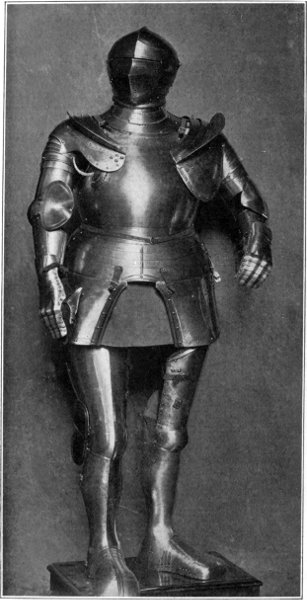
Fig. 10.—German late Gothic Suit. Collection of Mr. Morgan Williams.
The Germans, however, as a race were not all lithe and supple men, and the burly high-living barons could not follow, and hence must have detested the elegancies of Gothic armour. They soon affected an opposite extreme, the clumsy sturdiness seen in so many of the portrait statues of the contemporaries of Maximilian round his cenotaph in Innsbrück. Fig. 10 represents a complete and characteristic suit of this kind belonging to Mr. Morgan Williams. It greatly resembles one figured by Böheim, made for Count Andreas von Sonnenberg about 1508, by Koloman Colman, and now in Vienna. Our suit, preserved in a Rhenish Castle, bears evidence, however, of being considerably earlier, and is regarded by its owner as of about 1495. It is perfectly plain except for some slight fluting on the mittened gauntlets, made to look as if fingered, and on the square-toed sollerets. The tuilles are still an important feature, but wide and plain. Some German suits of this date look affectedly ungainly; such as a mounted suit attributed to Duke John of Saxony, which is slightly fluted and bears the great tilting helm.
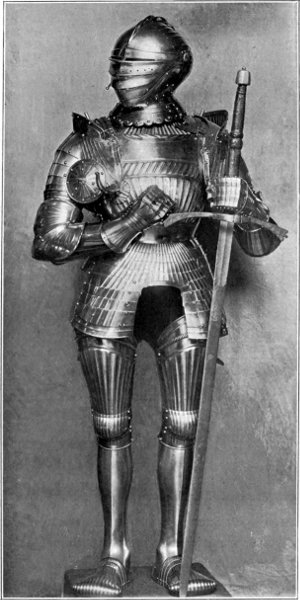
Fig. 11.—Suit of Maximilian Fluted Armour. Belonging to Mr. Percy Macquoid.
The Maximilian fluted armour is a development of this, belonging, however, rather to Renaissance than Gothic times. With its introduction the elegance so distinctive of late Gothic armour passed definitely out of fashion and gave place to armour in which the opposite characteristics were sought. The flutings which invest the Maximilian suits with so much character must have been suggested more or less by the shell-like ridgings and flutes of Gothic armour. The leading idea was the substitution of a stiff unyielding defence for one that was supple and pliable. The articulations of the breast and back plates—except in rare instances, such as the magnificent Nuremberg suit formerly worn by Lord Stafford, in which the breast-plate was formed of two pieces and decorated with graceful open-work tracery—were wholly abolished, and replaced by a stout and rigid pectoral more adapted to receive the shock of the lance in the tilt-yard. The form of tourney had changed, and was now chiefly tilting with a light and hollow lance, calculated to shiver at the impact, as may be seen in specimens still preserved in the Tower. The pliable Gothic suits adapted for mixed tourneys and for actual warfare were out of place in the tilt as now practised; and the heavy man-at-arms in full cap-à-pie armour had ceased to play the preponderating part in war and was shortly destined to disappear from the field. No longer was his function, as hitherto, to engage in the melée, and bear the brunt of the battle: this was sustained by the pike, arquebus, light-armed cavalry and artillery; the heavy-armed cavalry being reserved for charges in which the weight of man and horse sheathed in steel might ride down the opposing force.
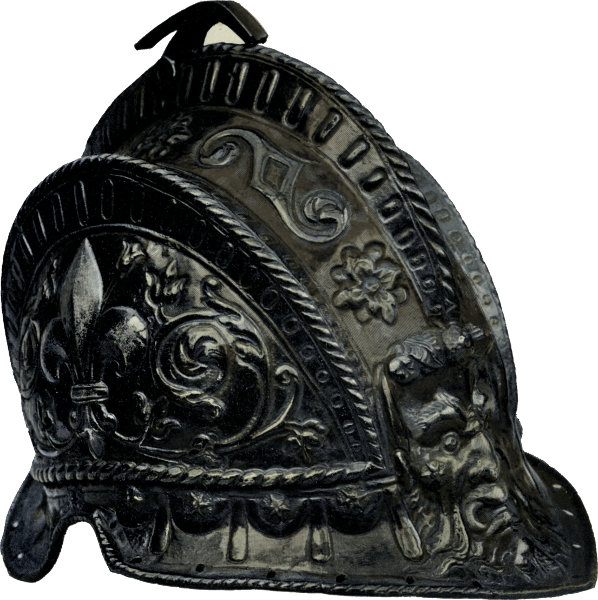
Plate VI.—Casque of an Officer of the Guard of Cosmo de’ Medici. Collection of Mr. David Currie.
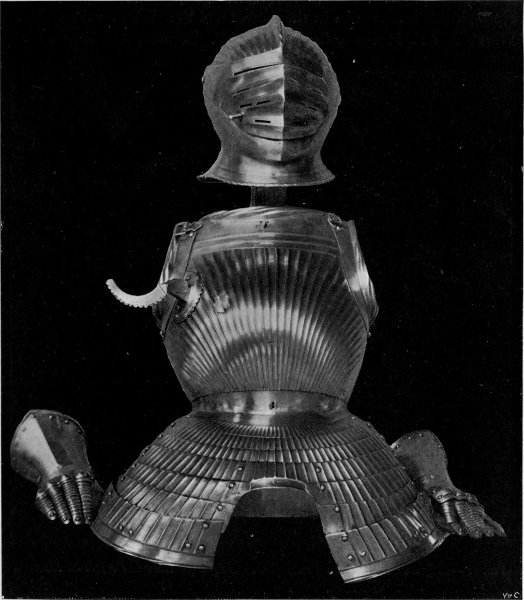
Fig. 12.—Maximilian Armour from Eaton Hall. In the possession of the Duke of Westminster, K.G.
All the cap-à-pie suits of fluted Maximilian armour resemble each other in their more salient characteristics. They are extremely defensive and well made, with every piece more or less fluted, except the greaves, which are usually perfectly plain. Many of the pieces have turned-over edges worked into cable patterns. The pauldrons and coudières are well developed, the gauntlets mittened, sollerets with very broad and square toes, breast-plate generally globose, but sometimes brought to a blunt point, often with a roundel guarding the left arm-pit. The armet has usually a low central cabled comb with parallel flutes on either side, occasionally there are three or five combs. The visor is usually thrown into three or four horizontal peaks or ridges, often with the underhung look believed to have been introduced in compliment to the House of Hapsburgh. An almost equally common form is the puffed visor, but the form of the head-piece is generally more varied than that of the rest of the suit. The fine Nuremberg suit, Fig. 11, owned by Mr. Percy Macquoid, shows the bellows visor and the rope crest, and in it all the leading characteristics of Maximilian armour are well displayed, especially the duck-bill sollerets, the flutings of which boldly finish in ram’s horns. The suit formerly belonged to the King of Prussia, and seems to be perfect, except the collar, an apparent restoration.
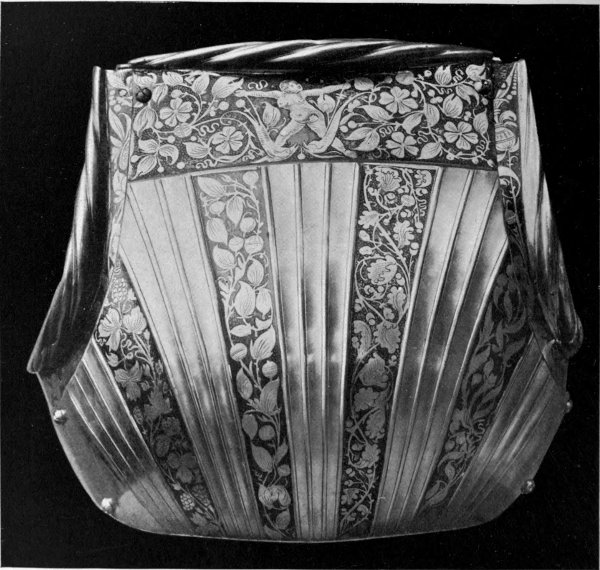
Fig. 13.—Engraved Maximilian Breast-plate. Burges Collection in the British Museum.
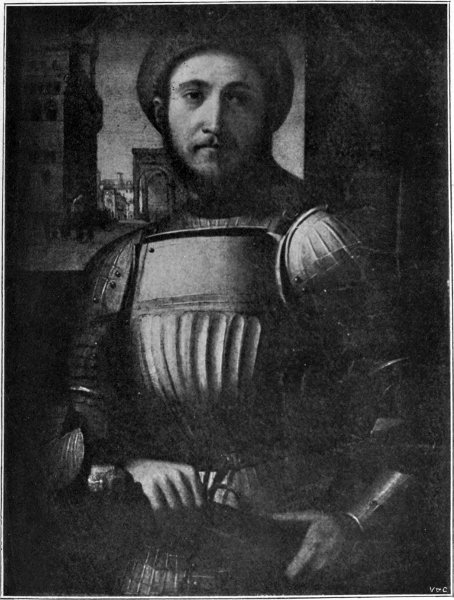
Fig. 14.—Portrait. By Piero di Cosimo. National Gallery.
Maximilian armour is greatly favoured by collectors. There are cap-à-pie and barded suits in the Tower and the Wallace collections, at Warwick, and in the collections of Mr. Panmure Gordon and Sir Wheatman Pearson. The horse armour, which nearly entirely sheathes the head, neck, and fore- and hind-quarters, is fluted, gracefully curved, and except the crinière, worked in large pieces, the lower margins curving well away from the flanks. Three-quarter and half suits are well represented in the Tower and the Wallace collections, the one figured, Fig. 12, being a finely typical example brought from Strawberry Hill, and now the property of the Duke of Westminster. This armour seems to have been at times partly gilded, and instances exist where small badges are repeated to form bands of raised work between the flutes. It is sometimes engraved with borders of floral design, either edging the different pieces, or more boldly treated as in Fig. 13 from the Burges Collection in the British Museum. Though mainly worn in Germany, fluted armour became everywhere the fashion, the portrait by Piero di Cosimo, Fig. 14, in the National Gallery affording an admirable representation of a breast-plate with delicate flutes on the lower half. An actual specimen resembling this, but engraved, is in the collection from Rhodes at Woolwich. The corselets furnished to the Swiss pike-men by the Milanese appear also to have been of this pattern. Besides the bellows visor, and one puffed out to give breathing space and fluted, the visor was at times embossed into the form of a grotesque face with mustachios. Sometimes the helmets in which this occurs had a pair of fan-like appendages in pierced and fluted steel, forming a dignified and wing-like crest. The remarkable example in the Tower, Fig. 15, once silvered, and presented by Maximilian himself to Henry VIII., has a pair of ram’s horns instead of wings. It has since been painted and rendered more absurd by spectacles, and assigned without any reason to the King’s jester, Will Somers.
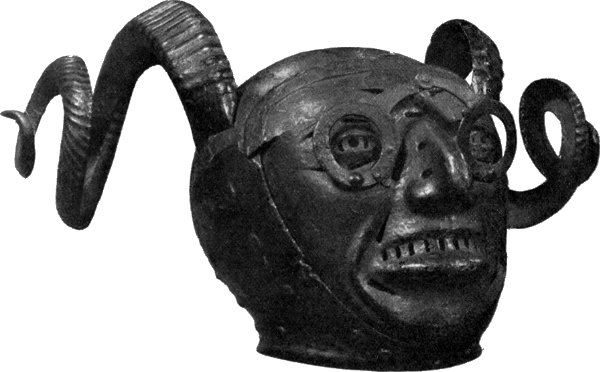
Fig. 15.—Helmet. Presented by Maximilian to Henry VIII. Tower of London.
These grotesque helmets were sometimes worn with armour puffed and slashed to imitate civilian dress. A few pieces of this kind are in the Tower, but the Wallace Collection possesses a three-quarter suit, slashed, puffed, engraved, and gilt, the armet having the bellows visor and five-roped comb. The extreme of exaggeration to which German armourers were carried is seen in the suit in the Ambras Collection, figured by Hefner and by Hewett, in which the cloth bases as well as the puffed sleeves of the civilian are carefully imitated in steel. The visor is singularly grotesque, and the whole presents a ludicrous and ungainly appearance, as well as being quite unserviceable.
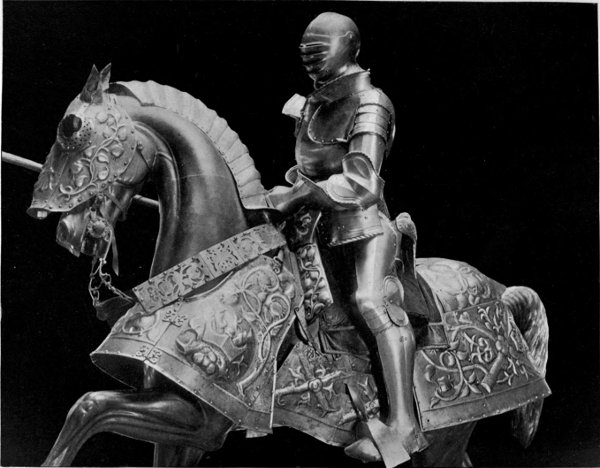
Fig. 16.—Cap-à-pie Suit of Henry VIII., on a Horse barded with Embossed Burgundian Armour of the time of Henry VII. Tower of London.
The cap-à-pie suit of Henry VIII., Fig. 16, belongs to this group, and though not fluted, is made like the Maximilian armour, the high erect shoulder-piece and large coudières giving it a striking character. The armet is of fine form, with the visor thrown into the series of peaks and ridges common to fluted armour, and known to collectors as the bellows shape. The bridle-hand wears the mainfere (main-de-fer), while the right hand grasping the spear is gauntleted. The horse armour, though so boldly embossed, is of earlier date, not later than Henry VII. The foliated scrolls surround the cross ragulé and steel brickets and fire-stones, so that it probably presents a rare specimen of the Burgundian armourer’s craft.
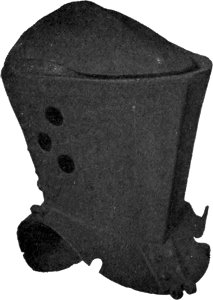
Fig. 17.—Tilting Helm. Time of Henry VII. Westminster Abbey.
The head-piece for tilting used in Germany and England during the reign of Henry VII. and first years of Henry VIII., and known a century earlier, is represented, Fig. 17, by the remarkably perfect specimen found in the triforium of Westminster Abbey in 1869. It weighs 17½ lbs., the few others known in England weighing, with one exception, considerably over 20 lbs. When fixed, the helm itself was immovable, but as there were quite three inches of space round the head, movement inside was possible. The occularium is placed so that the head must be lowered to see out, the combatants sighting each other like bulls before making their rush, and throwing up the head to escape splinters of the lance.
The abandonment of this heavy helm for a much lighter form may have been due to Henry VIII. himself. Hall narrates that tilting on one occasion in 1524, with his great friend and brother-in-law Brandon, Duke of Suffolk, he had on a helmet of a new fashion, devised by himself, the like of which had not before been seen. It had a visor, which was up and unfastened, leaving the king’s face exposed, when by some mischance the word was given to Brandon to start. No doubt in the old helm, and remarking that he could not see, he couched his lance, striking the king on the brow of the skull-piece or main portion of his helmet. Appalled at the narrow escape, he vowed he would never tilt with his sovereign more. One of the lighter forms of tilting helmet, Fig. 18, from Penshurst, shows the small trap-door for speaking or breathing, but now riveted down. A second helmet, Fig. 19, of rather later date, is surmounted by the porcupine crest in wood, removed in the illustration, and is interesting as having belonged to the grandfather of Sir Philip Sidney. Both these helmets perhaps hung in Penshurst Church.
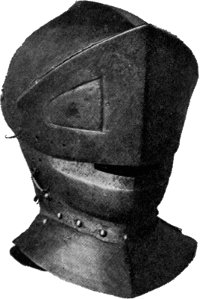
Fig. 18.—Tilting Helmet. Early sixteenth century. At Penshurst.
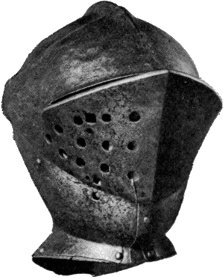
Fig. 19.—Tilting Helmet of an Ancestor of Sir Philip Sidney. Penshurst.
The sallad, the head-piece par excellence of Gothic armour, continued in use, especially in Germany, until far into the sixteenth century. In its simplest form it was the archer’s head-piece: but provided with slits for vision, pulled over the brow in time of danger to meet the chin defence or bavier, it became almost a closed helmet; and with the further addition of a visor and other reinforcing pieces, it was used for battle or tilting by the mounted knight. It was never a very safe head-piece, De Commines relating how the Count of Charolois received a sword-wound on the neck at Montlhéry, 1465, for want of his bavier, “which, being slightly fastened in the morning, dropped from his head in the battle—I myself saw it fall.” The Venetian form survived during the seventeenth century, though for pageantry rather than use, being covered with red velvet richly ornamented with beaten iron foliage and scrolls, gilded and sometimes surmounted by a swan-like crest. The richness of decoration of the sallad has been alluded to in the former monograph. The battle picture by Paolo Uccello, Fig. 8, shows one covered with red velvet and studded with nails. Elizabeth with her own hands garnished the sallad of Henry VII. with jewels, and in 1513 Erasmus Kirkener received £462:4:2 for “garnishing a salet” and a head-piece, “and mending a shapewe.” Pope Pius V. sent Alva a sallad and sword for his brave fights for the Church. Wooden shields covered with painted canvas, embossed leather, or gesso, continued in use in Germany down to about the end of the reign of Maximilian. The magnificent specimen, Plate I., is now in the British Museum. Of late fifteenth century date, it is of wood lined with leather, faced with canvas, over which a layer of gesso has been laid to receive the gilding. Upon the gold ground the design has been painted, a knight in Gothic armour, with armet and poll-axe on the ground before him, kneeling to a lady, with the appropriate legend Vous ou la mort. The surfaces are finely curved. In the Tower inventory, quoted by Lord Dillon, among the jewels is a target of the Passion with Our Lady and St. George.
The splendid decoration of the sword-hilts used with Gothic armour has already been noticed. By the kindness of Sir Noël Paton an exquisite specimen in the finest preservation is illustrated in Fig. 20. The pommel and cross-hilt are plated with silver gilt, and the former bears a shield with the arms of Battle Abbey and the initials T. L. of Abbot Thomas de Lodelowe, 1417-1434. It came into the possession of Sir John Gage, K.G., on the suppression of the monasteries, his descendant presenting it to the Meyrick Collection. Few existing swords, except those used as municipal insignia, are in equal preservation, but richly worked hilts are represented in brasses and monuments. Swords abounded in churches, but few are left besides the royal swords at Westminster, Canterbury, and Windsor. Part of the glamour surrounding Joan of Arc was due to the consecrated sword taken by her from St. Catherine’s Church at Tours. The sword of Guy, Earl of Warwick, was specially mentioned in a will of the time of Henry IV., and its custody confirmed to the family after the accession of Henry VIII. It is curious to note that in 1319 the wearing of swords in London was forbidden, and those confiscated were hung up beneath Ludgate, within and without.
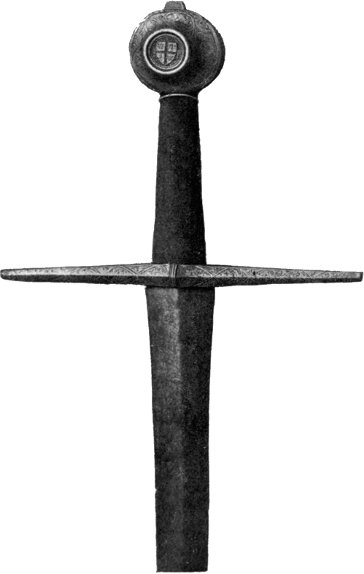
Fig. 20.—The Sword of Battle Abbey. Fifteenth century. Collection of Sir Noël Paton.
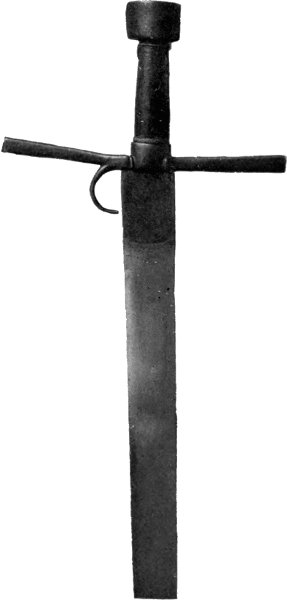
Fig. 21.—Sword of 14th century, with Guard for Forefinger. Windsor Castle.
The interesting sword, Fig. 21, from Her Majesty’s collection at Windsor, dates from about the end of the fourteenth or early in the fifteenth century. Its peculiarity is the semicircular guard for the forefinger growing out of one of the quillons, the first step, as Baron de Cosson remarks, “towards the evolution of the beautiful and complicated rapier of the sixteenth century.” “The pommel and guard are of iron fully gilt, the grip of wood.” The blade is gilt and engraved for a few inches where it shows dark in the illustration, and is inscribed with the name of the Cid Marchio Rodericus Bivar and a shield of arms, these having been added, in the Baron’s opinion, in the sixteenth or seventeenth century. Only four swords with the little semicircular guard or “half pas d’ane” were known when he described them, being introduced owing to the Italian custom of bending the forefinger round the quillon when slashing.